Cursed Soles Part II

On our second visit to Papillon Hall, we’re going to step away from the tales of the infamous cursed footwear. Instead, let’s meet the man painted as the villain of the piece and his portrait, an artwork which appears to have had the power to scare the heebie-jeebies out of anyone who gazed upon it. Disclaimer – when I included an image of it in part I I did not know this. Please read at your own risk.

David Papillon was born in 1691, and was the grandson of the man who had originally built the hall earlier that century. Most biographies depict him as a respectable and upstanding gentleman but local folklore hints that there was a darker side to the man they called ‘Old Pamp’1.
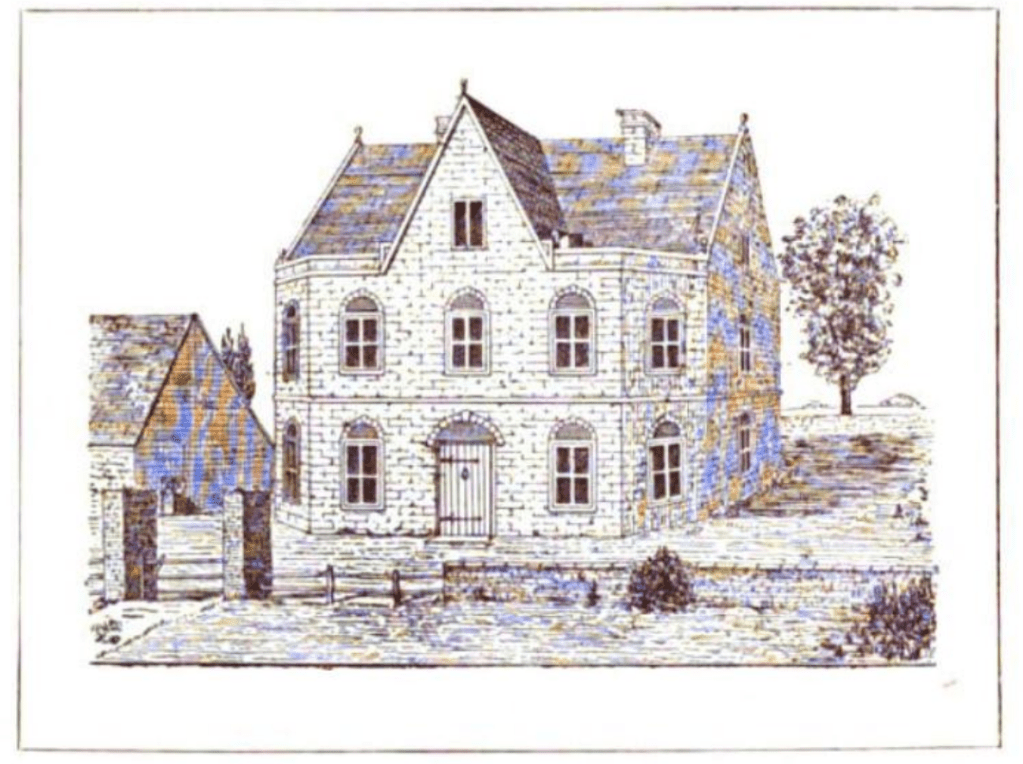
Papillon Hall, before it was rebuilt with wings in 1903

Pamp was said to be something of a sorcerer with such a mesmerising gaze that he could bewitch people to the point that they were powerless to move. His portrait also appears to have possessed the same power. Sometimes visitors to the hall would stand and stare at it for long periods of time, seemingly incapable of turning away. Even more chilling are the stories that on some nights Pamp himself would actually step out from the artwork and roam the rooms of Papillon. One servant girl reported seeing him stood at the end of her bed wearing the same clothes as he did in the painting.

When the portrait was moved to Crowhurst Park near Hastings, Pamp’s ghost went with it. Bertha Tufnell, who was letting Crowhurst from his descendant Pelham Rawsthorn Papillon, saw Pamp standing in the drawing room as if he’d just climbed out of the painting. Following this he tried to materialise on several other occasions but Bertha worked out that reciting a prayer seemed to stop him from fully forming outside of his frame. As a more permanent solution she sent a desperate letter to Pelham and he arranged for the creepy canvas to be removed to his residence in Hastings.

An intriguing article appeared in the Market Harborough Advertiser in December 1946 with the author ‘FPS’ claiming that forty years ago he’d met a man who was on his way to Papillon Hall and tried to engage him in conversation. When he mentioned the famous infamous cursed footwear and the ghost of Pamp the man became visibly uncomfortable and reluctant to chat. FPS tired to reassure him that ghost stories were nonsense but this distressed the man even more. The man clutched the author’s arm, warning him to be careful as Old Pamp could get nasty and had a tendency to appear when people were dismissive. Undaunted, FPS joked that he’d like to see him so that he could ask about a painting he had which once used to hand in Papillon Hall.

A few months after this encounter on the Theddingworth to Lubenham Road, strange things began to happen at the home of FPS. It started with the Papillon painting falling to the ground with a crash. The cord was replaced, the nails secured and it was put back up again but the painting fell down a further three times. New fasteners were added to the frame, along with two brass chains and two lengths of copper wire, all separately fastened to hooks secured in the newly re-plugged wall. A length of hempen rope was also added for extra measure and FPS felt confident the painting would now stay put. Funnily enough, it did not.

The painting was left leaning against the wall and that night, FPS and his wife heard footsteps on the stairs and a bell ringing violently somewhere in the house. In the morning, another painting was found to have fallen. Things soon escalated from ‘a bit odd’ to ‘outright terrifying’, one night when a howling was heard outside the house. As the author and his wife discussed if the sound could be made by a dog, it came nearer. As FPS recalled,

“Description fails, words cannot express the unholy thing, it was vilely evil, blood-curdling, only someone or something in hellish torment could howl like that. It came still nearer and we could track the sound as ‘It’ approached the house. A moment later it seemed even still nearer, then, to our unspeakable horror we realised the ‘thing’ was in the house”.

FPS grabbed a candle and went downstairs. As he descended the house seemed filled with the sound but then came an unnatural silence. He could find nothing to account for the sound, though the dogs were cowering and staring at something invisible. Suddenly, a shriek cut through the silence, seeming to emit from the spot the dogs were staring at. They bolted from the room, with FPS not far behind them. Half-way across the hallway, the candle went out. In the darkness, the howl came again, this time from between his feet, before moving level with his head. Then he heard his wife shouting to him, ‘Quick! Quick! it’s on the stairs’, and managed to get back into the bedroom where he and his wife held the door fast until the howling ceased. He never heard it again. Perhaps David Papillon had made his point.

Incredibly, there is yet more of this mysterious story to share. There’s a line in the Market Harborough Advertiser which lends weight to the story that a skeleton was found when the hall was being renovated at the start of the twentieth century. In a review of the year 1903 it simply says ‘December 3 – a quantity of human bones were found at Papillon Hall’. Frustratingly, the newspaper archive does not appear to have digitalised the edition for December 3rd 1903 which presumably contains more details of the discovery. Elsewhere, there are suggestions that the hauntings relate to the pre-Papillon history of the site and involve a lepers’ hospital, a monk and some buried treasure. Then there are the experiences of Captain Frank Belville, who lived at the hall for a while and encountered not the terrifying presence of David Papillon but a spectral young woman, ‘silver and half-hooded’, who he chased often but never caught (why is this giving ‘Carry on Cursing’ vibes?). Oh, and there’s a magical well too.

There may be a part three to follow but I truly think there’s enough material here to turn this tale of cursed shoes and haunted paintings into a full length motion picture.

Notes

  1. This nickname strikes me as a little strange given he moved to Acrise Park in Kent following his marriage to Mary Keyser at the age of 26.

Sources

Ghosts and hauntings in and around Leicestershire by Andrew James Wright

Market Harborough Advertiser and Midland Mail

Leicester Daily Post

Reynolds’s Newspaper

Leicester Chronicle

The Reservoir Part I

Old cottages are nothing but hassle my ex had insisted, preferring a bland but energy efficient box on a new estate to anything that an estate agent could market as ‘chocolate box pretty’. I left him last year but he probably hasn’t turned away from his 85-inch television for long enough to notice yet.

How appropriate then that it was an infuriating drip in the bedroom that might just prove him right. It couldn’t be a leak, there hadn’t been any rain for ages. A bucket would have to be the temporary fix for now and at the pub later, I’d ask if anyone could recommend someone who could pop round and take a look.

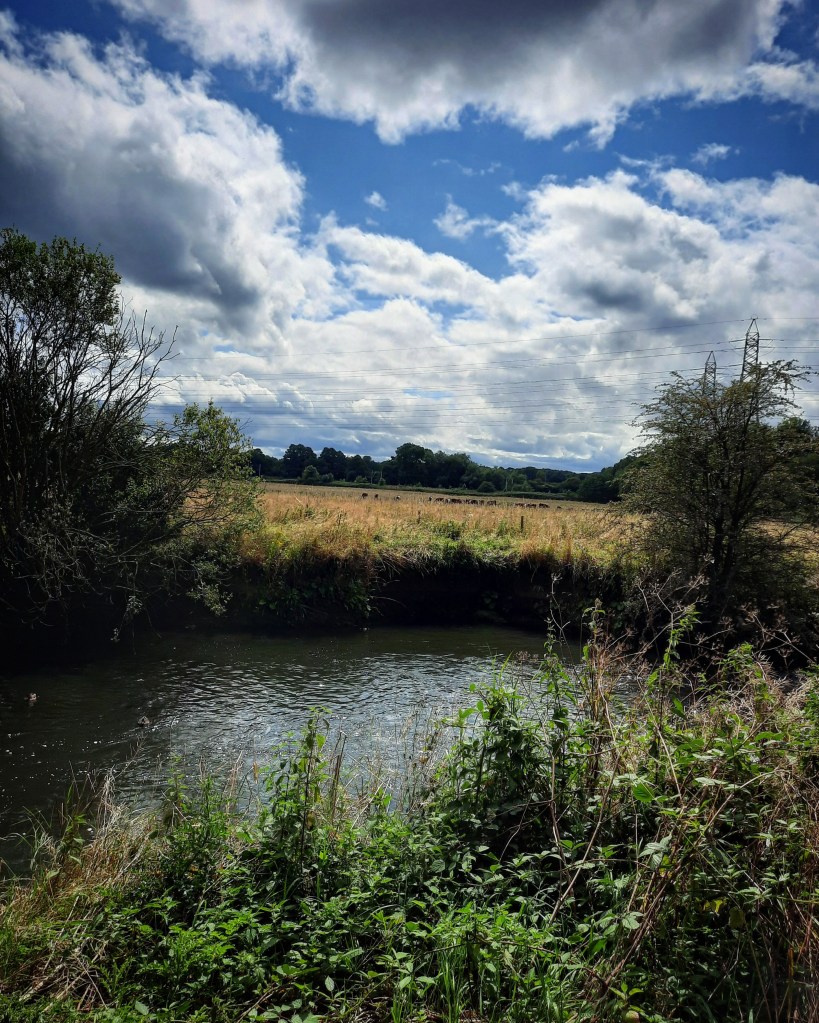
An hour into my shift and the heat behind the bar was almost unbearable. It made worse still by the fact I seemed to be pulling cold pints for everyone in the village but myself. The talk at the tables was speculation about hosepipe bans and barbecue plans. All standard topics for discussion every time the country had a dry spell until I heard one group of older gentlemen talking about the nearby reservoir. I’d noticed myself on the drive over the causeway that the water levels had dropped and when one of them said, ‘‘The old village will be reappearing soon’, I couldn’t help but eavesdrop on their conversation.

‘Village? It was a couple of old cottages and a mill. Not bloody Brigadoon. I read some nonsense on Facebook the other day about people being able to hear the bell of a drowned church tolling below the surface. Flippin’ idiots could probably hear St Leonard’s up the road’.

‘There was that old bridge though, named after the nursery rhyme, remember?’

‘Kitty Fisher’s Bridge? That was named after a real person apparently. A local lass, threw herself in the brook they say, because she’d lost her lover. We were always warned not to swim there away from there as kids. They said she’d pull us beneath the water’.

‘I think I saw her once’, one of the men said softly, more as an admission to himself than the surrounding group. The others looked at him for a second before one of them broke the silence with a quip.

‘She’s been dead at least two hundred years, Mike. Even you weren’t around then’.

‘I think I saw her’, he repeated, bolder this time. ‘Stood on the banks of the reservoir. It was that heatwave of ‘76, and like a fool, I’d taken myself down there to fish. It weren’t much more than a puddle. I glanced up and there she was standing on the bank, about 50 foot away from me. Dripping wet, she was.  I was just about to shout to her, see if she was ok and she…disappeared. One second she was there and then the next. Well, she just wasn’t’.

His monologue was once again interrupted by the joker of the pack. ‘You’ve always had that effect on women, Mike’, followed by comments from the others about needing to take more water with it. Mike laughed along with the banter but the trace of a puzzled expression still lingered on his face. It was clear, to me at least, that he had been deadly serious about what he saw that summer and it was something he had been trying to make sense of ever since.

(Note: This story is semi-fiction. It’s inspired by a real place and its folklore but a lot of it also comes from my imagination. Anyway, part II to follow soon!)

The Wishing Stones

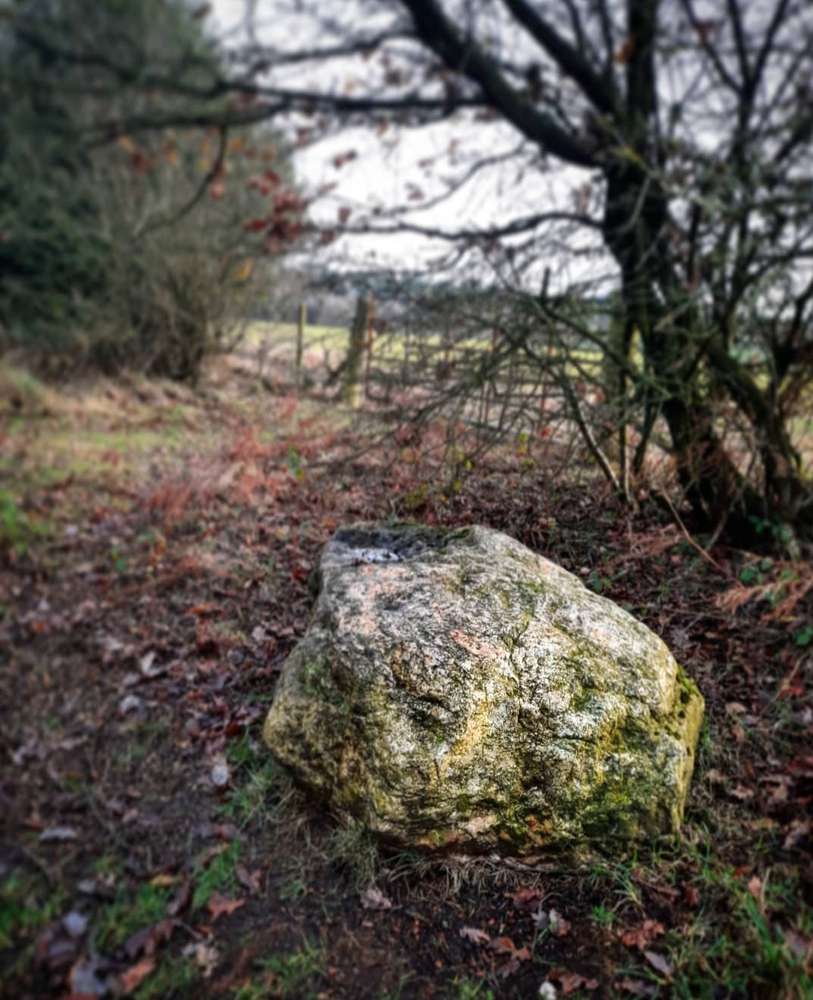
It took me a while to find the wishing stone at Pye Green and it’s taken me even longer to write up what I found about the tale behind it on here. This story appeared in an old newspaper, told to the writer by a ‘greybeard’, one of the descendants of a family of Cannock Chase foresters, and I’ve taken the liberty of retelling it in my own words.


During the English Civil War, the Wishing Stone was the place where a young soldier and one of the daughters of the Cannock Chase foresters would meet. One day the soldier was called away to fight for the King at Worcester and left his lover with a promise to return. Every day that followed, she would wait at the stone for him and those passing her on the old packhorse route known as Blake St would hear her wishing for his return. Weeks passed by and one evening, when she didn’t return home, her father went looking for her. The local women suggested he try the stone and that’s where he found her, lips no longer wishing for her soldier to return but blue and still. The local women speculated whether it was the cold or a broken heart that took her in the end. When the soldier returned and asked where he could find her, ‘her body is in Cannock churchyard’ the local women replied, ‘but her soul is at the place we now call the Wishing Stone’.

Centuries later, if you stand at the stone and listen carefully, you can hear what sounds like a voice saying ‘I wish, I wish, I wish’. It might just be the wind blowing through the trees which surround the stone but the local women will tell you otherwise.

Newton Road Rail Station opened 1837. Closed 1945

Two summers ago, I went to find another wishing stone over Walsall way (yes, I really do need to work on writing stuff up sooner). It’s described as being by a stile in a field leading to Newton Road Old Station on the London and North Western Railway. Folklore says all true lovers who step on the stone will have whatever they wish for come true in twelve months and a day. According to the author of the article in the Walsall Advertiser, you would often find love sick couples loitering around the place but all I could see was cows. I think the stone is on the opposite side of the River Tame to where I was but I wasn’t willing to wade over, even for a wish. I am hoping to go back tomorrow however, as I want to find an aqueduct with a haunted patch of grass and the ruins of the priory alongside the eponymous Sand Well. Is it a wishing well though?

Cannock Chase Courier 21st September 1912

Walsall Advertiser 6th September 1913

The Funeral

I’ve long contemplated the idea of writing semi-fiction, taking inspiration from the legends and folklore I love and bringing in elements of my own story telling and experiences. Would it work though, I’ve wondered? Well, I’ve finally concluded that there is only one way to find out….

This is my first attempt. Please be gentle with me.

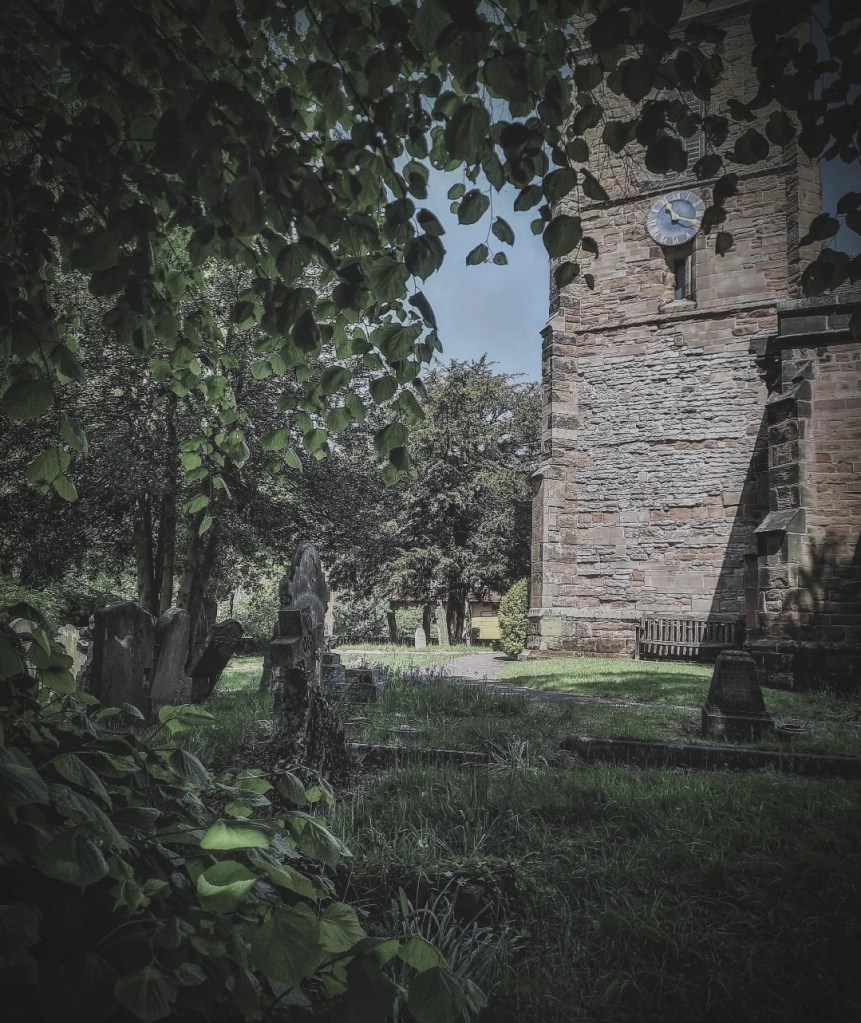
In 1974, a group of children were spooked by the sight of a figure in white rising from a grave in the churchyard of St James, Aldon on their way home from youth club. There was no indication of which grave it was in the newspaper report which had intrigued Felicity Murray and when she arrived at Aldon church on a warm July afternoon in 2021, she found no clues. The cemetery contained the usual assortment of Victorian tombs, any one of which could have been a contender for those strange events explained away as a trick of the light fifty years prior.

After taking a few photographs of the carvings on the church doorway, Felicity took a moment to sit in the sunshine on the bench outside.  On hearing the sound of horses’ hooves, she looked up from her phone and the message she was sending and noticed a funeral cortege approaching the church gates. The two black horses adorned with blue and white plumes and ribbons and pulling a Victorian hearse made for a fine sight but feeling uncomfortable as an uninvited onlooker, Felicity decided to leave the churchyard before the mourners began to get out of their cars. As she slipped out of the gate, Felicity muttered an awkward apology to the female undertaker but received no acknowledgement.

Felicity’s own car was parked just around the corner and as she pulled out of the space, she thought she’d take another look at the horses as she drove past the church. Yet on turning the corner, the horses were no-where to be seen. Neither was the hearse, the undertaker, the mourners’ cars. Nothing was there to indicate the presence of a funeral and the church doors remained shut. Getting back to her car had taken just minutes and even with the greatest efficiency, there was surely no way everyone was already inside.

As a bemused Felicity drove home, she tried to rationalise the experience. Perhaps the church had been a stop off on someone’s last journey and their final destination had been elsewhere? Maybe she’d catch up with cortege a little further up the road. Even the idea that she’d witnessed something paranormal, perhaps the replaying of a past funeral or a time slip crossed her mind but no. Despite the vintage touch of the horse-drawn hearse, every other element had been indisputably contemporary, especially the female undertaker. Distracted by her thoughts, Felicity didn’t notice the cyclist as she pulled out of a junction until it was too late.

The funeral of Jack Sharp took place at St James, Aldon on a warm July afternoon. He was brought to the church in a hearse pulled by two black horses, each adorned with blue and white plumes and ribbons, the colours of his favourite football team. On arriving, the undertaker thought for a brief moment that she’d seen a woman sitting outside the church door but concluded that it must have been a trick of the light.

Pills ‘n’ Chills and Deli Bakes

Yesterday I was in Tamworth for the summer food festival, enjoying excellent locally produced pork pies, sausage rolls and blue cheese.

After a gentle stroll around the town, I hopped back into the car and headed to Hopwas for a forage. For once, my walk took me along the canal in the opposite direction to the woods, a decision which may have been influenced by having read about a disused and reputedly haunted cemetery on Hints Road.

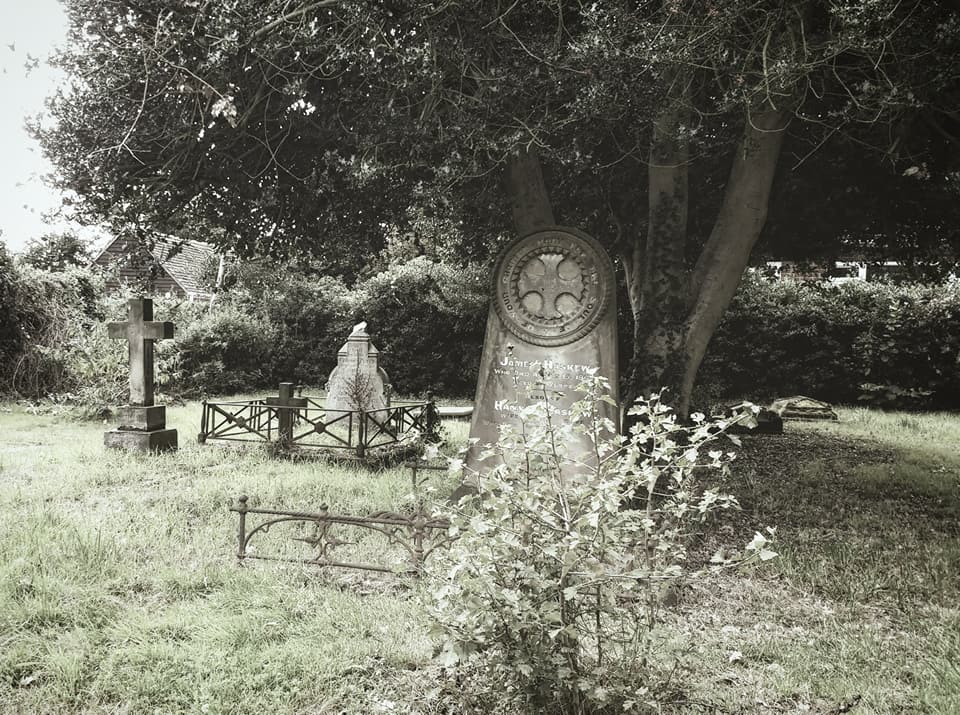
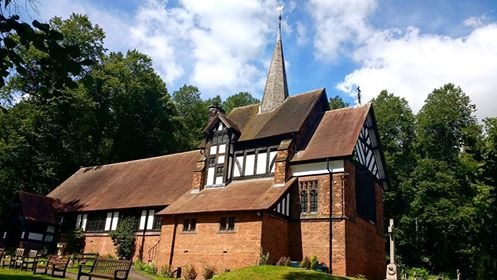
The graveyard once belonged to Hopwas Chapel, built in 1836 and dedicated to St John, and its resident ghost is said to be a small boy who can be seen by children (but not by a childish 39 year old it seems). The chapel was pulled down in the 1880s, as it was ‘full, small and inconvenient’, and replaced by the gorgeous St Chad’s Church up on the hill. A drawing of the old chapel can be seen here on the Stafforshire Past Track site. The old font survived and stands outside the new church, and the chapel’s bell still tolls in St Chad’s tower.  According to a report in the Tamworth Herald on Saturday 16th April 1898, the holy table from St John’s was made use of in the new Workhouse chapel.

St Chad’s, Hopwas, dedicated and opened in 1881

The old font from St John’s Chapel

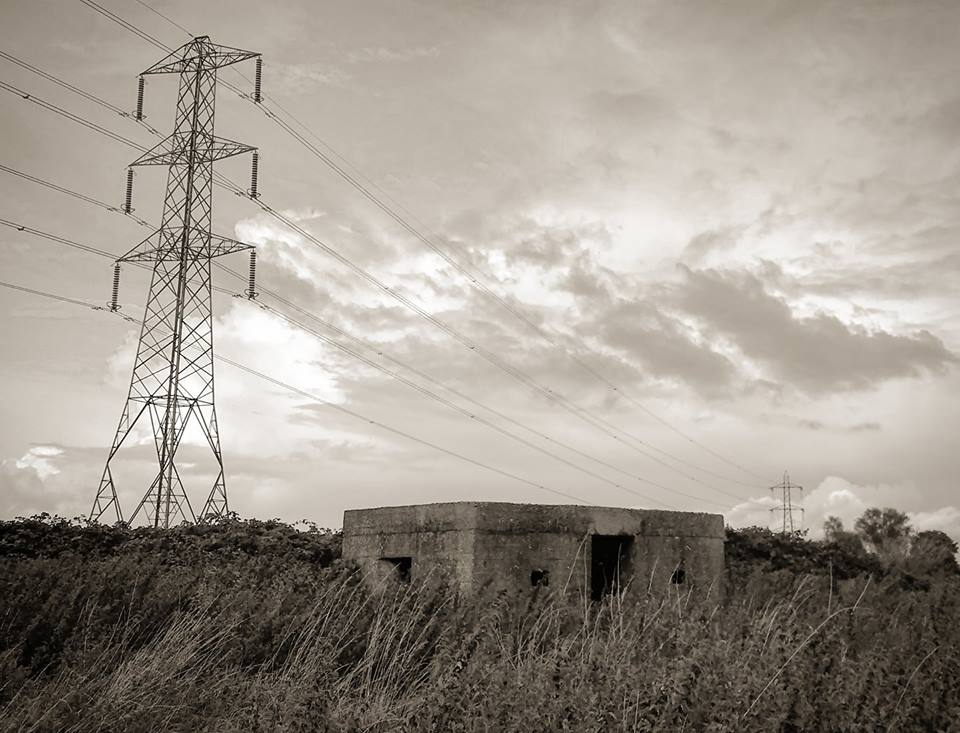
Nearby, I found a cottage with the best name ever, which fitted in perfectly with the theme of the day, followed by a pill box in a field alongside the River Tame.

Too well guarded by nettles to even attempt to take a look inside, I plan to return as part of a much longer pill box walk along this section of the Western Command Stop Line Number 5 in winter. If I eat as much as I did at the summer festival, on the way home from the Tamworth Christmas food festival would probably be a good time….


Sources:

Click to access A%20Look%20Around%20St%20Chads.pdf

Underneath The Arches

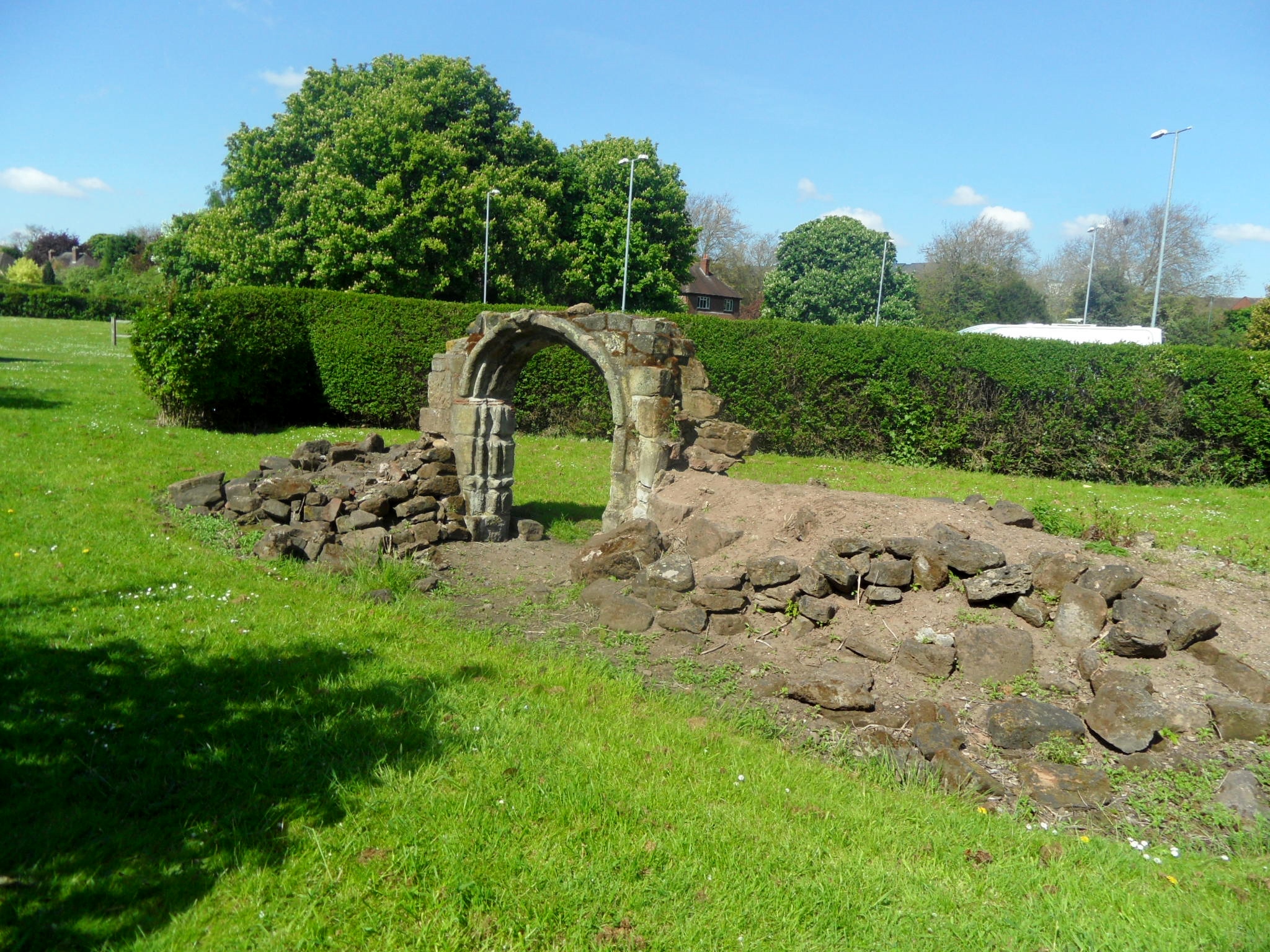
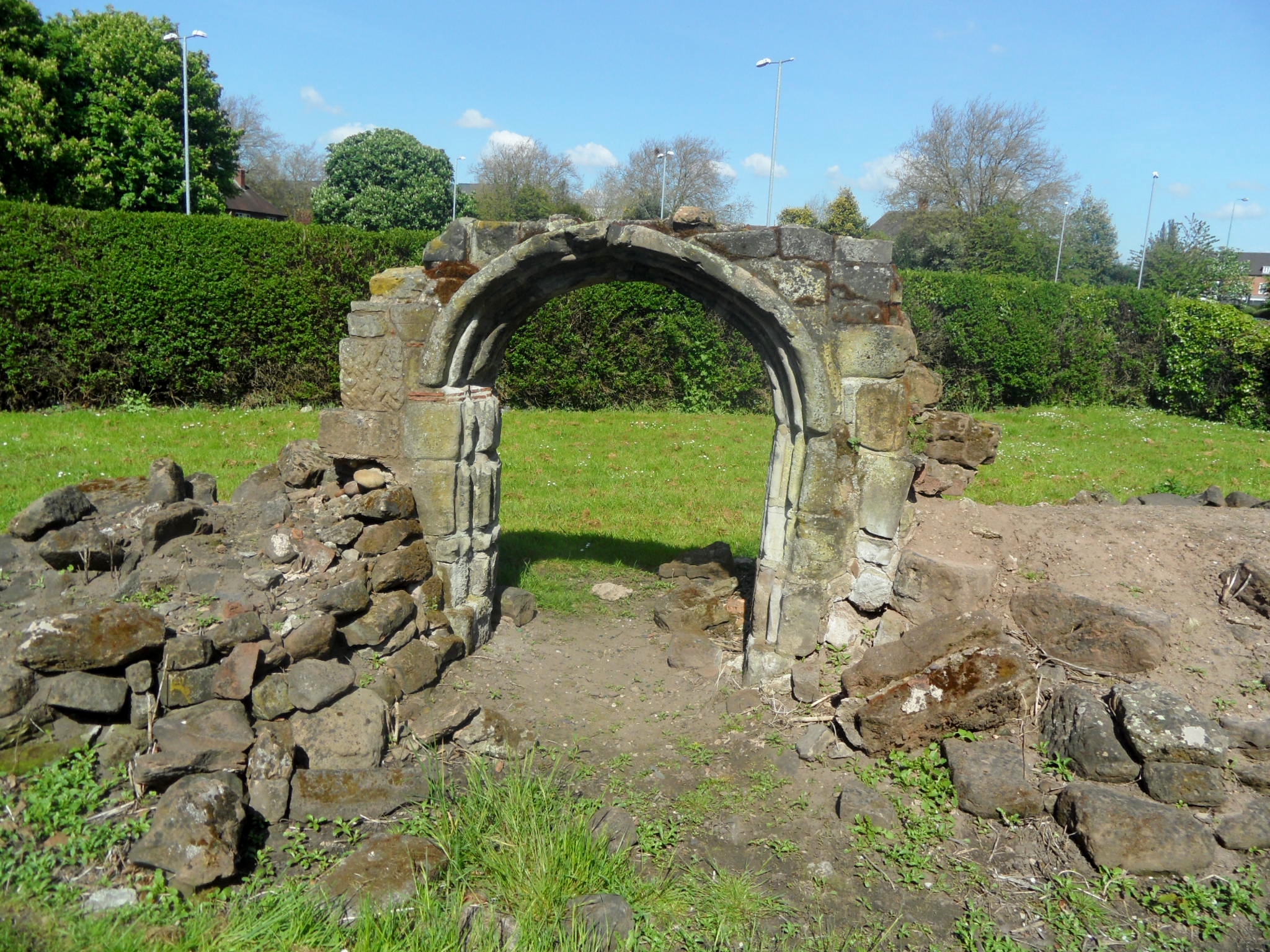
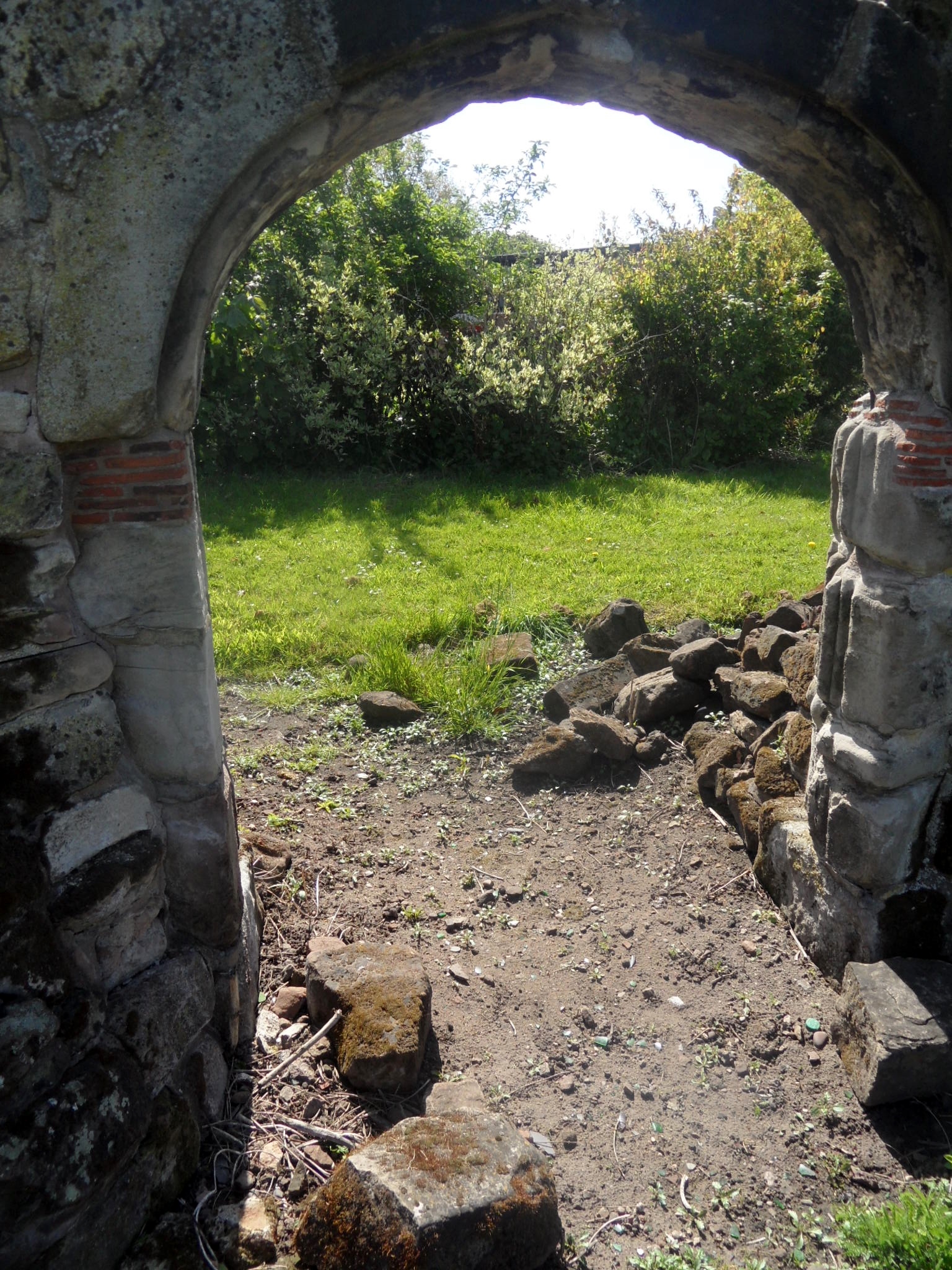
A stone arch stands in the grounds of the Lichfield Campus of South Staffs college and I’ve never been sure whether it is a folly, or part of the Franciscan Friary which once stood on the site. According to a book on the history of the Friary School (1), the arch was discovered in the walls of outbuildings taken down to make way for the new Friary Road in the 1920s. Apparently, it was incorporated into the staff entrance to the school, which used the buildings now occupied by the Library from the 1920s until the 1980s.  A former pupil describes the arch as standing on the lacrosse field during her time at the school. Inevitably, over the years the imagination of school children and the history of the site have combined to create legends and stories, including one about a ghostly monk that people are said to have seen passing through the arch.

Another intriguing discovery made nearby during the 1920s was the gravestone of Richard the Merchant. Actually, rediscovery would be a more accurate description, as the stone had first been uncovered in 1746, when a former owner of the Friary was laying the foundations for a garden wall.  Thankfully, sketches were made of the stone and its inscription as nowadays, its markings can be barely made out and the stone itself is even more hidden away now than when I wrote this post about it back in July 2011.

Tombstone of Richard the Merchant,now in the wall of Lichfield Library

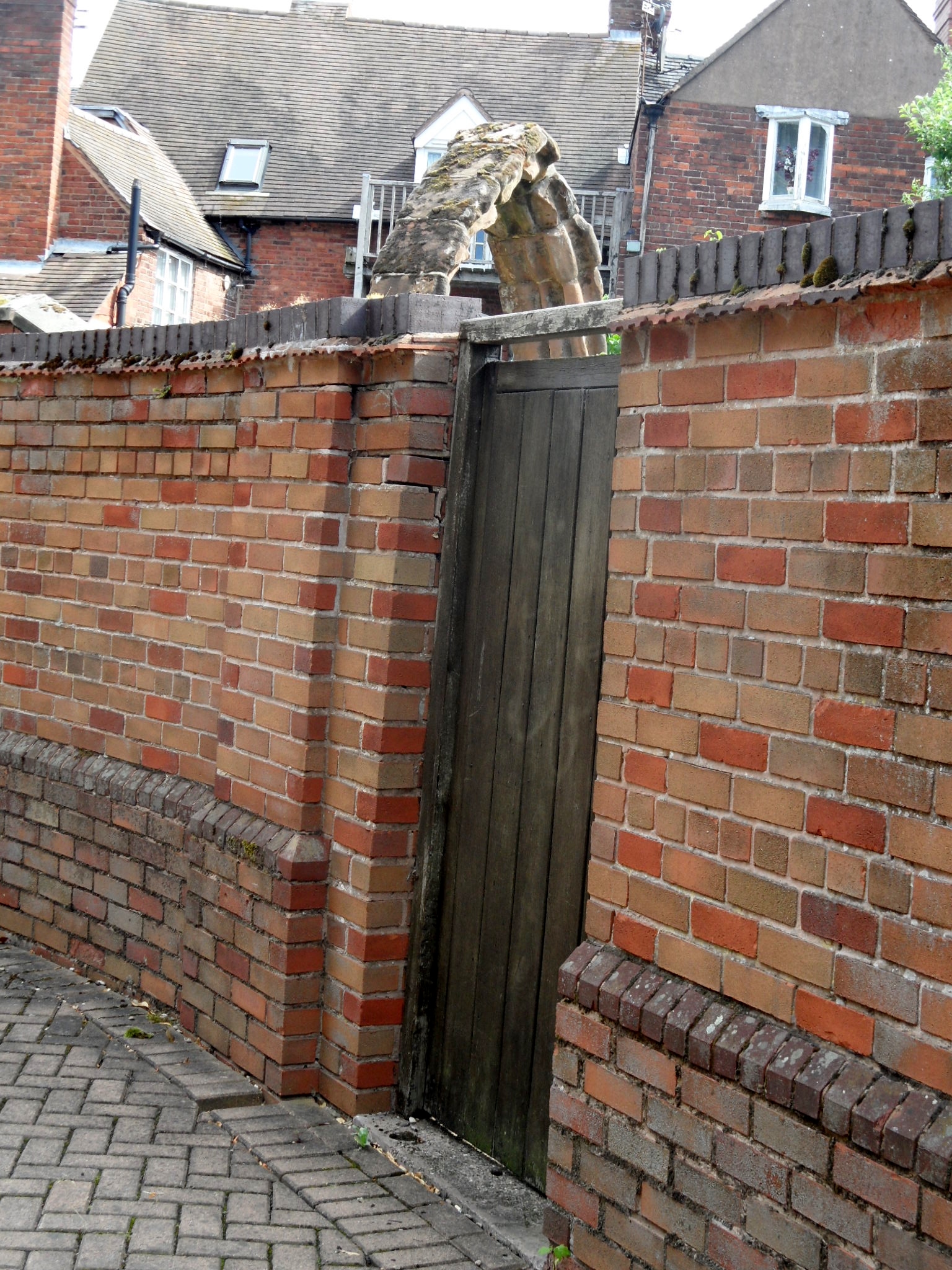
Today I was walking between Dam St and the Bird St car park (which I still call the Woolworth’s car park despite that shop not having been there for years), when I caught a glimpse of what seems to be another arch, over a garden wall which must belong to one of the properties on Dam St. Does anyone have any information on where this arch is from, and why it is here? And of course, if anyone has any stories of ghostly Lichfield residents walking through this one, please let us know!

Notes:

(1) The History of the Friary School, Helen Mullins 1981

(2) I suppose it would actually be a friar, rather than a monk (there is a difference!) but as we’re talking ghost stories here it’s probably not the place to worry too much about historical accurancy!