Cursed Soles Part II

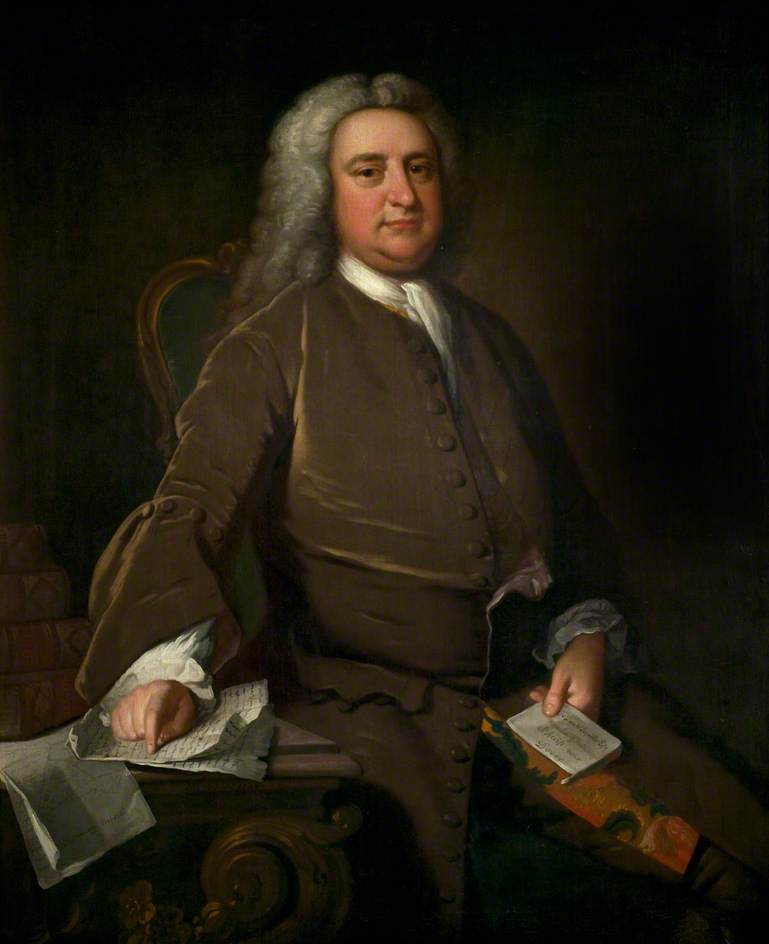
On our second visit to Papillon Hall, we’re going to step away from the tales of the infamous cursed footwear. Instead, let’s meet the man painted as the villain of the piece and his portrait, an artwork which appears to have had the power to scare the heebie-jeebies out of anyone who gazed upon it. Disclaimer – when I included an image of it in part I I did not know this. Please read at your own risk.

David Papillon was born in 1691, and was the grandson of the man who had originally built the hall earlier that century. Most biographies depict him as a respectable and upstanding gentleman but local folklore hints that there was a darker side to the man they called ‘Old Pamp’1.

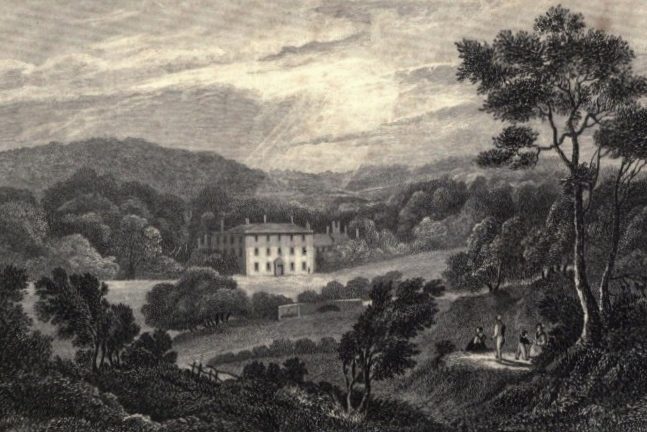
Papillon Hall, before it was rebuilt with wings in 1903

Pamp was said to be something of a sorcerer with such a mesmerising gaze that he could bewitch people to the point that they were powerless to move. His portrait also appears to have possessed the same power. Sometimes visitors to the hall would stand and stare at it for long periods of time, seemingly incapable of turning away. Even more chilling are the stories that on some nights Pamp himself would actually step out from the artwork and roam the rooms of Papillon. One servant girl reported seeing him stood at the end of her bed wearing the same clothes as he did in the painting.

When the portrait was moved to Crowhurst Park near Hastings, Pamp’s ghost went with it. Bertha Tufnell, who was letting Crowhurst from his descendant Pelham Rawsthorn Papillon, saw Pamp standing in the drawing room as if he’d just climbed out of the painting. Following this he tried to materialise on several other occasions but Bertha worked out that reciting a prayer seemed to stop him from fully forming outside of his frame. As a more permanent solution she sent a desperate letter to Pelham and he arranged for the creepy canvas to be removed to his residence in Hastings.

An intriguing article appeared in the Market Harborough Advertiser in December 1946 with the author ‘FPS’ claiming that forty years ago he’d met a man who was on his way to Papillon Hall and tried to engage him in conversation. When he mentioned the famous infamous cursed footwear and the ghost of Pamp the man became visibly uncomfortable and reluctant to chat. FPS tired to reassure him that ghost stories were nonsense but this distressed the man even more. The man clutched the author’s arm, warning him to be careful as Old Pamp could get nasty and had a tendency to appear when people were dismissive. Undaunted, FPS joked that he’d like to see him so that he could ask about a painting he had which once used to hand in Papillon Hall.

A few months after this encounter on the Theddingworth to Lubenham Road, strange things began to happen at the home of FPS. It started with the Papillon painting falling to the ground with a crash. The cord was replaced, the nails secured and it was put back up again but the painting fell down a further three times. New fasteners were added to the frame, along with two brass chains and two lengths of copper wire, all separately fastened to hooks secured in the newly re-plugged wall. A length of hempen rope was also added for extra measure and FPS felt confident the painting would now stay put. Funnily enough, it did not.

The painting was left leaning against the wall and that night, FPS and his wife heard footsteps on the stairs and a bell ringing violently somewhere in the house. In the morning, another painting was found to have fallen. Things soon escalated from ‘a bit odd’ to ‘outright terrifying’, one night when a howling was heard outside the house. As the author and his wife discussed if the sound could be made by a dog, it came nearer. As FPS recalled,

“Description fails, words cannot express the unholy thing, it was vilely evil, blood-curdling, only someone or something in hellish torment could howl like that. It came still nearer and we could track the sound as ‘It’ approached the house. A moment later it seemed even still nearer, then, to our unspeakable horror we realised the ‘thing’ was in the house”.

FPS grabbed a candle and went downstairs. As he descended the house seemed filled with the sound but then came an unnatural silence. He could find nothing to account for the sound, though the dogs were cowering and staring at something invisible. Suddenly, a shriek cut through the silence, seeming to emit from the spot the dogs were staring at. They bolted from the room, with FPS not far behind them. Half-way across the hallway, the candle went out. In the darkness, the howl came again, this time from between his feet, before moving level with his head. Then he heard his wife shouting to him, ‘Quick! Quick! it’s on the stairs’, and managed to get back into the bedroom where he and his wife held the door fast until the howling ceased. He never heard it again. Perhaps David Papillon had made his point.

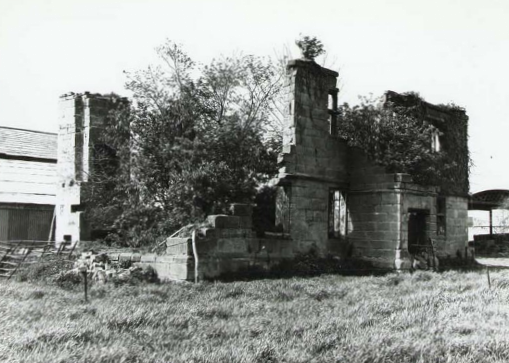
Incredibly, there is yet more of this mysterious story to share. There’s a line in the Market Harborough Advertiser which lends weight to the story that a skeleton was found when the hall was being renovated at the start of the twentieth century. In a review of the year 1903 it simply says ‘December 3 – a quantity of human bones were found at Papillon Hall’. Frustratingly, the newspaper archive does not appear to have digitalised the edition for December 3rd 1903 which presumably contains more details of the discovery. Elsewhere, there are suggestions that the hauntings relate to the pre-Papillon history of the site and involve a lepers’ hospital, a monk and some buried treasure. Then there are the experiences of Captain Frank Belville, who lived at the hall for a while and encountered not the terrifying presence of David Papillon but a spectral young woman, ‘silver and half-hooded’, who he chased often but never caught (why is this giving ‘Carry on Cursing’ vibes?). Oh, and there’s a magical well too.

There may be a part three to follow but I truly think there’s enough material here to turn this tale of cursed shoes and haunted paintings into a full length motion picture.

Notes

  1. This nickname strikes me as a little strange given he moved to Acrise Park in Kent following his marriage to Mary Keyser at the age of 26.

Sources

Ghosts and hauntings in and around Leicestershire by Andrew James Wright

Market Harborough Advertiser and Midland Mail

Leicester Daily Post

Reynolds’s Newspaper

Leicester Chronicle

The Reservoir Part I

Old cottages are nothing but hassle my ex had insisted, preferring a bland but energy efficient box on a new estate to anything that an estate agent could market as ‘chocolate box pretty’. I left him last year but he probably hasn’t turned away from his 85-inch television for long enough to notice yet.

How appropriate then that it was an infuriating drip in the bedroom that might just prove him right. It couldn’t be a leak, there hadn’t been any rain for ages. A bucket would have to be the temporary fix for now and at the pub later, I’d ask if anyone could recommend someone who could pop round and take a look.

An hour into my shift and the heat behind the bar was almost unbearable. It made worse still by the fact I seemed to be pulling cold pints for everyone in the village but myself. The talk at the tables was speculation about hosepipe bans and barbecue plans. All standard topics for discussion every time the country had a dry spell until I heard one group of older gentlemen talking about the nearby reservoir. I’d noticed myself on the drive over the causeway that the water levels had dropped and when one of them said, ‘‘The old village will be reappearing soon’, I couldn’t help but eavesdrop on their conversation.

‘Village? It was a couple of old cottages and a mill. Not bloody Brigadoon. I read some nonsense on Facebook the other day about people being able to hear the bell of a drowned church tolling below the surface. Flippin’ idiots could probably hear St Leonard’s up the road’.

‘There was that old bridge though, named after the nursery rhyme, remember?’

‘Kitty Fisher’s Bridge? That was named after a real person apparently. A local lass, threw herself in the brook they say, because she’d lost her lover. We were always warned not to swim there away from there as kids. They said she’d pull us beneath the water’.

‘I think I saw her once’, one of the men said softly, more as an admission to himself than the surrounding group. The others looked at him for a second before one of them broke the silence with a quip.

‘She’s been dead at least two hundred years, Mike. Even you weren’t around then’.

‘I think I saw her’, he repeated, bolder this time. ‘Stood on the banks of the reservoir. It was that heatwave of ‘76, and like a fool, I’d taken myself down there to fish. It weren’t much more than a puddle. I glanced up and there she was standing on the bank, about 50 foot away from me. Dripping wet, she was.  I was just about to shout to her, see if she was ok and she…disappeared. One second she was there and then the next. Well, she just wasn’t’.

His monologue was once again interrupted by the joker of the pack. ‘You’ve always had that effect on women, Mike’, followed by comments from the others about needing to take more water with it. Mike laughed along with the banter but the trace of a puzzled expression still lingered on his face. It was clear, to me at least, that he had been deadly serious about what he saw that summer and it was something he had been trying to make sense of ever since.

(Note: This story is semi-fiction. It’s inspired by a real place and its folklore but a lot of it also comes from my imagination. Anyway, part II to follow soon!)

Cursed Soles Part I

Sometimes I find a story so intriguing that I have to spread my wings a little and go beyond the Staffordshire borders. As with most myths that have been centuries in the making, there is no one singular version of events. Almost all accounts agree however that something spooky was afoot at Papillon Hall and that a pair of brocade slippers were at the heart of the haunting.

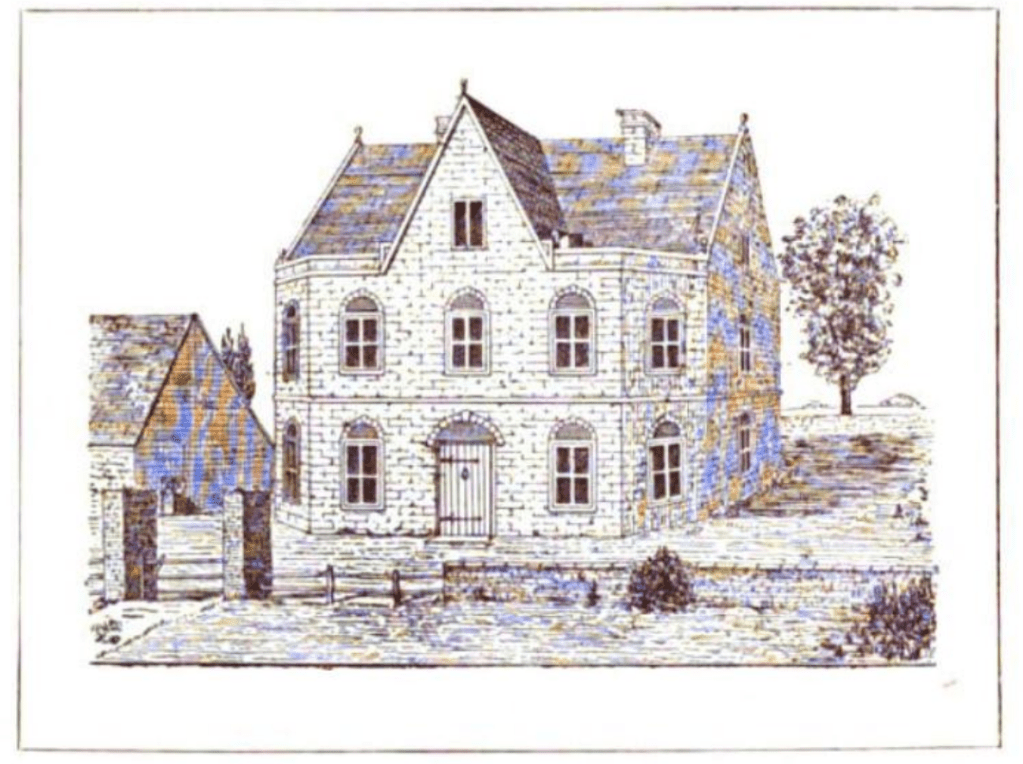
Papillon Hall, post renovation when wings were added to create a butterfly effect

In most retellings, David Papillon, grandson of the man who built the hall, is cast as the villain of the piece. People said Old Pamp, as the locals nicknamed him, supposedly had supernatural powers and may even have been in league with Old Nick himself. Prior to his marriage to Mary Keyser in 1716, he’s said to have kept a Spanish mistress at Papillon. More of a prisoner than a partner, she was kept under lock and key and only allowed out onto the roof of the hall. It seems his impending marriage to Mary may have rendered la Señorita surplus to requirements and she’s said to have met with a mysterious death in the attic room she had been confined to.

Whood, Isaac; David Papillon (1691-1762), MP; Leicestershire County Council Museums Service; http://www.artuk.org/artworks/david-papillon-16911762-mp-80451

With her dying breath, the woman placed a curse upon the beautiful green brocade slippers she had worn during her lonely rooftop rambles. If they ever left the hall, its owner would meet with terrible misfortune because these boots were no longer made for walking. Old Pamp moved away to Kent and onto a successful career as a lawyer and politician. Subsequent owners who arrived at the hall were handed the deeds and advised that the cursed footwear must stay or else face the terrible consequences.

Naturally, some scoffed at the idea of shoes with supernatural powers and sent them to be exhibited at London, France and a museum in Leicester. A series of car crashes, riding accidents, robberies, dead livestock and other disasters soon persuaded them otherwise. Charles Walker who used the house as a hunting box in the 1890s heeded the warnings and kept the slippers safely stored behind a locked iron grille above a fireplace. As an extra security measure it’s said he threw the key into a pond.

According to some accounts, when the hall was renovated by Sir Edward Lutyens in 1903, a woman’s skeleton was found inside one of the attic walls. As yet, I have found only anecdotal evidence of its existence. The shoes, however, are a different story…

Papillon Shoes (right foot) by Leicestershire Museum Collections on Sketchfab

The hall was requisitioned during the Second World War and used as a billet for American soldiers. When they departed, it was discovered that one of the slippers had disappeared and it was assumed it had been stolen for a souvenir. Fearing the consequences, owner Rupert Belville made an appeal in the US for its return and in 1949, the Leicester Evening Mail reported that it had mysteriously reappeared. It was not enough to prevent the greatest misfortune to befall Papillon Hall in its history however and just two years later the house was demolished.

The cursed brocade slippers of Papillon Hall make a great stand-alone story but I want to take things one step further. I’ve discovered alternative accounts, intriguing inconsistencies and spin-off stories, all of which I will share in part II soon.

Sources

Daily News (London) – Saturday 09 July 1949

Leicester Evening Mail – Wednesday 06 July 1949

Leicester Chronicle – Saturday 23 October 1948

Market Harborough Advertiser and Midland Mail – Friday 27 December 1946

Market Harborough Advertiser and Midland Mail – Friday 06 December 1946

Manchester Evening News – Thursday 17 November 1938

Leicester Daily Mercury – Friday 26 August 1932

Tales of Old Leicestershire, Marian Pipe

The Cottage

‘Needs a bit of work eh?’, a cheerful voice said from behind me. I turned to see a man with a dog.

‘Just a bit!’, I replied in a similar tone, disguising the fact he’d startled me. ‘Does anyone live here?‘.

The man chuckled in that way that makes you feel you’ve just asked a question you should already know the answer to. ‘Been empty for years. I’ve lived here since the seventies and I’ve never known anyone living there’.

The most obvious thing to say next was ‘Why?’, and so I did. The man shrugged. ‘No idea. Perhaps they’re waiting for it to fall down so they can build on the land?’.

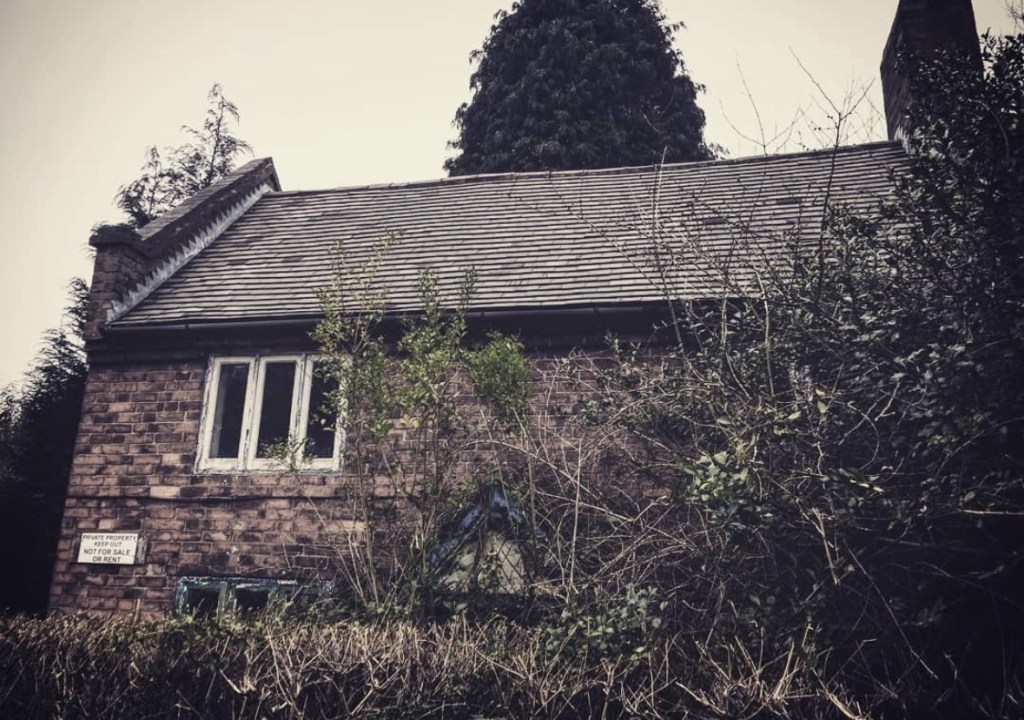
I kept my next question to myself.  Why would you need to wait for a house you own to rot away? Unless it was one of those historic houses that there were rules about knocking down, but this one didn’t look anything special. Just a red brick rectangle with a door in the middle and a pair of windows either side. A bit like the sort of house I might have drawn at primary school. Except my version would have had flowers in the garden and smoke coming out of the chimney and it had been a long time since this one had either.  

‘Tell you something though,’ the man said suddenly. ‘She don’t like it’. He nodded towards the spaniel at his feet.

‘She doesn’t like the house?’, I asked, checking I had grasped the right end of the stick.

‘No, her ball ended up in the garden once and she wouldn’t go in to fetch it. Just stood at the gate, shaking’. A puzzled look must have flashed across my face, as he added, ‘Must have been foxes’.

Looking back, I’m not sure which of us he was trying to convince more. To cut through the awkward silence that followed, I checked my phone. Despite having nowhere to go and nothing to do, I smiled, ‘Well, I’d best be off. Nice to meet you both’.

 ‘Righto’, he replied and we headed off in opposite directions.  

Later, the idea of taking some photos of the place occurred to me and so the next day I made my way back there. As I reached the cottage, a tennis ball sat on my side of the gate.

‘Daisy’s ball. The foxes must have been playing with it’, I thought, although now there was no-one to convince but myself. Pleased with my pictures of the peeling paint and ivy-clad brickwork, and the menacing ‘Not for sale or rent. Keep out’ sign, I headed home. As I uploaded them to Instagram, I saw the light reflected in the windows in a way that made it seem someone might be standing there and wondered if anyone would comment on it.

The following day, the man with the dog passed me in the nearby woods. ‘Did you get the photos you wanted?’ he enquired. ‘I saw you both up there yesterday when I was on my walk with Daisy. Thanks for getting her ball back’. His words only registered after they’d walked on. Both of us? Maybe someone had followed me up there. It wasn’t exactly in the middle of nowhere and someone could easily have worked out where the creepy old cottage I’d shared on my Instagram account was. Could do without the local teenagers adopting it as their new drinking den though.

Feeling some sort of responsibility for the place, I walked over to see if there was any evidence they’d discovered it. From the gate I could see that despite the overgrown tangle of a garden someone had managed to get the door open. I was ok with kids being kids but wanted to let them know their presence there had not gone unnoticed. I picked my way through the wilderness and shouted ‘Hello?. I thought I heard some movement from inside. ‘I think you better come out of there, it’s probably not even safe’. I couldn’t be sure but I thought I heard a giggle. I pushed the door open wider. ‘Come on now’.

More shuffling sounds from upstairs. I put on my adultiest voice. ‘You need to leave NOW’. A gust of wind howled down the stairs, slamming the door shut in my face.   ‘Ok fine’, I thought, retracing my steps through the garden. ‘Serves them right if the foxes eat them’. Thinking I heard a tap from a window, I turned, fully expecting to see a bunch of kids gesturing through the glass but there was no-one.

Later that week, the bluebells in the woods were in full bloom. I bumped into the man again, but this time he was without a dog. Something had spooked her, he told me, and she’d run off. That was yesterday and he hadn’t seen her since. I promised to keep an eye open for her but couldn’t shake off a sickening feeling that I already knew where she was.

The cottage door was ajar again. ‘Daisy?’, I tentatively called from the doorway. A slight whimper came from inside in reply. Then, something rolled down the stairs. Daisy’s ball. ‘Daisy come here! Good girl!,’. More whimpering. I’m not a huge animal lover but the sound was so pitiful I couldn’t just leave her in there. I stepped inside the cottage for the first time. Any curiosity I’d felt about the place had evaporated and there was nothing here that I wanted to see. I tiptoed up the stairs to avoid treading on the handfuls of fresh bluebells scattered on the steps. Trampling on them brings bad luck I’d been told as a child, and didn’t faeries use them as a lure to trap humans too?  

From the landing, I could see Daisy in the corner of one of the bedrooms and stepped inside. Her tail wagged weakly and she started to make her way over. The she stopped dead in her tracks and seemed to stare at something behind me. A soft thud caused me to turn around to see Daisy’s ball slowly rolling towards her. I scooped her into my arms and sprinted for the stairs.  Back on the landing, one of the floorboards in the bedroom behind me creaked and the dog whimpered again. I didn’t take my time on going back down the stairs.

Daisy’s owner was waiting outside. As I passed the trembling spaniel over to him, his look turned from relief to concern. ‘Where’s the other girl gone? She was right behind you’.

‘There was no-one else. Perhaps it was a trick of the light?’, was the answer I gave to reassure him as I looked up to the window.

‘She’s still in there. She always will be’, was the answer I kept to myself.

Footnote: I’ve been toying with the idea of writing more place based fiction for a while. I decided just to be brave and do it…

The Funeral

I’ve long contemplated the idea of writing semi-fiction, taking inspiration from the legends and folklore I love and bringing in elements of my own story telling and experiences. Would it work though, I’ve wondered? Well, I’ve finally concluded that there is only one way to find out….

This is my first attempt. Please be gentle with me.

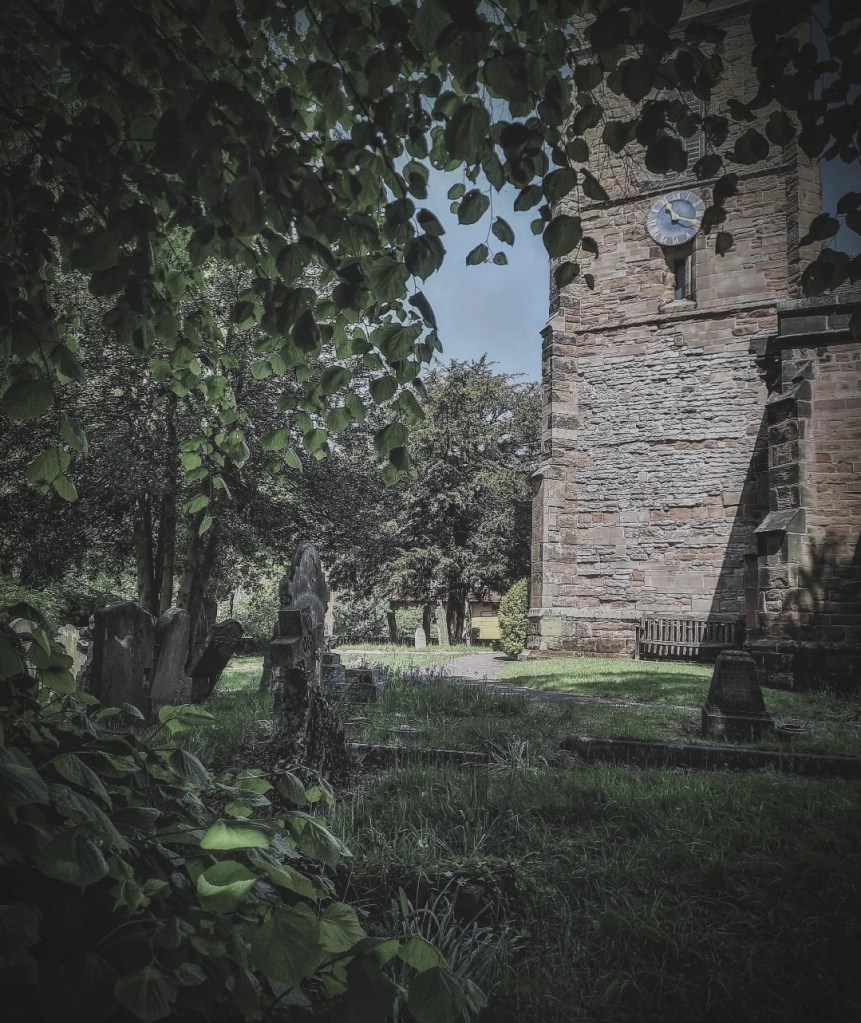
In 1974, a group of children were spooked by the sight of a figure in white rising from a grave in the churchyard of St James, Aldon on their way home from youth club. There was no indication of which grave it was in the newspaper report which had intrigued Felicity Murray and when she arrived at Aldon church on a warm July afternoon in 2021, she found no clues. The cemetery contained the usual assortment of Victorian tombs, any one of which could have been a contender for those strange events explained away as a trick of the light fifty years prior.

After taking a few photographs of the carvings on the church doorway, Felicity took a moment to sit in the sunshine on the bench outside.  On hearing the sound of horses’ hooves, she looked up from her phone and the message she was sending and noticed a funeral cortege approaching the church gates. The two black horses adorned with blue and white plumes and ribbons and pulling a Victorian hearse made for a fine sight but feeling uncomfortable as an uninvited onlooker, Felicity decided to leave the churchyard before the mourners began to get out of their cars. As she slipped out of the gate, Felicity muttered an awkward apology to the female undertaker but received no acknowledgement.

Felicity’s own car was parked just around the corner and as she pulled out of the space, she thought she’d take another look at the horses as she drove past the church. Yet on turning the corner, the horses were no-where to be seen. Neither was the hearse, the undertaker, the mourners’ cars. Nothing was there to indicate the presence of a funeral and the church doors remained shut. Getting back to her car had taken just minutes and even with the greatest efficiency, there was surely no way everyone was already inside.

As a bemused Felicity drove home, she tried to rationalise the experience. Perhaps the church had been a stop off on someone’s last journey and their final destination had been elsewhere? Maybe she’d catch up with cortege a little further up the road. Even the idea that she’d witnessed something paranormal, perhaps the replaying of a past funeral or a time slip crossed her mind but no. Despite the vintage touch of the horse-drawn hearse, every other element had been indisputably contemporary, especially the female undertaker. Distracted by her thoughts, Felicity didn’t notice the cyclist as she pulled out of a junction until it was too late.

The funeral of Jack Sharp took place at St James, Aldon on a warm July afternoon. He was brought to the church in a hearse pulled by two black horses, each adorned with blue and white plumes and ribbons, the colours of his favourite football team. On arriving, the undertaker thought for a brief moment that she’d seen a woman sitting outside the church door but concluded that it must have been a trick of the light.

The Walking Dead of Weston

Charlotte Sophia Burne, the first woman to become president of the Folklore Society, once said of Staffordshire, ‘It is comparatively an ordinary occurrence for this or that lately deceased person to ‘come again’ after death’.

I can’t help but wonder if she’d heard of the post-mortem wanderings of Preston Moore and his father in the village of Weston, near Stafford. A book called ‘Phantasms of the Living’, contains the following account from a Mrs J Bennett written in 1882 about the eerie events of 13th April 1860.

“My daughter Annie and I had been drinking tea with the late Mrs Smith and Miss Moore, and talking about their brother Preston being very ill and not expected to recover, and were returning home in the evening when between the little wicket which opens out of the Vicarage field and Mrs Newbould’s house, we met the identical man in face, form and figure, dressed as he was always wont; slouched hat, old frock coat, open in front, knee-breeches and gaiters, with a long stick. He passed so near us that we shrank aside to make way for him. As soon as we got to Mrs Newbould’s she exclaimed, ‘So Preston Moore is dead!’, when we both exclaimed, ‘Oh no, we have just seen him!’. We found, in fact, that he had died about half an hour before he appeared to us’.

Something wicked this way comes

Mrs Bennett was adamant that it could not have been a case of mistaken identity. According to her, ‘We cannot call to mind anyone at all resembling the individual in question; his appearance, dress and gait were utterly unlike anyone else residing in or about the neighbourhood’. More intriguing details emerged during psychical researcher Eleanor Sidgwick’s interview with Mrs Bennett. There was apparently something forbidding about Preston Moore and his sister Miss Moore was also considered odd. Preston may also have had a thing for Mrs Bennett. He once bought her pansies pinched from a neighbouring gentleman’s garden and another time, cauliflowers, also illegitimately acquired. Perhaps I should have saved this story for Valentines Day? ‘Roses are red, violets are blue, here are some vegetables, I’ve stolen for you. Violets are blue, roses are red, I’ll still be around, even after I’m dead’.

A lovely pub. We will definitely come again.

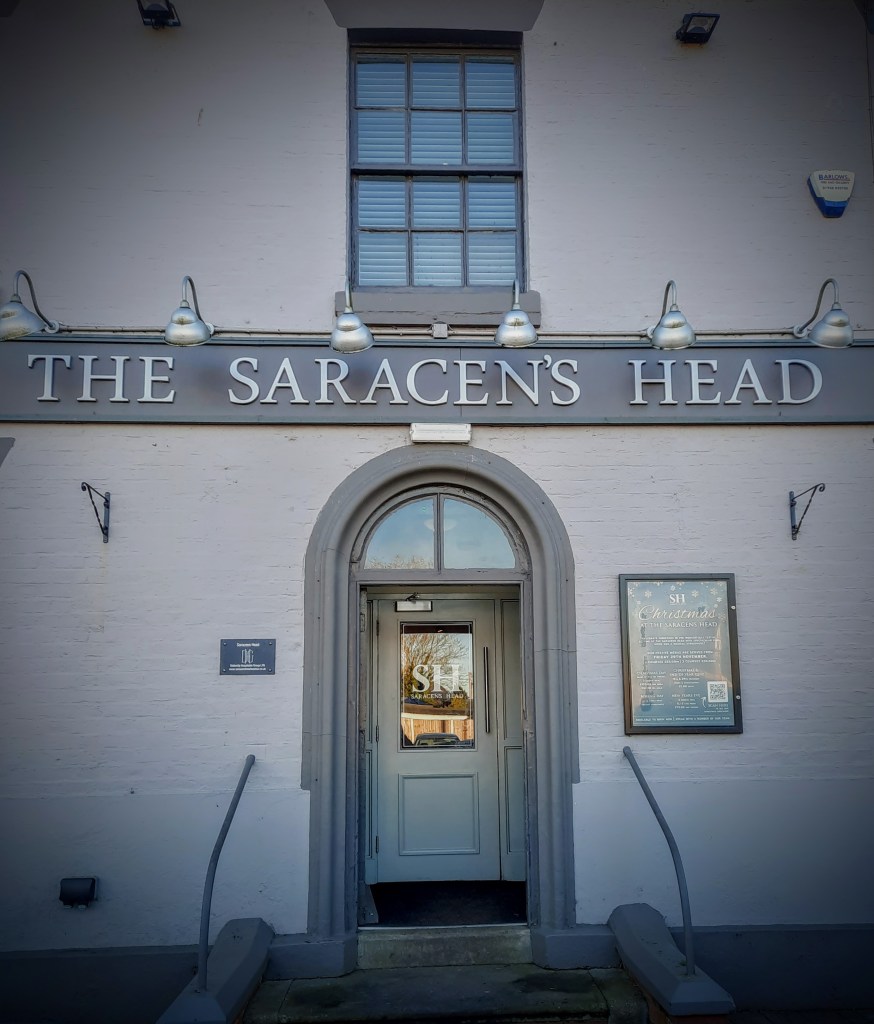
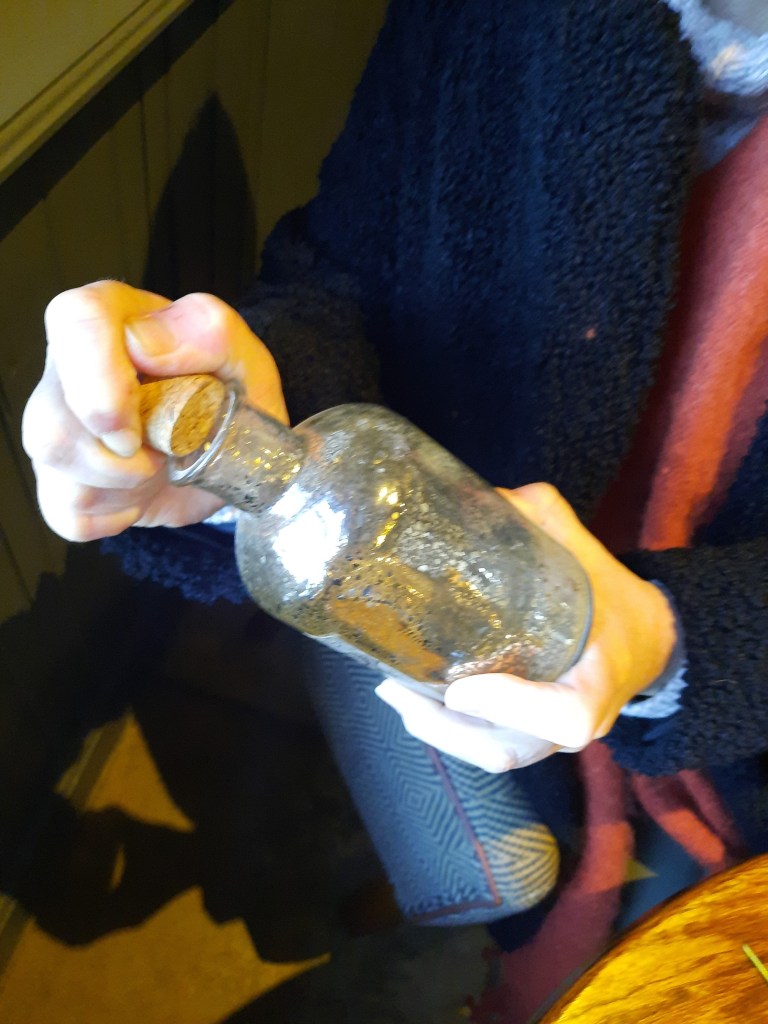
The story as it stands is strange enough but reader, there is a twist in this tale of a dead man walking. An article in the Staffordshire Advertiser in 1901 claims that Preston Moore was not the first of his family to ‘come again’ after his death. There was a legend in the local area that his father’s shade had roamed up and down the road between Stowe and Weston, until locals decided it had had enough exercise and it was time to exorcise this restless spirit. It was laid in a bottle and bricked up in the cellar of the Saracen’s Head Inn to remain there, ‘whilst holly and ivy are green’. It seems that during his life Mr Moore senior may have been the landlord at the inn making the real horror here the idea of being trapped in your workplace for eternity.

She wouldn’t let it lie!

Obviously my good friend Jacky and I went to investigate, by which I mean we popped into the pub for a coffee and pretended we’d found the bottle containing the spirit of Mr Moore on a shelf nearby where we sitting. I am convinced there’s more to be found out about the mysterious Moore family which may explain why the family seem to have been at the centre of village superstition. In the meantime, if you work at the pub, would you pop into the cellar and see if you can find where the old landlord lies? We should have asked but we didn’t have the bottle…

Sources

Staffordshire Folk and the Lore, Charlotte Sophia Burne

Phantasms of the Living, Edmund Gurney, FWH Myers and Frank Podmore

Staffordshire Advertiser 2nd March 1901

Staffordshire Advertiser 2nd March 1901

The Banshee at Weeford Rectory

In June 1863, Alice and Emmeline, daughters of the Rev Robert Cowpland were woken from their sleep at Weeford Rectory by an unearthly wailing. The only other member of the household to have been stirred by the sound was the family bulldog, who was found trembling with terror in a pile of wood. By the end of the month, their mother Jane was dead at the age of 57.

Many years passed, and then at around midnight on a still and calm August night in 1879, the sisters were again woken by, ‘ a terrible sound of shrieking or wailing, unlike anything which we have ever heard, except on the other occasion here mentioned, but louder’. The noise seemed to come from the passage leading past the door to their father’s bedroom, and so the sisters leapt from bed, lit candles and rushed from the room without even pausing to put on dressing gowns. Outside on the landing, they met their brother, the groom, the cook and the housemaid, all who had been woken by the supernatural sounds. Even the dogs in the house were said to be bristling with fear at the nocturnal noise which was later described by Alice Cowpland as being seemingly borne by a wind inside the house and amongst the rafters, an awful howling which seemed to rush past her, accompanied by a strong wind, although everything outdoors was perfectly still. As whatever it was left via a window, silence returned to the house save for the sobs of the cook. She knew what had just been amongst them and that it was a warning that her master’s days were now numbered.

Only the Rev Cowpland remained asleep throughout the banshee’s visit and confirmed at breakfast the following morning that he’d not heard a thing. As the cook had feared however, the wailing had been a warning and a fortnight later, on 9th September 1879, he died at the age of 75. It is somewhat ironic given the events of that evening, that the Lichfield Mercury describes him as having quietly passed away.

The church at Weeford where the Rev Cowpland is buried

By the middle of May 1885, Alice was married and living at The Firs in Bromyard. Her sister Emmeline was staying with her, and her brother Francis was at Upper House, Bishop’s Frome, around five miles away. Once again the two sisters, along with a woman called Emily Corbett and other servants, heard the wailing one night, though not as loud as it had been at Weeford and by the end of the month, Francis was dead.

At the end of August that year, the banshee returned again to The Firs. This time around, Alice not only heard the harbinger of death but she also saw one. On 1st September, she noticed a black dress in her bedroom, which rose up and took the form of a figure. It looked straight at her for a few seconds and she saw it was her sister Annie, her face pale and with a look of anguish. She was wearing a bonnet and a veil and the vision was so clear, she could see the freckles on her sister’s nose. The figure did not disappear instantly, but seemed to fade away. The same evening, a niece staying at the house also saw an apparition of Annie Cowpland. In her written account of those strange events, she says she was taking a bath when something compelled her to look towards a couch near the bed, where she noticed a figure dressed in black crepe. She immediately recognised it as her aunt and asked how it was that she was there. The figure then faded again. The following night at dinner, a message arrived at the house to say Annie Cowpland was dangerously ill. She died of diptheria two days later.

According to Alice, her mother Jane had sometimes experienced supernatural visits from those who were about to pass. In 1857, she saw her brother-in-law, the Rev William Cowpland, rector of Acton Beauchamp in Worcestershire, in her bedroom. She asked when he had arrived but received no response and the following day, a telegram arrived to say he had been found dead in his bed at the age of 55. Three years later, Jane heard footsteps in the hall of the Rectory at Weeford and saw William Dunn, a gardener at the house of a relative. It later transpired that he had died around the same time as his apparition had been seen, and shortly before his passing had expressed a wish to see Mrs Cowpland. In a way the strangest apparition of all occurred in 1862, when Mrs Cowpland saw an acquaintance of hers, known as Mrs F, at the foot of her bed. Again the appearance coincided with the time of death but as the two women weren’t close, Jane Cowpland always wondered why she had been the recipient of the woman’s final visit.

Alice passed away in 1915 and it would be fascinating to know if anything was heard from the banshee on the occasion of her death and indeed why it appears to have attached itself to them in the first place. It’s a subject that fascinates me given that I have my own family chronicles of deaths foretold, albeit in more hushed tones than the wails of the Cowplands’ banshee.

Sources

Proceedings of the Society for Psychic Research