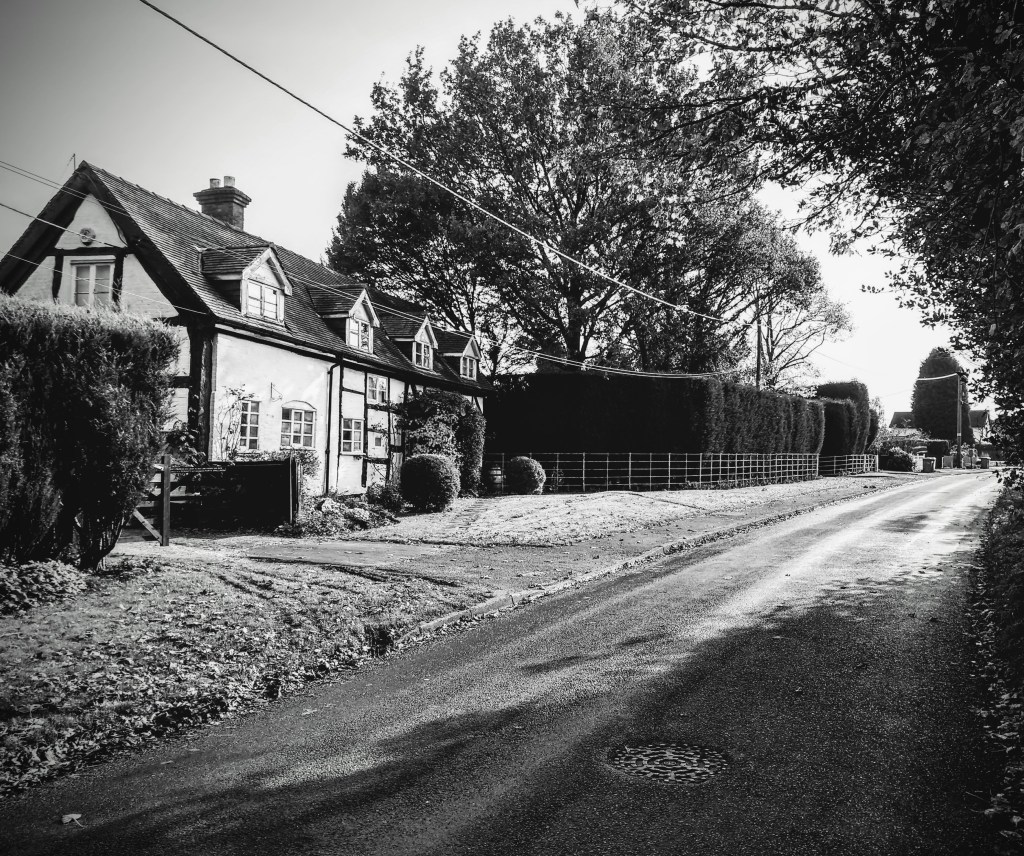
Around eighteen months ago, I was contacted by someone looking for the house his grandparents lived in at Woodhouses near Burntwood for a while. What I thought was a fairly routine family history enquiry quickly developed into one of the most chilling tales I have ever been told.
I held off sharing it for sometime, mindful that current residents may prefer not to know that their home was the scene of a horrific murder in 1899 and, if the story is to be believed, a subsequent haunting. After carrying out more research however, I am happy that the house no longer stands,
My correspondent’s grandparents, let’s call them Mr and Mrs H, moved there in the 1920s as a young couple hoping to make it a family home. There was a large dark stain on the kitchen floor which they weren’t able to shift but other than that it was ideal. It was soon after they’d moved in that the noises started. At first, it was just creaks at first and then louder noises, as if someone was moving furniture around downstairs. On one occasion, Mr H got up to look for an intruder but finding no-one concluded the noises had been caused by the cat moving around.
One night the feline was fussing at the bedroom door to go out. Mrs H got out of bed intending to go downstairs and let it out of the back door but when she got to the landing she saw her. A woman walking up the stairs towards her, looking as solid as you or I, but covered in blood and clutching a wound on her throat.
Mrs H screamed and then passed out. When she came around she told her husband what she’d seen but he dismissed it as her imagination. However, she knew what she saw and every night afterwards she’d lie in bed hearing the steps creak, knowing it was the ‘wounded woman’ as she called her, making her way up the stairs. She was so terrified to get up at night that even when she needed the bathroom she’d stay in bed, which eventually ended up with her getting a UTI. After this she decided she couldn’t go on as she was and persuaded her husband to move house. The couple moved to St Michaels Rd in Lichfield, and when Mrs H told her new neighbours about her experience at Woodhouses she learned about the terrible events which had taken place at her former home.
A blacksmith, with a history of petty crime and brawling in the street had married a woman called Emily Wright of Leomansley. Throughout their marriage he was violent towards her and on one occasion Emily had to run from the house in just her nightdress to escape him. Eventually, she kicked him out and he stayed away for sometime. However, when he stopped paying money for their four children, Emily reported him to the authorities. One morning, as Emily and the children came downstairs, he entered the kitchen of the house at Woodhouses. Emily tried to push past him but he hit her over the head with a rock tied up in a scarf. As she lay on the floor, stunned from the blow, he picked up a carving knife and hacked at her throat. The indelible stain that Mr and Mrs H had seen when they first moved in had been Emily’s blood.
Their eldest son ran for help but by the time anyone arrived at the house, Emily was dead. In the meantime, the murderer walked towards Lichfield where he handed himself in at the police station. In custody, he tried to take his own life but failed. The following day, despite being under supervision, he lay down on his prison bed, crossed his arms over his chest, and died of ‘natural causes’, according to the inquest.
As if this story was not horrifying enough, the parish registers of Christ Church in Burntwood record entries for the burials of both on the same day. If Emily refused to rest in peace beneath the same churchyard soil as the man who took away her life, then who could blame her?