The Indelible Stain

Around eighteen months ago, I was contacted by someone looking for the house his grandparents lived in at Woodhouses near Burntwood for a while. What I thought was a fairly routine family history enquiry quickly developed into one of the most chilling tales I have ever been told.

I held off sharing it for sometime, mindful that current residents may prefer not to know that their home was the scene of a horrific murder in 1899 and, if the story is to be believed, a subsequent haunting. After carrying out more research however, I am happy that the house no longer stands,

My correspondent’s grandparents, let’s call them Mr and Mrs H, moved there in the 1920s as a young couple hoping to make it a family home. There was a large dark stain on the kitchen floor which they weren’t able to shift but other than that it was ideal. It was soon after they’d moved in that the noises started. At first, it was just creaks at first and then louder noises, as if someone was moving furniture around downstairs. On one occasion, Mr H got up to look for an intruder but finding no-one concluded the noises had been caused by the cat moving around.
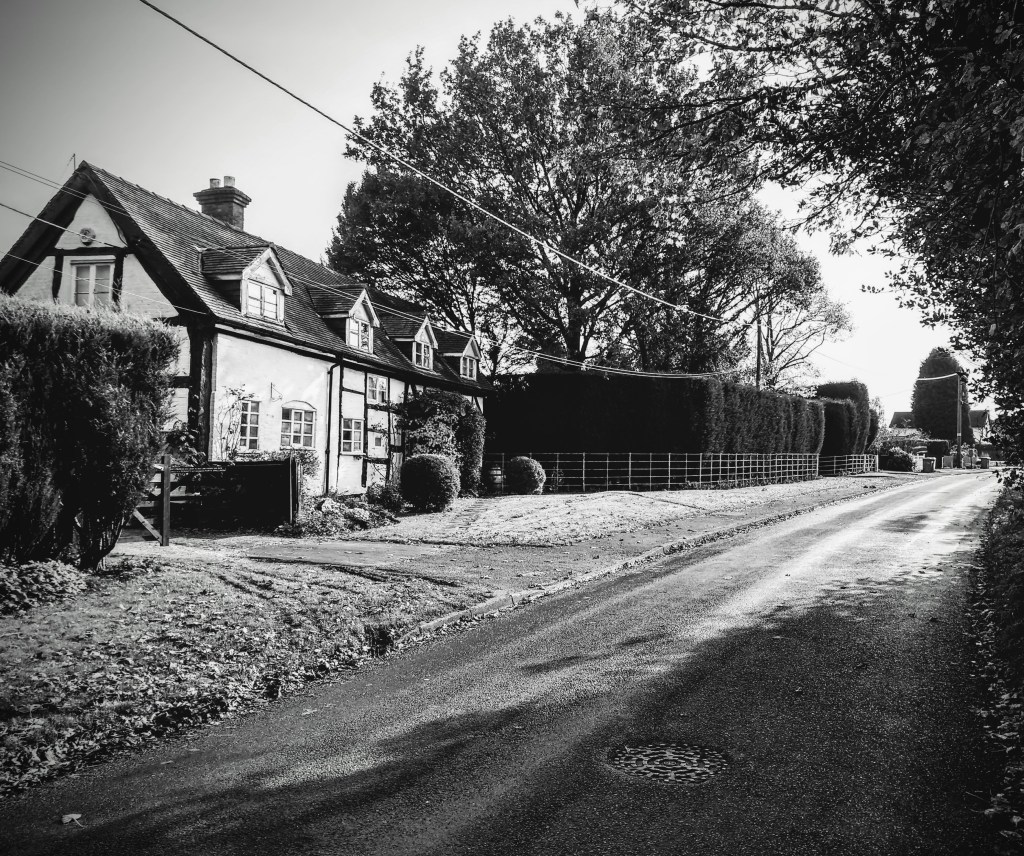
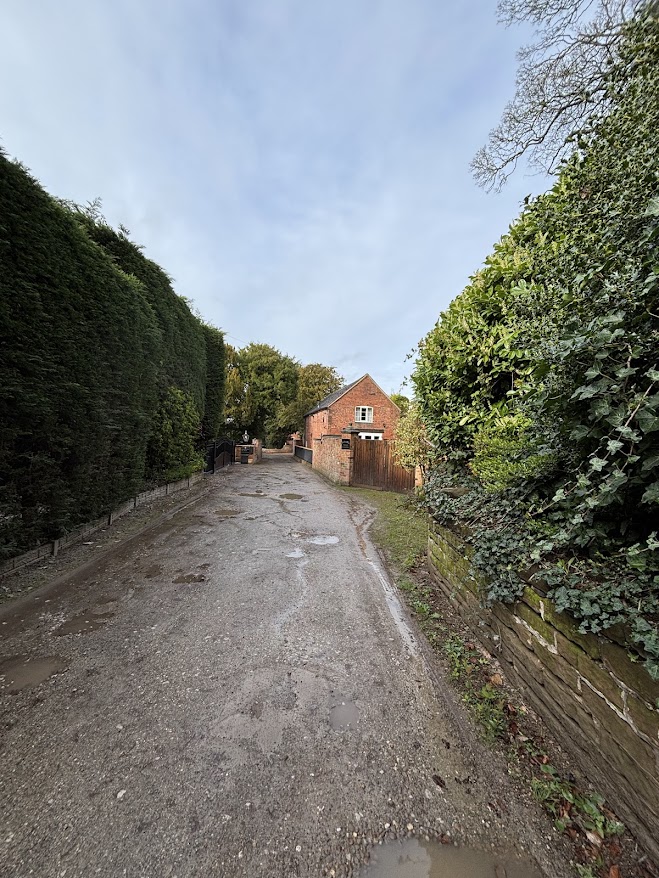
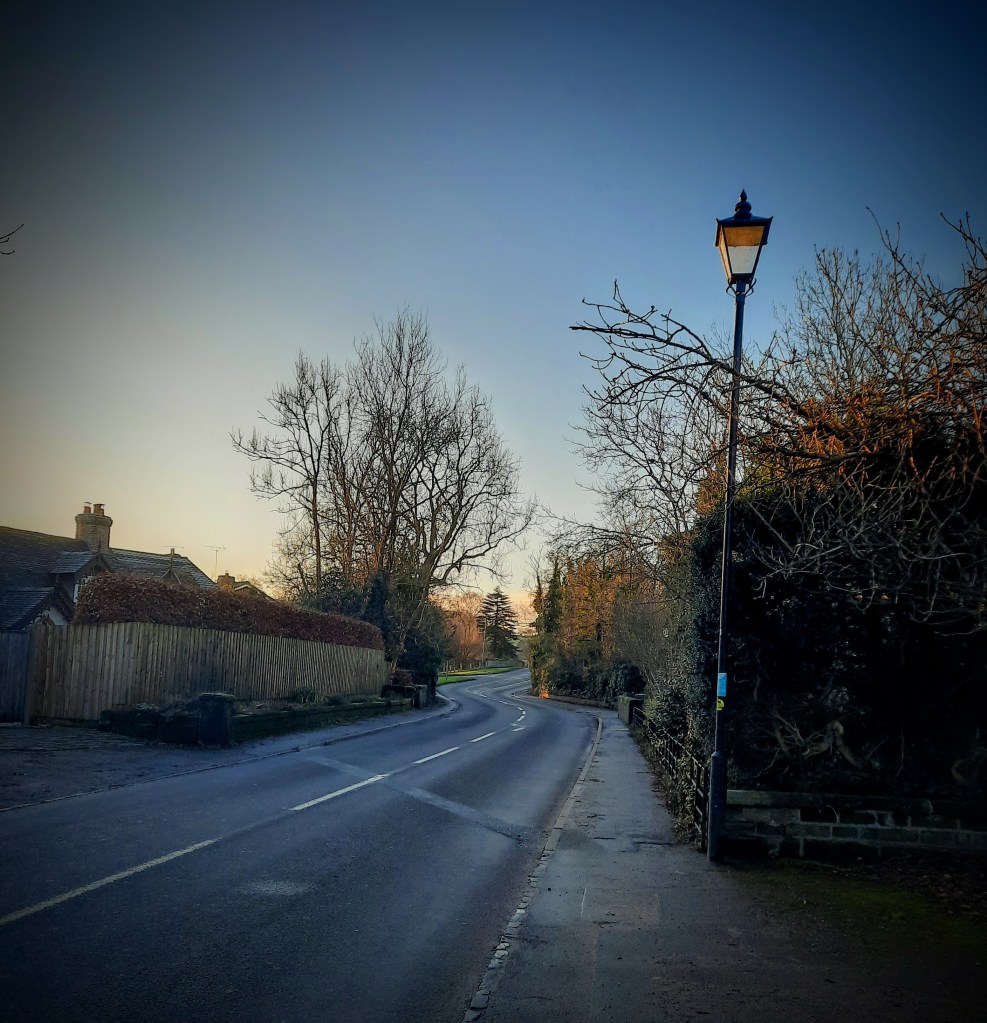
Woodhouses Lane

One night the feline was fussing at the bedroom door to go out. Mrs H got out of bed intending to go downstairs and let her out of the back door but when she got to the landing she saw her. A woman walking up the stairs towards her, looking as solid as you or I, but covered in blood and clutching a wound on her throat.

Mrs H screamed and then passed out. When she came around she told her husband what she’d seen but he dismissed it as her imagination. However, she knew what she saw and every night afterwards she’d lie in bed hearing the steps creak, knowing it was the ‘wounded woman’ as she called her, making her way up the stairs. She was so terrified to get up at night that even when she needed the bathroom she’d stay in bed, which eventually ended up with her getting a UTI. After this she decided she couldn’t go on as she was and persuaded her husband to move house. The couple moved to St Michaels Rd in Lichfield, and when Mrs H told her new neighbours about her experience at Woodhouses she learned about the terrible events which had taken place at her former home.

A blacksmith, with a history of petty crime and brawling in the street had married a woman called Emily Wright of Leomansley. Throughout their marriage he was violent towards her and on one occasion Emily had to run from the house in just her nightdress to escape him. Eventually, she kicked him out and he stayed away for sometime. However, when he stopped paying money for their four children, Emily reported him to the authorities. One morning, as Emily and the children came downstairs, he entered the kitchen of the house at Woodhouses. Emily tried to push past him but he hit her over the head with a rock tied up in a scarf. As she lay on the floor, stunned from the blow, he picked up a carving knife and hacked at her throat. The indelible stain that Mr and Mrs H had seen when they first moved in had been Emily’s blood.

Their eldest son ran for help but by the time help arrived at the house, Emily was dead. In the meantime, the murderer walked towards Lichfield where he handed himself in at the police station. In custody, he tried to take his own life but failed. The following day, despite being under supervision, he lay down on his prison bed, crossed his arms over his chest, and died of ‘natural causes’, according to the inquest.

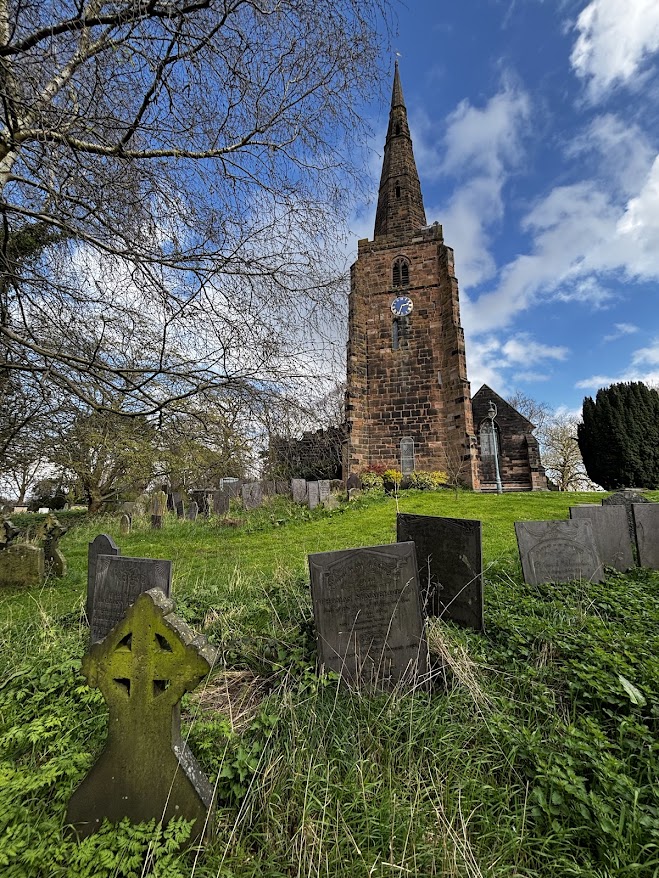
As if this story was not horrifying enough, the parish registers of Christ Church in Burntwood record entries for the burials of both on the same day. If Emily refused to rest in peace beneath the same churchyard soil as the man who took away her life, then who could blame her?

The Final Curtain

My daughter is taking me to see the Phantom of the Opera as an early birthday treat next week. Now I’m not expecting to find a subterranean lair and lake beneath the Lichfield Garrick (although there is probably a secret tunnel on the basis every other building in the city seems to have one) but I am wondering if there are any local theatres where long dead actors or audience members still linger on?

I already know of one famously spooky scene up north, involving Les Dawson and a dressing room at the Sunderland Empire in 1989. Dawson supposedly saw the spectre of Sid James, who had died on stage there thirteen years prior, wearing a shroud and reflected in the mirror behind him. The experience troubled Dawson to the extent that he refused to ever return there and would not share the words that Sid’s spook spoke to him that day. Some say James’s distinctive laugh still echoes around the theatre. Sounds like they need to get a priest in to bless this playhouse.

What did Syd Little (and others) see here?

Percy Purdy was a former manager of the Wolverhampton Grand. Mr Purdy managed the theatre from the 1920s until his retirement in 1949 at the grand old age of 80. He lived on the top floor of the building and it seems he never left. Glasses rattle in the bar, furniture rearranges itself and invisible fingers tap away on computer keyboards. In November 1984, actor Victor Spinetti saw a figure cross the room and vanish through a wall whilst he was waiting for the start of the show. Staff believe all of this activity is the work of Percy although he is not the only ghost of the Grand. There’s also a grey lady who leaves the scent of lavender behind her and the story says that she died after falling from a box down into the orchestra pit. Syd Little is said to have had a terrifying experience in the gents up in the dress circle but would not revealed what had happened to him. According to an article in the Express and Star from 2003, the most haunted spot in the theatre had a wall built across it during a refurbishment in the late 1990s, onto which a signed photo of Ken Dodd was hung. Whether this has stopped the grey lady, or whatever it was what scared Syd, from walking I do not know. (The wall I mean, not the photo of Ken).

Regular readers will know that my idea of a paranormal investigation involves delving back into the archives to see if there are any nuggets of truth to these tales. Incredibly the fatal fall into the orchestra is not fictional although the story has become somewhat twisted over the years. In December 1905, the Birmingham Post reported that a check-taker named John Smith had tumbled into the pit from a top box whilst putting the covers on the balconies after a pantomime and was proclaimed dead from a fractured skull on his arrival at the Wolverhampton General Hospital.

Up in Stoke, the Regent is not even one hundred years old but has still managed to acquire two ghosts. The building was only transformed to a theatre in 1999 having originally being opened as a cinema seventy years prior. A girl haunts the stalls and an investigation in 2004 named her as Alice Gregory. Up on the balcony, the apparition of a man has been seen surveying the auditorium. Interestingly, a former manager of the Regent Cinema was Lawrence Gregory who passed away suddenly in 1933 at the age of just 41. On the day of his funeral the cortege passed the entrance to the cinema and was saluted by staff as it passed by. Could he be the man in the balcony, still standing watch over his place of work and is there any connection between Mr Gregory and the girl?

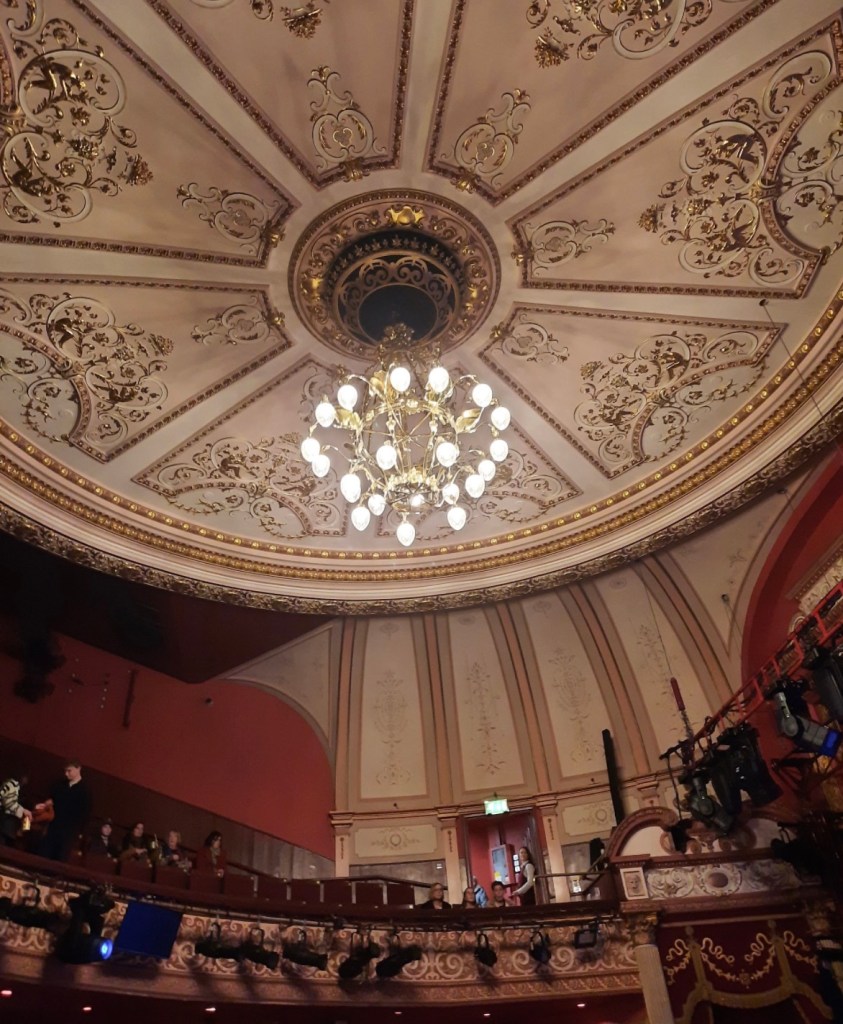
Lichfield Garrick Panto, 2017

I mentioned the Lichfield Garrick at the start, and it is there we shall return for our finale. Opened in 2003, its modern appearance might not strike you as somewhere spooky. However, I was messaged by a former employee who wanted to know if there were any stories about the site as several of her co-workers had experience strange things. I located details of an investigation carried out by the West Midlands Ghost Club who reported poltergeist activity, shadowy figures and the presence of woman in high heels and 1950s-style clothing on some steps near the stage. I am pleased to say this bit of Lichfield theatre lore also features the apparition of a celebrity. Radio WM DJ Malcolm Boyden once had an experience in the sound booth with the door of the room being flung open and the pile of papers on the table in front of him being thrown into the air.

Perhaps some folks really do carry on their roles after the final curtain has fallen?

Sources:

West Midlands Ghost Club/ Our Haunted Midlands on X

Wolverhampton Express and Star, Wednesday, 7 November 1984

Wolverhampton Express and Star, Thursday, 30 October 1997

Wolverhampton Express and Star Saturday, 26 July 2003

Birmingham Daily Post Saturday, 30 December 1905

The Era, Saturday, 6 January 1906

Staffordshire Sentinel, Sunday, 21 March 2004

Staffordshire Sentinel Saturday, 15 July 1933

The Seance in Stafford

In the autumn of 1933, ghost hunter Elliott O’Donnell wrote to the Rector of Stafford asking if he could be connected to any houses in or near the county town where paranormal activity had been reported in the hope he could spend Halloween night at one of them. After discounting Weston Hall, a decision which would literally come back to haunt him, and an unnamed place near Penkridge, he was put in touch with the residents of property at Rickerscote on the outskirts of Stafford.

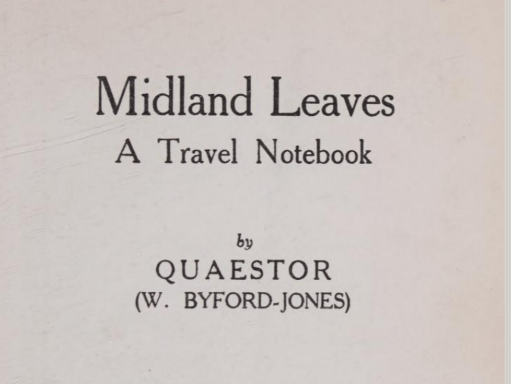
Accompanying him was author and army officer, Wilfred Byford-Jones who recorded the adventure in his book ‘Midland Leaves’. He describes the house as, ‘a pleasing old structure with nothing eerie about it’. However, the mistress of the hall revealed that she, along with her husband and several friends, had seen the spirit of an old woman dressed in black in the sitting room and out on the lawns on several occasions. As luck would have it, they were holding a seance that very evening to try and connect with this shady lady.

After dinner, the two men returned to Rickerscote to find four people sat around a large log fire in the sitting room. O’Donnell joined the circle but the Quaestor preferred to observe only and settled himself in a dark corner. To begin, the participants placed their fingers on the table and chanted the words to hymns. In the hour that followed, the group sat in silence as the wind howled in the chimney and the rain lashed against the windows, the tension punctuated by the ticking of an old grandfather clock.

Quaestor began to feel sleepy until an ear-piercing scream came from one of the male guests. He began to gibber and sway with the mistress of the house joining in moments later. Neither said anything that made any sense. The woman then began to whimper for several minutes. As she fell back into her chair a hiss came from her husband.

‘There she is’. He seemed to stare at something before continuing. ‘It is the old lady I have seen before in this room and on the lawn’.

Two other guests also claimed they could see her. Quaestor followed their gaze but could see nothing, ghost or otherwise. Even when someone suggested that the spirit was stood near to him, tending to a bird in a cage, he could see nothing. Nor could he feel the pocket of cold air the others claimed to.

The seance continued until midnight struck on the old grandfather clock. Those gathered revealed the uninvited guest had a name. Miss L____ E_____ J______, a former resident who had loved the house and hoped the person she passed it onto in her will would live there. This wish was not fulfilled and presumably was the reason her presence remained. The two visitors left around 12.30am and the following morning, O’Donnell recorded his own version of events.

“A sudden feeling came over me that there was a presence of some kind just behind a lady on my right. I asked her if she was concious of it. She said, ‘Yes I know it is there. It is a lady in black. She came in through the closed window, crossed the floor to the door, then came to me’.

Quaestor’s own account differs somewhat. “I can only say that I am baffled, having seen nothing and heard nothing that could not be explained by natural phenomena.”

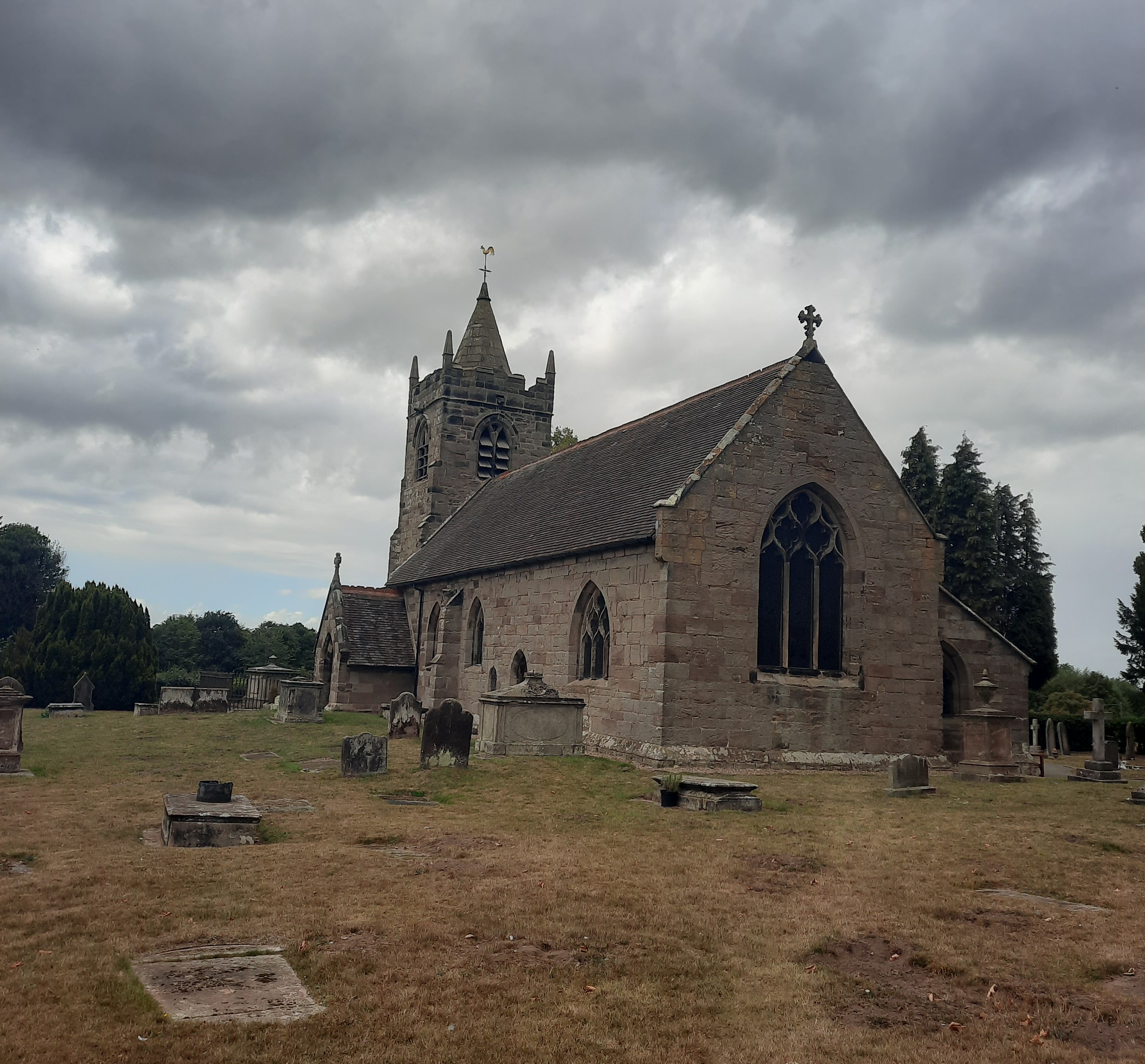
Acton Trussell, the final resting place of Miss L___ E___ J____

I suspect the events at the house on that Halloween night were down to mass hysteria rather than a haunting. However, after much reflection, I’ve decided not to share the precise location of the house just in case its former resident really did return to her Rickerscote home and the current residents would rather not know about it.

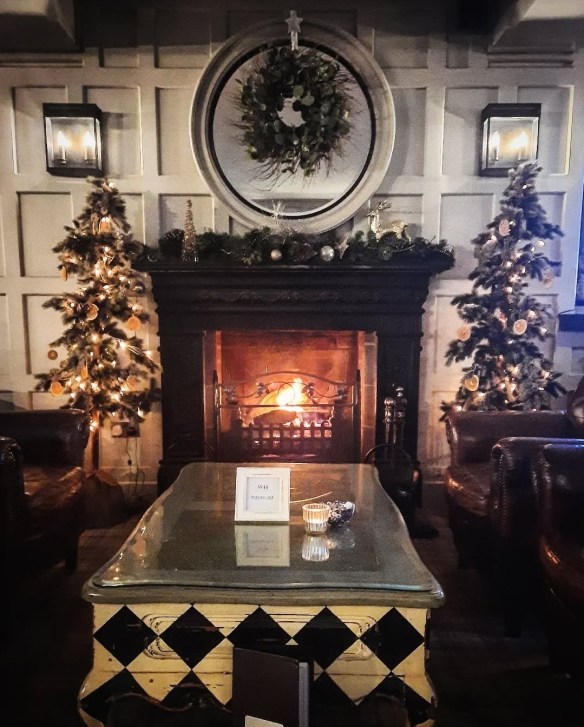
I myself shall be returning to the subplot involving Weston Hall another day. It’s one of my favourite haunted houses in all of Staffordshire but I’m much more likely to indulge in scones instead of a seance when sat around the fireplace here.

Weston Hall

Sources:

Midland Leaves, Quaestor aka Wilfred

Staffordshire Advertiser, Saturday, 9 June 1917

Bodies of Evidence

After reading of archaeological discoveries in North Lichfield, I thought it a good time to review one of the city’s greatest history mysteries. A quick recap then for anyone who, unlike me, hasn’t been obsessing for over fifteen years about how ‘a considerable quantity of human bones‘ were found in the early nineteenth century in a meadow adjoining Christian Fields.

The path to Pones Mill

Many of the bones were found a few feet beneath the surface in the quirkily named ‘Toads Hole Piece’, alongside some Roman pottery, the head of a pike and several horseshoes, although skeletal fragments were scattered across a half-mile radius. Only the bones found at Pones Mill, now known as Netherstowe House, were said to have had the appearance of having been buried, but it’s possible that they may have been dug up elsewhere and ‘thrown into an excavation’ there.

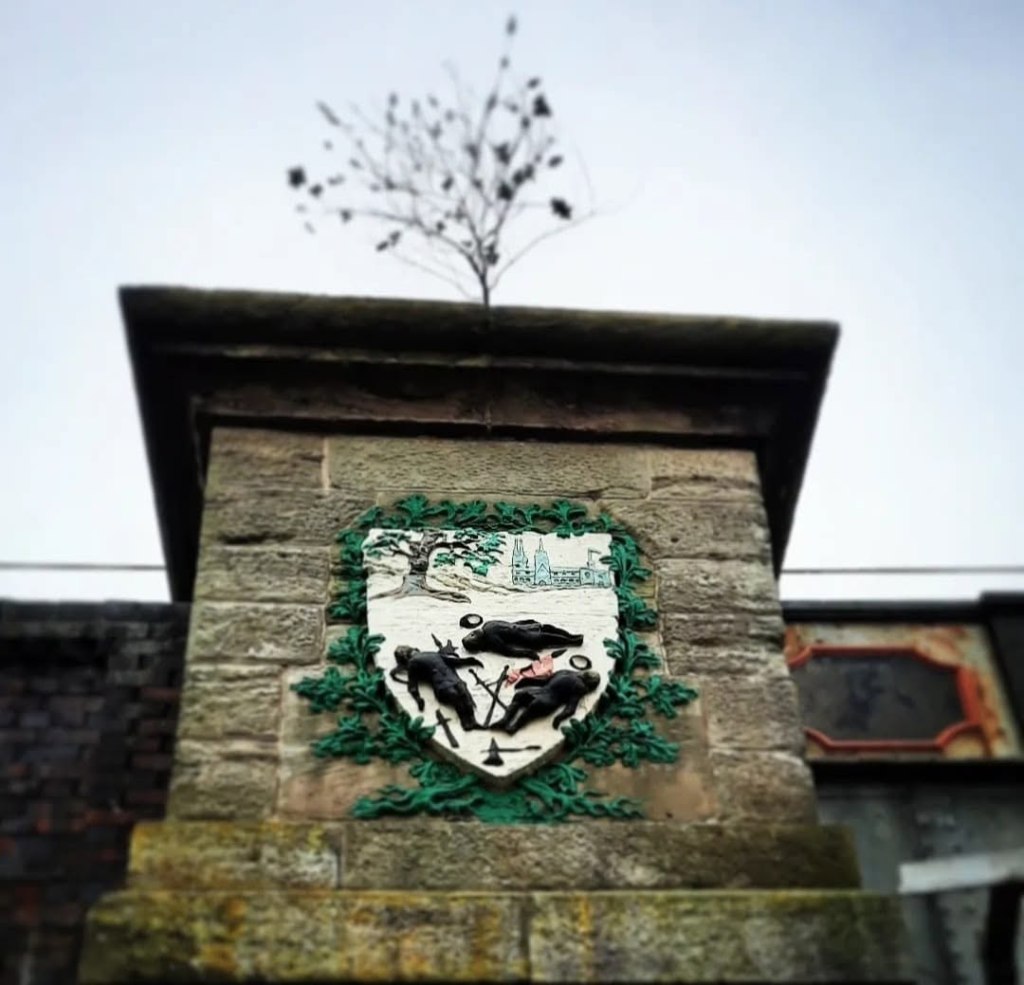
Eighteenth century antiquarians linked the discoveries of the bones to the Lichfield legend, in which a thousand Christians were massacred at the start of the fourth century during the reign of the Roman Emperor Diocletian. The site of the slaughter is still known as Christian Fields and although proper historians say the story is nothing more than a myth, the legend lives on. The Martyrs Plaque, a carving of three cadavers which once adorned the facade of the Guildhall can now be found in Beacon Park and elsewhere there are other versions of our sinister city seal, including on the railway bridge near the station. These visual versions of the legend and the refusal of people like me to stop referring to the city as ‘the Field of the Dead’ even though its exact etymology is ‘the Field by the Grey Wood’have all helped to ensure that this example of Lichfield lore endures.

Welcome to the Field of the Dead folks

If we discount the dead martyrs, what other explanations are there for the cartloads of bones being found beneath the fields of Netherstowe? Here are some of the possibilities I’ve considered. Feel free to dissect and discuss as necessary.

If there was ever a graveyard to epitomise the idea of death being the great leveller, it would be St Michaels on Greenhill.

An outbreak of plague in 1593 led to the deaths of over 1,100 Lichfeldians. Later outbreaks took place during the already troubled times of the Civil War, leading to the demise of another 800 citizens. Could the bones buried at Christian Field the victims of the disease? It seems unlikely. In the parish register of St Michael’s, someone has added notes alongside the names of those buried there in summer 1593. In July, ’67 dead of plague’. In August, ’59 dead of plague’. During this particular outbreak of plague in Lichfield at least, it seems those who succumbed rest in peace at the churchyard at Greenhill rather than in a pit on the northern outskirts of the city.

Could our Christian Field corpses be the remains of Civil War soldiers then, slaughtered in a skirmish on the outside of the city as the Close was being besieged? Again, the registers of St Michael’s suggest otherwise. There are records of twenty five soldiers being buried in the churchyard between 1642 and 1645 which suggests that men killed during the conflict were also buried here at Greenhill.

For me, as alluded to above, it’s the recent archaeology that’s been carried out in the Curborough area which may hold the key to solving the mystery of Christian Fields. Sixty coins dating to between the early 2nd to 4th century have been unearthed near to the farm, along with forty brooches. More examples of mortaria, as found at Christian Fields, have turned up along with worked marble and alabaster, Samian pottery fragments and glass suggesting there was a Roman settlement or at least a villa here. A much simpler Romano – British roundhouse has also been excavated nearby, along with a granary and well alongside it. What we can be sure of then is that there was occupation of a site near Christian Fields during the reign of Diocletian but whether those living here were converts to the new religion or still worshipping the old gods is unknown.

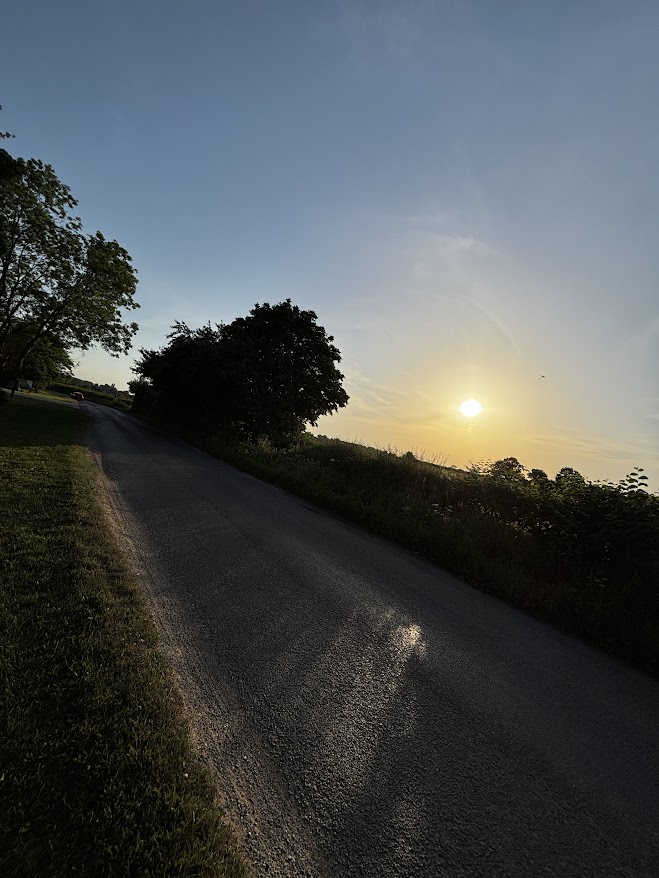
Sunset on Watery Lane

There are also field names which hint at a history which definitely has the potential to explain the presence of bones in this area. The 1851 Staffordshire tithe map records a ‘Chapel Meadow’, ‘Chapel Croft’ and perhaps most pertinently, ‘Graveyard’ in the vicinity of Watery Lane. And finally, and perhaps most remarkably at all, a single surviving Bronze Age burial has been found nearby in the form of a few fragments of cremated bone and sherds of the collared urn which once contain these ancient remains.

If burials really have been taking place in this area for not just centuries but millenia, perhaps ‘The Field of the Dead’ might be an accurate description after all…

Sources:

Staffordshire Parish Registers Collection

Click to access part-2-2023.pdf

Land at Curborough South, Lichfield, Staffordshire: Archaeological Evaluation © Cotswold Archaeology

WATERY LANE, LICHFIELD
EARTHWORK SURVEY, EVALUATION TRENCHING AND MITIGATION, Headland Archaeology

https://www.heritagegateway.org.uk/Gateway/Results_Single.aspx?uid=d01084bb-f418-47a7-b5e4-4b292c3cd6d1&resourceID=19191

Cursed Soles Part I

Sometimes I find a story so intriguing that I have to spread my wings a little and go beyond the Staffordshire borders. As with most myths that have been centuries in the making, there is no one singular version of events. Almost all accounts agree however that something spooky was afoot at Papillon Hall and that a pair of brocade slippers were at the heart of the haunting.

Papillon Hall, post renovation when wings were added to create a butterfly effect

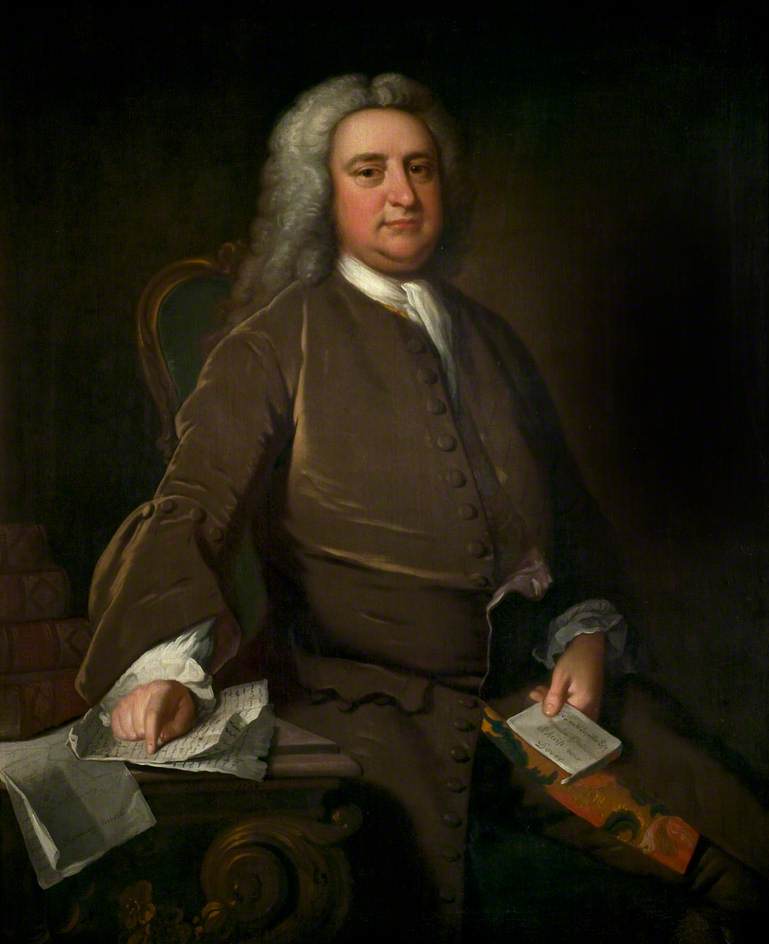
In most retellings, David Papillon, grandson of the man who built the hall, is cast as the villain of the piece. People said Old Pamp, as the locals nicknamed him, supposedly had supernatural powers and may even have been in league with Old Nick himself. Prior to his marriage to Mary Keyser in 1716, he’s said to have kept a Spanish mistress at Papillon. More of a prisoner than a partner, she was kept under lock and key and only allowed out onto the roof of the hall. It seems his impending marriage to Mary may have rendered la Señorita surplus to requirements and she’s said to have met with a mysterious death in the attic room she had been confined to.

Whood, Isaac; David Papillon (1691-1762), MP; Leicestershire County Council Museums Service; http://www.artuk.org/artworks/david-papillon-16911762-mp-80451

With her dying breath, the woman placed a curse upon the beautiful green brocade slippers she had worn during her lonely rooftop rambles. If they ever left the hall, its owner would meet with terrible misfortune because these boots were no longer made for walking. Old Pamp moved away to Kent and onto a successful career as a lawyer and politician. Subsequent owners who arrived at the hall were handed the deeds and advised that the cursed footwear must stay or else face the terrible consequences.

Naturally, some scoffed at the idea of shoes with supernatural powers and sent them to be exhibited at London, France and a museum in Leicester. A series of car crashes, riding accidents, robberies, dead livestock and other disasters soon persuaded them otherwise. Charles Walker who used the house as a hunting box in the 1890s heeded the warnings and kept the slippers safely stored behind a locked iron grille above a fireplace. As an extra security measure it’s said he threw the key into a pond.

According to some accounts, when the hall was renovated by Sir Edward Lutyens in 1903, a woman’s skeleton was found inside one of the attic walls. As yet, I have found only anecdotal evidence of its existence. The shoes, however, are a different story…

Papillon Shoes (right foot) by Leicestershire Museum Collections on Sketchfab

The hall was requisitioned during the Second World War and used as a billet for American soldiers. When they departed, it was discovered that one of the slippers had disappeared and it was assumed it had been stolen for a souvenir. Fearing the consequences, owner Rupert Belville made an appeal in the US for its return and in 1949, the Leicester Evening Mail reported that it had mysteriously reappeared. It was not enough to prevent the greatest misfortune to befall Papillon Hall in its history however and just two years later the house was demolished.

The cursed brocade slippers of Papillon Hall make a great stand-alone story but I want to take things one step further. I’ve discovered alternative accounts, intriguing inconsistencies and spin-off stories, all of which I will share in part II soon.

Sources

Daily News (London) – Saturday 09 July 1949

Leicester Evening Mail – Wednesday 06 July 1949

Leicester Chronicle – Saturday 23 October 1948

Market Harborough Advertiser and Midland Mail – Friday 27 December 1946

Market Harborough Advertiser and Midland Mail – Friday 06 December 1946

Manchester Evening News – Thursday 17 November 1938

Leicester Daily Mercury – Friday 26 August 1932

Tales of Old Leicestershire, Marian Pipe

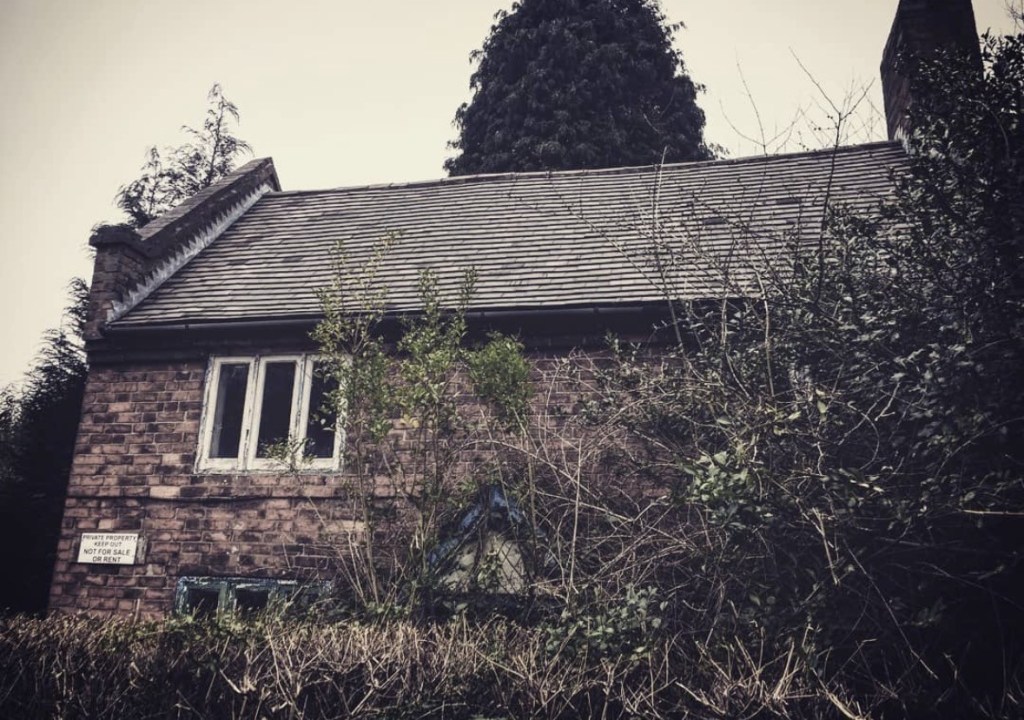
The Cottage

‘Needs a bit of work eh?’, a cheerful voice said from behind me. I turned to see a man with a dog.

‘Just a bit!’, I replied in a similar tone, disguising the fact he’d startled me. ‘Does anyone live here?‘.

The man chuckled in that way that makes you feel you’ve just asked a question you should already know the answer to. ‘Been empty for years. I’ve lived here since the seventies and I’ve never known anyone living there’.

The most obvious thing to say next was ‘Why?’, and so I did. The man shrugged. ‘No idea. Perhaps they’re waiting for it to fall down so they can build on the land?’.

I kept my next question to myself.  Why would you need to wait for a house you own to rot away? Unless it was one of those historic houses that there were rules about knocking down, but this one didn’t look anything special. Just a red brick rectangle with a door in the middle and a pair of windows either side. A bit like the sort of house I might have drawn at primary school. Except my version would have had flowers in the garden and smoke coming out of the chimney and it had been a long time since this one had either.  

‘Tell you something though,’ the man said suddenly. ‘She don’t like it’. He nodded towards the spaniel at his feet.

‘She doesn’t like the house?’, I asked, checking I had grasped the right end of the stick.

‘No, her ball ended up in the garden once and she wouldn’t go in to fetch it. Just stood at the gate, shaking’. A puzzled look must have flashed across my face, as he added, ‘Must have been foxes’.

Looking back, I’m not sure which of us he was trying to convince more. To cut through the awkward silence that followed, I checked my phone. Despite having nowhere to go and nothing to do, I smiled, ‘Well, I’d best be off. Nice to meet you both’.

 ‘Righto’, he replied and we headed off in opposite directions.  

Later, the idea of taking some photos of the place occurred to me and so the next day I made my way back there. As I reached the cottage, a tennis ball sat on my side of the gate.

‘Daisy’s ball. The foxes must have been playing with it’, I thought, although now there was no-one to convince but myself. Pleased with my pictures of the peeling paint and ivy-clad brickwork, and the menacing ‘Not for sale or rent. Keep out’ sign, I headed home. As I uploaded them to Instagram, I saw the light reflected in the windows in a way that made it seem someone might be standing there and wondered if anyone would comment on it.

The following day, the man with the dog passed me in the nearby woods. ‘Did you get the photos you wanted?’ he enquired. ‘I saw you both up there yesterday when I was on my walk with Daisy. Thanks for getting her ball back’. His words only registered after they’d walked on. Both of us? Maybe someone had followed me up there. It wasn’t exactly in the middle of nowhere and someone could easily have worked out where the creepy old cottage I’d shared on my Instagram account was. Could do without the local teenagers adopting it as their new drinking den though.

Feeling some sort of responsibility for the place, I walked over to see if there was any evidence they’d discovered it. From the gate I could see that despite the overgrown tangle of a garden someone had managed to get the door open. I was ok with kids being kids but wanted to let them know their presence there had not gone unnoticed. I picked my way through the wilderness and shouted ‘Hello?. I thought I heard some movement from inside. ‘I think you better come out of there, it’s probably not even safe’. I couldn’t be sure but I thought I heard a giggle. I pushed the door open wider. ‘Come on now’.

More shuffling sounds from upstairs. I put on my adultiest voice. ‘You need to leave NOW’. A gust of wind howled down the stairs, slamming the door shut in my face.   ‘Ok fine’, I thought, retracing my steps through the garden. ‘Serves them right if the foxes eat them’. Thinking I heard a tap from a window, I turned, fully expecting to see a bunch of kids gesturing through the glass but there was no-one.

Later that week, the bluebells in the woods were in full bloom. I bumped into the man again, but this time he was without a dog. Something had spooked her, he told me, and she’d run off. That was yesterday and he hadn’t seen her since. I promised to keep an eye open for her but couldn’t shake off a sickening feeling that I already knew where she was.

The cottage door was ajar again. ‘Daisy?’, I tentatively called from the doorway. A slight whimper came from inside in reply. Then, something rolled down the stairs. Daisy’s ball. ‘Daisy come here! Good girl!,’. More whimpering. I’m not a huge animal lover but the sound was so pitiful I couldn’t just leave her in there. I stepped inside the cottage for the first time. Any curiosity I’d felt about the place had evaporated and there was nothing here that I wanted to see. I tiptoed up the stairs to avoid treading on the handfuls of fresh bluebells scattered on the steps. Trampling on them brings bad luck I’d been told as a child, and didn’t faeries use them as a lure to trap humans too?  

From the landing, I could see Daisy in the corner of one of the bedrooms and stepped inside. Her tail wagged weakly and she started to make her way over. The she stopped dead in her tracks and seemed to stare at something behind me. A soft thud caused me to turn around to see Daisy’s ball slowly rolling towards her. I scooped her into my arms and sprinted for the stairs.  Back on the landing, one of the floorboards in the bedroom behind me creaked and the dog whimpered again. I didn’t take my time on going back down the stairs.

Daisy’s owner was waiting outside. As I passed the trembling spaniel over to him, his look turned from relief to concern. ‘Where’s the other girl gone? She was right behind you’.

‘There was no-one else. Perhaps it was a trick of the light?’, was the answer I gave to reassure him as I looked up to the window.

‘She’s still in there. She always will be’, was the answer I kept to myself.

Footnote: I’ve been toying with the idea of writing more place based fiction for a while. I decided just to be brave and do it…

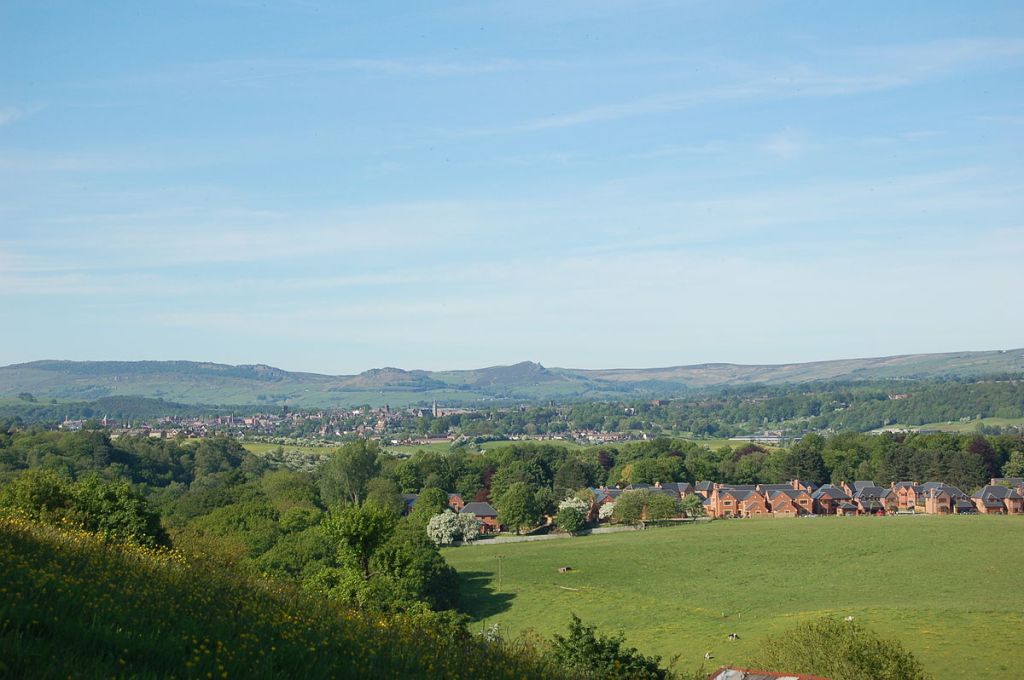
The Valley of Phantoms

I’m reading the memoirs of a man named William Purcell Witcutt. Like me he had connections to both Birmingham and Staffordshire, and was fascinated by folklore. Unlike me, he was an protestant vicar who converted to Catholicism before being exiled to the furthest outpost of the Diocese for the crime of commenting on the corrupt nature of many medieval priests. Yes, they sent him to Leek.

In his book, ‘Return to Reality’ there is a chapter called ‘The Valley of Phantoms’, in which he describes how, ‘Leek lay hidden in mist and woods in the middle distance, and one of the older boys tried to convince me that it was invisible from the air. Leek will never be bombed said he, and quoted with assurance the prophecy that there would come a time when, ‘there will be no safety in the land save ‘twixt Mow Cop and Morridge’.

No I can definitely see it

Witcutt was soon to find plenty more superstition in this Staffordshire Moorland town. It seemed to him that the valley and moors around it swarmed with ghosts and bogies, which people still believed in. There was the Headless Horseman, or in Leek dialect, ‘a man on an ‘oss without yed on, an awful gory sight’, and nearby was a Black Dog who guarded the graves of those who died a violent death. According to Witcutt, the Queen of the Leek demons was the Mermaid of Black Mere, who I wrote about many years ago here. A new story to me was that of ‘Ball Haye Jack’, a little grey man whose appearance in front of one of the mills was believed to bring bad luck. One curious custom Witcutt noted was that on seeing his collar, the girls and women who worked in the mills would touch the factory railings, a somewhat unsettling reaction given it seems to be linked to the superstition that touching iron would protect against the power of a sorcerer.

One of the strangest spots Witcutt writes about is the Coombes Valley, When he visited in May 1940 he found a farmer planting potatoes and as the man sowed his spuds, he shared stories of the valley. At a place nearby, the spectre of a murdered man was said to ride up and down the ridge. Once seven priests came to lay him but all but one of the gathered fathers fled. The final man standing held up a stone in the brook, dismissing the pleas of the phantom for mercy, and laid him beneath the rock. The process appears to have been unsuccessful however and so the dead man rode out once more. This next time he was laid beneath a hawthorn tree at a place known very appropriately as Spirit Hole. Even that was only sort of successful though as he still haunts the valley, although now in far less malevolent form of a bird heard singing as the night falls at the Spirit Hole. The stone which had failed to keep the ghost grounded was still there when Witcutt visited (and I believe it still is), and according to the farmer it had once been a stone of sacrifice.

No wonder the valley is full of phantoms.

Source: WITCUTT, W.P. Return to reality, Macmillan, 1955.

The Walking Dead of Weston

Charlotte Sophia Burne, the first woman to become president of the Folklore Society, once said of Staffordshire, ‘It is comparatively an ordinary occurrence for this or that lately deceased person to ‘come again’ after death’.

I can’t help but wonder if she’d heard of the post-mortem wanderings of Preston Moore and his father in the village of Weston, near Stafford. A book called ‘Phantasms of the Living’, contains the following account from a Mrs J Bennett written in 1882 about the eerie events of 13th April 1860.

“My daughter Annie and I had been drinking tea with the late Mrs Smith and Miss Moore, and talking about their brother Preston being very ill and not expected to recover, and were returning home in the evening when between the little wicket which opens out of the Vicarage field and Mrs Newbould’s house, we met the identical man in face, form and figure, dressed as he was always wont; slouched hat, old frock coat, open in front, knee-breeches and gaiters, with a long stick. He passed so near us that we shrank aside to make way for him. As soon as we got to Mrs Newbould’s she exclaimed, ‘So Preston Moore is dead!’, when we both exclaimed, ‘Oh no, we have just seen him!’. We found, in fact, that he had died about half an hour before he appeared to us’.

Something wicked this way comes

Mrs Bennett was adamant that it could not have been a case of mistaken identity. According to her, ‘We cannot call to mind anyone at all resembling the individual in question; his appearance, dress and gait were utterly unlike anyone else residing in or about the neighbourhood’. More intriguing details emerged during psychical researcher Eleanor Sidgwick’s interview with Mrs Bennett. There was apparently something forbidding about Preston Moore and his sister Miss Moore was also considered odd. Preston may also have had a thing for Mrs Bennett. He once bought her pansies pinched from a neighbouring gentleman’s garden and another time, cauliflowers, also illegitimately acquired. Perhaps I should have saved this story for Valentines Day? ‘Roses are red, violets are blue, here are some vegetables, I’ve stolen for you. Violets are blue, roses are red, I’ll still be around, even after I’m dead’.

A lovely pub. We will definitely come again.

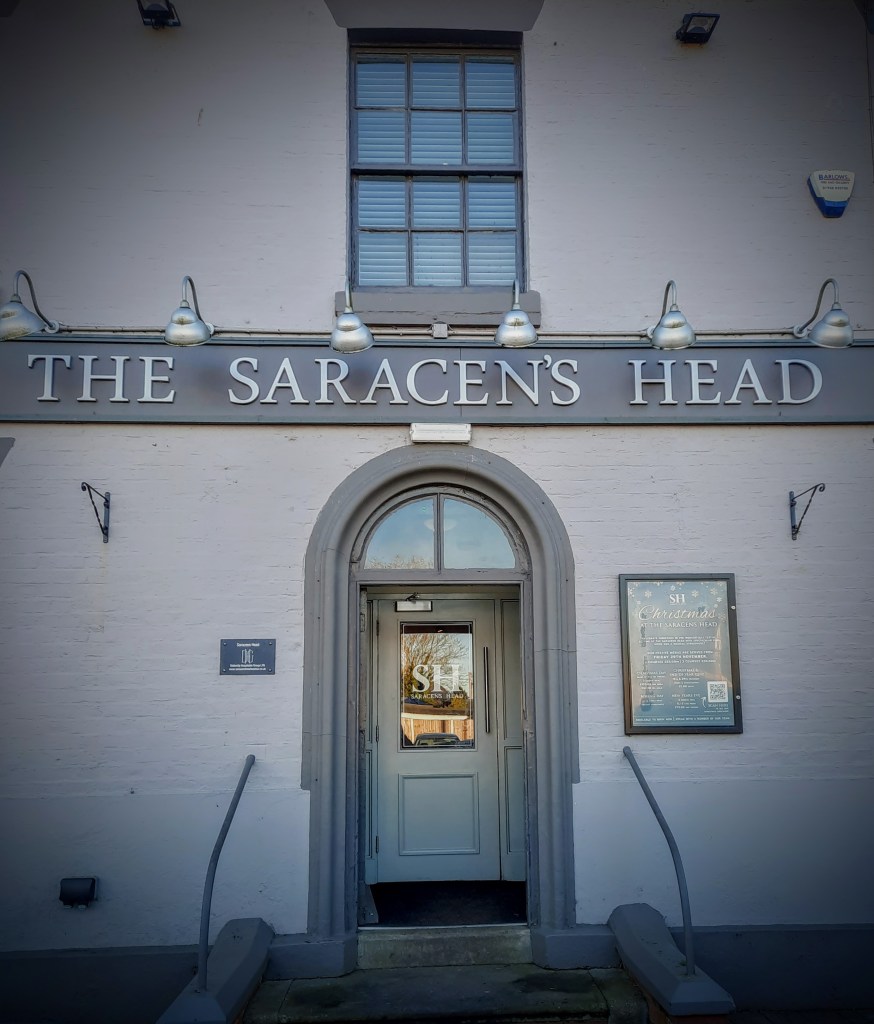
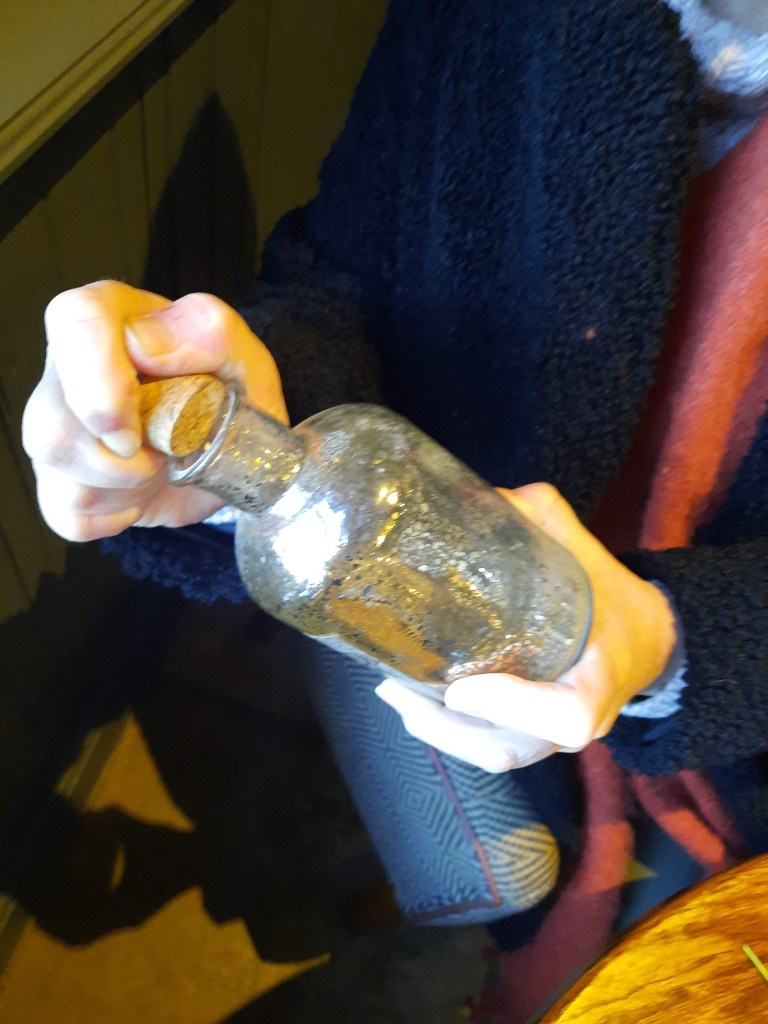
The story as it stands is strange enough but reader, there is a twist in this tale of a dead man walking. An article in the Staffordshire Advertiser in 1901 claims that Preston Moore was not the first of his family to ‘come again’ after his death. There was a legend in the local area that his father’s shade had roamed up and down the road between Stowe and Weston, until locals decided it had had enough exercise and it was time to exorcise this restless spirit. It was laid in a bottle and bricked up in the cellar of the Saracen’s Head Inn to remain there, ‘whilst holly and ivy are green’. It seems that during his life Mr Moore senior may have been the landlord at the inn making the real horror here the idea of being trapped in your workplace for eternity.

She wouldn’t let it lie!

Obviously my good friend Jacky and I went to investigate, by which I mean we popped into the pub for a coffee and pretended we’d found the bottle containing the spirit of Mr Moore on a shelf nearby where we sitting. I am convinced there’s more to be found out about the mysterious Moore family which may explain why the family seem to have been at the centre of village superstition. In the meantime, if you work at the pub, would you pop into the cellar and see if you can find where the old landlord lies? We should have asked but we didn’t have the bottle…

Sources

Staffordshire Folk and the Lore, Charlotte Sophia Burne

Phantasms of the Living, Edmund Gurney, FWH Myers and Frank Podmore

Staffordshire Advertiser 2nd March 1901

Staffordshire Advertiser 2nd March 1901

Queen of the Stone Age

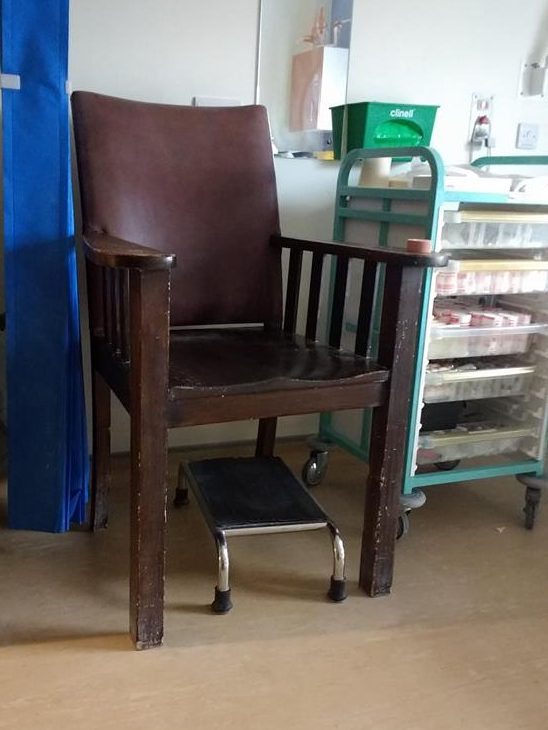
One of the highlights of this weekend’s coronation, appearances from Floella Benjamin and the Grim Reaper through the arched door aside, was The Coronation Chair. It is possibly the most famous piece of furniture in existence, rivalled only by Lichfield’s Victoria Hospital Chair now in the Samuel Johnson Minor Injuries Unit. Royalist or not, there is something rather thrilling about a graffiti and bomb scarred throne on which the behinds of thirty eight kings and queens, and the rump of Oliver Cromwell, have sat.

A big chair for the NHS. Hip hip hooray!

Even more ancient than the chair is is the ‘Stone of Destiny’ it was built to incorporate. The sandstone block, used for centuries as the crowning seat of Scottish kings, was stolen by Edward I in 1296 and only officially returned to the people of Scotland seven hundred years later. Many myths, legends and rumours surround the stone’s origin and its authenticity but today there’s another mysterious coronation seat somewhere in Staffordshire that I want to investigate.

Are you sitting comfortably? Then we’ll begin.

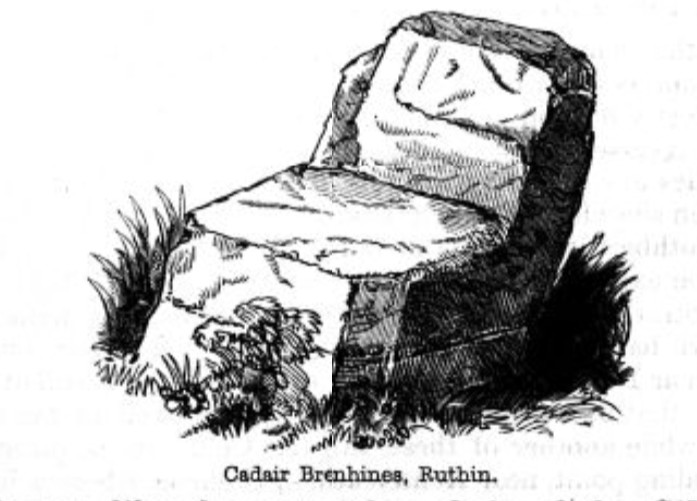
In September 1959, the Western Mail carried a story about a seat-shaped stone, located in the grounds of Blithfield Hall, Staffordshire. Visitors to the hall were told it was the ‘Welsh Coronation Stone’, which caused a great deal of confusion in Cardiff as nobody knew whether a Welsh Coronation Stone was actually a thing or not. An official at the Welsh Folk Museum was also non-committal given, ‘It is one thing to have a Stone and another thing to have a stone around which a story or tradition may have arisen’. It seems there was also reticence to discuss such monumental matters here in Staffordshire for fear of the stone being returned to its rightful home. All that could be established was that the family heirloom/national treasure had arrived at Blithfield in the 1920s.

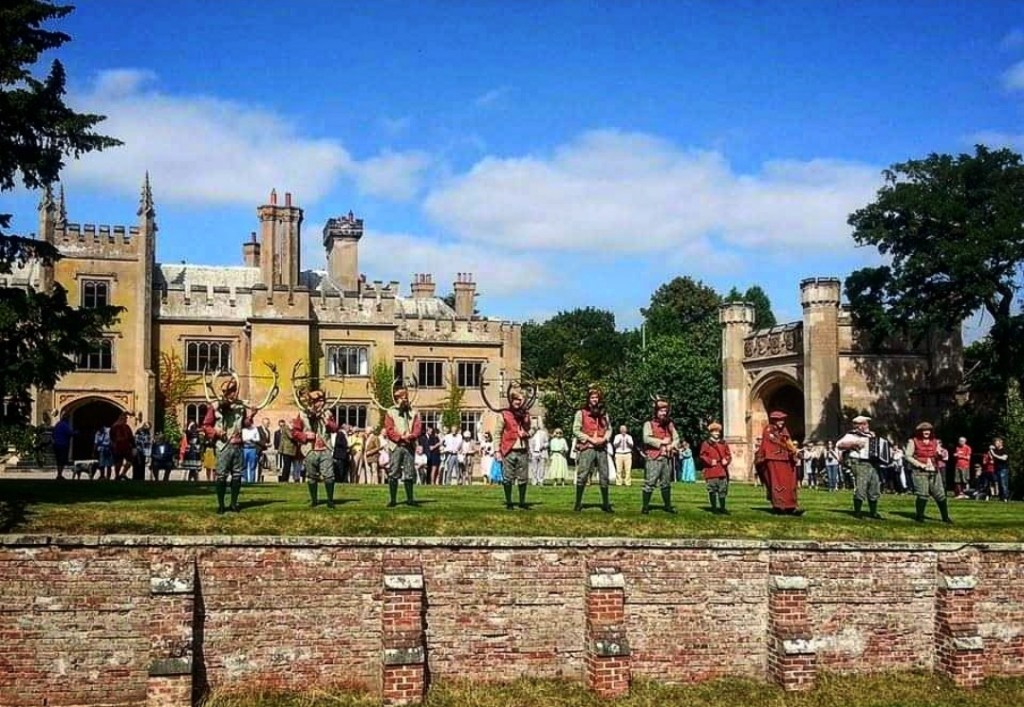
Dancing kings aka the Abbots Bromley Horn Dancers on the lawn on Blithfield Hall

Ten years on, around the time of Charles’ investiture as Prince of Wales in the Summer of 69, another reference to the stone appeared in the Rugeley Times. The then headmaster of Hill Ridware School is pictured in the hall’s inner courtyard looking at what the newspaper describes as ‘the Welsh equivalent of the Scottish Stone of Scone’ and ‘the seat on which early Welsh kings were crowned’. It says it came from the Bagot’s estate near Ruthin called ‘Pool Park’ and a virtual visit there via the Ruthin Local History Society reveals that a ceremonial ‘coronation stone’ dating to the 5th or 6th century is mentioned in the estate’s 1928 sales catalogue, which fits in with the date of the Blithfield stone’s arrival in Staffordshire. The society give the Welsh name of the stone as ‘Cadair y Frenhines’ (The Queen’s Throne) and says it was brought down from ‘Llys y Frenhines’ (The Queen’s Court) in the early 19th century, along with another ancient monument with Ogham and Latin inscriptions (1). The latter was moved to the museum in Cardiff in 1936 and replaced by a replica at its unoriginal location at Pool Park but according to the history society, the whereabouts of the Queen’s Throne is now ‘unknown’.

Claim of thrones

I’m certain that this missing stone is the one described as being at Blithfield but so many questions remain. Fifty plus years later, is the monument even still at the hall? Was it ever really used to crown queens, or indeed kings, or did it gain this reputation through Georgian whimsy and the fact it looks a bit like a chair? Hopefully if the royal chair is still to be found in the courtyard at Blithfield, the true backside story of The Queen’s Throne might finally be revealed.

Sources
https://www.scone-palace.co.uk/stone-of-scone

https://www.historicenvironment.scot/archives-and-research/archives-and-collections/properties-in-care-collections/object/the-stone-of-destiny-13th-century-medieval-edinburgh-castle-6132

https://www.megalithic.co.uk/article.php?sid=49523

https://www.ruthinhistoryhanesrhuthun.org/pool-park

An Inventory of the Ancient Monuments in Wales and Monmouthshire Volume 4

https://www.mythslegendsodditiesnorth-east-wales.co.uk/pool-park-ogham-stone

(1) In defence of Bagot, the chair was rescued from one of his tenants who had been using it as a horse block. Sadly, its said that the tenant simply went and fetched another ‘old stone’ in its place.

The Leomansley Witch Project

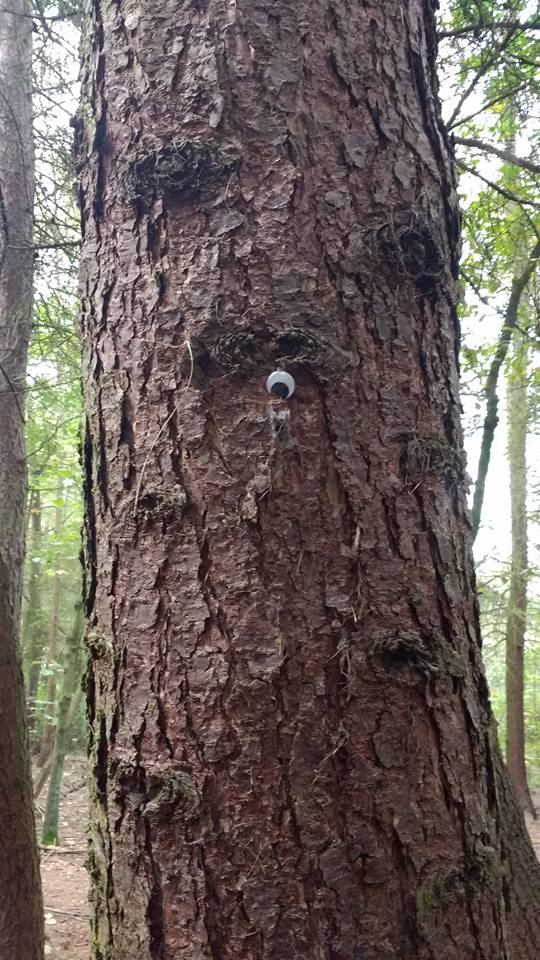
Imagine you’re watching a horror film. A woman heads into ancient woods which are shrouded in mist. And before long, she comes across a tree. With an eye stuck to it.

leomansley-mist

Chances are at this point in the film, you’d be shouting, ‘Don’t go in there. Run away!, whilst feeling smugly confident behind your cushion that you’d never be as stupid as to stay hanging around in mist shrouded woods where there are eyes stuck to trees. Well, I was in Leomansley Woods earlier this week. It was shrouded in mist and there was an eye on a tree. But did I leg it? No. And not just because I don’t do running under any circumstances.

woods-oct-16-2

If something wicked that way had come, I had Finn the swamp dog to protect me and my experience of fighting off a clown in Beacon Park earlier in the month to draw upon. Crucially though, I know and love these woods and consider the tokens and trinkets that have been appearing there since the summer more curious than creepy, possibly symbols of someone else’s affection for them.

finn-swamp-dog

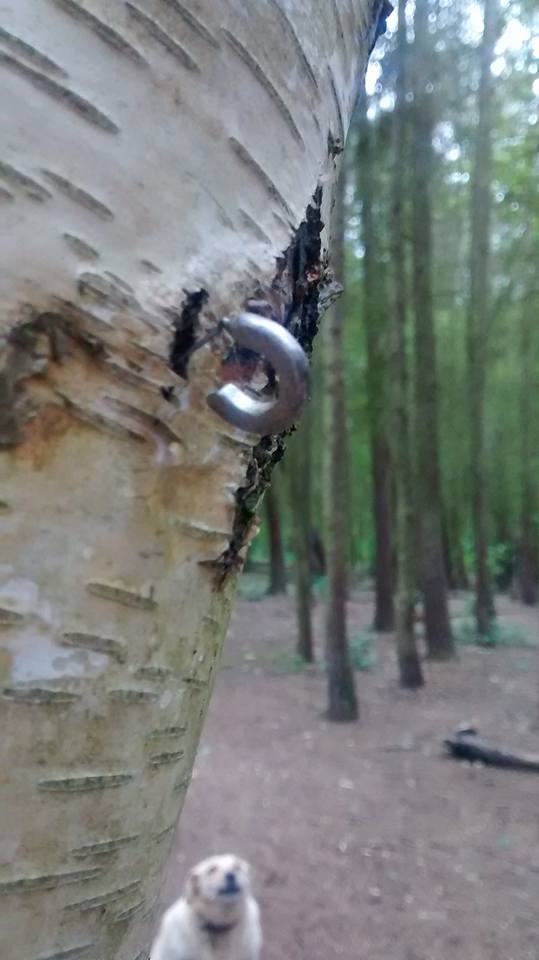
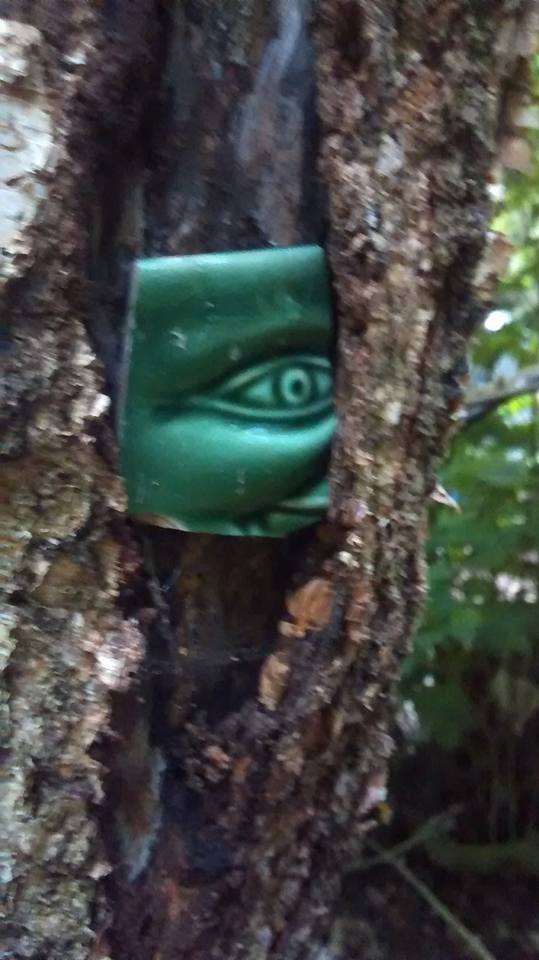
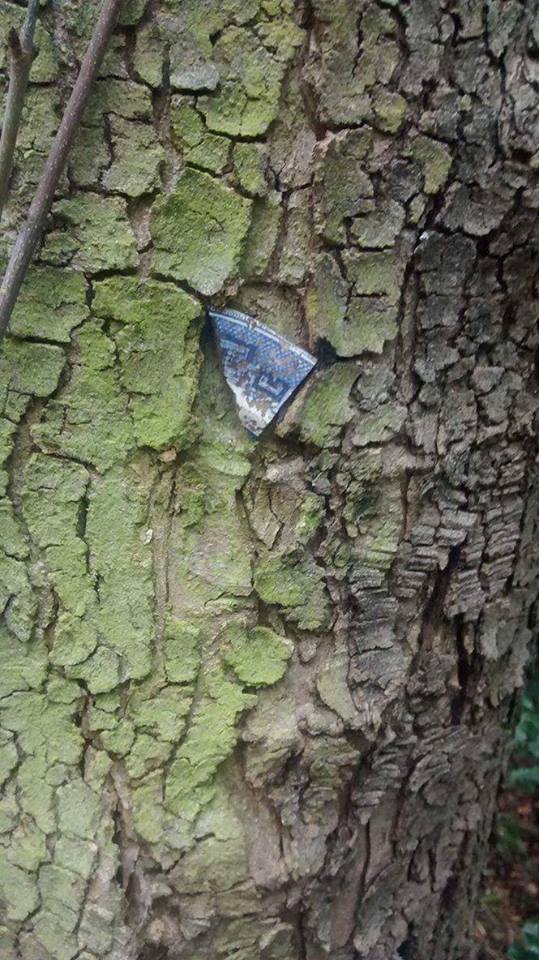
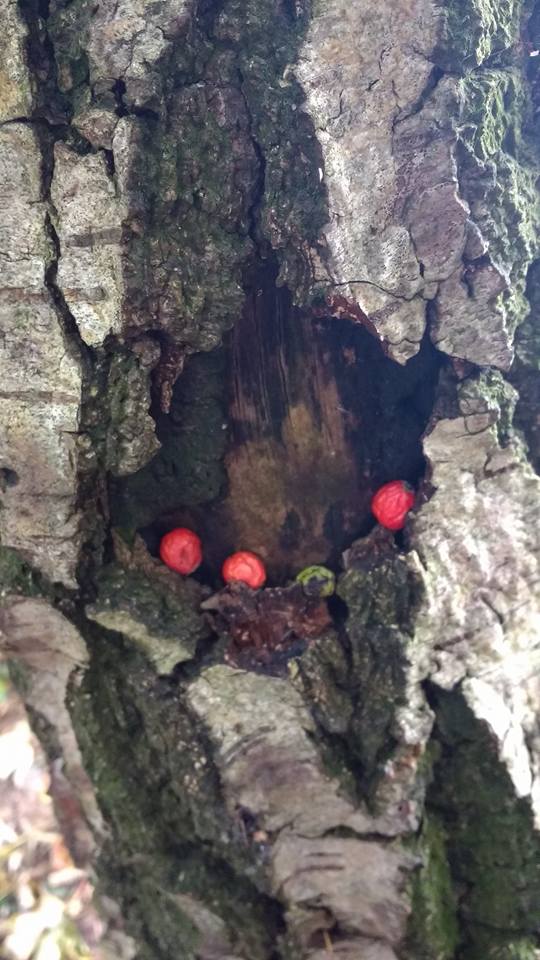
Back in 2004, when I was a newcomer to these parts, I remember getting a call from my sister telling me to go and take a look in the woods as somebody, or more likely somebodies, had created works of art in amongst the trees. There were mosaics created from leaves and petals, clay faces sculpted onto the trunks of trees and brightly coloured papers hanging from their branches. For reasons I can’t remember, I didn’t take any photographs but I can clearly recall the sense of mystery and magic someone had created in the woods that day. We never discovered who or why and there was no encore. The seasons turned and the years went by and then, early this summer, we began to notice things. At first it was subtle. A pebble placed here, a strip of silver birch bark there. It was the first piece of pottery appearing lodged in the knot of a tree that convinced us this was more than the handy work of squirrels and our overactive imaginations. Dog walks took on a new dimension as every day seemed to bring something new. I’m sure at its peak, others were joining in and making their own contributions. And this time I did bring my camera.

woods-june-2016-3

leomansley-woods-june-2016

woods-june-2016-6

woods-june-2016-4

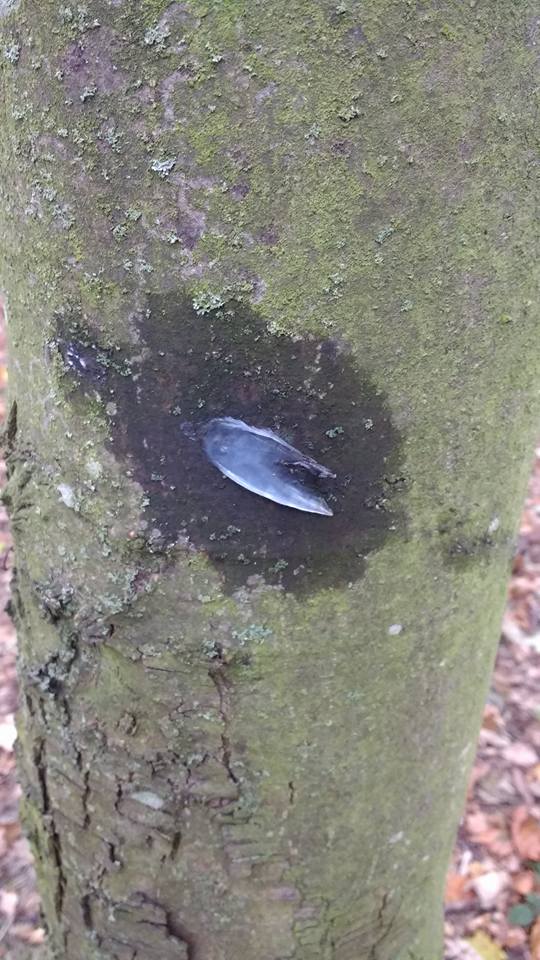
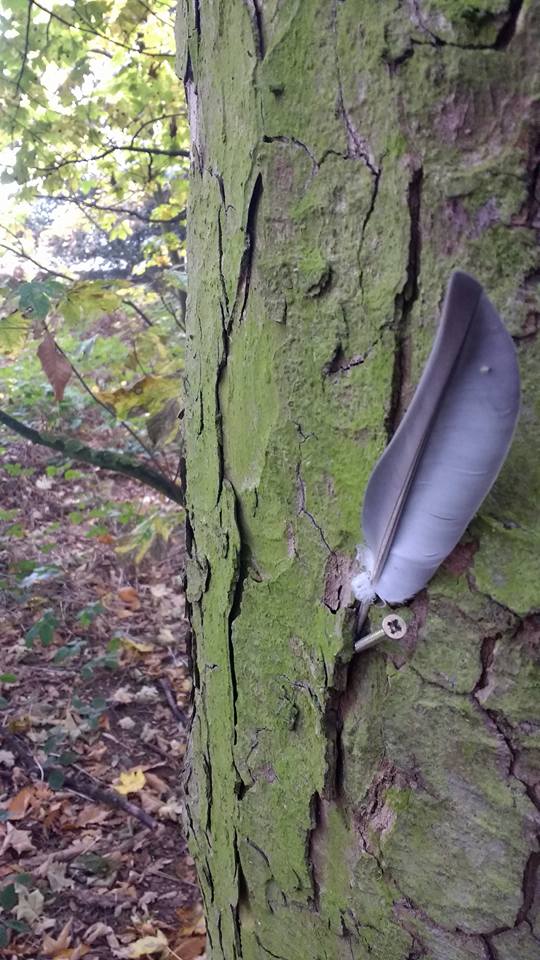
As the summer faded, the activity seemed to wane, and I’d assumed there would be no more. The other half took over the dog walks for a while but recently, for reasons involving a prolapsed disc, I took up the lead once again. Many of the original tree decorations had vanished but a handful of hawthorn berries, melted candle wax and a tickle of feathers (that’s genuinely and rather pleasingly the collective noun for them) had taken their place. Interestingly, others seem to be joining in once again, including the Leomansley contingent of the One Direction fan club.

leomansley-wood-berries

woods-oct-16-3

Woods Oct 2016.jpgwoods-oct-16

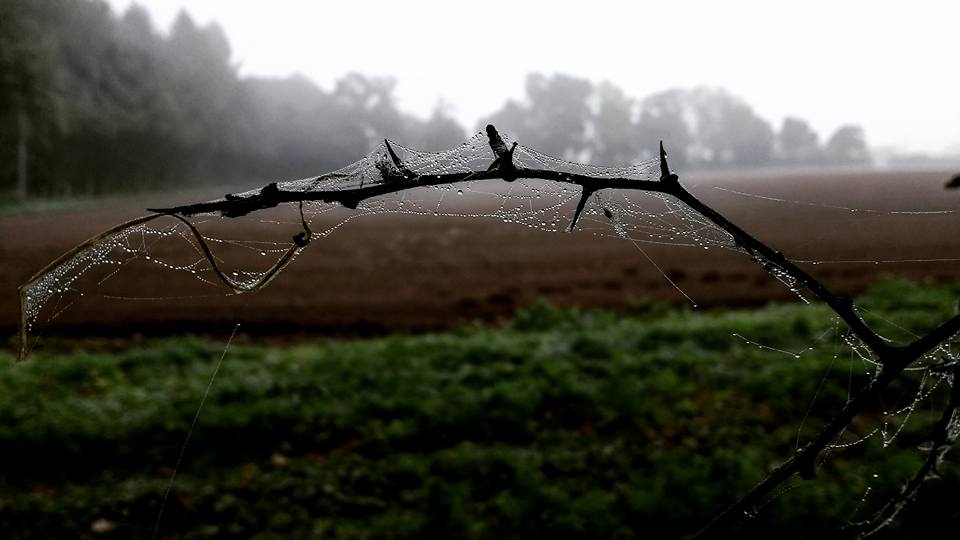
Once again, the who and why is a mystery, and perhaps that is how it should remain. Whether activity continues beyond the season of the witch or not, for me, Leomansley Woods will always remain a magical place.leomansley-cobweb

amelia-bluebellssun.jpg