There are fields full of Cavaliers and Roundheads, still fighting over the fate of England. Roman soldiers marching along the roads they built. Tragic Tudor queens, often minus their heads. And you can’t move for Victorian phantoms, presumably conjured up from all of those seances they were holding. What does seem to be in short supply in this spectred isle however are the ghosts of Saxons.
If somewhere was going to be haunted by a Saxon spirit, it would be Seckington. The Saxon Chronicle states that in 755, ‘Æthelbald, king of the Mercians, was slain at Seckington and his body lies at Repton‘. The account of the assassination is minimal but accounts say he was betrayed by his own bodyguards, some suggesting that his successor, Beornred of Mercia, was behind the treachery.
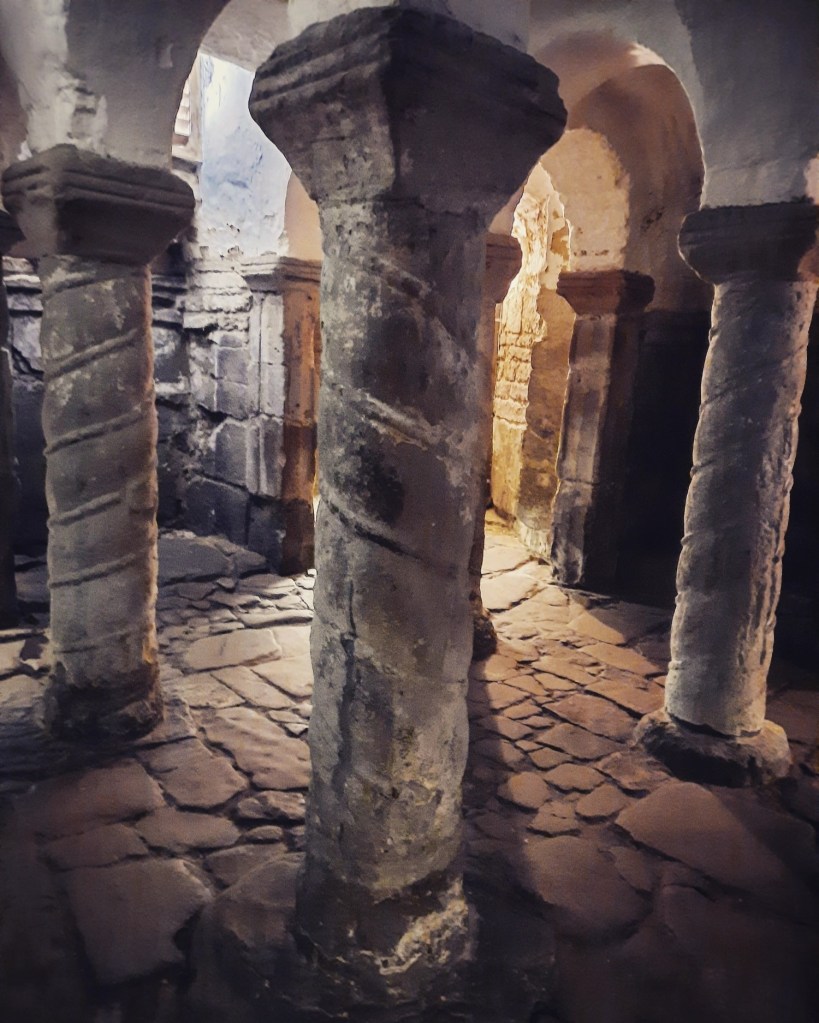
The crypt at Repton
After Æthelbald’s death, Beornred seized the Mercian throne. Little is known about him and within a year, Æthelbald’s cousin Offa launched his own claim to the throne and most likely offed him in the process. By contrast, there is much to be said about Offa, but as I started on the subject of murder, let’s continue on that theme.
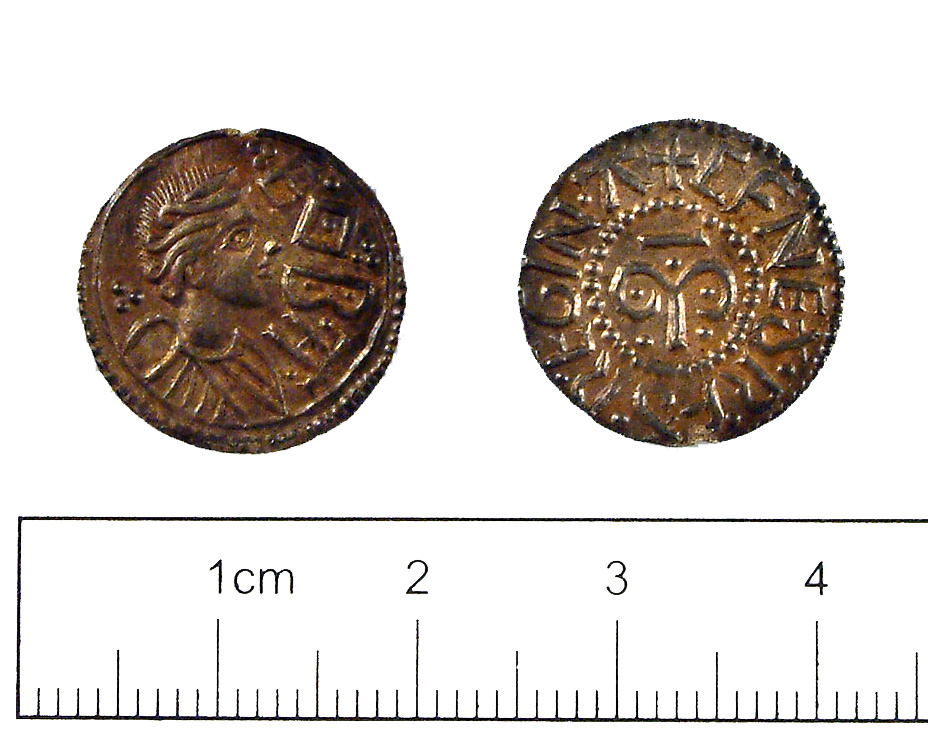
Penny depicting Cynethryth, Queen of Mercia. (C) The Portable Antiquities Scheme
A marriage between King Æthelberht of East Anglia and one of the daughters of Offa and Cynethryth of Mercia was arranged to take place at a palace on Sutton Walls in Herefordshire. Yet before the bridegroom could make it to the altar and pledge his hand in marriage, he was beheaded. The Anglo-Saxon Chronicle attributes the deed to Offa. By the twelfth century there’s a shift in narrative and blame to Cynethryth. Was she really the wicked queen she is depicted as by chroniclers like Roger of Wendover or was it a cynical attempt to wash at least some of the blood off Offa’s hands? We know Cynethryth was powerful, her name appearing on charters and her face appearing on coins. Perhaps there’s an element of medieval misogyny involved in the tarnishing of her image? After Offa died in 796, Cynethryth took holy orders and became the abbess of a monastery at Cookham. In 2021, archaeologists found the foundations of this abbey alongside Cookham church and further excavations may even find the final resting place of this misrepresented Mercian queen.
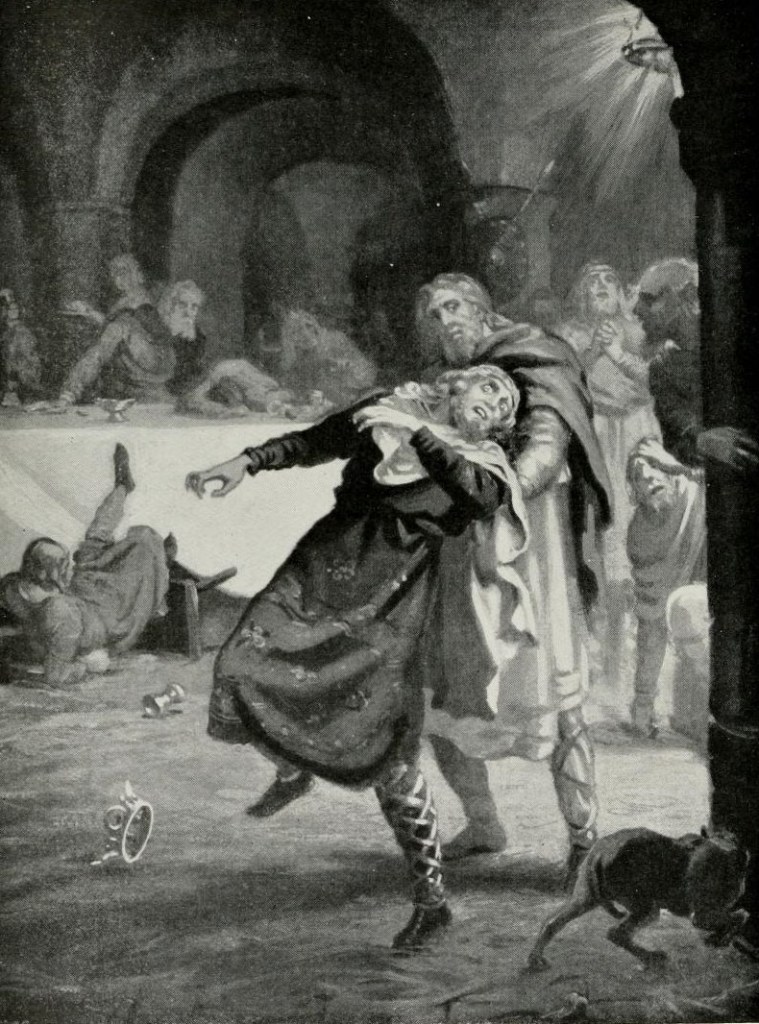
We’ve wandered a long way from Lichfield so let’s end our journey much closer to home. In 716, King Ceolred of Mercia was buried at the Cathedral, despite the fact that he had died at a feast, ‘gibbering with demons and cursing the priests of God’. St Boniface believed him to have been possessed by a demon but I strongly suspect he was poisoned. I’d be very interested to see if his successor Æthelbald was on the guest list, bringing us a full and vicious circle back to the beginning of this post.
Black and white print of an oil panting by Margaret Dovaston depicting King Celored of Mercia smitten with madness
Sources:
The wanderings of a pen and pencil by F. P. Palmer
In the autumn of 1933, ghost hunter Elliott O’Donnell wrote to the Rector of Stafford asking if he could be connected to any houses in or near the county town where paranormal activity had been reported in the hope he could spend Halloween night at one of them. After discounting Weston Hall, a decision which would literally come back to haunt him, and an unnamed place near Penkridge, he was put in touch with the residents of property at Rickerscote on the outskirts of Stafford.
Accompanying him was author and army officer, Wilfred Byford-Jones who recorded the adventure in his book ‘Midland Leaves’. He describes the house as, ‘a pleasing old structure with nothing eerie about it’. However, the mistress of the hall revealed that she, along with her husband and several friends, had seen the spirit of an old woman dressed in black in the sitting room and out on the lawns on several occasions. As luck would have it, they were holding a seance that very evening to try and connect with this shady lady.
After dinner, the two men returned to Rickerscote to find four people sat around a large log fire in the sitting room. O’Donnell joined the circle but the Quaestor preferred to observe only and settled himself in a dark corner. To begin, the participants placed their fingers on the table and chanted the words to hymns. In the hour that followed, the group sat in silence as the wind howled in the chimney and the rain lashed against the windows, the tension punctuated by the ticking of an old grandfather clock.
Quaestor began to feel sleepy until an ear-piercing scream came from one of the male guests. He began to gibber and sway with the mistress of the house joining in moments later. Neither said anything that made any sense. The woman then began to whimper for several minutes. As she fell back into her chair a hiss came from her husband.
‘There she is’. He seemed to stare at something before continuing. ‘It is the old lady I have seen before in this room and on the lawn’.
Two other guests also claimed they could see her. Quaestor followed their gaze but could see nothing, ghost or otherwise. Even when someone suggested that the spirit was stood near to him, tending to a bird in a cage, he could see nothing. Nor could he feel the pocket of cold air the others claimed to.
The seance continued until midnight struck on the old grandfather clock. Those gathered revealed the uninvited guest had a name. Miss L____ E_____ J______, a former resident who had loved the house and hoped the person she passed it onto in her will would live there. This wish was not fulfilled and presumably was the reason her presence remained. The two visitors left around 12.30am and the following morning, O’Donnell recorded his own version of events.
“A sudden feeling came over me that there was a presence of some kind just behind a lady on my right. I asked her if she was concious of it. She said, ‘Yes I know it is there. It is a lady in black. She came in through the closed window, crossed the floor to the door, then came to me’.
Quaestor’s own account differs somewhat. “I can only say that I am baffled, having seen nothing and heard nothing that could not be explained by natural phenomena.”
Acton Trussell, the final resting place of Miss L___ E___ J____
I suspect the events at the house on that Halloween night were down to mass hysteria rather than a haunting. However, after much reflection, I’ve decided not to share the precise location of the house just in case its former resident really did return to her Rickerscote home and the current residents would rather not know about it.
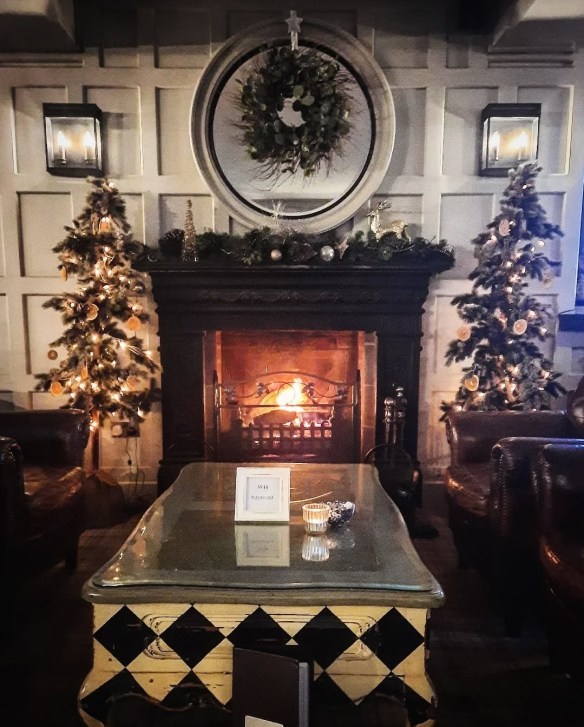
I myself shall be returning to the subplot involving Weston Hall another day. It’s one of my favourite haunted houses in all of Staffordshire but I’m much more likely to indulge in scones instead of a seance when sat around the fireplace here.
Perhaps it’s the feeling in the air that autumn is about to arrive, but I’m in the mood for a good old gothic ghost story (although frankly, when aren’t I?). When writing about haunted houses I am often faced with a dilemma between the desire to share a really good story and the guilt that the people living there may not share the same enthusiasm.
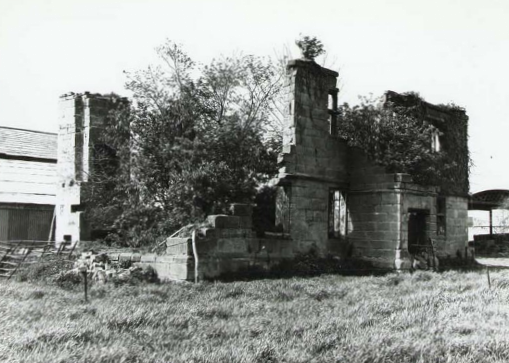
The ruins of Bellamour Old Hall. Built by Herbert Aston in 1638 (c) Staffordshire County Council
Fortunately, in this instance, I have no qualms, as the location for today’s tale was demolished in the 1960s. Well, sort of. Part of Bellamour Old Hall in Colton still stands as ruins, rumoured to be cursed after attempts to raze it to the ground were met with a series of accidents and mishaps. The hex on the house was said to have been placed by former owner Lady Mary Blount, who later built a new Bellamour Hall alongside it for her son. The journal of a Miss Mary Bagot of Blithfield mentions that a stash of treasure was supposedly hidden somewhere amongst the stones of the old house. Are these two legends linked in some way?
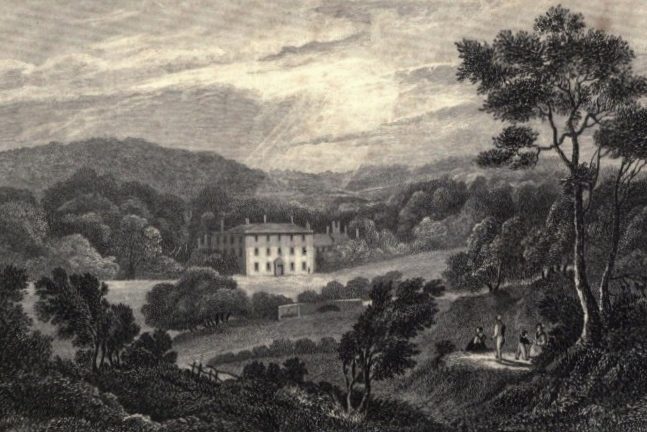
Bellamour New Hall c.1830. The old house can be seen just behind.
The new Bellamour Hall is also no more. It was taken down in the 1920s and sold off piecemeal. When the two halls were still standing, the old one seems to have been used as a residence for senior servants on the estate. George Morrall, head gardener, lived there with his family in the late 19th century. Later, his son Harry succeeded him in the role and spoke to a local newspaper about the spooky side of his former home.
Harry Morrall explained that his twin sister Charlotte was born at the Old Hall. Presumably, as her twin brother, he must have been born there too, and a check in the Colton parish registers confirms that in July 1882, both Harry and Charlotte Morrall were born at Bellamour. It was on the evening of 15th September 1905 that Miss Morrall woke to see what she described as someone in flowing black robes with a beautiful face beckoning to her. Exactly a year later she saw the same thing and between visitations she sometimes heard footsteps walking the floorboards of the old hall.
Although he never witnessed the apparition himself, Mr Morrall did hear the phantom pacing the corridors. On one occasion, he saw the door latch to his room lift up as if someone was about to enter but, when he shouted, the presumed paranormal intruder changed its mind and left. The twins found out from another member of the Bagot family that a man had supposedly been murdered there in 1698, his widow becoming a nun.
Possibly related to the haunting of the old hall are reports of cries emanating from a nearby meadow. Intriguingly, this seems to be near to the site where the stone foundations of a medieval chapel lie beneath the lawn. Bones and the carving of a stone head with a grotesque human face were also found here by the Reverend Parker c.1921. Then, there’s a message I was sent a few years ago by someone who was left unsettled by a dream about a Victorian boy standing facing the boundary wall surrounding the Bellamour estate and hearing the word ‘angry’ as she awoke at 3.33 am.
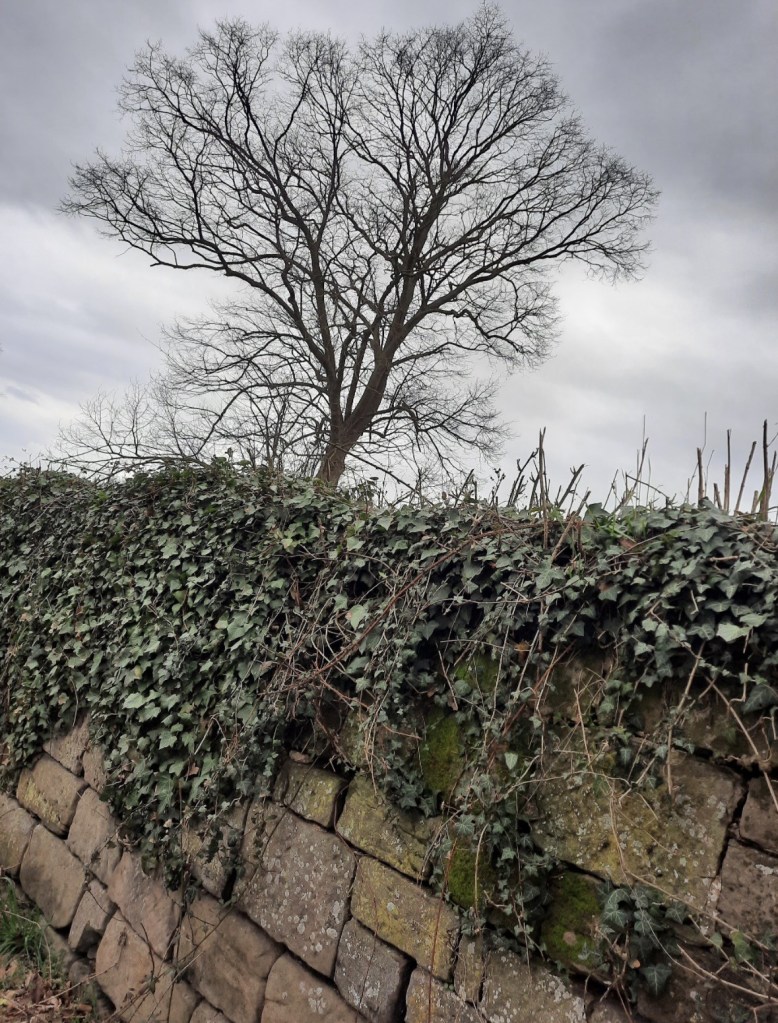
I believe stones from the old hall were used when building the boundary wall at Bellamour
One final story dates back to around the time of the attempted demolition of the old hall. In 1963, the owner invited a psychic from Birmingham to visit and she claimed to have picked up on a lady with a cross around her neck and a man carrying a Bible. Underwhelmingly, she also claimed to have seen ‘lots of trees around’. Wait, I’m getting the word…..’cobblers’.
I’m looking forward to digging into these tales of hidden treasure, crying bones, beckoning nuns and phantom footsteps to see if any truth is buried within them. Watch this space for more about Bellamour…
On our second visit to Papillon Hall, we’re going to step away from the tales of the infamous cursed footwear. Instead, let’s meet the man painted as the villain of the piece and his portrait, an artwork which appears to have had the power to scare the heebie-jeebies out of anyone who gazed upon it. Disclaimer – when I included an image of it in part I I did not know this. Please read at your own risk.
David Papillon was born in 1691, and was the grandson of the man who had originally built the hall earlier that century. Most biographies depict him as a respectable and upstanding gentleman but local folklore hints that there was a darker side to the man they called ‘Old Pamp’1.
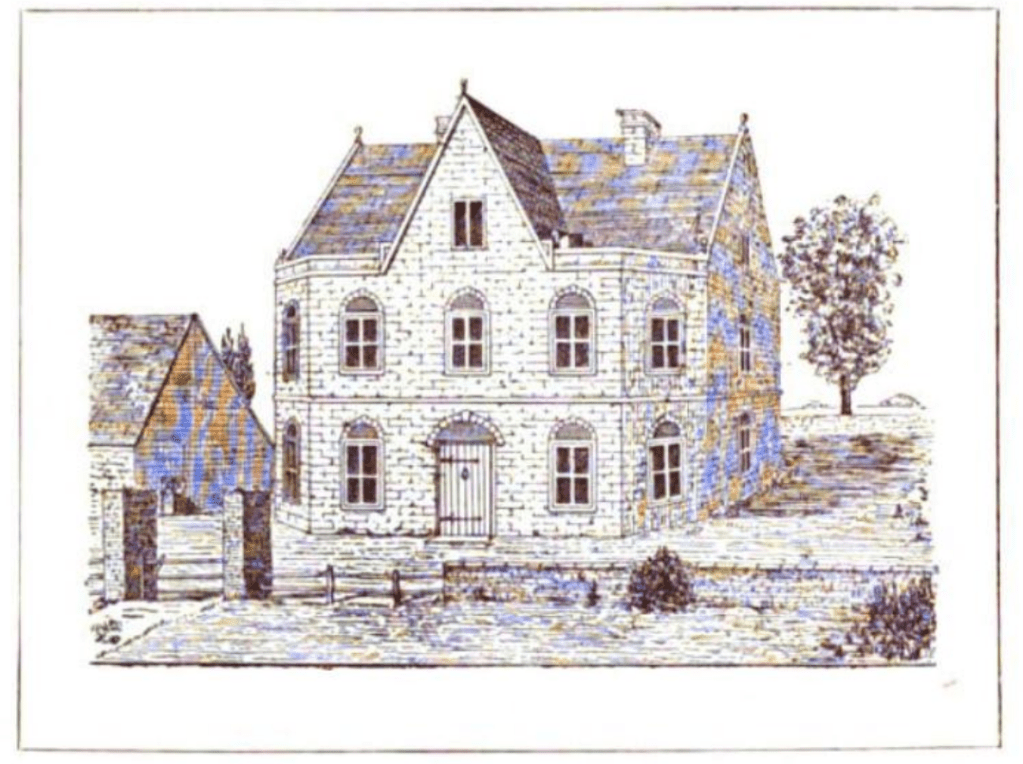
Papillon Hall, before it was rebuilt with wings in 1903
Pamp was said to be something of a sorcerer with such a mesmerising gaze that he could bewitch people to the point that they were powerless to move. His portrait also appears to have possessed the same power. Sometimes visitors to the hall would stand and stare at it for long periods of time, seemingly incapable of turning away. Even more chilling are the stories that on some nights Pamp himself would actually step out from the artwork and roam the rooms of Papillon. One servant girl reported seeing him stood at the end of her bed wearing the same clothes as he did in the painting.
When the portrait was moved to Crowhurst Park near Hastings, Pamp’s ghost went with it. Bertha Tufnell, who was letting Crowhurst from his descendant Pelham Rawsthorn Papillon, saw Pamp standing in the drawing room as if he’d just climbed out of the painting. Following this he tried to materialise on several other occasions but Bertha worked out that reciting a prayer seemed to stop him from fully forming outside of his frame. As a more permanent solution she sent a desperate letter to Pelham and he arranged for the creepy canvas to be removed to his residence in Hastings.
An intriguing article appeared in the Market Harborough Advertiser in December 1946 with the author ‘FPS’ claiming that forty years ago he’d met a man who was on his way to Papillon Hall and tried to engage him in conversation. When he mentioned the famous infamous cursed footwear and the ghost of Pamp the man became visibly uncomfortable and reluctant to chat. FPS tired to reassure him that ghost stories were nonsense but this distressed the man even more. The man clutched the author’s arm, warning him to be careful as Old Pamp could get nasty and had a tendency to appear when people were dismissive. Undaunted, FPS joked that he’d like to see him so that he could ask about a painting he had which once used to hand in Papillon Hall.
A few months after this encounter on the Theddingworth to Lubenham Road, strange things began to happen at the home of FPS. It started with the Papillon painting falling to the ground with a crash. The cord was replaced, the nails secured and it was put back up again but the painting fell down a further three times. New fasteners were added to the frame, along with two brass chains and two lengths of copper wire, all separately fastened to hooks secured in the newly re-plugged wall. A length of hempen rope was also added for extra measure and FPS felt confident the painting would now stay put. Funnily enough, it did not.
The painting was left leaning against the wall and that night, FPS and his wife heard footsteps on the stairs and a bell ringing violently somewhere in the house. In the morning, another painting was found to have fallen. Things soon escalated from ‘a bit odd’ to ‘outright terrifying’, one night when a howling was heard outside the house. As the author and his wife discussed if the sound could be made by a dog, it came nearer. As FPS recalled,
“Description fails, words cannot express the unholy thing, it was vilely evil, blood-curdling, only someone or something in hellish torment could howl like that. It came still nearer and we could track the sound as ‘It’ approached the house. A moment later it seemed even still nearer, then, to our unspeakable horror we realised the ‘thing’ was in the house”.
FPS grabbed a candle and went downstairs. As he descended the house seemed filled with the sound but then came an unnatural silence. He could find nothing to account for the sound, though the dogs were cowering and staring at something invisible. Suddenly, a shriek cut through the silence, seeming to emit from the spot the dogs were staring at. They bolted from the room, with FPS not far behind them. Half-way across the hallway, the candle went out. In the darkness, the howl came again, this time from between his feet, before moving level with his head. Then he heard his wife shouting to him, ‘Quick! Quick! it’s on the stairs’, and managed to get back into the bedroom where he and his wife held the door fast until the howling ceased. He never heard it again. Perhaps David Papillon had made his point.
Incredibly, there is yet more of this mysterious story to share. There’s a line in the Market Harborough Advertiser which lends weight to the story that a skeleton was found when the hall was being renovated at the start of the twentieth century. In a review of the year 1903 it simply says ‘December 3 – a quantity of human bones were found at Papillon Hall’. Frustratingly, the newspaper archive does not appear to have digitalised the edition for December 3rd 1903 which presumably contains more details of the discovery. Elsewhere, there are suggestions that the hauntings relate to the pre-Papillon history of the site and involve a lepers’ hospital, a monk and some buried treasure. Then there are the experiences of Captain Frank Belville, who lived at the hall for a while and encountered not the terrifying presence of David Papillon but a spectral young woman, ‘silver and half-hooded’, who he chased often but never caught (why is this giving ‘Carry on Cursing’ vibes?). Oh, and there’s a magical well too.
There may be a part three to follow but I truly think there’s enough material here to turn this tale of cursed shoes and haunted paintings into a full length motion picture.
Notes
This nickname strikes me as a little strange given he moved to Acrise Park in Kent following his marriage to Mary Keyser at the age of 26.
Old cottages are nothing but hassle my ex had insisted, preferring a bland but energy efficient box on a new estate to anything that an estate agent could market as ‘chocolate box pretty’. I left him last year but he probably hasn’t turned away from his 85-inch television for long enough to notice yet.
How appropriate then that it was an infuriating drip in the bedroom that might just prove him right. It couldn’t be a leak, there hadn’t been any rain for ages. A bucket would have to be the temporary fix for now and at the pub later, I’d ask if anyone could recommend someone who could pop round and take a look.
An hour into my shift and the heat behind the bar was almost unbearable. It made worse still by the fact I seemed to be pulling cold pints for everyone in the village but myself. The talk at the tables was speculation about hosepipe bans and barbecue plans. All standard topics for discussion every time the country had a dry spell until I heard one group of older gentlemen talking about the nearby reservoir. I’d noticed myself on the drive over the causeway that the water levels had dropped and when one of them said, ‘‘The old village will be reappearing soon’, I couldn’t help but eavesdrop on their conversation.
‘Village? It was a couple of old cottages and a mill. Not bloody Brigadoon. I read some nonsense on Facebook the other day about people being able to hear the bell of a drowned church tolling below the surface. Flippin’ idiots could probably hear St Leonard’s up the road’.
‘There was that old bridge though, named after the nursery rhyme, remember?’
‘Kitty Fisher’s Bridge? That was named after a real person apparently. A local lass, threw herself in the brook they say, because she’d lost her lover. We were always warned not to swim there away from there as kids. They said she’d pull us beneath the water’.
‘I think I saw her once’, one of the men said softly, more as an admission to himself than the surrounding group. The others looked at him for a second before one of them broke the silence with a quip.
‘She’s been dead at least two hundred years, Mike. Even you weren’t around then’.
‘I think I saw her’, he repeated, bolder this time. ‘Stood on the banks of the reservoir. It was that heatwave of ‘76, and like a fool, I’d taken myself down there to fish. It weren’t much more than a puddle. I glanced up and there she was standing on the bank, about 50 foot away from me. Dripping wet, she was. I was just about to shout to her, see if she was ok and she…disappeared. One second she was there and then the next. Well, she just wasn’t’.
His monologue was once again interrupted by the joker of the pack. ‘You’ve always had that effect on women, Mike’, followed by comments from the others about needing to take more water with it. Mike laughed along with the banter but the trace of a puzzled expression still lingered on his face. It was clear, to me at least, that he had been deadly serious about what he saw that summer and it was something he had been trying to make sense of ever since.
(Note: This story is semi-fiction. It’s inspired by a real place and its folklore but a lot of it also comes from my imagination. Anyway, part II to follow soon!)
Sometimes I find a story so intriguing that I have to spread my wings a little and go beyond the Staffordshire borders. As with most myths that have been centuries in the making, there is no one singular version of events. Almost all accounts agree however that something spooky was afoot at Papillon Hall and that a pair of brocade slippers were at the heart of the haunting.
Papillon Hall, post renovation when wings were added to create a butterfly effect
In most retellings, David Papillon, grandson of the man who built the hall, is cast as the villain of the piece. People said Old Pamp, as the locals nicknamed him, supposedly had supernatural powers and may even have been in league with Old Nick himself. Prior to his marriage to Mary Keyser in 1716, he’s said to have kept a Spanish mistress at Papillon. More of a prisoner than a partner, she was kept under lock and key and only allowed out onto the roof of the hall. It seems his impending marriage to Mary may have rendered la Señorita surplus to requirements and she’s said to have met with a mysterious death in the attic room she had been confined to.
With her dying breath, the woman placed a curse upon the beautiful green brocade slippers she had worn during her lonely rooftop rambles. If they ever left the hall, its owner would meet with terrible misfortune because these boots were no longer made for walking. Old Pamp moved away to Kent and onto a successful career as a lawyer and politician. Subsequent owners who arrived at the hall were handed the deeds and advised that the cursed footwear must stay or else face the terrible consequences.
Naturally, some scoffed at the idea of shoes with supernatural powers and sent them to be exhibited at London, France and a museum in Leicester. A series of car crashes, riding accidents, robberies, dead livestock and other disasters soon persuaded them otherwise. Charles Walker who used the house as a hunting box in the 1890s heeded the warnings and kept the slippers safely stored behind a locked iron grille above a fireplace. As an extra security measure it’s said he threw the key into a pond.
According to some accounts, when the hall was renovated by Sir Edward Lutyens in 1903, a woman’s skeleton was found inside one of the attic walls. As yet, I have found only anecdotal evidence of its existence. The shoes, however, are a different story…
The hall was requisitioned during the Second World War and used as a billet for American soldiers. When they departed, it was discovered that one of the slippers had disappeared and it was assumed it had been stolen for a souvenir. Fearing the consequences, owner Rupert Belville made an appeal in the US for its return and in 1949, the Leicester Evening Mail reported that it had mysteriously reappeared. It was not enough to prevent the greatest misfortune to befall Papillon Hall in its history however and just two years later the house was demolished.
The cursed brocade slippers of Papillon Hall make a great stand-alone story but I want to take things one step further. I’ve discovered alternative accounts, intriguing inconsistencies and spin-off stories, all of which I will share in part II soon.
Sources
Daily News (London) – Saturday 09 July 1949
Leicester Evening Mail – Wednesday 06 July 1949
Leicester Chronicle – Saturday 23 October 1948
Market Harborough Advertiser and Midland Mail – Friday 27 December 1946
Market Harborough Advertiser and Midland Mail – Friday 06 December 1946
Manchester Evening News – Thursday 17 November 1938
‘Needs a bit of work eh?’, a cheerful voice said from behind me. I turned to see a man with a dog.
‘Just a bit!’, I replied in a similar tone, disguising the fact he’d startled me. ‘Does anyone live here?‘.
The man chuckled in that way that makes you feel you’ve just asked a question you should already know the answer to. ‘Been empty for years. I’ve lived here since the seventies and I’ve never known anyone living there’.
The most obvious thing to say next was ‘Why?’, and so I did. The man shrugged. ‘No idea. Perhaps they’re waiting for it to fall down so they can build on the land?’.
I kept my next question to myself. Why would you need to wait for a house you own to rot away? Unless it was one of those historic houses that there were rules about knocking down, but this one didn’t look anything special. Just a red brick rectangle with a door in the middle and a pair of windows either side. A bit like the sort of house I might have drawn at primary school. Except my version would have had flowers in the garden and smoke coming out of the chimney and it had been a long time since this one had either.
‘Tell you something though,’ the man said suddenly. ‘She don’t like it’. He nodded towards the spaniel at his feet.
‘She doesn’t like the house?’, I asked, checking I had grasped the right end of the stick.
‘No, her ball ended up in the garden once and she wouldn’t go in to fetch it. Just stood at the gate, shaking’. A puzzled look must have flashed across my face, as he added, ‘Must have been foxes’.
Looking back, I’m not sure which of us he was trying to convince more. To cut through the awkward silence that followed, I checked my phone. Despite having nowhere to go and nothing to do, I smiled, ‘Well, I’d best be off. Nice to meet you both’.
‘Righto’, he replied and we headed off in opposite directions.
Later, the idea of taking some photos of the place occurred to me and so the next day I made my way back there. As I reached the cottage, a tennis ball sat on my side of the gate.
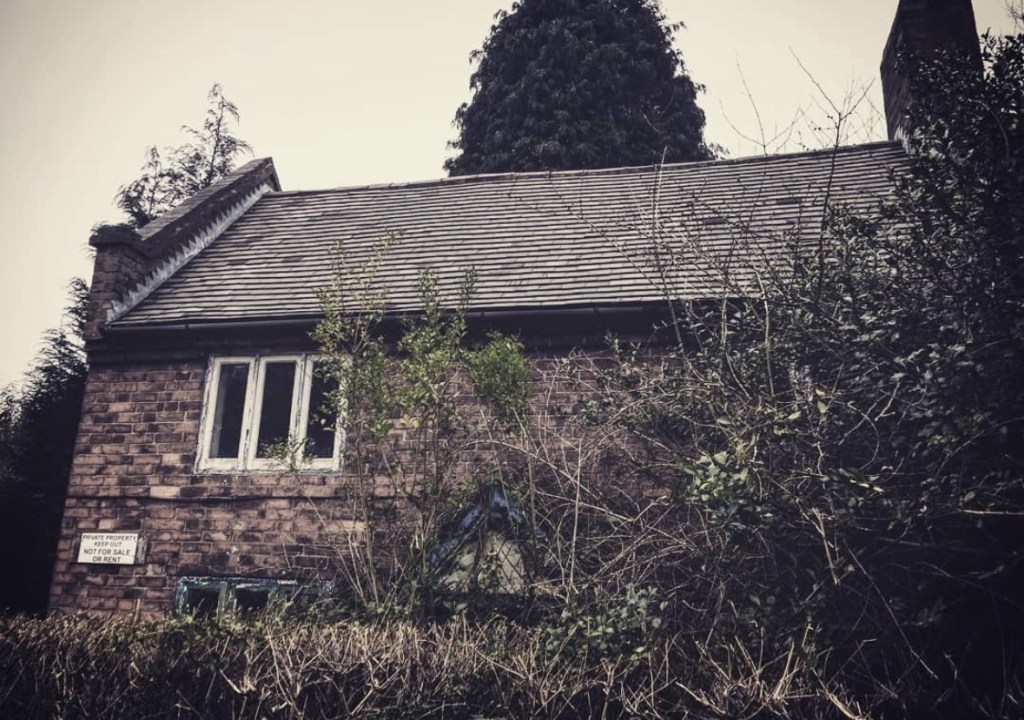
‘Daisy’s ball. The foxes must have been playing with it’, I thought, although now there was no-one to convince but myself. Pleased with my pictures of the peeling paint and ivy-clad brickwork, and the menacing ‘Not for sale or rent. Keep out’ sign, I headed home. As I uploaded them to Instagram, I saw the light reflected in the windows in a way that made it seem someone might be standing there and wondered if anyone would comment on it.
The following day, the man with the dog passed me in the nearby woods. ‘Did you get the photos you wanted?’ he enquired. ‘I saw you both up there yesterday when I was on my walk with Daisy. Thanks for getting her ball back’. His words only registered after they’d walked on. Both of us? Maybe someone had followed me up there. It wasn’t exactly in the middle of nowhere and someone could easily have worked out where the creepy old cottage I’d shared on my Instagram account was. Could do without the local teenagers adopting it as their new drinking den though.
Feeling some sort of responsibility for the place, I walked over to see if there was any evidence they’d discovered it. From the gate I could see that despite the overgrown tangle of a garden someone had managed to get the door open. I was ok with kids being kids but wanted to let them know their presence there had not gone unnoticed. I picked my way through the wilderness and shouted ‘Hello?. I thought I heard some movement from inside. ‘I think you better come out of there, it’s probably not even safe’. I couldn’t be sure but I thought I heard a giggle. I pushed the door open wider. ‘Come on now’.
More shuffling sounds from upstairs. I put on my adultiest voice. ‘You need to leave NOW’. A gust of wind howled down the stairs, slamming the door shut in my face. ‘Ok fine’, I thought, retracing my steps through the garden. ‘Serves them right if the foxes eat them’. Thinking I heard a tap from a window, I turned, fully expecting to see a bunch of kids gesturing through the glass but there was no-one.
Later that week, the bluebells in the woods were in full bloom. I bumped into the man again, but this time he was without a dog. Something had spooked her, he told me, and she’d run off. That was yesterday and he hadn’t seen her since. I promised to keep an eye open for her but couldn’t shake off a sickening feeling that I already knew where she was.
The cottage door was ajar again. ‘Daisy?’, I tentatively called from the doorway. A slight whimper came from inside in reply. Then, something rolled down the stairs. Daisy’s ball. ‘Daisy come here! Good girl!,’. More whimpering. I’m not a huge animal lover but the sound was so pitiful I couldn’t just leave her in there. I stepped inside the cottage for the first time. Any curiosity I’d felt about the place had evaporated and there was nothing here that I wanted to see. I tiptoed up the stairs to avoid treading on the handfuls of fresh bluebells scattered on the steps. Trampling on them brings bad luck I’d been told as a child, and didn’t faeries use them as a lure to trap humans too?
From the landing, I could see Daisy in the corner of one of the bedrooms and stepped inside. Her tail wagged weakly and she started to make her way over. The she stopped dead in her tracks and seemed to stare at something behind me. A soft thud caused me to turn around to see Daisy’s ball slowly rolling towards her. I scooped her into my arms and sprinted for the stairs. Back on the landing, one of the floorboards in the bedroom behind me creaked and the dog whimpered again. I didn’t take my time on going back down the stairs.
Daisy’s owner was waiting outside. As I passed the trembling spaniel over to him, his look turned from relief to concern. ‘Where’s the other girl gone? She was right behind you’.
‘There was no-one else. Perhaps it was a trick of the light?’, was the answer I gave to reassure him as I looked up to the window.
‘She’s still in there. She always will be’, was the answer I kept to myself.
Footnote: I’ve been toying with the idea of writing more place based fiction for a while. I decided just to be brave and do it…
I’ve long contemplated the idea of writing semi-fiction, taking inspiration from the legends and folklore I love and bringing in elements of my own story telling and experiences. Would it work though, I’ve wondered? Well, I’ve finally concluded that there is only one way to find out….
This is my first attempt. Please be gentle with me.
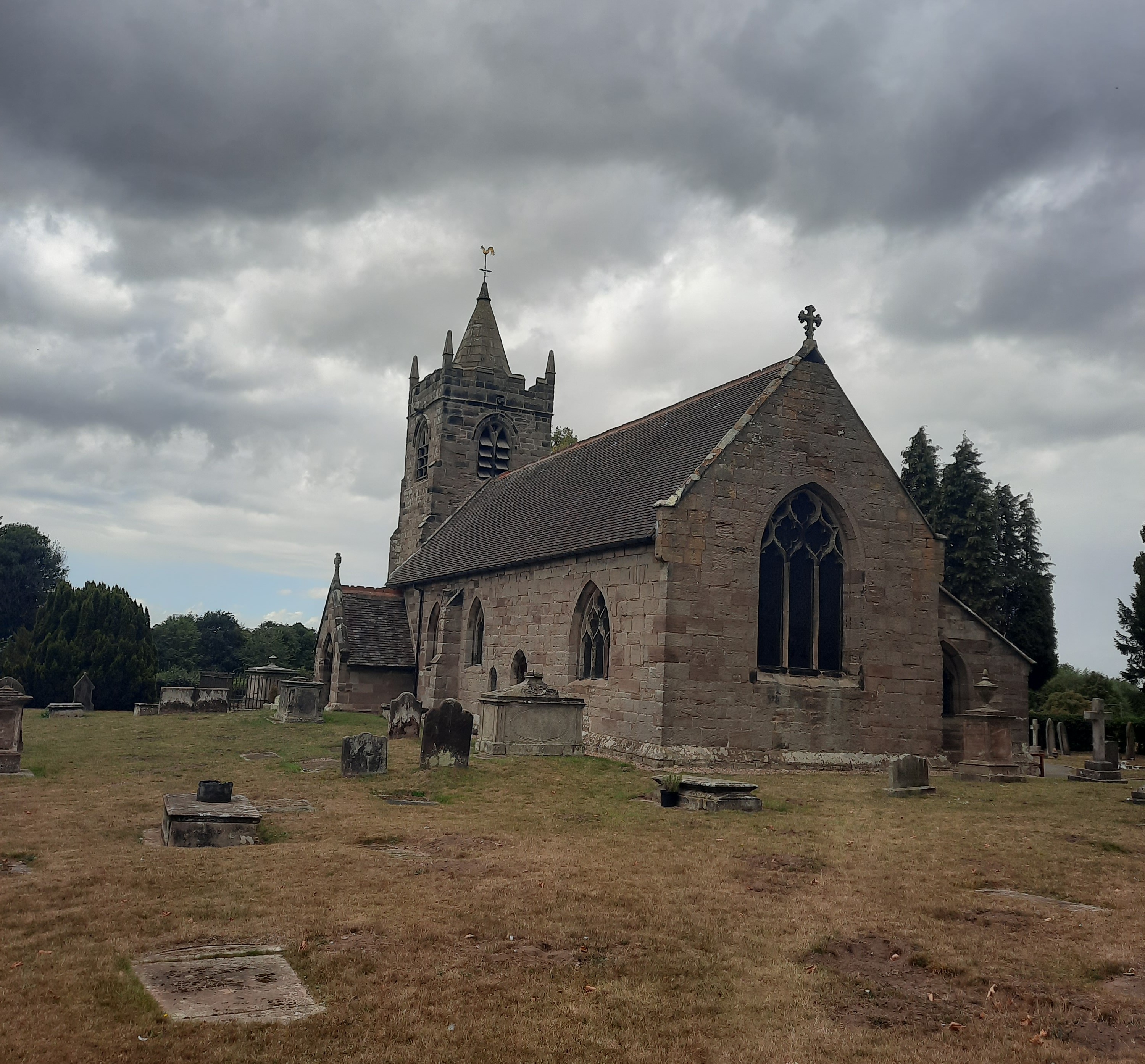
In 1974, a group of children were spooked by the sight of a figure in white rising from a grave in the churchyard of St James, Aldon on their way home from youth club. There was no indication of which grave it was in the newspaper report which had intrigued Felicity Murray and when she arrived at Aldon church on a warm July afternoon in 2021, she found no clues. The cemetery contained the usual assortment of Victorian tombs, any one of which could have been a contender for those strange events explained away as a trick of the light fifty years prior.
After taking a few photographs of the carvings on the church doorway, Felicity took a moment to sit in the sunshine on the bench outside. On hearing the sound of horses’ hooves, she looked up from her phone and the message she was sending and noticed a funeral cortege approaching the church gates. The two black horses adorned with blue and white plumes and ribbons and pulling a Victorian hearse made for a fine sight but feeling uncomfortable as an uninvited onlooker, Felicity decided to leave the churchyard before the mourners began to get out of their cars. As she slipped out of the gate, Felicity muttered an awkward apology to the female undertaker but received no acknowledgement.
Felicity’s own car was parked just around the corner and as she pulled out of the space, she thought she’d take another look at the horses as she drove past the church. Yet on turning the corner, the horses were no-where to be seen. Neither was the hearse, the undertaker, the mourners’ cars. Nothing was there to indicate the presence of a funeral and the church doors remained shut. Getting back to her car had taken just minutes and even with the greatest efficiency, there was surely no way everyone was already inside.
As a bemused Felicity drove home, she tried to rationalise the experience. Perhaps the church had been a stop off on someone’s last journey and their final destination had been elsewhere? Maybe she’d catch up with cortege a little further up the road. Even the idea that she’d witnessed something paranormal, perhaps the replaying of a past funeral or a time slip crossed her mind but no. Despite the vintage touch of the horse-drawn hearse, every other element had been indisputably contemporary, especially the female undertaker. Distracted by her thoughts, Felicity didn’t notice the cyclist as she pulled out of a junction until it was too late.
The funeral of Jack Sharp took place at St James, Aldon on a warm July afternoon. He was brought to the church in a hearse pulled by two black horses, each adorned with blue and white plumes and ribbons, the colours of his favourite football team. On arriving, the undertaker thought for a brief moment that she’d seen a woman sitting outside the church door but concluded that it must have been a trick of the light.