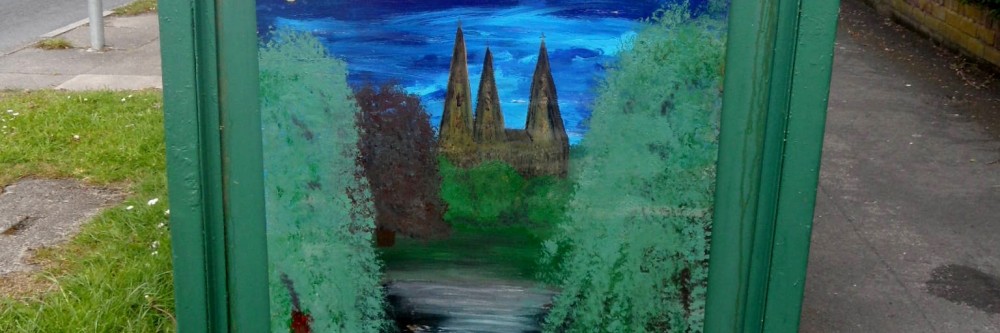
There’s a tiny chapel in Tamworth, hidden behind streets of houses. Much of its history is a mystery but there are records showing that the Spital Chapel of St James was erected by Robert Marmion of Tamworth Castle c. 1274. There was a suggestion the chapel had been built the site of an earlier structure and in July 1968 a group of girls from Perrycroft School carried out an excavation there, under the expert eye of archaeologist Jim Gould, in the hope of finding evidence of Saxon origins. What they actually found was something of a surprise.
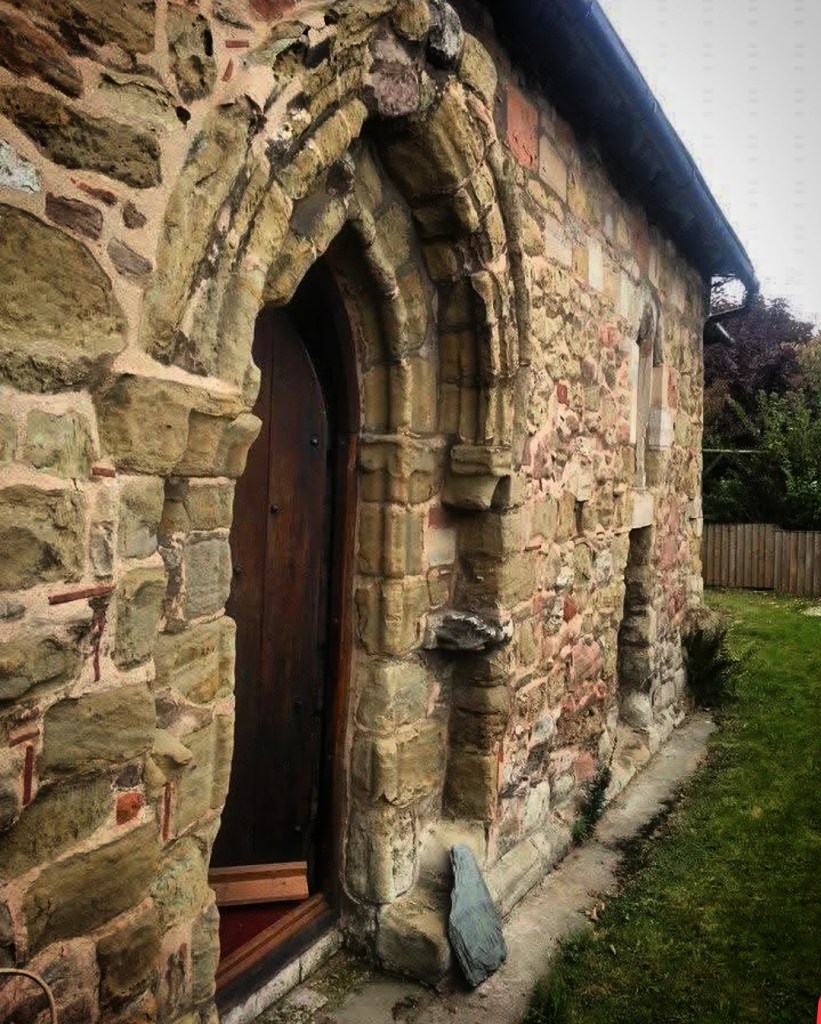
In a shallow grave, on the north side of the chapel, the skeleton of a middle-aged woman, aged between 40 and 50 was unearthed. Perhaps even more surprising was that the remains of two children were found laying across the woman’s pelvis. There was no trace of a shroud and the burial was on the north side of the chapel. Given that the land surrounding the chapel was not known to have been consecrated, or ever used as a burial ground, it was suggested that this may be an illicit internment of impoverished individuals.
I have different tools at my disposal to that team of teenage girls and they’ve enabled me to find several more skeletons at the Spital Chapel. In October 1914, the Tamworth Herald reported two lots of human remains were found to the south of the chapel when gas pipes were being laid. One was near the door, the other near the chancel wall and again, both were found not far from the surface. The report says they were reinterred on the spot and, unless anyone knows differently, there is nothing to suggest they aren’t still there.
Delving even further back into the newspaper archive, I found that in May 1870, an inquest was held on two skeletons found at The Spittals, a now demolished Victorian house, which once stood near the chapel. Adding to the intrigue is a letter from Edith Heath, published by the Coleshill Chronicle in 1968, recalling how she had often visited a woman called Dorothy Clarson who lived on Wiggington Rd in a house called Belbroughton, built by her father. Miss Clarson had claimed that when workmen were digging foundations for a wall of the house, the body of a man wearing chainmail had been uncovered. Apparently, the then Vicar of Tamworth was sent for to say a prayer and lay the body reverently to rest. Reading between the lines, it seems this skeletal soldier may also still lie somewhere near to the chapel.
The letter goes on to say that Belbroughton was haunted by a Grey Lady, who also walked a path which once led to a lost orchard. Whether this adds or subtracts to the reliability of Miss Clarson’s account, is something you can make your own mind up about but for me, the story that a spectre haunts the Spital Chapel site is the cherry on the cake.
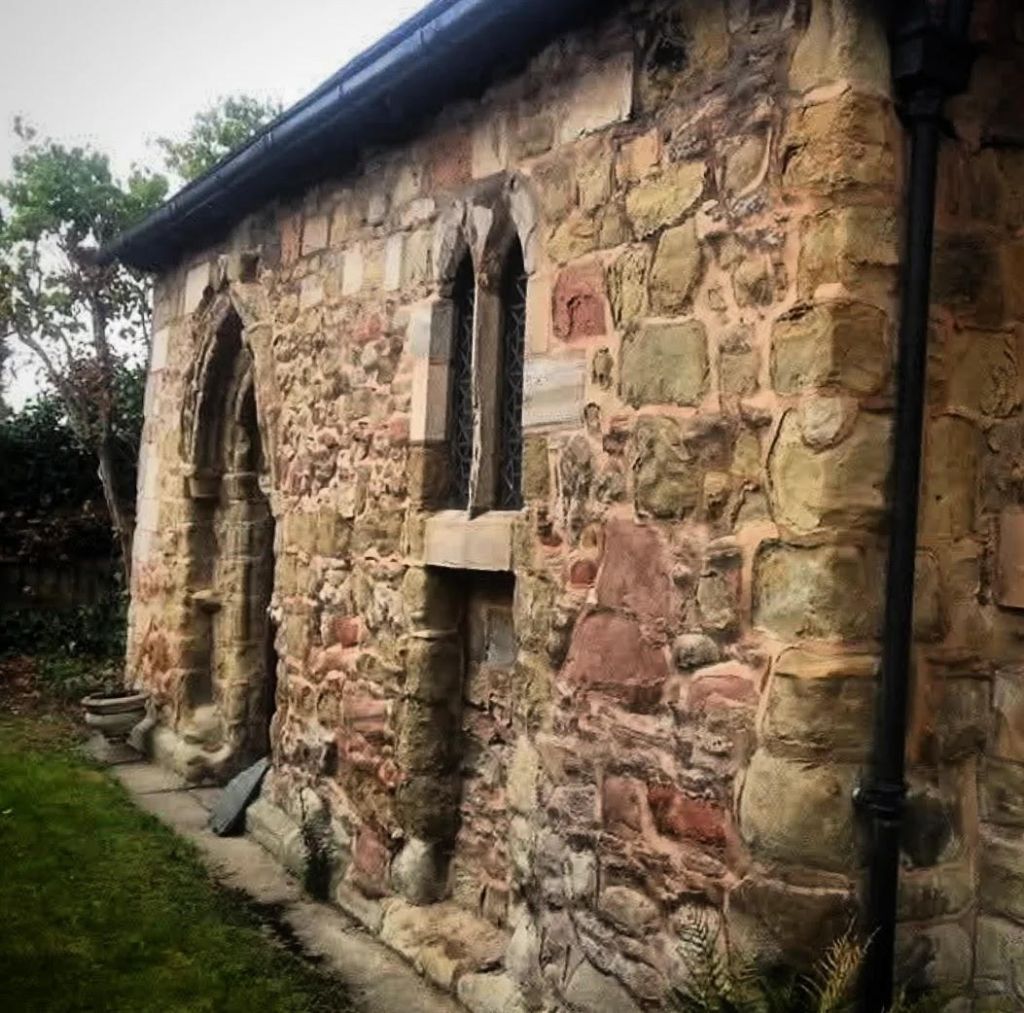
The history books suggest the Spital was originally a chantry chapel, built so that prayers could be said here to save the soul of Robert Marmion of Tamworth Castle. However, there is a belief amongst Tamworth folk that the chapel was used as some sort of Pest House, or isolation hospital during times of plague which may account for the presence of burials. The dedication to St James also suggests at some point it may have been a stop-off on a pilgrimage route. Could it be that those buried here are pilgrims who never completed their journey? I’m obviously no expert but now we know that the burials unearthed in 1968 were not isolated, the theory that they were an illicit burial seems a little less convincing. Perhaps analysis of some of the skeletons, if they do still lie beneath, might be be able to tell us more about who they were, when they died and why they were laid to rest here.
Sources
G C Baugh, W L Cowie, J C Dickinson, Duggan A P, A K B Evans, R H Evans, Una C Hannam, P Heath, D A Johnson, Hilda Johnstone, Ann J Kettle, J L Kirby, R Mansfield, A Saltman, ‘Hospitals: Tamworth, St James’, in A History of the County of Stafford: Volume 3, ed. M W Greenslade, R B Pugh (London, 1970), British History Online https://www.british-history.ac.uk/vch/staffs/vol3/pp294-296 [accessed 4 May 2025]
https://britishlistedbuildings.co.uk/101197039-spital-chapel-of-st-james-tamworth-spital-ward
Tamworth Herald 31st October 1914
Tamworth Herald 21st May 1870
SAHS Transactions Volume X


The Spital Chapel was built as a Chantry Chapel by Sir Phillip Marmion, not Robert, for the monks installed there to pray for the souls of him and his family.
It was also a hospital in the original sense of the word, providing hospital(ity) to weary or sick travellers and pilgrims before they reached the outer limits of the town on foot. Monks and clergy were amongst the few who could read and write, and many were apothecaries and herbalists, the only options of the time for treating illnesses. (Think Brother Cadfael series!)
LikeLike
I don’t know why I always get my Marmions mixed up. Thank you for correcting.
LikeLike
Getting the Marmion’s mixed up is very easy to do! Especially when you consider one generation named two sons the same! Because the first son died, the next son to be born was also named Robert!
LikeLike
The skeleton discovered in the 19th century was sent off for (limited) ‘investigations’ and was not considered to be of any significance. No record of whether it was returned / reburied. The skeletons found by the Perrycroft school girls under Jim Goulds supervision, were according to his report unrelated. They appear to have been buried about the same time, but no evidence to say the child remains were laid across the woman! The children’s remains were not complete.
These skeletons were also sent off for investigation, again limited compared to today’s tests. An attempt was made by myself in 2024 to track down the skeletons, the results, or a more detailed report without success. The graves around the Spital Chapel were very shallow. There is again no evidence the skeletons were reburied.
LikeLike
I first heard that the children’s skeletons were found in this way at a talk at the chapel in 2014. The SAHS report from 1968 says, ‘across the pelvis of the skeleton, lay the skulls of two children, one skull to
the north and one to the south. These rested directly on the adult skeleton, but being closer to the surface were badly disturbed. The remaining bones of the child skeletons were fragmentary, dispersed and badly decayed’.
LikeLike
I have just gone back to the SAHS 1968 report, of which there are copies in the Castle Archive, and also the typewritten report by Jim Gould, the Archaeologist, also in the Castle Archives. Unless we are reading from a different report I can find nowhere that says ‘across the pelvis of the skeleton, lay the skulls of two children’. The report is an early forensic style report and there is nothing in the wording to suggest the skulls were laid on or near the pelvis of the adult. It just states:
“It is unfortunate that the children were so near the surface and were so disturbed that no suggestion can be made as to the implication
of their burial though they do seem to have been buried at the same time as the adult though the age of the adult suggests she was not their mother”.
LikeLike
The report I’m reading is this ‘SECOND REPORT OF THE EXCAVATIONS AT
TAMWORTH, STAFFS., 1968—SPITAL CHAPEL J. GOULD, F.S.A.’ from Volume X of the SAHS Transactions published in 1968 and available here https://www.sahs.uk.net/transactions. The whole paragraph reads “On the north side of the chapel, a stone path ran diagonally from the north-east to the
north door. This rested directly on the subsoil and contained a few scraps of (twelfth century?) cooking-pots. Partly covered by the very rough path was a shallow adult burial.
The feet of the skeleton were to the east and the arms were folded. There was no trace of any coffin (or coffin nails) or shroud. The bottom of the grave was a mere 18 in. below modern
ground surface. With the skeleton was a piece of well-glazed roofing-tile and two scraps of coarse medieval pottery. Despite the shallow depth of the grave, the skeleton appeared undisturbed. Across the pelvis of the skeleton, lay the skulls of two children, one skull to the north and one to the south. These rested directly on the adult skeleton, but being closer to the surface were badly disturbed. The remaining bones of the child skeletons were fragmentary, dispersed and badly decayed.”
LikeLike