The Odd Couple

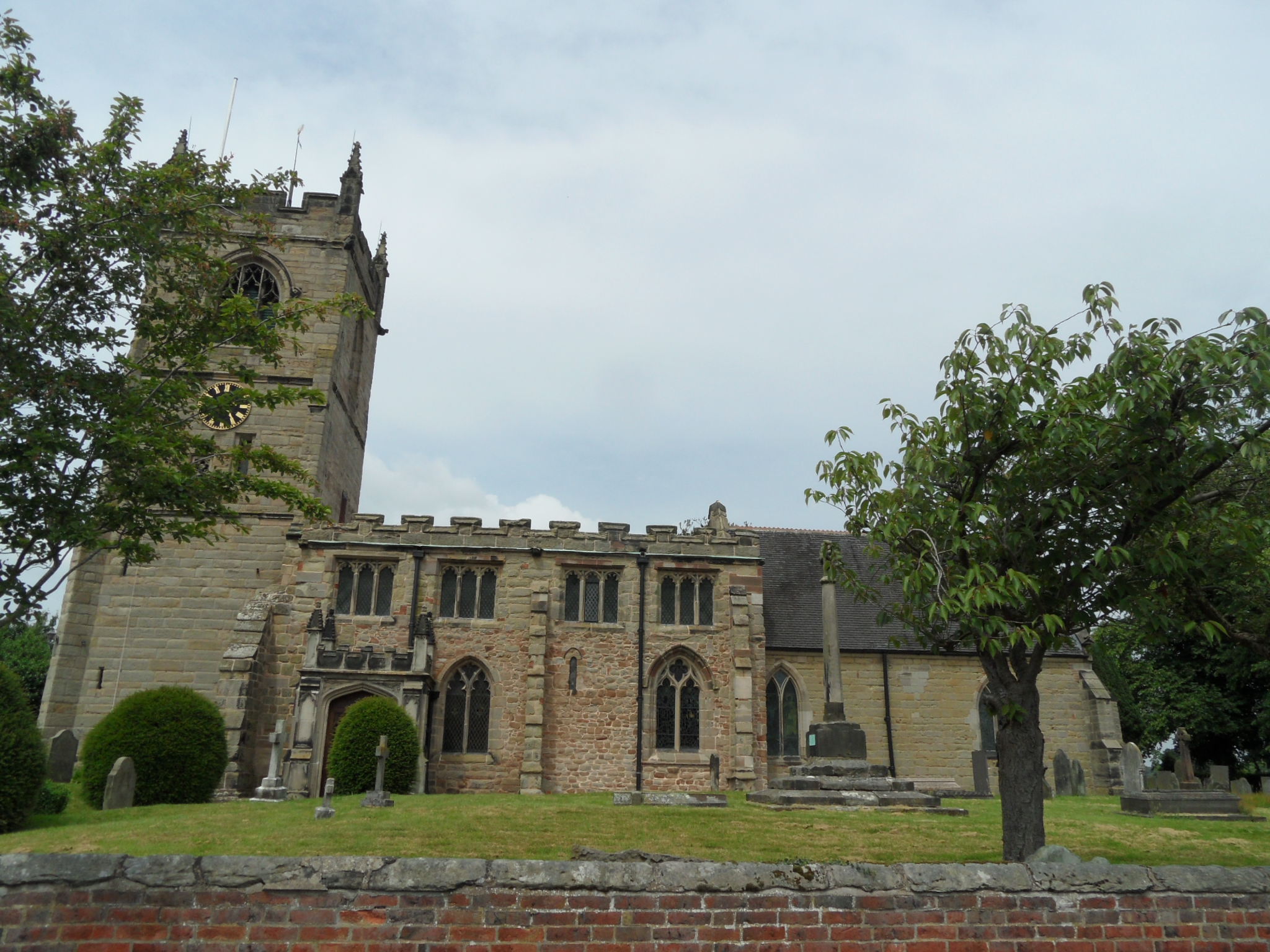
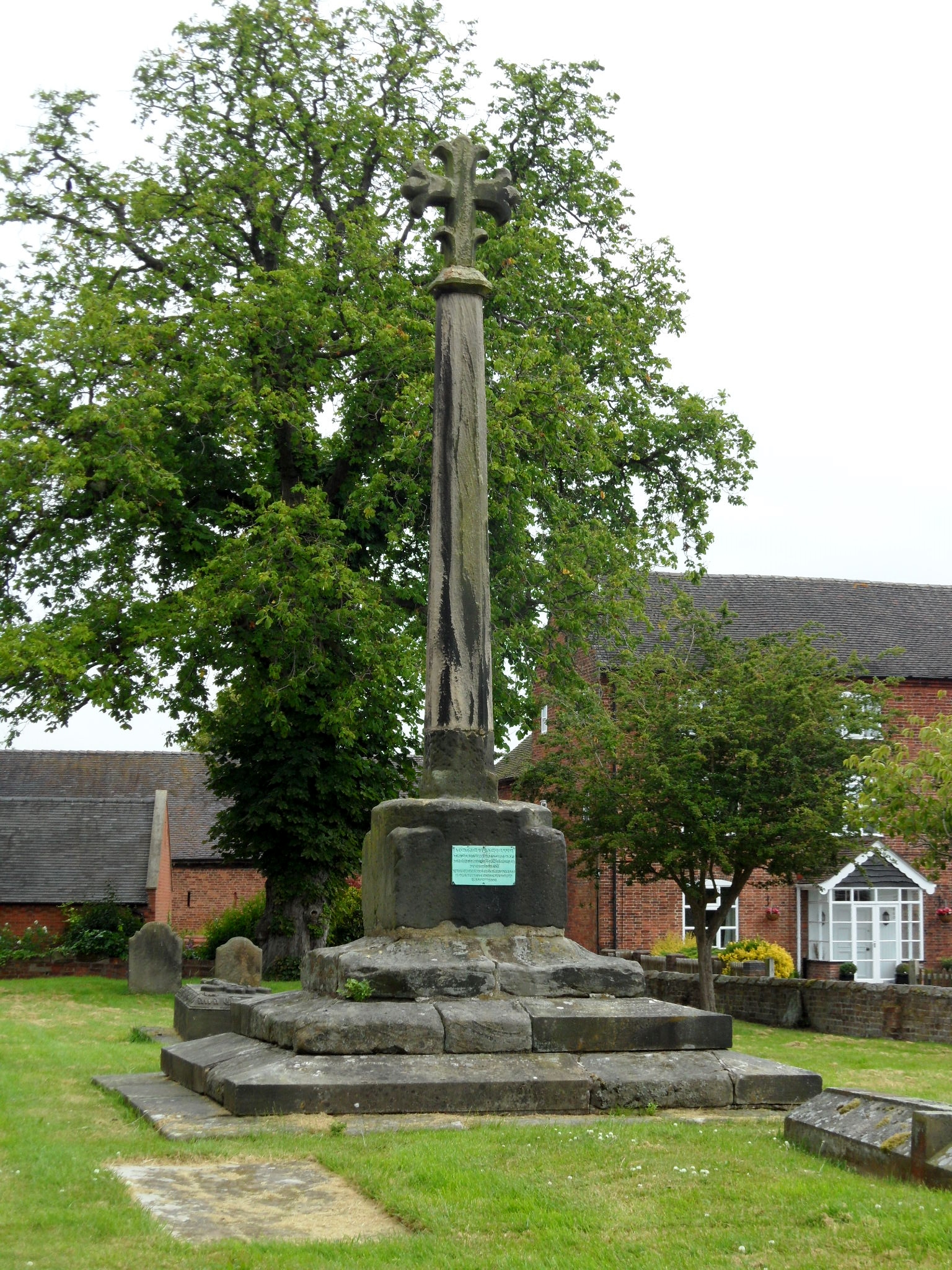
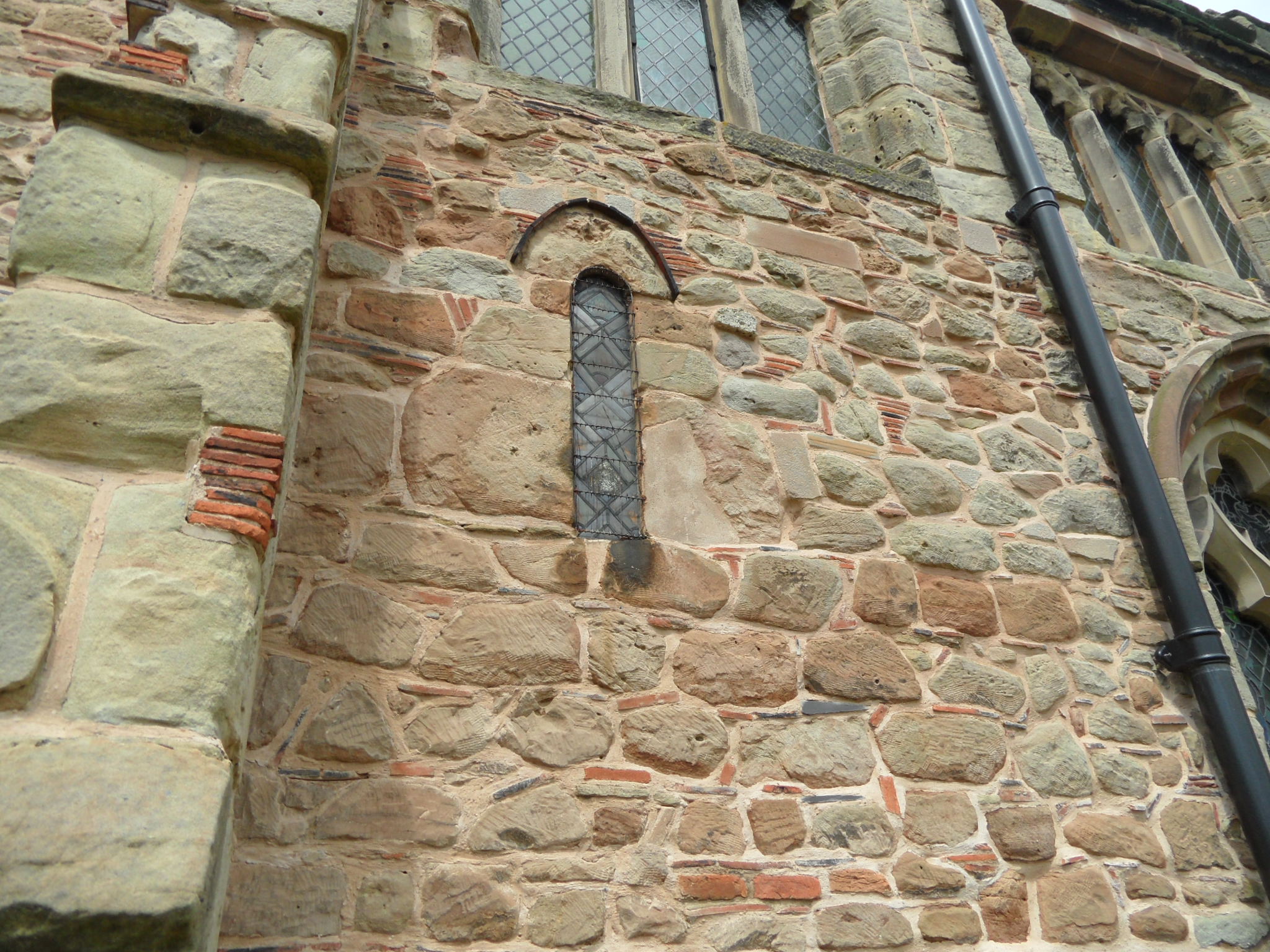
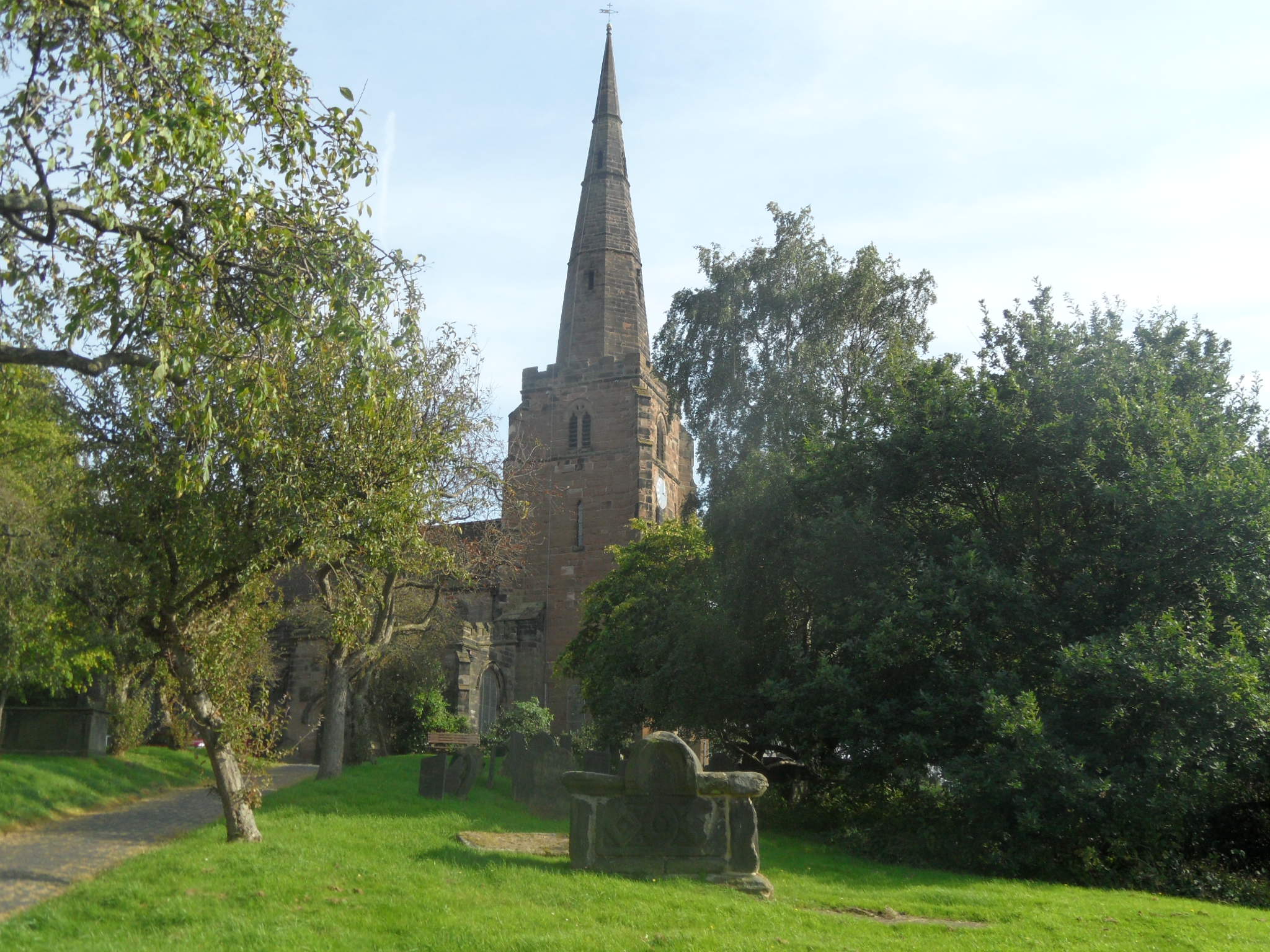
According to Pevsner, the Church of St Lawrence features some of the most exciting Norman work in the county.  Here be dragons and other fantastical creatures, Saxon and Scandinavian influences, a green man and other ancient faces. There are no wolves though.
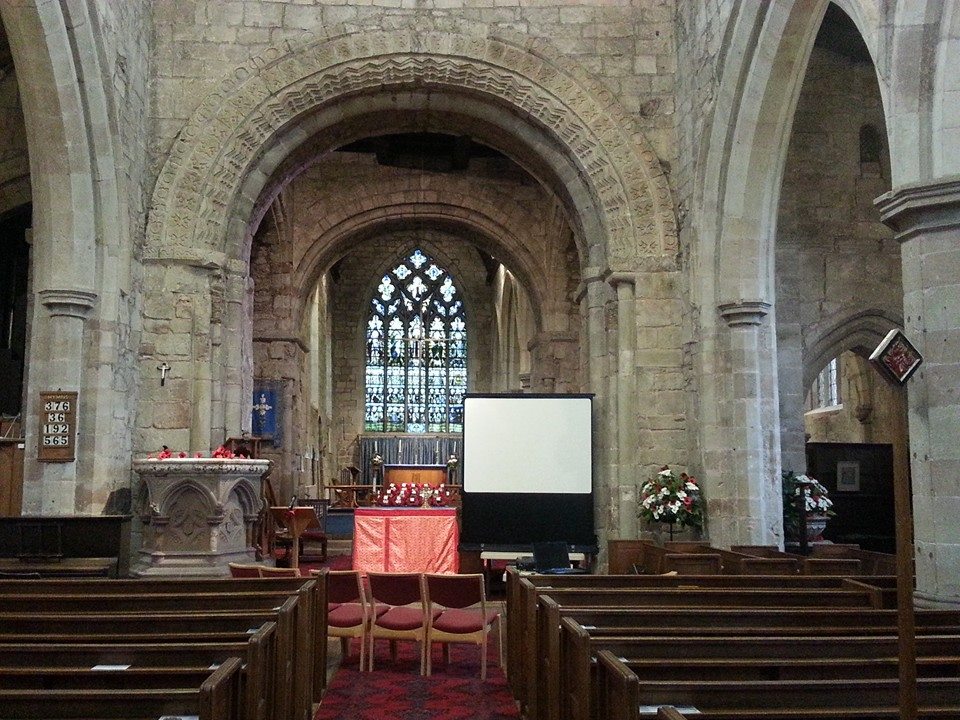
Norman arch, Gnosall church
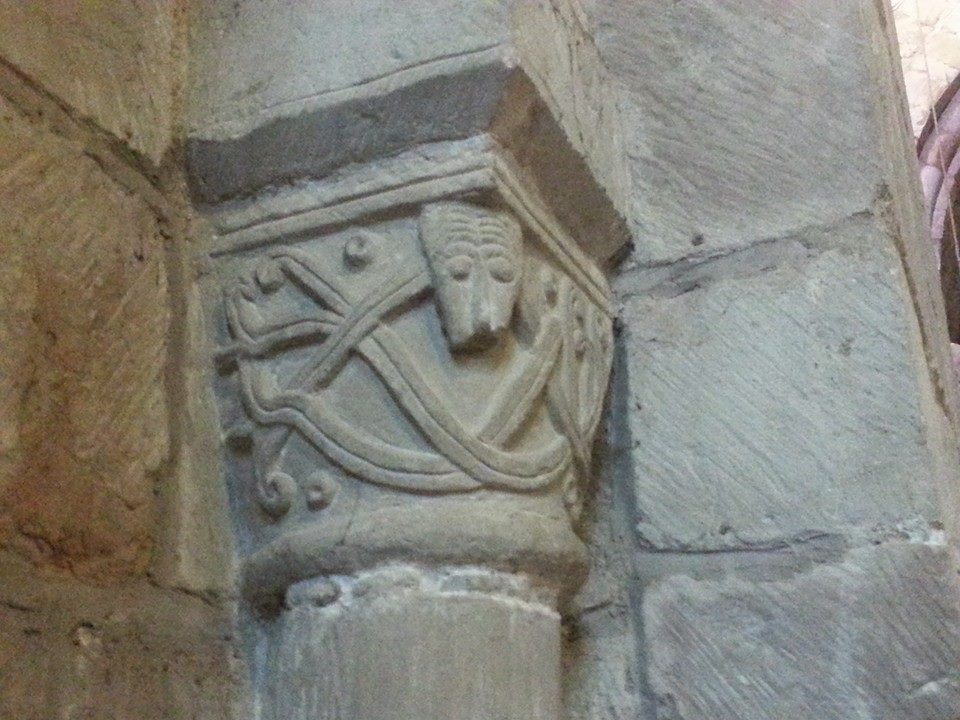
Norman arch, Gnosall church

Carving at Gnosall
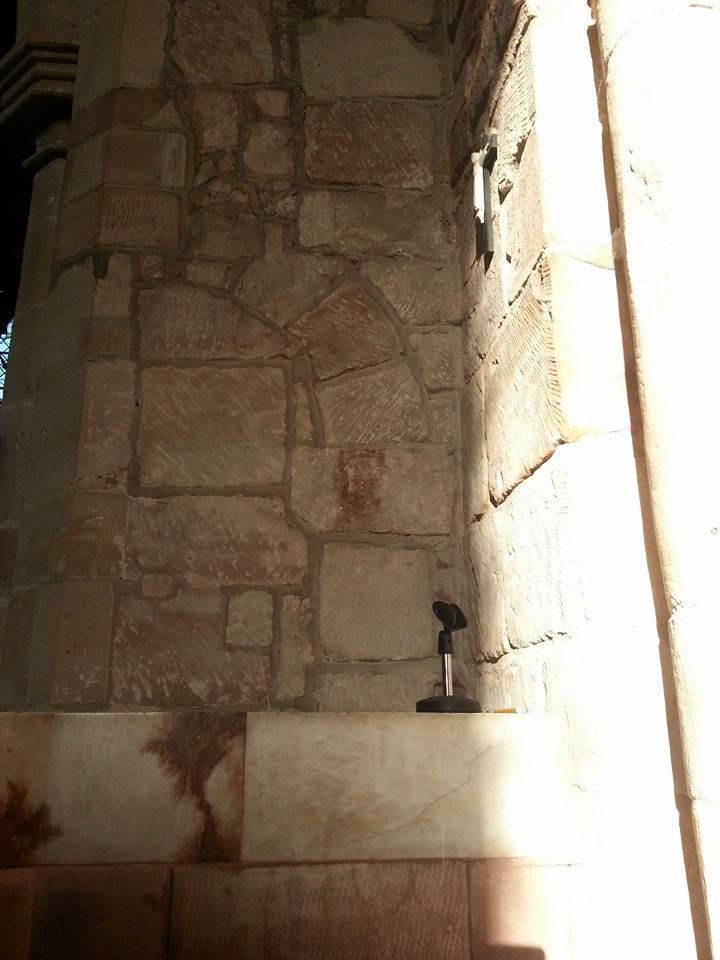
Carving at Gnosall

Possible Saxon stonework, Gnosall

Possible Saxon stonework, Gnosall

Legend has it that the last wolf in Staffordshire was killed here in Gnosall in a pit near Brough Hall and that the effigy in the Lady Chapel is that of its slayer, Baron Brough  As much as I wish it were true, there is no evidence for this tale and no reason to believe the Baron ever even existed outside of Gnosall mythology. Several other names have been linked with the alabaster knight over the years, but his true identity remains unknown. Whilst such personal details are lacking, there is physical detail here in abundance, from the broken angel and the helmet at his head, to the lion at his now missing feet and experts have used these features to date the monument to the early fifteenth century. In recent years, the knight has been joined by the church’s only other effigy, taken from the recess on the opposite side of the church known as the Easter Sepulchre.
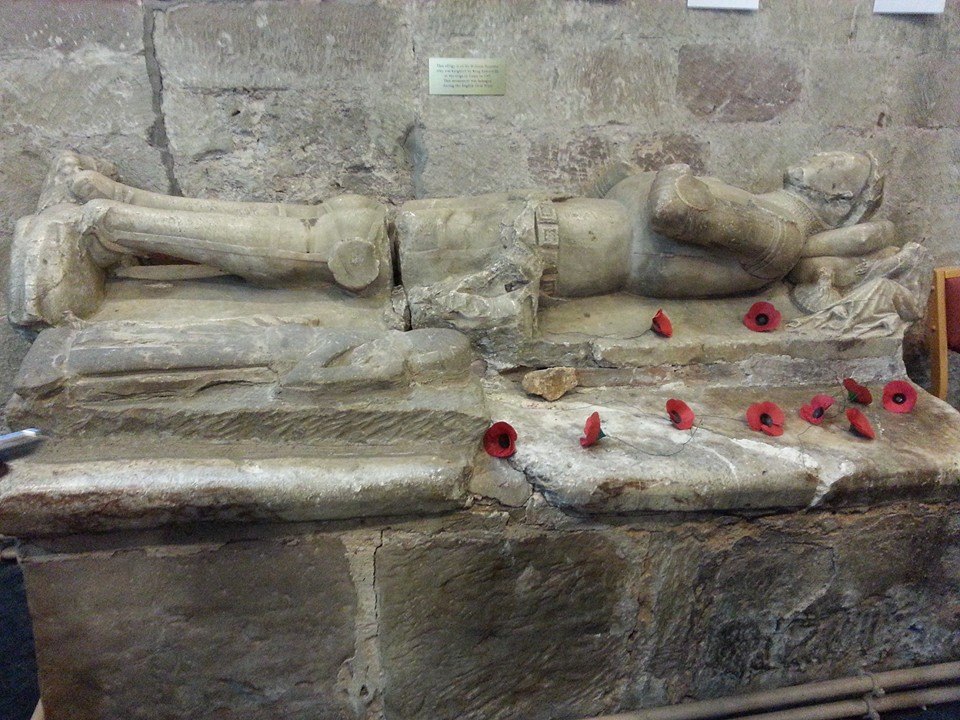
Two effigies at Gnosall church
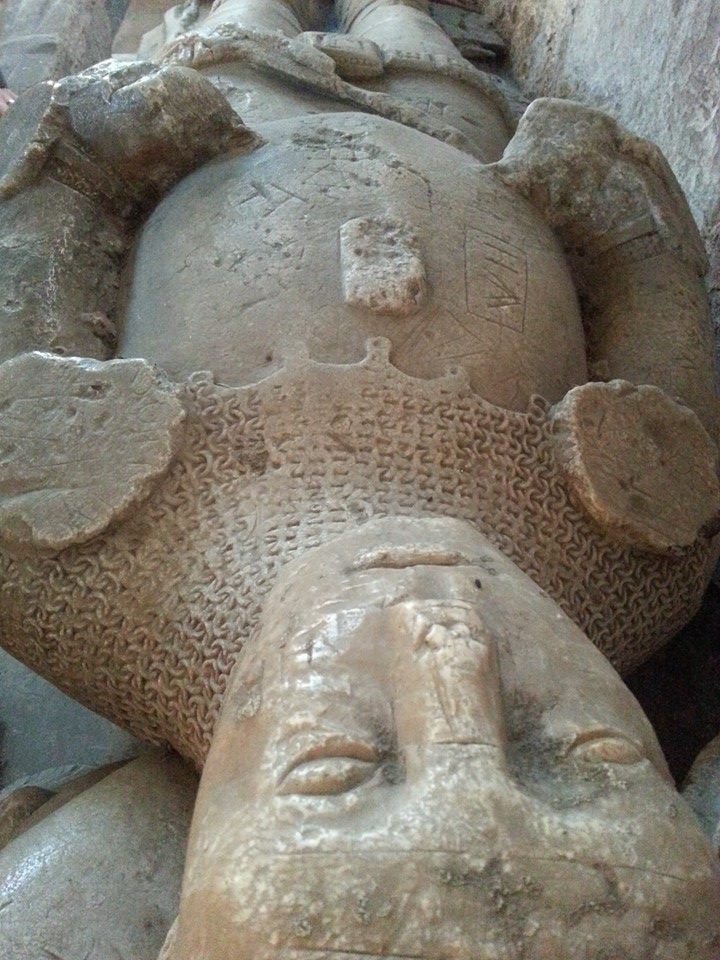
Two effigies at Gnosall church

The unknown knight of Gnosall

Defaced – the unknown knight of Gnosall
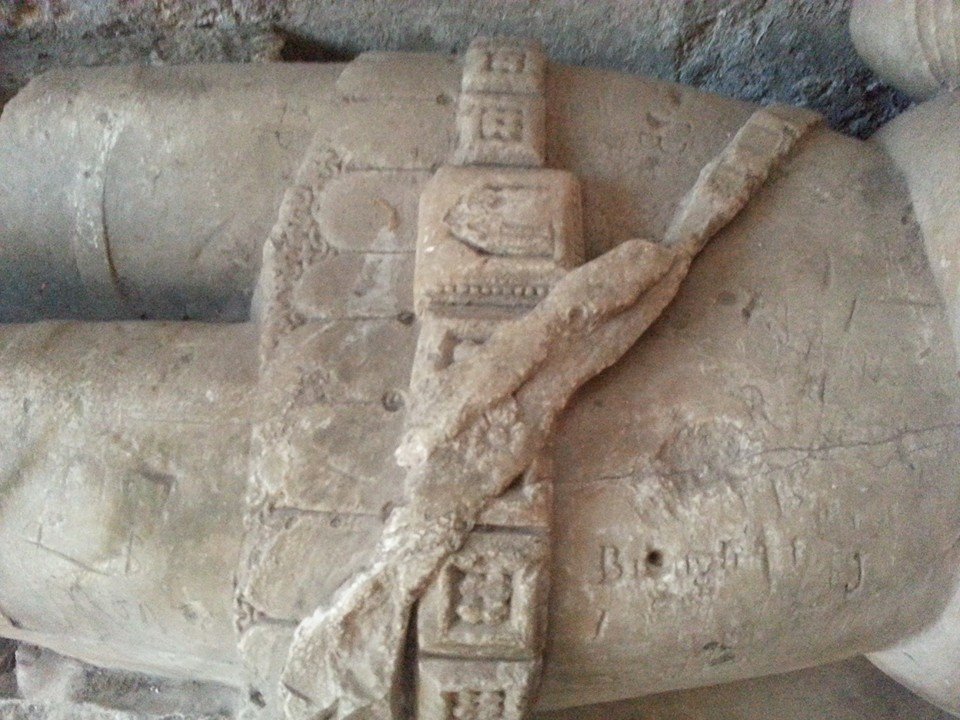
Gnosall effigy belt

Even less is know about this second effigy, but due to its diminutive stature, it is often described as depicting a child. However, after visiting the church, words that I’d read in a paper by Dr Sophie Oosterwijk in relation to the famous Stanley Boy monument at Elford came back into my mind – “A small-sized tomb may deceive the beholder into thinking that it must commemorate a child, but there may be other explanations”. One of Dr Oosterwijk’s other explanations is that these tiny tombs may represent heart burials. It’s not only the size of the effigy that’s convinced me that someone left their heart here in Gnosall, but also the position of his or her hand over the chest, a feature it has in common with another example thought to be a fourteenth century heart burial at Coberley in Gloucestershire.
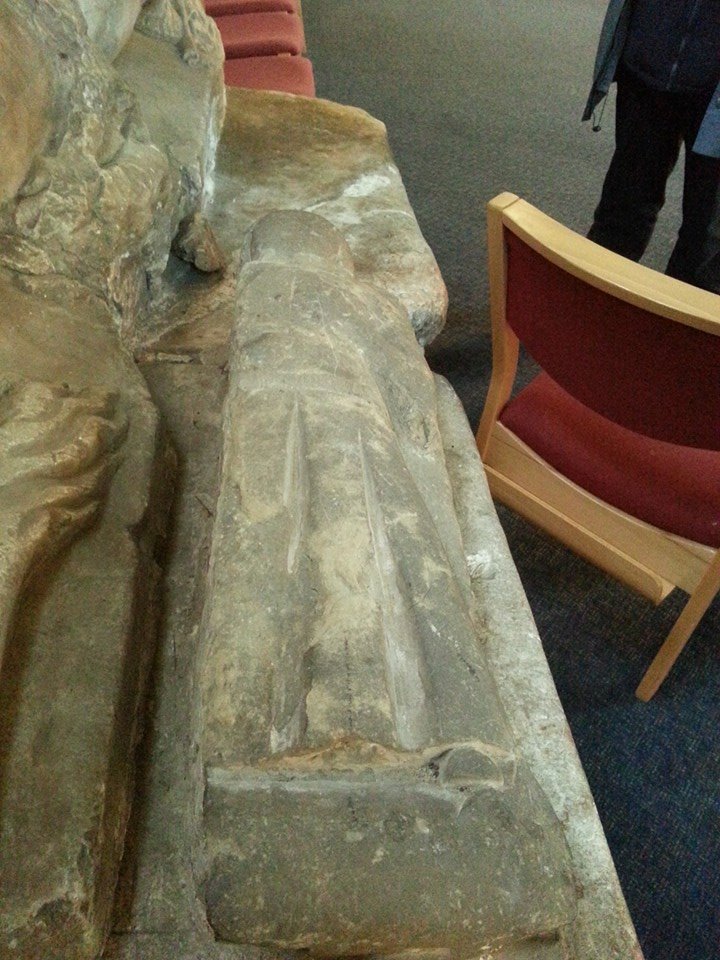
Effigy possibly depicting a heart burial at Gnosall

Effigy possibly depicting a heart burial at Gnosall

Despite the abundance of surviving Romanesque architecture here, the church is missing its original font.  However, at nearby Bradley. and Church Eaton there are examples which date to the twelfth century and recall some of the patterns and themes found at Gnosall, perhaps giving us an idea of what the Norman font at St Lawrence may have looked like. Interestingly, the broken Church Eaton font was reinstated at St Editha’s after apparently being found buried in a garden, and so it’s possible that Gnosall’s is out there somewhere, awaiting discovery under someone’s lawn.

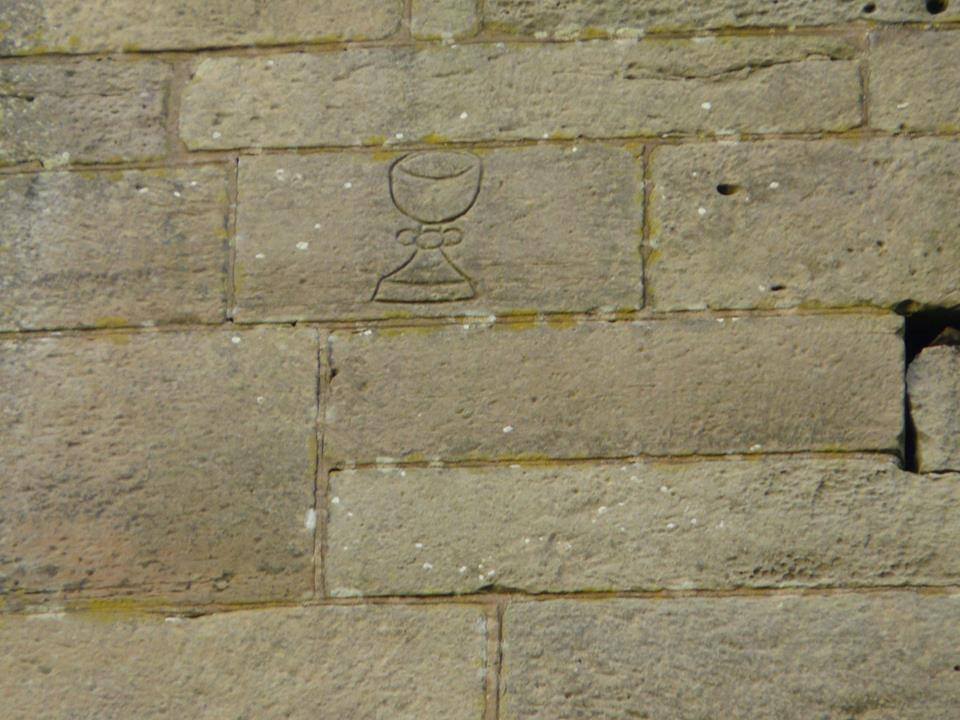
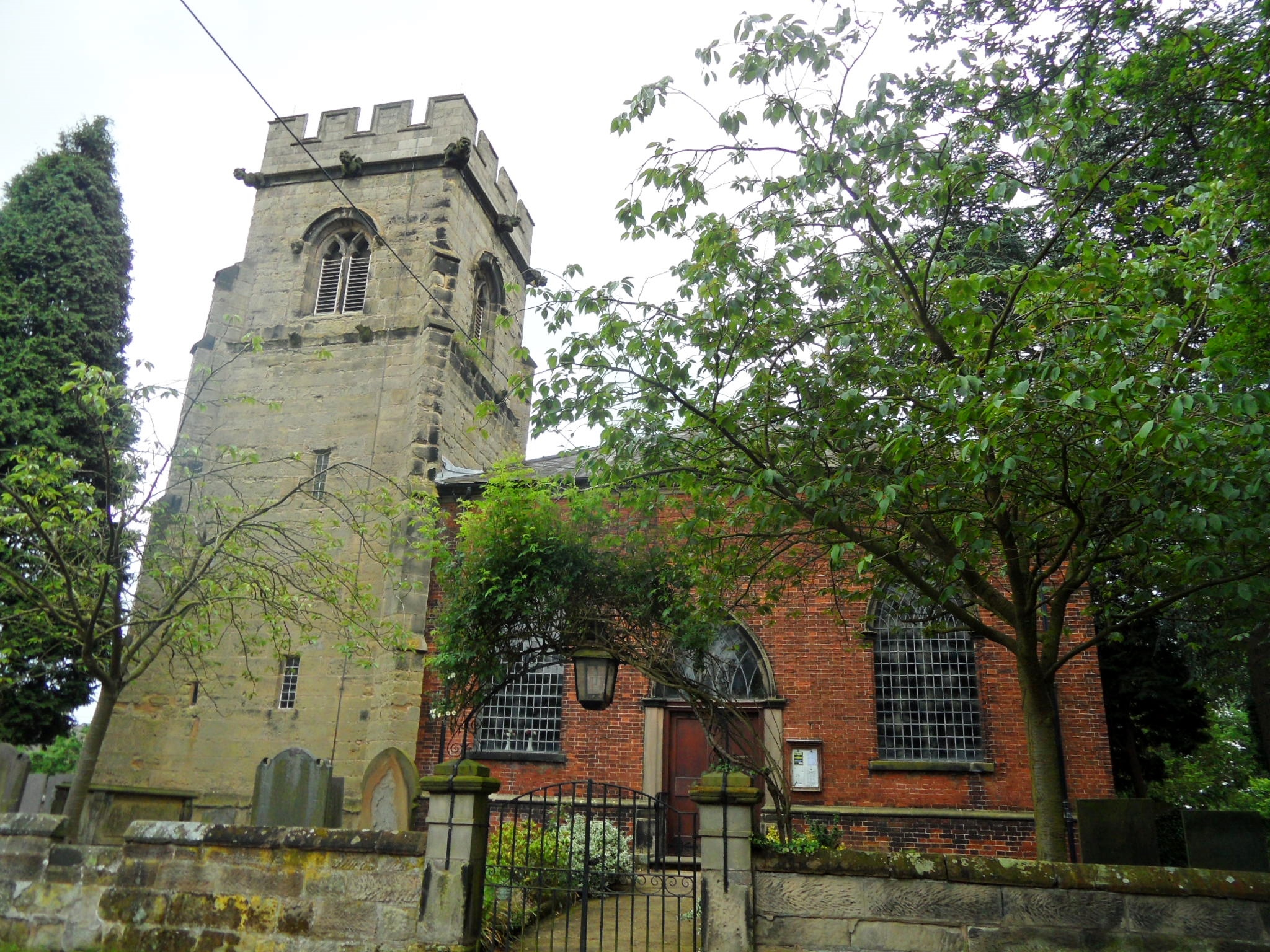
One of Gnosall’s most intriguing features can be found outside, high on the south side of the church where stonemasons (we assume) who extended the tower in the mid fifteenth century have carved a large chalice into the stonework alongside the belfry window.
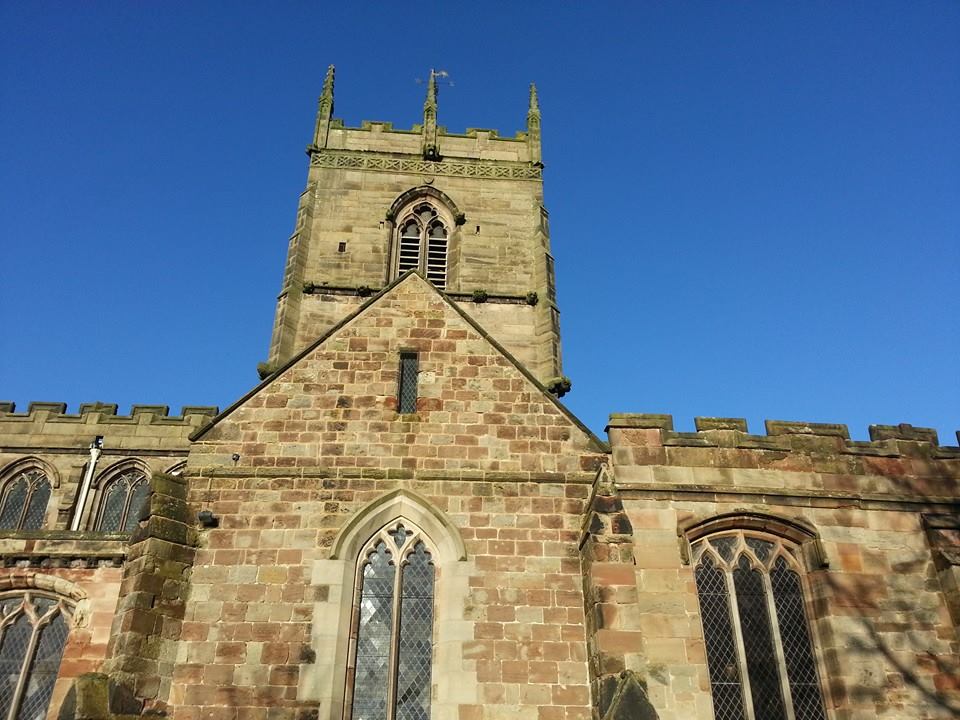
South face of the church tower at Gnosall
South face of the church tower at Gnosall

Chalice carving on Gnosall church tower (photo by Kenneth Ingram)

Chalice carving on Gnosall church tower (photo by Kenneth Ingram)

Less mysterious in origin, but still of interest, are the grooves along the wall, said to have been created by the sharpening of arrows when the grounds were used for archery practice.
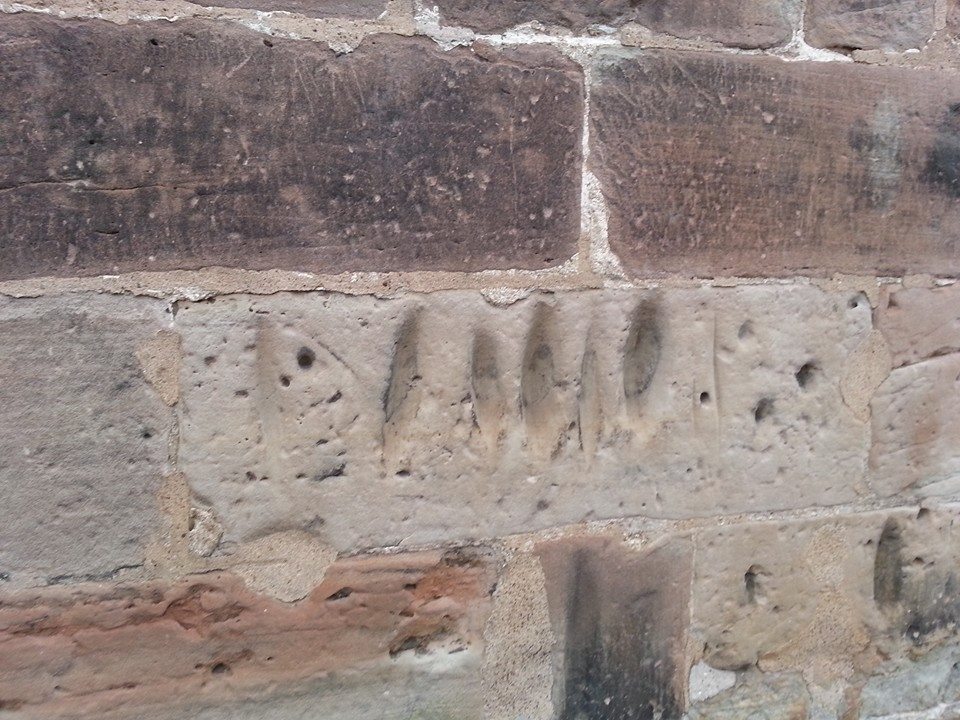
Arrow grooves, Gnosall Church

Arrow grooves at Gnosall Church

There is also a rumour that this wall of the church bears the scars of target practice during the Civil War (Rodwell: 223). What we do know for certain about the church of St Lawrence and the civil war is that there are two soldiers buried here. The parish register records that on 1st October 1642, a tall young man known as John Bayne (or Bayle), ‘one of the King’s souldiers’, was buried here and that on 25th March 1643, David James, another of ‘the King’s souldiers’, was laid to rest. The date of the second may be especially significant, coming less than a week after the Battle of Hopton Heath, fought just ten miles away. Amidst the other burials and baptisms of the parish register, an interesting entry appears on an otherwise blank page. At some time between 20th March 1684 and 19th April 1685, an ‘unlettered’ hand has written the following:

Fere god and honour the King
Honor your parents at all times
Wimins tongues air like [unfinished]

Whether the writer of the verse was interrupted or simply ran out of inspiration is unknown, but we are left to draw our own conclusions on the nature of  ‘wimins tongues’. However, when it comes to singing the praises of this incredible building, I shall not be holding mine. See it for yourself on the weekend of 4th/5th July 2015, when the Church of St Lawrence, including the tower, will be open for tours as part of the G-Fest celebrations held in the village each year. Now that is exciting.

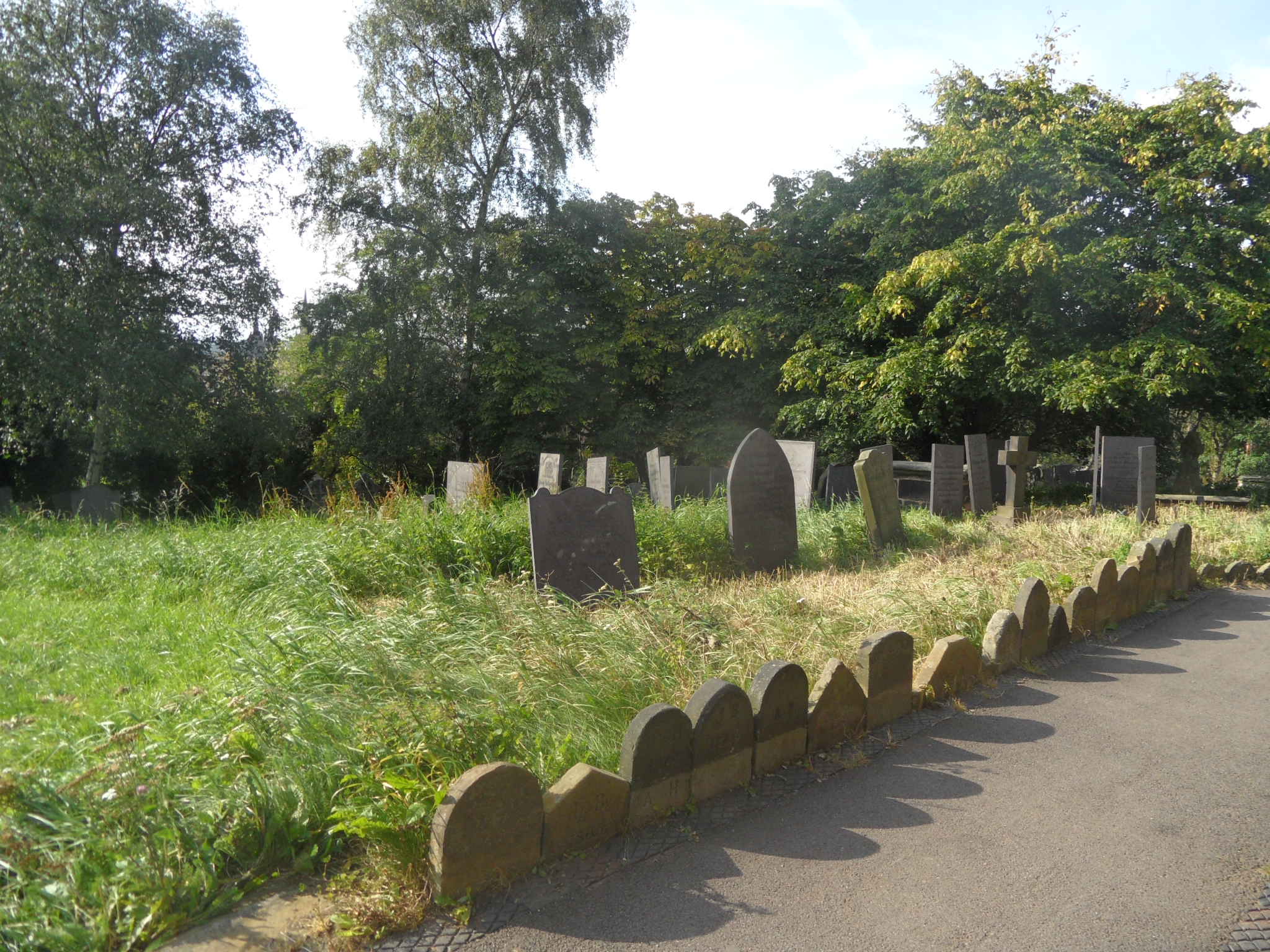
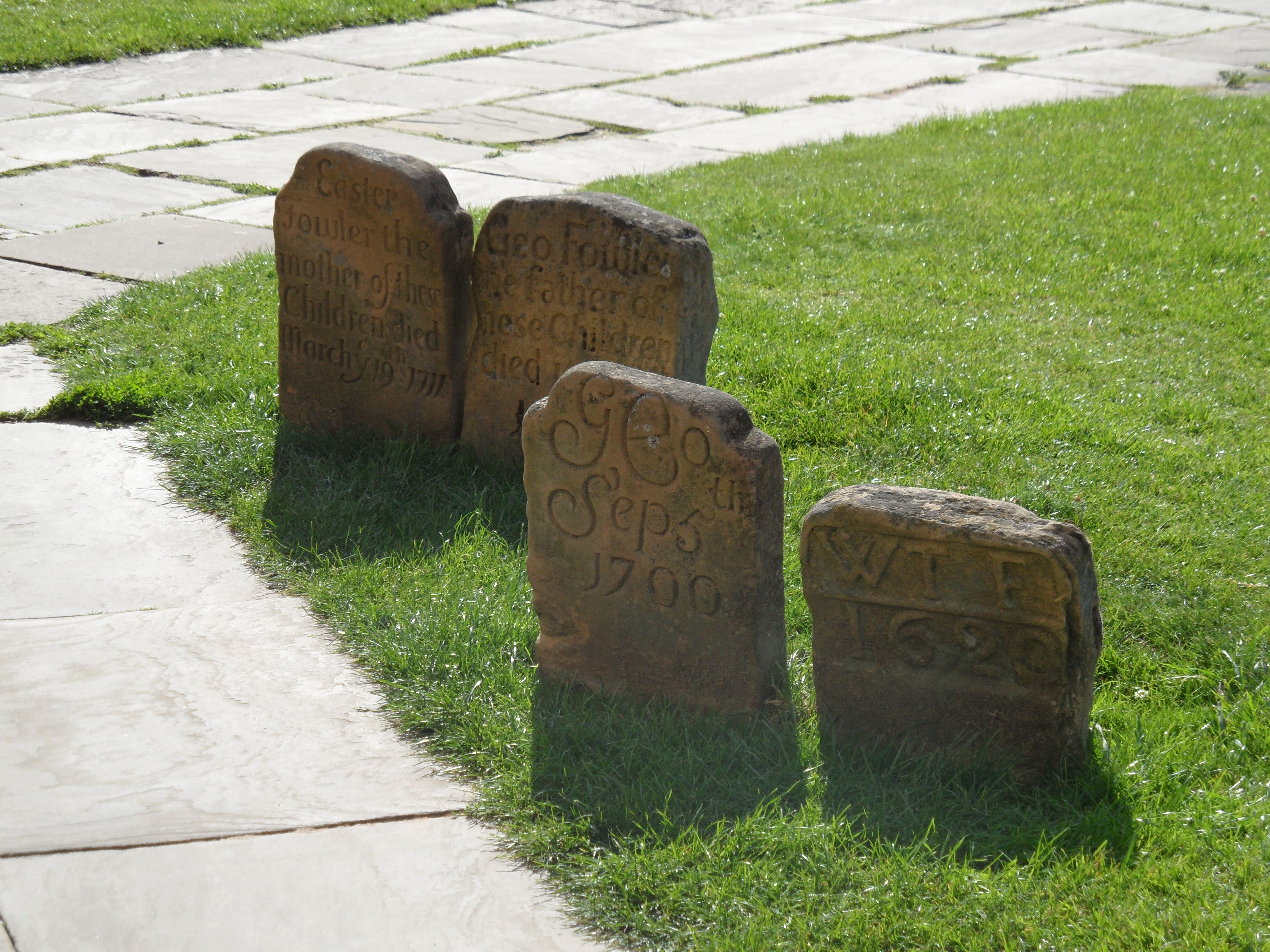
Tombstone in the graveyard at the Church of St Lawrence, Gnosall/

Tombstone in the graveyard at the Church of St Lawrence, Gnosall

With thanks to Norman and Sheila Hailes, for their tour and invaluable knowledge of the church, and to Kathleen Ingram and Cllr Kenneth Ingram and the other residents of Gnosall, for showing us around not once, but twice!

References:

Rodwell,W. (2012) The Archaeology of Churches Stroud: Amberley

Oosterwijk, S. (2010)  Deceptive appearances. The presentation of children on medieval tombs Ecclesiology Today
http://www.gnosallweb.org.uk/articles/stlawren.htm

Bad Neighbours

Legend has it that in July 1403, two feuding neighbours from opposite sides of the River Trent set out to fight on opposite sides at the Battle of Shrewsbury. Sir William Handsacre was for the rebel Sir Henry ‘Hotspur’ Percy and loyal to King Henry IV was Sir Robert Mavesyn, whose name was said to derive from the French malvoisin meaning ‘dangerous neighbour’. At Bridge Meadow, near to the site of High Bridge, it’s believed that the paths of the two enemies crossed, as did their swords. Living up to his name, Mavesyn killed Handsacre but his victory was short-lived and he met his end at the Battle of Shrewsbury, ‘standing with the King and fighting by his side even unto death’, if the epitaph on his tombstone in the church of St Nicholas at Mavesyn Ridware is to be believed.

The church dates to the mid-twelfth century and stands near to the site of the manor house, which Sir Robert would have once called home. The medieval house was replaced in the early eighteenth century by what William Pitt described in 1817 as, ‘a convenient box, pleasantly situated for a summer residence’. However, still in existence and visible from the churchyard is the ancient timber framed gatehouse, built using trees felled in late 1391 or before the spring of 1392, according to dendrochronology.

SAM_1511

The Church of St Nicholas, Mavesyn Ridware

The old gatehouse at Mavesyn Ridware, seen from the churchyard of St Nicholas

The old gatehouse at Mavesyn Ridware, from the churchyard of St Nicholas

The final resting place of Sir William is unknown but in 1866, William Painter of The Red Lion Inn at Handsacre wrote a letter on the matter to George Griffith, author of ‘The Two Houses: A Staffordshire Tragedy’, a dramatic work based on the events of 1403. According to Mr Painter, when the church of St John the Baptist in Armitage was rebuilt in the mid-nineteenth century, a stone coffin was discovered in the north wall. Inside was a skeleton, with a full set of teeth and a sword. Local tradition had it that these were the mortal remains of Sir William Handsacre. (1)

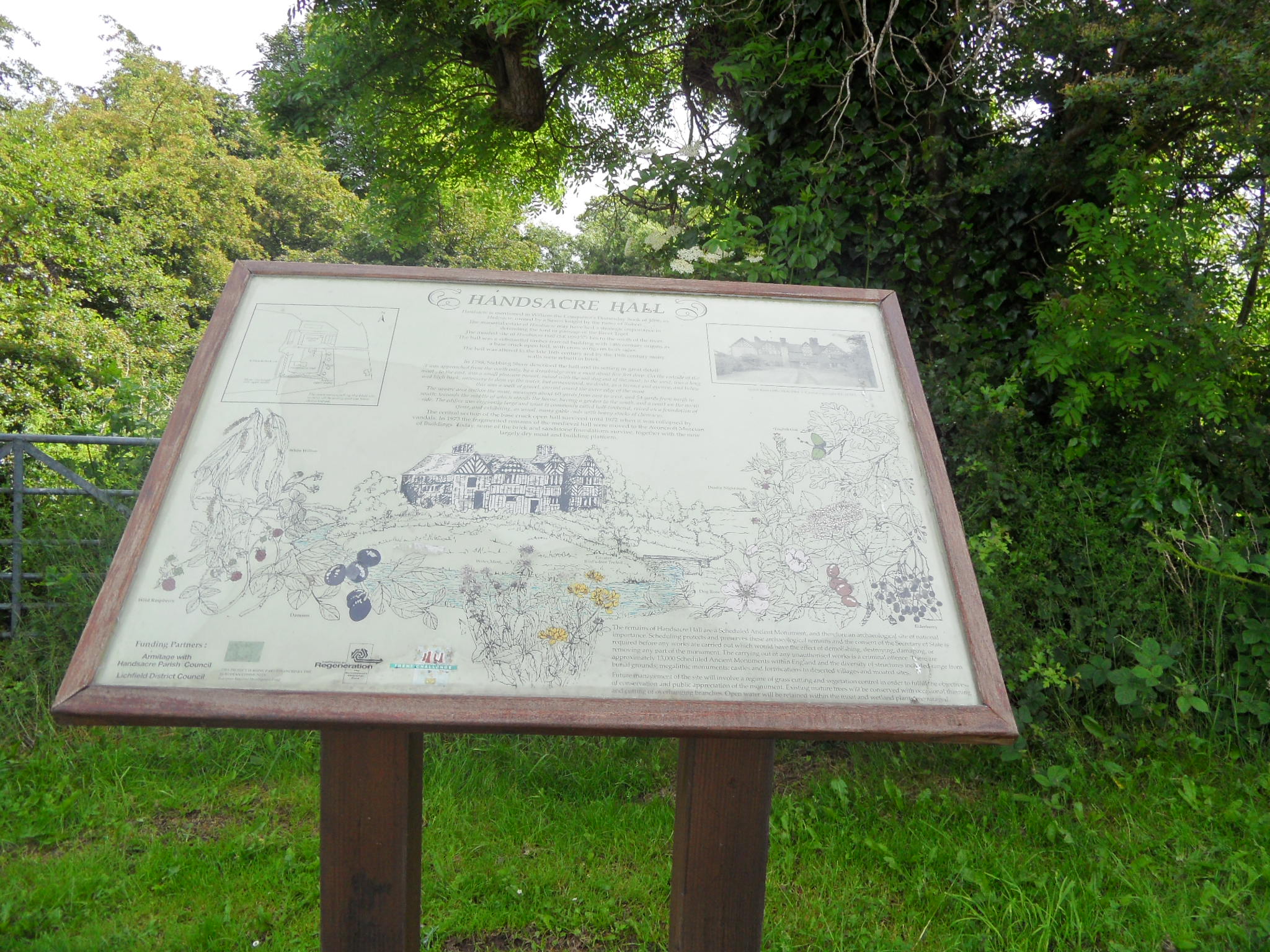
In 1972, Sir William must have turned in his grave (whether in St John’s or elsewhere) when vandals destroyed much of his former home, Handsacre Hall. In a bid to preserve what remained, I understand that the surviving fragments were moved to Avoncroft Museum in Bromsgrove, where again dendrochronology was used to date the timbers, giving a suggested date of around 1310, with some reused timbers from an earlier hall. According to the report by the Staffordshire Archaeological Society, the house had been derelict for at least six years prior to this and a photograph of the building taken around this time can be found on Staffordshire Past Track here. In its heyday it looked like this.  

SAM_1629

Information board at the site of Handsacre Hall

Nowadays the site is a Scheduled Ancient Monument, still surrounded by a moat, ten metres wide and four feet deep, but also by a housing estate. It’s said that on the island in the centre there are visible brick and sandstone remains and no doubt there is plenty of evidence of past lives at the hall below ground. Visiting in high summer, the only thing I could see (and feel unfortunately), were stinging nettles. Will be interesting to see what a return visit in winter will reveal.

Part of the moat which once surrounded Handsacre Hall

Part of the moat which once surrounded Handsacre Hall. And nettles. Lots of nettles…

Sources

Staffordshire Archaeological and Historical Society Volume XV Transactionf for 1973/4 – Stanley R. Jones Handsacre Hall, Armitage: a note on its destruction

http://ridwarehistory.yolasite.com/mavesyn.php

Staffordshire HER 09638

Greater Medieval Houses of England and Wales, 1300 – 1500: Volume 2 by Anthony Emery

A topographical history of Staffordshire by William Pitt.

Well Wishers

I’ve written previously about how the appearance (and apparently, the actual location!) of St Chad’s well has changed over the years here, but I’ve recently found some contemporary accounts of the well’s previous incarnation – a ‘vertical tube built of engineering bricks, covered with a kind of gloomy sentry-box of stone’, which had apparently become so neglected in the 1940s that only a few inches of stagnant water covered in a green scum remained in the bottom of the pool. (1)

In November 1946, the Bishop of Stafford lamented that the well had once been a place of great pilgrimage but had fallen into a state of neglect and considerable disrepair and in April 1948, E Sutton, a former caretaker of the well, described it as having degenerated into a wishing well. A few weeks later, Mr Sutton submitted a further letter to the Mercury, advising, ‘I have again visited the site and found it in a worse state than on my visit there last Autumn. Then boards covered the Well. These are now removed and the Well is full of rubbish, among brick-bats and wood being a worn out coal bag! I noticed too, among the bricks and stonework lying around in wild confusion the ancient ‘St Chad’s Stone’, which the historian Leland, writing of his visit to the Well some four hundred years ago, states was then believed to be the very stone upon St Chad stood in the icy water as an act of penance, it then being the bottom of the Well. When the small building was erected over the Well in Stuart times, this stone was incorporated into the building, no doubt in order to preserve it. Many hundreds of hands have been placed upon it, mostly with reverence, since. It now lies among the rubbish, one corner broken. A fitting symbol of the ideals of 1948!’ (2)

St Chads Well

St Chad’s Well today

Saint Chad's c.1915. Taken from Wikipedia

Saint Chad’s Well c.1915. Taken from Wikipedia

I’m intrigued by this reference to ‘the ancient St Chad’s stone’. When James Rawson described the site prior to his restoration in the 1830s, he noted that, ‘the well-basin had become filled up with mud and filth; and on top of this impurity a stone had been placed, which was described as the identical stone on which Saint Chad used to kneel and pray!’. Despite Rawson’s apparent scepticism about these claims, was he somehow persuaded to use this stone in his new well structure, thereby perpetuating the myth? I’d love to see what went on in those discussions and I’d really like to know what happened to this legendary stone. St Chad may not have been anywhere near it, but the fact that people believed he had should have made it worth saving for posterity’s sake.

Water in the well

Water in the well

Unfortunately for Mr Sutton, the restoration of the well did not put a stop to people using St Chad’s Well for wishes, as evidenced by the layer of coins that still glint beneath the water, tossed in at some point over the last half century or so. It’s often suggested that this is the continuation of a ritual that our ancestors were carrying out a long, long time before St Chad arrived in Lichfield. Some things change. Some stay the same.

Notes

(1) The octagonal stone well structure erected by Rawson in the 1830s, as described by the Lichfield Mercury on May 6th 1949!

(2) A little off topic, but it’s amusing to see that it’s not just nowadays that letters appear in the Lichfield Mercury suggesting that society is going to hell in a handcart. Once again, some things stay the same…

Daisy, Daisy

Recently, I’ve spent more time in churches than ever before in my life (with the possible exception of the Summer of 2004, when I went to so many weddings that I was able to recite 1 Corinthians 13 off by heart). When I was younger, history for me was all about the castles. Churches were boring. The only remotely interesting thing about them was that, with their crenellations, some of them looked a bit like castles. Now I know that they can tell stories just as good as any castle, but you just need to know where to look.

SAM_1851

Before even stepping inside All Saints in Kings Bromley, there are plenty of interesting tales. ‘Lady Godiva’s’ cross in the churchyard, originally dates back to the 14th century, but was restored in 1897.

SAM_1842

I was delighted but intrigued to see a reference to one of my childhood heroines here. The story I knew as a little girl was that Godiva pleaded with her husband Leofric, Earl of Mercia, to reduce the taxes he imposed on the people of Coventry. Leofric tried calling her bluff by saying he would do so, if she rode through the marketplace in the buff. Unfortunately for him, his wife not only had compassion, but also really, really long hair which according to Roger of Wendover who first recorded the story, ‘covered the whole of her body like a veil’, as she climbed onto her horse and successfully carried out her legendary protest. The connection with Kings Bromley is that Godiva and Leofric had a summer residence or hunting lodge here, where Leofric died in 1057 and may well have been involved with an earlier church which could have stood on this site.

SAM_1844

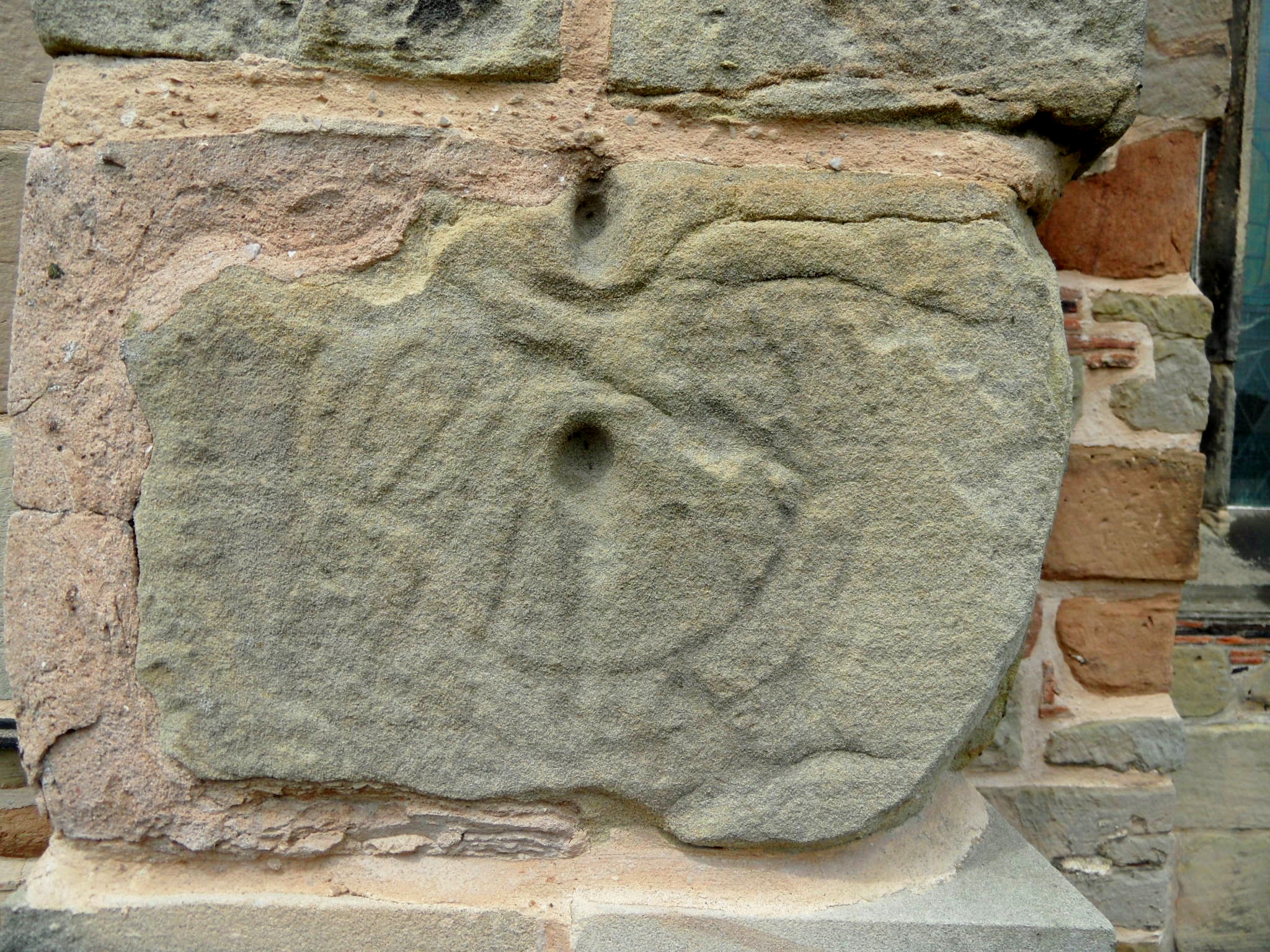
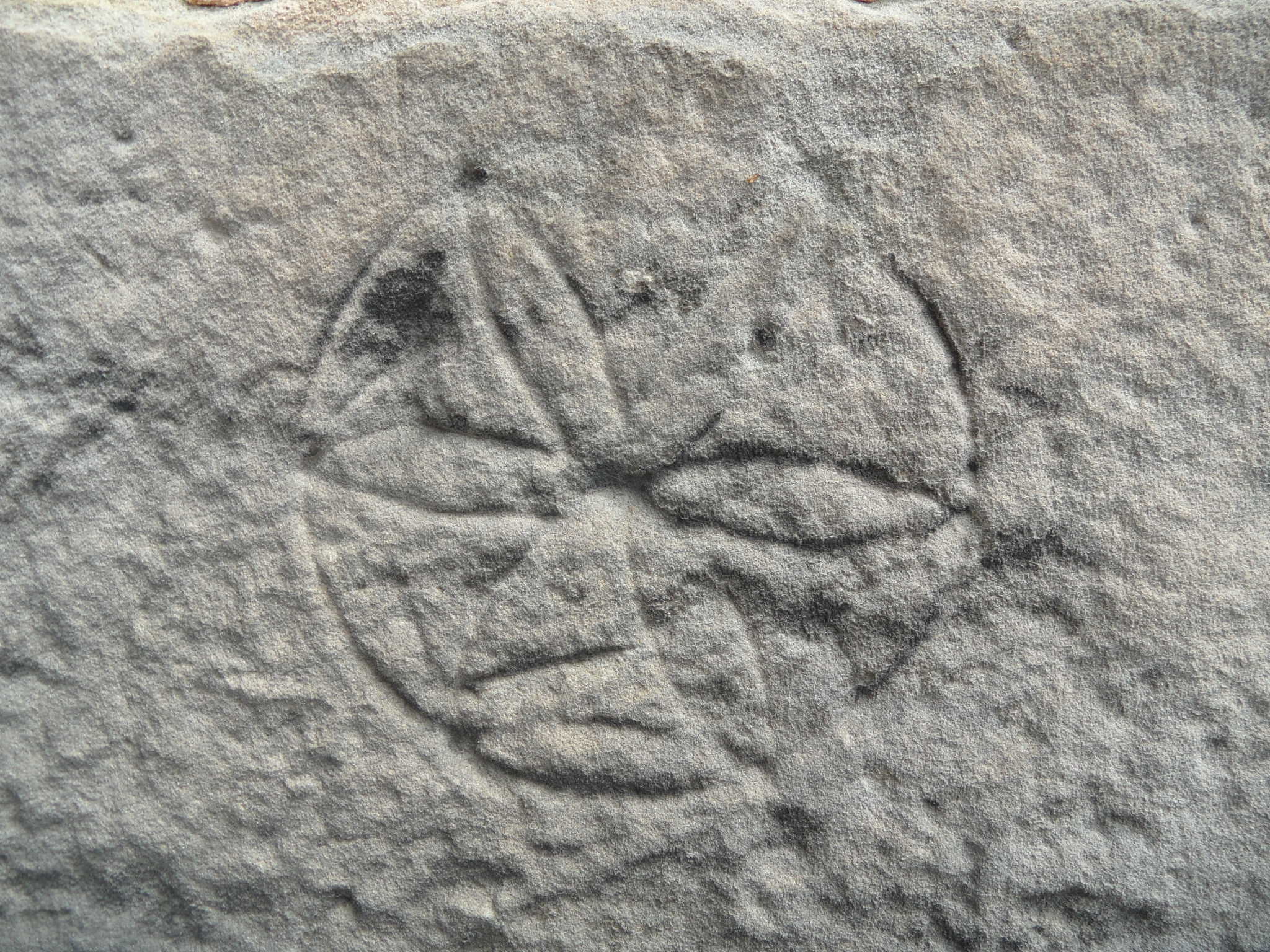
Unlike others I’ve seen recently, I’m pleased to say the church itself hasn’t been fully restored by those pesky Victorians, but has a range of architectural styles and features dating back to at least the eleventh century, but possibly even earlier than that – the HER description says that this is an Anglo-Saxon wall, and somewhere within it there is possibly even a Romano-British brick. On a buttress near to this ancient wall is a medieval scratch dial which, with the assistance of the sun, would once have helped the priest be on time for mass. On the buttress in-between the porch and the sixteenth century tower there is another carving, but unlike the scratch dial, no-one is quite sure of its significance.

SAM_1845

The daisy wheel carving is described as a mason’s mark in the churches information sheet. Although this is the first I’ve seen, this symbol regularly crops up on old buildings, especially churches. Whilst some believe these carvings have a practical function, others believe they were carved for good luck or protection against evil spirits.

SAM_1846

On a bit of a tangent, on the subject of childhood and daisies and folklore, I did wonder about some of the little rituals surrounding these flowers that we unthinkingly carried out as kids. The name is thought to come from the old English ‘Daes Eage’ meaning ‘day’s eye’, and refers to the way the flower opens and closes with sunlight. I’ve read that wearing daisy chains was thought to protect you from being abducted by fairies (must work, I’m still here!) and that one of its folk names is ‘Measure of Love’, from the game where you pull off the petals one by one, chanting, ‘He loves me, he loves me not’. Apparently, there is another less risky version of this game in which you chant, ‘He loves me, he loves me lots’. If only someone had told me this at the time, I wouldn’t have had to cheat so much.

SAM_1858

Anyway, as it says in those half remembered lines from Corinthians, I’ve put away childish things. Well, most of them anyway….

SAM_1866

Sources

http://www.medievalgraffitisurrey.org/circles.html

Orange Peel

In the mid 1930s, the Lichfield Mercury ran a series of articles called ‘The Beauty that is England’, featuring local country houses – ‘what they are and have been’ – around Lichfield. Each article blends the author’s description of the house (if still standing) and grounds with a heady mix of folklore, hearsay, historic records and poor quality photographs. Taken with a pinch off salt, they make for fascinating reading. As well as describing the past, they are now the past, providing us with a snapshot of almost eighty years ago – a ‘Now and Then and Then’, if you like.

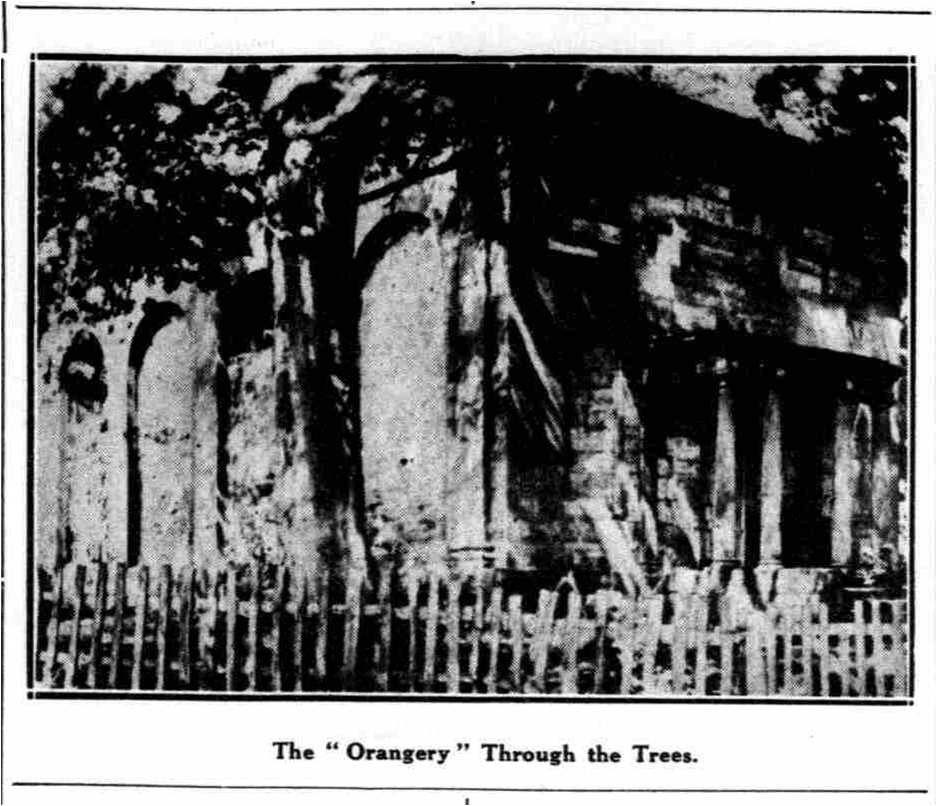
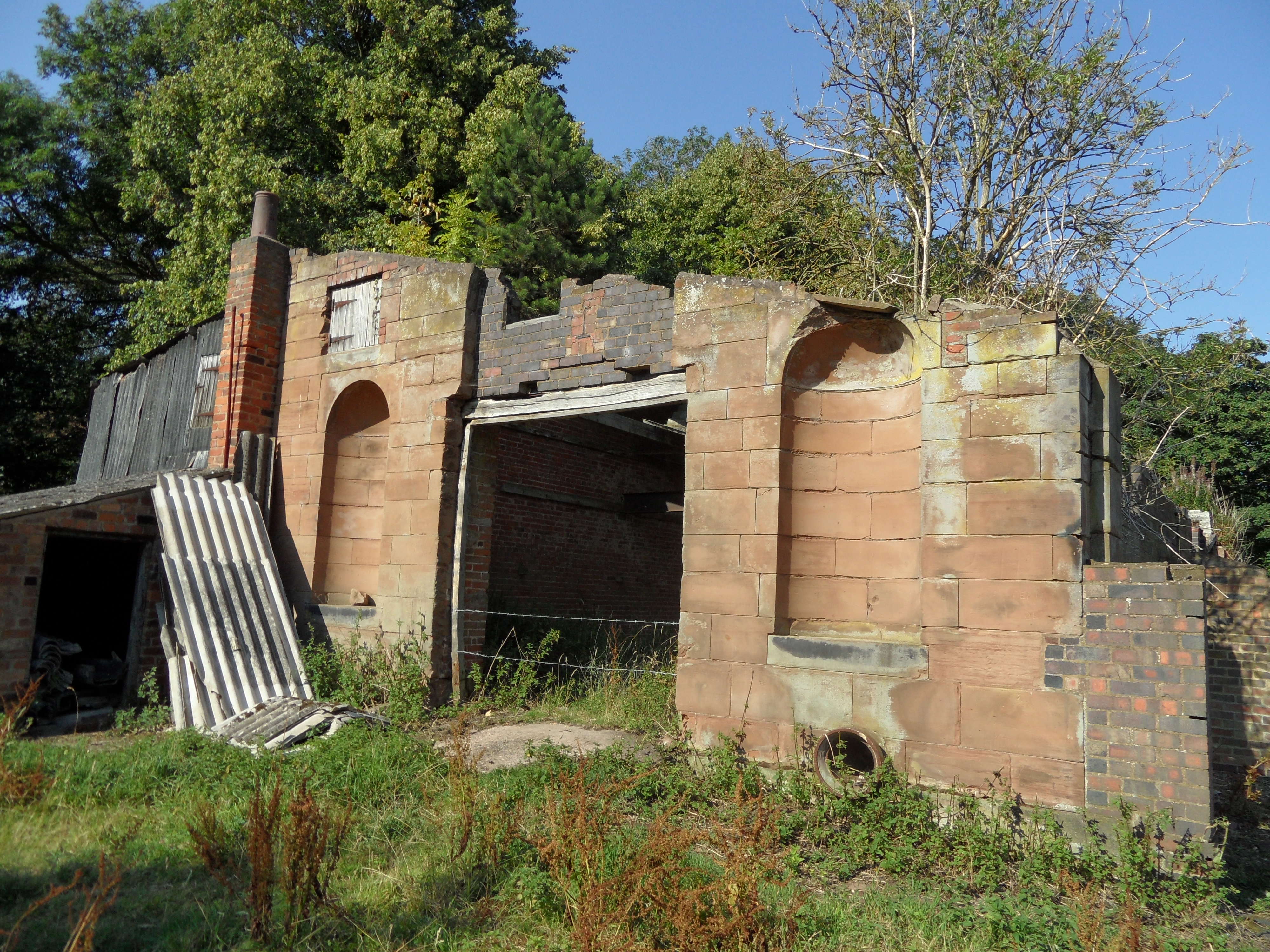
The Orangery at the old Fisherwick Estate. Just about.

The Orangery at the old Fisherwick Estate. Photo from the Lichfield Mercury July 19th, 1935.

I was delighted that number eight in the series was Fisherwick, the site of a once grand mansion built for the Marquess of Donegal in the 1760s, but torn down and sold off to pay family debts after barely half a century. It’s a place I know well and I recognise much of it from the description from the 1930s – the beauty of its woods, the old arched bridges, the River Tame meandering through rich and colourful meadows. Yet of course in eighty years there have been changes. The red brick of the now demolished Elford Hall can no longer be seen in the distance, Fisherwick Hall’s ice house, ‘a brick enclosed fissure, built into the side of the hill’, near Home Farm has since disappeared, as has the pub in nearby Whittington which took its name from Robert Peel who purchased some of the dismembered Fisherwick estate.

Still hanging on in there just is the Orangery, although its portico (just visible in the above image), supported by four pillars with carved ionic capitals and reached by four worn steps has vanished since the 1930s, as has the frieze around the walls, said to have been carved in white stone with goats’ or sheep skulls linked by flowers. It’s a miracle anything survives at all. Even eighty years ago the author described its ‘crumbling sandstone, rotting bricks and decaying beams’, noting how ‘the ravages of time and nature are playing havoc with the beauty it barely possesses’. Then, in the 1970s, Nature upped her game and the Orangery was struck by lightening and scheduled for demolition. Why this never took place, I don’t know but I’m pleased it didn’t. It gives us an idea of what the rest of the estate may have looked like, and has the added interest of carved graffiti – the author thought everyone in Lichfield had added their signatures, based on the number and variety of names scribbled all over it.

Orangery

SAM_5150

Fisherwick 016

The Lichfield Mercury article ends with a tantalising yet unsubstantiated snippet of a story, saying that, ‘in 1800, a fatal duel was fought at Fisherwick, where a suitable enclosure near the hall had been lent for the combat’. I don’t know who the two gentlemen were, or what their quarrel was over, but this is just one of the many tales which have weaved their way around this intriguing place.  If you’d like to hear more Fisherwick Stories and explore the Orangery and whatever else remains of the estate today, including the community farm which has grown up in and around the former walled garden, then you are more than welcome to join us on our Lichfield Discovered walk –  2pm on Saturday 5th April at Woodhouse Farm and Garden.


Wolverhampton Wandering

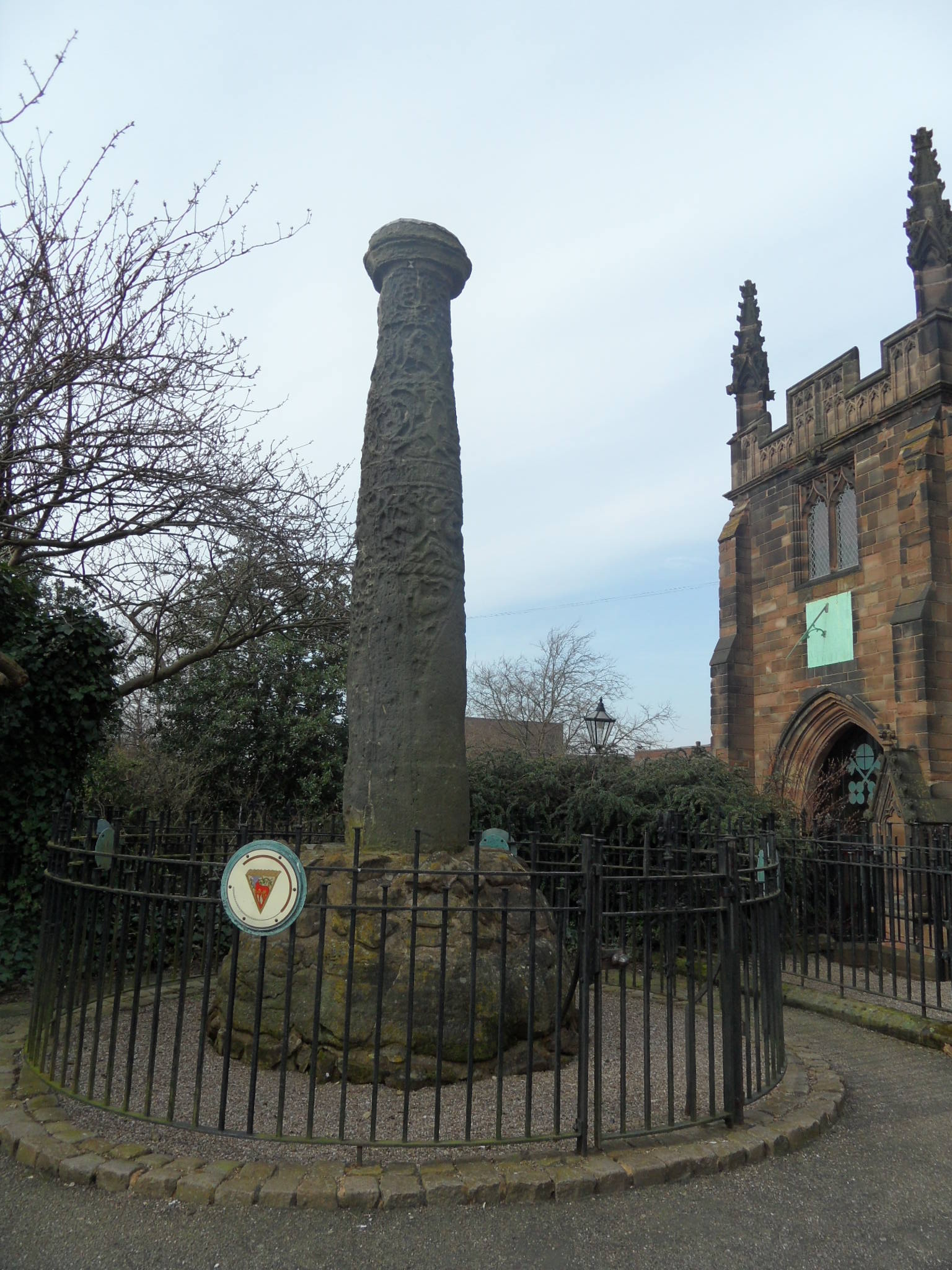
I had to pop into Wolverhampton today. I knew from my search for an ancient cross in Lichfield a couple of years back that there was a Saxon cross shaft here and went to find it.  Unlike the Lichfield cross, I didn’t have to try too hard – it’s huge! Its size, and also the fact that it is made from sandstone not found in Wolverhampton, has led some archaeology types to suggest that it is probably a reused Roman column, possibly from Wroxeter or even just up the road in Wall.

Saxon Cross Shaft, WolverhamptonThe elements and pollution have not treated the shaft kindly but its still clear that this was an incredible piece of craftmanship – the Black Country History website describes it as, ‘one of the finest cross shafts in the Midlands’. The carvings of acanthus leaves which decorate the shaft alongside those of birds and beasts have given archaeologists some problems when trying to establish a date as they suggest different periods. The plaque accompanying the shaft in the churchyard has decided to go with the earlier date of the ninth century, whilst others believe late tenth century is more accurate.

Cross Shaft Wolverhampton

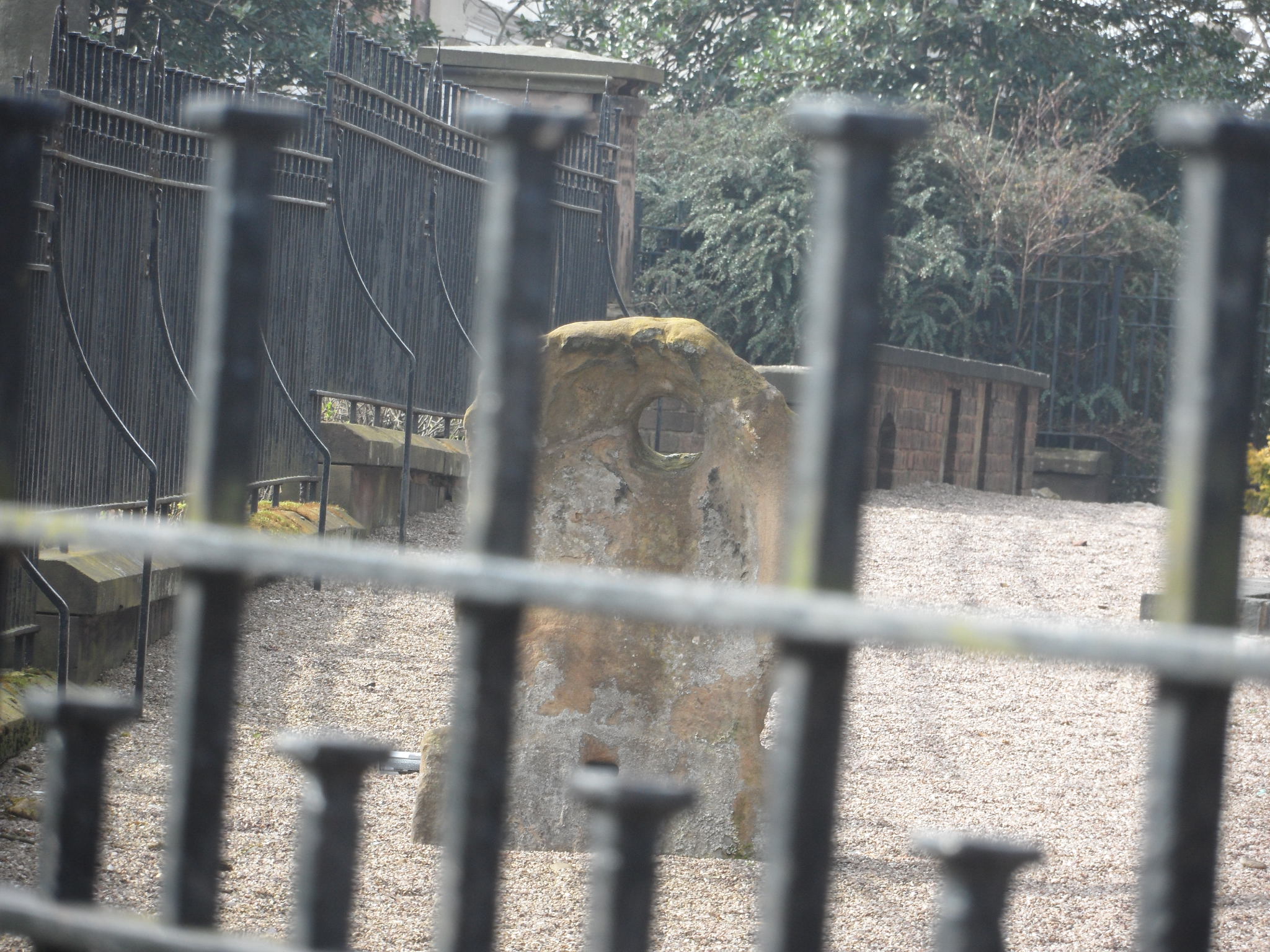
On the way out of the churchyard I noticed another stone with a good back story. Known as the Bargain Stone, its said to be where the good (and probably not so good) folk of Wolverhampton would agree sales and make deals by shaking hands through the hole. The nearby plaque suggests it is an old gargoyle and the hole is what remains of its mouth.

SAM_0031

Talking of hands, why didn’t it occur to me to put my hands over the railings to take a better photo?

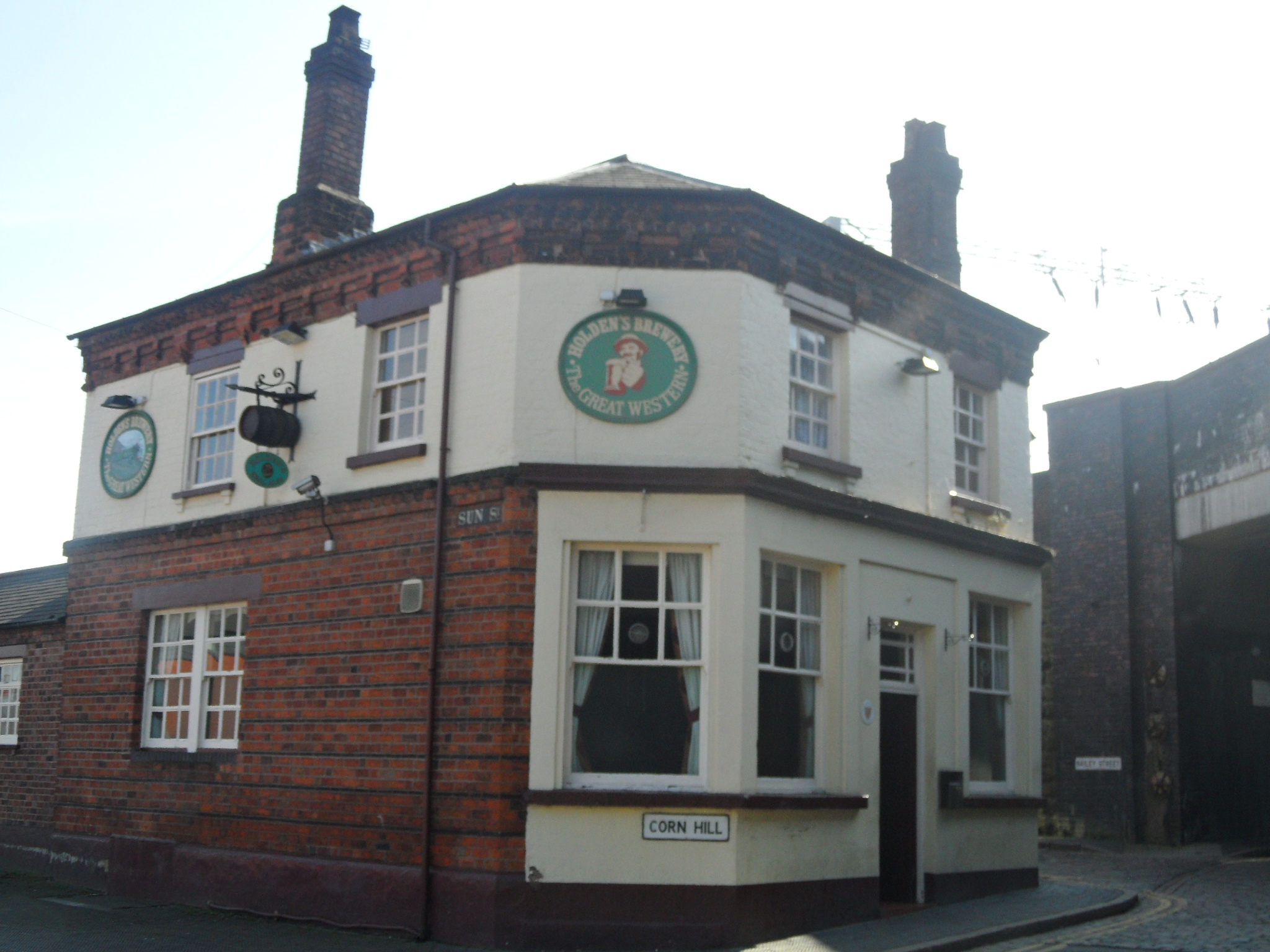
As if ancient crosses and stones weren’t enough of a treat, we also found Holden’s Brewery’s Great Western near to the train station. This is a proper pub – cobs on the bar, Holden’s Golden Glow (amongst other delights) on tap and really friendly staff. Although we were tempted to sit outside in the sun, the interior was so quirky and there was such a nice atmosphere, we sat inside.

Great Western

Wished I’d got the train. Definitely not driving next time.

The Great Western

The great Great Western

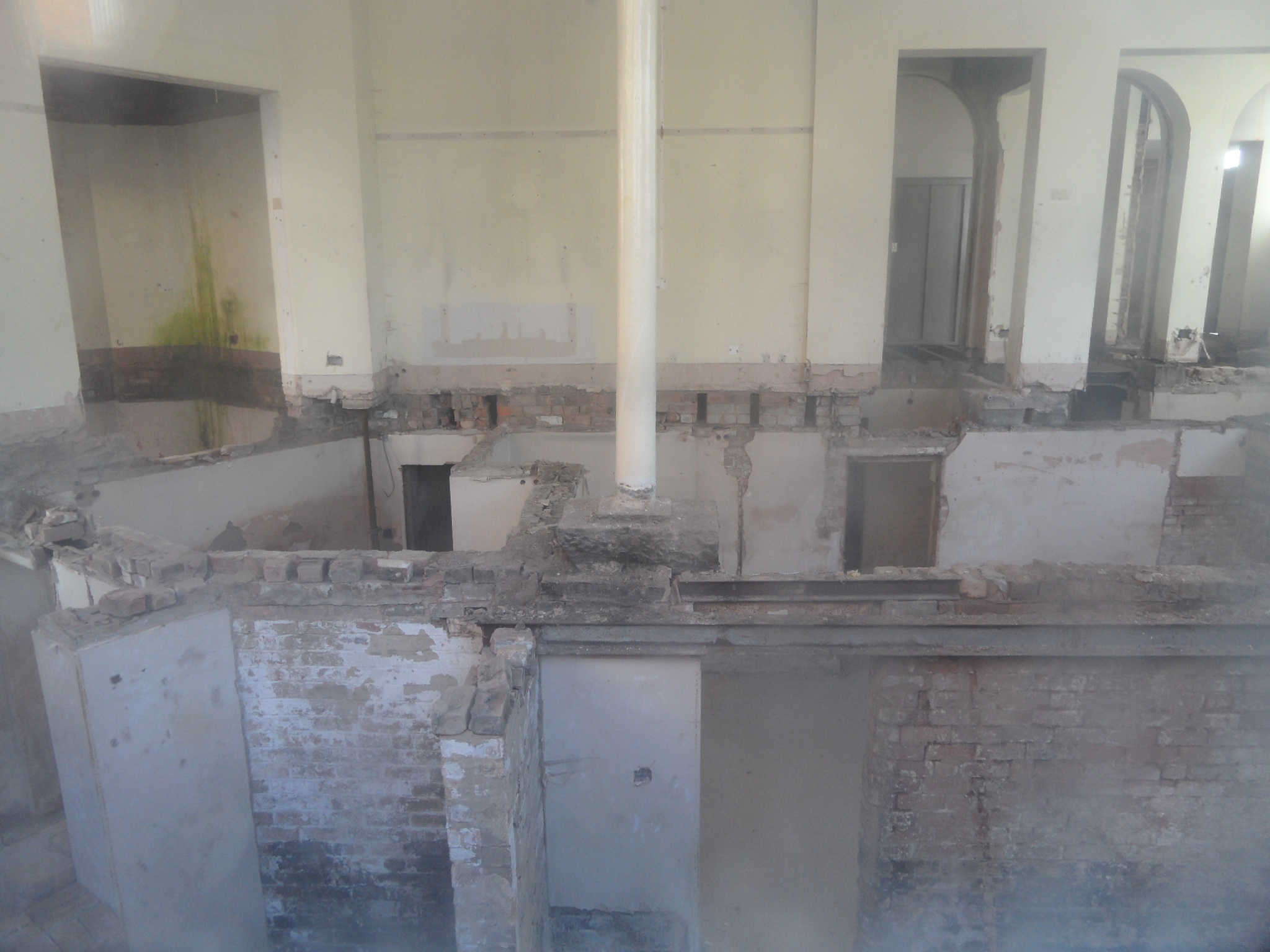
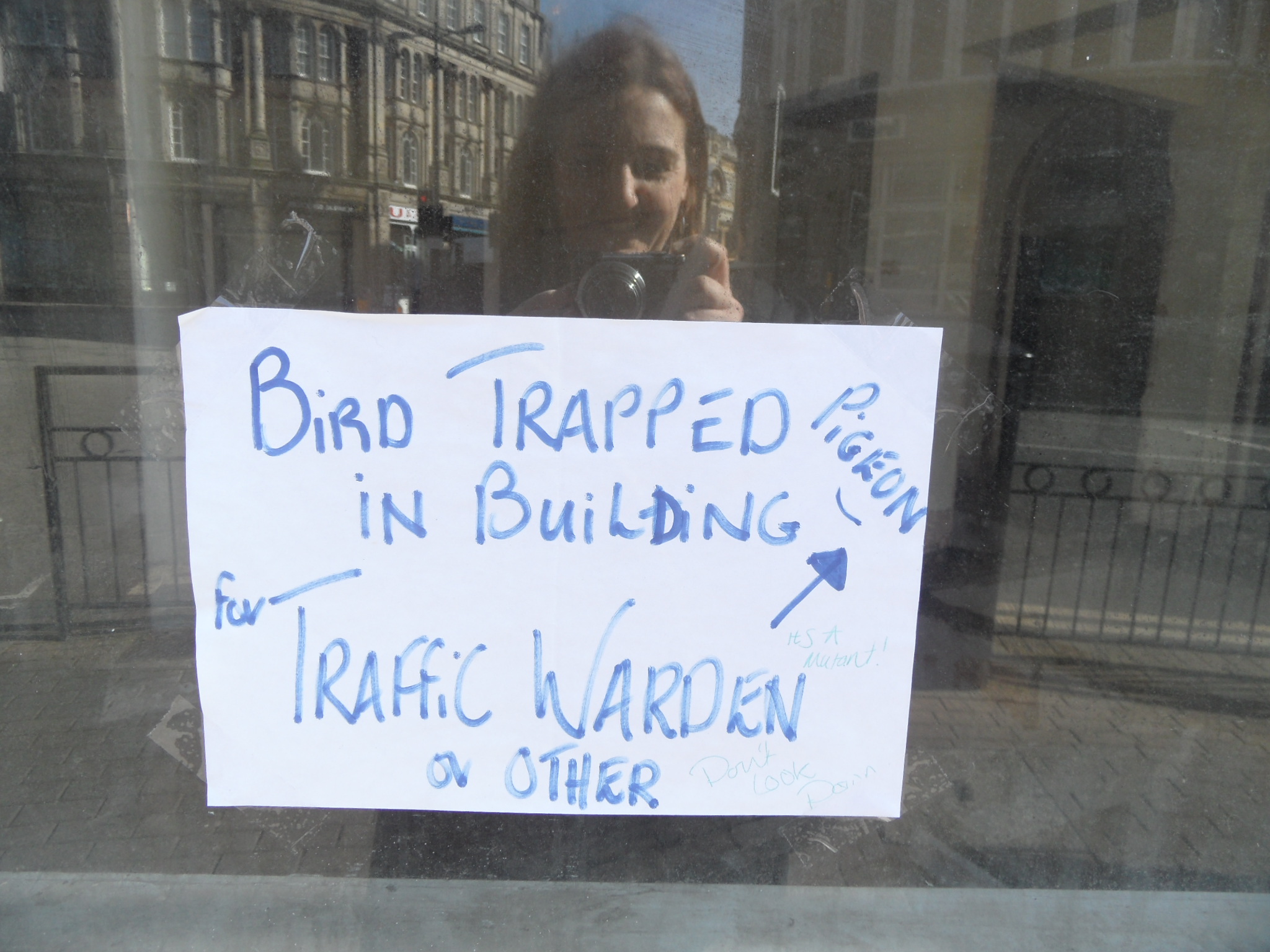
We walked off our pork baps with a little bit of a wander around the city streets. This building caught my eye, not only because it has no floors, meaning you can see down into the cellar, but also because of the handwritten sign someone had stuck to the window.

SAM_0045SAM_0046I’m not sure a traffic warden would be the person I’d turn to in a trapped bird scenario but maybe they do things differently in Wolverhampton.

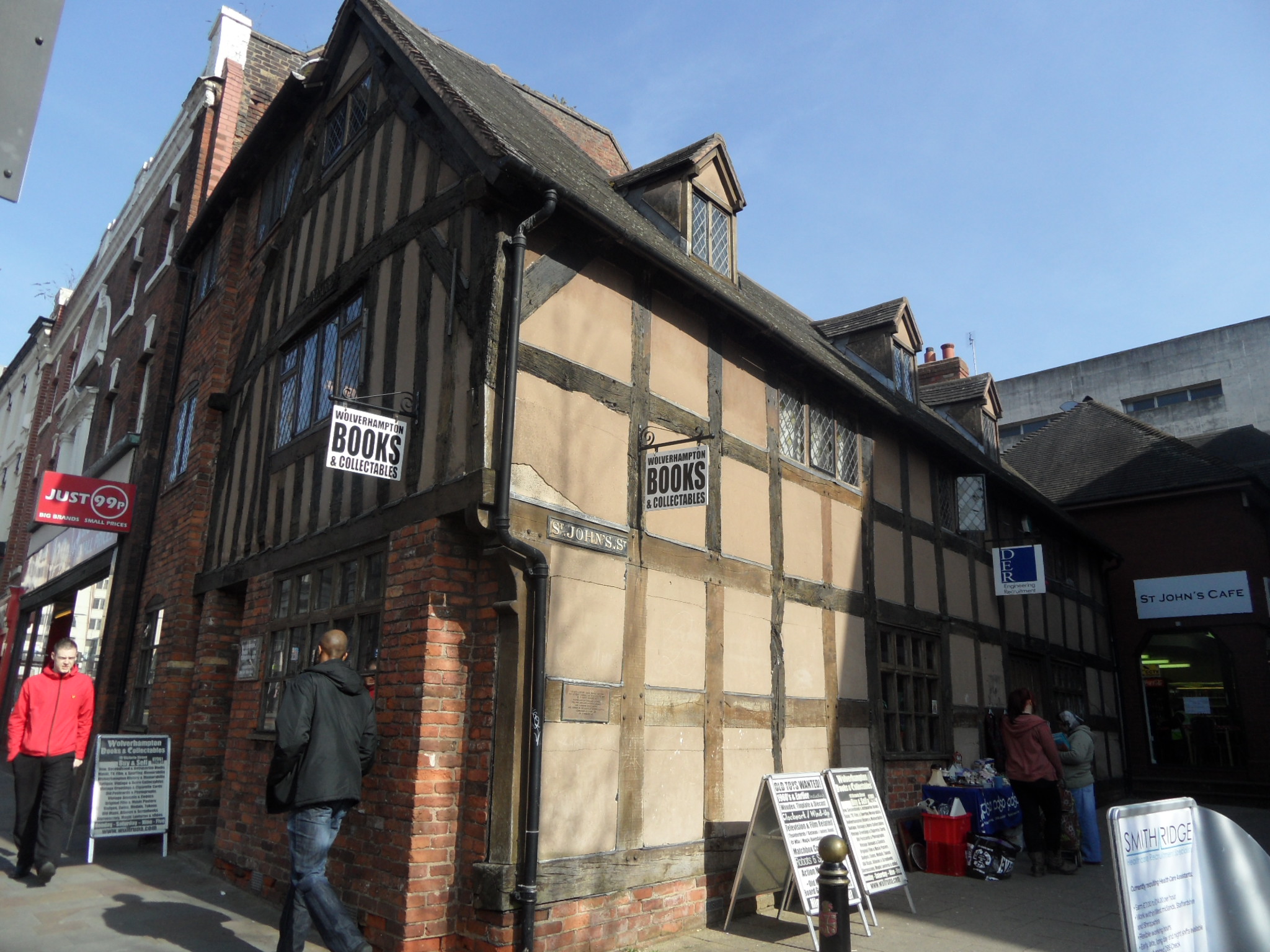
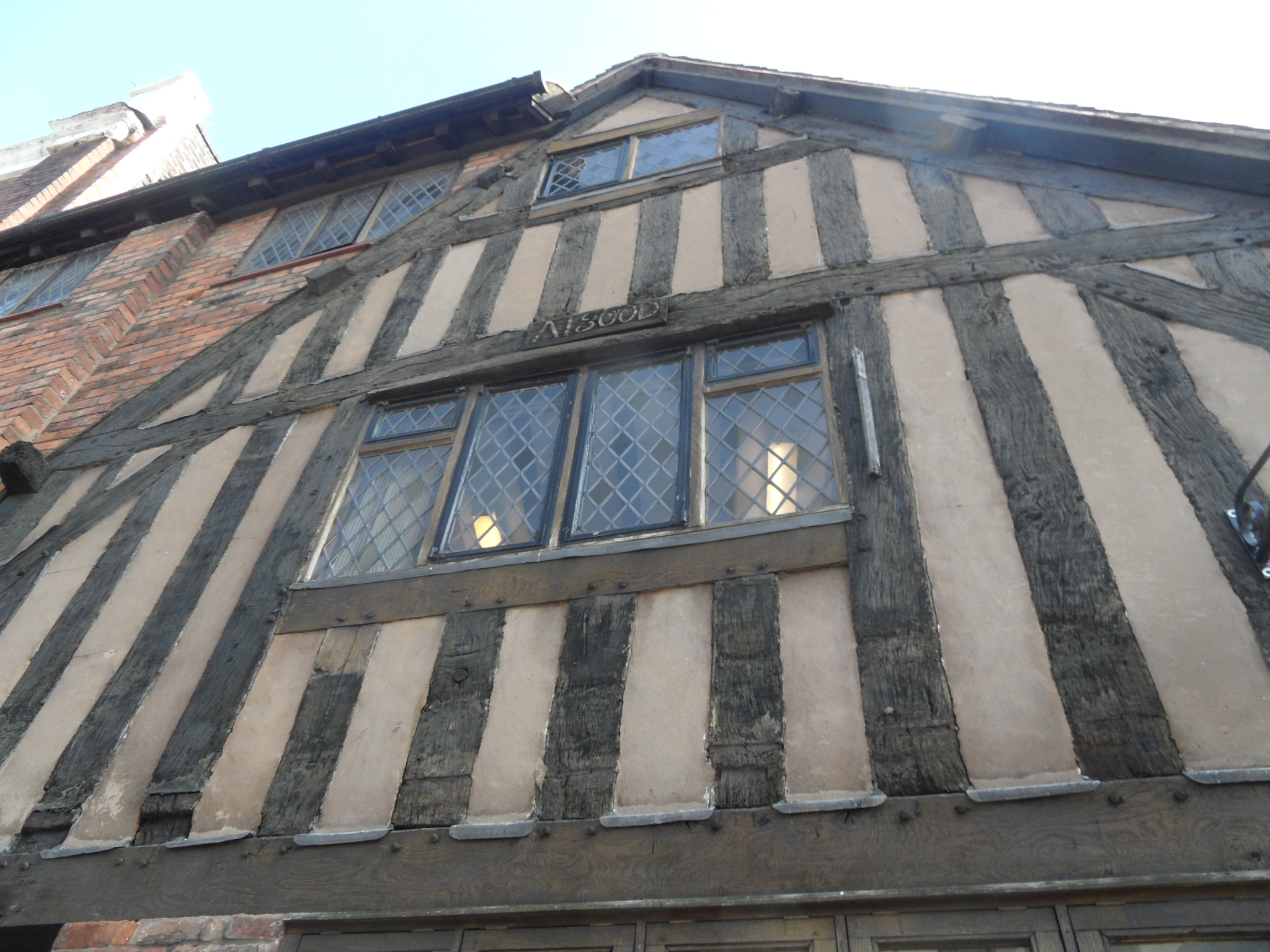
Another perplexing sign is the one suggesting that the half timbered building on the junction of Victoria St and St John’s Lane was built in AD1300. It wasn’t and no-one knows the reason behind the claim – the best suggestions anyone has seems to be that it was some kind of joke to emphasise that it was a really, really old building! It more likely dates back to the seventeenth century when it was once an inn known as The Hand. These days its home to Wolverhampton Books & Collectables, where you can buy anything from an ancient tome on the history of Staffordshire to a souvenir 1950s Wolverhampton Wanderers hankerchief (which you may, or may not, wish to blow your nose on, depending on your allegiances…).

SAM_0053

SAM_0055

We took the scenic route back to Lichfield (not through choice but because I went the wrong way on the ring road), passing through Wednesfield, Sneyd, the intriguingly named New Invention and Brownhills before stopping off at Waitrose for a couple bottles of Golden Glow.

Sources:

http://blackcountryhistory.org/collections/getrecord/WOHER_MBL337/

http://www.historywebsite.co.uk/listed/lindylou.htm

Shiver Me Timbers

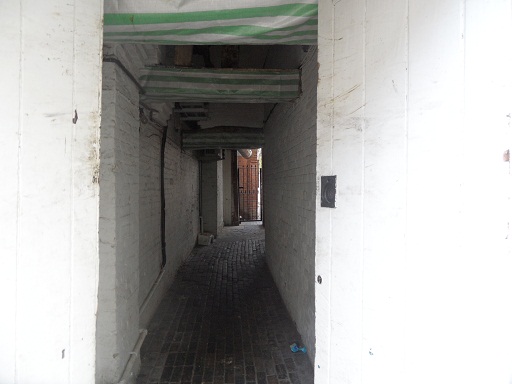
Where there’s an old wooden beam, there’s often a rumour that it originated on an old ship. It’s a bit of folklore that I keep encountering time and time again, even here in landlocked Lichfield and Staffordshire. Back in 2011, I visited St John’s Hospital during the Lichfield Heritage Weekend and heard that the Master’s House, which was originally the canons’ and pilgrims’ hall and enlarged by Bishop Smythe in the late fifteenth century, was built using beams from galleons. On the ghost tour earlier this month, we were told that that wooden beams in an entry running alongside the Walter Smith butcher shop on Market Street came from old ships and when researching the Four Crosses Inn in Cannock for a piece in the Chase Gazette, I once again came across claims that the oldest part the building, dating to 1636, made use of timber from ships.

Alongside butcher shop on Market St. Beams are covered in stripy plastic on this photo unfortunately, but every now and again the alley is open for you to go and take a look...

Alongside butcher shop on Market St. Beams are covered in stripy plastic on this photo unfortunately, but every now and again the alley is open for you to go and take a look…

Last night, a discussion on Twitter about those other two old inn regulars – ghosts and Dick Turpin – moved onto the subject on the use of old ships’ beams and a quick google search revealed yet more old Midlands buildings making the claim including the Ye Olde Gate Inn in the Derbyshire village of Brassington and the appropriately named Old Ship Inn in Worksop, Nottinghamshire. Could there be any truth in any of these claims? As someone unfamiliar with the world of carpentry, I was interested to read a discussion between some experts on the matter which you can read here. Just as I was sure that this myth was pretty much busted I clicked on the link in the penultimate comment, which took me here – a website telling the story of the lost Brig Elizabeth Jane, launched in Nova Scotia in 1817 and abandoned off the Yorkshire coast in 1854. Incredibly, the name board and the port of registration board were discovered in a ceiling in Robin Hood’s Bay in 2003 leaving no doubt that this was one case where the rumours were true.

A one off perhaps? It seems not as shortly aftewards I came across the website of the Chesapeake Mill in Hampshire, where the beams, joists and floors are all said to have been constructed from the United States frigate ‘The Chesapeake’. On a slightly gory note, an extract from ‘The Navy and Army Illustrated’ in 1898, included on the  mill’s website, describes the joists as ‘covered with the blood of the men who were killed and wounded in action, and many bullets are embedded in them; in fact a good many of the timbers seem quite soaked with blood’.  You should read the full story on their website here it’s a fascinating place!

Closer to home, I found an article on Graiseley Old Hall in Wolverhampton which says that some of the purlins (now there’s a word I didn’t know existed until today!) in the roof came from old ships. What’s also interesting about this article is that it acknowledges that similar claims are made about many buildings, but that hard evidence to support it only exists in a few and then gives us a possible explanation for this, suggesting that often it could be a reference to the quality of the timber rather than where it came from.

I’d really like to hear of any more examples that people know of where old ships timbers are said to have been used, proved or otherwise.  When it comes to myths and folklore, we shouldn’t always believe everything we hear, but we should definitely listen in the first place. You never know where a story will lead.


A Lost Place

A couple of years ago, I learned that there had once been a place in Lichfield known as Bessy Banks Grave. Appearing on several old maps, the name is also referred to in a newspaper advertisement from 1914, but seems to have disappeared shortly afterwards. The plot of land was in The Dimbles area and I suspect that the name may have been lost when the council began building houses there in the early twentieth century.

Attempts to discover the story behind the name led to a poem written by Anna Seward for her friend Honora Sneyd, at the place known as Bessy Banks Grave, which Miss Seward refers to as ‘the grave of a suicide’.

“It suits the temper of my soul to pour
Fond, fruitless plaints beneath the lonely bower,
Here, in this silent glade, that childhood fears,
Where the love-desperate maid, of vanish’d years,
Slung her dire cord between the sister trees,
That slowly bend their branches to the breeze,
And shade the bank that screens her mouldering form,
From the swart Dog-Star, and the wintry storm….”

David Garrick also knew the place, adding that it was supposedly haunted and in 1805, John Jackson remarked that the spot was ‘once the famous rendezvous of lovers….now no more is remembered than that poor Betsy (sic) is said to have fallen victim to hapless love’.

After reading the original post, “Margaret” left a comment to say that she had found a poem called ‘The Circuit Lane’, in the 1859 book ‘Rustic Rhymes’, by Frederick Price. The Circuit Lane marked part of the boundary of Lichfield, as can be seen in the following extract which appears in several history books from the early nineteenth century:

“… and so along that little cross lands unto another lane that leadeth from Lichfield to King’s Bromley and then along that lane towards Lichfield unto a little lane lying between the Grange Ground and Collin’s Hill Field commonly called the Circuit lane unto the further end of it betwixt two fields the one called Hic filius and the other Piper’s Croft and so over across a lane that leadeth from Lichfield to Elmhurst and then into another little lane between Stichbrooke Ground and Gifforde’s Crofte and so along that little lane to a green lane at the further side of the Lady Leasowe being the land of Zachary Babington Esquire and down that lane to a brook called Pone’s Brook and so over that brook into another lane called Stepping stones lane…”

As well as painting a picture of a disappeared landscape, Frederick Price’s poem also refers to the lost story of Bessy Banks. The full poem is here, but I have included an excerpt below

Daisy, ladysmock, and kingcup,
And the broad-leaved flag so gay,
With which we in pride would prink up
Doorsteps on the first of May –
Where bright flies their wings are sunning
Where shells strangely marked are found
Where the rippling brook is running
In which Bessy Banks was drowned.

Pass we these, and onward pressing
Where o’er head tall elm trees wave,
‘Tween banks rich in Nature’s dressing
Till we come to Bessy’s grave:
Here four cross-roads meet; a green mound
Indicates her place of rest;
Few spots are more lone, I ween, found
On old England’s face imprest.

Hawthorn blossoms fall and slumber
O’er where the betrayed one lies –
One more victim to the number
Sung in great Hood’s ‘Bridge of Sighs’
The betrayer, in corruption,
Lies in fetid church-yard soil,
Where e’en earthworms meet destruction
Fit ‘last home’ for one so vile.

Hence the lane has been neglected
From that time : the rustic swain
Since that hour the road rejectes
Nor dare traverse it again
Burdocks, thistles, nettles, tansy,
And the nightshade flourish there;
But the primrose or the pansey
Scarce are known to blossom near.

You’ll notice that Price’s version of the story differs from the earlier one told by Anna Seward. Perhaps the clue to this lies in the reference Price makes to ‘Hood’s Bridge of Sighs’, relating to the poem by Thomas Hood, written in 1844 and said by the Victoria and Albert Museum to be a ‘classic stereotype of the harlot and her destiny‘?


A Stone's Throw Away

I recently read a great post about the map maker John Ogilby on Kate Shrewsday’s wonderful blog. In 1675, Mr Ogilby was the creator of the first ever British road atlas, and after reading Kate’s post, I took another look at the section of his map of the London to Chester road, as it passed over the Warwickshire border into Staffordshire and on through Lichfield. You can see the map here.

The majority of the place names are recognisable and in use today, albeit with some changes to the spelling –  Burowcop Hill, Cank Wood and Sutton Cofield amongst others.There are however a handful of names that appear to have been lost over the last three hundred or so years. One intriguing feature marked on the route is the ‘Bishop’s Heap of Stones’, eight miles or so from Lichfield, between Canwell Hall (or Sir Francis Lawley‘s Cannell Hall as it’s shown on the map) and Hints.

The name seems to refer to a literal heap of stones, and it seems there are at least two  possible explanations for why this pile of pebbles was associated with a bishop. Thomas Pennant, when writing about his journey from Chester to London, discovered a handwritten note in a copy of William Dugdale’s ‘Warwickshire’, added by Dugdale himself, which read as follows:

There is a common report (which passeth for currant amongst the vulgar) that the great heape of stones, which lyeth near the road way from Litchfeild towards Coleshill, upon Bassets heath, called the Bishops Stones, and those other lesser heapes, which lye in the valley below; were at first laid there in memorie of a bishop and his retinue, who were long since rob’d and killed, as they were travailing upon that way: but this is a meere fabulous storye: for upon an inquisition made in King James his time, concerning the extent of common upon that heath, betwixt Weeford and Sutton;there was an old woman, called old Bess of Blackbrooke, being then above an hundred yeares of age, who deposed (inter alia) that the Bishop of Exeter living then at Moore Hall: taking notice how troublesome such a number of pibble stones as then lay in the roade thereabouts, were to all passengers, caused them to be pickt up, and thus layd upon heapes

In 1769, in his book The History and Antiquities of Shenstone, in the County of Stafford, the Reverend Henry Sanders, gives a similar but more detailed explanation. Sanders says that a woman from Blackbrook came to the inquiry into the parish boundaries and testified that in the reign of Henry VIII, or just after, John Vesey, the Bishop of Exeter had decided to become a benefactor to his birthplace of Sutton Coldfield. Bishop Vesey obtained a charter of incorporation for the town, revived the market and also built a number of stone houses (1) as part of an attempt to create an industry manufacturing Kersey, as they did in Devon. Bess (I’m assuming that she is ‘the woman from Blackbrook’ Sanders refers to), also told how when the Bishop was at Sutton he was annoyed by the rolling pebbles on the road which caused travellers’ horses to stumble and sometimes fall and so he employed poor people to gather them and lay them in heaps. Sanders describes the position of these heaps as follows:

On the hollow way between Weeford Hills or rather between Swynfen and Canwell lie divers heaps and one great one at the top of the hill at Weeford park corner which according to the tradition of the country people were placed there in memory of a bishop of Lichfield who riding with many attendants was slain with those servants by robbers and that these heaps were where the bodies were found which agreeable to this account and to honest and accurate antiquaries is entirely fabulous

I also think these stories are fabulous, but I suspect not quite in the way that the Reverend meant! It seems the tale of the murdered bishop didn’t ever hold much weight, but what about the version given by the local centenarian (who sounds like a legend in her own right!)? Were the stones gathered by the poor at the request of a Bishop or did they serve another purpose?  It’s interesting that there may have been more than one heap. Piles of stones are of course found across the world, and have many meanings and significances. I suspect that the Bishop’s heaps of stones will have been swept away, perhaps gradually scattered back onto the roads from where they came. It’s interesting to think that even a humble pebble beneath your feet may once have been part of a much bigger story.

Notes:

1 You can see one of the stone houses built by Vesey here

2 Kersey was a coarse cloth, often used to make servants clothing, and although it takes its name from the village in Suffolk, I understand that in Vesey’s time it was Devon that was at the centre of the Kersey industry in England.


Elegy Written in a Lichfield Churchyard

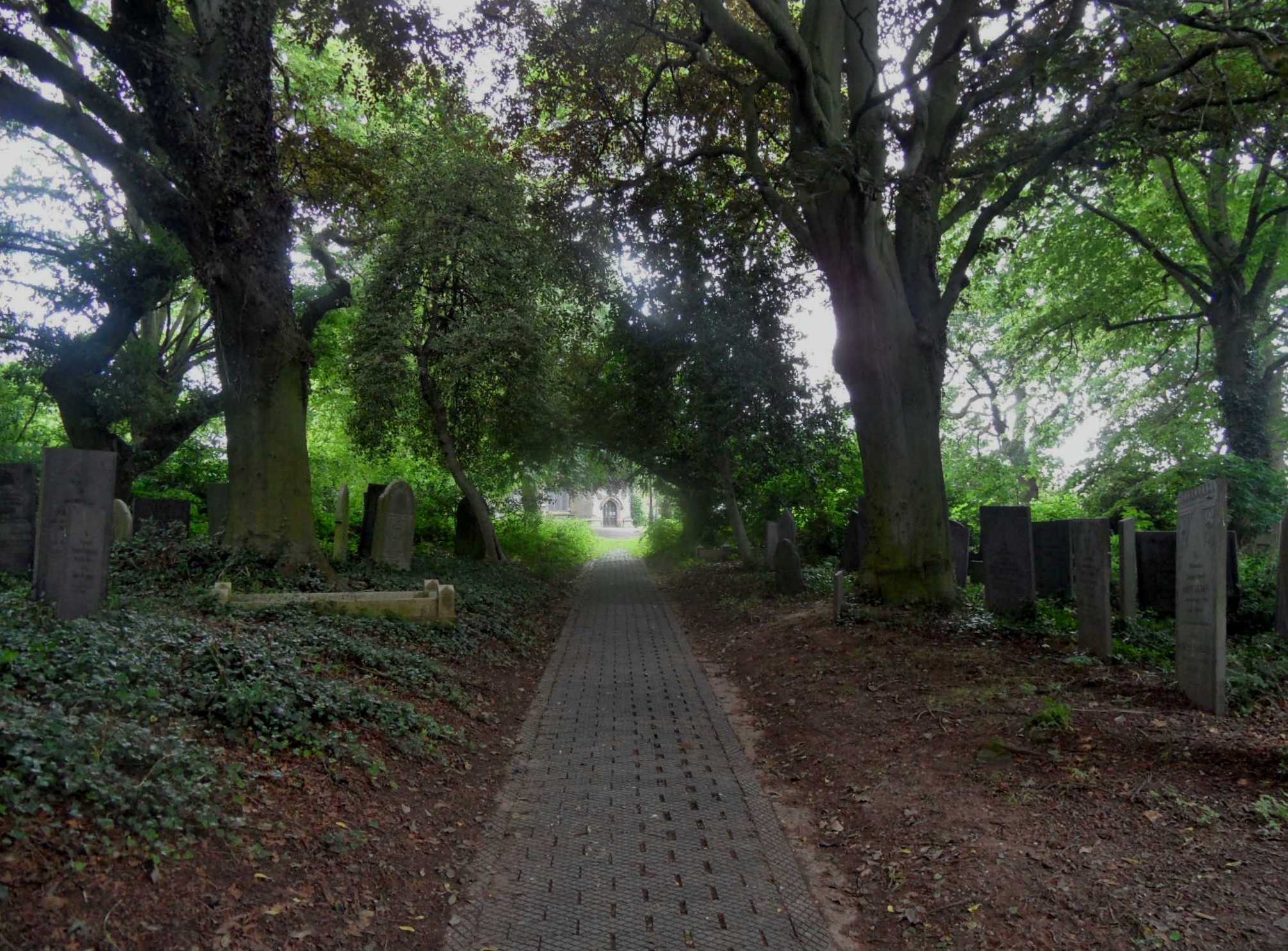
Many churches dedicated to St Michael are found on hills. Lichfield’s St Michael’s of course is at Greenhill, on a sandstone ridge 104 metres above sea level.   It’s thought a church has been on the site since 1190, but that the surrounding churchyard is older. There are hints as to this earlier history of this site, but as far as I can see things are still very much at the questions, rather than answers stage. Many people believe the position of the church on a hill, and its dedication to St Michael may indicate a previous pagan site.   I hadn’t realised until reading that the crypt was liable to flooding, that there are natural springs on the hill. Is this relevant to the story, and if so, how?

The answers we do have were, of course, mostly provided by archaeology. Evidence suggests there may have been activity here in the mesolithic era. In 1978, an excavation in the South East corner of the churchyard discovered five flints (albeit not in a primary context).

Four years earlier, the building of a new vestry at the church gave archaeologists the opportunity to open a trench. Unsurprisingly for a churchyard they discovered human remains – forty nin complete or partial skeletons. Of these, all but two were buried in the customary Christian manner, with their head to the west. However the head of ‘Skeleton 21’, was to the east. Apparently, this can sometimes suggest that the remains of a Christian priest have been uncovered. By being buried with their feet to the west they were ready to rise and face their flock on judgement day, as they had done in life. However, the archaeologist noted the absence of a chalice and patten, objects that priests were often buried with (as was the case with the remains of the priest near the old leper hospital in Freeford).  ‘Skeleton 58’ also differed from the others being buried with his/her knees tucked under the chin. This crouched burial style is apparently more associated with Pre-Norman conquest burials, although I’m still doing some background reading to try and shed more light on what exactly this kind of burial is thought to signify in this context.

The archaeology report also mentions skeletons 2 and 8,  those of an adult, and a baby placed on the adult’s shoulder, and speculates this may be a woman who died in childbirth. It’s discoveries like this, I think, that remind you that these were real people with real lives (that were all too short in many cases).

By the mid 16th century, church records are kept (I’ve used those transcribed by Harwood), and begin to tell us a much more detailed story of the churchyard,  enabling us to gives names and identities to those laid to rest here. For example, this is the entry for 1560

– Recevyd for the ffyrst grasse of the Churche Yarde
– for the later Grasse of the Churche Yarde
– of gatherynge in Easter Wyke
– for light at the buryall of Jamys Bywater’s Wyffe and her Chylde
– for light at the monthe mynde of Roberte Walker
– for light at the monthe mynde of Roger Walker
– for light at the buryall of a Chylde of the Walle
– for light at the mynnynge of Mr Swynfen
– for light at the buryall of Roberte Cowper’s Wyffe

The church records also records costs for ‘killing molldiwarps’ in 1597, bestowing ‘on the workmen at several tymes in beare and ale’ in 1602, and money ‘payd for catching urchins’ in 1612 (urchins meant hedgehogs. I hope!).

While some things never change – a footnote tells how a person named Hollingbury was tried at Lichfield in 1612 for stealing lead from the church, others thankfully have – ‘William Key of Bliffeld and Nicholas Hatherton of Lichfield two prisoners condemned according to the Laws of this land and executed here at this Cittie were both buryed in one grave the 17th day of October 1592’.

There are still those buried at a later date whose names are not specifically recorded. An entry in the register says that for ‘From April 14 1642 to Feb 19 1645 were buried twenty five soldiers’, and I’ve either read or been told that victims of the plagues that struck Lichfield (51 per cent of Lichfield’s population died of plague in 1593-4, and 32 per cent, in 1645-6) were buried in pits here.

The majority of headstones seem to date from the 18th century onwards, although there may be earlier memorials here. I have seen examples of gravestones dating back to the early 1600s in other churchyards, such as this one at Southwell Minster in Nottinghamshire.

Examples older gravestones at Southwell Minster

Of course, some people, presumably those wealthy citizens of the city, even erected monuments like this well known one belonging to Chancellor Law, which used to have a clock in the centre.

As with many places, we might never get definitive answers about the origins of St Michael’s churchyard, but who knows? As we’ve seen before, one discovery can change everything. And in the meantime, it’s a fascinating part of the city to keep asking questions about!

Sources

Gould, Dorothy & Gould, J 1974-5 `St Michael’s churchyard, Lichfield, Staffs’ Trans S Staffordshire Archaeol Hist Soc 16 58-61 

The history and antiquities of the church and city of Lichfield by Thomas Harwood