Bodies of Evidence

After reading of archaeological discoveries in North Lichfield, I thought it a good time to review one of the city’s greatest history mysteries. A quick recap then for anyone who, unlike me, hasn’t been obsessing for over fifteen years about how ‘a considerable quantity of human bones‘ were found in the early nineteenth century in a meadow adjoining Christian Fields.
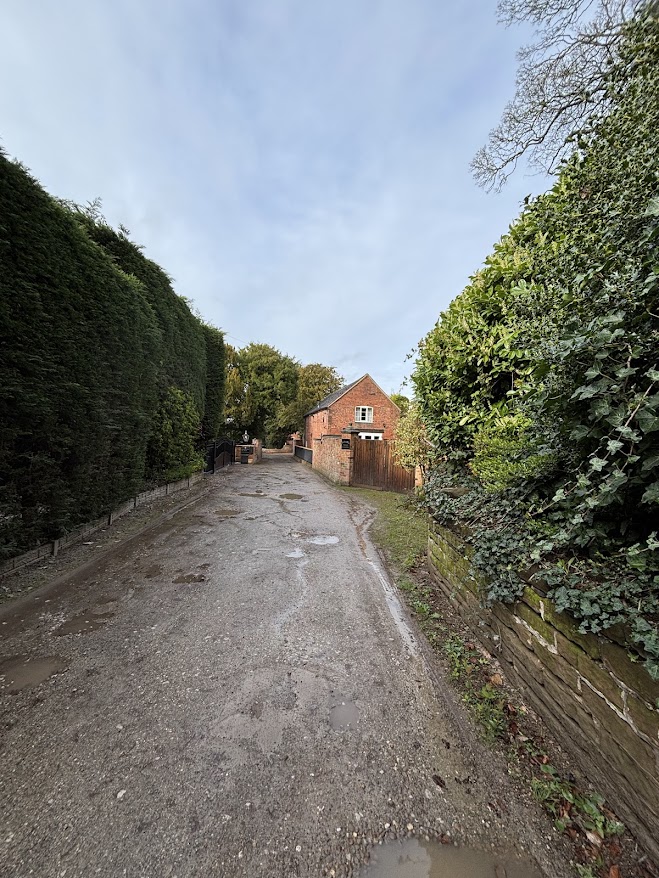
The path to Pones Mill

Many of the bones were found a few feet beneath the surface in the quirkily named ‘Toads Hole Piece’, alongside some Roman pottery, the head of a pike and several horseshoes, although skeletal fragments were scattered across a half-mile radius. Only the bones found at Pones Mill, now known as Netherstowe House, were said to have had the appearance of having been buried, but it’s possible that they may have been dug up elsewhere and ‘thrown into an excavation’ there.

Eighteenth century antiquarians linked the discoveries of the bones to the Lichfield legend, in which a thousand Christians were massacred at the start of the fourth century during the reign of the Roman Emperor Diocletian. The site of the slaughter is still known as Christian Fields and although proper historians say the story is nothing more than a myth, the legend lives on. The Martyrs Plaque, a carving of three cadavers which once adorned the facade of the Guildhall can now be found in Beacon Park and elsewhere there are other versions of our sinister city seal, including on the railway bridge near the station. These visual versions of the legend and the refusal of people like me to stop referring to the city as ‘the Field of the Dead’ even though its exact etymology is ‘the Field by the Grey Wood’have all helped to ensure that this example of Lichfield lore endures.
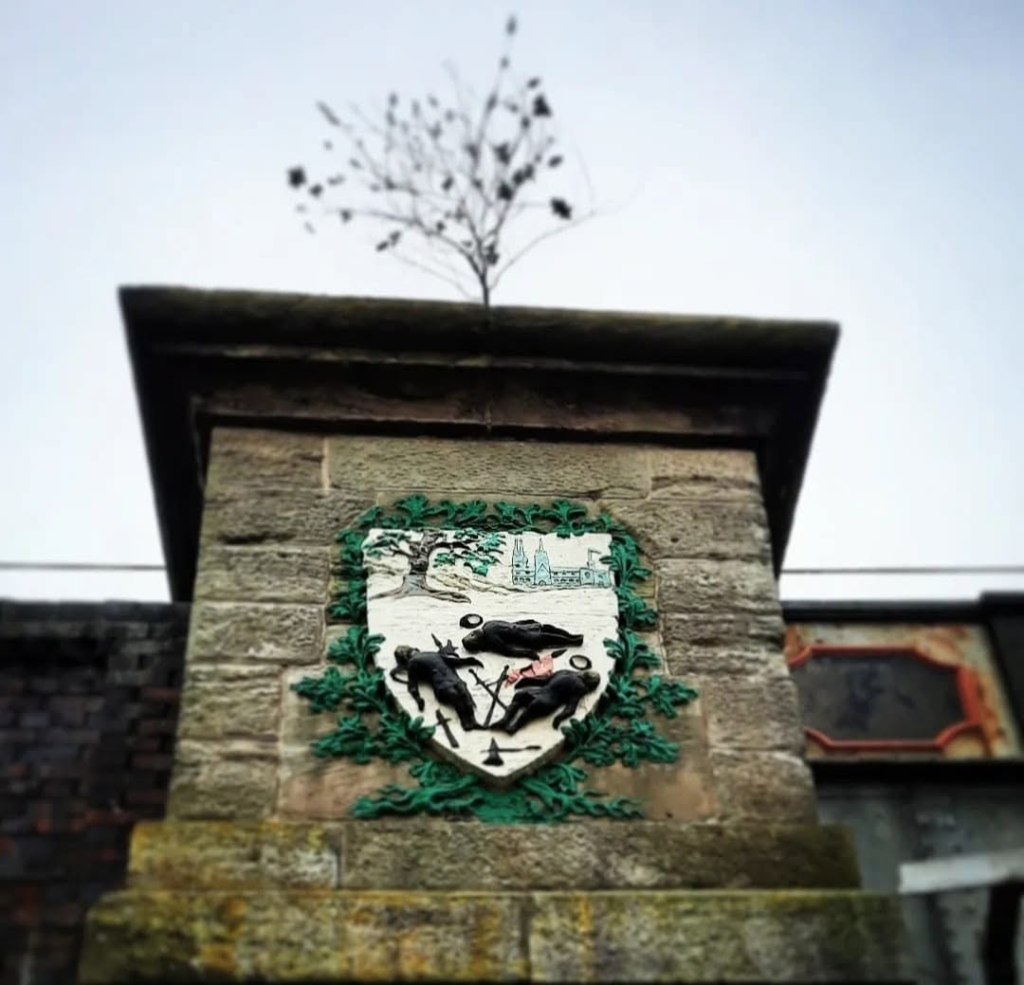
Welcome to the Field of the Dead folks

If we discount the dead martyrs, what other explanations are there for the cartloads of bones being found beneath the fields of Netherstowe? Here are some of the possibilities I’ve considered. Feel free to dissect and discuss as necessary.
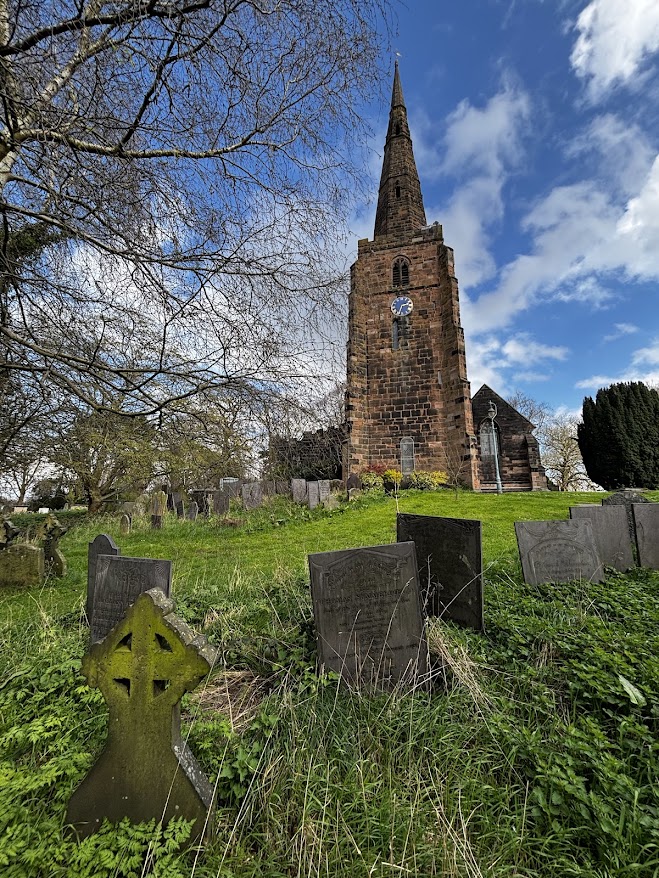
If there was ever a graveyard to epitomise the idea of death being the great leveller, it would be St Michaels on Greenhill.

An outbreak of plague in 1593 led to the deaths of over 1,100 Lichfeldians. Later outbreaks took place during the already troubled times of the Civil War, leading to the demise of another 800 citizens. Could the bones buried at Christian Field the victims of the disease? It seems unlikely. In the parish register of St Michael’s, someone has added notes alongside the names of those buried there in summer 1593. In July, ’67 dead of plague’. In August, ’59 dead of plague’. During this particular outbreak of plague in Lichfield at least, it seems those who succumbed rest in peace at the churchyard at Greenhill rather than in a pit on the northern outskirts of the city.

Could our Christian Field corpses be the remains of Civil War soldiers then, slaughtered in a skirmish on the outside of the city as the Close was being besieged? Again, the registers of St Michael’s suggest otherwise. There are records of twenty five soldiers being buried in the churchyard between 1642 and 1645 which suggests that men killed during the conflict were also buried here at Greenhill.

For me, as alluded to above, it’s the recent archaeology that’s been carried out in the Curborough area which may hold the key to solving the mystery of Christian Fields. Sixty coins dating to between the early 2nd to 4th century have been unearthed near to the farm, along with forty brooches. More examples of mortaria, as found at Christian Fields, have turned up along with worked marble and alabaster, Samian pottery fragments and glass suggesting there was a Roman settlement or at least a villa here. A much simpler Romano – British roundhouse has also been excavated nearby, along with a granary and well alongside it. What we can be sure of then is that there was occupation of a site near Christian Fields during the reign of Diocletian but whether those living here were converts to the new religion or still worshipping the old gods is unknown.
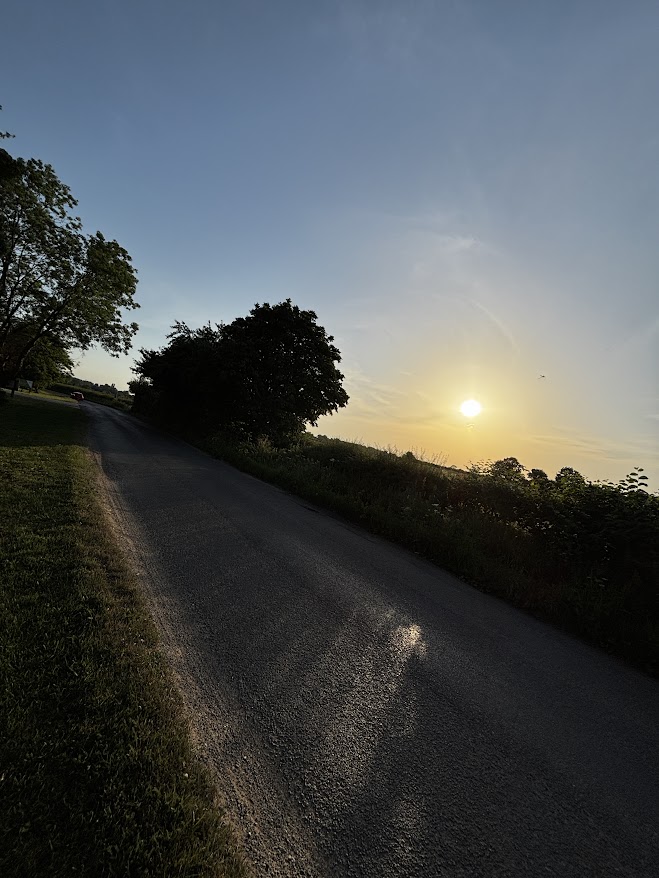
Sunset on Watery Lane

There are also field names which hint at a history which definitely has the potential to explain the presence of bones in this area. The 1851 Staffordshire tithe map records a ‘Chapel Meadow’, ‘Chapel Croft’ and perhaps most pertinently, ‘Graveyard’ in the vicinity of Watery Lane. And finally, and perhaps most remarkably at all, a single surviving Bronze Age burial has been found nearby in the form of a few fragments of cremated bone and sherds of the collared urn which once contain these ancient remains.

If burials really have been taking place in this area for not just centuries but millenia, perhaps ‘The Field of the Dead’ might be an accurate description after all…

Sources:

Staffordshire Parish Registers Collection

Click to access part-2-2023.pdf

Land at Curborough South, Lichfield, Staffordshire: Archaeological Evaluation © Cotswold Archaeology

WATERY LANE, LICHFIELD
EARTHWORK SURVEY, EVALUATION TRENCHING AND MITIGATION, Headland Archaeology

https://www.heritagegateway.org.uk/Gateway/Results_Single.aspx?uid=d01084bb-f418-47a7-b5e4-4b292c3cd6d1&resourceID=19191

Well Wishers

I’ve written previously about how the appearance (and apparently, the actual location!) of St Chad’s well has changed over the years here, but I’ve recently found some contemporary accounts of the well’s previous incarnation – a ‘vertical tube built of engineering bricks, covered with a kind of gloomy sentry-box of stone’, which had apparently become so neglected in the 1940s that only a few inches of stagnant water covered in a green scum remained in the bottom of the pool. (1)

In November 1946, the Bishop of Stafford lamented that the well had once been a place of great pilgrimage but had fallen into a state of neglect and considerable disrepair and in April 1948, E Sutton, a former caretaker of the well, described it as having degenerated into a wishing well. A few weeks later, Mr Sutton submitted a further letter to the Mercury, advising, ‘I have again visited the site and found it in a worse state than on my visit there last Autumn. Then boards covered the Well. These are now removed and the Well is full of rubbish, among brick-bats and wood being a worn out coal bag! I noticed too, among the bricks and stonework lying around in wild confusion the ancient ‘St Chad’s Stone’, which the historian Leland, writing of his visit to the Well some four hundred years ago, states was then believed to be the very stone upon St Chad stood in the icy water as an act of penance, it then being the bottom of the Well. When the small building was erected over the Well in Stuart times, this stone was incorporated into the building, no doubt in order to preserve it. Many hundreds of hands have been placed upon it, mostly with reverence, since. It now lies among the rubbish, one corner broken. A fitting symbol of the ideals of 1948!’ (2)

St Chads Well

St Chad’s Well today

Saint Chad's c.1915. Taken from Wikipedia

Saint Chad’s Well c.1915. Taken from Wikipedia

I’m intrigued by this reference to ‘the ancient St Chad’s stone’. When James Rawson described the site prior to his restoration in the 1830s, he noted that, ‘the well-basin had become filled up with mud and filth; and on top of this impurity a stone had been placed, which was described as the identical stone on which Saint Chad used to kneel and pray!’. Despite Rawson’s apparent scepticism about these claims, was he somehow persuaded to use this stone in his new well structure, thereby perpetuating the myth? I’d love to see what went on in those discussions and I’d really like to know what happened to this legendary stone. St Chad may not have been anywhere near it, but the fact that people believed he had should have made it worth saving for posterity’s sake.

Water in the well

Water in the well

Unfortunately for Mr Sutton, the restoration of the well did not put a stop to people using St Chad’s Well for wishes, as evidenced by the layer of coins that still glint beneath the water, tossed in at some point over the last half century or so. It’s often suggested that this is the continuation of a ritual that our ancestors were carrying out a long, long time before St Chad arrived in Lichfield. Some things change. Some stay the same.

Notes

(1) The octagonal stone well structure erected by Rawson in the 1830s, as described by the Lichfield Mercury on May 6th 1949!

(2) A little off topic, but it’s amusing to see that it’s not just nowadays that letters appear in the Lichfield Mercury suggesting that society is going to hell in a handcart. Once again, some things stay the same…

Starry Eyed

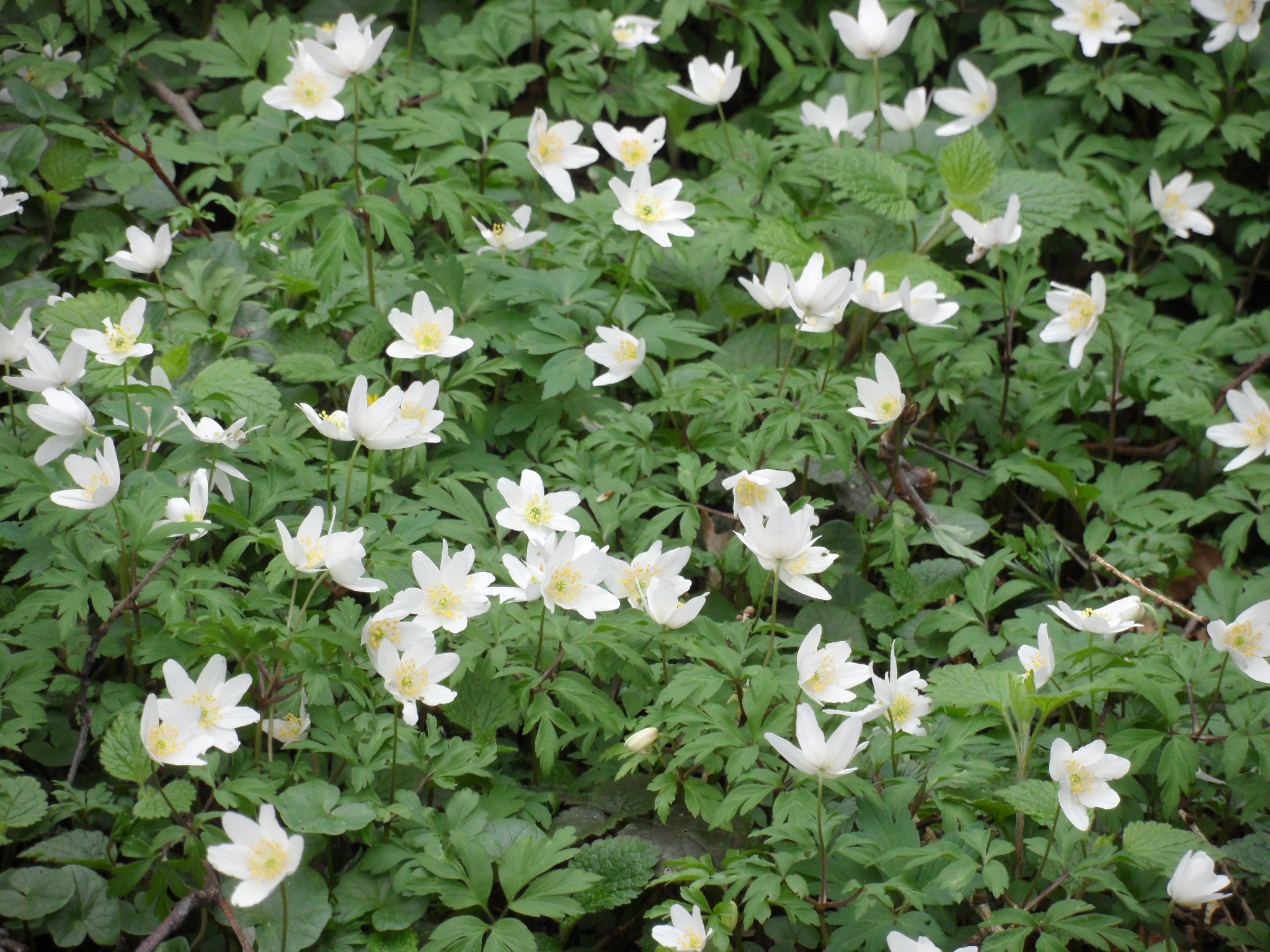
Walking through Leomansley Wood (or was it Sloppy Wood? I’m never sure where one stops and the other starts), I came across hundreds of wood anemones growing alongside Leomansley Brook. Up until now, I can only ever remember seeing two small patches of these pretty star like flowers – one near to the path that skirts the edge of the woods and the other near to the old mill culvert on Pipe Green.  As they are growing in one of the muddier areas of the woods (actually it was probably Sloppy Wood!), it may be that I’ve always missed them, having turned off to find a drier route. At the risk of sounding like one of the motivational sayings people share on Facebook, it just shows that sometimes it’s worth persevering with the trickier path!

Anemones in Leomansley

As well as their obvious beauty, the thing I love about wildflowers is their associated folklore and their alternative names. Nicholas Culpeper tells me that the anemome, “is called the windflower because they say the flowers never open unless the wind bloweth”. Wet weather has the opposite effect, and the flower also closes as night falls, giving rise to the story that fairies use anemones both as somewhere to shelter from the rain, and somewhere to sleep, tucked beneath the petals.

SAM_0206

For superstitious folk, I imagine that disturbing sleeping fairies was probably best avoided and may be why it’s generally considered unlucky to pick the plant, especially here in Staffordshire. According to Roy Vickery,  the wood anemone was known as ‘thunderbolt’ in the county, because, as as the name suggests, picking it would result in a storm. Mr Vickery also relays the experience of the Rev E Deacon, a member of the North Staffordshire Field Club in 1930.  One day, Deacon arrived at a farm where a wedding party was taking place. Apparently, the expression of the smiling person who opened the door changed to one of alarm when he or she realised that Mr Deacon had brought bad luck to the wedding in the form of a wood anemone in his lapel.

SAM_0202

Along with several other species, including bluebells which are just starting to appear, anemones are indicator species of ancient woodland i.e. one which has been around since 1600AD. The way I understand it, their presence in Leomansley Wood isn’t proof that it is an ancient woodland (or more accurately, a replanted ancient woodland, where the area has been continuously wooded but trees have been felled and replanted), but a suggestion that it might be. Ancient or not, it’s always a beautiful place for a walk but especially at this time of year.

SAM_0189

Edit: you know how in Finding Nemo, he can’t say anemone? Well ‘m having trouble spelling it – anemone, that’s right isn’t it?

Sources:

Roy Vickery, Oxford Dictionary of Plant Lore

Wolverhampton Wandering

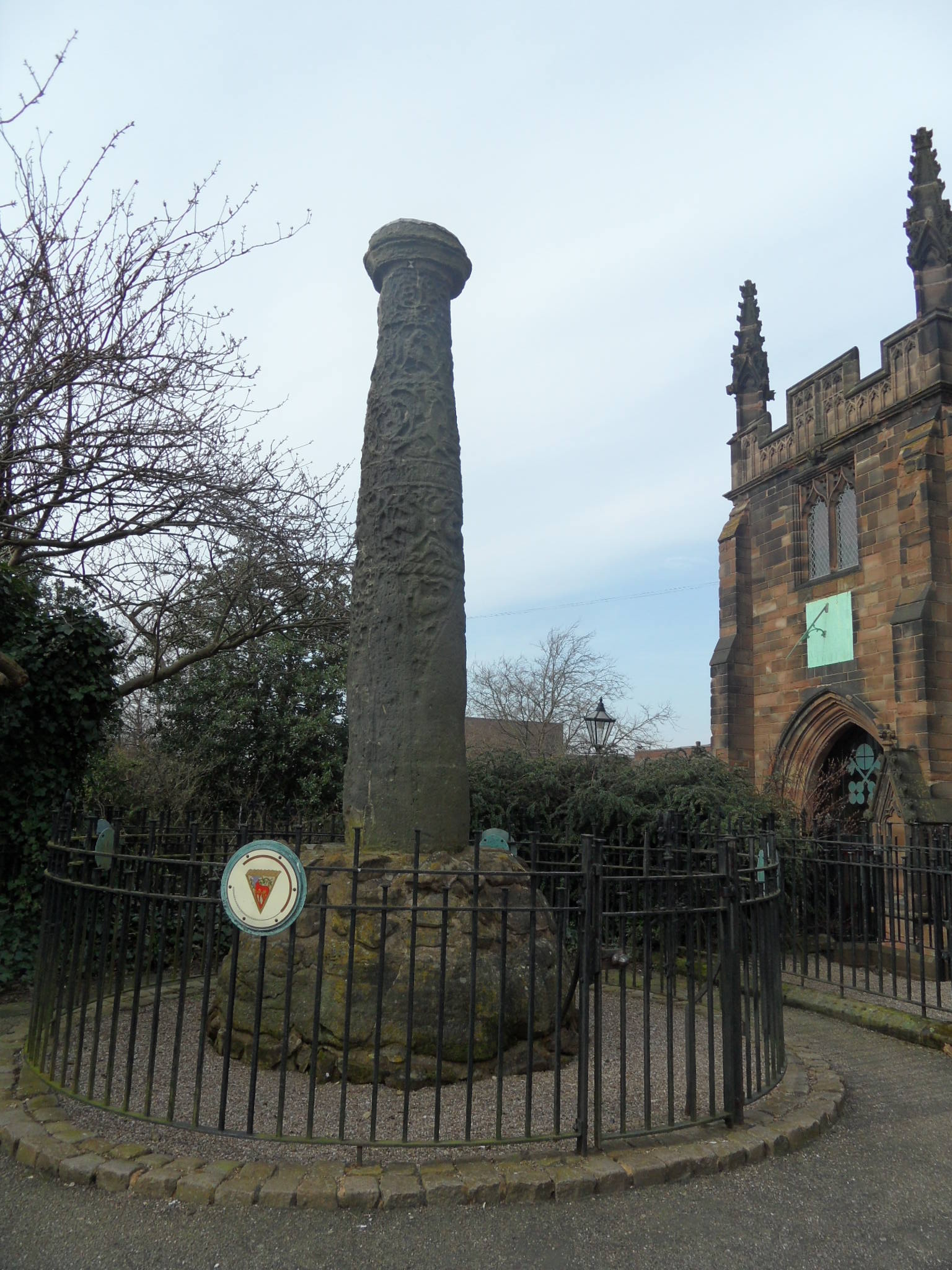
I had to pop into Wolverhampton today. I knew from my search for an ancient cross in Lichfield a couple of years back that there was a Saxon cross shaft here and went to find it.  Unlike the Lichfield cross, I didn’t have to try too hard – it’s huge! Its size, and also the fact that it is made from sandstone not found in Wolverhampton, has led some archaeology types to suggest that it is probably a reused Roman column, possibly from Wroxeter or even just up the road in Wall.

Saxon Cross Shaft, WolverhamptonThe elements and pollution have not treated the shaft kindly but its still clear that this was an incredible piece of craftmanship – the Black Country History website describes it as, ‘one of the finest cross shafts in the Midlands’. The carvings of acanthus leaves which decorate the shaft alongside those of birds and beasts have given archaeologists some problems when trying to establish a date as they suggest different periods. The plaque accompanying the shaft in the churchyard has decided to go with the earlier date of the ninth century, whilst others believe late tenth century is more accurate.

Cross Shaft Wolverhampton

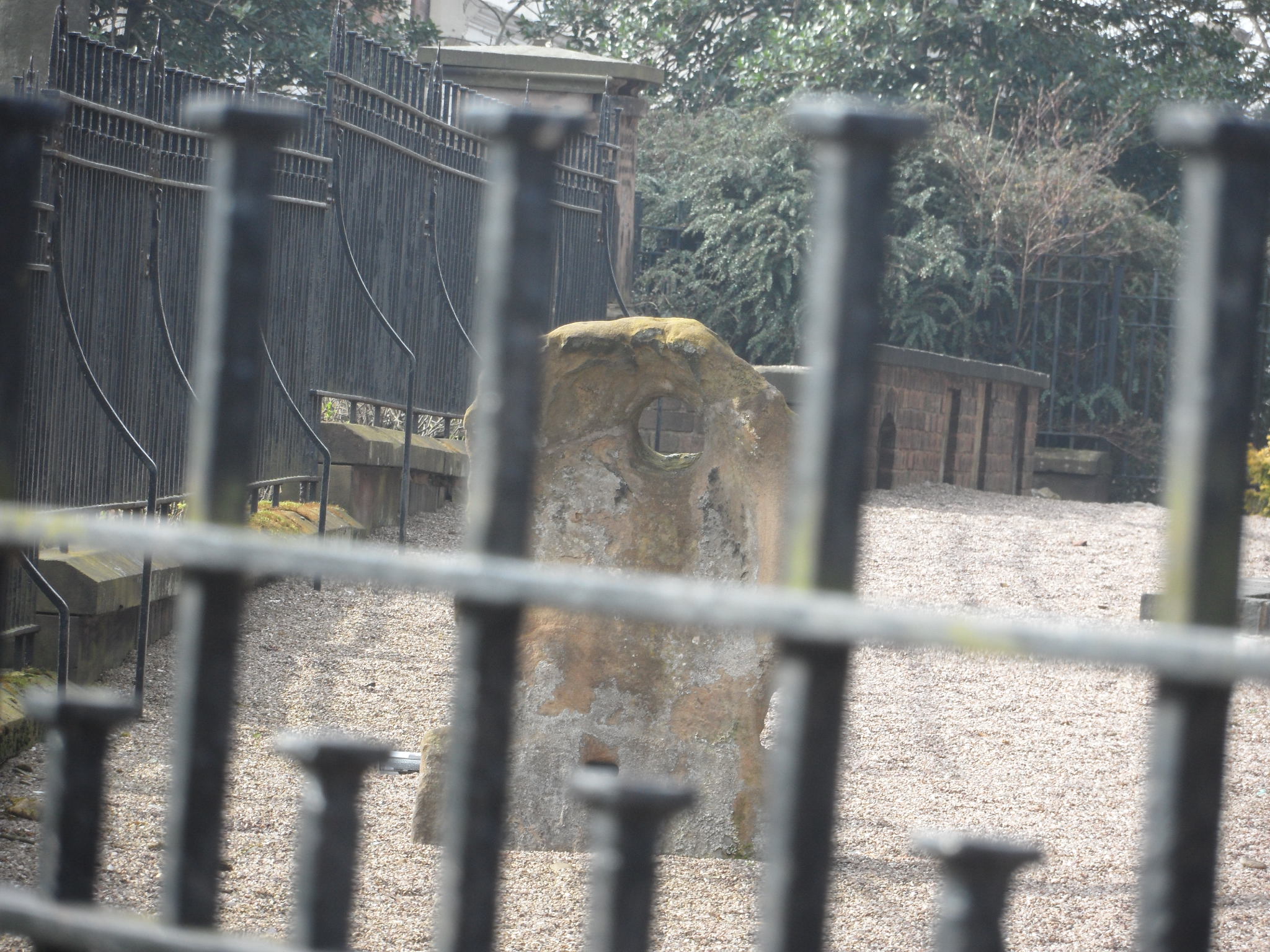
On the way out of the churchyard I noticed another stone with a good back story. Known as the Bargain Stone, its said to be where the good (and probably not so good) folk of Wolverhampton would agree sales and make deals by shaking hands through the hole. The nearby plaque suggests it is an old gargoyle and the hole is what remains of its mouth.

SAM_0031

Talking of hands, why didn’t it occur to me to put my hands over the railings to take a better photo?

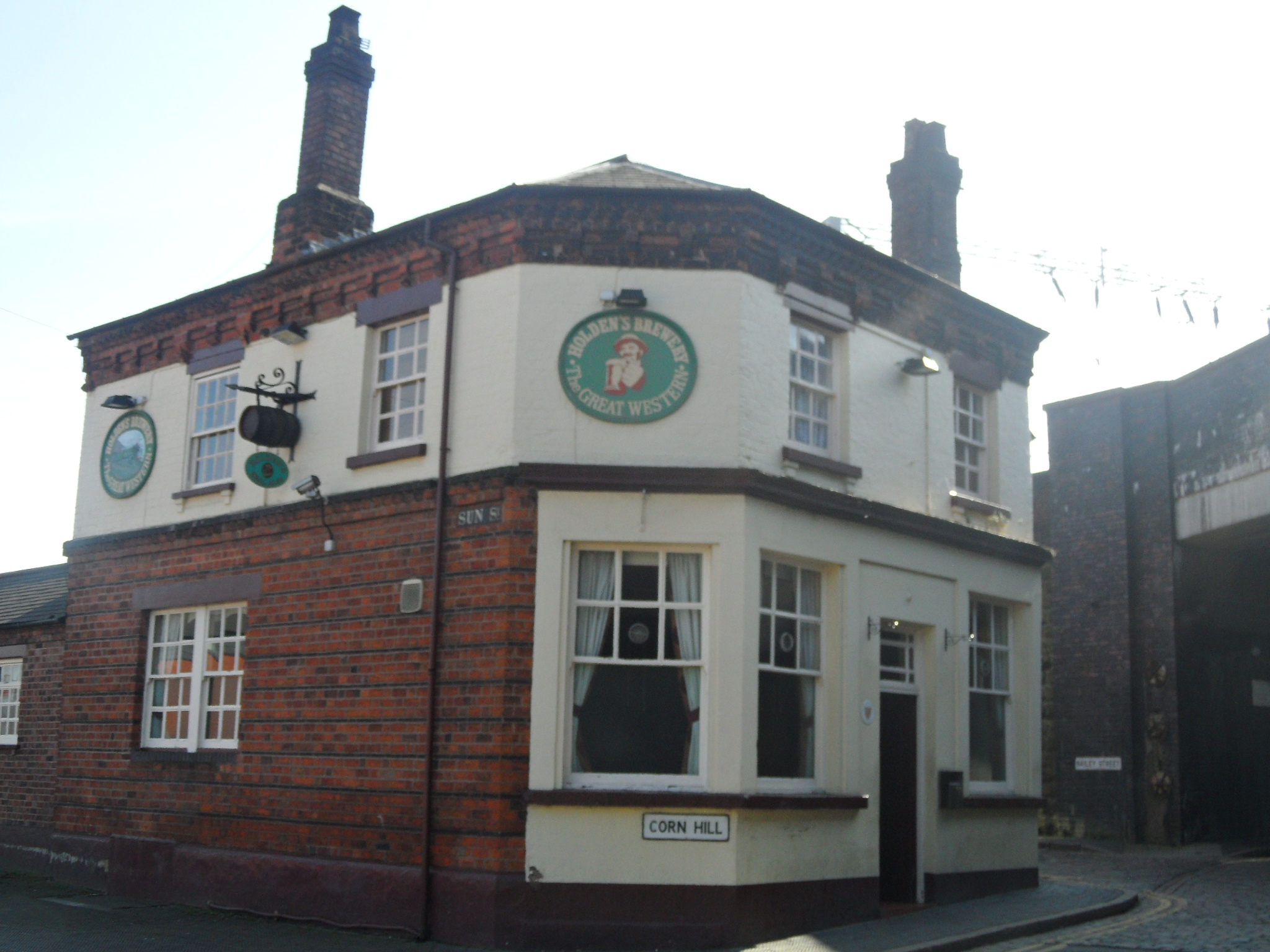
As if ancient crosses and stones weren’t enough of a treat, we also found Holden’s Brewery’s Great Western near to the train station. This is a proper pub – cobs on the bar, Holden’s Golden Glow (amongst other delights) on tap and really friendly staff. Although we were tempted to sit outside in the sun, the interior was so quirky and there was such a nice atmosphere, we sat inside.

Great Western

Wished I’d got the train. Definitely not driving next time.

The Great Western

The great Great Western

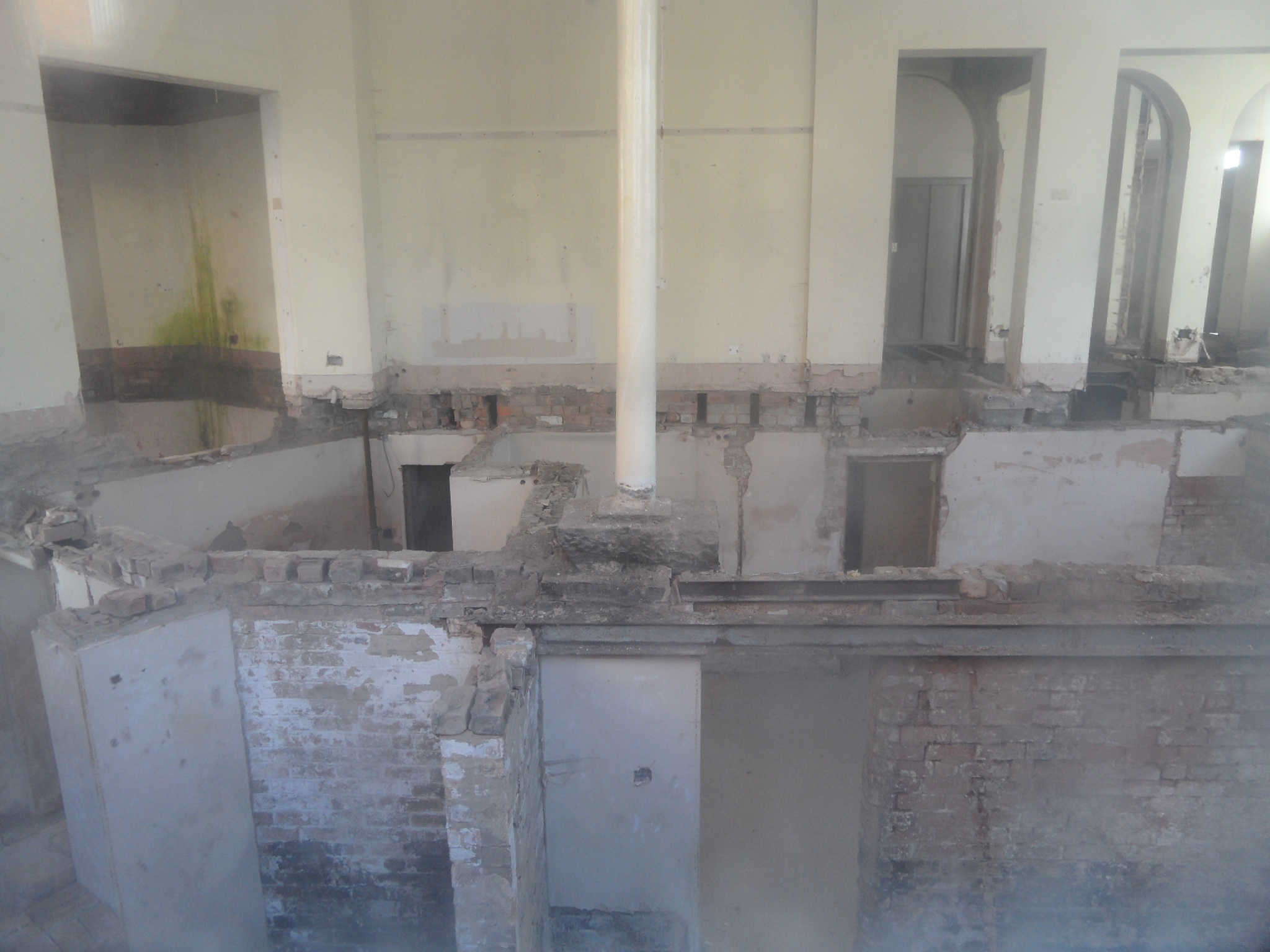
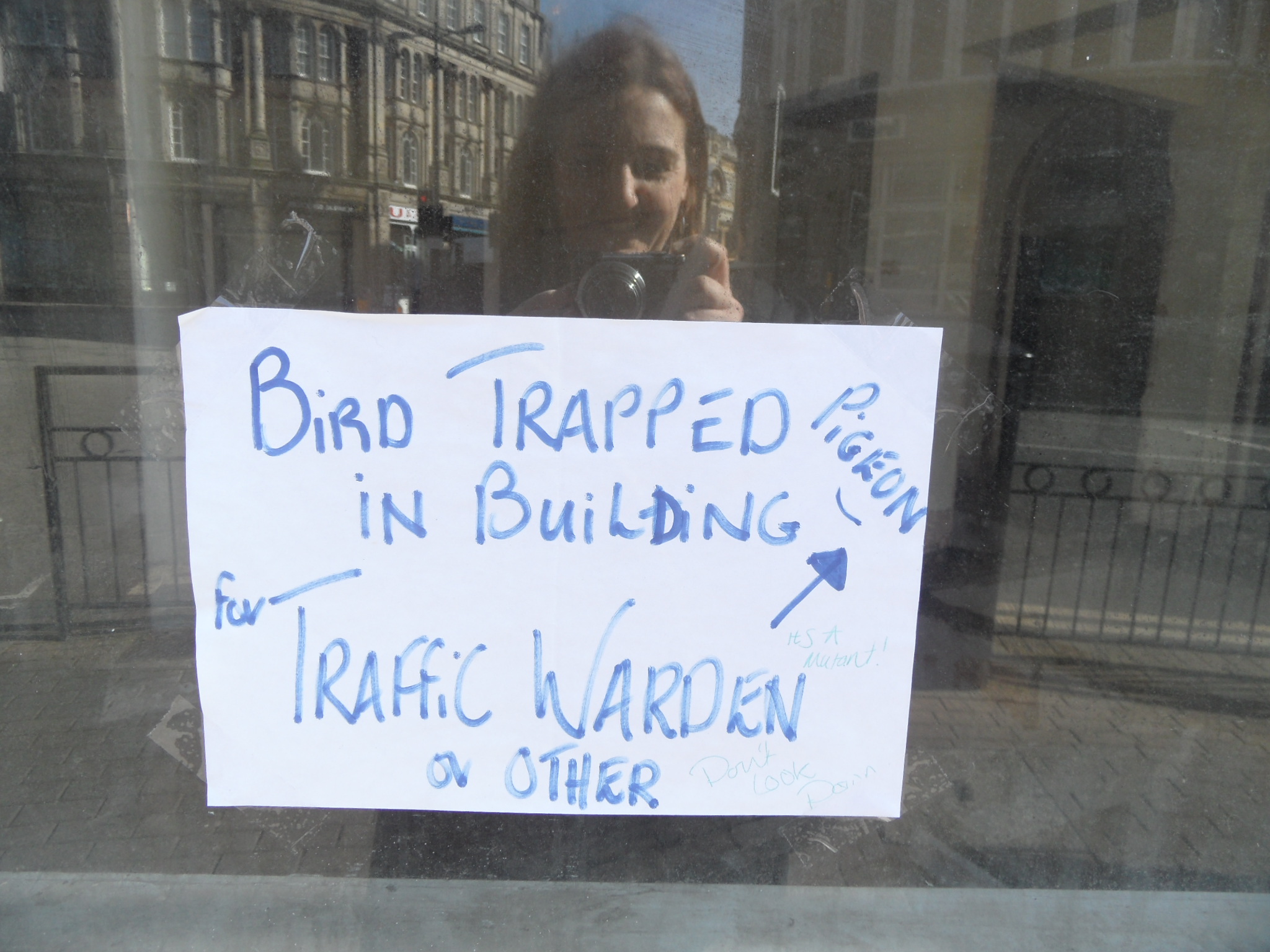
We walked off our pork baps with a little bit of a wander around the city streets. This building caught my eye, not only because it has no floors, meaning you can see down into the cellar, but also because of the handwritten sign someone had stuck to the window.

SAM_0045SAM_0046I’m not sure a traffic warden would be the person I’d turn to in a trapped bird scenario but maybe they do things differently in Wolverhampton.

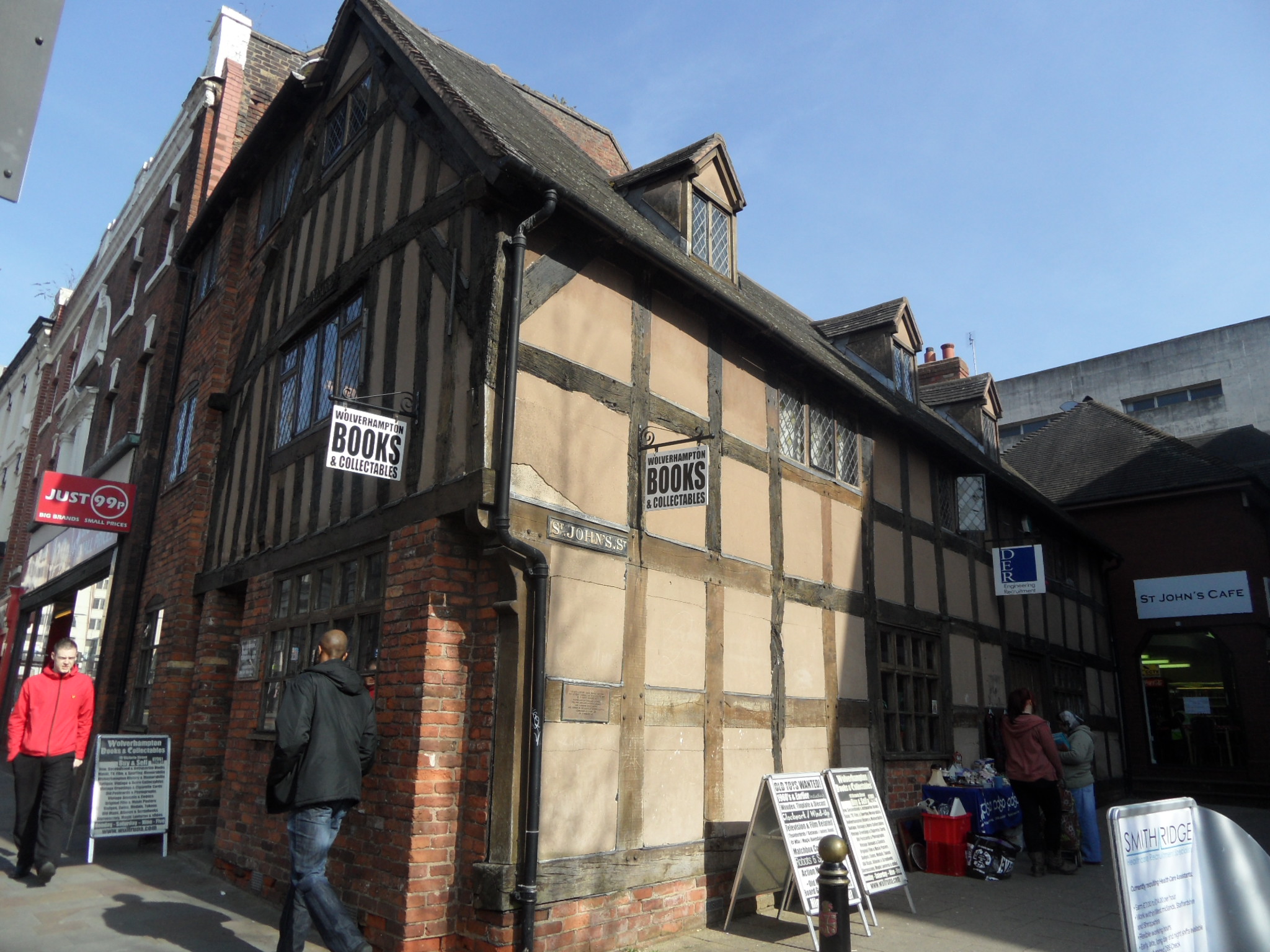
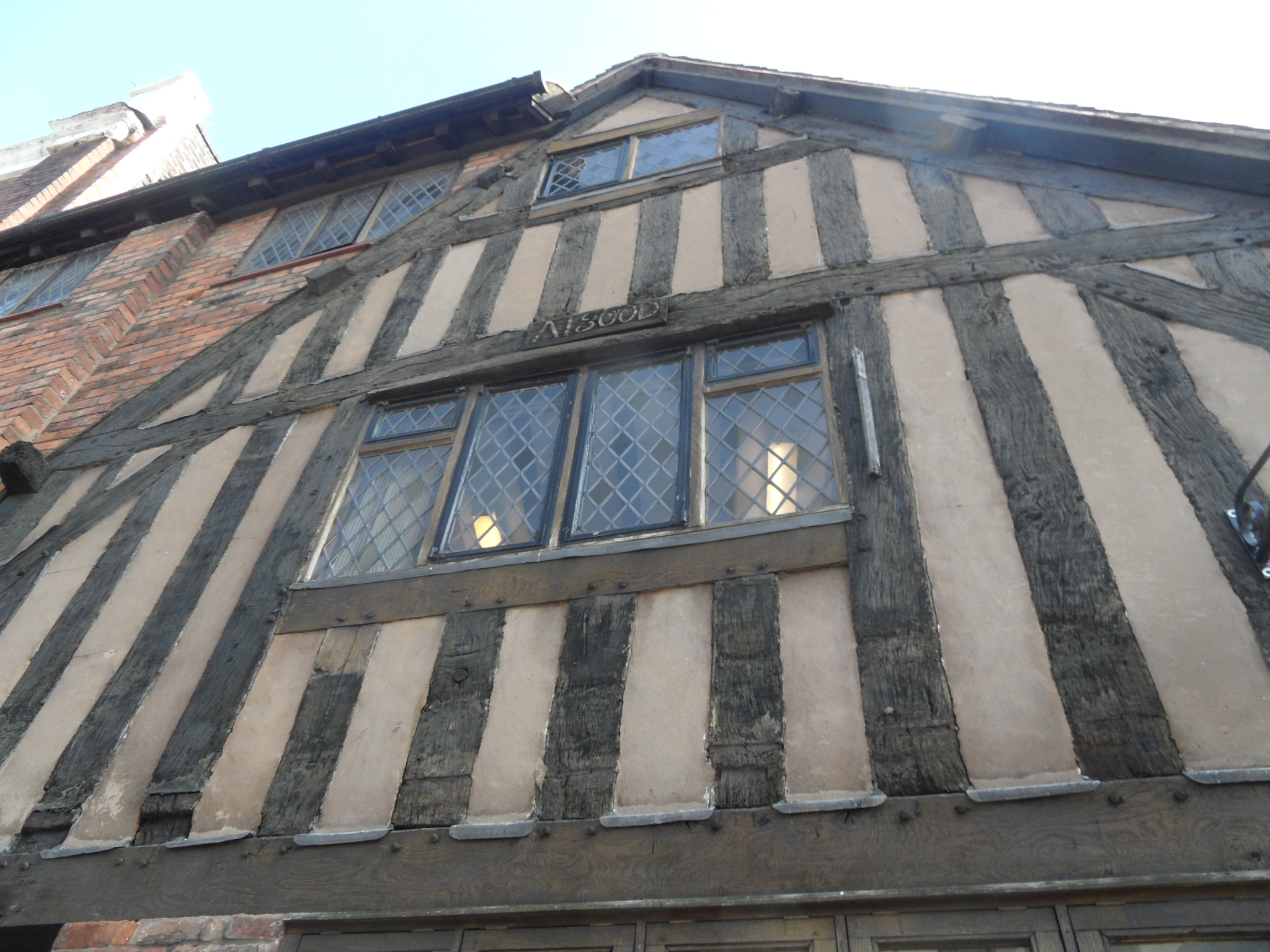
Another perplexing sign is the one suggesting that the half timbered building on the junction of Victoria St and St John’s Lane was built in AD1300. It wasn’t and no-one knows the reason behind the claim – the best suggestions anyone has seems to be that it was some kind of joke to emphasise that it was a really, really old building! It more likely dates back to the seventeenth century when it was once an inn known as The Hand. These days its home to Wolverhampton Books & Collectables, where you can buy anything from an ancient tome on the history of Staffordshire to a souvenir 1950s Wolverhampton Wanderers hankerchief (which you may, or may not, wish to blow your nose on, depending on your allegiances…).

SAM_0053

SAM_0055

We took the scenic route back to Lichfield (not through choice but because I went the wrong way on the ring road), passing through Wednesfield, Sneyd, the intriguingly named New Invention and Brownhills before stopping off at Waitrose for a couple bottles of Golden Glow.

Sources:

http://blackcountryhistory.org/collections/getrecord/WOHER_MBL337/

http://www.historywebsite.co.uk/listed/lindylou.htm

Hollow Earth

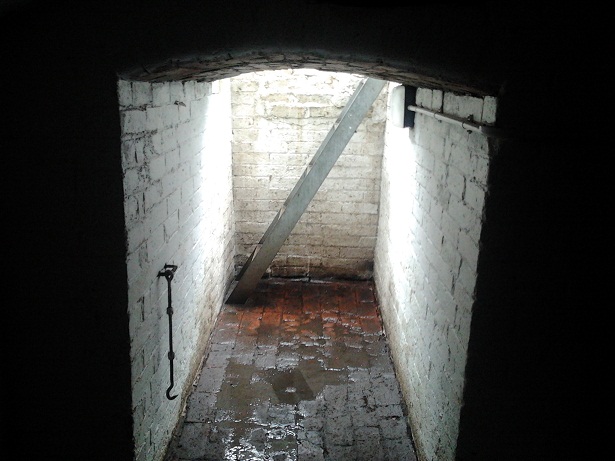
One of the most popular posts on the blog has been The Lichfield Underground. It seems people are fascinated by the unseen part of the city, the potential of what could be beneath their feet as they walk the streets.

Captivating, yet slightly scary….

It was this fascination with tales of the underground that started the chain of events culminating in the formation of Museufy, a group made up of myself and my friends Mark and Magdalena – two creative, innovative people that it’s a joy to collaborate with.  The aim of the group is to create alternative ways of collectively exploring history and interacting with our surroundings. We have a website where you can read our manifesto and find out about some of the projects we are working on.

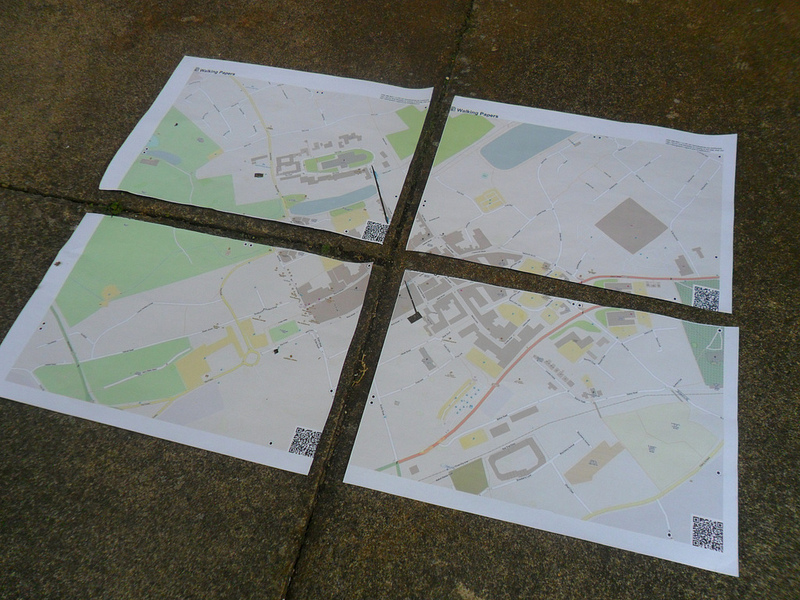
One of these is ‘Hollow Earth Mapping’, a project in which we want to create a way to document underground spaces, mixing together reality and rumours.  We’re asking anyone who already contributed to The Lichfield Underground post via the comments section, or anyone else who has a story, to share them on our flickr page.  It will be a chance to look at  familiar surroundings through the fascinating, captivating and slightly scary world of the underground.

As the stories are shared, the underground spaces will be cut out, creating a hollow space on the map.   The flickr group will be a place for discussion about the stories, and the possibilities that might follow the creation of the map…..