Mercian Murders

There are fields full of Cavaliers and Roundheads, still fighting over the fate of England. Roman soldiers marching along the roads they built. Tragic Tudor queens, often minus their heads. And you can’t move for Victorian phantoms, presumably conjured up from all of those seances they were holding. What does seem to be in short supply in this spectred isle however are the ghosts of Saxons.
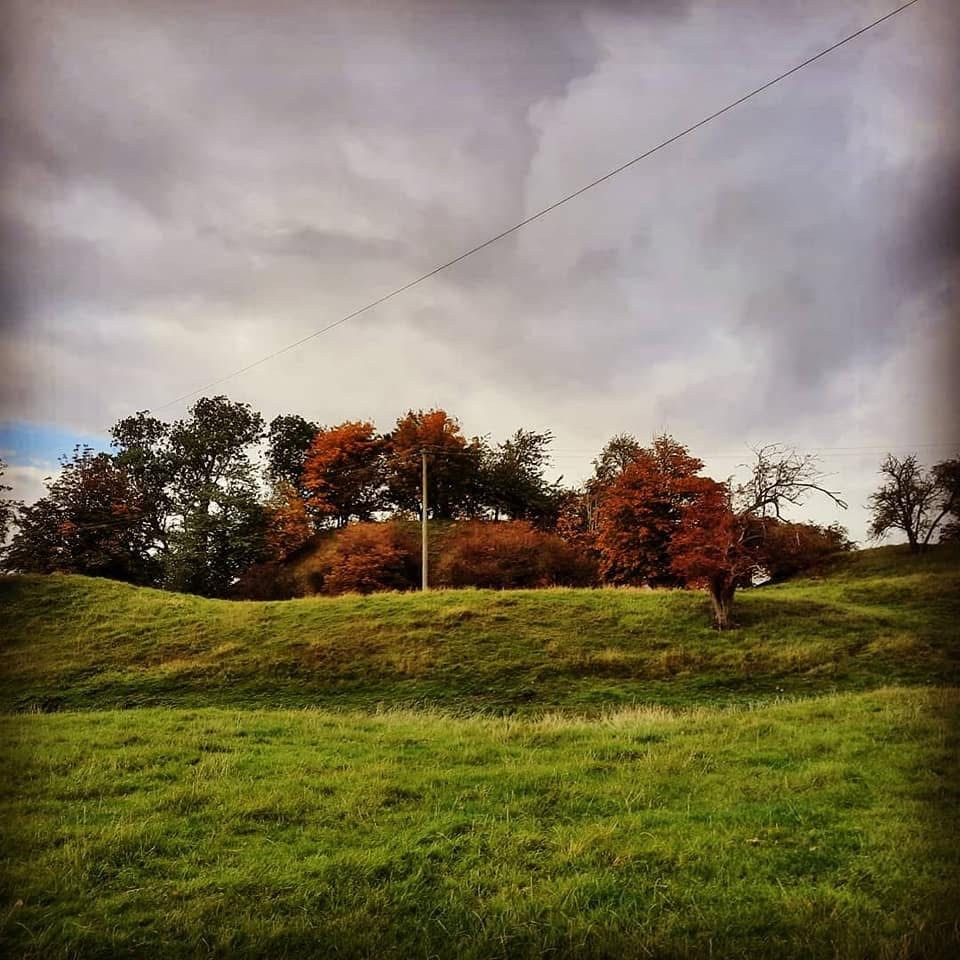
If somewhere was going to be haunted by a Saxon spirit, it would be Seckington. The Saxon Chronicle states that in 755, ‘Æthelbald, king of the Mercians, was slain at Seckington and his body lies at Repton‘. The account of the assassination is minimal but accounts say he was betrayed by his own bodyguards, some suggesting that his successor, Beornred of Mercia, was behind the treachery.
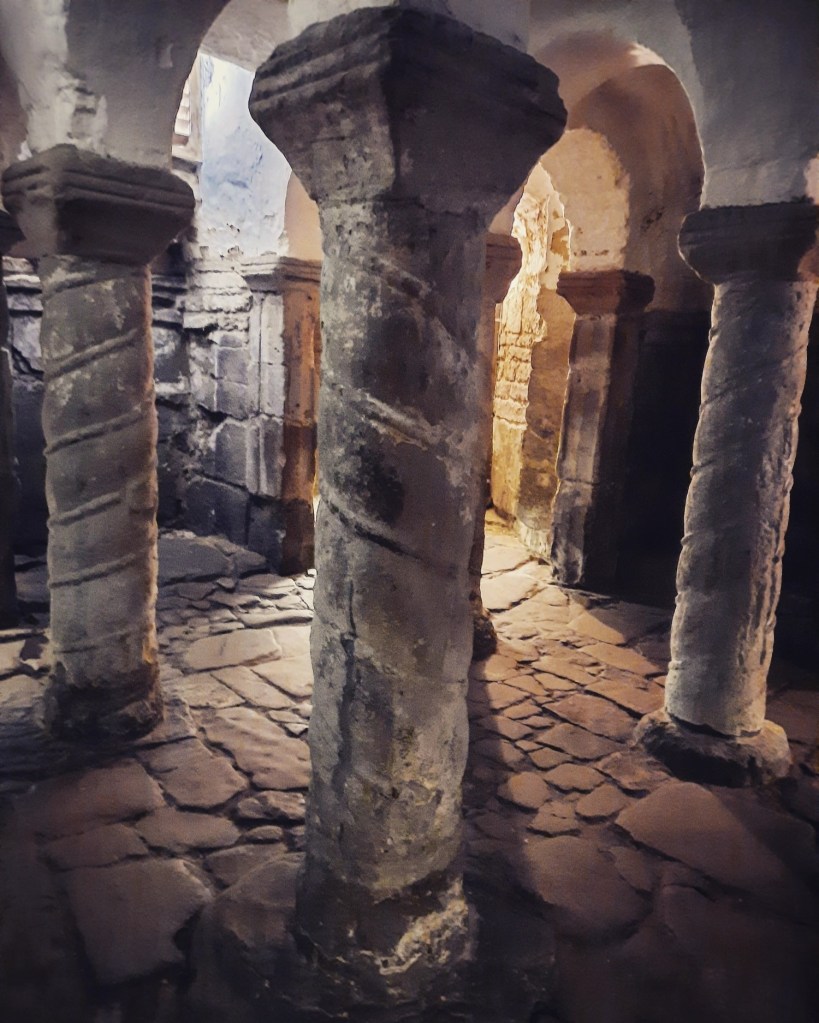
The crypt at Repton

After Æthelbald’s death, Beornred seized the Mercian throne. Little is known about him and within a year, Æthelbald’s cousin Offa launched his own claim to the throne and most likely offed him in the process. By contrast, there is much to be said about Offa, but as I started on the subject of murder, let’s continue on that theme.
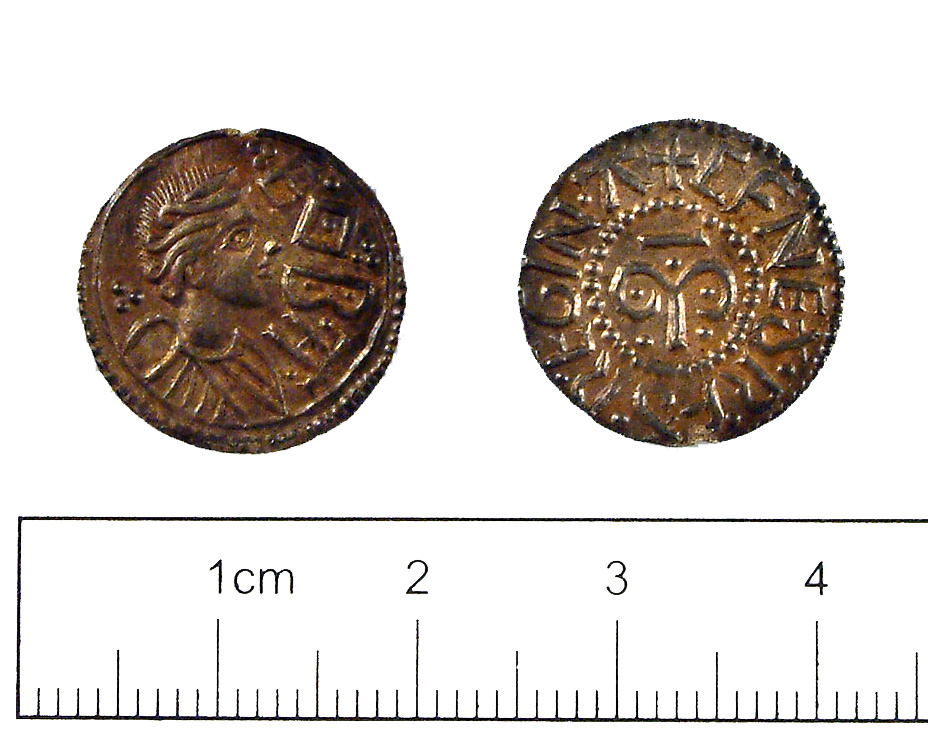
Penny depicting Cynethryth, Queen of Mercia.
(C) The Portable Antiquities Scheme

A marriage between King Æthelberht of East Anglia and one of the daughters of Offa and Cynethryth of Mercia was arranged to take place at a palace on Sutton Walls in Herefordshire. Yet before the bridegroom could make it to the altar and pledge his hand in marriage, he was beheaded. The Anglo-Saxon Chronicle attributes the deed to Offa. By the twelfth century there’s a shift in narrative and blame to Cynethryth. Was she really the wicked queen she is depicted as by chroniclers like Roger of Wendover or was it a cynical attempt to wash at least some of the blood off Offa’s hands? We know Cynethryth was powerful, her name appearing on charters and her face appearing on coins. Perhaps there’s an element of medieval misogyny involved in the tarnishing of her image? After Offa died in 796, Cynethryth took holy orders and became the abbess of a monastery at Cookham. In 2021, archaeologists found the foundations of this abbey alongside Cookham church and further excavations may even find the final resting place of this misrepresented Mercian queen.

We’ve wandered a long way from Lichfield so let’s end our journey much closer to home. In 716, King Ceolred of Mercia was buried at the Cathedral, despite the fact that he had died at a feast, ‘gibbering with demons and cursing the priests of God’. St Boniface believed him to have been possessed by a demon but I strongly suspect he was poisoned. I’d be very interested to see if his successor Æthelbald was on the guest list, bringing us a full and vicious circle back to the beginning of this post.
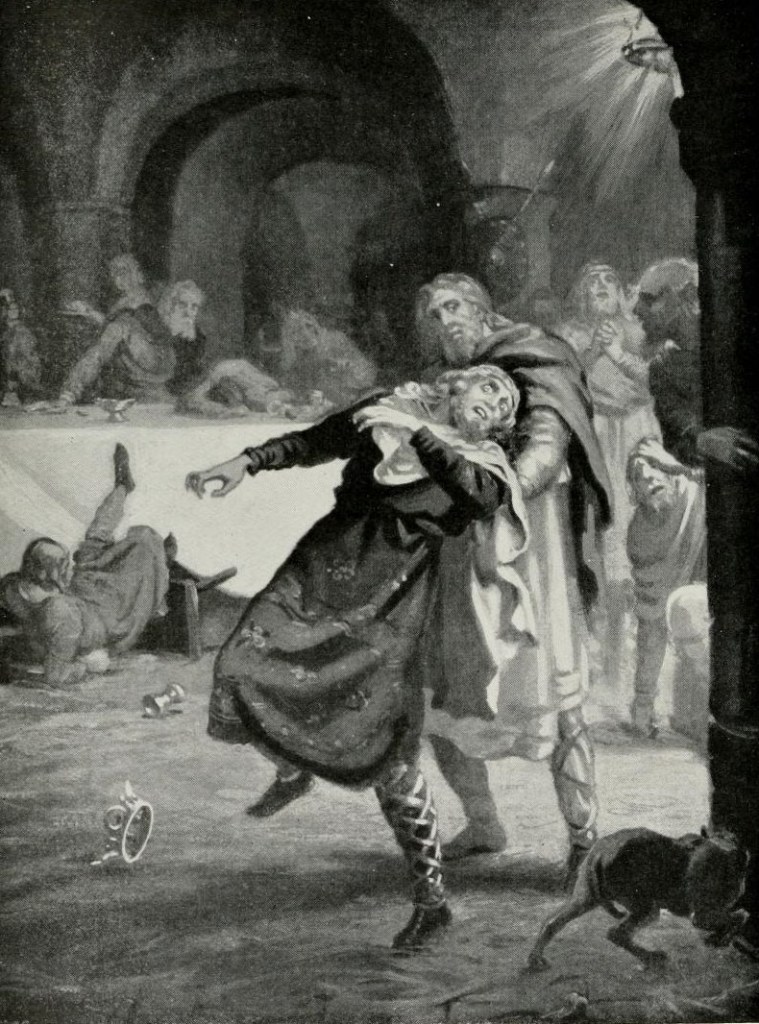
Black and white print of an oil panting by Margaret Dovaston depicting King Celored of Mercia smitten with madness

Sources:

The wanderings of a pen and pencil by F. P. Palmer

https://www.suttonwalls.co.uk/fact-pages

Women of Power in Anglo-Saxon England, Annie Whitehead

Well Wishers

I’ve written previously about how the appearance (and apparently, the actual location!) of St Chad’s well has changed over the years here, but I’ve recently found some contemporary accounts of the well’s previous incarnation – a ‘vertical tube built of engineering bricks, covered with a kind of gloomy sentry-box of stone’, which had apparently become so neglected in the 1940s that only a few inches of stagnant water covered in a green scum remained in the bottom of the pool. (1)

In November 1946, the Bishop of Stafford lamented that the well had once been a place of great pilgrimage but had fallen into a state of neglect and considerable disrepair and in April 1948, E Sutton, a former caretaker of the well, described it as having degenerated into a wishing well. A few weeks later, Mr Sutton submitted a further letter to the Mercury, advising, ‘I have again visited the site and found it in a worse state than on my visit there last Autumn. Then boards covered the Well. These are now removed and the Well is full of rubbish, among brick-bats and wood being a worn out coal bag! I noticed too, among the bricks and stonework lying around in wild confusion the ancient ‘St Chad’s Stone’, which the historian Leland, writing of his visit to the Well some four hundred years ago, states was then believed to be the very stone upon St Chad stood in the icy water as an act of penance, it then being the bottom of the Well. When the small building was erected over the Well in Stuart times, this stone was incorporated into the building, no doubt in order to preserve it. Many hundreds of hands have been placed upon it, mostly with reverence, since. It now lies among the rubbish, one corner broken. A fitting symbol of the ideals of 1948!’ (2)

St Chads Well

St Chad’s Well today

Saint Chad's c.1915. Taken from Wikipedia

Saint Chad’s Well c.1915. Taken from Wikipedia

I’m intrigued by this reference to ‘the ancient St Chad’s stone’. When James Rawson described the site prior to his restoration in the 1830s, he noted that, ‘the well-basin had become filled up with mud and filth; and on top of this impurity a stone had been placed, which was described as the identical stone on which Saint Chad used to kneel and pray!’. Despite Rawson’s apparent scepticism about these claims, was he somehow persuaded to use this stone in his new well structure, thereby perpetuating the myth? I’d love to see what went on in those discussions and I’d really like to know what happened to this legendary stone. St Chad may not have been anywhere near it, but the fact that people believed he had should have made it worth saving for posterity’s sake.

Water in the well

Water in the well

Unfortunately for Mr Sutton, the restoration of the well did not put a stop to people using St Chad’s Well for wishes, as evidenced by the layer of coins that still glint beneath the water, tossed in at some point over the last half century or so. It’s often suggested that this is the continuation of a ritual that our ancestors were carrying out a long, long time before St Chad arrived in Lichfield. Some things change. Some stay the same.

Notes

(1) The octagonal stone well structure erected by Rawson in the 1830s, as described by the Lichfield Mercury on May 6th 1949!

(2) A little off topic, but it’s amusing to see that it’s not just nowadays that letters appear in the Lichfield Mercury suggesting that society is going to hell in a handcart. Once again, some things stay the same…