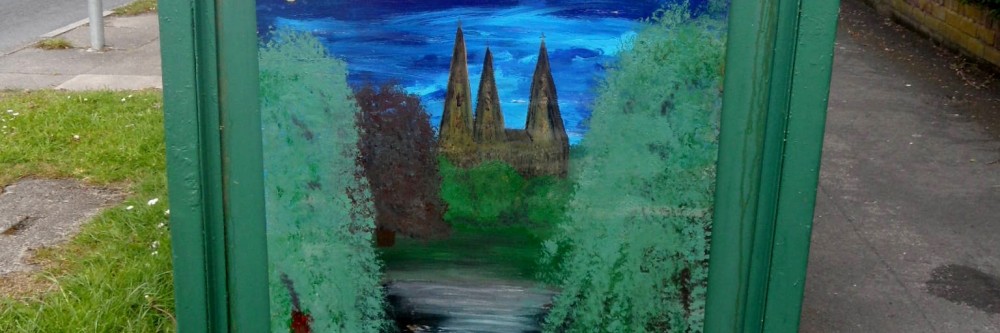
A Burny Inn

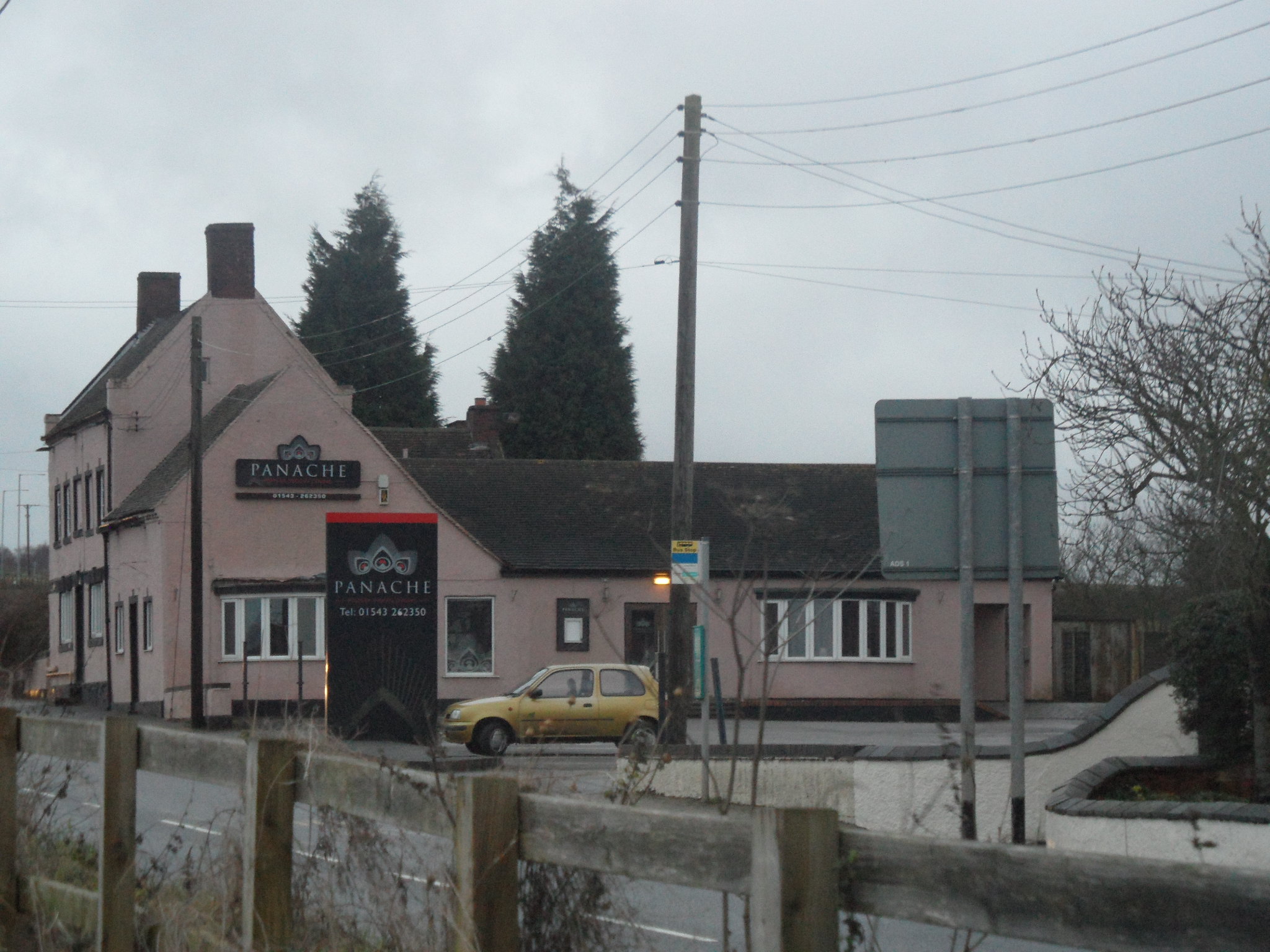
The King’s Head is one of the oldest pubs in Lichfield (1) and somewhere I’ve spent many a happy evening.(2) The sign across the entrance and John Shaw’s legendary ‘The Old Pubs of Lichfield’ date it to 1408, when it was known as ‘The Antelope’. By 1650, it had been renamed as The King’s Head.  I’ve been reading the old papers again, and it seems that in the 1930s, we nearly lost this fine old drinking establishment to fire…twice!

Which window did Mrs Shellcross climb out of I wonder?

On the night of June 27th 1932, landlady Mrs Shellcross went to bed in the King’s Head for the last time, leaving a small fire burning in the dining room grate.  The following day new tenants were arriving, and she would be leaving the King’s Head. Yet as she climbed the wooden staircase to her room, she would never have imagined that she would not be leaving the pub via the door but through a first floor window!

In the early hours of the morning, one of the hotel’s residents, Mr Corbett, was awoken by the sound of falling crockery. After discovering that the building was on fire, he raised the alarm. However, the five occupants of the pub found the staircase ablaze and their escape route blocked. They were left with no choice but to escape from upstairs windows. Mr Corbett jumped from the first storey and flagged down a passing motor van and trailer. The van driver positioned his vehicle close to the wall of the hotel, beneath a third storey (4) window, enabling Mr Dunmow, a commercial traveller to break his fall by jumping on top of the van.  Landlady Mrs Shellcross managed to climb through a first floor window onto a wall bracket but this gave way and she fell fifteen feet down onto the pavement. Another resident, a Mr King of Broxbourne in Hertfordshire, escaped using his bedclothes as a makeshift rope.

Although Mr Dunmow was admitted to the Victoria Hospital with shock, the others luckily suffered nothing more than cuts and bruises. However, the building itself had not been so fortunate. The dining room was destroyed, and the upstairs function room severely damaged. Several valuable paintings and ornaments were also lost. The ‘buff regalia’ was damaged by water (does anyone know what this refers to?).  It was said that the prompt turnout from the Lichfield Fire Brigade had saved the building from being burnt to the ground.

New tenants, the Evans family, arrived at the King’s Head to find ‘a charred mass of ashes, a ruined dining room, scorched and blackened walls, and everything soaked with water’.  There can barely have been time to make good this damage when just eighteen months later, an old oak beam in the chimney in the dining room and clubroom caused another major blaze at the pub. In the early hours of a December morning in 1933, Major Evans was awoken by the smell of smoke. This time, there was just time for the Evans family and the five hotel guests to escape down the staircase, which according to the Mercury was ‘a mass of flames’ immediately afterwards. The Major led his family and other guests to safety before returning to the burning pub to telephone for the fire brigade. There was no response as one of the hotel guests had already alerted the brigade who were now on the scene. It took two hours to put out the fire, and although the front of the building was saved, the dining room and clubroom were ‘burnt beyond recognition’. Apparently, the properties on either side of the pub were also at risk for a while.

Perhaps a little opportunistically, there is an advertisement for the Prudential Assurance Co. beneath the story asking readers ‘If this had been your property would it have been adequately insured? Don’t wait until you have to call the Fire Brigade before answering this question.’

On the Lichfield Ghost Walk, we were told a young woman working as a maid had died in a fire here and that sometimes her candle could be seen flickering in one of the upstairs windows. Perhaps this story harks back to an earlier blaze. It would be interesting to do some research and see if there is any truth in this. After all when it comes to ghost stories, there’s usually no smoke without fire….

Notes

(1) The Kings Head is said to be the oldest pub, the Duke of York over the other side of the city at Greenhill is said to be the oldest inn. I’m just glad they are both still open and serving beer!

(2) A particular highlight was the folky carol service I attended here in 2010. I hope they do it again this Christmas.

(3) As many will know, Col. Luke Lillingston formed a regiment here in 1705, and you can read more about this aspect of the pub’s history at The Staffordshire Regiment Museum website here. Or even better go and visit the museum to find out more!

(4) Third storey window? I’m guessing this means what I would call the second floor?

Sources:

Lichfield Mercury Archive

Lichfield: From the Reformation to c.1800′, A History of the County of Stafford: Volume 14: Lichfield (1990), pp. 14-24. URL

The Old Pubs of Lichfield, John Shaw

Any Old Iron?

When I was a little girl, my great (in all senses of the word!) granddad told me that the railings at the local cemetery in Birmingham had been taken for the war effort.  Ever since then it’s been my understanding that iron and other metals collected from homes, gardens and public places during the Second World War, were transformed into munitions. However, earlier this year a comment on Facebook, suggesting that the recycling of metal for the war effort was a myth, made me question this long held belief.

What is not in doubt is that places up and down the country handed over their railings, including Lichfield.  I understand that to begin with they were offered up on a voluntary basis but in 1941, the Ministry of Supply made the requisition of all ‘unnecessary iron or steel railings’ compulsory, for use in the foundries. The Lichfield Mercury carried an announcement that the Council had been instructed to make a survey and draw up a list of those to be surrendered. Compensation was available but the Ministry hoped that the majority of owners would give their railings freely! I have seen several suggestions that any reluctance was seen as unpatriotic (and perhaps there are hints of this in the discussions that follow below). Guidelines were issued on which type of railings were necessary and therefore exempt including:

1- Railings which should be maintained for safety reasons
2- Railings necessary to prevent cattle from straying
3- Railings of special artistic merit or historic value.

The remains of metal railings at Lichfield Library (the Friary Girls School at the time of WW2).

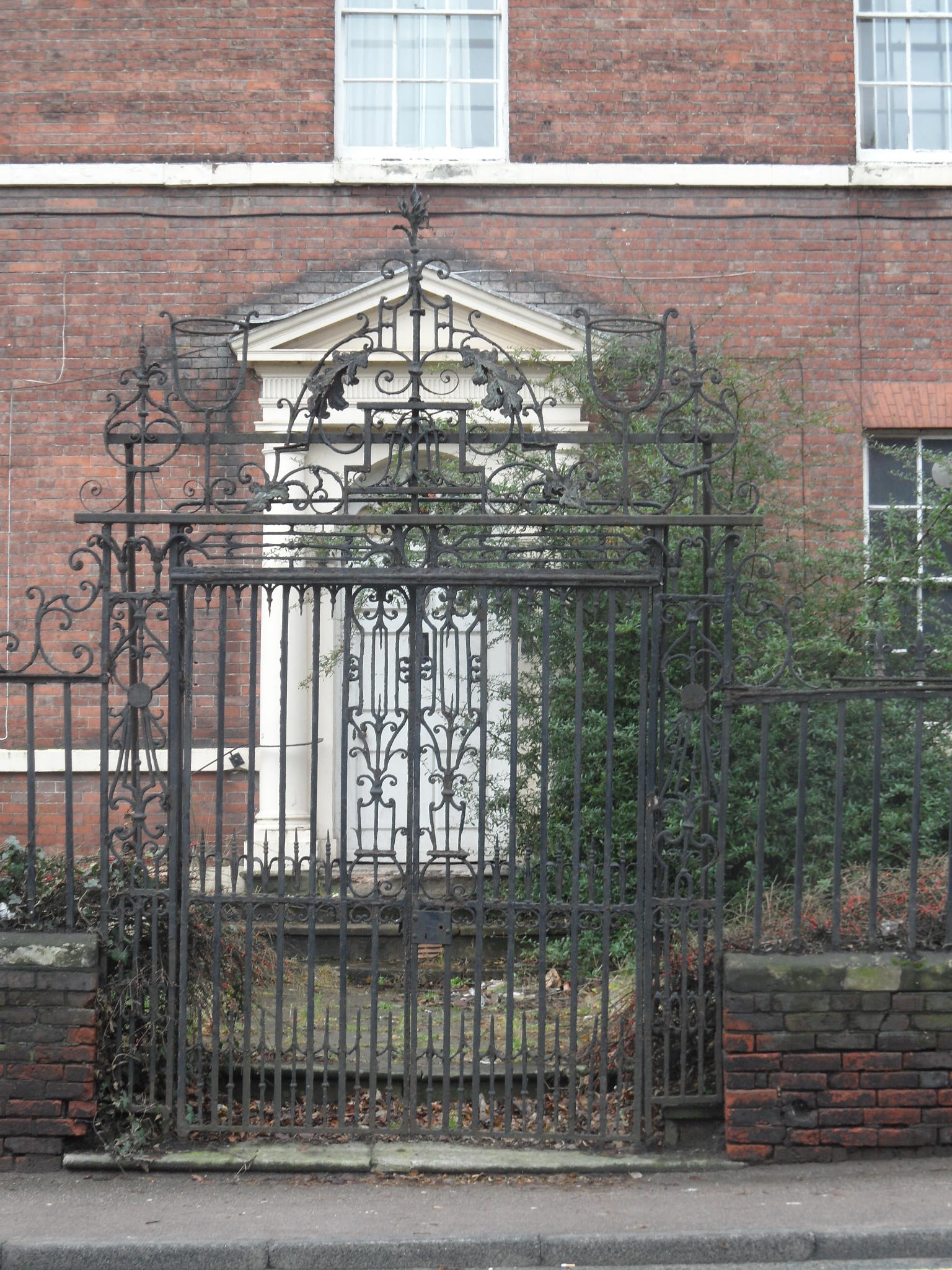
This perhaps explains why the library (then the Friary Girls School) lost its railings, but the decorative eighteenth century wrought iron gates outside the Angel Croft remained. It’s a little ironic that these listed railings were saved from the scrapheap back in the 1940s only to be left to rust away in-situ in more recent times.

Listed wrought iron gates outside the listed Angel Croft hotel – all appear on the English Heritage ‘At Risk’ register

For an insight into some of the discussions that took place at the time,  I’ve summarised part of a Council meeting that took place in June 1941, concerning the requisition of the railings that once stood around the gardens at Greenhill. Cllr Tayler argued that their removal should be deferred as they were necessary to prevent trespassing in the garden and to protect the water tank underneath, and asked why such a small amount of railings doing such necessary work should be removed when there was a large amount of ornamental fencing in the city still in place. Cllr.Taylor mentioned the railings around the Friary School in particular, explaining that there were more tonnes of railings there than hundredweights at Greenhill. He acknowledged that they were nice to look through, and that one could almost imagine they were looking at the Garden of Eden at times, but argued that if they wanted to get the serpent Hitler out, the Friary’s railings should be taken as a valuable contribution for the Minister’s appeal.

Whilst Cllr Taylor got his way at the Friary, his point about Greenhill was rejected. The Mayor felt that the council could not expect people to remove their railings if the council was unwilling to surrender their own. He also felt the removal of the Greenhill railings would enhance the beauty of that little park, creating a place where the old people of Lichfield could go for an enjoyable smoke. Cllr. Tayler remained unconvinced by this vision – he thought it was more likely to become a car park for Winterton’s auction. Alderman Deacon agreed – he thought opening up the space would lead to trespassing left, right and centre. He also voiced his frustration regarding the government’s campaign saying, “If the necessity for railings is so urgent as the Ministry of Supply said, why don’t they make a requisition for the whole of it…the Government should adopt a proper attitude and make a requisition for the whole of it”. Cllr. Moseley’s attempts to appease both sides by suggesting the decision be deferred to allow the members to visit the site were met with strong words from Cllr. Wiliams. “It seems pitiful to me. We are at war, and the Prime Minister’s speech not many hours ago gave the excuse of getting out of Crete because we did not have sufficient of this and the other. I take it we should never have attempted to recommend the removal of this scrap metal unless it was wanted, and yet these old historical people get up and say, ‘Don’t take it away as it will spoil the beauty of the city’. We have not in Lichfield felt the war, and it would be a damned good thing if we had a shot at it, and then we should realise what our army, navy and air force have to put up with. I can’t understand this spirit of Cromwell today. If we can help a little bit in Lichfield by scrapping our railings, let us do it with a good heart. Cllr Collins echoed these thoughts by adding, “We called it the ancient and loyal city and I think we can add one word – patriotic. I would certainly support the giving up of these railings on patriotic grounds and also that all other railings in Lichfield should be given up”. With these words, Cllr Tayler’s attempt to save Greenhill’s railings was defeated.

At the same meeting, Cllr. Halfpenny suggested that the railings in the Museum Grounds be salvaged and replaced by wire and fencing. The previous summer, the Council had decided to sell the old guns from the Crimean and First World Wars which were on display in the grounds. Again, this decision was reached following a fascinating and, at times, seemingly heated discussion. Cllr. Collins opposed the sale of these old war relics believing that they had been given to Lichfield as a token of the courage, bravery and endurance of the men of the 2nd Battalion of the South Staffordshire Regiment (the First World War gun had apparently been captured by them on 3 August 1918). It did not cost anything to keep them, not even a rag or a drop of oil, and he believed that there may be many South Staffordshire soldiers who passed by that gun and had a chat about days gone by. The Russian gun from the Crimea put Cllr. Collins in mind of his school days and some of the battles that had been fought. In his opinion, the guns should stay where they were and wait for the next one to come and keep them company. Alderman Bridgeman agreed, as did Cllr. Williams, Alderman Hall and Cllr. Moseley, who thought that they made the grounds more interesting.  However, Cllr. Tayler was firmly in favour of the sale. He believed that the ‘morbid sentimentality’ that they had heard that evening had led the nation into the deplorable condition it now found itself in. Too much consideration had been given to German relics and Germans since 1918. The nation needed iron and what better to have than that sort of scrap iron. He acknowledged that the guns were of interest but felt that they could not afford simply to allow them to lie about for people to look at when they were the very thing the nation and the army wanted. Cllr. Nevill added that the old first world war gun had been lying around for the last twenty years, used only as a plaything for the children. Cllr. Bather reminded the meeting that the country was having to import iron from the States at exorbitant prices and believed, ‘If that gun was turned into a new one to use against the Germans, it would be the finest thing that could happen to it’. The decision was taken to sell the guns to a local metal merchant who had been granted a license by the Ministry of Supply to purchase scrap of all descriptions. However, what became of the guns after that?

The old war guns are taken away after being sold to a local scrap metal firm. Photograph taken from Lichfield Mercury Archive

There are numerous blogs and discussion boards on the subject of Britain’s war effort. On some you’ll find tales of railings being dumped in the Thames and the North Sea and of piles of metal rusting away in fields and depots. Perhaps somewhere amongst the propaganda and the myth, is the real story of what happened to the ‘scrap’ metal collected here in Lichfield and elsewhere.

Notes: There’s a great Pathe film clip called ‘Park Railings for Munitions’, which you can watch here.

Source: Lichfield Mercury Archives

Friends and Romans

Wall is just a few miles south west of Lichfield and is of course the site of a Roman settlement known as Letocetum. Remains of a bath house and a ‘mansio‘ are still visible at the site, and there’s also a small museum in the village displaying some of the archaeological finds from the area, although sadly not the statue of Minerva, supposedly broken into pieces shortly after discovery to mend the bank of a drain (assuming that such a statue actually existed in the first place…)

Since visiting Wall last month, my interest in the place has grown and grown. As well as the occupation of the site by the Romans themselves, I’m also interested in the period prior to their arrival –  several carved stone thought to indicate the presence of a Celtic shrine at the site have been discovered.

Roman re-enactors at Kelmarch 2013 A D, but was the real thing in Lichfield in 300 A.D?

I’m also intrigued by how Letocetum relates to the later settlement at Lichfield.  One of the early medieval buildings excavated at Cross Keys, during work on the car park in 2007/08, was found to incorporate reused Roman masonry and there have also been other stray Roman finds in and around the city. Coins have been discovered near Sandfields and at Streethay. Roman pottery, including an inscribed mortarium, was apparently discovered at a place known as ‘Toad’s Hole Piece’, an area later known as Christian Fields and in 1802, a Roman Cyathus, fragments of pottery and human bones were reported to have been discovered during construction of a malt house on the causeway between Bird St and Beacon St.

Some of the finds discovered at Toad’s Hole Piece, later part of the area known as Christian Fields.

Wall is a fascinating place and a lovely village to visit. What’s more, there is a family open day at the site tomorrow (Sunday 4th August) between 11am and 4pm, organised by the Friends of Letocetum. I understand that as well as guided walks around the site and the village, there will also be children’s activities and replicas of items from the Staffordshire Hoard on display. You can find out more via their Facebook site here.

Sources: https://lichfieldlore.co.uk/wp-content/uploads/2013/08/lichfieldeusreportfinal.pdf http://www.pastscape.org.uk/hob.aspx?hob_id=306575 http://www.pastscape.org.uk/hob.aspx?hob_id=307078
http://www.sahs.uk.net/Volume%20XXXIII.pdf

Park Views

When Lichfield District Council applied for Lottery Funding to improve and develop Beacon Park, Minster Pool & Walk and The Garden of Remembrance, the ‘Friends of Lichfield’s Historic Parks Group’ was set up as part of the bid. Although the work has now been completed, the Friends group has continued and have now also taken Stowe Pool and Fields under their wing.

People enjoying Fuse Festival 2013 in Beacon Park

The Friends are independent of LDC, made up of a group of residents who want these beautiful and well loved places in the heart of Lichfield to be enjoyed and valued by people of all backgrounds, ages, abilities and interests. Part of their role is to facilitate discussion between Lichfield District Council and users, volunteers, friends and local residents, so that everyone can be involved in decisions made about their parks.

Getting ready to light up Minster Pool with hundreds of flames – Minster Pool June 2012

As a way of connecting with a wider range of park users, the Friends have set up a new Facebook account https://www.facebook.com/FoLHP and want to encourage people to use this forum to share their views on the park, making suggestions and asking questions. Those not on Facebook can email their views to parks@lichfielddc.gov.uk or call the parks team on 01543 308869.

Stowe Pool Regatta June 2012.

I think it’s a great opportunity to have your voice heard, so please join in the discussion. I know I will be! Of course, if you’d like to be more than a Facebook friend, and would like to join the Friends Group itself,  they would be delighted to welcome new members. More information can be found on their leaflet here – Friends of Lichfield’s Historic Parks

Business Study

I spent the morning with Dave and Angie Gallagher, who are doing a brilliant job of taking the ever growing collection of old photographs out and about into the city, encouraging people to share their stories and memories about Lichfield. I had a great time listening to people reminisce about how Lichfield used to be in days gone by and it’s put me well and truly in the mood to share more of Mr JW Jackson’s memories of the city’s shops and trades back when he was a young boy in the 1870s.

For obvious reasons, I thought this shop, now a bookies, might be Mr Welch’s fish and poultry shop?

Mr Jackson’s article begins with Sedgewick’s fried fish shop in Tamworth St, selling oysters, cockles, mussels, periwinkles, shrimps, bloaters and kippers. He also recalls H Welch’s fishmonger and poulterer’s business opening some years later on Tamworth St (Mr Jackson’s article was written in 1945 and he mentions that at that time Welch’s shop had been rebuilt as a ladies’ hair dressing saloon). Another fish shop was owned by James Clarke on Sandford St, and Mr Jackson recalls Mr Clarke with a ‘large, deep, circular basket suspended with a strap round his neck, filled with fried fish or oysters, shrimps and shellfish or at other times nuts and oranges, of which he found a ready sale in the public houses’. In his spare time, Mr Clarke was a groundsman and umpire for the Cricket Club on the Birmingham Rd.

The corner of Beacon St and Shaw Lane

Mr Jackson says that there were a large number of greengrocers in Lichfield, including Elkingston’s in Tamworth St (Wigham’s in 1945) and Tanner’s in Bird St (Perks’ Store in 1945). Adjoining Moss’s Entry on Bird St was Mr Walker’s grocery shop, and further down the road near to the King’s Head was Mr James’s grocers. On the corner of Shaw Lane and Beacon St was another grocers, a step below the pavement and old fashioned in appearance. Originally owned by Mr Hall, it was taken over by a Mr Warmington who rebuilt the old shop and added a bakery. Also on Beacon Street was Mrs Hague’s shop which apparently sold everything from ‘a needle to a sack of flour, including bread, sweets, etc’. The grocery business of old Dan Millington on Stowe Street, was particularly memorable due to the many tallow candles suspended from the ceiling.

Moss’s Entry, leading to Friars Alley is now between Green T and Lichfield Kebab shop.

Apparently, back in the 1870s, few people in Lichfield bought ready made shoes, preferring made to order footwear from places like Heath’s in Conduit St and Playfer’s in Market St (1). Mr Jackson remembers being measured for his own boots by Mr Brockhouse of Beacon St,  who lived in a small cottage opposite St Chad’s Rectory. Mr Hodges at the bottom of Beacon Hill (near Gaia Lane) had a shop which did ‘a large better class trade in boots and shoes made by himself on the premises’. Mr Jackson says there were also many cobblers who concentrated on repairs, including Tommy Lyons who lived in a small cottage in Gaia Lane and was described as a very religious man who could often be seen making his way to a meeting with his old well worn Bible.

I’m thinking we should all take a leaf out of Mr Jackson’s book and document our surroundings. This morning showed that the places we live and work in are continually evolving and it’s not until we stop and look back that we realise how much has changed (for better or for worse, depending on your point of view……).

Notes:

I found a photo of a shop called ‘Shakeshaft and Playfer’ on Market St, Lichfield thought to be from the 1860s on Staffs Past Track here. Is this the same Playfer? After zooming in it seems to be a men’s accessories shop – I can see ties and what look like straw boaters in the window! Also after zooming in, you can see the faces of three young people at the window, looking out onto the funeral procession below. I wonder whose funeral it was? Edit: Later, I found that Shakeshaft and Playfer were also undertakers, and arranged the 1894 funeral of George Fox of Elmhurst Hall amongst others, which would explain the photograph!

Sources:

Old Lichfield Trades and Tradesmen, J W Jackson, Lichfield Mercury, April 6th 1945

http://www.search.staffspasttrack.org.uk

Cornercopia

Last week we went to the George and Dragon on Beacon St. After an outstanding pork pie washed down by a cheeky half, it was time to leave. On heading back towards the park, I noticed that the building on the corner of Beacon St and Gaia Lane was covered in graffiti albeit nothing of particular note, just patterns and the usual initials. However, I had a look in both directions and couldn’t see anything similar on the bricks of the adjoining buildings and so I’m curious.  Why this particular building? Is it due to its proximity to the pub, is it simply because it’s a corner where people would wait (for something or somebody…) or do you think there another reason?

The building on the corner of Gaia Lane/Beacon St opp. the George & Dragon


Underneath The Arches

A stone arch stands in the grounds of the Lichfield Campus of South Staffs college and I’ve never been sure whether it is a folly, or part of the Franciscan Friary which once stood on the site. According to a book on the history of the Friary School (1), the arch was discovered in the walls of outbuildings taken down to make way for the new Friary Road in the 1920s. Apparently, it was incorporated into the staff entrance to the school, which used the buildings now occupied by the Library from the 1920s until the 1980s.  A former pupil describes the arch as standing on the lacrosse field during her time at the school. Inevitably, over the years the imagination of school children and the history of the site have combined to create legends and stories, including one about a ghostly monk that people are said to have seen passing through the arch.

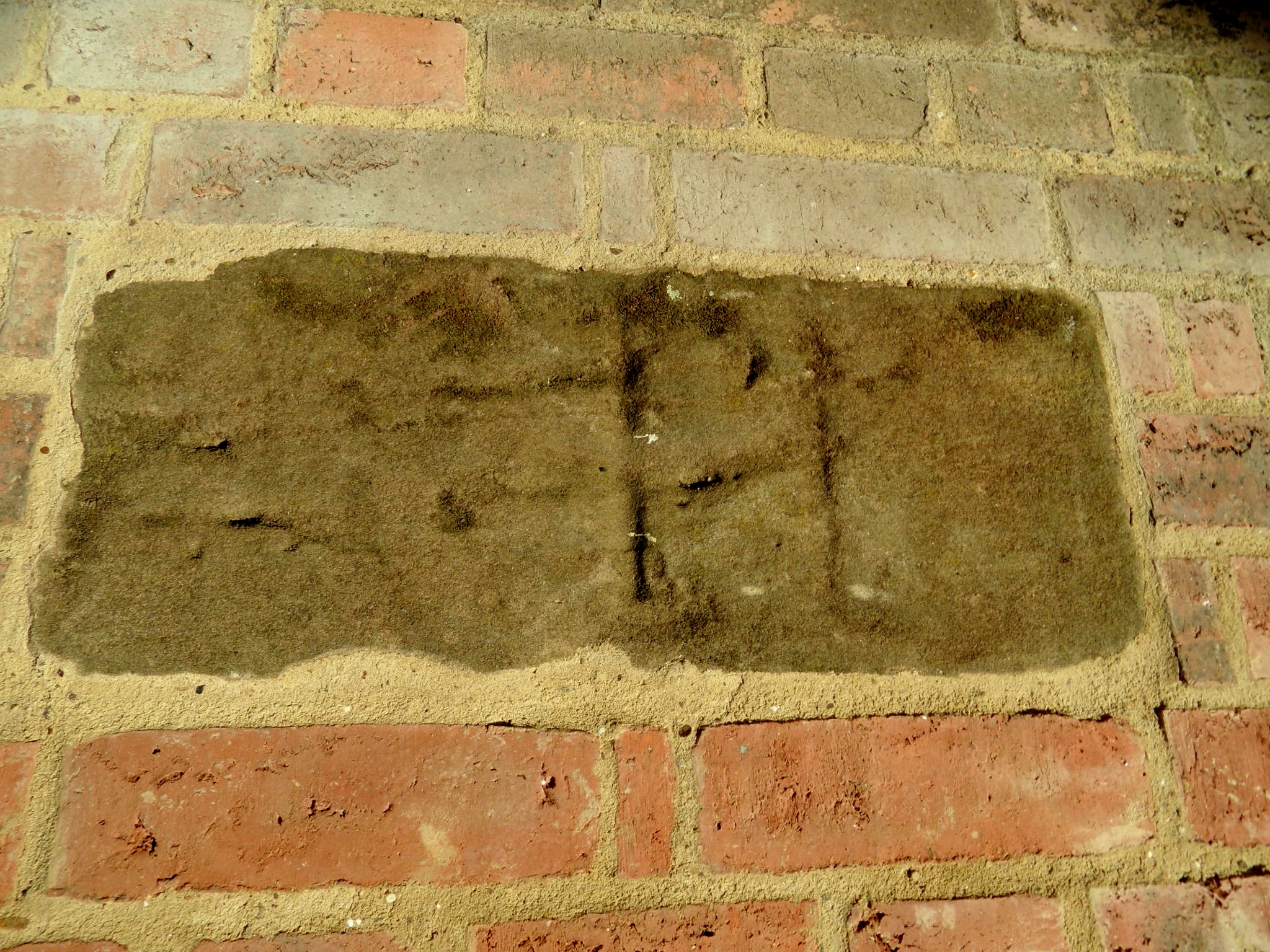
Another intriguing discovery made nearby during the 1920s was the gravestone of Richard the Merchant. Actually, rediscovery would be a more accurate description, as the stone had first been uncovered in 1746, when a former owner of the Friary was laying the foundations for a garden wall.  Thankfully, sketches were made of the stone and its inscription as nowadays, its markings can be barely made out and the stone itself is even more hidden away now than when I wrote this post about it back in July 2011.

Tombstone of Richard the Merchant,now in the wall of Lichfield Library

Today I was walking between Dam St and the Bird St car park (which I still call the Woolworth’s car park despite that shop not having been there for years), when I caught a glimpse of what seems to be another arch, over a garden wall which must belong to one of the properties on Dam St. Does anyone have any information on where this arch is from, and why it is here? And of course, if anyone has any stories of ghostly Lichfield residents walking through this one, please let us know!

Notes:

(1) The History of the Friary School, Helen Mullins 1981

(2) I suppose it would actually be a friar, rather than a monk (there is a difference!) but as we’re talking ghost stories here it’s probably not the place to worry too much about historical accurancy!

A Lichfield Tragedy

Years ago, when I first moved to Lichfield, I went on the ghost tour around the city. One of the stories we were told was that of a Catholic family who died in a fire at their home on Breadmarket St. There was apparently an issue regarding burial because of their religion and, unsurprisingly given the nature of the tour, it was said by some that their presence was still felt at the building in some way.  Recently, this story came up again when I was chatting to a colleague. A book about ghosts happened to be nearby and caused our conversation to turn to the supernatural. The colleague in question mentioned the story, wondering if there was any truth in it.

I searched the newspaper archive, and found that the story was essentially true.  I’m not going to transcribe it, as I personally think it’s too graphic and upsetting. However,the facts are that in January 1873 there was a fire at the Breadmarket Street premises of a Lichfield clock and watch maker. Three generations of a family lost their lives and their bodies were laid out on the pavement before being taken to the Guildhall where a Catholic Priest read the burial rites. The family were then taken directly to the graveyard at St Michaels where the Rev J Sejeantson carried out a burial service – they were not taken inside the church. There are reports that no rescue effort had been made, as initially it was thought that the family has already escaped.  The Mercury reports that everyone was at a loss what to do. According to the County History, it was this tragedy that led to the council taking over the responsibility for fire fighting in the city, buying an engine and establishing a brigade, with a building in Sandford Street being used as a fire station.

I am interested in the question as to whether there is any value in ghost stories beyond the obvious ‘entertainment factor’. The mention of ghosts and haunted places can cause the rolling of eyes and mutterings of, ‘There’s no such thing’. Perhaps there’s not, but does that mean that these stories have no interest for us?  If we look beyond the shadowy figures and disembodied footsteps in such tales, can we find something real? Does telling these stories in this way ensure that otherwise forgotten people and events are remembered or is it just an excuse to be ghoulish?


Water Work

One of my favourite weekends in Lichfield is the free and family friendly Fuse festival held at Beacon Park each year. Last year, the appalling weather almost caused the event to be cancelled, yet organisers Lichfield Arts managed to overcome adversity and algae and put on a fantastic festival. This year the weather couldn’t be more different, yet I hear water will still be a feature….

As part of Cafe Fuse, Walsall’s poet laureate, Ian Henery will be reading a poem about Sandfield’s Pumping Station, and the clean drinking water that was distributed to the Black Country from there. Ian will be introduced by David Moore, who as many will know, is passionate about preserving this part of Lichfield’s industrial heritage.

The theme of Fuse this year is ‘Keep it Local’, so get down there his weekend and listen to Ian and other local performers, sample some local food and drink and have yourself a fantastic time in your local park (well, it’s my local park anyway!). Full information on the weekend’s events can be found here.


Hot Fuzz

My interest in cars has always been limited but I do appreciate a good looking classic motor and so I walked through Beacon Park to have a look at some of the examples on display. As I ambled along, daydreaming about which of these vehicles from the past I’d buy if I could ever afford to in the future, one in particular caught my eye.

This is a Morris Six M.S. from 1953. I only know that because it was written on a card in the window along with a short explanation of the car’s history. Apparently it belonged to the Chief Constable of Staffordshire, one of only eleven such models converted to police cars, and now the only one left, rescued from a garage where it had spent twenty eight years. I thought it was interesting – the history of a vehicle is something I’ve never really considered before.

The sun had brought people out in droves and it was great to see the city so busy. As I walked past Minster Pool, resisting the urge to take yet another photo of the spires against the blue sky, the water appeared so green that I peered in to the depths. It soon became apparent that people weren’t the only creatures drawn out by the heat. I knew that there were fish in Minster Pool – I think angling was allowed there some years ago, and believe that hundreds of years ago it was once part of the Vivarium Episcopi, supplying the Bishop with fresh fish  – yet I don’t think I’d ever actually seen one in there. Today, they’d all come to the surface, creating ripples and lots of interest amongst the children on the banks (and me). However, I know as much about fish as I do about cars….