Potholes

After visiting the Christian Fields Local Nature Reserve, it seemed a good time to revisit the story that gave a name to the immediate area, and according to some, to the wider city as well.

Legend has it that in around 300AD, one thousand (or 999 depending on which version you read) Christians were massacred by a Roman army and their bodies left unburied in a place that would become known as the ‘Field of Corpses’ aka Lichfield (from the OE lic – body/corpse).   From 1548, versions of this story were depicted on the city seal, examples of which can still be seen in several places across the city, including the Martyrs Plaque at Beacon Park, 19thc police badges on display in the City Gaol, and in the main hall at the Guildhall.
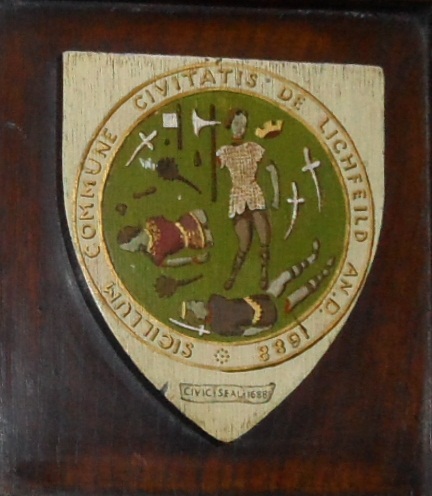
Version of the City Seal from 1688, Main Hall, Guildhall

Several fairly obvious locations in the city have been mooted as possibilities for the specific location of the massacre, including Borrowcop Hill, St Michael’s Churchyard and the site of the Cathedral. However, what was it about this parcel of land, a mile north of the Cathedral that convinced people to such an extent, that it was given the name ‘Christian Fields’?

The image below is an aerial view of the area from 1971. Christian Fields is south of Eastern Avenue, between Dimbles Lane and Curborough Rd.  (Shortly afterwards, a new housing estate was built on the field. Perhaps as a nod to the site’s legendary history, the streets were named after saints. Funnily enough, one of these new houses was my husband’s childhood home – I must ask my in-laws if they ever found anything of interest in the garden!)
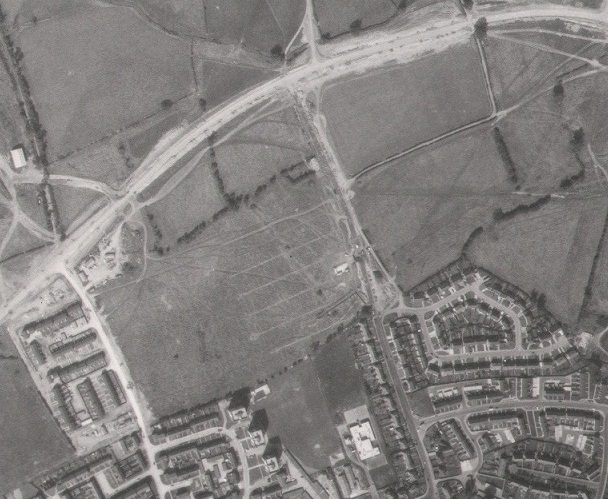
An aerial view of Christian Fields, 1971. Reproduced with thanks to Gareth Thomas, Lichfield District Council

Lichfield District Council’s information on the site says,

In the 17th-century the antiquarian Robert Plot declared that the area, now known as Christian Fields, had been the site of the martyrdom and it has born the name ever since. Needless to say Robert Plot’s claim has never been substantiated and no archaeological evidence has ever been presented in its support.

Looking at John Speed’s 1610 map of the city, I wonder whether the idea that the massacre took place at Christian Fields actually pre-dates Robert Plot? At the end of a road leading north from the Cathedral (possibly Dimbles Lane?), in the vicinity of Christian Fields, is an illustration depicting a scene that looks like a representation of the legend, similar to that found on the city seal.
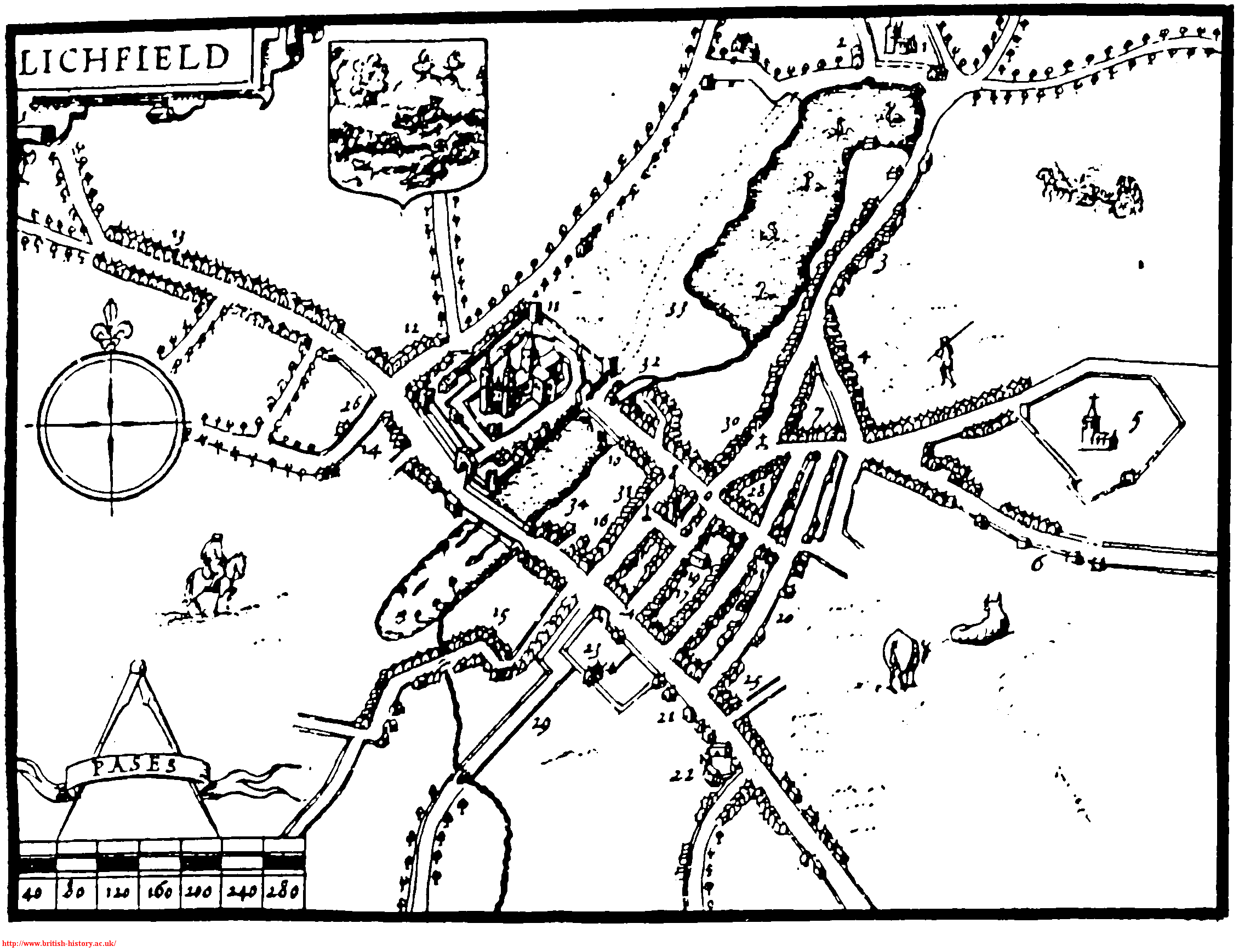
John Speed’s 1610 map of Lichfield

In the early 1800s, local historians wrote about a series of discoveries near to the site, that persuaded them that the legend was true. The pastscape record has the following description, taken from a history book of the time,

In a meadow adjoining CHRISTIAN FIELDS, known by the name of the TOAD’S HOLE PIECE, have been recently found a considerable quantity of human bones, various pieces  of earthenware, some of which are Roman, a stone bowl or dish perhaps used for grinding corn, a stone ball, fragments of weapons including the head of a pike or halberd and several horseshoes  pierced for nails at the top as well as the sides. The objects  were discovered nearly four feet below the surface in a peaty soil, amongst and covered by great quantities of roots and decaying branches.

I found the book (1) on googlebooks and found it contained illustrations of the objects.


A letter to the Gentleman’s Magazine in November 1817 gave a little more information,

The articles of which I have sent you drawings were found near some land known by the singular names of Hic Filius and Christian’s field so called, according to tradition, from having been the place where the early converts to Christianity had used to assemble  and where the massacre from which Lichfield derives its name took place.

The letter goes on to describe what I think are these drawings from the Staffordshire Past Track site. – “a stone dish one foot diameter used perhaps for grinding was placed in the earth as a cover for a smooth red earthenware broken by the eagerness of the workmen to examine the contents (proved earth only). The black spots arc metallic. Also, the head of a weapon in preservation the wooden staff was broken off near the head, the iron is 21 inches in length.  There are also weapons found in 1817 in the foundation of one of the canons houses on the North side of the Close with some bones and broken armour”.

I’m not suggesting that the objects are proof of the legend, which along with the ‘Field of the Dead’ explanation of the place name of Lichfield is generally accepted to be untrue (the current favoured explanation of the name is ‘the common pasture in or beside the the grey wood).  However, and I may be reading into things too much here, I do think it’s a little curious that these items seem to almost be a tick list of props for the martyrs’ story…. Bones? Check. Horses & weapons? Check. A link to the Romans? Check.  The question I’m finding it hard to find an answer to is, if it’s agreed that these objects aren’t part of the story of the Christian Martyrs, in some way, shape or form, then whose story or stories are they part of?

Edit 6/10/2012

A further reference from the same book says the following,

About three quarters of a mile from (St Chad’s Well) are Hic filiius and Christians Fields where the converts of Ampbibalus are said to have been massacred; a considerable quantity of human bones have been found in the adjoining fields a few feet beneath the surface.

It has been the custom of civilized nations to collect and burn or bury the bodies of those slain in battle here fragments of bones are found scattered through a space exceeding half a mile and in one place only have they been met with under the appearance of having been buried which was in a field near Pones mill on the east side of the brook these had probably been dug up and thrown into an excavation as were several cart loads found in the field adjoining to that in which the earthen ware before noticed was discovered which were thrown into a marl pit near the spot. Tradition says the bodies of the massacred christians were left unburied a prey to the birds and beasts of the forest.

On maps from the later 1800s, there is a marl pit in the corner of the field marked as ‘Christian Fields’.

Sources

(1) A Short Account of the City and Close of Lichfield by Lomax, Woodhouse & Newling (1819)

(2) Derbyshire Record Office Online Catalogue

(3) Holinshed’s Chronicles ofEngland, Scotland & Ireland

http://www.english.ox.ac.uk/holinshed/index.php

http://www.british-history.ac.uk/report.aspx?compid=42340#s1


Hidden Depths

Circuit Brook marks part of the northern boundary of the city and runs through the Christian Fields Local Nature Reserve.  Last week I went for a walk to find the brook and found a whole lot more besides.

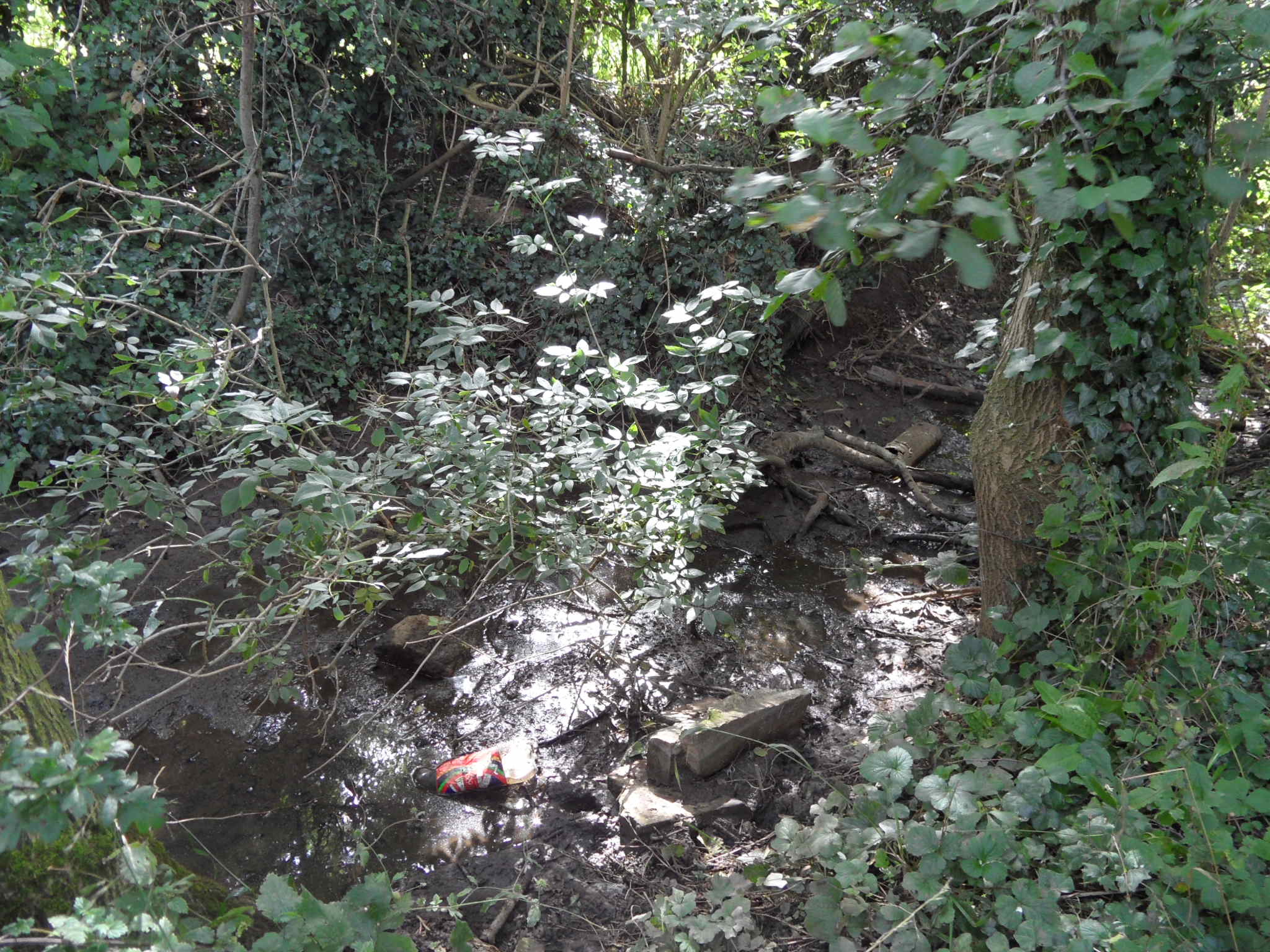
Despite the blue lines on the map, water was scarce, although some evidence of its presence lingered on in the channels it had forged over the centuries.

For much of the walk, we were separated from the route of the stream by steep embankments and rampant nettles, and at particularly challenging points, both!  Concerned about both the possibility of broken limbs and the availability of dock leaves, I didn’t stray far from the path, and used the zoom on my camera instead. Not very adventurous I know, but at least I lived to tell the tale!

Steeper than it looks! No, really it is!

Zoom.

Amidst the nettles is this green post. Any ideas?

A little way into the walk, watery looking plants and a visible outline convinced us that we’d found the site of the well marked on our Ordnance Survey map.

The smell of mint is what first alerted us to what we think is a well

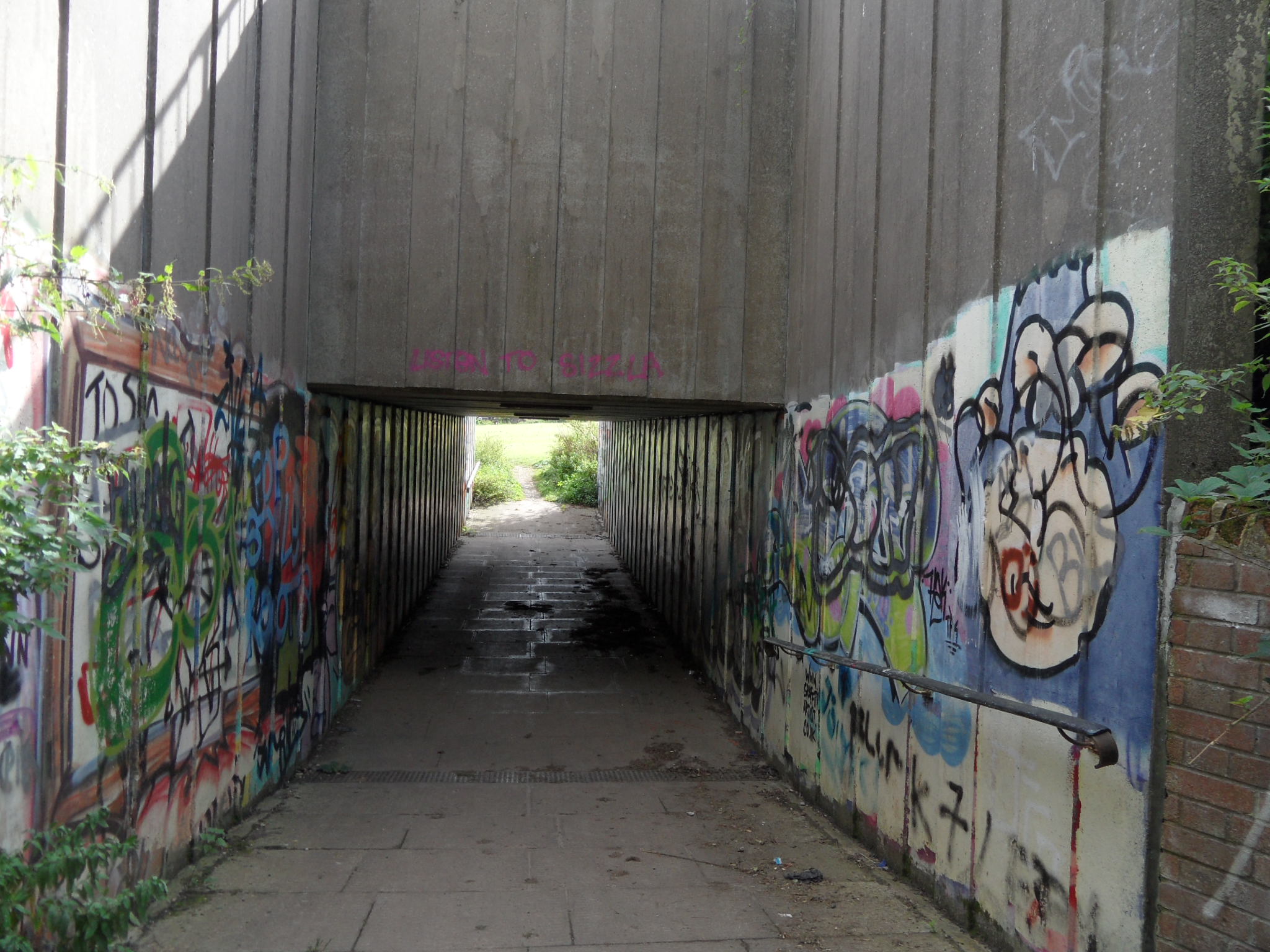
At the point where we lost the route of the brook altogether we retraced our steps back and tried to pick it up again further upstream. This time the route took us along a flat, public footpath with woodland and fields to our left and the busy western bypass and underpasses to our right,  reminding us that we were right on the fringe of the city here.

Bypass underpass

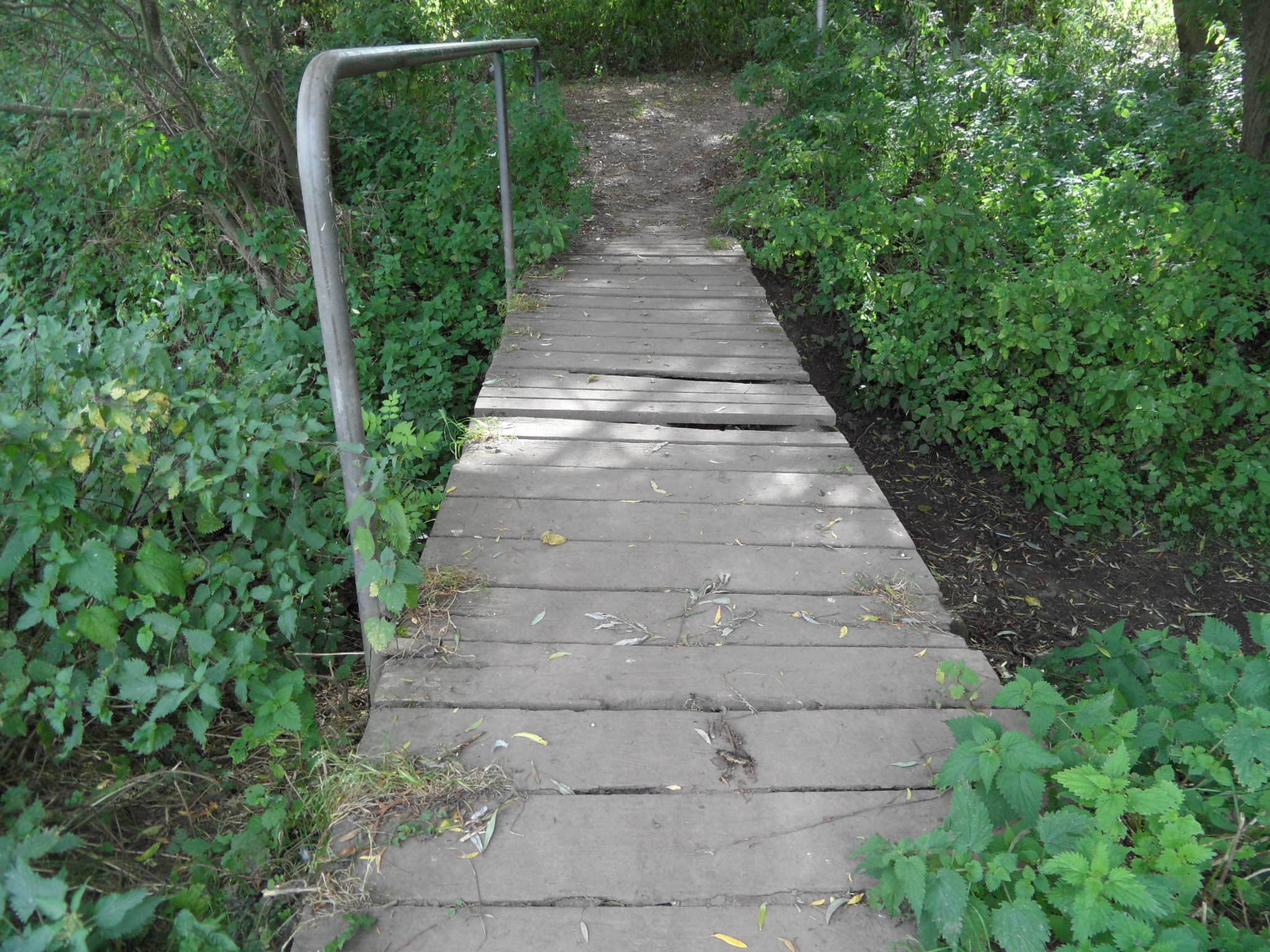
A footbridge gave us easy access to the stream here, but once again it was dry.

Had we not turned back, we’d have found ourselves in Elmhurst.  What I hadn’t realised at the time was that part of the route apparently dates back to Saxon times, and incorporates an archaeological feature known as ‘The Dimble’. It’s great that the name is still evident in the area today. I’d like to find out more about this ancient walkway (the information I’ve included here is pretty much all I’ve been able to find so far), and also clarify exactly what  a ‘Dimble’ is, as I’ve seen a couple of different definitions.

I was also unaware until reading up on it, that the Christian Fields LNR was a landfill site until the 1980s when it was capped. Twenty or so years of allowing nature (and volunteers) to reclaim the site, has resulted in a place reclaimed for people to enjoy and explore. So go and enjoy & explore!

Notes:

Big thanks to Brownhills Bob for providing me with a map of the site and information about the nature of water, especially the advice to keep an eye on that well…..

Information on Christian Fields LNR taken from http://www.lichfielddc.gov.uk/info/200029/countryside/83/site_management/4

Bell Vista

A while ago, I wrote about the architect Thomas Johnson and how he had been involved in the restoration of the church of St Michael on Greenhill in 1842/3. In the newspaper archive, I found a report of a meeting of parishioners held at the church, prior to these restoration works.

The article is a bit blurry and hard to read but after much squinting it seems that there was concern that the church was at risk of ‘being reduced to ruins’ and that the churchwardens had appointed Mr Johnson to assess the extent of the dilapidations.  His diagnosis was that the roof, ceiling, spire and a portion of the walls were so unsafe that a large sum of money would be needed to keep up the building. The parishioners expressed their surprise at how bad the situation was. To illustrate just how bad things had got, it was revealed that rabbits had managed to get into the mausoleum of the Marquis of Donegal (he of Fisherwick) and were breeding in the coffins. The outcome was that the land owning parishioners agreed to increase their rates to pay for the necessary work which according to the County History included

 “the reroofing of the nave, the repair of the side aisles and the nave clerestory, the reintroduction of Perpendicular windows in the north aisle, the rebuilding of the north porch, and the remodelling of the south aisle with new buttresses and a south door in place of a window. The gallery was removed. The mausoleum and the vestry room were replaced by a stokehold over which a clergy vestry was built with doors into the chancel and the south aisle; an organ loft was built over the vestry”.

St Michael’s above Stowe Pool

I have never been into the church myself. However, I notice via facebook that the church will be open for viewing tomorrow (between 3pm & 5.30pm) during the launch of the Bell Restoration Fund. You can find out more on their facebook page here and you can read the great article Annette Rubery wrote about the fund here.

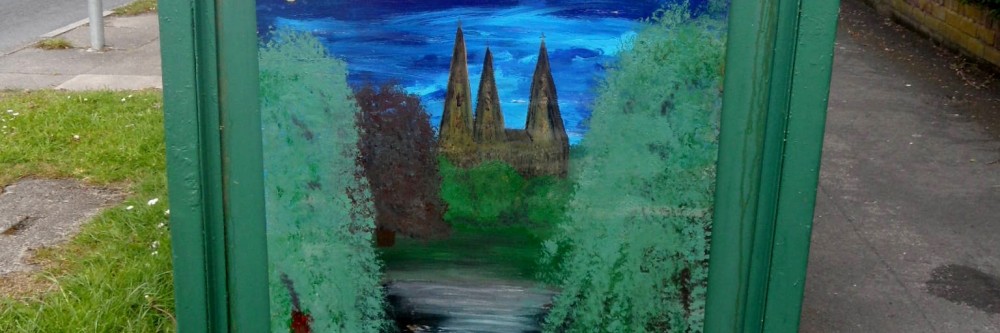
The church is of course featured on the ward banner for this part of Lichfield (along with what I had assumed was the Greenhill Bower House, although looking at it again now I’m not so sure…)

Although I’ve never been inside the church, I have been to the churchyard. With claims on Wikipedia that it could be a Mercian tribal necropolis, the site of one of the earliest settlements in Lichfield or the burial place of followers of St Amphibalus, it certainly merits a post of its own one day!

Steps leading up to the churchyard

Edit: I’ve just been thinking about the building on the ward flag, below the church. Could it in fact be the gateway to the old Lichfield Union Workhouse (subsequently St Michael’s Hospital).

Sources:

Lichfield Mercury Archive

Lichfield: Churches’, A History of the County of Stafford: Volume 14: Lichfield (1990), pp. 134-155


Hollow Earth

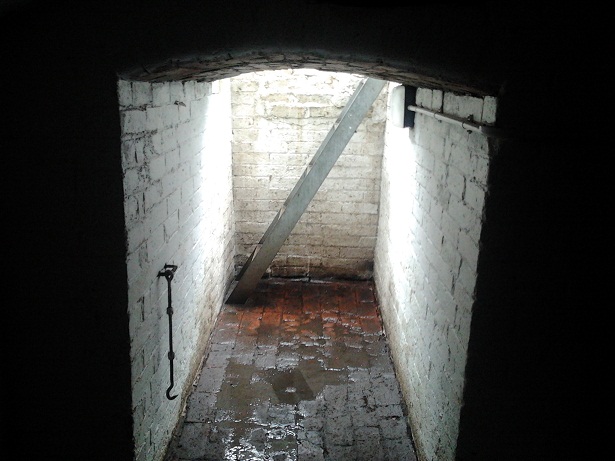
One of the most popular posts on the blog has been The Lichfield Underground. It seems people are fascinated by the unseen part of the city, the potential of what could be beneath their feet as they walk the streets.

Captivating, yet slightly scary….

It was this fascination with tales of the underground that started the chain of events culminating in the formation of Museufy, a group made up of myself and my friends Mark and Magdalena – two creative, innovative people that it’s a joy to collaborate with.  The aim of the group is to create alternative ways of collectively exploring history and interacting with our surroundings. We have a website where you can read our manifesto and find out about some of the projects we are working on.

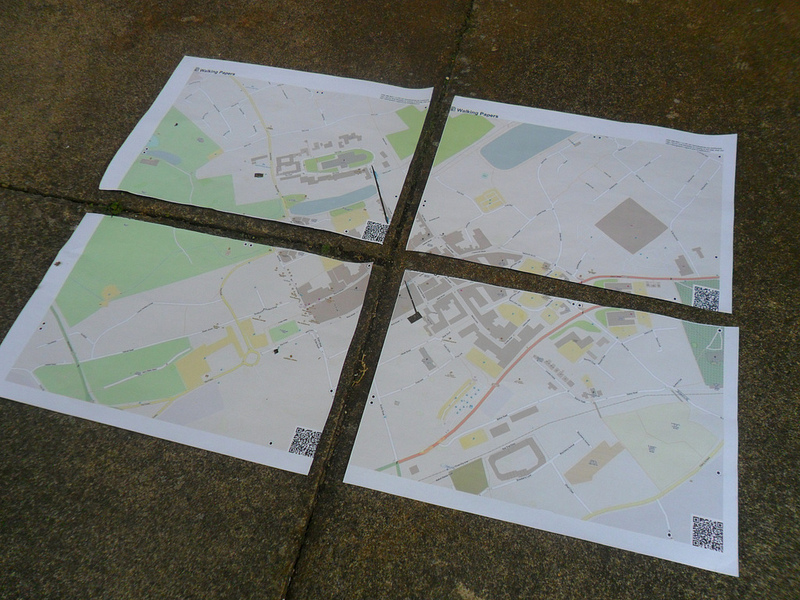
One of these is ‘Hollow Earth Mapping’, a project in which we want to create a way to document underground spaces, mixing together reality and rumours.  We’re asking anyone who already contributed to The Lichfield Underground post via the comments section, or anyone else who has a story, to share them on our flickr page.  It will be a chance to look at  familiar surroundings through the fascinating, captivating and slightly scary world of the underground.

As the stories are shared, the underground spaces will be cut out, creating a hollow space on the map.   The flickr group will be a place for discussion about the stories, and the possibilities that might follow the creation of the map…..

Fools & Hobby Horses

The Abbots Bromley Horn Dance takes place each year on Wakes Monday (the first Monday following the first Sunday after 4th September), which means that this year it will be on 10th September.

As far as I can gather, the horn dance is one of those traditions where no-one is quite sure what it’s all about. There are six dancers carrying reindeer antlers, a fool, a hobby horse, Maid Marian, a boy with a bow and arrow, an accordion player & a triangle player. The horns are collected from the church of St Nicholas at 8am and are returned 12 hours later after the participants have danced around the village and out to Blithfield Hall. According to the horn dance of Abbots Bromley website, when one of the horns was damaged in 1976, a piece was sent to be carbon dated. It was found to date back to 1065 (plus or minus 80 years) although the general consensus is that this doesn’t really help to date the dance itself.

I’m ashamed to say that every year I’ve planned to go and watch the dance, but haven’t made it for one reason or another. I have been to the village on several non-horn dance occasions though and it is a lovely place.  However, Mr J Carver, in his 1779 book ‘The Universal Traveller’ wasn’t impressed , saying,

It stands at the distance of a hundred and twenty eight miles from London but contains nothing worthy of note

(Lichfield fares a little better. In Mr Carver’s opinion, ‘It is a long, straggling place but has some handsome houses’).

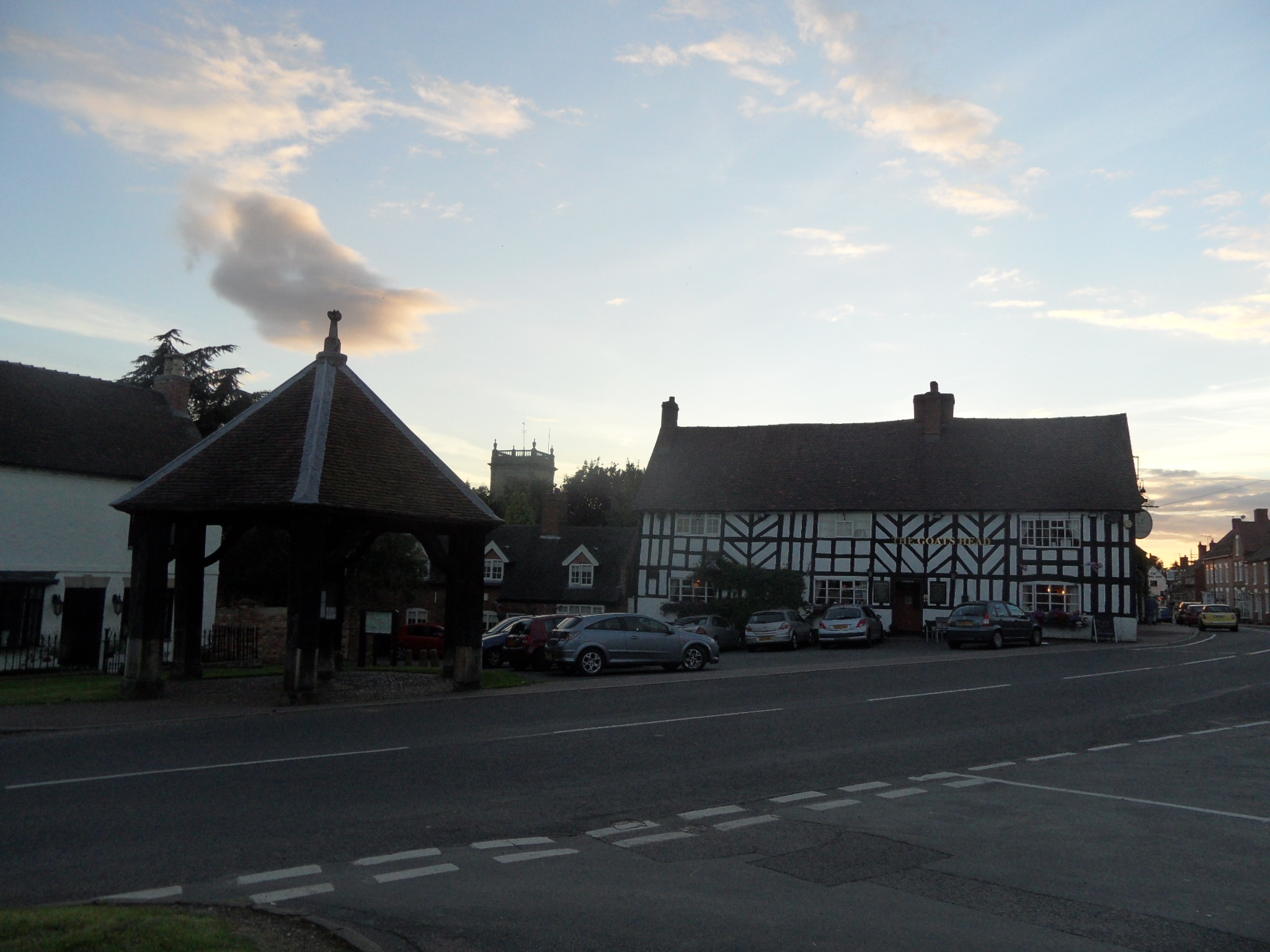
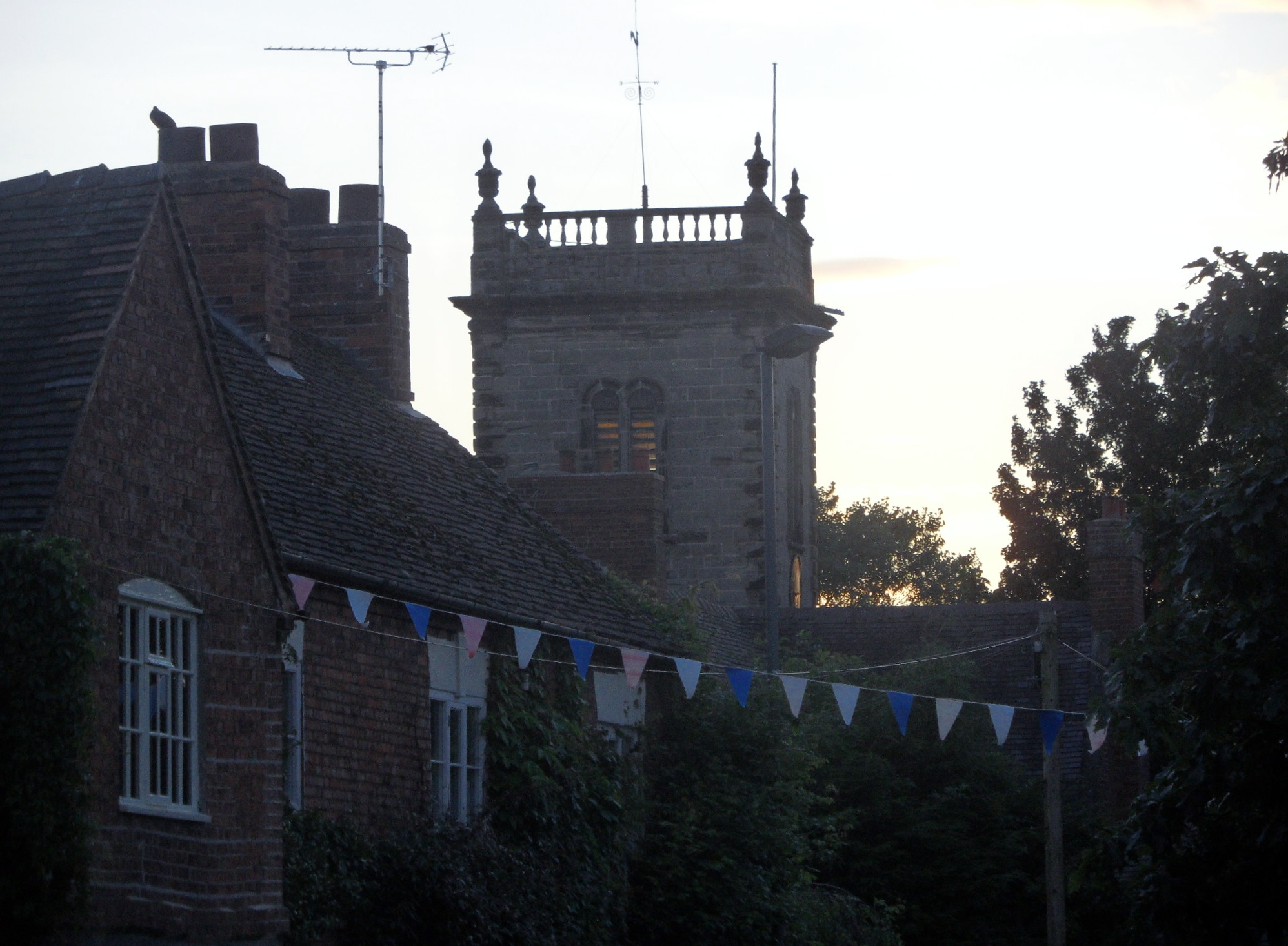
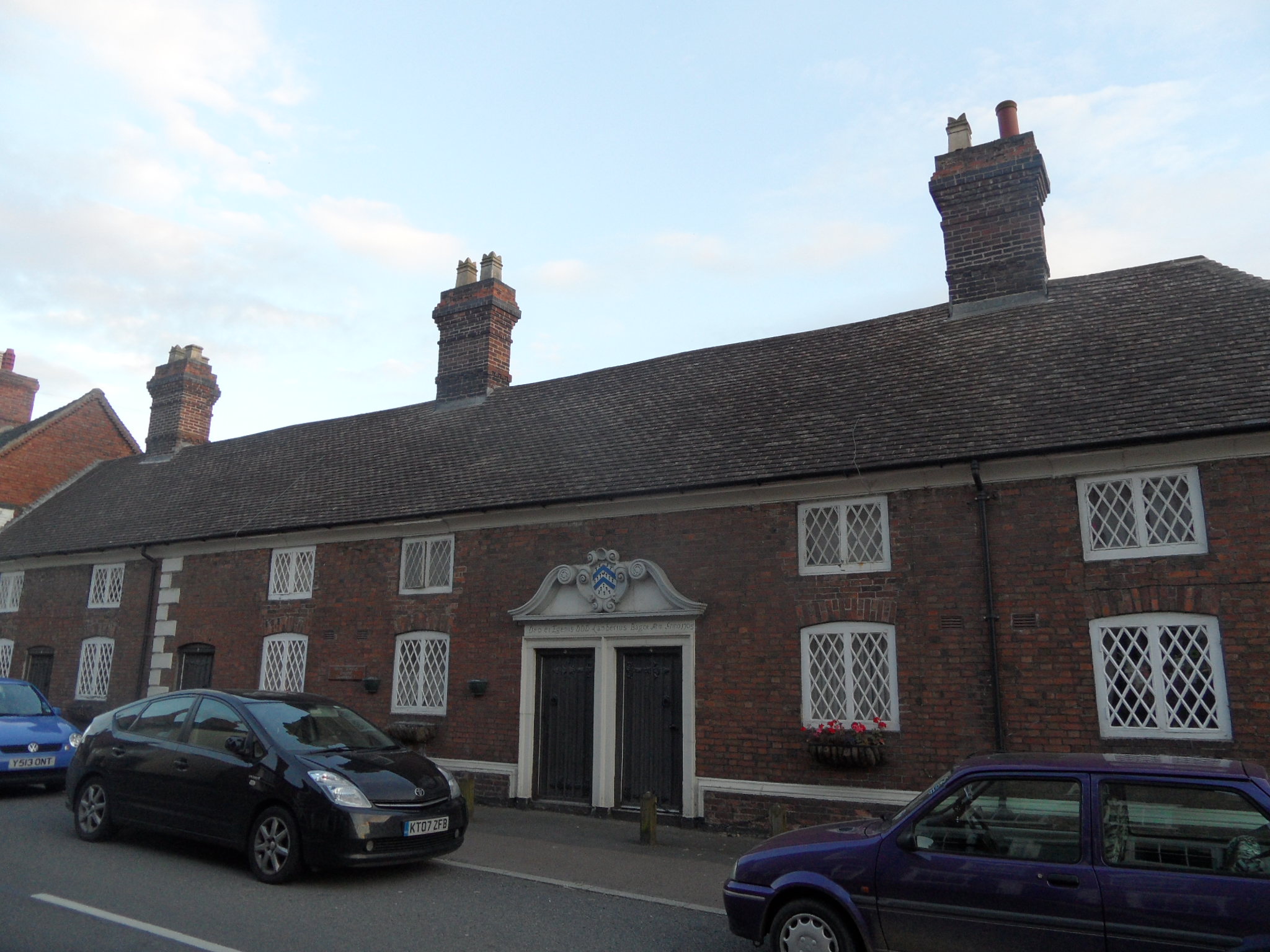
Walking through the village, to my 21st century eyes, practically every building looks worthy of note. Amongst many others, there’s the Butter Cross (or Burger Cross as a practical joker would have it in 2002), the Goat’s Head Inn (which is thought to date back to the early 1600s, with possibly even older cellars and of course, a secret passage story!) and Almshouses (above the doors are the Bagot family arms and the inscription Deo et Igenis DDD Lamberius Bagot Arm Anno 1705).

The Butter Cross, The Goats Head Inn & St Nicholas Church

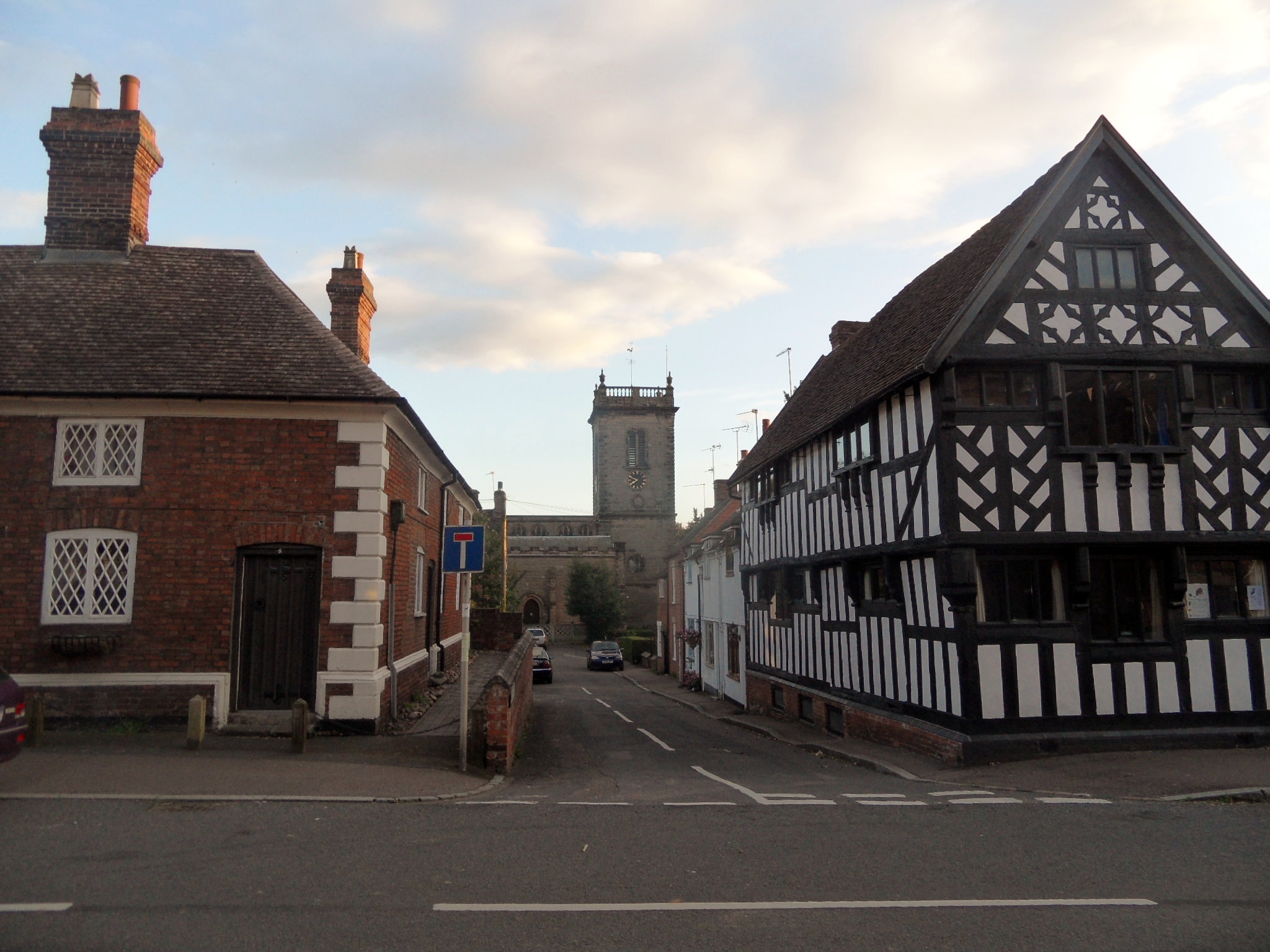
View of St Nicholas, where the horns are displayed throughout the year.

Church of St Nicholas, from the High St

Almshouses

A couple of years ago the BBC made a programme about folk dancing in England and you can see the clip about the horn dance here. There are also some photographs of the tradition taking place in the 1930s here on the Staffordshire Past Track website.

I believe that the horns never leave the parish boundary (when not in use they are stored in the church of St Nicholas) although the dance can be performed elsewhere (another set of antlers is used on these occasions). I’ve also just discovered that this year the third annual Abbots Bromliad will take place in California, where they are hoping to beat their own record for most people dancing the horn dance at once (144 in 2010). You can even order your own set of acrylic antlers for $20 to help you feel the part! Hmmm, I wonder what the postage & packaging would be to get a pair sent to Lichfield….and would they get here in time to wear on the 10th September?

Seriously, we’re lucky to live so near to a place where one of the country’s best known (and possibly one of the oldest) traditions takes place and I really must make an effort to go this year to see it for myself.


Cross County

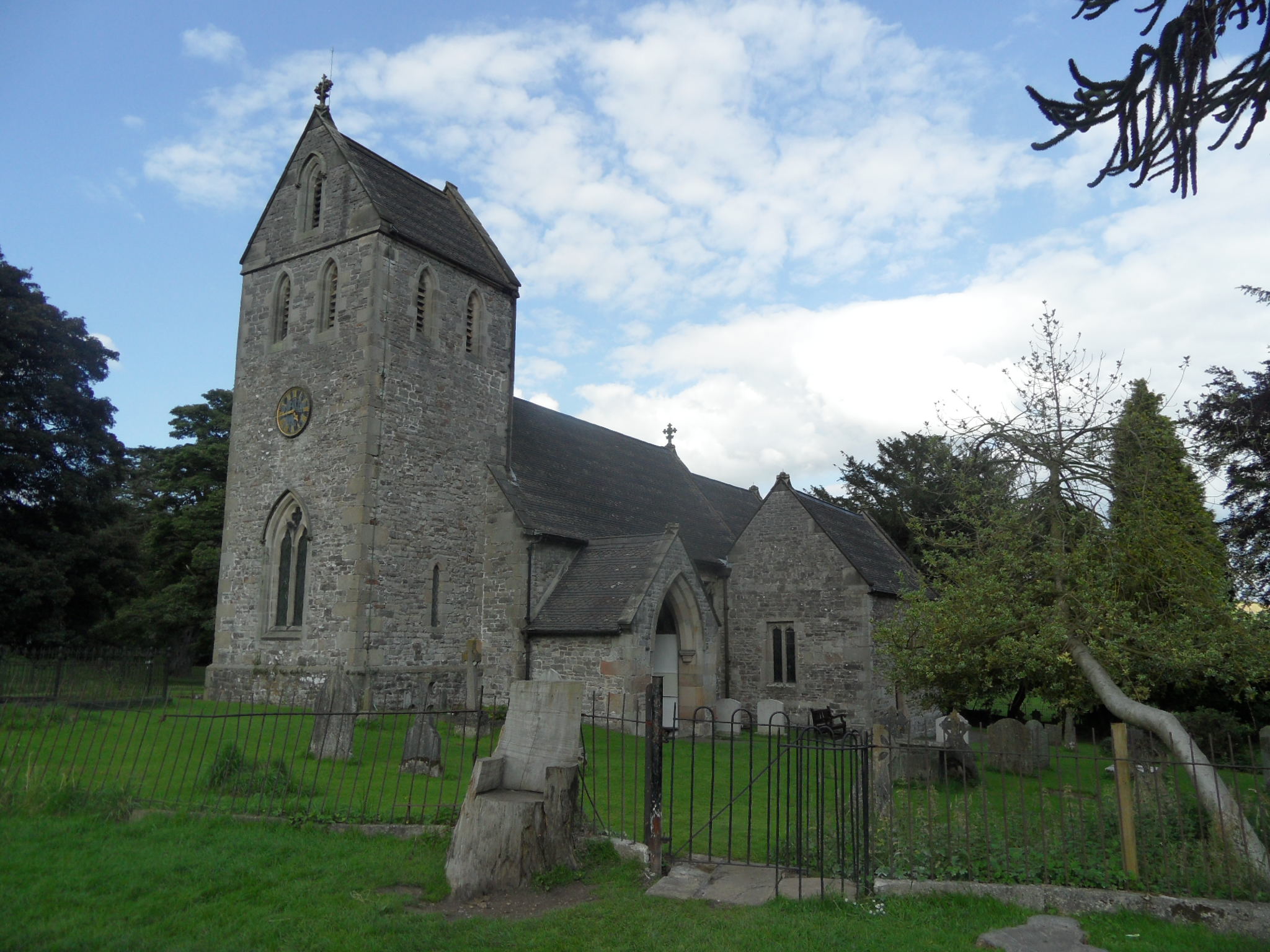
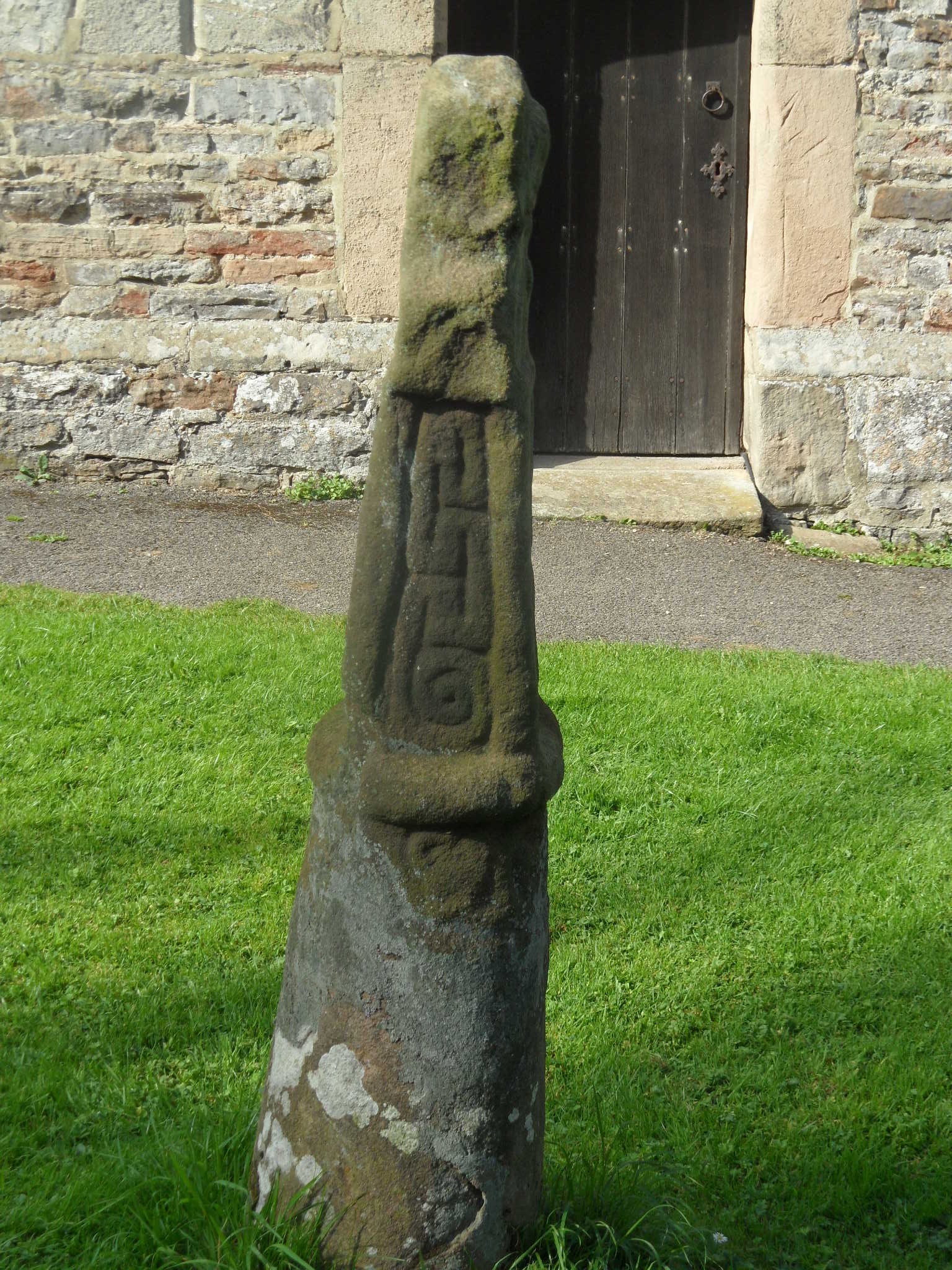
Looking for ancient crosses in Lichfield, has so far lead only to hints of their existence – a one line reference in an old book here, a placename there. Nothing concrete (or should I say stone?).  So imagine how happy I was when I visited Ilam Park yesterday and found that were two thought to date back to the 10thc standing in the churchyard with a third shaft incorporated into the church wall…..

Church of the Holy Cross, Ilam, Staffs


…..and imagine how much I kicked myself when I got home and found out there was yet another stone, known as ‘The Battle Stone’, located in the grounds of Ilam Hall that I had missed!

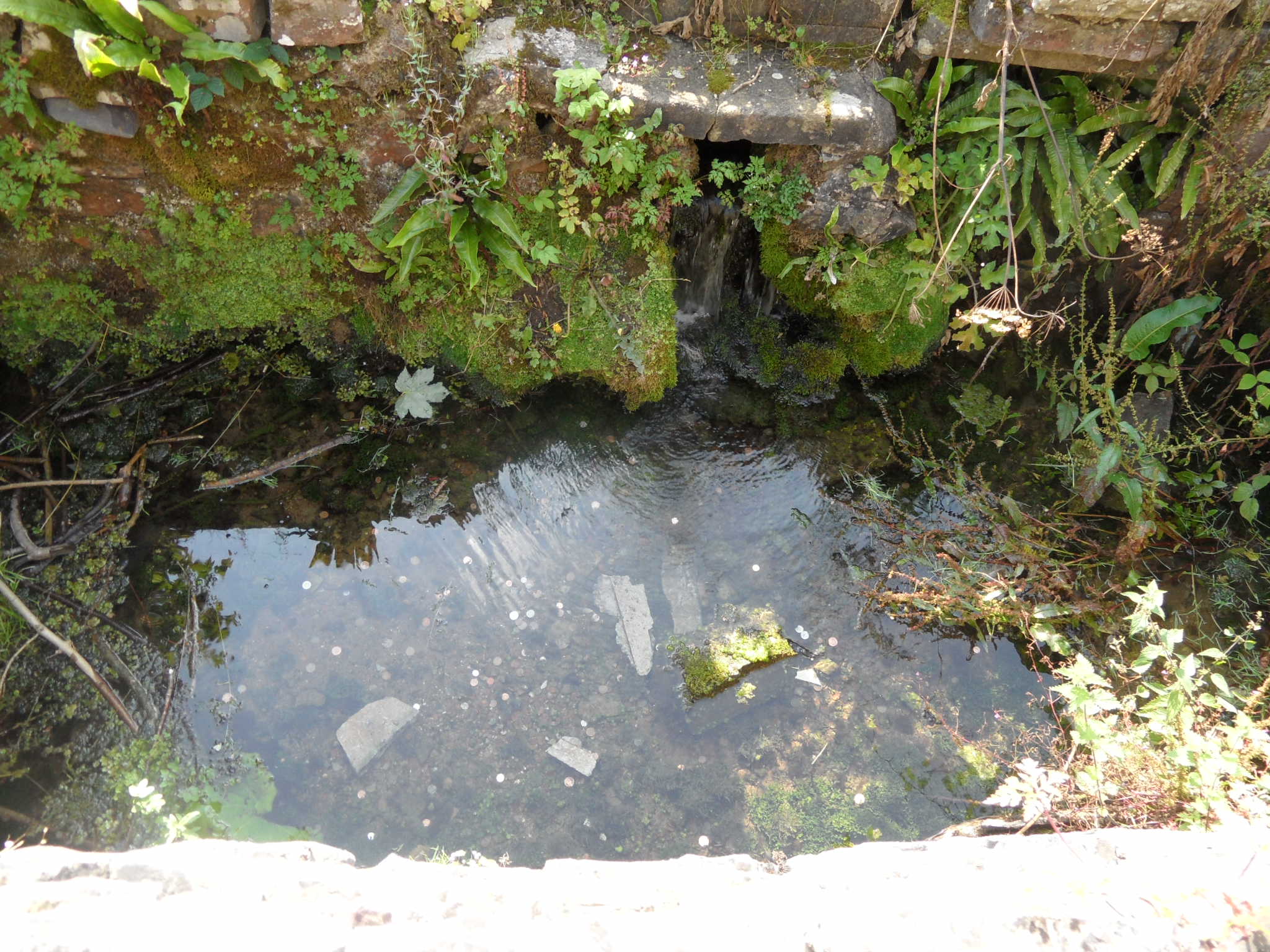
However, as a consolation, I learnt at home that this spring near to the church is thought by some to be St Bertram’s Well (although others place this on a hillside near to the village).

St Bertram’s Well?

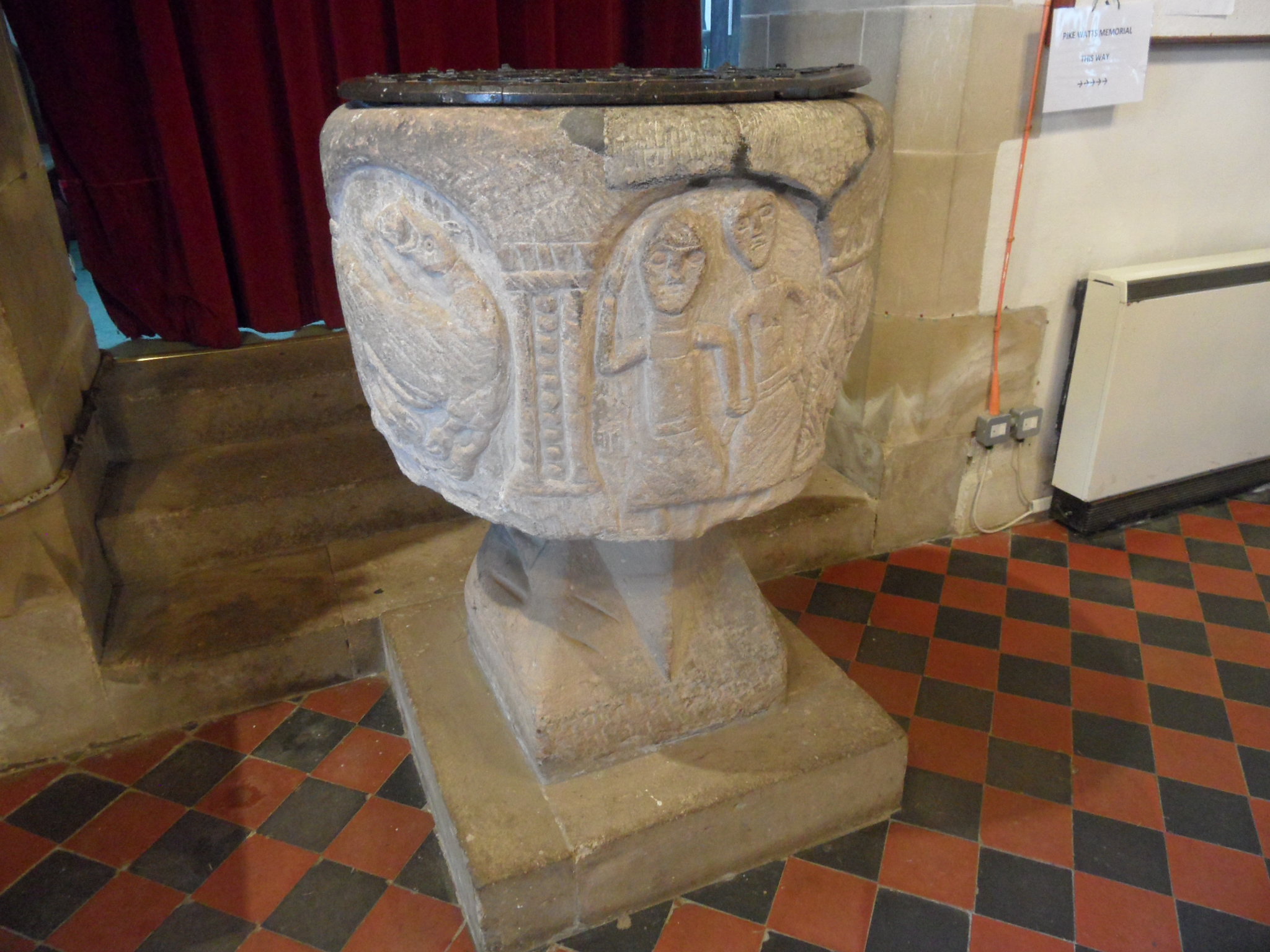
The Shrine of St Bertram (also known as St Bertelin or maybe Beorhthelm of Stafford) is inside the church. As you might expect, there is more than one account of St Bertram’s life. The most well known version seems to be the tragic story that he was a Mercian Prince whose wife gave birth to a child in a forest. The wife and baby were killed by wolves and St Bertram became a hermit near to Ilam, It’s thought this story might be represented on the churches font, which dates back to around the 12thc.

You can decide for yourself, if you look at this website on Romanesque sculpture, which gives a detailed description of the font, together with photos.

However, Stafford Borough Council have this version on their website, which doesn’t feature the tragic part of the legend.

The legend of St Bertelin derives from the 14th century account of him by Capgrave in his ‘Nova Legenda Anglie’, retold by Dr Robert Plot in his ‘Natural History of Staffordshire’ (1686). He is reputed to have been the son of the Mercian prince, the friend and disciple of St Guthlac who, after St Guthlac’s death c 700, continued his holy vocation on the islet of Betheney now Stafford. Here, he remained until forced to retreat from the ill-will of jealous detractors, when he repaired to Ilam, in Dovedale, Derbyshire where ultimately he died. His burial place in Ilam church was once a place of pilgrimage.

His burial place still seems to be a place where people come, not just seeking out history like me, but for spiritual reasons. As you can see from the photo of the shrine, prayers (I didn’t read them) and candles are still left there.

I have found a copy of the ‘Nova Legenda Anglie’, but as my Latin only stretched to ‘Caecilius est pater’, I need a bit of time alone with google translate.  So, I’ll leave the legend of St Bertram/Bertelin there for now other than to say that it’s believed that the remains of St Bertelin’s chapel in Stafford were excavated in the 1950s and they discovered part of a 1,000 year old cross. And this one is made of wood!

Ilam, Stafford and I’ve seen references to existing crosses in Wolverhampton, Leek, Chebsey (between Eccleshall & Stafford), amongst other places. With the discovery of the ‘Battlestone’ in Ilam (the one that I missed!) in the foundations of a cottage, during a restoration in 1840, I’m still clinging to the hope that at least a fragment of one survives somewhere in Lichfield!

Sources:

http://www.heritagegateway.org.uk/gateway/

http://list.english-heritage.org.uk/ (Entry numbers 1038113, 1012654, 1012653,

Corpus of Romanesque Sculpture in Britain & Island http://www.crsbi.ac.uk/index.html

http://www.geograph.org.uk/photo/705619

http://www.megalithic.co.uk/ (St Bertram’s Well http://www.megalithic.co.uk/article.php?sid=14731)

http://www.staffordbc.gov.uk/in-touch-with-the-past

The Grave of Poor Bessy Banks

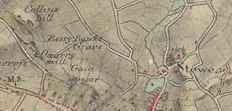
I spotted a place labelled Bessy Banks’ Grave on the 1815 Ordnance Survey drawing of Lichfield by Robert Dawson 1815.

Immediately, I thought of the story of Kitty Jay on Dartmoor. A little investigation has revealed a few details. In ‘History of the City and Cathedral of Lichfield’ by John Jackson (1805), I found the following;

“…of Betsy Banks grave* once the famous rendezvous of lovers….now no more is remembered than that poor Betsy is said to have fallen victim to hapless love.

*there is a spot in a field in Lichfield still distinguished by that name”

Anna Seward wrote to her friend Honora Sneyd about the place in a letter dated May 1772, that she described as ‘Written in a summer evening from the grave of a suicide’. I’ve only included the first part as its quite long.

“It suits the temper of my soul to pour
Fond, fruitless plaints beneath the lonely bower,
Here, in this silent glade, that childhood fears,
Where the love-desperate maid, of vanish’d years,
Slung her dire cord between the sister trees,
That slowly bend their branches to the breeze,
And shade the bank that screens her mouldering form,
From the swart Dog-Star, and the wintry storm….”

Another reference can be found in one of David Garrick’s letters.  He wrote that “the name Dimble is given to a sunken road leading north from Lichfield past a spot, supposedly haunted called Betty Honks Grave. Two sister trees form an elegant arch over a stream”.

By 1791, it was found that the sister trees had been recently cut down.

So who was Bessy Banks, did she really exist? If so, is her grave still there, now unmarked and unremembered?

Edit 5/9/2011

I recently had the St Chad’s tithe map (1849) out in Lichfield Record Office, looking for something else. A whole plot of land is listed as ‘Bessy Banks’. Born a Lichfeldian has kindly worked out where the stream in this area would have been. Taking into account this and the tithe map it seems that ‘Bessy Banks’ was somewhere in the region between Dimbles Lane and Greencroft.
John Jackson’s description suggects that in 1805 the story is already an old one. It does seem a fairly well-known tale, to have actual places on maps marked after it, as well as being mentioned by Garrick (albeit with the name Betty Honks!) & Seward.  Was it just a made-up story, or did it arise from actual events? I wonder when (and why?) the people of Lichfield stopped telling the story? Or could there even still be people who could tell us the tragedy of Lichfield’s ‘love-desperate maid?’

Edit: 15/4/2012

A notice in the Lichfield Mercury 20th February 1914 lists a lot for sale as garden land, known as Bessy Banks, adjoining a plot of arable land let by T Chapman and located next to Gaiafields House and Gaia Fields Cottage.