Angel Delight

Inspired by Brownhills Bob’s love of the place and the inclusion of Holy Angels in Simon Jenkins’ list of England’s Thousand Best Churches, I finally visited Hoar Cross last weekend.
SAM_1271

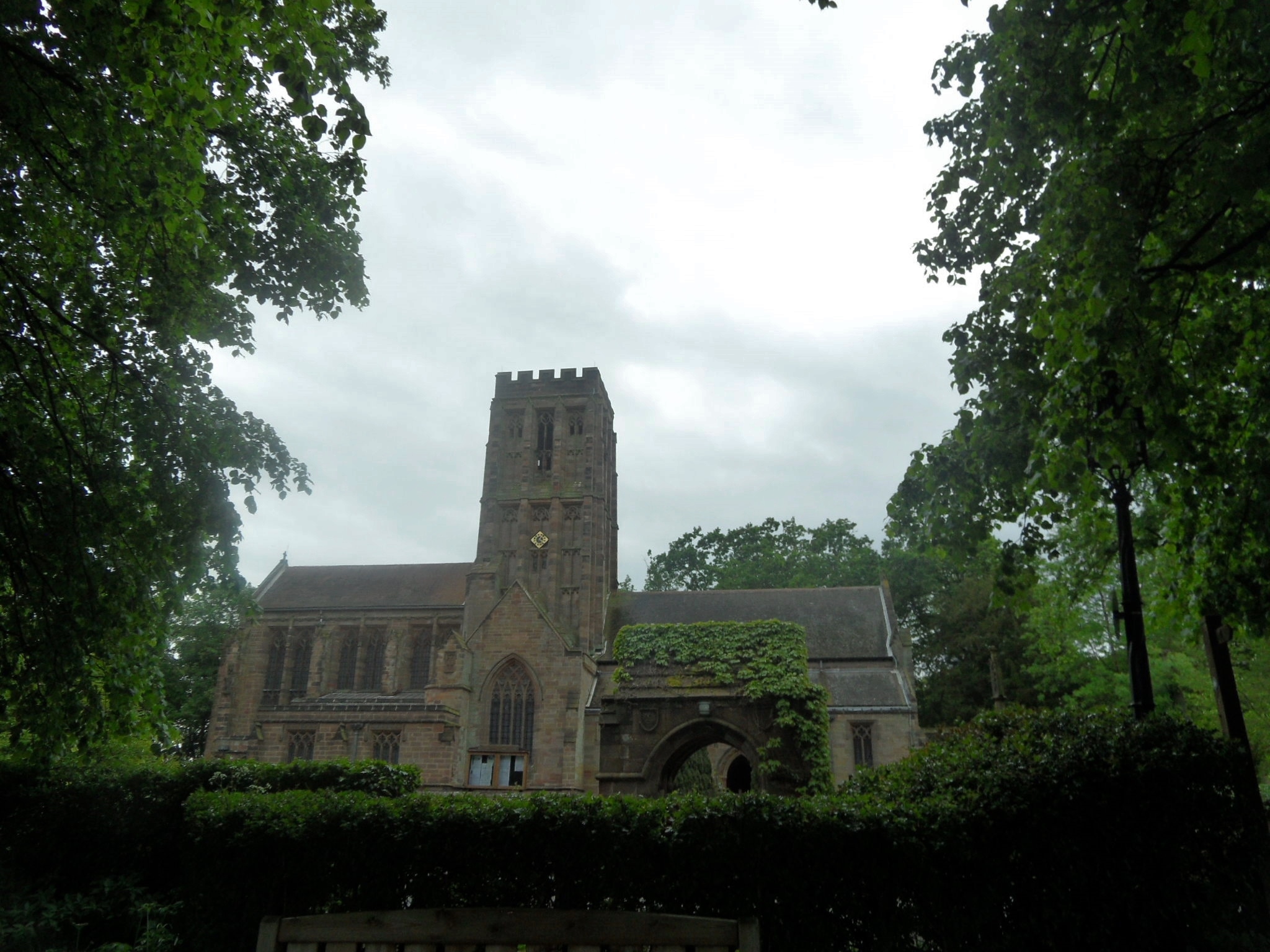
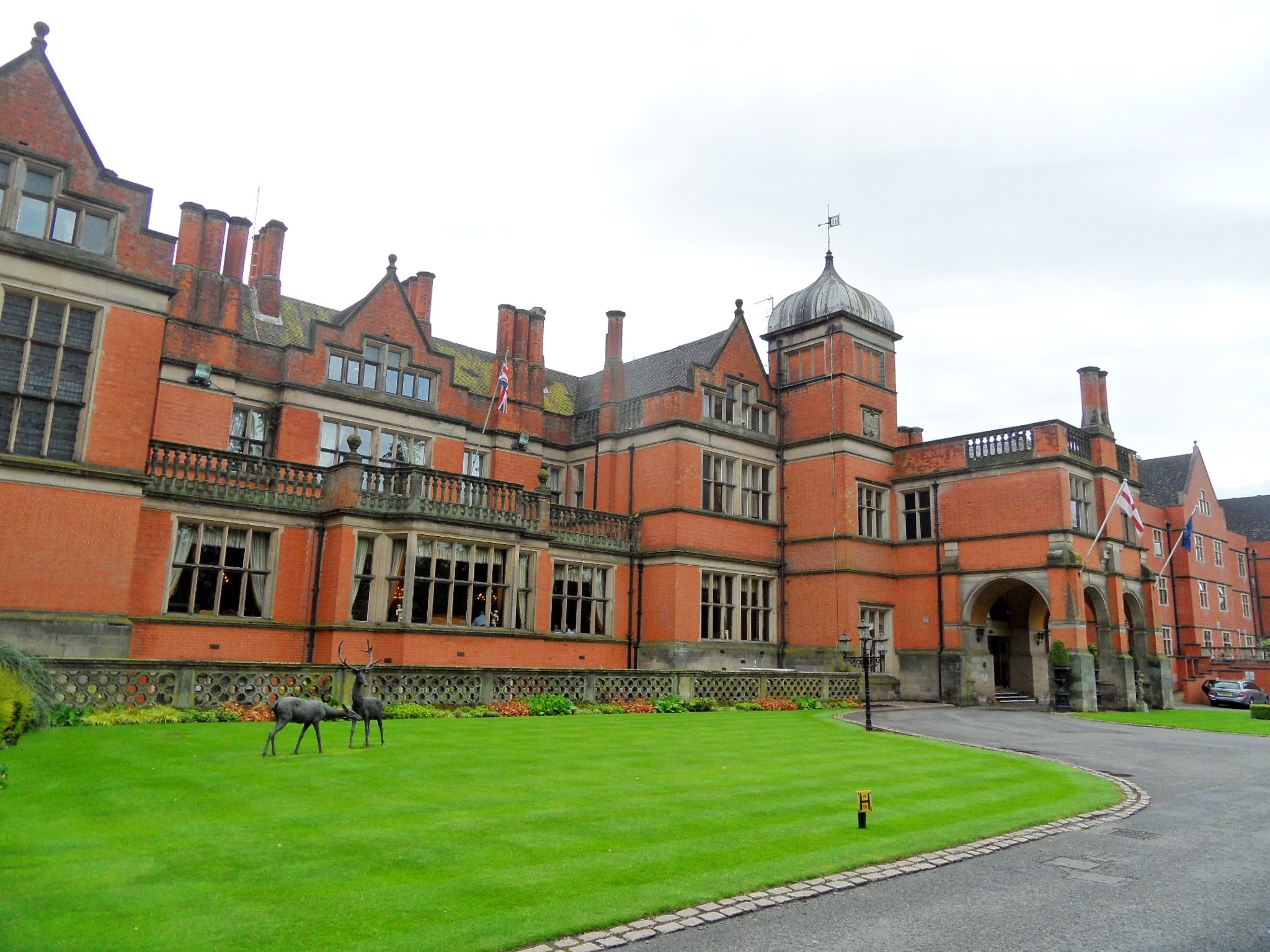
As Nikolaus Pevsner says in his book on Staffordshire buildings,‘The story of Hoar Cross is well known enough’, but it bears repeating here. Work on the red brick, Jacobean style hall, now used as a spa resort, began in 1862, shortly before Hugo Meynell Ingram married Emily Charlotte Wood. The hall was completed in 1871, but in that same year Hugo was killed in a hunting accident. The widowed Emily employed George Frederick Bodley and his partner Thomas Garner to build a church in his memory, in the grounds of the home they had shared. Emily died in 1904, her remains interred near to those of her husband, whose body had been brought here from the parish church at Yoxall, after the dedication of Holy Angels in 1876. It’s said that Emily was never completely satisfied with her creation, but from what I’ve read it’s considered a masterpiece by all those who know their stuff architecturally. For what it’s worth, I think it’s beautiful too.
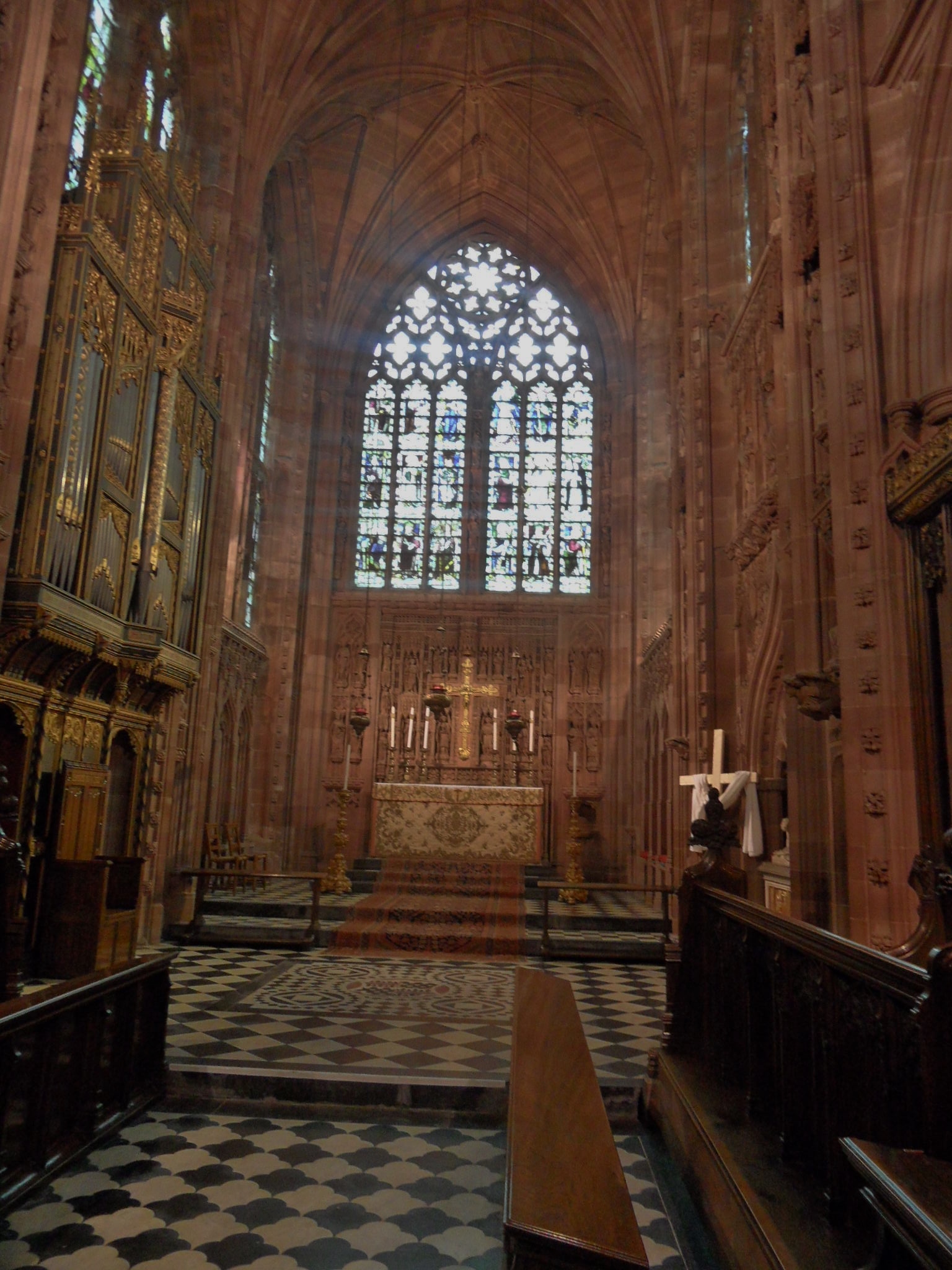
SAM_1245

If anyone wants to give me a lesson in how to take photos of windows & getting the light right I will be eternally grateful.
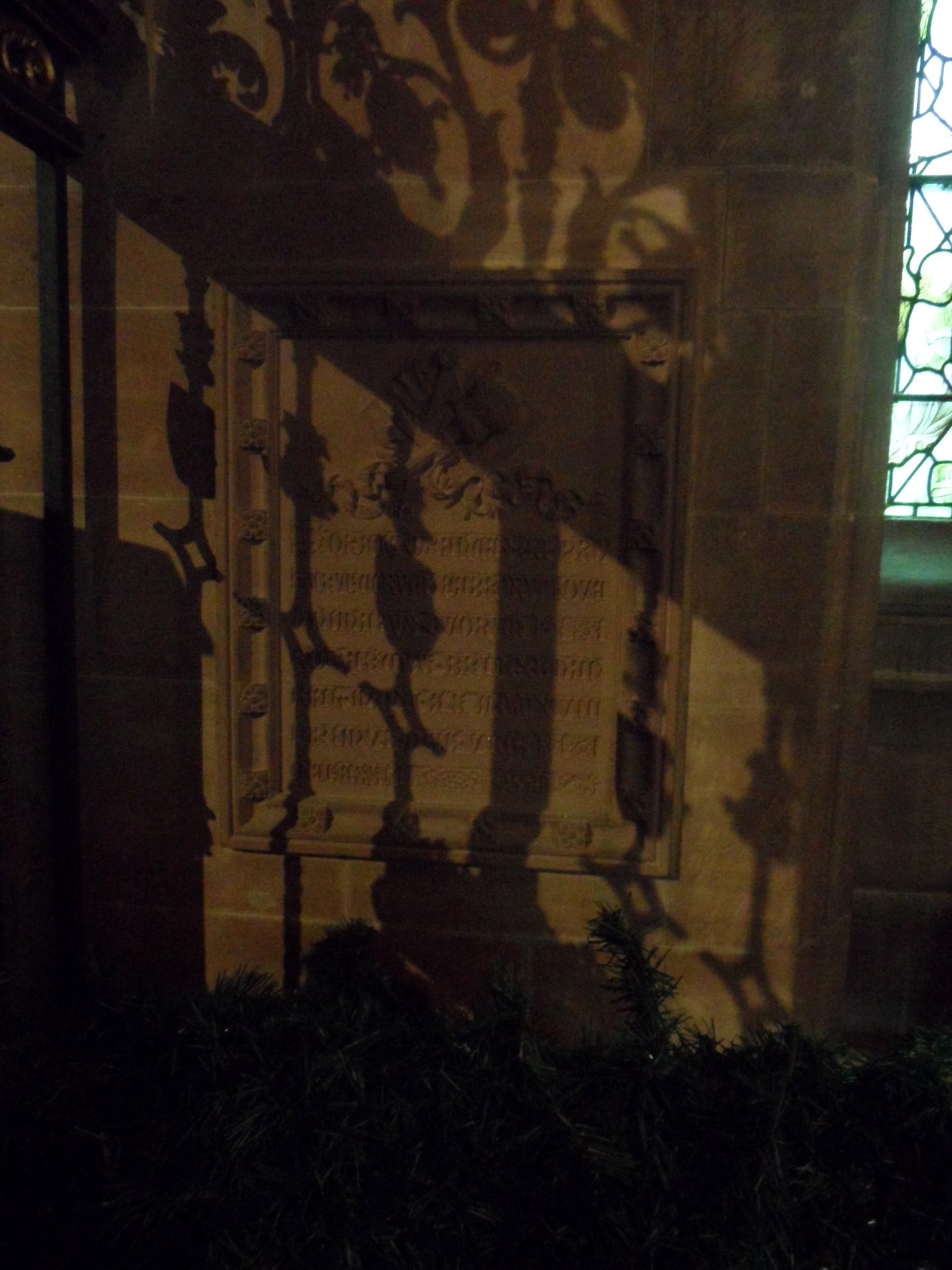
The contribution of Lichfield sculptor and stone mason Robert Bridgemans is acknowledge on thois tablet, decorated with a mallet, chisel and other tools.

You wouldn’t be able to tell, because the photo is so bad, but this tablet acknowledges the contribution of Lichfield sculptor and stone mason Robert Bridgeman and is decorated with a mallet, chisel and other tools.

However, as well as this story of love, loss and incredible architecture, I’m also interested in the earlier chapters in Hoar Cross’s history.  According to Horovitz’s Staffordshire place name study, the name of the village was first recorded in 1230 as ‘Horcros’ and is thought to refer to a grey cross or boundary cross. Whether this was a marker for the point where the four wards of Needwood Forest once met, or whether it indicated the extent of land owned by Burton Abbey in these parts, or whether something else entirely is a matter for ongoing speculation. Whatever its purpose, the cross that gave the place its name is long gone and now it is only the name that remains.
SAM_1172

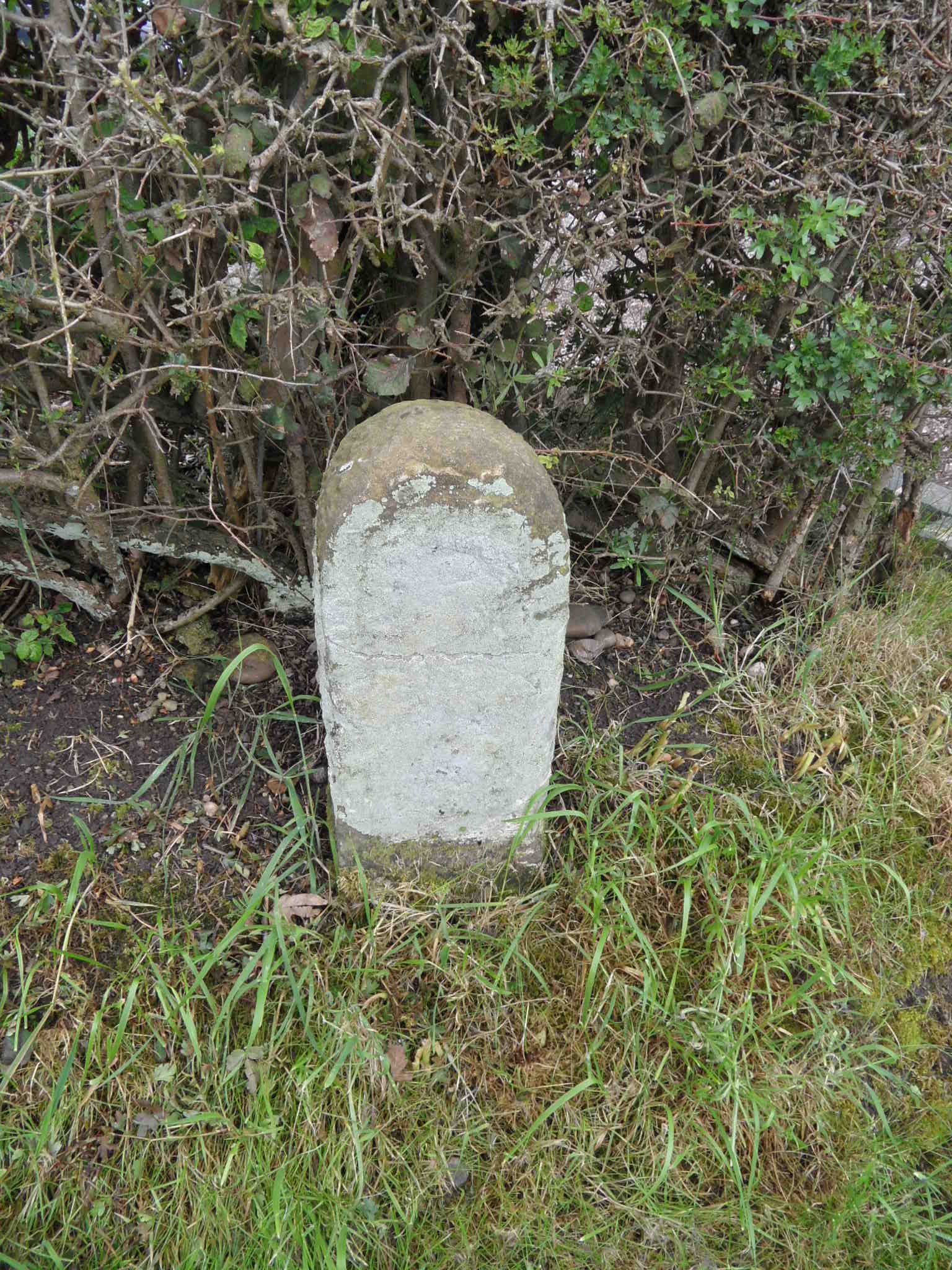
There is another boundary marker on one of the grass verges in the village. It appears on a 1923 Ordnance Survey map as a ‘boundary stone’ and seems to mark a parish boundary – Hoar Cross sits between Yoxall and Newborough.
SAM_1191

I’d also like to know more about the original Hoar Cross Hall – the medieval moated house, known as the ‘Manor of the Cross’. According to Stebbing Shaw’s History of Staffordshire, the hall was destroyed in the 1700s and a farmhouse built on the site. According to the English Heritage Pastscape record, there is little in the form of maps or archaeology to back up this anecedotal evidence but the fact that there is an 18thc farmhouse known as Hoar Cross Old Hall suggests that Shaw was probably correct.
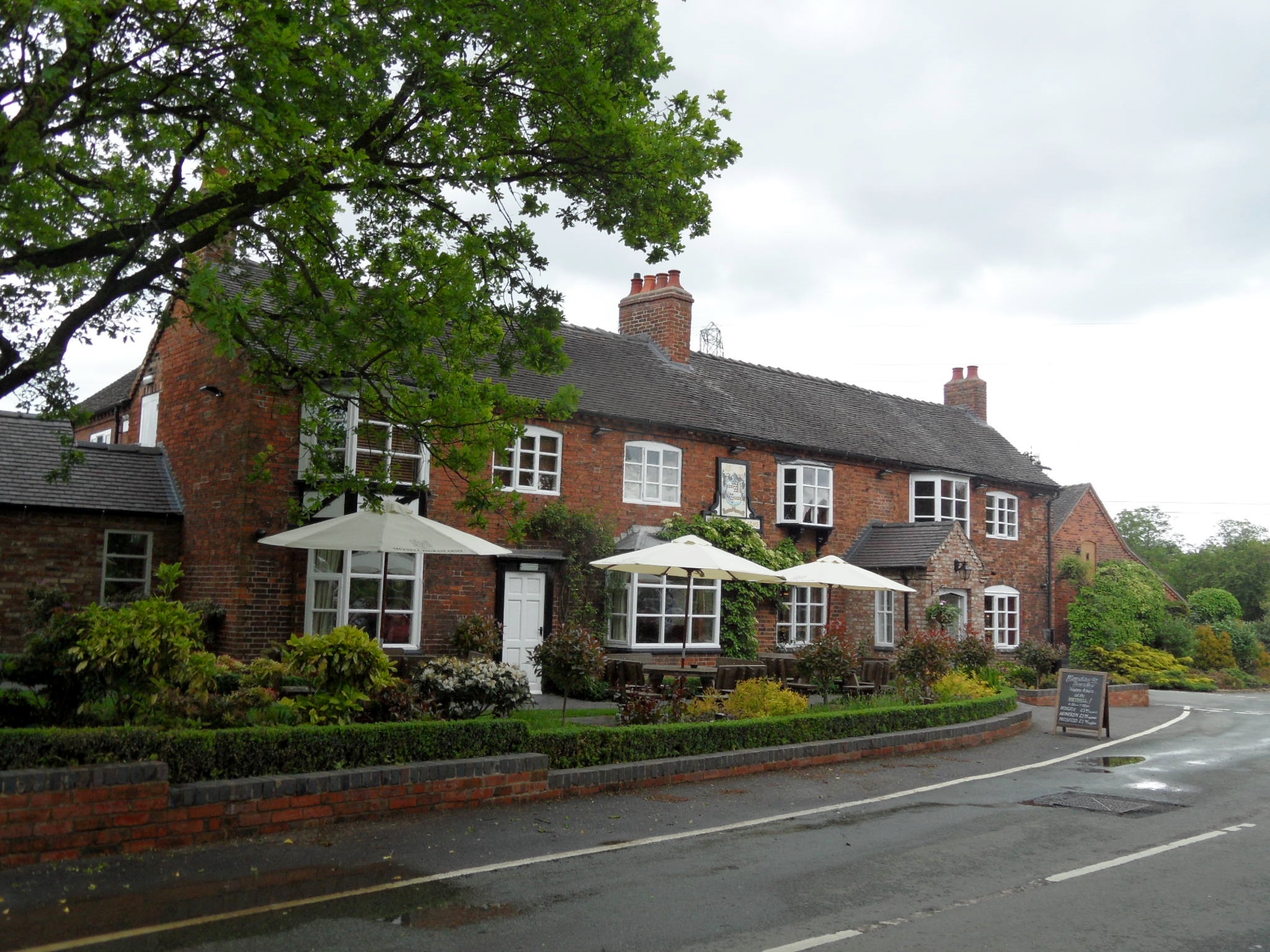
Meynell Ingram Arms

Despite not setting foot in the spa (not really my cup of herbal tea), my trip to Hoar Cross left my mind and spirit feeling indulged. Before leaving, I stopped off to indulge my body too, with a drink at the Meynell Ingrams Arms. Dating back to the seventeenth century, this former farm house became a coaching inn known as the Shoulder of Mutton. The name was changed in the 1860s, around the time of Emily and Hugo’s wedding, and the rebuilding of the Hall. Sadly, there was no sign of Basil, the horse who attracted media attention several years ago for actually walking into the bar and enjoying a pint of pedigree, but after a couple of hours at Hoar Cross, I had anything but a long face as I headed back to Lichfield.
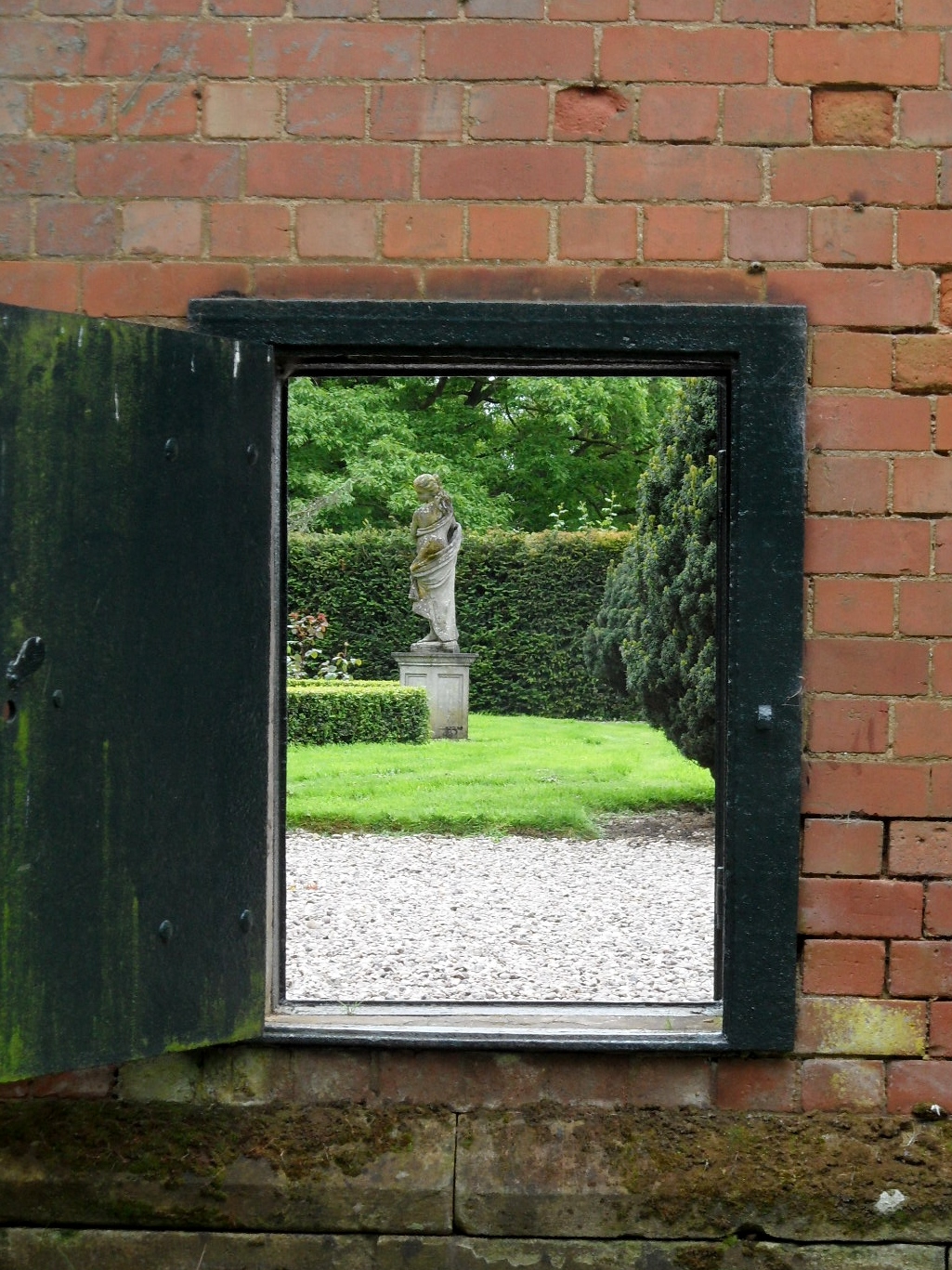
SAM_1188

Sources:

Click to access Hoar%20Cross.pdf

Midlandspubs.co.uk
‘A Survey and Analysis of the Place-Names of Staffordshire’ by David Horovitz, LL. B https://lichfieldlore.co.uk/wp-content/uploads/2014/05/397633_vol2.pdf
Lichfield Mercury Archive
http://www.patrickcomerford.com/2014/04/art-for-lent-36-two-portraits-of-emily.html
Staffordshire (A Shell Guide) by Henry Thorold
The Buildings of England – Staffordshire by Nikolaus Pevsner
Encrypted

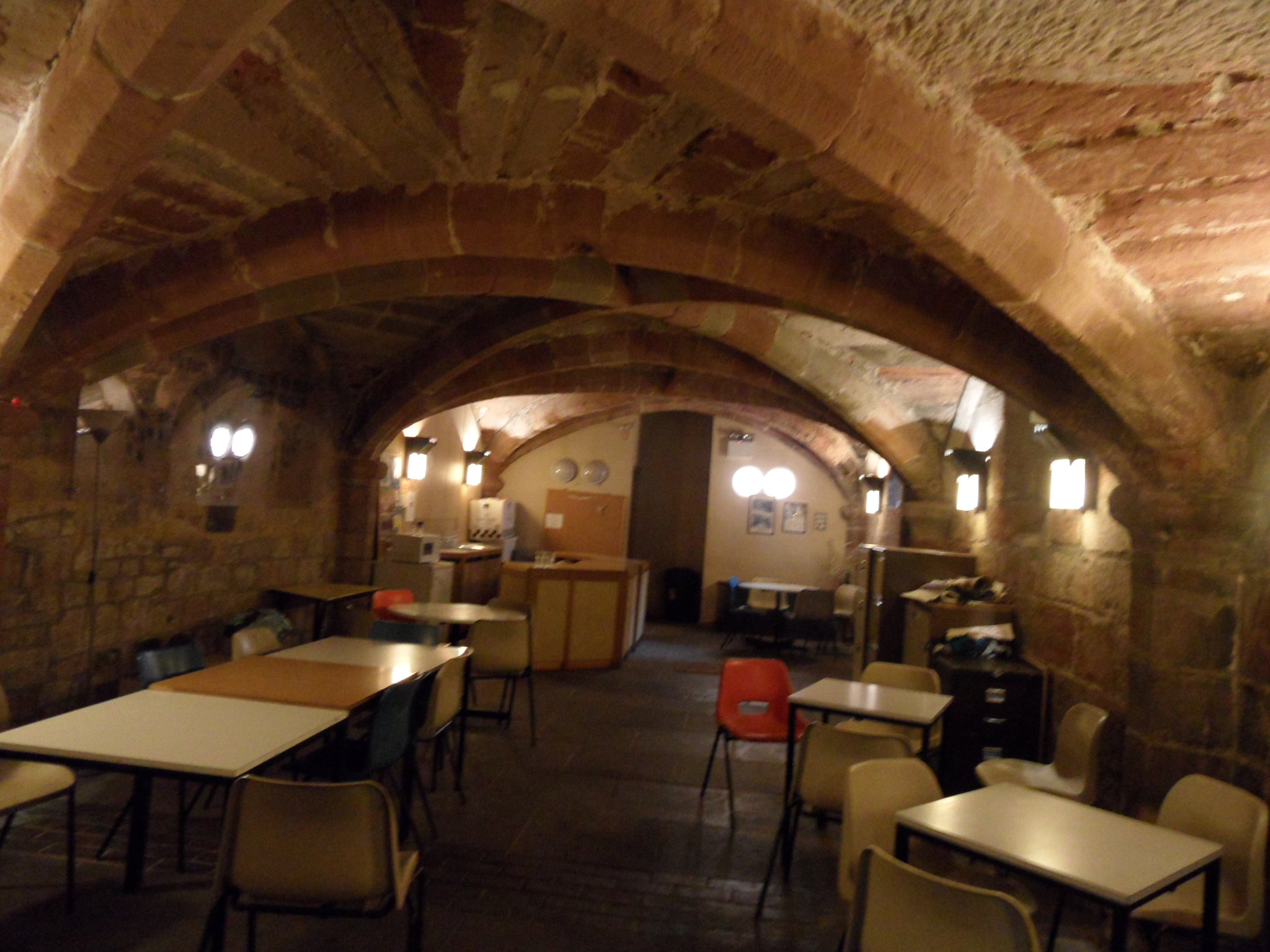
I first heard of the crypt beneath St Editha’s in Tamworth town centre a couple of years back when Mark from Tamworth Time Hikes visited and wrote about the place (see here). A recent article in the Tamworth Herald reminded me of its existence and so with an hour or so to kill in the town before an appointment, I went to take a look for myself.

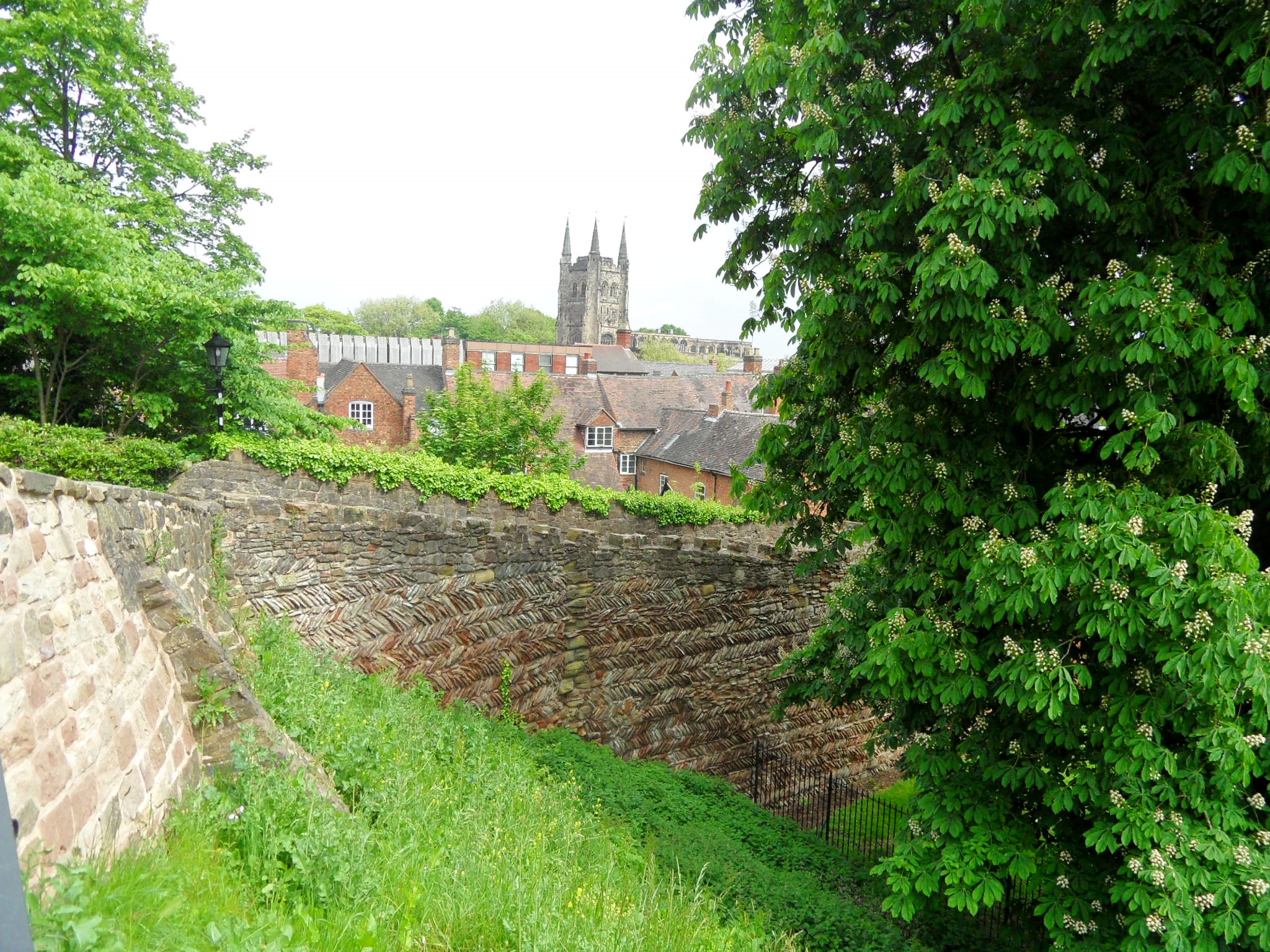
St Editha's from Tamworth Castle

St Editha’s from Tamworth Castle

Exisiting stonework shows that the church dates back to at least 1080 but it’s thought the Normans may have built on the site of an existing Saxon church. It’s a wonderful mixture of architectural styles, with some beautiful stained glass and monuments to the great and good (and probably not so good) of Tamworth, plus a rare double spiral staircase in the tower. However, with only limited time, all of these wonders would have to wait for another day as I wanted to focus on the crypt.

SAM_1148

In the 1860s, the entrance was apparently down through a trap door and along a narrow passage. These days the crypt is reached via a flight of steps, making it far more accessible, but perhaps a little less atmospheric, especially as what looks like a Mothercare stairgate has been installed to prevent people tumbling to their doom.  Rightly or wrongly, I’m not the sort of woman who goes around opening stairgates without first seeking permission and so I went over to the bookshop to ask.  Here, I got a little distracted from the task in hand and ended up buying a book on ‘The Castles and Moated Mansions of Staffordshire’ (within which I’m sure lie the beginnings of many future wanderings) but soon got back on track and asked about going down into the crypt. Luckily for me, the church guide was sat in a nearby pew reading a newspaper and he offered to take me down there and tell me all about its history.

SAM_1137

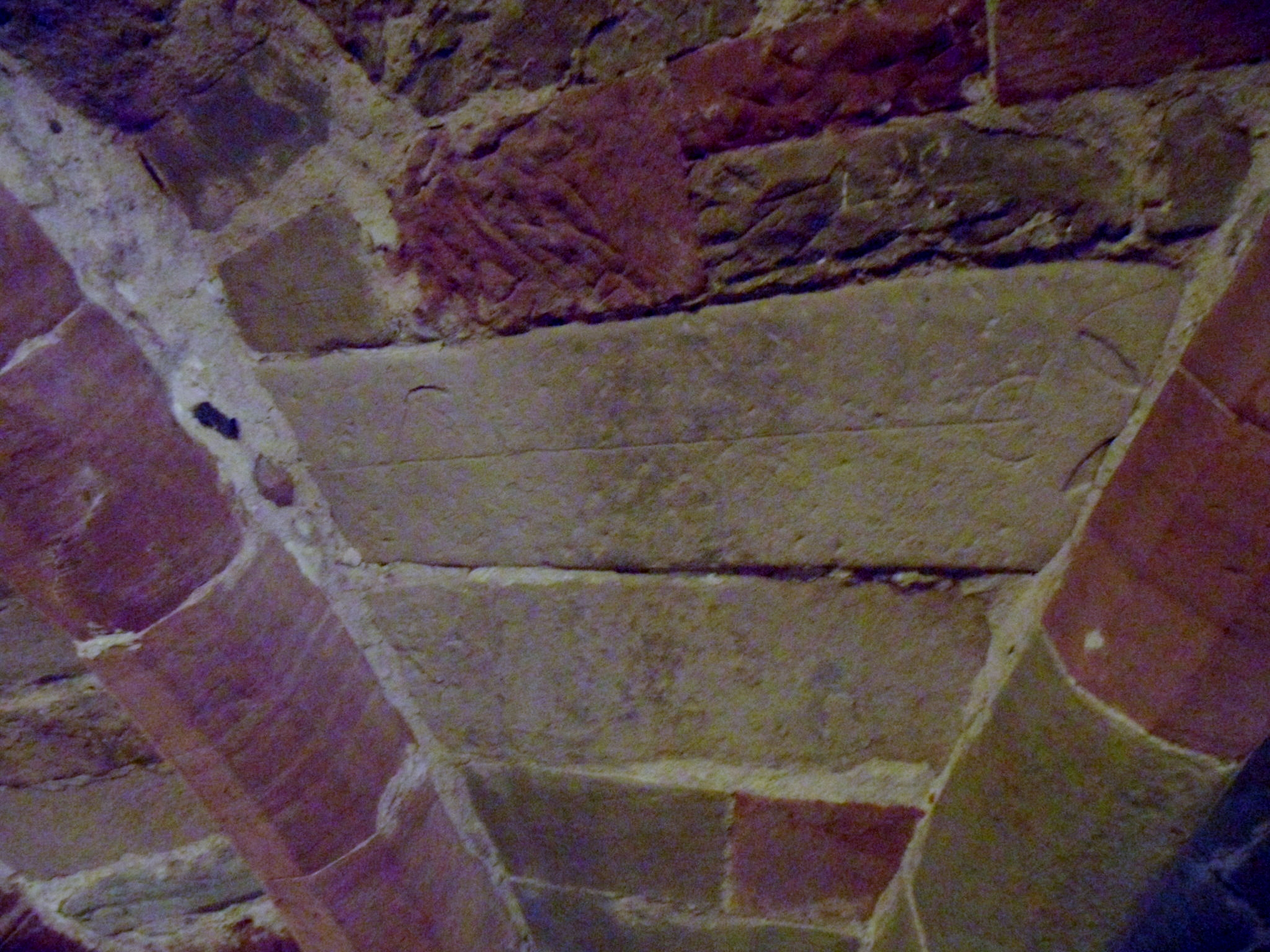
One theory is that seven hundred years ago the crypt was part of a stand alone chapel, that may even have been Saxon in origin. At some point in the fourteenth century it was incorporated into the main church. During the reign of Elizabeth I, it started to be used as a charnel house to accommodate the old bones that were disturbed when new graves were being dug in the churchyard. This remained its purpose until 1869, when the crypt was needed to house a boiler and the bones were returned to the churchyard, reburied in the north east corner. I nearly fell off my plastic chair when we were told that there was a plague pit beneath our feet and coffin lids in the roof above our heads, including one thought to have belonged to a crusader and on which faint carvings can still be seen.

You can just about make out the carvings on what is said to be the stone coffin lid of a crusader

You can just about make out the carvings on what is said to be the stone coffin lid of a crusader

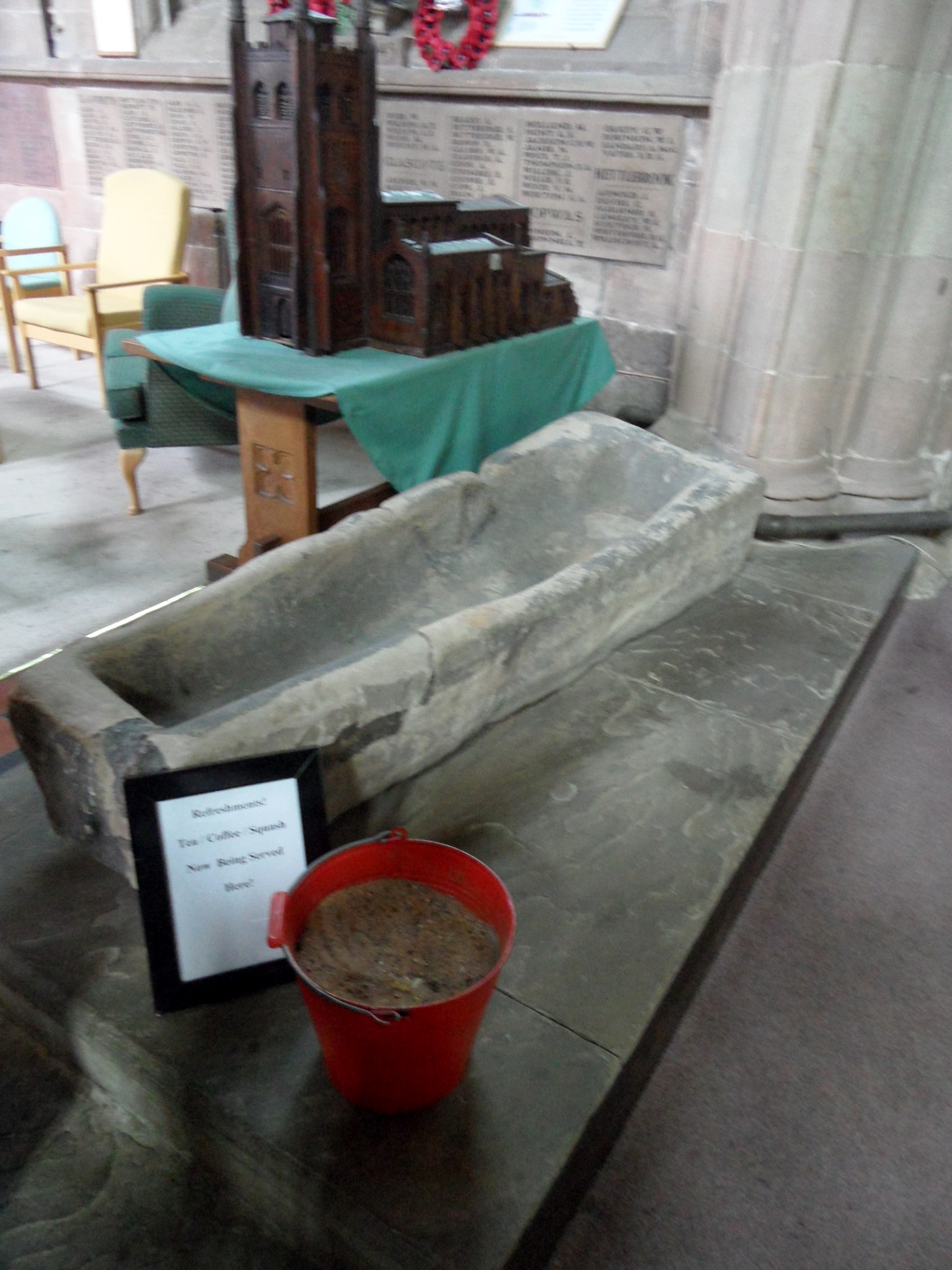
I’m assuming the coffins themselves were destroyed during the Victorian renovations, although one does survive in the main body of the church, near the entrance to the Comberford chapel.

One of the stone coffins can now be found outside the Comberford chapel

One of the stone coffins can now be found outside the Comberford chapel

When Mark wrote about the crypt he included this brilliant drawing of it from a Victorian account of Tamworth by Charles Ferrers Raymund Palmer.

According to Ferrers, when he entered the crypt, the bones were stacked up in very regular order and occupied the whole of the east end, where local folklore had it that a passageway ran from here to the Castle. In trying to find this passageway, Ferrers says he made a path through the bones by ‘carefully piling them aside’ but found ‘nothing there, except the remains of the ancient altar; the stone slab of which is gone’. He was unable to examine the floor at the base of the altar as there was nowhere to store the bones, which were ‘so rotten, that they crumbled to pieces beneath our feet’ as ‘in spite of all our efforts, they returned to our feet, and their dull clatter seemed a reproach to us, for disturbing their long and quiet repose in the sacred place’.

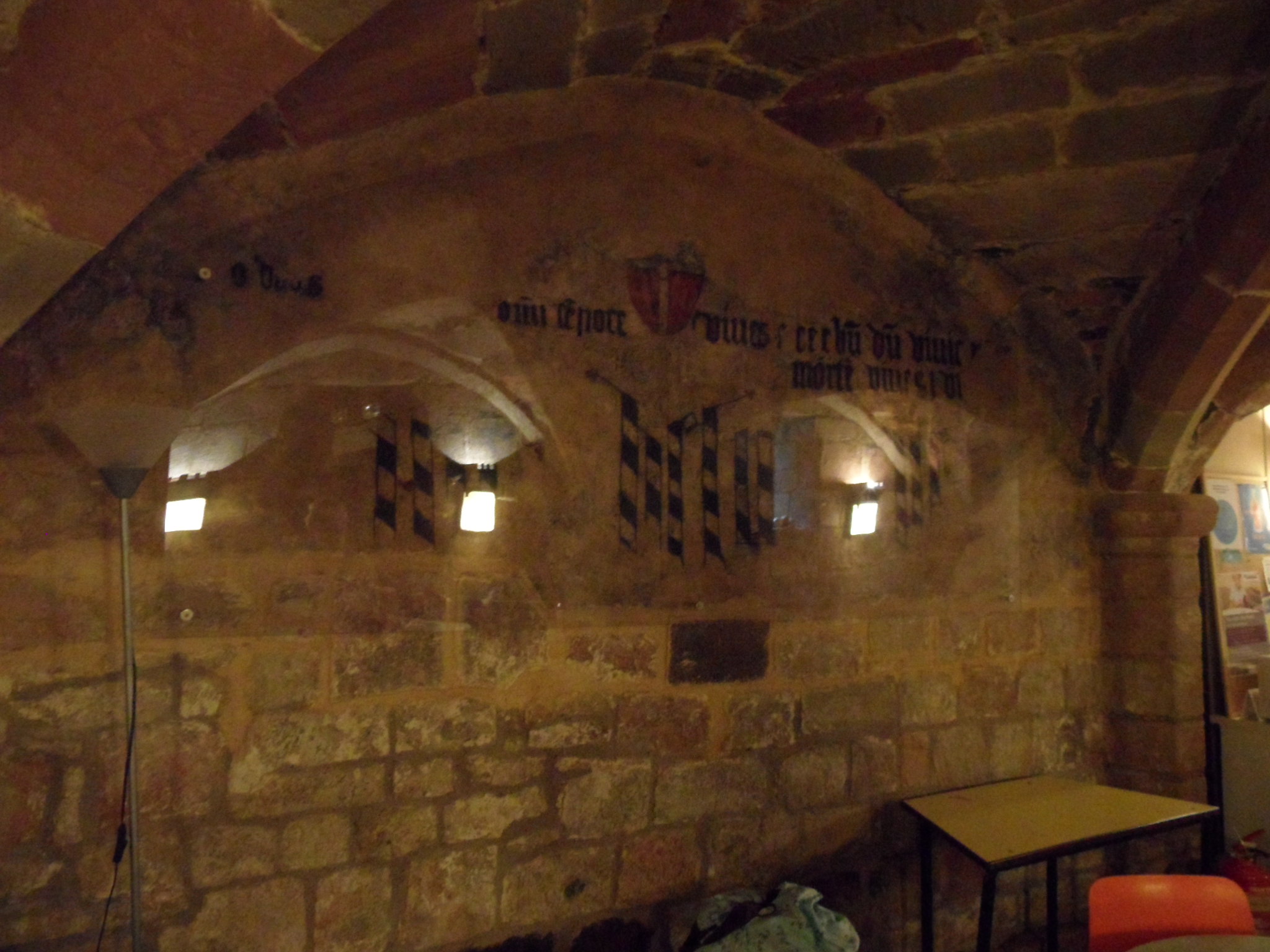
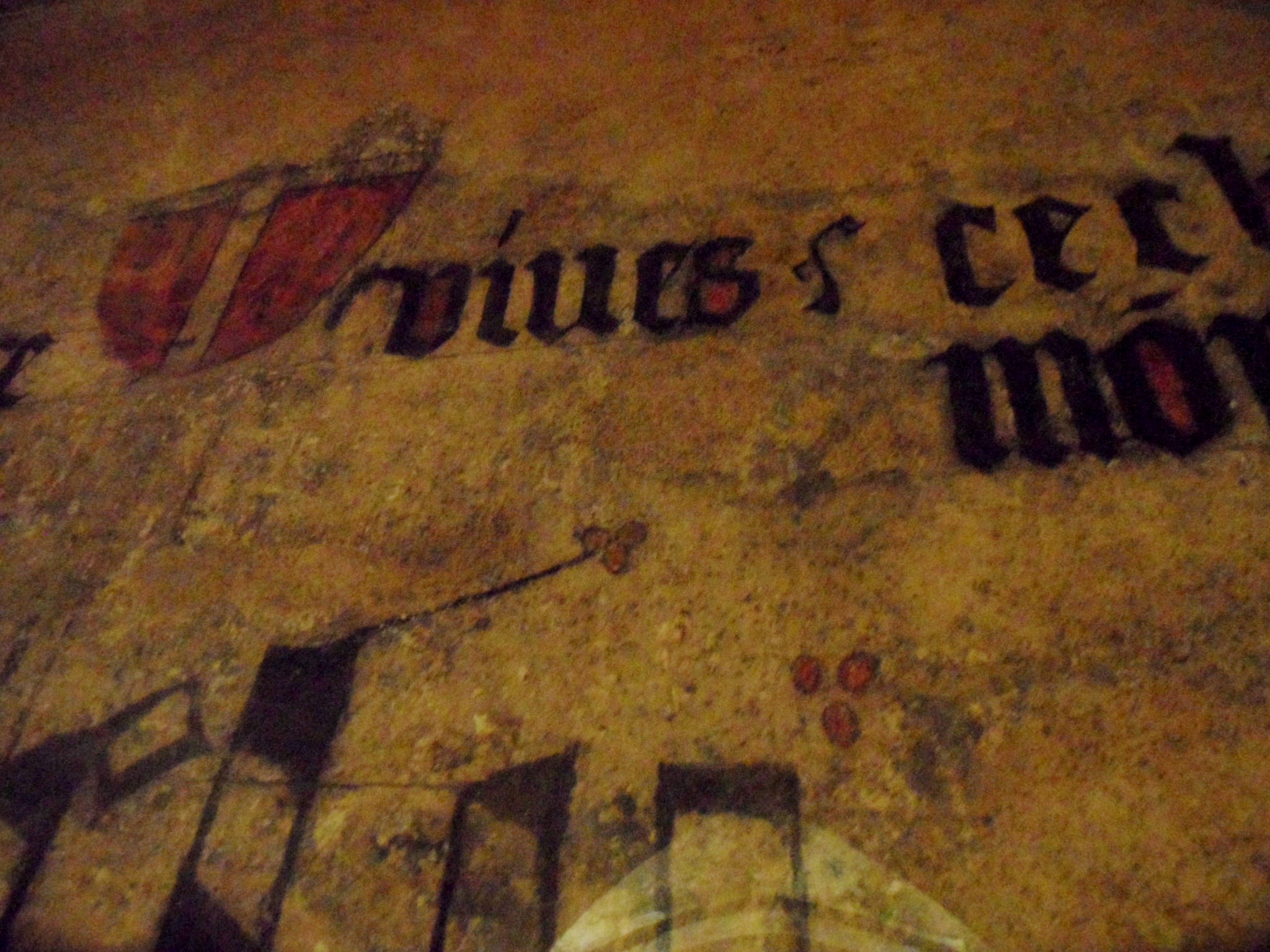
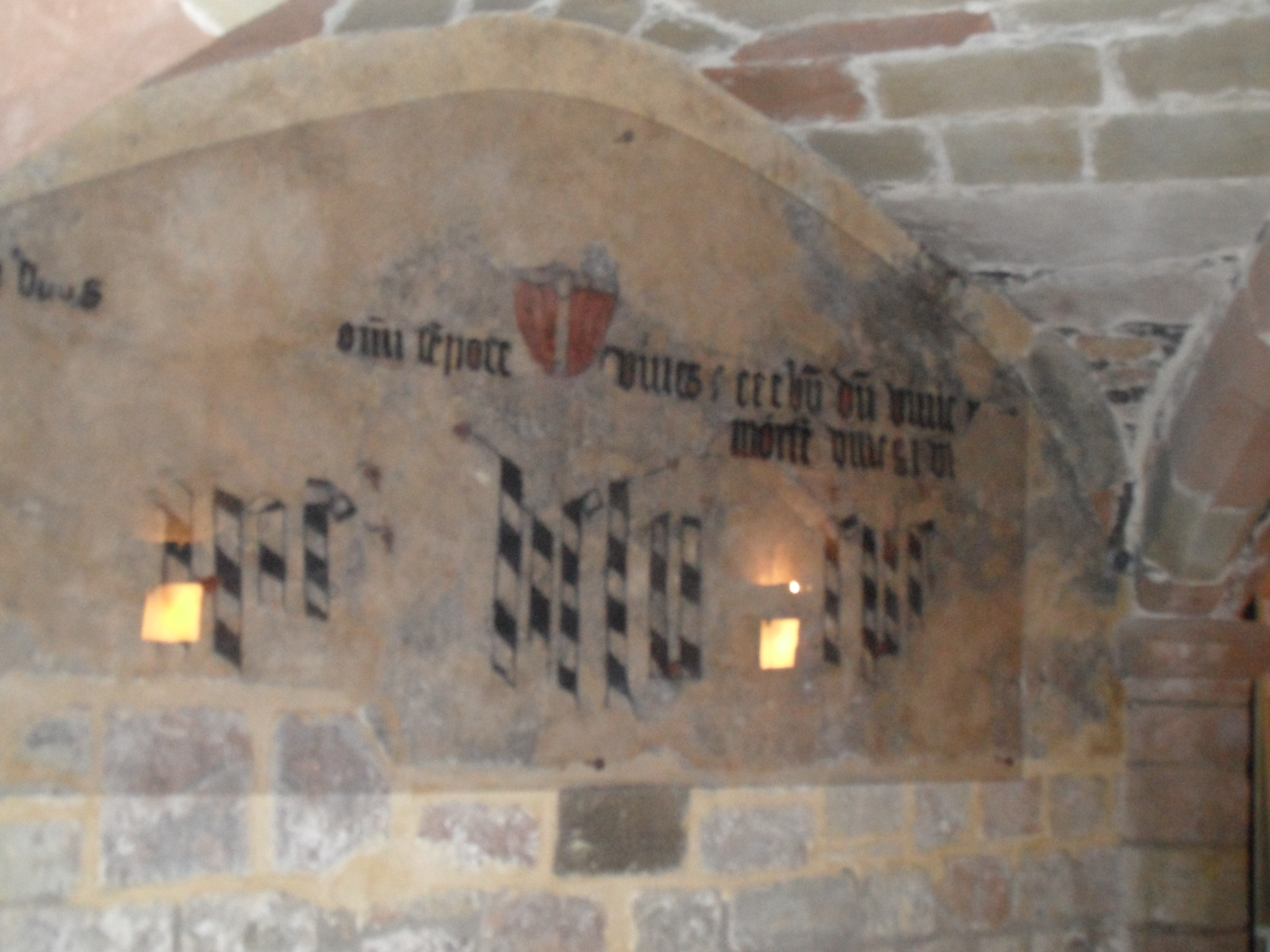
Ferrers is clearly made out of sterner stuff than me. Stood in near darkness with the bones of ancient Tamworthians rolling around his feet he even stayed down the crypt long enough to examine an ancient Latin inscription on the wall. Still visible today, the verse is thought to date back to the fourteenth century and is now protected by glass. Apparently it translates as:

O Lord of wealth and power
Thou shalt not live for evermore
Do well whilst life thou hast
If thou should live when death is past

SAM_1121

Crypt Tamworth

SAM_1141

All the guide wanted in return for his time and knowledge, was a comment in the visitor book. So, if you ever go, and I really hope you do because it’s such an incredible place, don’t forget to sign it on the way out (you may notice a comment from a very enthusiastic and delighted Kate Gomez of Lichfield…)

Sources:

The history of the town and castle of Tamworth by Charles Ferrers Raymund Palmer

A Short History and Tour of St Editha’s Church, Tamworth by Stan T Parry

http://tamworthtimehikes.wordpress.com/2010/12/24/the-crypt/


Trent and Mersey Paradise

A beautiful ruin dating back in part to the twelfth century, with the base of a medieval weeping cross and the shrouded effigies of two sisters in the churchyard, the remains of the old church of St Augustine in Rugeley are a real treat.

three towers rugeley

Old tower, new tower, power tower

The chancel dates back to the 12thc

With the population of Rugeley rising in the early nineteenth century (in 1801 there were 2,030 inhabitants; by 1821 the population had risen to 2,667 inhabitants, many of whom were employed in the manufacture of felts and hats), the old church was outgrown and a new one was built on land opposite.

'New' church of St Augustine

The ‘new’ church of St Augustine

Consecrated on 21 January 1823, the new St Augustine’s was built on land belonging to Viscount Anson, the cost met from a variety of sources. According to some, stone from the nave of the old church was sold off to raise funds, leaving just an arcade of arches to connect the fourteenth century tower with the old chancel.

SAM_0365


blossom rugeley

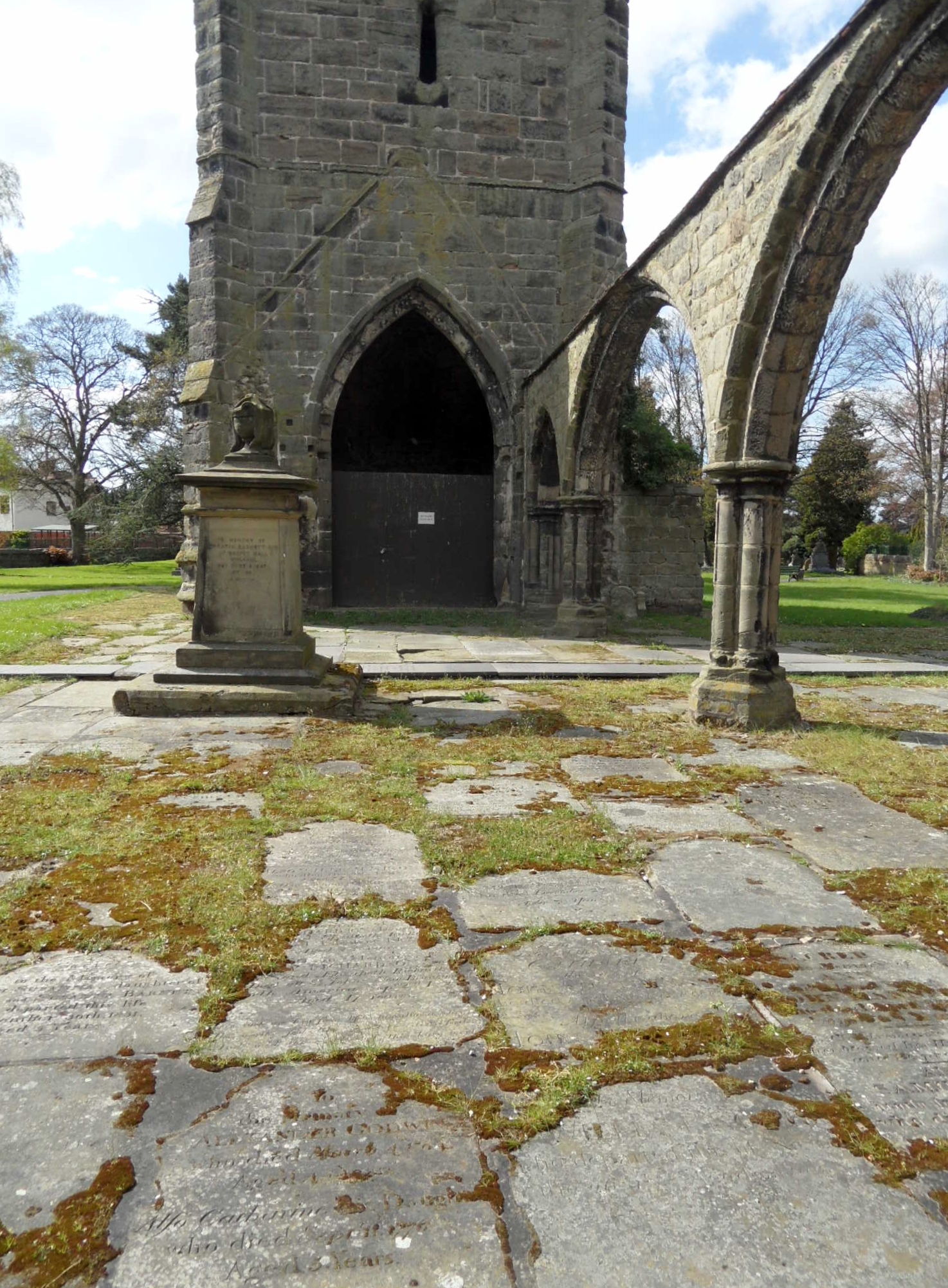
I understand that in the 1970s the church yard was landscaped (or possibly vandalised, depending on how you look at it), and the gravestones which once surrounded the church (as shown in a photograph from the 1860s here on Staffordshire Pasttrack) were broken up and used to pave what was once the nave and north aisle, creating a mosaic of carved names and epitaphs belonging to the old inhabitants of Rugeley.

SAM_0349

The outline of the roof line traced by weather onto the tower


SAM_0396

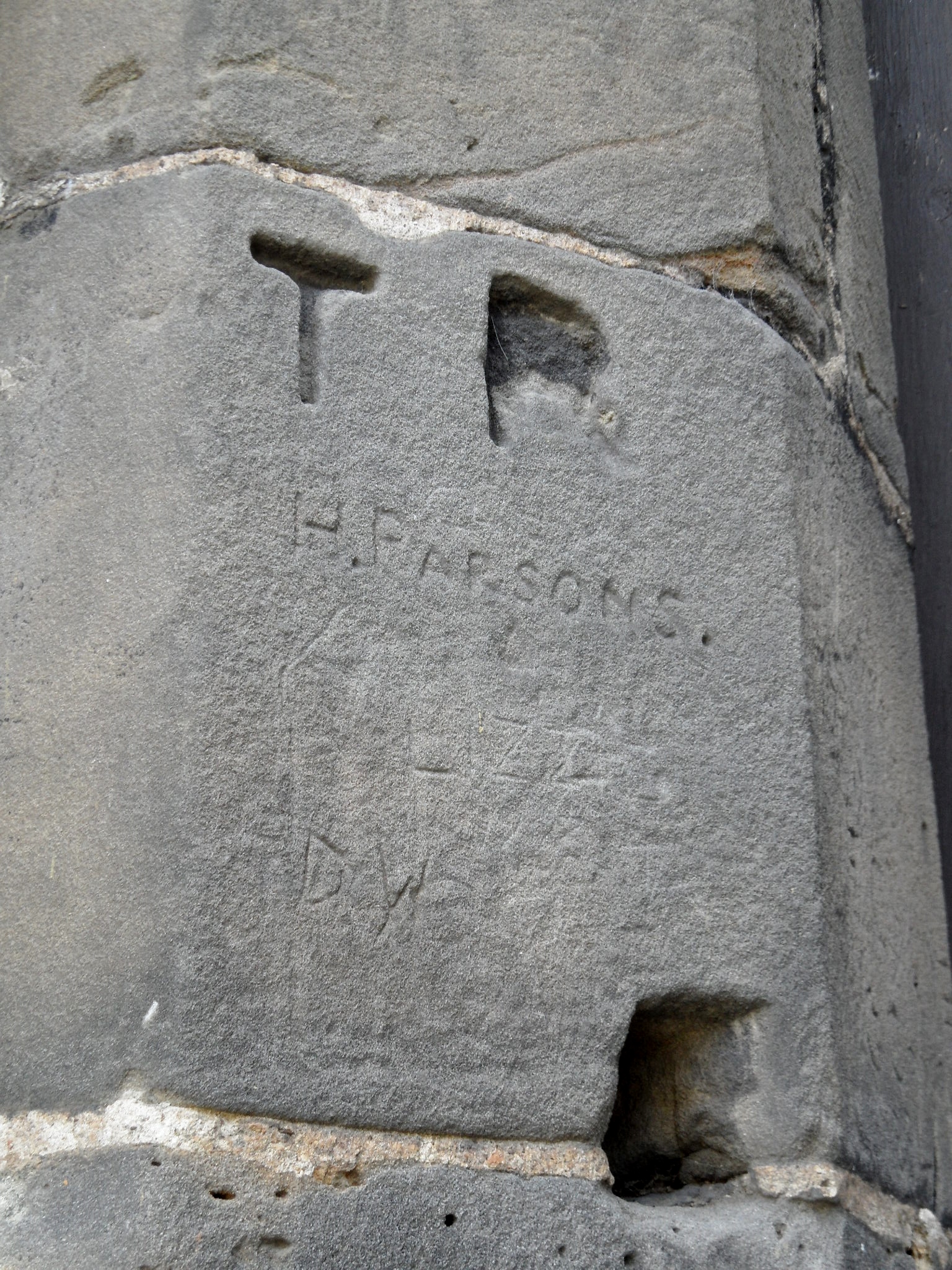
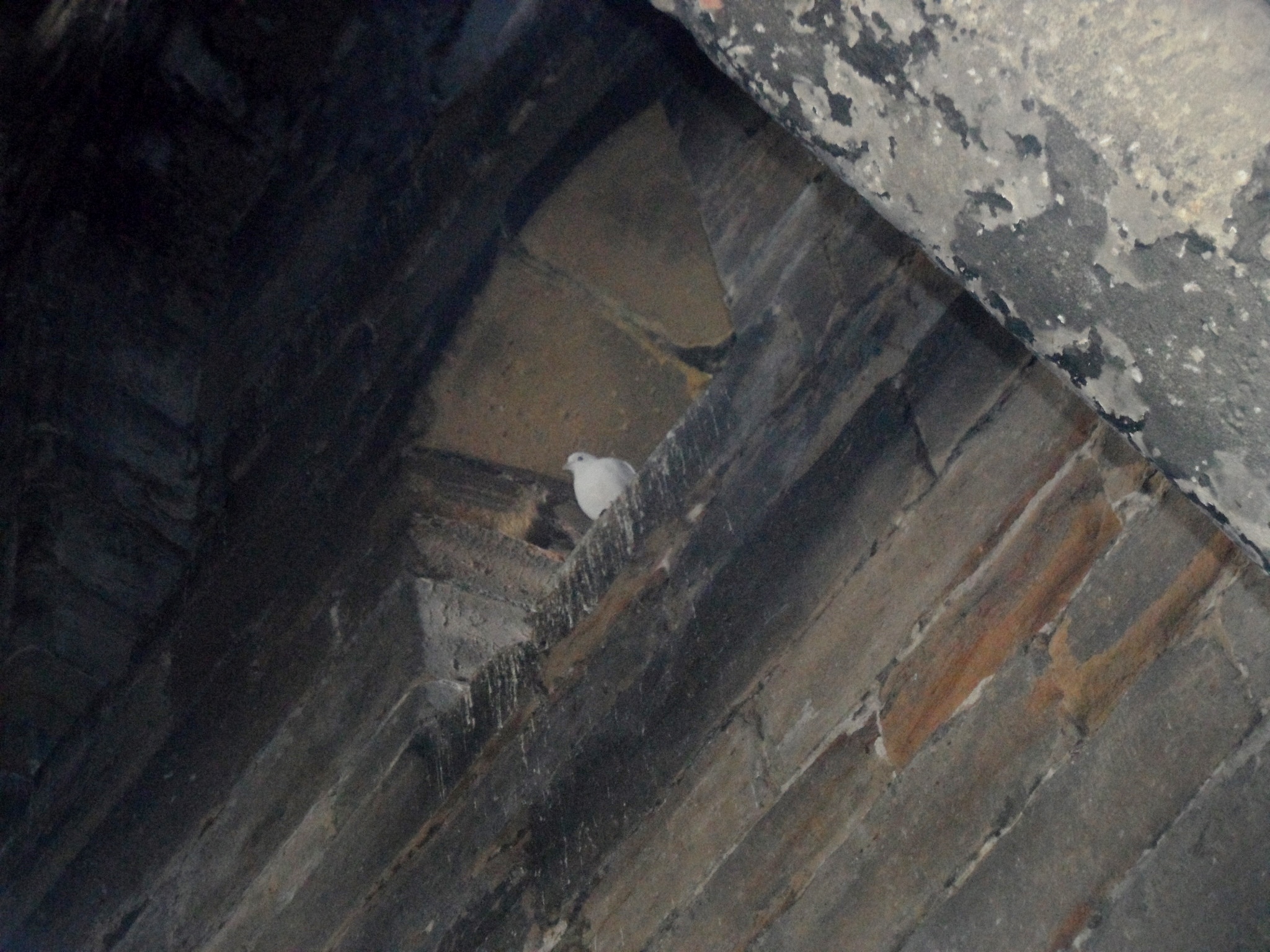
Others have carved their own names into the stone of the tower where bells once rang, but doves and (slightly less romantically) pigeons now coo.

SAM_0364

How did H Parsons carve his name so neatly?

How did H Parsons carve his name so neatly?

Dove Rugeley

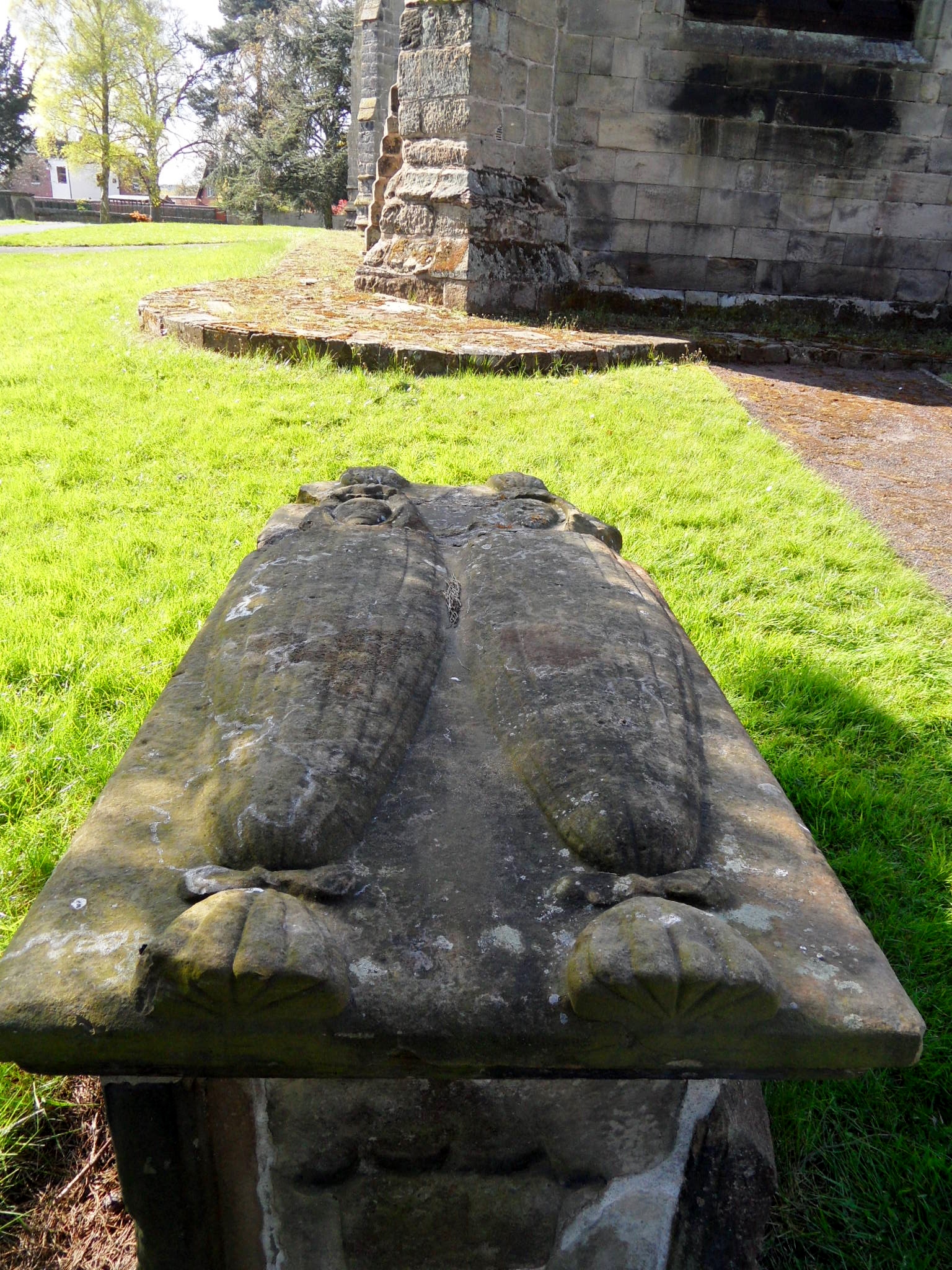
As already mentioned, one tomb that does remain in the churchyard itself is that of two women, Elizabeth Cuting who died in 1695 and her sister Emma Hollinhurst who passed away a year later. Effigies of the sisters tied into their burial shrouds are carved on top of the tomb. An information board nearby tells how this unusual monument gave rise to a local legend that that the women had been buried alive in sacks by Oliver Cromwell, despite Cromwell dying in 1658. Full marks for imagination but, if you are going to make up a story that you want people to believe, you should probably check your dates first.

SAM_0375

Sisters tomb rugeley

SAM_0389

The board also directs you to the remains of a fourteenth century cross, with a recess in one of the corners suggesting that it was a ‘weeping cross’ where penitents would once come to kneel in prayer.

Weeping Cross

As nosey as ever, I wanted to see inside as well as out and so I peeked through a a dirty window into the old chancel, and spotted some interesting looking stonework and signs that it still seems to be being used in some capacity.

Inside old church

I believe that at one time it was used a Sunday school and also a classroom for the now demolished Rugeley Grammar school which once stood next to the churchyard, where the Chancel Primary school now is. Incidentally, the school has the possibly the loveliest school library I’ve ever seen, in the form of its new Discovery Deck narrowboat, built in 2013 by Nick Thorpe in Hixon and painted over the Christmas holidays by staff and parents.

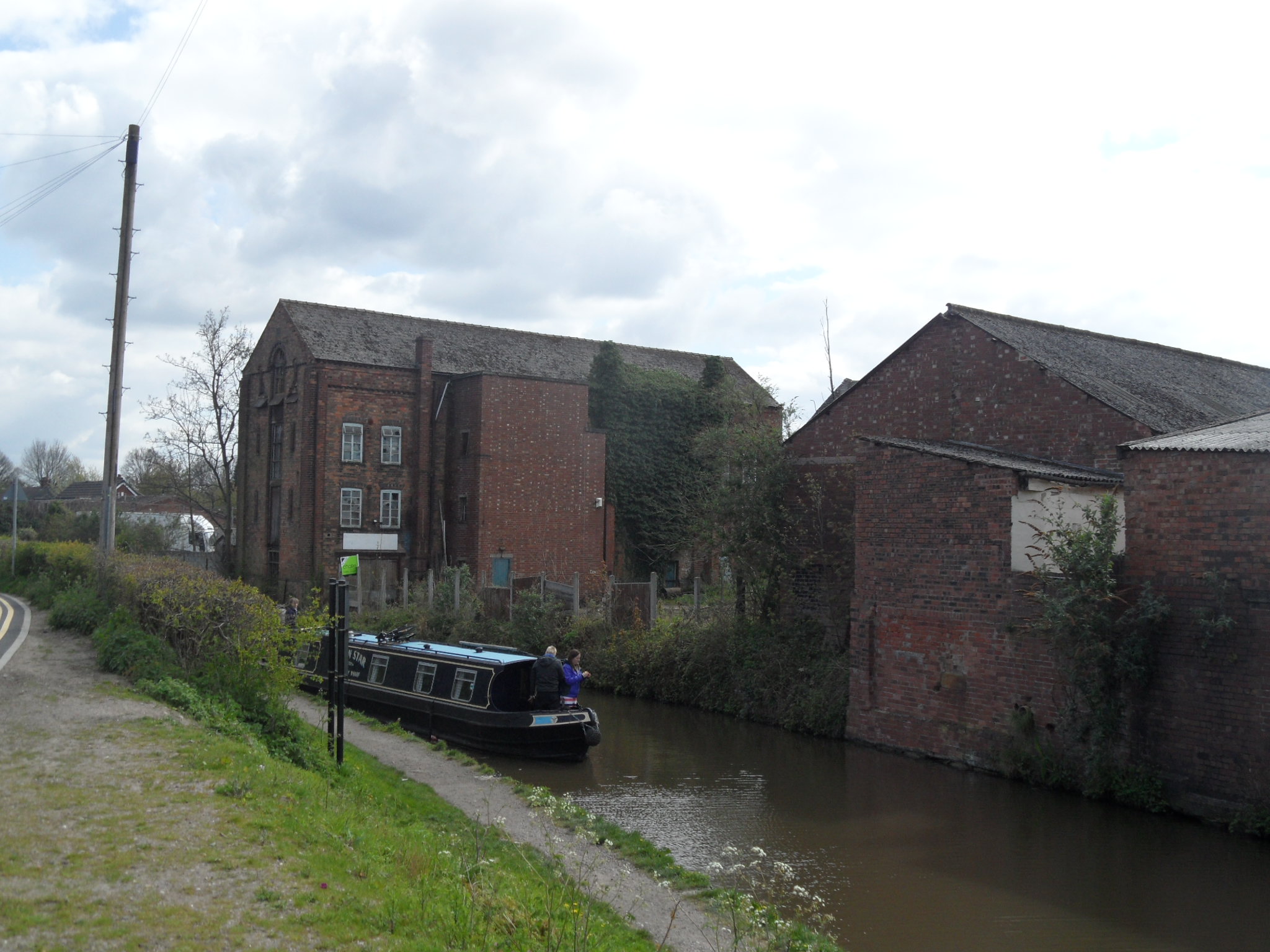
Unsuprisingly for a town with a canal running through it, this wasn’t the only narrowboat we saw.  As we crossed back over the Trent and Mersey  one was passing another of Rugeley’s ruins – an old canalside mill dating back to 1863. It seems that this part of the town’s industrial past may become apartments in the future and why not? Living in an old mill, alongside a canal, in a charming old town with the Staffordshire countryside on your doorstep? I can think of worse places to live…

SAM_0315

Old buildings Rugeley

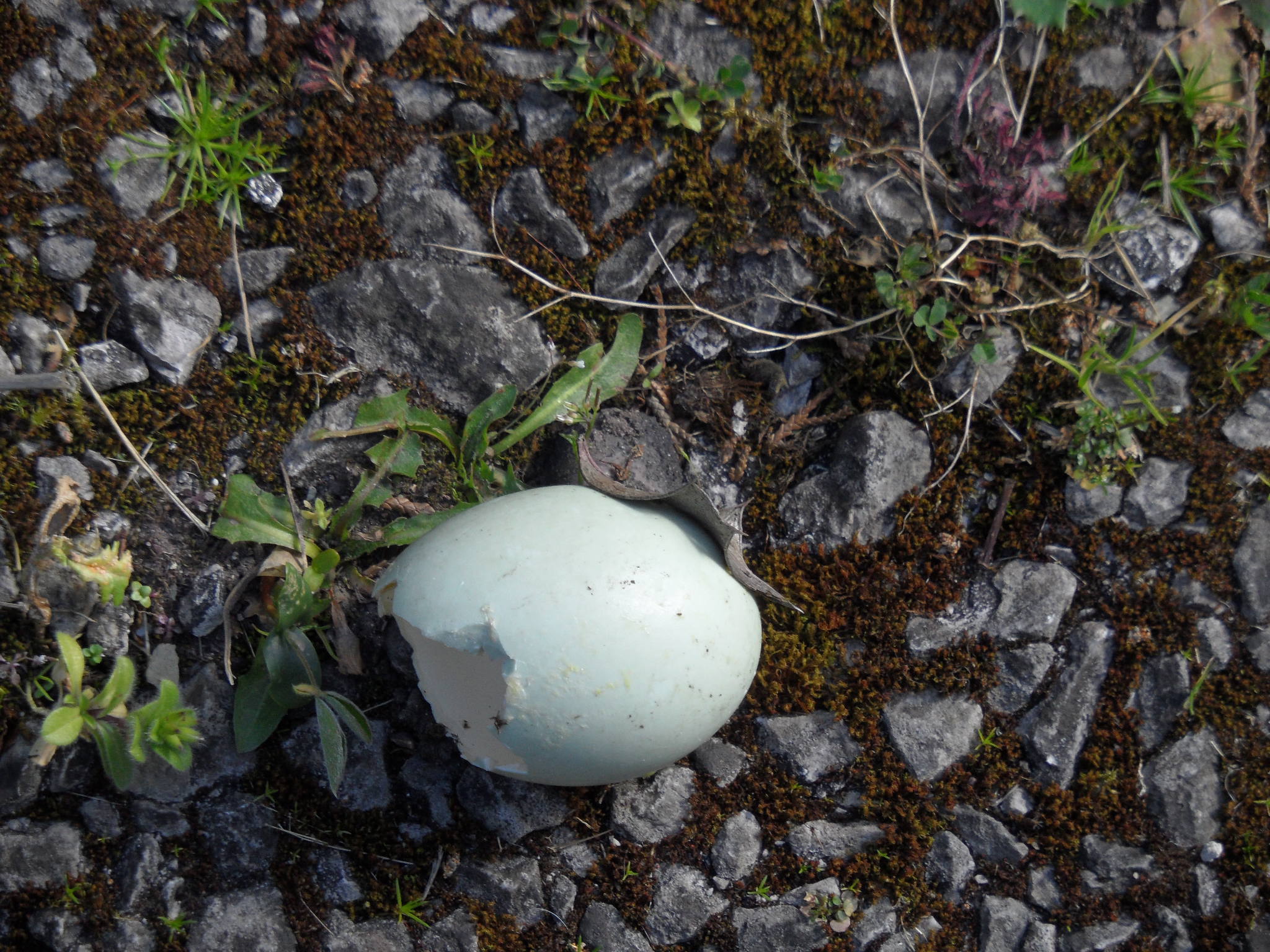
Oh and finally, somewhere in the churchyard I found an Easter egg.

SAM_0323

Sources:

http://www.cannockchasedc.gov.uk/site/custom_scripts/HeritageTrail/old_chancel.html

http://www.britishlistedbuildings.co.uk/en-271251-remains-of-old-church-of-st-augustine-ru

History, Gazetteer, and Directory of Staffordshire (1834) by William White

Picturesque Views and Description of Cities, Towns, Castles, Mansions, and Other Objects of Interesting Feature, in Staffordshire by William West

Wolverhampton Wandering

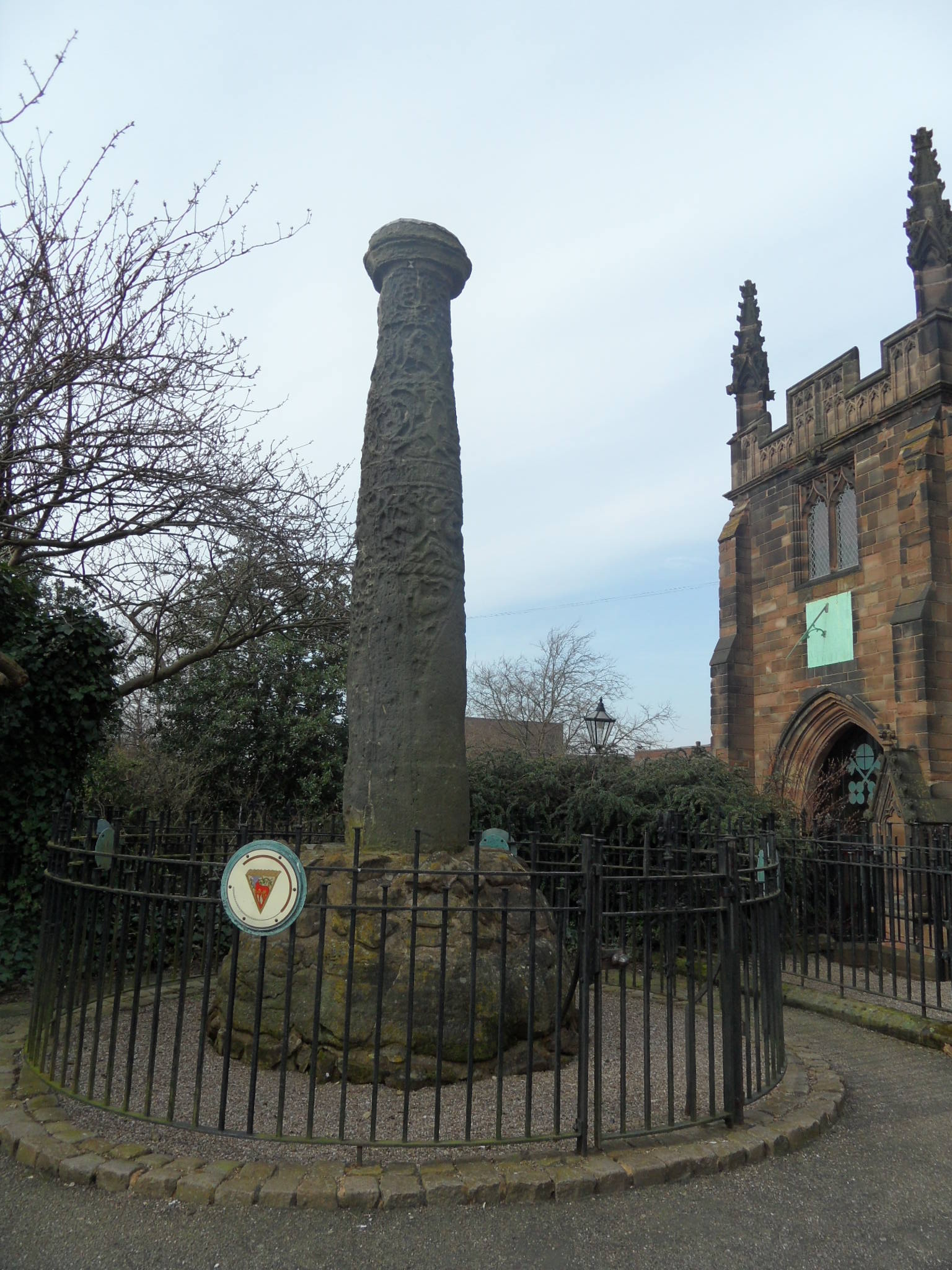
I had to pop into Wolverhampton today. I knew from my search for an ancient cross in Lichfield a couple of years back that there was a Saxon cross shaft here and went to find it.  Unlike the Lichfield cross, I didn’t have to try too hard – it’s huge! Its size, and also the fact that it is made from sandstone not found in Wolverhampton, has led some archaeology types to suggest that it is probably a reused Roman column, possibly from Wroxeter or even just up the road in Wall.

Saxon Cross Shaft, WolverhamptonThe elements and pollution have not treated the shaft kindly but its still clear that this was an incredible piece of craftmanship – the Black Country History website describes it as, ‘one of the finest cross shafts in the Midlands’. The carvings of acanthus leaves which decorate the shaft alongside those of birds and beasts have given archaeologists some problems when trying to establish a date as they suggest different periods. The plaque accompanying the shaft in the churchyard has decided to go with the earlier date of the ninth century, whilst others believe late tenth century is more accurate.

Cross Shaft Wolverhampton

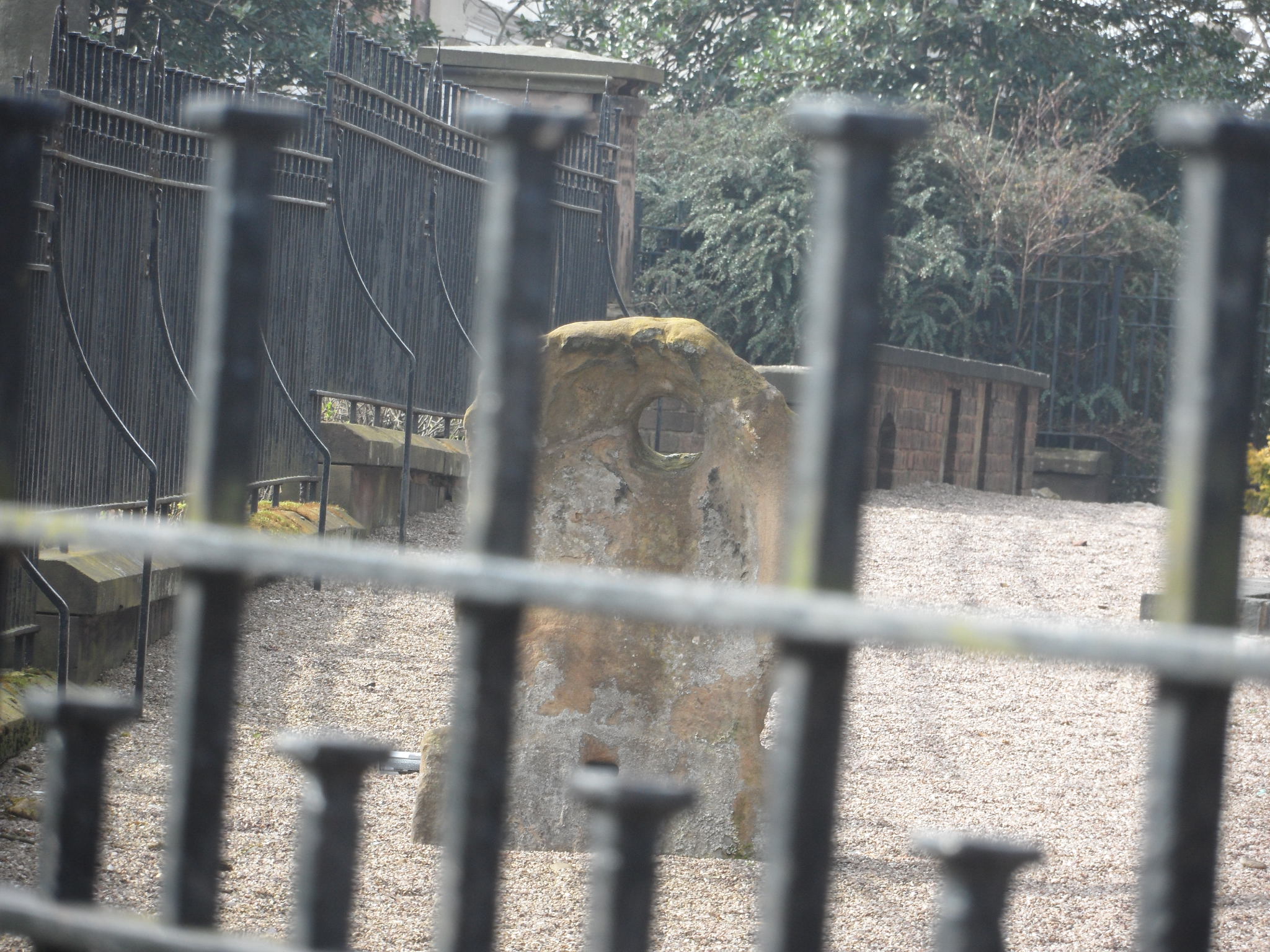
On the way out of the churchyard I noticed another stone with a good back story. Known as the Bargain Stone, its said to be where the good (and probably not so good) folk of Wolverhampton would agree sales and make deals by shaking hands through the hole. The nearby plaque suggests it is an old gargoyle and the hole is what remains of its mouth.

SAM_0031

Talking of hands, why didn’t it occur to me to put my hands over the railings to take a better photo?

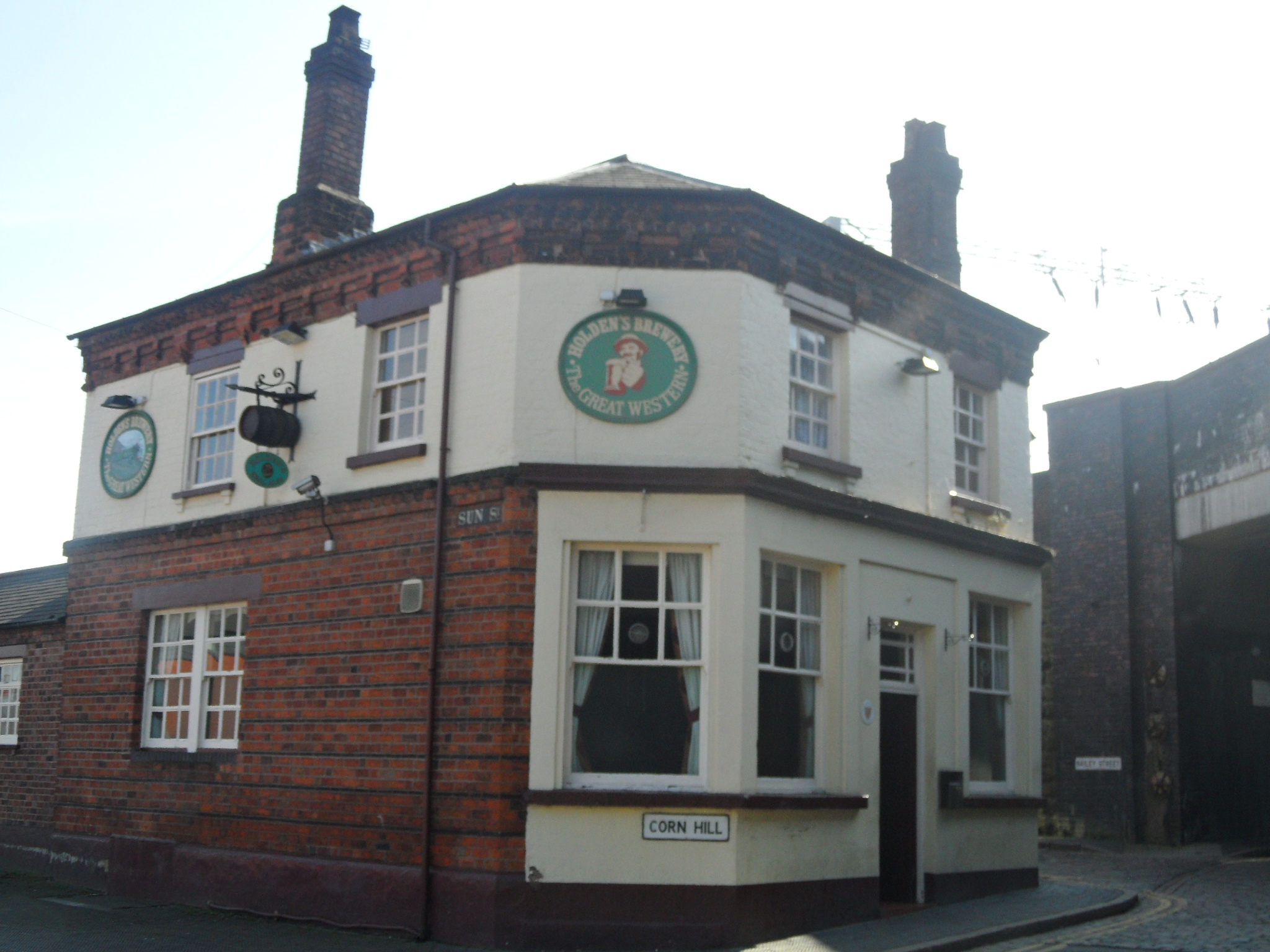
As if ancient crosses and stones weren’t enough of a treat, we also found Holden’s Brewery’s Great Western near to the train station. This is a proper pub – cobs on the bar, Holden’s Golden Glow (amongst other delights) on tap and really friendly staff. Although we were tempted to sit outside in the sun, the interior was so quirky and there was such a nice atmosphere, we sat inside.

Great Western

Wished I’d got the train. Definitely not driving next time.

The Great Western

The great Great Western

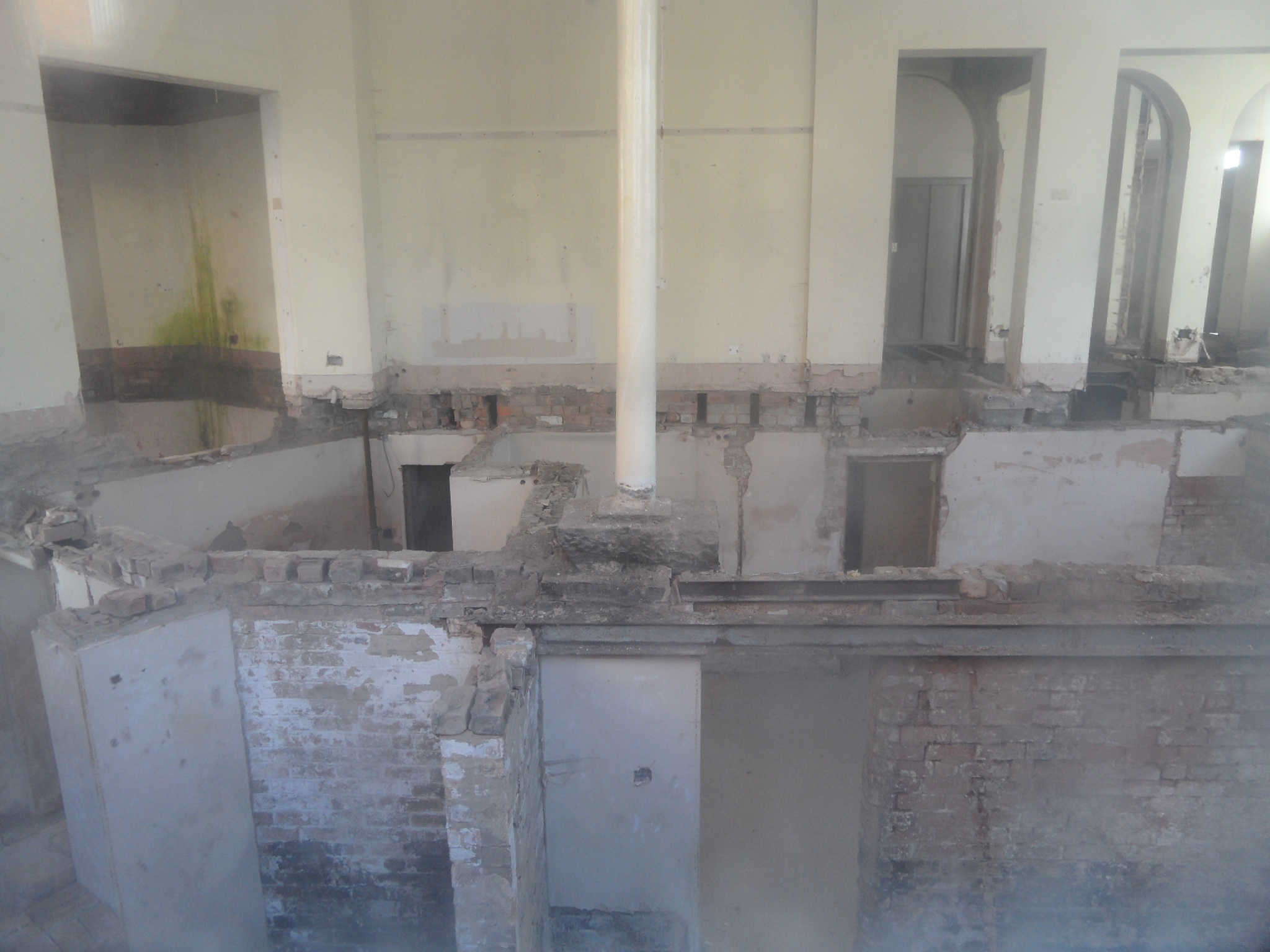
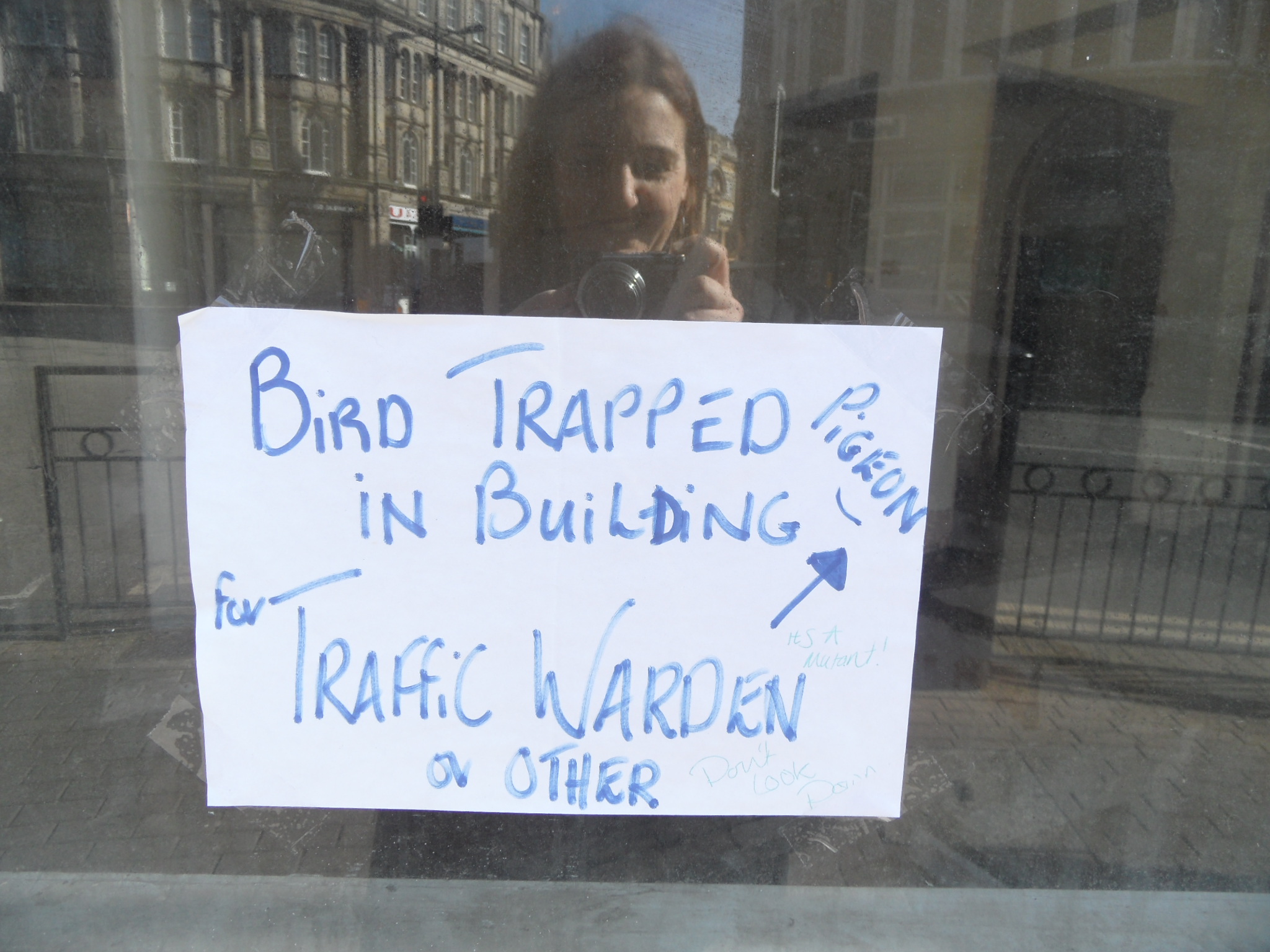
We walked off our pork baps with a little bit of a wander around the city streets. This building caught my eye, not only because it has no floors, meaning you can see down into the cellar, but also because of the handwritten sign someone had stuck to the window.

SAM_0045SAM_0046I’m not sure a traffic warden would be the person I’d turn to in a trapped bird scenario but maybe they do things differently in Wolverhampton.

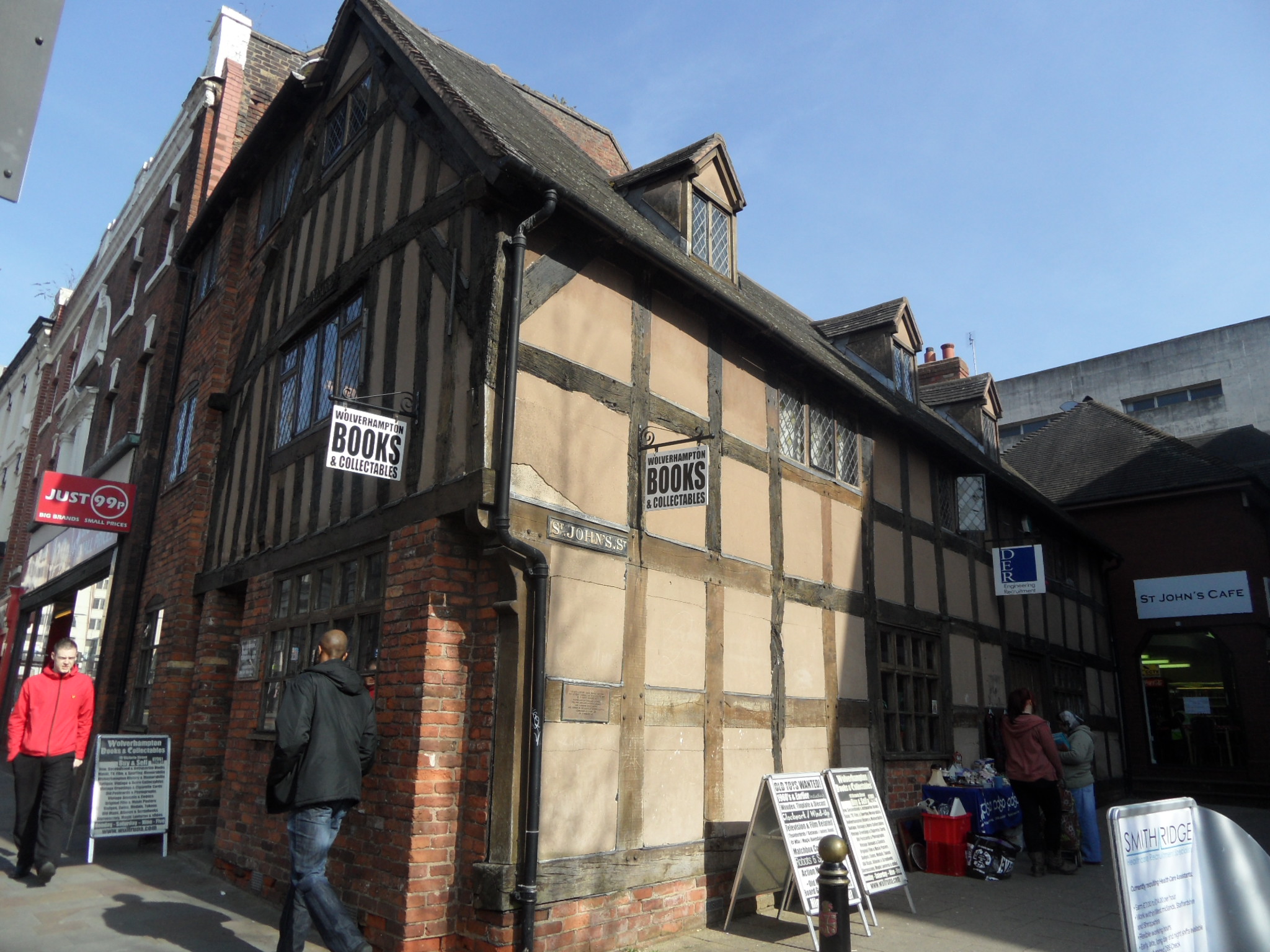
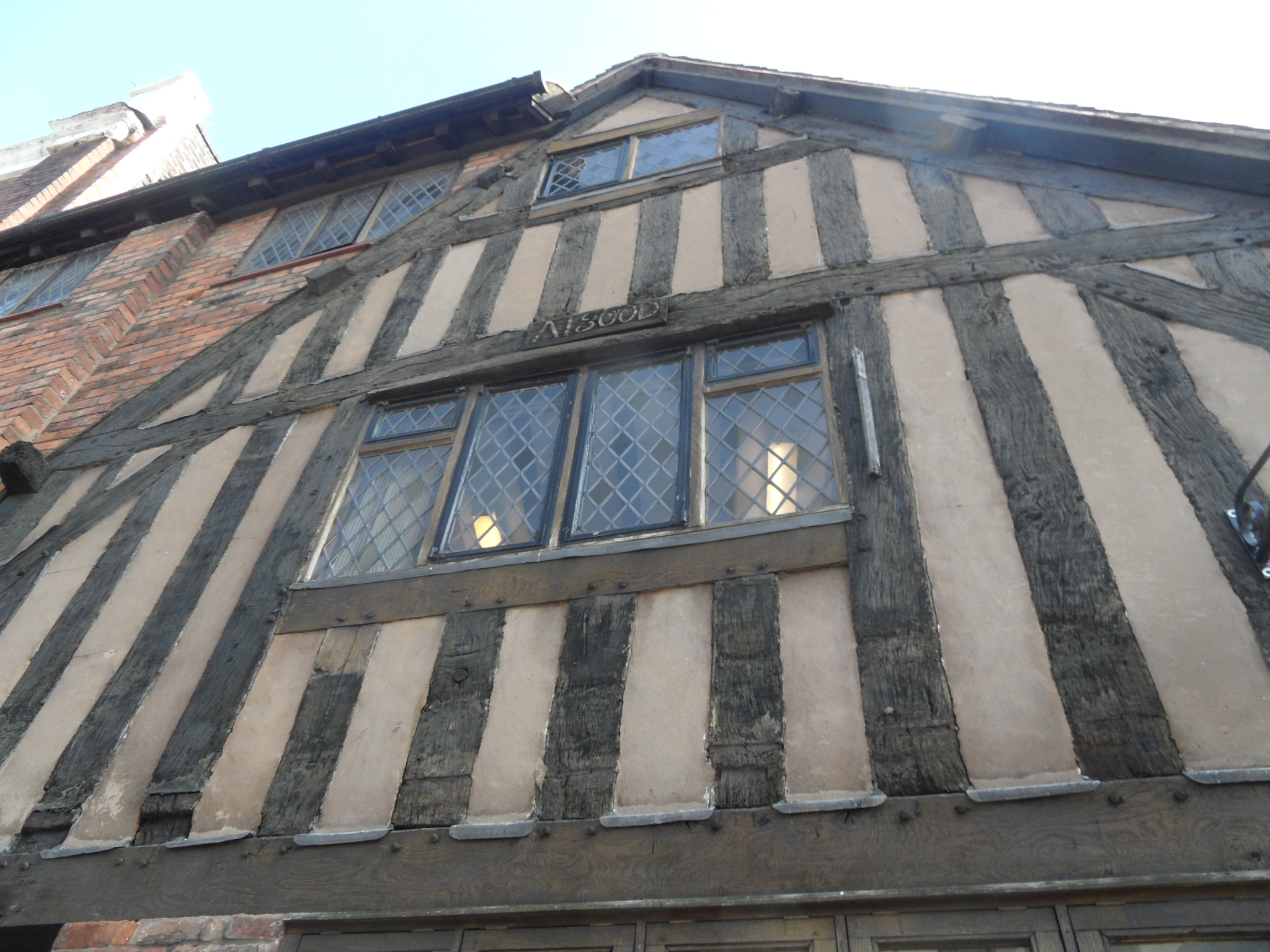
Another perplexing sign is the one suggesting that the half timbered building on the junction of Victoria St and St John’s Lane was built in AD1300. It wasn’t and no-one knows the reason behind the claim – the best suggestions anyone has seems to be that it was some kind of joke to emphasise that it was a really, really old building! It more likely dates back to the seventeenth century when it was once an inn known as The Hand. These days its home to Wolverhampton Books & Collectables, where you can buy anything from an ancient tome on the history of Staffordshire to a souvenir 1950s Wolverhampton Wanderers hankerchief (which you may, or may not, wish to blow your nose on, depending on your allegiances…).

SAM_0053

SAM_0055

We took the scenic route back to Lichfield (not through choice but because I went the wrong way on the ring road), passing through Wednesfield, Sneyd, the intriguingly named New Invention and Brownhills before stopping off at Waitrose for a couple bottles of Golden Glow.

Sources:

http://blackcountryhistory.org/collections/getrecord/WOHER_MBL337/

http://www.historywebsite.co.uk/listed/lindylou.htm

Lamb Carvery

Just a very quick update on the old church tower at Shenstone. I haven’t had chance to get over there since writing the previous posts on the subject and so this morning, I was really grateful to receive a couple of photographs, taken just today, which show the carved stone on the tower really clearly.

In the churchyard at the top of the hill is an old tower...

In the churchyard, at the top of the hill, there is an old tower…

...and in the old tower is a door...

…and in the old tower, there is a door…

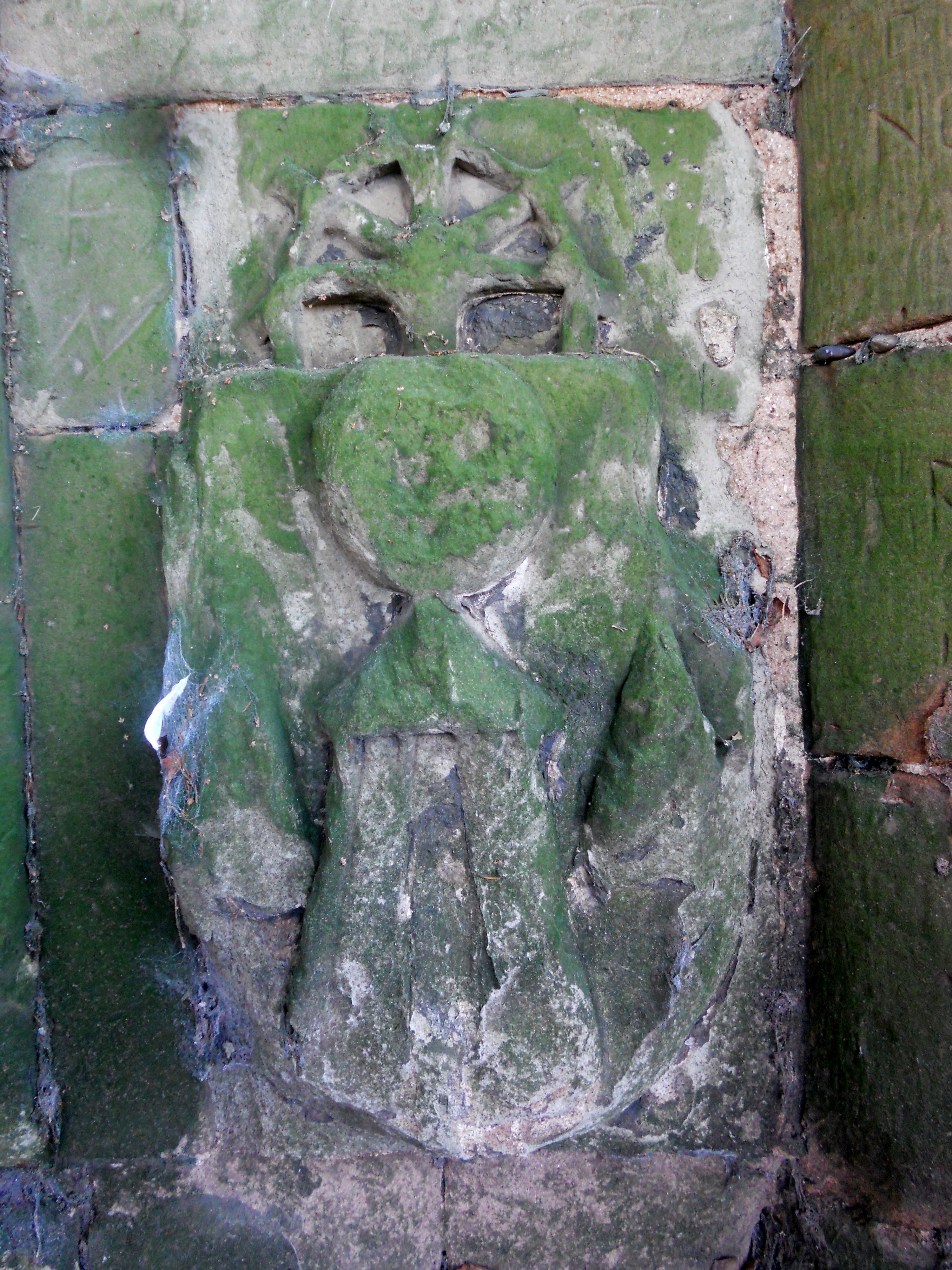
The carved stone at the ruined old church at Shenstone

…and next to the door is this carved stone

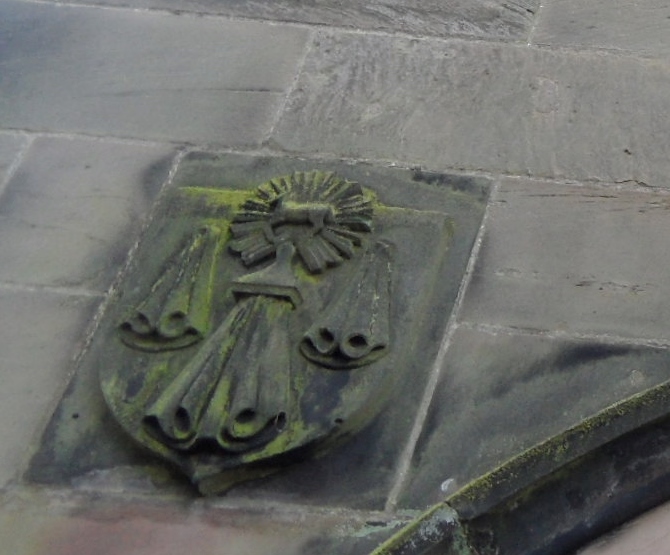
Although centuries of exposure to the elements has worn away much of the detail, including the lamb (which Mr Foulkes may have been referring to when he reported seeing a stone with a carving of a lamb near to the north door in the late 1890s), it can be identified as the arms of the Merchant Taylors, one of the twelve great Livery Companies of London. It shows a tent (which apparently the Taylors would once have made for jousting tournaments) with an ermine robe either side (another nod to their trade) beneath a lamb within a sun. The lamb represents John the Baptist, the saint whose name was given to both the old church and the more recent church here.  It looks like there is some graffiti carved into the old sandstone blocks of the tower too, which may also be of interest.

St Michael's Church at Lichfield's version of the arms

St Michael’s Church at Lichfield also has a version of the arms on the porch.

There was a story that after the old church was abandoned as it was deemed unsafe, ‘it was found to be so remarkably sound that blasting operations were required to demolish the masonry’. Eventually they succeeded and materials from the old church were sold in 1853/54 for £111 2s 8d.

I am not sure what the connection between the Worshipful Company of Merchant Taylors of the City of London, and parish churches at Shenstone and Lichfield could have been, but I’ll keep looking and if anyone has any ideas or suggestion in the meantime, please share them!

Sources:

Parliamentary Papers, House of Commons and Command, Volume 48

Nail Art

As objects are the theme of our Lichfield Discovered meeting on Monday, and I had an hour to myself this afternoon, I decided to head over the border to have a look for the nailers’ stones that I’d been told were in the churchyard at Christ Church, Burntwood. The only reference to them I’ve found is on the Christ Church website which says,

‘Visitors will firstly note the magnificent west doors, believed to be original. The huge nails which have been used are indicative of Burntwood having been a nail making area due to the plentiful supply of charcoal and iron ore. (Nail making was very much a cottage industry, and should the visitor wish to, enter the churchyard, will find there several nail stones of different sizes).’

I wasn’t exactly sure what I was looking for and had to rely on the, ‘I’ll know it when I see it’ method, which I’ve used many times before, with varying degrees of success. On this occasion it worked out just fine.

Nailer's Stone. Burntwood

Nailer's Stone. Burntwood 2

Group of nailers' stones

The above arrangement of stones reminds me of a stone circle of sorts

Group of nailers' stones, Burntwood 2

I wonder whether the nails in this door really were created locally?

I wonder whether the nails in this door really were made locally?

The first church in Burntwood. Apparently before it opened in 1820, the area was part of the St Michael's, Lichfield parish meaning a very long walk on a Sunday morning!

Before Christ Church opened in 1820, the area was part of the parish of St Michael’s, Lichfield, meaning a very long walk on a Sunday morning!

I couldn’t come all the way to Burntwood and not visit the world’s smallest park (is this official now?) with its trees known as Faith, Hope and Charity and so I had a five minute sit down and a bit of ‘We need a bigger park’ banter with a passerby, before heading to the Star Inn.

World's Smallest Park...or is it?

SAM_9977

According to the Burntwood Heritage Trail booklet, the Star Inn was where local nailers would take their products to be be weighed and paid for by ‘middle men’, who would also replenish their supplies of iron. The pub building itself is relatively modern but, according to the booklet, there has been a drinking establishment on this site since at least 1600 when a local blacksmith was licensed to keep an alehouse here, becoming known as the Star Inn by 1790.

The Star Inn. Burntwood

Unintentionally shining Star

Star Inn Plaque

One of the blue plaques on the Burntwood Heritage Trail, created by the fantastically named ‘Keepers of the Archive’.

Back home, I had a look for other examples of nailers’ stones and found that the Black Country History website has a photograph here of one very similar which they describe as a nail making anvil from St Peter’s Rd, Darby End.

I notice that there appear to be initials or names on the stones and it would be fantastic to know more about their provenance. The heritage booklet says that making nails was a way for a farming family to make extra money, and that the work was often carried out by the woman of the household.

I know these are Burntwood objects, rather than Lichfield ones but they tell the story of everyday folk trying to make a living for themselves and their families in an industry that’s now long gone, and that’s got to be worth sharing.

(For more on the nailmaking industry, please see the ‘Nailed it’ post on Brownhills Bob’s Brownhills Blog here)

Walsall Legends

My husband grew up in the Highgate area of Walsall, where the malty aroma from the local brewery used to hang in the air and the local kids would tell stories about the mysterious ruined windmill. Thought to have been built in the late 1600s to grind corn, Highgate windmill has a fascinating history which you can read more about here in this article by Walsall historian and writer Stuart Williams. If you want to go and have a look yourself, go sooner rather than later. Once spring gets properly underway, it’ll be hard to see the mill for the trees.

Highgate Windmill

Highgate Windmill, Walsall

Last Summer I could barely see the windmill but did spot this painted board through the trees.

Last Summer I could barely see the windmill but did spot this painted board through the trees.

Sadly, there’s not even a whiff of brewing in the air at the moment – the Grade II Listed Highgate Brewery hasn’t been operational since 2010 and stands unused behind the locked centenary gates (purchased and installed by the Friends of Highgate Brewery in 1998), its future uncertain at present.

Highgate Brewery

Highgate Brewery

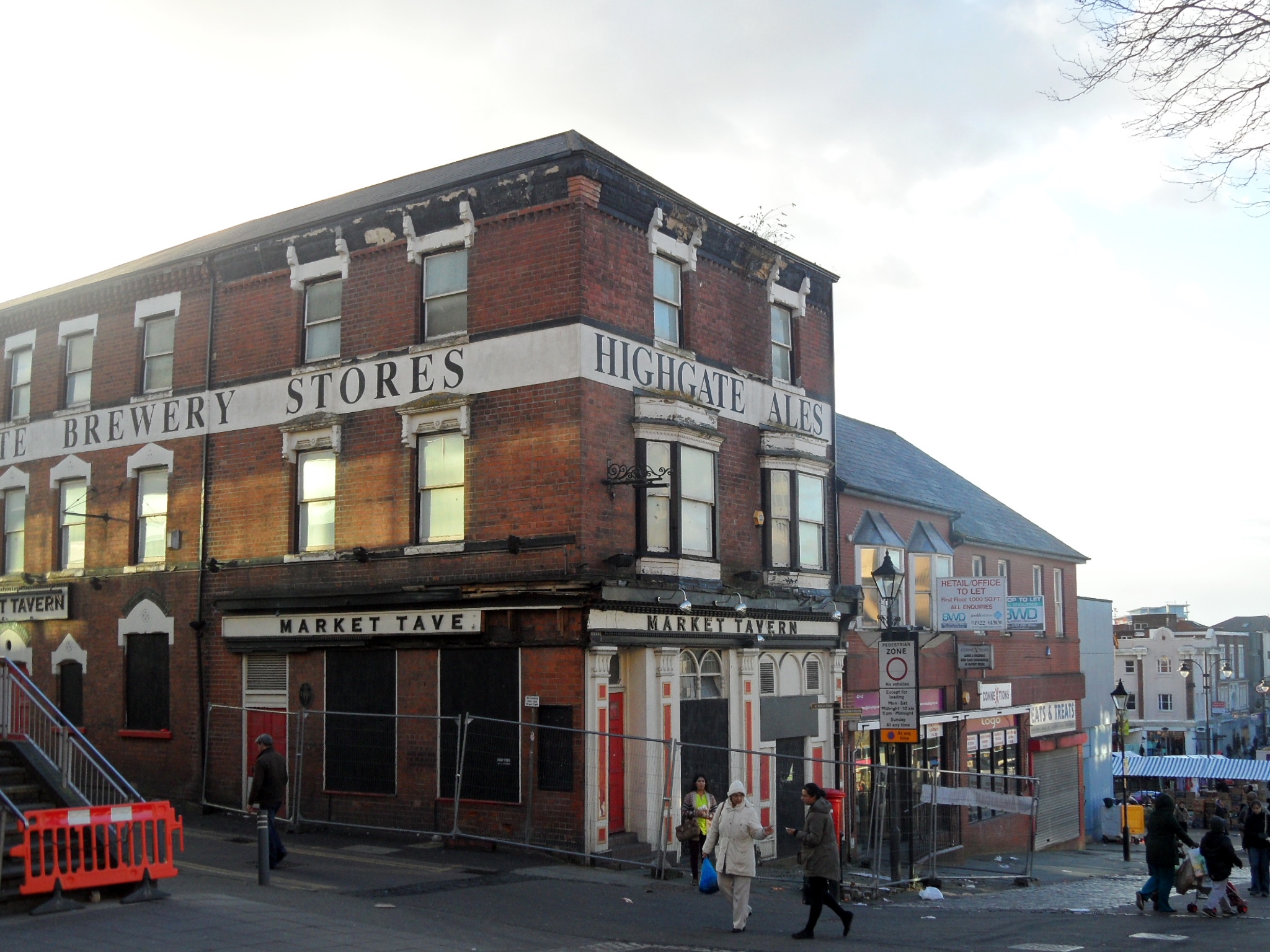
Yesterday, as well as visiting the family, we went to have a look around the Art Gallery and the town. On the way back we passed the pub that we once knew and loved as the Brewery Stores & Vaults. Back in the late 1990s, it was one of the liveliest places in town but now, like the brewery whose name it bears, it stands empty, expect perhaps for the hooded figures and disembodied heads said to lurk in the cellars

SAM_9911

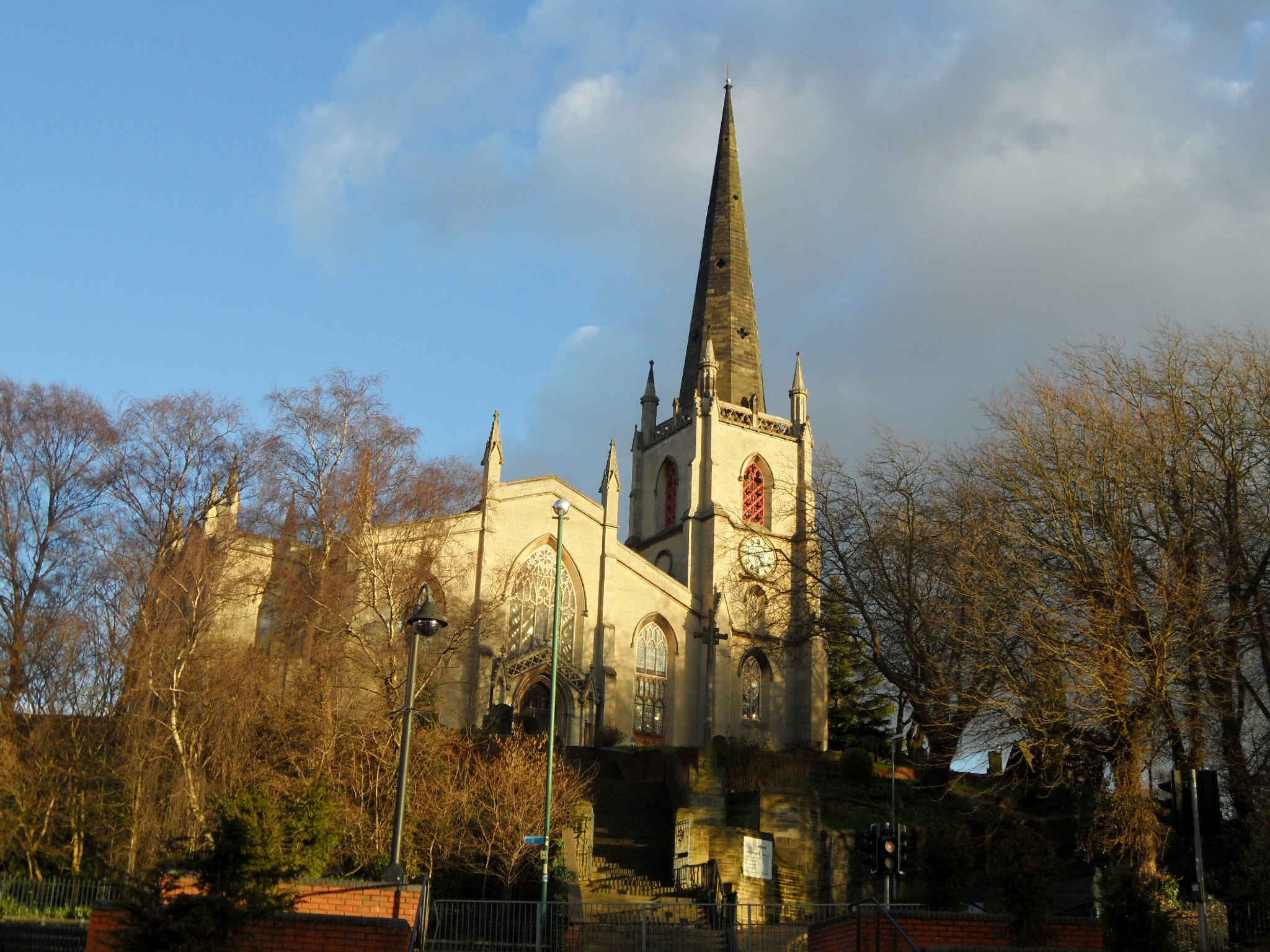
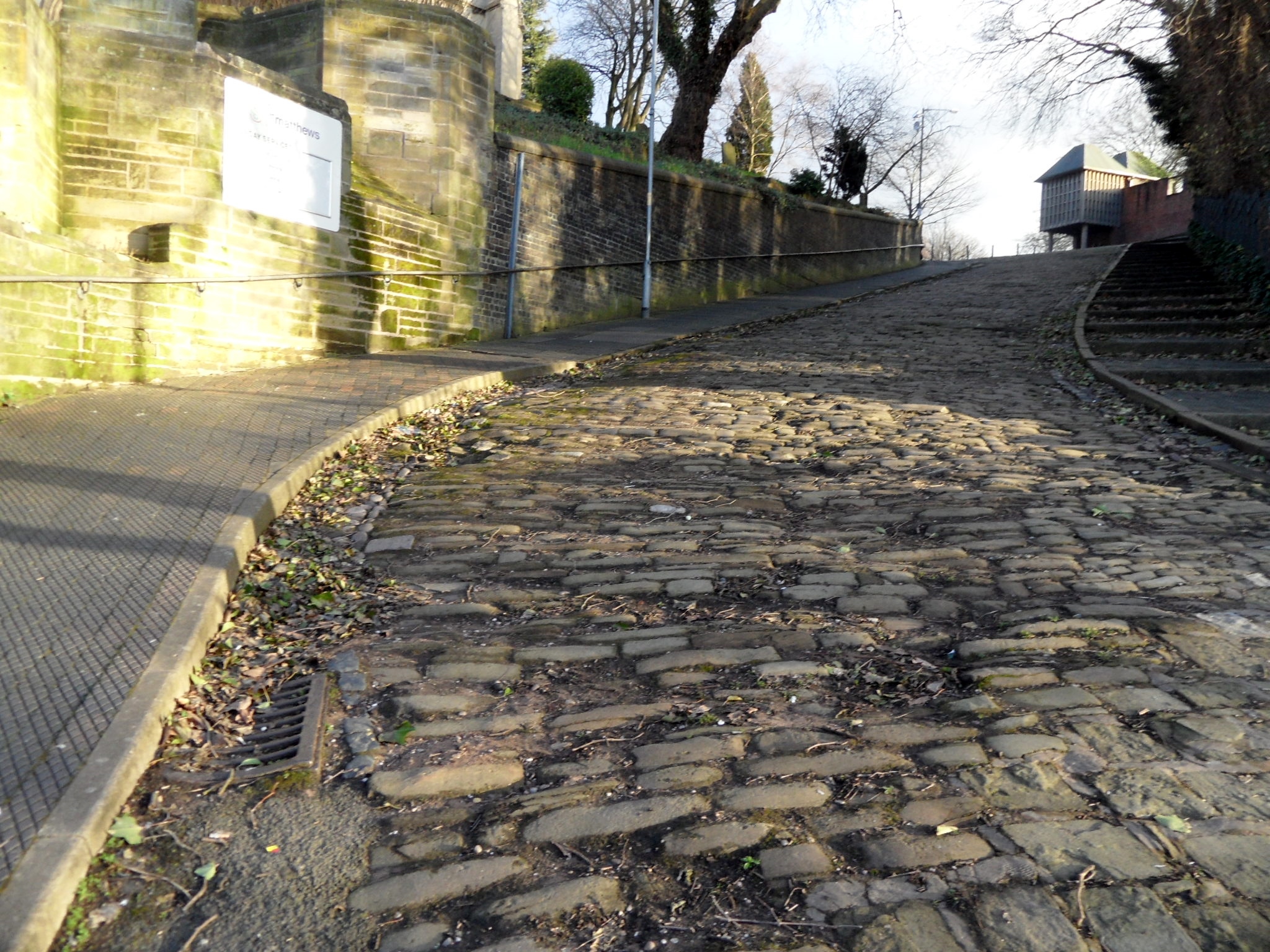
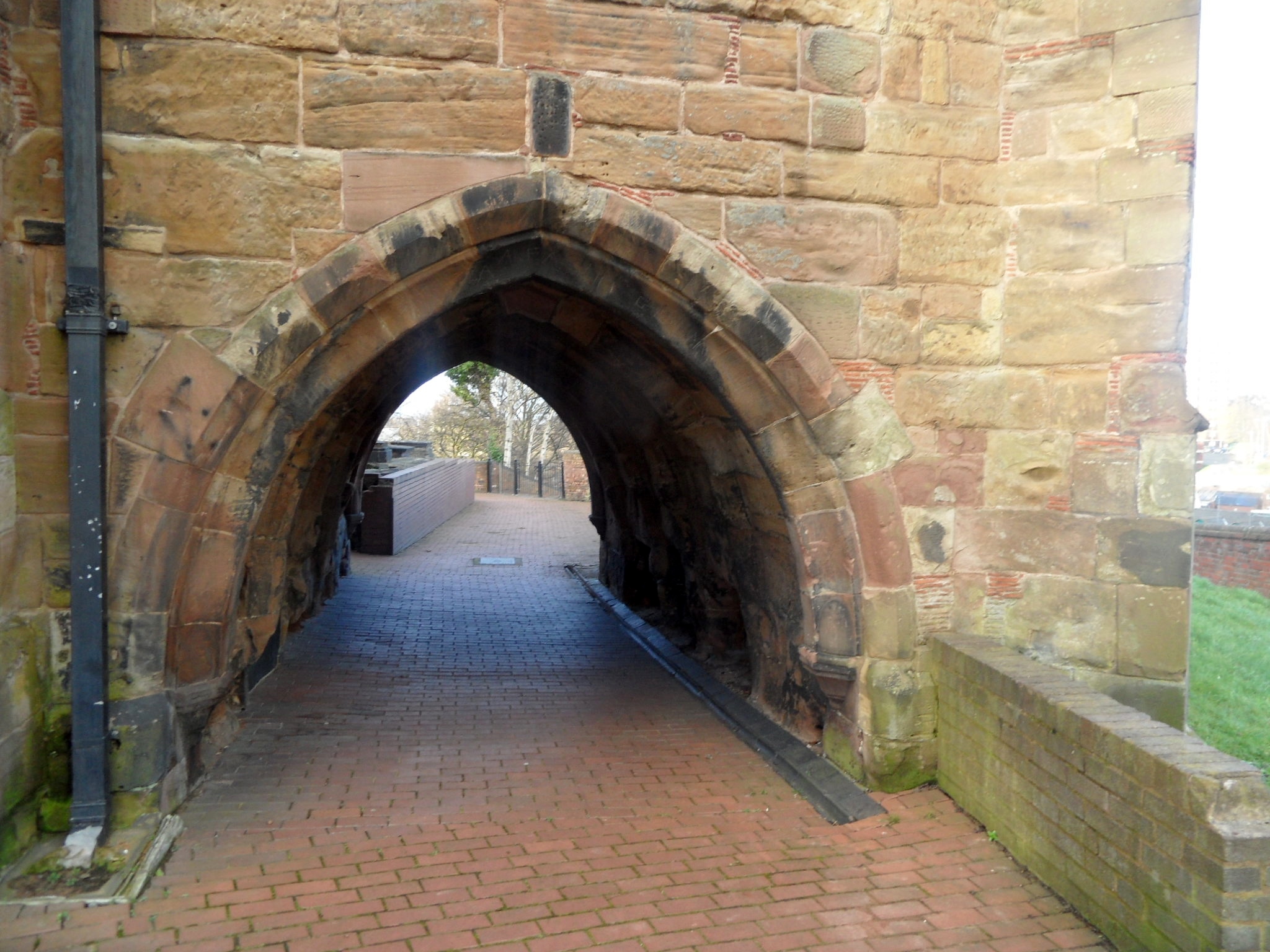
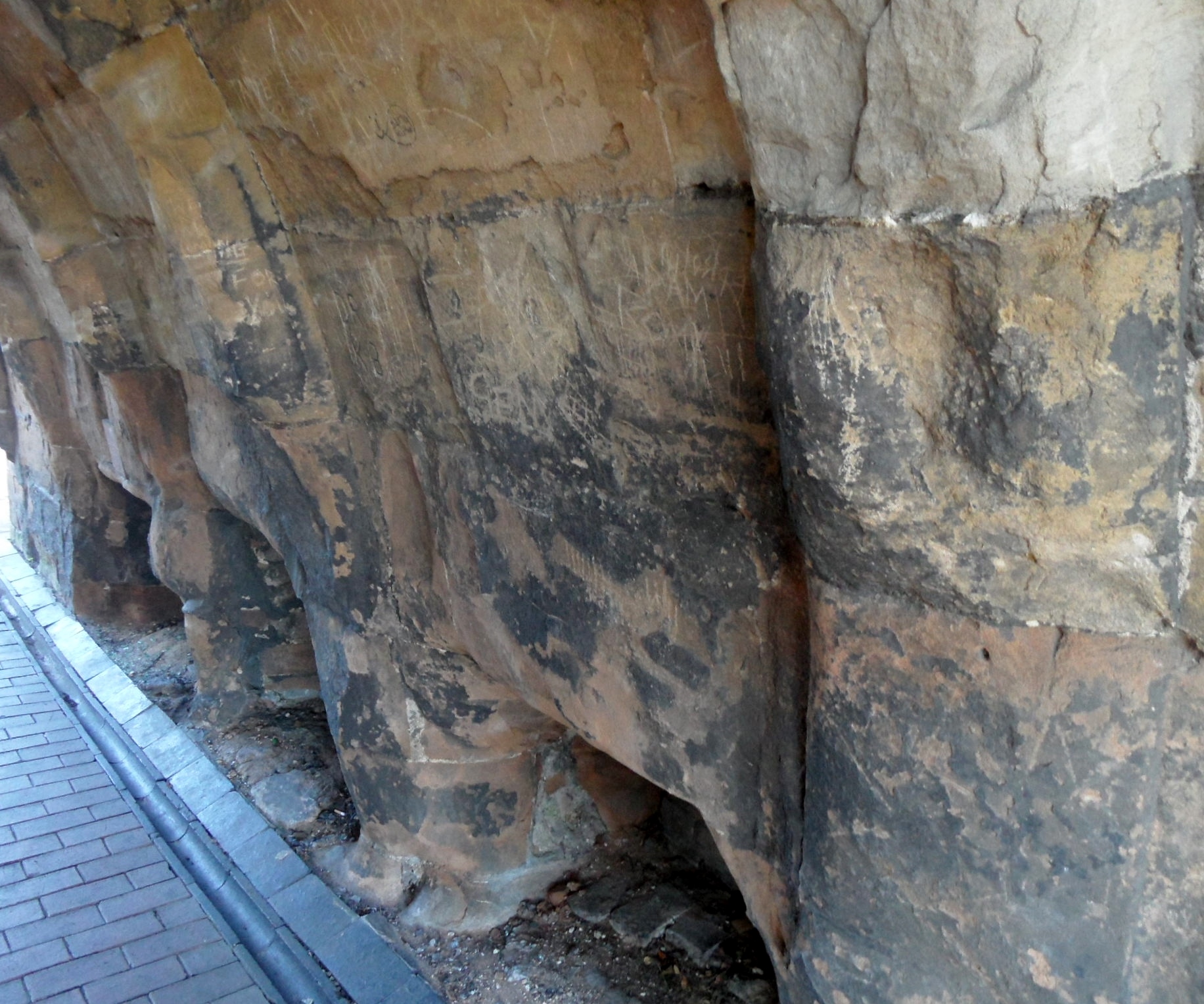
We continued our way back over the limestone hill where the church of St Matthew’s has dominated the Walsall skyline since at least the thirteenth century (although it has only been know by that name since the eighteenth century – it was previously ‘All Saints’). The first time we walked up this hill together, Mr Gomez told me that it was paved with medieval cobbles. I’m not sure if that is true but it’s something that has fascinated me ever since, as has the arched passage on the east end of the church, covered in graffiti and with curious niches on the east side.

As well as this overground passageway, there are supposedly underground tunnels running from here to the White Hart Inn at Caldmore, Barr Beacon and Rushall Hall.  In a history section of the Walsall Council website, there’s a quote from a Mr G of Bath St who in the 1950s said one of the entrances to the tunnels was located at the bottom of some steps of a toilet which once stood on Caldmore Green. He also added that he had been told by some old women that during the reformation, some priests went down the tunnels to escape and were killed after they were filled in.

St Matthew's Walsall

St Matthew’s church, Walsall

Wasall from the Art Gallery.

St Matthew’s Walsall as seen from the Art Gallery.

Medieval cobbles

Medieval cobbles leading up the hill?

Passageway under the chancel of St Matthew's

Passageway under the chancel of St Matthew’s

SAM_9929

Niches in St Matthews passageway

Niche interest

One of my favourite stories about St Matthew’s and Walsall is one I read recently in a book of Staffordshire folktales.  Apparently, the church was originally supposed to have been built on a meadow at the ‘Churchery’, now known as the Chuckery. However, this was where the fairy folk danced and so, naturally, they objected to the plans and took matters into their own tiny hands, moving the foundations of the new church up the hill to the site where it stands today. In another version of the story, the church was moved by witches who had transformed themselves into white pigs.

We walked up a good appetite in Walsall and so we finished our day at the legendary Hargun’s Sweet Centre on the Caldmore Rd, intending to take some goodies back to Lichfield, although they never actually made it past Walsall Wood in the end. Anyway, what I learned today is not only that you can eat a lot of baklava in a twenty minute car journey, but also that once in a while, it’s good fun to explore what’s on someone else’s doorstep.

Sources

Walsall: Economic history’, A History of the County of Stafford: Volume 17: Offlow hundred (part) (1976), pp. 180-208.

http://www2.walsall.gov.uk/History_Projects/Caldmore/A_Walk_Around_the_Green/18.asp

http://www.stmatthews-walsall.org.uk/info/mainhistory.shtml

http://www.blackcountrybugle.co.uk/TALE-WALSALL-PARISH-CHURCH-FAIRIES/story-20122807-detail/story.html

Staffordshire Folk Tales by The Journeyman

Shine On

Still curious about the old church of St John the Baptist at Shenstone, I did a bit more reading.  Inevitably, I’ve ended up even more curious than I was before.

In 1890, the Lichfield stone mason and sculptor Robert Bridgeman was appointed by a restoration committee to carry out work on the now disappeared pinacles of the tower. (You can see how the old church used to look, pinnacles and all, from drawings of the church in the late eighteenth and early nineteenth century here on Staffordshire Past Track). At the time Mr Foulkes, an architect living at The Ivy House, in Shenstone, wrote to the committee saying,

I am anxious to assure the Restoration Committee how fully I concur in the steps they have taken to preserve the old tower, for both on practical and sentimental ground it should be upheld. The appointment of Mr Bridgeman as restorer is the best your Committee could make, and I know he will thoughtfully and carefully carry out the work entrusted to him.

Mr Foulkes then goes on to give some of the history about the old church saying,

The old tower so called is really not very ancient, except perhaps the internal base; the upper part boasts of no architectural feature of note, the details being of a debased character, and early in the present century there evidently existed a kind of central beacon flag-pole and vane combined. There were also diagonal shaped dials upon the tower. One other feature worthy of mention, and of which I fear no trace remains, was a stone hollowed out in the Romish times, for the reception of holy water. It formerly stood near the north door and over it was carved the figure of a lamb’.

It took a while for the last line to click but eventually I remembered reading about a carved stone in the report of the excavation of the old church in 1973 by Dorothy and Jim Gould of the South Staffordshire Archaeolgical and History Society. A note by Mr J W Whiston, appended to the SAHS report says that there is no reference to the carving in any published description of the church, but that, ‘although mutilated, the carving can be identified as the arms originally granted to the Merchant Taylors Company of London before, in the time of Elizabeth I, the chief of augmentation was added (a lion passant and guardanty). These arms were frequently used by provincial merchant-taylors’. It also mentions that there is a similar carving on the porch of St Michaels in Lichfield. When I checked back on my photos of St Michaels from last spring, I found it (which saved me a trip). Funny how you see things that you don’t realise the significance of at the time, but fit into the big jigsaw eventually.

St Michaels Carving

The carving at St Michaels, Lichfield

Not knowing anything about the Merchant Taylors’ Company I looked them up and found that their patron saint is St John the Baptist. As you can see from the above (sort of), their coat of arms features a pavilion with a mantle either side, with the Holy Lamb within a sun. Perhaps this is the lamb to which Mr Foulkes was referring? You can read more about the company here.

Bottom right hand side of door - is this the carved stone?

Bottom right hand side of door – is this the carved stone? Should have taken a closer look.

According to William Whites Directory of Staffordshire (1834), the annual feast or wake at Shenstone was held on the Sunday after St John the Baptist’s day. Something that’s not mentioned in the archaeology report, or the newspaper report as far as I can see, is the existence of a holy well somewhere in the churchyard. On the saint’s day (or Midsummer if you prefer), St John’s Well  was believed to be a place of healing and of miracles. I can’t see it on any of the old ordnance survey maps but I am hoping it’s still gurgling away and hasn’t dried up. On the subject of St John and Midsummer, I know I probably shouldn’t speculate about the place name Shenstone – bright/beautiful/shining stone or rocky place – but the idea of the sun and bonfires associated with the festivities of St John’s Eve and Midsummer has popped into my head and now I can’t get rid of it. Feel free to shoot me down in flames.

I’ll try and distract myself with another example of pieces of the jigsaw fitting together eventually.  In an account of ‘ Ancient Shenstone’ by Madge Rogers in the Lichfield Mercury in the late 1940s that I was reading, she mentions, ‘A Peat Moor once stretched highly polished stone was erected in the churchyard, and was the tomb of 25 year old Richard Burgess of Leicester who journey by stage coach to the Welsh Harp in Stonnall and there took his own life’.

I don’t really understand the bit about Peat Moor but the story of Richard Burgess sounded familiar.  I remembered that a while ago, when trawling the newspaper archive for something to do with pubs, I had read a story from the Derby Mercury, June 1754, about a young Gentleman who was travelling with the Chester Stage Coach, on his way to Ireland to be married. Apparently, en-route he had received a letter from his fiancee’s Father, telling him not to pursue his journey, as she would not marry him. When the stage coach stopped off at Noon at the Welsh Harp near Lichfield, the young man took his own life. Surely this must be the same tragic young man?

To think up until recently the only place I’d ever visited in Shenstone was the Tesco Express. What a fascinating place it is, and I haven’t even started to read about the prehistoric and Roman connections yet.

Sources

The History and Antiquities of Shenstone in the County of Stafford, Henry Sanders
South Staffordshire Archaeological and Historical Society Transactions XV
Derby Mercury Archive
Lichfield Mercury Archive

Sweet Bells

One Saturday morning, as I sat reading in Lichfield Library, I heard a clip clopping in the street outside. Standing up to look out of the window, I saw a horse and carriage making its way up Bird St. It occurred to me that this was a sound and a sight that people would not have batted an eyelid nor an eardrum at in previous centuries, yet to my twenty first century ears, it was something so out of the normal it warranted me putting down a good book to have a shufty.

More often than not, when we explore the way our towns and cities have changed, it’s the visual changes that we concentrate on – old photographs, old maps, landscape features etc. Yet the sounds of places change too e.g. the pools at Leomansley are quiet and still now that the waterwheel of the mill no longer turns, the sounds of animals at the Smithfield have been replaced by those of cars and shoppers and Beacon Street hasn’t heard a blacksmith hammering metal in a long time. However, amidst the changes, there is also consistency in the sounds that surround us.

The tower at St Chad’s church houses four bells. Three of them were cast in the seventeenth century and the oldest of these three dates to 1625 with the inscription ‘DOMINO CANTICUM CANTATE NOVUM’. The second is from 1664 and declares ‘GOD SAVE THIS CHURCH AND REALM THE KING IN WAR, I.C.1664. Even the youngest of the three, featuring the names Ralph Low and Richard Grimley, is from 1670 meaning that the people of the parish and those who are passing by have heard these bells ring out for well over three hundred years. The fourth bell is even older still, although no one can agree on just how old. An article in the Lichfield Mercury in August 1936 described it as ‘England’s Oldest Bell’, and gives it a date of 1033. As it stands, the country’s oldest inscribed bell is believed to be the Gargate Bell at Caversfield Church, Oxfordshire, dating to c.1215AD and the country’s oldest dated bell (1245AD) is at Lisset Church in Easy Yorkshire. Therefore if this date of 1033AD were true, we would probably have a another Lichfield Entry in the Guiness Book of Records (to go alongside the largest curry ever, cooked by Abdul Salam of Eastern Eye on Bird St). Yet, the St Chad’s website itself casts doubt on this claim as there wasn’t a tower to put a bell in at the church at this time! Another date suggested for the bell is 1255 but the County History also disputes this and says that it was probably cast at Nottingham c.1500AD. There is an inscription on the bell +O BEATE MARIAA.A.R. and some numerals that no-one can read, hence the enigma. I’d love to see it. Not that I would be any help at all in solving the mystery but you know I’d just like to have a look at it. See I’m not satisfied with simply hearing it – there’s that visual dominance of history taking over again.

I have actually been at the other end of the bell rope. After I stumbled upon a practice session on another Saturday morning, I took up a kind offer to have a go at ringing one of the St Chad’s bells myself. Whilst at the time I was too terrified of having a campanology related mishap to fully appreciate the moment, afterwards I thought of all the people that had rung those bells in the past, and all those who had heard them and the message they were conveying. Next time, you’re passing, stop for a moment and listen too.

Sources:

Lichfield: Churches’, A History of the County of Stafford: Volume 14: Lichfield (1990), pp. 134-155

http://saintchads.weebly.com/the-bells.html

Signs of Spring

Every visit to the churchyard of St Michael’s leaves me wondering about the significance of this ancient place in the early chapters of Lichfield history. Thanks to archaeology, some answers have been provided over the years and landscape features such as the natural springs beneath the churchyard may give further clues as to what first drew people to this site thousands of years ago.  Nigel Johnson from Lichfield Lock and Key had told me that the water still flowed, and could be seen seeping out near to the steps up to the churchyard before trickling down Greenhill (except last week when I visited and the water had frozen!)

This natural spring has flooded the church’s crypt in the past.

Last Tuesday’s visit – frozen spring water on a freezing Spring morning

The churchyard was once used as pasture (1) but now the cattle and sheep are long gone and wildlife has been allowed to reclaim much of the churchyard. Bird song fills the air and along the paths and amongst the graves are clusters of spring flowers. Snow drops are still hanging on in there, and primroses and daffodils are now well on their way. During my recent visits, I’ve also met several dogs (and their owners!) and some of the neighbourhood cats.

I noticed that Georgia Locock, a young wildlife enthusiast who has her own blog on Lichfield’s wildlife has also been along to the churchyard on the lookout for Spring recently and you can see her lovely photographs here.

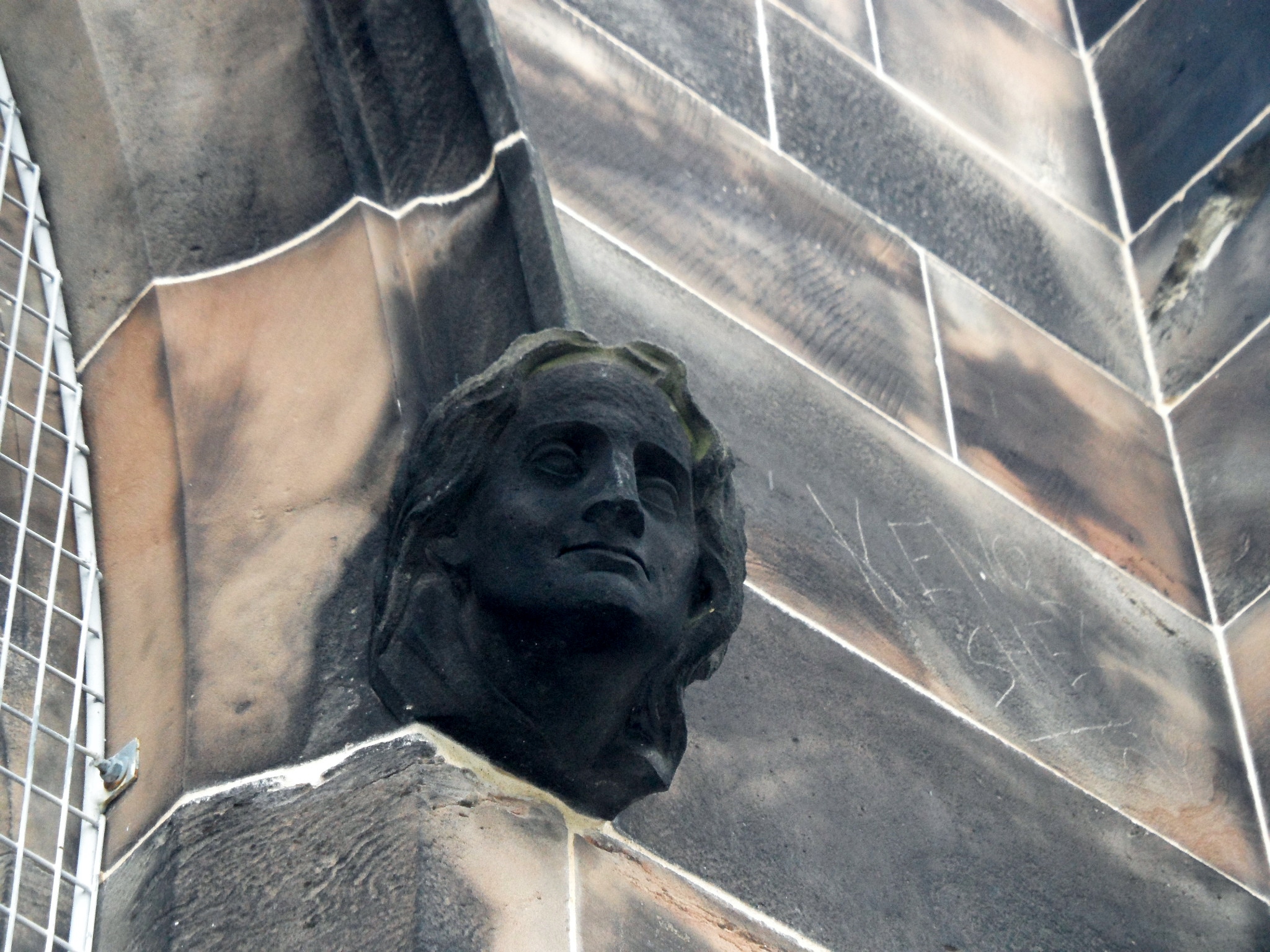
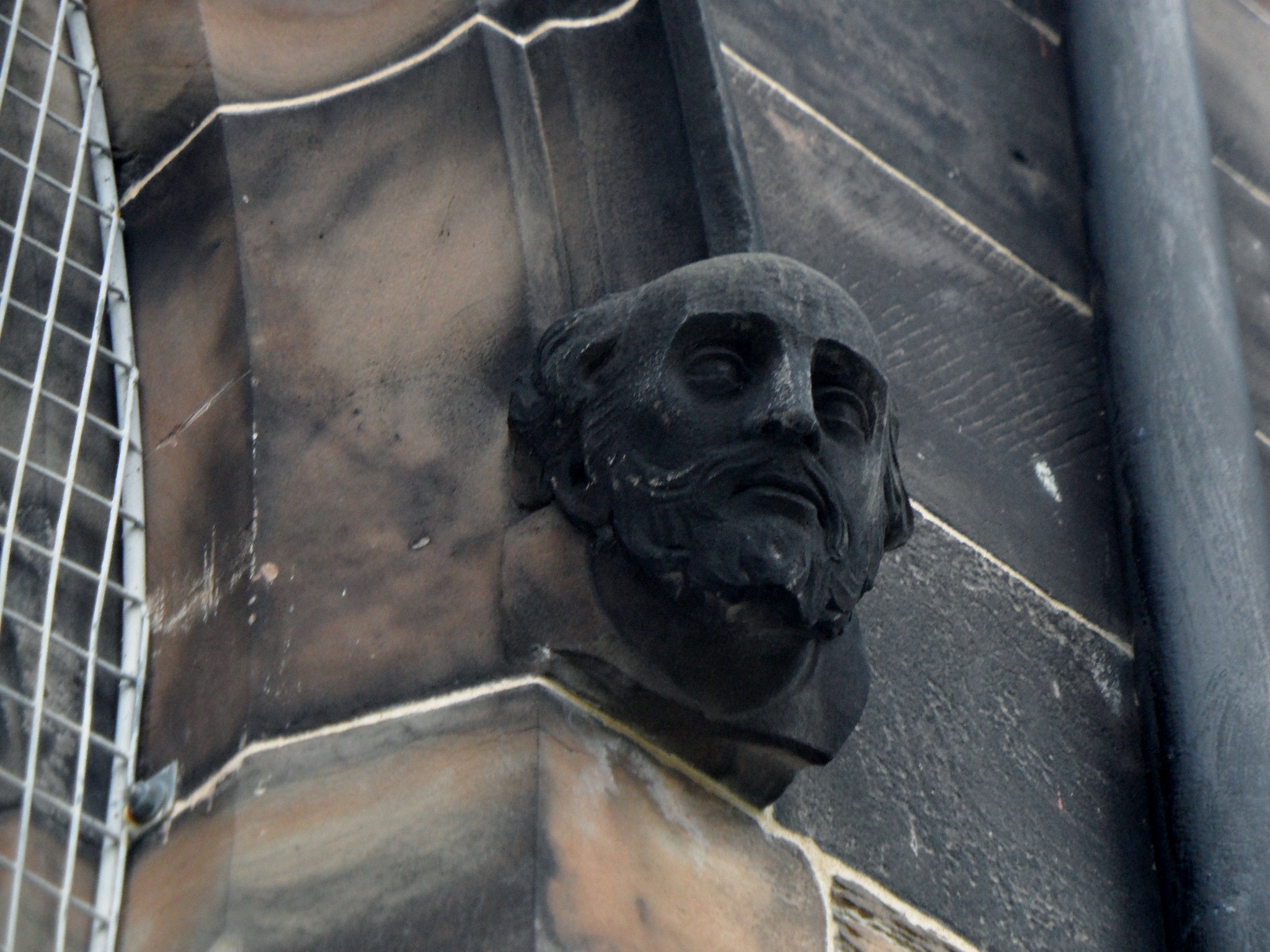
On the south (I think!) side of the church itself, I noticed stone heads, very similar to those at Christ Church. A couple of years prior to working on Christ Church, Thomas Johnson, the Lichfield architect, carried out an extensive restoration here at St Michael’s in 1842/1843 and presumably these heads are one of his additions. Whilst his work at Christ Church is generally applauded, Johnson’s work at St Michael’s has been criticised by some, as much of the original medieval fabric of the church was destroyed during his renovation. (I don’t know much about architecture, and so am not really in a position to comment. However, there does seem to be a certain irony in removing original features, and adding new ‘medieval style’ ones, such as these heads.) Again, as at Christ Church, I wonder who these faces captured in stone belong to and who carved them?

Looks like someone was inspired to create their own head alongside the carved ones….

Many of the  headstones and memorials that surround the church feature the names of the stonemasons that created them – Joseph Johnson of St John St (was this any relation to Thomas?), John Winslow of Tamworth St, John Hamlet of Dam St, James and George Lamb of Sandford St amongst others. Did any of these craftsmen also work on the church itself?

It seems Joseph Johnson may have ended up in a debtors prison. His name appears in the London Gazette, in a section entitled ‘Pursuant to the Acts for the Relief of Insolvent Debtors in England. The following PRISONERS, whose Estates and Effects have been vested in the Provisional Assignee by Order of the Court for Relief of Insolvent Debtors, and whose Petitions and Schedules, duly filed, have been severally referred and transmitted to the County Courts hereinafter mentioned, pursuant to the Statute in that behalf, are ordered to be brought up before the Judges of the said Courts respectively, as herein set forth, to be dealt with according to Law’.  Mr Johnson is listed to go before the Judge of the County Court of Warwickshire, holden at Coventry, on Monday the 21st day of June 1852, at Twelve o’Clock at Noon and is described as,

Joseph Johnson, formerly of the city and county of the city
of Lichfield, Stone Mason and Builder, afterwards of the
same place, Stone Mason, Builder, and Licensed Victualler,
and at the same time of Snow Hill, Wolverhampton, Staffordshire, Stone Mason and Builder, and late of the city
and county of the city of Lichfield, Stone Mason, Builder,
and Licensed Victualler


The Edinburgh Gazette of January 16th 1863, notes that John Hamlet, listed as an architectural draughtsman and stonemason of Dam St, Lichfield, has been awarded bankruptcy. How did they fall upon such hard times?  I’d like to find out more about these craftsmen whose job it was to record the lives of others in stone.

Notes:

1 – I was surprised to read in the county history that the churchyard was once let as pasture, although in 1801, the grazing of cattle was deemed inappropriate due to the ‘damage and desecration’ caused and it was decided that only sheep should be allowed. However, this was ignored, with tragic consequences – in 1809, there is an entry in the church register for the burial of a child, Joseph Harper, who was killed by a cow in the church yard.

Sources

Lichfield: Churches’, A History of the County of Stafford: Volume 14: Lichfield (1990), pp. 134-155.

Click to access page.pdf

Click to access page.pdf

History, Gazetter and Directory of Staffordshire  (1834), William White

http://archiver.rootsweb.ancestry.com/th/read/STAFFORDSHIRE/2001-04/0986182998