The Wishing Stones

It took me a while to find the wishing stone at Pye Green and it’s taken me even longer to write up what I found about the tale behind it on here. This story appeared in an old newspaper, told to the writer by a ‘greybeard’, one of the descendants of a family of Cannock Chase foresters, and I’ve taken the liberty of retelling it in my own words.
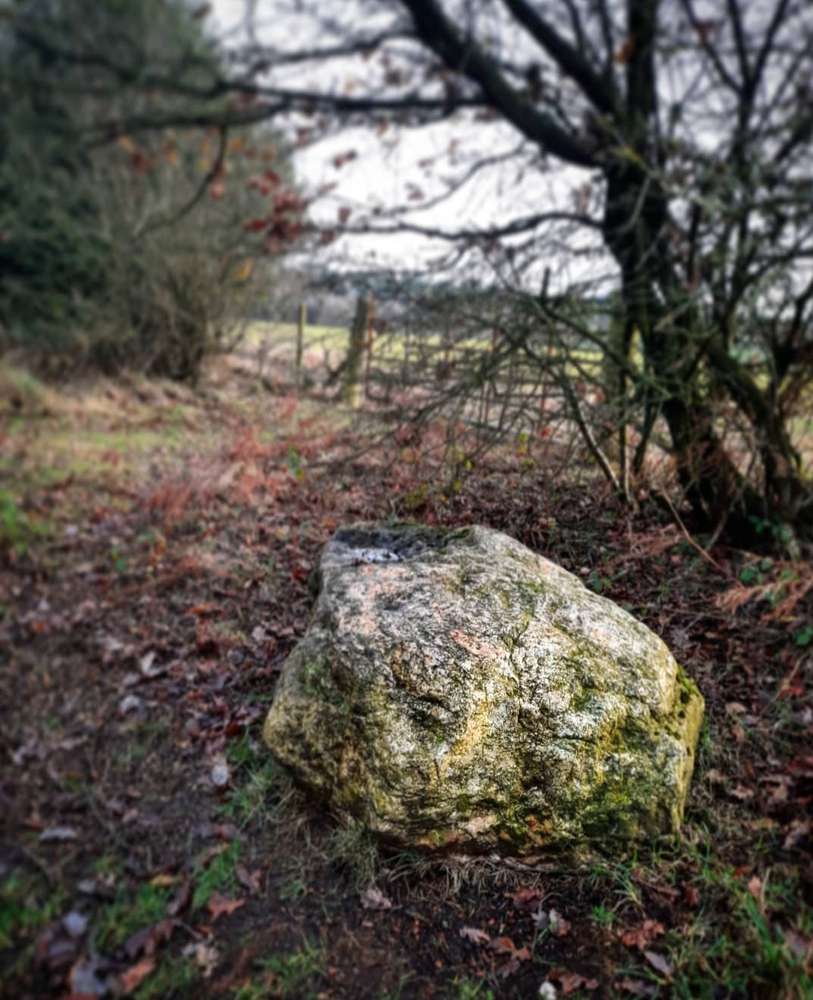

During the English Civil War, the Wishing Stone was the place where a young soldier and one of the daughters of the Cannock Chase foresters would meet. One day the soldier was called away to fight for the King at Worcester and left his lover with a promise to return. Every day that followed, she would wait at the stone for him and those passing her on the old packhorse route known as Blake St would hear her wishing for his return. Weeks passed by and one evening, when she didn’t return home, her father went looking for her. The local women suggested he try the stone and that’s where he found her, lips no longer wishing for her soldier to return but blue and still. The local women speculated whether it was the cold or a broken heart that took her in the end. When the soldier returned and asked where he could find her, ‘her body is in Cannock churchyard’ the local women replied, ‘but her soul is at the place we now call the Wishing Stone’.

Centuries later, if you stand at the stone and listen carefully, you can hear what sounds like a voice saying ‘I wish, I wish, I wish’. It might just be the wind blowing through the trees which surround the stone but the local women will tell you otherwise.

Newton Road Rail Station opened 1837. Closed 1945

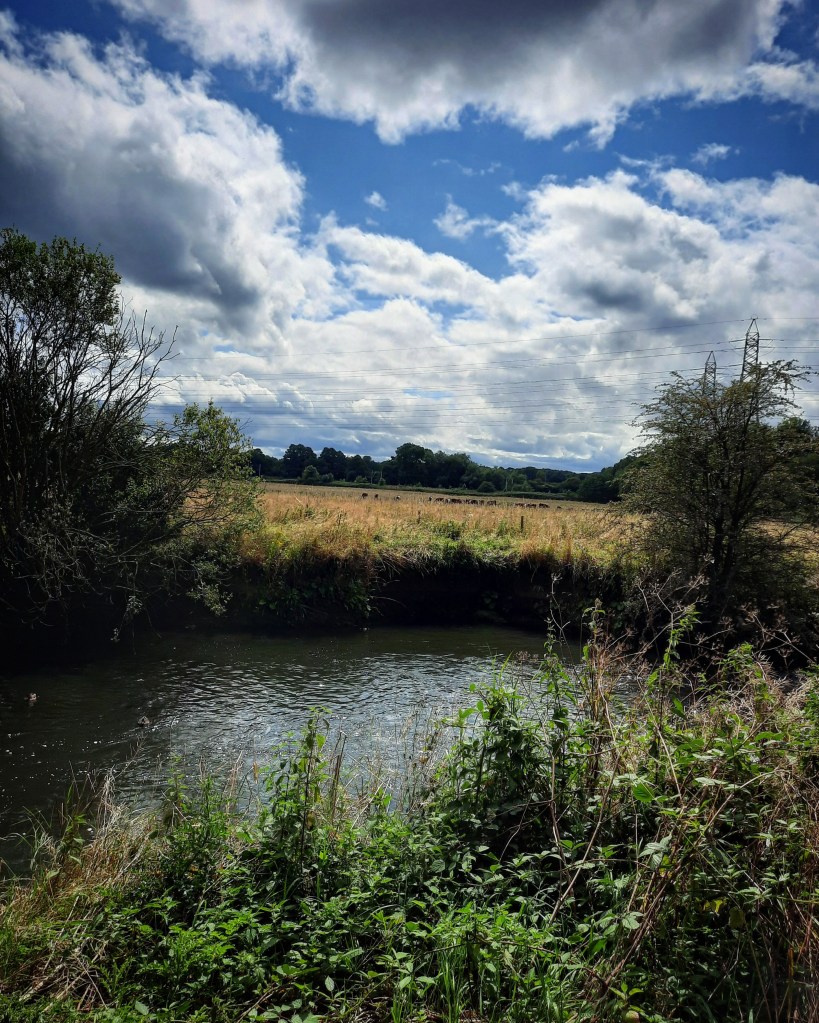
Two summers ago, I went to find another wishing stone over Walsall way (yes, I really do need to work on writing stuff up sooner). It’s described as being by a stile in a field leading to Newton Road Old Station on the London and North Western Railway. Folklore says all true lovers who step on the stone will have whatever they wish for come true in twelve months and a day. According to the author of the article in the Walsall Advertiser, you would often find love sick couples loitering around the place but all I could see was cows. I think the stone is on the opposite side of the River Tame to where I was but I wasn’t willing to wade over, even for a wish. I am hoping to go back tomorrow however, as I want to find an aqueduct with a haunted patch of grass and the ruins of the priory alongside the eponymous Sand Well. Is it a wishing well though?
Cannock Chase Courier 21st September 1912

Walsall Advertiser 6th September 1913
The Funeral

I’ve long contemplated the idea of writing semi-fiction, taking inspiration from the legends and folklore I love and bringing in elements of my own story telling and experiences. Would it work though, I’ve wondered? Well, I’ve finally concluded that there is only one way to find out….

This is my first attempt. Please be gentle with me.

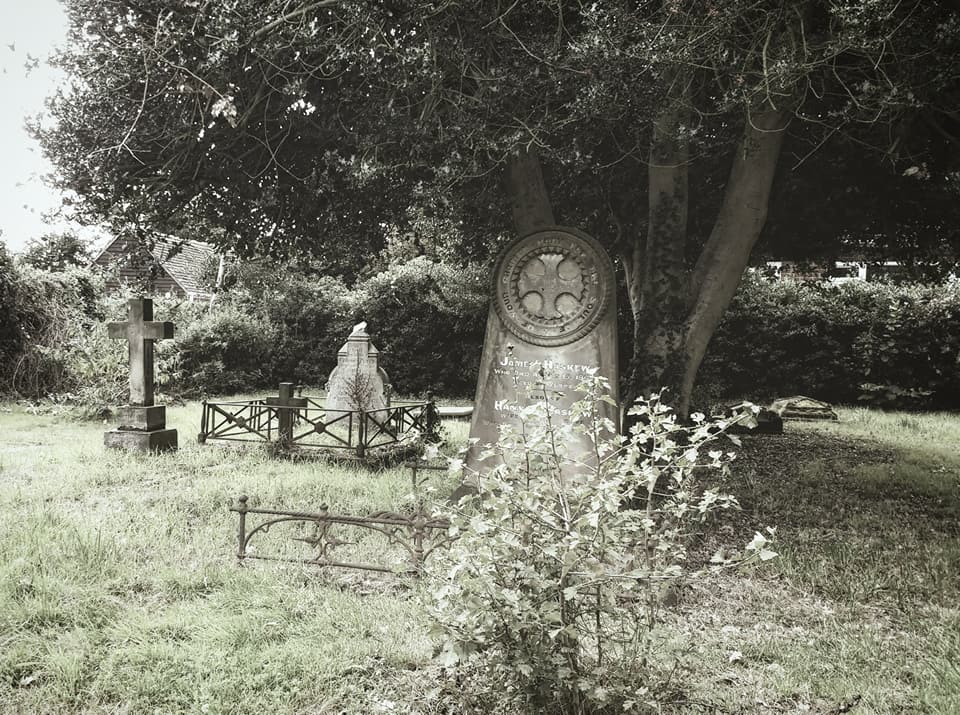
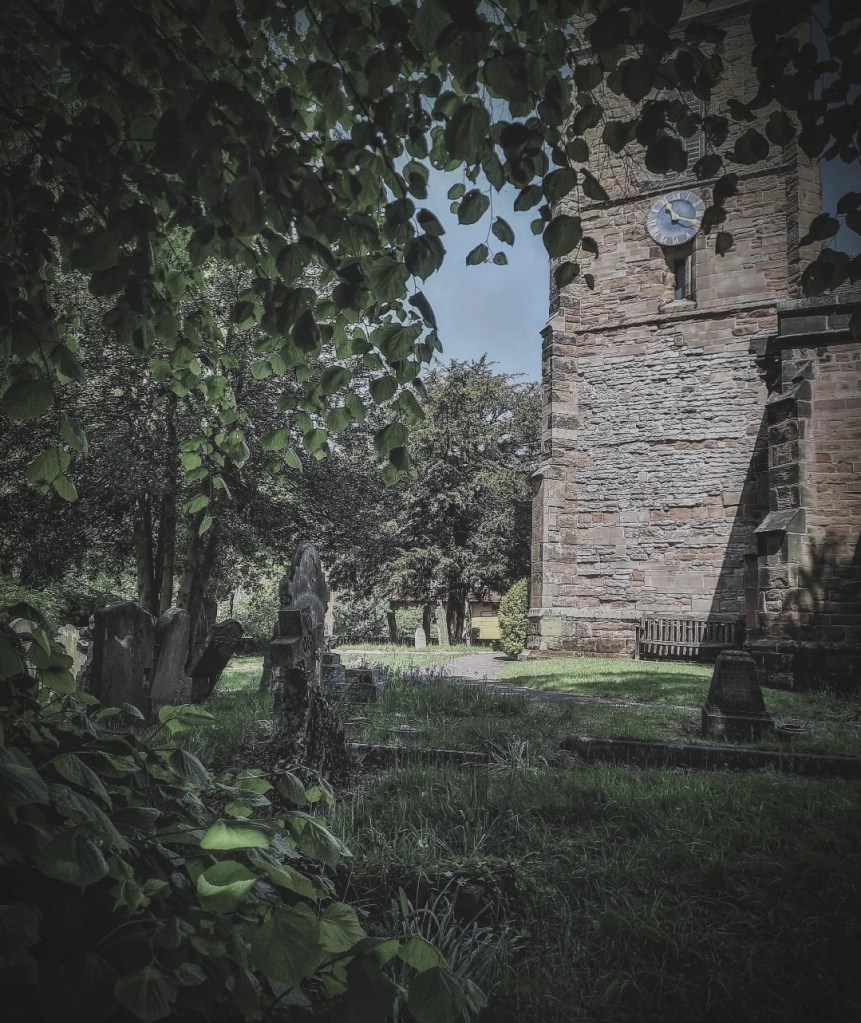
In 1974, a group of children were spooked by the sight of a figure in white rising from a grave in the churchyard of St James, Aldon on their way home from youth club. There was no indication of which grave it was in the newspaper report which had intrigued Felicity Murray and when she arrived at Aldon church on a warm July afternoon in 2021, she found no clues. The cemetery contained the usual assortment of Victorian tombs, any one of which could have been a contender for those strange events explained away as a trick of the light fifty years prior.

After taking a few photographs of the carvings on the church doorway, Felicity took a moment to sit in the sunshine on the bench outside.  On hearing the sound of horses’ hooves, she looked up from her phone and the message she was sending and noticed a funeral cortege approaching the church gates. The two black horses adorned with blue and white plumes and ribbons and pulling a Victorian hearse made for a fine sight but feeling uncomfortable as an uninvited onlooker, Felicity decided to leave the churchyard before the mourners began to get out of their cars. As she slipped out of the gate, Felicity muttered an awkward apology to the female undertaker but received no acknowledgement.

Felicity’s own car was parked just around the corner and as she pulled out of the space, she thought she’d take another look at the horses as she drove past the church. Yet on turning the corner, the horses were no-where to be seen. Neither was the hearse, the undertaker, the mourners’ cars. Nothing was there to indicate the presence of a funeral and the church doors remained shut. Getting back to her car had taken just minutes and even with the greatest efficiency, there was surely no way everyone was already inside.

As a bemused Felicity drove home, she tried to rationalise the experience. Perhaps the church had been a stop off on someone’s last journey and their final destination had been elsewhere? Maybe she’d catch up with cortege a little further up the road. Even the idea that she’d witnessed something paranormal, perhaps the replaying of a past funeral or a time slip crossed her mind but no. Despite the vintage touch of the horse-drawn hearse, every other element had been indisputably contemporary, especially the female undertaker. Distracted by her thoughts, Felicity didn’t notice the cyclist as she pulled out of a junction until it was too late.

The funeral of Jack Sharp took place at St James, Aldon on a warm July afternoon. He was brought to the church in a hearse pulled by two black horses, each adorned with blue and white plumes and ribbons, the colours of his favourite football team. On arriving, the undertaker thought for a brief moment that she’d seen a woman sitting outside the church door but concluded that it must have been a trick of the light.

Pills ‘n’ Chills and Deli Bakes

Yesterday I was in Tamworth for the summer food festival, enjoying excellent locally produced pork pies, sausage rolls and blue cheese.

After a gentle stroll around the town, I hopped back into the car and headed to Hopwas for a forage. For once, my walk took me along the canal in the opposite direction to the woods, a decision which may have been influenced by having read about a disused and reputedly haunted cemetery on Hints Road.

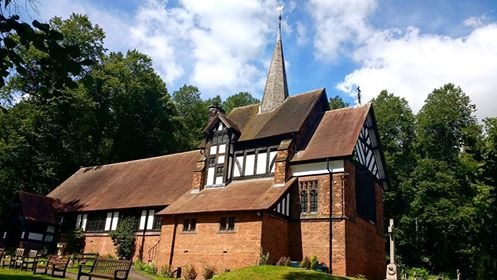
The graveyard once belonged to Hopwas Chapel, built in 1836 and dedicated to St John, and its resident ghost is said to be a small boy who can be seen by children (but not by a childish 39 year old it seems). The chapel was pulled down in the 1880s, as it was ‘full, small and inconvenient’, and replaced by the gorgeous St Chad’s Church up on the hill. A drawing of the old chapel can be seen here on the Stafforshire Past Track site. The old font survived and stands outside the new church, and the chapel’s bell still tolls in St Chad’s tower.  According to a report in the Tamworth Herald on Saturday 16th April 1898, the holy table from St John’s was made use of in the new Workhouse chapel.

St Chad’s, Hopwas, dedicated and opened in 1881

The old font from St John’s Chapel

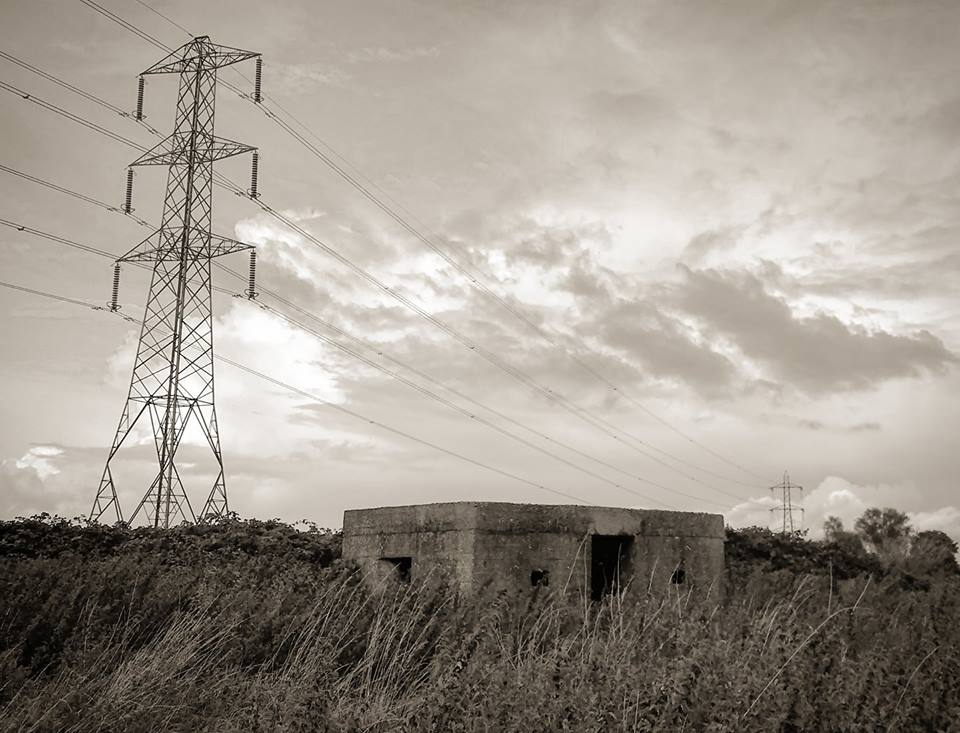
Nearby, I found a cottage with the best name ever, which fitted in perfectly with the theme of the day, followed by a pill box in a field alongside the River Tame.

Too well guarded by nettles to even attempt to take a look inside, I plan to return as part of a much longer pill box walk along this section of the Western Command Stop Line Number 5 in winter. If I eat as much as I did at the summer festival, on the way home from the Tamworth Christmas food festival would probably be a good time….


Sources:

Click to access A%20Look%20Around%20St%20Chads.pdf

Underneath The Arches

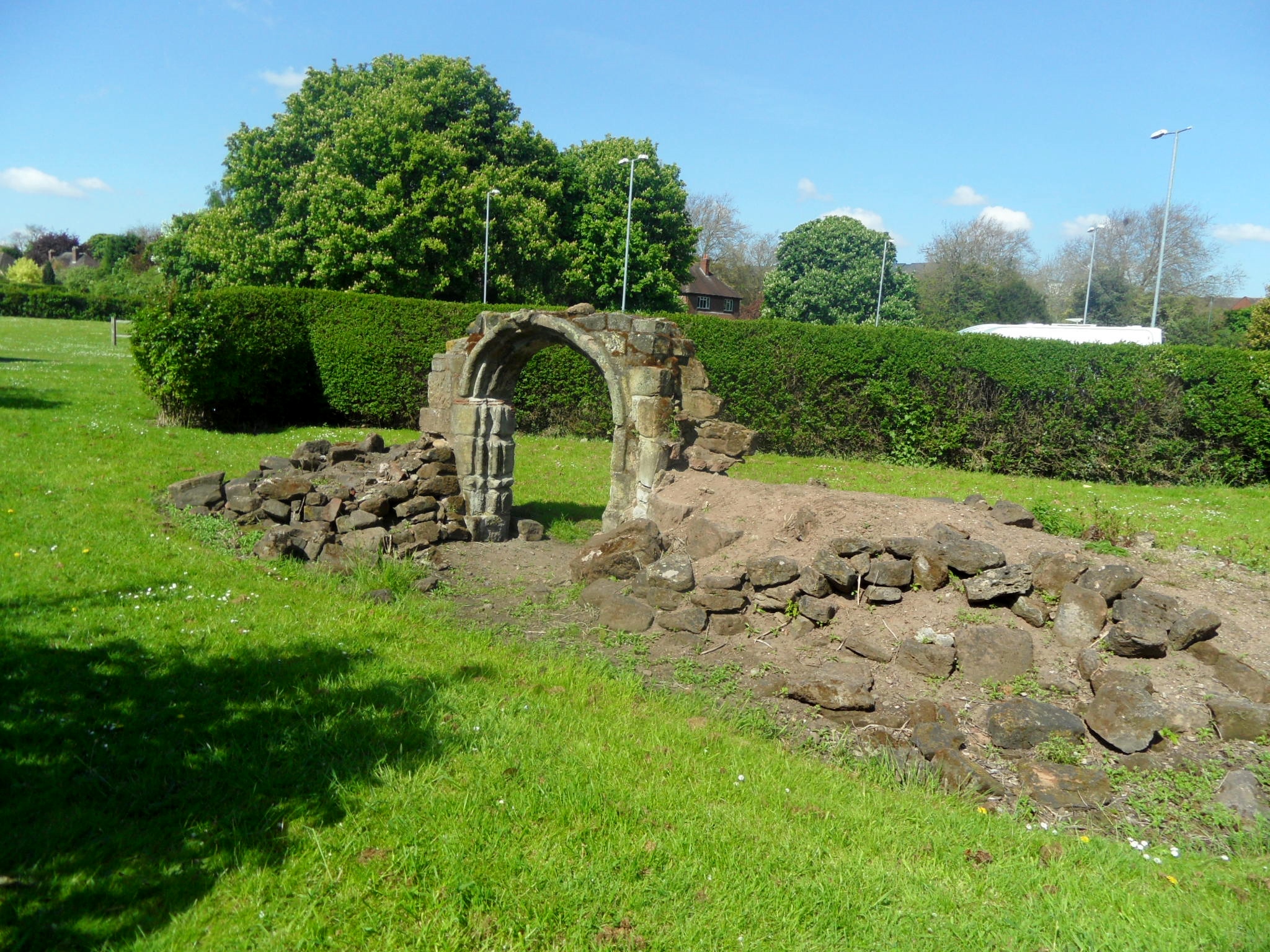
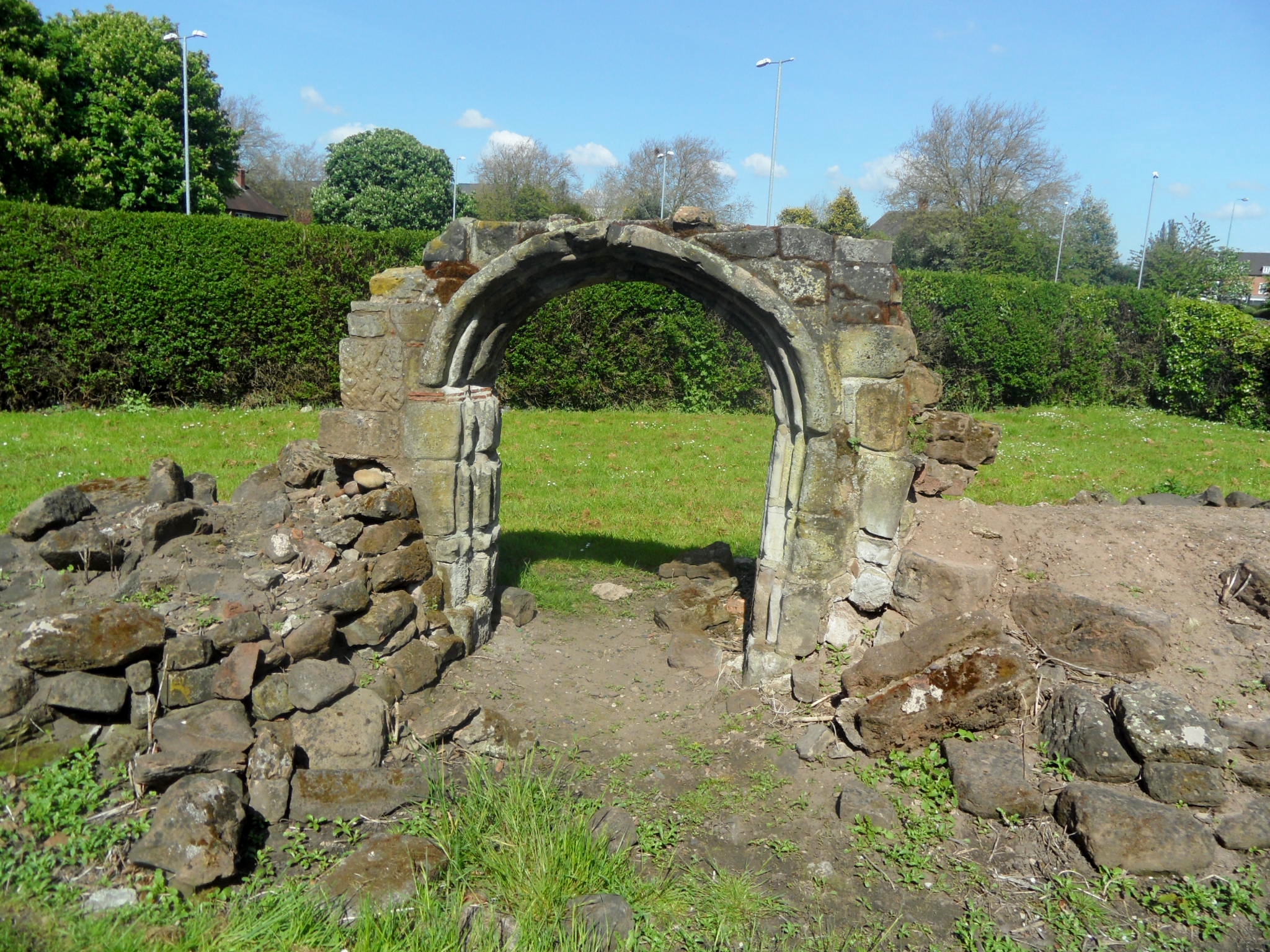
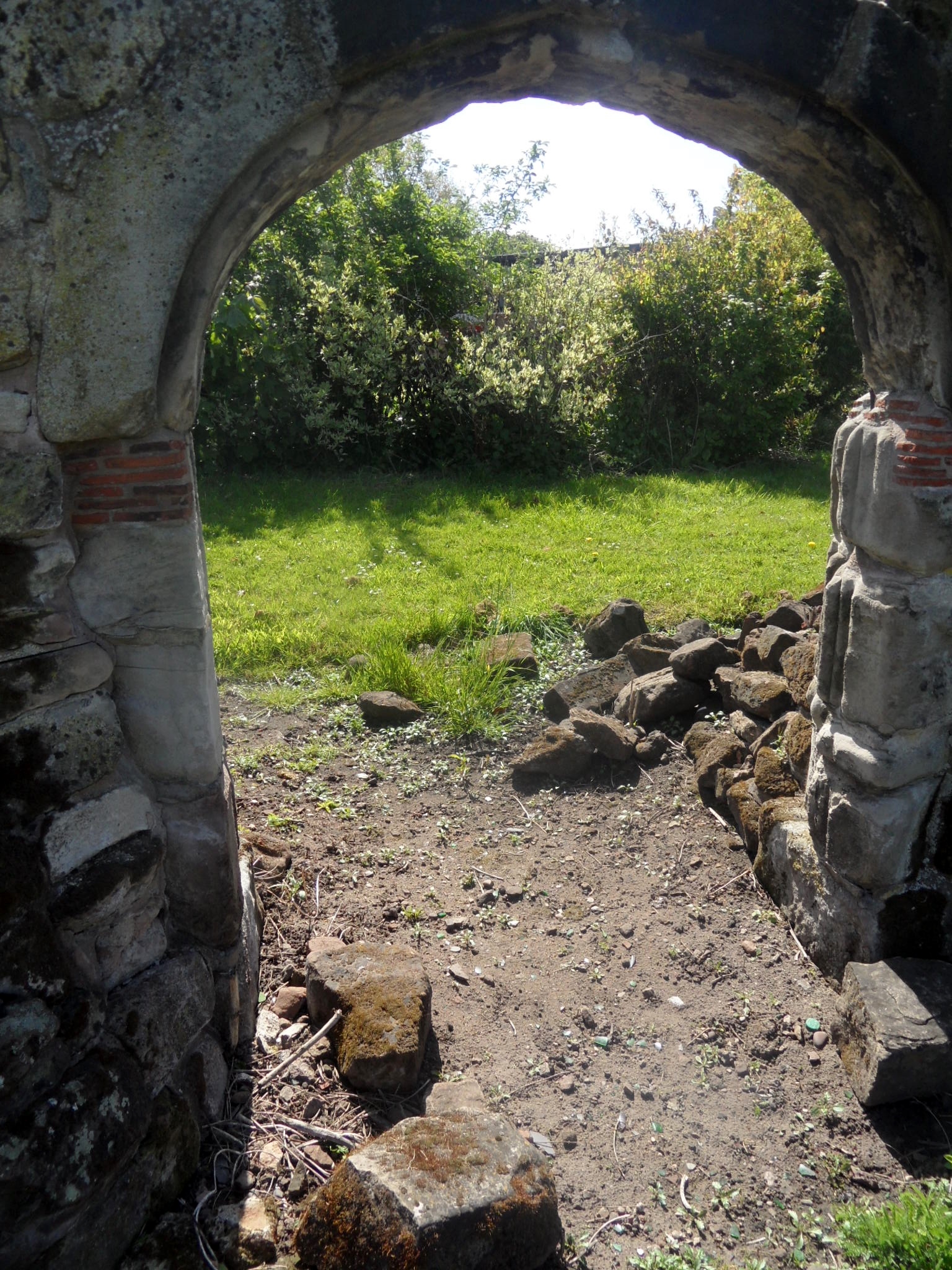
A stone arch stands in the grounds of the Lichfield Campus of South Staffs college and I’ve never been sure whether it is a folly, or part of the Franciscan Friary which once stood on the site. According to a book on the history of the Friary School (1), the arch was discovered in the walls of outbuildings taken down to make way for the new Friary Road in the 1920s. Apparently, it was incorporated into the staff entrance to the school, which used the buildings now occupied by the Library from the 1920s until the 1980s.  A former pupil describes the arch as standing on the lacrosse field during her time at the school. Inevitably, over the years the imagination of school children and the history of the site have combined to create legends and stories, including one about a ghostly monk that people are said to have seen passing through the arch.

Another intriguing discovery made nearby during the 1920s was the gravestone of Richard the Merchant. Actually, rediscovery would be a more accurate description, as the stone had first been uncovered in 1746, when a former owner of the Friary was laying the foundations for a garden wall.  Thankfully, sketches were made of the stone and its inscription as nowadays, its markings can be barely made out and the stone itself is even more hidden away now than when I wrote this post about it back in July 2011.

Tombstone of Richard the Merchant,now in the wall of Lichfield Library

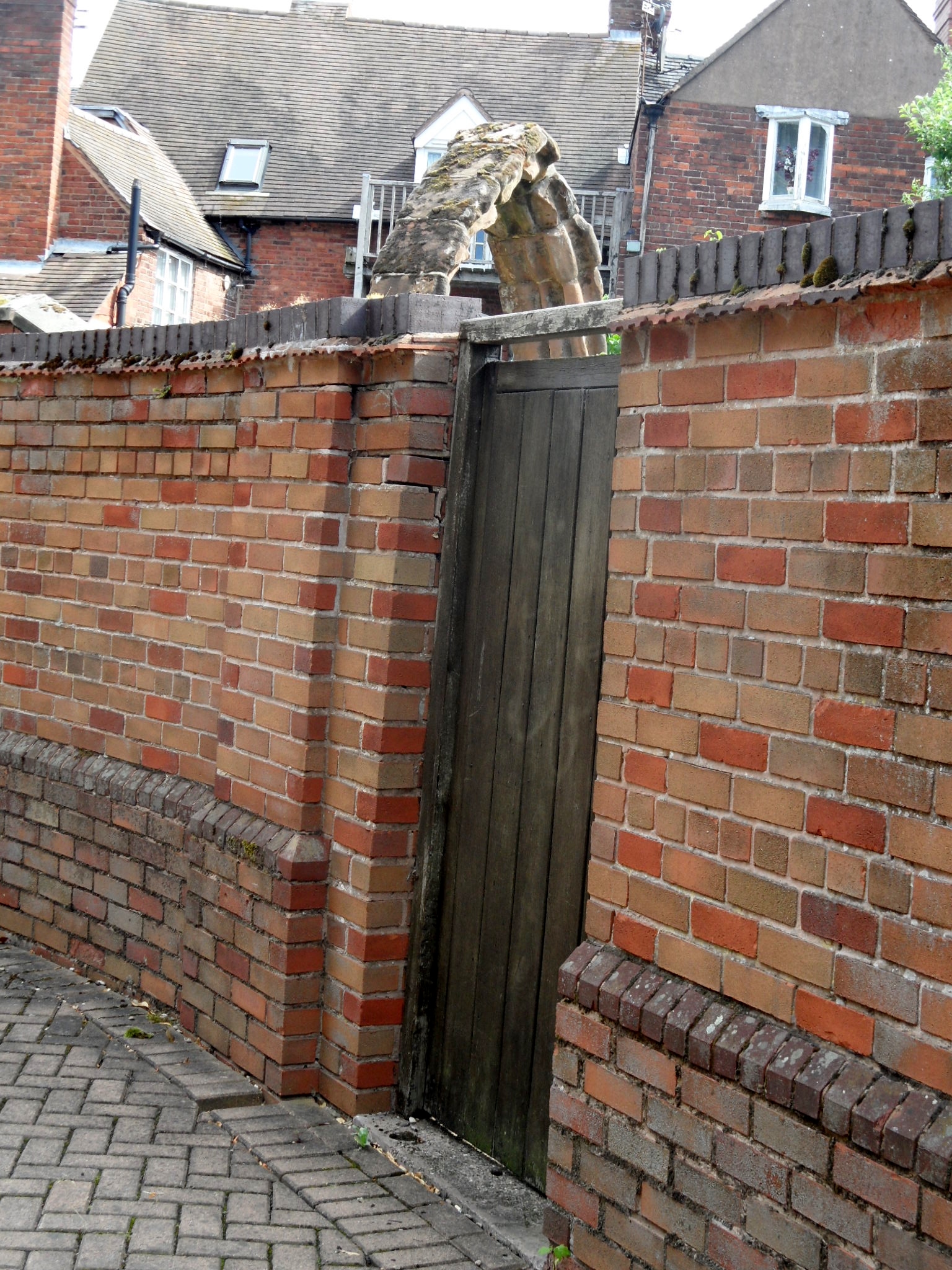
Today I was walking between Dam St and the Bird St car park (which I still call the Woolworth’s car park despite that shop not having been there for years), when I caught a glimpse of what seems to be another arch, over a garden wall which must belong to one of the properties on Dam St. Does anyone have any information on where this arch is from, and why it is here? And of course, if anyone has any stories of ghostly Lichfield residents walking through this one, please let us know!

Notes:

(1) The History of the Friary School, Helen Mullins 1981

(2) I suppose it would actually be a friar, rather than a monk (there is a difference!) but as we’re talking ghost stories here it’s probably not the place to worry too much about historical accurancy!