Made of Stone

During the last couple of weeks, if you’ve walked along the path that runs along the top of Beacon Park (between the A51 and the football pitches), chances are that you might have spotted this pile of moss covered stones. A lot of the vegetation in this area has been removed recently, making their presence much more obvious than when I first came across them in Spring last year.

SAM_1044 SAM_1048

Back when I first noticed them, I did a bit of asking around and I was given three different stories regarding their provenance. The most likely explanation came from someone at Lichfield District Council who said that the stonework was a section of the balustrade which runs around the park at the Beacon Street/Bird Street entrance, which had been removed to make a new corner entrance (near to the Chandlers kiosk/public toilets) sometime in the 1980s. However, someone else thought that the stones were what remained of a structure belonging to the farm which once occupied this area of the park and another person suggested that they were part of some sort of tower which was at Stowe Pool until it was dismantled after becoming structurally unsafe.

Last week, Bob Houghton, from the Burntwood Family History Group and Lichfield and Hatherton Canal Restoration Trust noticed them and sent me an email to say that some of the people who work at the park had told him that they were from the old post office which once stood on Bird Street, where Ego now is. So now we have yet another explanation!

To be honest, I’m torn between the truth and enjoying the ongoing speculation about what the stones are and how they came to be in a patch of woodland in the park. As the moss grows fat on these old stones, I hope that the stories keep growing too.

SAM_1157

The last time I walked past the stones,  I found a handful of bits and bobs scattered around them.  I’m pretty sure these are jigsaw pieces to other stories and nothing at all to do with this little puzzle. However,  if you want to include a scrabble tile, some pottery, a piece of tile and an old clay pipe into your version of the story, then please feel free!


Lamb Carvery

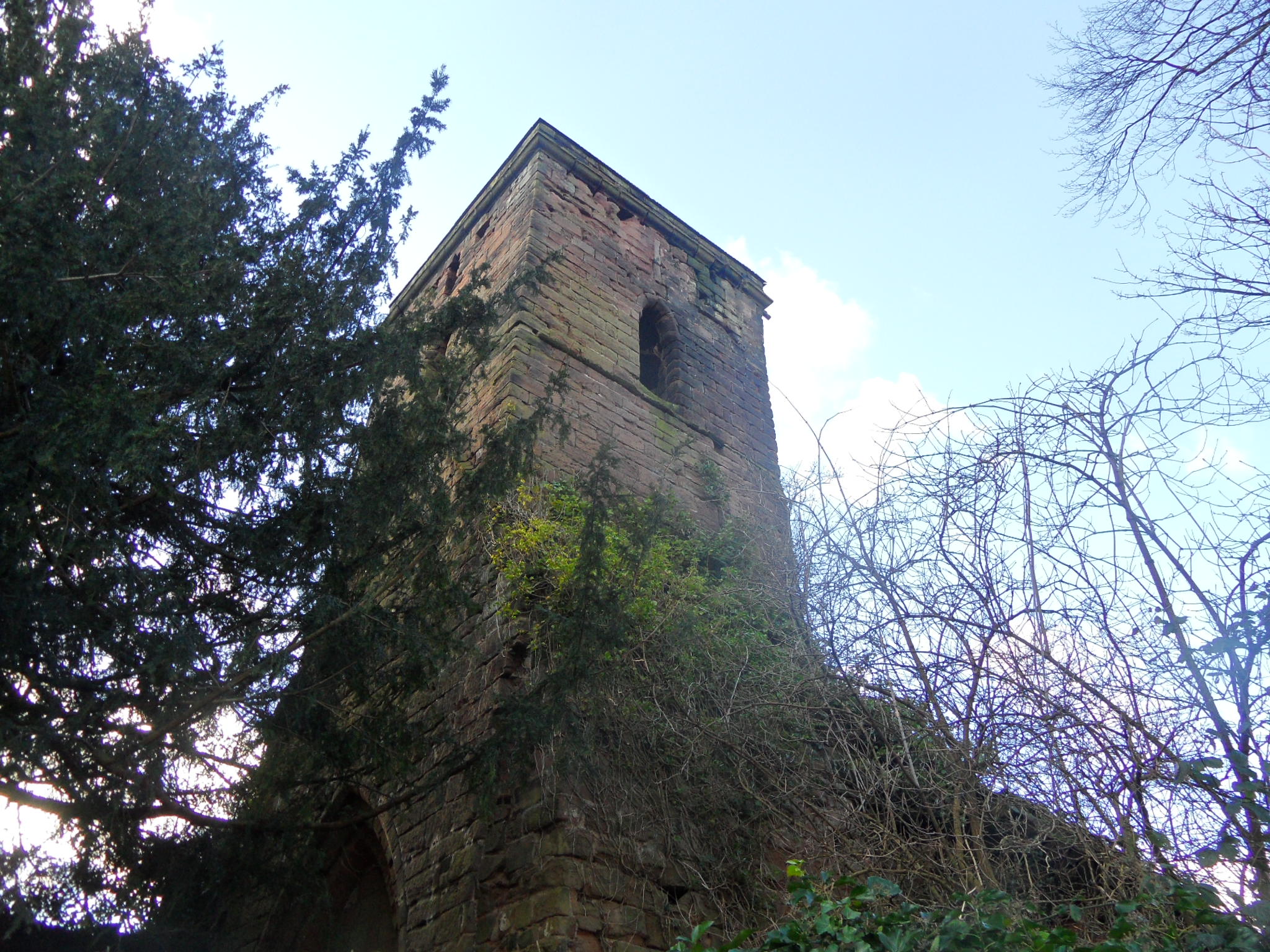
Just a very quick update on the old church tower at Shenstone. I haven’t had chance to get over there since writing the previous posts on the subject and so this morning, I was really grateful to receive a couple of photographs, taken just today, which show the carved stone on the tower really clearly.

In the churchyard at the top of the hill is an old tower...

In the churchyard, at the top of the hill, there is an old tower…

...and in the old tower is a door...

…and in the old tower, there is a door…

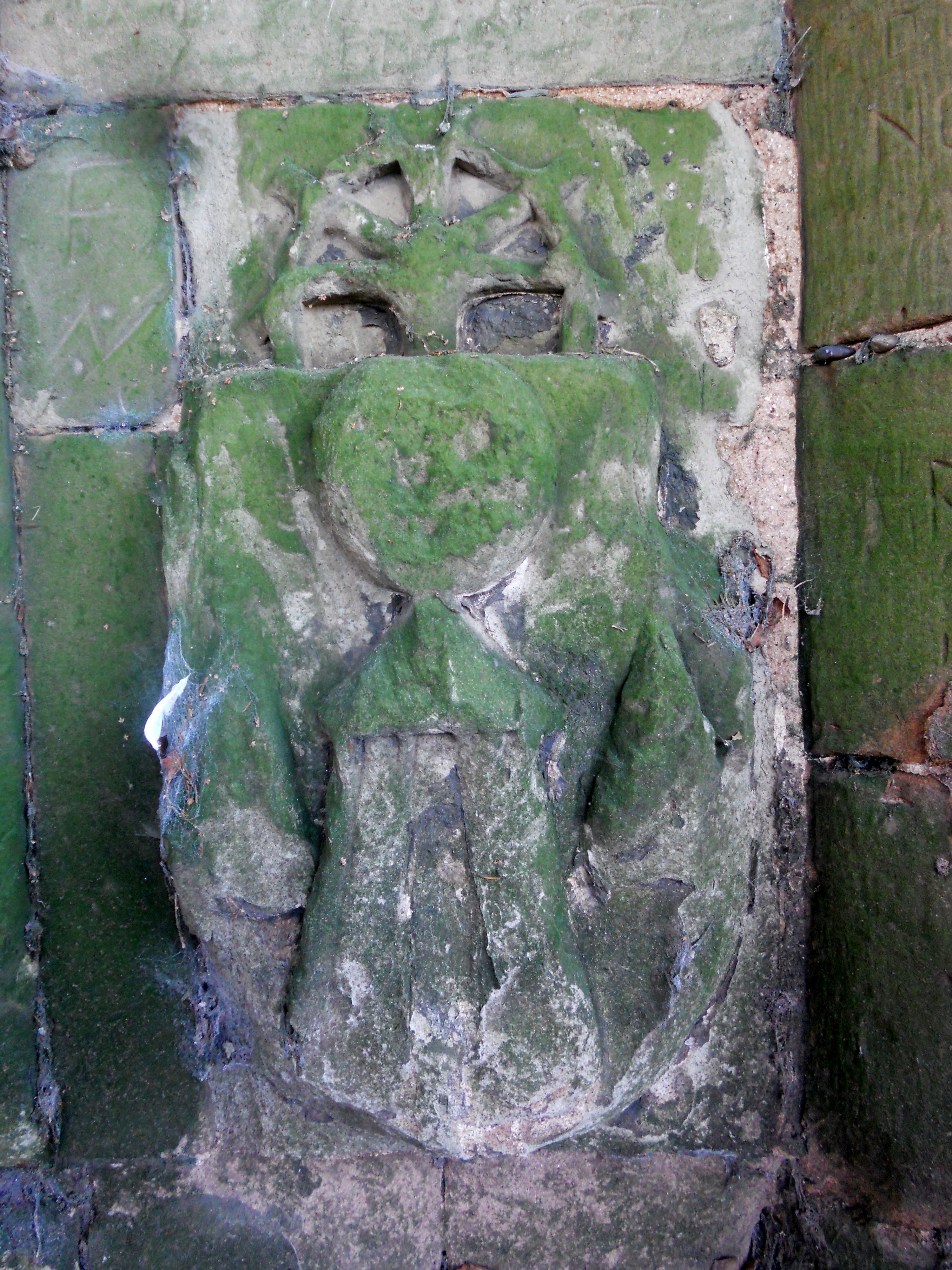
The carved stone at the ruined old church at Shenstone

…and next to the door is this carved stone

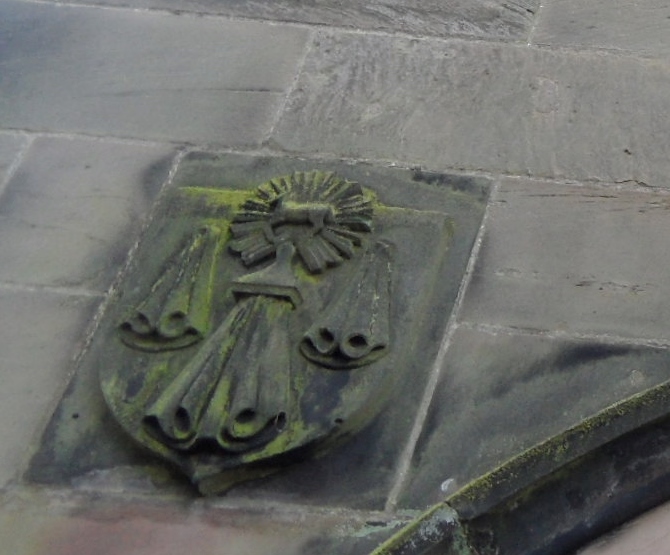
Although centuries of exposure to the elements has worn away much of the detail, including the lamb (which Mr Foulkes may have been referring to when he reported seeing a stone with a carving of a lamb near to the north door in the late 1890s), it can be identified as the arms of the Merchant Taylors, one of the twelve great Livery Companies of London. It shows a tent (which apparently the Taylors would once have made for jousting tournaments) with an ermine robe either side (another nod to their trade) beneath a lamb within a sun. The lamb represents John the Baptist, the saint whose name was given to both the old church and the more recent church here.  It looks like there is some graffiti carved into the old sandstone blocks of the tower too, which may also be of interest.

St Michael's Church at Lichfield's version of the arms

St Michael’s Church at Lichfield also has a version of the arms on the porch.

There was a story that after the old church was abandoned as it was deemed unsafe, ‘it was found to be so remarkably sound that blasting operations were required to demolish the masonry’. Eventually they succeeded and materials from the old church were sold in 1853/54 for £111 2s 8d.

I am not sure what the connection between the Worshipful Company of Merchant Taylors of the City of London, and parish churches at Shenstone and Lichfield could have been, but I’ll keep looking and if anyone has any ideas or suggestion in the meantime, please share them!

Sources:

Parliamentary Papers, House of Commons and Command, Volume 48

Walsall Legends

My husband grew up in the Highgate area of Walsall, where the malty aroma from the local brewery used to hang in the air and the local kids would tell stories about the mysterious ruined windmill. Thought to have been built in the late 1600s to grind corn, Highgate windmill has a fascinating history which you can read more about here in this article by Walsall historian and writer Stuart Williams. If you want to go and have a look yourself, go sooner rather than later. Once spring gets properly underway, it’ll be hard to see the mill for the trees.

Highgate Windmill

Highgate Windmill, Walsall

Last Summer I could barely see the windmill but did spot this painted board through the trees.

Last Summer I could barely see the windmill but did spot this painted board through the trees.

Sadly, there’s not even a whiff of brewing in the air at the moment – the Grade II Listed Highgate Brewery hasn’t been operational since 2010 and stands unused behind the locked centenary gates (purchased and installed by the Friends of Highgate Brewery in 1998), its future uncertain at present.

Highgate Brewery

Highgate Brewery

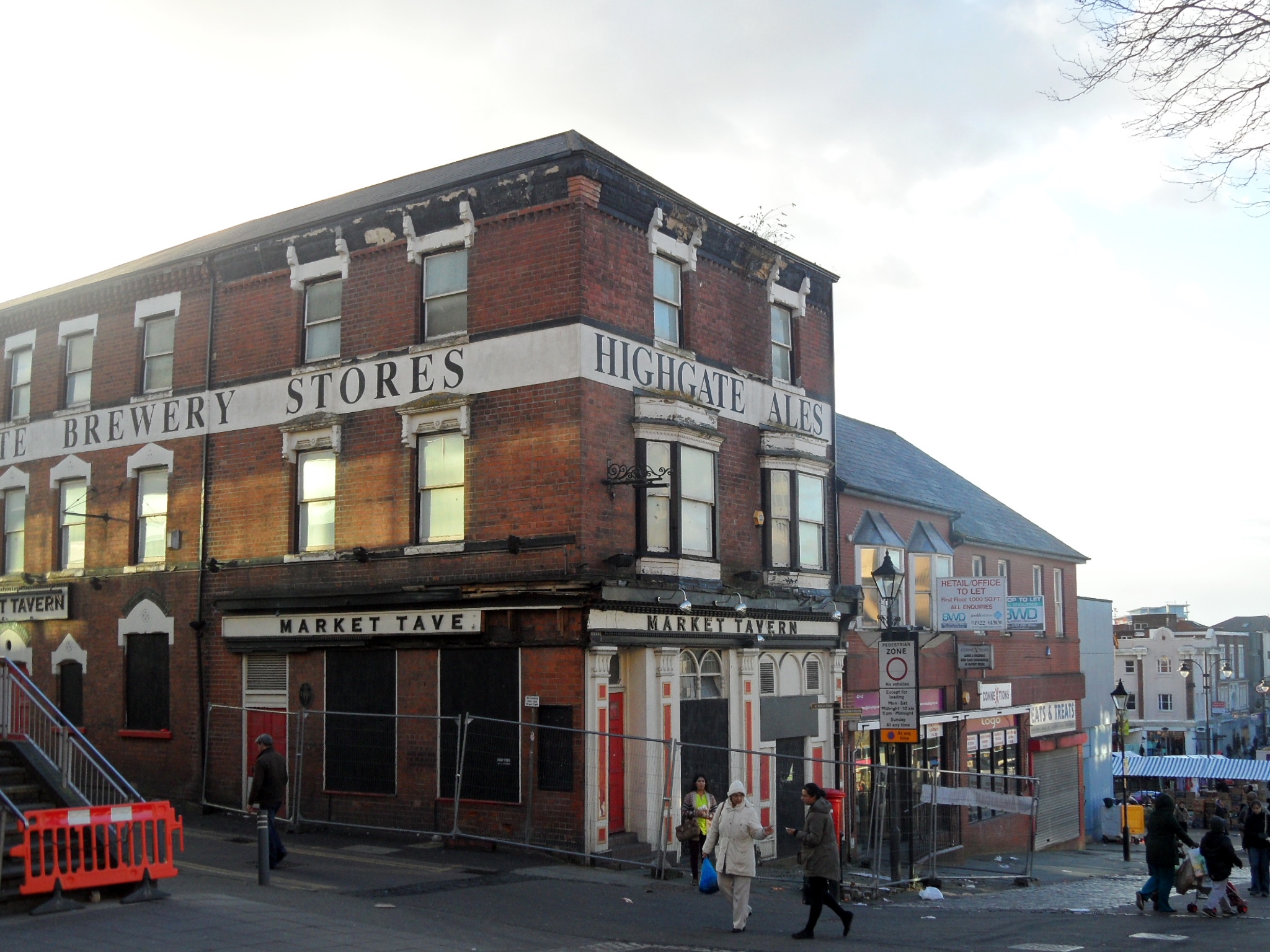
Yesterday, as well as visiting the family, we went to have a look around the Art Gallery and the town. On the way back we passed the pub that we once knew and loved as the Brewery Stores & Vaults. Back in the late 1990s, it was one of the liveliest places in town but now, like the brewery whose name it bears, it stands empty, expect perhaps for the hooded figures and disembodied heads said to lurk in the cellars

SAM_9911

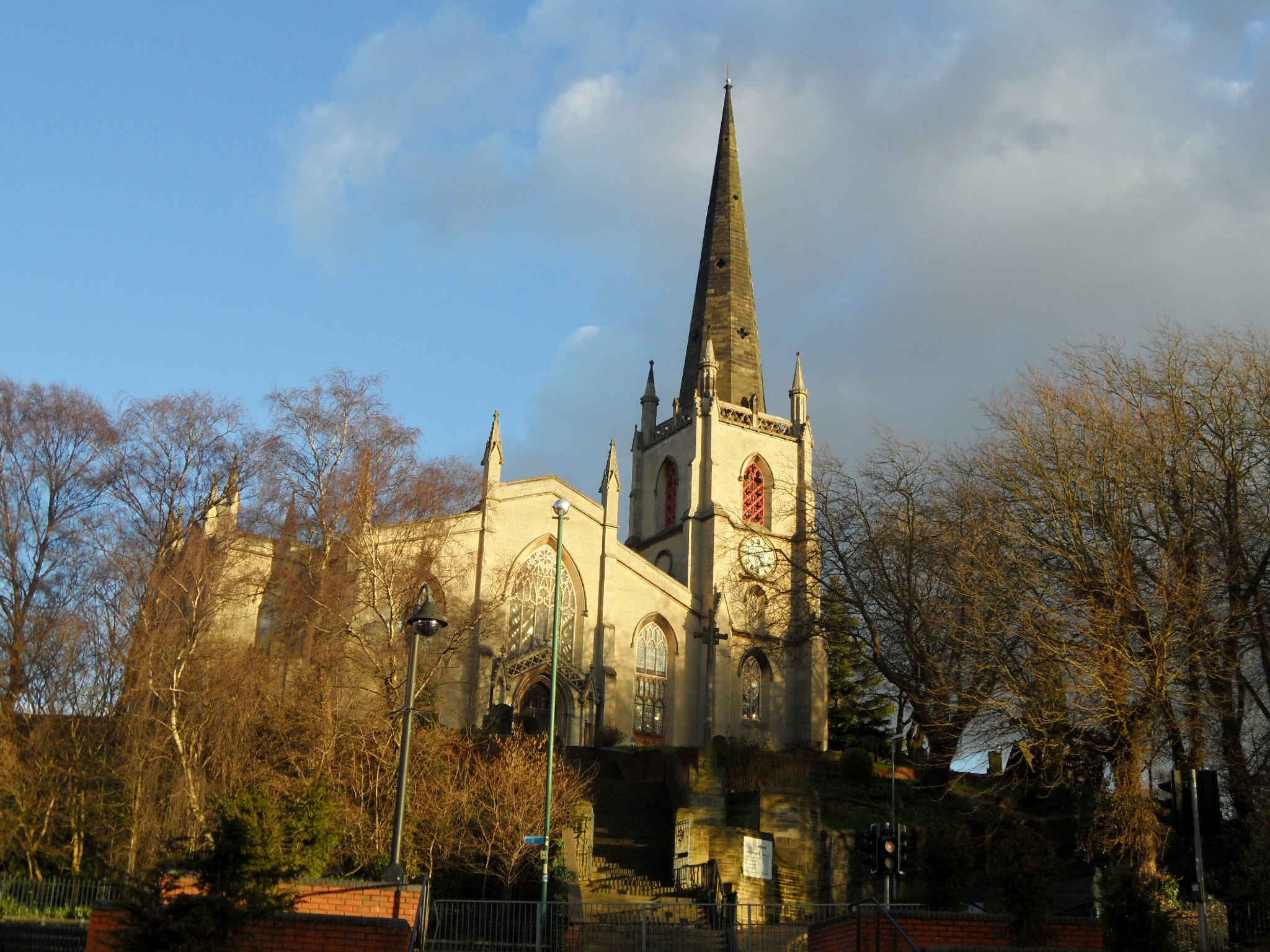
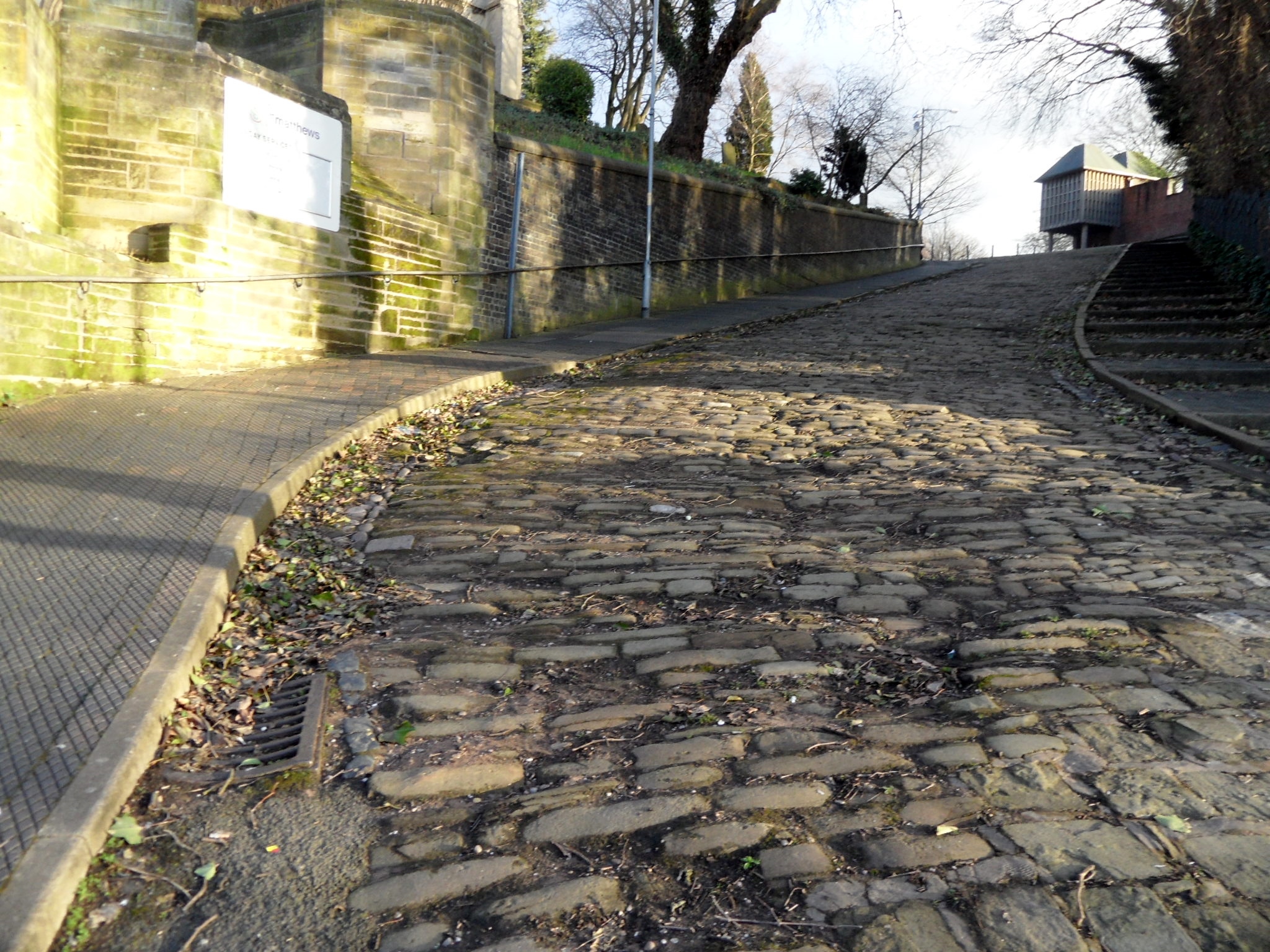
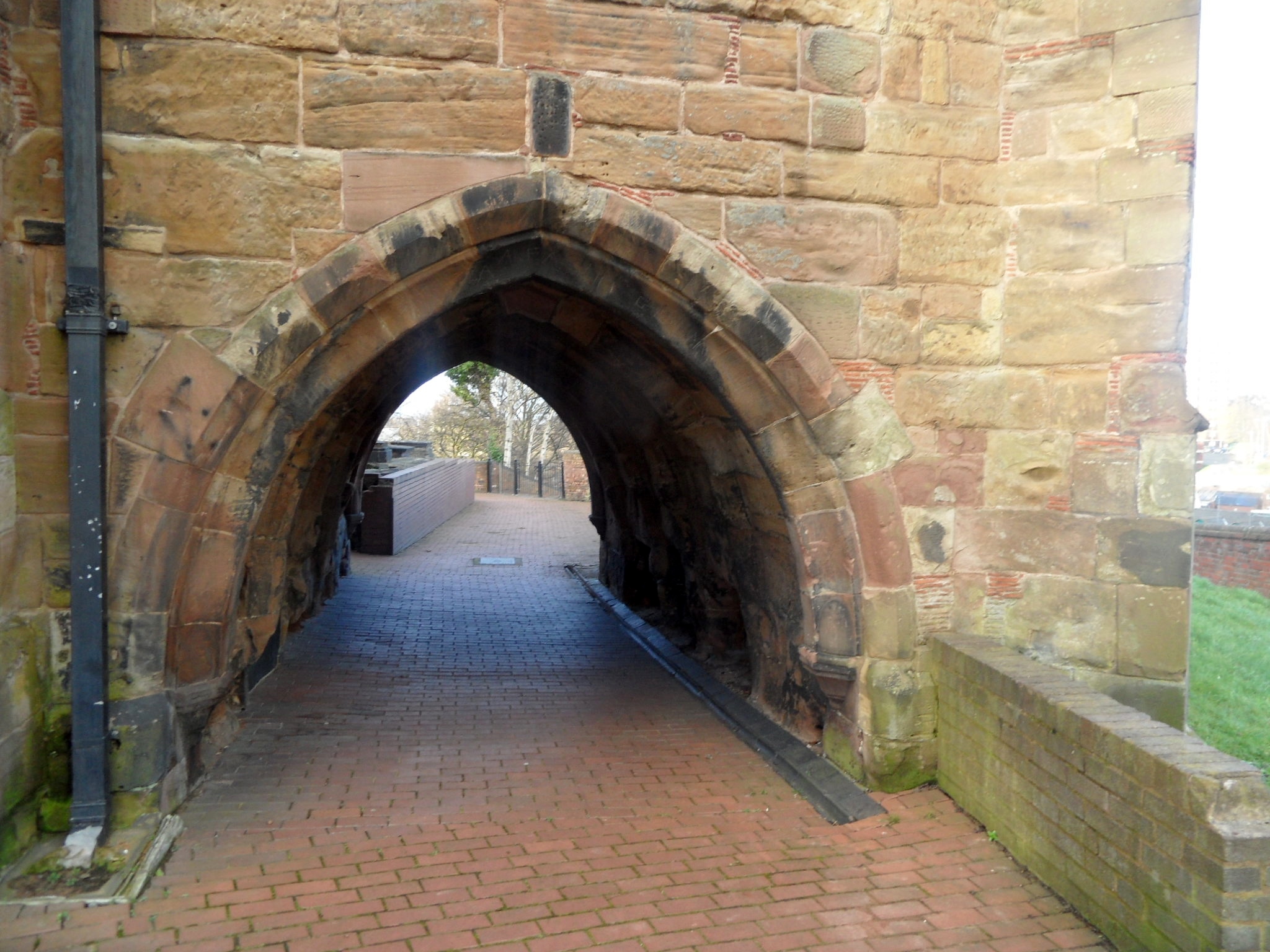
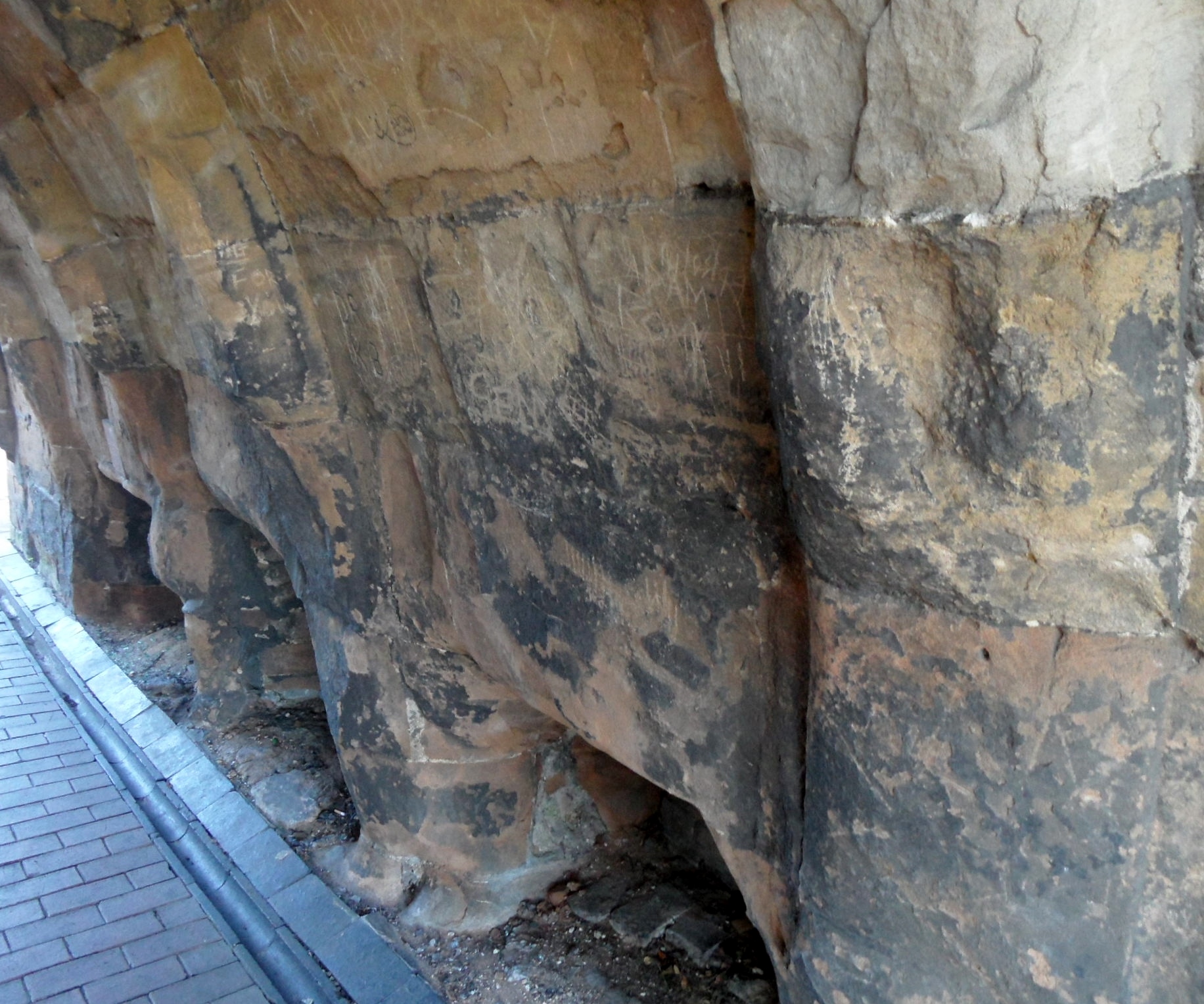
We continued our way back over the limestone hill where the church of St Matthew’s has dominated the Walsall skyline since at least the thirteenth century (although it has only been know by that name since the eighteenth century – it was previously ‘All Saints’). The first time we walked up this hill together, Mr Gomez told me that it was paved with medieval cobbles. I’m not sure if that is true but it’s something that has fascinated me ever since, as has the arched passage on the east end of the church, covered in graffiti and with curious niches on the east side.

As well as this overground passageway, there are supposedly underground tunnels running from here to the White Hart Inn at Caldmore, Barr Beacon and Rushall Hall.  In a history section of the Walsall Council website, there’s a quote from a Mr G of Bath St who in the 1950s said one of the entrances to the tunnels was located at the bottom of some steps of a toilet which once stood on Caldmore Green. He also added that he had been told by some old women that during the reformation, some priests went down the tunnels to escape and were killed after they were filled in.

St Matthew's Walsall

St Matthew’s church, Walsall

Wasall from the Art Gallery.

St Matthew’s Walsall as seen from the Art Gallery.

Medieval cobbles

Medieval cobbles leading up the hill?

Passageway under the chancel of St Matthew's

Passageway under the chancel of St Matthew’s

SAM_9929

Niches in St Matthews passageway

Niche interest

One of my favourite stories about St Matthew’s and Walsall is one I read recently in a book of Staffordshire folktales.  Apparently, the church was originally supposed to have been built on a meadow at the ‘Churchery’, now known as the Chuckery. However, this was where the fairy folk danced and so, naturally, they objected to the plans and took matters into their own tiny hands, moving the foundations of the new church up the hill to the site where it stands today. In another version of the story, the church was moved by witches who had transformed themselves into white pigs.

We walked up a good appetite in Walsall and so we finished our day at the legendary Hargun’s Sweet Centre on the Caldmore Rd, intending to take some goodies back to Lichfield, although they never actually made it past Walsall Wood in the end. Anyway, what I learned today is not only that you can eat a lot of baklava in a twenty minute car journey, but also that once in a while, it’s good fun to explore what’s on someone else’s doorstep.

Sources

Walsall: Economic history’, A History of the County of Stafford: Volume 17: Offlow hundred (part) (1976), pp. 180-208.

http://www2.walsall.gov.uk/History_Projects/Caldmore/A_Walk_Around_the_Green/18.asp

http://www.stmatthews-walsall.org.uk/info/mainhistory.shtml

http://www.blackcountrybugle.co.uk/TALE-WALSALL-PARISH-CHURCH-FAIRIES/story-20122807-detail/story.html

Staffordshire Folk Tales by The Journeyman

Objects of My Affection Pt 1

Our next Lichfield Discovered meeting is fast approaching (7pm on 10th March at Lichfield Heritage Centre) and this time round we’re having a bit of a show and tell. We’ll be having a go at telling one hundred years of Lichfield History in twelve objects and we want people to get involved by bringing along their Lichfield related objects to show us all.

There are loads of objects that I’d love to be able to bring along with me, but can’t, either because they’re lost, immovable or I’d be arrested. So instead, over the next week or so, I’ll share some of them here instead.

First up, the earthenware jars found in the south wall of Farewell Church during its partial demolition.

Farewell Church

St Bartholomew’s in Farewell was once the site of a Benedictine Nunnery. The place name refers to the ‘pure or clear’ spring which still flows here. The original church incorporated material from the nunnery, but much of it was demolished and rebuilt in brick in the 1740s.

Trust me, there is a spring beneath here.

Trust me, there is a spring beneath here.

In my opinion, it takes something pretty special to top an ancient spring, but here at Farewell, the most interesting thing for me is the discovery of three rows of different sized earthenware vessels in the south wall of the church at the time of the renovations. The jars were lying on their sides, their openings facing inside the church, covered with a thin coat of plaster. Sadly most were broken during the work but one of the jars found its way to Mr Greene’s Museum of Curiosities on Market St, Lichfield. Its whereabouts is now unknown but luckily, someone did make a woodcut engraving of it, as seen here on Staffordshire Past Track. The purpose of the jars remains a bit of a mystery. The accepted explanation is that they were ‘acoustic jars’, used, as the name suggests, to improve the acoustics in the church, based on a theory from a Roman architect called Vitruvius. However, others have suggested that they may be related to the idea of votive offerings (interesting article here).

It’s a good example of how important is it to not to separate objects from their stories . Without knowing the context in which it was found, the jar becomes just another piece of pottery and without being able to examine the jar itself, the real reason why (and when) it was placed in a church wall in Farewell centuries ago may never be known.

When Spring finally does arrive, do try and visit Farewell via Cross in Hand Lane, the old pilgrims route & former road to Stafford. It’s a lovely walk to a lovely place with the banks of the ancient holloways covered in flowers and the Ashmore Brook running alongside if you fancy a paddle.

farewell

Sign of the Times

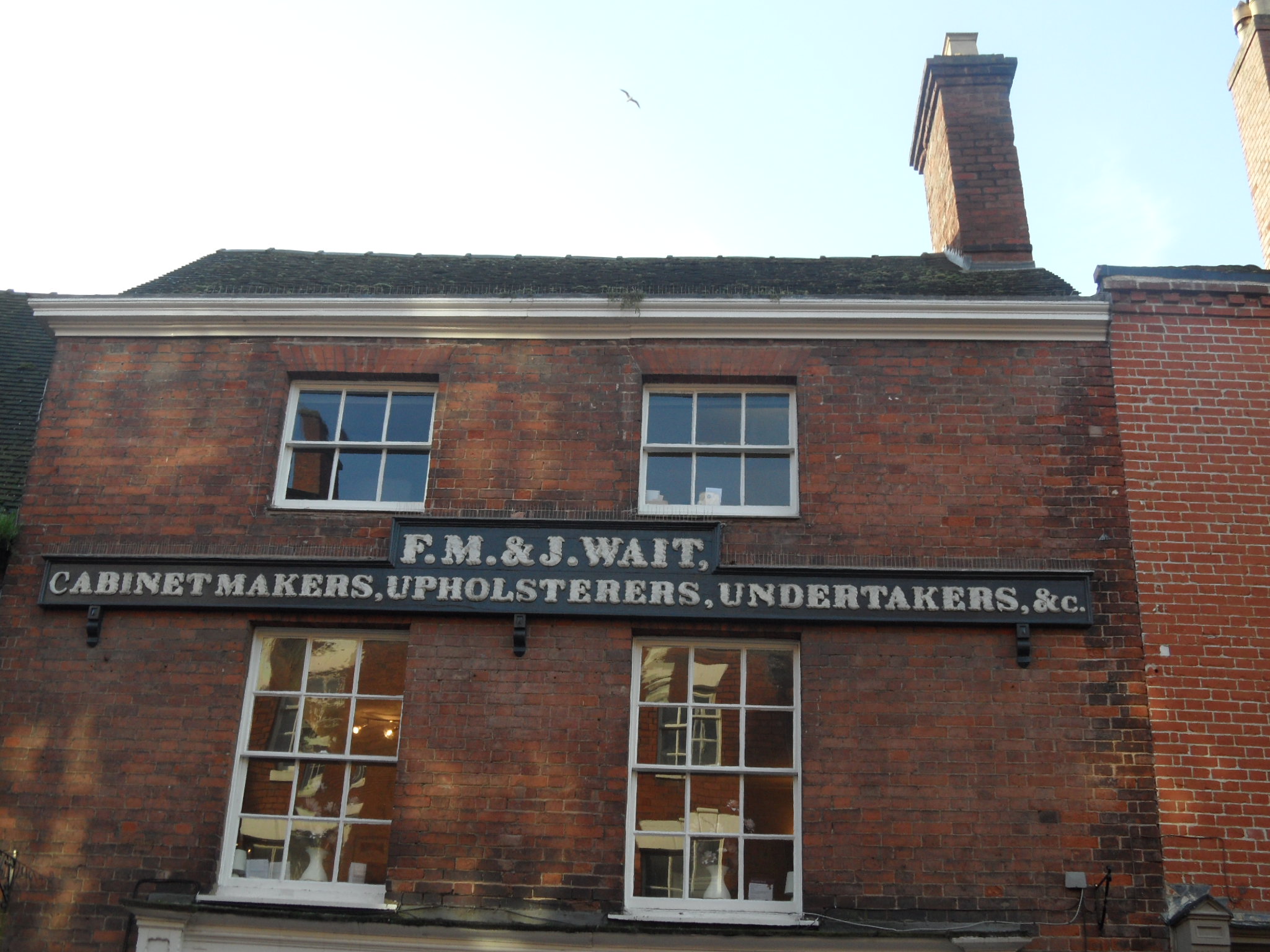
On Facebook, another member of the Lichfield Discovered group posted a photograph of a shop sign that had been hiding underneath a Connells Estate Agents sign on Bore Street.

What other old signs lurk beneath the plastic facades?

What other old signs lurk beneath plastic facades?

I started to do a bit of reading about the use of signs and lettering on buildings and came across an article in the Independent, which features a self confessed font geek called Anthony Harrington. “Typefaces work well as little milestones,” he says. “They anchor a building to a time and a function, whether it’s commercial or social, and this is a heritage worth preserving”. There’s also a map and an app which aims, ‘to photographically record publicly available lettering and type throughout the capital’.

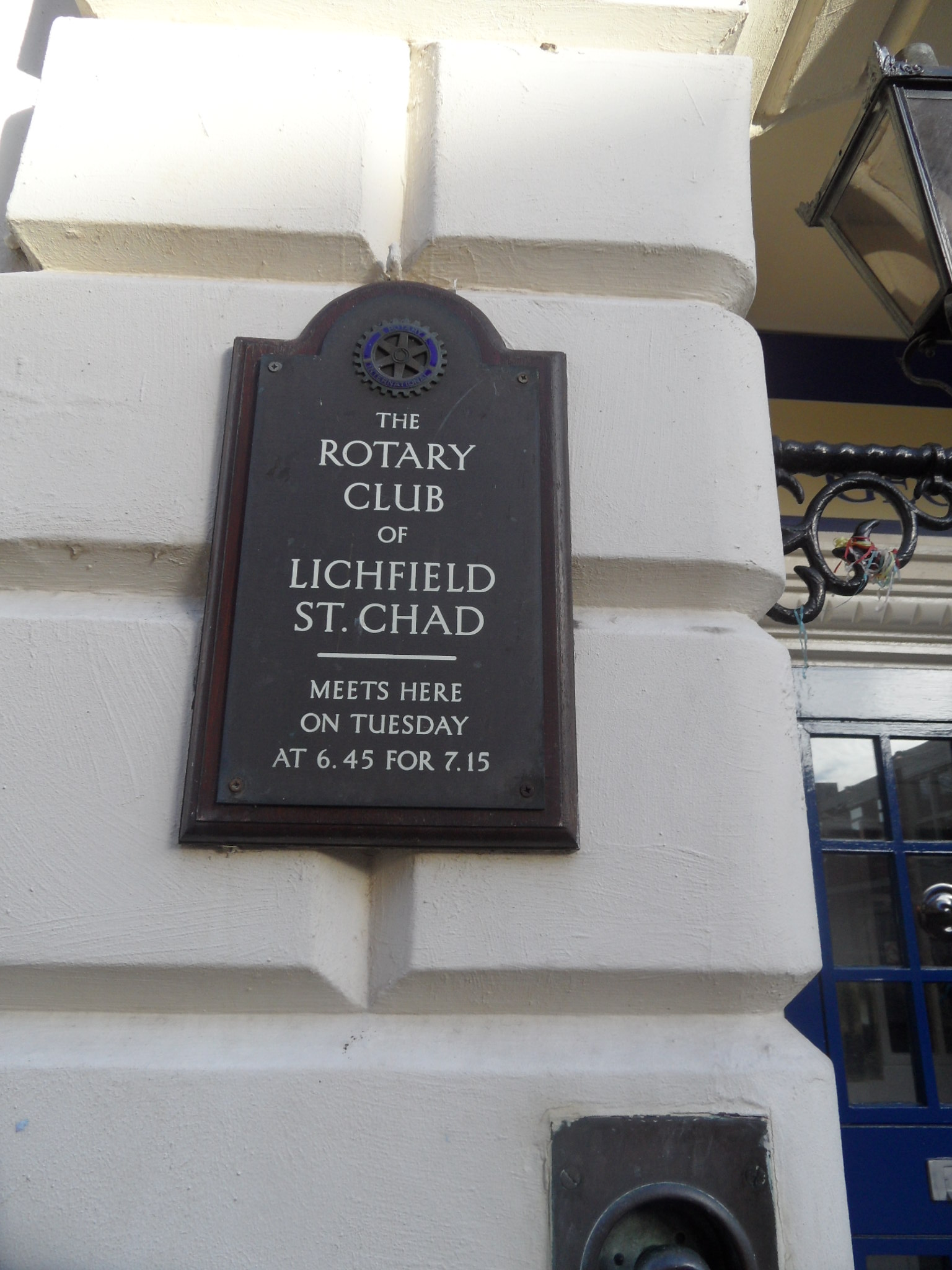
It’s an interesting idea and so I had a wander around to see what other examples I could find in the Lichfield. In October 1953, the School of Art principal Miss EM Flint declared that city was remarkably deficient in the provision of well-rendered signs and notices. Is this still true sixty years later? Anymore good examples out there?

SAM_9740

SAM_9714

SAM_9737

SAM_9707

You have to include a sign that has letters with eyebrows

SAM_9735SAM_9719SAM_9715

SAM_9731

SAM_9726SAM_9705SAM_9739SAM_9741SAM_9722SAM_9738

Trouble at t'mill

Unlike the fulling mill built on Leomansley Brook in 1790, which only seems to have lasted for a hundred years or so, the nearby mill on the Trunkfield Brook was part of the landscape for a long, long time.

Up until the nineteenth century it seems it was known as Sandford Mill, but at some point became known as Trunkfields. Owned by St John’s hospital, it first appears in records in 1294, and again in 1658 when the miller got into trouble for encroaching on the highway when re-building it. Cartography wise, the first map I can see that shows the mill (just as a symbol), is the 1775 Yates one. In 1853 the Conduit Land Trustees rented it out and converted it to steam power and shortly afterwards was apparently used as a bone mill. Jame Meacham gave up the mill in 1872 and it fell into disuse. In 1883 it was suggested as a potential site for a small pox and infectious diseases hospital .The property owners and inhabitants in the area were not happy and came up with the following list of reasons why the site was, in their opinion,  ‘in every way disadvantageous, not only to the immediate neighbourhood but to the whole city’.

1. The road past the pool was the only access road to a good deal of field property in the area.

2. A public footpath, much frequented, leading to the Birmingham Rd goes within a few yards of the building.

3. There are no less than eighty homes on the Walsall Rd, with a population of around 480 and there are other properties close by including the vicarage and the cottages (presumably those on what is now Christchurch Lane).

4. The site is in the midst of a large and respectable population.

5. There is a prospect of a considerable increase in the number of houses.

6. The prevalent wind on this side of the City of Lichfield is that which blows almost direct from the Trunkfield Pool to the city.

7. The site is notoriously damp and unhealthy and thoroughly unsuited for a hospital of any description

8.Many of the cottagers are in the habit of going to the pool for their water supply.

9. Trunkfield Pool is the only public place for skating within the precincts of the city.

In the end, there was no hospital on the site of Trunkfields Mill. Instead, it became a farm (and people carried on skating there for some years – an advert in the Lichfield Mercury, February 2 1917 carried an advert that simply said ‘Skating!!! Skating!!! at Trunkfields Pool, Walsall Road, Lichfield. You’d think people would have been more wary after horrific accidents like this in London 1867).
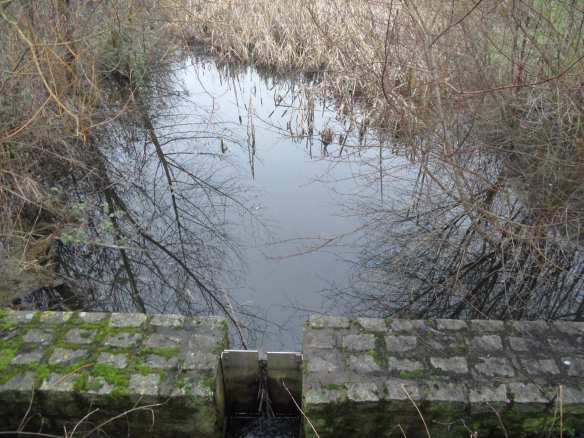
There's not much left to suggest there was a mill here although there are sluice gates along the brook

There’s not much left to suggest there was a mill here although there are sluice gates along the brook

On the Burntwood Family History website there is a great photograph of Mr and Mrs David Blair (see here) who came from Scotland to Trunkfields Farm in 1890. There is a snippet in the Lichfield Mercury about a not very neighbourly spat between David Blair and fellow farmer Edward Thomas Sankey of Sandfields Farm in November 1895, when the latter summoned the former for assault. According to Sankey he was making his way home via Trunkfields when Blair stopped him and told him he was trespassing. Sankey said it was a public highway and Blair apparently took hold of his coat and collar and pushed him. Then Mrs Blair came out and told Sankey to go home via Mr Hollier’s field. Sankey refused and Blair hit him in the face and threatened to throw him into the mill pond. Blair accused Sankey of being drunk and said if he had pushed him, as he was accused of doing, he would have fallen down. Another farmer, Joseph Standley was called as a witness.  He had seen part of the dispute and was ‘so amused that he ‘nearly burst himself with laughing’, although he did support Mr Blair’s assertion that Sankey was drunk and hadn’t been hit or pushed by him. The case was dismissed and Sankey ordered to pay the costs.

Several sources, including the county history and local HER records record the mill pool being backfilled in 1930. However, this seems to be a bit at odds with an article in the Lichfield Mercury on 14th February 1947, which reported that Mr Saxton, the owner of Trunkfield Mill Pond, had been thanked by the Lichfield City Council health committee  for agreeing that the pond could be used for controlled tipping without rent but given back to him when filled in. I’m sure the residents weren’t quite as thankful – what about the detrimental effect on the respectable population and their winter skating?

Apparently some of the mill/farm buildings remained until the 1980s/90s, which is before my time in Lichfield but there must be plenty that do remember. What I do recall is that until recently there was a derelict modern-ish property on the site, known as Blair House (presumably after David Blair and his family). This has now been demolished with new houses currently being built on the site.

Took me a while to work out what was going on with the chimney

Took me a while to work out what was going on with the chimney

There were objections to this, based on the fact that vehicular approach to the new houses was a narrow lane used by children walking to school. I suspect this must also have been the lane that the protesters against the isolation hospital were referring to. It’s now been given a (new?) name which turns out to be Halfpenny Lane, the road I was looking for back in October last year.  Now split into two by the realignment of the Walsall Road in the 1830s (the other part is known as Middle Lane) it led to Christchurch Lane (the original Walsall Road) for at least two hundred years, if not longer.

Found a Halfpenny

Found a Halfpenny

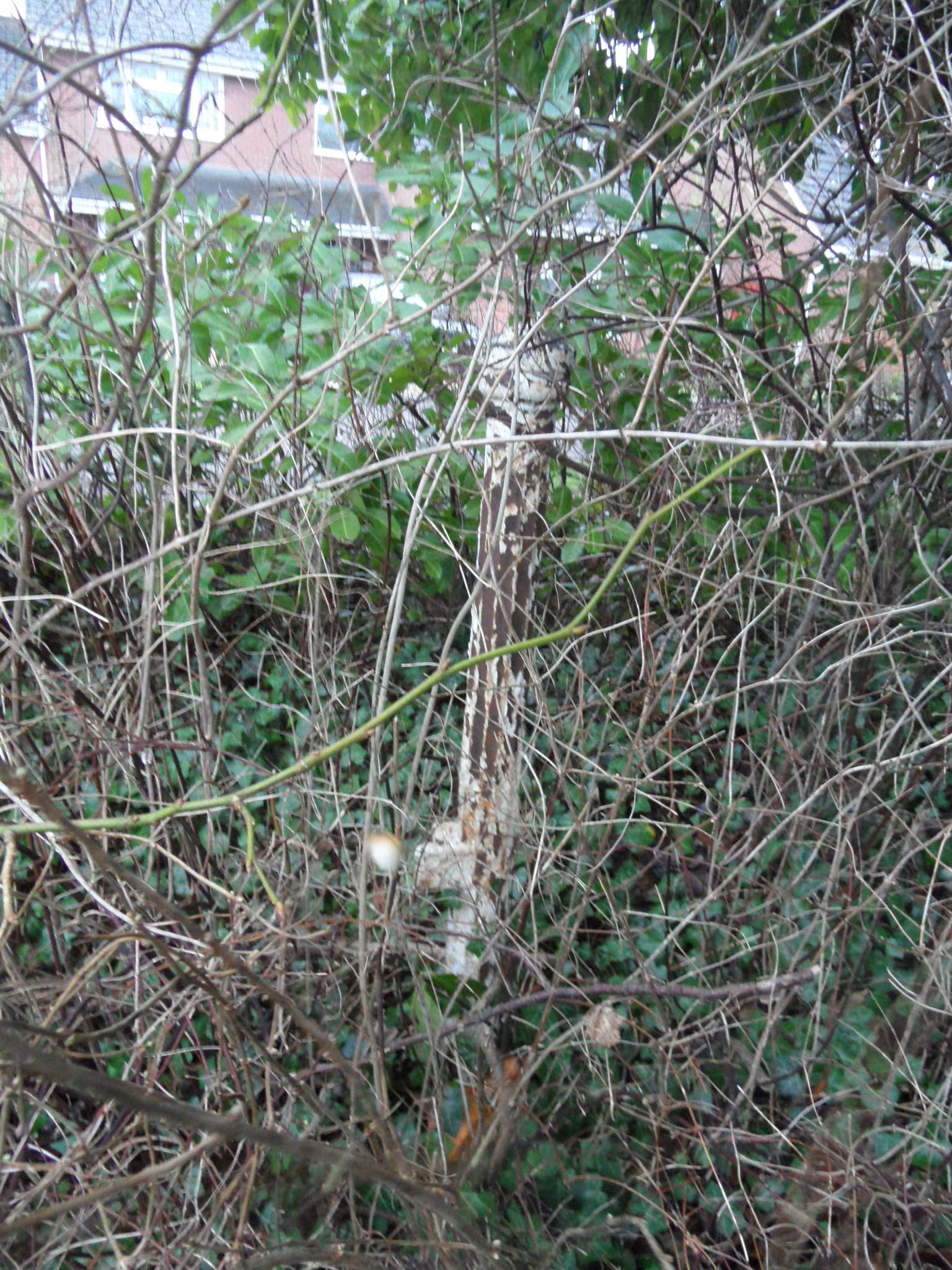
I had intended to walk down this lane, but it was blocked off due to the building work and so I was forced to negotiate the labyrinth that is the Walsall Rd estate. I eventually found my way out and was rewarded for my efforts by the discovery of an old metal gatepost in some shrubbery near to the old Conduit Lands Pumping Station cottage on the Walsall Road which may be a left over relic from those days. More info on the pumping station on Brownhillls Bob’s blog here.
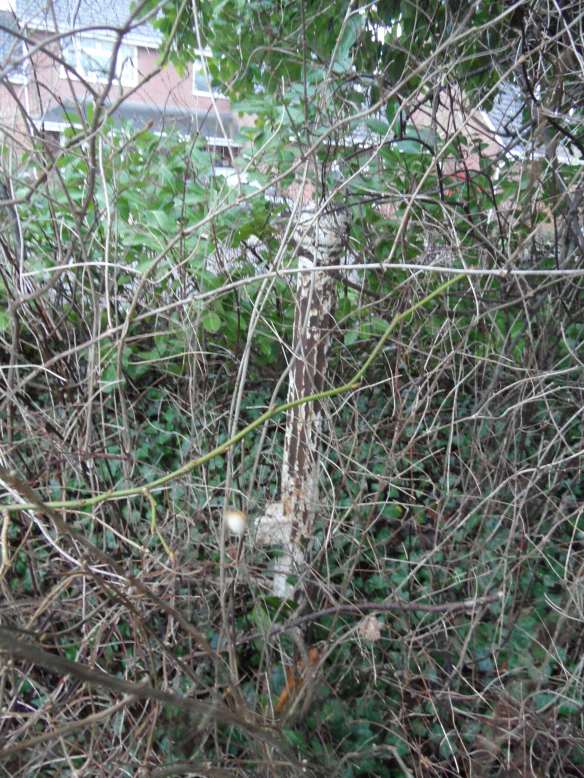
I was chuffed to spot this. I am very easily pleased.

I was chuffed to spot this. I am very easily pleased.

I also saw some graffiti on the side of a house. I don’t condone it but I do confess to being a little intrigued…..
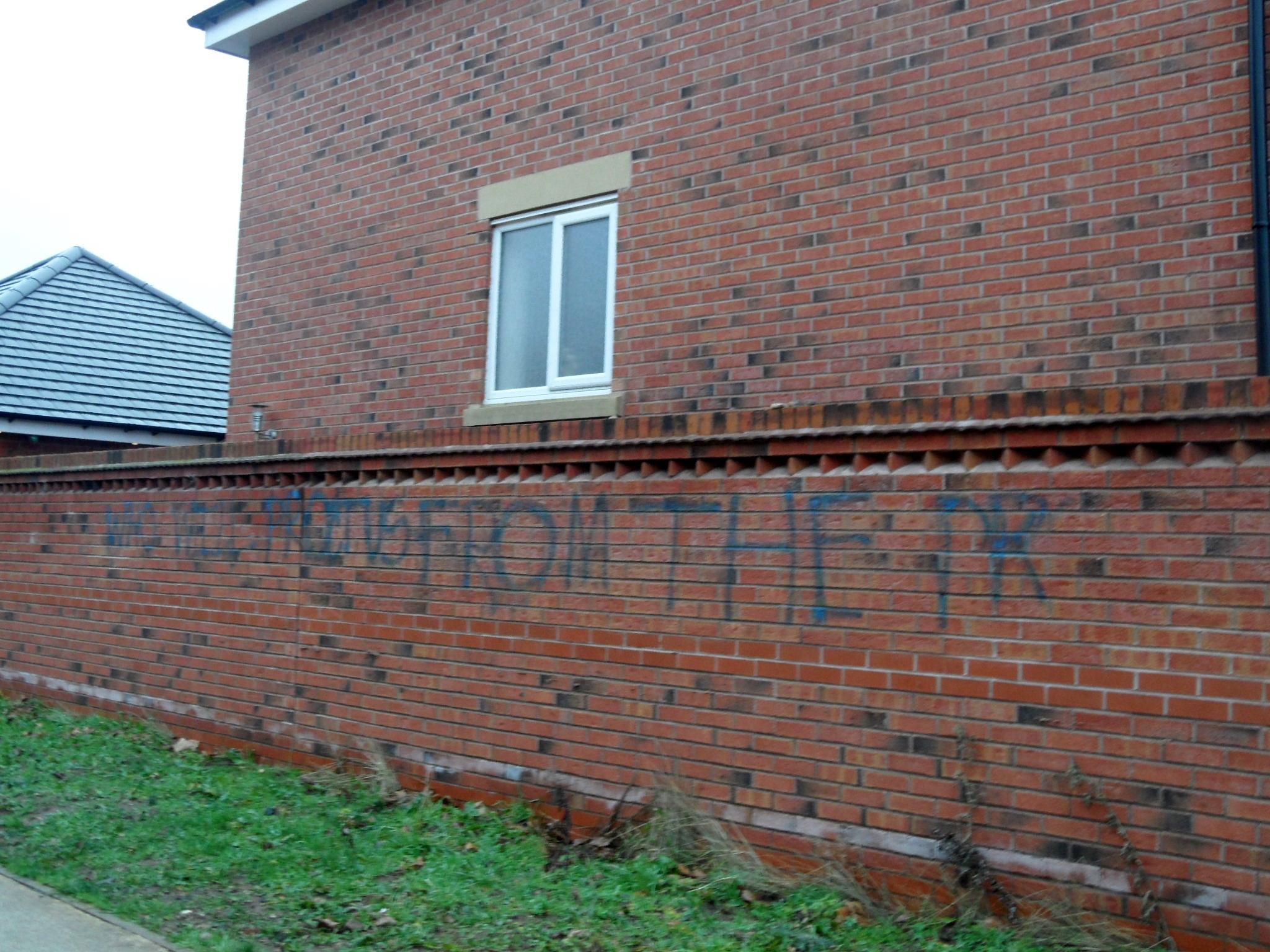
PR Graffiti

Question mark?


Sources:

Lichfield: Economic history’, A History of the County of Stafford: Volume 14: Lichfield(1990), pp. 109-131

Click to access cstaffs.pdf

Click to access lichfieldeusreportfinal.pdf
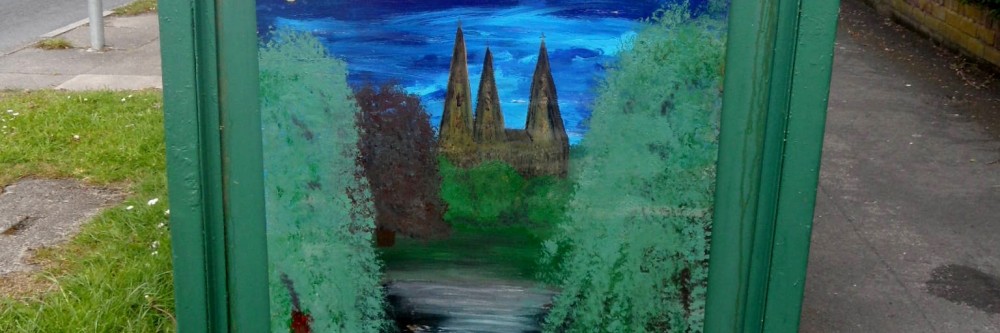
Shiver Me Timbers

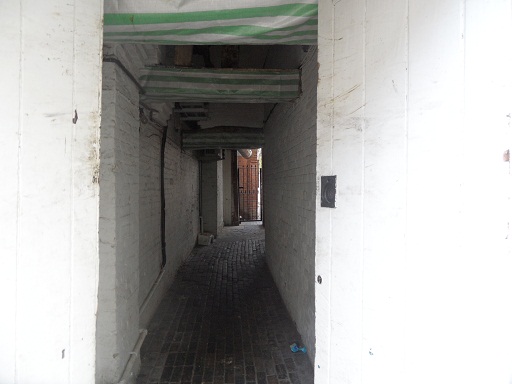
Where there’s an old wooden beam, there’s often a rumour that it originated on an old ship. It’s a bit of folklore that I keep encountering time and time again, even here in landlocked Lichfield and Staffordshire. Back in 2011, I visited St John’s Hospital during the Lichfield Heritage Weekend and heard that the Master’s House, which was originally the canons’ and pilgrims’ hall and enlarged by Bishop Smythe in the late fifteenth century, was built using beams from galleons. On the ghost tour earlier this month, we were told that that wooden beams in an entry running alongside the Walter Smith butcher shop on Market Street came from old ships and when researching the Four Crosses Inn in Cannock for a piece in the Chase Gazette, I once again came across claims that the oldest part the building, dating to 1636, made use of timber from ships.

Alongside butcher shop on Market St. Beams are covered in stripy plastic on this photo unfortunately, but every now and again the alley is open for you to go and take a look...

Alongside butcher shop on Market St. Beams are covered in stripy plastic on this photo unfortunately, but every now and again the alley is open for you to go and take a look…

Last night, a discussion on Twitter about those other two old inn regulars – ghosts and Dick Turpin – moved onto the subject on the use of old ships’ beams and a quick google search revealed yet more old Midlands buildings making the claim including the Ye Olde Gate Inn in the Derbyshire village of Brassington and the appropriately named Old Ship Inn in Worksop, Nottinghamshire. Could there be any truth in any of these claims? As someone unfamiliar with the world of carpentry, I was interested to read a discussion between some experts on the matter which you can read here. Just as I was sure that this myth was pretty much busted I clicked on the link in the penultimate comment, which took me here – a website telling the story of the lost Brig Elizabeth Jane, launched in Nova Scotia in 1817 and abandoned off the Yorkshire coast in 1854. Incredibly, the name board and the port of registration board were discovered in a ceiling in Robin Hood’s Bay in 2003 leaving no doubt that this was one case where the rumours were true.

A one off perhaps? It seems not as shortly aftewards I came across the website of the Chesapeake Mill in Hampshire, where the beams, joists and floors are all said to have been constructed from the United States frigate ‘The Chesapeake’. On a slightly gory note, an extract from ‘The Navy and Army Illustrated’ in 1898, included on the  mill’s website, describes the joists as ‘covered with the blood of the men who were killed and wounded in action, and many bullets are embedded in them; in fact a good many of the timbers seem quite soaked with blood’.  You should read the full story on their website here it’s a fascinating place!

Closer to home, I found an article on Graiseley Old Hall in Wolverhampton which says that some of the purlins (now there’s a word I didn’t know existed until today!) in the roof came from old ships. What’s also interesting about this article is that it acknowledges that similar claims are made about many buildings, but that hard evidence to support it only exists in a few and then gives us a possible explanation for this, suggesting that often it could be a reference to the quality of the timber rather than where it came from.

I’d really like to hear of any more examples that people know of where old ships timbers are said to have been used, proved or otherwise.  When it comes to myths and folklore, we shouldn’t always believe everything we hear, but we should definitely listen in the first place. You never know where a story will lead.


Sweet Bells

One Saturday morning, as I sat reading in Lichfield Library, I heard a clip clopping in the street outside. Standing up to look out of the window, I saw a horse and carriage making its way up Bird St. It occurred to me that this was a sound and a sight that people would not have batted an eyelid nor an eardrum at in previous centuries, yet to my twenty first century ears, it was something so out of the normal it warranted me putting down a good book to have a shufty.

More often than not, when we explore the way our towns and cities have changed, it’s the visual changes that we concentrate on – old photographs, old maps, landscape features etc. Yet the sounds of places change too e.g. the pools at Leomansley are quiet and still now that the waterwheel of the mill no longer turns, the sounds of animals at the Smithfield have been replaced by those of cars and shoppers and Beacon Street hasn’t heard a blacksmith hammering metal in a long time. However, amidst the changes, there is also consistency in the sounds that surround us.

The tower at St Chad’s church houses four bells. Three of them were cast in the seventeenth century and the oldest of these three dates to 1625 with the inscription ‘DOMINO CANTICUM CANTATE NOVUM’. The second is from 1664 and declares ‘GOD SAVE THIS CHURCH AND REALM THE KING IN WAR, I.C.1664. Even the youngest of the three, featuring the names Ralph Low and Richard Grimley, is from 1670 meaning that the people of the parish and those who are passing by have heard these bells ring out for well over three hundred years. The fourth bell is even older still, although no one can agree on just how old. An article in the Lichfield Mercury in August 1936 described it as ‘England’s Oldest Bell’, and gives it a date of 1033. As it stands, the country’s oldest inscribed bell is believed to be the Gargate Bell at Caversfield Church, Oxfordshire, dating to c.1215AD and the country’s oldest dated bell (1245AD) is at Lisset Church in Easy Yorkshire. Therefore if this date of 1033AD were true, we would probably have a another Lichfield Entry in the Guiness Book of Records (to go alongside the largest curry ever, cooked by Abdul Salam of Eastern Eye on Bird St). Yet, the St Chad’s website itself casts doubt on this claim as there wasn’t a tower to put a bell in at the church at this time! Another date suggested for the bell is 1255 but the County History also disputes this and says that it was probably cast at Nottingham c.1500AD. There is an inscription on the bell +O BEATE MARIAA.A.R. and some numerals that no-one can read, hence the enigma. I’d love to see it. Not that I would be any help at all in solving the mystery but you know I’d just like to have a look at it. See I’m not satisfied with simply hearing it – there’s that visual dominance of history taking over again.

I have actually been at the other end of the bell rope. After I stumbled upon a practice session on another Saturday morning, I took up a kind offer to have a go at ringing one of the St Chad’s bells myself. Whilst at the time I was too terrified of having a campanology related mishap to fully appreciate the moment, afterwards I thought of all the people that had rung those bells in the past, and all those who had heard them and the message they were conveying. Next time, you’re passing, stop for a moment and listen too.

Sources:

Lichfield: Churches’, A History of the County of Stafford: Volume 14: Lichfield (1990), pp. 134-155

http://saintchads.weebly.com/the-bells.html

Guardian Angel

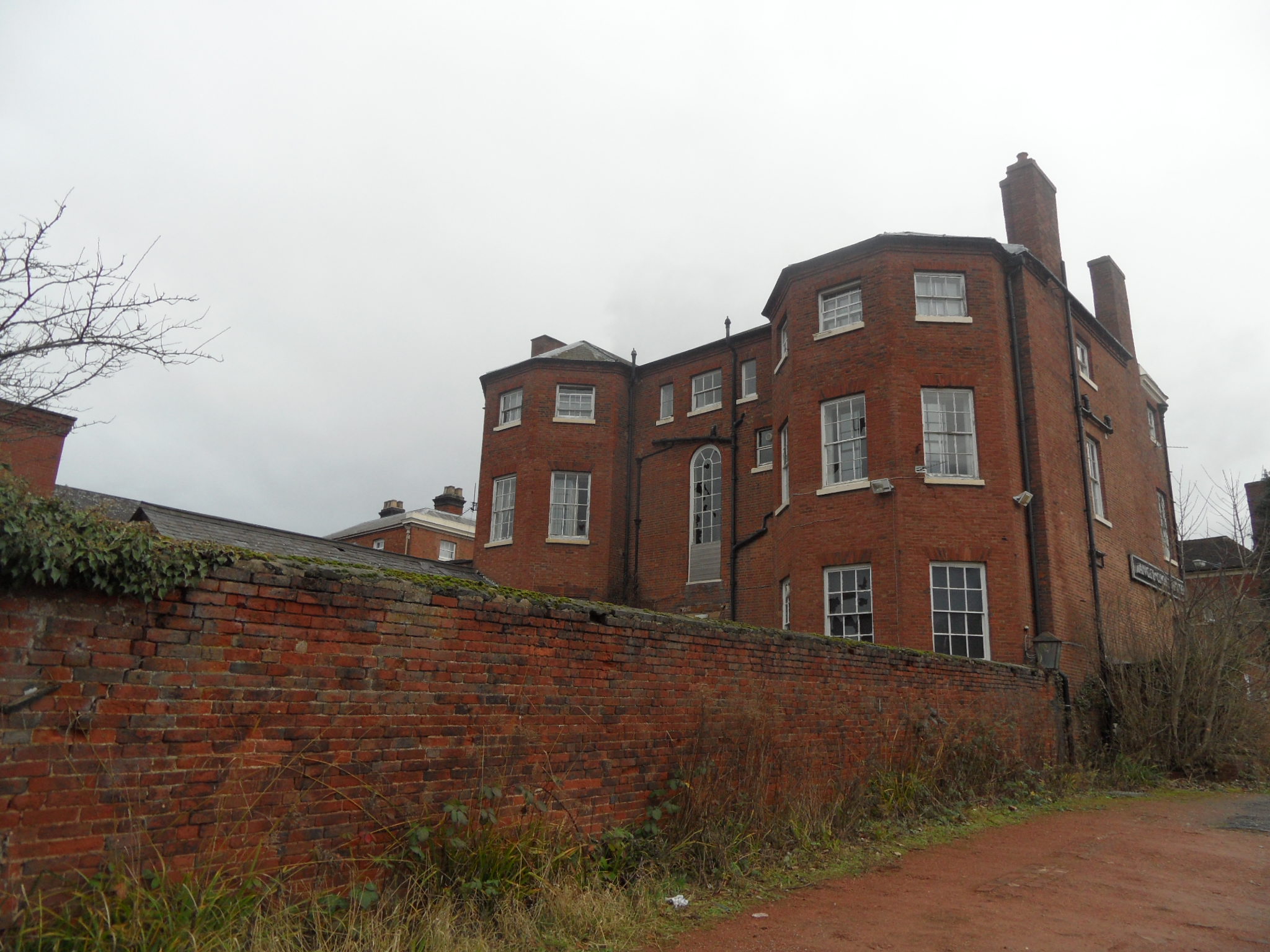
The whispers on the (Beacon) street were true. A new planning application is in the offing to convert the former Angel Croft Hotel into apartments.

The eighteenth century Angel Croft has been one of the most discussed buildings in Lichfield in recent times. Since 2008 it has been empty and vulnerable and its annual appearance on the English Heritage At Risk register has given people real concern about what its future might hold.

As it stands at present, the Angel Croft is at risk from further vandalism and, worse still, arson, which can prove devastating to so many heritage buildings.  My view is ‘use it or lose it’. Sometimes, in order to survive, buildings must adapt and play many roles over the course of their lives. In fact, the Angel Croft was a residential property until its conversion to a hotel in the 1930s. If something positive doesn’t happen soon then there is a possibility that we may lose it altogether and be left with nothing more than a vacant building plot.  I hope that this proposal, which will secure the future of the building and its features, will be supported and that the Angel Croft will not be put at further risk by short sightedness and nostalgia about an unsustainable past.

You can see the documents supporting the planning application here (the planning, design and access statement) and here (the heritage statement), which I’m grateful to the Beacon Street Area Residents Association for forwarding to me.

N.B For anyone interested in the history of this building, the Heritage Statement contains historical information about the Angel Croft, including descriptions, old plans, maps and photographs.


Ooh La La

When old buildings at the back of the Bolton Warehouse Company’s shop on Bird St (1) were being demolished in December 1960, a large circular room containing murals created with shells and pebbles, was found above a ceiling. One mural depicted the Cathedral, another a tree and the third was some kind of summerhouse on top of a hill (2).

The murals are thought to have been created by French prisoners of war, on parole in the city.  According to the County History, Lichfield had long been used as a place to quarter French prisoners, due to its position on a main road (and I have also read that it had something to do with us being about as far from the sea as you can get!).  On 7th January 1747, the Staffordshire Advertiser reported that a party of seventy four passed through Stafford on their way to Lichfield, where they were to be put on parole. It also mentioned a house on Bore St, where there was a cooper’s shop at the back used by prisoners (3). Eighty arrived in Lichfield in 1797 during the Napolenic Wars and in 1809, forty officers were quartered here. It seems that Dr Johnson’s birthplace was also occupied by a prisoner –  in The European Magazine for 1810, a contributor called ‘TSW’ wrote, “The house in the market place in which our great lexicographer born still remains nearly in its original state. It is now inhabited by Mr Evans a brazier and a part of it, believed to be the very room in which he first drew his breath is now let to a French prisoner of war”. According to their website, Pipe Hill House on the Walsall Rd also hosted some of the prisoners.

As well as spending their time creating enigmatic artworks, some of the prisoners gave French lessons to the city’s residents.  If the fragment of a page of French exercises, found in the same room as the Bird St mural was discovered, is anything to go by, the teachers had their work cut out. The sentences on the fragment of paper had been heavily corrected, with the comment ‘very bad’ at the end! Perhaps the Darwin and Wedgewood children who were taught French by one of the prisoners at Darwin’s house on Beacon St were better students?

The old clinic on Sandford St? Is it me or can anyone else see numbers in the brick work on the second storey?

In September 1951, the author of the ‘Round and About with Clock Tower” section of the Lichfield Mercury visited the site of the mural accompanied by the caretaker, Mrs Disney, and reported that the ‘pictures’ were still in existence in the dome-like roof of a derelict outbuilding behind the Sandford St Clinic (4). One side featured ‘a perfect replica of Lichfield Cathedral, made entirely from small stones, bits of glass and sea shells’  and other pictures included a ‘mosque-like building’, (which the reporter failed to recognise (5)), several ‘beautifully executed trees’ and a map of Lichfield. The outbuilding was in a poor condition, described as being encased in a mass of creepers, with two gaping holes in the roof. There was also a large hole in the floor, and as if things weren’t exciting enough already, Mrs Disney told the reporter that there were two passages running beneath the hole – one leading to the rear of the property and one believed to connect with the old ‘monk’s passages’ beneath the Friary.

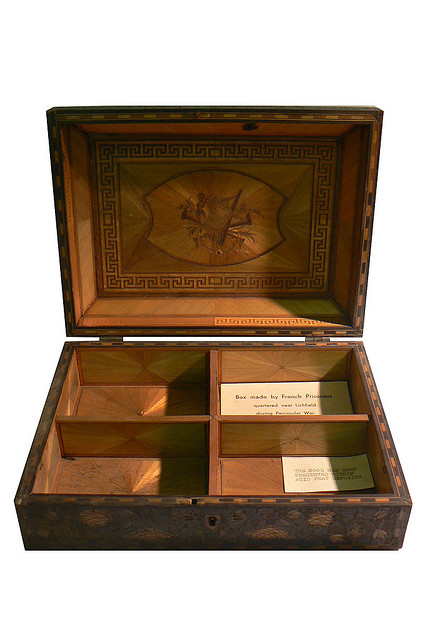
Box made by French Prisoners of War (c) Lichfield District Council

Sadly, I think that this ‘Disney’ story doesn’t have a happy ending as the outbuilding was been demolished and the treasures inside lost (although there is the possibility that as the murals were still in existence in the 1950s/1960s someone may have been foresighted enough to photograph them?). However, there is a small consolation at Lichfield Heritage Centre in the form of a wooden box carved by French prisoners quartered in the area.

Edit 18/6/2015
A display at Lichfield Museum at St Mary’s features a photograph and a chunk of the mural together with the wooden box and some information about the soldiers themselves. St Mary’s is also staging a costume drama called ‘Lichfield’s Waterloo’ by the Lichfield Players on Friday 26th June and Saturday 27th June. More information here

Notes

(1) Does anyone have anymore information on the Bolton Warehouse Company’s shop, particularly where it was on Bird St?

(2) Could this have been a representation of Borrowcop Gazebo? The PMSA record (here) says ‘In 1694 a building called ‘the Temple’, probably stood on Borrow Cop Hill, in the 1720s an arbour was recorded, by 1750 this replaced by a summerhouse which may have been the cruciform building there in 1776. In 1756 the corporation ordered a line of trees along the path to the summit, with extra trees in 1783, possibly in connection with a fete champetre held in that year. By 1805 the building was replaced with one of brick with two arches each side and seats around to admire the view, the funds were raised by public subscription’. On the subject of Borrowcop, I just found at that an information board was installed up there in September (more about that here).

(3) Again, where would this have been?

(4) I understand that the clinic occupied the former premises of the Victoria Nursing Home which was on Sandford St until it moved to the Friary and became the Victoria Hospital.

(5) Any ideas as to what building this could be depicting?

Sources

Lichfield and Archaeological & Historical Society Transactions vol 2 1961

Lichfield: Education’, A History of the County of Stafford: Volume 14: Lichfield (1990), pp. 170-184

Lichfield: From the Reformation to c.1800′, A History of the County of Stafford: Volume 14: Lichfield (1990), pp. 14-24

The European Magazine for 1810

Lichfield Mercury 21st September 1951