A Life of Service

Inside St Chad’s Church is a memorial dedicated to the men of the parish who lost their lives in the First World War. One of those commemorated on the memorial is also remembered on a separate plaque alongside the memorial, featuring a statue of St George and the following inscription:

To the honoured memory of Alfred Cleveley Sergeant South Staffordshire Regiment. He was in service at Elmhurst Hall and enlisted in August 1914 and fought in Gallipoli and in France where he gained the military medal and fell in action on May 12th 1917 aged 32.

The memorial was given by Alfred’s former employer, Mrs Hamer, who was renting the now demolished Elmhurst Hall at the time. Before coming to Elmhurst Alfred, who was originally from Powick in Worcester, had been employed as a ‘house and garden boy’ at The Rectory in Shobdon in Herefordshire in 1901 and as a butler at Aldersey Hall in Cheshire in 1911, possibly the position he left to come to Elmhurst Hall.

Elmhurst Hall Source: Wikimedia Commons

I’ve found Alfred’s medal card at the National Archives (as well as the Military Medal, Alfred also received the British War Medal, the Victory Medal and the 1914/15 Star), and the Commonwealth War Graves Commission record that tells us that his name is inscribed on the Arras Memorial. However, one thing I can’t find is his name on the main War Memorial in the Garden of Remembrance near to Minster Pool.

I was wondering whether this had something to do with Alfred not being ‘a local’ as such, and then I found the speech that was read at the memorial’s dedication ceremony on October 20th 1920.  Major Longstaff, the Chairman of the Memorial Committee explained

‘This being a City Memorial, it was decided to limit the names to be inscribed to those born in the City, or whose house or permanent address at the time of joining the Imperial Forces was within the City and who lost their lives in the war…Further, the great sacrifice made by those whose names are here recorded was an equal one, and we decided that the names only, without rank or unit, should be recorded in alphabetical order’.

Presumably then, living and working at Elmhurst Hall wasn’t classed as having a permanent address in Lichfield? I wonder if this was a standard approach for those in service? I also wonder how common it was for employers to commemorate their domestic staff? Actually, I did notice for the first time that not all of the names are in alphabetical order which suggests that some may have been added at a later date?

I’m very grateful to Steve Lightfoot who has been making some enquiries regarding the time that Sergeant Alfred Cleveley spent in the 1st Battalion of the South Staffs regiment, and the regiment’s role in the Battle of Arras where it seems he lost his life.  I’m looking forward to hopefully hearing more of Alfred’s story but one final question for the time being – where are Alfred’s medals now?
Gathering Moss

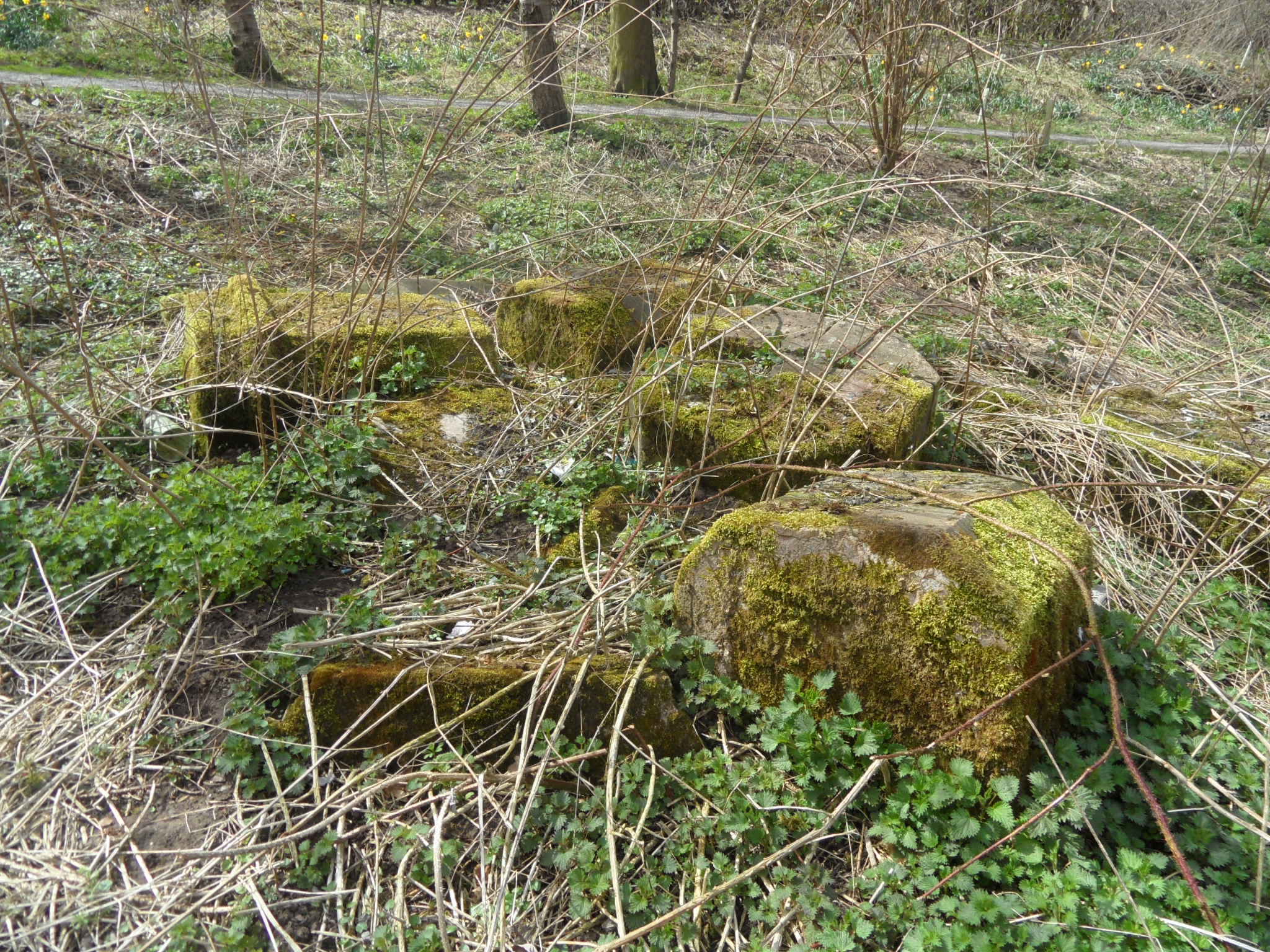
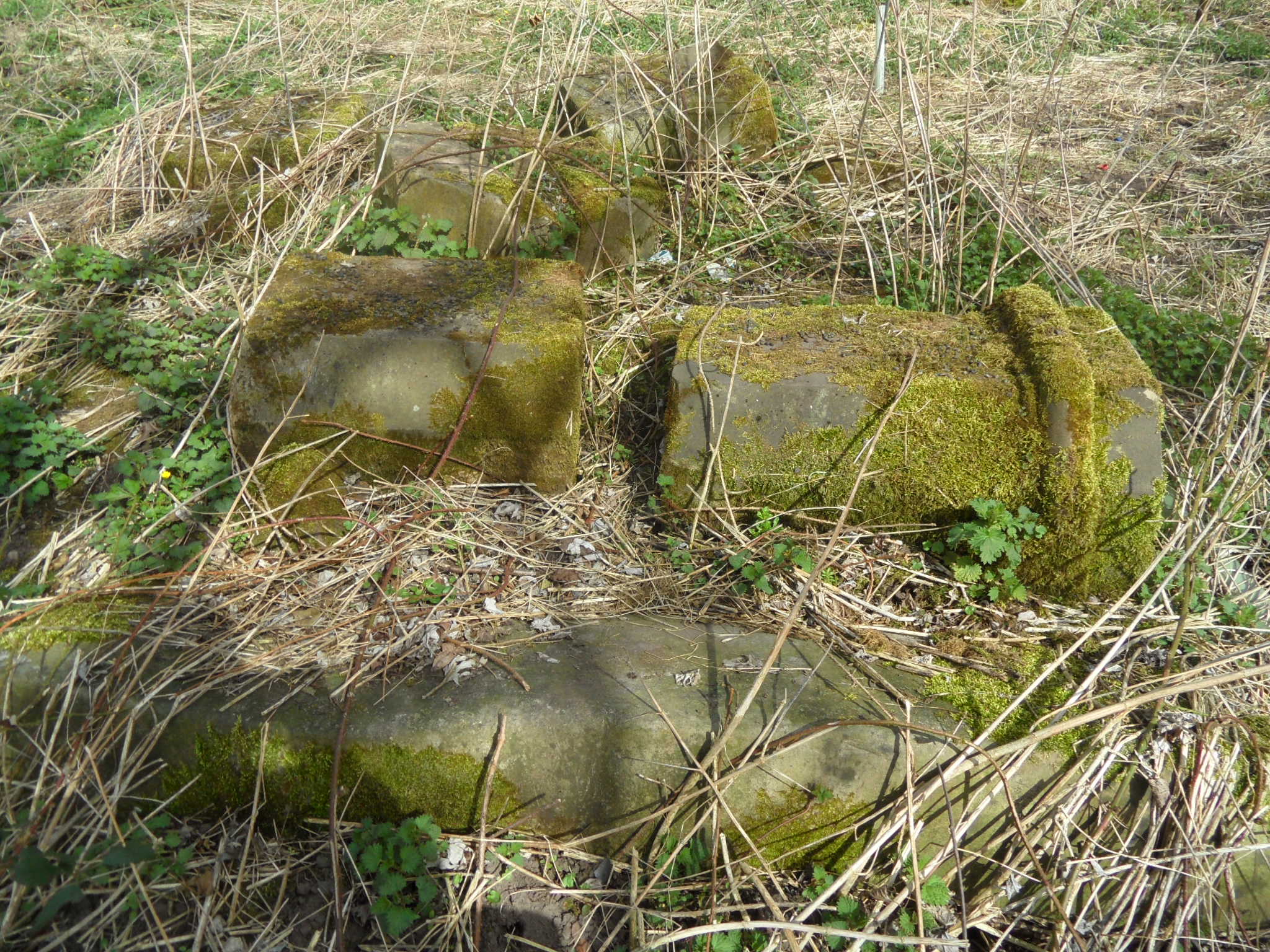
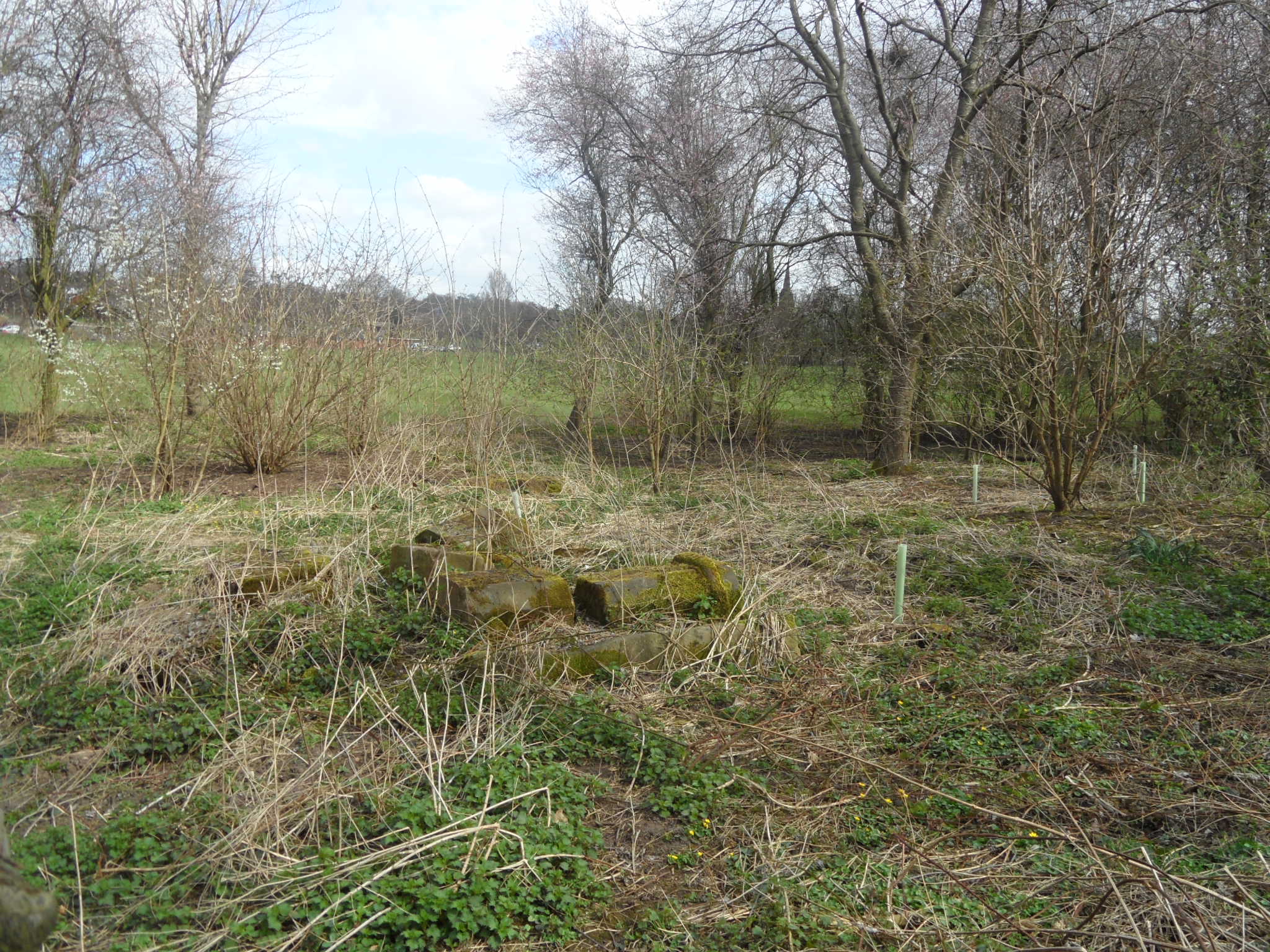
Walking around the edge of Beacon Park, I noticed a pile of moss covered stones in the undergrowth that I’d never seen before.  To me, they look like part of an old building, possibly pillars? It’s a long shot I know, but does anyone recognise them or have any idea as to where these pillars (if that’s what they are!) may have come from?

Whilst on the subject of ‘parts of old buildings found in unexpected places’, I have to mention my old favourite Fisherwick Hall. Back in January, I wrote an article for the Lichfield Gazette which mentioned that the hall had been demolished, but that parts of it had been reused elsewhere. After lying around for some years covered in moss, the pillars from Fisherwick went to the George Hotel in Walsall – you can read the great post written about the hotel by Stuart Williams of Walsall Local History Centre here. However,  I had no idea what had happened to the pillars, following the demolition of the hotel in the 1930s. Therefore, I was delighted when Paul (the editor of the Lichfield Gazette) told me that someone had contacted him, saying that some years ago he had seen them lying on a patch of ground near to the cricket ground in the Highgate area of Walsall. The gentleman described them as lying in pieces and covered with moss and lichen. Sounds familiar! Coincidentally, the site the gentleman described is a stone’s throw from where some of my relatives live, and so the next time I visited I went to take a look, but I had no luck in finding them. So near, yet so far….

Back to our Beacon Park stones, and someone from the Beacon Street Area Residents’ Association has very kindly said that he will ask the people in the know i.e. the Parks team and the Civic Society if they can shed any light on the matter. In the meantime, he’s left me pondering the fact that parts of the old bandstand and cycle track are also apparently also still around in the park somewhere…

Beacon Park bandstand c.1905
Source: Wikimedia Commons

Family Trees

Standing in a small area of woodland on the edge of a field in Leomansley is a stone with the inscription ‘Greville’s Belt W.W.W 1923‘. It isn’t a gravestone, although you can see why some have mistaken it for one, but a marker erected by the then owner of the Maple Hayes estate, William Worthington Worthington, to commemorate the planting of this small belt of trees, named after his eldest son (William) Greville Worthington.(1)

In 1918, William Worthington had inherited Maple Hayes from his father Albert Octavius Worthington, a partner in the Burton brewery that carried his family name, who had originally purchased the estate in 1884. However, Greville Worthington would not inherit the estate from his father. In the early hours of 17th March 1942, whilst serving as a Lieutenant in the Royal Navy Volunteer Reserve at Dover, Greville drove through a restricted area. Although the sentry on duty ordered him to ‘Halt!’ twice, he failed to stop.The sentry opened fire and Greville was fatally wounded, dying in hospital ten days later. A verdict of accidental death was recorded. In the October of the following year, there was another family tragedy.  Lady Diana Worthington, Greville’s former wife, went missing from her home Weston Manor in Olney. A scarf and a coat were found on the banks of the River Ouse and after a week of searching, Diana’s body was recovered from the water.

Greville and Diana had four children together – Caroline, Anna, Charles and Benjamin. I have not yet been unable to find out much about what happened to the children following the deaths of their parents. However, we do know that when William Worthington died in 1949, nineteen year old Charles was his heir. (2)  William’s death brought the Worthington era at Maple Hayes to an end and in 1950, the estate was sold. The house and around twenty three acres were acquired by Staffordshire County Council for educational purposes. Since 1981, the site has been occupied by the Maple Hayes Dyslexia School. The remainder of the estate, some 1,500 acres including farms, cottages and agricultural land, was sold to a trust.(3)

As well as Greville’s Belt,  other areas of woodland were named after Worthington family members. Lady Muriel’s Belt, Herbert’s Spinney and Fitzherbert Firs still appear on maps of the area, as mentioned in BrownhillsBob’s recent post on Leomansley. Are there more stone markers to be found in these places?  I also noticed a house on the site of the old playground of Christ Church School, near to the church, which has a plaque saying ‘W.W.W 1920‘. Surely another reference to William Worthington Worthington, although exactly what the connection is I don’t know as yet.  The Worthington family may no longer reside at Maple Hayes but their names still echo in the landscape that surrounds their former home.

Notes

(1) I have seen similar stones marking ‘Parker’s Plantation’ and ‘The Roundabouts’ at the Pipe Hall Farm, owned by The Woodland Trust.

(2) W.G.W had a younger brother Albert Ronald Worthington, born 1904 and died in 1951. but according to the County History, it was grandson Charles, eldest son of W.G.W that was W.W.W’s heir.

(3) Until last year, around 360 acres of the former Maple Hayes estate was still owned by the trust. However, in April 2012 it was sold to new owners The Crown Estate for just under three million pounds.

Sources

Burntwood: Manors, local government and public services’, A History of the County of Stafford: Volume 14: Lichfield (1990), pp. 205-220.

The Lichfield Mercury archives

Nottingham Evening Post archive


Sole Trader

Whilst having a browse in Lichfield Record Office,  I came across an account of more archaeological finds discovered at Minster Pool.  During the construction of a storm water sewer in the 1970s, surplus soil was taken from the pool to a council rubbish tip. One day Mr Miller, from the city’s Engineering and Surveyoring department, happened to notice fragments of Cistercian ware amongst the peaty earth and alerted local experts. On examining the tip more closely, they discovered that the soil from Minster Pool also contained lots of fragments of leather.

Mr Miller and the others had discovered the remains of medieval leather shoes from a cobbler’s workshop that had been operating near to Minster Pool between the years 1400 and 1550. It’s thought that after being repaired several times, the shoes were in such bad condition that they were discarded by the cobbler (only for them to resurface on another rubbish heap some five hundred years later!). The account I read said that after their discovery, the shoes had been taken to Lichfield Museum. On returning home I was delighted to see that some kind soul had photographed some of them and added them to the Lichfield District Council flickr stream. However, in two and a half years they’ve only had sixteen views (and I think three of those were me!) so now you know the story behind how they were found, please pop and over and take a look at them here! It’s a shame that we’ll probably never know the story of the people the shoes belonged to, or the story of the cobblers who patched them up time and time again….

Three examples of 500 year old leather shoes found in soil from Minster Pool on the council rubbish dump! Image taken from Lichfield District Council flickr stream.

Sources:

South Staffordshire Archaeological and Historical Society (SAHS) Transactions XIV – XVI, 1972 – 1975

Deep and Meaningful

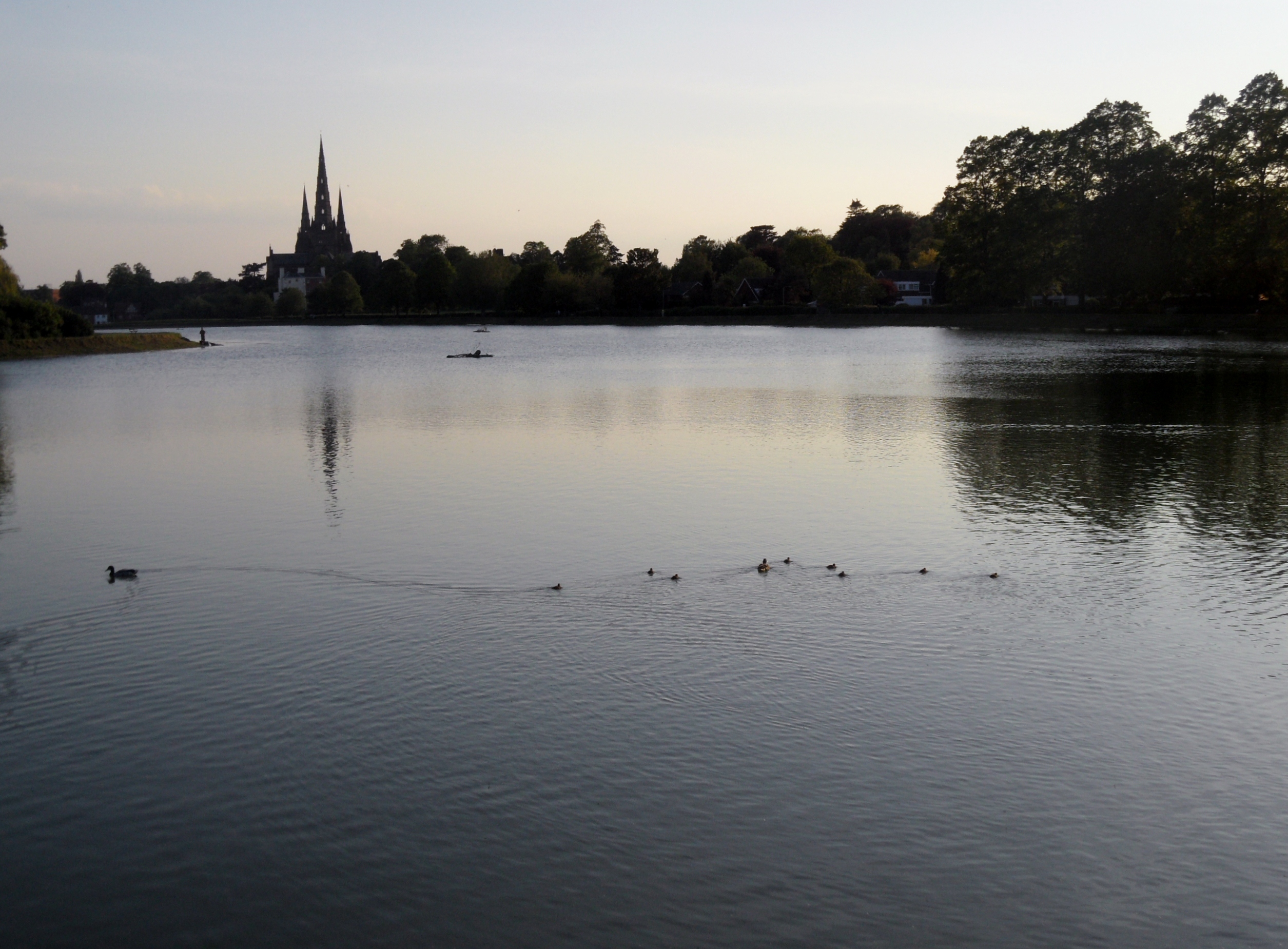
I mostly associate Stowe and Minster Pools with the ducks (or to be more precise the mallards, moorhens, coots, Canada geese, mute swans, and common pochards) that live on these waters. However, for the purposes of this post, it’s what has been found beneath the surface of the pools that I’m interested in.

Ducklings making their way over Stowe Pool last summer

Nesting on Stowe Pool, 2011

At a meeting of the Leicestershire Architectural Society in June 1858, the Rev J M Gresley produced a number of objects that had been discovered in the city’s pools, during the process of their conversion into reservoirs for the South Staffordshire Waterworks Company. As well as numerous cannon balls and shells, some of the other finds were described, including:

A small iron battle axe, seventeen inches in length

A spur singularly shaped of perhaps the last century

An ancient steel horse shoe by striking the holes for the nails several of which remain in them. The outer edge has a scalloped shape

Several narrow sharp pointed knives from 7 to 9 inches long of the sixteenth century. The shaft of one of them is of black bone inlaid with trefoils and ornaments of brass

A large clasp knife with buck’s horn haft twelve inches in length

Several keys of the fifteenth or sixteenth centuries and a small one of still older date

A piece of early English pottery perhaps of the twelfth or thirteenth century. It is of reddish and grey clay with a green glaze. The head and tail are broken off. It is hollow and has a large aperture at the breast but it does not look as if it could ever have been used as a jug or bottle The length of it is 6 inches

Fragment of the neck of a Flemish stone ware jug called a Greybeard or Bellarmine of the sixteenth or seventeenth century

Soles of shoes of the thirteenth or fourteenth century with small heels narrow instep broad across the ball of the foot and quite a sharp point at the toe

Soles of shoes of the fifteenth century much the same shape as the others but round at the toe

A leaden seal or bull of one of the Popes whose name is obliterated. Two rude faces upon the other side have over them S PA(ULUS) S PE(TRUS)

A number of brass counters commonly called Nuremburg tokens formerly used for making calculations…upon these tokens are various and interesting consisting of ornamental crosses, fleur de lis, heraldic bearings, ships, the globe surmounted by the cross. One was plainly an imitation of the silver pennies of Edward I and II but with pellats in place of the legend

Two leaden counters one of them with the letter K, the other apparently a saint’s head and glory about it

An angel of the seventeenth year of James I with a hole through it for suspension it having been given to a person when touched by the King for the evil. The reverse has a ship with the royal arms on the mainsail

Lichfield Coventry and Tamworth tokens of the seventeenth century

A considerable quantity of stags horns

Another discovery in Minster Pool led to a court case in 1896 between South Staffs water and a labourer named Sharman. This case is still quoted as an example in legal textbooks today. Sharman, the defendant, had been employed by the water company to clean the pool and in the course of this work found two gold rings. The court ruled that it was not a matter of finders keepers and ordered the rings to be handed over.

Whilst it seems reasonable to assume that the cannon balls and shells ended up in the pools after falling short of their intended targets during the civil war, how did these other objects end up in the water? Unfortunately I haven’t been able to find a description of the gold rings, not even a date range, and so for now we’ll have to imagine the stories behind them finding their way into Minster Pool!  Perhaps we could have a more educated guess at the origin of some of the other objects though? In the past, both pools were used as mill ponds, with tenters to dry cloth set up along the stream which fed into Stow Pool. There were also tanyards in the area and the site of the parchment works of Michael Johnson (bookseller and father of Samuel) was nearby, as can be seen on the 1781 Snape map of Lichfield (a wonderful, big-res version of the map can be found here on BrownhillsBob’s Brownhills Blog). Possibly related to these industries, the tenant of a skinhouse claimed the privilege to wash skins in Minster Pool.

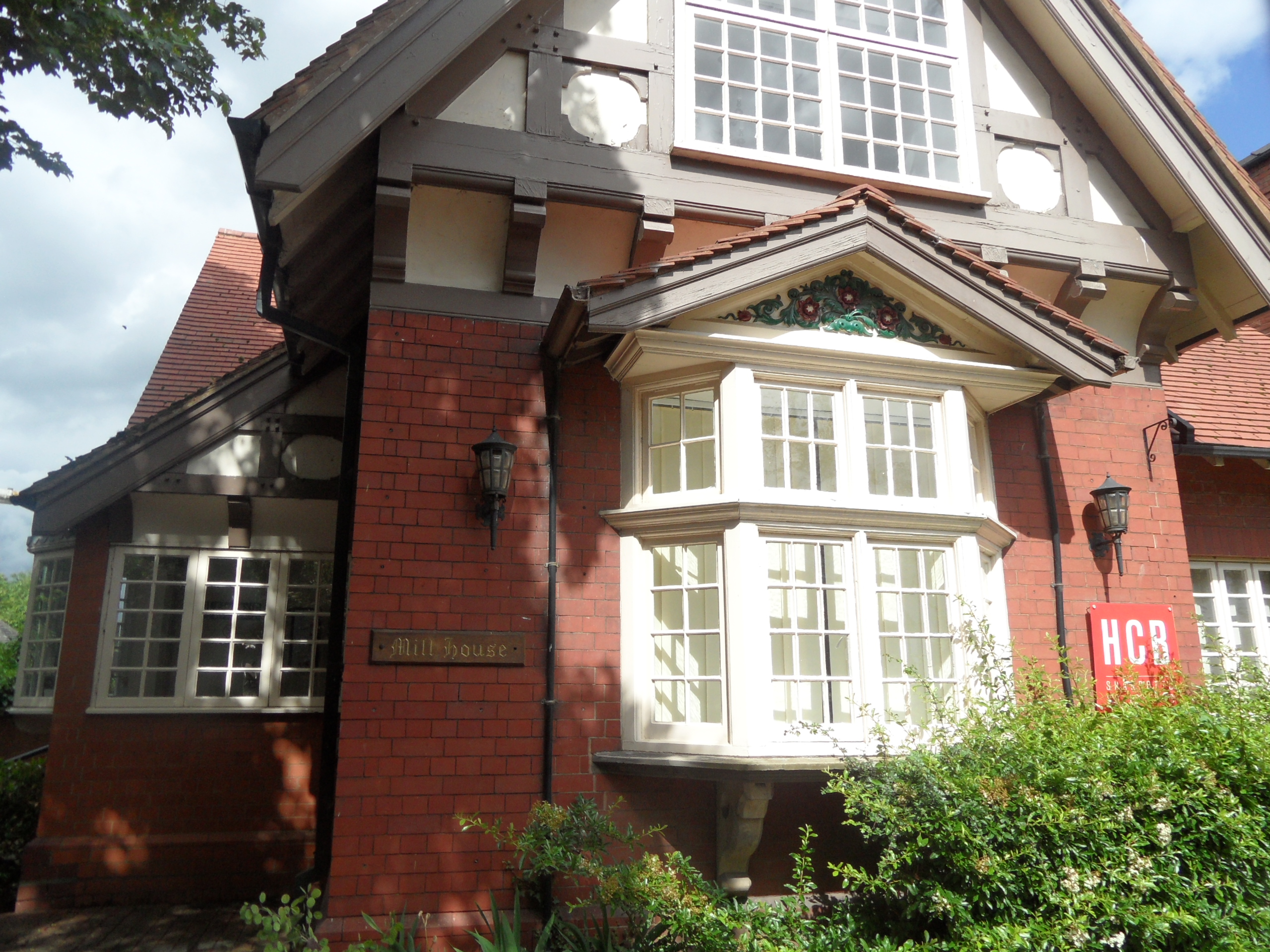
Mill House, Dam St in the vicinity of the old mill

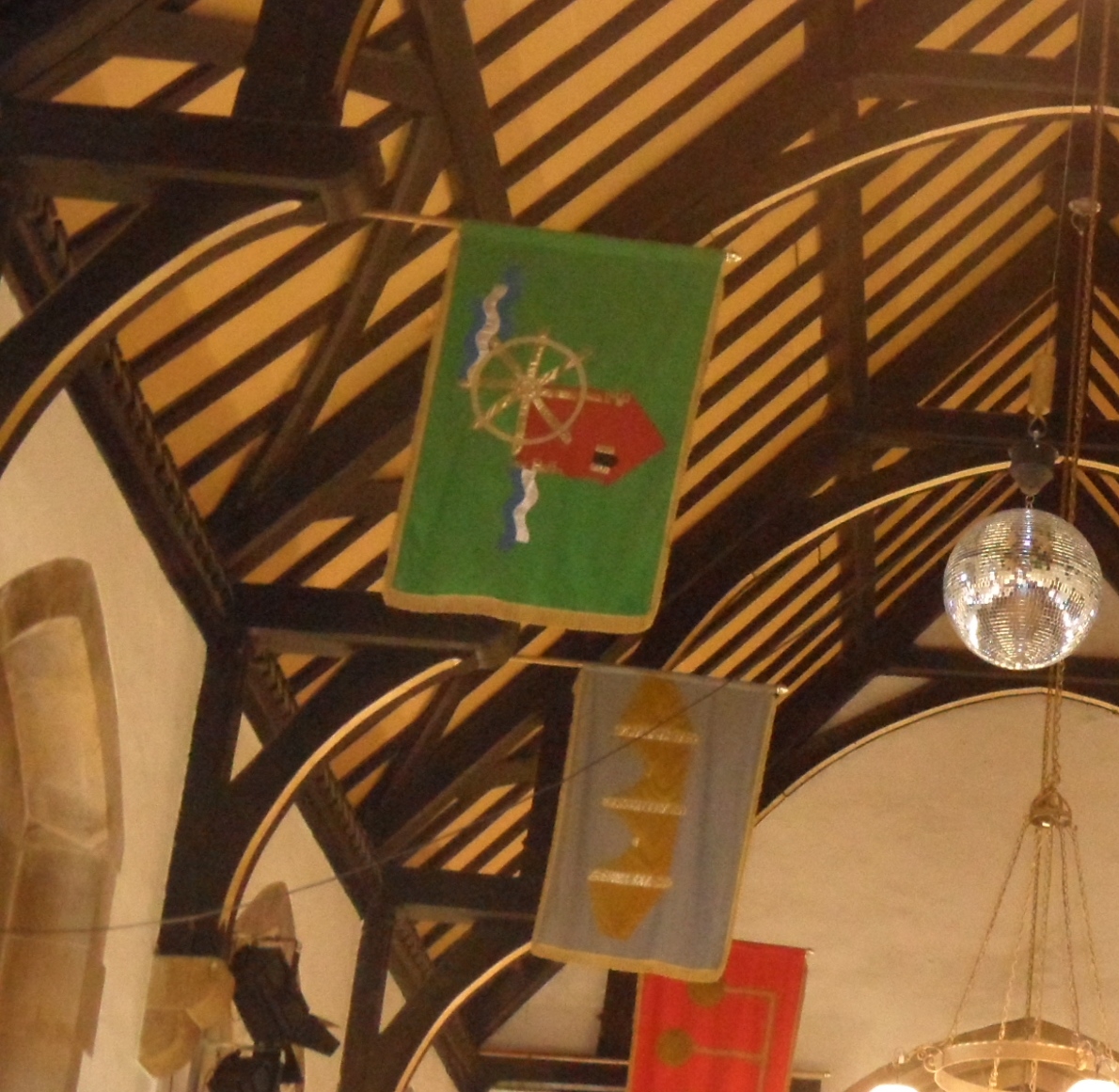
This ward banner in the Guildhall relates to Dam St, and I think it represents the mill between Minster and Stow Pool.

These objects have been lost and found once already, but where are they now? Is it possible to find them once again?

Edit: Philip just asked me about where the tanneries were, and in comparing the Snape map with Googlemaps, I found that in one of the spots marked as a tan yard on the former, there is a little road called the Tanyard (off Stowe St) on the latter!

Sources:

A survey by the Lichfield Wildlife Group in 2009, looking at the natural heritage of The Close http://www.staffs-wildlife.org.uk/files/documents/250.pdf

Thanks to Philip Mantom for drawing my attention to the legal case South Staffs Water Co v. Sharman (1896)

Smith and Keenan’s English Law Text and Cases 15th Edition – Denis Keenan

Transactions, Volume 1,  Leicestershire Architectural and Archaeological Society

Lichfield: Economic history’, A History of the County of Stafford: Volume 14: Lichfield(1990), pp. 109-131

Signs of Spring

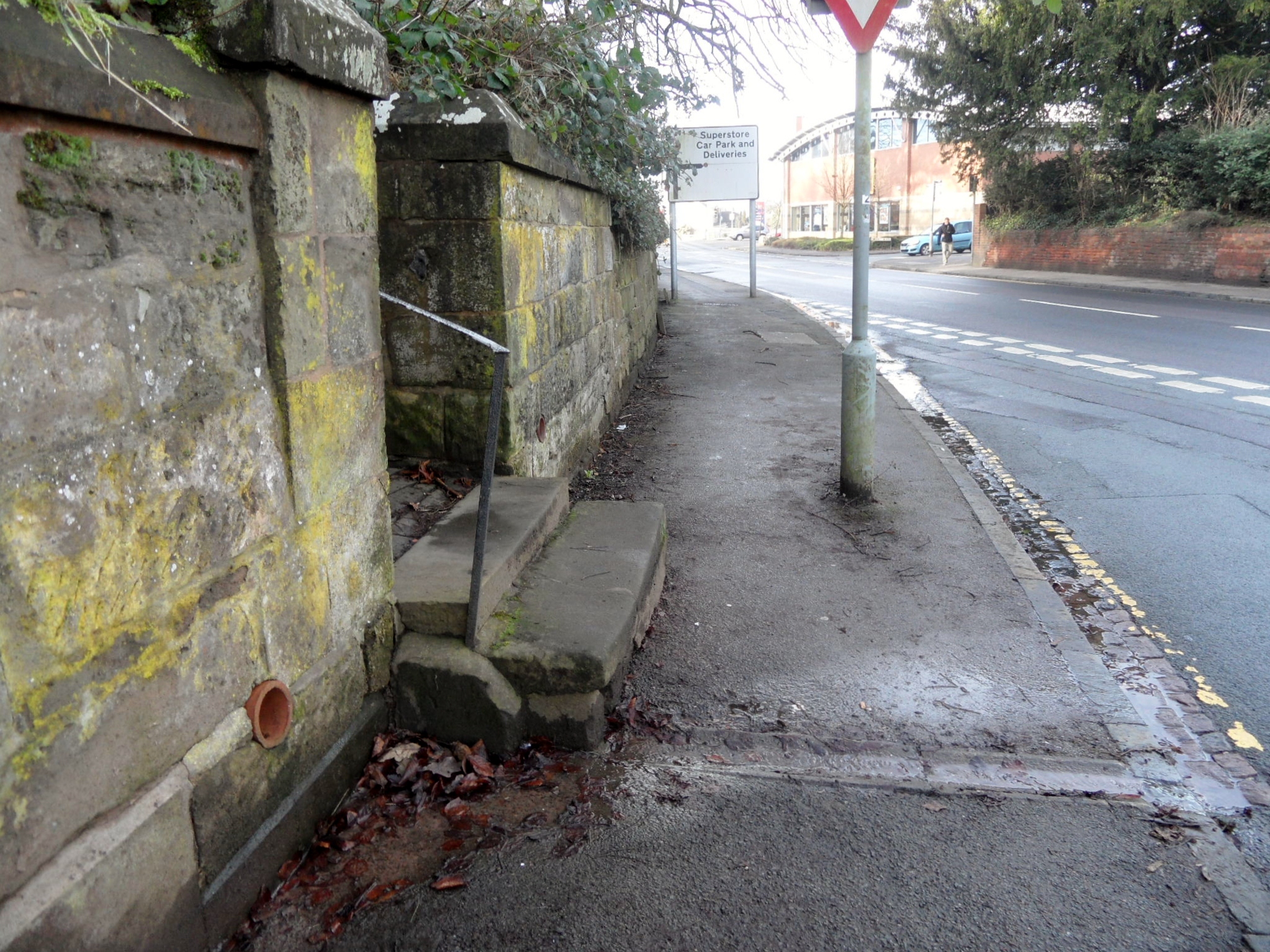
Every visit to the churchyard of St Michael’s leaves me wondering about the significance of this ancient place in the early chapters of Lichfield history. Thanks to archaeology, some answers have been provided over the years and landscape features such as the natural springs beneath the churchyard may give further clues as to what first drew people to this site thousands of years ago.  Nigel Johnson from Lichfield Lock and Key had told me that the water still flowed, and could be seen seeping out near to the steps up to the churchyard before trickling down Greenhill (except last week when I visited and the water had frozen!)

This natural spring has flooded the church’s crypt in the past.

Last Tuesday’s visit – frozen spring water on a freezing Spring morning

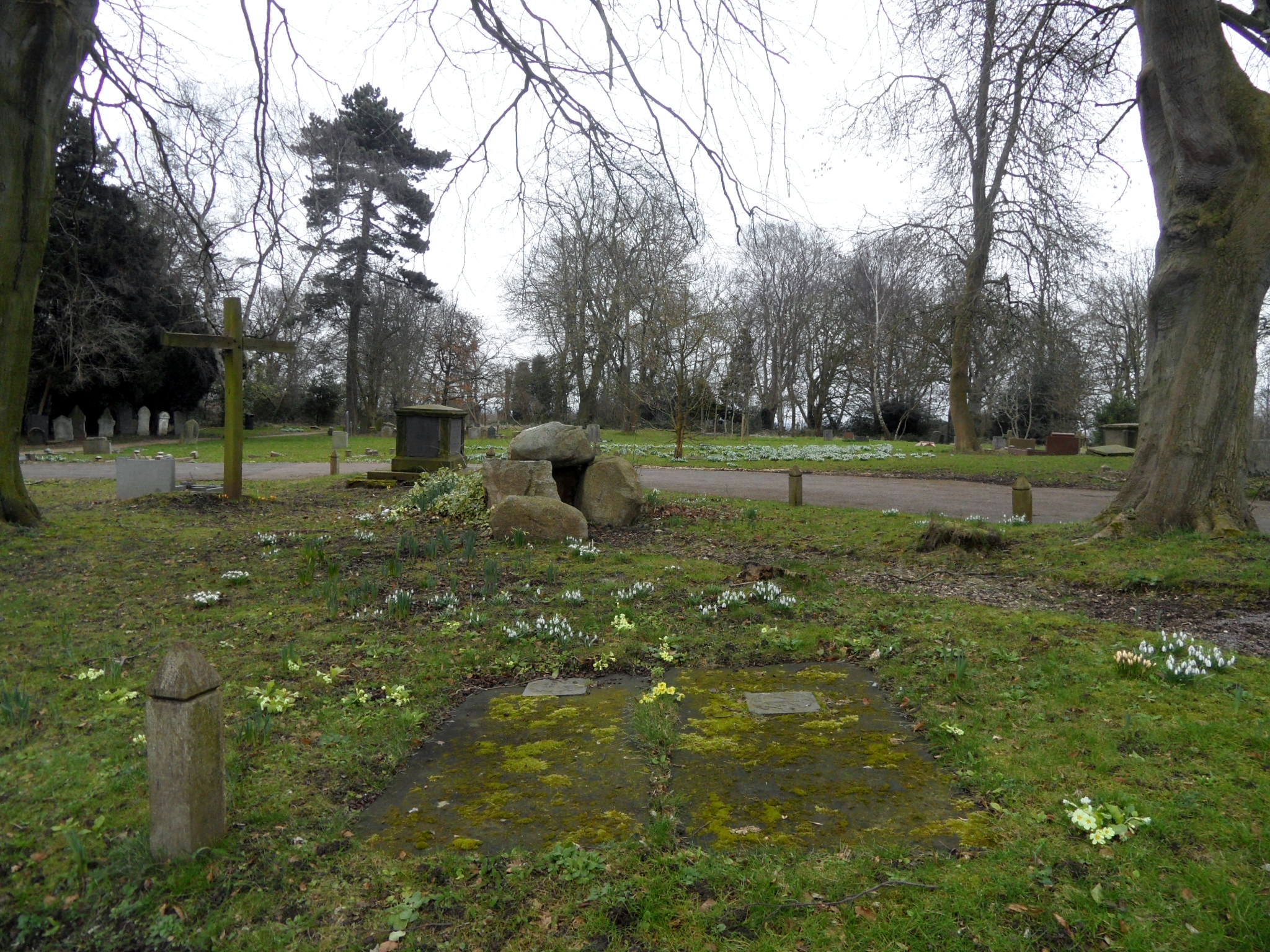
The churchyard was once used as pasture (1) but now the cattle and sheep are long gone and wildlife has been allowed to reclaim much of the churchyard. Bird song fills the air and along the paths and amongst the graves are clusters of spring flowers. Snow drops are still hanging on in there, and primroses and daffodils are now well on their way. During my recent visits, I’ve also met several dogs (and their owners!) and some of the neighbourhood cats.

I noticed that Georgia Locock, a young wildlife enthusiast who has her own blog on Lichfield’s wildlife has also been along to the churchyard on the lookout for Spring recently and you can see her lovely photographs here.

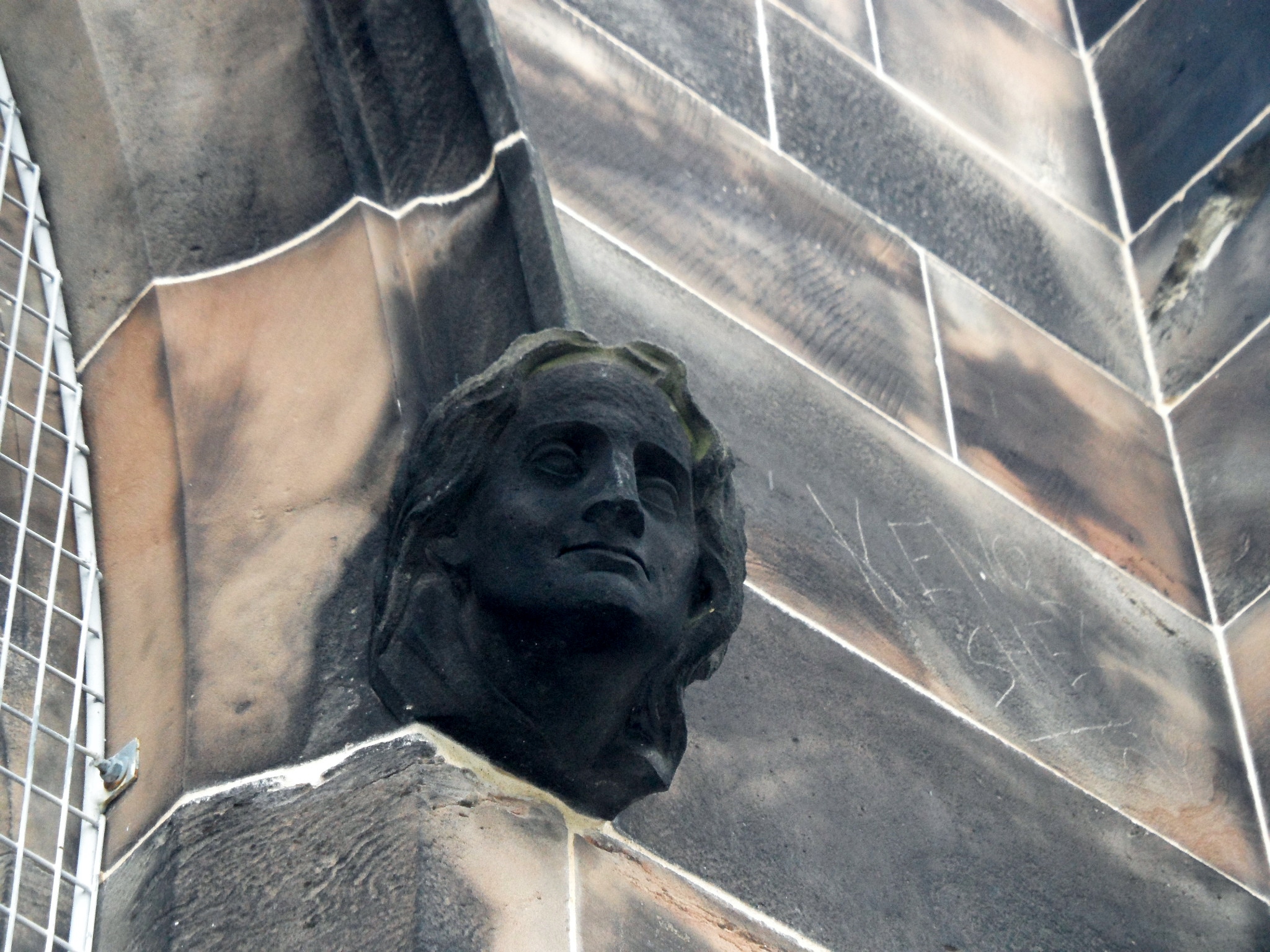
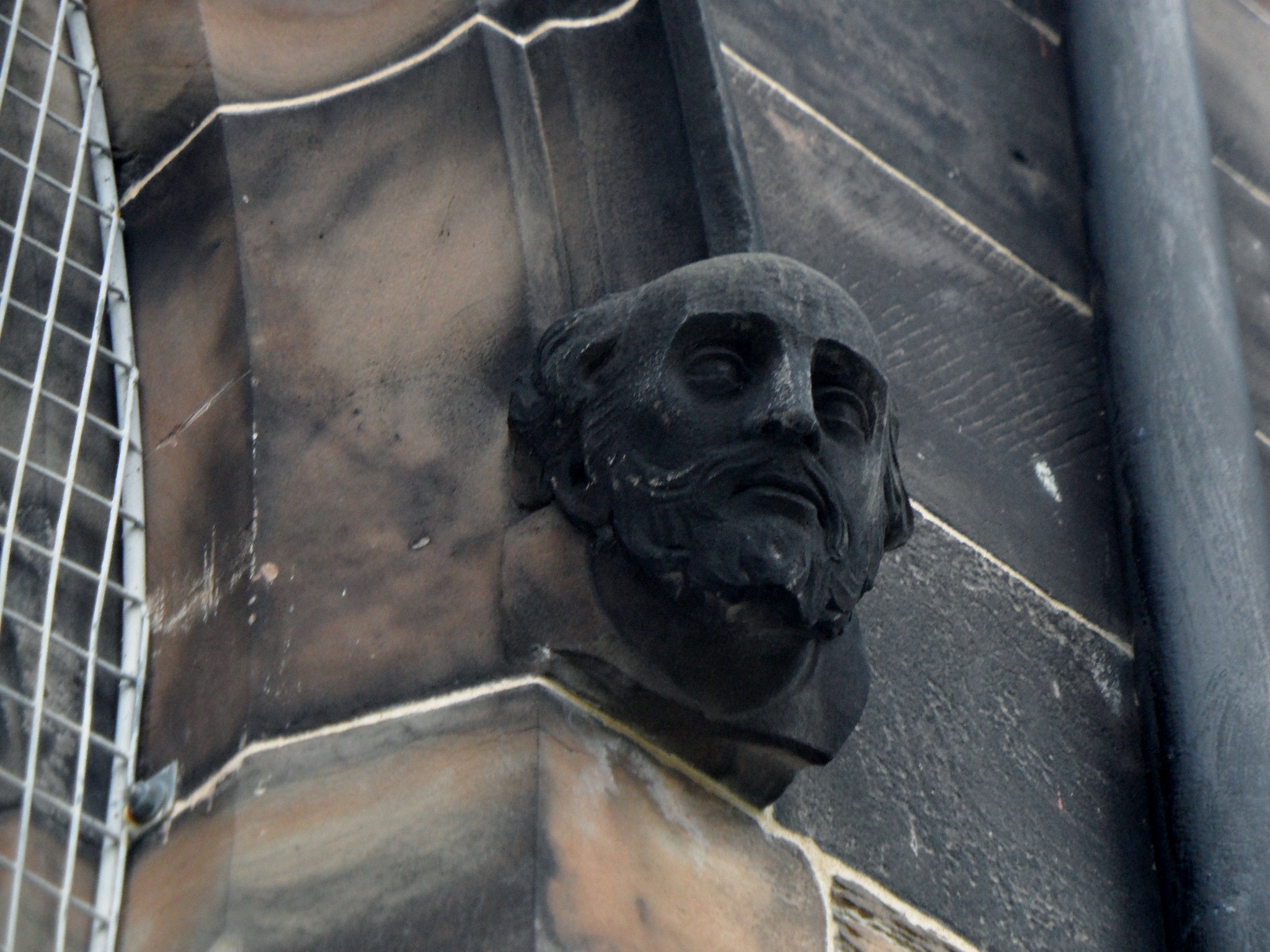
On the south (I think!) side of the church itself, I noticed stone heads, very similar to those at Christ Church. A couple of years prior to working on Christ Church, Thomas Johnson, the Lichfield architect, carried out an extensive restoration here at St Michael’s in 1842/1843 and presumably these heads are one of his additions. Whilst his work at Christ Church is generally applauded, Johnson’s work at St Michael’s has been criticised by some, as much of the original medieval fabric of the church was destroyed during his renovation. (I don’t know much about architecture, and so am not really in a position to comment. However, there does seem to be a certain irony in removing original features, and adding new ‘medieval style’ ones, such as these heads.) Again, as at Christ Church, I wonder who these faces captured in stone belong to and who carved them?

Looks like someone was inspired to create their own head alongside the carved ones….

Many of the  headstones and memorials that surround the church feature the names of the stonemasons that created them – Joseph Johnson of St John St (was this any relation to Thomas?), John Winslow of Tamworth St, John Hamlet of Dam St, James and George Lamb of Sandford St amongst others. Did any of these craftsmen also work on the church itself?

It seems Joseph Johnson may have ended up in a debtors prison. His name appears in the London Gazette, in a section entitled ‘Pursuant to the Acts for the Relief of Insolvent Debtors in England. The following PRISONERS, whose Estates and Effects have been vested in the Provisional Assignee by Order of the Court for Relief of Insolvent Debtors, and whose Petitions and Schedules, duly filed, have been severally referred and transmitted to the County Courts hereinafter mentioned, pursuant to the Statute in that behalf, are ordered to be brought up before the Judges of the said Courts respectively, as herein set forth, to be dealt with according to Law’.  Mr Johnson is listed to go before the Judge of the County Court of Warwickshire, holden at Coventry, on Monday the 21st day of June 1852, at Twelve o’Clock at Noon and is described as,

Joseph Johnson, formerly of the city and county of the city
of Lichfield, Stone Mason and Builder, afterwards of the
same place, Stone Mason, Builder, and Licensed Victualler,
and at the same time of Snow Hill, Wolverhampton, Staffordshire, Stone Mason and Builder, and late of the city
and county of the city of Lichfield, Stone Mason, Builder,
and Licensed Victualler


The Edinburgh Gazette of January 16th 1863, notes that John Hamlet, listed as an architectural draughtsman and stonemason of Dam St, Lichfield, has been awarded bankruptcy. How did they fall upon such hard times?  I’d like to find out more about these craftsmen whose job it was to record the lives of others in stone.

Notes:

1 – I was surprised to read in the county history that the churchyard was once let as pasture, although in 1801, the grazing of cattle was deemed inappropriate due to the ‘damage and desecration’ caused and it was decided that only sheep should be allowed. However, this was ignored, with tragic consequences – in 1809, there is an entry in the church register for the burial of a child, Joseph Harper, who was killed by a cow in the church yard.

Sources

Lichfield: Churches’, A History of the County of Stafford: Volume 14: Lichfield (1990), pp. 134-155.

Click to access page.pdf

Click to access page.pdf

History, Gazetter and Directory of Staffordshire  (1834), William White

http://archiver.rootsweb.ancestry.com/th/read/STAFFORDSHIRE/2001-04/0986182998


A Lost Place

A couple of years ago, I learned that there had once been a place in Lichfield known as Bessy Banks Grave. Appearing on several old maps, the name is also referred to in a newspaper advertisement from 1914, but seems to have disappeared shortly afterwards. The plot of land was in The Dimbles area and I suspect that the name may have been lost when the council began building houses there in the early twentieth century.

Attempts to discover the story behind the name led to a poem written by Anna Seward for her friend Honora Sneyd, at the place known as Bessy Banks Grave, which Miss Seward refers to as ‘the grave of a suicide’.

“It suits the temper of my soul to pour
Fond, fruitless plaints beneath the lonely bower,
Here, in this silent glade, that childhood fears,
Where the love-desperate maid, of vanish’d years,
Slung her dire cord between the sister trees,
That slowly bend their branches to the breeze,
And shade the bank that screens her mouldering form,
From the swart Dog-Star, and the wintry storm….”

David Garrick also knew the place, adding that it was supposedly haunted and in 1805, John Jackson remarked that the spot was ‘once the famous rendezvous of lovers….now no more is remembered than that poor Betsy (sic) is said to have fallen victim to hapless love’.

After reading the original post, “Margaret” left a comment to say that she had found a poem called ‘The Circuit Lane’, in the 1859 book ‘Rustic Rhymes’, by Frederick Price. The Circuit Lane marked part of the boundary of Lichfield, as can be seen in the following extract which appears in several history books from the early nineteenth century:

“… and so along that little cross lands unto another lane that leadeth from Lichfield to King’s Bromley and then along that lane towards Lichfield unto a little lane lying between the Grange Ground and Collin’s Hill Field commonly called the Circuit lane unto the further end of it betwixt two fields the one called Hic filius and the other Piper’s Croft and so over across a lane that leadeth from Lichfield to Elmhurst and then into another little lane between Stichbrooke Ground and Gifforde’s Crofte and so along that little lane to a green lane at the further side of the Lady Leasowe being the land of Zachary Babington Esquire and down that lane to a brook called Pone’s Brook and so over that brook into another lane called Stepping stones lane…”

As well as painting a picture of a disappeared landscape, Frederick Price’s poem also refers to the lost story of Bessy Banks. The full poem is here, but I have included an excerpt below

Daisy, ladysmock, and kingcup,
And the broad-leaved flag so gay,
With which we in pride would prink up
Doorsteps on the first of May –
Where bright flies their wings are sunning
Where shells strangely marked are found
Where the rippling brook is running
In which Bessy Banks was drowned.

Pass we these, and onward pressing
Where o’er head tall elm trees wave,
‘Tween banks rich in Nature’s dressing
Till we come to Bessy’s grave:
Here four cross-roads meet; a green mound
Indicates her place of rest;
Few spots are more lone, I ween, found
On old England’s face imprest.

Hawthorn blossoms fall and slumber
O’er where the betrayed one lies –
One more victim to the number
Sung in great Hood’s ‘Bridge of Sighs’
The betrayer, in corruption,
Lies in fetid church-yard soil,
Where e’en earthworms meet destruction
Fit ‘last home’ for one so vile.

Hence the lane has been neglected
From that time : the rustic swain
Since that hour the road rejectes
Nor dare traverse it again
Burdocks, thistles, nettles, tansy,
And the nightshade flourish there;
But the primrose or the pansey
Scarce are known to blossom near.

You’ll notice that Price’s version of the story differs from the earlier one told by Anna Seward. Perhaps the clue to this lies in the reference Price makes to ‘Hood’s Bridge of Sighs’, relating to the poem by Thomas Hood, written in 1844 and said by the Victoria and Albert Museum to be a ‘classic stereotype of the harlot and her destiny‘?


Ferry Cross the Minster

Yesterday, the second of March, was the feast day of St Chad. In 669, Chad founded a monastery near to the site where the church named after him now stands, making Lichfield the new centre of the Diocese of Mercia (it had previously been Repton). Anyone interested in learning more about the life of Chad should read Patrick Comerford’s post here.

Statue of Chad at St Chad’s church, Lichfield

Around this time last year,  I wrote about the history of the well at St Chad’s and a little about the pilgrimage route between Lichfield and Chester. This year once again I found myself possibly following in the footstep of pilgrims, when I took a walk down Bird St.

The latest incarnation of St Chad’s Well

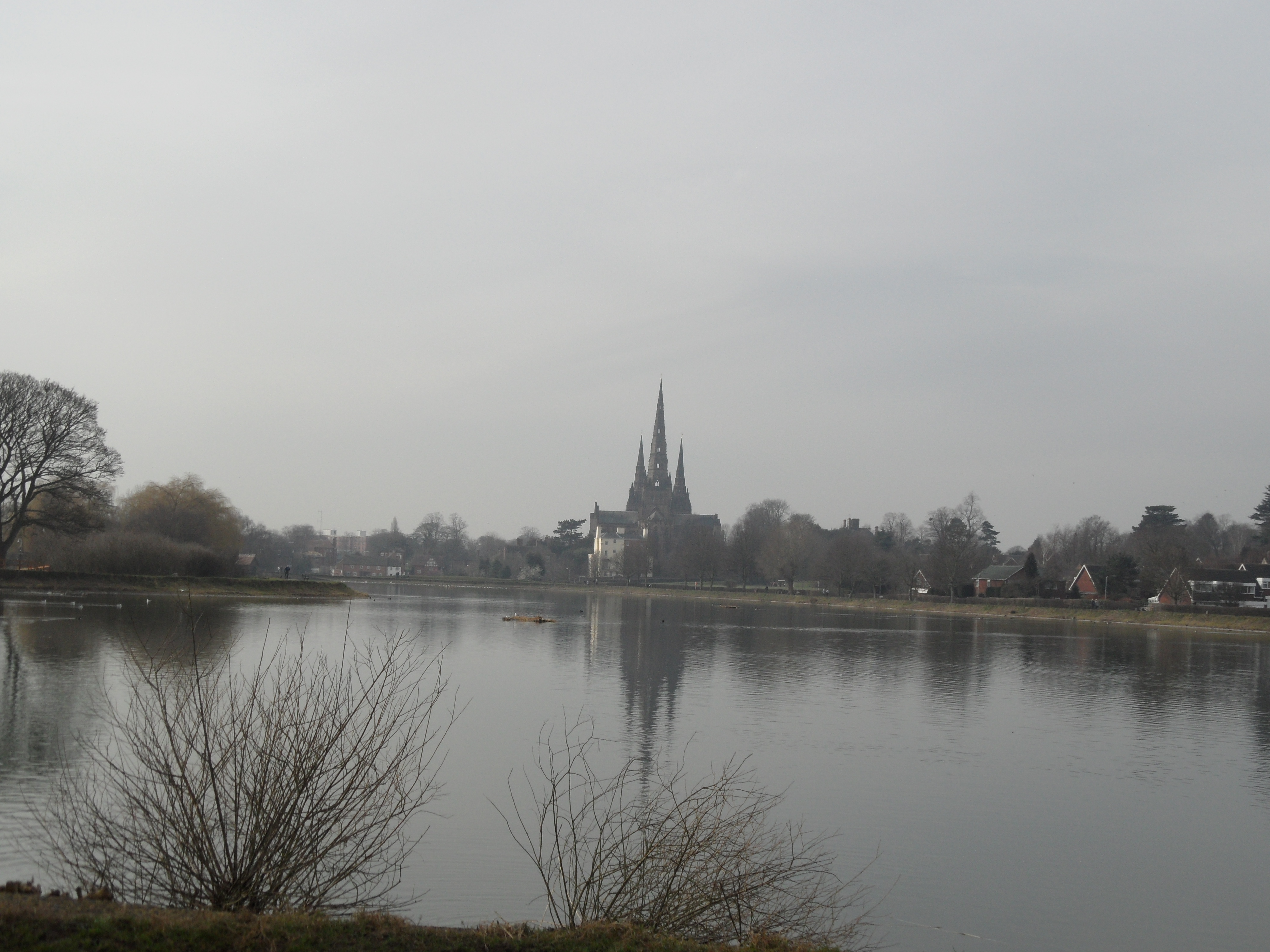
The view from St Chad’s. A question – why was the Saxon church built to house St Chad’s bones and later to become the Cathedral, built over there, and not at the site of Chad’s Monastery and Well?

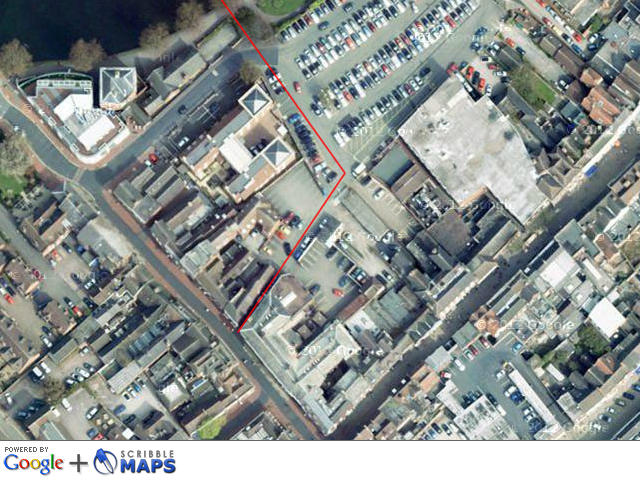
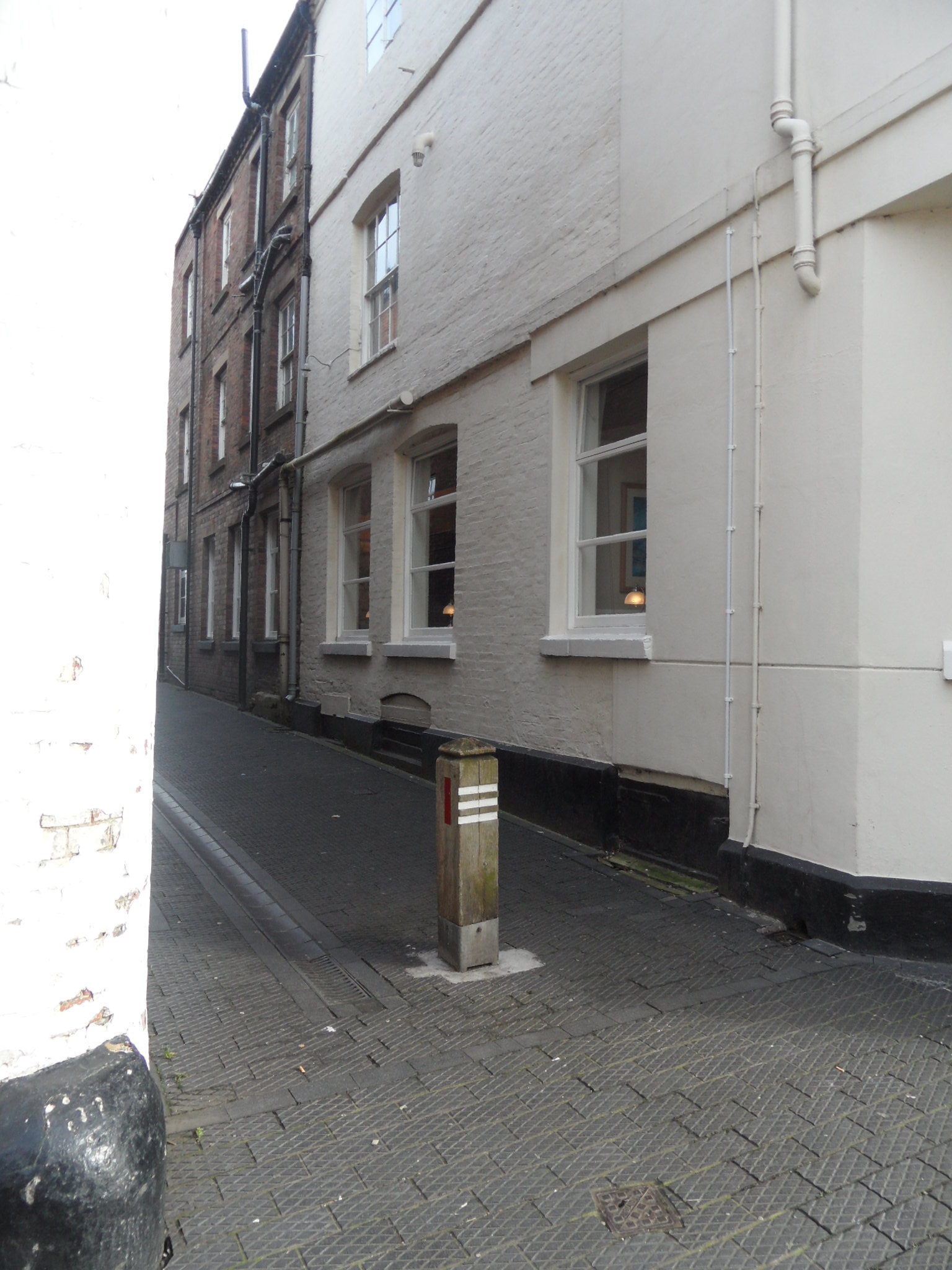
An alley (or gully or ginnel depending on where you’re from) runs from Bird St, past the George Hotel and then takes a sharp turn towards Minster Pool. In the early fourteenth century it was called Wroo Lane, a name thought to be derived from the Middle English word ‘Wro’ meaning corner. Shortly afterwards, the lane became known as Cock Alley.  According to Thomas Harwood, this ‘new’ name came from a carpenter named Slorcock who once lived there. I’ve done my best to show the route I think the lane took but please also take a look at  it on John Snape’s wonderful 1781 map of Lichfield, which Brownhills Bob very generously shared here on his blog. Although these days it’s probably mostly used as a shortcut to the car park, the Collections for a History of Staffordshire (Volume Six) suggests that this was once an important thoroughfare, leading pilgrims to the ferry which would carry them across the water to the Cathedral.

Cock Alley. Or possibly Wroo Lane.

Looking back up towards Wroo Lane. Or possibly Cock Alley.

How did the pilgrims get over those big railings?

At present, I am unsure whether the existence of a ferry for pilgrim traffic is a theory or whether it has actually been confirmed by evidence. I shall keep looking for this and in the meantime, may I suggest that when walking around Lichfield you keep looking too. Remember, it’s not just buildings that have a history, but also the spaces between them.

 Sources:

‘Lichfield: The place and street names, population and boundaries ‘, A History of the County of Stafford: Volume 14: Lichfield (1990), pp. 37-42. URL: http://www.british-history.ac.uk/report.aspx?compid=42340

The History and Antiquities of the Church and City of Lichfield, Thomas Harwood

Collections for a history of Staffordshire Volume 6, Part 2, Willam Salt Archaeological Society


A Stone's Throw Away

I recently read a great post about the map maker John Ogilby on Kate Shrewsday’s wonderful blog. In 1675, Mr Ogilby was the creator of the first ever British road atlas, and after reading Kate’s post, I took another look at the section of his map of the London to Chester road, as it passed over the Warwickshire border into Staffordshire and on through Lichfield. You can see the map here.

The majority of the place names are recognisable and in use today, albeit with some changes to the spelling –  Burowcop Hill, Cank Wood and Sutton Cofield amongst others.There are however a handful of names that appear to have been lost over the last three hundred or so years. One intriguing feature marked on the route is the ‘Bishop’s Heap of Stones’, eight miles or so from Lichfield, between Canwell Hall (or Sir Francis Lawley‘s Cannell Hall as it’s shown on the map) and Hints.

The name seems to refer to a literal heap of stones, and it seems there are at least two  possible explanations for why this pile of pebbles was associated with a bishop. Thomas Pennant, when writing about his journey from Chester to London, discovered a handwritten note in a copy of William Dugdale’s ‘Warwickshire’, added by Dugdale himself, which read as follows:

There is a common report (which passeth for currant amongst the vulgar) that the great heape of stones, which lyeth near the road way from Litchfeild towards Coleshill, upon Bassets heath, called the Bishops Stones, and those other lesser heapes, which lye in the valley below; were at first laid there in memorie of a bishop and his retinue, who were long since rob’d and killed, as they were travailing upon that way: but this is a meere fabulous storye: for upon an inquisition made in King James his time, concerning the extent of common upon that heath, betwixt Weeford and Sutton;there was an old woman, called old Bess of Blackbrooke, being then above an hundred yeares of age, who deposed (inter alia) that the Bishop of Exeter living then at Moore Hall: taking notice how troublesome such a number of pibble stones as then lay in the roade thereabouts, were to all passengers, caused them to be pickt up, and thus layd upon heapes

In 1769, in his book The History and Antiquities of Shenstone, in the County of Stafford, the Reverend Henry Sanders, gives a similar but more detailed explanation. Sanders says that a woman from Blackbrook came to the inquiry into the parish boundaries and testified that in the reign of Henry VIII, or just after, John Vesey, the Bishop of Exeter had decided to become a benefactor to his birthplace of Sutton Coldfield. Bishop Vesey obtained a charter of incorporation for the town, revived the market and also built a number of stone houses (1) as part of an attempt to create an industry manufacturing Kersey, as they did in Devon. Bess (I’m assuming that she is ‘the woman from Blackbrook’ Sanders refers to), also told how when the Bishop was at Sutton he was annoyed by the rolling pebbles on the road which caused travellers’ horses to stumble and sometimes fall and so he employed poor people to gather them and lay them in heaps. Sanders describes the position of these heaps as follows:

On the hollow way between Weeford Hills or rather between Swynfen and Canwell lie divers heaps and one great one at the top of the hill at Weeford park corner which according to the tradition of the country people were placed there in memory of a bishop of Lichfield who riding with many attendants was slain with those servants by robbers and that these heaps were where the bodies were found which agreeable to this account and to honest and accurate antiquaries is entirely fabulous

I also think these stories are fabulous, but I suspect not quite in the way that the Reverend meant! It seems the tale of the murdered bishop didn’t ever hold much weight, but what about the version given by the local centenarian (who sounds like a legend in her own right!)? Were the stones gathered by the poor at the request of a Bishop or did they serve another purpose?  It’s interesting that there may have been more than one heap. Piles of stones are of course found across the world, and have many meanings and significances. I suspect that the Bishop’s heaps of stones will have been swept away, perhaps gradually scattered back onto the roads from where they came. It’s interesting to think that even a humble pebble beneath your feet may once have been part of a much bigger story.

Notes:

1 You can see one of the stone houses built by Vesey here

2 Kersey was a coarse cloth, often used to make servants clothing, and although it takes its name from the village in Suffolk, I understand that in Vesey’s time it was Devon that was at the centre of the Kersey industry in England.


Christ Church Open Day

I’m delighted to see that Christ Church, Lichfield is having an open day. On Saturday 9th March, between 10am and 4pm, visitors will be able to explore this wonderful Victorian building and its architectural features, including the lovely chancel ceiling, original Minton tiles and stained glass, with the help of local history enthusiasts.

The grounds are lovely at this time of year, and a quick check of my photographs from last March tells me that the wild garlic and daffodils should be coming through in the lane alongside the church, so don’t forget to have a look outside as well as in.  There are also the intriguing stone heads around the inside and outside the building, that I wrote about back in January and am still none the wiser about (although I did see some very similar ones at St Michael’s –  a church that Thomas Johnson the architect was involved in restoring a few years before her started work here at Christ Church)!

The open day is being run by the new Friends of Christ Church, a group whose aim is to support the preservation, conservation and enhancement of the church and its grounds. I understand that anyone who becomes a member will receive an annual newsletter with details of upcoming events and projects to get involved in, and also a copy of the excellent book “Christchurch: A History”, which tells the story of the church, and the associated buildings in the area such as Christ Church School, The Old Vicarage, the cottage in the churchyard and Beacon Place (gone but not without a trace….).

More information can be found at www.christchurch-lichfield.org.uk/events or by email friendsofccl@btinternet.com.