Sites for Sore Eyes

Springs and wells are sources not only of water but also of folklore and legend. There are healing springs and fortune telling wells. Some are associated with saints, others with spirits.

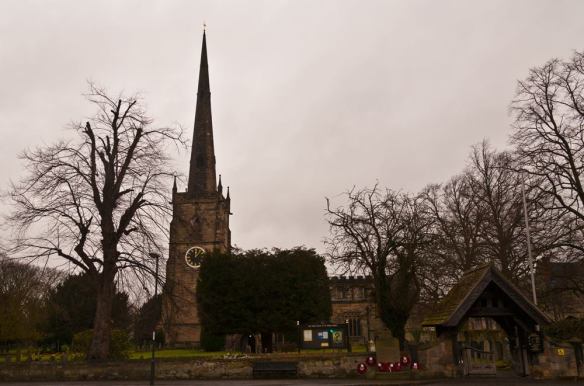
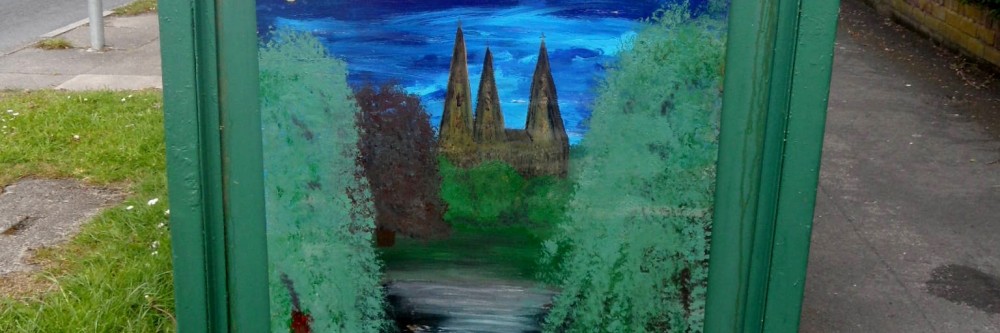
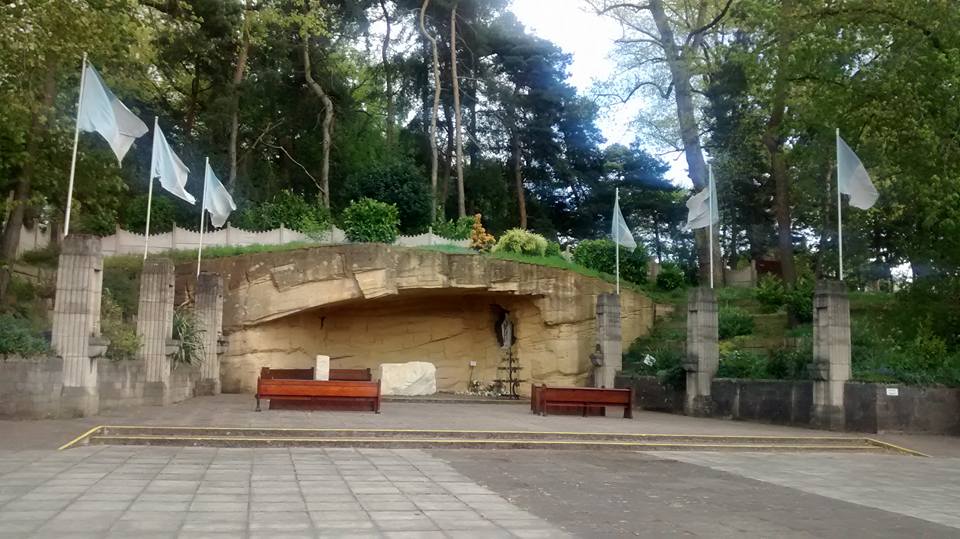
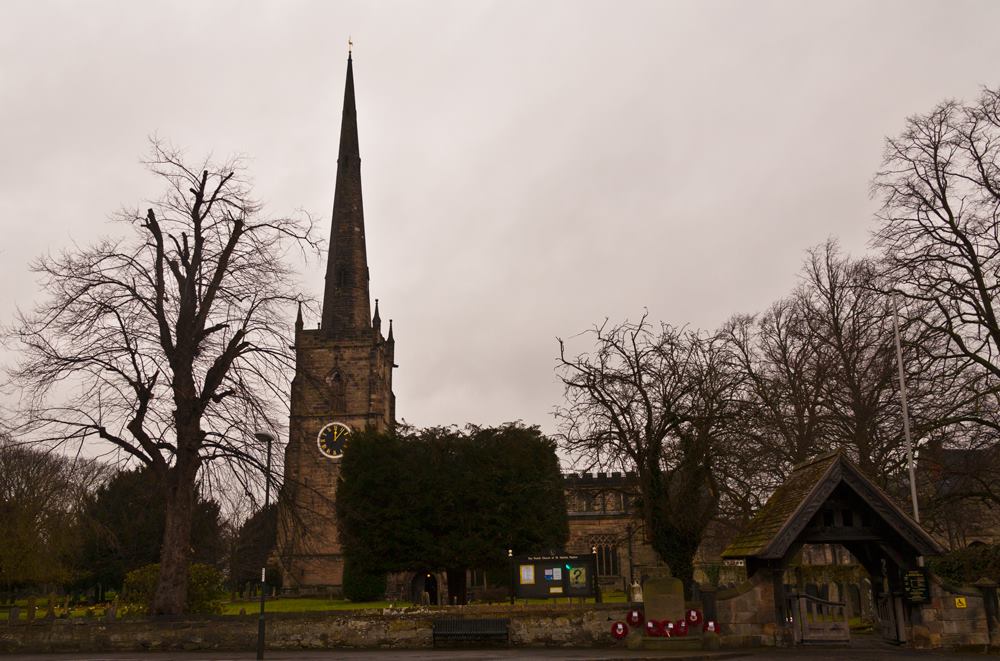
St Chad's in Lichfield. Photo by Lichwheeld

St Chad’s in Lichfield was believed to cure sore eyes (photo by Lichwheeld)

On Monday 9th February, Ross Parish, author of the Holy and Healing Wells blog and a series of books on the subject, will be giving a talk to our Lichfield Discovered group. Ross will be telling us about some of the sites we have here in Staffordshire and some of the traditions and stories associated with them. The talk starts at 7.30pm at St Mary’s in the Market Square (where there was a once a well of the same name at the west end!) and there is no entry charge, although voluntary donations towards the running of St Mary’s are always welcome. After the talk, people are invited to stay behind to discuss the future vision of the county’s archive and heritage service, over a cup of Staffordshire water (plus milk and teabag).

Two Minutes of Your Time

Whether you’re Dimbles born and bred or a Katie-come-lately like me, everyone who has ever called Lichfield home is a part of the city and its history. A new project, led by artist and sculptor Peter Walker, wants to hear from you about what it’s like growing up, living and working here.

The aim of the project is to collect two minute long stories and anecdotes, and/or related photographs.  These will then be combined with archive images of the city to create a present day digital record of Lichfield and the surrounding district, as told through the voices of local people. The project began in Burntwood, where hundreds of images and stories have already been collected from people from all different backgrounds, and is part of a wider art project. As Peter explained in his email,

“We believe it is significant that we make a record of what it was like to grow up in the area from the community’s point of view.  There are many shared memories alongside individual successes that deserve to be recorded for posterity. Your story may be for example, the day you first went to school, winning a trophy for your local team, or simply memories of buildings and shops or people you knew. If you don’t wish to be recorded or bring a picture then you can still come along and write an anonymous postcard with information relating to your memory, to give to the collection to tell your story. Images and stories collected will be turned into digital formats and displayed on-line, with some being made into a short digital film and all stories will be archived as a digital time capsule.”

If you want to contribute, there are sessions at Lichfield Library on 5th and 6th of February 2015 between 10.30am to 1pm and 2pm to 4pm. Like Lichfield itself, it’ll be what you make it.

Day to day life in Lichfield

Day to day life in Lichfield, Summer 2014

Brideshand Revisited

Last Summer, I wrote about the ‘Bride’s Hand’ carved into the stonework of the south porch of St James the Great at Longdon. It’s an old tradition that brides arriving at the church would place their own hand against it, in the hope that it would bring good fortune and fertility to their impending marriage. Apparently, some twenty-first century Longdon brides-to-be still partake in this ritual.

The 'Bride's Hand' Carving, St James the Great, Longdon

The ‘Bride’s Hand’ Carving, St James the Great, Longdon

Yesterday, I was idly scrolling through Twitter when two hands, similar to the one at Longdon, grabbed my attention. The image had been taken from Timothy Easton’s article on symbols which appears in the Winter edition of the Society for the Preservation of Ancient Buildings‘ magazine (1), and the carvings themselves are to be found on the south doors of two churches in the neighbouring Gloucestershire villages of Ampney St Mary and Ampney Crucis.  Until now, I wasn’t sure whether the Bride’s Hand was just a quirky bit of history unique to Longdon but the appearance of similar symbolism, in a similar position, at churches one hundred miles south of here suggests not. Timothy Easton believes that the carvings were added to send a very definite ‘Stop!’ sign to any evil spirits attempting to sneak inside.

South porch of St James, Longdon where the carving can be found.

South porch of St James, Longdon where the carving can be found.

As anyone who follows the Medieval Graffiti project will know, these hands are just one of the many types of markings that can be found in our churches. Some were an attempt to ward off evil spirits and no doubt some were an attempt to ward off boredom. St James the Great may be filled with beautiful carvings but I can’t help being drawn to these ones that aren’t really supposed to be there. For me, a crudely etched protective symbol and Joseph Nevill’s graffiti trump the Forster family’s weeping cherubs and marble tombs. Hands down.

Longdon graffiti

Graffiti at St James the Great, Longdon

Longdon carvings

The Stoneywell Chapel, used as a private chapel between 1520 and 1944, by families including the Ormes and the Forsters, former owners of nearby Hanch Hall

Longdon graffiti 2

Graffiti at St James the Great, Longdon

The tomb of John Forster, Hanch Hall

The tomb of John Forster, Hanch Hall

(1) Which their press officer very kindly sent to me after I sent an excited tweet telling them I’d seen one just like that.

Bit Map

Here’s a map of the Christ Church Lane area of Leomansley in Lichfield which Chris Pattison very kindly sent to me recently. The map is dated 1935 and as with everywhere, some things have changed (including the spelling of the name), whilst others have stayed the same.

South Staffordshire Waterworks Company map of Leomansley. Thanks to Chris Pattison

South Staffordshire Waterworks Company map of Leomansley. Thanks to Chris Pattison

Yet, all is not what it seems.  Christ Church school is shown in its original location, yet in 1910 it was rebuilt on the opposite side of the road. As someone else pointed out to me, the row of terraced houses known as Leomansley Villas was built in 1903 and so they should also appear but don’t. Another curious omission is the cottage near to the gates of Christ Church.  This dates back to at least August 1875, as there are documents at Lichfield Record Office which show it was used as the residence of the schoolmaster or mistress of Christ Church school (who of course had to be ‘competent, of good character and a member of the Church of England’) at the time. Prior to this, it was a lodge for Beacon House (or Place) in what is now Beacon Park.

The Cottage, Christ Church, Lichfield

The Cottage, Christ Church, Lichfield

The obvious answer is that this plan was drawn in 1935 but was based on a much older map. However, whilst this would explain most of the ‘errors’, it doesn’t account for all of them.

A group of buildings on the far left of the map are labelled ‘Leomansley Mill’, yet I’m sure that this is actually Leomansley Mill Farm. The mill itself, disused and dismantled by 1860, stood somewhere near the site marked as ‘Leamonsley Cottages’ (now known as ‘Leomansley Manor’).

Token for Leomansley Mill taken from Lichfield District Council flickr stream.

Token for Leomansley Mill c.1815 taken from Lichfield District Council Flickr stream.

Errors aside, it still gives us a glimpse of when all this were fields. Well, when a lot of it was anyway. If anyone’s interested in exploring the history of Leomansley further, there are some notes to accompany a walk around the area which I produced a couple of years back which you can access here.

The Mortal City

After reading that an inquest into a young boy’s death from drowning in the nearby canal at Sandfields in 1884 had been held at the Three Tuns Inn on the Walsall Road, I wanted to know more about the use of pubs in these circumstances.

The Three Tuns Inn, Walsall Rd, Lichfield, formerly Panache Restaurant & currently being developed

I had a look at the newspaper archive and found another report in the Lichfield Mercury, this time from December 1885, regarding the death of a soldier who had been found in the Birmingham Canal near Quarry Lodge. After being discovered, the body was taken to the Shoulder of Mutton in a cart on a Monday afternoon, where it was examined by Brigade Surgeon G Simon M.D. The following evening Mr C Simpson, the City Coroner, held an inquest into the death where a verdict of ‘drowned’ was returned by the jury.

I understand that this was how things were done all across the country. I think I’m right in saying that until the Public Health Act of 1875, there were no public mortuaries and in the event of a sudden or unnatural death, inquests were held at a nearby public building, often an inn or public house. If a body was discovered outdoors, the pub would also become a temporary mortuary.

On Google books, I found a document from 1840 detailing Coroners’ Reports for England and Wales. The Lichfield Coroner at the time, Mr Simpson, submitted a return giving the number of inquests held in Lichfield in each of the years between 1834 and 1839, together with a schedule of allowances and disbursements to be paid by the Coroner, as follows:

To the bailiff of the court for summoning the jury and witnesses attendances on the coroner and at the inquest: 5 shilling
To the witnesses not exceeding per day (besides travelling expenses): 3 shilling
For the jury, each juror: 1 shilling
For the use of the room: 5 shilling

The returns submitted by Coroners vary from place to place in the amount of detail included. For example, the return for Ripon outlines further payments made, including 5 shillings paid per day, ‘to expenses of room and trouble, where dead body is deposited till inquest held’, and ‘to the crier of any township for crying when body found and not known’. The return of Mr H Smith, the Coroner for Walsall, gives names of the deceased and the dates on which the inquests were held. In Leicester, John Gregory recorded the number of inquests in the four years ending August 1839 and added an explanatory note that the increase in inquests in the last year was mostly due to accidents occurring in the formation of the Midlands County Railway through the county. In a handful of towns, the Coroner also recorded the verdict (e.g. accidental, visitation of God, wilful murder) of the inquest. It doesn’t make for pleasant reading, but it’s a fascinating and important document for local or family historians.

By the late nineteenth century, things began to change. As previously mentioned, the Public Health Act 1875 gave permission for local authorities to provide public mortuaries and in the early twentieth century, The Licensing Act of 1902 stated that:

From and after the thirty-first day of March one thousand
nine hundred and seven, no meeting of justices in petty or special
sessions shall be held in premises licensed for the sale of intoxicating
liquors, or in any room, whether licensed or not, in any
building licensed for the sale of intoxicating liquors ; nor shall
any coroner’s inquest be held on such licensed premises where
other suitable premises have been provided for such inquest.

Yet at this time in Lichfield, there was no suitable premises, as can be seen from a further report in the Lichfield Mercury on 24th April 1903, regarding an inquest into the death of a woman in Old Sandford St.  The inquest was held at the nearby Hen and Chickens pub, although the post mortem was carried out by Dr F M Rowland at the deceased’s address, as her body had been discovered at home in bed. At the inquest, the coroner, S W Morgan commented on the situation, stating that it was a case that should have been taken to a mortuary. The room was nine or ten feet square, with a window right down to the floor. The double bed in the room had to be taken out and a table brought in. All of the utensils had to be borrowed, as there was nothing in the house that could be used. The Foreman of the Jury, a Mr Cooney, was reported as saying it was ‘disgraceful’. He considered it a scandal that there wasn’t a mortuary, though he was under the impression that one had been built in the city over at the council property on Stowe Street. With the rest of the jury sounding their agreement, the Coroner added,

“I called the attention of the council to this matter…12 or 18 months ago, when a recommendation was passed by a Jury. It is astonishing that the City of Lichfield does not possess a mortuary, when one takes into consideration the fact that there are two stations in the place, and how frequently people meet with fatal accidents on the railway. It is most unfair that publicans should be called upon to take in these cases, and it is unfair to ask them to do it. Suppose a tramp happened to die, whilst passing through the town, that man, unless some kind publican happened to take him would have to be hawked around from public house to public house, until someone consented to take the body. It is simply a scandal and a disgrace that such a state of things should exist especially when a mortuary could be built at a small cost”.

Dr Rowland added that there had been plans for a mortuary, but they had been shelved, to which the Coroner replied, ‘It is not fair to the medical gentlemen to ask them to make the post-mortem examination under such conditions’. The Jury recorded a verdict of ‘Death from Natural Causes’, and added to it a rider calling on the City Council to proceed with the erection of a mortuary.

In May 1903, the body of a man was found on the railway line at Shortbutts Lane. The Duke of Wellington refused to admit the body, but the landlord of the Marquis of Anglesey allowed his stable to be used. The Coroner commented that it was as if the fates were conspiring to emphasise the need for a public mortuary in Lichfield. By June that year, plans to convert one of the storerooms at the Stowe Street Depot had been put forward amidst concerns by some members of the council that a scheme to erect a purpose built mortuary in the city was too costly. By August, discussions over the expense were continuing. Councillor Johnson claimed he was in favour of a mortuary but not wasting money on it. Councillor Raby replied by saying that the City had been brought into oppobrium enough through not having a mortuary, and that ‘the ghost of obstruction which Mr Johnson had conjured up should be buried’.

Finally, in November 1903, the Surveyor reported that the Stowe Street mortuary had been completed at a cost of £48 9s 5d. Exactly a year later, the City Council’s attention was drawn to the fact that dead bodies covered in sheets could be seen from Stowe Pool Walk. It was agreed that a blind should be installed and lowered when the mortuary was occupied, an almost symbolic drawing of the veil between those living in this world and those who had joined the next. Death in Lichfield was no longer in the public eye.

Far From the Madding Crowd

Once, when Cuthbert Brown was a boy and the circus came to town (sorry, city), one of the elephants died and was buried on Levett’s Fields. Mr Lichwheeld and I had joked that we should organise a community archaeological dig to look for Nelly but with work starting on the demolition of Lichfield’s Fire Station recently, this may prove unnecessary.

Demolition of Lichfield fire station tower, January 2015.Photo by Joe Gomez

Demolition of Lichfield fire station tower, Levett’s Fields January 2015.Photo by Joe Gomez

Welephant wins 2011 Lichfield Pancake Race. Image from Lichfield Live

Nelly is not the only elephant with links to Lichfield Fire Station. Image from Lichfield Live

In the pre-Friary Road days, the Big Top also used to pitch up at the Bowling Green fields. Presumably at that time the Bowling Green pub was still a seventeenth century timber framed building. The only image of this I can find online is included in the 1732 engraving of the south west prospect of the city, as seen here on Staffordshire Past Track (zoom in and it’s the building in the foreground, beneath the central spire of the cathedral). The pub was rebuilt in the 1930s but the Victoria County History mentions that a clubhouse still in existence in the 1980s may be the same one which existed in 1796. Definitely worth a trip to the pub.

The Friary prior to development. Taken from Gareth Thomas' (GIS Officer for Lichfield District Council) Pinterest site

The Friary prior to development. Taken from Gareth Thomas’ (GIS Officer for Lichfield District Council) Pinterest site

One of the best things about looking through old newspapers is that you come across stories that you wouldn’t even think to look for. Whilst searching for more information on the Bowling Green, I came across the following obituary from March 1820.

At Lichfield, aged 67, John Edwards, the Hermit of the Bowling Green in that city. He came to the neighbourhood in the prime of life – a perfect stranger, retiring with disgust or disappointment from other and brighter scenes of life; but further particulars have never transpired respecting his history. The subscriptions of the benevolent have contributed to shed a comparative comfort on his latter days. A short time previous to his decease, he published a short “Essay on Freemasonry”. The medical gentlemen gratuitously attended his during his illness.

So many questions about Mr Edwards arise from this small snippet but I suppose if further particulars respecting his history had not transpired back then, the chance of uncovering anything now is fairly slim. Is it fair to say that Mr Edwards’ attempts to distance himself from society seem to have inadvertently made him into a celebrity of sorts? I wonder what became of his Essay on Freemasonry?

Whatever Mr Edwards’s reasons for preferring a life a solitude, it seems that in the eighteenth century it could be a career choice. Of sorts. Apparently, always on the lookout for opportunities to impress or outdo their friends and neighbours,eighteenth century land owners employed professional hermits to sit and be mystical amidst their fake temples and other follies. I found an example in the form of Mr Powys of Morcham (Morecambe?) near Preston, Lancashire, who advertised an annuity of £50 per annum for life to,

…any man who would undertake to live seven years underground, without seeing anything human, and to let his let his toe and finger nails grow, with his hair and beard, during the whole time.

Board and lodging was provided in the form of apartments said to be, ‘very commodious with a cold bath, a chamber organ, as many books as the occupier pleased, and provisions served from his (Mr Powys’) own table’.  By 1797, it was reported that the ‘hermit’, a labouring man,  was in his fourth year of residence, and that his large family were being maintained by Mr Powys. Just what quality of life must a man with a family have been leaving behind to agree to live like this? If this was about showing off to others, it’s curious that Powys stipulated that his ‘hermit’ was to live without seeing anything human.

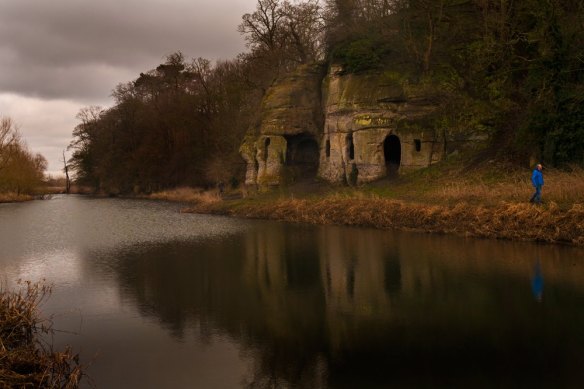
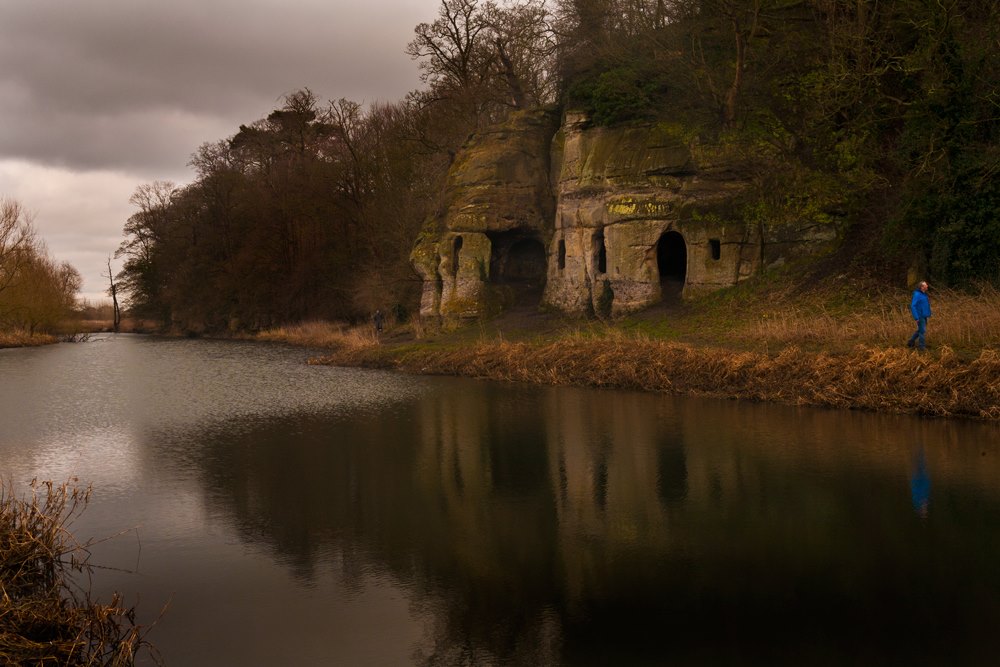
Great Haywood Cliffs by Jason Kirkham

Great Haywood Cliffs by Jason Kirkham

In August 2002, around two hundred years after this dark appointment, notices appeared in The Guardian, The Stage, The London Review of Books and the Staffordshire Newsletter, advertising for an ‘ornamental hermit’ to take up residence at the Great Haywood Cliffs near the Shugborough estate in Staffordshire, as part of an exhibition called ‘Solitude’. The Shugborough Hermit would be required to live in a tent near to the cliffs (living inside them was deemed too risky) and only had to commit to the weekend of the 21st and 22nd September 2002. Out of  two hundred and fifty enquiries from all over the world,  artist Ansuman Biswas was chosen and I’d love to hear from anyone who visited him at Shugborough that weekend. Mr Biswas went on to spend forty days and forty nights alone in the Gothic Tower at Manchester Museum in 2009, with the aim of becoming, ‘symbolically dead, renouncing his own liberty and cutting himself off from all physical contact”‘.

I think I’d rather run away and join the circus.

Sources:

The Hermit in the Garden: From Imperial Rome to Ornamental Gnome, Gordon Campbell,  Oxford University Press 2013

 http://news.bbc.co.uk/1/hi/england/2205188.stm

Plane Site

Over the weekend I had the following message from David Mace on the subject of RAF Lichfield.

At the Jet Age Museum, Staverton, Gloucester; we are reconstructing the cockpit section of a Hawker Typhoon 1B to be included as a museum exhibit. The remains of this aircraft cockpit were recovered from Flower’s scrap yard, Chippenham in the mid-90’s. Information on the project is available here:

http://www.jetagemuseum.org/Typhoon.aspx

No. 51 Maintenance unit scrapped approximately 900 Hawker Typhoons at Royal Air Force Station Lichfield, also known as Fradley Aerodrome between 1945 and 1947, and, although most of the airframes were recycled, it is possible that some items remain in the surrounding woodlands and hedges/ditches. It was quite common for the salvage crews to dump parts in these locations.

The Typhoon Project team are seeking information as to the possible whereabouts of surviving items that can be included in the rebuild project, and any information would be much appreciated.


David believes that much of the scrapping was carried out in the Curborough area, south of the airfield. We’re hoping to do a Lichfield Discovered walk over the next month or so to see if we can turn anything up (we never need much of an excuse to go and rummage around in ditches!). RAF Lichfield was Staffordshire’s busiest wartime airfields and although closed in 1958, and sold four years later, the following photographs, taken by David Moore on our RAF Fradley walk last summer, show just how much of interest still exists at the site. More details on the walk to follow, but in the meantime if anyone does have any information, please get in touch and I’ll forward it on to David Mace.

RAF Fradley 1

RAF Fradley 4

RAF Fradley 3

RAF FRadley 2

The King's Touch

This Christmas, for the first time ever, I watched the Queen’s Speech. I’d read somewhere that there had been a flurry of bets on the Queen abdicating and though sceptical, I interrupted a FIFA match between Walsall and Barcelona to seize momentary control of the television just in case. Of course, it had been nothing but a rumour and Charles remains a king in waiting.

Earlier that week, I’d been to visit a house associated with another King Charles to be. Following defeat at the Battle of Worcester on 3rd September 1651, Charles Stuart had fled north to Shropshire, hoping to sneak across the border into Wales and sail from there to Europe. The Parliamentarians were one step ahead of him and were closely guarding the River Severn crossing places and ferries, thwarting this plan. In the early hours of 8th September 1651, Charles arrived at Moseley Old Hall in Staffordshire, looking for a place to hide and a new escape route.  He was met at the back door by owner Thomas Whitgreave and the family priest John Huddleston (1), who gave up his four poster bed (2) and shared his hiding place with the future King when Cromwell’s soldiers came seeking him.

Moseley Old Hall as it was....

Moseley Old Hall as it was…. taken from ‘The Flight of the King by Allan Fea (1908)

....and as it is today. Well, last Sunday anyway.

….and as it is today. Well, last Sunday anyway.

The house which hid the King is now hidden itself behind a Victorian redbrick facade. As we waited outside, making jokes about standing under the mistletoe, the guide informed us that we were about to enter the hall through the very same door as the King had, and told the assembled children to let their teachers know about it. Mine were only here because I’d promised they’d be able to toast some bread over an open fire at the end but they seemed suitably impressed (3). One little lad wanted to know if there was going to be a ride. I suppose in a way there was.

The back door through which Charles entered Moseley Olf Hall on 8th September 1651

The back door through which Charles entered Moseley Old Hall on 8th September 1651

As everyone knows (4), before the King came to lie low at Moseley he’d been hiding high at Boscobel, nine miles away on the Staffordshire/Shropshire border. A tree house inspired by the Royal Oak, the most famous of all the places the King found refuge, is a recent addition to the King’s Wood at Moseley.  There are signs warning of peril, and whilst the element of danger here is not quite on a par with that of a man with a thousand pound bounty on his head hiding in a tree, it’s enough to get overprotective parents like me muttering, ‘Be careful!’, as if it were a charm to invoke protection.

The Moseley Old Hall Tree House

The Moseley Old Hall Tree Hide

The Royal Oak in 2011, Boscobel House, Shropshire by The Royal Oak in 2011, Boscobel House, Shropshire  Uploaded to Wikipedia  in May 2011 Sjwells53 by  CC BY-SA 3.0

The Royal Oak in 2011, Boscobel House, Shropshire
Uploaded to Wikipedia in May 2011 Sjwells53 CC BY-SA 3.0

I’ve yet to visit Boscobel, owned by English Heritage. I understand that today’s Royal Oak grew from an acorn of the original tree which was destroyed by visitors in the seventeenth century who, in the absence of a gift shop, took away branches and boughs to fashion into souvenirs. In his book ‘Boscobel’, Thomas Blount described,

‘this tree was divided into more parts by Royalists than
perhaps any oak of the same size ever was, each man
thinking himself happy if he could produce a tobacco
stopper, box etc made of the wood.’

These trinkets still turn up at auctions. In 2012, a snuff box sold at Bonhams for almost £7,000.  Another prized relic at the time of Charles’ great escape was a rag he’d used to mop up a nosebleed. Father Huddleston passed this ‘bloody clout’ to a Mrs Braithwaite who kept it as a remedy for the King’s Evil, another name given to the disease known as scrofula. Since the reign of Edward the Confessor, it had been thought that the disease could be cured by a touch from a King or Queen. Of all the royal touchers, Charles II was the most prolific. The British Numismatic Society estimate he touched over 100,000 people during his reign. The tradition was continued, somewhat reluctantly, by King James II who carried out a ‘touching’ ceremony at Lichfield Cathedral in 1687 (5). The last English Monarch to partake in the ritual was Queen Anne, who ‘touched’ a two year old Samuel Johnson at one of the ceremonies in 1712. The touch piece or coin which the Queen presented young Samuel with, which he is said to have worn throughout his life, is now in the British Museum.

John Huddleston's room now known as the King's Bedroom

John Huddleston’s room now known as the King’s Bedroom from The Flight of the King by Allan Des (1908)

By the mid twentieth century, Moseley Old Hall was suffering from neglect and subsidence. This ‘atmospheric Elizabethan farmhouse that saved a King‘ was itself saved by the National Trust, when they took over in 1962. Every year, thousands of people pass through that door to see that bed and hiding place. Seems that three hundred years on the King hasn’t lost his touch. Or maybe they are just here for the toast?

Moseley Toast

Notes

(1) As the king lay dying in February 1684, Huddleston was said to have been brought to his bedside with the words, “This good man once saved your life. Now he comes to save your soul”.

(2) The bed at Moseley is the original one the King slept on top of. It was bought by Sir Geoffrey Mander of Wightwick Manor in 1913, but was returned to the hall in 1962 by his widow, Lady Mander.

(3) It seems the King’s victory was only short-lived. One of them just asked what I was writing about and when I told them it was Moseley Old Hall they replied, ‘Oh yes, the place with the toast’.

(4) If you didn’t know, take a look at this great map from englishcivilwar.org which plots all of the stages on the King’s journey from the Battle of Worcester to his arrival in Fécamp, France

(5) More information can be found in ‘Touching for the King’s Evil: James II at Lichfield in 1687’, in Volume 20 of the The Staffordshire Archaeological and Historical Society transactions.

Sources: 

Moseley Old Hall, National Trust Guidebook

Staffordshire Archaeological and Historical Society Transactions Volume XL

http://www.coinbooks.org/esylum_v17n40a13.html

http://www.britishmuseum.org/explore/highlights/highlight_objects/cm/d/dr_johnsons_touch-piece.aspx

The Odd Couple

According to Pevsner, the Church of St Lawrence features some of the most exciting Norman work in the county.  Here be dragons and other fantastical creatures, Saxon and Scandinavian influences, a green man and other ancient faces. There are no wolves though.

Norman arch, Gnosall church

Norman arch, Gnosall church

Carving at Gnosall

Carving at Gnosall

Possible Saxon stonework, Gnosall

Possible Saxon stonework, Gnosall

Legend has it that the last wolf in Staffordshire was killed here in Gnosall in a pit near Brough Hall and that the effigy in the Lady Chapel is that of its slayer, Baron Brough  As much as I wish it were true, there is no evidence for this tale and no reason to believe the Baron ever even existed outside of Gnosall mythology. Several other names have been linked with the alabaster knight over the years, but his true identity remains unknown. Whilst such personal details are lacking, there is physical detail here in abundance, from the broken angel and the helmet at his head, to the lion at his now missing feet and experts have used these features to date the monument to the early fifteenth century. In recent years, the knight has been joined by the church’s only other effigy, taken from the recess on the opposite side of the church known as the Easter Sepulchre.

Two effigies at Gnosall church

Two effigies at Gnosall church

The unknown knight of Gnosall

Defaced – the unknown knight of Gnosall

Gnosall effigy belt

Even less is know about this second effigy, but due to its diminutive stature, it is often described as depicting a child. However, after visiting the church, words that I’d read in a paper by Dr Sophie Oosterwijk in relation to the famous Stanley Boy monument at Elford came back into my mind – “A small-sized tomb may deceive the beholder into thinking that it must commemorate a child, but there may be other explanations”. One of Dr Oosterwijk’s other explanations is that these tiny tombs may represent heart burials. It’s not only the size of the effigy that’s convinced me that someone left their heart here in Gnosall, but also the position of his or her hand over the chest, a feature it has in common with another example thought to be a fourteenth century heart burial at Coberley in Gloucestershire.

Effigy possibly depicting a heart burial at Gnosall

Effigy possibly depicting a heart burial at Gnosall

Despite the abundance of surviving Romanesque architecture here, the church is missing its original font.  However, at nearby Bradley. and Church Eaton there are examples which date to the twelfth century and recall some of the patterns and themes found at Gnosall, perhaps giving us an idea of what the Norman font at St Lawrence may have looked like. Interestingly, the broken Church Eaton font was reinstated at St Editha’s after apparently being found buried in a garden, and so it’s possible that Gnosall’s is out there somewhere, awaiting discovery under someone’s lawn.

One of Gnosall’s most intriguing features can be found outside, high on the south side of the church where stonemasons (we assume) who extended the tower in the mid fifteenth century have carved a large chalice into the stonework alongside the belfry window.

South face of the church tower at Gnosall

South face of the church tower at Gnosall

Chalice carving on Gnosall church tower (photo by Kenneth Ingram)

Chalice carving on Gnosall church tower (photo by Kenneth Ingram)

Less mysterious in origin, but still of interest, are the grooves along the wall, said to have been created by the sharpening of arrows when the grounds were used for archery practice.

Arrow grooves, Gnosall Church

Arrow grooves at Gnosall Church

There is also a rumour that this wall of the church bears the scars of target practice during the Civil War (Rodwell: 223). What we do know for certain about the church of St Lawrence and the civil war is that there are two soldiers buried here. The parish register records that on 1st October 1642, a tall young man known as John Bayne (or Bayle), ‘one of the King’s souldiers’, was buried here and that on 25th March 1643, David James, another of ‘the King’s souldiers’, was laid to rest. The date of the second may be especially significant, coming less than a week after the Battle of Hopton Heath, fought just ten miles away. Amidst the other burials and baptisms of the parish register, an interesting entry appears on an otherwise blank page. At some time between 20th March 1684 and 19th April 1685, an ‘unlettered’ hand has written the following:

Fere god and honour the King
Honor your parents at all times
Wimins tongues air like [unfinished]

Whether the writer of the verse was interrupted or simply ran out of inspiration is unknown, but we are left to draw our own conclusions on the nature of  ‘wimins tongues’. However, when it comes to singing the praises of this incredible building, I shall not be holding mine. See it for yourself on the weekend of 4th/5th July 2015, when the Church of St Lawrence, including the tower, will be open for tours as part of the G-Fest celebrations held in the village each year. Now that is exciting.

Tombstone in the graveyard at the Church of St Lawrence, Gnosall/

Tombstone in the graveyard at the Church of St Lawrence, Gnosall

With thanks to Norman and Sheila Hailes, for their tour and invaluable knowledge of the church, and to Kathleen Ingram and Cllr Kenneth Ingram and the other residents of Gnosall, for showing us around not once, but twice!

References:

Rodwell,W. (2012) The Archaeology of Churches Stroud: Amberley

Oosterwijk, S. (2010)  Deceptive appearances. The presentation of children on medieval tombs Ecclesiology Today

http://www.gnosallweb.org.uk/articles/stlawren.htm

Hard Labour

Gnosall’s lock-up dates to 1832 and was designed and built by local architect James Trubshaw of Great Haywood. It’s one of only four remaining in Staffordshire (1). Originally it stood at the junction of High Street, Brookhouse Road and Stafford Street but in the 1960s, Staffordshire County Council suggested that the building be moved to the county museum at Shugborough in order that the junction could be widened. Understandably, the Gnosall WI were keen that the lock-up remain in the village and set about securing a piece of land where it could be re-erected. As if to prove the council’s point about the road being a bit narrow, a lorry ran in to it in 1969 but fortunately didn’t cause enough damage to prevent it being rebuilt on its current site on Sellman St in 1971.

Gnosall lock-up

Gnosall lock-up

Why was the lock-up built in Gnosall in the first place?  The English Heritage Listing says ‘…as a result of rising unemployment and low wages, Gnosall was plagued by unrest and poaching…. with the threat of the Swing Riots, a widespread uprising by agricultural workers in southern England, spreading northwards, it was decided to build a lock-up’. In Stafford Borough Council’s Conservation Appraisal of the area, they attribute it to ‘rising unemployment, poaching and agricultural riots in the south’.

The arrival of canal navigators in the village may also have influenced the decision to build a lock-up.  In November 1829, Aris’s Birmingham Gazette reported that two thousand labourers employed on the Birmingham and Liverpool Canal were living in the village (2). The Gazette suggested that the navigators were responsible for a spate of sheep and poultry thefts in the area and also reported that they ‘advanced from acts of midnight depredation to proceedings of a tumultuous and riotous description in the open day’. The most serious incident that I can find involving the navigators at Gnosall took place in March 1830 when it was reported that a labourer working on the canal was attacked in the Horseshoes pub at Gnosall by two men described as ‘navigators’, as they tried to steal his watch. A judgement of death was recorded against the prisoners, but their lives were spared (2). Apparently, these proceedings so alarmed the inhabitants of Gnosall and the neighbourhood that they applied for the appointment of a large body of special constables and were also ‘desirous that a small military force be stationed in the parish’.

Whilst some navigators may have found themselves on the wrong side of the law at times, the Truck System operated by some of their employers was nothing short of criminal. According to a report in the Staffordshire Advertiser in February 1830, ‘none of his Majesty’s subjects are more imposed upon by the infamous ‘Truck System’ than these said ‘navigators’ who are ostensibly earning large wages under their gaffers but instead of money they receive a ticket to a Tommy (3) shop where they are charged 8d per lb for cheese (which they might purchase with money in Stafford Market for 4d) and bacon, butter, beef, bread and coffee at extravagant prices. The master of the Tommy shop returns the gaffer five percent on the gross amount of his monthly bill’.

Sometimes it was not crime but death which brought the names of the navigators to the pages of the local press. Richard Barnett was injured by a quantity of earth falling on the lower half of his body and died as he was being conveyed home on a cart. In December 1830, the Staffordshire Advertiser reported on ‘The Navigator’s Funeral’. James Wheeler was helping to cut a tunnel through the solid rock when he fell to the bottom of Cowley Quarry in Gnosall and later died of his injuries.  One hundred of his colleagues each contributed one shilling to ensure he had a decent burial and when they discovered his coffin had already been nailed shut, demanded the lid be removed to check nothing was amiss.  Six of the men were under-bearers and the wives of six men supported the pall. Six overseers of the works followed as chief mourners and behind them came one hundred fellow navigators, two abreast. The report noted that whilst the mourners were not wearing black, they were decently attired and looked clean and respectable. The women wore their brightly coloured clothes, the men wore smock-frocks. During the burial, some of those assembled at the graveside expressed anxiety about the security of the corpse and assisted the sexton in filling up the grave. Afterwards, the mourners held a wake at the Roe Buck and the Advertiser expressed sorrow that many of them had stayed out until late and ‘finished up the solemnities of the day with a fight’. However, it also commended the navigators for their praiseworthy practice of not only subscribing towards the funeral expenses of their colleagues but of also clubbing together something out of their wages every week to support the sick amongst them.

Cutting north of Cowley Tunnel at Gnosall Heath, Staffordshire  © Copyright Roger Kidd and licensed for reuse under this Creative Commons Licence

Cutting north of Cowley Tunnel at Gnosall Heath, Staffordshire © Copyright Roger Kidd and licensed for reuse under this Creative Commons Licence

We are all familiar with the canals that run through our towns and villages, but what do we really know about the men that worked on the Shroppie in Gnosall and elsewhere?  Where did they live? Did they rent rooms or live in makeshift camps on the outskirts of the village? One of the newspaper reports shows that the men were accompanied by their wives, but what role in the community did these women play? Did any stay on after the completion of the canal? How much of what appeared in the papers was based on fact and how much was based on rumour and reputation? The navigators are part of our history but for the most part we seem to have cast them in a peripheral role as hard-working, hard-drinking, trouble-making outsiders. We need to dig deeper than that.

Notes

(1) The others can be found at Alton, Stafford and Penkridge. References to other lock-ups in Staffordshire appear in documents and newspaper reports but without further research it’s unclear whether these refer to purpose built structures such as those at Gnosall, or rooms in other buildings used as lock-ups. I understand that sometimes rooms were attached to public buildings such as the town hall and in other places there were rooms in some public houses which were used as lock-ups. This is not to be confused with lock-ins.

(2) I understand that this seemingly confusing sentence handed out by the judge related to the Judgement of Death Act 1823, where judges were given the discretion to pass a lesser sentence on the two hundred or so offences which carried a mandatory death sentence but still had to record a sentence of death.

(3) Tommy was a word for food.

(With thanks to Cllr Kenneth Ingram, Norman and Sheila Hailes and the other residents of Gnosall for their warm welcome and for showing us around the village on such a cold and damp day, More to follow!).