Bestowed

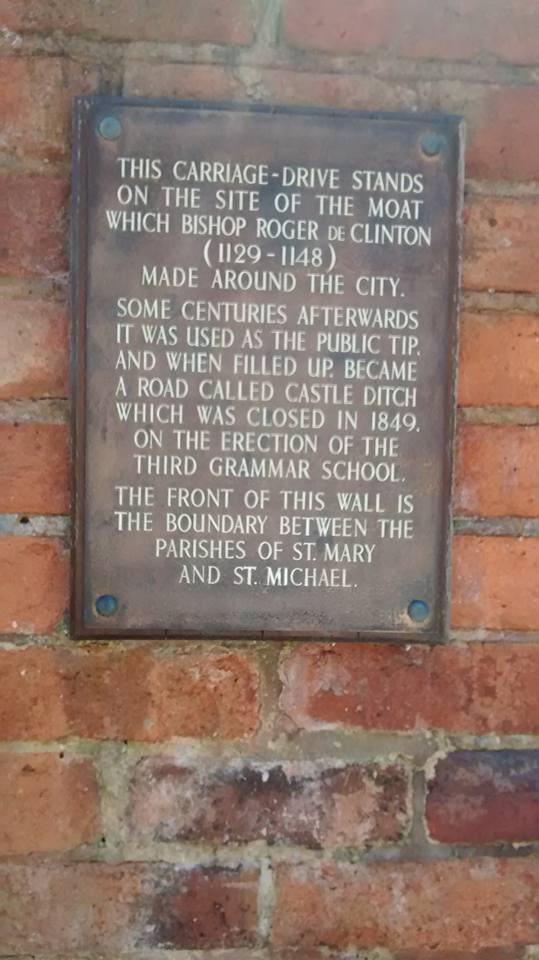
I’m in the midst of writing an assignment so just a very quick one that I’m hoping to follow up when I’ve more time. Yesterday //platform.twitter.com/widgets.js” target=”_blank”>on Twitter (yes I know, I’m supposed to be writing an assignment), I noticed that Historic England were doing a survey of post-war housing for the elderly and it reminded me that a while back I’d seen a plaque outside a row of bungalows on Stowe Road so I popped out for a breather and another look.

Lunns

AlmshousesThanks to Aaron on Facebook, who did a bit of research, I now know the basic history of these homes. In 1654, William Lunn left two almshouses for six poor widows in his will. The date of 1667 given on the plaque is when Edward Lunn (presumably his son) conveyed them to a trust. By 1762, there were six two roomed cottages on the site and as the plaque tells us, these were replaced with six new bungalows in 1959. As the plaque doesn’t tell us, because it too dates to 1959, more were added in the 1980s.
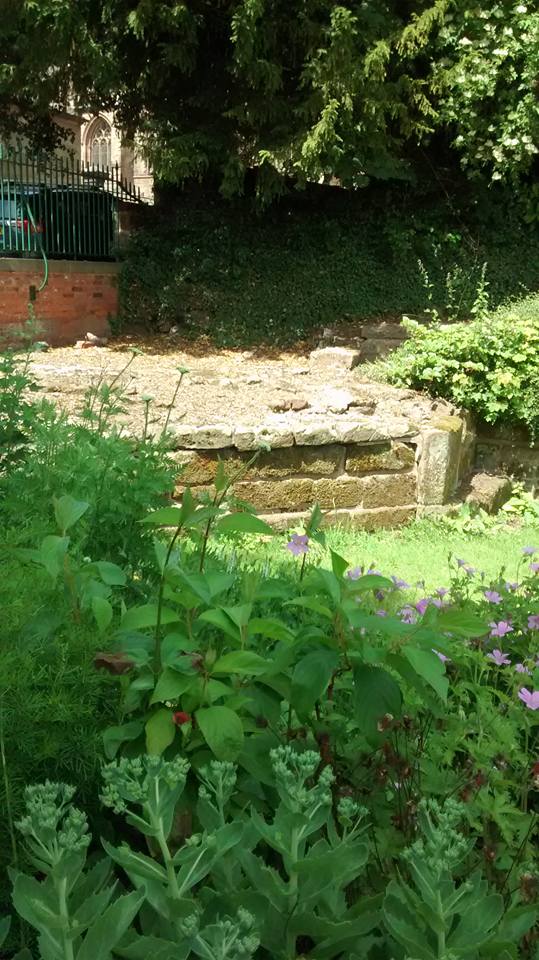
Although I’d like to see a photograph of the cottages as they were, what interests me more than the bricks and mortar here are the people. I want to know about William Lunn and the reason for his charity. I want to know about the women who lived there three hundred and fifty years ago and those who have called the almshouses home since.  Lunn’s Homes may not have the ye olde appeal of some of Lichfield’s other almshouses, such as St John’s and Dr Milley’s, but they’ve a story worth telling and, according to Historic England, architecture worth recording.

Edit:

Now I do have more time, I called into Lichfield Record Office to take a look at the accounts book they hold for Lunn’s Charity. It covers the period 1851 to 1883 and begins with a description of the trust as follows:

William Lunn of the City of Lichfield by indenture dated the 26th June 1667 gave to Trustees certain messuages and two acres of land within the city, for six poor, ancient and impotent widows of the City of Lichfield.

As well as recording payments made for various services (coal from Mr Brawn, and later Mr Summerfield, Mr Gorton for repairs and perhaps most intriguingly, a payment of 10 shilling on 27th March 1874 to Mr Duvall for ‘removing a nuisance’), it tells us that the women were each paid an annual sum of 5 shilling each and that they were allowed half a ton of coal five times a year.

Who were these women though? All I have at the moment is a list of names from that thirty year period to work through.  The book starts with a list of those allocated rooms as at 11th October 1851: Sarah Thacker admitted in 1837; Jane Smith in 1843; Catherine Trigg 1845; Mary Bullock (undated); Hannah Cresswell (undated) and notes that one former resident, Elizabeth Walker is dead. Her place is given to Helen Hartwell aged 79. And this is how it continues every year – a list of women and a note of those who have died (or left, for reasons unspecified), and those who take up residence in their place. Sometimes the husband’s name is included, sometimes the name of the street the women were leaving for the almshouse. For example, in 1879, Widow Sarah Harris of Stowe Street/George Lane was appointed inmate in the place of Widow Belfield who quit aged 61 years.

Lunn Board St Chad

There is a memorial to William Lunn Gent. in St Chad’s church describing his gift of two houses in Stowe Street and two acres of land in Longfurlow for the benefit of six poor widows for ever. So, Lunn is buried at St Chad’s and I imagine that many of the poor widows who benefited from his gift are buried there too. Are their graves marked I wonder? Thinking about it, there was no mention of costs for burials and headstones, in the accounts, so presumably this would have been the responsibility of any relatives. Assuming there were some.

Somebody posted an Italian proverb on Twitter earlier that I hadn’t heard before, ‘After the game, the king and the pawn go into the same box‘ and of course, people talk of ‘Death -the great leveller’, although reading about Victorian and Edwardian pauper burials (1), I’m really not convinced. What I am sure of though is that achieving equality when you’re dead is a bit late – a more level playing field beforehand was, and still is, needed.

Note

(1) In March 1904, at the fortnightly meeting of the Lichfield Board of Guardians, the Workhouse Master was asked whether any steps were taken to mark the graves of paupers in St Michael’s Churchyard, and whether Burial Board regulations were in force in Lichfield i.e. numbers placed on the graves and a register kept. The Master replied there was no burial board in Lichfield and was criticised for not carrying out the same regulations for ‘decency’s sake’. One to follow up I think.

Sources:

‘Lichfield: Charities for the poor’, in A History of the County of Stafford: Volume 14, Lichfield, ed. M W Greenslade (London, 1990), pp. 185-194 http://www.british-history.ac.uk/vch/staffs/vol14/pp185-194 [accessed 20 April 2015].

Coley, N.  Lichfield Book of Days, The History Press

Discovering the Future

Our Lichfield Discovered group has been walking, talking, photographing and filming its way around Lichfield and the surrounding area for over eighteen months. The group is growing in popularity and naturally we’re delighted about this but, in order to keep doing all the great stuff we do and to do more of it in the future, we’ve decided that we need to shake things up a little. As any number of motivational quotes on Facebook will tell you, change is a good thing, and here are some of the reasons why:

  • We want more people from the local community to get involved in and have a say in what we do.
  • Involving a wider range of people will bring different skills, different interests and different perspectives to the group.
  • We’ve done a good job so far, but we know that with the help of others, we can do even better! There’s the potential to do so much more here in Lichfield….
  • We’re rubbish at making posters. Really.

So, that’s why we want to make changes, and here’s our plan for implementing them:

  • Lichfield Discovered will keep its own identity but will sit under the umbrella of the Lichfield Waterworks Trust (sandfields.org).
  • We will have our own planning meetings but we will have the administration support of the Lichfield Waterworks Trust (e.g. a treasurer), if and when needed, with one or two of us attending the Trust’s committee meetings regularly to report back on what Lichfield Discovered is up to and vice versa.
  • Being part of this larger organisation will allow us to seek funding for future projects if this is something we wish to explore in the future.
  • Thanks to the administrative support offered by the Trust, we will not need to formally elect a chair, secretary or treasurer. However, there are lots of roles that people can take on for example, publicity (including posters!), minute taking, event planning, local history research and helping with refreshments.

Lichfield discovered

We believe this arrangement will be mutually beneficial to both groups, as our community history and heritage activities in and around Lichfield will help to support the Lichfield Waterworks Trust’s bid to save Sandfields Pumping Station for the public, for the purposes of education and community development.

There will be a meeting on Monday 11th May at 7.30pm at St Mary’s in the Market Square, Lichfield to discuss these ideas further. Please come along even if you are only potentially interested in getting involved at this stage and please invite anyone else that may be interested to come along too.

The Lost Pubs of Lichfield pub walk. Photo by John Gallagher

The Lost Pubs of Lichfield pub walk. Photo by John Gallagher

Finally, I’d like to take this opportunity to say thank you to everyone who has supported Lichfield Discovered in some way up until now,  whether by making the tea, giving a talk, sharing a photo, publicising our events or ‘just’ coming along and joining in. Also to St Mary’s for allowing us to use their room for our talks.

We’ve done some great things so far, and with your help, we will be able to do even more in the future.  To keep up to date on developments, or to get in touch, please email me at lichfieldlore-blog@yahoo.co.uk, visit the Lichfield Discovered blog here, follow us on twitter @lichdiscovered or like us on Facebook (where you can even share a motivational quote about change with us if you like!).

The Duck Stops Here

Shopping in Lichfield last week, I was called ‘me duck’. It’s not something you hear much here, it’s nearby Burton where you are much more likely to be someone’s duck. In past posts, I’ve talked about how stones, rivers and even ancient burial tombs have been used to define the boundaries of a place, but here I’m interested in audible rather than visible markers. The boundary where a linguistic feature stops and starts is known as an isogloss, and if they say duck fifteen miles up the road but not here, then I reckon there must be one close by. But where?

ducks

Photo by Joe Gomez

We may not call each other duck often, but how do we (after eleven years, can I class myself as a Lichfeldian yet?) talk?  According to Timothy Wilson-Smith, Samuel Johnson retained traces of his accent throughout his life (apparently one of the ways he gave his roots away was his pronunciation of the word punch) but is there such a thing as a Lichfield accent now and if so, what is it?

No easy answers but might be fun trying to find out. Perhaps from now on I should carry a dictaphone along with a camera and a notebook, although I might get people calling me something less polite than ‘duck’ (think some probably already do). In the meantime, listen to the accent of Tom Marshall, a lifelong resident Longdon (ok, not quite Lichfield but only four miles away), who David Moore interviewed for an oral history project recently (listen here).

Sources:

Wilson-Smith, Timothy (2004) Samuel Johnson Life and Times


Heaven and Earth

Without wishing to state the obvious, this blog is called Lichfield Lore. Sometimes I’m worried that I might go too far (in a geographical rather than controversial sense) but although I’ve overstepped the Lichfield boundary from time to time, I have at least remained in Staffordshire. Until now.

Last month, a group of us from Lichfield Discovered, crossed the border into Derbyshire to visit Repton which, between the seventh and ninth centuries, had been one of the main residences of of the Mercian royal family. In 653AD, Peada, son of the pagan King Penda converted to Christianity in order to marry Alhflæd (sp?), the daughter of King Oswy of Northumbria. To help him to convert the rest of the kingdom, he employed four monks from Lindisfarne  – Adda, Betti, Cedd and Diuma, the latter of whom would become the first Bishop of Mercia (1). However, Peada and Alhflæd do not appear to have been a match made in Heaven nor Neorxnawang. The Venerable Bede reported in his Historia Ecclesiastica that Peada was murdered in 656AD “wickedly killed by the treachery, as is said, of his wife during the very time of celebrating Easter”. 

Church of St Wystan, Repton. Photo by David Moore

Church of St Wystan, Repton. Photo by David Moore

Rather fitting then that it was death which brought us to the ‘cradle of Christianity in the Midlands’. Although Peada is not buried here, the eighth century Anglo-Saxon crypt beneath the church was used as a mausoleum for later members of the Mercian royal family, including King Æthelbald ( ‘treacherously murdered at night by his own bodyguards’ says Bede), King Wiglaf (cause of death unknown) and his grandson Wigstan (murdered by a family member, who he objected to marrying his widowed mother. Seems his concerns were well-founded). The exact place where Wigstan was scalped is not known (Wistow in Leicestershire and Wistanstow in Shropshire both have claims) but wherever it was, it’s said that on the anniversary of his death each year, human hair grows from the earth at the spot where his blood was spilt (2). This supposed phenomenon and other miracles, led to the canonization of Wigstan, who became known as St Wystan. The crypt became a place of pilgrimage and the church above it took his name.

The crypt at Repton. Photo by David Moore.

The crypt at Repton. Photo by David Moore.

In the early eleventh century, King Cnut ordered the holy bones to be moved to Evesham Abbey and in the centuries which followed, the entrances to the crypt were sealed and its existence forgotten until 1779, when someone digging a grave for the headmaster of Repton School broke through the vaulting and fell into it. We made our entrance in a rather more conventional way.

crypt stairs

Down to the crypt and into the eighth century. Photo by David Moore.

From Repton, we headed to the Anchor Church, four connected caves alongside the River Trent, which both nature and humans had a hand in forming. I confess that the time I should have spent on the logistics of the trip was instead spent at the Whippet Inn, and so it took a bit of finding with just a postcode to guide us. However, when we did finally arrive we were pleased to see that, although thick with mud, the often flooded path that would take us to the ‘church’ was just about passable.

Inside the caves. Photo by Andy Walker.

Inside the caves. Photo by Andy Walker.

Legend has it that in the sixth or seventh century, the caves were occupied by a hermit, who spent his time here going to the river to pray. Later, the caves were supposedly inhabited by a monk called Bernard who spent his last days here, repenting for his part in the deception which persuaded returning crusader Hugh de Burdett that his wife Johanne had been unfaithful. The story goes that Hugh cut off her left hand, leaving her to bleed to death over the altar cloth she’d been embroidering for him using her own hair (what’s with the hair obsession around here?).  On a more cheerful note, in the eighteenth century, Sir Francis Burdett (presumably one of Hugh’s descendants) used the caves and riverbanks as a venue for picnics, as shall we when we visit again in the Summer.

The Anchor Church near Ingleby. Photo by David Moore.

The Anchor Church near Ingleby. Photo by David Moore.

On our way back to the cars, there was a blood-curdling scream. Had one of our party met with the ghost of Johanne searching for her lost hand or had they lost their footing and fallen victim to the mud?  No, Carol just had something in her shoe. One of those funny at the time but you really had to be there moments admittedly, but I mention it because this is what I remember first and most fondly when I think of our trip. I love places for their stories and their connections to the people of the past, but even more so for the memories made by visiting them with people in the here and now.

repton group

Looking for pirahanas in the River Trent. Photo by David Moore.

Notes

(1) In 669, Chad, brother of Cedd and the fourth Bishop of Mercia moved the See from Repton to Lichfield (phew, it is relevant to Lichfield after all!)

(2) There’s another Lichfield Discovered trip right there. Who is free on the first of June? We’ll have to split up though, gang….

(3) Another Lichfield link – in 1364 an armed mob at Repton attacked the Bishop of Lichfield and the Prior. Actually, finding places with a tenuous link to Lichfield could be a whole blog post in its own.

References

http://www.reptonchurch.org.uk/

Repton and its Neighbourhood by F C Hipkins

The Oxford Dictionary of Saints by David Hugh Farmer

http://jimjarratt.co.uk/follies/page57.html

Click to access anchor_a3.pdf

The Watchers of the Wall

Wall is one of the most interesting, if unimaginatively named, villages around these parts. Of course, the Romans who built the eponymous walls knew the place as Letocetum, which may sound more exciting but is actually thought to translate as just another description of the surrounding landscape – a romanized version of a Celtic place name meaning ‘grey wood’.

wal

Every year, thousands of visitors come to explore the remains of the bath house and mansio at this former military staging post on Watling Street and discover some of the incredible archaeological finds in the on-site museum. This is only possible thanks to the Friends of Letocetum, a small army of dedicated volunteers who are hoping to swell their ranks for the 2015 season. If you are able to give a couple of hours a month, or even a year, or could help out during the annual open day on Sunday 19th July 2015, please get in touch with them via their Facebook site, email wallromansite@gmail.com or leave me a message and I’ll pass it on. Gratias!


Impressive

Last month, Lily Flintham re-discovered two boxes full of tiles being stored in one of the old gaol cells at Lichfield Guildhall. After carrying out research at Lichfield Record Office, her suspicions that these were some of the medieval tiles which once paved the floor of Lichfield’s Franciscan Friary were confirmed.  Over to Lily to tell us what happened next….

“I met up with Jo Wilson Museums, Heritage Officer at Lichfield City Council  and Karen Slade, Medieval Tile Expert at the Guildhall Gaol Cells on the 3rd March 2015, to take another look at the tiles, and to try and get some better photos.

tiles a

While we were waiting for Karen, me, Jo and my Mom started laying out all the tiles on the tables, we started taking some photos. Then Karen arrived, and showed us some tiles that she had made, to give us an idea of what they would have looked like originally. Her tiles were really bright, and I was amazed at how vivid they looked.

tiles b

Karen explained that she had found a few of the tiles we found mentioned in reference books and that they had been found at Much Wenlock, Polesworth and the tile with the Fleur de Lys which has a ‘special squiggle’ on it had been recorded at Lichfield Friary and Karen had also seen a photo of it taken at Lichfield Cathedral Library. Karen had even searched all the tiles held at the British Museum to look for the patterns too. Some of the patterns she still could not find, maybe they only existed at the Lichfield Friary?

Fleur de Lys special squiggle

tiles c

She also explained how the tiles were made, most of the square ones would have been made in moulds, and then had a pattern stamped on them, they were called line impressed tiles. And the circular pizza shaped tiles would have been cut by hand, and not in a mould. I learnt sooooooo much over the four hours we were there about how they were made, glazed and fired.

Pizza tiles original pattern

Some of the tiles were still really dirty, even after we had brushed all the dirt and dust off them a few weeks before, so we used a tiny bit of deionised water and cotton pads to clean some of them, like Karen’s husband (who works in building conservation) would do, to get a better look at the patterns.

Cleaning tiles

On two of the tiles we found a few more detailed patterns on them, and a different one, made no sense to us at all, it had worn away too much, the pattern was still just the same as when we first looked at it.

I helped Jo to start recording and archiving the tiles, by putting them in bags, and numbering them. There were 92 tiles (and fragments of tiles) all in all!

tiles g

Before we had to go, Karen showed us how to make a tile, she used a wooden mould, and then put the clay in, then scraped the extra clay off.

tiles f

Next she stamped the pattern on with a block of wood with the pattern carved into it.

tile pre stamp

post stamp

Then she poured white slip into a cow’s horn with a goose feather in the tip, and dripped the slip into the impression on the tile.

karen applying slip

Then I got to have a go 🙂

tiles l

I had a really fun time :D”

I think it’s worth emphasising that it’s only thanks to Lily’s curiosity and perseverance, that two boxes of old tiles have gone from obscurity in Lichfield to potentially being of national interest and importance. Just shows that you shouldn’t always listen to the grown-ups kids.  Although Lily found an amazing ninety two complete and partial tiles, we suspect there may be even more out there. We know from a Lichfield Mercury article dated 22nd September 1933, that during Cllr Thomas Moseley’s excavation of the Friary Church,

“Many broken floor tiles were found but in the passage (probably Cloister) leading from the Chancel to the Friary, the tiles were still in position about two feet square. People commenced to take them as souvenirs, and they had to be removed.”

If you’ve looked at the photographs and thought ‘Hmmm, I’m using something similar to that as a garden ornament/door stop/drinks’ coaster’, then please do let us know.


Lily's Medieval Jigsaw Puzzle

Recently, twelve year old Lily made a very interesting discovery in Lichfield. Here’s her account of how the contents of a cardboard box found in an old gaol cell turned out to be far more exciting than than anyone could have imagined….

“In November 2014, I went to the Lichfield Gaol Cells in the Guildhall. It was a Lichfield Discovered event, and we were going to look and see if we could find any graffiti, names, or dates on the gaol cell doors. About 7 or 8 of us came to the event all in all, I came with my Dad. Everyone else managed to find lots of writing and names on the doors, I didn’t find much. Near the end of the session, we were looking inside the third jail cell, the one that is not normally open to the public. My Dad pointed out 2 boxes of old looking tiles on the floor, we took a quick look, but we didn’t pay much attention to them.

Tiles 1

Tiles in cardboard boxes in gaol cell now used for storage

The next time we came to the gaol cells was on 21st February, we had come back to see if there was any more graffiti that we had missed, also to take a second look at the boxes of tiles (Jo at the museum said it was ok). This time I had come with my Mom and there was around 8 people that turned up this time. Me and my Mom started looking through the tiles, we had picked about 5 up and we laid them on a chair to photograph them, but they werereally dusty so we couldn’t see if there were any other patterns on them.

There were so many tiles that we couldn’t fit any more on, we decided to move all of the tiles into the 4th cell, onto a wooden bed that the prisoners used to sleep in, (personally I would NEVER think of sleeping on one of them). We started taking some more tiles out of the box and moving them onto the bed. We moved them a few at a time, because the box was too heavy to lift. I had realised that there were a few tiles with the same pattern on. I really wanted to get a better look at what the patterns looked like, so my mom went to Wilko (just up the road) to buy 2 paintbrushes. When she got back we started brushing off the dust and dirt from the tiles we had got out, we could see the patterns a lot clearer. We had nearly finished emptying out the first box of tiles, and at the bottom my Mom found a bit of tile with ‘Lichfield Friary’ written on the back. She showed it to Kate and she said “Maybe it came from the old Friary!” and then we all got really excited!

tiles 2

Tile with Lichfield Friary writing on the back

We had found lots of bone shaped tiles that were exactly like the one that said ‘Lichfield Friary’ on it.

Tiles 3

“Bone” shaped tiles

Whatever the floor was, it was really big. We had found LOADS of tiles that looked the same, and maybe they belonged to the same floor. I started trying to see if any of the tiles might fit together, there were loads of circular tiles, some with patterns on, and some without. There was one round tile, with a triangle and circles intertwined in a pattern. There were also pizza shaped tiles, without a tip, like someone had taken a pizza and cut the middle out with a cookie cutter, if you get what I mean. Those tiles had a kind of moon, with a starfish shape in the middle.

Tiles 4

Circular “pizza” tiles with moon and star pattern

tiles 5

Plain “pizza” tiles

We had found one of these tiles that was complete and one that was broken, but fitted back together again. All the rest were broken, but I managed to get a full circle out of the fragments we had found. It was like a massive jigsaw-puzzle, but I did it in the end, and what was even more exciting, was that the circular tile fit perfectly inside the ring of pizza shaped tiles! Same with the tiles with no pattern on, but we didn’t find another circular tile.

There was also another set of tiles. We had found about 8-10 of the same type, they were square, and they all had the same pattern on, the kind that can make 2 different types of patterns, depending on which way you put them.

Tiles 6

Square tiles with pattern – my faves 🙂

Most of them were complete, apart from 3-4 of them which we only had corners of. I put them together, and they nearly made a 9 square pattern. These were my favourite tiles, and I hoped we found some more of them, we only had half a box or so left to get out. We did find a couple more of these tiles eventually. We finished emptying out the box, and then we started taking pictures of all the tiles. There wasn’t much time left, so we took all of the photos really quickly. As a result, not many of the pictures were very good. And the light was quite dim in the cells, so the light wasn’t the best either.

It was nearing the end of the session, so we had to put all of the tiles back in the boxes. I couldn’t help thinking that the tiles were from the old medieval Friary. At least some of them.

Kate asked me if I could do some research to see if the tiles were from the Friary, Me and my Mom went to the Lichfield Records Office, to go and look at ‘The Lichfield Friary’ by P. Laithwaite, which was reprinted from the Transactions of the Birmingham Archaeological Society where a report of Councillor T. Moseley’s findings from his exploration of the site in 1933 was given.

Laithwaite BAS 1934

D77/23/67 Copyright Lichfield Record Office

There were only 6 pages in the book. Page 5 had a drawing of some if the exact tiles we had found (the ones that looked like pizzas with the middle cut out) some with patterns, and some without.

EPSON scanner image

D77/23/67 The Lichfield Friary by P.Laithwaite Copyright Lichfield Records Office

Me and my mom were like O-O (AMAZED!). On the next page (page 6) there was a drawing on 3 tiles with different patterns on, all of which we had found in the box of tiles! 😀 (and my favourite one, the one that we had got like a 9 block square of the floor.)

EPSON scanner image

D77/23/67 Drawing of square tiles from The Lichfield Friary by P.Laithwaite Copyright Lichfield Records Office

We had found what we had come looking for, proof that the tiles in the boxes were Medieval from The Grey Friars’ Church at The Friary!”

Note – this is not where the story ends! Lily is having an afternoon on the tiles with Jo Wilson, Lichfield City Council Museum and Heritage Officer and medieval tiles expert, Karen Slade this week, so look out for an update soon. Lily’s doing such a great job – the initial discovery, the ongoing research, and writing it all up afterwards – that I’m thinking of joining the Right Revd Jonathan Gledhill in retirement and leaving Lichfield Lore in her more than capable young hands.


Water Slides

Ross Parish has been researching holy wells since the 1980s and has published several books on the subject.  Ross is currently working on a Staffordshire volume and a couple of weeks back, we were delighted to have him at our Lichfield Discovered meeting to share his research with us. Ross took us through the history of holy wells, and some of the customs associated with them, pouring cold water on some of the popular views that have sprung up around them. At the risk of firing up inter-county rivalry, you’ve heard the saying ‘The best bits of Derbyshire are in Staffordshire’?. Well, Staffordshire is also a bit hard done by when it comes to the tradition of well dressing. Google it and you’ll find claims aplenty that it’s ‘unique to Derbyshire’. Try telling the people of Endon and Mayfield that. Interestingly, we also went through a phase of decorating St Chad’s well here in Lichfield for a time, but this tradition seems to have dried up in 2010.

St Chad's Well Lichfield,  only decorated by nature these days.

St Chad’s Well Lichfield, only decorated by nature these days.

With so many fascinating sites to chose from,  we forgave Ross for not including St Chad’s in his top ten list of Staffordshire wells. You can discover the ones that did make it, along with an abundance of other fascinating information, on the slides of the talk that Ross has very kindly shared with us online here.

If you’ve a thirst to know more about holy wells and sacred springs, here in Staffordshire and further afield, please do check out Ross’ blog here and also take a look at the Facebook group he’s involved in here.


Cell Mates

The Lichfield Discovered gang will be back at the old Gaol Cells at Lichfield Guildhall this coming Saturday (21st February 2015) between 2pm and 4pm, to resume our quest to record the graffiti left behind by prisoners. There’s plenty of it, but we’re up against the ravages of time and liberal applications of varnish. We did manage to pick up one definite name on our last visit. John Lafferty who, judging by the reports in the Lichfield Mercury, appears to have been a serial offender from Sandford St in the late nineteenth century, scratched his name into one of the cell doors along with the words ‘7 days’, presumably the length of his stay…on that occasion.

Gaol Graffiti 1

Lafferty graffiti

The cells officially reopen to the public in April, and will then be open every Saturday between 10am and 4pm until September.  Since 2012, over 7,000 people have visited and in order to continue to be able to give people access to this part of Lichfield’s history, Joanne Wilson, the city’s Museum and Heritage Officer, is recruiting a team of volunteers to welcome visitors to the cells, keep a record of visitor numbers, answer questions and provide information. You don’t need any previous experience just an interest in heritage, enthusiasm and the ability to smile when you hear, ‘You’re not going to lock us in, are you?’ for the twenty-seventh time that day. Each volunteer session usually lasts around three hours, but dates and times are flexible and you can do as much or as little as you are able to. It’s a great opportunity to get involved in the city’s history and to share it with all kinds of people – I volunteered a couple of years ago and welcomed local people, wedding guests, day trippers, and even someone who’d worked at the Guildhall for years without realising what was behind the red door at the end of the corridor.

Fifty shades of varnish

If you would like to know more about volunteering, please contact Joanne on 01543 264 972 or via email at sjmuseum@lichfield.gov.uk. Alternatively, pop into the Samuel Johnson Birthplace Museum on Breadmarket St. You are also very welcome to join us on Saturday. And yes, we promise not to lock you in.


My Bloody Valentine

For those of you who aren’t feeling the love for Valentines Day, here’s some black magic. And I’m not talking chocolates. In his Lichfield Mercury column ‘Historical Gleanings – Lichfield Over a Century Ago’, JW Jackson recalled the following article in a local paper from 1836,

“On Saturday, the sexton of a certain church observing an elegantly dressed female walking mysteriously up and down the churchyard, watched her secretly, when he saw her rake up the earth with her foot and, after depositing something in the ground, cover it up. Induced by curiosity he opened up the place and found a hare’s heart in which 365 pins were stuck buried there. It was an old superstition in this county that if a person who had been foresaken by one professing love for her shall bury a hare’s heart full of pins near a newly made grave in the churchyard, as the heart decays, so the health of the faithless swain will decline, and that he will die when it has mouldered to dust. The fair deceived one had been instigated by revenge to this act of folly and credulity.”


Getting revenge on a faithless swain. Sweeter than a whole box of Thorntons. Frederick William Hackwood also mentions a similar practice in his Mercury column on “Staffordshire Superstitions’ (1923), ‘Among the lingering superstitions are present-day memories of an old woman given to witchcraft sticking a bullock’s heart full of pins with the vicious intent of piercing the heart of some deadly enemy with whom she had quarrelled beyond all hopes of forgiveness or reconciliation”.

Luckily, a defence against these dark arts did exist.  In a book published by the Folklore Society in 1890, Alexander M McAldowie tells of two witch brooches which his brother Robert found in Staffordshire.   One was discussed in a section of the 1896 Journal of the British Archaeological Society called ‘Notes on North Staffordshire’ and is described as being heart-shaped with unequal sides, little more than an inch in height and made of silver with eighteen crystals. Apparently, these talismans were often bought alongside wedding rings and would keep the wearer safe from harm. In a post on witch brooches, the Spyders of Burslem blog includes the notes given to the North Staffordshire Field Club in 1891 by Robert McAldowie. What’s extra interesting for us here is that he mentions a witch brooch he got in Lichfield from a jeweller who had bought two of them from an old servant of a family once living near the city but had melted one down for silver.

I’ve not managed to track down the whereabouts of any the Staffordshire brooches yet, assuming they even still exist. There is a Victorian one for sale on a vintage site here if you want a belated present that looks pretty and has the added bonus of protecting your beloved from witches and evil in general.

Antique Victorian Witch Brooch. Image from rubylane.com

Antique Victorian Witch Brooch. Image from rubylane.com

However, if it’s a hare’s or bullock’s heart you’re after, I’m afraid I can’t help you. Try Waitrose.