Adooration

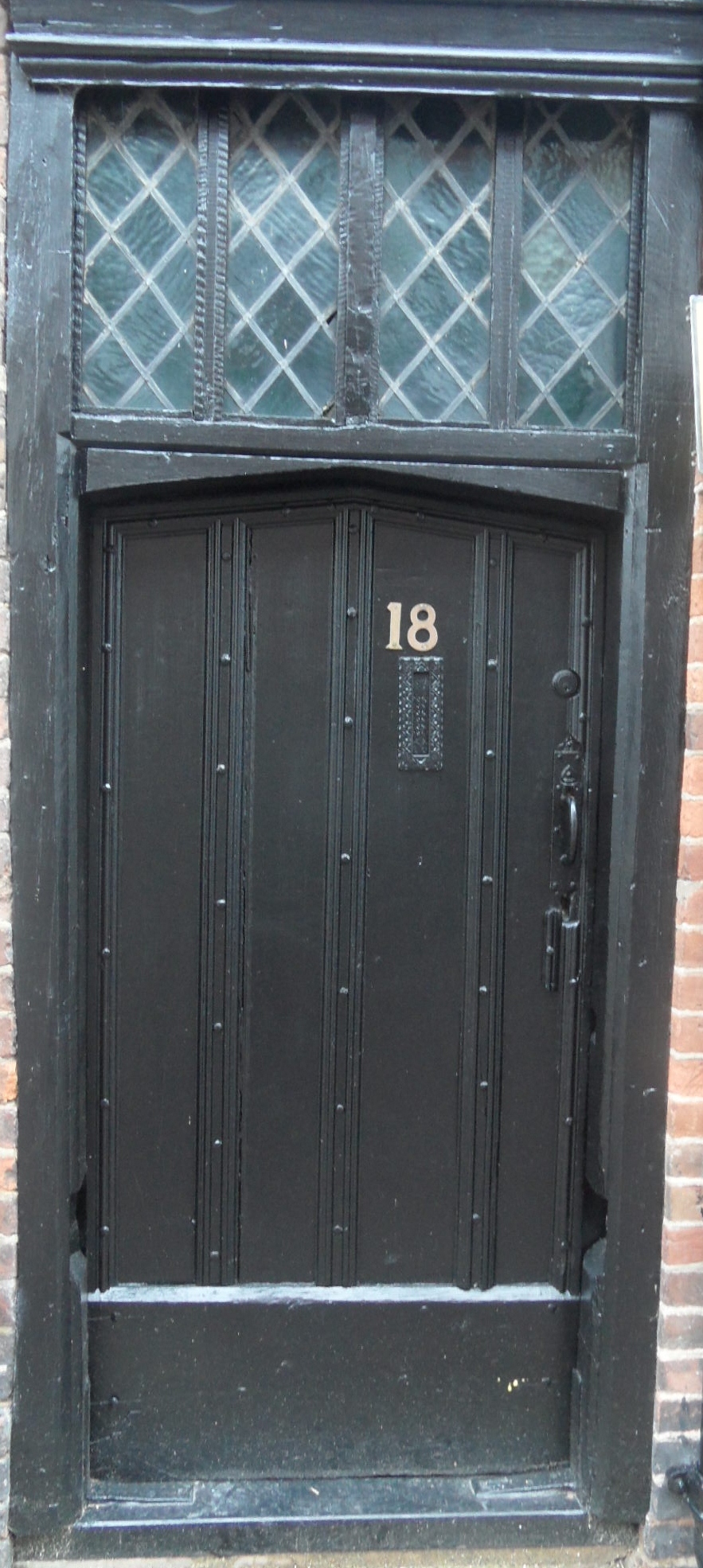
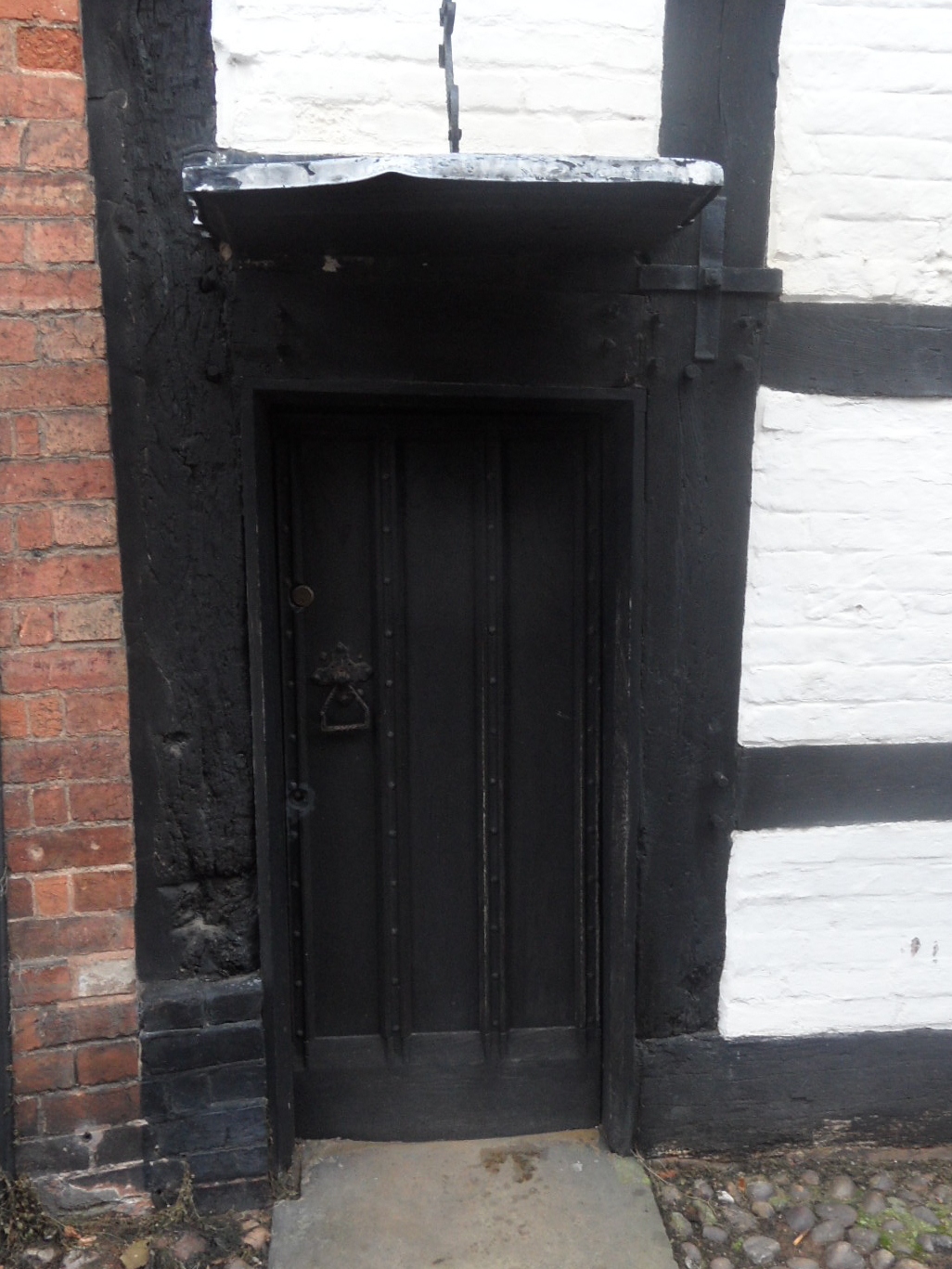
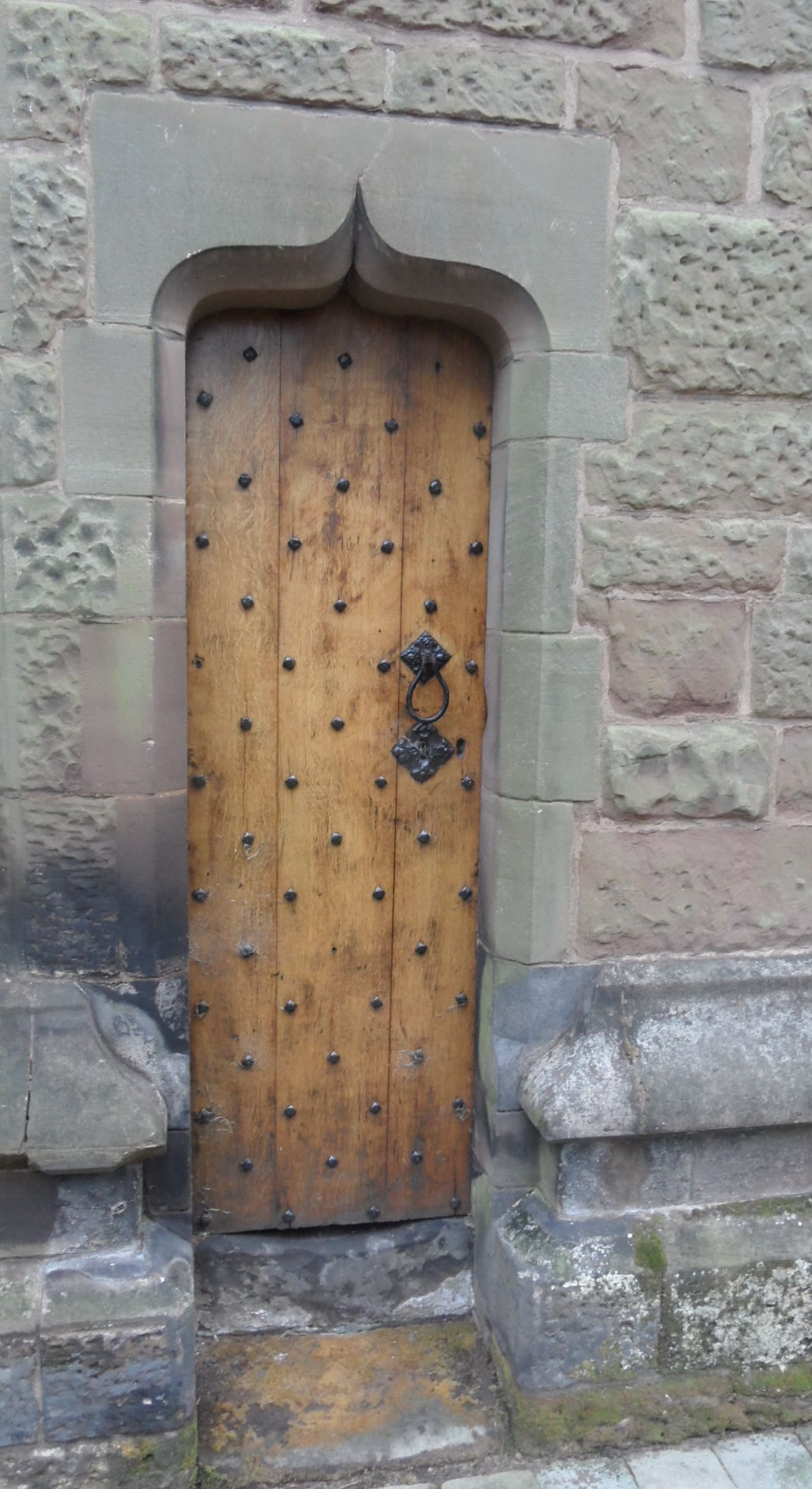
By now you’ve probably opened all of the doors on your advent calendar. So here are a few more (although I’m afraid there’s no chocolate). What’s behind these doors? Some we know already, as they are already open to the public.  What about those that aren’t though? Can we open more doors in 2013?

Whilst there’s no doubt that curiosity is one of the reasons I (and I’m sure others!) would like to have a look behind these doors, there are some nobler reasons I promise!  Behind closed doors, things can deteriorate or become lost, without us even knowing that they existed in the first place. Opening these doors allows us to explore and learn and question. It helps us to feel connected to a place, to each other and to all those who have walked through those doors previously.

Things are moving in the right direction. The gaol cells reopened again this yearGareth Thomas, from Lichfield District Council, showed us behind the doors of the council offices and regularly shares the deeds and maps he finds in his magical strongroom. Another important development, that will hopefully gain more momentum in the new year is Dave Moore’s vision regarding the future of Sandfields Pumping Station, a building that’s not only part of Lichfield’s history, but also that of the Black Country and South Staffordshire. Something I would like to see next year is more buildings open for the Heritage Weekend in September (at least), more community involvement in our history, improved access to local history resources, and of course more people getting out there exploring their surroundings, finding out what it is that matters to and interests them.

So that’s my rallying cry for 2013, more on this in the new year, but for now, I’d like to say thank you to everyone who has commented and got involved with this blog in 2012, and of course have a very, Merry Christmas!

Time On Our Hands

On my way to do some Christmas shopping in Lichfield,  I went to Beacon Park to see our new old friend Erasmus Darwin properly now that the crowds had dispersed. I thought it would just be me and the good doctor this Saturday lunchtime, but in fact there were already people reading the plaque, when I arrived and another small group turned up whilst I was there. I touched the shell in Darwin’s hand, and continued over to The Close, as with all the talk of water and conduits recently, I also wanted to have another look at the old pump outside the Cathedral.

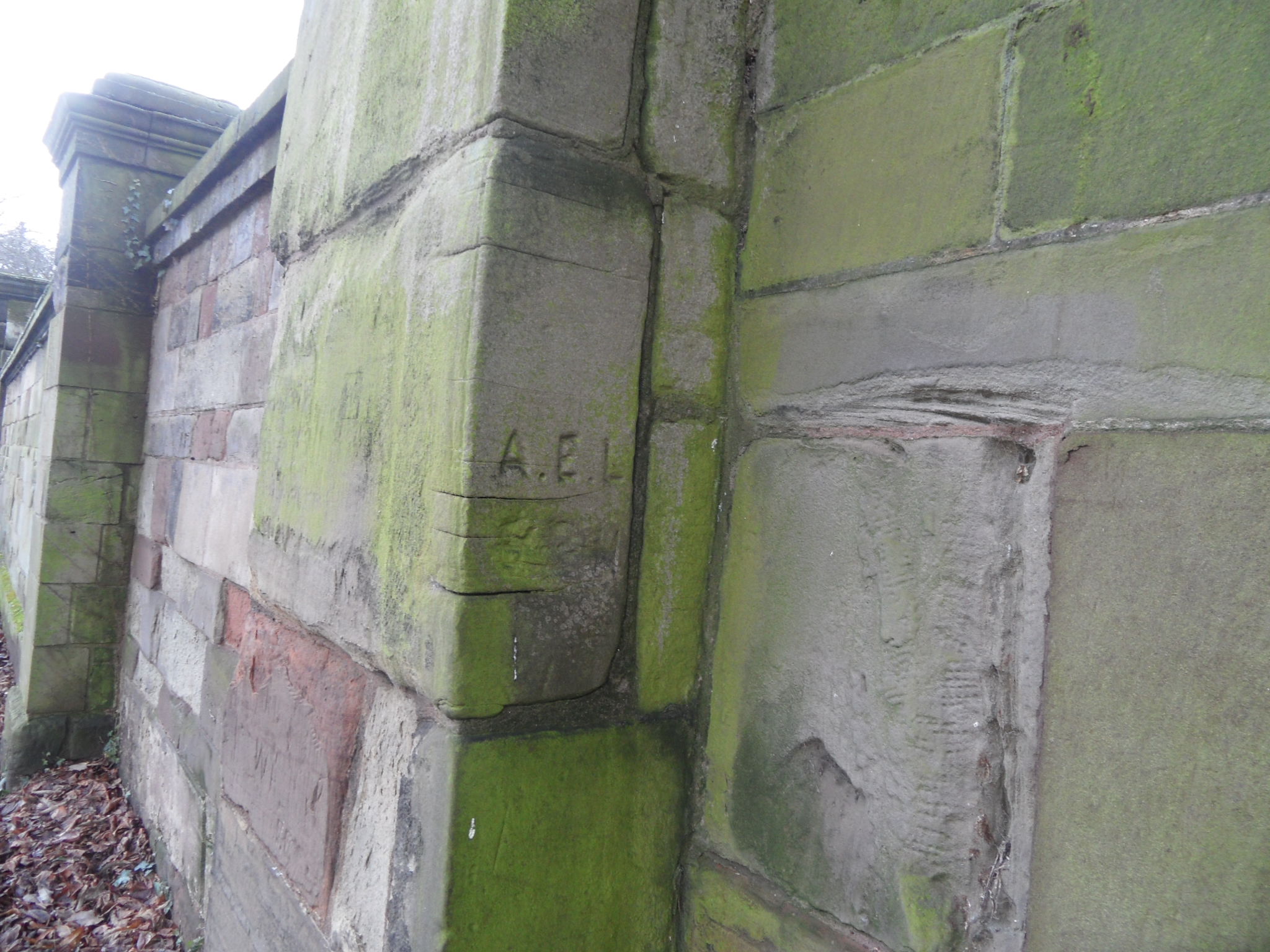
Wall of Bishop’s Palace, North East corner of The Close

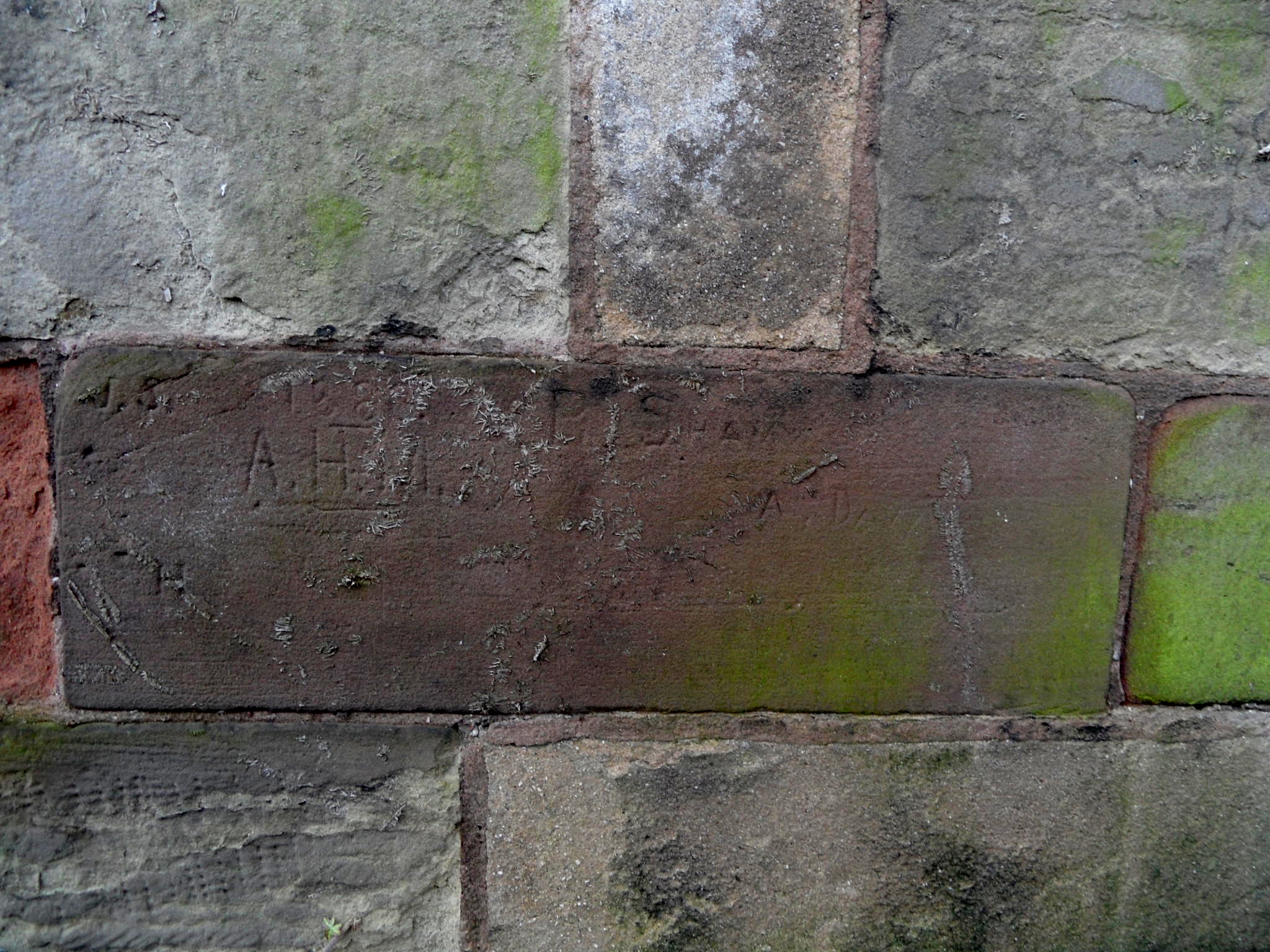
I then continued my walk north of the Cathedral, along the wall of the Bishop’s Palace, wondering about the provenance of the stone used to build it. In the north east corner of The Close, next to a pile of old grass cuttings and leaves, I peered over into what would have been the old ditch surrounding The Close. Something on one of the worn sandstone blocks caught my eye. Graffiti carved into the wall! Was there any more? Retracing my steps back along the wall I found several more examples.

Unfortunately, most of the markings either aren’t dated, or the dates have weathered away. So we are left with a series of initials, and not much else to work with. They may have been carved within weeks of each other or centuries apart. They may belong to pupils of the school, or they may belong to someone passing by with time on their hands. All that we really know, is that at various points in time, people decided to make their presence known in this quiet corner of The Close

One of the only legible dates on the wall. 188?

The listed building description for the wall (which can be found here) tells us that it’s probably over 300 years old. I haven’t yet been able to find where the stone was quarried from but the variation in colour and texture is beautiful. (Yes, I touched this too!)

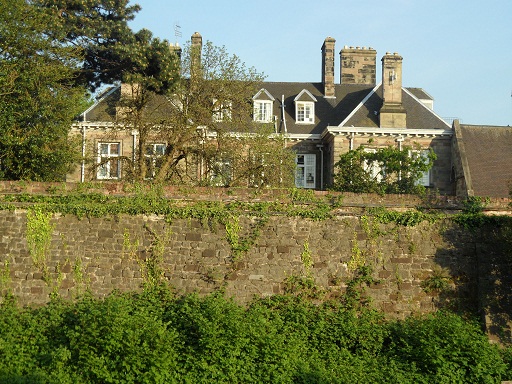
The wall dates back to the rebuilding of the Bishops Palace in 1687. The original palace sustained severe damage in the Civil War and since then has actually only been the residence of the Bishop of Lichfield for a relatively short period. Bishop Selwyn took up residence in the 1860s and just under a hundred years later, in 1953, Bishop Reeve moved into a house on the south side of The Close. Since then the Palace has been part of Lichfield Cathedral School.

I have a photograph of the Bishop’s Palace from the back, but not the front. I do wonder about my thought process sometimes…

Of course, if anyone has any insights or information, please do get in touch. If it was you that stood here and added your initials to this old wall, I’d love to know when and why. However, I think that sometimes we have to accept that we will never know all the answers and just enjoy the time spent asking the questions.

Sources:

Lichfield: The cathedral close’, A History of the County of Stafford: Volume 14: Lichfield (1990), pp. 57-67

Everything From Shells

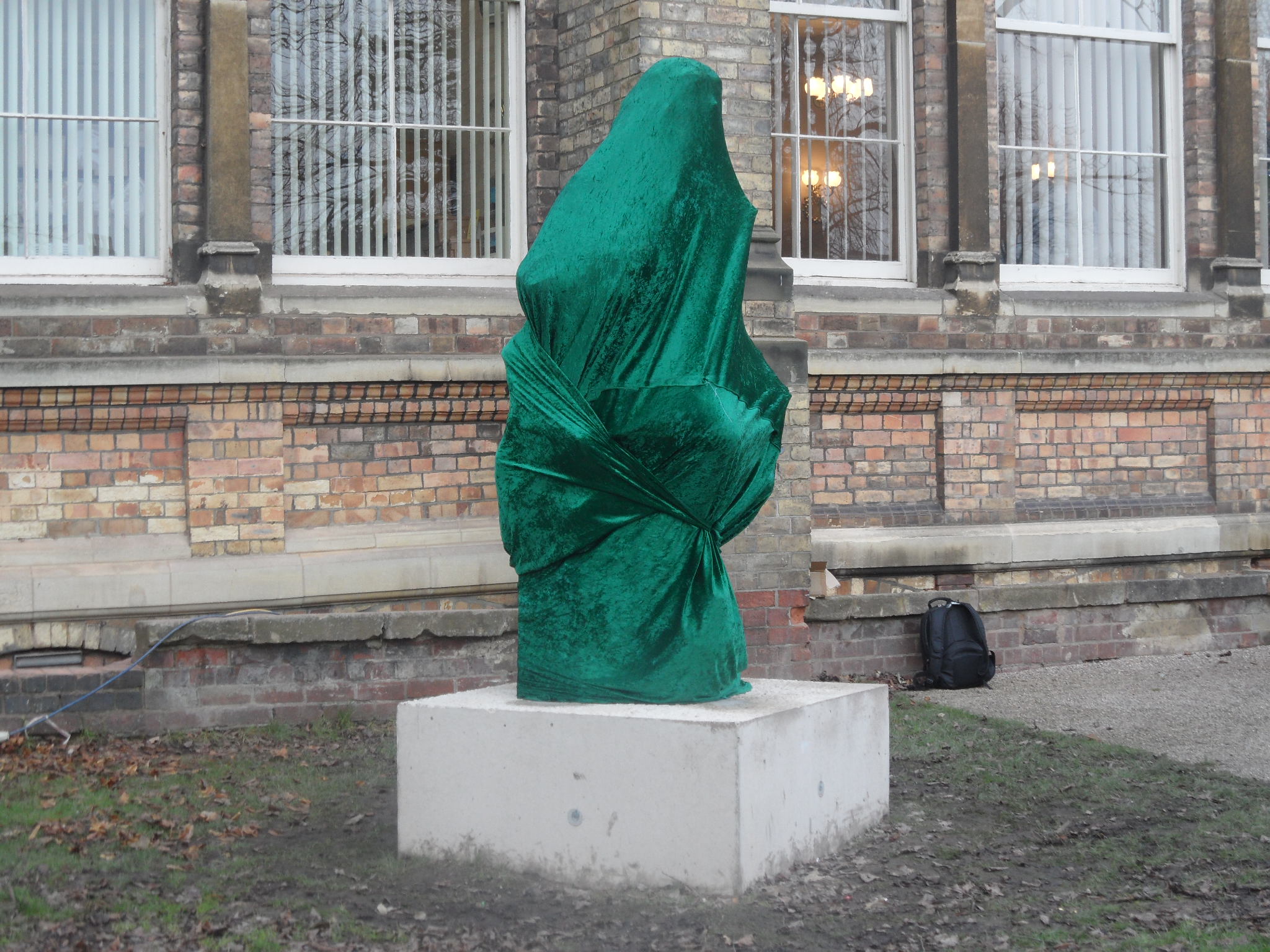
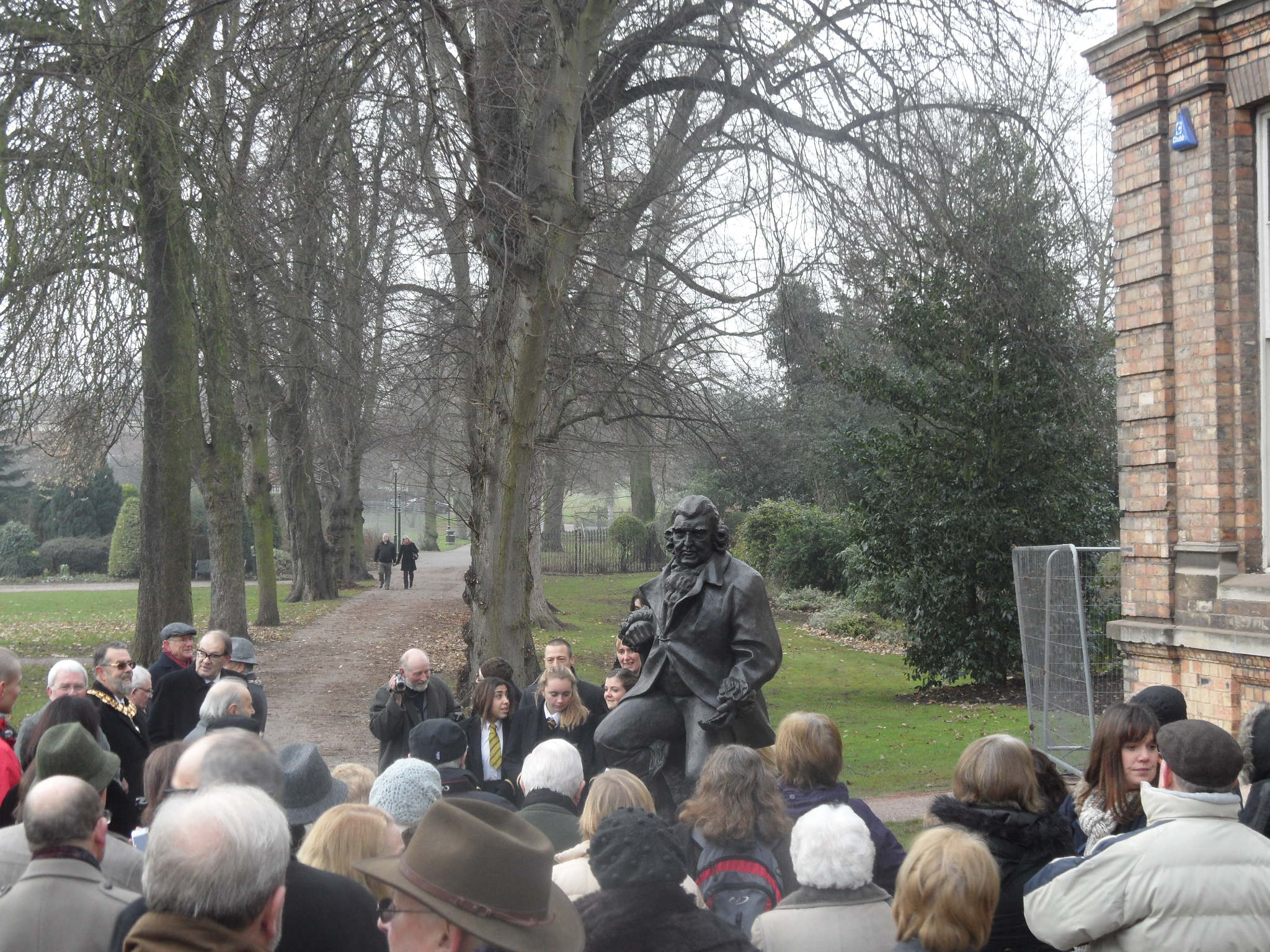
Despite the bitter cold, a large crowd gathered in the Museum Gardens around a figure enveloped in green velvet.

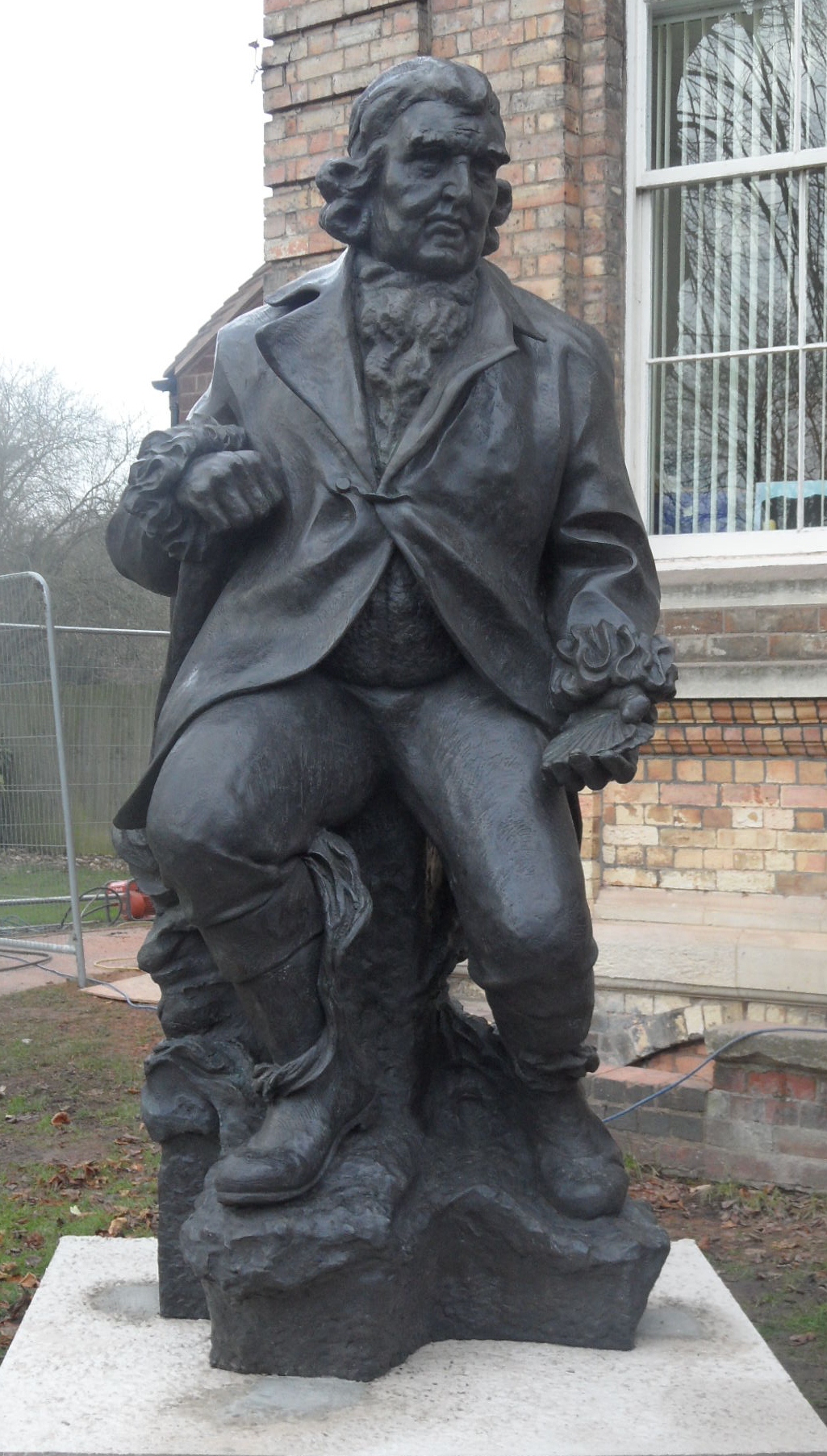
Once the poems, songs and speeches had concluded, local artist Peter Walker’s bronze statue of Erasmus Darwin was unveiled to applause.

Recently, I read a wonderful post by Susan Ward on her Staffordshire Bred blog which reminded me of the importance of the sense of touch, when connecting with something.  I was so pleased to hear that the scallop shell Erasmus Darwin holds in his left hand is not only an important symbol of his beliefs and his work on evolution, but is also there to be touched. This is not a hands off statue and I hope that people will touch it, that it will be a well-loved part of the city and that stories will grow up around it.

Those days are still ahead of us – the sun has not even set on the statue’s first day in the Museum Gardens yet (although judging by the temperature in the park today, I’m not convinced it actually rose in the first place!).

The statue belongs to the people of Lichfield, but today belongs to Erasmus Darwin and Peter Walker.

Halfpenny For Your Thoughts

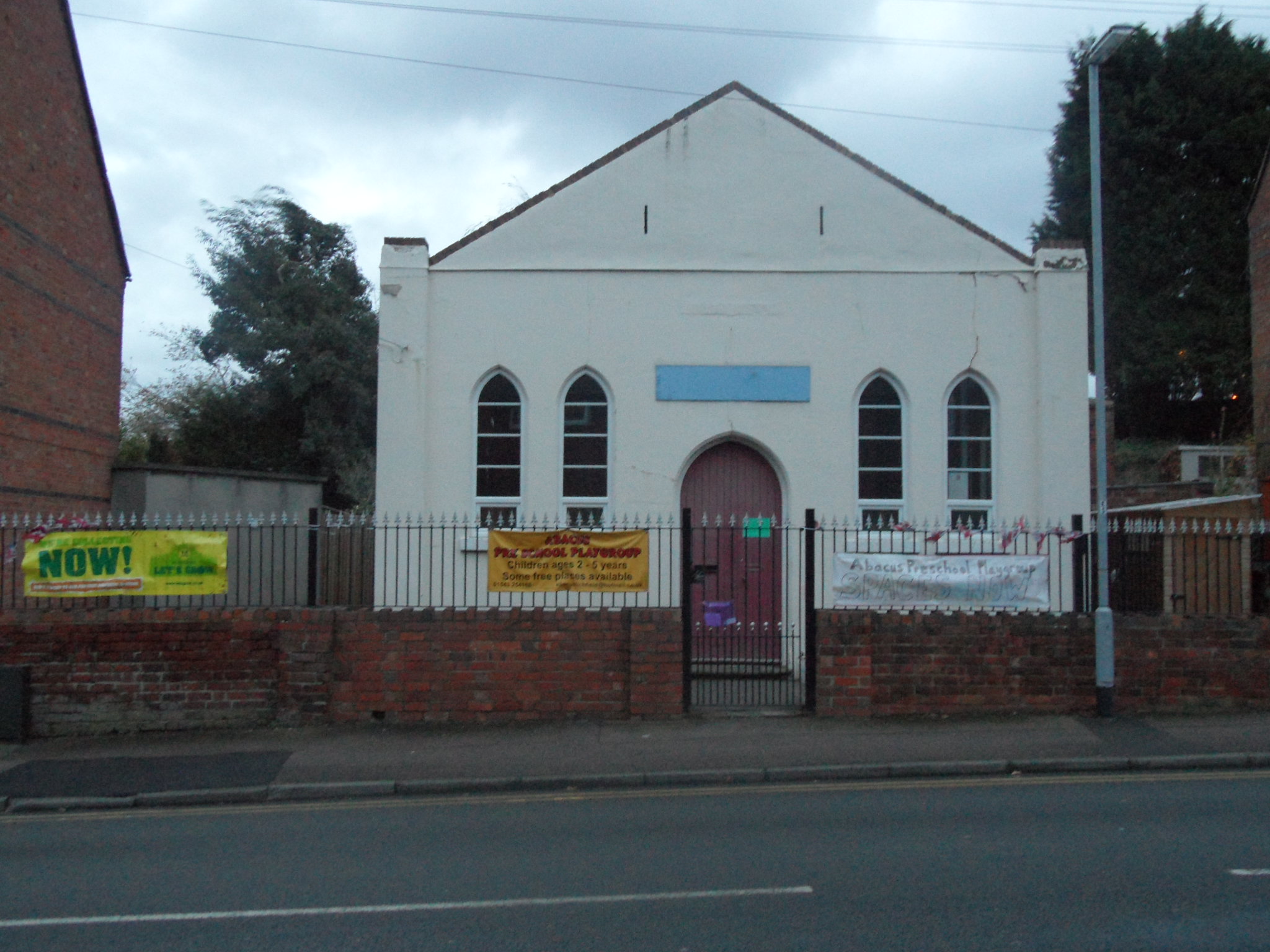
There’s a saying ‘It’s what is on the inside that counts…’, and it’s rather appropriate for describing Frank Halfpenny Hall, a plain and unassuming building half way up George Lane. The hall is home to the wonderful Abacus Pre-School, and inside is a place full of colour and music, imagination and laughter.

Frank Halfpenny Hall, George Lane, Lichfield

People have many fond memories of the hall. Responses to requests for information on  the Lichfield Facebook group show that this is a building that’s been an important part of the community over the years. People talked about attending Sunday school there, still having the ‘Peter and Jane Go to School’ book from their last day at playgroup, eating school dinners there when at St Chad’s school and regular jumble sales being hosted. It was even the venue for one woman’s wedding reception!

The hall is named after Frank Halfpenny, a Labour councillor, who I believe went on to become Lichfield’s first Labour mayor in 1965. He was the Sheriff of Lichfield, when war broke out in 1939 and the photograph below shows him maintaining the tradition of the Sheriff’s ride that September, accompanied by just one other rider.

Frank Halfpenny ensuring the tradition of the Sheriff’s Ride is maintained. Photograph used with thanks to Annette Rubery http://www.annetterubery.co.uk/

Cllr Halfpenny bought the hall and in 1958, donated it to the Lichfield and Tamworth Constituency Labour Party. I’ve been told that the hall was used as the Labour Party HQ during the two general elections of 1974 (in May the Conservative Party held the Lichfield and Tamworth seat but lost it to Labour in the October election later that year). It had originally been built as a Primitive Methodist Chapel in 1848 and a map from 1884 shows it had 130 seats for the congregation. It the 1930s, it was used by the Salvation Army.

Sources:

Lichfield: Town government’, A History of the County of Stafford: Volume 14: Lichfield(1990), pp. 73-87

Lichfield: Roman Catholicism and Protestant nonconformity’, A History of the County of Stafford: Volume 14: Lichfield (1990), pp. 155-159

http://en.wikipedia.org/wiki/Lichfield_and_Tamworth_(UK_Parliament_constituency)

Elegy Written in a Lichfield Churchyard

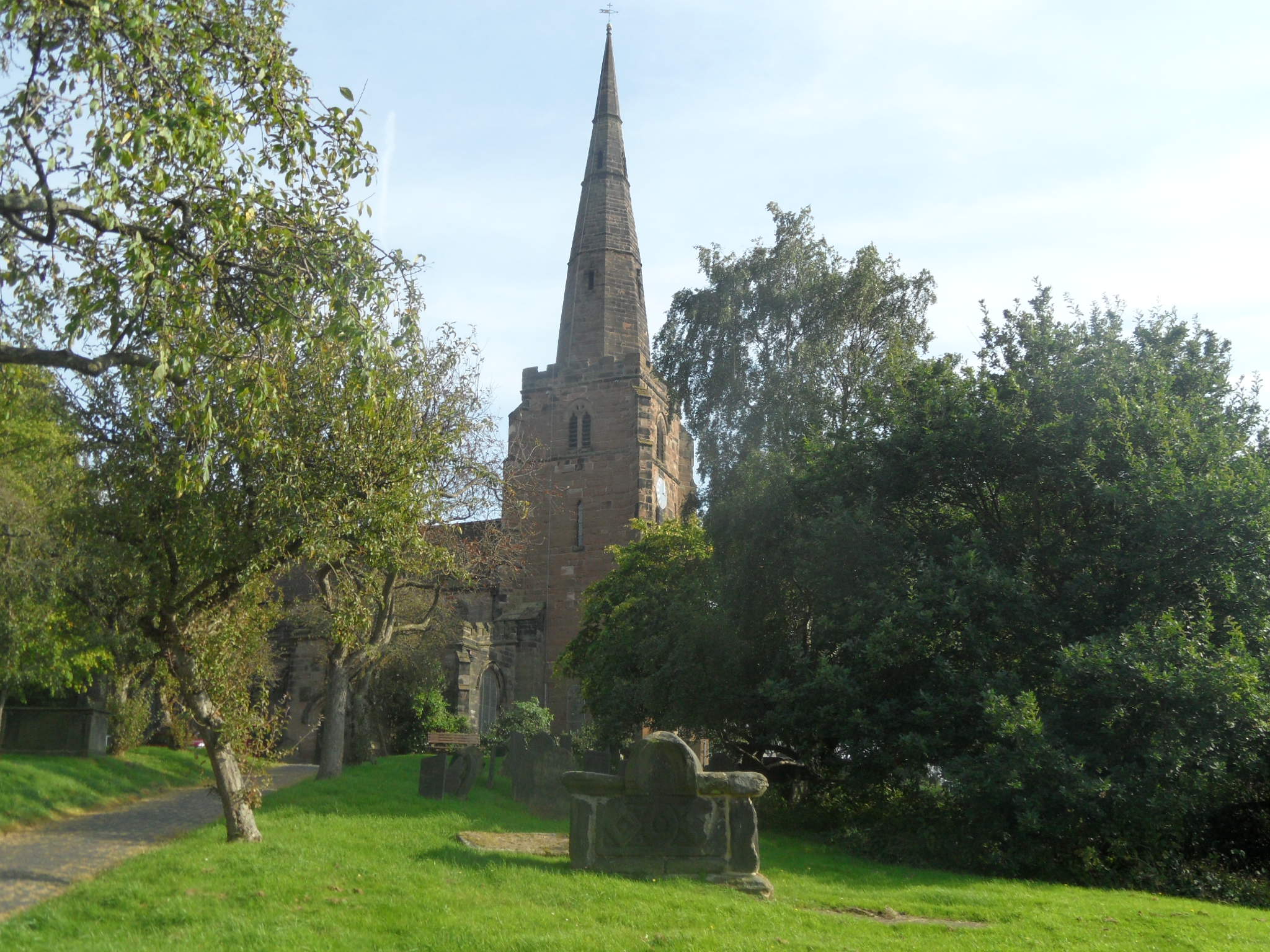
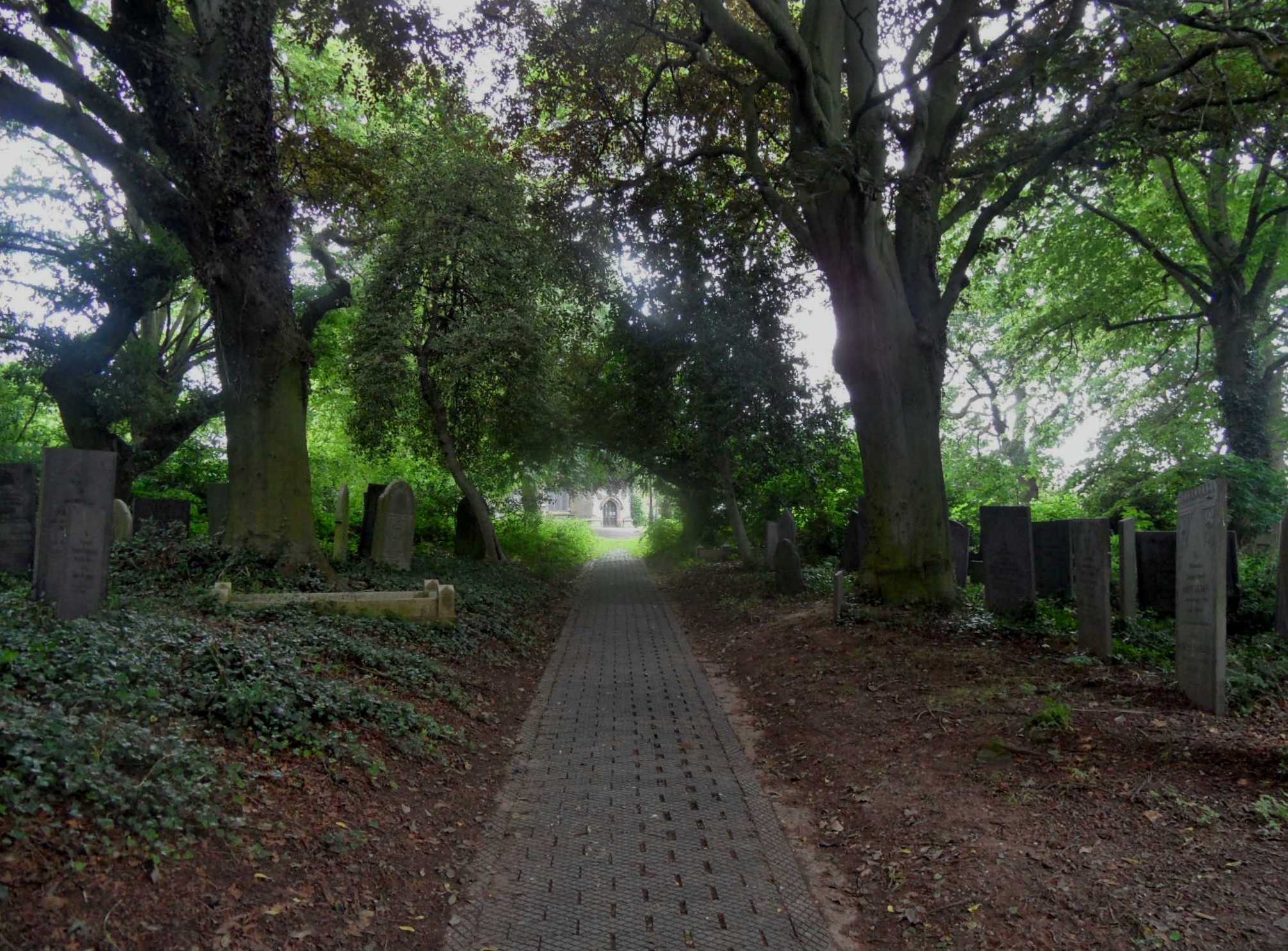
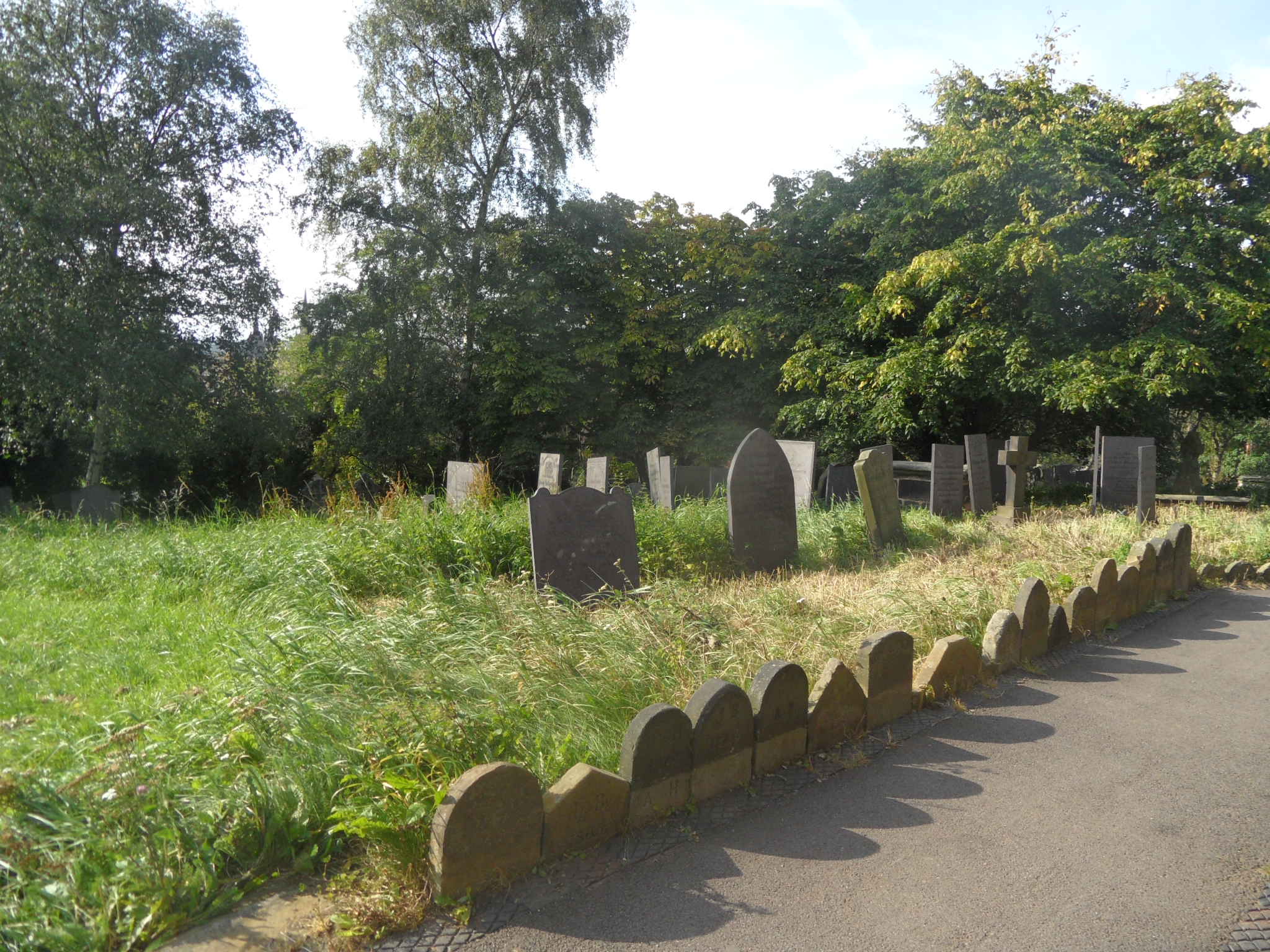
Many churches dedicated to St Michael are found on hills. Lichfield’s St Michael’s of course is at Greenhill, on a sandstone ridge 104 metres above sea level.   It’s thought a church has been on the site since 1190, but that the surrounding churchyard is older. There are hints as to this earlier history of this site, but as far as I can see things are still very much at the questions, rather than answers stage. Many people believe the position of the church on a hill, and its dedication to St Michael may indicate a previous pagan site.   I hadn’t realised until reading that the crypt was liable to flooding, that there are natural springs on the hill. Is this relevant to the story, and if so, how?

The answers we do have were, of course, mostly provided by archaeology. Evidence suggests there may have been activity here in the mesolithic era. In 1978, an excavation in the South East corner of the churchyard discovered five flints (albeit not in a primary context).

Four years earlier, the building of a new vestry at the church gave archaeologists the opportunity to open a trench. Unsurprisingly for a churchyard they discovered human remains – forty nin complete or partial skeletons. Of these, all but two were buried in the customary Christian manner, with their head to the west. However the head of ‘Skeleton 21’, was to the east. Apparently, this can sometimes suggest that the remains of a Christian priest have been uncovered. By being buried with their feet to the west they were ready to rise and face their flock on judgement day, as they had done in life. However, the archaeologist noted the absence of a chalice and patten, objects that priests were often buried with (as was the case with the remains of the priest near the old leper hospital in Freeford).  ‘Skeleton 58’ also differed from the others being buried with his/her knees tucked under the chin. This crouched burial style is apparently more associated with Pre-Norman conquest burials, although I’m still doing some background reading to try and shed more light on what exactly this kind of burial is thought to signify in this context.

The archaeology report also mentions skeletons 2 and 8,  those of an adult, and a baby placed on the adult’s shoulder, and speculates this may be a woman who died in childbirth. It’s discoveries like this, I think, that remind you that these were real people with real lives (that were all too short in many cases).

By the mid 16th century, church records are kept (I’ve used those transcribed by Harwood), and begin to tell us a much more detailed story of the churchyard,  enabling us to gives names and identities to those laid to rest here. For example, this is the entry for 1560

– Recevyd for the ffyrst grasse of the Churche Yarde
– for the later Grasse of the Churche Yarde
– of gatherynge in Easter Wyke
– for light at the buryall of Jamys Bywater’s Wyffe and her Chylde
– for light at the monthe mynde of Roberte Walker
– for light at the monthe mynde of Roger Walker
– for light at the buryall of a Chylde of the Walle
– for light at the mynnynge of Mr Swynfen
– for light at the buryall of Roberte Cowper’s Wyffe

The church records also records costs for ‘killing molldiwarps’ in 1597, bestowing ‘on the workmen at several tymes in beare and ale’ in 1602, and money ‘payd for catching urchins’ in 1612 (urchins meant hedgehogs. I hope!).

While some things never change – a footnote tells how a person named Hollingbury was tried at Lichfield in 1612 for stealing lead from the church, others thankfully have – ‘William Key of Bliffeld and Nicholas Hatherton of Lichfield two prisoners condemned according to the Laws of this land and executed here at this Cittie were both buryed in one grave the 17th day of October 1592’.

There are still those buried at a later date whose names are not specifically recorded. An entry in the register says that for ‘From April 14 1642 to Feb 19 1645 were buried twenty five soldiers’, and I’ve either read or been told that victims of the plagues that struck Lichfield (51 per cent of Lichfield’s population died of plague in 1593-4, and 32 per cent, in 1645-6) were buried in pits here.

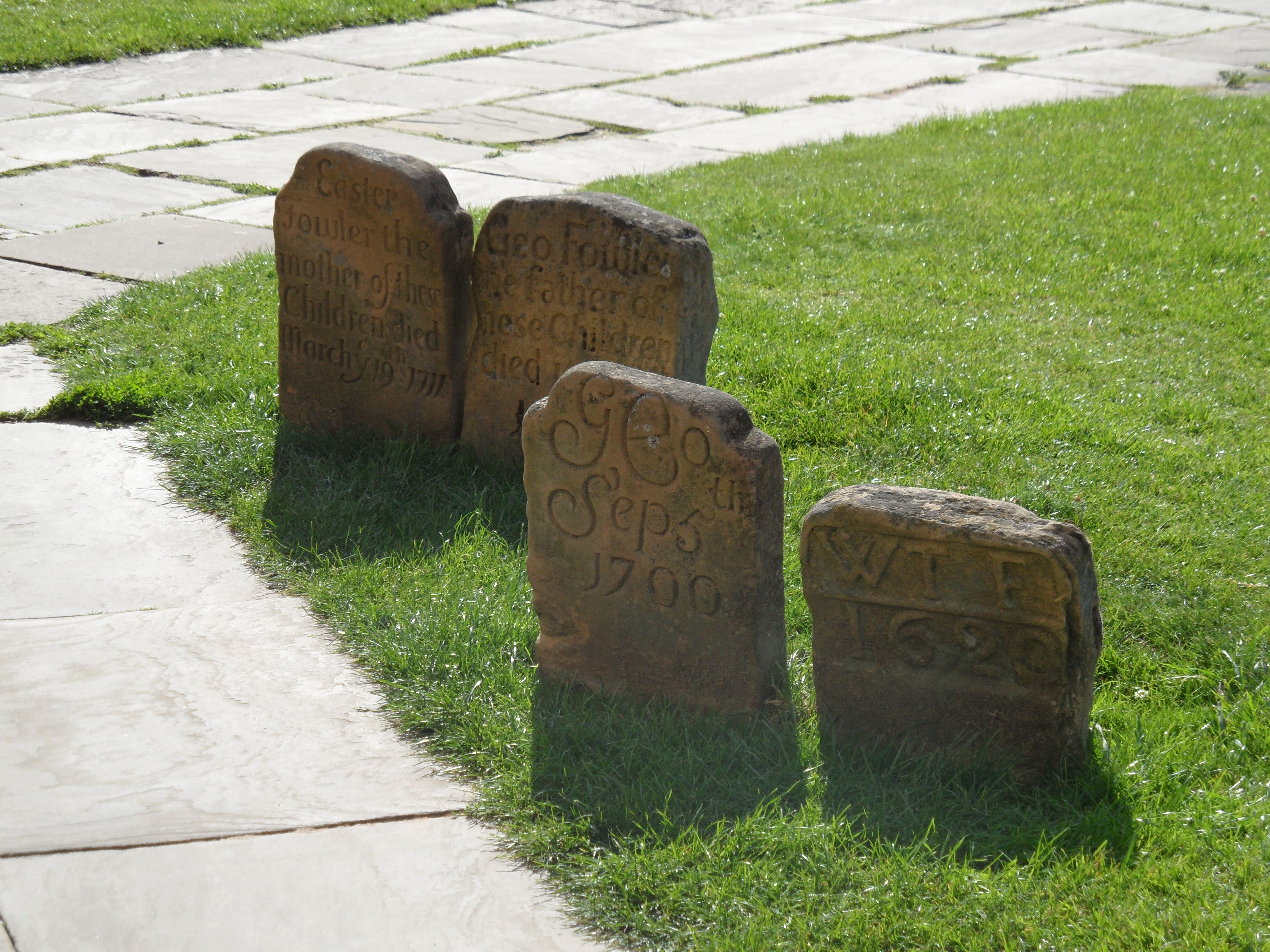
The majority of headstones seem to date from the 18th century onwards, although there may be earlier memorials here. I have seen examples of gravestones dating back to the early 1600s in other churchyards, such as this one at Southwell Minster in Nottinghamshire.

Examples older gravestones at Southwell Minster

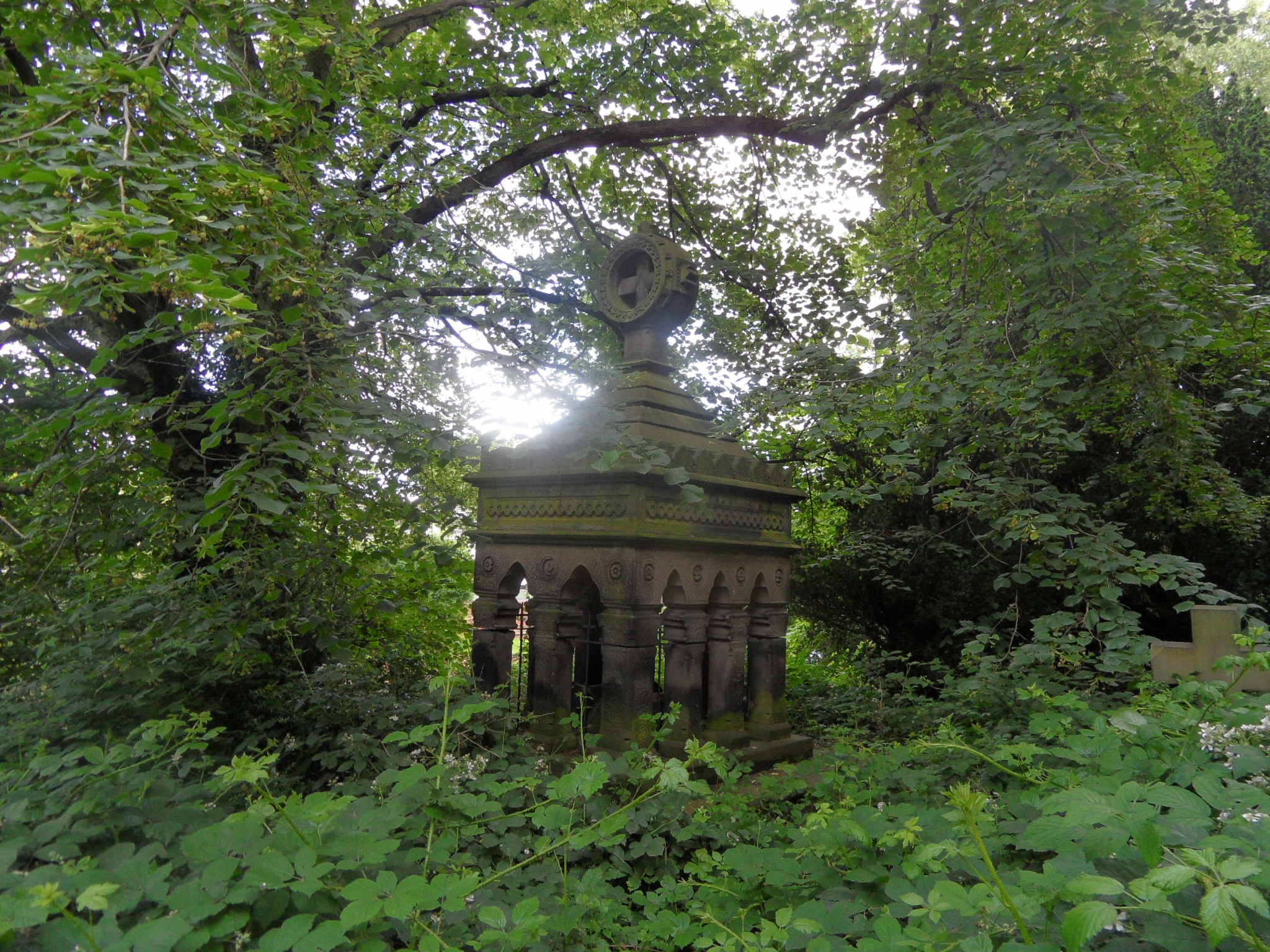
Of course, some people, presumably those wealthy citizens of the city, even erected monuments like this well known one belonging to Chancellor Law, which used to have a clock in the centre.

As with many places, we might never get definitive answers about the origins of St Michael’s churchyard, but who knows? As we’ve seen before, one discovery can change everything. And in the meantime, it’s a fascinating part of the city to keep asking questions about!

Sources

Gould, Dorothy & Gould, J 1974-5 `St Michael’s churchyard, Lichfield, Staffs’ Trans S Staffordshire Archaeol Hist Soc 16 58-61 

The history and antiquities of the church and city of Lichfield by Thomas Harwood


Features and Reviews

Hopefully, anyone reading the blog recently has found the old graffiti interesting. I know that Gareth and I, and (for a few days at least!) a large broadcasting corporation did. After all of the excitement, I thought it was time for a bit of musing….

The discoveries (or perhaps rediscoveries is more accurate) in the Lichfield District Council offices got me thinking about the potential for other ‘unseen’ history out there. There’s unseen in the sense of being hidden away from view –  in attics, down pub cellars and down the bottom of the garden. However, I also think that something in plain view can be unseen –  people may pass by everyday, but no longer see what’s actually there or the potential of it, due to familiarity. During discussions about the graffiti, someone said to me, “I’ve walked past that graffiti loads of times and never even thought about it”.

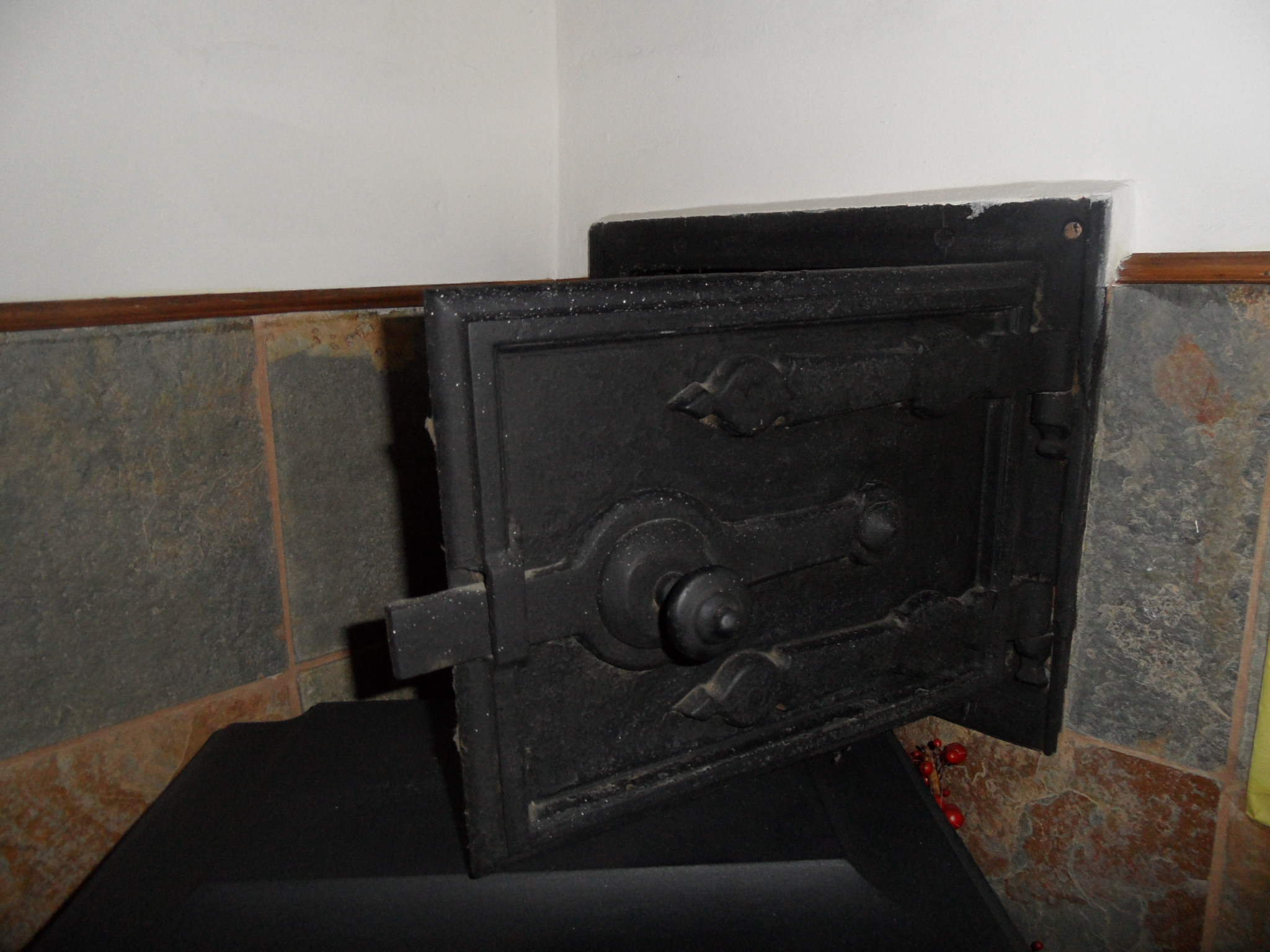
The bread oven above is in the house of someone I know. I remember them buying the property years ago and excitedly telling me after their first viewing with the estate agent, “It has an old bread oven!”. When they moved in we all keen to peer inside but prior to taking the photo, it was last interacted with as part of an Easter Egg hunt.  However, taking the photo to show a friend, sparked a whole new conversation about the oven. Was it original? If so, would this have been the kitchen? Wasn’t it once divided into two houses? How was it laid out back then? Why was the house built in the first place? And so on….My point is, sometimes, we need to look with a fresh pair of eyes to see what’s in front of our nose.

I don’t think that the history in question even has to be a specific feature like the bread oven. I find the traces of people’s everyday lives fascinating. I visited a house in The Close last Christmas. Unfortunately, I hadn’t had nearly enough mulled wine to pluck up the courage to ask if I could take photos, so I’ll have to describe it. There were stone steps down into the cellar, worn away in the centre by centuries worth of footsteps. There were attic beams with layers of fading wallpaper still clinging to them up in the attic. To describe the place as ‘lived in’ would be an understatement.  The next question inevitably is ‘lived in by who’? Actually, photos wouldn’t really have done the place justice anyway because it was more than a visual thing. You wanted to touch, as well as see. ….

I’m really hoping that Lichfield District Council open their offices up for the next heritage weekend, so that people get to look around what was one the Old Grammar School for themselves. I’m not suggesting people throw the doors of their homes open to the public, but perhaps if we want to explore the history of the city and all its inhabitants, we sometimes need to look at the ‘normal’ buildings and places, where people lived and worked, and still do! I’m by no means detracting from those special, extraordinary buildings like the Cathedral, just saying that sometimes it might be worth looking again a little closer to home.

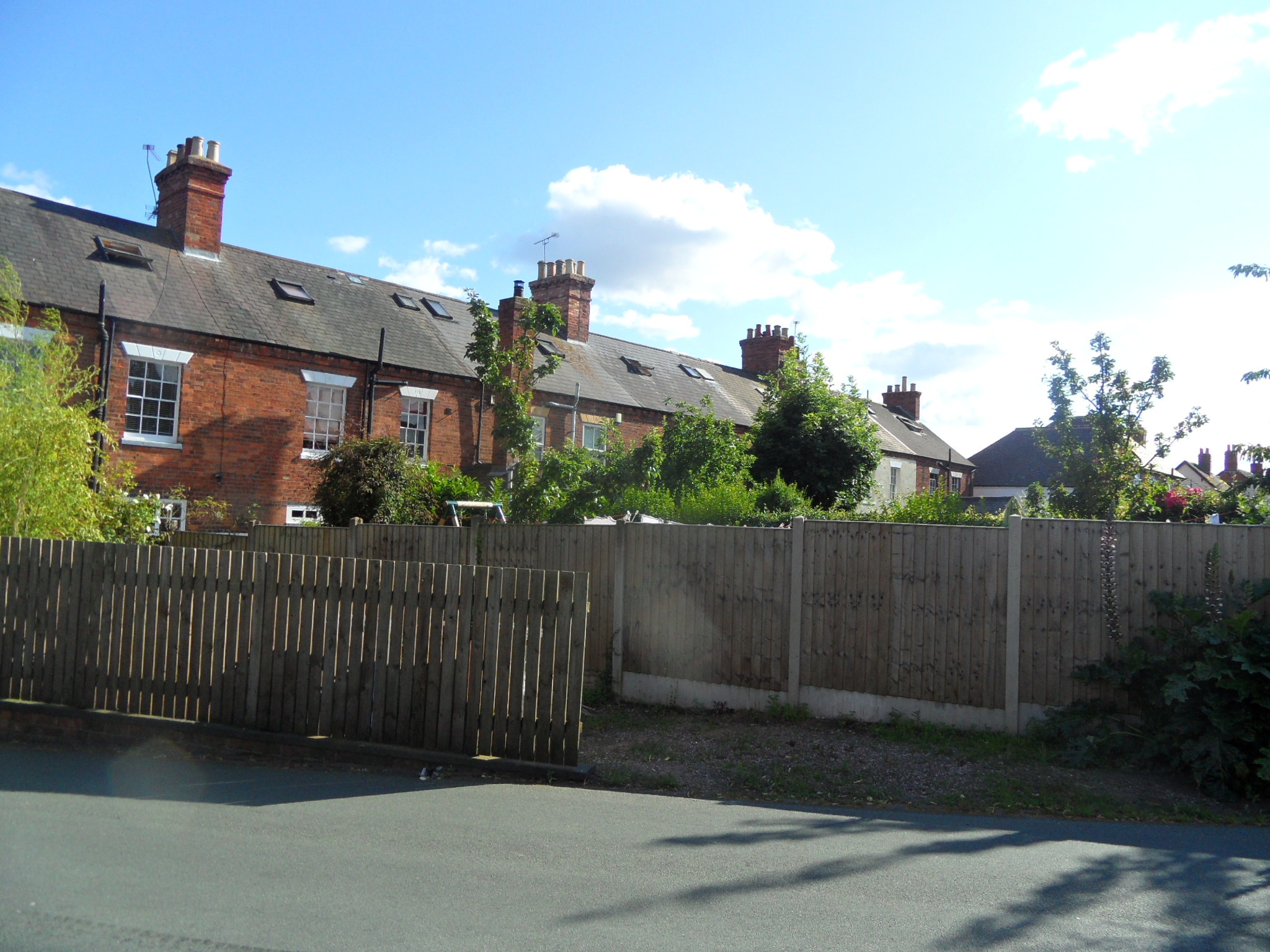
One of these terraced houses in Leomansley still has a tall chimmney at the back. An old washroom?

A wall brace on Greenhill. Does that say R Crosskex? Who was that? See edit below.


A selection of objects found in the garden Of Vicky Sutton’s Nan’s house near to Beacon Park (not including the pink flowery plate!).

The remains of a cherry orchard can still be found near…Cherry Orchard!

Edit:

After I woke up properly, I realised this actually said R Crosskey. I found a book about Henry William Crosskey, a geologist and Unitarian minister from Lewes (1) and found that his younger brother, Rowland Crosskey came to Lichfield as an apprentice ironmonger. He emigrated to Australia for a while and then,  after he returned to England, he started a business in Birmingham. Afterwards, he took over the Lichfield firm where he had served his apprenticeship. In 1868 he became Mayor of Lichfield and donated a civic sword to the City (Is this the one still used in processions today?).  He died in 1890. From census records, it looks like his home and business premises were initially in Market St. In 1888, he was in Bore St, trading as a ‘Military Camp and Store Furnisher’ with premises on the Burton Rd in partnership with Charles John Corrie. Also, just as a point of interest, Rowland was his Mother’s maiden name.


(1)Henry William Crosskey, LL.D., F.C.S. : his life and work by Richard Agland Armstrong; with chapters by E. F. M. MacCarthy and Charles Lapworth. http://www.ebooksread.com/authors-eng/e-f-m-maccarthy-richard-acland-armstrong.shtml

(2) London Gazette 1888


Men of Letters

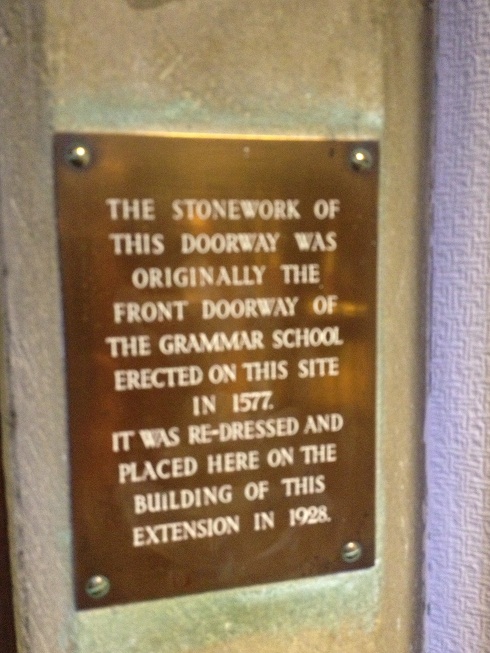
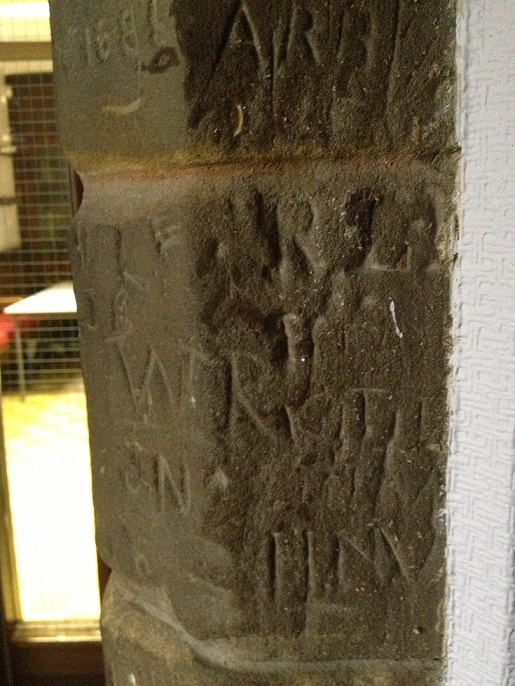
Following on from this morning’s post,  here is Gareth’s latest fantastic Lichfield Grammar School related discovery. The plaque suggests that this stonework was originally the front doorway to the Grammar School, and was redressed and placed around this doorway in the Lichfield District Council Offices in 1928. The second photograph shows our oldest dated graffiti yet – RS 1681.

As I’ve been reading about the school’s history, I’ve been jotting down the names of students. Here they are so far, in no particular order….some you may recognise, others you may not.

Isaac Hawkins Browne    Gregory King
John Wyatt                       George Smallridge
David Garrick                    Andrew Corbet
Thomas Newton                John Willes
Robert James                   Thomas Parker
Elias Ashmole                   William Talbot
Edmund Hector                William Noel
John Taylor                       Richard Lloyd
Charles Congreve            Samuel Johnson
William Wollaston            Theophilius Buckeridge Lowe
Francis Chetwynd            Joseph Addison
John Rowley                     Henry Salt
John Colson                     Joseph Simpson
Walter Bagot                    Charles Bagot
William Bailye

Do any of them match any of the initials found throughout the school? I have to say it’s the ones we don’t know much about that interest me the most. We all know what Mr Ashmole did, but what about those whose achievements weren’t documented to the same extent? What about those poor boys (with or without their brooms)? How did attending the school affect the course of their lives?

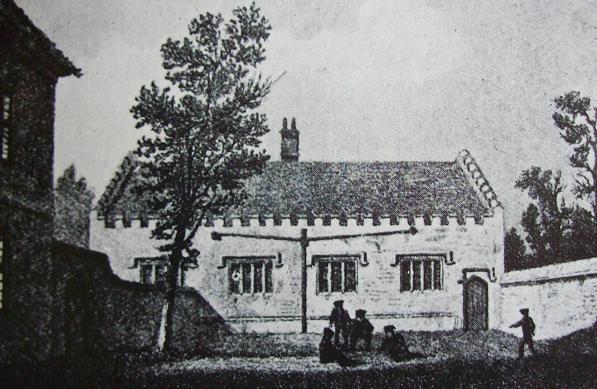
Image taken from Wikimedia Commons. Murray, John. Johnsoniana, 1835. reprinted Lane, Margaret (1975), Samuel Johnson & his World, p. 26. New York: Harpers & Row Publishers

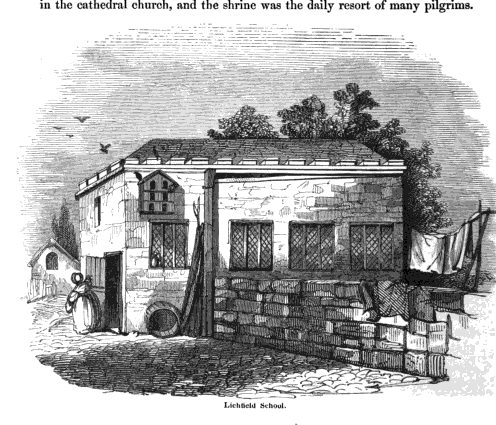
Several engravings and drawing of the Grammar School exist showing the schoolroom building at various stages in its history. Gareth is working on something that will hopefully show the changes in the schoolroom since it was first erected on the site in around 1577. This should hopefully help us to discover the original location of the stone doorway too.  The schoolroom was rebuilt in c.1848, and as the dates on the stonework are before and after this date, I wonder whether materials from the old schoolroom of 1577 were reused in carrying out this restoration work?  I’m hoping to go to the Lichfield Record Office as the National Archives catalogue is showing that the hold lots of information on this, and on may other aspects of the school’s history, dating back to around the same time RS carved his initials into the old doorway.

Finally (for now!), I’ve suggested that the doors of the Old Grammar School, both inside and out, be opened to the public for the Lichfield Heritage Weekend.

Update:

I found a book ‘The Wanderings of a Pen and Pencil’ from 1846, in which the authors FP Palmer and A Crowquill desribe their visit to Lichfield. Illustrations of the exterior and interior of the Grammar School are included in the book. Interestingly, their visit was at the time the school was in decline, and there were no pupils attending (see previous post).  They record that the upper schoolroom was tenanted by lumber, and the lower school room unoccupied, and asked ‘How is it the Lichfield Grammar School is so shamefully deserted and what amount is received by the master for doing nothing?’. In the interior, the stool that they have sketched was apparently the ‘flogging-horse’. The exterior drawing confuses me further – hopefully Gareth will be able to shed more light on how this compares with the other views of the schoolroom we have!.

Paths that Cross

On my way to pick up some tickets from the Garrick the other day, I passed Lichfield Library. I couldn’t resist popping in to have a quick peek at the local history section to see if they had any more information on the history on the grammar school,  following on from Gareth’s graffiti photographs.  (They did. A whole book in fact and I’ve updated the post accordingly!). So inevitably, my quick peek turned into two hours.

There was an added bonus to the visit too. Anyone who read my Cross City and Cross County posts will know that I was hoping there would be an ancient cross somewhere in Lichfield. Well, I finally found one! Actually that’s a fib. What I found is a photograph in a book of archaeologists finding one. A decorated cross shaft was discovered built into the foundations of the north wall of the nave of Lichfield Cathedral. It’s thought to be Saxon or Saxo-Norman, and could be a surviving remnant of the earlier church on the site. I wish I could share a photograph here, but all I can do is tell you that it’s on plate 1 in the ‘South Staffordshire Archaeological and Historical Society Transactions 1980-1981 Volume XXII’ book, on the local history shelves at the library!.

I have a confession to make. Generally, I’ve thought that places like the Cathedral are so well known, there’s nothing much left to say. Yet, now I recognise that this was wrong. Whether it’s the magnificent discovery of the Lichfield Angel in 2003, the downright curious tale of a live frog embedded in one of the stones used to repair the Cathedral during the restoration*, or rolls of parchment, beer and tobacco found in the gilded balls on the top of the central spire – the Cathedral, as everywhere, is made of stories, as much as it is made of stone. There are those we know well, those we don’t, and those that haven’t even been told yet.  We need to make sure we  are listening, just as Gareth was when he discovered and questioned that graffiti on the walls of the old Grammar school.

*I’m not making this up…..but someone else may well have been!

Potholes

After visiting the Christian Fields Local Nature Reserve, it seemed a good time to revisit the story that gave a name to the immediate area, and according to some, to the wider city as well.

Legend has it that in around 300AD, one thousand (or 999 depending on which version you read) Christians were massacred by a Roman army and their bodies left unburied in a place that would become known as the ‘Field of Corpses’ aka Lichfield (from the OE lic – body/corpse).   From 1548, versions of this story were depicted on the city seal, examples of which can still be seen in several places across the city, including the Martyrs Plaque at Beacon Park, 19thc police badges on display in the City Gaol, and in the main hall at the Guildhall.
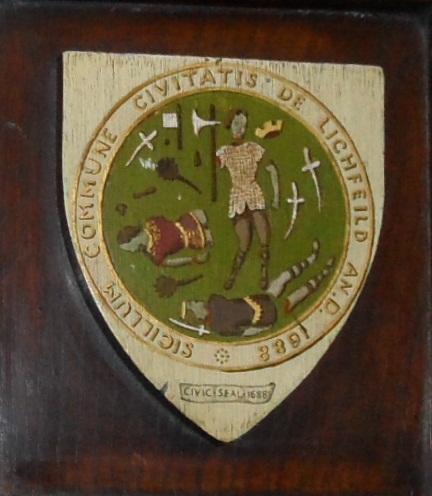
Version of the City Seal from 1688, Main Hall, Guildhall

Several fairly obvious locations in the city have been mooted as possibilities for the specific location of the massacre, including Borrowcop Hill, St Michael’s Churchyard and the site of the Cathedral. However, what was it about this parcel of land, a mile north of the Cathedral that convinced people to such an extent, that it was given the name ‘Christian Fields’?

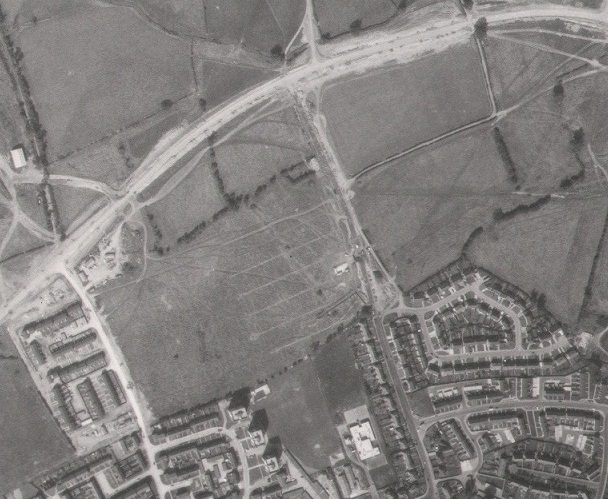
The image below is an aerial view of the area from 1971. Christian Fields is south of Eastern Avenue, between Dimbles Lane and Curborough Rd.  (Shortly afterwards, a new housing estate was built on the field. Perhaps as a nod to the site’s legendary history, the streets were named after saints. Funnily enough, one of these new houses was my husband’s childhood home – I must ask my in-laws if they ever found anything of interest in the garden!)

An aerial view of Christian Fields, 1971. Reproduced with thanks to Gareth Thomas, Lichfield District Council

Lichfield District Council’s information on the site says,

In the 17th-century the antiquarian Robert Plot declared that the area, now known as Christian Fields, had been the site of the martyrdom and it has born the name ever since. Needless to say Robert Plot’s claim has never been substantiated and no archaeological evidence has ever been presented in its support.

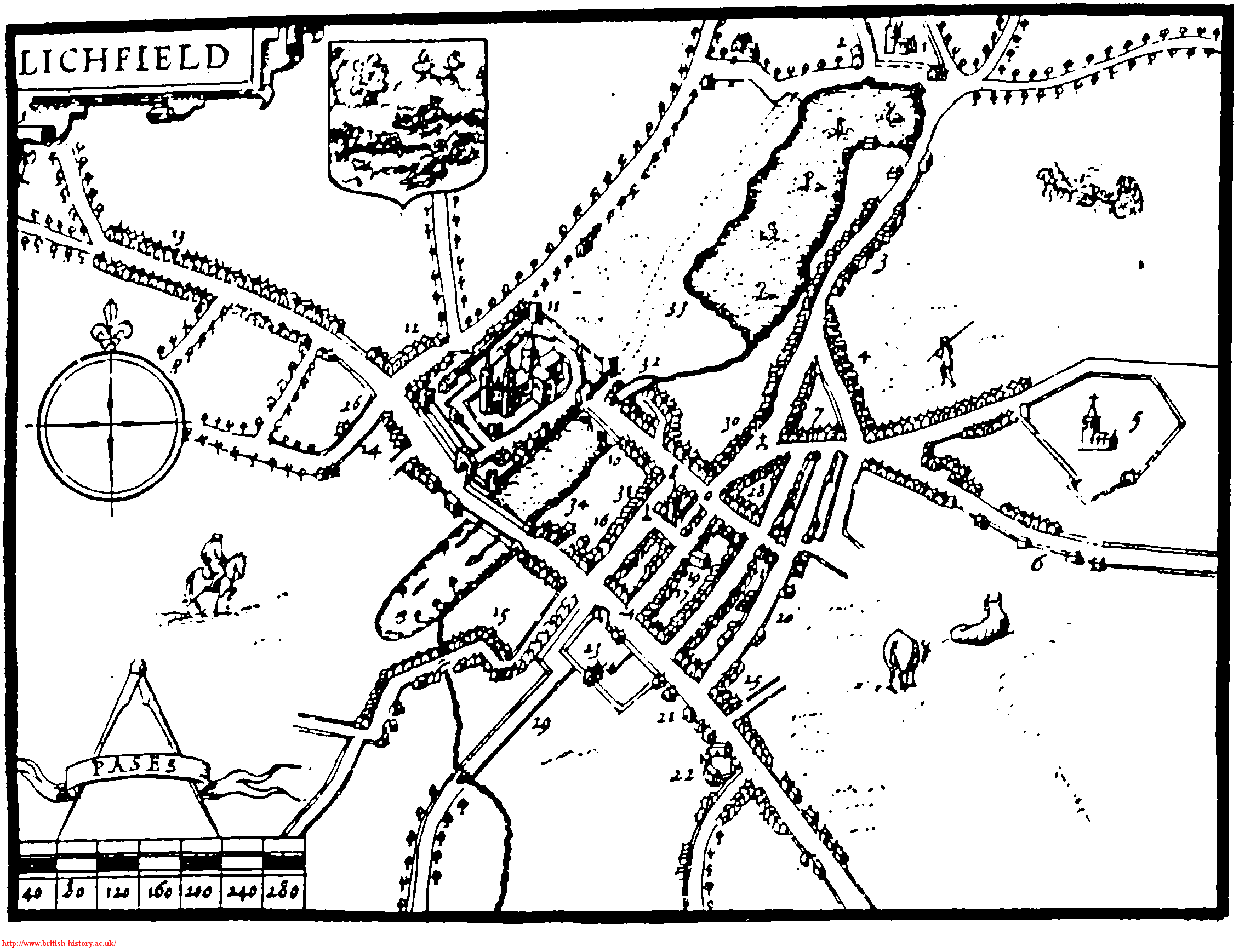
Looking at John Speed’s 1610 map of the city, I wonder whether the idea that the massacre took place at Christian Fields actually pre-dates Robert Plot? At the end of a road leading north from the Cathedral (possibly Dimbles Lane?), in the vicinity of Christian Fields, is an illustration depicting a scene that looks like a representation of the legend, similar to that found on the city seal.

John Speed’s 1610 map of Lichfield

In the early 1800s, local historians wrote about a series of discoveries near to the site, that persuaded them that the legend was true. The pastscape record has the following description, taken from a history book of the time,

In a meadow adjoining CHRISTIAN FIELDS, known by the name of the TOAD’S HOLE PIECE, have been recently found a considerable quantity of human bones, various pieces  of earthenware, some of which are Roman, a stone bowl or dish perhaps used for grinding corn, a stone ball, fragments of weapons including the head of a pike or halberd and several horseshoes  pierced for nails at the top as well as the sides. The objects  were discovered nearly four feet below the surface in a peaty soil, amongst and covered by great quantities of roots and decaying branches.

I found the book (1) on googlebooks and found it contained illustrations of the objects.


A letter to the Gentleman’s Magazine in November 1817 gave a little more information,

The articles of which I have sent you drawings were found near some land known by the singular names of Hic Filius and Christian’s field so called, according to tradition, from having been the place where the early converts to Christianity had used to assemble  and where the massacre from which Lichfield derives its name took place.

The letter goes on to describe what I think are these drawings from the Staffordshire Past Track site. – “a stone dish one foot diameter used perhaps for grinding was placed in the earth as a cover for a smooth red earthenware broken by the eagerness of the workmen to examine the contents (proved earth only). The black spots arc metallic. Also, the head of a weapon in preservation the wooden staff was broken off near the head, the iron is 21 inches in length.  There are also weapons found in 1817 in the foundation of one of the canons houses on the North side of the Close with some bones and broken armour”.

I’m not suggesting that the objects are proof of the legend, which along with the ‘Field of the Dead’ explanation of the place name of Lichfield is generally accepted to be untrue (the current favoured explanation of the name is ‘the common pasture in or beside the the grey wood).  However, and I may be reading into things too much here, I do think it’s a little curious that these items seem to almost be a tick list of props for the martyrs’ story…. Bones? Check. Horses & weapons? Check. A link to the Romans? Check.  The question I’m finding it hard to find an answer to is, if it’s agreed that these objects aren’t part of the story of the Christian Martyrs, in some way, shape or form, then whose story or stories are they part of?

Edit 6/10/2012

A further reference from the same book says the following,

About three quarters of a mile from (St Chad’s Well) are Hic filiius and Christians Fields where the converts of Ampbibalus are said to have been massacred; a considerable quantity of human bones have been found in the adjoining fields a few feet beneath the surface.

It has been the custom of civilized nations to collect and burn or bury the bodies of those slain in battle here fragments of bones are found scattered through a space exceeding half a mile and in one place only have they been met with under the appearance of having been buried which was in a field near Pones mill on the east side of the brook these had probably been dug up and thrown into an excavation as were several cart loads found in the field adjoining to that in which the earthen ware before noticed was discovered which were thrown into a marl pit near the spot. Tradition says the bodies of the massacred christians were left unburied a prey to the birds and beasts of the forest.

On maps from the later 1800s, there is a marl pit in the corner of the field marked as ‘Christian Fields’.

Sources

(1) A Short Account of the City and Close of Lichfield by Lomax, Woodhouse & Newling (1819)

(2) Derbyshire Record Office Online Catalogue

(3) Holinshed’s Chronicles ofEngland, Scotland & Ireland

http://www.english.ox.ac.uk/holinshed/index.php

http://www.british-history.ac.uk/report.aspx?compid=42340#s1
 

Paper Flowers

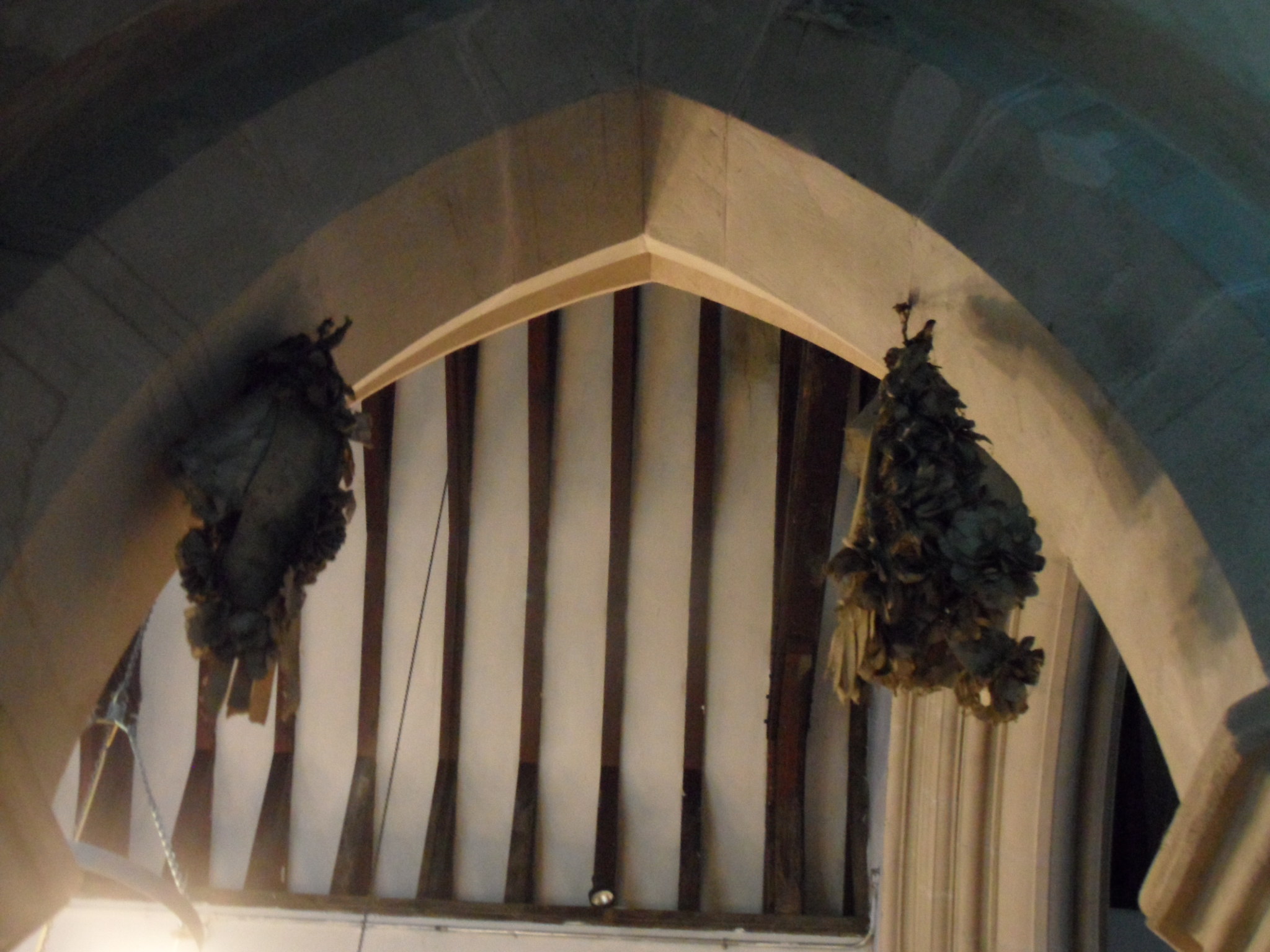
As you walk through the archway into the chapel of St Betram, in the Church of the Holy Cross, IIam in Staffordshire, you notice these.


They are Maidens’ Garlands and relatively few churches in England are thought to have surviving examples. It’s thought they may have been used during the funeral service of an unmarried woman, but there is evidence in other parts of the country that they may have been made for young men too.  Further information can be found in this article in the Birmingham Post a few years ago, but most importantly there is the work undertaken by Rosie Morris who as a child saw garlands hanging from hooks in her church in Shropshire and wondered what they were. Years later having been unable to find much information on them, decided to make them the subject of her dissertation and later Phd. Rosie’s website on Maidens’ Garlands is here.

Not only do I think the garlands and the stories attached to them are of interest, I also really like the idea that Rosie’s curiosity for an object she saw as a child led to her doing such great work to research and share this tradition.