Every Picture Tells a Story

In 1961, the 21st Earl of Shrewsbury sold Ingestre Hall to what was then the West Bromwich Corporation. Along with the red-brick Jacobean style mansion came sixty-six paintings, most of them portraits of the Earl’s ancestors – the Chetwynd, Talbot and Shrewsbury family.The collection was catalogued in 2013 by the Ingestre Festival Association to celebrate the 400th anniversary of the building of the hall and is available to view on the BBC website here, as part of their ‘Your Paintings’ project.

Ingestre Hall

Ingestre Hall by Jason Kirkham

Amongst them are George Talbot, Keeper of Mary Queen of Scots for fifteen years and his wife Bess of Hardwick, arguably the second most powerful woman in Elizabethan England. The 19th Earl of Shrewsbury, Charles John Chetwynd-Talbot, appears twice – aged four and wearing a red dress and aged around twenty five and wearing full dress uniform. The infamous Anna Maria is here too, as a young woman of seventeen, in the year that she wed Francis Talbot and became Countess of Shrewsbury. The marriage would end with the Earl’s death, fatally wounded by his wife’s lover, George Villiers, 2nd Duke of Buckingham, in a duel that took place on 16th March 1667. The event was recorded by Samuel Pepys who described Anna Maria as, ‘my Lady Shrewsbury, who is a whore, and is at this time, and hath for a great while been, a whore to the Duke of Buckingham’.There were reports elsewhere that she had attended the duel disguised as the Duke’s page but whether these rumours (or the ones about what happened in that bloodstained shirt afterwards) are true, we’ll never know.  Also at Ingestre is a portrait of the Shrewsbury’s younger son, John Talbot, who in a twist of fate was also killed in a duel, sometime around his 21st birthday in February 1686.  This cause this time was not infidelity but, ‘having given the Duke of Grafton very unhandsome and provoking language’.

The grand staircase aka The Blue Staircase. By Jason Kirkham

The grand staircase aka The Blue Staircase. By Jason Kirkham

As far as I can see, there is no portrait of Francis Talbot. Perhaps it was destroyed in the devastating fire which swept through the hall on the night of 12th October 1882.  Unfortunately, no inventory was taken until afterwards. A contemporary account tells us that, “Some valuable paintings…were saved”, but that “The grand historical paintings on the staircase, however, were all destroyed”.

Hanging on the staircase in the place of these lost paintings are portraits which reflect a chapter in the history of the hall’s present owners, Sandwell Metropolitan Borough Council. There are paintings of the Earl of Dartmouth, and Alderman Reuben Farley who persuaded him to lease part of his estate for a nominal rent of £1 in order that a park could be established for the people of West Bromwich. Under Sandwell Council’s ownership, the hall is used mainly as a residential arts centre, although it can also be hired out for weddings. I’m sure that dreams of having a photograph taken on the grand blue staircase in a nice white frock have influenced many a prospective bride’s decision in choosing Ingestre as the setting for their big day.

Blue Staircase with portrait of Alderman Reuben Fairley JP

Blue Staircase with portrait of Alderman Reuben Fairley JP. By Jason Kirkham

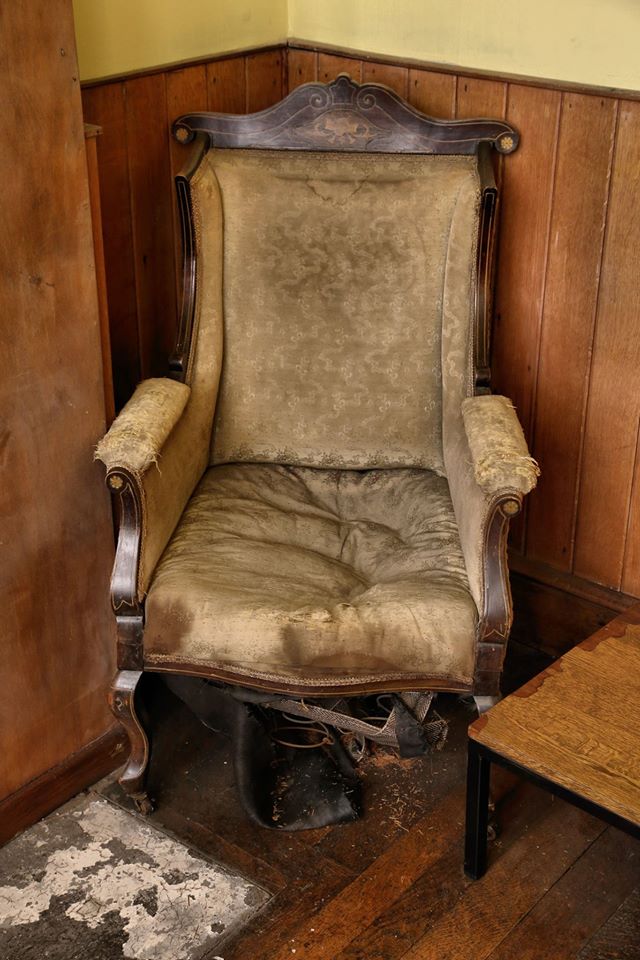
Impressive as the grand staircase is, it was the nearby secret staircase hidden behind a wall which captured my imagination. Leading to what was easily the shabbiest of all the rooms we saw, it would be quite easy to believe that no-one else had stepped inside here since 1961.

Inside the not-so-secret waiting room

Inside the not-so-secret waiting room. By Jason Kirkham

It’s thought the room may have been used by those waiting for a signal from the Pavilion to tell them that the coast was clear for illicit night time activities of some description to commence.  If only those carved Talbot dogs could talk…

One of the many Talbot dogs at Ingestre

One of the many Talbot dogs at Ingestre. By Jason Kirkham

Bookcase Ingestre

In the library. By Jason Kirkham

There’s yet another concealed door in the library, in a bookshelf full of pretend books. As Joss Musgrove Knibb from the Lichfield Gazette pointed out to me, even more shocking than this literary deception is that whoever was responsible didn’t even take the opportunity to include puns along the lines of, ‘Percy Vere, in 15 large volumes’ as they had done at Chatsworth. Seems the conclusion to be drawn from an afternoon at Ingestre is this – it’s the paintings and not the books which tell the stories here.

Notes: Thanks to Jason Kirkham of UK Urbex, who has very kindly let me use his photographs as I forgot my camera. And then couldn’t download the ones I took on my phone. (Let’s be honest, it’s probably worked out better that way)

Sources:

http://www.telegraph.co.uk/news/obituaries/1423544/Nadine-Countess-of-Shrewsbury.html
http://www.altontowers.com/alton-towers-heritage/heritage/family/the-11th-earl-francis/ The Diary of Samuel Pepys, Volume 2
A Short History of Ingestre by Anne Andrews
Catalogue of Paintings – Ingestre Hall Residential Arts Centre
Portraits of Illustrious Personages of Great Britain by Edmund Lodge

Trent and Mersey Paradise

A beautiful ruin dating back in part to the twelfth century, with the base of a medieval weeping cross and the shrouded effigies of two sisters in the churchyard, the remains of the old church of St Augustine in Rugeley are a real treat.

three towers rugeley

Old tower, new tower, power tower

The chancel dates back to the 12thc

With the population of Rugeley rising in the early nineteenth century (in 1801 there were 2,030 inhabitants; by 1821 the population had risen to 2,667 inhabitants, many of whom were employed in the manufacture of felts and hats), the old church was outgrown and a new one was built on land opposite.

'New' church of St Augustine

The ‘new’ church of St Augustine

Consecrated on 21 January 1823, the new St Augustine’s was built on land belonging to Viscount Anson, the cost met from a variety of sources. According to some, stone from the nave of the old church was sold off to raise funds, leaving just an arcade of arches to connect the fourteenth century tower with the old chancel.

SAM_0365


blossom rugeley

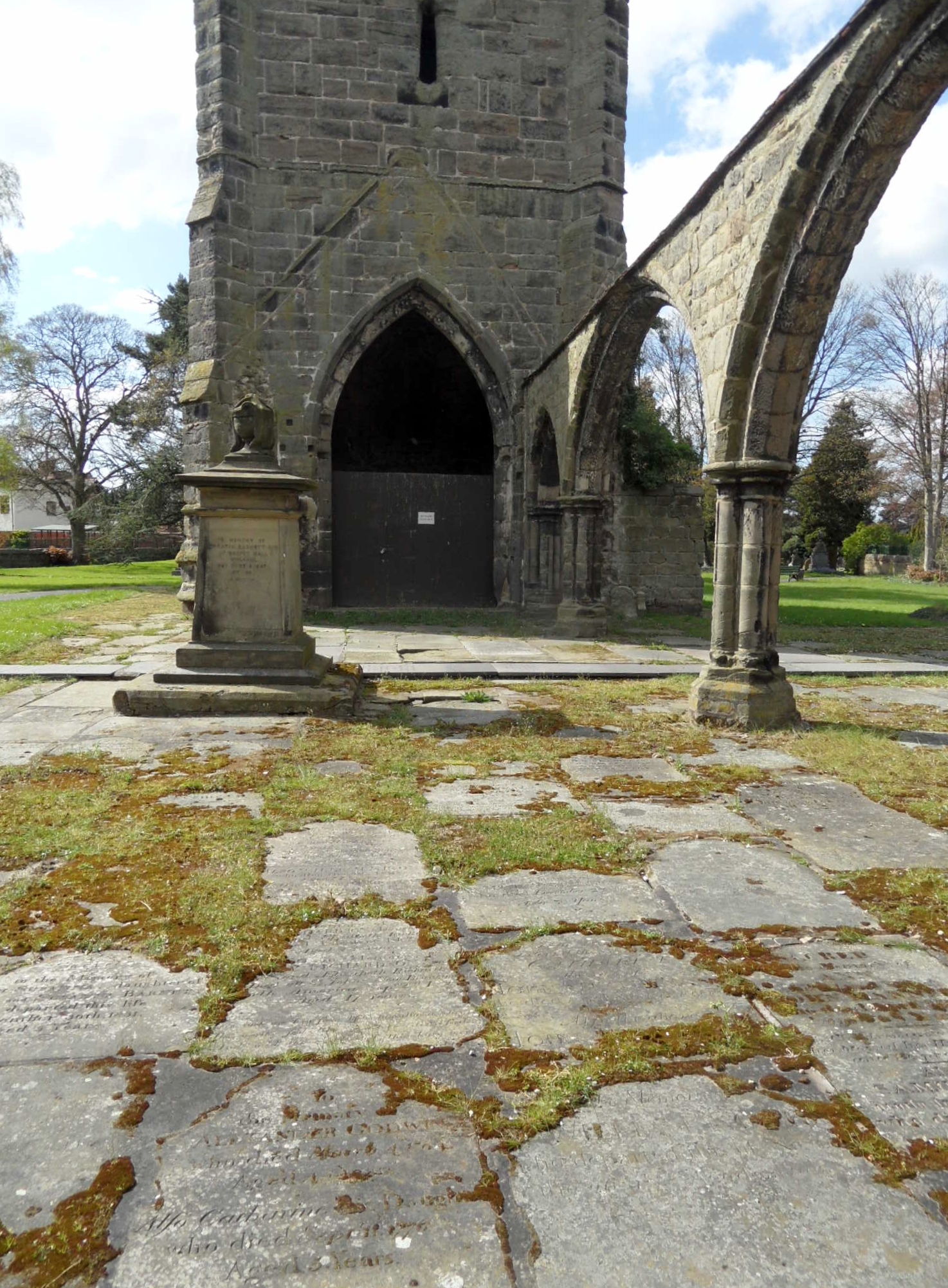
I understand that in the 1970s the church yard was landscaped (or possibly vandalised, depending on how you look at it), and the gravestones which once surrounded the church (as shown in a photograph from the 1860s here on Staffordshire Pasttrack) were broken up and used to pave what was once the nave and north aisle, creating a mosaic of carved names and epitaphs belonging to the old inhabitants of Rugeley.

SAM_0349

The outline of the roof line traced by weather onto the tower


SAM_0396

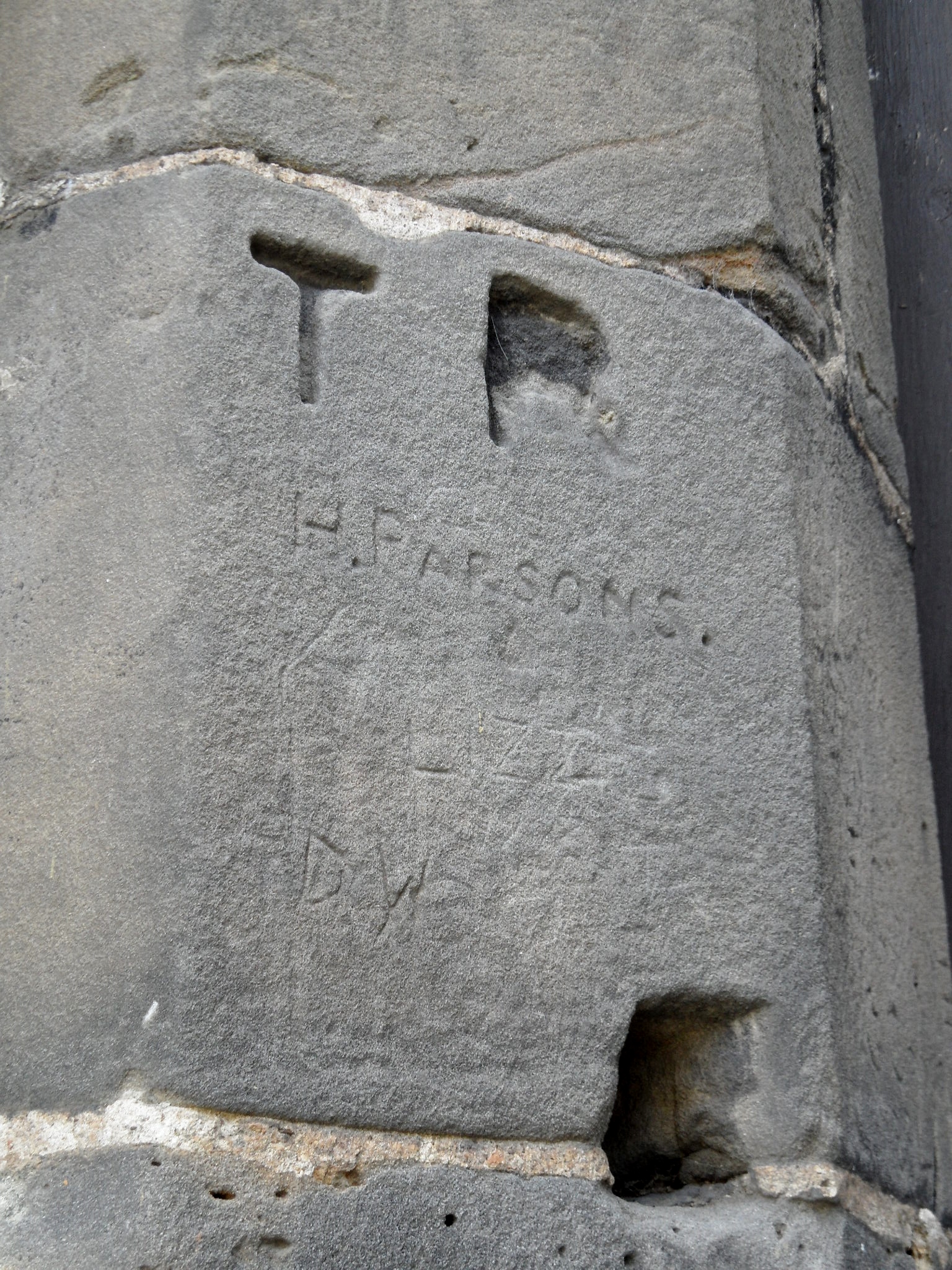
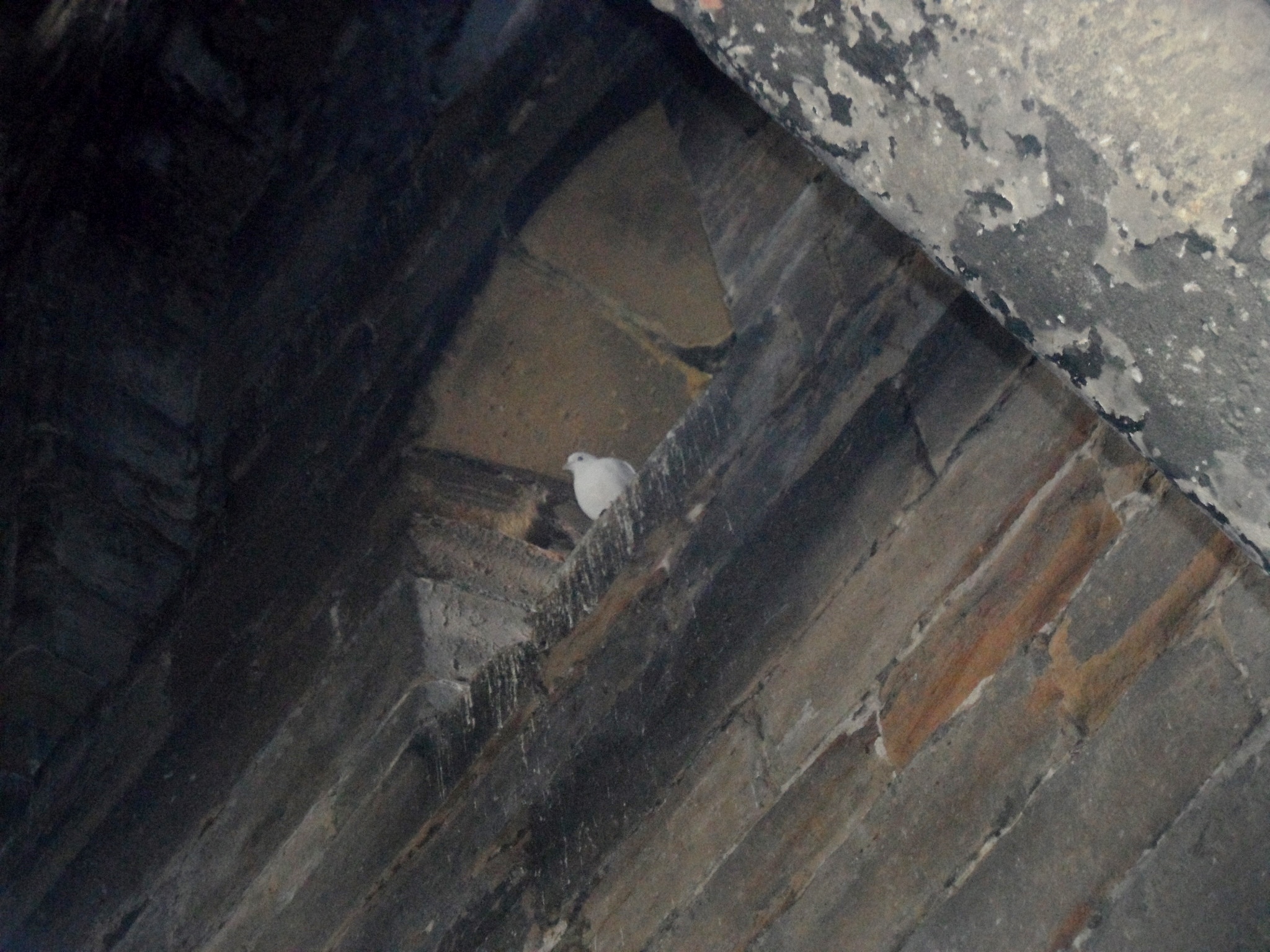
Others have carved their own names into the stone of the tower where bells once rang, but doves and (slightly less romantically) pigeons now coo.

SAM_0364

How did H Parsons carve his name so neatly?

How did H Parsons carve his name so neatly?

Dove Rugeley

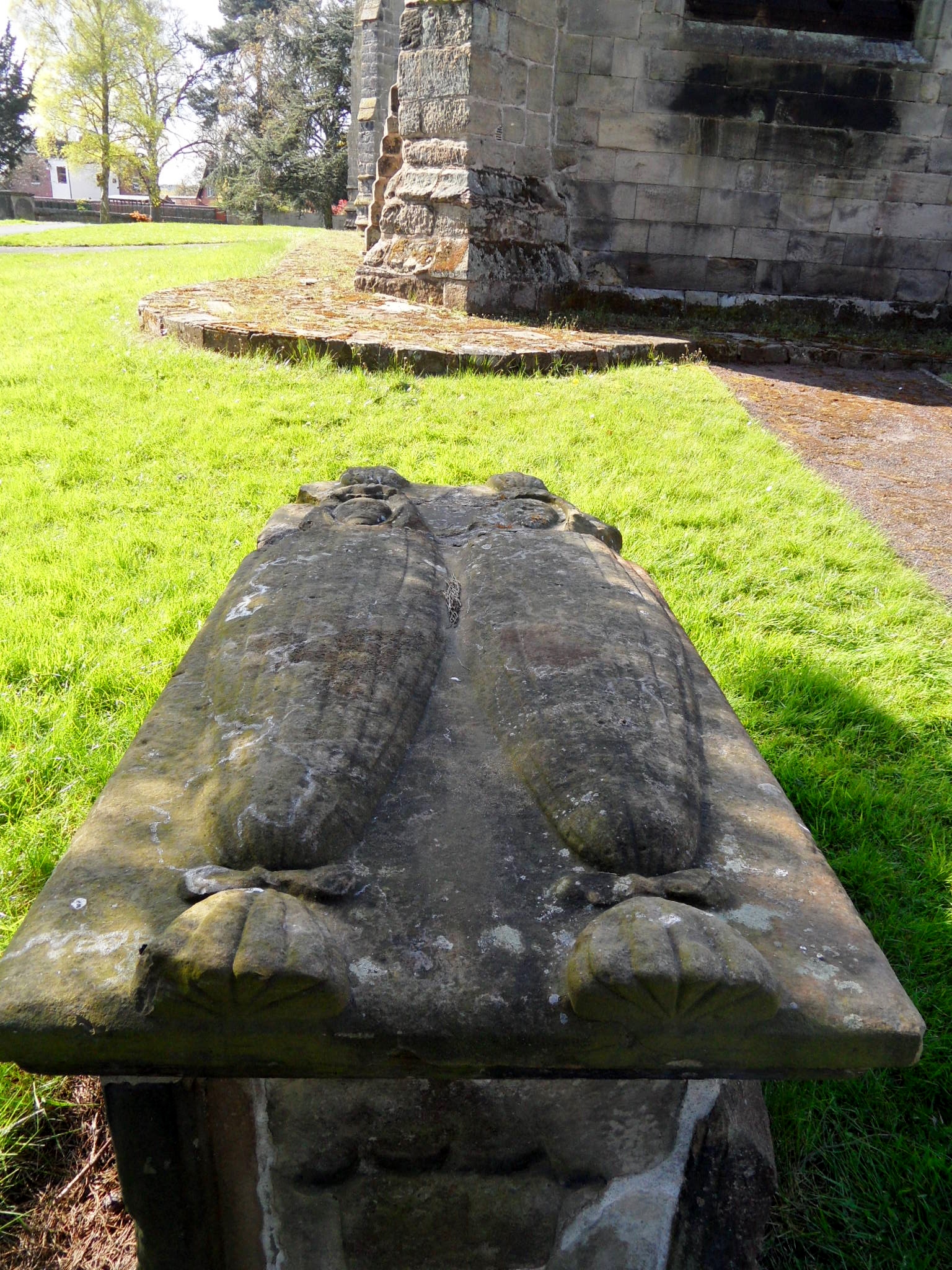
As already mentioned, one tomb that does remain in the churchyard itself is that of two women, Elizabeth Cuting who died in 1695 and her sister Emma Hollinhurst who passed away a year later. Effigies of the sisters tied into their burial shrouds are carved on top of the tomb. An information board nearby tells how this unusual monument gave rise to a local legend that that the women had been buried alive in sacks by Oliver Cromwell, despite Cromwell dying in 1658. Full marks for imagination but, if you are going to make up a story that you want people to believe, you should probably check your dates first.

SAM_0375

Sisters tomb rugeley

SAM_0389

The board also directs you to the remains of a fourteenth century cross, with a recess in one of the corners suggesting that it was a ‘weeping cross’ where penitents would once come to kneel in prayer.

Weeping Cross

As nosey as ever, I wanted to see inside as well as out and so I peeked through a a dirty window into the old chancel, and spotted some interesting looking stonework and signs that it still seems to be being used in some capacity.

Inside old church

I believe that at one time it was used a Sunday school and also a classroom for the now demolished Rugeley Grammar school which once stood next to the churchyard, where the Chancel Primary school now is. Incidentally, the school has the possibly the loveliest school library I’ve ever seen, in the form of its new Discovery Deck narrowboat, built in 2013 by Nick Thorpe in Hixon and painted over the Christmas holidays by staff and parents.

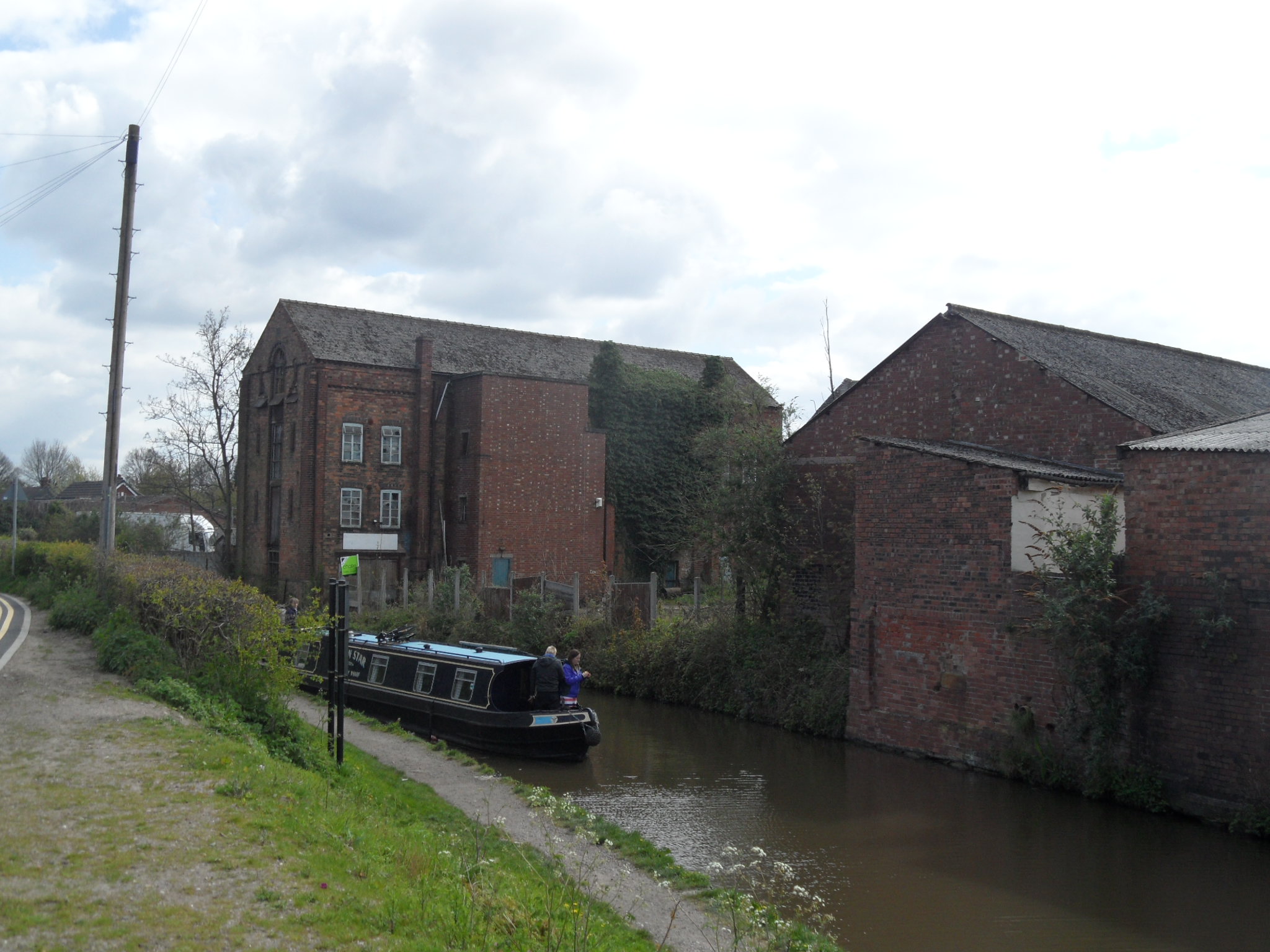
Unsuprisingly for a town with a canal running through it, this wasn’t the only narrowboat we saw.  As we crossed back over the Trent and Mersey  one was passing another of Rugeley’s ruins – an old canalside mill dating back to 1863. It seems that this part of the town’s industrial past may become apartments in the future and why not? Living in an old mill, alongside a canal, in a charming old town with the Staffordshire countryside on your doorstep? I can think of worse places to live…

SAM_0315

Old buildings Rugeley

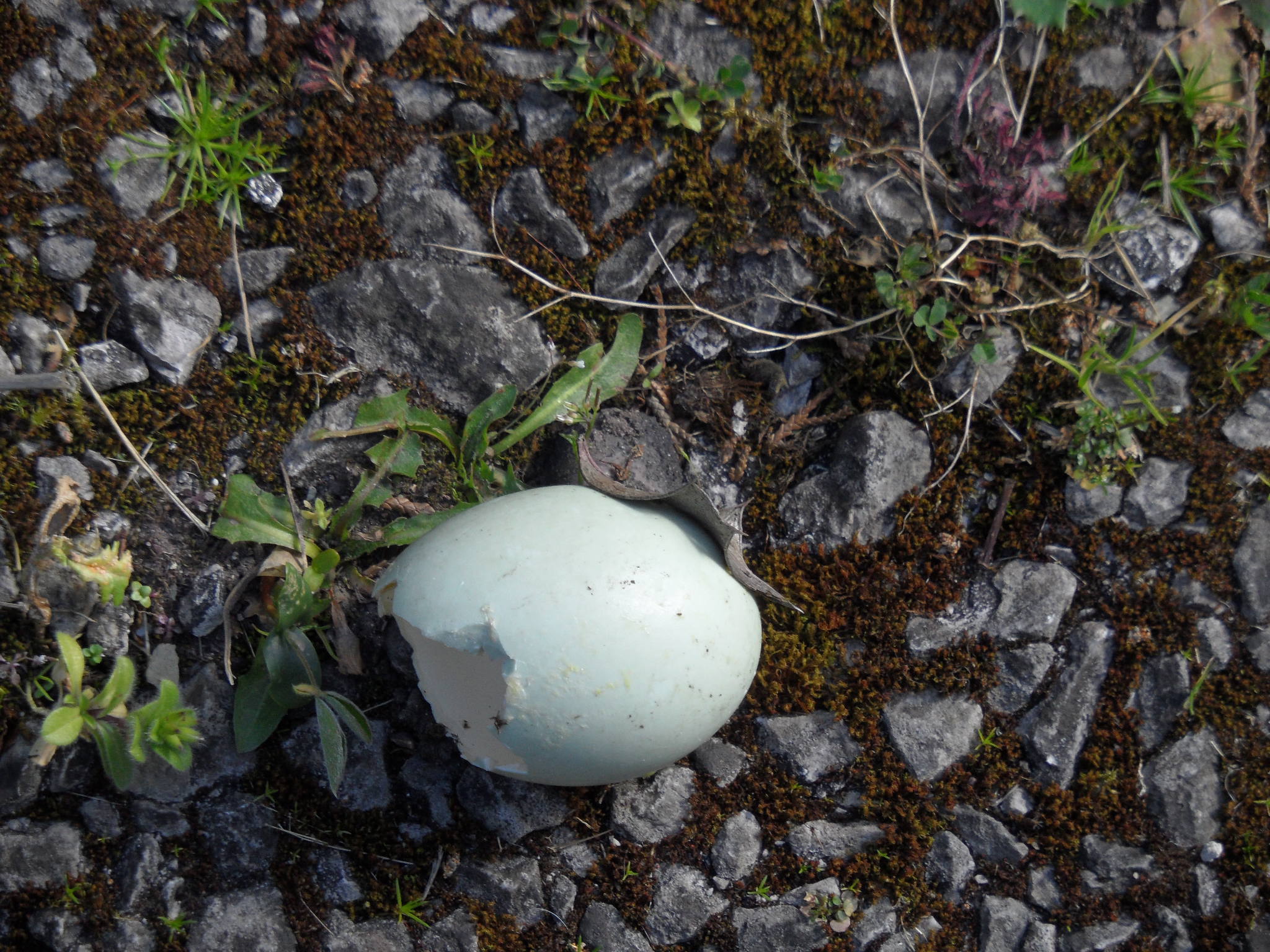
Oh and finally, somewhere in the churchyard I found an Easter egg.

SAM_0323

Sources:

http://www.cannockchasedc.gov.uk/site/custom_scripts/HeritageTrail/old_chancel.html

http://www.britishlistedbuildings.co.uk/en-271251-remains-of-old-church-of-st-augustine-ru

History, Gazetteer, and Directory of Staffordshire (1834) by William White

Picturesque Views and Description of Cities, Towns, Castles, Mansions, and Other Objects of Interesting Feature, in Staffordshire by William West

Orange Peel

In the mid 1930s, the Lichfield Mercury ran a series of articles called ‘The Beauty that is England’, featuring local country houses – ‘what they are and have been’ – around Lichfield. Each article blends the author’s description of the house (if still standing) and grounds with a heady mix of folklore, hearsay, historic records and poor quality photographs. Taken with a pinch off salt, they make for fascinating reading. As well as describing the past, they are now the past, providing us with a snapshot of almost eighty years ago – a ‘Now and Then and Then’, if you like.

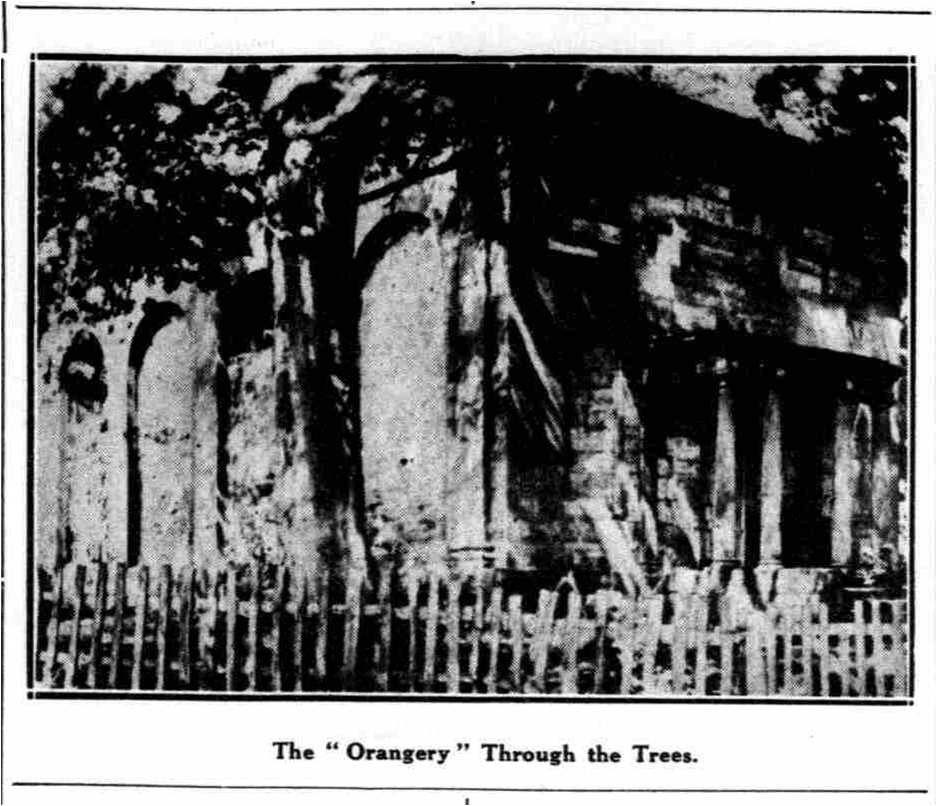
The Orangery at the old Fisherwick Estate. Just about.

The Orangery at the old Fisherwick Estate. Photo from the Lichfield Mercury July 19th, 1935.

I was delighted that number eight in the series was Fisherwick, the site of a once grand mansion built for the Marquess of Donegal in the 1760s, but torn down and sold off to pay family debts after barely half a century. It’s a place I know well and I recognise much of it from the description from the 1930s – the beauty of its woods, the old arched bridges, the River Tame meandering through rich and colourful meadows. Yet of course in eighty years there have been changes. The red brick of the now demolished Elford Hall can no longer be seen in the distance, Fisherwick Hall’s ice house, ‘a brick enclosed fissure, built into the side of the hill’, near Home Farm has since disappeared, as has the pub in nearby Whittington which took its name from Robert Peel who purchased some of the dismembered Fisherwick estate.

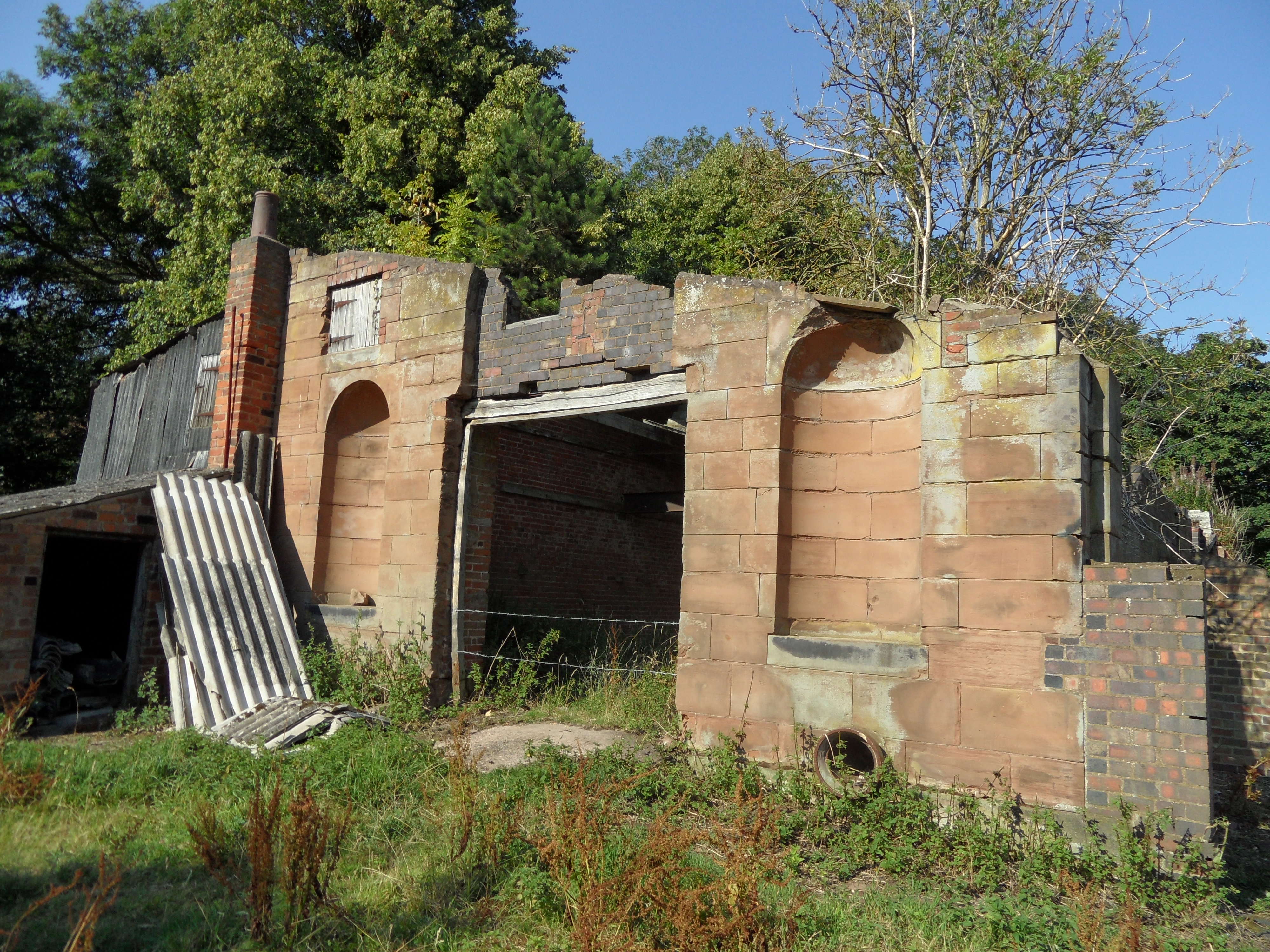
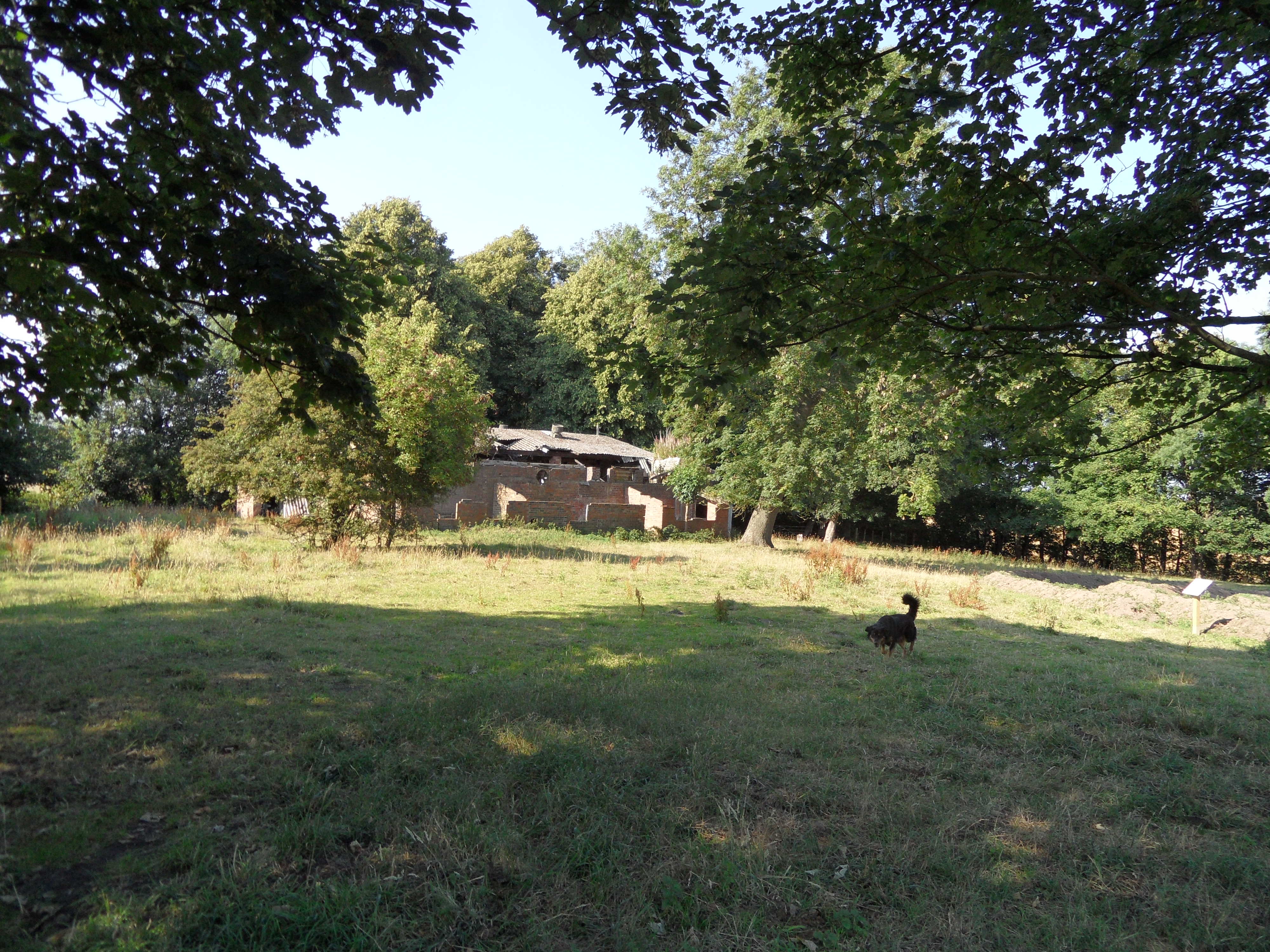
Still hanging on in there just is the Orangery, although its portico (just visible in the above image), supported by four pillars with carved ionic capitals and reached by four worn steps has vanished since the 1930s, as has the frieze around the walls, said to have been carved in white stone with goats’ or sheep skulls linked by flowers. It’s a miracle anything survives at all. Even eighty years ago the author described its ‘crumbling sandstone, rotting bricks and decaying beams’, noting how ‘the ravages of time and nature are playing havoc with the beauty it barely possesses’. Then, in the 1970s, Nature upped her game and the Orangery was struck by lightening and scheduled for demolition. Why this never took place, I don’t know but I’m pleased it didn’t. It gives us an idea of what the rest of the estate may have looked like, and has the added interest of carved graffiti – the author thought everyone in Lichfield had added their signatures, based on the number and variety of names scribbled all over it.

Orangery

SAM_5150

Fisherwick 016

The Lichfield Mercury article ends with a tantalising yet unsubstantiated snippet of a story, saying that, ‘in 1800, a fatal duel was fought at Fisherwick, where a suitable enclosure near the hall had been lent for the combat’. I don’t know who the two gentlemen were, or what their quarrel was over, but this is just one of the many tales which have weaved their way around this intriguing place.  If you’d like to hear more Fisherwick Stories and explore the Orangery and whatever else remains of the estate today, including the community farm which has grown up in and around the former walled garden, then you are more than welcome to join us on our Lichfield Discovered walk –  2pm on Saturday 5th April at Woodhouse Farm and Garden.


Wolverhampton Wandering

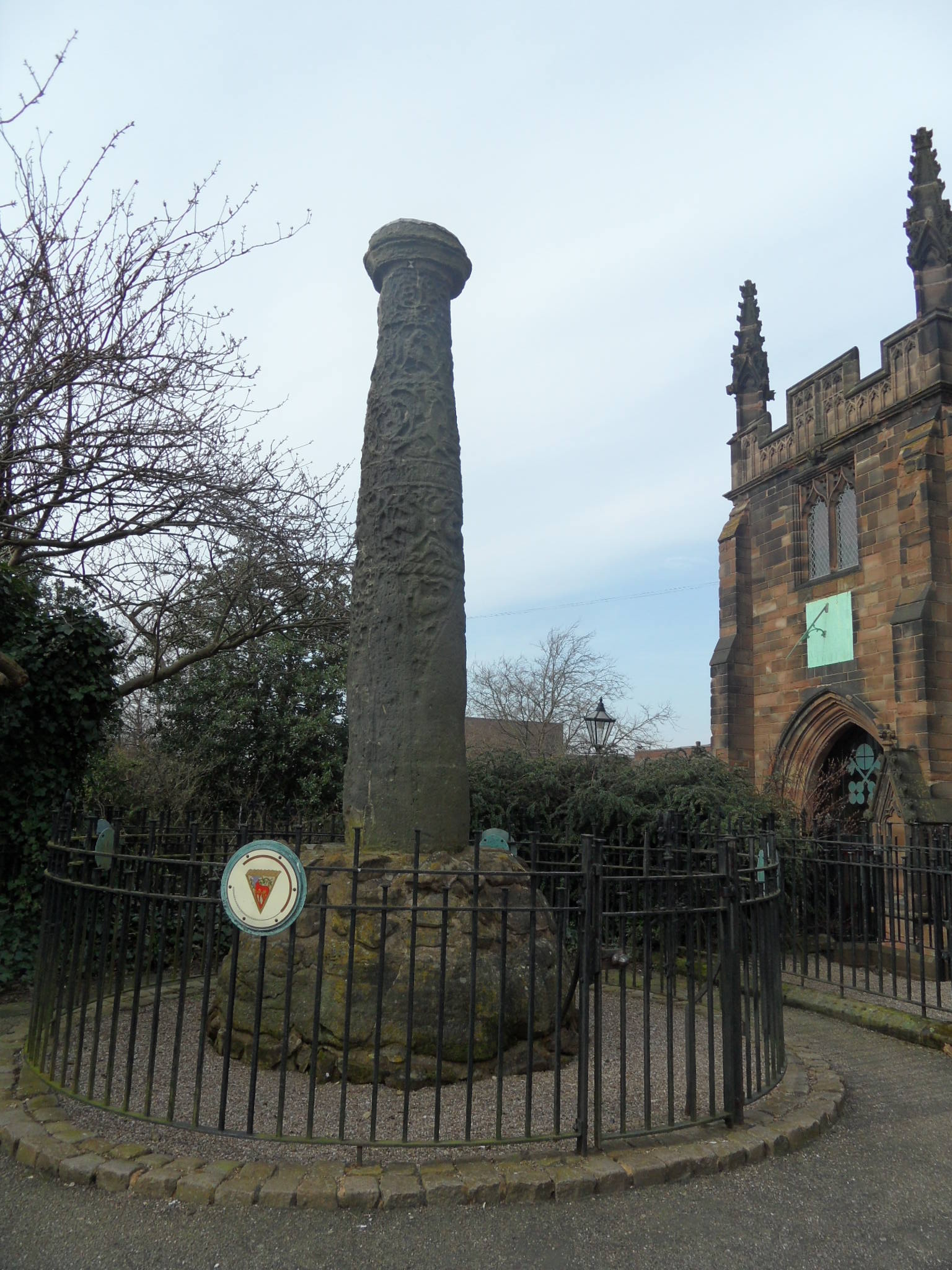
I had to pop into Wolverhampton today. I knew from my search for an ancient cross in Lichfield a couple of years back that there was a Saxon cross shaft here and went to find it.  Unlike the Lichfield cross, I didn’t have to try too hard – it’s huge! Its size, and also the fact that it is made from sandstone not found in Wolverhampton, has led some archaeology types to suggest that it is probably a reused Roman column, possibly from Wroxeter or even just up the road in Wall.

Saxon Cross Shaft, WolverhamptonThe elements and pollution have not treated the shaft kindly but its still clear that this was an incredible piece of craftmanship – the Black Country History website describes it as, ‘one of the finest cross shafts in the Midlands’. The carvings of acanthus leaves which decorate the shaft alongside those of birds and beasts have given archaeologists some problems when trying to establish a date as they suggest different periods. The plaque accompanying the shaft in the churchyard has decided to go with the earlier date of the ninth century, whilst others believe late tenth century is more accurate.

Cross Shaft Wolverhampton

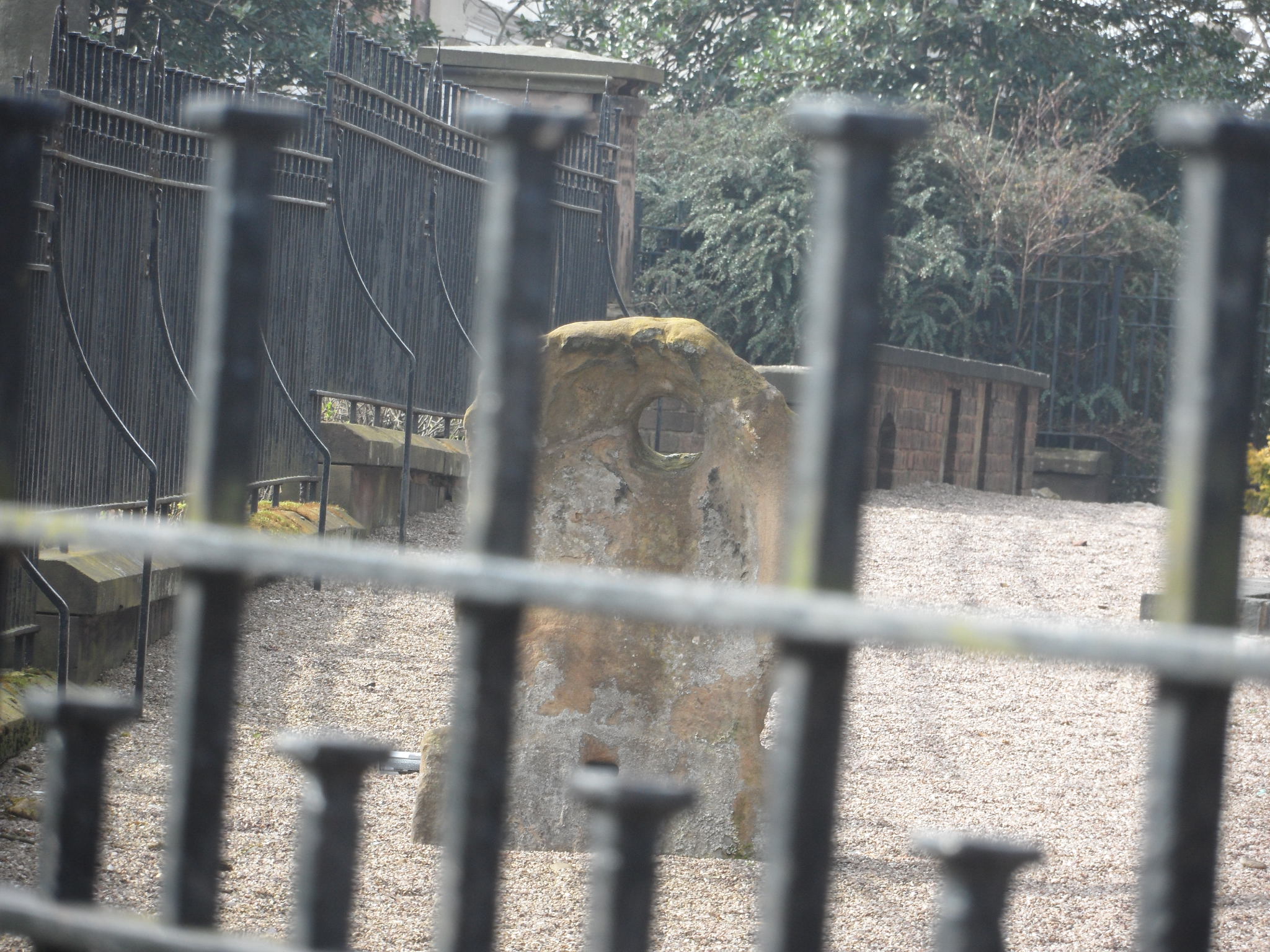
On the way out of the churchyard I noticed another stone with a good back story. Known as the Bargain Stone, its said to be where the good (and probably not so good) folk of Wolverhampton would agree sales and make deals by shaking hands through the hole. The nearby plaque suggests it is an old gargoyle and the hole is what remains of its mouth.

SAM_0031

Talking of hands, why didn’t it occur to me to put my hands over the railings to take a better photo?

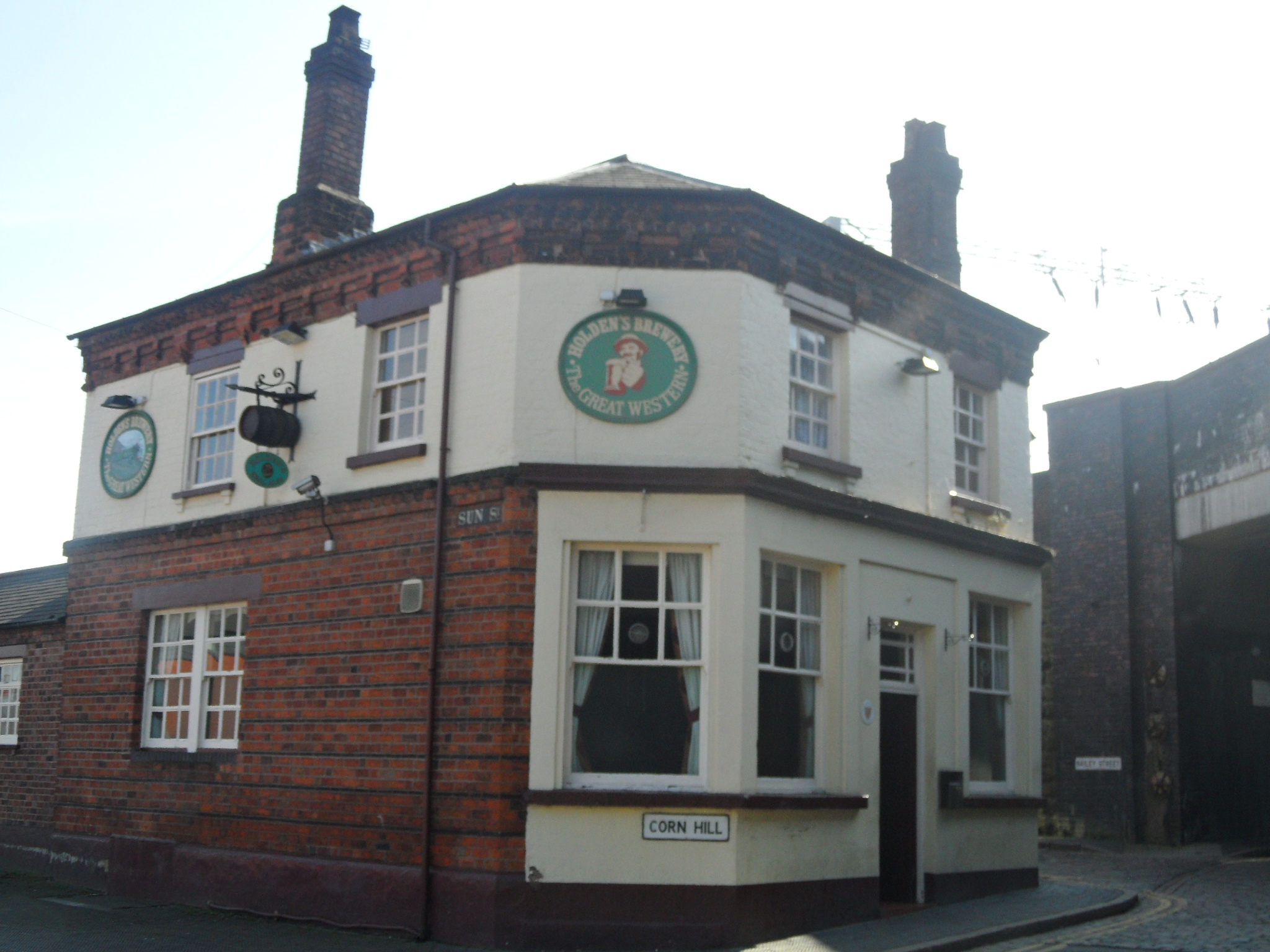
As if ancient crosses and stones weren’t enough of a treat, we also found Holden’s Brewery’s Great Western near to the train station. This is a proper pub – cobs on the bar, Holden’s Golden Glow (amongst other delights) on tap and really friendly staff. Although we were tempted to sit outside in the sun, the interior was so quirky and there was such a nice atmosphere, we sat inside.

Great Western

Wished I’d got the train. Definitely not driving next time.

The Great Western

The great Great Western

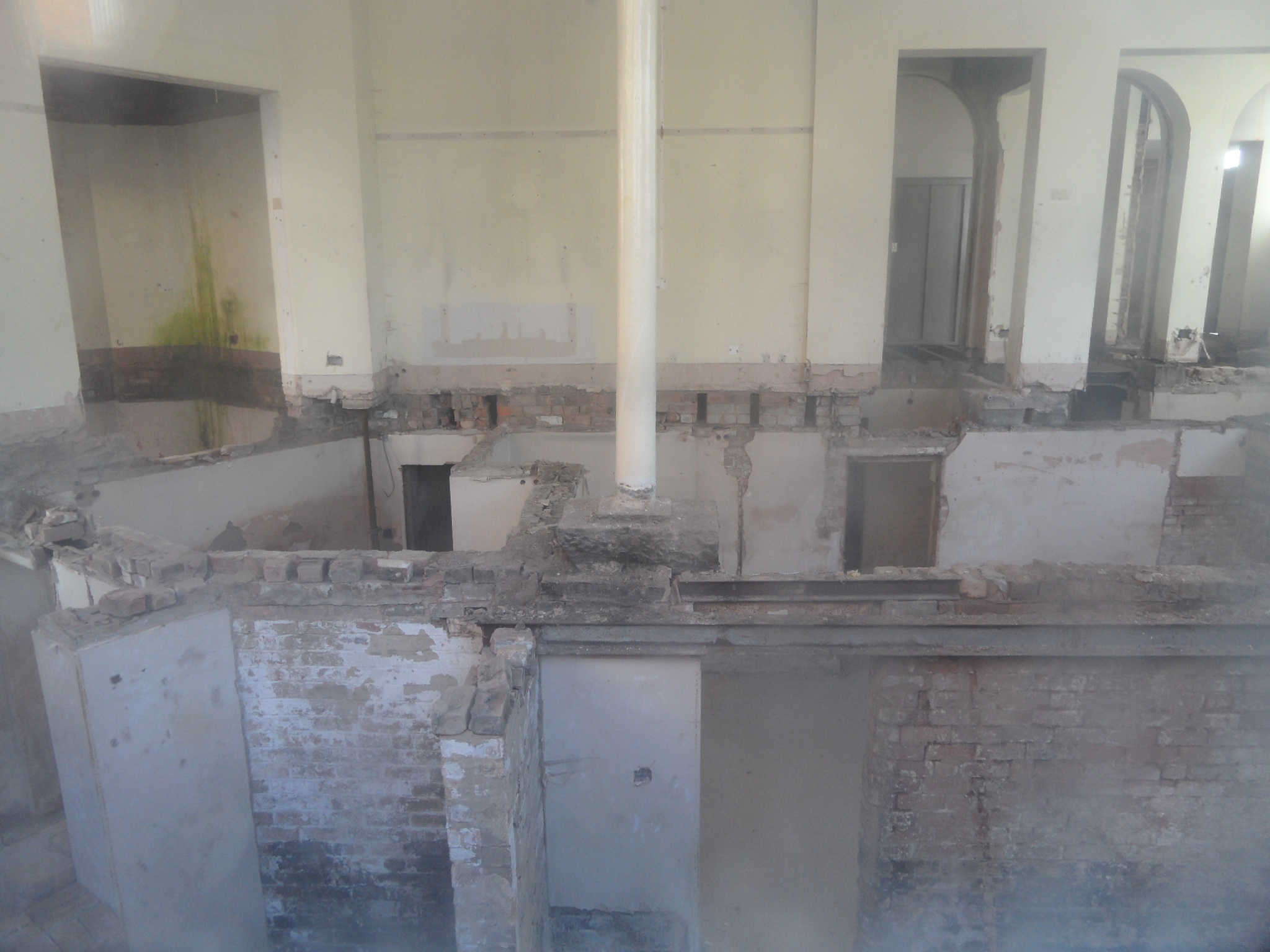
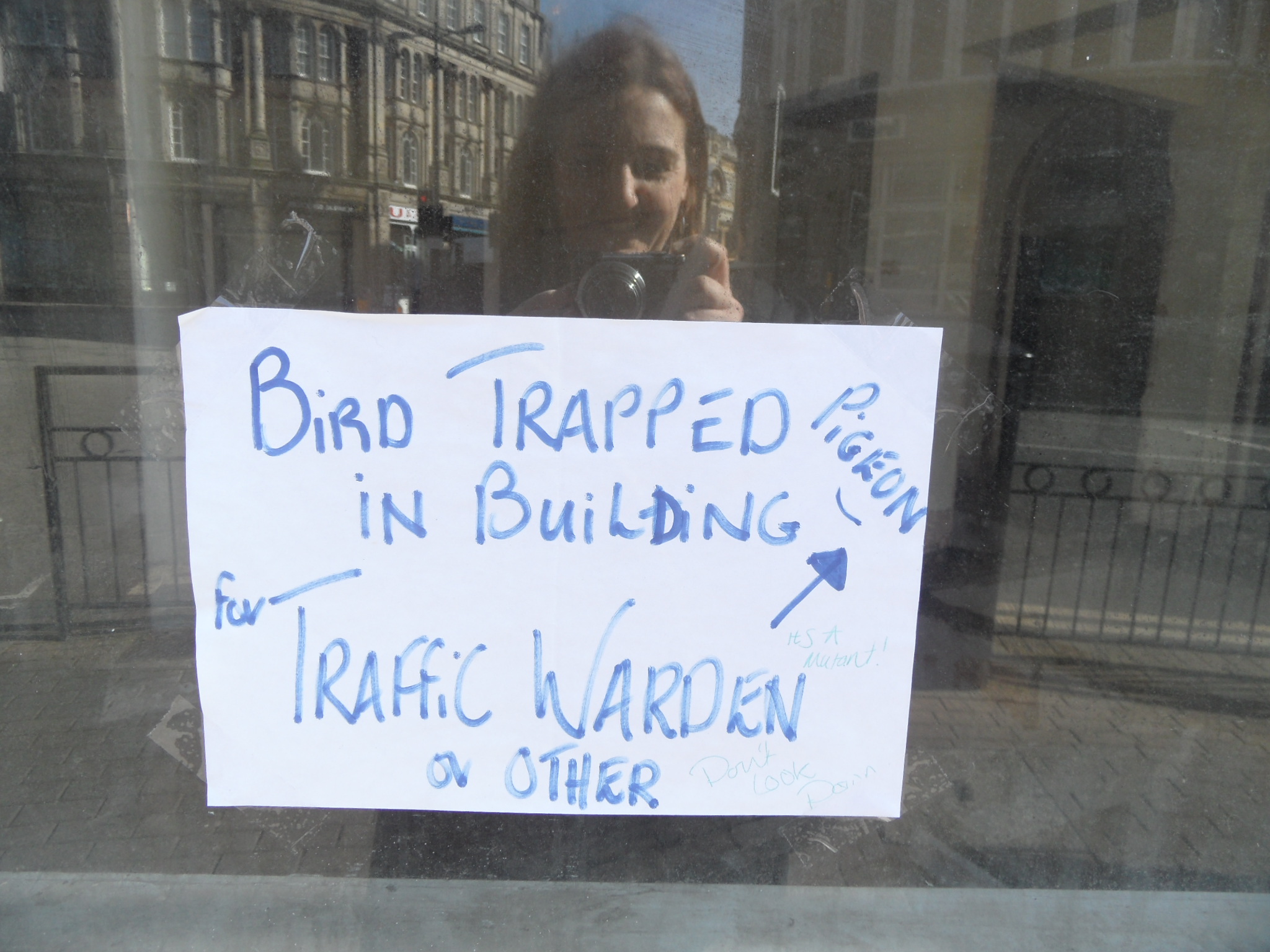
We walked off our pork baps with a little bit of a wander around the city streets. This building caught my eye, not only because it has no floors, meaning you can see down into the cellar, but also because of the handwritten sign someone had stuck to the window.

SAM_0045SAM_0046I’m not sure a traffic warden would be the person I’d turn to in a trapped bird scenario but maybe they do things differently in Wolverhampton.

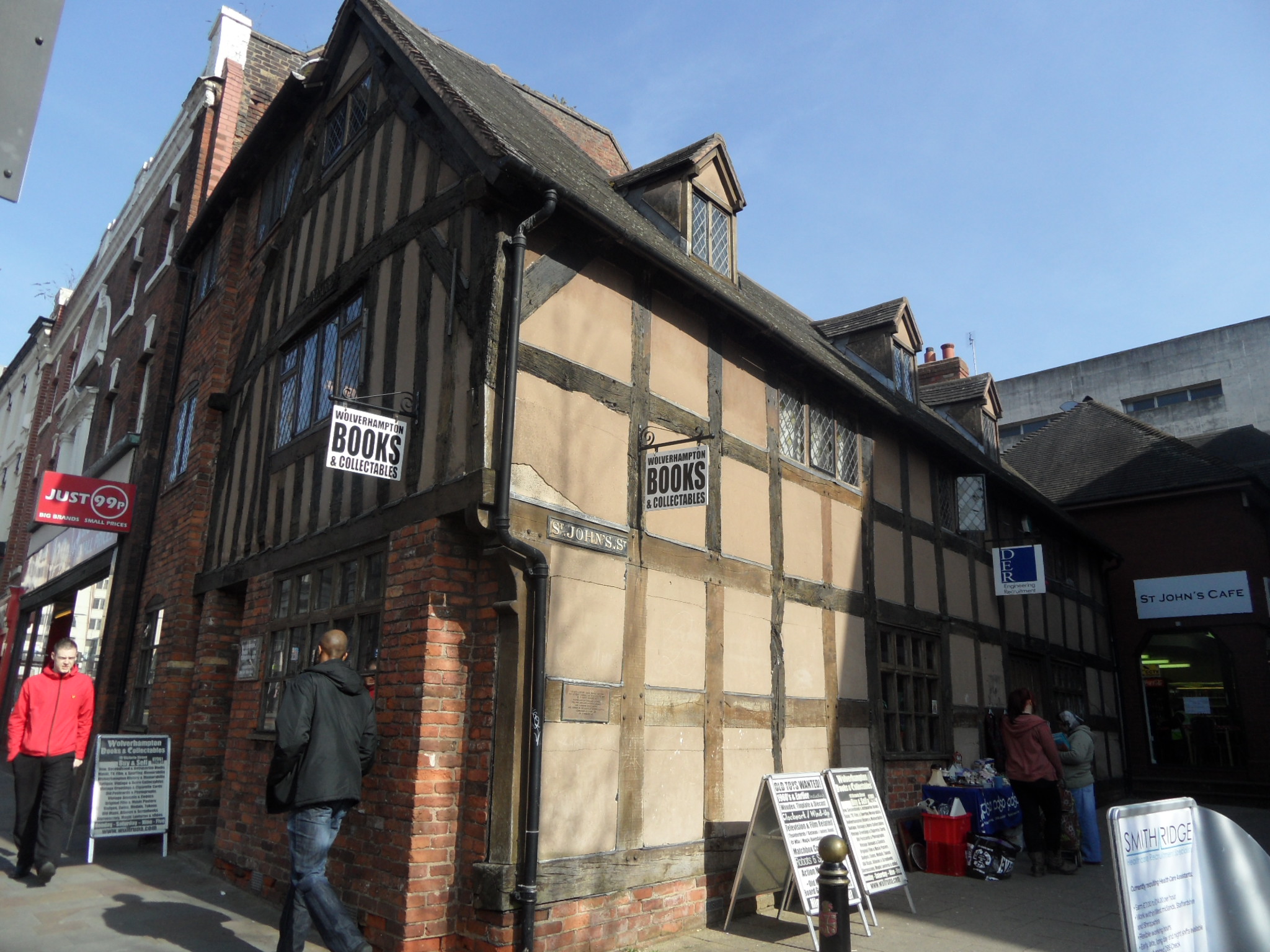
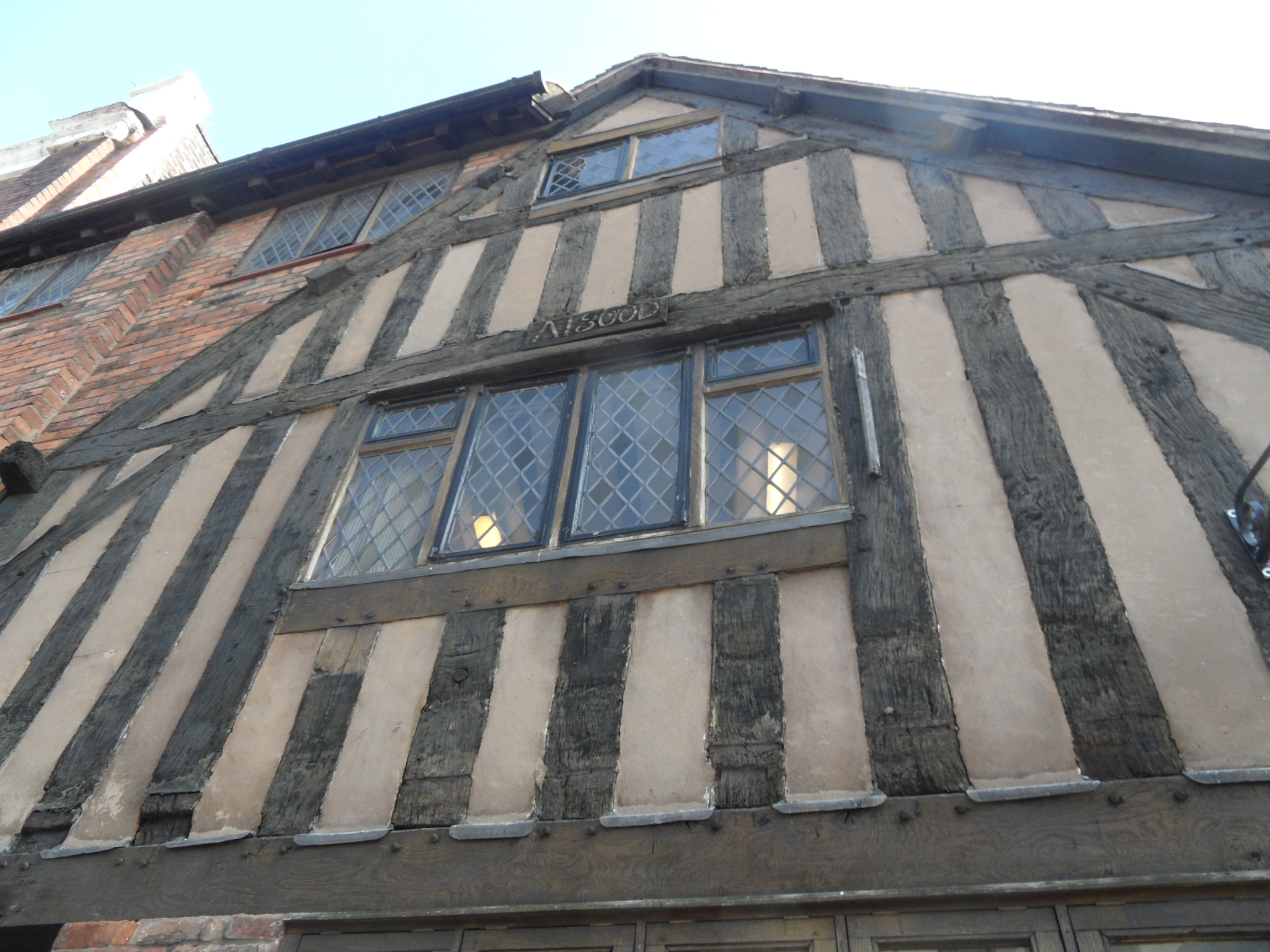
Another perplexing sign is the one suggesting that the half timbered building on the junction of Victoria St and St John’s Lane was built in AD1300. It wasn’t and no-one knows the reason behind the claim – the best suggestions anyone has seems to be that it was some kind of joke to emphasise that it was a really, really old building! It more likely dates back to the seventeenth century when it was once an inn known as The Hand. These days its home to Wolverhampton Books & Collectables, where you can buy anything from an ancient tome on the history of Staffordshire to a souvenir 1950s Wolverhampton Wanderers hankerchief (which you may, or may not, wish to blow your nose on, depending on your allegiances…).

SAM_0053

SAM_0055

We took the scenic route back to Lichfield (not through choice but because I went the wrong way on the ring road), passing through Wednesfield, Sneyd, the intriguingly named New Invention and Brownhills before stopping off at Waitrose for a couple bottles of Golden Glow.

Sources:

http://blackcountryhistory.org/collections/getrecord/WOHER_MBL337/

http://www.historywebsite.co.uk/listed/lindylou.htm

Bench Marked

Public benches can be found all around our parks and along our city streets. As well as being places to sit (or lie down, although I’ve never found them that comfortable) and rest, read, drink, chat, canoodle, sleep, picnic or daydream, they are also often places where people choose to commemorate a loved one, a group of people or an event, via a small plaque or inscription.

Workhouse BenchOn the current Google street view there is a chap with a stick having a rest on this bench on the corner at St Michael Rd. I suspect he, like most other people, hasn’t even thought about why it’s there. Why would he? It’s just a bench. You may not have even have noticed it is there. There’s no plaque reminding you to sit a while and enjoy the view of Aldi and the churchyard, and facing onto the busy Trent Valley Rd, it’s not the most serene of spots.

I probably wouldn’t have taken any notice of it either had it not been for Bob Houghton (of the Burntwood Family History Group) telling me about a conversation he’d had with a woman who had lived all of her long life in the Trent Valley Road area. She remembered a time before the NHS, when St Michael’s Hospital was still the Workhouse (officially known as the Lichfield Public Assistance Institution from 1930s, but no doubt still known by the majority by its former name and reputation), and told Bob how some of the elderly residents would take a stroll around the area (according to ‘This Won’t Hurt Much’, in 1937 the Master, Mr Standing had put forward a recommendation that male patients over sixty should be allowed out between 6 and 8pm on summer evenings). Apparently at some point, the authorities decided to provide a bench for them to rest their weary legs and although the Workhouse and its successor the Public Assistance Institution are long gone, this bench (not the original bench sadly) still remains in that position. Perhaps it’s still well used by folks making their way to and from appointments at the new Samuel Johnson hospital opened near the site of the old Workhouse in January 2007?

From now on, I’ll always think of this story when I pass, and share it if I happen to be with someone. Perhaps there should be a plaque here to tell people of its origins? Maybe, but I imagine that plaques require permission and money. Sharing stories with each other costs nothing but it keeps them alive. There’s no paperwork to fill in either.  If even the position of a bench has a story to tell us, then who or what else could?

Entrance to the former Workhouse on Trent Valley Road

Entrance to the former Workhouse on Trent Valley Road

Buildings at St Michael's Hospital, former Workhouse

Buildings at St Michael’s Hospital, former Workhouse

Behind the former Workhouse

Behind the former Workhouse

Sources:

This Won’t Hurt: A History of the Hospitals of Lichfield, Mary Hutchinson, Ingrid Croot and Anna Sadowski
With thanks to Bob Houghton for sharing this story with me


This Ain't A Love Song

I’ll sing you a song about two lovers,
Who from Lichfield town they came, 
The young man’s name was William Taylor,
The lady’s name was Sarah Gray

So begins one version of the ballad ‘Bold William Taylor’ in which William leaves Lichfield to go and fight a war.  Sarah doesn’t get on well with her parents and so decides she too will become a soldier in order to be reunited with her true love. She disguises herself as a sailor but after suffering a wardrobe malfunction aboard the ship she is working on, it becomes apparent to the captain of the ship that she is in fact a woman. Understandably curious, the Captain wants to know what she’s doing on board his ship and Sarah explains that she’s there looking for her lover. The Captain gives her the devastating news that William Taylor has gone off and married a rich young lady but tells her that if she rises before the break of day she’ll find him out walking with his new wife. Sarah does just that and, on spying the happy couple together, calls for a sword and pistol and shoots William dead. In this version, the Captain is so impressed he puts Sarah in command of the ship and all his men. All’s fair in love and war? There’s a great performance of the song by Jim Moray here on YouTube.

As I’m quickly discovering, establishing the origins of folk songs and ballads is nigh on impossible. It seems this may have originated in Lincolnshire but why Lichfield was chosen as the home town of the unhappy couple is a mystery and to confuse matters further, in some versions, Lichfield isn’t mentioned at all. Of course, I wanted to know if there were any more songs or ballads that mentioned Lichfield. I found that the Bodleian Library has a huge, searchable archive of over 30,000 broadside ballads. According to them, ‘Broadside ballads were popular songs, sold for a penny or half-penny in the streets of towns and villages around Britain between the sixteenth and early twentieth centuries. These songs were performed in taverns, homes, or fairs — wherever a group of people gathered to discuss the day’s events or to tell tales of heroes and villains’.  I was really pleased to find that the collection includes several political ballads relating to Lichfield elections in the eighteenth and nineteenth century.

Apparently, these broadside ballads didn’t have their own music, but came with a suggestion of a well known tune that they could be sung to. I’m reading them with an image in my head of people stood around in the Ye Olde City’s pubs and taverns rowdily joining in with lines like,

With the help of Dick Dyott
We’ll keep ’em all quiet
And soon cool their Courage, and Fire:
If I give up this place
May I ne’er show my face
Till I’m hang’d by my Toes on the Spire

The above lines come from a sheet dated 1799 (it has the year handwritten on it). However, this can’t be right as on the same page is the story of Sarah Westwood, a Lichfield woman was executed for murdering her husband, a nailer from Burntwood, in January 1844. If you want to read the full story of the case it’s well documented elsewhere, especially as Sarah was the last woman to be executed at Stafford Gaol. The inclusion of scandals and sensations such as this, along with the songs have led to many describing them as the tabloids of their day. You can search the Broadside Ballad archive yourself here.

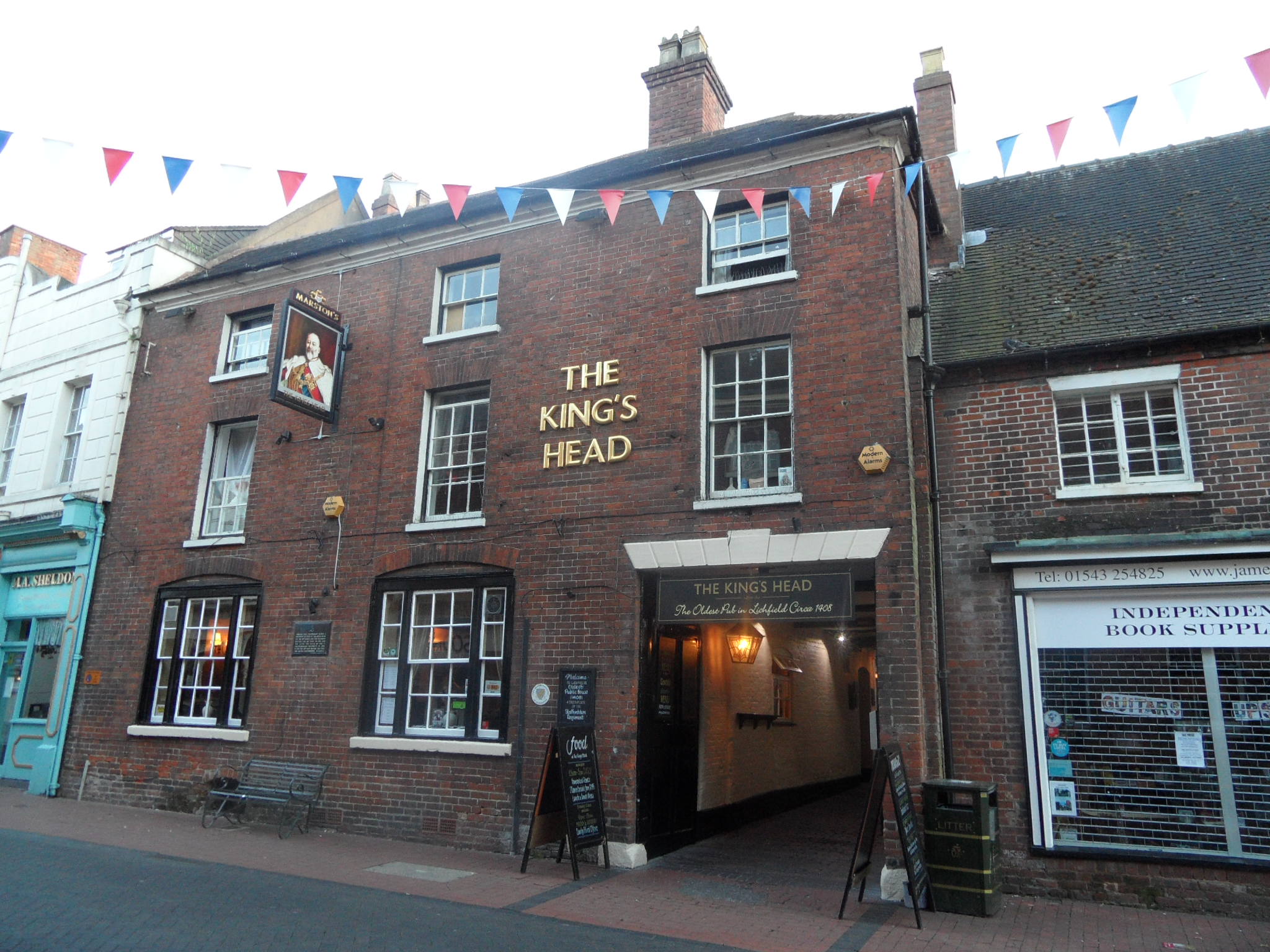
King's Head

As I’ve said before, we often focus on the visual changes of places, but the sounds change as well. I’m thinking that with its mixture of traditional songs, contemporary folk songs, drinking songs, ballads, humour, monologues and poems, the Folk Singaround at the King’s Head looks like a great way to get an idea of what our pubs may once have sounded like and hope to get down there for one of the sessions soon.

Something Old, Something Neo

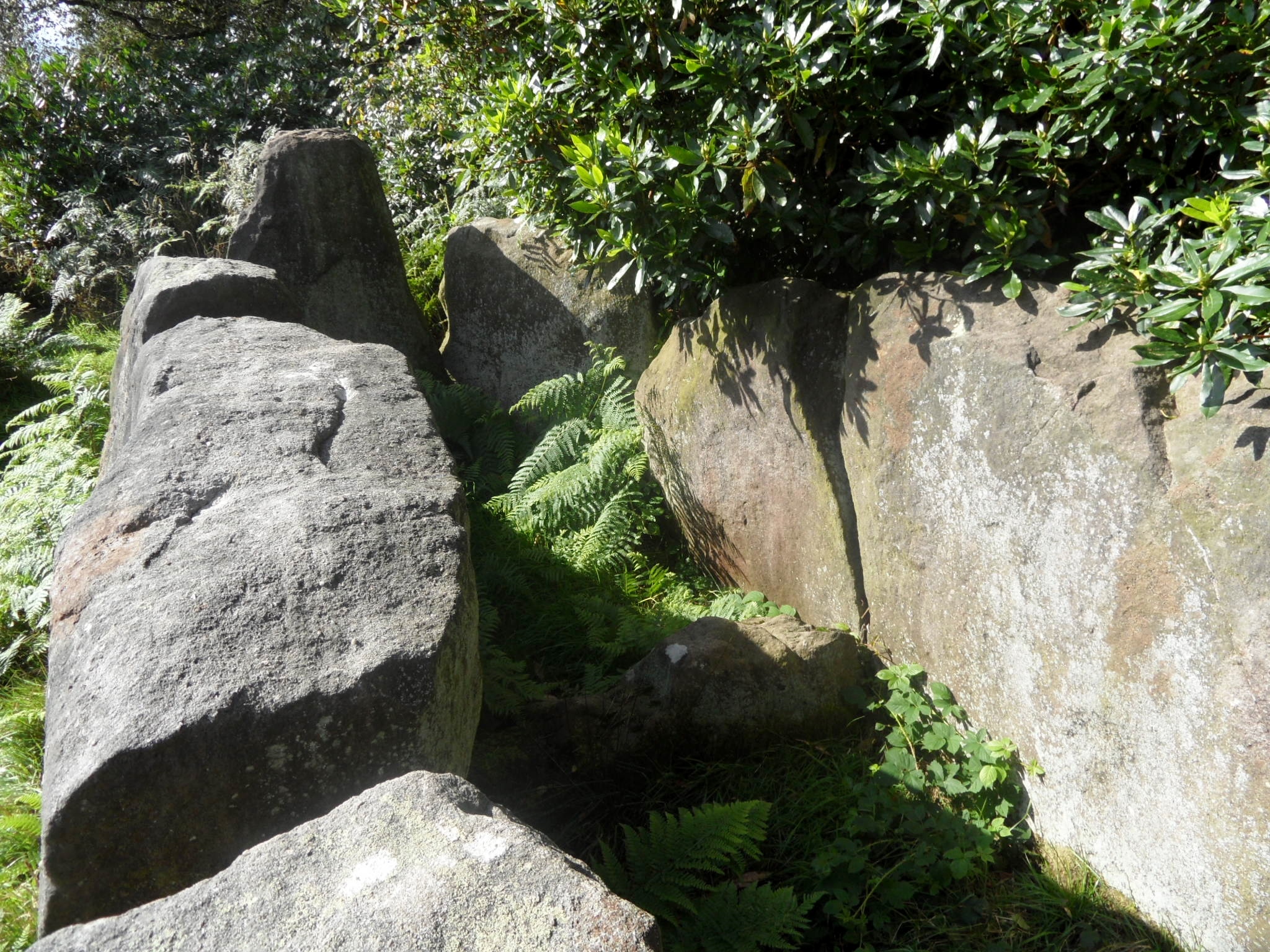
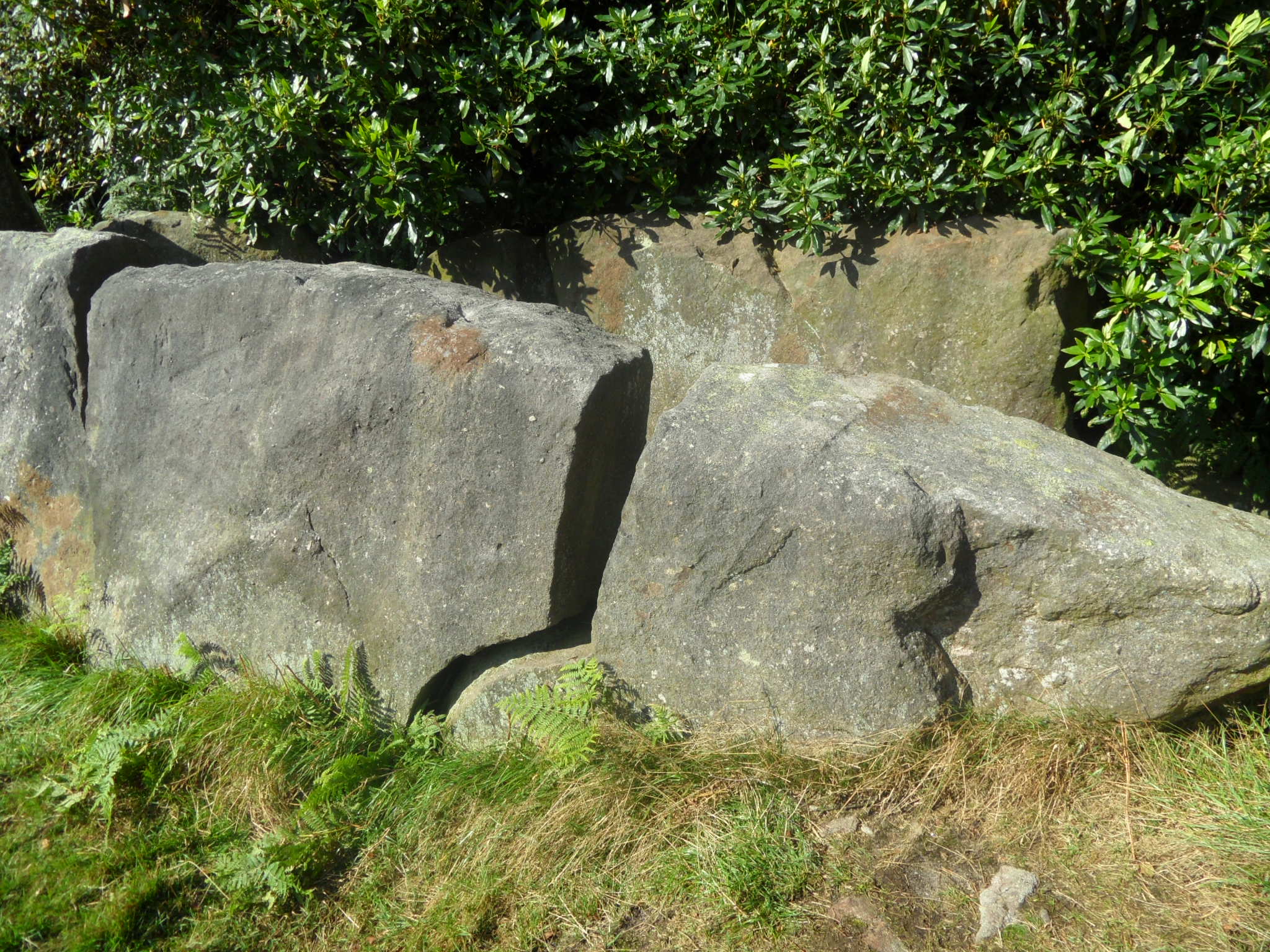
At the end of the summer I went with friends to visit the Bridestones. Admittedly, this Neolithic burial chamber is a fair few miles from Lichfield and technically is not even in Staffordshire but definitely worth an excursion both in real life and also, I hope, via the blog.

The Bridestones are thought to be somewhere between six thousand and four thousand years old. When you think that the estimate for the monument’s age alone covers a range of around two thousand years, you realise just how little we can be certain of and how vast the time scales are when it comes to ‘prehistory’. It’s an absolute wonder that these stones are still standing, and all the more remarkable when you read of their treatment in the past. Back in the eighteenth century, the site was regarded as a convenient quarry and was plundered for its stone, some of which was used to build local houses and some of which was taken to build the nearby toll road, as described in Henry Rowlands’ 1766 Mona Antiqua Restaurata

There was a large heap of stones that covered the whole an hundred and twenty yards long, and twelve yards broad These stones have been taken away from time to time by masons and other people for various purposes. And in the year 1764 several hundred loads were carried away for making a turnpike road about sixty yards from this place which laid it open for examination.


There are also rumours that some of the stone can be found in the ornamental gardens at Tunstall Park, which was opened to the public in June 1908. I’m a little sceptical about this but it does once again raise that interesting idea of recycling materials from older structures. The stones are said to have sustained yet more damage in the nineteenth century, both accidentally, when a fire lit at the site caused the stones to crack, and deliberately, when an engineer working on the Manchester Ship Canal supposedly demonstrated how detonation worked on one of the larger stones.

When trying to understand sites like the Bridestones, we look to archaeology to provide us with answers. The Stoke on Trent Museum Archaeological Society have a fascinating report on their website which contains drawings of what the Bridestones may have looked like back in the eighteenth century together with details of the archaeological investigations which have since taken place and what they can tell us about this ancient structure. You can read it here. However, as well as evidence provided by science, I also enjoy the folklore and myths that grow up around sites like the Bridestones. There are stories that they mark the resting place of a murdered pair of newly weds, a Saxon woman and her Viking groom. Others say weddings once took place here. Was the name ‘Bridestones’ given to the site to reflect these stories, or were they invented to explain an already existing name? I think it’s worth considering that stories were (and still are) ways of sharing and passing on information and that perhaps sometimes this information might yet be contained within such stories, however naive and implausible they seem upon first listen.

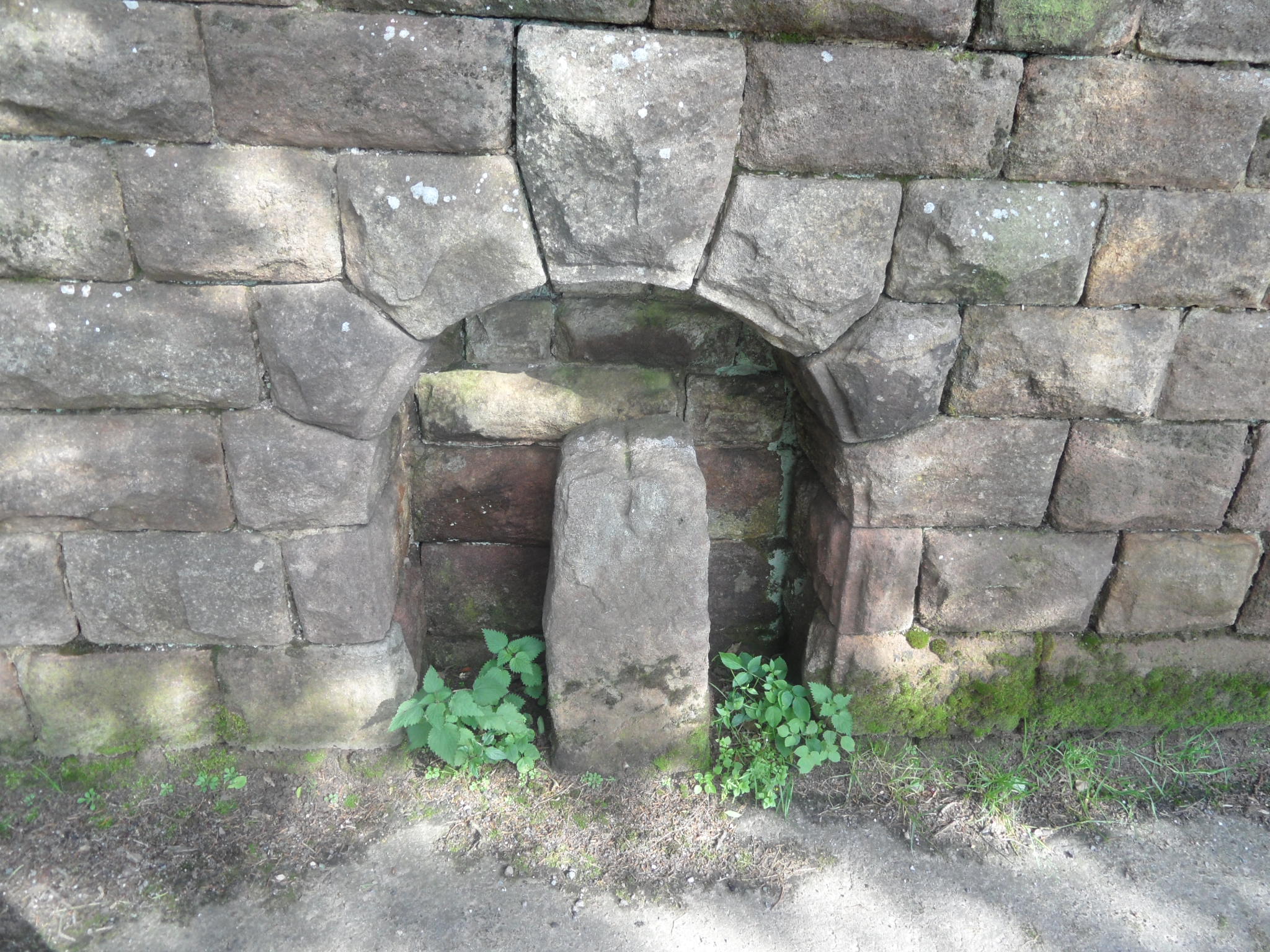
As I mentioned at the start, the Bridestones sit on the Staffordshire/Cheshire border, just inside the latter county. There’s a boundary stone very close by on the drive leading to the site and surely it was due to the presence of the Bridestones themselves that the border was established here in the first place, acting as a memorable boundary landmark. Why did our ancestors chose to erect their monument at this particular spot in the first place though?

Despite being ransacked and not looked after properly over the years, this is still an incredible place and you should definitely take the time to hop over the border and pay this old Cheshire couple a visit.

A Dance to the Music of Time

Hot on the hooves of Lichfield’s Sheriff’s Ride comes another ancient Staffordshire tradition – the Abbots Bromley Horn Dance. No one knows just how ancient though. The earliest written record of the dance seems to be from Dr Robert Plot’s ‘Natural History of Staffordshire’ in 1686, yet the reindeer antlers themselves have been carbon dated to around one thousand years ago.

The Horn Dance c.1900. Apparently the splendid costumes are a Victorian invention. The original costumes were made by the vicar’s daughters from old bed curtains! The latest set of costumes were created at the turn of the millenium. On the subject of costumes, I love that the man dressed as a woman is wearing his shirt and tie beneath his!
Image from Sir Benjamin Stone’s Pictures – Festivals, Ceremonies and Customs. Published by Cassell & Co. London. 1906 (taken from Wikipedia)

Last night, we arrived as the dancers were weaving their way around the back lanes of Abbots Bromley, and so we settled for a while in The Crown and awaited their return to the village green. Outside the crowds were entertained by the Lichfield Morris Men and the Beggars’ Oak Clog Dancers amongst others. Sitting there in the pub I saw horns everywhere – antlers on the village sign, antler inspired light fittings and, sitting on a bench opposite, a man wearing furry antlers. We rejoined the crowd, as the dancers made their way up the High Street, taking up their position outside the Crown to applause. At first it’s the horns that command your attention – they’re enormous (apparently, the largest set weighs over 25lbs). Then gradually your peripherary vision kicks in and you spot the other characters – a man dressed as a woman, the young boy shooting the hobby horse, over and over again and the musicians accompanied by a child playing the triangle. Fortunately, I managed to avoid the Fool and his fertility aiding pig’s bladder…

In ‘England in Particular’, the authors describe the dance as both unsettling and reassuring. I know what they mean. What you’re watching has a significance that no longer makes much sense to our modern eyes, its symbolism like some long forgotten language. Yet there’s also something very British and familiar about the occasion in the scout tent set up over on the green, selling curry to the beer drinking crowds chatting together beneath umbrellas.

If this is a pagan fertility ritual, it seems to get along well with Christianity these days. The horns are kept in St Nicholas’s church for 364 days a year, and before the horns are taken out on their annual excursion around the village there is a short blessing. The dance is performed outside the Abbots Bromley throughout the year but I understand that a second set of horns are kept for this purpose, these original horns never leave the village. There is a great story in a book on the dance by Jack Brown of the English Folk Dance and Song Society that I bought from the Oxfam bookshop. Apparently, in the 19th century, the dancers took a set of elk horns dancing in Burton and having consumed quite a lot of rum, managed to lose them. Some say the horns were stolen; others say the dancers decided they were too heavy and deposited them into the River Trent so they didn’t have to carry them all the way back to Abbots Bromley.

It’s fantastic to have such a unique tradition taking place just ten miles or so up the road from Lichfield and although I’ve popped a few (rubbish) photos on here to give you an idea, it goes with out saying that there’s nothing like going along and experiencing it for yourself. So, put it in your diary for the next Monday after the first Sunday after the fourth of September 2014!

Note – I could claim that the blurriness of the dancers and musicians on the following photographs is an artistic statement on the passage of time or something, but in actual fact they’re just really BAD photos! Anyway, the chap with furry antlers is on one of them which warrants its inclusion.

Sources:

England in Particular by Sue Clifford and Angela King

The Abbots Bromley Horn Dance by Jack Brown

Cornercopia

Last week we went to the George and Dragon on Beacon St. After an outstanding pork pie washed down by a cheeky half, it was time to leave. On heading back towards the park, I noticed that the building on the corner of Beacon St and Gaia Lane was covered in graffiti albeit nothing of particular note, just patterns and the usual initials. However, I had a look in both directions and couldn’t see anything similar on the bricks of the adjoining buildings and so I’m curious.  Why this particular building? Is it due to its proximity to the pub, is it simply because it’s a corner where people would wait (for something or somebody…) or do you think there another reason?

The building on the corner of Gaia Lane/Beacon St opp. the George & Dragon


Underneath The Arches

A stone arch stands in the grounds of the Lichfield Campus of South Staffs college and I’ve never been sure whether it is a folly, or part of the Franciscan Friary which once stood on the site. According to a book on the history of the Friary School (1), the arch was discovered in the walls of outbuildings taken down to make way for the new Friary Road in the 1920s. Apparently, it was incorporated into the staff entrance to the school, which used the buildings now occupied by the Library from the 1920s until the 1980s.  A former pupil describes the arch as standing on the lacrosse field during her time at the school. Inevitably, over the years the imagination of school children and the history of the site have combined to create legends and stories, including one about a ghostly monk that people are said to have seen passing through the arch.

Another intriguing discovery made nearby during the 1920s was the gravestone of Richard the Merchant. Actually, rediscovery would be a more accurate description, as the stone had first been uncovered in 1746, when a former owner of the Friary was laying the foundations for a garden wall.  Thankfully, sketches were made of the stone and its inscription as nowadays, its markings can be barely made out and the stone itself is even more hidden away now than when I wrote this post about it back in July 2011.

Tombstone of Richard the Merchant,now in the wall of Lichfield Library

Today I was walking between Dam St and the Bird St car park (which I still call the Woolworth’s car park despite that shop not having been there for years), when I caught a glimpse of what seems to be another arch, over a garden wall which must belong to one of the properties on Dam St. Does anyone have any information on where this arch is from, and why it is here? And of course, if anyone has any stories of ghostly Lichfield residents walking through this one, please let us know!
Notes:

(1) The History of the Friary School, Helen Mullins 1981

(2) I suppose it would actually be a friar, rather than a monk (there is a difference!) but as we’re talking ghost stories here it’s probably not the place to worry too much about historical accurancy!