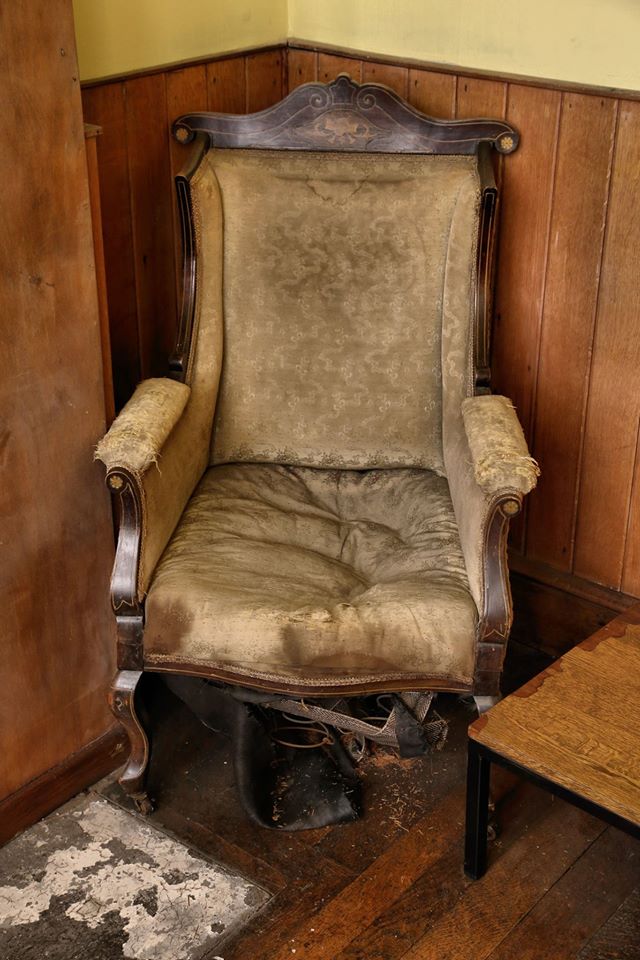
My Bloody Valentine

For those of you who aren’t feeling the love for Valentines Day, here’s some black magic. And I’m not talking chocolates. In his Lichfield Mercury column ‘Historical Gleanings – Lichfield Over a Century Ago’, JW Jackson recalled the following article in a local paper from 1836,

“On Saturday, the sexton of a certain church observing an elegantly dressed female walking mysteriously up and down the churchyard, watched her secretly, when he saw her rake up the earth with her foot and, after depositing something in the ground, cover it up. Induced by curiosity he opened up the place and found a hare’s heart in which 365 pins were stuck buried there. It was an old superstition in this county that if a person who had been foresaken by one professing love for her shall bury a hare’s heart full of pins near a newly made grave in the churchyard, as the heart decays, so the health of the faithless swain will decline, and that he will die when it has mouldered to dust. The fair deceived one had been instigated by revenge to this act of folly and credulity.”


Getting revenge on a faithless swain. Sweeter than a whole box of Thorntons. Frederick William Hackwood also mentions a similar practice in his Mercury column on “Staffordshire Superstitions’ (1923), ‘Among the lingering superstitions are present-day memories of an old woman given to witchcraft sticking a bullock’s heart full of pins with the vicious intent of piercing the heart of some deadly enemy with whom she had quarrelled beyond all hopes of forgiveness or reconciliation”.

Luckily, a defence against these dark arts did exist.  In a book published by the Folklore Society in 1890, Alexander M McAldowie tells of two witch brooches which his brother Robert found in Staffordshire.   One was discussed in a section of the 1896 Journal of the British Archaeological Society called ‘Notes on North Staffordshire’ and is described as being heart-shaped with unequal sides, little more than an inch in height and made of silver with eighteen crystals. Apparently, these talismans were often bought alongside wedding rings and would keep the wearer safe from harm. In a post on witch brooches, the Spyders of Burslem blog includes the notes given to the North Staffordshire Field Club in 1891 by Robert McAldowie. What’s extra interesting for us here is that he mentions a witch brooch he got in Lichfield from a jeweller who had bought two of them from an old servant of a family once living near the city but had melted one down for silver.

I’ve not managed to track down the whereabouts of any the Staffordshire brooches yet, assuming they even still exist. There is a Victorian one for sale on a vintage site here if you want a belated present that looks pretty and has the added bonus of protecting your beloved from witches and evil in general.

Antique Victorian Witch Brooch. Image from rubylane.com

Antique Victorian Witch Brooch. Image from rubylane.com

However, if it’s a hare’s or bullock’s heart you’re after, I’m afraid I can’t help you. Try Waitrose.

Sites for Sore Eyes

Springs and wells are sources not only of water but also of folklore and legend. There are healing springs and fortune telling wells. Some are associated with saints, others with spirits.

St Chad's in Lichfield. Photo by Lichwheeld

St Chad’s in Lichfield was believed to cure sore eyes (photo by Lichwheeld)

On Monday 9th February, Ross Parish, author of the Holy and Healing Wells blog and a series of books on the subject, will be giving a talk to our Lichfield Discovered group. Ross will be telling us about some of the sites we have here in Staffordshire and some of the traditions and stories associated with them. The talk starts at 7.30pm at St Mary’s in the Market Square (where there was a once a well of the same name at the west end!) and there is no entry charge, although voluntary donations towards the running of St Mary’s are always welcome. After the talk, people are invited to stay behind to discuss the future vision of the county’s archive and heritage service, over a cup of Staffordshire water (plus milk and teabag).

The King's Touch

This Christmas, for the first time ever, I watched the Queen’s Speech. I’d read somewhere that there had been a flurry of bets on the Queen abdicating and though sceptical, I interrupted a FIFA match between Walsall and Barcelona to seize momentary control of the television just in case. Of course, it had been nothing but a rumour and Charles remains a king in waiting.

Earlier that week, I’d been to visit a house associated with another King Charles to be. Following defeat at the Battle of Worcester on 3rd September 1651, Charles Stuart had fled north to Shropshire, hoping to sneak across the border into Wales and sail from there to Europe. The Parliamentarians were one step ahead of him and were closely guarding the River Severn crossing places and ferries, thwarting this plan. In the early hours of 8th September 1651, Charles arrived at Moseley Old Hall in Staffordshire, looking for a place to hide and a new escape route.  He was met at the back door by owner Thomas Whitgreave and the family priest John Huddleston (1), who gave up his four poster bed (2) and shared his hiding place with the future King when Cromwell’s soldiers came seeking him.
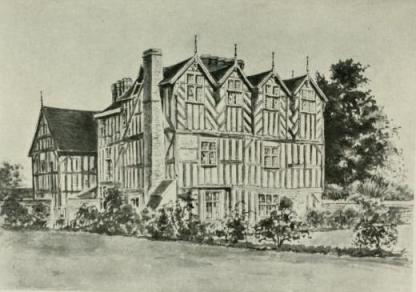
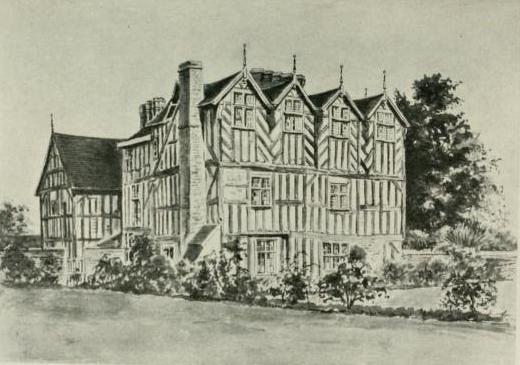
Moseley Old Hall as it was....

Moseley Old Hall as it was…. taken from ‘The Flight of the King by Allan Fea (1908)
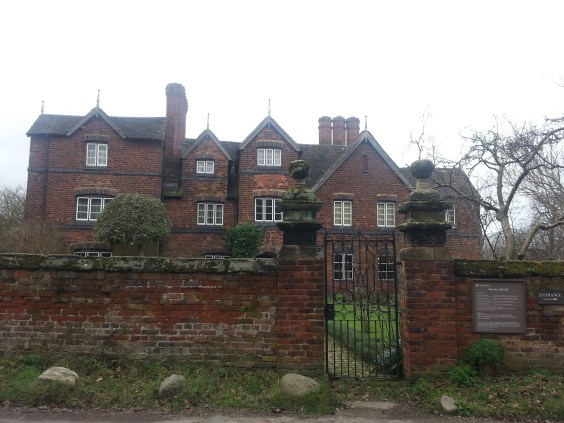
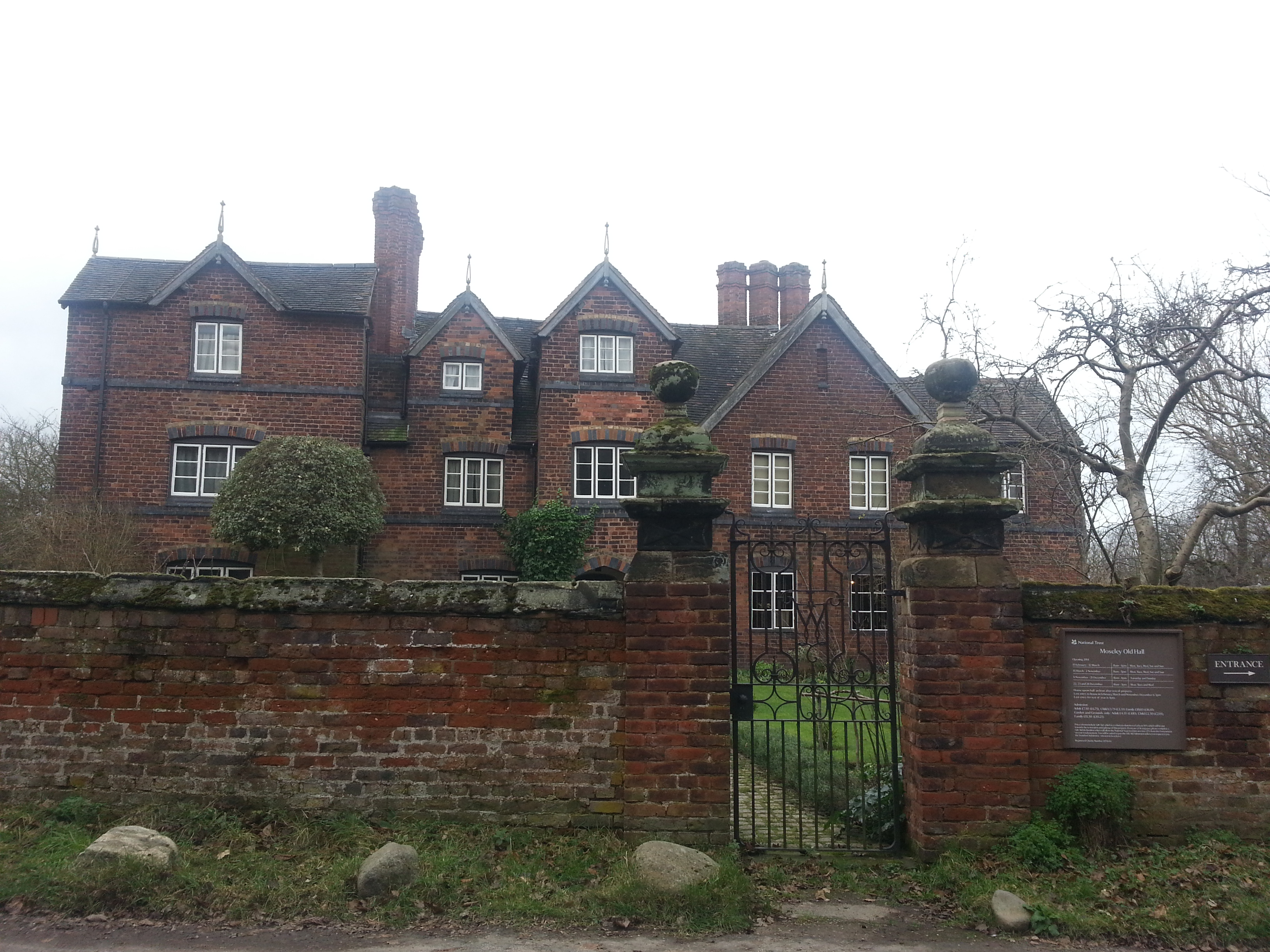
....and as it is today. Well, last Sunday anyway.

….and as it is today. Well, last Sunday anyway.

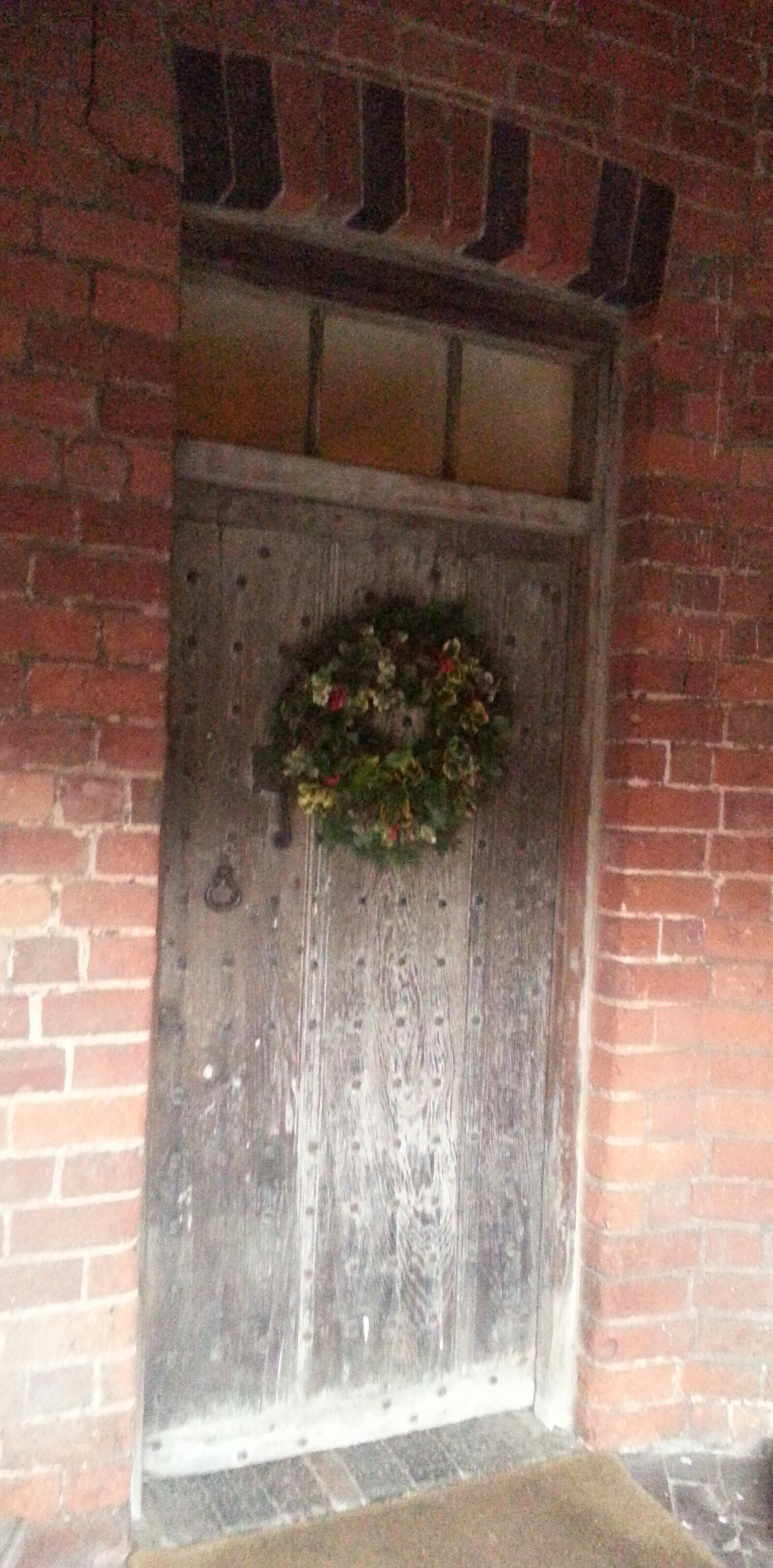
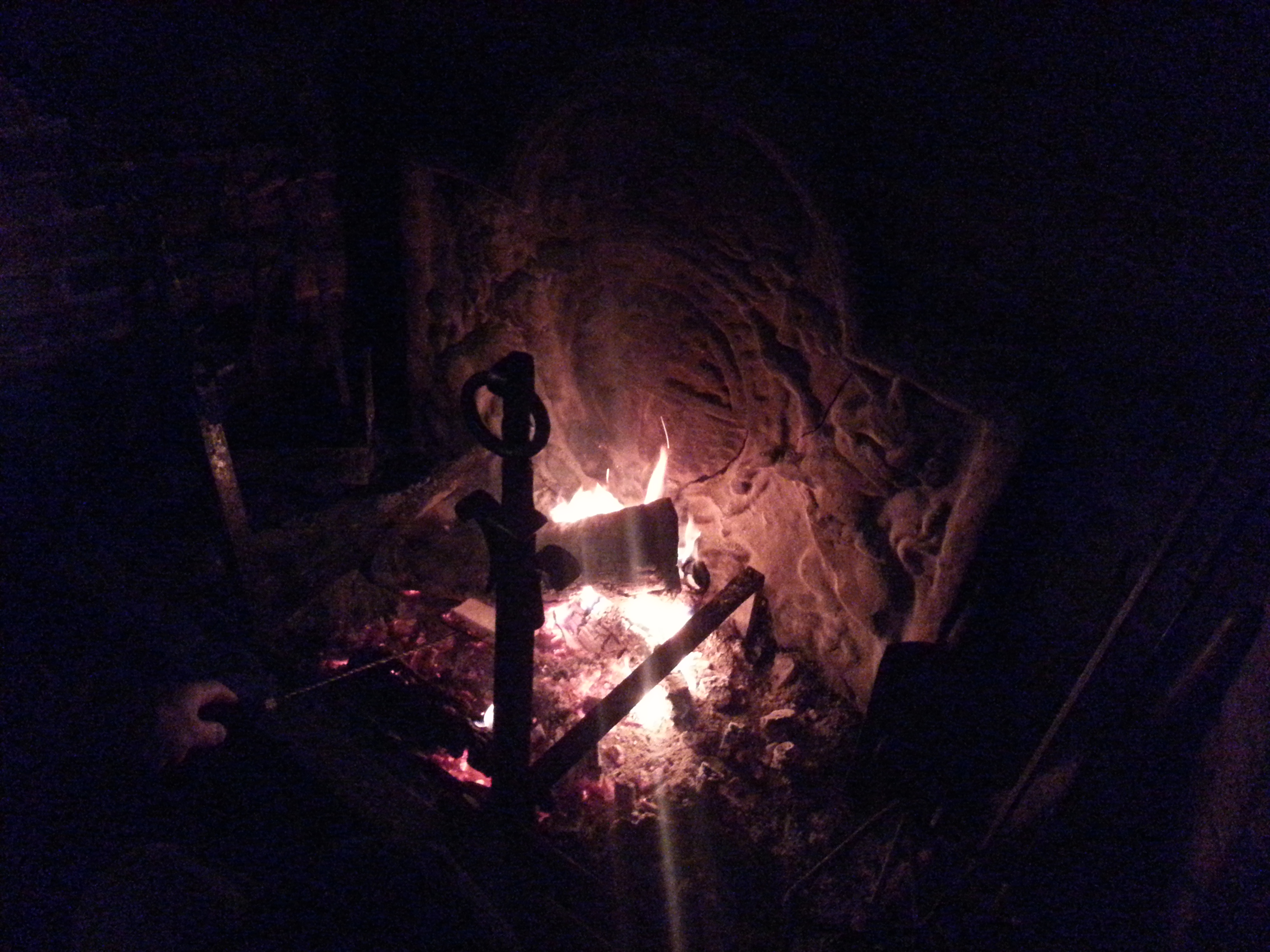
The house which hid the King is now hidden itself behind a Victorian redbrick facade. As we waited outside, making jokes about standing under the mistletoe, the guide informed us that we were about to enter the hall through the very same door as the King had, and told the assembled children to let their teachers know about it. Mine were only here because I’d promised they’d be able to toast some bread over an open fire at the end but they seemed suitably impressed (3). One little lad wanted to know if there was going to be a ride. I suppose in a way there was.
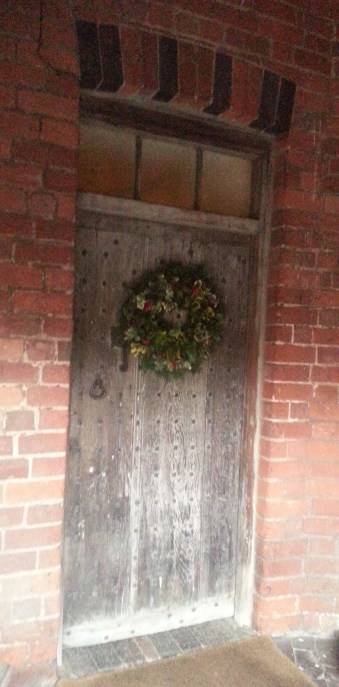
The back door through which Charles entered Moseley Olf Hall on 8th September 1651

The back door through which Charles entered Moseley Old Hall on 8th September 1651

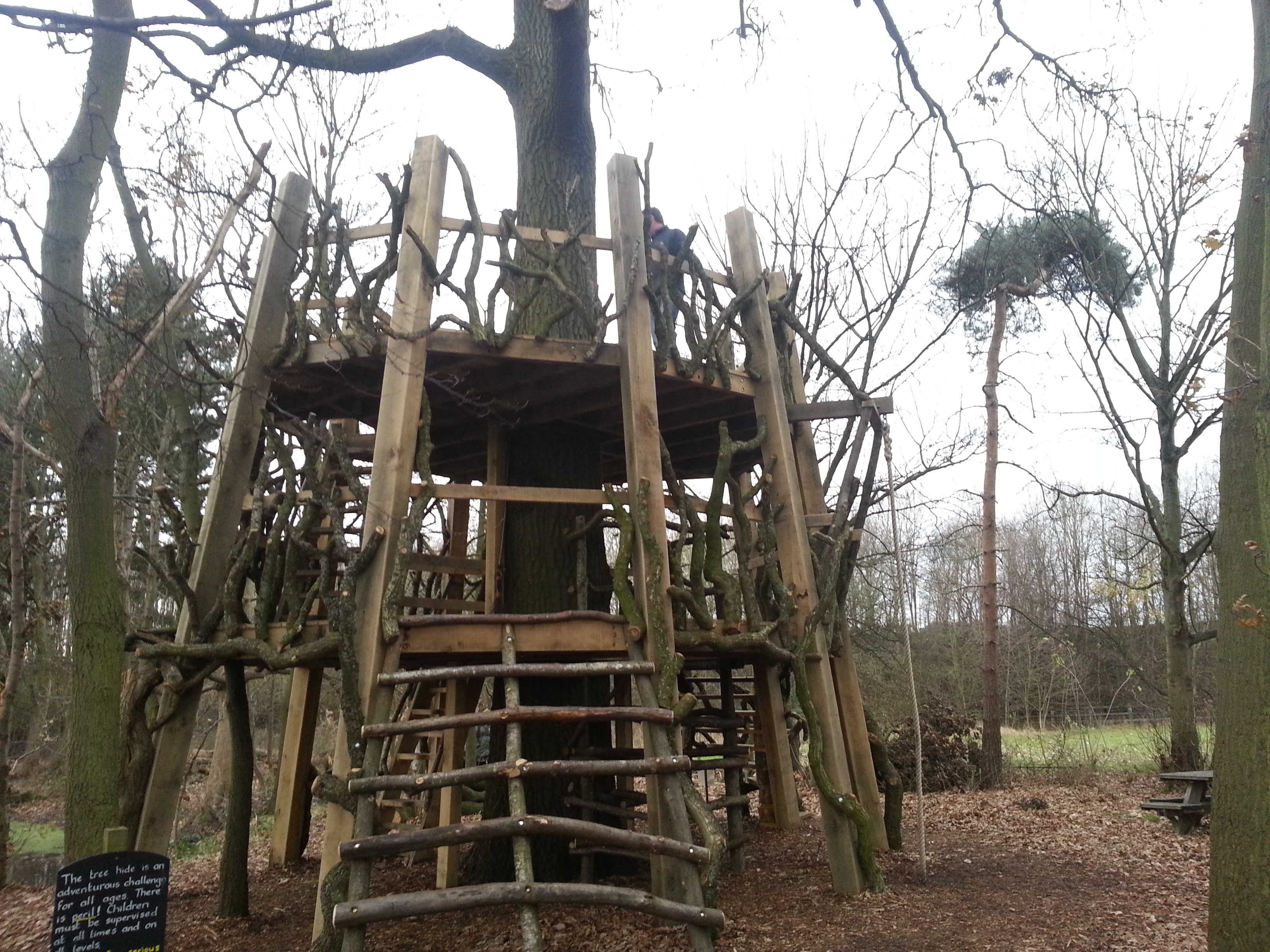
As everyone knows (4), before the King came to lie low at Moseley he’d been hiding high at Boscobel, nine miles away on the Staffordshire/Shropshire border. A tree house inspired by the Royal Oak, the most famous of all the places the King found refuge, is a recent addition to the King’s Wood at Moseley.  There are signs warning of peril, and whilst the element of danger here is not quite on a par with that of a man with a thousand pound bounty on his head hiding in a tree, it’s enough to get overprotective parents like me muttering, ‘Be careful!’, as if it were a charm to invoke protection.
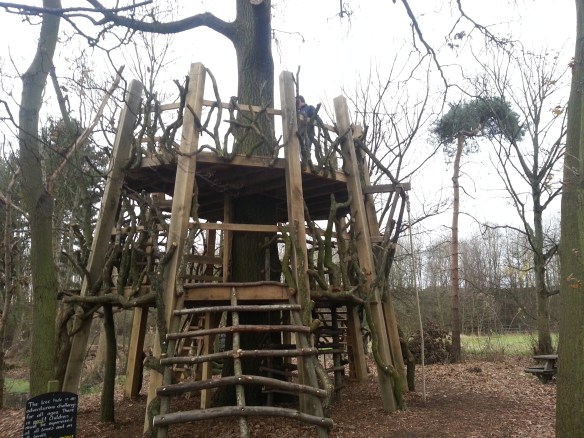
The Moseley Old Hall Tree House

The Moseley Old Hall Tree Hide

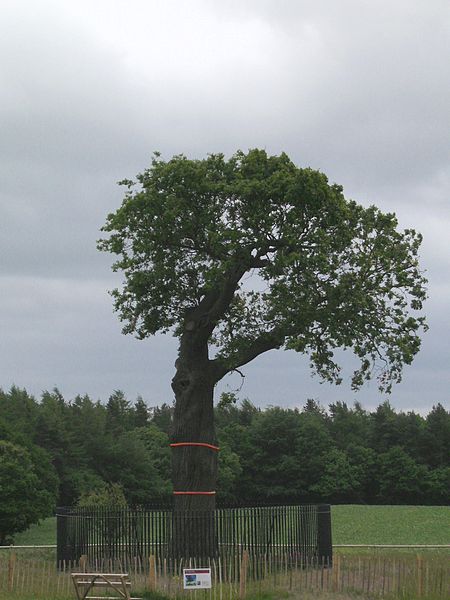
The Royal Oak in 2011, Boscobel House, Shropshire by The Royal Oak in 2011, Boscobel House, Shropshire  Uploaded to Wikipedia  in May 2011 Sjwells53 by  CC BY-SA 3.0

The Royal Oak in 2011, Boscobel House, Shropshire
Uploaded to Wikipedia in May 2011 Sjwells53 CC BY-SA 3.0

I’ve yet to visit Boscobel, owned by English Heritage. I understand that today’s Royal Oak grew from an acorn of the original tree which was destroyed by visitors in the seventeenth century who, in the absence of a gift shop, took away branches and boughs to fashion into souvenirs. In his book ‘Boscobel’, Thomas Blount described,

‘this tree was divided into more parts by Royalists than
perhaps any oak of the same size ever was, each man
thinking himself happy if he could produce a tobacco
stopper, box etc made of the wood.’

These trinkets still turn up at auctions. In 2012, a snuff box sold at Bonhams for almost £7,000.  Another prized relic at the time of Charles’ great escape was a rag he’d used to mop up a nosebleed. Father Huddleston passed this ‘bloody clout’ to a Mrs Braithwaite who kept it as a remedy for the King’s Evil, another name given to the disease known as scrofula. Since the reign of Edward the Confessor, it had been thought that the disease could be cured by a touch from a King or Queen. Of all the royal touchers, Charles II was the most prolific. The British Numismatic Society estimate he touched over 100,000 people during his reign. The tradition was continued, somewhat reluctantly, by King James II who carried out a ‘touching’ ceremony at Lichfield Cathedral in 1687 (5). The last English Monarch to partake in the ritual was Queen Anne, who ‘touched’ a two year old Samuel Johnson at one of the ceremonies in 1712. The touch piece or coin which the Queen presented young Samuel with, which he is said to have worn throughout his life, is now in the British Museum.
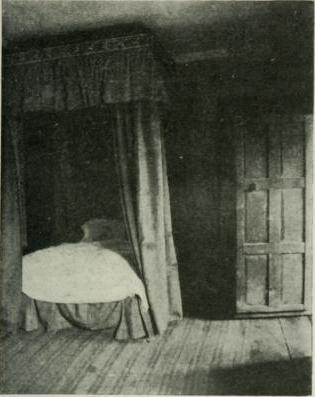
John Huddleston's room now known as the King's Bedroom

John Huddleston’s room now known as the King’s Bedroom from The Flight of the King by Allan Des (1908)

By the mid twentieth century, Moseley Old Hall was suffering from neglect and subsidence. This ‘atmospheric Elizabethan farmhouse that saved a King‘ was itself saved by the National Trust, when they took over in 1962. Every year, thousands of people pass through that door to see that bed and hiding place. Seems that three hundred years on the King hasn’t lost his touch. Or maybe they are just here for the toast?

Moseley Toast

Notes

(1) As the king lay dying in February 1684, Huddleston was said to have been brought to his bedside with the words, “This good man once saved your life. Now he comes to save your soul”.

(2) The bed at Moseley is the original one the King slept on top of. It was bought by Sir Geoffrey Mander of Wightwick Manor in 1913, but was returned to the hall in 1962 by his widow, Lady Mander.

(3) It seems the King’s victory was only short-lived. One of them just asked what I was writing about and when I told them it was Moseley Old Hall they replied, ‘Oh yes, the place with the toast’.

(4) If you didn’t know, take a look at this great map from englishcivilwar.org which plots all of the stages on the King’s journey from the Battle of Worcester to his arrival in Fécamp, France

(5) More information can be found in ‘Touching for the King’s Evil: James II at Lichfield in 1687’, in Volume 20 of the The Staffordshire Archaeological and Historical Society transactions.

Sources: 

Moseley Old Hall, National Trust Guidebook

Staffordshire Archaeological and Historical Society Transactions Volume XL

http://www.coinbooks.org/esylum_v17n40a13.html

http://www.britishmuseum.org/explore/highlights/highlight_objects/cm/d/dr_johnsons_touch-piece.aspx
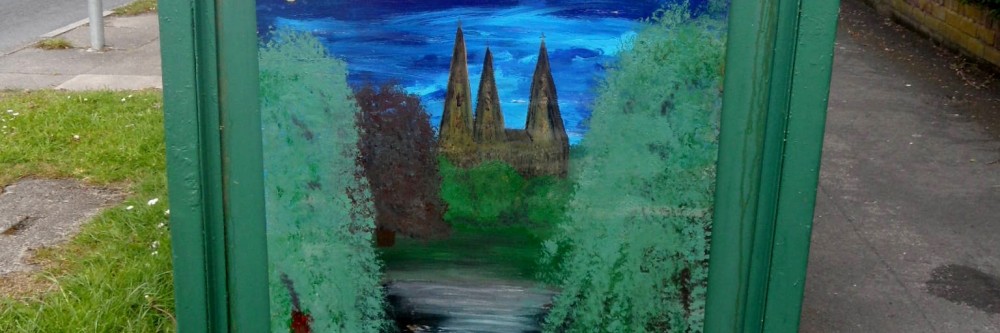
Hard Labour

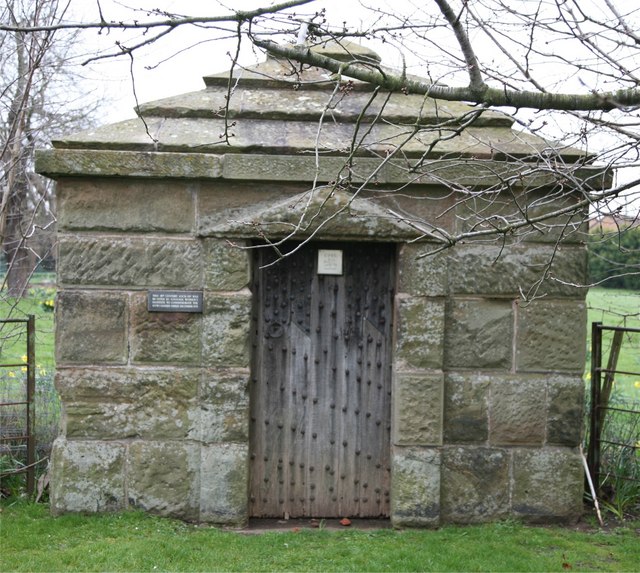
Gnosall’s lock-up dates to 1832 and was designed and built by local architect James Trubshaw of Great Haywood. It’s one of only four remaining in Staffordshire (1). Originally it stood at the junction of High Street, Brookhouse Road and Stafford Street but in the 1960s, Staffordshire County Council suggested that the building be moved to the county museum at Shugborough in order that the junction could be widened. Understandably, the Gnosall WI were keen that the lock-up remain in the village and set about securing a piece of land where it could be re-erected. As if to prove the council’s point about the road being a bit narrow, a lorry ran in to it in 1969 but fortunately didn’t cause enough damage to prevent it being rebuilt on its current site on Sellman St in 1971.

Gnosall lock-up

Gnosall lock-up

Why was the lock-up built in Gnosall in the first place?  The English Heritage Listing says ‘…as a result of rising unemployment and low wages, Gnosall was plagued by unrest and poaching…. with the threat of the Swing Riots, a widespread uprising by agricultural workers in southern England, spreading northwards, it was decided to build a lock-up’. In Stafford Borough Council’s Conservation Appraisal of the area, they attribute it to ‘rising unemployment, poaching and agricultural riots in the south’.

The arrival of canal navigators in the village may also have influenced the decision to build a lock-up.  In November 1829, Aris’s Birmingham Gazette reported that two thousand labourers employed on the Birmingham and Liverpool Canal were living in the village (2). The Gazette suggested that the navigators were responsible for a spate of sheep and poultry thefts in the area and also reported that they ‘advanced from acts of midnight depredation to proceedings of a tumultuous and riotous description in the open day’. The most serious incident that I can find involving the navigators at Gnosall took place in March 1830 when it was reported that a labourer working on the canal was attacked in the Horseshoes pub at Gnosall by two men described as ‘navigators’, as they tried to steal his watch. A judgement of death was recorded against the prisoners, but their lives were spared (2). Apparently, these proceedings so alarmed the inhabitants of Gnosall and the neighbourhood that they applied for the appointment of a large body of special constables and were also ‘desirous that a small military force be stationed in the parish’.

Whilst some navigators may have found themselves on the wrong side of the law at times, the Truck System operated by some of their employers was nothing short of criminal. According to a report in the Staffordshire Advertiser in February 1830, ‘none of his Majesty’s subjects are more imposed upon by the infamous ‘Truck System’ than these said ‘navigators’ who are ostensibly earning large wages under their gaffers but instead of money they receive a ticket to a Tommy (3) shop where they are charged 8d per lb for cheese (which they might purchase with money in Stafford Market for 4d) and bacon, butter, beef, bread and coffee at extravagant prices. The master of the Tommy shop returns the gaffer five percent on the gross amount of his monthly bill’.

Sometimes it was not crime but death which brought the names of the navigators to the pages of the local press. Richard Barnett was injured by a quantity of earth falling on the lower half of his body and died as he was being conveyed home on a cart. In December 1830, the Staffordshire Advertiser reported on ‘The Navigator’s Funeral’. James Wheeler was helping to cut a tunnel through the solid rock when he fell to the bottom of Cowley Quarry in Gnosall and later died of his injuries.  One hundred of his colleagues each contributed one shilling to ensure he had a decent burial and when they discovered his coffin had already been nailed shut, demanded the lid be removed to check nothing was amiss.  Six of the men were under-bearers and the wives of six men supported the pall. Six overseers of the works followed as chief mourners and behind them came one hundred fellow navigators, two abreast. The report noted that whilst the mourners were not wearing black, they were decently attired and looked clean and respectable. The women wore their brightly coloured clothes, the men wore smock-frocks. During the burial, some of those assembled at the graveside expressed anxiety about the security of the corpse and assisted the sexton in filling up the grave. Afterwards, the mourners held a wake at the Roe Buck and the Advertiser expressed sorrow that many of them had stayed out until late and ‘finished up the solemnities of the day with a fight’. However, it also commended the navigators for their praiseworthy practice of not only subscribing towards the funeral expenses of their colleagues but of also clubbing together something out of their wages every week to support the sick amongst them.

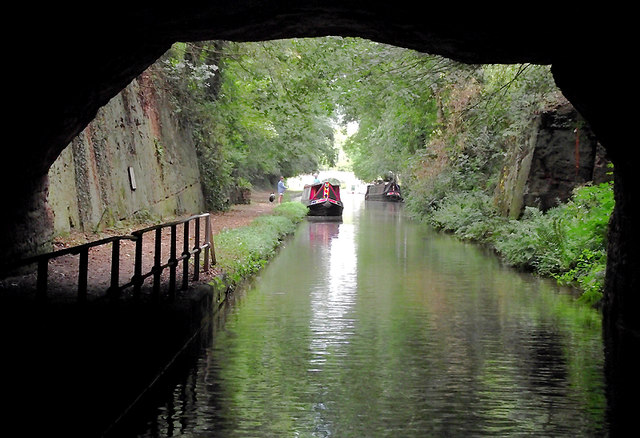
Cutting north of Cowley Tunnel at Gnosall Heath, Staffordshire  © Copyright Roger Kidd and licensed for reuse under this Creative Commons Licence

Cutting north of Cowley Tunnel at Gnosall Heath, Staffordshire © Copyright Roger Kidd and licensed for reuse under this Creative Commons Licence

We are all familiar with the canals that run through our towns and villages, but what do we really know about the men that worked on the Shroppie in Gnosall and elsewhere?  Where did they live? Did they rent rooms or live in makeshift camps on the outskirts of the village? One of the newspaper reports shows that the men were accompanied by their wives, but what role in the community did these women play? Did any stay on after the completion of the canal? How much of what appeared in the papers was based on fact and how much was based on rumour and reputation? The navigators are part of our history but for the most part we seem to have cast them in a peripheral role as hard-working, hard-drinking, trouble-making outsiders. We need to dig deeper than that.

Notes

(1) The others can be found at Alton, Stafford and Penkridge. References to other lock-ups in Staffordshire appear in documents and newspaper reports but without further research it’s unclear whether these refer to purpose built structures such as those at Gnosall, or rooms in other buildings used as lock-ups. I understand that sometimes rooms were attached to public buildings such as the town hall and in other places there were rooms in some public houses which were used as lock-ups. This is not to be confused with lock-ins.

(2) I understand that this seemingly confusing sentence handed out by the judge related to the Judgement of Death Act 1823, where judges were given the discretion to pass a lesser sentence on the two hundred or so offences which carried a mandatory death sentence but still had to record a sentence of death.

(3) Tommy was a word for food.

(With thanks to Cllr Kenneth Ingram, Norman and Sheila Hailes and the other residents of Gnosall for their warm welcome and for showing us around the village on such a cold and damp day, More to follow!).

Broken Record

The ‘Heritage at Risk’ register for 2014 was published by English Heritage today. The Register includes grade I and II* listed buildings, grade II listed buildings in London, and all listed places of worship, scheduled monuments, registered parks and gardens, registered battlefields and protected wreck sites assessed as being at risk.

There are eight entries from around the Lichfield District this year, including scheduled monuments at Alrewas, Elford, Fradley and Streethay, the Fazeley and Bonehill conservation area and three buildings, namely, the Angel Croft Hotel on Beacon Street, the Manor House at Hamstall Ridware and the old church tower at St John’s in Shenstone.

Angel Croft Railings

The Angel Croft Hotel has been deemed ‘At Risk’ for many years, but there is now a glimmer of hope that Lichfield’s fallen Angel may be saved. This year’s entry notes that, ‘permission has been granted for conversion to apartments with an agreement to secure the repair of the gates and railings. Work should start in the summer’. Time will tell, but I really do hope that 2014 will be the last time that the Angel Croft appears on the register.

Whilst the plight of the decaying Angel Croft is well known in Lichfield, other local entries on the list may be less familiar, but no less worthy of salvation. Fazeley, according to Lichfield District Council, ‘represents a remarkably intact industrial community of the period 1790-1850. It contains all the principle building types necessary to sustain the community; terraced housing, mills, factories, a church, a chapel, public houses, a school and prestigious detached Georgian houses’. They go on to say that, ‘the waterways, pools and associated structures built by Robert Peel Snr are an important part of Fazeley’s industrial heritage and have archaeological significance. Their significance extends beyond just the immediate locality as they represent one of the most important water power systems dating from the early part of the Industrial Revolution. As a contrast to Fazeley’s industrial heritage, the appraisal tell us that, ‘the historic hamlet of Bonehill…. is an important remnant of the areas agricultural past and despite the developments of the twentieth century still retains a peaceful, rural feel. It has a direct association with the nationally renowned Peel family’.

Yesterday, Gareth Thomas, GIS Manager at Lichfield District Council, uploaded a number of photos from their archive to Flickr. It just so happens that alongside the reminiscence-tastic images of Lichfield shops and businesses, Gareth has uploaded a number of photographs of the conservation area at Fazeley and Bonehill, showing us just what is at risk here, hopefully inspiring us to pay a visit ourselves.

Taken from Lichfield GIS photostream, Flickr

Taken from Lichfield GIS photostream, Flickr

Taken from GIS Lichfield photostream, Flickr

Taken from GIS Lichfield photostream, Flickr

Taken from GIS photostream, Flickr

Taken from GIS Lichfield photostream, Flickr

Taken from GIS Lichfield, Flickr

Taken from GIS Lichfield photostream, Flickr

Also making an appearance in both the Lichfield District Council’s photo collection and on the ‘At Risk’ Register, is the Manor House at Hamstall Ridware. The pictures speak for themselves – the condition of watchtower is so bad that it is deemed at risk of collapse. Perhaps appropriately for something that may not be long for this world, I first caught sight of it from the churchyard of St Michael’s and All Angels and managed to find out a little about its history here.

Taken from GIS Lichfield photostream, Flickr

Taken from GIS Lichfield photostream, Flickr

Taken from GIS Lichfield photostream, Flickr

That’s quite a crack! Taken from GIS Lichfield photostream, Flickr

Hamstall Ridware manor 3 Hamstall Ridware manor and church

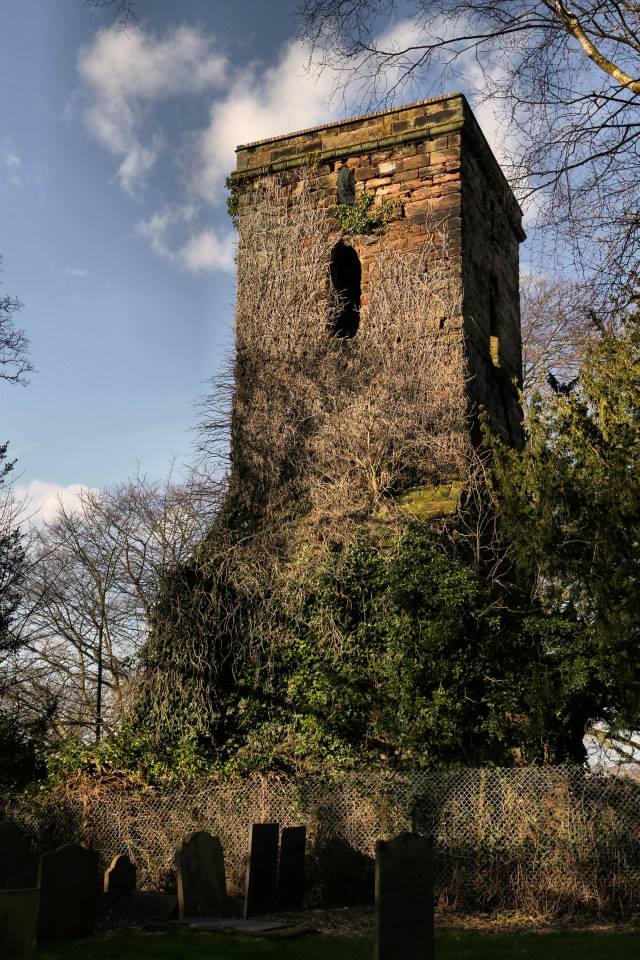
Over in Shenstone, it seems there are ongoing discussions between the council, the Parish Council and the church regarding the old tower. At least for the time being, the structure is ‘considered stable’ – let’s hope that they all start singing from the same hymn sheet soon.

Old tower at St John's Shenstone, by Jason Kirkham

Old tower at St John’s Shenstone, by Jason Kirkham

Same time, same places next year folks? Let’s hope not…


Thanks to Gareth Thomas and Lichfield District Council for the archived photos of Fazeley and Hamstall Ridware, and to Jason Kirkham for his photograph of the old tower of St John’s at Shenstone.

Night at ye Museum

Until further notice, entry to Lichfield Museum (formerly known as the Heritage Centre) at St Mary’s in the Market Square is free of charge! On hearing this, I thought I’d find out a little more about one of its predecessors and set off to find Mr Greene’s Museum, at 12 Sadler Street.

The site of Richard Greene's house and museum, Market St, Lichfield

The site of Richard Greene’s house and museum, Market St, Lichfield

Sadler Street is now of course Market Street, and the only trace of Lichfield’s late eighteenth century ‘Museum of Curiosities’ is a plaque attached to a wall at the entrance to the City Arcade.

Richard Greene Museum Plaque

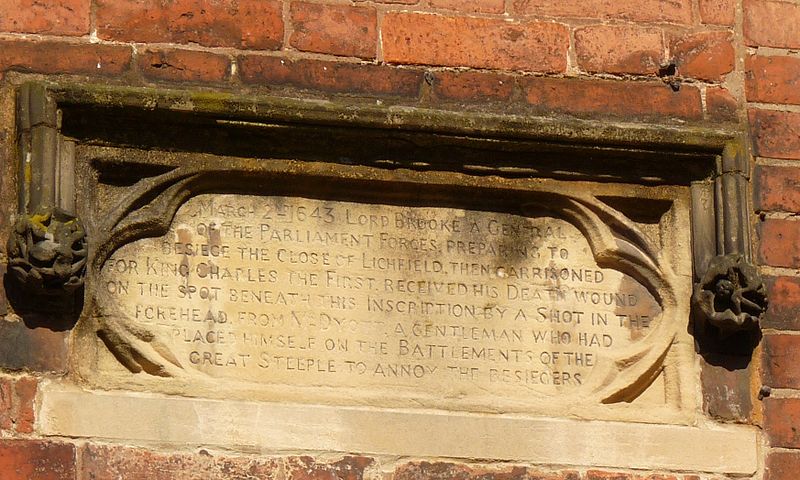
To give us an idea of what this museum was like there are some drawings here on the Staffordshire Past Track site and ‘A Descriptive Catalogue of the Rarities, in Mr Greene’s Museum at Lichfield’ (1), is available here via googlebooks. Highlights for me include my old favourite, ‘the Earthen Vessel found (with several others of smaller size) in the Walls of the late Conventual Church of Fair-well near Lichfield, at the time it was taken down in order to be rebuilt’, and also, ‘Part of the Porch, under which stood Lord Brooke General of the Parliament forces, when he receiv’d a mortal wound in his forehead, by some shot from the Battlements of the great Steeple of the Cathedral Church of Lichfield, the force of which was abated by the bullets passing through the above piece of Board’. Perhaps it was ownership of this bit of legendary Lichfield history which inspired Mr Greene to commission the plaque outside 24 Dam Street, better known as Brooke House? (2)

Photograph of plaque commemorating the death of Parliamentary general Lord Brooke in Lichfield in March 1643. Photograph by JRPG, taken from Wikipedia

Photograph of plaque commemorating the death of Parliamentary general Lord Brooke in Lichfield in March 1643. Photograph by JRPG, taken from Wikipedia

I’d also like to have seen the ‘small Leaden box, in which is contained some Relicks, and Silver Lace, found in an ancient Leaden Coffin in the Cathedral Church of Lichfield 1748’, but there may be those who would be more interested in the Horn of the Sea Unicorn, five feet and six inches long or even the balls of hair found in the stomach of a cow. Each to their own.

One of the most famous exhibits was a Musical Altar Clock. These days ‘The Lichfield Clock’, as it is now known, can be found at the Victoria Art Gallery in Bath, but what happened to the other objects from the museum?  After Greene died in 1793, the collection was sold by his son to various collectors. Some of it was bought back to Lichfield by his grandson, Richard Wright, and displayed in a new museum in the Cathedral Close, which then moved to a property in the north of Dam Street (2). When Wright died in 1821, the collection was broken up again. Given the unique nature of some of the items, I reckon that it might be possible to track these down with a bit of googling? I understand that some of the collection did remain here in Lichfield, and may in the current museum at St Mary’s. Let’s hope that if nothing else we managed to hold onto the head of a pike which weighed forty pounds, taken at Burton on Trent.

Free Entrance!

Free Entrance!

Joking apart, the museum played an important role in the West Midlands enlightenment of the late eighteenth century. According to the Revolutionary Players website,  ‘By contemporary museum standards of collection and display, Greene was an eccentric antiquarian, but he provided a window on the world for those who were enthusiastically investigating, accumulating and classifying knowledge’.

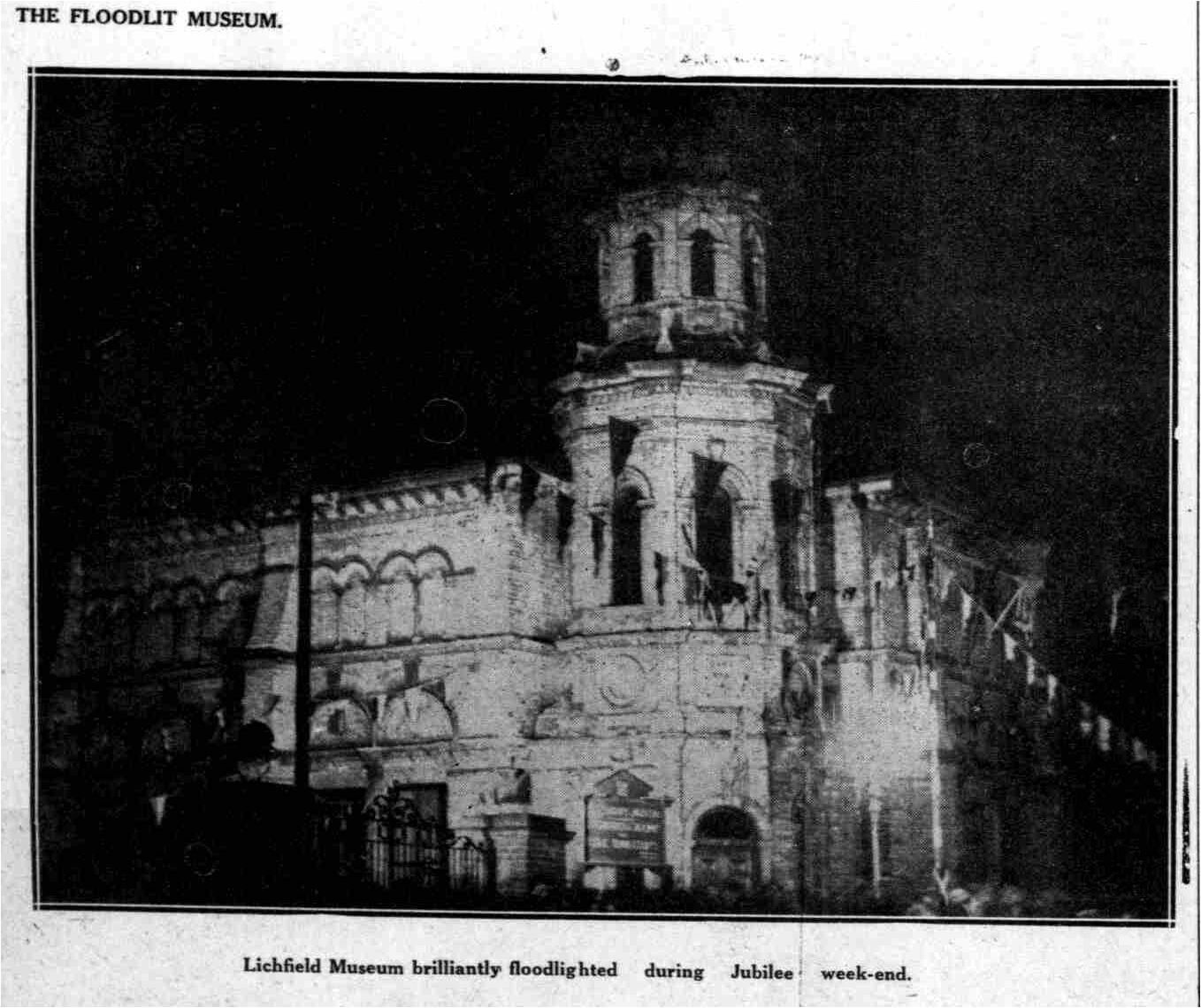
As far as I can tell, Lichfield’s window on the world was closed until 1859, when a new museum was opened at the edge of what is now Beacon Park….but that’s a visit we’ll keep for another day.

Floodlit Lichfield Museum and Free Library, Jubilee Celebrations 1936. Taken from Lichfield Mercury archive.

Floodlit Lichfield Museum and Free Library in Beacon Park, during Jubilee Celebrations 1935. Taken from Lichfield Mercury archive.

(1) A copy of which was lent to me recently – thank you Patti!

(2) Does anyone know where on Dam Street exactly?

Sources

Lichfield: Social and cultural activities’, A History of the County of Stafford: Volume 14: Lichfield (1990), pp. 159-170.

http://www.staffspasttrack.org.uk/

History West Midlands is proud to bring you Revolutionary Players: The people, ideas and innovations that shaped the modern world

http://www.birminghampost.co.uk/lifestyle/nostalgia/chris-upton-looks-back-lichfields-4027881

http://www.birminghampost.co.uk/lifestyle/nostalgia/crucifixion-clock-lichfield-museums-star-4053561

Niche Interest

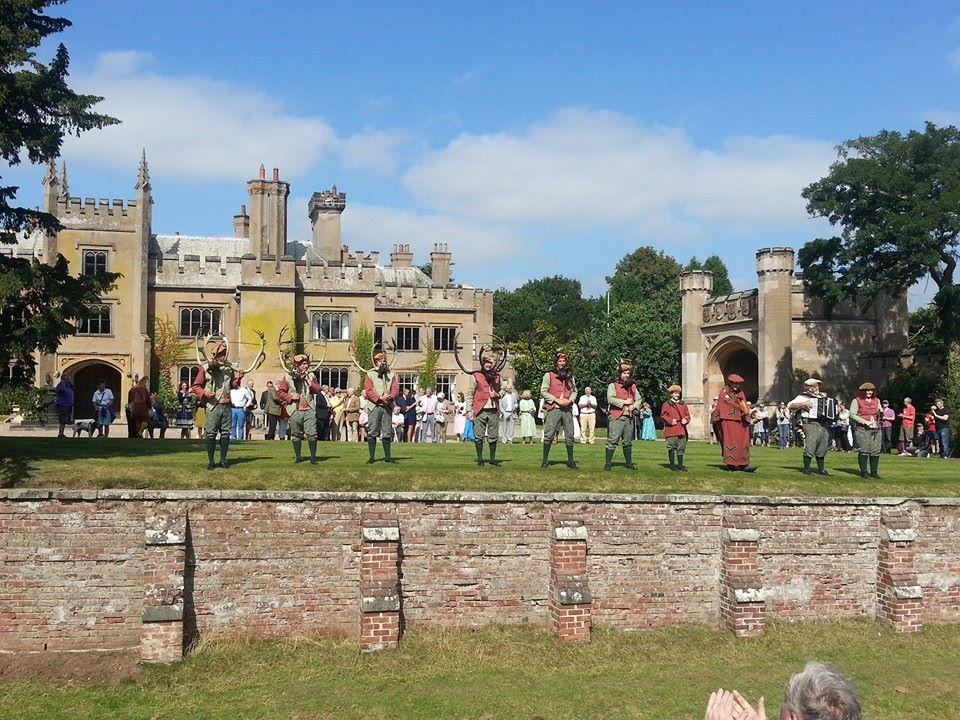
The origins of the Abbots Bromley Horn Dance are hazy and in trying to make sense of this centuries-old tradition, the phrase ‘fertility ritual’ often crops up. Apparently, one of the most potent elements of the dance is coming into contact with the pig’s bladder on a stick, wielded by the fool (1). Sitting below the ha-ha, separated from the dancers performing on the lawn outside Blithfield Hall by a big ditch, seemed like a safe enough distance to watch from this year.

Waiting for the Horn Dance...

Waiting for the Horn Dance…

Pigs Bladder

Take a bow Horn Dance

Waiting for lunch...

Waiting for lunch…

Abbots Bromley Horn Dance 1932. Taken from the 'The Birmingham Mail' via 'The Lichfield Mercury'.

The Abbots Bromley Horn Dance taking place in 1932. Taken from the ‘The Birmingham Mail’ via ‘The Lichfield Mercury’.

Once the performance had ended, the dancers bowed to those of us in the cheap seats and went for lunch inside the hall, which has been home to the Bagot family since 1360. Afterwards, they would head back to Abbots Bromley, to perform the dance through the lanes and outside the pubs of the village, returning the horns to the church of St Nicholas at around 8 o’clock that evening. I was heading back to Lichfield, but thought there might just be time to pay a visit to a church myself.  “St Leonard’s is just over there at the back of the hall…”, explained a man selling guide books from a stall “….but you can’t go that way unless you live there”. He did explain how non-Bagots could get to the church but on the way back to the car I got sidetracked by another stall selling honey, and so the church had to wait for another day.

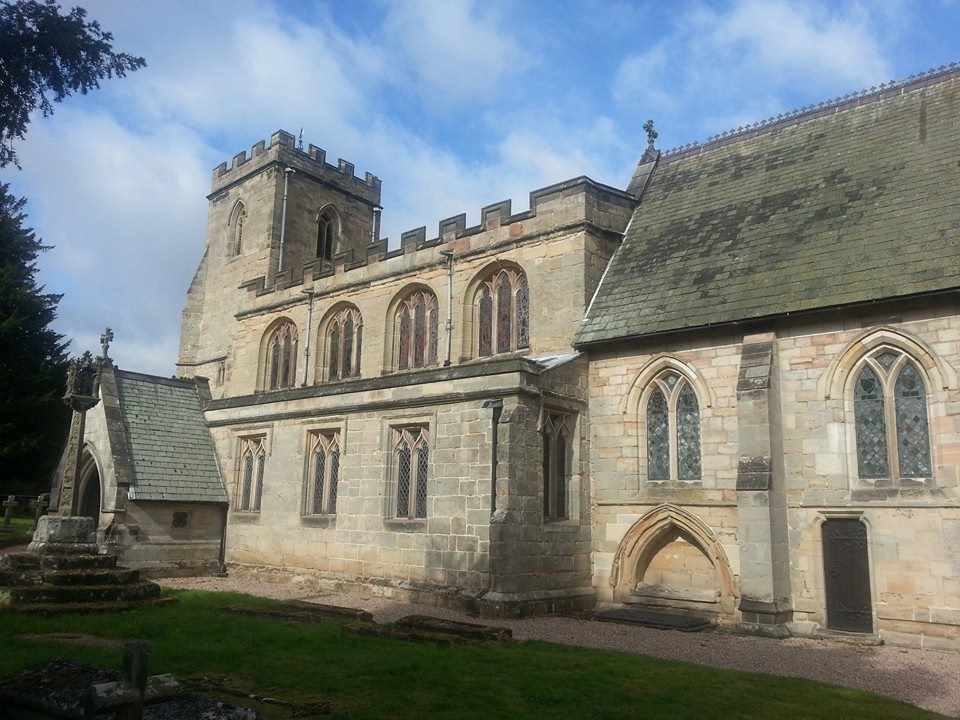
The Church of St Leonards

The Church of St Leonard

Another day came at the start of October. The church door, beautifully decorated with autumn leaves, was unfortunately locked.

Blithfield church door

I had to break the news to my Mum that we wouldn’t be able to see Staffordshire’s only surviving pillar piscina, dating from the early twelfth century. Oddly, she didn’t seem too bothered….It turned out that being restricted to the outside of the church was actually a blessing in disguise as the exterior of St Leonard’s turned out to be a very interesting place indeed.

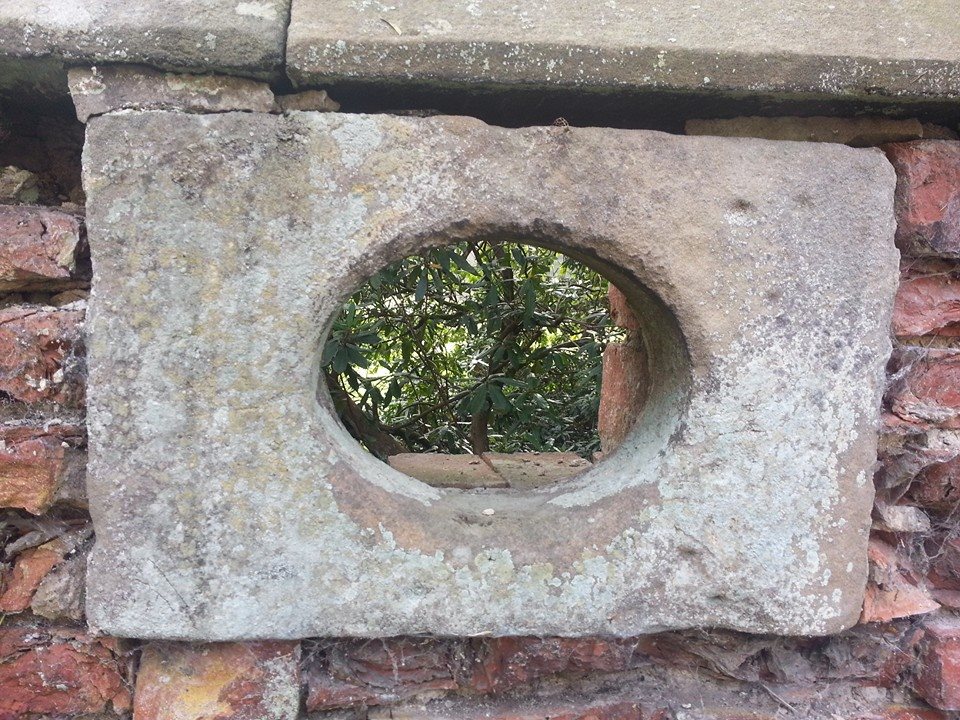
Built into the red-brick, eighteenth century wall which separates the churchyard from the grounds of Blithfield Hall is a gateway (also locked!), which looks ancient but actually only dates back to the mid-nineteenth century. This is clearly the Bagot family short-cut to the church that I had heard about at the Horn Dance. A little more difficult to find is a satisfying explanation for the circular feature, also built into the wall, which appears to have been added around the same time.

Blithfield Wall 1

A hole in the wall

A hole in the wall

According to a description in the Lichfield Mercury, as part of their 1891 series ‘Sketches in and around Rugeley’, it was, “formed for the purposes of seeing when the parson came to church so that the Squire might not be kept waiting longer than was necessary in a cold church”. I’m not convinced by this but it’s all I’ve got at present.

After looking through the round window, anyone over the age of twenty five may be quite excited to hear that there’s also an arch and a square here.  Anyone younger than that won’t have a clue what I’m talking about. Anyway, as these are niches than windows, it’s more a case of looking into, rather than through them.

Effigy Blithfield

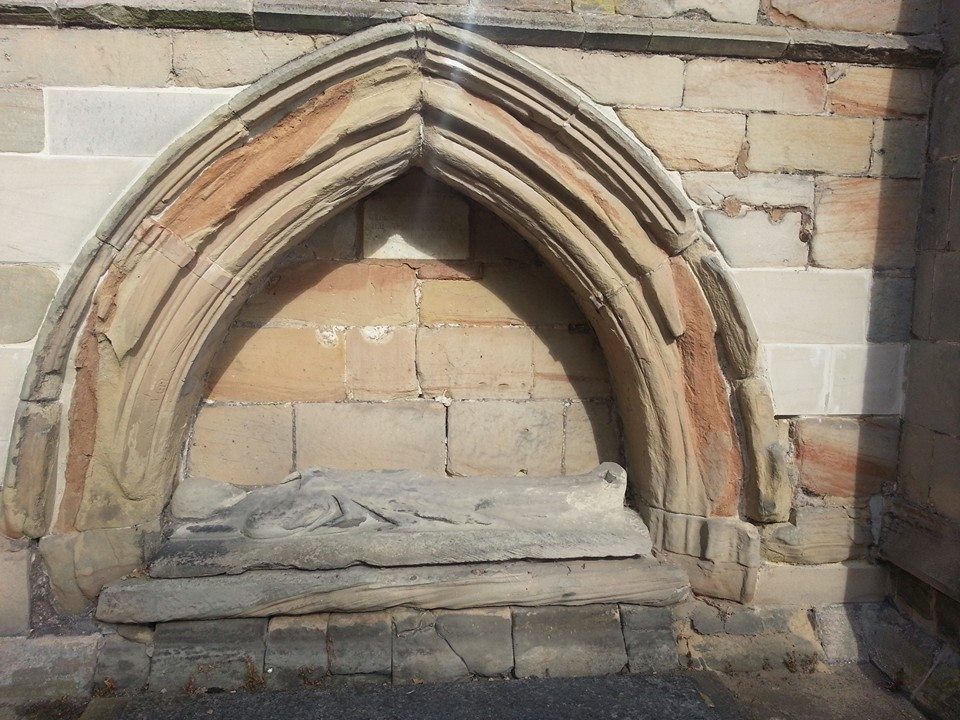
The arch is found on the south side of the church, sheltering the thirteenth century effigy of a priest. A comparison with this drawing of 1823 shows that sometime time can diminish rather than increase the lines on a face.

Blithfield tomb decoration

A late seventeenth century marble plaque with Latin script implores us to pray for the soul of Alfred, priest of Hulcrob. Records show that the words on the tablet were originally written around the arch in letters of gold but these have long since been erased by time. Faded painted patterns still remain on the interior curve of the arch though and it seems reasonable to assume that these would have been part of this decorative inscription? There are also several ‘graffiti’ marks carved into the stone here, at least one of which appears to be a ritual protection mark associated with the Virgin Mary.

graffiti blithfield Blithfield effigy arch

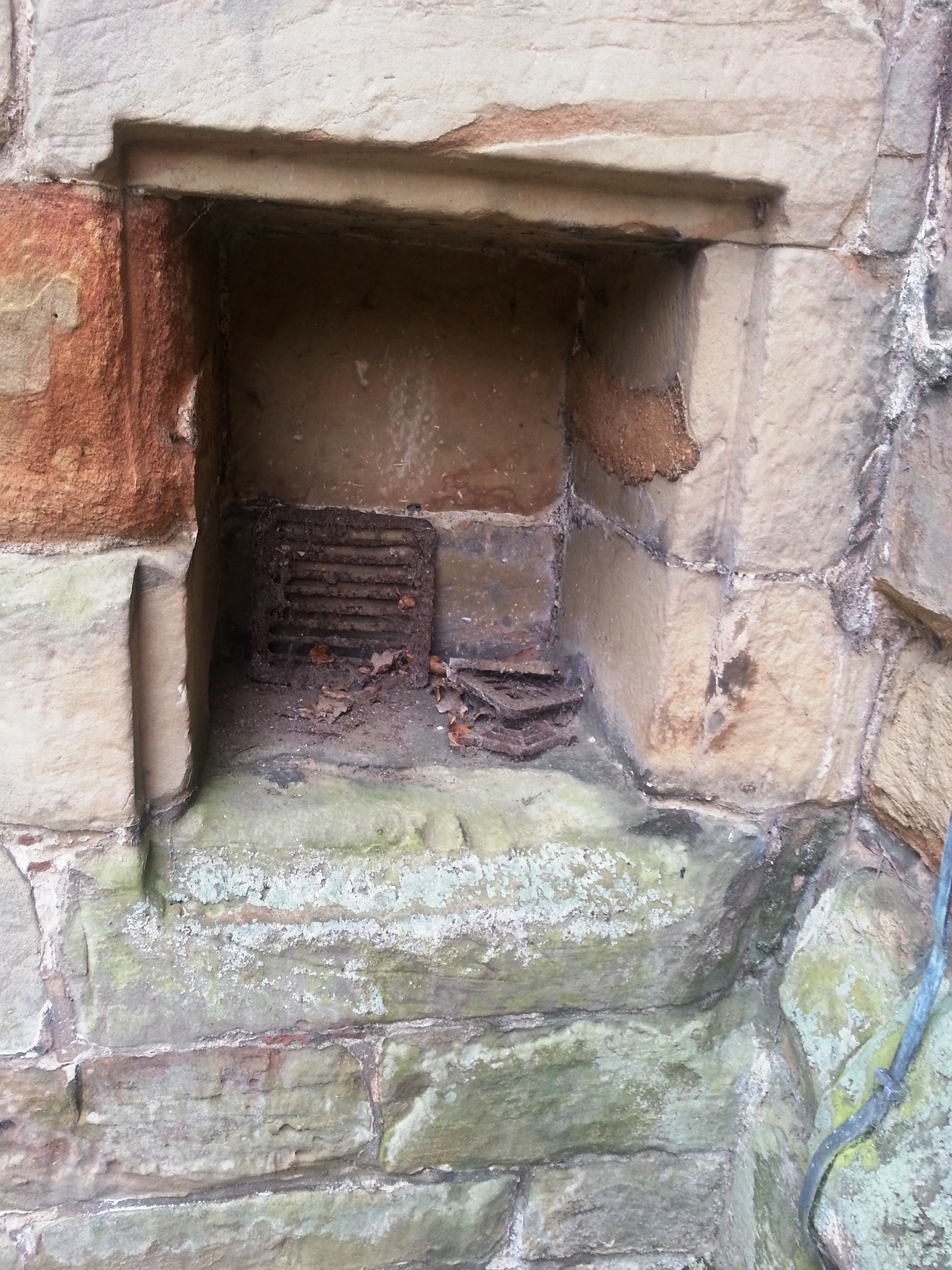
On the north side of the church, near to the tower, is the feature I’m calling a square but which the Lichfield Mercury article describes as, “a curious recess, the use of which it seems very difficult to determine. It could have had no communication with the inside of the church, for it is in the thickness of the wall of the nave, and being outside it can hardly been of any use as an aumbry“. In ‘Collections for a History of Staffordshire’ (1919), its similarity to an aumbry is also noted, leading the author to speculate that this may once have been an interior wall and that possibly there may have been an annexe or a anchorite’s cell here. All I can spy with my non-expert eye is that it does look as though it may once have been covered by a grille or a door, although I’m not sure whether the actual bits of rusty grate lying inside it are a clue or a red herring.

niche blithbury church wall

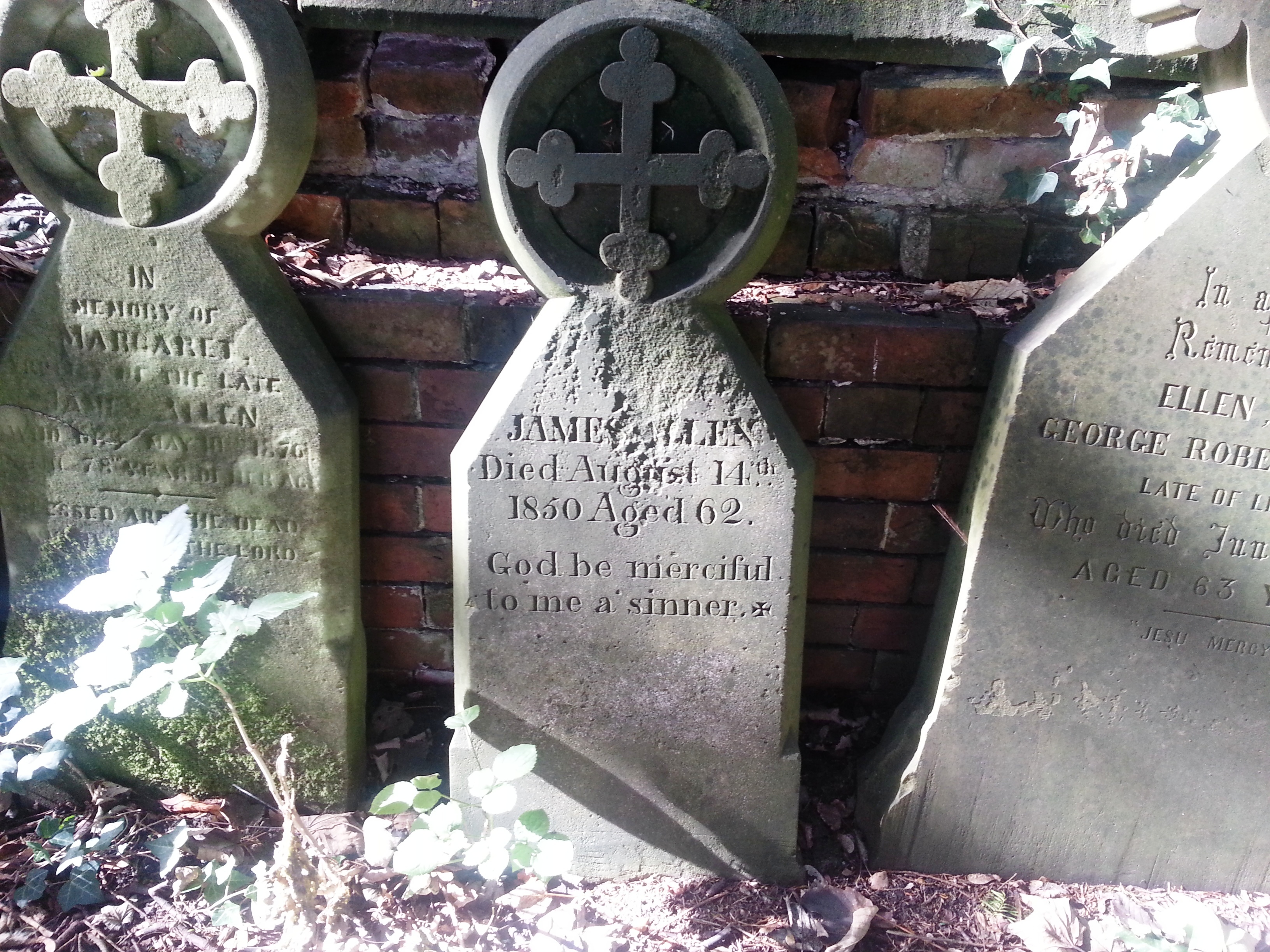
Alongside the various memorials belonging to members of the Bagot family (although many of these are inside the church itself) are those belonging to people who, like most of us, would have had to come the long way round.

headstones blithfield

Headston Blithfield

Blithfield Gardeners headstone

Allen headstone Blithfueld

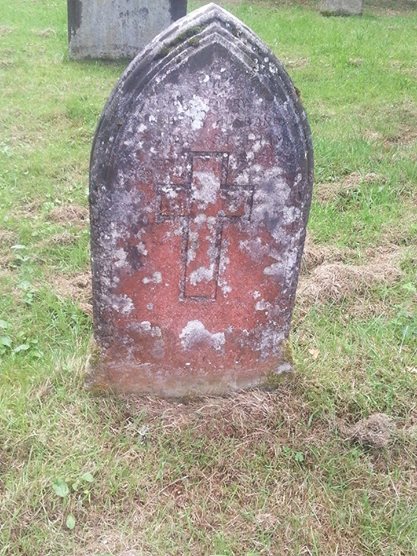
I was always concerned that an interest in graveyards was a little morbid but the excellent talk David Moore did on symbolism in cemeteries for Lichfield Discovered recently reassured me that graveyards are as much about life as death. And not just human life either….

Lichen gravestone Blithfield

Blithfield red lichen

(1) Funnily enough, I understand that pigs’ bladders (amongst many other things) were also used as a form of contraception in times gone by. Perhaps it’s only the inflated ones you have to worry about…

Sources:

Blithfield: An Illustrated Guide and History by Nancy, Lady Bagot (1979)

http://www.medieval-graffiti.co.uk/

http://www.pastscape.org.uk/

Lichfield Mercury Archive

Collections for a History of Staffordshire (1919) Edited by The William Salt Archaeological Society

Prior Engagement

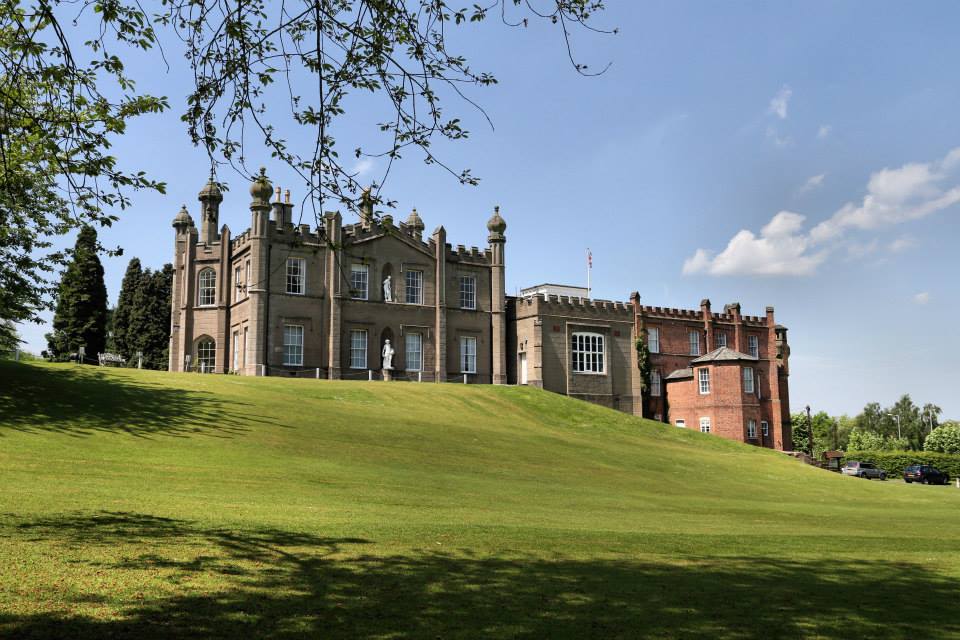
Yesterday, I visited Hawkesyard, a place known to previous generations by a variety of names including Le Hawkeserd in Hondesacre, Armitage Park, Spode House and Hawkesyard Priory. The first house known to have existed here was a moated manor owned by the Rugeley Family, who appear to have had a variety of spellings for their own name. According to an article in the Lichfield Mercury on February 3rd 1950,  a document describing the funeral of Richard Rugeley, who, ‘…departed this mortal and transitory life on Saturday night, the 5th July 1623 at his house at Hawkesyard’, was signed by Symn Ruggeley, Thirkell Rugeley, Henry Rugley and Thomas Rugsley.

Information on the early days of Hawkesyard is sketchy but it’s thought the original hall, pulled down in 1665, was much closer to the River Trent, about half a mile to the west of Armitage Church. Nothing is thought to remain and nothing much more is known about Hawkesyard until 1760, when the estate was renamed ‘Armitage Park’ by Nathaniel Lister, who built a gothic style mansion on the sandstone hill above the site of the original hall. Beneath Lister’s new house was a plaque recording that, ‘These cellars were cut out of the rock by Richard Benton and Sons, anno Domini 1760, for Nathaniel Lister, Esq.’ Perhaps it’s still there?

Hawkesyard Hall, Armitage by Jason Kirkham

Hawkesyard Hall, Armitage by Jason Kirkham

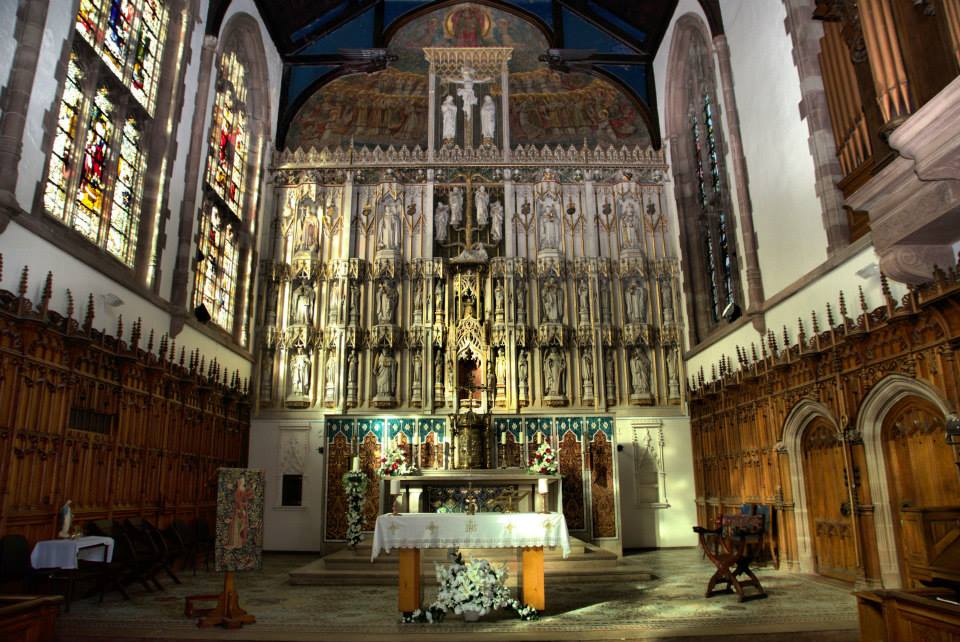
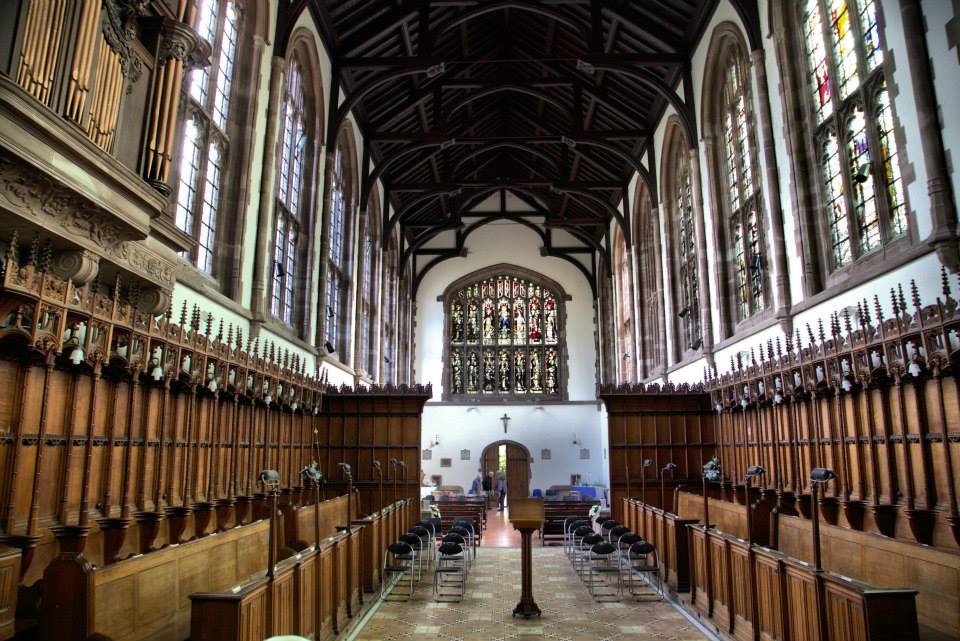
From the 1840s, Hawkesyard was home to Mary Spode and her son Josiah, the fourth generation of the Stoke on Trent pottery dynasty, and the first not to work in the family business. Mary died in 1860, and Josiah’s wife Helen died eight years later. Both are buried at St John the Baptist in Armitage, the Anglican parish church where Josiah was the organ player and warden. Despite these strong links to St John’s, Josiah Spode converted to Catholicism in 1885, along with his niece Helen Gulson, who lived with him at Hawkesyard. On his death in 1893, Spode requested that Helen should continue to live at Hawkesyard until her death, after which the estate should be passed to the English Dominican Order of Friars. However, Helen decided to move out of the hall and into a cottage on the estate, allowing work on the new Priory and Church to begin almost immediately. Some say that this decision was inspired by a vision of the Virgin Mary appearing to Helen in the grounds of the estate, and that the altar of the new Priory Church of St Thomas Aquinas was supposedly erected over the site of this apparition.

The Priory Church at Armitage by Jason Kirkham

The Priory Church at Armitage by Jason Kirkham

Priory Church by JAson Kirkham

Priory Church by Jason Kirkham

Priory Church by Jason Kirkham

Priory Church by Jason Kirkham

Priory Church by Jaosn Kirkham

Priory Church by Jason Kirkham

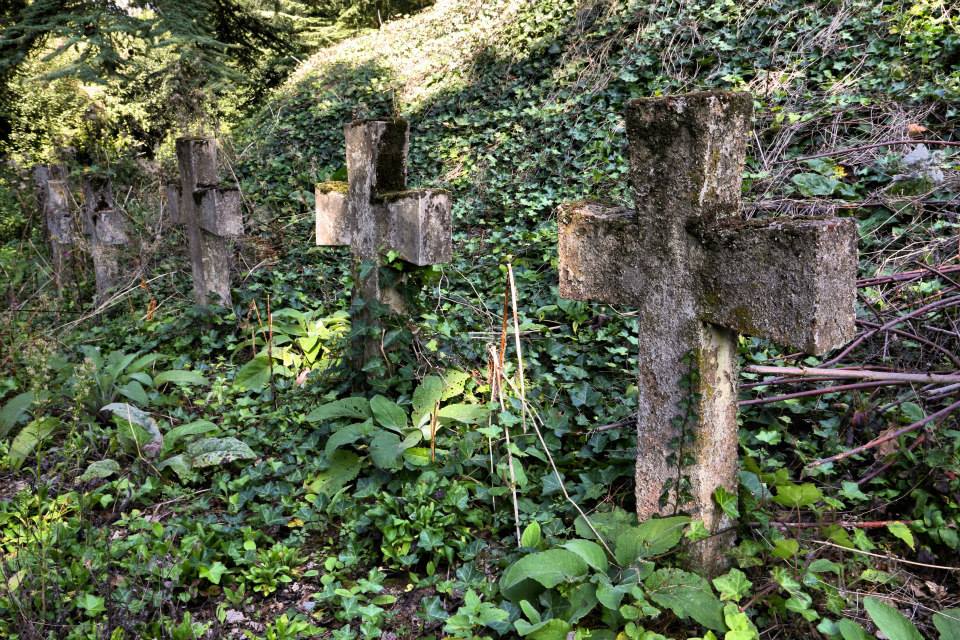
The Dominicans left Hawkesyard in 1988, but their benefactors and some of their brethren remain. Josiah Spode and Helen Gulson are interred in a small chapel within the Priory Church, and outside in the gardens, are the simple concrete crosses marking the graves of monks.

Monks' Cemetery, Hawkesyard

Monks’ Cemetery, Hawkesyard by Jason Kirkham

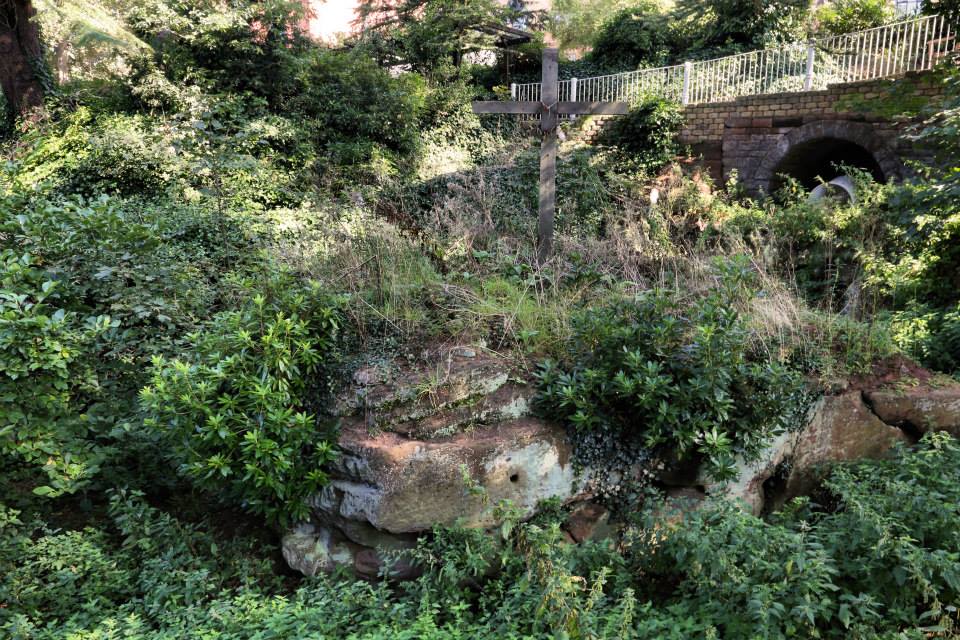
As beautiful as the church is, it’s the gardens at Hawkesyard with their subterranean features, which have captured my imagination. They appear to have had the same effect on this reporter from the Lichfield Mercury, who visited in the Summer of 1935, and wrote the following description:

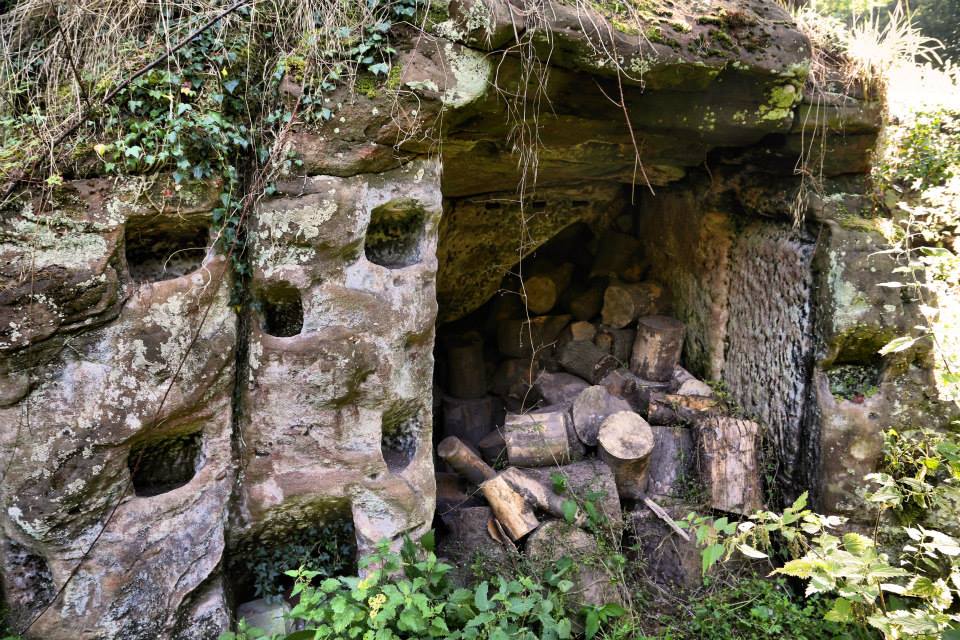
Down weather-worn and feet-worn steps, through charming little rockery glades, rich with lichens, ferns and its more wild brother – bracken- time and nature has made this wonderful spot more beautiful in its wildness. Some pathways lead down through fine old arches, gloriously hewn or erected deep into the bowels of the earth, or so it appeared; while others lead gradually upwards through narrow passages. Opening into a small glade we suddenly came across the entrance to the well-known underground passage which, descending steeply, rises just as abruptly in another part of the rockery, far remote from each other. Today this passage is awesome in appearance, the ground underfoot being feet deep with decaying leaves, and only the most venturesome pass out of the light of day into its unknown blackness. It was a curious and certainly thrilling experience to traverse this maze of paths. Another similar grotto housed a large shelter, carved in stone and the actual rock; a sort of summerhouse with a double archway entrance. In another we discovered some beautiful carving in white stone of three saintly figures, obviously beautifully carved, but decaying and rotting with age. We could not discover their identity or purpose, although they surmounted what could easily have been a small natural altar, secluded in the quiet of this wonderful grotto.

Eighty years later, there are no saints to be found in this wild part of Hawkesyard. Time and nature have now ravaged its beauty but have not diminished its curiosity. Several theories exist as to who carved these grottos and tunnels out of the rock and why, but as an investigation into the overgrown site in the mid 1990s concluded, ‘the function of all the above is not clear’. Any ideas?

Sunken Garden, Hawkesyard by Jason Kirkham

Sunken Garden, Hawkesyard by Jason Kirkham

Hollow rock at Hawkesyard by Jason Kirkham

Hollow rock at Hawkesyard by Jason Kirkham


Sources

Photos by Jason Kirkham

http://www.hawkesyardestate.com

Hawkesyard, Armitage, Staffordshire: A Documentary and Field Assessment. Chris Welch

Staffordshire Parks and Gardens Register Review (1993-96). Parts I and II. Staffordshire County Council

http://www.armitagewithhandsacre.co.uk

http://www.staffordshiregardensandparks.org/images/Newsletter/Issue40

Lichfield Mercury Archive

Well Wishers

I’ve written previously about how the appearance (and apparently, the actual location!) of St Chad’s well has changed over the years here, but I’ve recently found some contemporary accounts of the well’s previous incarnation – a ‘vertical tube built of engineering bricks, covered with a kind of gloomy sentry-box of stone’, which had apparently become so neglected in the 1940s that only a few inches of stagnant water covered in a green scum remained in the bottom of the pool. (1)

In November 1946, the Bishop of Stafford lamented that the well had once been a place of great pilgrimage but had fallen into a state of neglect and considerable disrepair and in April 1948, E Sutton, a former caretaker of the well, described it as having degenerated into a wishing well. A few weeks later, Mr Sutton submitted a further letter to the Mercury, advising, ‘I have again visited the site and found it in a worse state than on my visit there last Autumn. Then boards covered the Well. These are now removed and the Well is full of rubbish, among brick-bats and wood being a worn out coal bag! I noticed too, among the bricks and stonework lying around in wild confusion the ancient ‘St Chad’s Stone’, which the historian Leland, writing of his visit to the Well some four hundred years ago, states was then believed to be the very stone upon St Chad stood in the icy water as an act of penance, it then being the bottom of the Well. When the small building was erected over the Well in Stuart times, this stone was incorporated into the building, no doubt in order to preserve it. Many hundreds of hands have been placed upon it, mostly with reverence, since. It now lies among the rubbish, one corner broken. A fitting symbol of the ideals of 1948!’ (2)

St Chads Well

St Chad’s Well today

Saint Chad's c.1915. Taken from Wikipedia

Saint Chad’s Well c.1915. Taken from Wikipedia

I’m intrigued by this reference to ‘the ancient St Chad’s stone’. When James Rawson described the site prior to his restoration in the 1830s, he noted that, ‘the well-basin had become filled up with mud and filth; and on top of this impurity a stone had been placed, which was described as the identical stone on which Saint Chad used to kneel and pray!’. Despite Rawson’s apparent scepticism about these claims, was he somehow persuaded to use this stone in his new well structure, thereby perpetuating the myth? I’d love to see what went on in those discussions and I’d really like to know what happened to this legendary stone. St Chad may not have been anywhere near it, but the fact that people believed he had should have made it worth saving for posterity’s sake.

Water in the well

Water in the well

Unfortunately for Mr Sutton, the restoration of the well did not put a stop to people using St Chad’s Well for wishes, as evidenced by the layer of coins that still glint beneath the water, tossed in at some point over the last half century or so. It’s often suggested that this is the continuation of a ritual that our ancestors were carrying out a long, long time before St Chad arrived in Lichfield. Some things change. Some stay the same.

Notes

(1) The octagonal stone well structure erected by Rawson in the 1830s, as described by the Lichfield Mercury on May 6th 1949!

(2) A little off topic, but it’s amusing to see that it’s not just nowadays that letters appear in the Lichfield Mercury suggesting that society is going to hell in a handcart. Once again, some things stay the same…

Every Picture Tells a Story

In 1961, the 21st Earl of Shrewsbury sold Ingestre Hall to what was then the West Bromwich Corporation. Along with the red-brick Jacobean style mansion came sixty-six paintings, most of them portraits of the Earl’s ancestors – the Chetwynd, Talbot and Shrewsbury family.The collection was catalogued in 2013 by the Ingestre Festival Association to celebrate the 400th anniversary of the building of the hall and is available to view on the BBC website here, as part of their ‘Your Paintings’ project.

Ingestre Hall

Ingestre Hall by Jason Kirkham

Amongst them are George Talbot, Keeper of Mary Queen of Scots for fifteen years and his wife Bess of Hardwick, arguably the second most powerful woman in Elizabethan England. The 19th Earl of Shrewsbury, Charles John Chetwynd-Talbot, appears twice – aged four and wearing a red dress and aged around twenty five and wearing full dress uniform. The infamous Anna Maria is here too, as a young woman of seventeen, in the year that she wed Francis Talbot and became Countess of Shrewsbury. The marriage would end with the Earl’s death, fatally wounded by his wife’s lover, George Villiers, 2nd Duke of Buckingham, in a duel that took place on 16th March 1667. The event was recorded by Samuel Pepys who described Anna Maria as, ‘my Lady Shrewsbury, who is a whore, and is at this time, and hath for a great while been, a whore to the Duke of Buckingham’.There were reports elsewhere that she had attended the duel disguised as the Duke’s page but whether these rumours (or the ones about what happened in that bloodstained shirt afterwards) are true, we’ll never know.  Also at Ingestre is a portrait of the Shrewsbury’s younger son, John Talbot, who in a twist of fate was also killed in a duel, sometime around his 21st birthday in February 1686.  This cause this time was not infidelity but, ‘having given the Duke of Grafton very unhandsome and provoking language’.

The grand staircase aka The Blue Staircase. By Jason Kirkham

The grand staircase aka The Blue Staircase. By Jason Kirkham

As far as I can see, there is no portrait of Francis Talbot. Perhaps it was destroyed in the devastating fire which swept through the hall on the night of 12th October 1882.  Unfortunately, no inventory was taken until afterwards. A contemporary account tells us that, “Some valuable paintings…were saved”, but that “The grand historical paintings on the staircase, however, were all destroyed”.

Hanging on the staircase in the place of these lost paintings are portraits which reflect a chapter in the history of the hall’s present owners, Sandwell Metropolitan Borough Council. There are paintings of the Earl of Dartmouth, and Alderman Reuben Farley who persuaded him to lease part of his estate for a nominal rent of £1 in order that a park could be established for the people of West Bromwich. Under Sandwell Council’s ownership, the hall is used mainly as a residential arts centre, although it can also be hired out for weddings. I’m sure that dreams of having a photograph taken on the grand blue staircase in a nice white frock have influenced many a prospective bride’s decision in choosing Ingestre as the setting for their big day.

Blue Staircase with portrait of Alderman Reuben Fairley JP

Blue Staircase with portrait of Alderman Reuben Fairley JP. By Jason Kirkham

Impressive as the grand staircase is, it was the nearby secret staircase hidden behind a wall which captured my imagination. Leading to what was easily the shabbiest of all the rooms we saw, it would be quite easy to believe that no-one else had stepped inside here since 1961.

Inside the not-so-secret waiting room

Inside the not-so-secret waiting room. By Jason Kirkham

It’s thought the room may have been used by those waiting for a signal from the Pavilion to tell them that the coast was clear for illicit night time activities of some description to commence.  If only those carved Talbot dogs could talk…

One of the many Talbot dogs at Ingestre

One of the many Talbot dogs at Ingestre. By Jason Kirkham

Bookcase Ingestre

In the library. By Jason Kirkham

There’s yet another concealed door in the library, in a bookshelf full of pretend books. As Joss Musgrove Knibb from the Lichfield Gazette pointed out to me, even more shocking than this literary deception is that whoever was responsible didn’t even take the opportunity to include puns along the lines of, ‘Percy Vere, in 15 large volumes’ as they had done at Chatsworth. Seems the conclusion to be drawn from an afternoon at Ingestre is this – it’s the paintings and not the books which tell the stories here.

Notes: Thanks to Jason Kirkham of UK Urbex, who has very kindly let me use his photographs as I forgot my camera. And then couldn’t download the ones I took on my phone. (Let’s be honest, it’s probably worked out better that way)

Sources:

http://www.telegraph.co.uk/news/obituaries/1423544/Nadine-Countess-of-Shrewsbury.html
http://www.altontowers.com/alton-towers-heritage/heritage/family/the-11th-earl-francis/ The Diary of Samuel Pepys, Volume 2
A Short History of Ingestre by Anne Andrews
Catalogue of Paintings – Ingestre Hall Residential Arts Centre
Portraits of Illustrious Personages of Great Britain by Edmund Lodge