Bodies of Evidence

After reading of archaeological discoveries in North Lichfield, I thought it a good time to review one of the city’s greatest history mysteries. A quick recap then for anyone who, unlike me, hasn’t been obsessing for over fifteen years about how ‘a considerable quantity of human bones‘ were found in the early nineteenth century in a meadow adjoining Christian Fields.
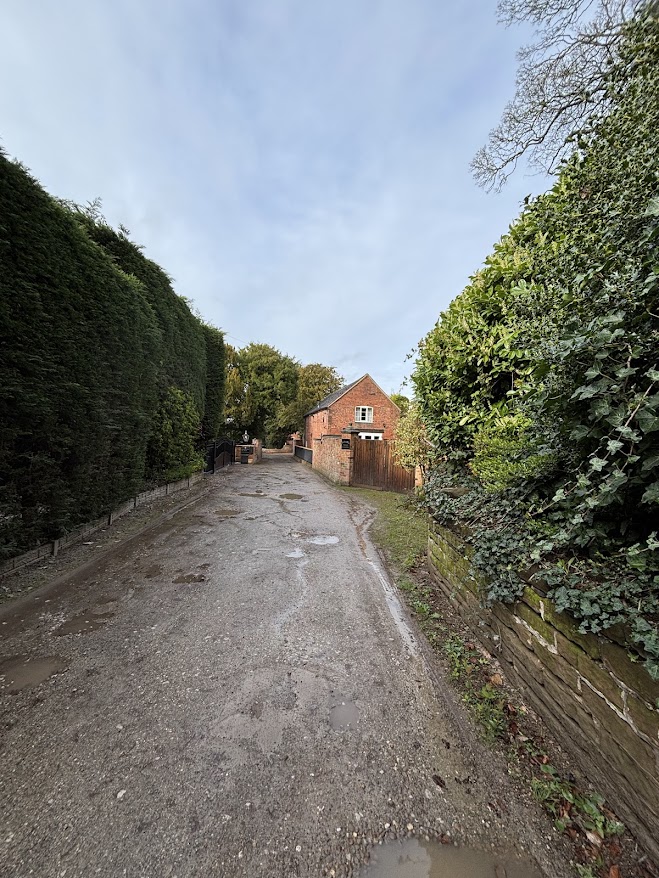
The path to Pones Mill

Many of the bones were found a few feet beneath the surface in the quirkily named ‘Toads Hole Piece’, alongside some Roman pottery, the head of a pike and several horseshoes, although skeletal fragments were scattered across a half-mile radius. Only the bones found at Pones Mill, now known as Netherstowe House, were said to have had the appearance of having been buried, but it’s possible that they may have been dug up elsewhere and ‘thrown into an excavation’ there.

Eighteenth century antiquarians linked the discoveries of the bones to the Lichfield legend, in which a thousand Christians were massacred at the start of the fourth century during the reign of the Roman Emperor Diocletian. The site of the slaughter is still known as Christian Fields and although proper historians say the story is nothing more than a myth, the legend lives on. The Martyrs Plaque, a carving of three cadavers which once adorned the facade of the Guildhall can now be found in Beacon Park and elsewhere there are other versions of our sinister city seal, including on the railway bridge near the station. These visual versions of the legend and the refusal of people like me to stop referring to the city as ‘the Field of the Dead’ even though its exact etymology is ‘the Field by the Grey Wood’have all helped to ensure that this example of Lichfield lore endures.
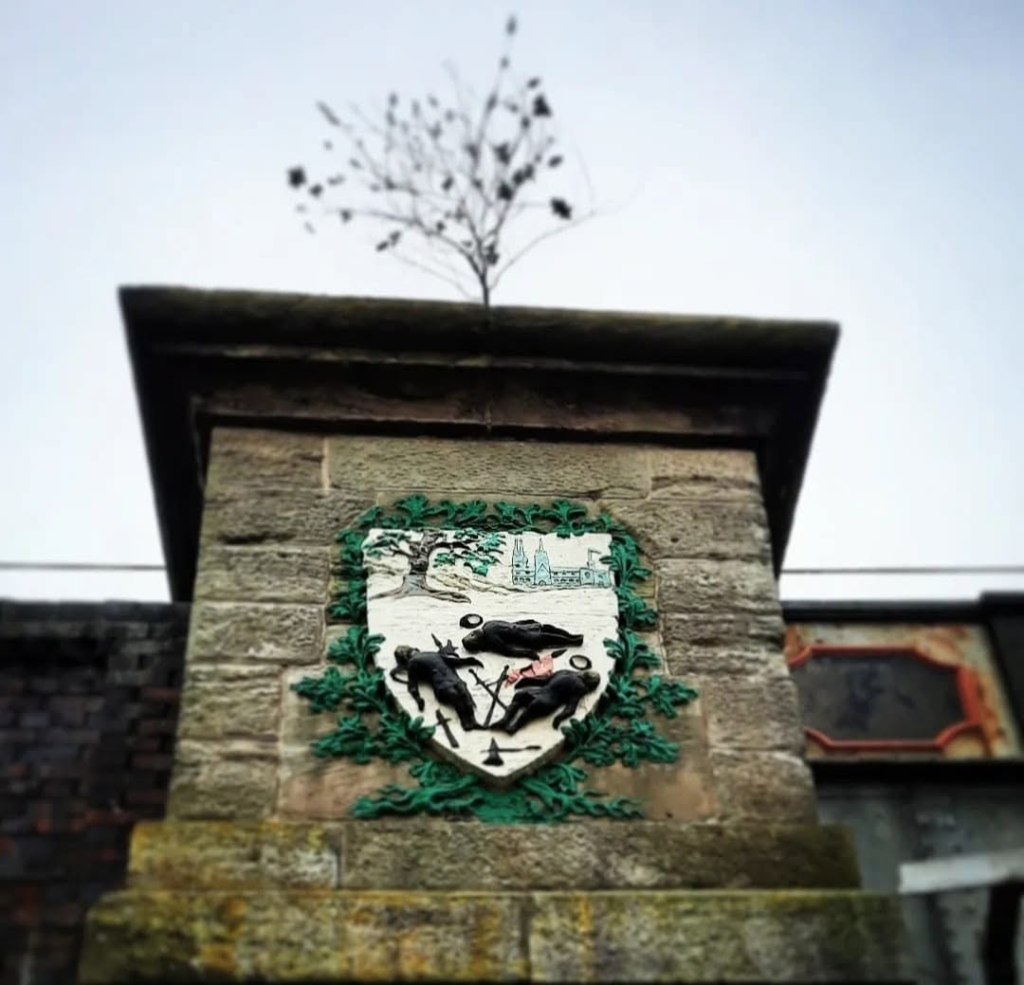
Welcome to the Field of the Dead folks

If we discount the dead martyrs, what other explanations are there for the cartloads of bones being found beneath the fields of Netherstowe? Here are some of the possibilities I’ve considered. Feel free to dissect and discuss as necessary.
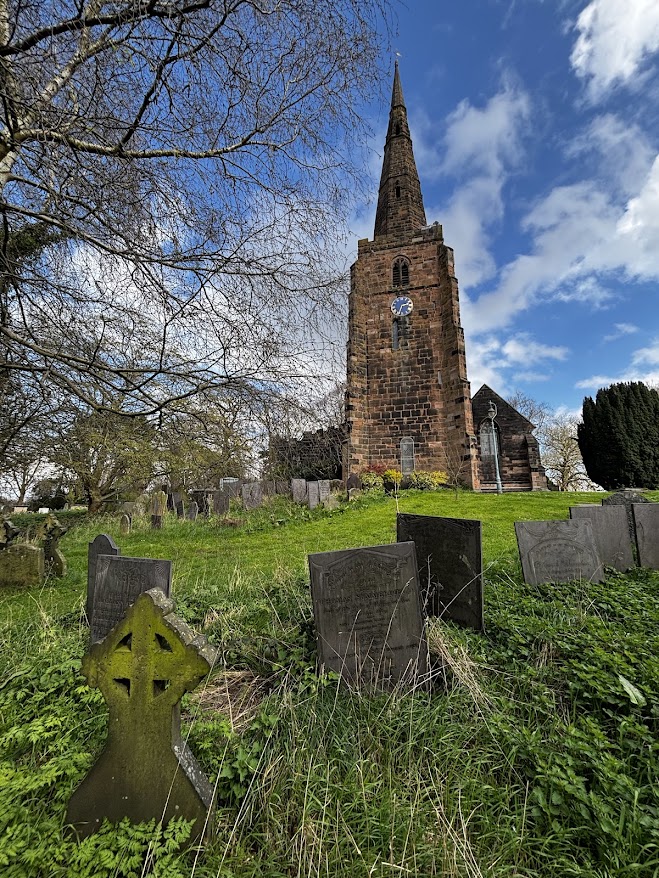
If there was ever a graveyard to epitomise the idea of death being the great leveller, it would be St Michaels on Greenhill.

An outbreak of plague in 1593 led to the deaths of over 1,100 Lichfeldians. Later outbreaks took place during the already troubled times of the Civil War, leading to the demise of another 800 citizens. Could the bones buried at Christian Field the victims of the disease? It seems unlikely. In the parish register of St Michael’s, someone has added notes alongside the names of those buried there in summer 1593. In July, ’67 dead of plague’. In August, ’59 dead of plague’. During this particular outbreak of plague in Lichfield at least, it seems those who succumbed rest in peace at the churchyard at Greenhill rather than in a pit on the northern outskirts of the city.

Could our Christian Field corpses be the remains of Civil War soldiers then, slaughtered in a skirmish on the outside of the city as the Close was being besieged? Again, the registers of St Michael’s suggest otherwise. There are records of twenty five soldiers being buried in the churchyard between 1642 and 1645 which suggests that men killed during the conflict were also buried here at Greenhill.

For me, as alluded to above, it’s the recent archaeology that’s been carried out in the Curborough area which may hold the key to solving the mystery of Christian Fields. Sixty coins dating to between the early 2nd to 4th century have been unearthed near to the farm, along with forty brooches. More examples of mortaria, as found at Christian Fields, have turned up along with worked marble and alabaster, Samian pottery fragments and glass suggesting there was a Roman settlement or at least a villa here. A much simpler Romano – British roundhouse has also been excavated nearby, along with a granary and well alongside it. What we can be sure of then is that there was occupation of a site near Christian Fields during the reign of Diocletian but whether those living here were converts to the new religion or still worshipping the old gods is unknown.
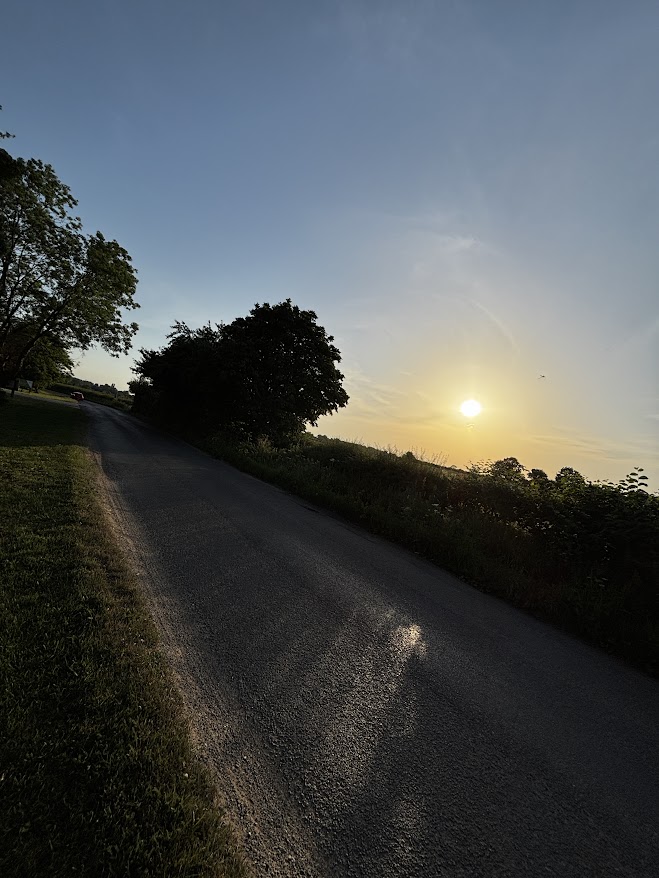
Sunset on Watery Lane

There are also field names which hint at a history which definitely has the potential to explain the presence of bones in this area. The 1851 Staffordshire tithe map records a ‘Chapel Meadow’, ‘Chapel Croft’ and perhaps most pertinently, ‘Graveyard’ in the vicinity of Watery Lane. And finally, and perhaps most remarkably at all, a single surviving Bronze Age burial has been found nearby in the form of a few fragments of cremated bone and sherds of the collared urn which once contain these ancient remains.

If burials really have been taking place in this area for not just centuries but millenia, perhaps ‘The Field of the Dead’ might be an accurate description after all…

Sources:

Staffordshire Parish Registers Collection

Click to access part-2-2023.pdf

Land at Curborough South, Lichfield, Staffordshire: Archaeological Evaluation © Cotswold Archaeology

WATERY LANE, LICHFIELD
EARTHWORK SURVEY, EVALUATION TRENCHING AND MITIGATION, Headland Archaeology

https://www.heritagegateway.org.uk/Gateway/Results_Single.aspx?uid=d01084bb-f418-47a7-b5e4-4b292c3cd6d1&resourceID=19191

Bringing up the Bodies

Our city churchyards are full of those Lichfeldians who have left us. There are gaol keepers and executed prisoners, civil war soldiers and WW2 airmen, paupers and presumably, somewhere, plague victims (although that’s a whole other line of enquiry). Yet there are also others, denied the right to a Christian burial, laid to rest in unhallowed ground.

I’ve written before about Bessy Banks and the tragic tale of Lichfield’s ‘love-desperate maid’. The story seems to have been well known in the 17th and 18th centuries, being written about by both Anna Seward and David Garrick, and the place name ‘Bessy Banks’ Grave’ survived until the start of the 20th century, when the supposedly haunted spot was built on as the area around Dimbles Lane, once a ‘sunken road leading north from Lichfield’, was developed. Ironically, given that Bessy appears to have been denied a Christian burial and instead interred at a crossroads for taking her own life, her grave now seems to lie within the grounds of a Catholic church. Unfortunately, there are no records of any remains being uncovered on the site when St Peter and St Paul was built which may have answered at least some questions about Bessy and her story.

1815 Map of Lichfield showing Bessy Banks Grave

At other Lichfield locations, we have the opposite problem – skeletons without a story. In 1862, workmen digging the foundations of a building at the warehouse of the Griffiths Brewery on St John Street, adjoining the South Staffordshire Railway, found the bones of ‘a full-grown person’, which ‘had been there for many years’, about four feet from the surface. As the newspaper reports that only the head and arms were removed, I can only conclude that the remainder of the remains remain there.

A burial place at the old brewery

Then, in February 1967, a skeleton believed to be around four hundred years old, turned up four feet down from the existing ground level during excavations at the new shopping precinct at Castle Dyke. Most of the bones were crumbled but the teeth were in a good condition. So good in fact that the site foreman said, ‘I would have been pleased to own them’. What became of the body and its nice set of gnashers is unknown.

Could either body belong to a man named Gratrex, found hanging in Lichfield on Wednesday 7th September 1763 and buried in the highway after the Coroner’s Inquest issued a verdict of ‘felo de se’? If not, it seems there maybe another skeleton lying somewhere beneath the streets of Lichfield still to be unearthed.

Sources

Lichfield Mercury 2/2/1967

Burton Chronicle 18/9/1862

Aris’s Birmingham Gazette 12/9/1763

Bones of Contention

Last week, together with other members of the Lichfield Discovered group, I enjoyed a Gruesome and Ghostly tour around the city lead by one of Lichfield’s Green Badge Guides. Some tales were familiar (although it’s always fascinating to hear someone else’s version of a story you know), others were complete revelations. I was particularly intrigued by the story of an ancient adult male skeleton, apparently discovered with the remains of a tiny baby in his arms when an access road was being built behind Bakers Lane. (1) Obviously when listening to stories in these circumstances, you’re never quite sure where truth ends and anecdote, myth and legend creep in, and I was interested to know whether there was any substance to this story. As of yet I haven’t been able to find anything on this particularly, but as you might expect, searching for skeletons in Lichfield turns up all sorts of intriguing information….

In 1925, the Tamworth Herald got very excited when it heard that workers digging a trench in the grounds of St John’s Hospital in Lichfield had discovered human remains, announcing that the skeletons discovered were ‘probably over 700 years old’ and that they may be ‘priors and their bretheren’. The Rev John Ernest Auden, chaplain at the hospital, wrote to the Lichfield Mercury to set the record straight – yes, ten bodies had been discovered but it was unlikely that they were seven hundred years old, or even half that. It was also unlikely that they were priors as such burials were usually discovered alongside an article of their service, often a chalice and patten, as had been discovered in 1917 at the former leper’s hospital at Freeford (2).  It was much more likely that they were old residents of the hospital. Archaeological evidence in the form of tiles and pottery found alongside the bodies suggested that they had been there for around two hundred years. Rev Auden also recalled how, when he was curate of St Mary’s in 1886 to 1889, he could remember funerals taking place at St Johns and several older people he had known, including former resident of the hospital Henry Cartmale and City Coroner Charles Simpson, could recollect burials taking place in the grounds. Rev Auden also pointed out that there were three fairly modern gravestones under the Yew Tree supporting this.

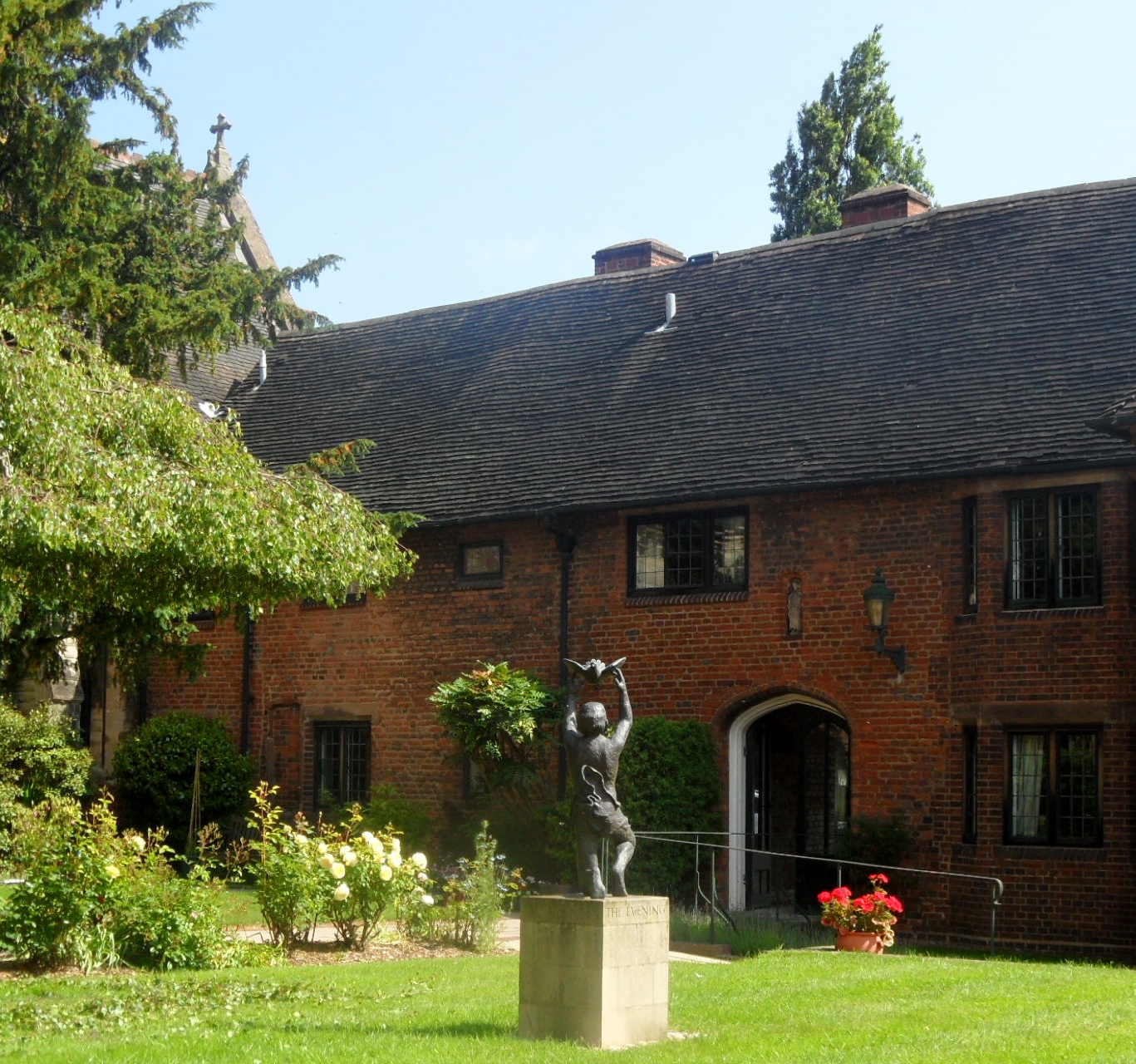
Part of the courtyard at St John’s Hospital

Apparently one woman had protested at ‘the hideous sacrilege and desecration in using ground solemnly consecrated and dedicated as God’s acre for ever, for a bed for sewers’, and so Rev Auden took the opportunity to reassure her, and anyone else that was concerned about the work that was being carried out, that the bones had been collected and reburied together and that the Hospital Quadrangle would soon resume its peaceful aspect, plus the manholes.

Although they did make assumptions in this particular instance, to be fair to the Tamworth Herald, evidence for much older burials, in and around the hospital, was discovered in 1967, when according to the County History, a medieval burial was found during alterations to the almshouses. In June last year, Annette Rubery and local newspapers reported that further remains were found just one metre below the pavement outside the hospital, when workers were repairing a gas pipe, although I don’t think the date of this burial was ever confirmed?

In another post, I’ll look at ‘Councillor Moseley’s Graveyard’, the nickname given to the site of the Friary after Thomas Moseley secured permission to excavate the site in the 1930s, uncovering several skeletons and other archaeological remains, and also the area in and around Lichfield’s Cathedral Close, where amongst other discoveries, a very unusual burial was reportedly found within the walls of one of the buildings in the early eighteenth century. They don’t call this the Field of the Dead for nothing you know (4).

Notes:

(1) One of the reasons I find this particularly interesting is that it seems unusual that it’s a male skeleton with a young child. Over in St Michael’s churchyard, the remains of an adult with a child were discovered, but this was thought to be a mother who had died in childbirth (and was of course in consecrated ground). For more information on that see here. Also, it makes you think about past uses of land and what discoveries like this can tell us. Edit: I’ve just re-read the report and the actual wording is ‘an adult and tiny baby found buried together…it is possible they represent a mother and child who died at childbirth’, so I should make it clear.

(2) For more information on the human remains discovered at Freeford, and thought to be related to the fomer lepers hospital there, see here

(3) Mr Charles Simpson b. April 9th 1800. Solicitor, Town Clerk and Coroner for the City of Lichfield, and Clerk of the Peace for Staffordshire 1825.  d. April 22nd 1890Details from the Shrewsbury School Register 1734 – 1908, edited by….Rev J E Auden!

(4) As I’m sure everyone knows by now, Lichfield doesn’t really mean Field of the Dead, it’s just an old myth that’s most likely stuck because it’s more evocative than the real meaning of the the name which is thought to be something like ‘common pasture in or beside the grey wood’. For more on the place name and yet more Lichfield bones see here 

Sources:

:Lichfield Mercury Archive

Tamworth Herald Archive

www.annetterubery.co.uk

Hospitals: Lichfield, St John the Baptist’, A History of the County of Stafford: Volume 3(1970), pp. 279-289

Shrewsbury School Register 1734 – 1908, edited by Rev J E Auden