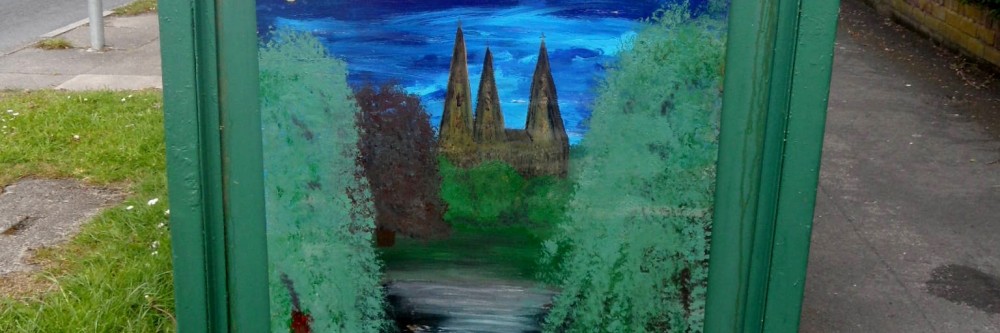
After reading of archaeological discoveries in North Lichfield, I thought it a good time to review one of the city’s greatest history mysteries. A quick recap then for anyone who, unlike me, hasn’t been obsessing for over fifteen years about how ‘a considerable quantity of human bones‘ were found in the early nineteenth century in a meadow adjoining Christian Fields.
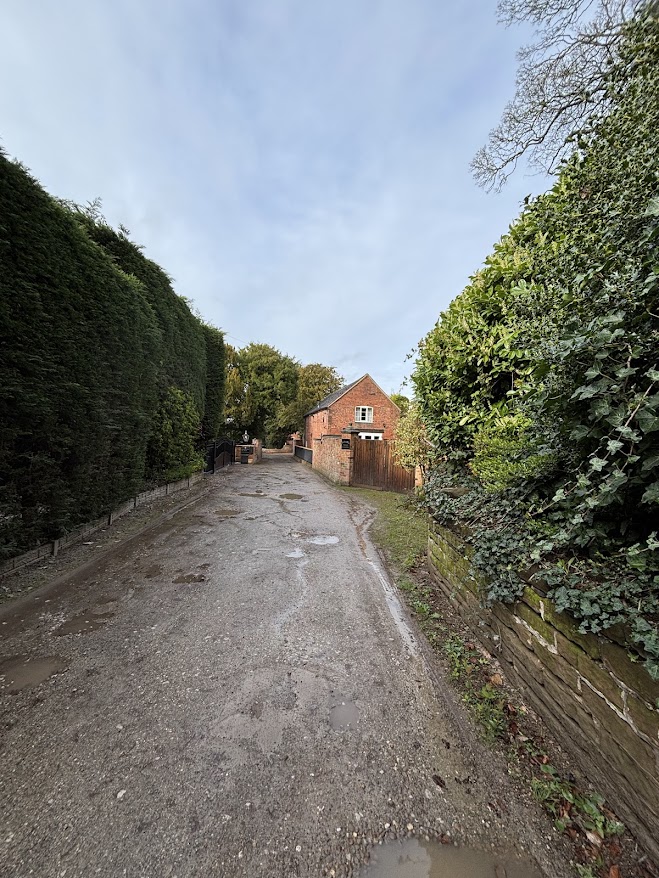
Many of the bones were found a few feet beneath the surface in the quirkily named ‘Toads Hole Piece’, alongside some Roman pottery, the head of a pike and several horseshoes, although skeletal fragments were scattered across a half-mile radius. Only the bones found at Pones Mill, now known as Netherstowe House, were said to have had the appearance of having been buried, but it’s possible that they may have been dug up elsewhere and ‘thrown into an excavation’ there.
Eighteenth century antiquarians linked the discoveries of the bones to the Lichfield legend, in which a thousand Christians were massacred at the start of the fourth century during the reign of the Roman Emperor Diocletian. The site of the slaughter is still known as Christian Fields and although proper historians say the story is nothing more than a myth, the legend lives on. The Martyrs Plaque, a carving of three cadavers which once adorned the facade of the Guildhall can now be found in Beacon Park and elsewhere there are other versions of our sinister city seal, including on the railway bridge near the station. These visual versions of the legend and the refusal of people like me to stop referring to the city as ‘the Field of the Dead’ even though its exact etymology is ‘the Field by the Grey Wood’have all helped to ensure that this example of Lichfield lore endures.
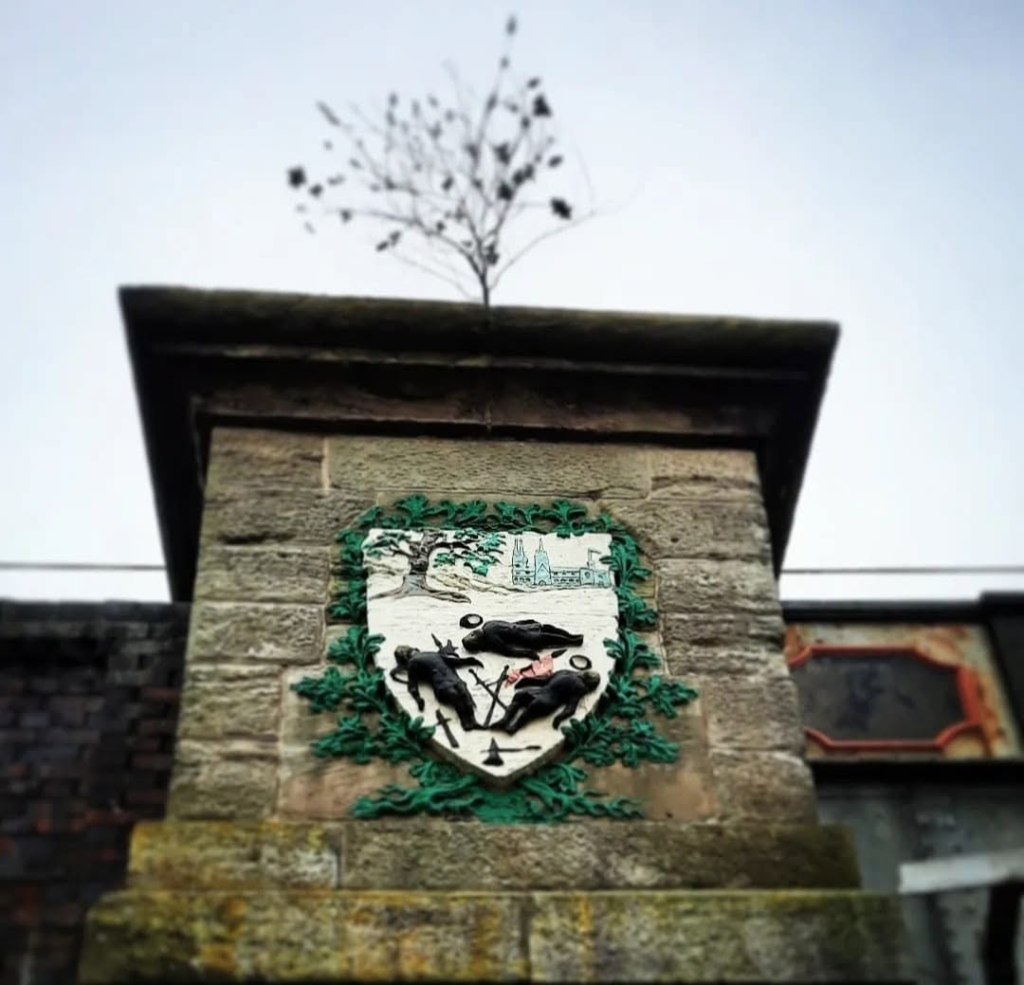
Welcome to the Field of the Dead folks
If we discount the dead martyrs, what other explanations are there for the cartloads of bones being found beneath the fields of Netherstowe? Here are some of the possibilities I’ve considered. Feel free to dissect and discuss as necessary.
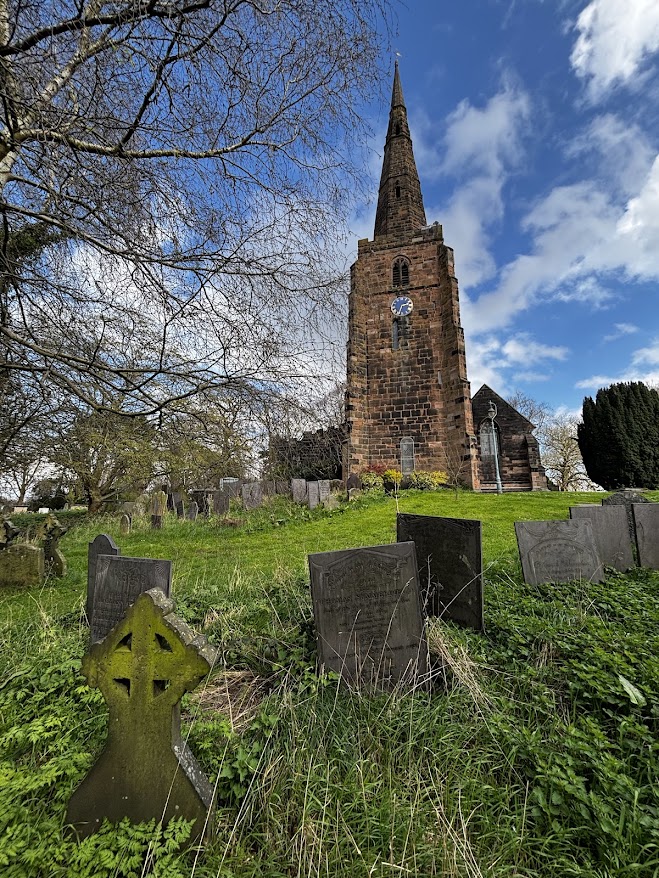
An outbreak of plague in 1593 led to the deaths of over 1,100 Lichfeldians. Later outbreaks took place during the already troubled times of the Civil War, leading to the demise of another 800 citizens. Could the bones buried at Christian Field the victims of the disease? It seems unlikely. In the parish register of St Michael’s, someone has added notes alongside the names of those buried there in summer 1593. In July, ’67 dead of plague’. In August, ’59 dead of plague’. During this particular outbreak of plague in Lichfield at least, it seems those who succumbed rest in peace at the churchyard at Greenhill rather than in a pit on the northern outskirts of the city.
Could our Christian Field corpses be the remains of Civil War soldiers then, slaughtered in a skirmish on the outside of the city as the Close was being besieged? Again, the registers of St Michael’s suggest otherwise. There are records of twenty five soldiers being buried in the churchyard between 1642 and 1645 which suggests that men killed during the conflict were also buried here at Greenhill.
For me, as alluded to above, it’s the recent archaeology that’s been carried out in the Curborough area which may hold the key to solving the mystery of Christian Fields. Sixty coins dating to between the early 2nd to 4th century have been unearthed near to the farm, along with forty brooches. More examples of mortaria, as found at Christian Fields, have turned up along with worked marble and alabaster, Samian pottery fragments and glass suggesting there was a Roman settlement or at least a villa here. A much simpler Romano – British roundhouse has also been excavated nearby, along with a granary and well alongside it. What we can be sure of then is that there was occupation of a site near Christian Fields during the reign of Diocletian but whether those living here were converts to the new religion or still worshipping the old gods is unknown.
There are also field names which hint at a history which definitely has the potential to explain the presence of bones in this area. The 1851 Staffordshire tithe map records a ‘Chapel Meadow’, ‘Chapel Croft’ and perhaps most pertinently, ‘Graveyard’ in the vicinity of Watery Lane. And finally, and perhaps most remarkably at all, a single surviving Bronze Age burial has been found nearby in the form of a few fragments of cremated bone and sherds of the collared urn which once contain these ancient remains.
If burials really have been taking place in this area for not just centuries but millenia, perhaps ‘The Field of the Dead’ might be an accurate description after all…
Sources:
Staffordshire Parish Registers Collection
Click to access part-2-2023.pdf
Land at Curborough South, Lichfield, Staffordshire: Archaeological Evaluation © Cotswold Archaeology
WATERY LANE, LICHFIELD
EARTHWORK SURVEY, EVALUATION TRENCHING AND MITIGATION, Headland Archaeology


