A Study in Orange

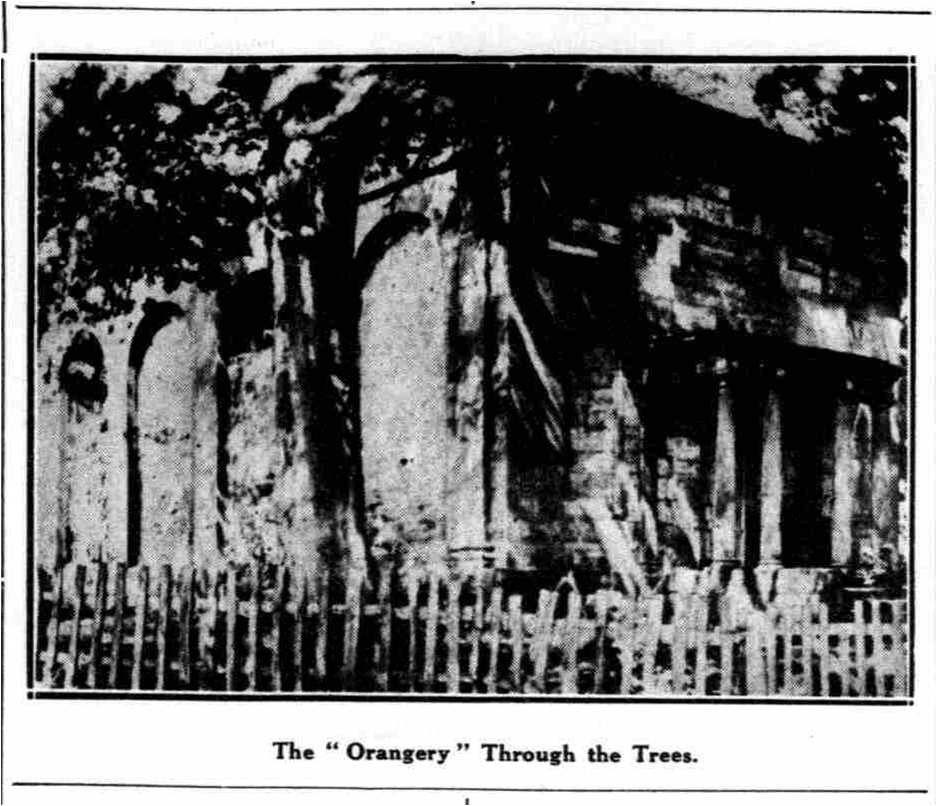
The fascination for all things Fisherwick Hall continues. Recently, I discovered that the Marquess of Donegal’s Orangery once sported a rather fine portico supported by four carved pillars. Although the Orangery itself is still miraculously standing in the grounds of what is now Woodhouse Farm, despite being struck by lightning and used as a cow shed for decades, the portico has disappeared. We know it was still there in July 1935, when the Lichfield Mercury ran their, ‘The Beauty that is England’ feature on local country houses past and present, and included both a description and a photograph of it. However, it was gone by January 1947 when an article by ‘A Contributor’ suggested that the portico had been made use of at Moor Hall and Shenstone Court before eventually being purchased by the Lichfield Corporation in the 1930s to mark the entrance to the public gardens on the site of the old Friary opposite what is now the Library and (not for much longer sadly) the Record Office. However, although the portico at the Friary is thought to have come from Shenstone Court I think its highly unlikely that it started out at Fisherwick.

Much more convincing is the detective work carried out by Patti Wills.  Patti contacted me last week to say she knew of a farmhouse in Elford with a portico. Although locally it had been suggested that the structure originated at Elford Hall, Patti noticed the similarity between the portico at Upfields Farm and the old photograph of the Fisherwick Orangery portico. What’s more, the listed building description for Upfields says, “The porch is reputed to have come from Fisherwick Hall (demolished) by Capability Brown”. I think Patti is right but have a look below and see what you think.

Upfields Farm, Elford. Photograph used with kind permission of Patti Wills

The Orangery, Woodhouse Farm, part of Fisherwick Estate taken from the Lichfield Mercury

The Orangery, Woodhouse Farm, part of Fisherwick Estate taken from the Lichfield Mercury

I’m very grateful to Patti for this information and so pleased that another piece of the Fisherwick jigsaw puzzle has been found.  It’s not over yet though! It’s said that a staircase from Fisherwick was taken to a house on Beacon Street known as Ardmore, solid mahogany doors were made use of at 15, Bird Street and various bits and bobs can be found in Tamworth, including monogrammed wrought iron gates at Bole Hall On a slightly more macabre note, the location of the remains of the Marquess of Donegall and other members of his clan is also a mystery, after the family mausoleum was destroyed during work on St Michael’s church in the mid nineteenth century. The Fisherwick treasure hunt continues….

Sources:

Lichfield Mercury Archive

Parishes: Bolehall and Glascote’, A History of the County of Warwick: Volume 4: Hemlingford Hundred (1947), pp. 248-249.

Orange Peel

In the mid 1930s, the Lichfield Mercury ran a series of articles called ‘The Beauty that is England’, featuring local country houses – ‘what they are and have been’ – around Lichfield. Each article blends the author’s description of the house (if still standing) and grounds with a heady mix of folklore, hearsay, historic records and poor quality photographs. Taken with a pinch off salt, they make for fascinating reading. As well as describing the past, they are now the past, providing us with a snapshot of almost eighty years ago – a ‘Now and Then and Then’, if you like.

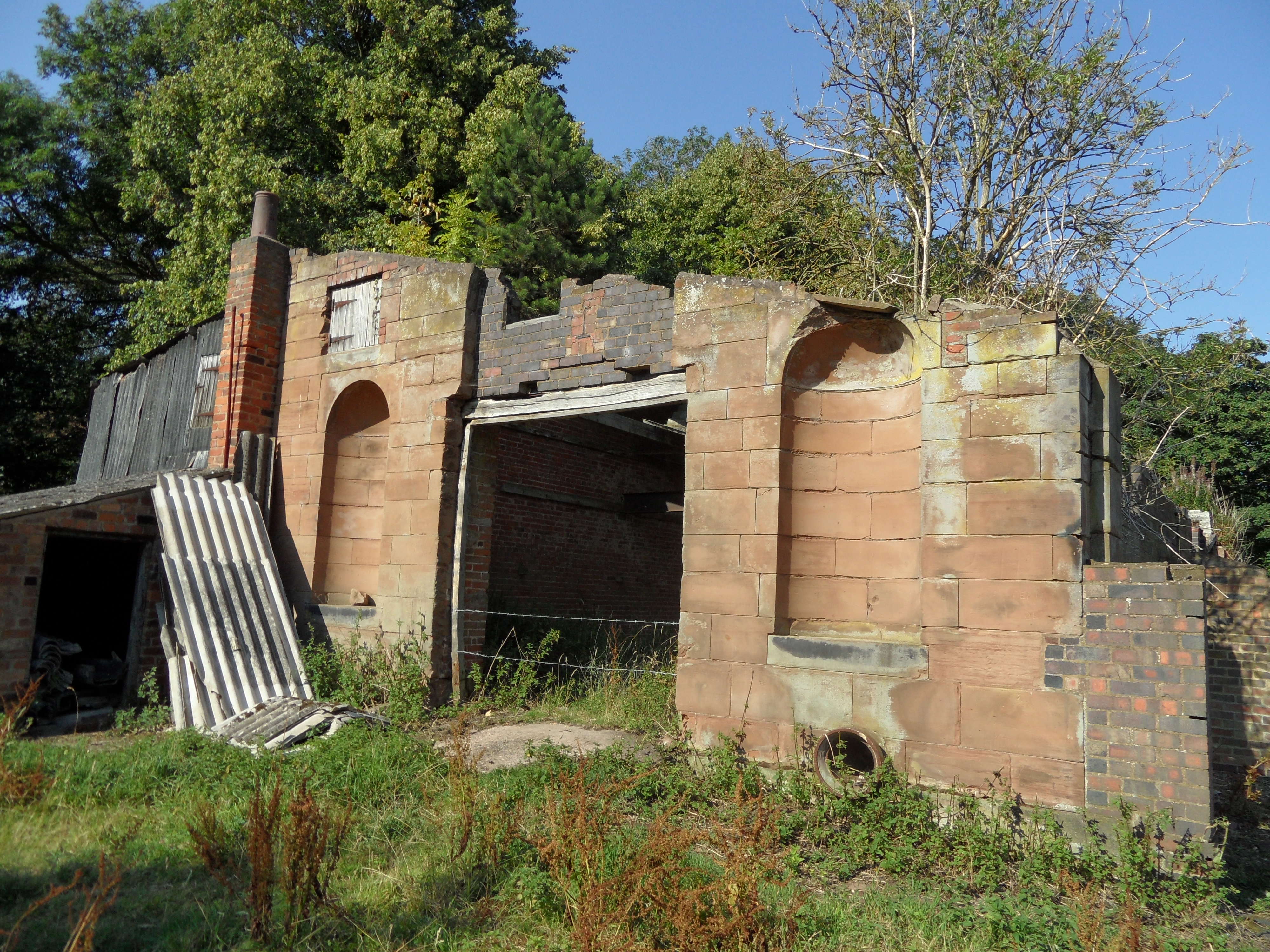
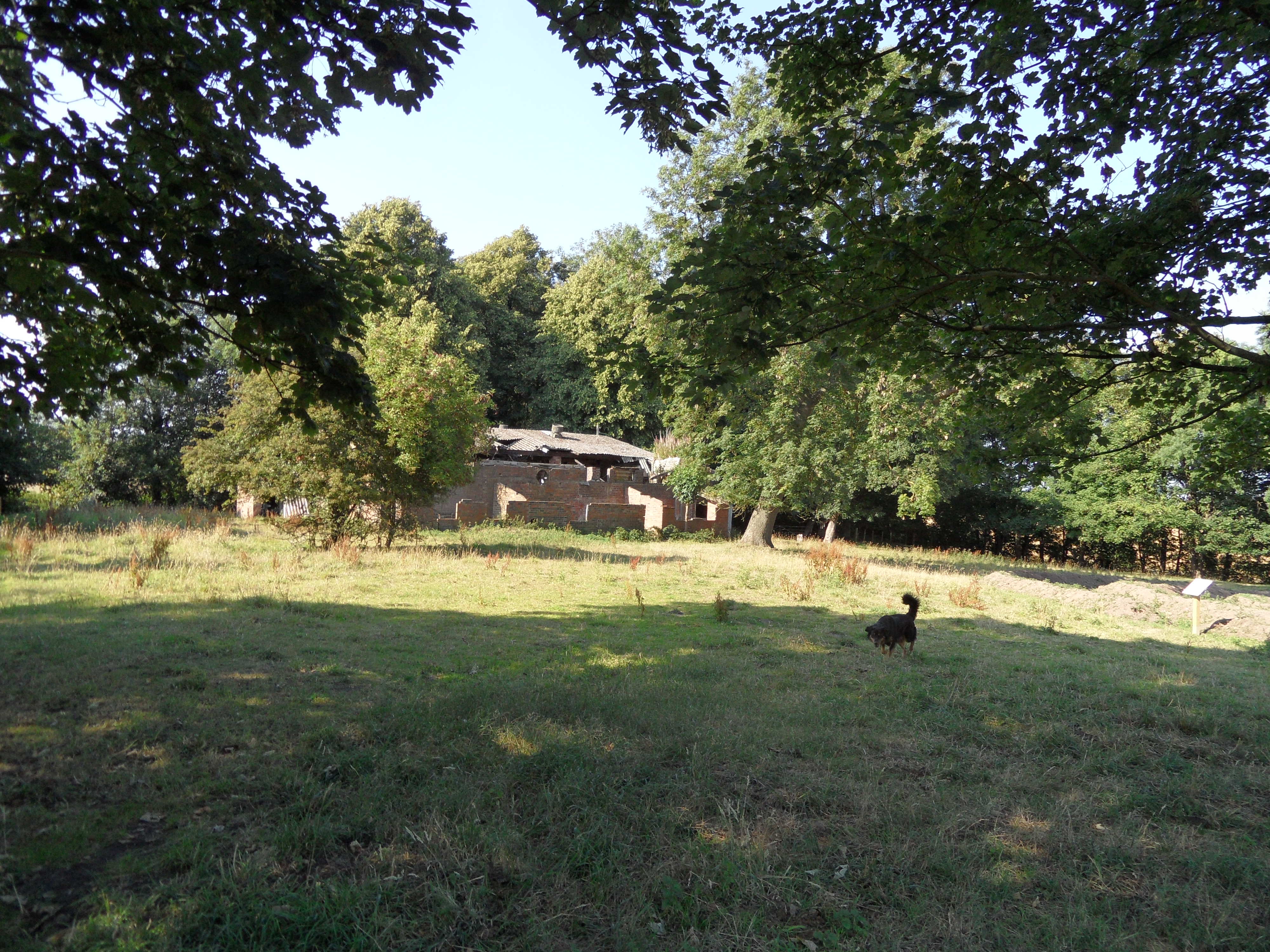
The Orangery at the old Fisherwick Estate. Just about.

The Orangery at the old Fisherwick Estate. Photo from the Lichfield Mercury July 19th, 1935.

I was delighted that number eight in the series was Fisherwick, the site of a once grand mansion built for the Marquess of Donegal in the 1760s, but torn down and sold off to pay family debts after barely half a century. It’s a place I know well and I recognise much of it from the description from the 1930s – the beauty of its woods, the old arched bridges, the River Tame meandering through rich and colourful meadows. Yet of course in eighty years there have been changes. The red brick of the now demolished Elford Hall can no longer be seen in the distance, Fisherwick Hall’s ice house, ‘a brick enclosed fissure, built into the side of the hill’, near Home Farm has since disappeared, as has the pub in nearby Whittington which took its name from Robert Peel who purchased some of the dismembered Fisherwick estate.

Still hanging on in there just is the Orangery, although its portico (just visible in the above image), supported by four pillars with carved ionic capitals and reached by four worn steps has vanished since the 1930s, as has the frieze around the walls, said to have been carved in white stone with goats’ or sheep skulls linked by flowers. It’s a miracle anything survives at all. Even eighty years ago the author described its ‘crumbling sandstone, rotting bricks and decaying beams’, noting how ‘the ravages of time and nature are playing havoc with the beauty it barely possesses’. Then, in the 1970s, Nature upped her game and the Orangery was struck by lightening and scheduled for demolition. Why this never took place, I don’t know but I’m pleased it didn’t. It gives us an idea of what the rest of the estate may have looked like, and has the added interest of carved graffiti – the author thought everyone in Lichfield had added their signatures, based on the number and variety of names scribbled all over it.

Orangery

SAM_5150

Fisherwick 016

The Lichfield Mercury article ends with a tantalising yet unsubstantiated snippet of a story, saying that, ‘in 1800, a fatal duel was fought at Fisherwick, where a suitable enclosure near the hall had been lent for the combat’. I don’t know who the two gentlemen were, or what their quarrel was over, but this is just one of the many tales which have weaved their way around this intriguing place.  If you’d like to hear more Fisherwick Stories and explore the Orangery and whatever else remains of the estate today, including the community farm which has grown up in and around the former walled garden, then you are more than welcome to join us on our Lichfield Discovered walk –  2pm on Saturday 5th April at Woodhouse Farm and Garden.


Wolverhampton Wandering

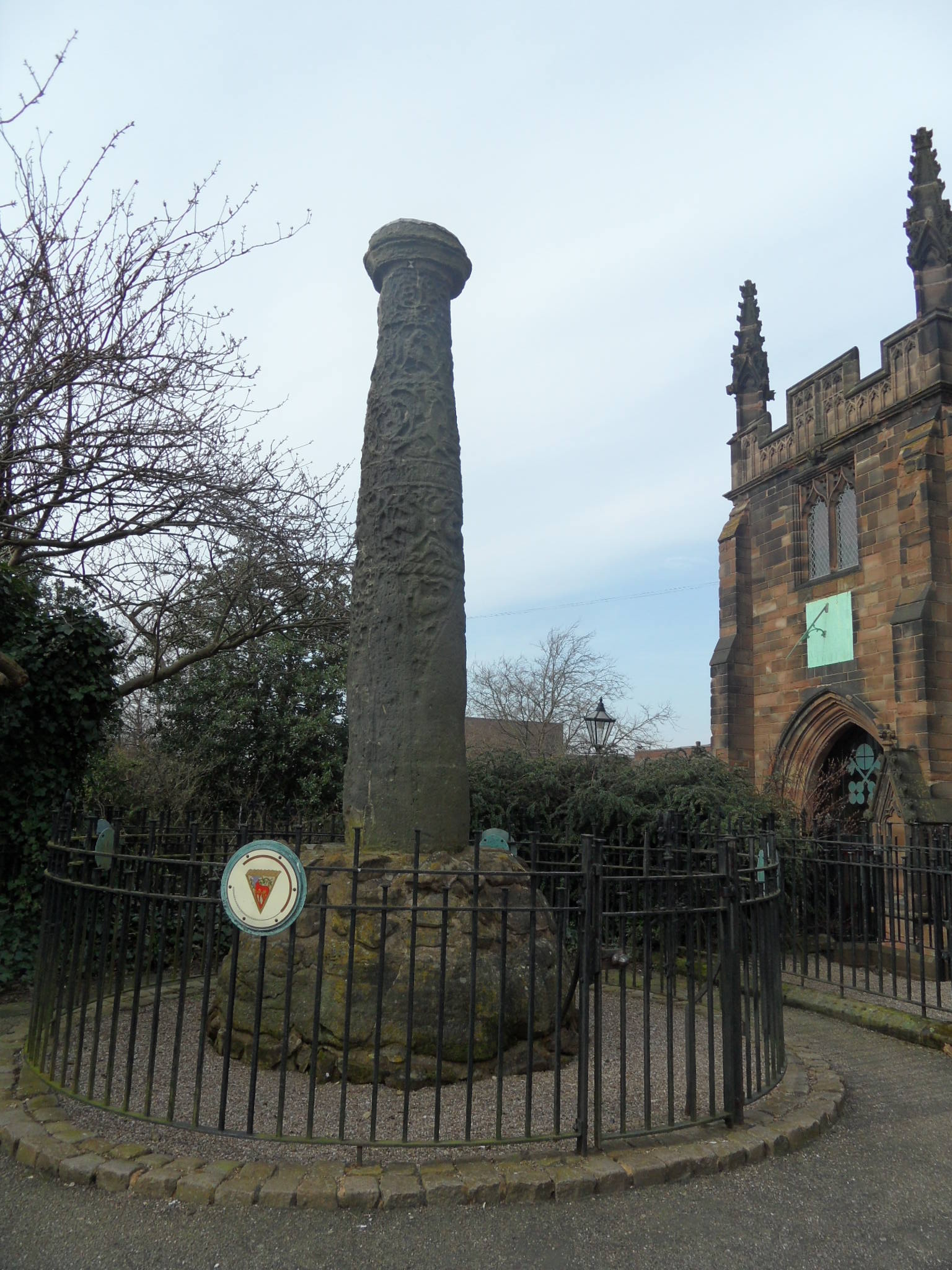
I had to pop into Wolverhampton today. I knew from my search for an ancient cross in Lichfield a couple of years back that there was a Saxon cross shaft here and went to find it.  Unlike the Lichfield cross, I didn’t have to try too hard – it’s huge! Its size, and also the fact that it is made from sandstone not found in Wolverhampton, has led some archaeology types to suggest that it is probably a reused Roman column, possibly from Wroxeter or even just up the road in Wall.

Saxon Cross Shaft, WolverhamptonThe elements and pollution have not treated the shaft kindly but its still clear that this was an incredible piece of craftmanship – the Black Country History website describes it as, ‘one of the finest cross shafts in the Midlands’. The carvings of acanthus leaves which decorate the shaft alongside those of birds and beasts have given archaeologists some problems when trying to establish a date as they suggest different periods. The plaque accompanying the shaft in the churchyard has decided to go with the earlier date of the ninth century, whilst others believe late tenth century is more accurate.

Cross Shaft Wolverhampton

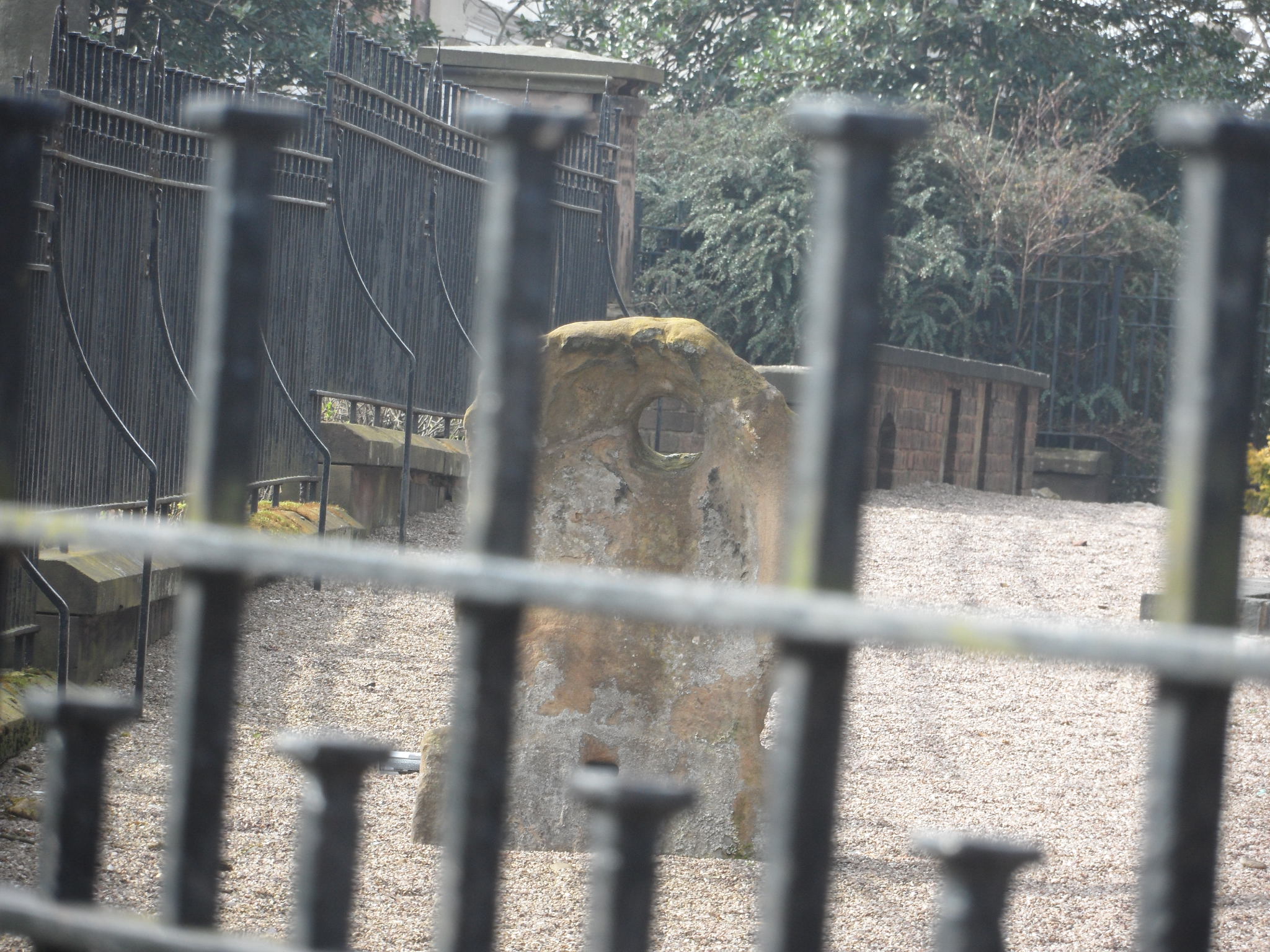
On the way out of the churchyard I noticed another stone with a good back story. Known as the Bargain Stone, its said to be where the good (and probably not so good) folk of Wolverhampton would agree sales and make deals by shaking hands through the hole. The nearby plaque suggests it is an old gargoyle and the hole is what remains of its mouth.

SAM_0031

Talking of hands, why didn’t it occur to me to put my hands over the railings to take a better photo?

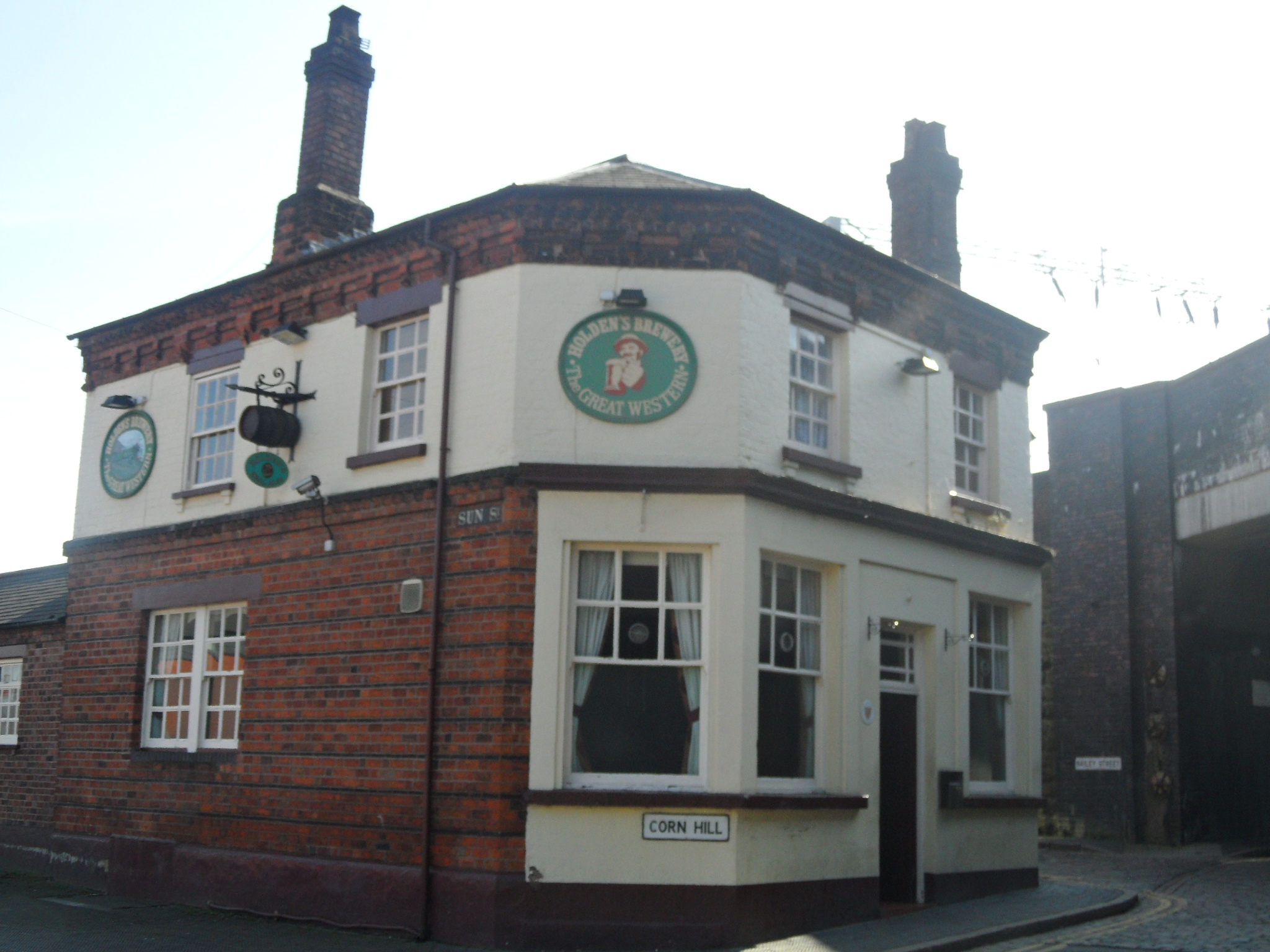
As if ancient crosses and stones weren’t enough of a treat, we also found Holden’s Brewery’s Great Western near to the train station. This is a proper pub – cobs on the bar, Holden’s Golden Glow (amongst other delights) on tap and really friendly staff. Although we were tempted to sit outside in the sun, the interior was so quirky and there was such a nice atmosphere, we sat inside.

Great Western

Wished I’d got the train. Definitely not driving next time.

The Great Western

The great Great Western

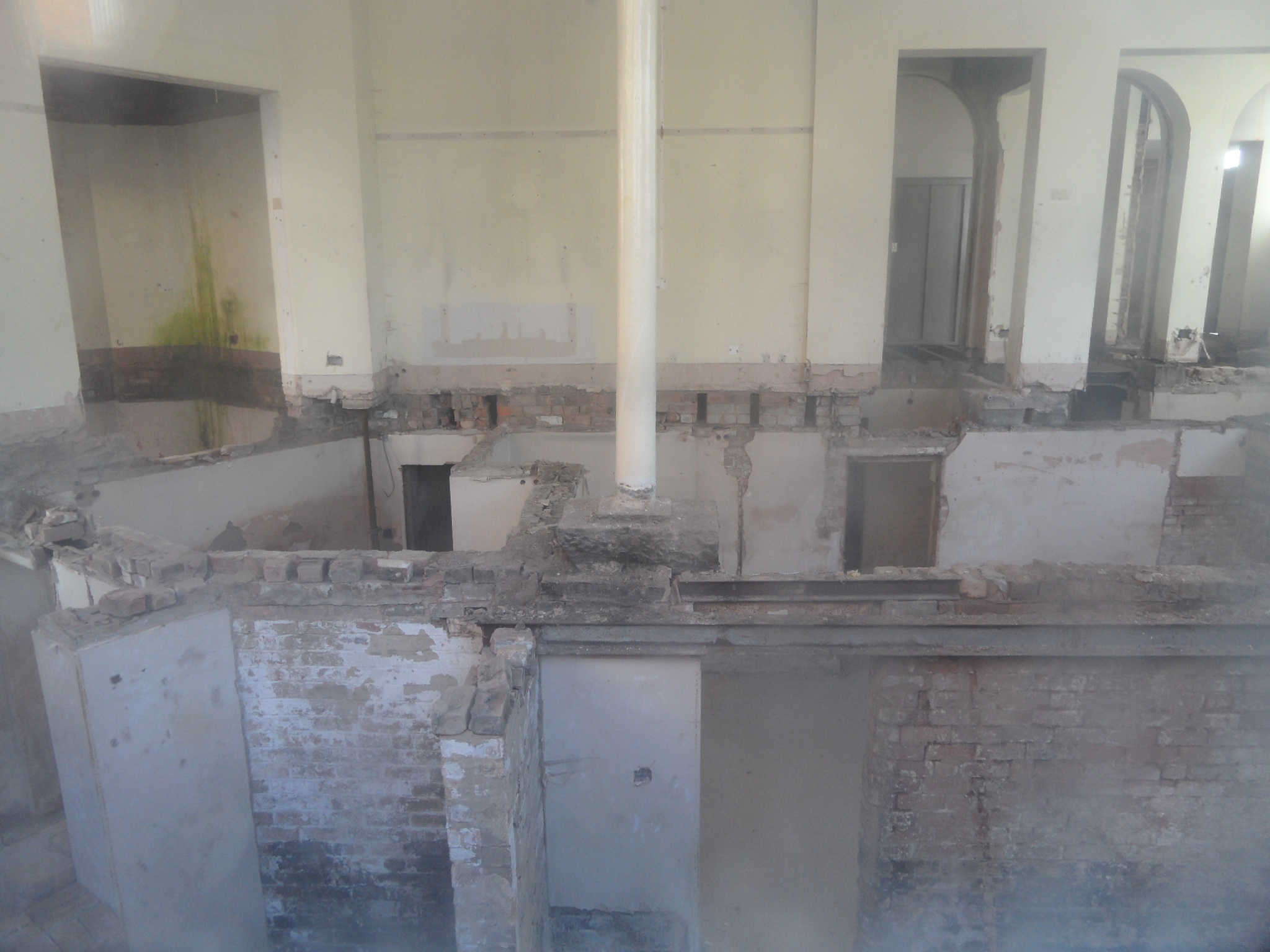
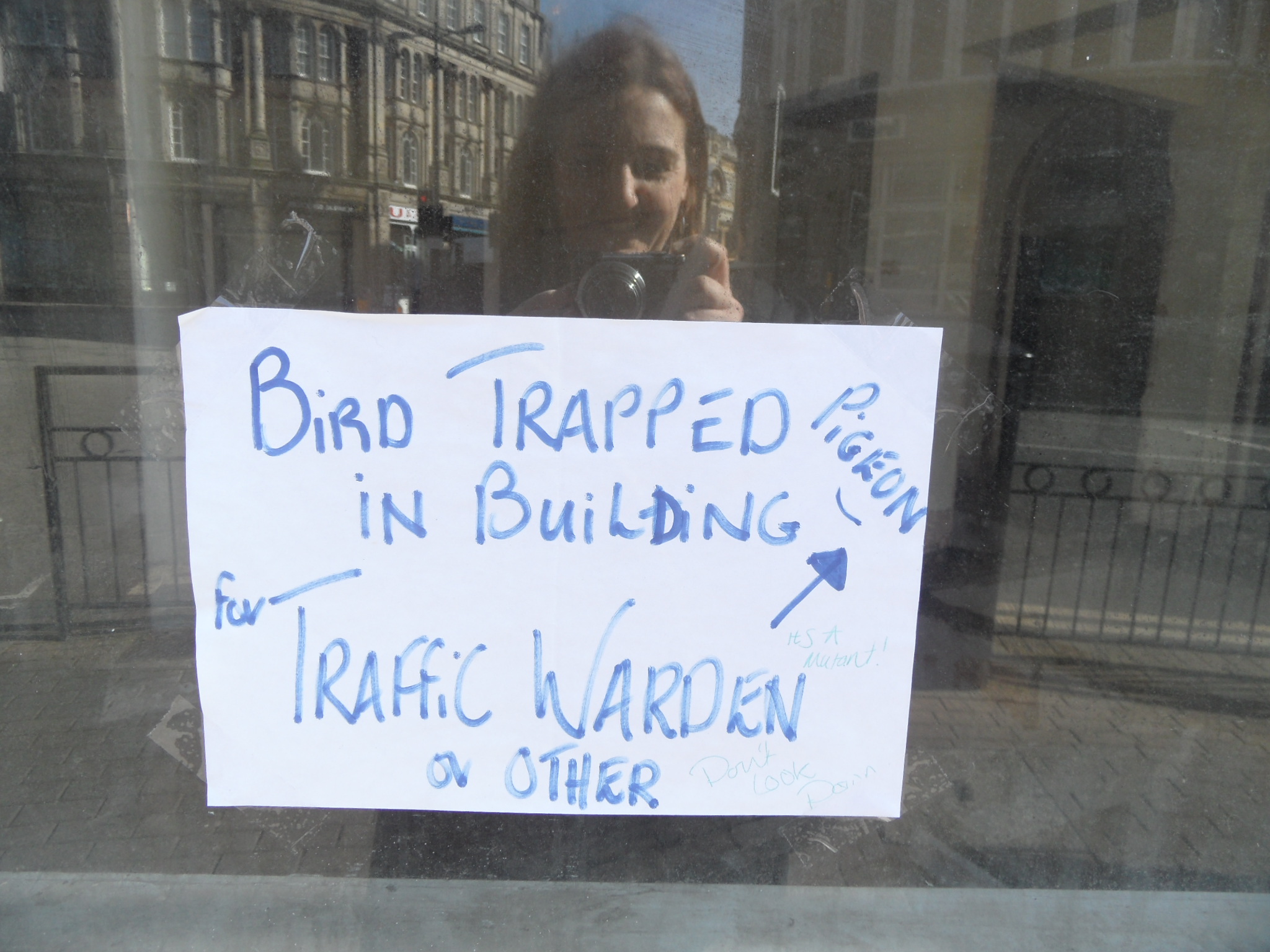
We walked off our pork baps with a little bit of a wander around the city streets. This building caught my eye, not only because it has no floors, meaning you can see down into the cellar, but also because of the handwritten sign someone had stuck to the window.

SAM_0045SAM_0046I’m not sure a traffic warden would be the person I’d turn to in a trapped bird scenario but maybe they do things differently in Wolverhampton.

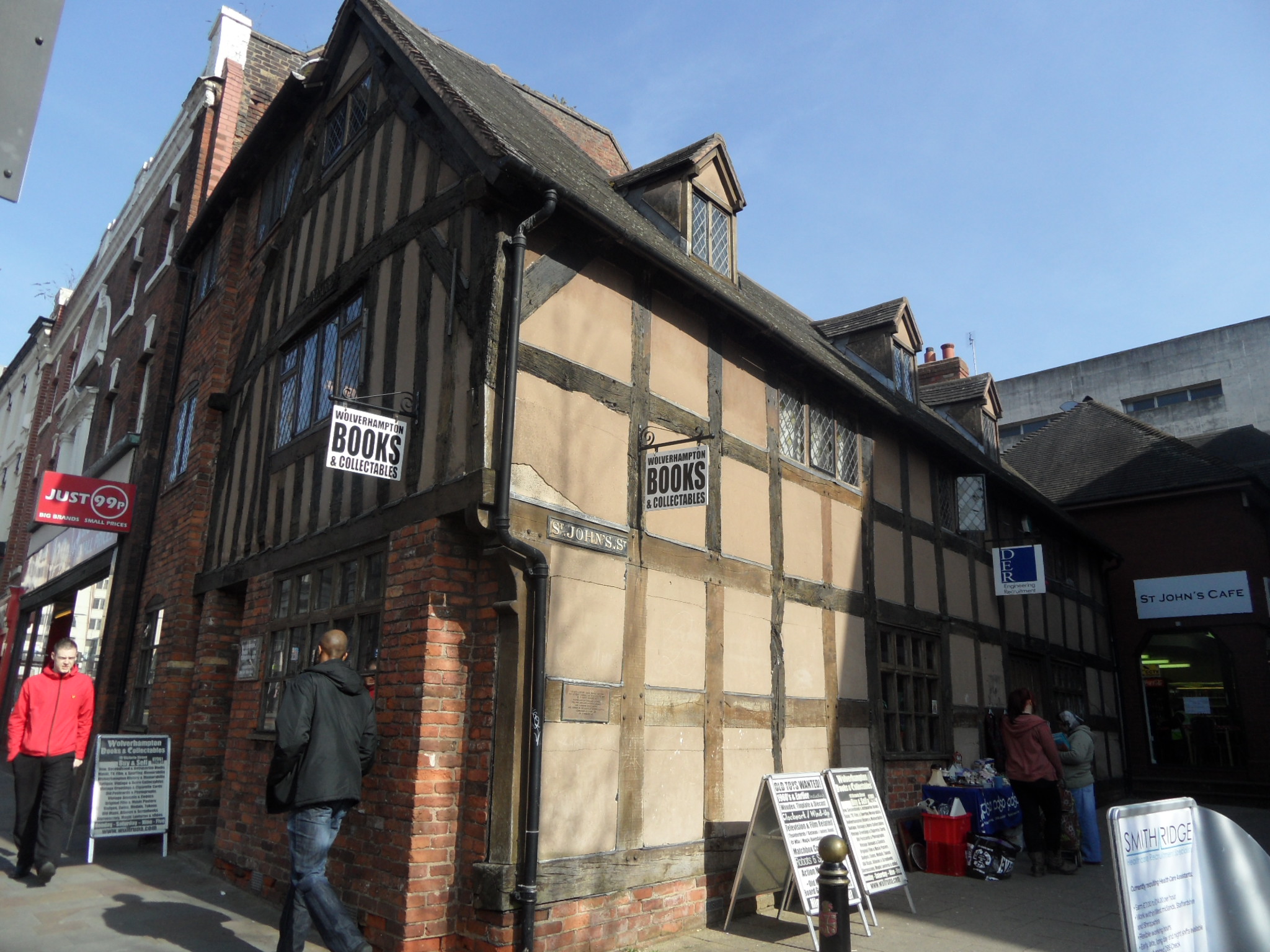
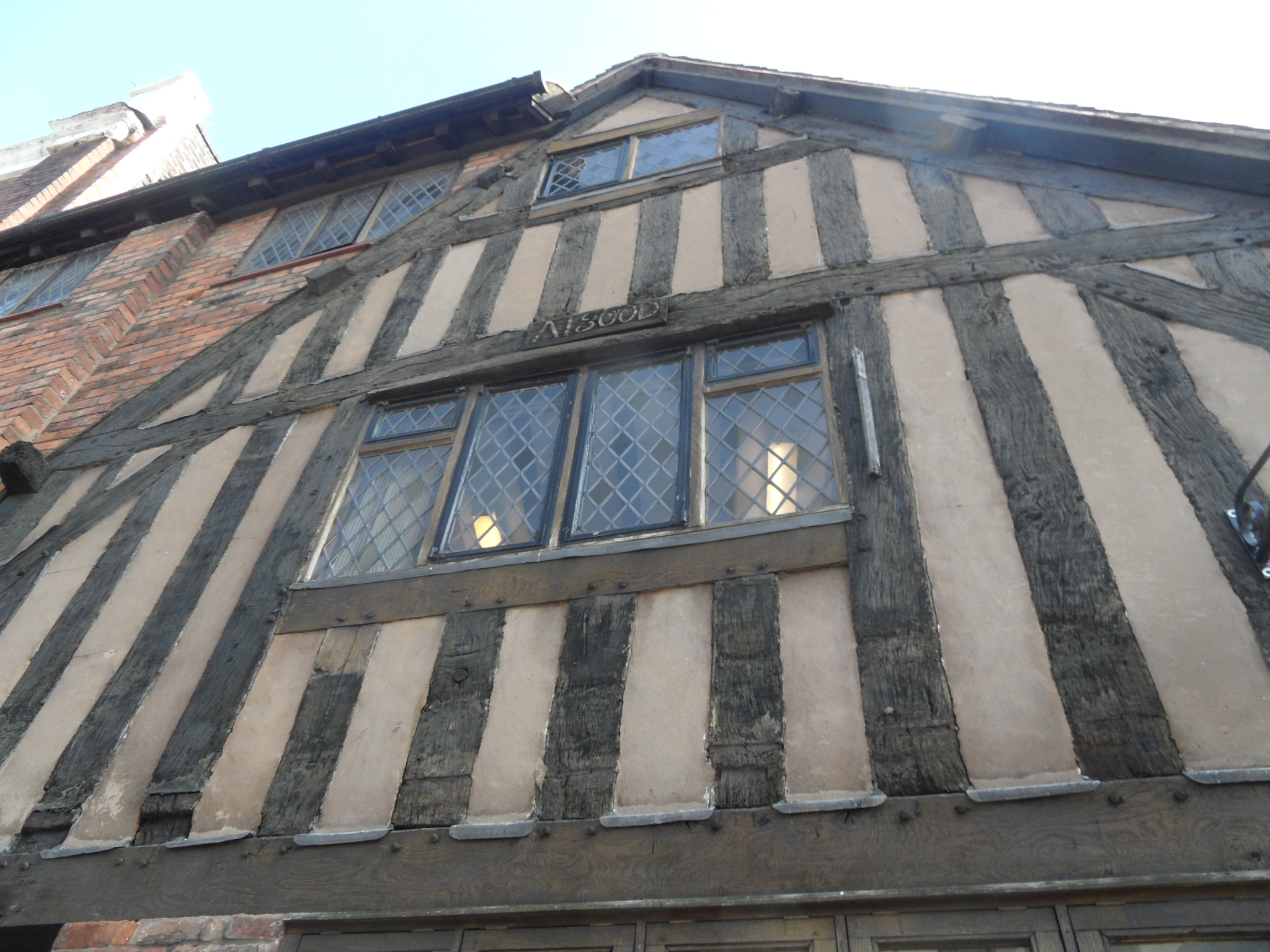
Another perplexing sign is the one suggesting that the half timbered building on the junction of Victoria St and St John’s Lane was built in AD1300. It wasn’t and no-one knows the reason behind the claim – the best suggestions anyone has seems to be that it was some kind of joke to emphasise that it was a really, really old building! It more likely dates back to the seventeenth century when it was once an inn known as The Hand. These days its home to Wolverhampton Books & Collectables, where you can buy anything from an ancient tome on the history of Staffordshire to a souvenir 1950s Wolverhampton Wanderers hankerchief (which you may, or may not, wish to blow your nose on, depending on your allegiances…).

SAM_0053

SAM_0055

We took the scenic route back to Lichfield (not through choice but because I went the wrong way on the ring road), passing through Wednesfield, Sneyd, the intriguingly named New Invention and Brownhills before stopping off at Waitrose for a couple bottles of Golden Glow.

Sources:

http://blackcountryhistory.org/collections/getrecord/WOHER_MBL337/

http://www.historywebsite.co.uk/listed/lindylou.htm

Nail Art

As objects are the theme of our Lichfield Discovered meeting on Monday, and I had an hour to myself this afternoon, I decided to head over the border to have a look for the nailers’ stones that I’d been told were in the churchyard at Christ Church, Burntwood. The only reference to them I’ve found is on the Christ Church website which says,

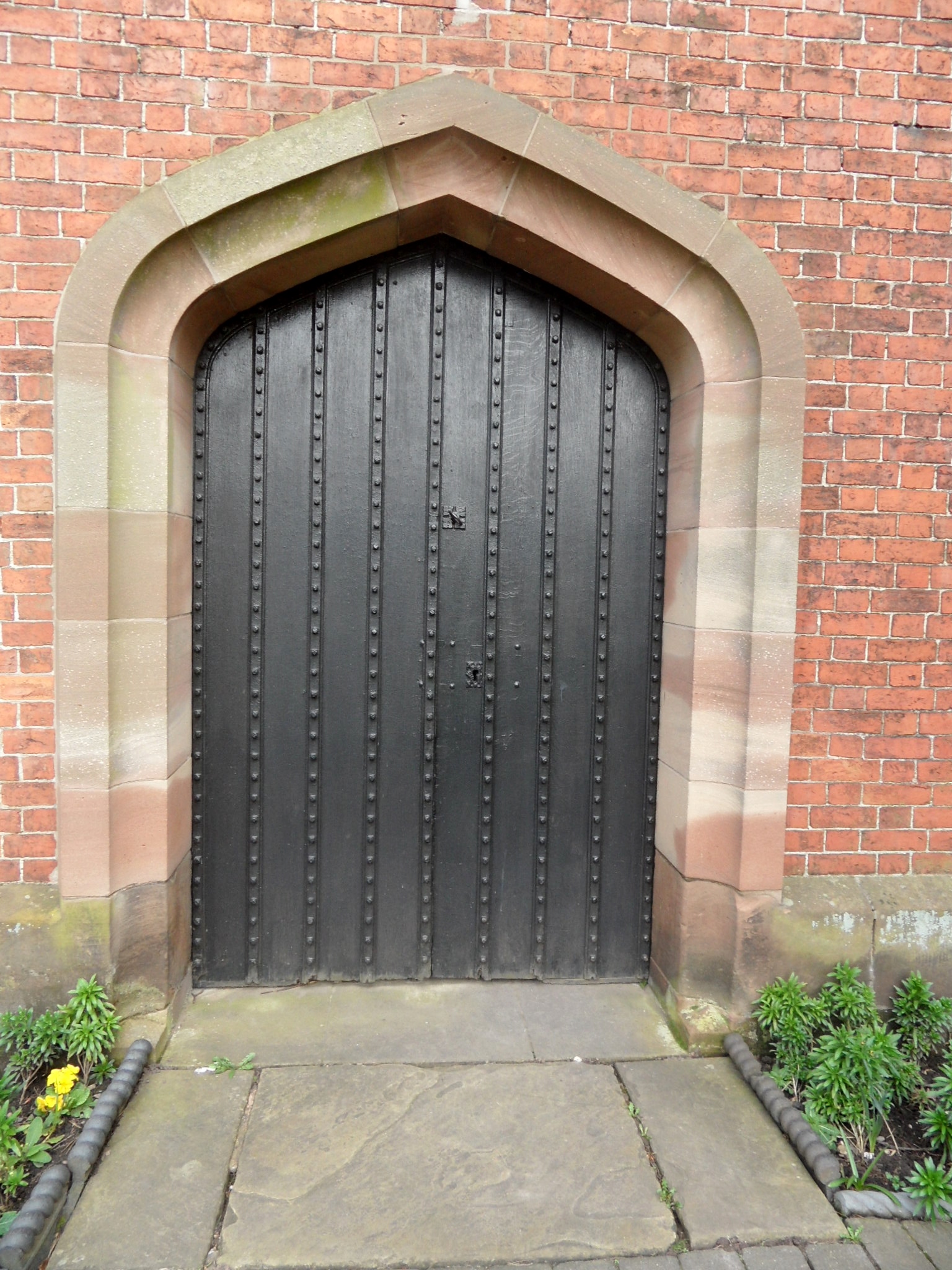
‘Visitors will firstly note the magnificent west doors, believed to be original. The huge nails which have been used are indicative of Burntwood having been a nail making area due to the plentiful supply of charcoal and iron ore. (Nail making was very much a cottage industry, and should the visitor wish to, enter the churchyard, will find there several nail stones of different sizes).’

I wasn’t exactly sure what I was looking for and had to rely on the, ‘I’ll know it when I see it’ method, which I’ve used many times before, with varying degrees of success. On this occasion it worked out just fine.

Nailer's Stone. Burntwood

Nailer's Stone. Burntwood 2

Group of nailers' stones

The above arrangement of stones reminds me of a stone circle of sorts

Group of nailers' stones, Burntwood 2

I wonder whether the nails in this door really were created locally?

I wonder whether the nails in this door really were made locally?

The first church in Burntwood. Apparently before it opened in 1820, the area was part of the St Michael's, Lichfield parish meaning a very long walk on a Sunday morning!

Before Christ Church opened in 1820, the area was part of the parish of St Michael’s, Lichfield, meaning a very long walk on a Sunday morning!

I couldn’t come all the way to Burntwood and not visit the world’s smallest park (is this official now?) with its trees known as Faith, Hope and Charity and so I had a five minute sit down and a bit of ‘We need a bigger park’ banter with a passerby, before heading to the Star Inn.

World's Smallest Park...or is it?

SAM_9977

According to the Burntwood Heritage Trail booklet, the Star Inn was where local nailers would take their products to be be weighed and paid for by ‘middle men’, who would also replenish their supplies of iron. The pub building itself is relatively modern but, according to the booklet, there has been a drinking establishment on this site since at least 1600 when a local blacksmith was licensed to keep an alehouse here, becoming known as the Star Inn by 1790.

The Star Inn. Burntwood

Unintentionally shining Star

Star Inn Plaque

One of the blue plaques on the Burntwood Heritage Trail, created by the fantastically named ‘Keepers of the Archive’.

Back home, I had a look for other examples of nailers’ stones and found that the Black Country History website has a photograph here of one very similar which they describe as a nail making anvil from St Peter’s Rd, Darby End.

I notice that there appear to be initials or names on the stones and it would be fantastic to know more about their provenance. The heritage booklet says that making nails was a way for a farming family to make extra money, and that the work was often carried out by the woman of the household.

I know these are Burntwood objects, rather than Lichfield ones but they tell the story of everyday folk trying to make a living for themselves and their families in an industry that’s now long gone, and that’s got to be worth sharing.

(For more on the nailmaking industry, please see the ‘Nailed it’ post on Brownhills Bob’s Brownhills Blog here)

Walsall Legends

My husband grew up in the Highgate area of Walsall, where the malty aroma from the local brewery used to hang in the air and the local kids would tell stories about the mysterious ruined windmill. Thought to have been built in the late 1600s to grind corn, Highgate windmill has a fascinating history which you can read more about here in this article by Walsall historian and writer Stuart Williams. If you want to go and have a look yourself, go sooner rather than later. Once spring gets properly underway, it’ll be hard to see the mill for the trees.

Highgate Windmill

Highgate Windmill, Walsall

Last Summer I could barely see the windmill but did spot this painted board through the trees.

Last Summer I could barely see the windmill but did spot this painted board through the trees.

Sadly, there’s not even a whiff of brewing in the air at the moment – the Grade II Listed Highgate Brewery hasn’t been operational since 2010 and stands unused behind the locked centenary gates (purchased and installed by the Friends of Highgate Brewery in 1998), its future uncertain at present.

Highgate Brewery

Highgate Brewery

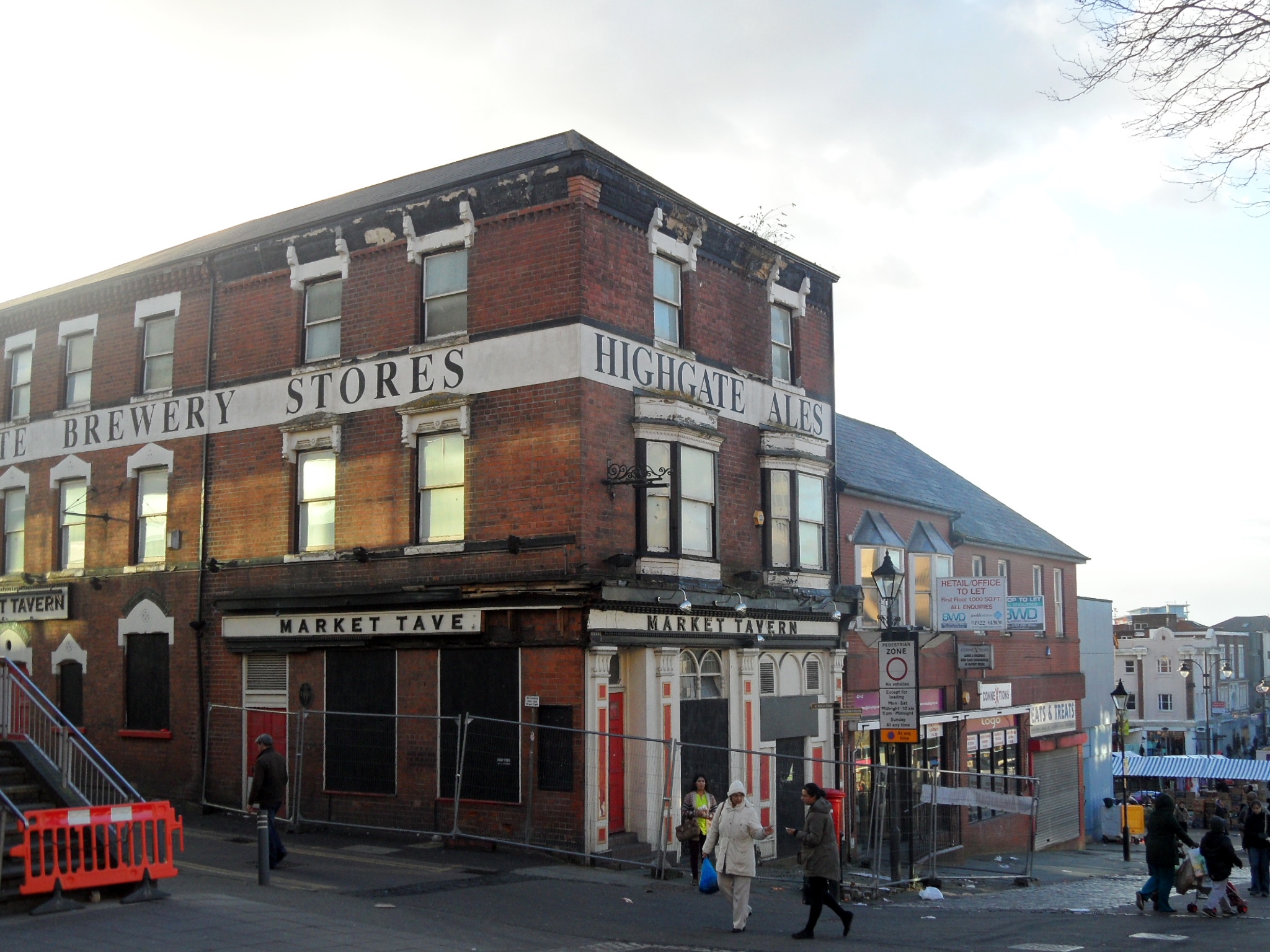
Yesterday, as well as visiting the family, we went to have a look around the Art Gallery and the town. On the way back we passed the pub that we once knew and loved as the Brewery Stores & Vaults. Back in the late 1990s, it was one of the liveliest places in town but now, like the brewery whose name it bears, it stands empty, expect perhaps for the hooded figures and disembodied heads said to lurk in the cellars

SAM_9911

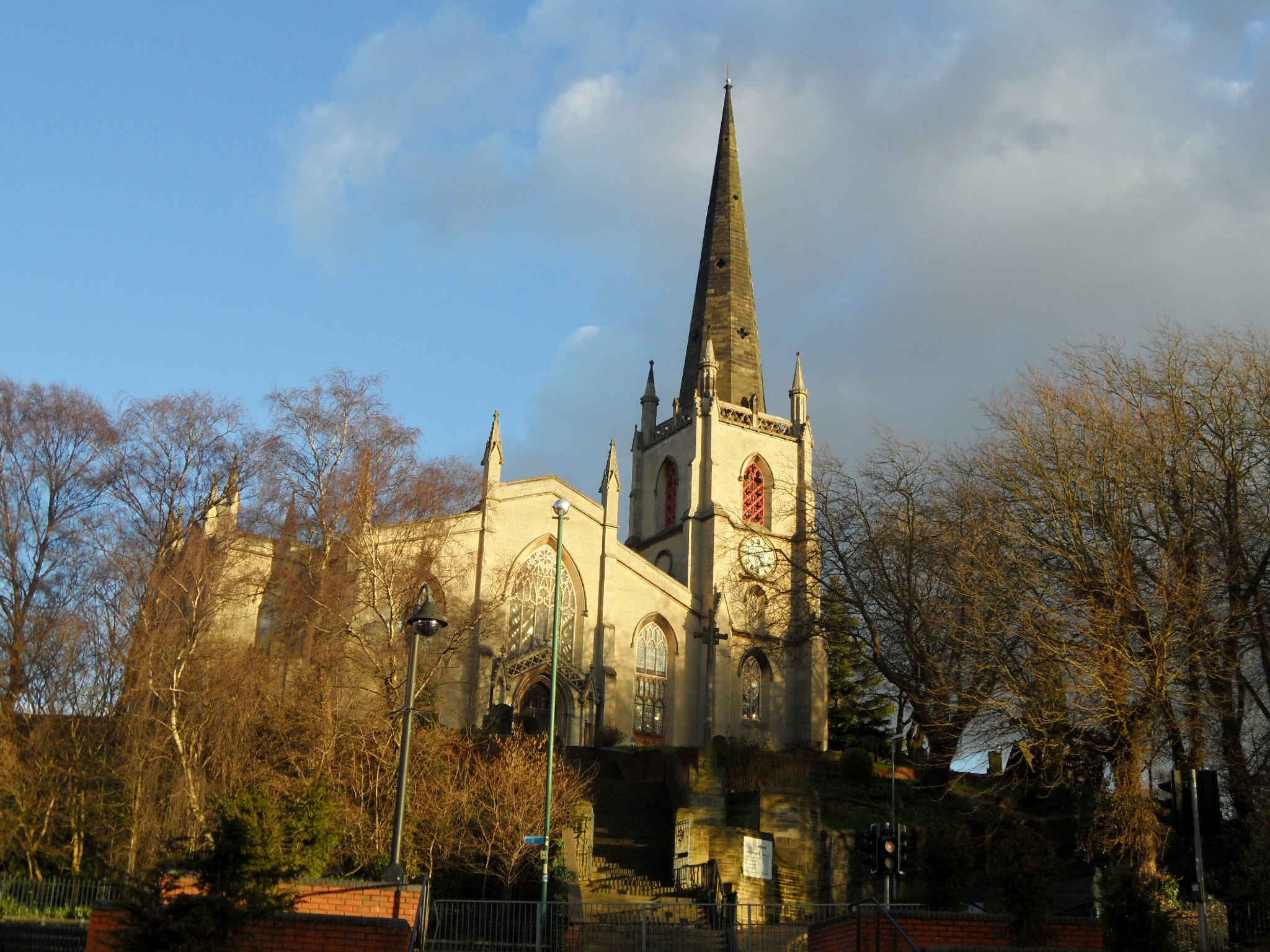
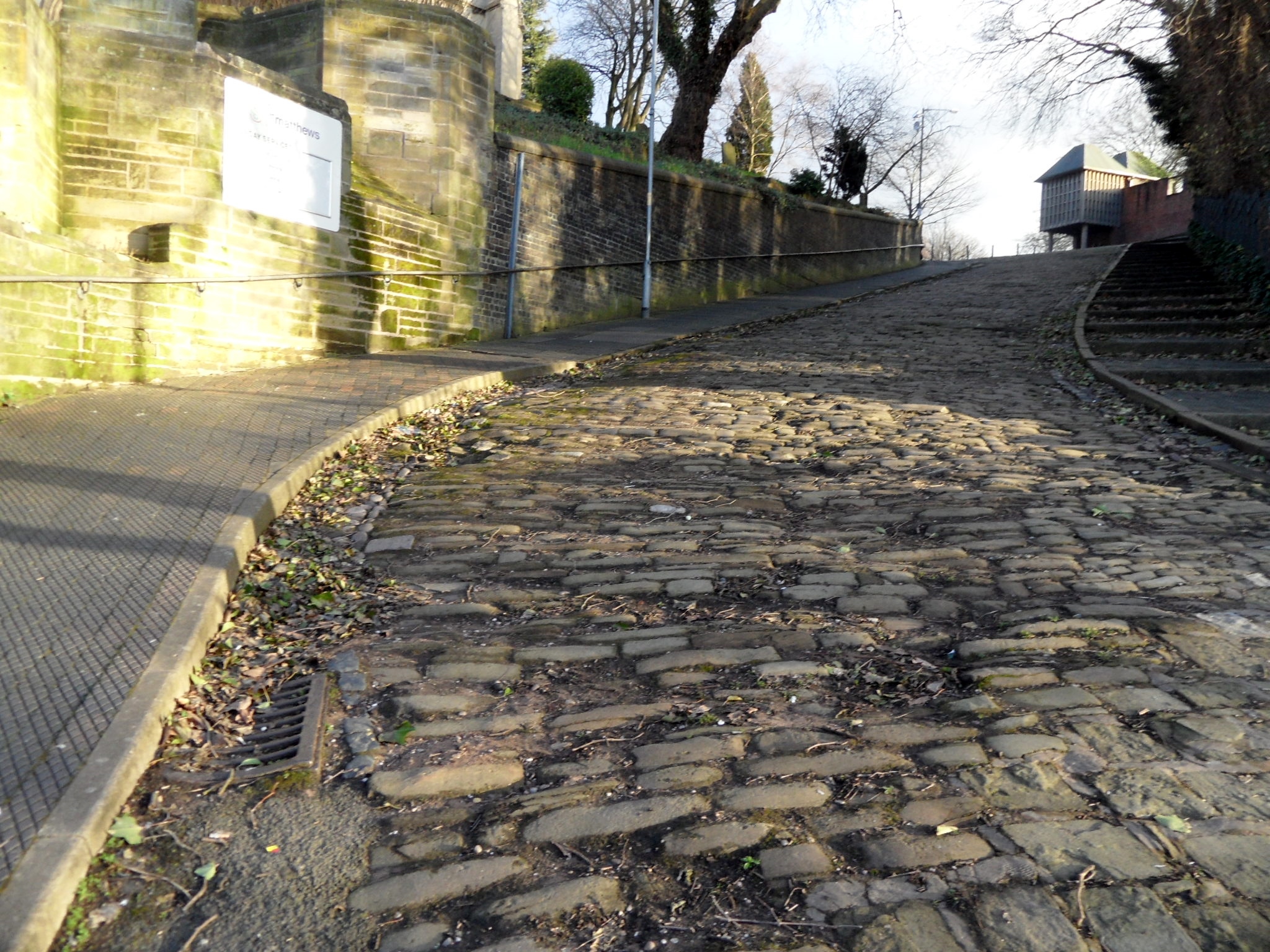
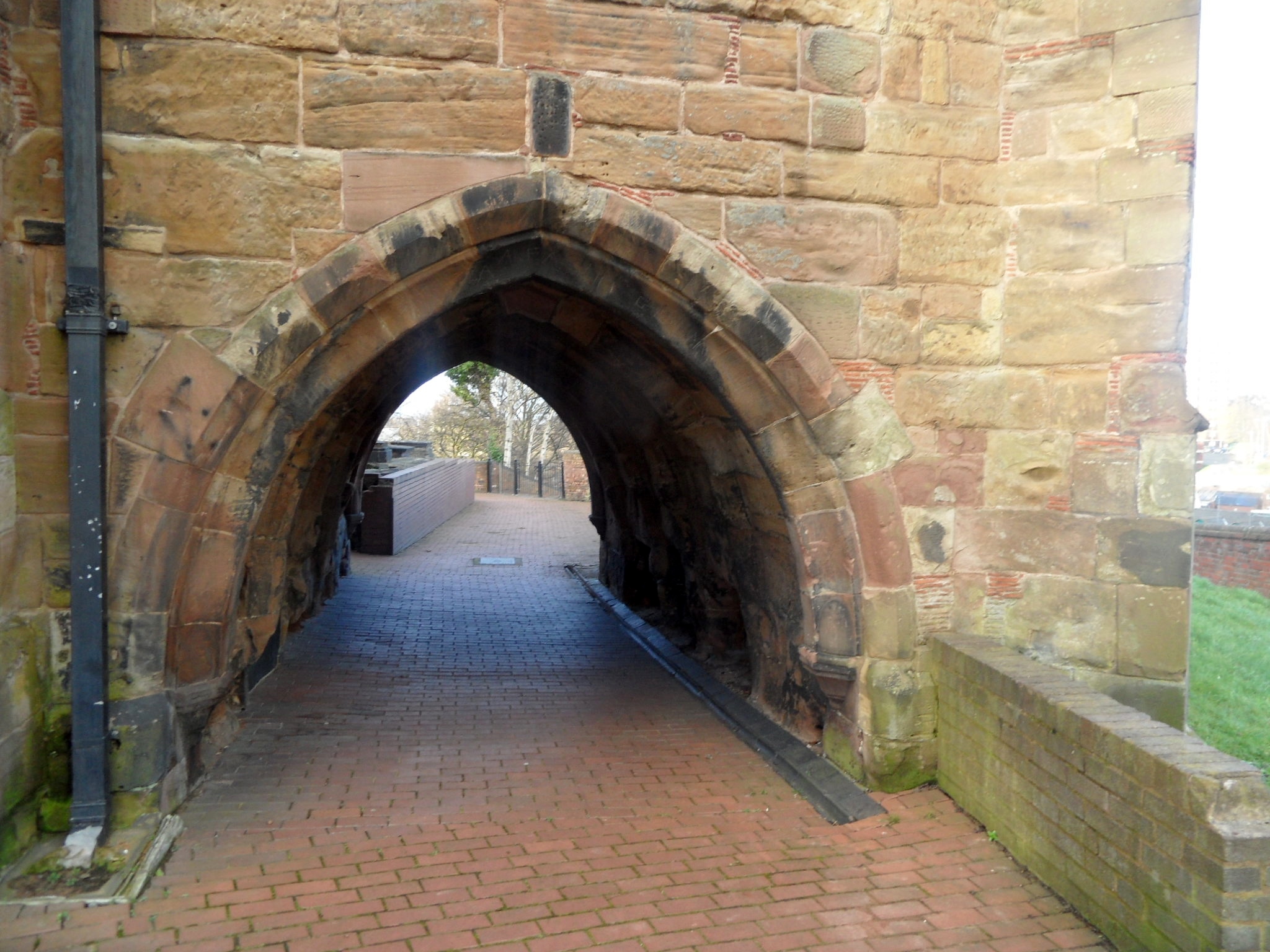
We continued our way back over the limestone hill where the church of St Matthew’s has dominated the Walsall skyline since at least the thirteenth century (although it has only been know by that name since the eighteenth century – it was previously ‘All Saints’). The first time we walked up this hill together, Mr Gomez told me that it was paved with medieval cobbles. I’m not sure if that is true but it’s something that has fascinated me ever since, as has the arched passage on the east end of the church, covered in graffiti and with curious niches on the east side.

As well as this overground passageway, there are supposedly underground tunnels running from here to the White Hart Inn at Caldmore, Barr Beacon and Rushall Hall.  In a history section of the Walsall Council website, there’s a quote from a Mr G of Bath St who in the 1950s said one of the entrances to the tunnels was located at the bottom of some steps of a toilet which once stood on Caldmore Green. He also added that he had been told by some old women that during the reformation, some priests went down the tunnels to escape and were killed after they were filled in.

St Matthew's Walsall

St Matthew’s church, Walsall

Wasall from the Art Gallery.

St Matthew’s Walsall as seen from the Art Gallery.

Medieval cobbles

Medieval cobbles leading up the hill?

Passageway under the chancel of St Matthew's

Passageway under the chancel of St Matthew’s

SAM_9929

Niches in St Matthews passageway

Niche interest

One of my favourite stories about St Matthew’s and Walsall is one I read recently in a book of Staffordshire folktales.  Apparently, the church was originally supposed to have been built on a meadow at the ‘Churchery’, now known as the Chuckery. However, this was where the fairy folk danced and so, naturally, they objected to the plans and took matters into their own tiny hands, moving the foundations of the new church up the hill to the site where it stands today. In another version of the story, the church was moved by witches who had transformed themselves into white pigs.

We walked up a good appetite in Walsall and so we finished our day at the legendary Hargun’s Sweet Centre on the Caldmore Rd, intending to take some goodies back to Lichfield, although they never actually made it past Walsall Wood in the end. Anyway, what I learned today is not only that you can eat a lot of baklava in a twenty minute car journey, but also that once in a while, it’s good fun to explore what’s on someone else’s doorstep.

Sources

Walsall: Economic history’, A History of the County of Stafford: Volume 17: Offlow hundred (part) (1976), pp. 180-208.

http://www2.walsall.gov.uk/History_Projects/Caldmore/A_Walk_Around_the_Green/18.asp

http://www.stmatthews-walsall.org.uk/info/mainhistory.shtml

http://www.blackcountrybugle.co.uk/TALE-WALSALL-PARISH-CHURCH-FAIRIES/story-20122807-detail/story.html

Staffordshire Folk Tales by The Journeyman

Bench Marked

Public benches can be found all around our parks and along our city streets. As well as being places to sit (or lie down, although I’ve never found them that comfortable) and rest, read, drink, chat, canoodle, sleep, picnic or daydream, they are also often places where people choose to commemorate a loved one, a group of people or an event, via a small plaque or inscription.

Workhouse BenchOn the current Google street view there is a chap with a stick having a rest on this bench on the corner at St Michael Rd. I suspect he, like most other people, hasn’t even thought about why it’s there. Why would he? It’s just a bench. You may not have even have noticed it is there. There’s no plaque reminding you to sit a while and enjoy the view of Aldi and the churchyard, and facing onto the busy Trent Valley Rd, it’s not the most serene of spots.

I probably wouldn’t have taken any notice of it either had it not been for Bob Houghton (of the Burntwood Family History Group) telling me about a conversation he’d had with a woman who had lived all of her long life in the Trent Valley Road area. She remembered a time before the NHS, when St Michael’s Hospital was still the Workhouse (officially known as the Lichfield Public Assistance Institution from 1930s, but no doubt still known by the majority by its former name and reputation), and told Bob how some of the elderly residents would take a stroll around the area (according to ‘This Won’t Hurt Much’, in 1937 the Master, Mr Standing had put forward a recommendation that male patients over sixty should be allowed out between 6 and 8pm on summer evenings). Apparently at some point, the authorities decided to provide a bench for them to rest their weary legs and although the Workhouse and its successor the Public Assistance Institution are long gone, this bench (not the original bench sadly) still remains in that position. Perhaps it’s still well used by folks making their way to and from appointments at the new Samuel Johnson hospital opened near the site of the old Workhouse in January 2007?

From now on, I’ll always think of this story when I pass, and share it if I happen to be with someone. Perhaps there should be a plaque here to tell people of its origins? Maybe, but I imagine that plaques require permission and money. Sharing stories with each other costs nothing but it keeps them alive. There’s no paperwork to fill in either.  If even the position of a bench has a story to tell us, then who or what else could?

Entrance to the former Workhouse on Trent Valley Road

Entrance to the former Workhouse on Trent Valley Road

Buildings at St Michael's Hospital, former Workhouse

Buildings at St Michael’s Hospital, former Workhouse

Behind the former Workhouse

Behind the former Workhouse

Sources:

This Won’t Hurt: A History of the Hospitals of Lichfield, Mary Hutchinson, Ingrid Croot and Anna Sadowski
With thanks to Bob Houghton for sharing this story with me


Banned Stand

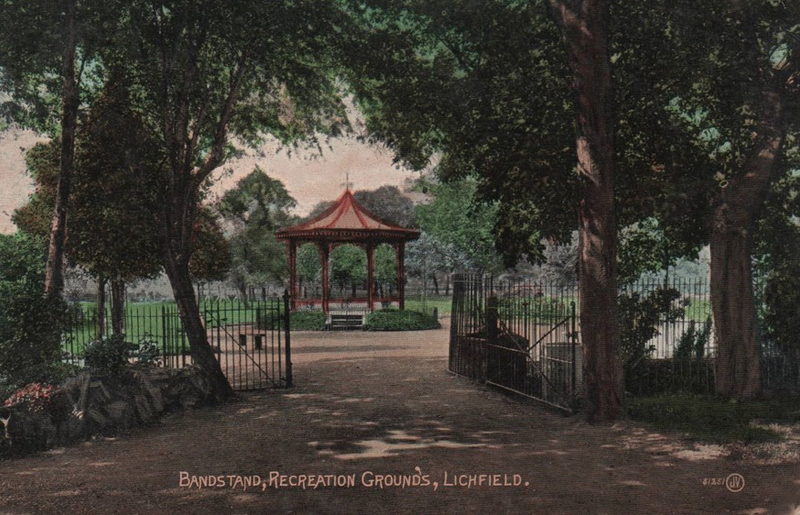
How do you make a bandstand? Take away the chairs. Or if you’re lucky, a local dignitary will provide you with one. In July 1893, during his third stint as Mayor of Lichfield, Major John Gilbert presented the city with a bandstand to mark the marriage of Princess Mary of Teck and the Duke of York (later George V and Queen Mary).

The Bandstand in 1905, taken from Wikipedia Commons

The Bandstand in 1905, taken from Wikipedia Commons

It stood in the Recreation Grounds of what is now Beacon Park but by 1925, Major Gilbert’s gift had become a bit of a problem. In March, the secretary of the Lichfield Cycling Institute wrote to the City Council saying that since the cycle track had been created in the Recreation Grounds, many thought that the bandstand should be removed. Even with padding around the structure, there was the risk of an appalling accident. Councillor Perrins agreed with the cyclists. In his opinion the bandstand was a death-trap and should be removed, or the track shut. Alderman Winter wanted the wishes of the late donor’s family to be taken into account but Councillor Tayler thought this was ‘sentiment before service’. In the end, the matter was referred to the Museum Committee. In December 1925, the Mercury gave an update on ‘that bandstand’. Lichfield City Council had decided to keep it where it was as it would collapse if it was moved. It was fortified with concrete, bricks and stone (some of which came from the old Friary – more bits of that ancient building can supposedly be found at the toilets in the park).  One member of the council defended the bandstand’s retention on the grounds it was an object of beauty.  However, the Mercury correspondent’s view was that ‘it is even less useful than it is beautiful’. One concession that was made to public demand was that the railings near to the cycle track were taken in line with the base of the stand. The Mercury concluded by suggesting that Lichfield be grateful for these small mercies, ‘even if the circumstances do not incline us to raise a song of joy about them’.

I think the bandstand was round abouts here

I think the bandstand was round abouts here

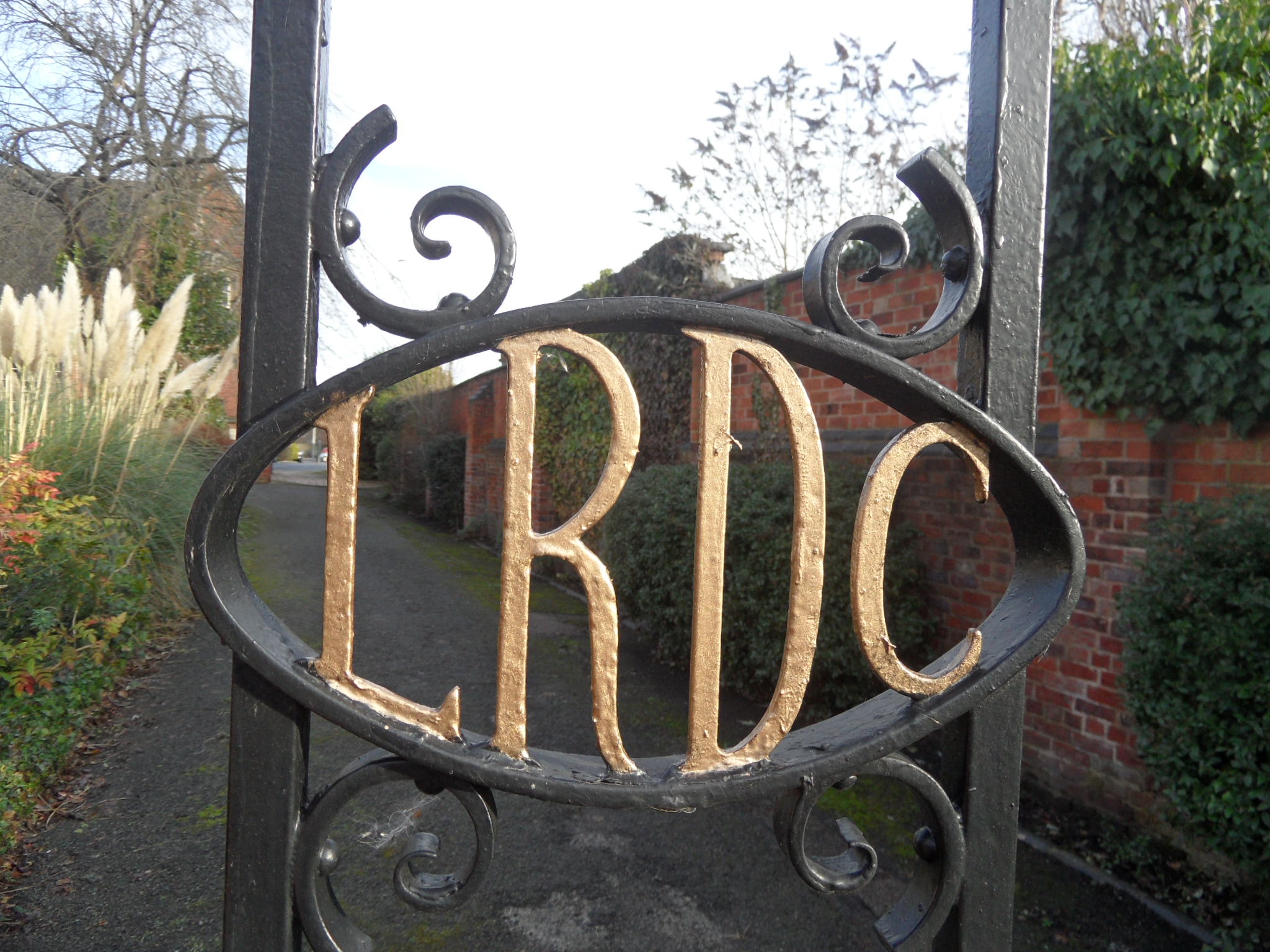
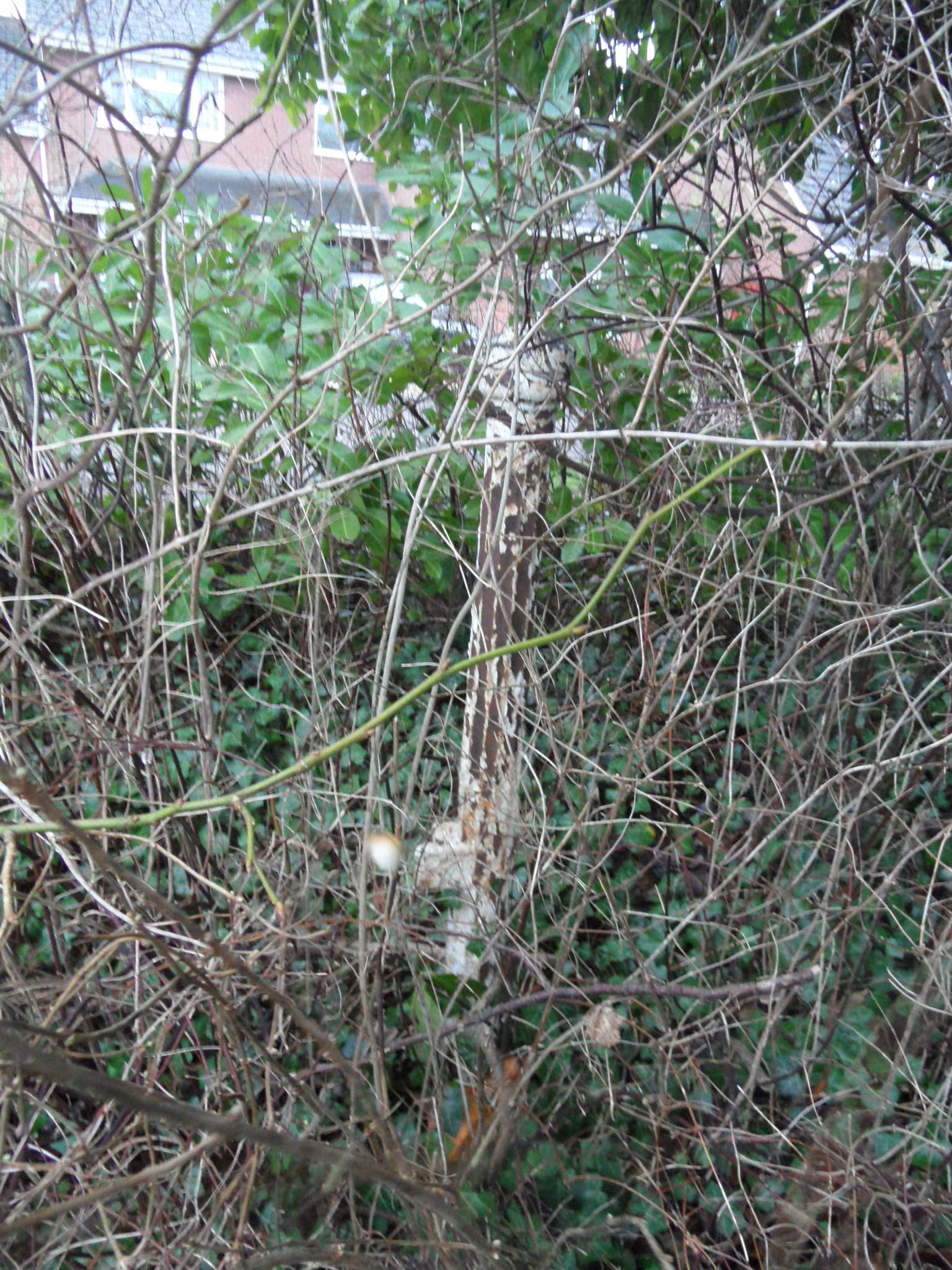
I believe that eventually the bandstand was eventually removed due to costs of upkeep. I’m not sure exactly when this was but believe it to have been sometime in the 1960s (it doesn’t show on a 1966 map of Lichfield). When I went to have a look at where the bandstand once stood, I spotted this old metal post. It looks to me as if it was part of the old gates leading into the recreation grounds, which you can see on the postcard above.

You never know what's lurking in the shrubbery...

You never know what’s lurking in the shrubbery…

Rumour has it that the bandstand itself is also still to be found in the park somewhere… Sounds a little unlikely? You’d be amazed at what people leave lying around gathering moss. I’ve heard that over the years people have called for a new Beacon Park bandstand. Yet, prior to its removal the original doesn’t seem to have been that popular or well used (although some blamed the lack of interest on Lichfield’s junior citizens for running around the bandstand making a noise, and driving the spectators away). Is a new bandstand a good idea or rose tinted nostalgia? Either way, I’d love to know if you find any bits of the old one in the shrubbery.


Sign of the Times

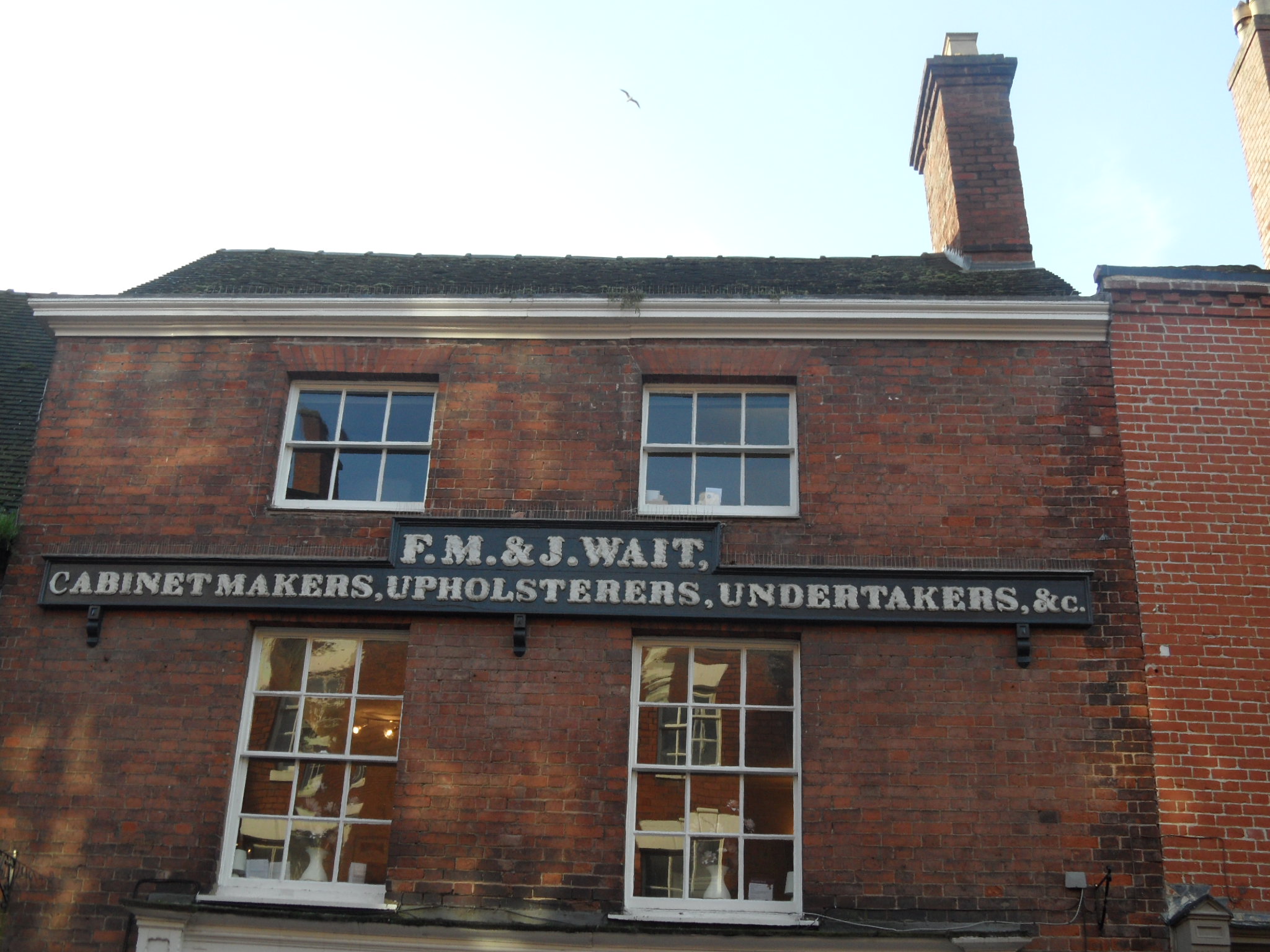
On Facebook, another member of the Lichfield Discovered group posted a photograph of a shop sign that had been hiding underneath a Connells Estate Agents sign on Bore Street.

What other old signs lurk beneath the plastic facades?

What other old signs lurk beneath plastic facades?

I started to do a bit of reading about the use of signs and lettering on buildings and came across an article in the Independent, which features a self confessed font geek called Anthony Harrington. “Typefaces work well as little milestones,” he says. “They anchor a building to a time and a function, whether it’s commercial or social, and this is a heritage worth preserving”. There’s also a map and an app which aims, ‘to photographically record publicly available lettering and type throughout the capital’.

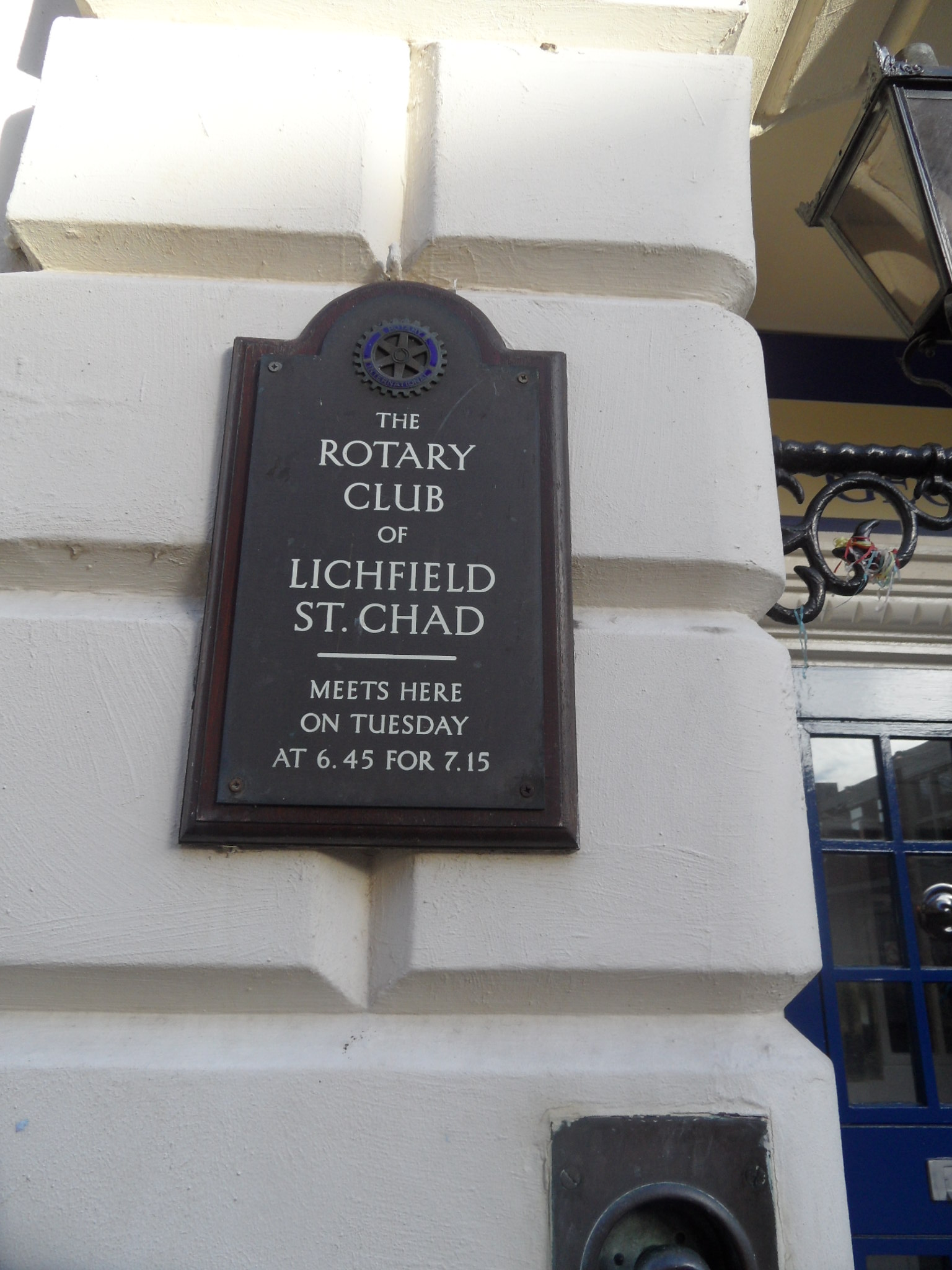
It’s an interesting idea and so I had a wander around to see what other examples I could find in the Lichfield. In October 1953, the School of Art principal Miss EM Flint declared that city was remarkably deficient in the provision of well-rendered signs and notices. Is this still true sixty years later? Anymore good examples out there?

SAM_9740

SAM_9714

SAM_9737

SAM_9707

You have to include a sign that has letters with eyebrows

SAM_9735SAM_9719SAM_9715

SAM_9731

SAM_9726SAM_9705SAM_9739SAM_9741SAM_9722SAM_9738

Trouble at t'mill

Unlike the fulling mill built on Leomansley Brook in 1790, which only seems to have lasted for a hundred years or so, the nearby mill on the Trunkfield Brook was part of the landscape for a long, long time.

Up until the nineteenth century it seems it was known as Sandford Mill, but at some point became known as Trunkfields. Owned by St John’s hospital, it first appears in records in 1294, and again in 1658 when the miller got into trouble for encroaching on the highway when re-building it. Cartography wise, the first map I can see that shows the mill (just as a symbol), is the 1775 Yates one. In 1853 the Conduit Land Trustees rented it out and converted it to steam power and shortly afterwards was apparently used as a bone mill. Jame Meacham gave up the mill in 1872 and it fell into disuse. In 1883 it was suggested as a potential site for a small pox and infectious diseases hospital .The property owners and inhabitants in the area were not happy and came up with the following list of reasons why the site was, in their opinion,  ‘in every way disadvantageous, not only to the immediate neighbourhood but to the whole city’.

1. The road past the pool was the only access road to a good deal of field property in the area.

2. A public footpath, much frequented, leading to the Birmingham Rd goes within a few yards of the building.

3. There are no less than eighty homes on the Walsall Rd, with a population of around 480 and there are other properties close by including the vicarage and the cottages (presumably those on what is now Christchurch Lane).

4. The site is in the midst of a large and respectable population.

5. There is a prospect of a considerable increase in the number of houses.

6. The prevalent wind on this side of the City of Lichfield is that which blows almost direct from the Trunkfield Pool to the city.

7. The site is notoriously damp and unhealthy and thoroughly unsuited for a hospital of any description

8.Many of the cottagers are in the habit of going to the pool for their water supply.

9. Trunkfield Pool is the only public place for skating within the precincts of the city.

In the end, there was no hospital on the site of Trunkfields Mill. Instead, it became a farm (and people carried on skating there for some years – an advert in the Lichfield Mercury, February 2 1917 carried an advert that simply said ‘Skating!!! Skating!!! at Trunkfields Pool, Walsall Road, Lichfield. You’d think people would have been more wary after horrific accidents like this in London 1867).

There's not much left to suggest there was a mill here although there are sluice gates along the brook

There’s not much left to suggest there was a mill here although there are sluice gates along the brook

On the Burntwood Family History website there is a great photograph of Mr and Mrs David Blair (see here) who came from Scotland to Trunkfields Farm in 1890. There is a snippet in the Lichfield Mercury about a not very neighbourly spat between David Blair and fellow farmer Edward Thomas Sankey of Sandfields Farm in November 1895, when the latter summoned the former for assault. According to Sankey he was making his way home via Trunkfields when Blair stopped him and told him he was trespassing. Sankey said it was a public highway and Blair apparently took hold of his coat and collar and pushed him. Then Mrs Blair came out and told Sankey to go home via Mr Hollier’s field. Sankey refused and Blair hit him in the face and threatened to throw him into the mill pond. Blair accused Sankey of being drunk and said if he had pushed him, as he was accused of doing, he would have fallen down. Another farmer, Joseph Standley was called as a witness.  He had seen part of the dispute and was ‘so amused that he ‘nearly burst himself with laughing’, although he did support Mr Blair’s assertion that Sankey was drunk and hadn’t been hit or pushed by him. The case was dismissed and Sankey ordered to pay the costs.

Several sources, including the county history and local HER records record the mill pool being backfilled in 1930. However, this seems to be a bit at odds with an article in the Lichfield Mercury on 14th February 1947, which reported that Mr Saxton, the owner of Trunkfield Mill Pond, had been thanked by the Lichfield City Council health committee  for agreeing that the pond could be used for controlled tipping without rent but given back to him when filled in. I’m sure the residents weren’t quite as thankful – what about the detrimental effect on the respectable population and their winter skating?

Apparently some of the mill/farm buildings remained until the 1980s/90s, which is before my time in Lichfield but there must be plenty that do remember. What I do recall is that until recently there was a derelict modern-ish property on the site, known as Blair House (presumably after David Blair and his family). This has now been demolished with new houses currently being built on the site.

Took me a while to work out what was going on with the chimney

Took me a while to work out what was going on with the chimney

There were objections to this, based on the fact that vehicular approach to the new houses was a narrow lane used by children walking to school. I suspect this must also have been the lane that the protesters against the isolation hospital were referring to. It’s now been given a (new?) name which turns out to be Halfpenny Lane, the road I was looking for back in October last year.  Now split into two by the realignment of the Walsall Road in the 1830s (the other part is known as Middle Lane) it led to Christchurch Lane (the original Walsall Road) for at least two hundred years, if not longer.

Found a Halfpenny

Found a Halfpenny

I had intended to walk down this lane, but it was blocked off due to the building work and so I was forced to negotiate the labyrinth that is the Walsall Rd estate. I eventually found my way out and was rewarded for my efforts by the discovery of an old metal gatepost in some shrubbery near to the old Conduit Lands Pumping Station cottage on the Walsall Road which may be a left over relic from those days. More info on the pumping station on Brownhillls Bob’s blog here.

I was chuffed to spot this. I am very easily pleased.

I was chuffed to spot this. I am very easily pleased.

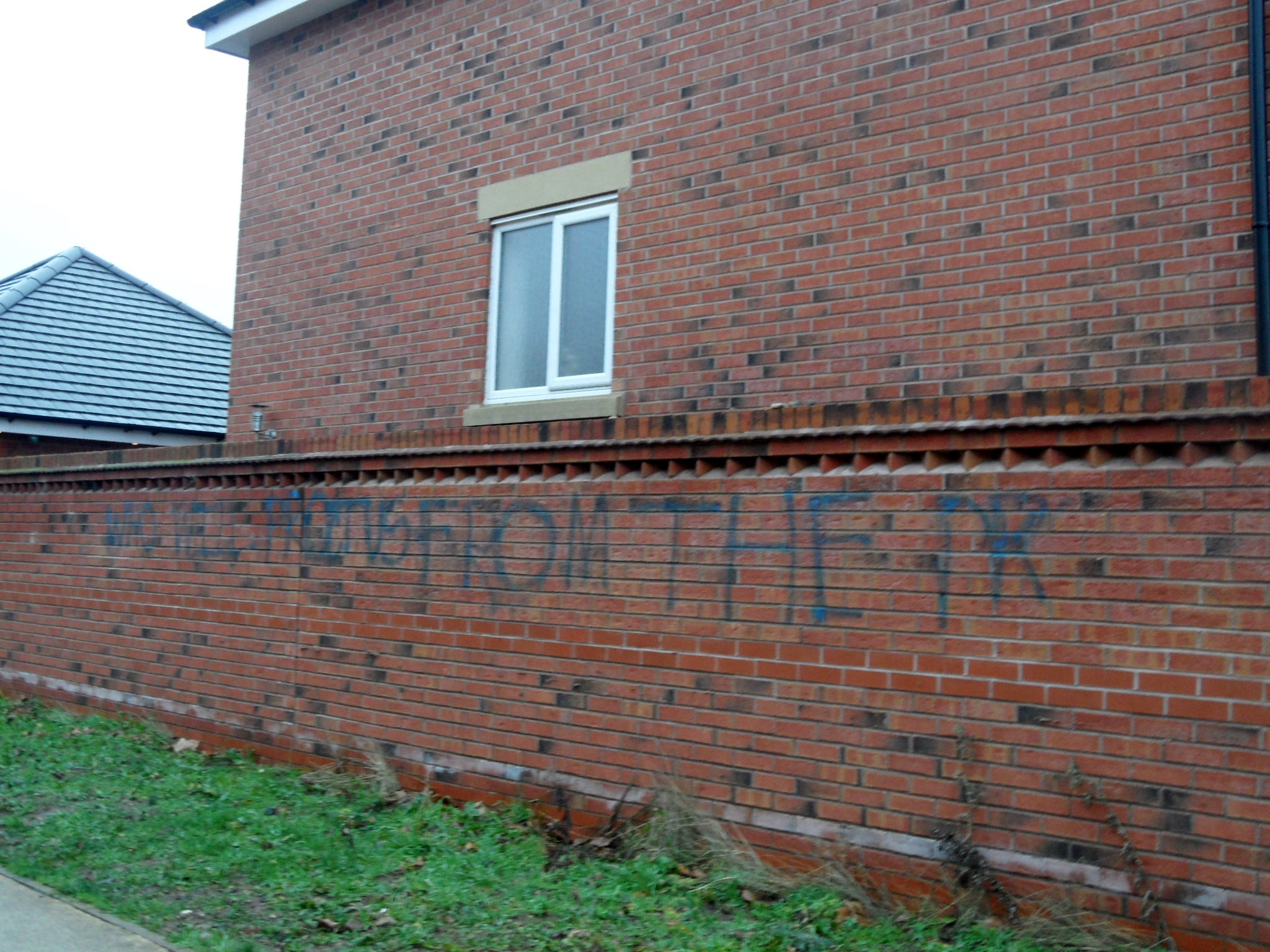
I also saw some graffiti on the side of a house. I don’t condone it but I do confess to being a little intrigued…..

PR Graffiti

Question mark?


Sources:

Lichfield: Economic history’, A History of the County of Stafford: Volume 14: Lichfield(1990), pp. 109-131

Click to access cstaffs.pdf

Click to access lichfieldeusreportfinal.pdf

Shiver Me Timbers

Where there’s an old wooden beam, there’s often a rumour that it originated on an old ship. It’s a bit of folklore that I keep encountering time and time again, even here in landlocked Lichfield and Staffordshire. Back in 2011, I visited St John’s Hospital during the Lichfield Heritage Weekend and heard that the Master’s House, which was originally the canons’ and pilgrims’ hall and enlarged by Bishop Smythe in the late fifteenth century, was built using beams from galleons. On the ghost tour earlier this month, we were told that that wooden beams in an entry running alongside the Walter Smith butcher shop on Market Street came from old ships and when researching the Four Crosses Inn in Cannock for a piece in the Chase Gazette, I once again came across claims that the oldest part the building, dating to 1636, made use of timber from ships.

Alongside butcher shop on Market St. Beams are covered in stripy plastic on this photo unfortunately, but every now and again the alley is open for you to go and take a look...

Alongside butcher shop on Market St. Beams are covered in stripy plastic on this photo unfortunately, but every now and again the alley is open for you to go and take a look…

Last night, a discussion on Twitter about those other two old inn regulars – ghosts and Dick Turpin – moved onto the subject on the use of old ships’ beams and a quick google search revealed yet more old Midlands buildings making the claim including the Ye Olde Gate Inn in the Derbyshire village of Brassington and the appropriately named Old Ship Inn in Worksop, Nottinghamshire. Could there be any truth in any of these claims? As someone unfamiliar with the world of carpentry, I was interested to read a discussion between some experts on the matter which you can read here. Just as I was sure that this myth was pretty much busted I clicked on the link in the penultimate comment, which took me here – a website telling the story of the lost Brig Elizabeth Jane, launched in Nova Scotia in 1817 and abandoned off the Yorkshire coast in 1854. Incredibly, the name board and the port of registration board were discovered in a ceiling in Robin Hood’s Bay in 2003 leaving no doubt that this was one case where the rumours were true.
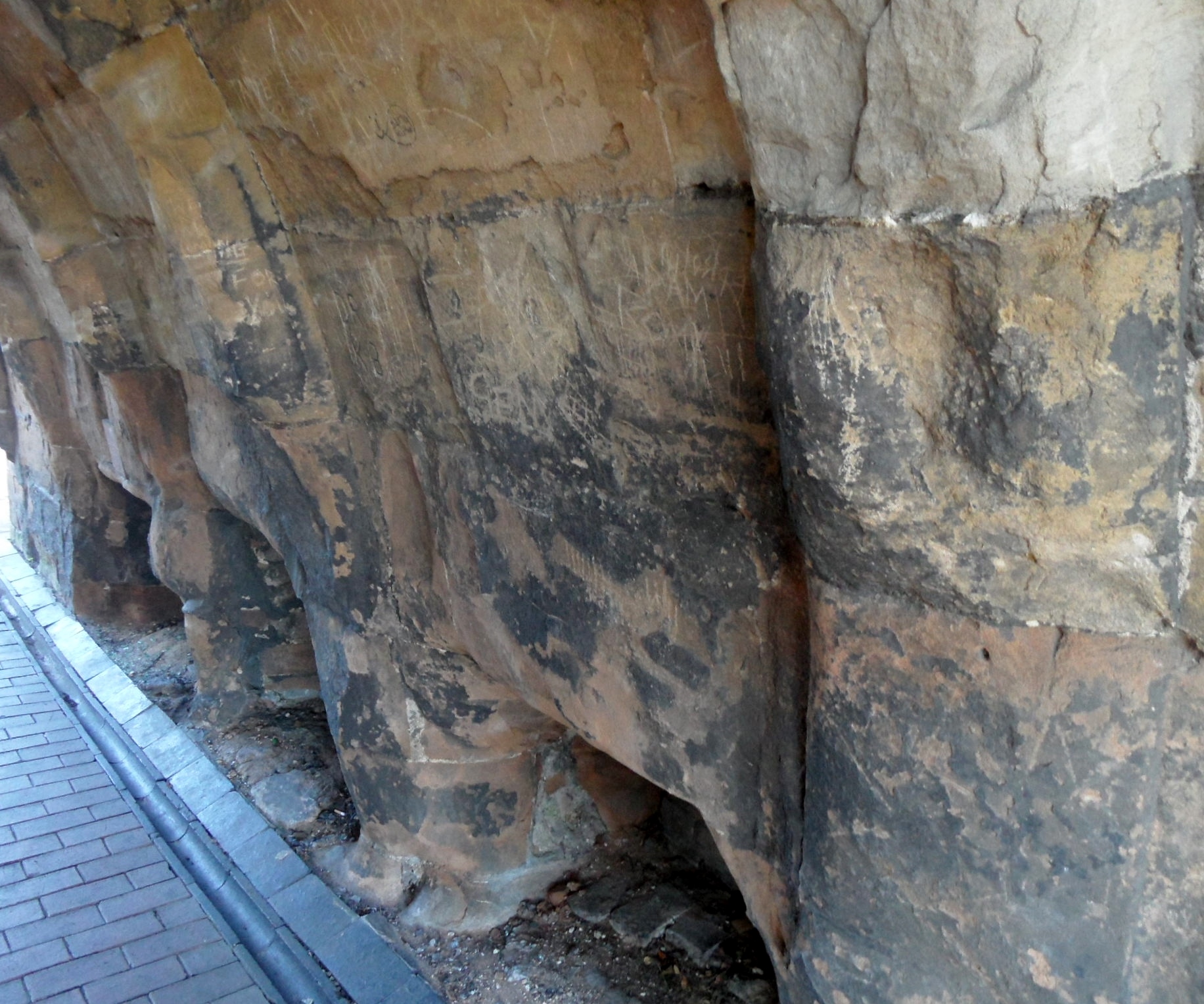
A one off perhaps? It seems not as shortly aftewards I came across the website of the Chesapeake Mill in Hampshire, where the beams, joists and floors are all said to have been constructed from the United States frigate ‘The Chesapeake’. On a slightly gory note, an extract from ‘The Navy and Army Illustrated’ in 1898, included on the  mill’s website, describes the joists as ‘covered with the blood of the men who were killed and wounded in action, and many bullets are embedded in them; in fact a good many of the timbers seem quite soaked with blood’.  You should read the full story on their website here it’s a fascinating place!
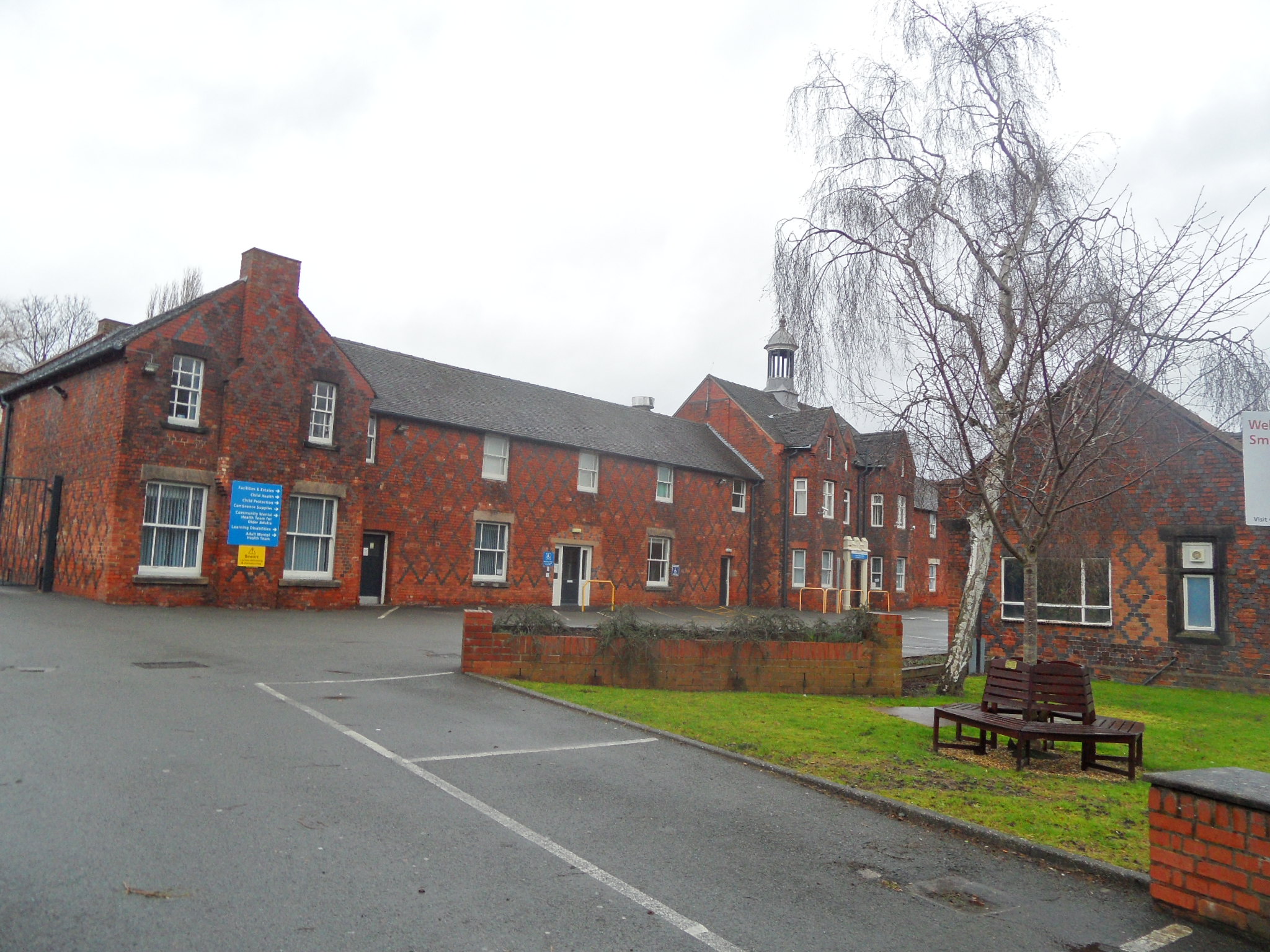
Closer to home, I found an article on Graiseley Old Hall in Wolverhampton which says that some of the purlins (now there’s a word I didn’t know existed until today!) in the roof came from old ships. What’s also interesting about this article is that it acknowledges that similar claims are made about many buildings, but that hard evidence to support it only exists in a few and then gives us a possible explanation for this, suggesting that often it could be a reference to the quality of the timber rather than where it came from.

I’d really like to hear of any more examples that people know of where old ships timbers are said to have been used, proved or otherwise.  When it comes to myths and folklore, we shouldn’t always believe everything we hear, but we should definitely listen in the first place. You never know where a story will lead.