Lichfield Law

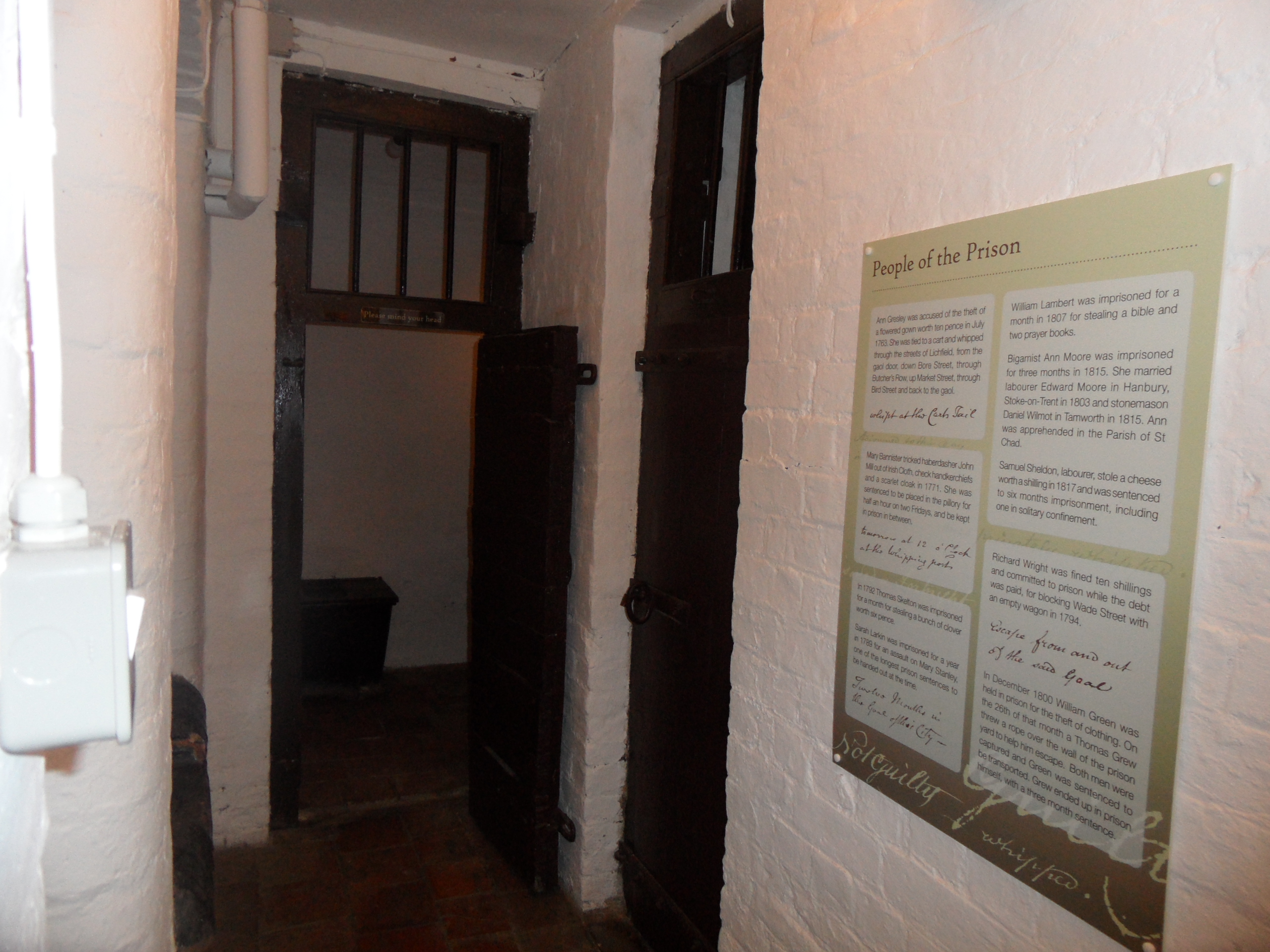
Lichfield’s old gaol is open to the public once more, allowing us to see how ‘justice’ was administered in the past, and read about some of those on the receiving end of it.

I took a few photos but to get a true feel of the place you really need to visit these ‘…cells, whose echoes only learn to groan’, as Erasmus Darwin put it. 

This is a thought provoking part of Lichfield, tucked away at the back of the Guildhall.

The cells open every Saturday until the end of September from 10am to 4pm. To find out more call 01543 264972 or email sjmuseum@lichfield.gov.uk.  There’s no admission charge (although you are likely to hear at least one person quipping about having to pay to get out).


Good Foundations

I stopped by the Outer Friary carpark yesterday and hovered around until one of the archaeologists was near enough to pounce on (not literally, there was a metal fence between us). He very kindly explained that they thought they’d found a victorian house, but that they would keep looking in case any evidence of earlier activity had survived e.g. field boundaries. One thing he did mention that I thought was fantastic was how people passing by were offering their interpretations and anecdotes – one chap apparently swore that he remembered buying records out of the cellar you can see on Dave Gallagher’s photo below (which he has very kindly said I can use!).

Hope the hi-vis jacket is waterproof! Photo by Dave Gallagher

There are more of Dave’s photos on the ‘You’re probably from Lichfield, Staffs if………’ Facebook group, accompanied by some interesting discussions about what the dig has revealed.

Whether people have read about the dig on Lichfield Live, seen Annette Rubery’s great post, been made aware of what’s going on thanks to Brownhillsbob’s blog, have joined in the discussion on Facebook, or have just stopped by in the street to wonder what’s going on I think its great that we’ve all had the opportunity to see this. Of course with archaeology we all want exciting things to be discovered, but even if the archaeologists don’t turn up anything that they consider ‘significant’,  it’s allowed people to witness a dig (that isn’t on Time Team) and got people interested in what’s going on around them, which is never a bad thing. Plus it’s given us all something to talk about other than the weather….

Edit 14/5/2012

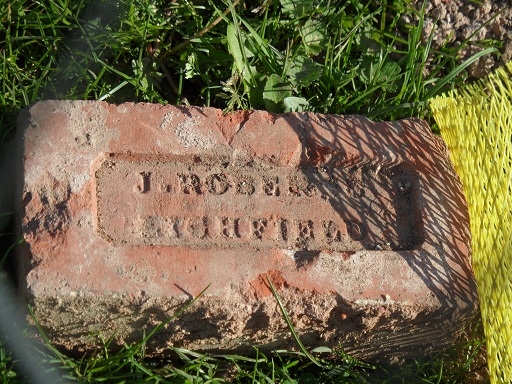
Walking past on Saturday I noticed this brick on the side of the excavations. I have found a reference to a ‘Mr Roberts’ brickyard at Streethay, near Lichfield’, in a book from 1869 (Burton on Trent: Its Water And Its Breweries by William Molyneux) which may be where this brick was made. (Mr J Roberts from Streethay also won second prize for his pony at the annual show of The Staffordshire Agricultural Society in 1867!) According to the pastscape record there was a post-medieval brickworks, including a yard and a claypit, at the helpfully named ‘Brickyard Farm’ at Streethay.  The brickworks and the associated pits show up brilliantly on the 1883 OS map, sitting near to the canal, inbetween Bearshay and Hilliards Cross.

I think bricks are underestimated so I think I’m going to do a post in honour of the not so humble brick.

A local brick


Update: 28 May 2012

The dig has been completed and the trenches have been filled in. There’s a short post here from Lichfield District council, who expect a full report to be available in three to six months.

What lies beneath Lichfield?

A very quick post to say that there is an archaeological investigation taking place at the Friary Outer car park. You can read a little more here at the project redevelopment website http://www2.lichfielddc.gov.uk/friaryouter/2012/05/02/friary-outer-archaeology-investigations/. It says they will be posting updates should anything be found.

I passed by last night and the dig has revealed what looks like the foundations of at least one building, including steps, a cellar and what could be a tiled floor.* I’m having a look at some old maps to see what used to occupy that site.

Unfortunately & unusally for me I didn’t have my camera or even my phone with me to take a photo. I’ll try and get one later but if you’ve got 10 minutes to spare on this dull bank holiday Monday, go and have a look and see it for yourself before it’s hidden from view once more. It’s intriguing to think how much history must lie beneath us, revealed to us from time to time by either by accident or design, or even nature (moles are particularly good at this apparently!)

* disclaimer – this is what it looked like to my untrained eyes. It could be something completely different!

Edit: Keep an eye on Annette Rubery’s blog as unlike me, Annette had the good sense to take a camera and will be posting some photos later! It’s here –  http://www.annetterubery.co.uk/

Edit part 2: This of course isn’t the first archaeological investigation in the Sandford St area. The Staffordshire Heritage gateway contains information about the previous discoveries near here for example,  a possible section of the ditch thought to have formed part of Lichfield’s medieval defences, remains of a house dating to around the C14th , tanning pits from the C16th to C17th, a possible post-medieval iron working complex and of course discoveries relating to the Friary complex.

Source:

Staffordshire Historic Environment Record, accessed via the Heritage Gateway


Tree following: Mayday

It took a bit of effort to drag myself out into the murky, wet evening. Glad I made the effort though. Before I’d even got to the woods, I had a treat when a heron swooped down onto a roof and remained there for a few moments before flying off in the direction of Waitrose. I’ve spotted a heron a couple of times near the old mill pool over there. On twitter, Brownhills Bob & someone from the Pipe Green Trust thought he may have been heading to a heronry at Aldershawe.

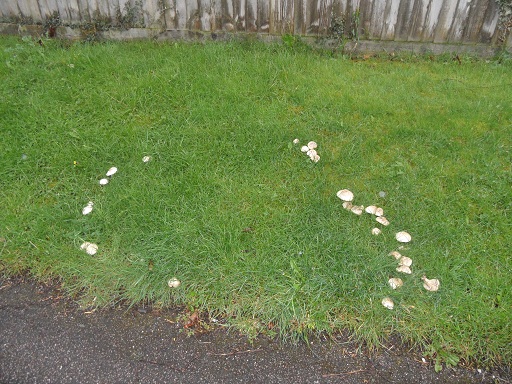
Another few steps and I found myself passing a slightly wonky fairyring of mushrooms. I didn’t get too near. I’ve read what happens to mortals who do…..

Once in the woods, the trees, plants and hedgerows glistened, but with drops of recent rainfall, rather than may dew.

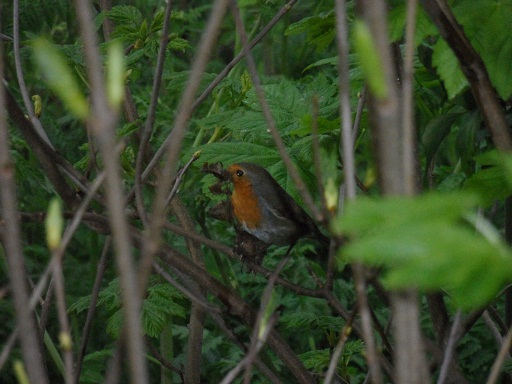
I wanted to measure my tree, to get an idea of how old it was. It soon became apparent that this was no task to undertake alone. The people in the flats overlooking the lane, and this robin that turned up to watch, probably wondered what on earth I was doing.

Happily, I managed to enlist someone’s help and we discovered that the trunk measured about 3.2m which could mean that it is anything from around 210 years old to around 130 years old. According to the Royal Forestry Society, a tree could grow between 1.5cm & 2.5cm per year, depending on things like location, soil quality.  So I’m going to read up on Mitchell’s Rule and then maybe I’ll have another go at estimating the age!

Tree measuring task completed, I headed back down the lane and met a couple out for a walk. They didn’t seem to mind the weather, in fact they thought it was lovely…….


The Streets of Lichfield

It’s quite well known that Bishop Roger de Clinton laid out the main streets of Lichfield in a grid pattern, still in evidence over 800 years later.

Lichfield 2011-ish

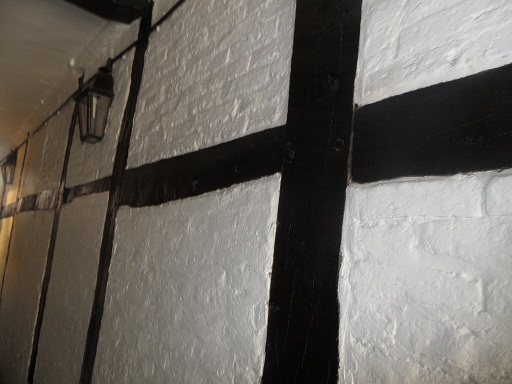
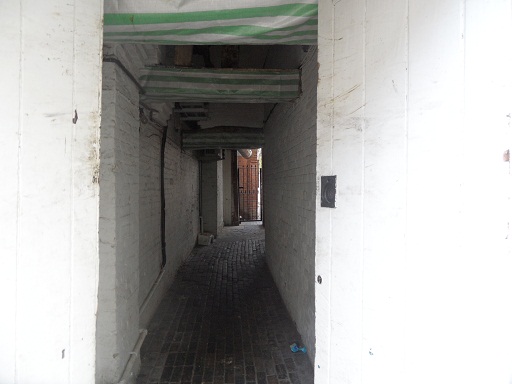
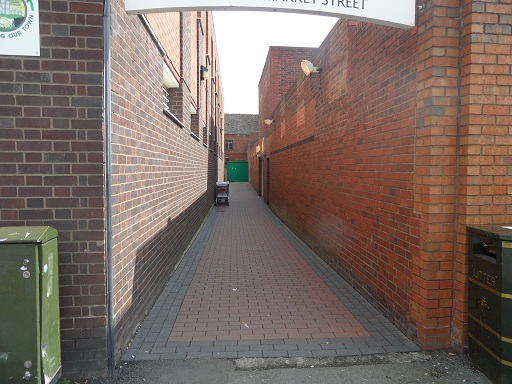
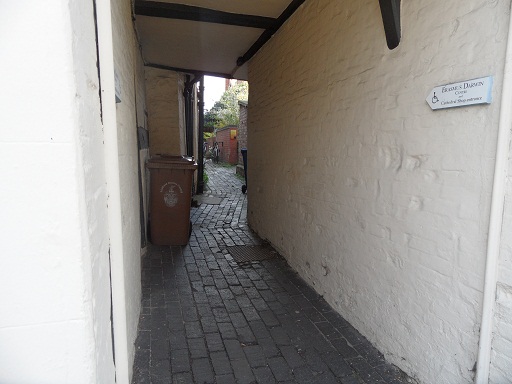
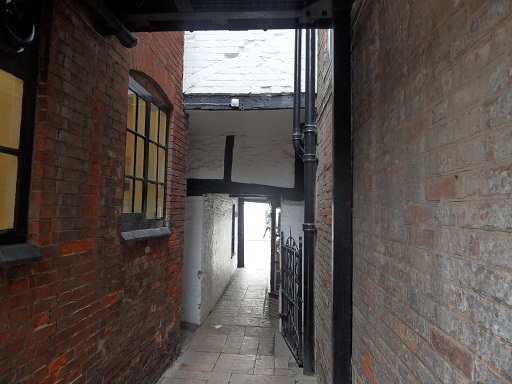
What about those in between though? An email from Pat and a chance conversation about a book ‘A Walk Around the Snickelways of York’ by Mark W Jones (1) got me thinking about the alleys, the passageways, the shortcuts and the entries, winding themselves around buildings and connecting one Lichfield street with another.

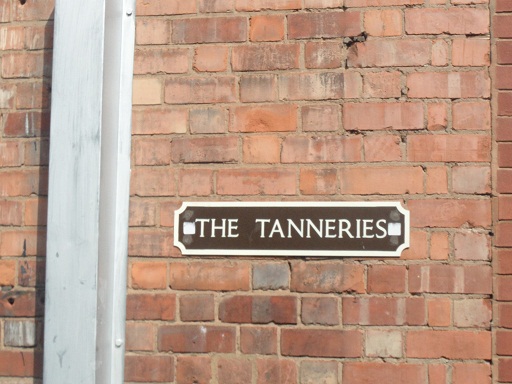
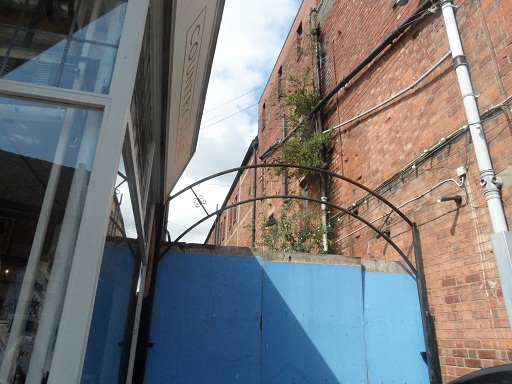
Pat’s email asked if I knew anything about The Tanneries, running from Tamworth St, along the left handside of what was the old Kwiksave building, (and the Regal Cinema before that) to Cross Keys carpark.

The Tanneries

The Tanneries is blocked off at present

I don’t, but I’m interested how long this pathway and the others around the city have been around for.

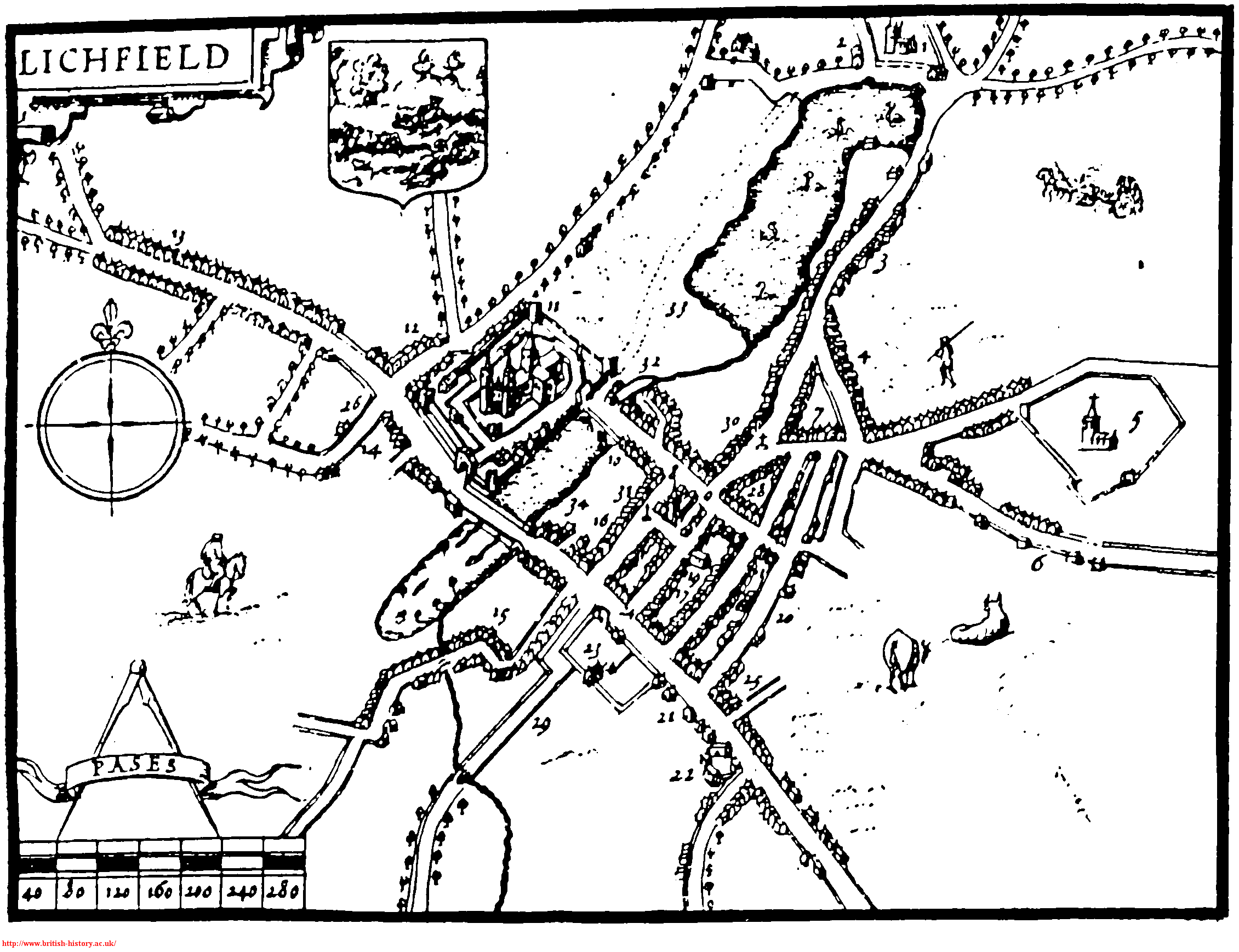
Some are documented better than others. Friar’s Alley running alongside the edge of the site of the old Friary and onto Bird St appears as Friers Lane on John Speed’s 1610 map (no 29).

1610 map of Lichfield

Later it shows up on John Snape’s map as Friers Alley in 1781. On later maps, the narrow part leading to (or from depending which way you are going!) Bird St was known as Moss’s Entry.

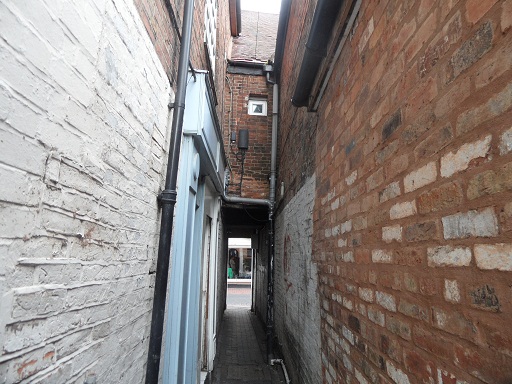
Moss's Entry/Friars Alley onto Bird St

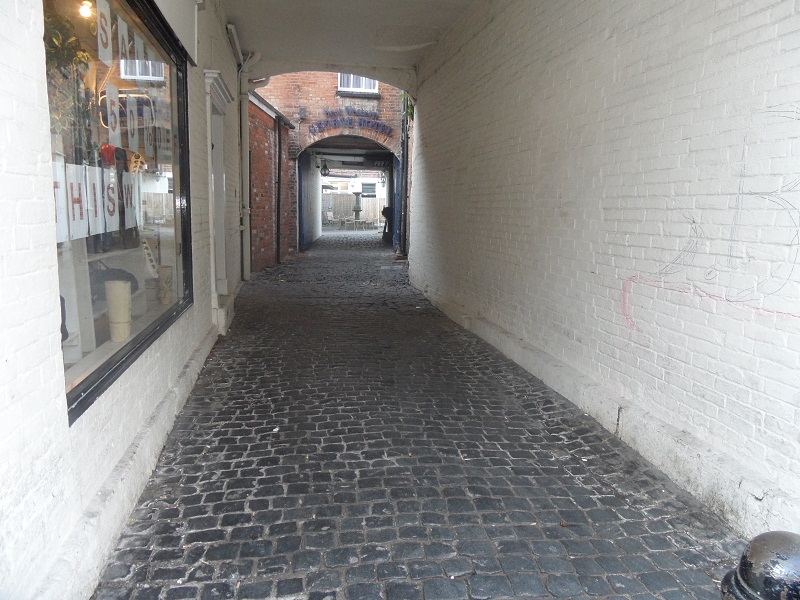
One of my favourites is the old carriageway leading to the courtyard of the George Hotel. It takes you past doors and bricked up windows, but it’s the floor with its Rowley Ragstone Setts (2) that I really like, as this small side passage gives an idea how Lichfield’s main streets would have been paved in the late 18th century.

George Hotel from Market St
 

I’ve taken some photos of others I came across. Most are found in the city centre though I’m sure there are loads more to be found throughout Lichfield. Of course, if anyone wants to share one they know of, or has any more information about any of the above or below, that’d be fantastic!


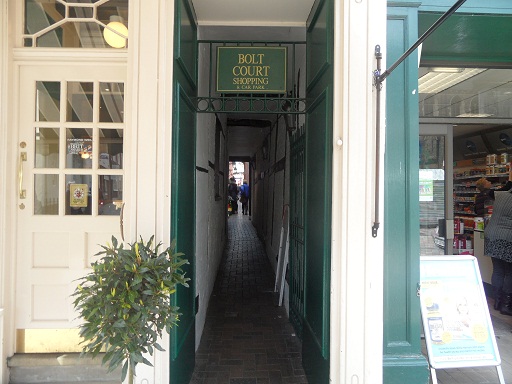
Bolt Court - a really busy little street


Inside Bolt Court


Alongside butcher shop on Market St


From Market St...


The Close to Erasmus Darwin House

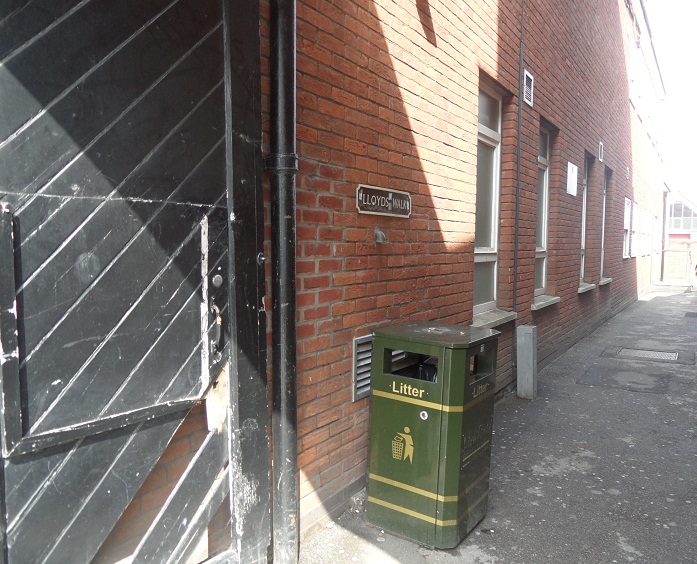
Lloyds Walk


Tudor Row out onto Bore St

You see buildings differently walking these paths, maybe I’ll explore the backside of Lichfield a little more……

Footnotes:

(1)Snickelway is a great word created by Mark W Jones. It’s a portmanteau (which is in itself a great word!) of Snicket, Ginnel and Alleyway and Mr Jones explains, ‘A Snickelway is a narrow place to walk along, leading from somewhere to somewhere else, usually in a town or city, especially in the city of York’.

(2) Information taken from Staffordshire Pastrack website.

Map information from: ‘Lichfield: The place and street names, population and boundaries ‘, A History of the County of Stafford: Volume 14: Lichfield (1990), pp. 37-42. URL: http://www.british-history.ac.uk/report.aspx?compid=42340

Tree following: …..bring May flowers

Leomansley Woods are lovely all year round but within the next few weeks they will be at the peak of their beauty. Well, I think so. You’ll have to visit and see if you agree.

There’s just a smattering at the moment, but soon the bluebells will fill the gaps between the trees and paint the woodland floor with their colour.

Getting bluer by the day

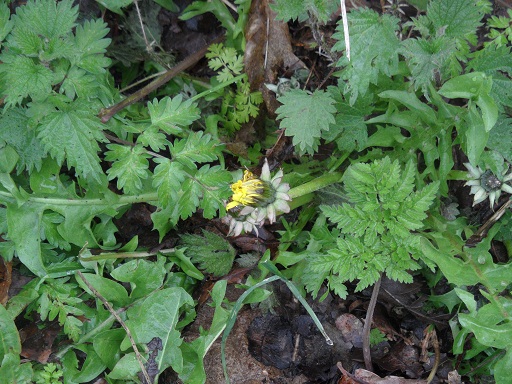
I could put a photo on here from last year but why spoil the anticipation? It’s not long to wait now! In the meantime there’s plenty more going on of interest, although I confess I’m not always sure what exactly. I’m still fumbling my way through with a variety of Woodland Trust swatch books and a junior nature guide but I am learning slowly. I’ve realised that trying to identify the plants from photographs is not the way to do it. Clearly, it’s a bit tricky to see if the leaves smell of anything (for example, according to my book, hemlock has ‘the strong smell of mice’!) and it’s hard to see other subtle details from a photograph too.

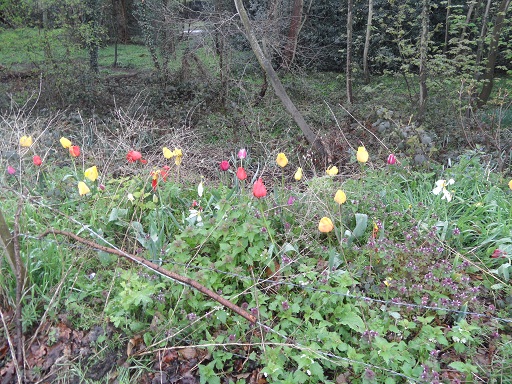
I know these are tulips.....

Fungus

This is some kind of fungus......

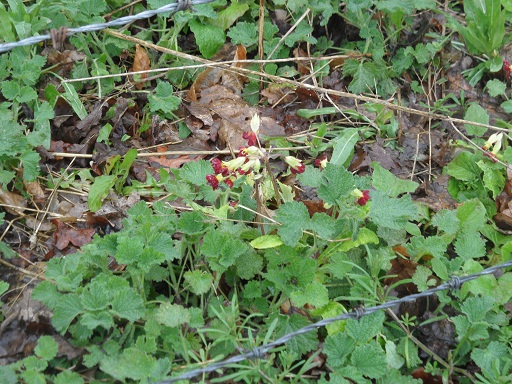
No idea???


No idea part 2????

The dandelions had closed up due to the rain (or maybe they’ were hiding, having heard of my plans to turn them into marmalade……).

Not so dandy

Elsewhere along the lane, other plants were still showing evidence of the last downpour.

Raindrops on leaves

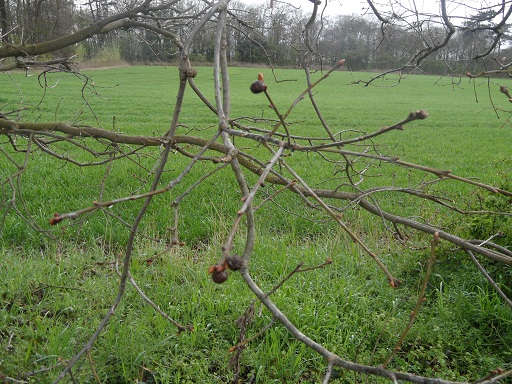
The tree itself now has buds and I’m pretty sure that it is an oak. The path running past the tree goes past Leomansley House/Manor and leads to Pipe Green. Pipe Green is a wonderful area of meadowland managed by a trust and they have an equally wonderful website with details of all the birds, plants and animals you might spot whilst you are there. Have a look at the website here and then go and visit! I’m going to go and see if I can spot the wood anemones.

Oak Aged

Galls & Buds come out to play

Following the sale of the Maple Hayes Estate, to which it belongs, Leomansley Wood now has a new owner. Let’s hope that it will now be cared for and managed as well as it should be.


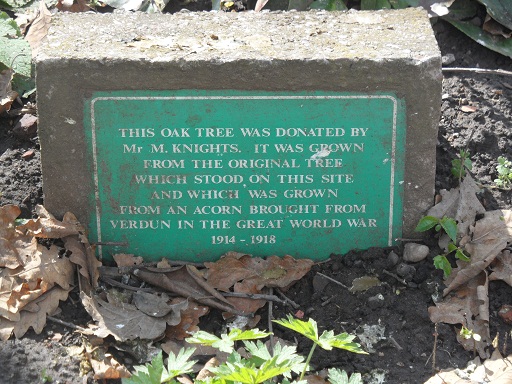
Verdun Acorns


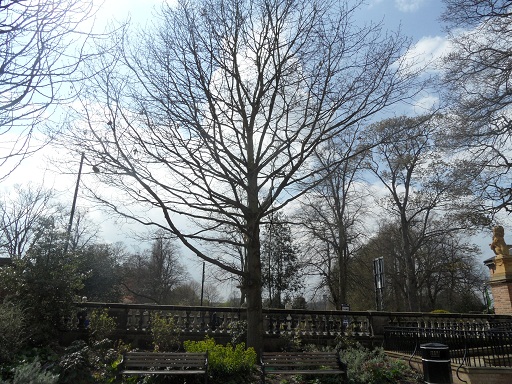
This plaque is in Lichfield’s Garden of Remembrance.  It seems that the planting of acorns from Verdun was not unique to Lichfield and that there are oaks grown from Verdun acorns at many other places in the country, including Kew Gardens, Coventry, and Reading.

In a forum (1), I found a possible explanation for this. It suggests that a box of chestnuts and acorns were sent from Verdun to the London and North-West Railway Company, so that they could be sold to raise funds  for the benefit of the War Seal Foundation (L & N-W Section). It also says that sample boxes were sent to towns and cities along the route of the railway (of which Lichfield would be one?).

I’m going to have a look throught the newspaper archive to see if there is any information on this. In the meantime, it would be great to know if anyone has ever heard of this before or has any further information. I wonder who Mr Knights was?

Oak tree thought to be grown from an acorn, from an oak tree grown from a 'Verdun Acorn'.


Edit 16/4/2012

I had a quick look through the British Newspapers archive and there is this snippet from the Western Times, Tuesday 24th July 1917.

“A resident of Ealing has presented the town with two chestnut trees and an oak tree grown from chestnuts and an acorn gathered by the Mayor of Verdun from the devasted forests of Vaux and Douaumount. They are to be planted in the Walpole Park as a memorial to the defence of Verdun’.

 Sources:

Statuesque

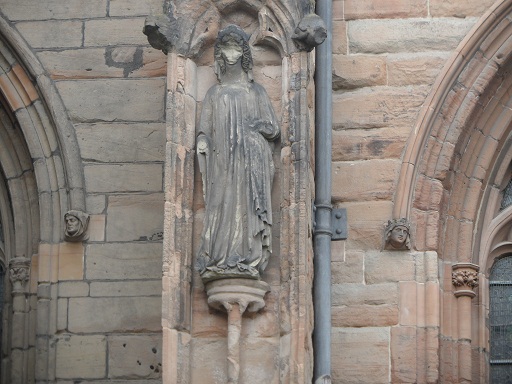
Walking home last Monday I took a detour past the Cathedral to have another look for the remaining five original, medieval statues.  I was pretty sure that I’d found two on the northwest tower –  one nameless woman next to Eve and another to the left of Deborah. The Victorian statues tend to have names on their pedestals. There’s an old photograph of the western front of the Cathedral pre-restoration on the English Heritage Viewfinder website, which you can see here. It shows the front looking strangely bare – above the row of kings only the niches containing the few remaining original statues are filled.

Medieval statue?, Deborah, Rachel, Rebekah, Sarah, Medieval statue?, Eve

According to a comment someone left on here, there are other statues on the other side of the north west tower. Unfortunately, my timing wasn’t great as someone was cutting the grass alongside the tower and a Midlands Today van had not long pulled up nearby and were making preparations to film (I later found out they were there to cover the Olympic Torch route story). As I didn’t fancy making a cameo appearance, dodging the mower in the background of a news report, I took a hasty few photos of the tower and carried on around the back of the Cathedral.  Stupidly, I didn’t check them before I got home and it’s not easy to make out much.  Another trip is in order….

Affix quality control sticker here

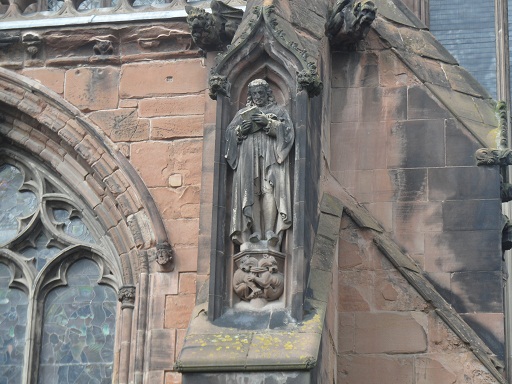
The medieval statue hunt continued as I walked around, in case one had sneaked in somewhere other than the northwest tower. I found Christopher Wren, Elias Ashmole and Dr Johnson amongst others along the way.

“The world is not yet exhausted; let me see something tomorrow which I never saw before” said Dr Johnson.

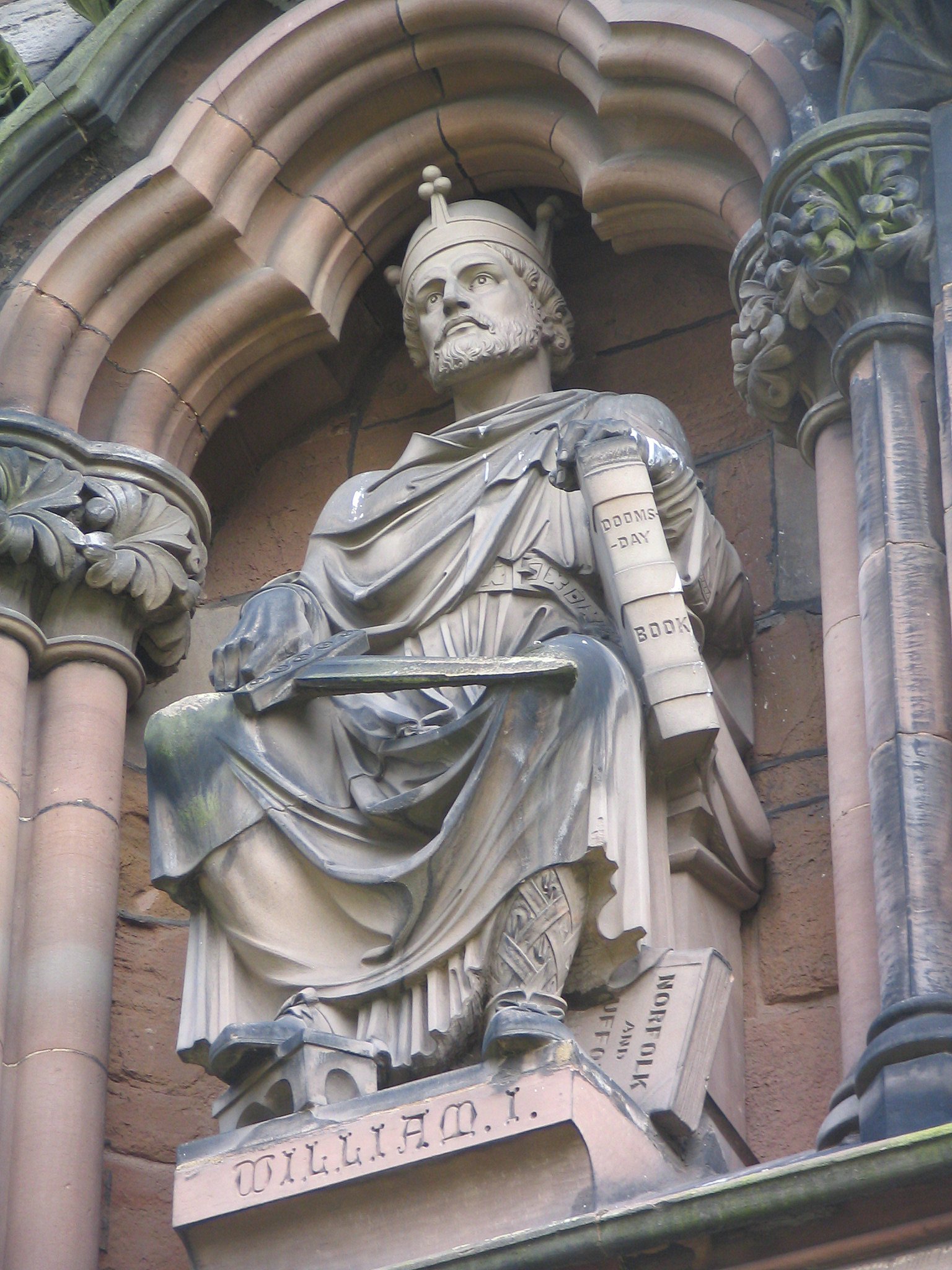
Most of the statues are accompanied by something symbolic – Johnson of course has his dictionary.  It’s the same for the kings (e.g. William the Conqueror holds the Domesday Book) and the biblical characters (I knew nothing about Deborah, but according to wikipedia she was a prophet and a judge and delivered her verdicts near a palm tree which explains why there’s one behind her statue).  I was wondering about Eve? Surely that’s an apple near her foot but what is she holding in her hand?  Imagine if you someone was to create a statue of you and they had to sum up your life with an object or two!

Image taken from Wikipedia

Just past Dr Johnson and his big, papery thing is another statue.  She has no name and as far as I can see there is no clue to her identity. I’m speculating, but is this one of the many statues destroyed or defaced by the parliamentary troops during the Civil War?   Most of the other damaged statues were removed – where did they end up I wonder? I came across some great photos of a figure of Christ on Aidan McRae Thomson’s flickrstream at a church in Swynnerton, Staffordshire together with an interesting theory that the statue originated from Lichfield Cathedral. If anyone else has any theories or even evidence of where the statues ended up, I’d love to hear them!

I have to confess that for me, sometimes the Cathedral is just there, part of the scenery as I go about the city. However, there are other times when, either by chance (catching the light a certain way) or by design (medieval statue hunting), the Cathedral commands my full attention and once again, I am reminded of what an incredible building this is, and the skill and talent of the craftspeople who made it so.

Well Being

My visit to Farewell several weeks ago got me interested in finding out more about wells. Brownhills Bob showed me a map of the area around Farewell and it’s amazing to see how many other ‘well’ related placenames there are in that area alone e.g. Stoneywell, Cresswell, Coldwell, Nuns Well and my own personal favourite, Giddywell (wonder what was in the water there?!).

I’ll come back to these another time but for now I thought it would be interesting to find out a bit about what’s probably the most well known well in our area – St Chad’s Well here in Lichfield.

The well has changed a fair bit over the years. The earliest description of the well is said to come from Leland who visited in the 1500s and is quoted in a Lichfield history book published in 1819 as saying “…Stowe church on the east of the towne where is St Chad’s well a spring of pure water where is seen a stone in the bottom of it on which some say St Chad was wont naked to stand in the water and pray at this stone…”.

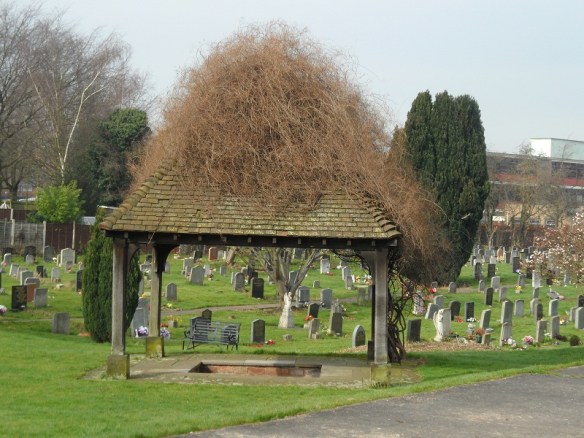
Today, St Chad’s Well looks like this.


Below is a picture of the well and church drawn by William Stukeley in 1736. As far as I know, it’s the oldest image of the well that there is.
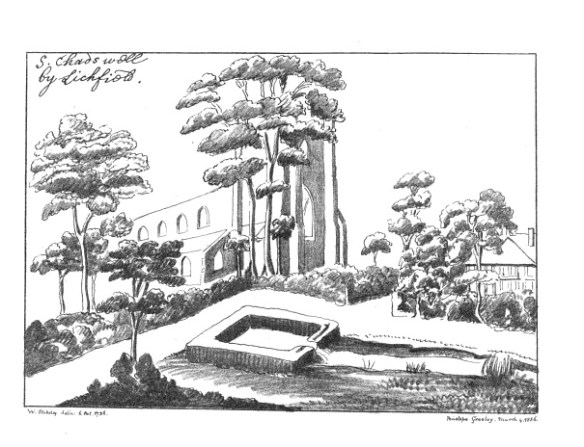
However, James Rawson reported that by 1833 the well had ‘degenerated into a most undignified puddle, more than 6 feet deep’. He seems to dispute Stukeley’s drawing, saying that there was no outlet for escape of water and the brook was not near to the well as depicted above. The well basin had become ‘filled up with mud and filth’ which Rawson believed was due to drainage in the surrounding meadows. As a result an octagonal building was erected over the well, which remained in place until 1947, when I understand that the well was actually moved to its present position and took on its current form. It would be interesting to see if there are any first hand accounts of this?

St Chad's Well, 1915. Image from Wikipedia

 
At some point it seems people may have thought the water in the well was harmful to drink. In a volume of ‘The Antiquary’, published in 1889 a Rev C F R Palmer is quoted as saying “It is popularly believed that it is dangerous to drink of the water of St. Chad’s Well, as it is sure to give a fit of the ” shakes,” Yet, in spite of the attendant’s remonstrances, I took a good draught, and, instead of ague, experienced only great refreshment in a fatiguing walk on a sultry day”. Like Rev Palmer, the lad in the photo looks like he’s about to take a good draught and doesn’t seem too concerned!

In 1806, Thomas Harwood wrote that ” The superstitious custom of adorning this well with boughs and of reading the gospel for the day at this and at other wells and pumps is yet observed in this city on Ascension Day”.  According to St Chad’s church website, the tradition of well dressing (mostly associated with our neighbours over in Derbyshire) was revived in 1995 to commemorate the 50th anniversary of Christian Aid. I think the last well dressing was in 2010 with a girl guide theme. I wonder if the custom will be revived again?

I had always assumed that the well and the spring were one and the same, but it seems that it was separate, or at least it became separate at some point. I don’t feel too bad about my ignorance though, as in 1923, the churchwarden Thomas Moseley said ‘no living person knew where the water came from’. In a book published in 1846, I’ve read that ‘The water of the well is sulphurated and near to it is a pretty iron pump giving water from a second well which is a superfine chalybeate’ and in an archaeological survey from 2006, it refers to a little brick building containing the spring. The survey was carried out as there was a proposal to build a visitors centre in the well’s vicinity. I understand that plans for the centre were abandoned in February 2008 but the survey makes for an interesting read and you can find it here.

Though plans for a visitors centre didn’t come to fruition, there is another project that will bring people to the well. On 1st April,  at 2.30pm the Bishop of Lichfield will be opening the first interpretation panel on the Two Saints Way, a pilgrimage route linking Lichfield Cathedral and St Chad’s Well with the shrine of St Werburgh at Chester Cathedral. I hope this is a success and I wish David Potts and all those involved……well!

Sources:

Some account of Croyland Abbey, read by JM Gresley by William Stukeley

A Short Account of ther City and Close of Lichfield by Thomas George Lomax, John Chappel Woodhouse and William Newling

The Gentleman’s magazine, Volume 217

www.saintchads.org.uk/sitebuildercontent/sitebuilderfiles/parishprofile2011.pdf

www.stchads.org.uk

 The Wanderings of a Pen & Pencil by F P Palmer (1846)

The Antiquary Vol 22

http://archaeologydataservice.ac.uk/catalogue/adsdata/arch-841-1/dissemination/pdf/oxfordar1-50626_1.pdf


Lichfield Armour

On Wednesday, Pat sent me a link to a British Pathe film. The short film is from 1938 and shows boys and men dressed in armour for the Lichfield Bower. This on its own is fascinating stuff. However, this week it’s not only an interesting piece of footage but also a topical one!
The lead story in this week’s Mercury tells how the Bower Committee feel they have no choice but to sell off two of the four suits of armour they own (presumably some of those featured in the film?), to ensure the survival of the event.  You can read the full article here.

There’s so much more to be said on the Bower, about its history & its future and also its place in the Lichfield psyche. There is a great site for the Bower which explores some of the history behind this Lichfeldian tradition, as well as giving updates on this year’s festivities.

You can view a copy of the film by clicking here. I think the procession is travelling down Beacon St in the film, what does anyone else think? Huge thanks to Pat for his great contribution, as ever.

I don’t have any photos of the Bower Armour, but I do have a photo of a suit of armour I took somewhere else in Lichfield. Anyone else spotted this chap in ye olde city?


Edit 23/2/2012

Over on twitter, the Beacon Street Blog have spotted a story in the Lichfield Mercury, saying that the armour has been withdrawn from the sale, due to a dispute over ownership with Lichfield District Council.