Family Trees

Standing in a small area of woodland on the edge of a field in Leomansley is a stone with the inscription ‘Greville’s Belt W.W.W 1923‘. It isn’t a gravestone, although you can see why some have mistaken it for one, but a marker erected by the then owner of the Maple Hayes estate, William Worthington Worthington, to commemorate the planting of this small belt of trees, named after his eldest son (William) Greville Worthington.(1)

In 1918, William Worthington had inherited Maple Hayes from his father Albert Octavius Worthington, a partner in the Burton brewery that carried his family name, who had originally purchased the estate in 1884. However, Greville Worthington would not inherit the estate from his father. In the early hours of 17th March 1942, whilst serving as a Lieutenant in the Royal Navy Volunteer Reserve at Dover, Greville drove through a restricted area. Although the sentry on duty ordered him to ‘Halt!’ twice, he failed to stop.The sentry opened fire and Greville was fatally wounded, dying in hospital ten days later. A verdict of accidental death was recorded. In the October of the following year, there was another family tragedy.  Lady Diana Worthington, Greville’s former wife, went missing from her home Weston Manor in Olney. A scarf and a coat were found on the banks of the River Ouse and after a week of searching, Diana’s body was recovered from the water.

Greville and Diana had four children together – Caroline, Anna, Charles and Benjamin. I have not yet been unable to find out much about what happened to the children following the deaths of their parents. However, we do know that when William Worthington died in 1949, nineteen year old Charles was his heir. (2)  William’s death brought the Worthington era at Maple Hayes to an end and in 1950, the estate was sold. The house and around twenty three acres were acquired by Staffordshire County Council for educational purposes. Since 1981, the site has been occupied by the Maple Hayes Dyslexia School. The remainder of the estate, some 1,500 acres including farms, cottages and agricultural land, was sold to a trust.(3)

As well as Greville’s Belt,  other areas of woodland were named after Worthington family members. Lady Muriel’s Belt, Herbert’s Spinney and Fitzherbert Firs still appear on maps of the area, as mentioned in BrownhillsBob’s recent post on Leomansley. Are there more stone markers to be found in these places?  I also noticed a house on the site of the old playground of Christ Church School, near to the church, which has a plaque saying ‘W.W.W 1920‘. Surely another reference to William Worthington Worthington, although exactly what the connection is I don’t know as yet.  The Worthington family may no longer reside at Maple Hayes but their names still echo in the landscape that surrounds their former home.

Notes

(1) I have seen similar stones marking ‘Parker’s Plantation’ and ‘The Roundabouts’ at the Pipe Hall Farm, owned by The Woodland Trust.

(2) W.G.W had a younger brother Albert Ronald Worthington, born 1904 and died in 1951. but according to the County History, it was grandson Charles, eldest son of W.G.W that was W.W.W’s heir.

(3) Until last year, around 360 acres of the former Maple Hayes estate was still owned by the trust. However, in April 2012 it was sold to new owners The Crown Estate for just under three million pounds.

Sources

Burntwood: Manors, local government and public services’, A History of the County of Stafford: Volume 14: Lichfield (1990), pp. 205-220.

The Lichfield Mercury archives

Nottingham Evening Post archive


Sole Trader

Whilst having a browse in Lichfield Record Office,  I came across an account of more archaeological finds discovered at Minster Pool.  During the construction of a storm water sewer in the 1970s, surplus soil was taken from the pool to a council rubbish tip. One day Mr Miller, from the city’s Engineering and Surveyoring department, happened to notice fragments of Cistercian ware amongst the peaty earth and alerted local experts. On examining the tip more closely, they discovered that the soil from Minster Pool also contained lots of fragments of leather.

Mr Miller and the others had discovered the remains of medieval leather shoes from a cobbler’s workshop that had been operating near to Minster Pool between the years 1400 and 1550. It’s thought that after being repaired several times, the shoes were in such bad condition that they were discarded by the cobbler (only for them to resurface on another rubbish heap some five hundred years later!). The account I read said that after their discovery, the shoes had been taken to Lichfield Museum. On returning home I was delighted to see that some kind soul had photographed some of them and added them to the Lichfield District Council flickr stream. However, in two and a half years they’ve only had sixteen views (and I think three of those were me!) so now you know the story behind how they were found, please pop and over and take a look at them here! It’s a shame that we’ll probably never know the story of the people the shoes belonged to, or the story of the cobblers who patched them up time and time again….

Three examples of 500 year old leather shoes found in soil from Minster Pool on the council rubbish dump! Image taken from Lichfield District Council flickr stream.

Sources:

South Staffordshire Archaeological and Historical Society (SAHS) Transactions XIV – XVI, 1972 – 1975

Pilgrims' Progress

In trying to find out more about the ferry that may have taken pilgrims across the water to the Cathedral, I came across an interesting description of what they may have found there on their arrival.

A document described as an ‘indenture chirograph’ (1), two feet five inches long and eleven inches wide, lists the goods found in the sacristy in 1345. A transcript of the original Latin is included in the ‘Collections for a History of Staffordshire 1886, Part II, Vol VI’, edited by the William Salt Society. Thankfully, there is also a translation alongside, so that I don’t have to fumble my way through using google translate! (2)

A tile and a simple portrait mark the place where Chad’s shrine once stood.

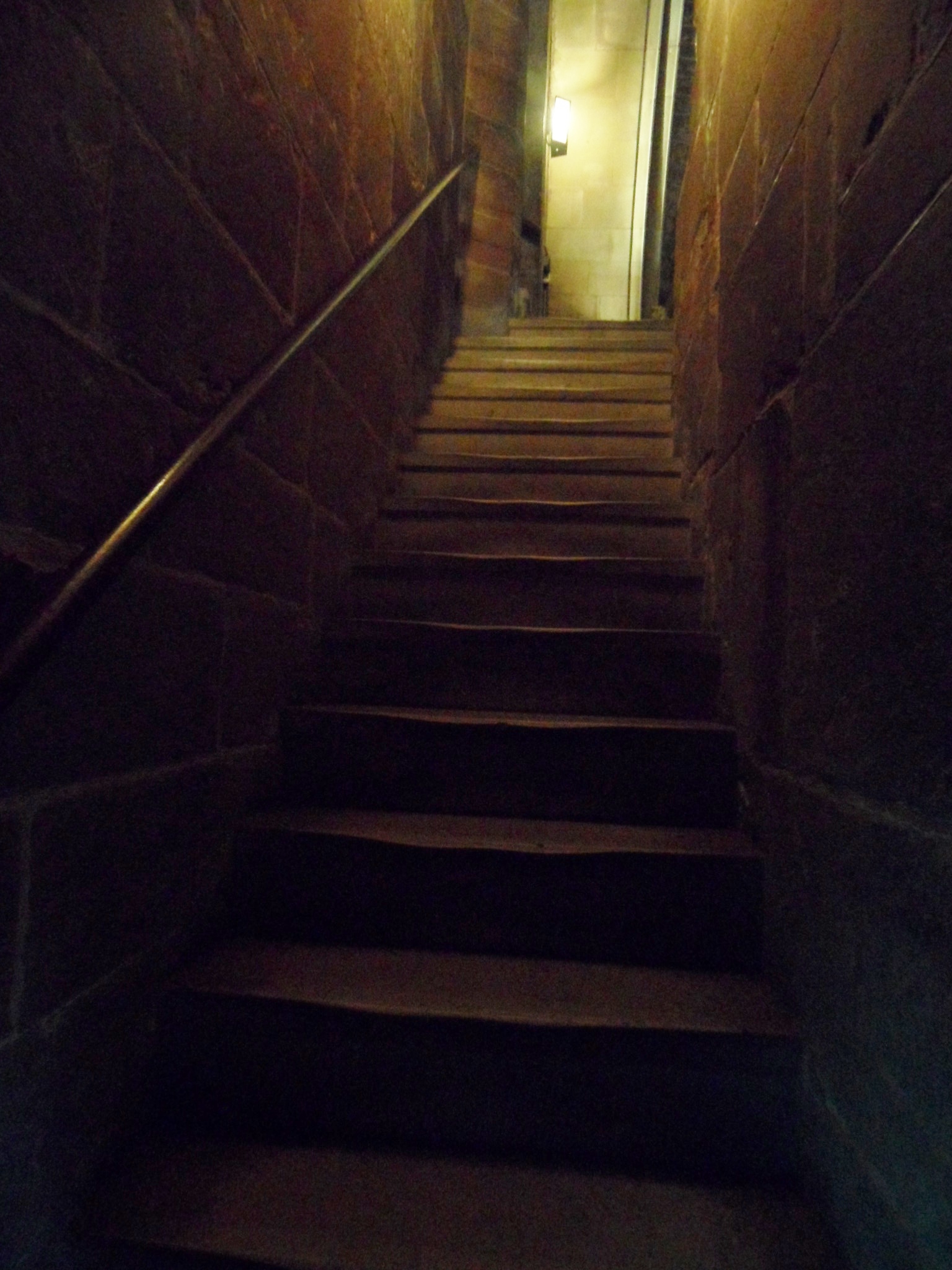
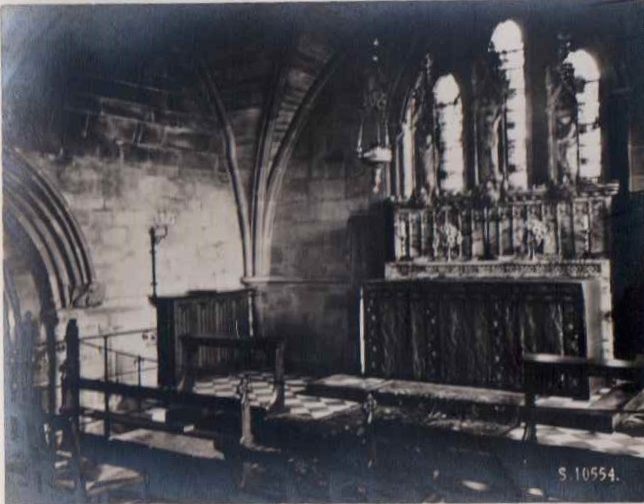
The first part of the inventory lists the various relics owned by the Cathedral, including of course those of Saint Chad. Chad died in 672AD and around 700AD his bones were moved to a new church, on or near to the site of the present Cathedral. It’s thought that the Lichfield Angel, discovered in 2003 whilst work was being carried out on the nave, may have been part of the original shrine, and that it may have been destroyed by Vikings. By the time the inventory was made in 1345, the holy bones seem to have been kept in several different places within the Cathedral. Chad’s skull was kept in the thirteenth century Saint Chad’s Head Chapel ‘in a painted wooden case’. The Cathedral website describes how initially pilgrims would ascend a staircase in the wall, walk around the head, and then exit down a second stairway which still exists today.

Staircase which pilgrims may have used to exit St Chad’s Head Chapel

An old photograph of St Chad’s Chapel

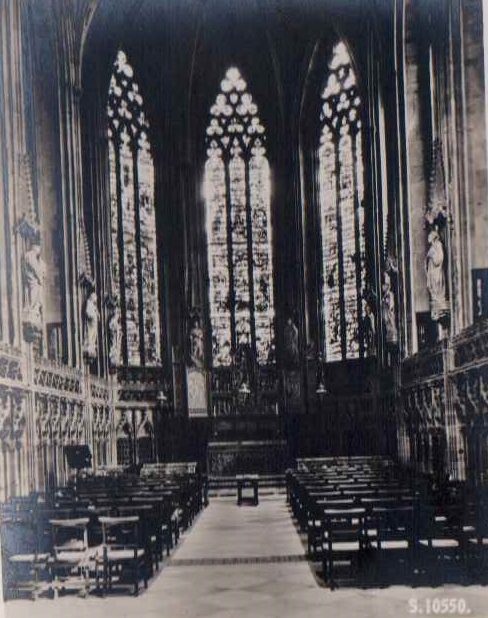
Eventually, due to the volume of traffic, one of the staircases was closed and the relic was shown to pilgrims from the balcony outside the chapel.  There is also mention of an arm of Blessed Chad, and other bones in a portable shrine, as well as the great shrine of St Chad. The latter was described as being decorated with statues and adorned with precious gifts and jewels and stood in the Lady Chapel of the Cathedral until the reformation. It’s believed that some of the Saint’s bones are now kept in the Roman Catholic Cathedral of St Chad’s in Birmingham, enshrined on 21 June 1841, the day that the Cathedral was consecrated. (3)

An old photo of the Lady Chapel

It wasn’t just the relics of Saint Chad that were owned by the Cathedral. Other items recorded in 1345 include:

Some of Mount Calvary and Golgotha, a piece of the rock standing upon which Jesus wept bitterly and wept over Jerusalem, some of the bones of the Eleven Thousand Virgins, part of the finger and cowl of St William, some of the bread of St Godric and some of the wood of the cross of St Peter

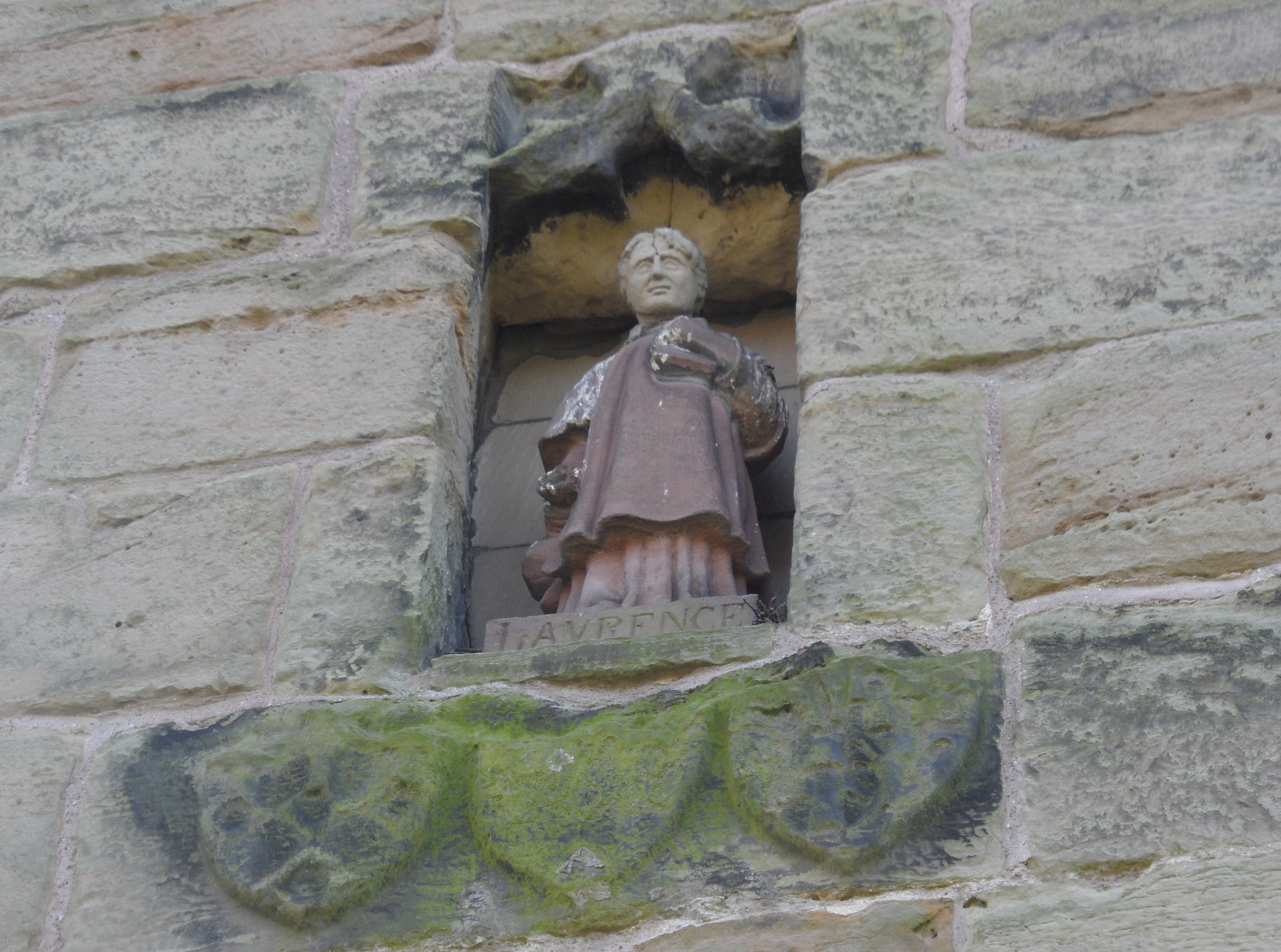
There were also said to be some of St Lawrence’s bones, part of his tomb and a piece of the gridiron he was executed on. (4) Interestingly, it’s said that at number 23, The Close, different coloured bricks have been used on the south wall to depict this this symbol of St Lawrence’s martyrdom. Since I read about this, I have a look every time I walk past, but as of yet, have not managed to spot it!

Statue of St Lawrence at the church named after him in Walton on Trent, which sits on the border between Staffordshire and Derbyshire

Saint Chad’s skull may be long gone but the pilgrims still come, and on certain occasions have their feet washed at the pedilavium, a medieval feature thought to be unique to Lichfield. There are also plenty of other heads to be found at Lichfield Cathedral. Some are scarred and defaced, whilst others have been restored. They are a reminder of the medieval craftsmen who created the church, those who tried to destroy it and those whose skills and labour restored Lichfield Cathedral to the mirabilis edificii that it is today (ok, I admit I used google translate for that one!).

The medieval pedilavium where pilgrims still sit to have their feet washed.

Notes:

1) I believe this refers to a document that would have been written in duplicate on the same piece of parchment, and then divided into two with a serrated edge, so that when both parts were brought back together and compared, you could be sure that each was genuine and not a forgery.

(2) A footnote says ‘This transcript and translation were originally undertaken for ‘The Journal of the Derbyshire Archaeological Society’, and are now reprinted after careful revision and correction. It was the joint work of W H St John Hope, FSA and the compiler of this catalogue’. Thanks very much folks!

(3) The relics of St Chad were apparently smuggled out of Lichfield after the reformation and eventually ended up in Birmingham, a journey of thirty miles that took 300 years! You can read more about that journey here. I don’t think anyone knows what happened to the other relics.

(4) In a nutshell the legend of St Lawrence is that he was a Deacon of Rome, and when asked by the Prefect of Rome to assemble the treasures of the church  for him,  he brought him the poor and suffering, stating it was they who were the true treasures of the church. The legend says he was executed by being roasted over a gridiron (but some say he was most likely beheaded).

Sources: 

Collections for a History of Staffordshire 1886, Part II, Vol VI’, edited by the William Salt Society

Lichfield Cathedral Website – http://www.lichfield-cathedral.org/History/the-gothic-cathedral.html

Lichfield: The cathedral close’, A History of the County of Stafford: Volume 14: Lichfield (1990), pp. 57-67

Ferry Cross the Minster

Yesterday, the second of March, was the feast day of St Chad. In 669, Chad founded a monastery near to the site where the church named after him now stands, making Lichfield the new centre of the Diocese of Mercia (it had previously been Repton). Anyone interested in learning more about the life of Chad should read Patrick Comerford’s post here.

Statue of Chad at St Chad’s church, Lichfield

Around this time last year,  I wrote about the history of the well at St Chad’s and a little about the pilgrimage route between Lichfield and Chester. This year once again I found myself possibly following in the footstep of pilgrims, when I took a walk down Bird St.

The latest incarnation of St Chad’s Well

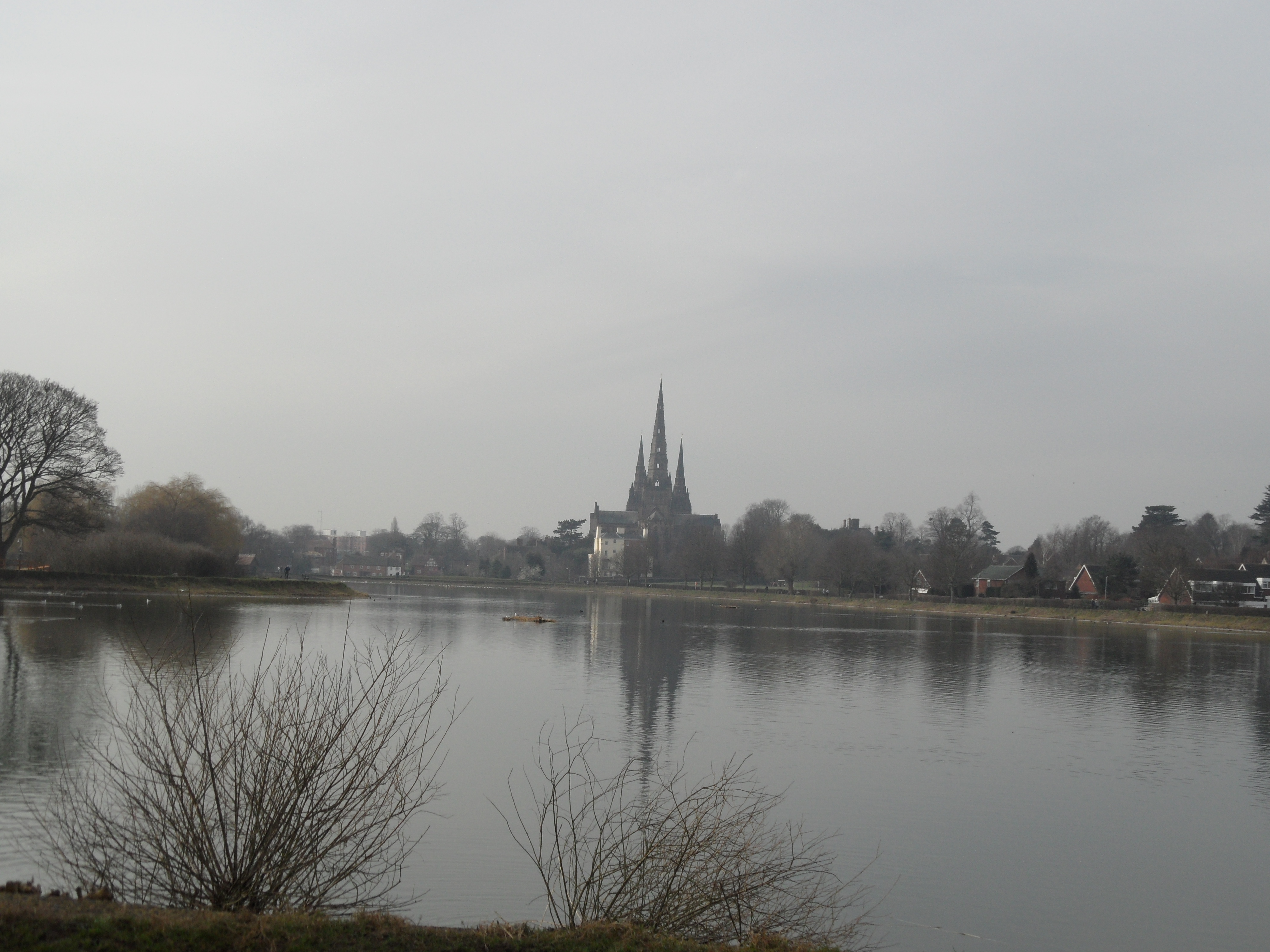
The view from St Chad’s. A question – why was the Saxon church built to house St Chad’s bones and later to become the Cathedral, built over there, and not at the site of Chad’s Monastery and Well?

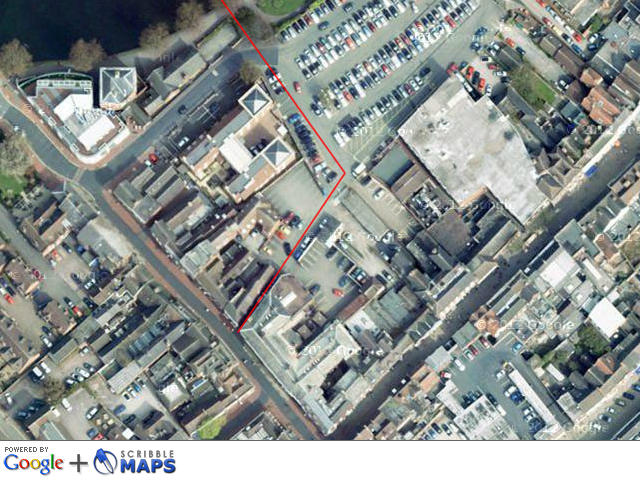
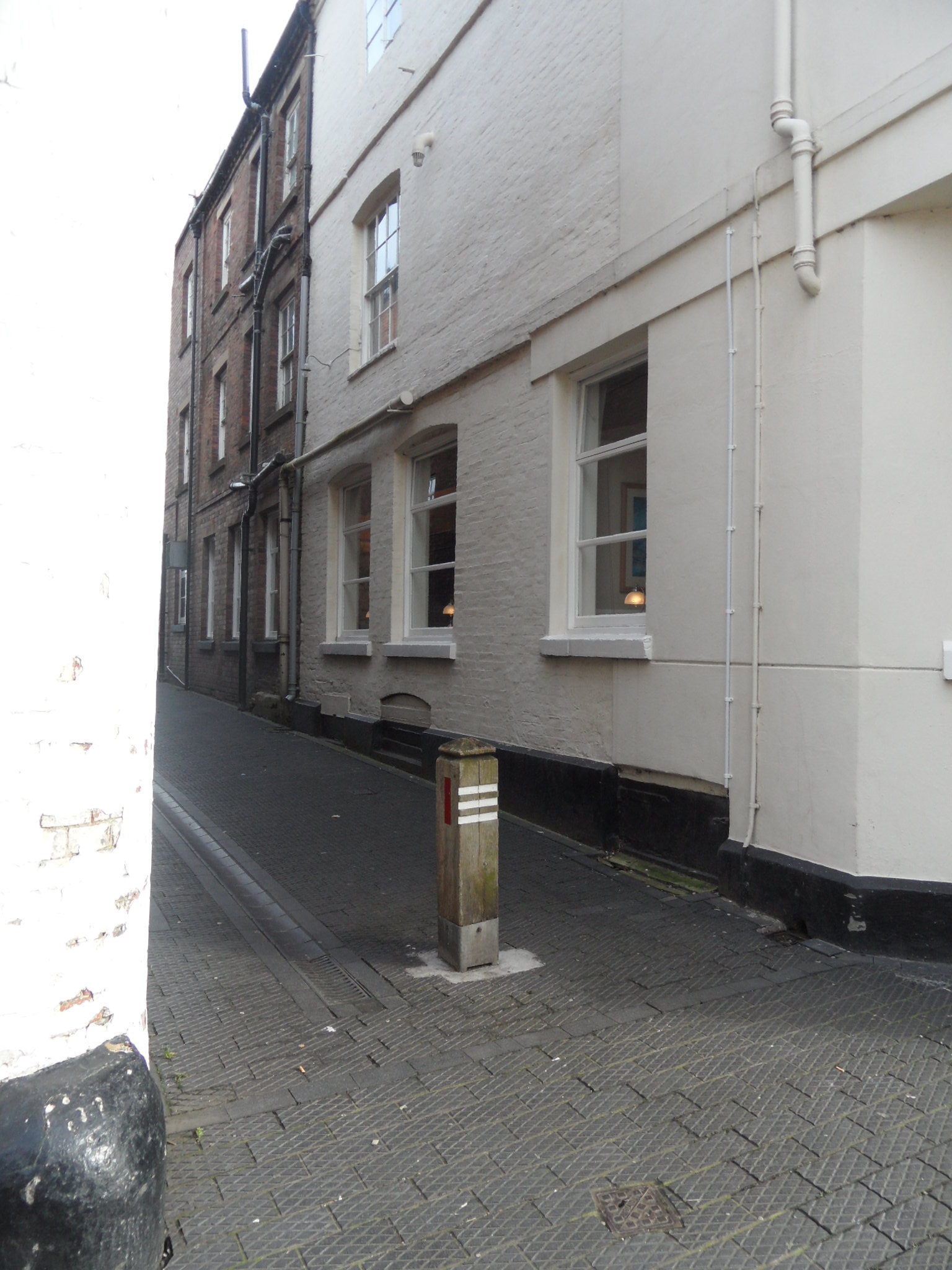
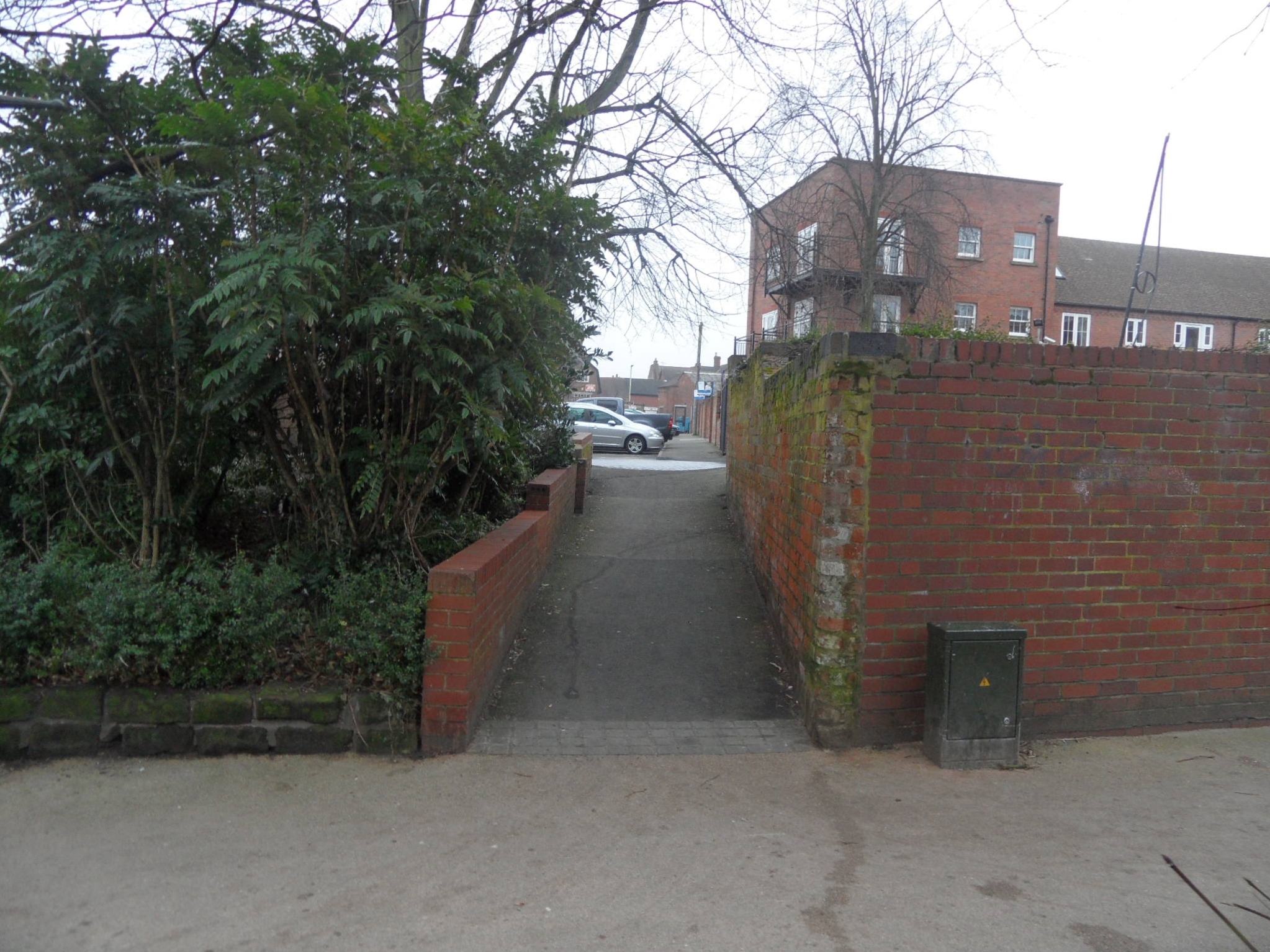
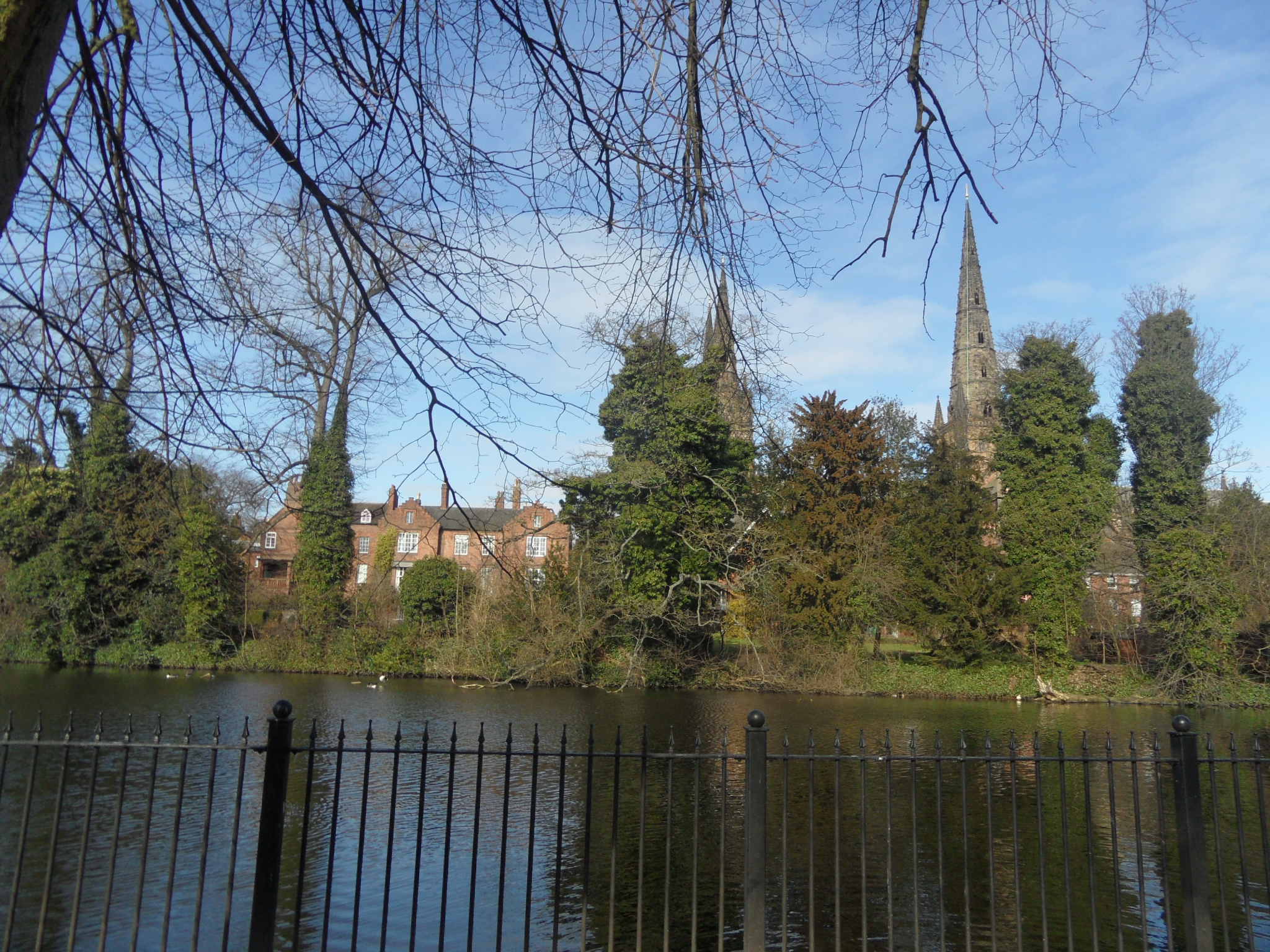
An alley (or gully or ginnel depending on where you’re from) runs from Bird St, past the George Hotel and then takes a sharp turn towards Minster Pool. In the early fourteenth century it was called Wroo Lane, a name thought to be derived from the Middle English word ‘Wro’ meaning corner. Shortly afterwards, the lane became known as Cock Alley.  According to Thomas Harwood, this ‘new’ name came from a carpenter named Slorcock who once lived there. I’ve done my best to show the route I think the lane took but please also take a look at  it on John Snape’s wonderful 1781 map of Lichfield, which Brownhills Bob very generously shared here on his blog. Although these days it’s probably mostly used as a shortcut to the car park, the Collections for a History of Staffordshire (Volume Six) suggests that this was once an important thoroughfare, leading pilgrims to the ferry which would carry them across the water to the Cathedral.

Cock Alley. Or possibly Wroo Lane.

Looking back up towards Wroo Lane. Or possibly Cock Alley.

How did the pilgrims get over those big railings?

At present, I am unsure whether the existence of a ferry for pilgrim traffic is a theory or whether it has actually been confirmed by evidence. I shall keep looking for this and in the meantime, may I suggest that when walking around Lichfield you keep looking too. Remember, it’s not just buildings that have a history, but also the spaces between them.

 Sources:

‘Lichfield: The place and street names, population and boundaries ‘, A History of the County of Stafford: Volume 14: Lichfield (1990), pp. 37-42. URL: http://www.british-history.ac.uk/report.aspx?compid=42340

The History and Antiquities of the Church and City of Lichfield, Thomas Harwood

Collections for a history of Staffordshire Volume 6, Part 2, Willam Salt Archaeological Society


Friars on the Run

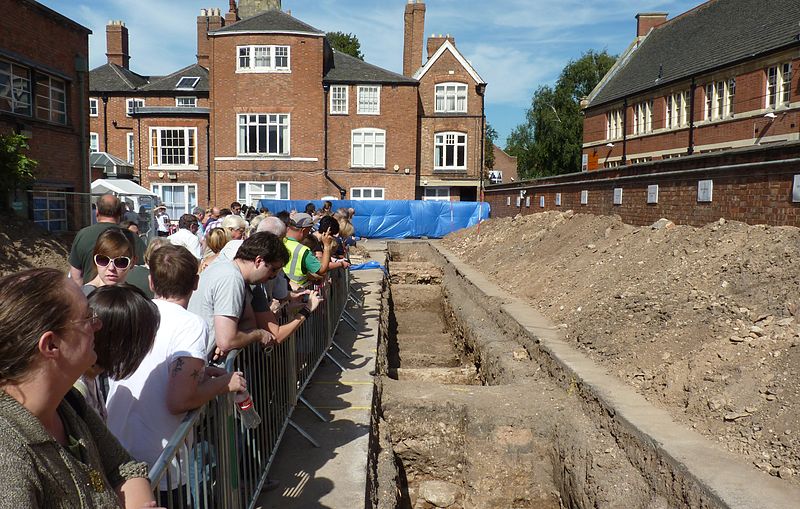
On Monday morning we’ll learn if human remains found beneath a car park in Leicester are those of Richard III, buried in the city’s Greyfriars church after his defeat at Bosworth in 1485.

Archaeological Dig Open Day at Greyfriars Leicester. 8th September 2012.
Image by RobinLeicester, Wikimedia Commons.

Naturally, the possible discovery of England’s lost king has generated a huge amount of interest and last week I had an email from someone in Lichfield who has been doing some background reading on the subject. In trying to find out more about the story of Greyfriars and King Richard III, they found that the Greyfriars were also linked to King Richard II. The reason for the email was to see if anyone knew anything more about the role of Lichfield in the story, as per the the following passage from the ‘History of the County of Leicestershire’.

The sympathies of the Leicester Franciscans for Richard II brought serious consequences upon the friary in 1402. A Franciscan declared to Henry IV that he and ten other friars of the house at Leicester, together with a master of divinity, had conspired in favour of the deposed Richard. In consequence eight Franciscans of Leicester, with the master of divinity, were arrested and brought to London for trial. The remaining two friars escaped. After two juries had failed to convict, a third jury found the prisoners guilty, and they were executed. Two other Franciscans from Leicester, presumably the two who had at first escaped, were executed at Lichfield about the same time.  In 1402, at a general chapter of the Franciscans held at Leicester, it was forbidden to any of the Order to speak against the king.


My anonymous correspondent wondered why the friars were executed here in Lichfield? What had brought them here in the first place, and was there any sympathy for them or Richard II amongst the Franciscan population here?

Remains of North Wall of Nave of Lichfield’s Franciscan Friary.

Other sources expand on the story a little to tell us that it was Prince Henry, the future Henry V (or at least members of his household) who caught and beheaded the friars at Lichfield. Our own county history tells us that in 1402, Henry IV had ‘ordered knights, squires, and yeomen from various parts of the country to meet him at Lichfield for his campaign against Owain Glyn Dŵr‘. This explains perhaps in part why the friars came to be executed here, but if there’s anyone who can add anything further to this story of fugitive Leicester friars in Lichfield, it’d be great to hear from you.

Notes:

A programme called ‘Richard III:The King in the Car Park’ will be shown on Channel 4 at 9pm on Monday 4th February.

Talking of archaeology digs in car parks, I believe that the report on the Friary Outer is due out anytime now – as far as I’m aware Victorian cellars and medieval pottery were the main discoveries. Of course, everyone knows that if you want to find lost kings in Lichfield, it’s Borrowcop you need to investigate….

Richard II visited Lichfield several times. Most famously he spent Christmas in 1397 at the Bishops Palace, returning to the city two years later as a prisoner of his cousin Henry Bolingbroke, soon to be Henry IV.

Edit 4/2/2013 – I probably don’t need to tell you this but it’s been confirmed beyond any reasonable doubt that it is him! King Richard the Third’s remains will now be interred at Leicester Cathedral. I believe there may be a link between this story and Elford too?

Sources:

Friaries: Friaries in Leicester’, A History of the County of Leicestershire: Volume 2(1954), pp. 33-35. URL: http://www.british-history.ac.uk/report.aspx?compid=38172

Historical Dictionary of Late Medieval England, 1272-1485, page 212 edited by Ronald H. Fritze and William Baxter Robison

Lichfield: History to c.1500′, A History of the County of Stafford: Volume 14: Lichfield(1990), pp. 4-14. URL: http://www.british-history.ac.uk/report.aspx?compid=42336

The Faces of Christ Church

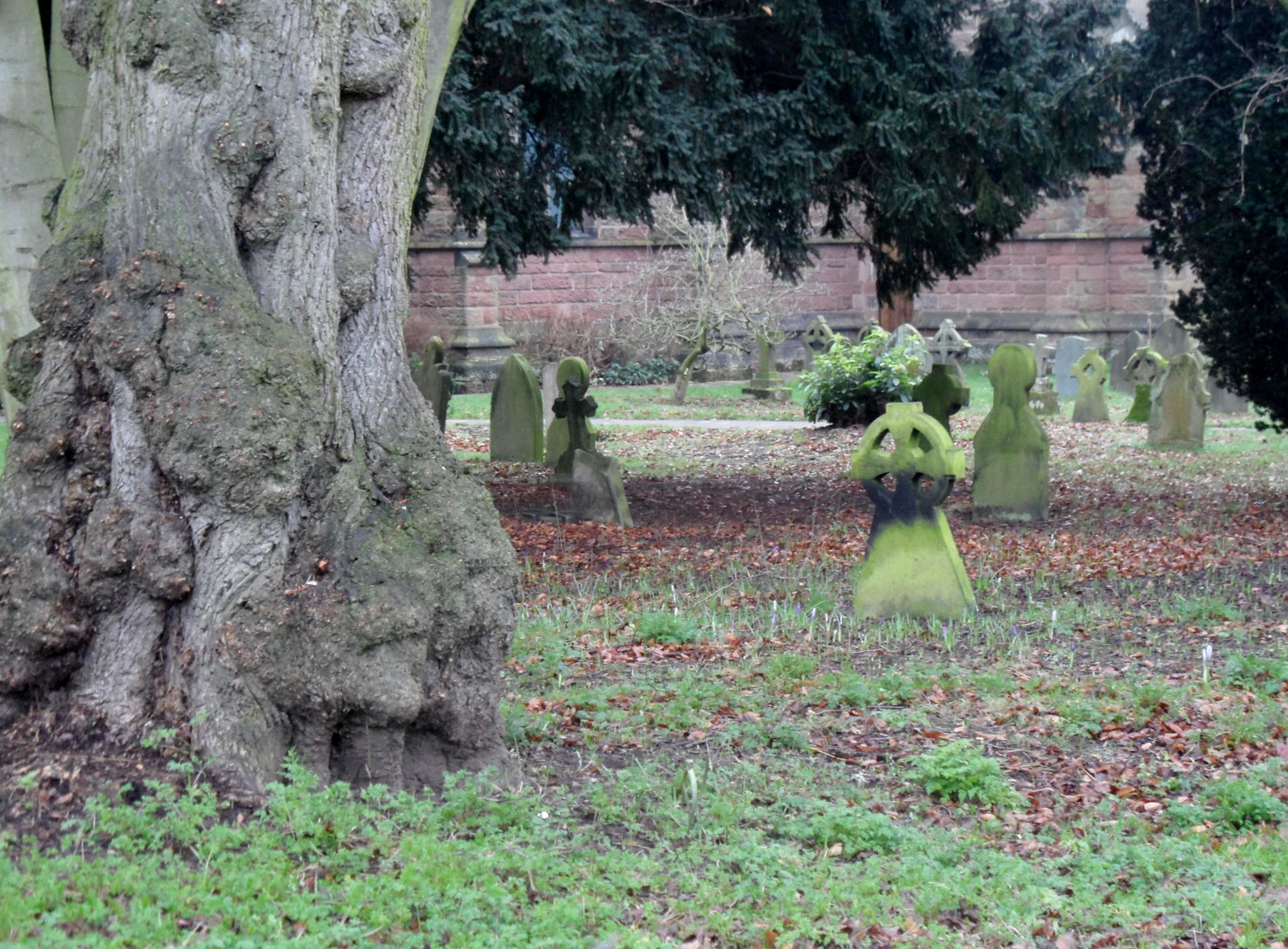
I visited Christ Church on a numbingly cold and drab January afternoon, and I welcomed the sight of the first crocuses and snowdrops beginning to appear amongst the stones erected as memorials to those who once lived here in the parish.

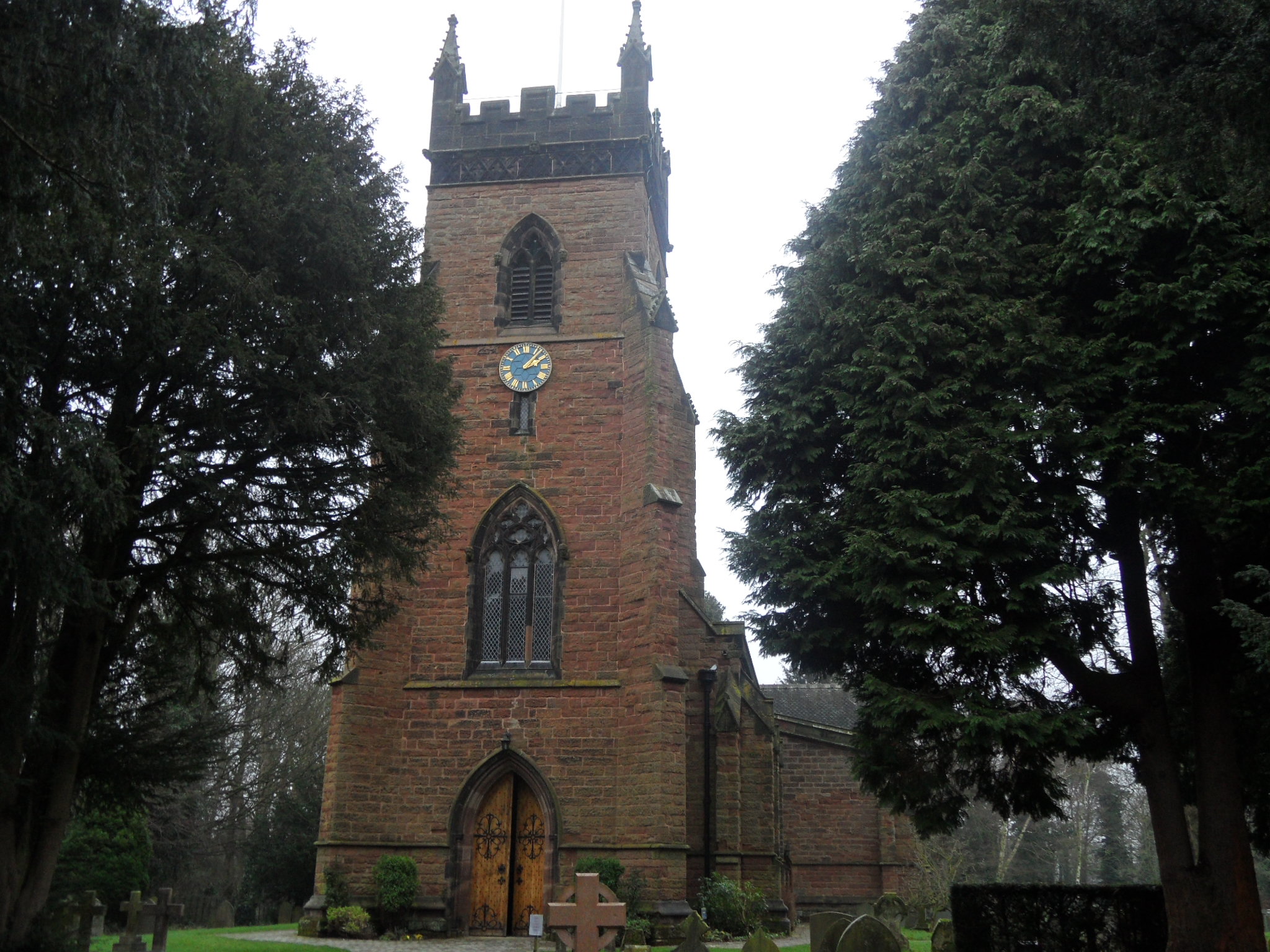
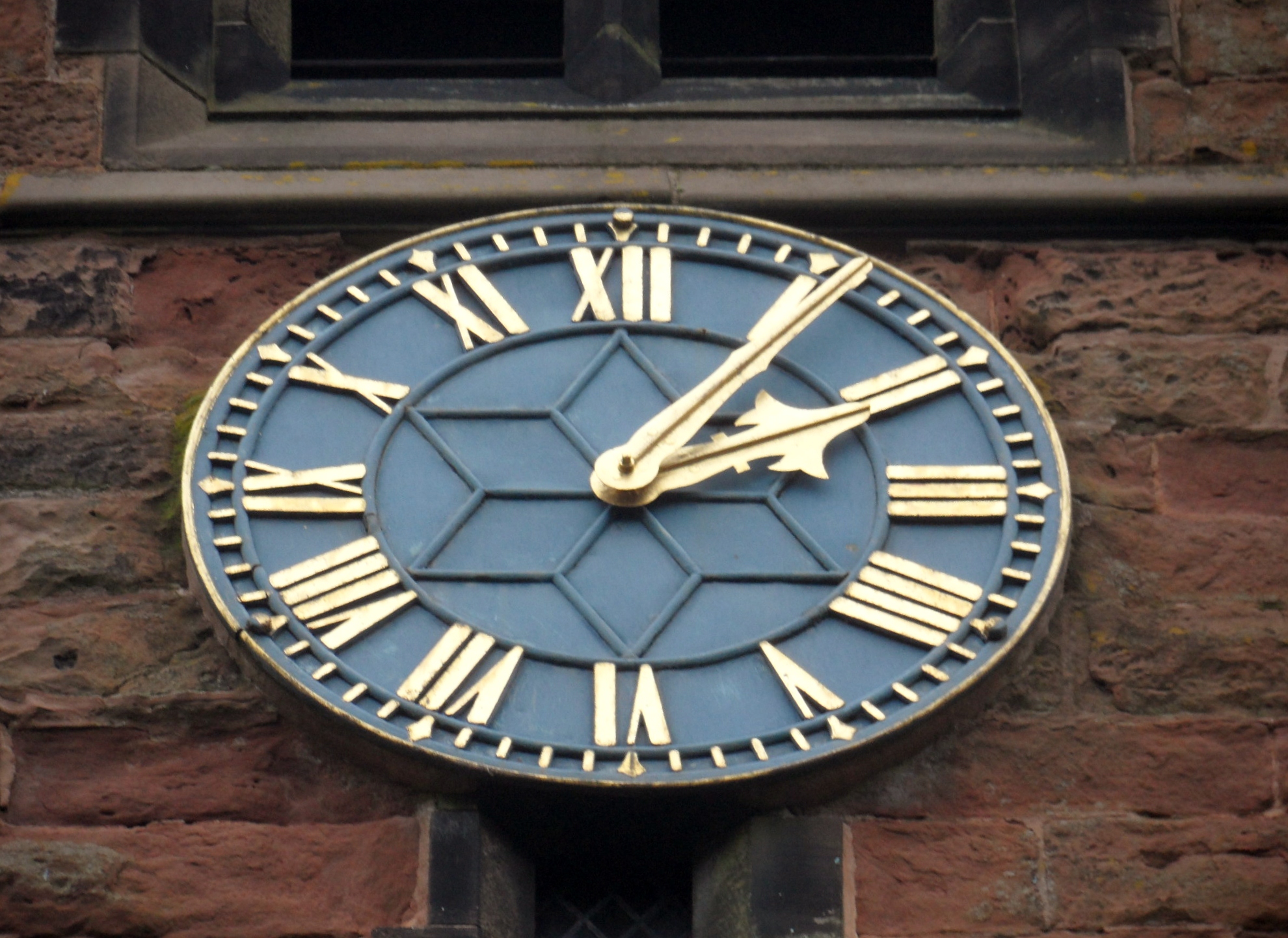
Of course, memorials can take different forms and the blue clock on the tower is dedicated to the memory of Sarah Worthington, of Maple Hayes, presented by her husband Albert Octavius of the Burton brewing company. (1)

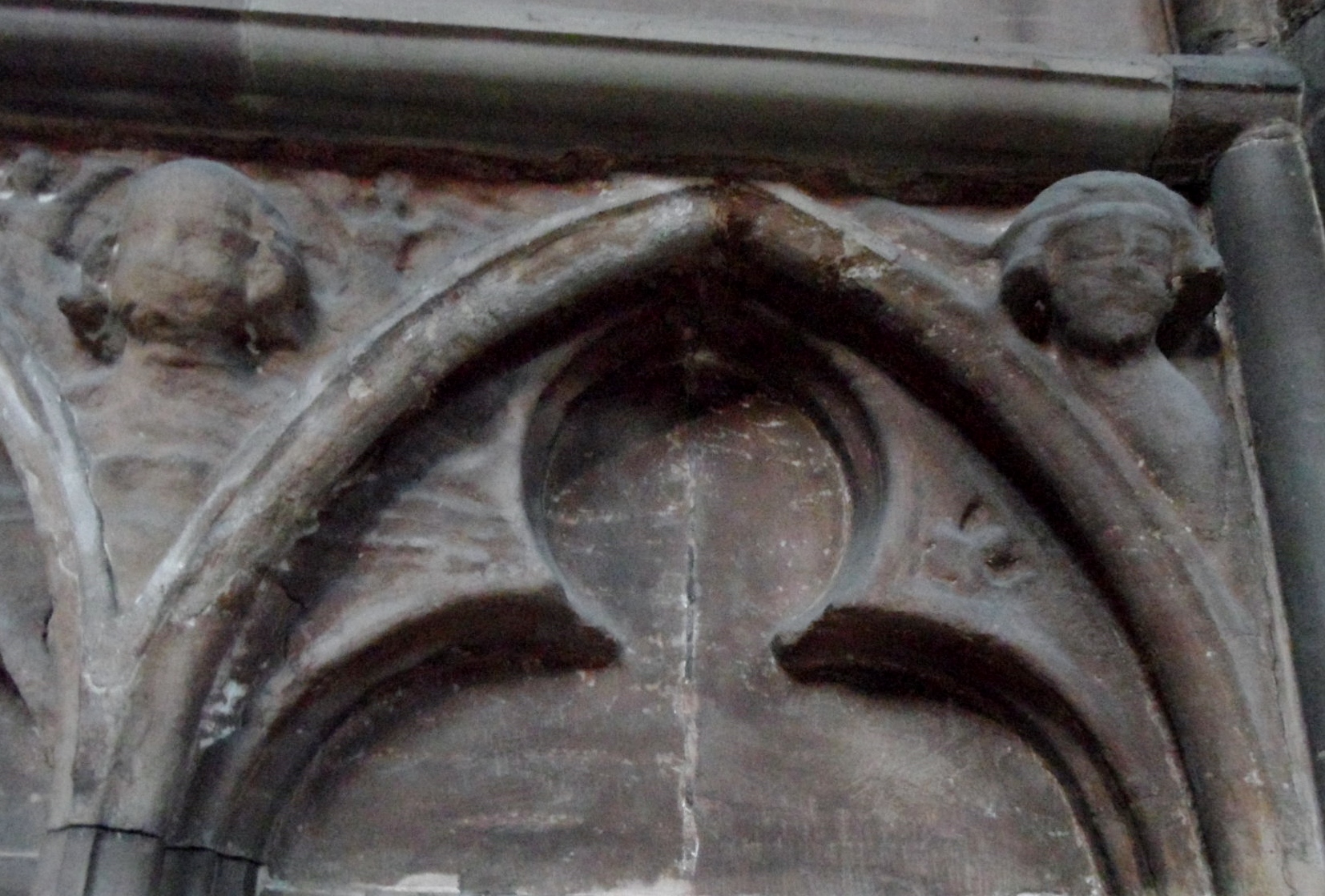
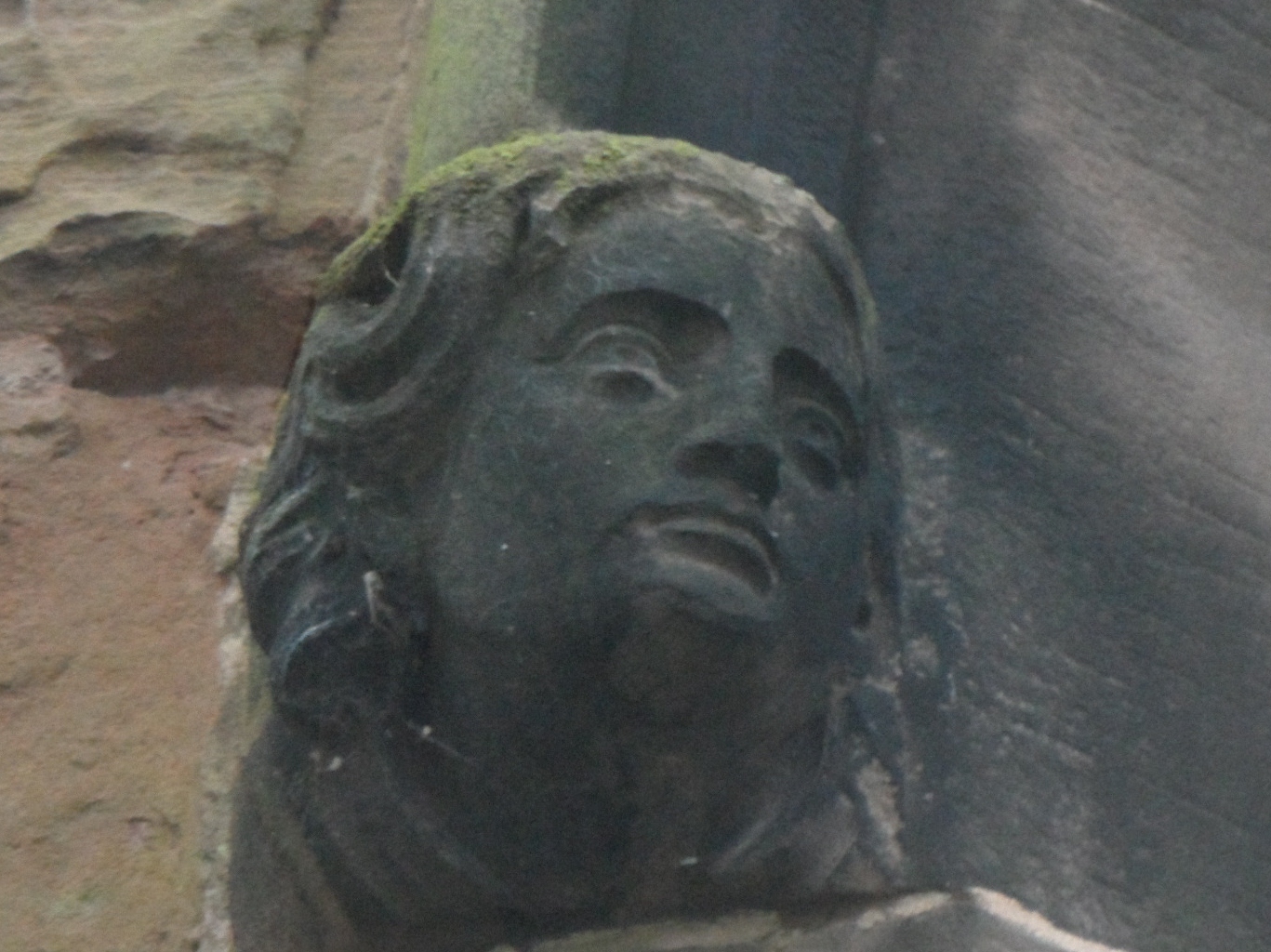
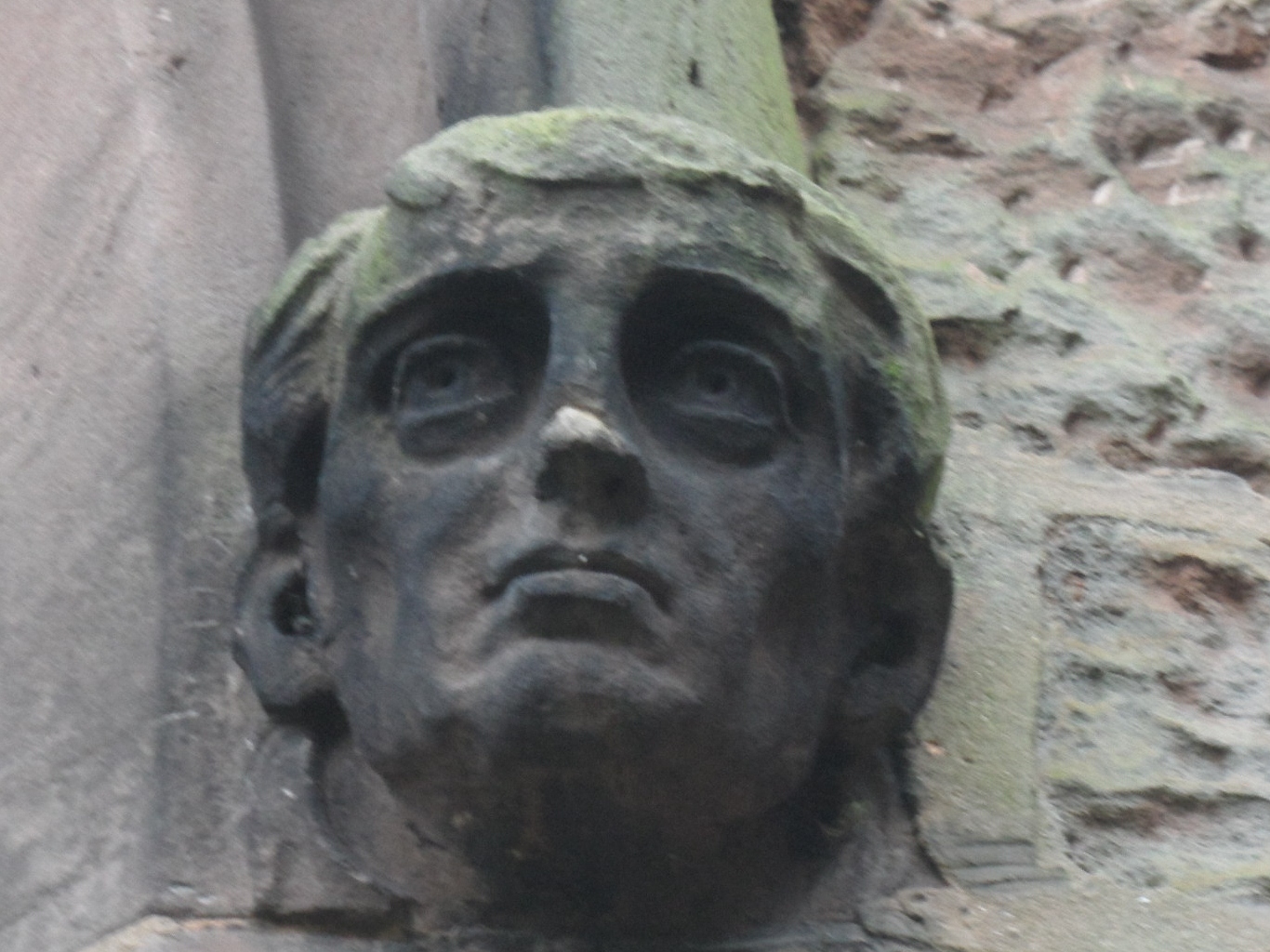
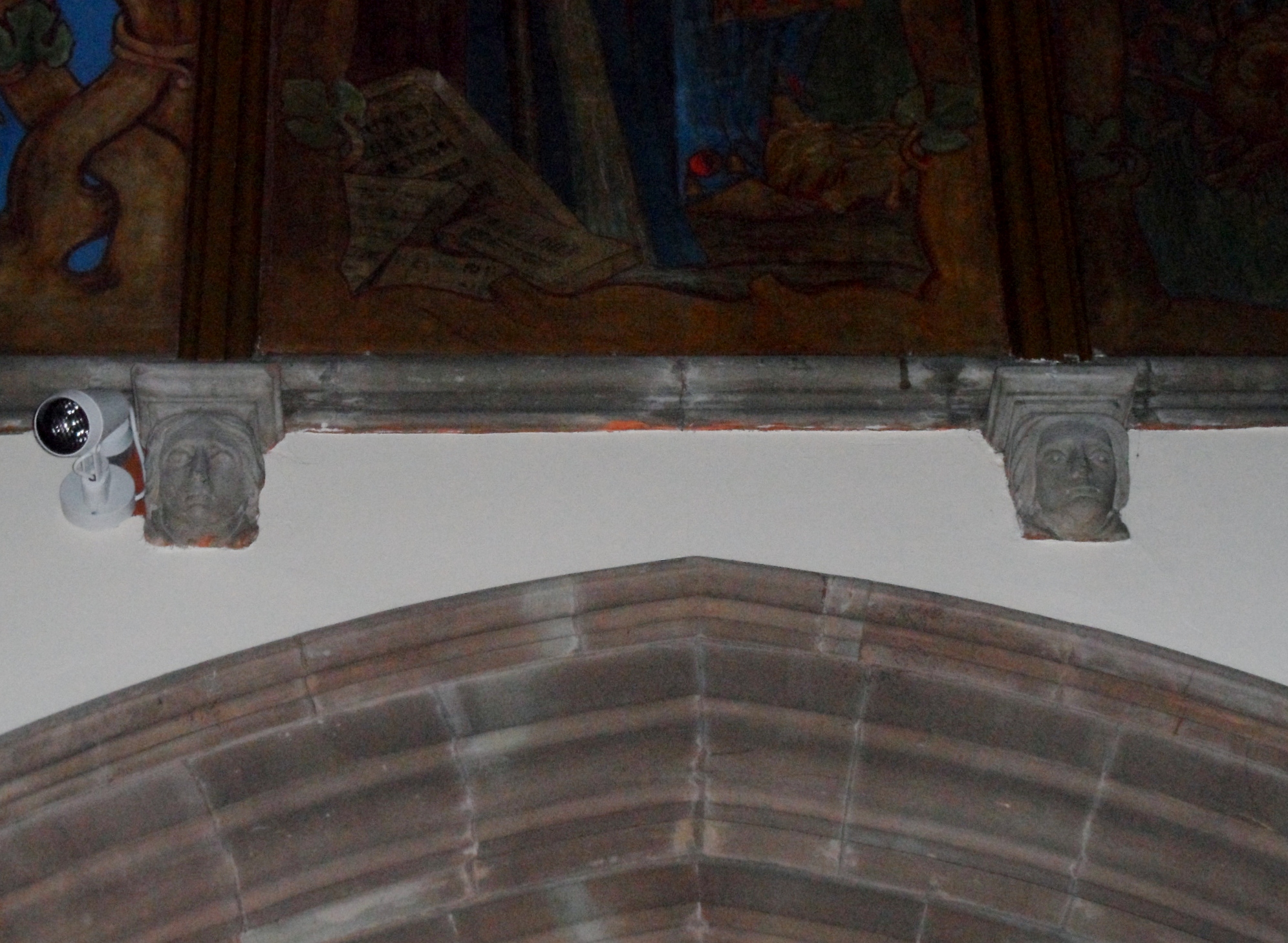
As you look at the clock face, on either side of the window below you notice faces of a different kind. On closer inspection, more of these faces can be found all around the church and I’ve included a few examples below.

The church was built in 1847, in the Gothic Revival style, and so I imagine the architect Thomas Johnson (of Davidson House, St John St) included them to emulate the corbel heads found in medieval churches (a good example and explanation can be seen on the V&A website here). This might explain what they are, and why they are here, but not necessarily who they are! (3)

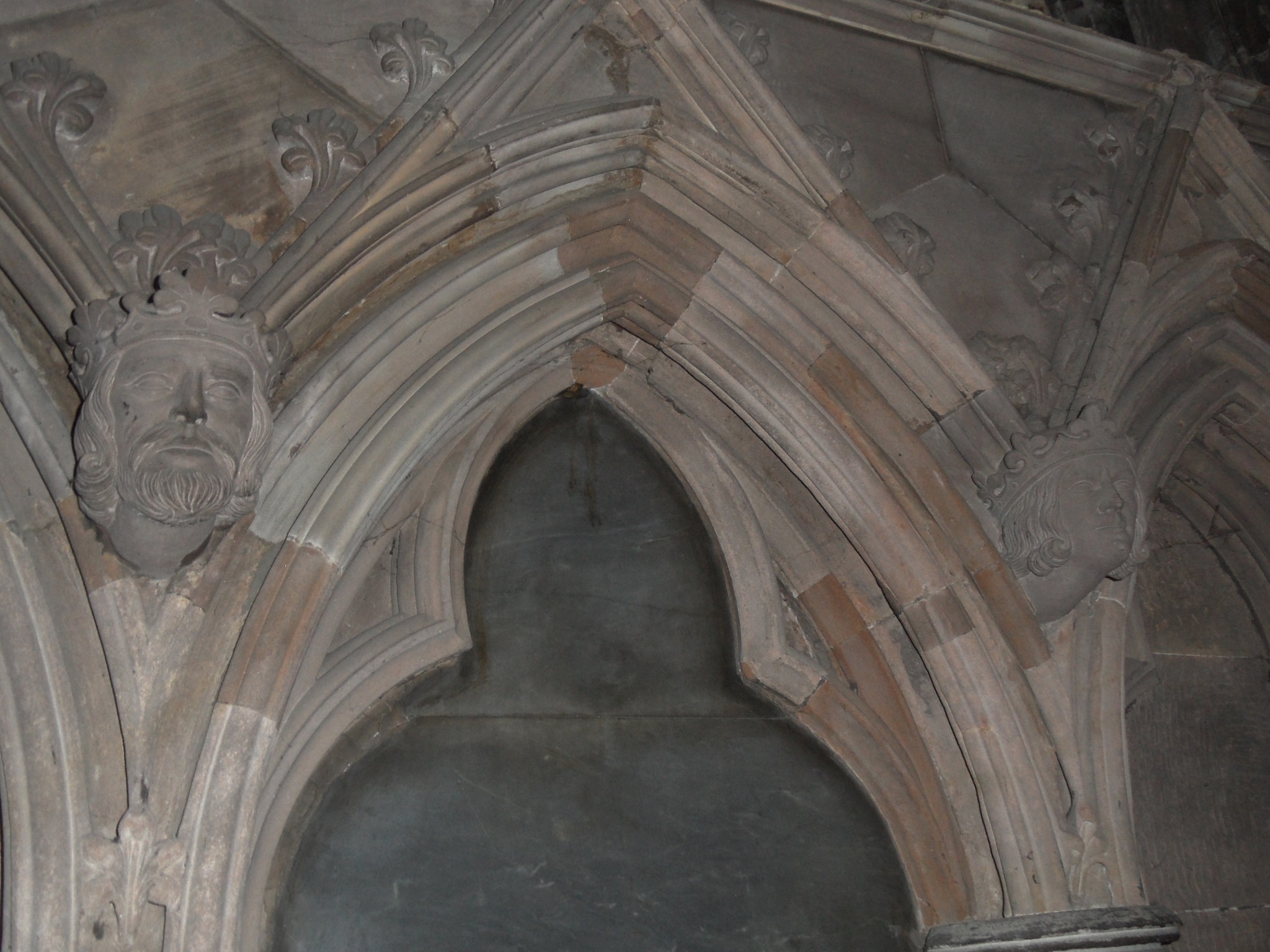
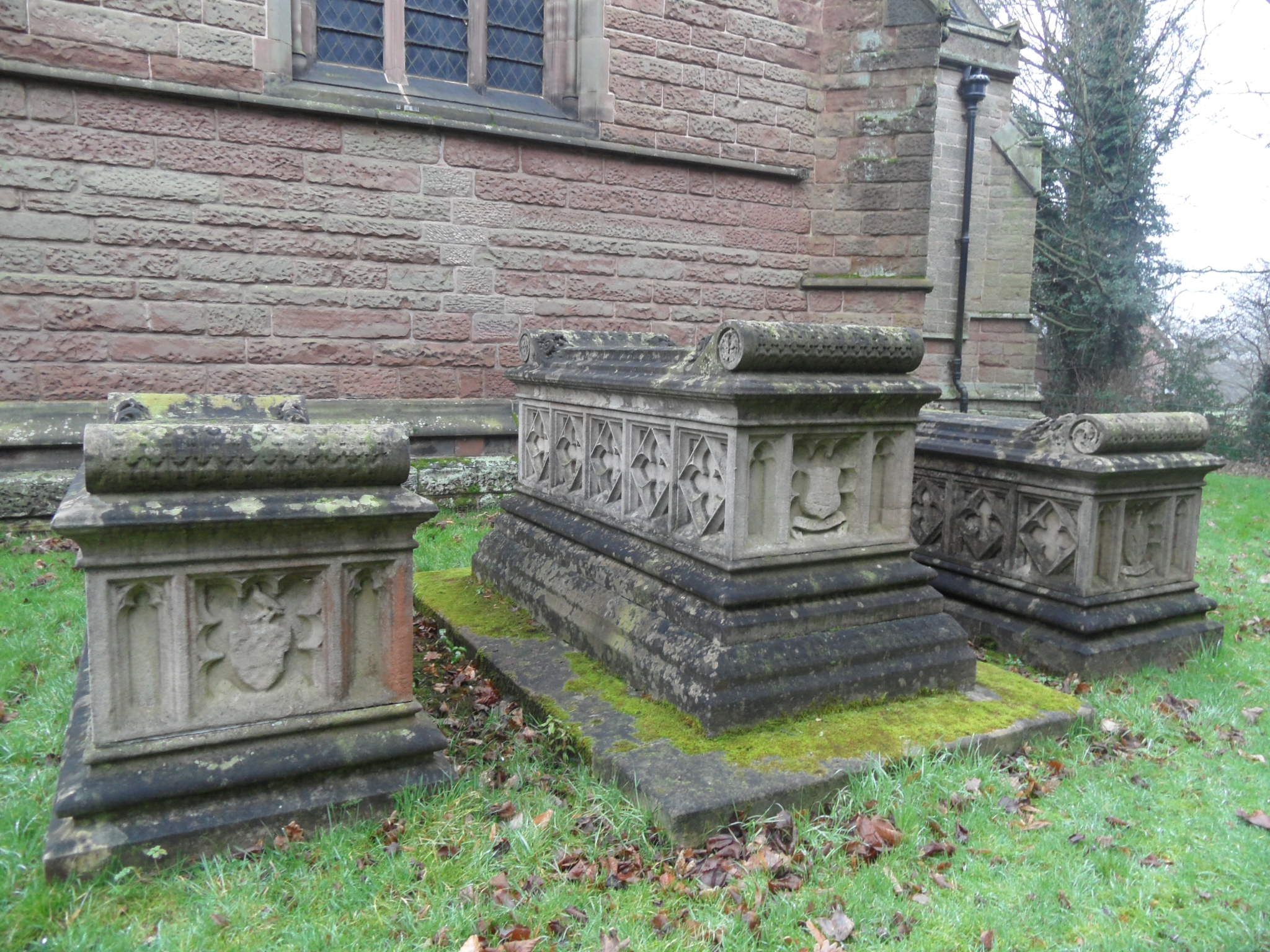
As I stood thinking about the faces, someone arrived to unlock the church door. I explained that I’d been looking at the stone heads and was told that there are more inside and was invited in. Apparently, despite being the subject of much debate, no-one quite knows the story behind them. One suggestion that has been put forward is that they are benefactors of the church. Two of the chest tombs behind the church belong to Ellen Jane Hinckley, the founder of the church and her husband Richard Hinckley, who gave land in the corner of their Beacon Place estate on which to build the church. (2) Are they also here at their church in stone form? Is the portrait of Thomas Johnson the architect or the church’s first curate Thomas Alfred Bangham to be found here? Do they depict people who used to live in the parish or are these heads in fact creations from inside the head of the stonemason?!

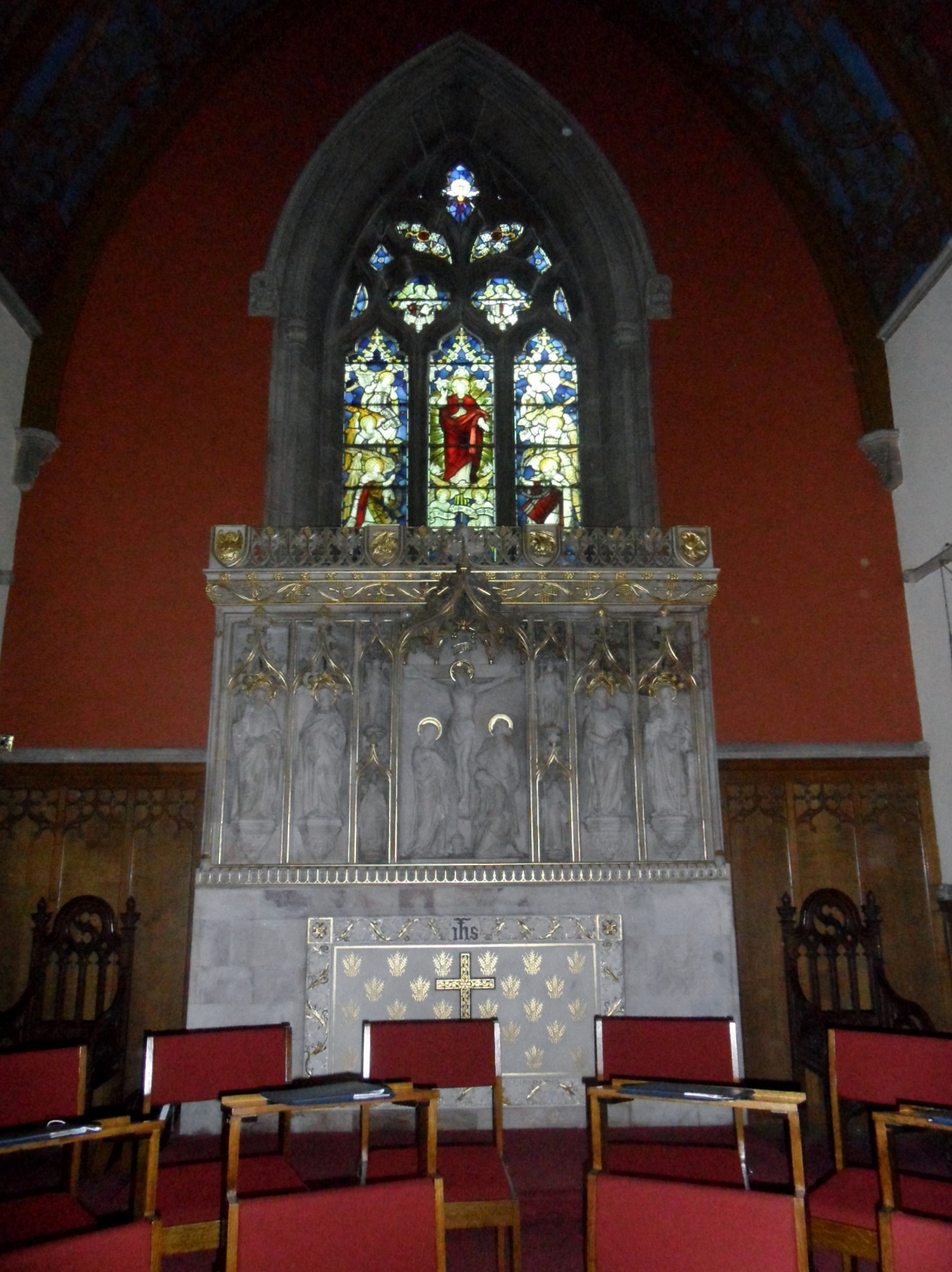
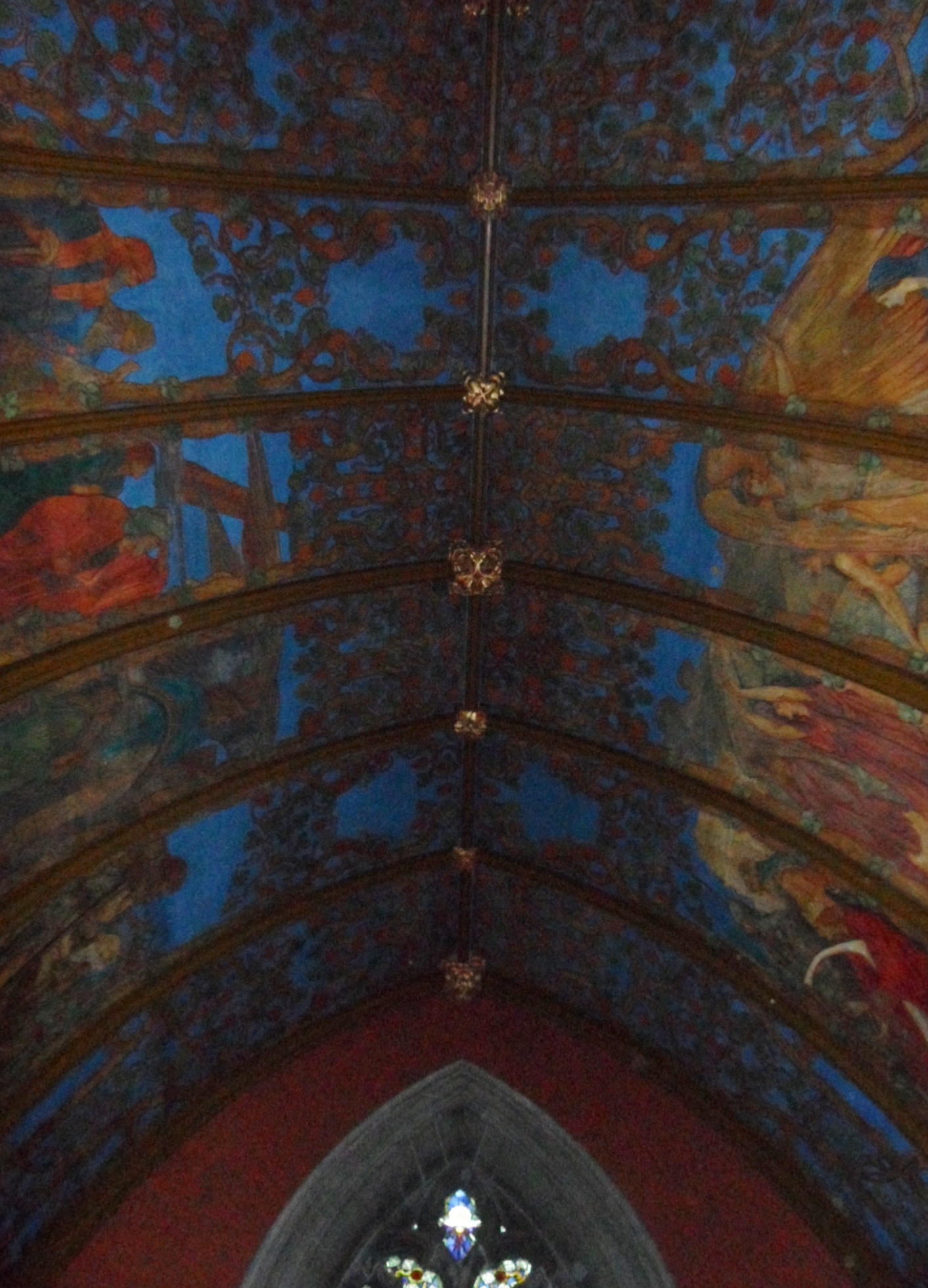
Inside, the majority of corbel heads are in and around the chancel, which has the most stunning ceiling. Although this is not my first time inside the church, it is the first time I’ve been in and concentrated solely on the building, rather than what is going on within it.  It hardly needs pointing out that my photos do it no justice whatsoever, but they do at least give some idea of the beautiful murals painted for the church’s Golden Jubilee by Pre-Raphaelite artist John Dixon Batten in 1897,  and the reredos, designed by GF Bodley and carved by the sculptors Bridgemans of Lichfield (a discovery of both a new word and a new example of Bridgemans’ work for me!). (4)

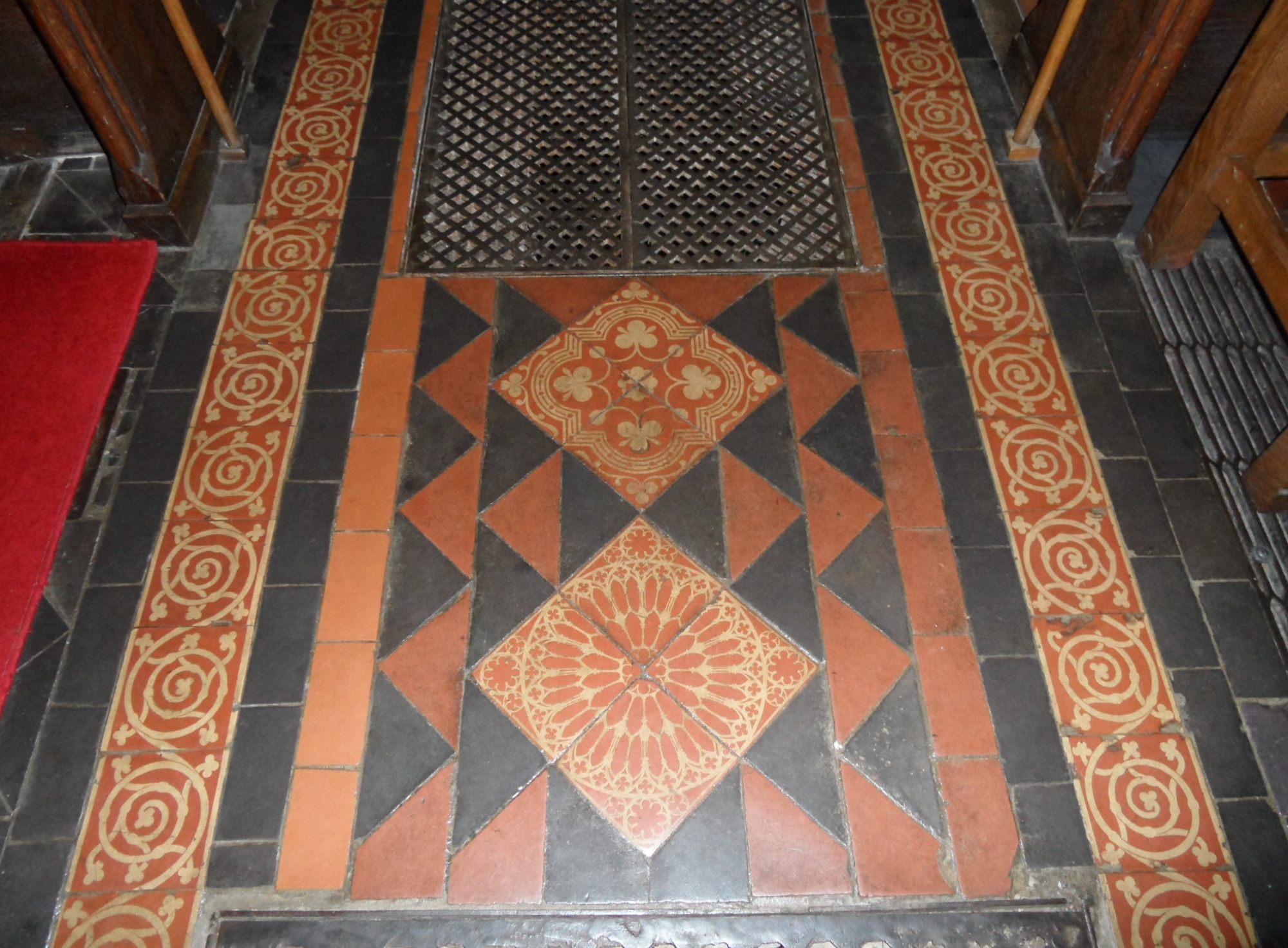
I made my way back outside down the aisle, laid with original Minton tiles (5).

The day should have seemed even greyer after the rich, warm colours of the church but with a copy of the newly purchased and brilliantly researched ‘History of Christ Church’ in my bag and the knowledge that such treasures were to be found on my doorstep, it actually felt considerably brighter.

Edit 10/02/2013 Good news! There’s a sign outside Christ Church saying that there is an open day on 9th March – a great opportunity to go and visit this lovely church for yourself. By then, there may even be some spring flowers and wild garlic in the lane alongside which is a nice thought, when you’re sat typing with snow drifting down outside the window. More details here

Notes

(1) The clock was made by John Smith and Sons of Derby a business founded in 1856. Whilst the firm is still going strong, the original headquarters were at risk as these photos and a news story from February 2011 (read here) show. I’d be interested to know what the current state of the building is? Also, it’s not only the clock we have the county of Derbyshire to thank for! The church’s Millenium Gates were created by David Tucker, a master Blacksmith from Derbyshire, that I wrote about here

(2) The third of the Hinckley Tombs belongs to Mrs Hinckley’s son from her second marriage to Hugh Dyke Acland. Mrs Hinckley’s daughters from her first marriage, are the girls depicted in Francis Chantrey’s sculpture known as ‘The Sleeping Children’ as Lichfield Cathedral

Hinckley Tombs, Christ Church

(3) In a 1950s edition of Life magazine, I came across an interesting article about Southwell Minster in Nottinghamshire. Their old carved heads had eroded badly, and so a stonemason was enlisted to restore them. However, rather than recreate the old images, he carved new images of people associated with the church at that time including a bell ringer, the clock winder, a dog whipper (actually in charge of the grounds) and the youngest member of the church choir (who would now be in his 60s). You can read the article and see the photos here 

(4) I believe that Bodley and Bridgemans also collaborated on the South African war monument in Duncombe Place, York, which is where the sailor on the wall of Lichfield Registry Office was originally destined for but was apparently rejected  for being too warlike.

(5) Between 1844 and 1858, Herbert Minton donated tiles to 46 Staffordshire churches & parsonages. More information can be found in the report ‘Minton Tiles in the Churches of Staffordshire’, carried out by Lynn Pearson for the Tiles and Architectural Ceramics Society. At the time of the report in the year 2000, amongst others, there were also examples at St Mary’s, Aldridge, possibly St James’ Church, Brownhills (though covered) and St Peter’s, Elford. An online version of the report with photographs can be found here 

Sources:

Christ Church Lichfield – A History by Ursula Frances Turner, later revisions Robert Hazel, Julia Baker and Larry Ridout

Public Sculpture of Staffordshire and the Black Country – George Thomas Noszlopy and Fiona Waterhouse