Review of the Year…1884

Around this time, we seem to get the urge to look back and reflect on the events of the dying year. However, as I’m sure memories of 2013 are still fresh in your mind, let’s imagine instead that it’s the year 1884 that is drawing to a close and take a tour of the ‘Chronological List of the Principal Local Events’ of that year, courtesy of the Lichfield Mercury.
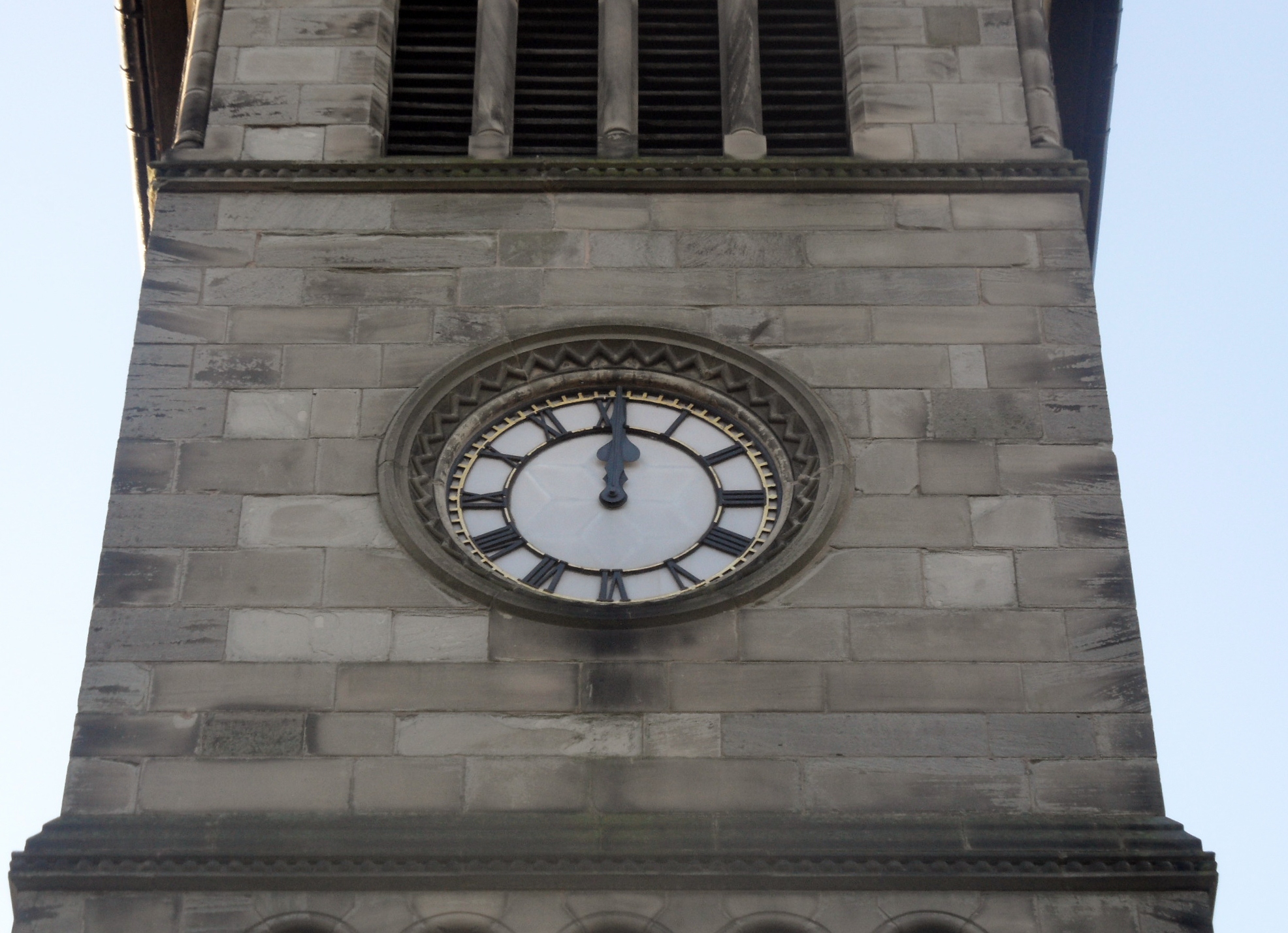
I never did get around to arranging that New Year's Eve party at the Friary Clock Tower...

I never did get around to arranging that New Year’s Eve party at the Friary Clock Tower…

In January, we have the adoption of fish dinners in the Lichfield Union Workhouse and a local government board enquiry into the affairs of Walsall Workhouse.  Whatever those affairs may have been, the next entry informs us they were concluded and moves on to the conviction of Thomas Skelton, a Lichfield Jockey and Trainer, fined £5 for assaulting a commercial traveller at Nottingham. The Trent Valley Brewery Company were in trouble too, alleged to have illegally seized the goods of a Southwell brewer. There was yet more excitement towards the end of the month with a ‘daring till robbery’ at Mr R Cleaver’s shop on Tamworth St.

Sports news in February when Lichfield Cricket Club decided to rent the ground previously known as the County Ground, to raise funds for a pavilion and to obtain the services of a professional cricketer. Over at Hednesford, the Poultry and Pigeon show took place over two days. Mrs Scott’s annual sale of work in Lichfield (who Mrs Scott was and what she was selling is tbc). More seriously, there was an inquiry into the sanitary conditions at the Birmingham Road Barracks in Lichfield, and a railway accident at Sutton Coldfield left an engine and guard’s van wrecked. As the month progressed,  the Brethren of St John’s Masonic Lodge decide to present a statue of Queen Victoria to fill in one of the niche’s on the Cathedral’s Western Front and the Lichfield Board of Guardians decided not to extend the workhouse. The month ended on a high with the Lichfield Old Fair.

March began with trouble on the railways –  a ‘slight accident’ at Lichfield and the commitment for trial of a Cannock Chase miner for attempting to wreck trains near Lichfield, both of which events warrant further exploration. Sir Arthur Scott at Great Barr passed away, as did Lichfield Workhouse Master, Mr Winkely, replaced almost immediately by Mr and Mrs Williams.

At the beginning of April, there was a meeting at Rugeley to condemn the ‘Deceased Wife’s Sister Bill’, and the sad discovery of a soldier found dead in an entry of Rotten Row in Lichfield. The inquest, unable to determine a cause of death, simply returned a verdict of ‘Found Dead’. In the middle of the month, the Lichfield Spring Races took place and the Sister Dora Memorial Convalescent Hospital at Milford was opened. On the 22nd, the Bishop of Lichfield said goodbye to the Derbyshire Clergy, as the county left the Diocese. and over at Brownhills, William Henry Wombwell was convicted of non-delivery of voting papers in the Local Board of Brownhills elections.

May 1884 was a grim month.  Two miners were committed for trial for shooting a man at Gentleshaw and the trial of the seventeen year old miner who attempted to wreck at train on the Trent Valley Line concluded with him being convicted and sentenced to seven years penal service. There was more trouble at Walsall Workhouse when the Master, William Pritchard, was accused of embezzlement and there was a tragic accident on the Walsall Rd, when a young man shot himself. One positive thing that took place this month was the rededication of the restored Western Front of Lichfield Cathedral.

Festivities in the month of June included the Court of Array and the Greenhill Bower, and the decoration of Dr Johnson’s Statue by the Staffordshire Yeomanry who were assembled in Lichfield for a week’s training under the command of Colonel Bromley-Davenport. Yet within days, things had taken a sour turn with a disturbance between the Yeomanry and Lichfield civilians and then the sudden death of Colonel Bromley-Davenport in St John St. In the days that followed, an inquest into the Colonel’s death, returning a verdict of ‘death by natural causes’, was held, as was a Military Court of Inquiry at Yeomanry House on St John St into the disturbances which had taken place.

July brought with it the closing of Fair Oak Colliery, a ‘Great Temperance Fete’ at Hagley Park, Rugeley and a guilty verdict for Mr Pritchard, the Walsall Workhouse Master, who was sentenced to fifteen months imprisonment for fraud.

August was a quiet month. The cornerstone of a new mission church was laid at Chase Terrace and there were a lot of sheep sales – the Beaudesert Flock and the Freeford Flock amongst them.

September was more eventful with the opening of the Lichfield and Sutton Coldfield Railway for goods traffic and of course, the annual Sheriff’s Ride. There was a fire at Mr Williams’ chemist on Bird St and Mr Peattie, of the Old Crown Hotel died from injuries sustained after being thrown from a trap near Whittington Barracks.  There was an Autumn race meeting at Lichfield, as well as the fifth annual Working Men’s Association Produce and Poultry Show.

In October, the Mercury reported on riots and destruction of property at a Conservative rally in Aston, Birmingham and the presumably much more sober affair that was the ‘Annual Festival of the Lichfield Diocesan Church of England Temperance Society’ rounded the month off.

November saw the opening of the new Lichfield City Station, an event seemingly marked with tragedy when, ten days later, a railway porter was killed there. Councillor J H Hodson was elected Mayor and there was a dinner at the Swan Hotel for the outgoing Mayor, T H Hunt. The Lichfield Board of Guardians were back to discussing the extension of the Workhouse again.

As the year drew to a close, there was another railway tragedy when a guard was killed on a siding at Shenstone, on the same day that the new Lichfield and Sutton Coldfield Railway was opened. The year ended with Lichfield Cricket Club deciding to purchase their pavilion for £150, a performance of Handel’s Messiah at St James’s Hall, a bazaar at Elmhurst Hall to raise funds for St Chad’s Church tower and finally, on 30th December 1883, a Great City Tea.

As well as the obvious interest of following up on some of these stories, something I find fascinating about something like this is how it’s so locally orientated, but then every now and then, you get glimpses of what was going on in the big wide world outside of Lichfield, and our corner of Staffordshire. I’m also tempted to look back over copies of the Lichfield Mercury for 1884 to see if I agree that these were the ‘Principal Local Events’ of that year or just something that the writer threw together in a hurry.

Of course, as well as looking back, it’s also a time to look forward. I may not be reviewing 2013 here but do just want to mention that I am looking forward to 2014, and especially the upcoming walks, talks and workshops that we’ve got planned for our group Lichfield Discovered. More to come on that shortly.  This history lark is always more fun when you do it with others and on that note, I’d just like to say thanks for reading the blog, especially to those who contributed in some way, whether by providing information or support and encouragement along the way. A very Happy New Year to you all!

Bones of Contention

Last week, together with other members of the Lichfield Discovered group, I enjoyed a Gruesome and Ghostly tour around the city lead by one of Lichfield’s Green Badge Guides. Some tales were familiar (although it’s always fascinating to hear someone else’s version of a story you know), others were complete revelations. I was particularly intrigued by the story of an ancient adult male skeleton, apparently discovered with the remains of a tiny baby in his arms when an access road was being built behind Bakers Lane. (1) Obviously when listening to stories in these circumstances, you’re never quite sure where truth ends and anecdote, myth and legend creep in, and I was interested to know whether there was any substance to this story. As of yet I haven’t been able to find anything on this particularly, but as you might expect, searching for skeletons in Lichfield turns up all sorts of intriguing information….

In 1925, the Tamworth Herald got very excited when it heard that workers digging a trench in the grounds of St John’s Hospital in Lichfield had discovered human remains, announcing that the skeletons discovered were ‘probably over 700 years old’ and that they may be ‘priors and their bretheren’. The Rev John Ernest Auden, chaplain at the hospital, wrote to the Lichfield Mercury to set the record straight – yes, ten bodies had been discovered but it was unlikely that they were seven hundred years old, or even half that. It was also unlikely that they were priors as such burials were usually discovered alongside an article of their service, often a chalice and patten, as had been discovered in 1917 at the former leper’s hospital at Freeford (2).  It was much more likely that they were old residents of the hospital. Archaeological evidence in the form of tiles and pottery found alongside the bodies suggested that they had been there for around two hundred years. Rev Auden also recalled how, when he was curate of St Mary’s in 1886 to 1889, he could remember funerals taking place at St Johns and several older people he had known, including former resident of the hospital Henry Cartmale and City Coroner Charles Simpson, could recollect burials taking place in the grounds. Rev Auden also pointed out that there were three fairly modern gravestones under the Yew Tree supporting this.

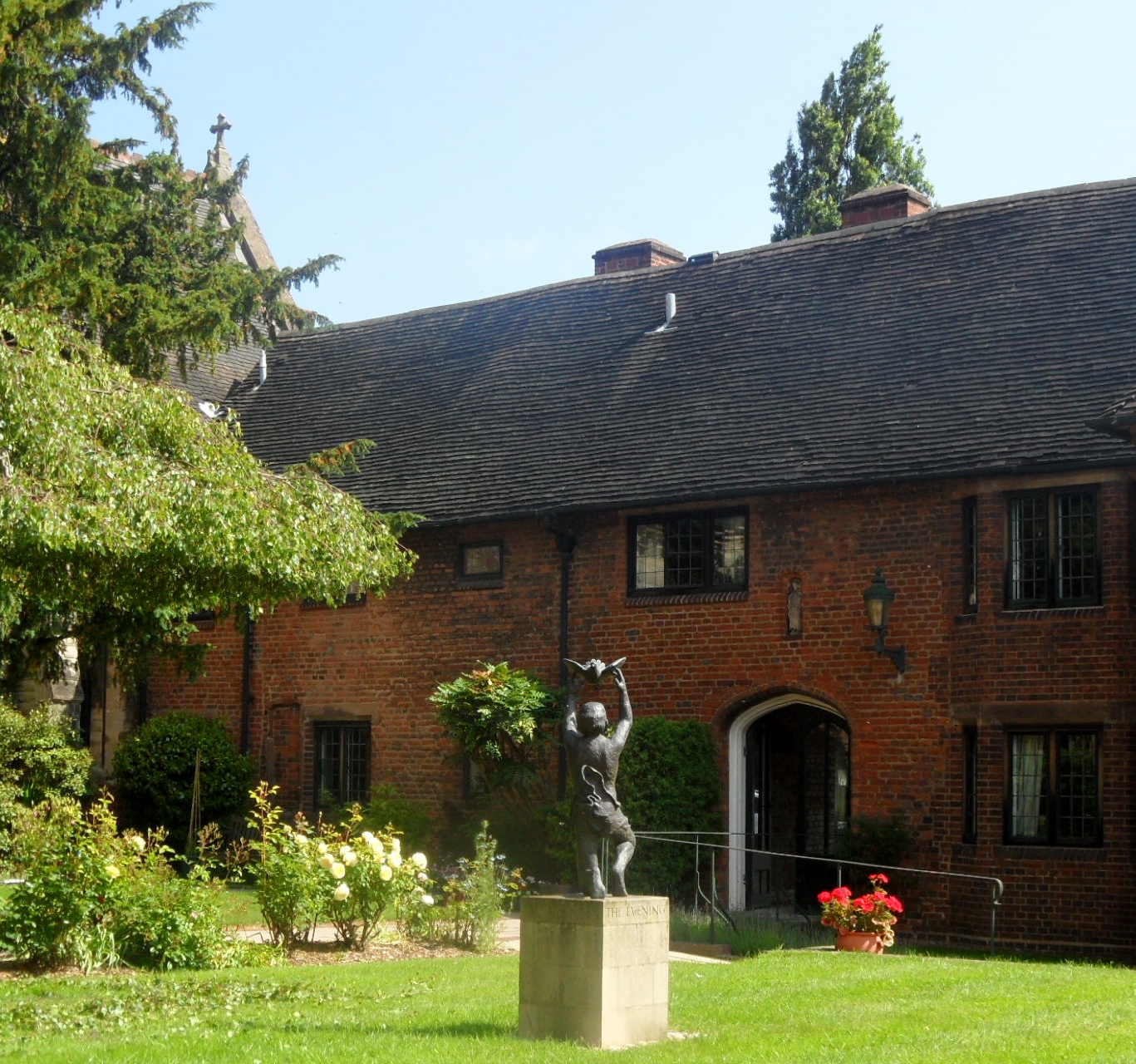
Part of the courtyard at St John’s Hospital

Apparently one woman had protested at ‘the hideous sacrilege and desecration in using ground solemnly consecrated and dedicated as God’s acre for ever, for a bed for sewers’, and so Rev Auden took the opportunity to reassure her, and anyone else that was concerned about the work that was being carried out, that the bones had been collected and reburied together and that the Hospital Quadrangle would soon resume its peaceful aspect, plus the manholes.

Although they did make assumptions in this particular instance, to be fair to the Tamworth Herald, evidence for much older burials, in and around the hospital, was discovered in 1967, when according to the County History, a medieval burial was found during alterations to the almshouses. In June last year, Annette Rubery and local newspapers reported that further remains were found just one metre below the pavement outside the hospital, when workers were repairing a gas pipe, although I don’t think the date of this burial was ever confirmed?

In another post, I’ll look at ‘Councillor Moseley’s Graveyard’, the nickname given to the site of the Friary after Thomas Moseley secured permission to excavate the site in the 1930s, uncovering several skeletons and other archaeological remains, and also the area in and around Lichfield’s Cathedral Close, where amongst other discoveries, a very unusual burial was reportedly found within the walls of one of the buildings in the early eighteenth century. They don’t call this the Field of the Dead for nothing you know (4).

Notes:

(1) One of the reasons I find this particularly interesting is that it seems unusual that it’s a male skeleton with a young child. Over in St Michael’s churchyard, the remains of an adult with a child were discovered, but this was thought to be a mother who had died in childbirth (and was of course in consecrated ground). For more information on that see here. Also, it makes you think about past uses of land and what discoveries like this can tell us. Edit: I’ve just re-read the report and the actual wording is ‘an adult and tiny baby found buried together…it is possible they represent a mother and child who died at childbirth’, so I should make it clear.

(2) For more information on the human remains discovered at Freeford, and thought to be related to the fomer lepers hospital there, see here

(3) Mr Charles Simpson b. April 9th 1800. Solicitor, Town Clerk and Coroner for the City of Lichfield, and Clerk of the Peace for Staffordshire 1825.  d. April 22nd 1890Details from the Shrewsbury School Register 1734 – 1908, edited by….Rev J E Auden!

(4) As I’m sure everyone knows by now, Lichfield doesn’t really mean Field of the Dead, it’s just an old myth that’s most likely stuck because it’s more evocative than the real meaning of the the name which is thought to be something like ‘common pasture in or beside the grey wood’. For more on the place name and yet more Lichfield bones see here 

Sources:

:Lichfield Mercury Archive

Tamworth Herald Archive

www.annetterubery.co.uk

Hospitals: Lichfield, St John the Baptist’, A History of the County of Stafford: Volume 3(1970), pp. 279-289

Shrewsbury School Register 1734 – 1908, edited by Rev J E Auden

Sweet Bells

One Saturday morning, as I sat reading in Lichfield Library, I heard a clip clopping in the street outside. Standing up to look out of the window, I saw a horse and carriage making its way up Bird St. It occurred to me that this was a sound and a sight that people would not have batted an eyelid nor an eardrum at in previous centuries, yet to my twenty first century ears, it was something so out of the normal it warranted me putting down a good book to have a shufty.

More often than not, when we explore the way our towns and cities have changed, it’s the visual changes that we concentrate on – old photographs, old maps, landscape features etc. Yet the sounds of places change too e.g. the pools at Leomansley are quiet and still now that the waterwheel of the mill no longer turns, the sounds of animals at the Smithfield have been replaced by those of cars and shoppers and Beacon Street hasn’t heard a blacksmith hammering metal in a long time. However, amidst the changes, there is also consistency in the sounds that surround us.

The tower at St Chad’s church houses four bells. Three of them were cast in the seventeenth century and the oldest of these three dates to 1625 with the inscription ‘DOMINO CANTICUM CANTATE NOVUM’. The second is from 1664 and declares ‘GOD SAVE THIS CHURCH AND REALM THE KING IN WAR, I.C.1664. Even the youngest of the three, featuring the names Ralph Low and Richard Grimley, is from 1670 meaning that the people of the parish and those who are passing by have heard these bells ring out for well over three hundred years. The fourth bell is even older still, although no one can agree on just how old. An article in the Lichfield Mercury in August 1936 described it as ‘England’s Oldest Bell’, and gives it a date of 1033. As it stands, the country’s oldest inscribed bell is believed to be the Gargate Bell at Caversfield Church, Oxfordshire, dating to c.1215AD and the country’s oldest dated bell (1245AD) is at Lisset Church in Easy Yorkshire. Therefore if this date of 1033AD were true, we would probably have a another Lichfield Entry in the Guiness Book of Records (to go alongside the largest curry ever, cooked by Abdul Salam of Eastern Eye on Bird St). Yet, the St Chad’s website itself casts doubt on this claim as there wasn’t a tower to put a bell in at the church at this time! Another date suggested for the bell is 1255 but the County History also disputes this and says that it was probably cast at Nottingham c.1500AD. There is an inscription on the bell +O BEATE MARIAA.A.R. and some numerals that no-one can read, hence the enigma. I’d love to see it. Not that I would be any help at all in solving the mystery but you know I’d just like to have a look at it. See I’m not satisfied with simply hearing it – there’s that visual dominance of history taking over again.

I have actually been at the other end of the bell rope. After I stumbled upon a practice session on another Saturday morning, I took up a kind offer to have a go at ringing one of the St Chad’s bells myself. Whilst at the time I was too terrified of having a campanology related mishap to fully appreciate the moment, afterwards I thought of all the people that had rung those bells in the past, and all those who had heard them and the message they were conveying. Next time, you’re passing, stop for a moment and listen too.

Sources:

Lichfield: Churches’, A History of the County of Stafford: Volume 14: Lichfield (1990), pp. 134-155

http://saintchads.weebly.com/the-bells.html

Guardian Angel

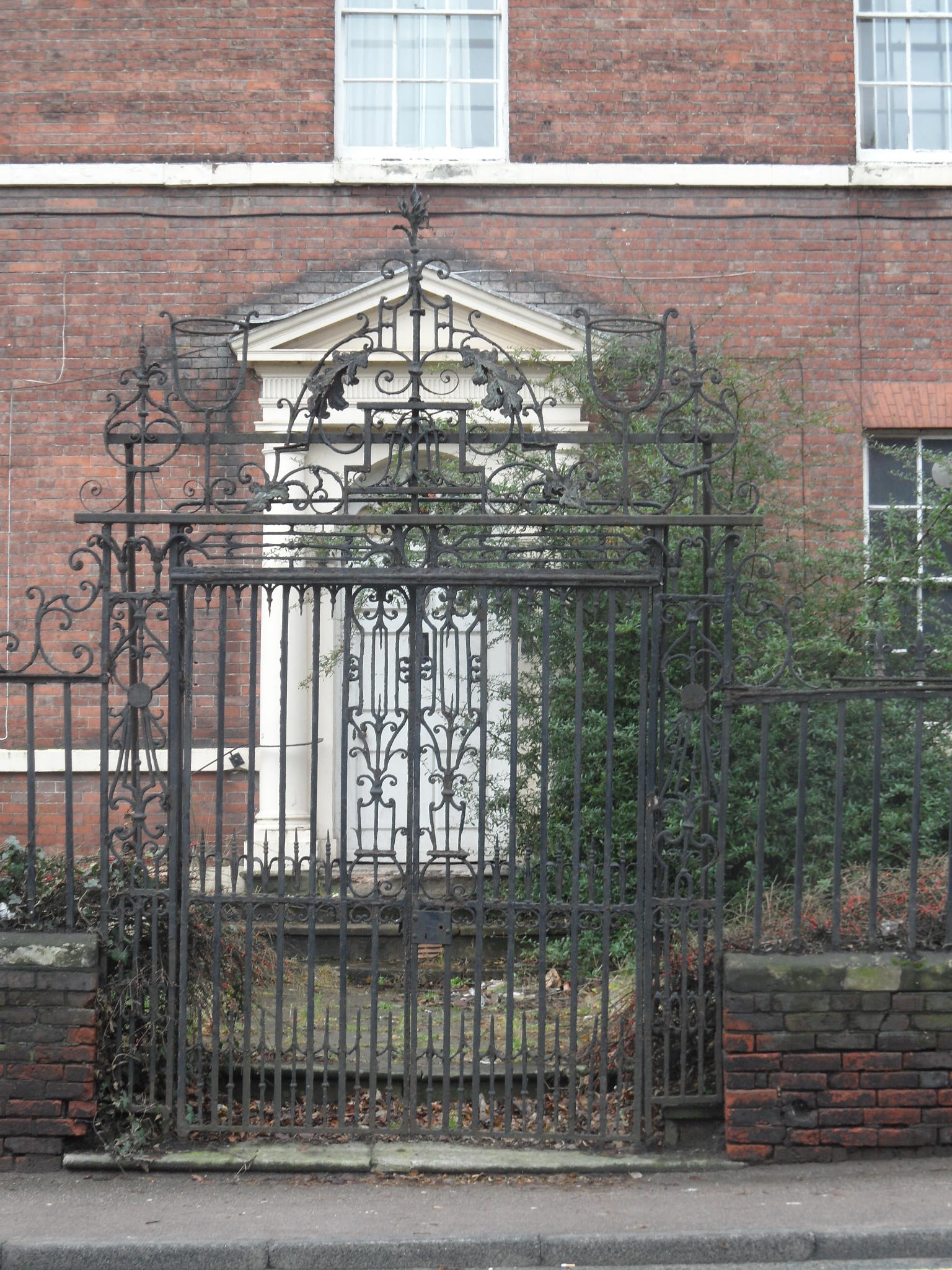
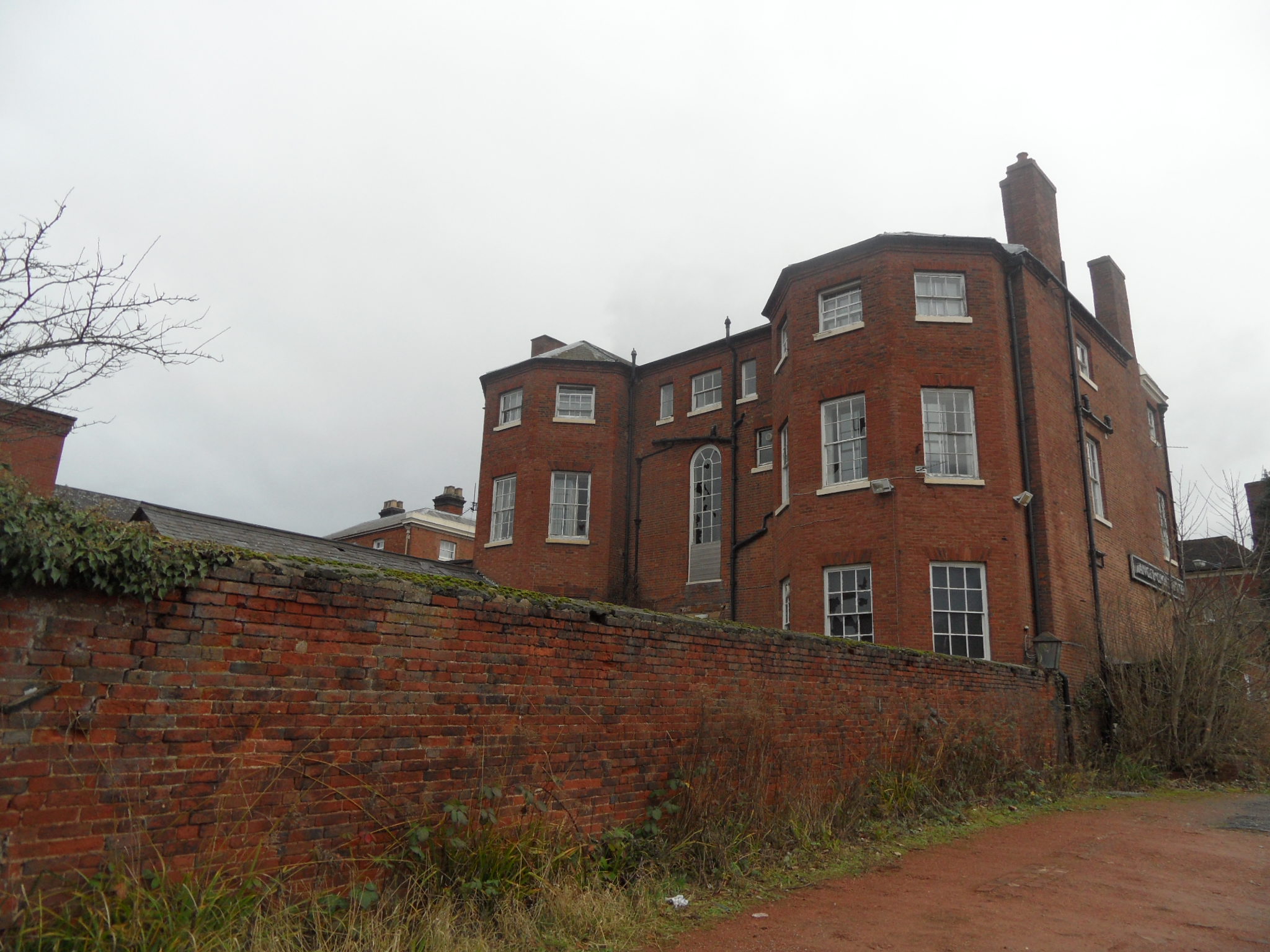
The whispers on the (Beacon) street were true. A new planning application is in the offing to convert the former Angel Croft Hotel into apartments.

The eighteenth century Angel Croft has been one of the most discussed buildings in Lichfield in recent times. Since 2008 it has been empty and vulnerable and its annual appearance on the English Heritage At Risk register has given people real concern about what its future might hold.

As it stands at present, the Angel Croft is at risk from further vandalism and, worse still, arson, which can prove devastating to so many heritage buildings.  My view is ‘use it or lose it’. Sometimes, in order to survive, buildings must adapt and play many roles over the course of their lives. In fact, the Angel Croft was a residential property until its conversion to a hotel in the 1930s. If something positive doesn’t happen soon then there is a possibility that we may lose it altogether and be left with nothing more than a vacant building plot.  I hope that this proposal, which will secure the future of the building and its features, will be supported and that the Angel Croft will not be put at further risk by short sightedness and nostalgia about an unsustainable past.

You can see the documents supporting the planning application here (the planning, design and access statement) and here (the heritage statement), which I’m grateful to the Beacon Street Area Residents Association for forwarding to me.

N.B For anyone interested in the history of this building, the Heritage Statement contains historical information about the Angel Croft, including descriptions, old plans, maps and photographs.


Ooh La La

When old buildings at the back of the Bolton Warehouse Company’s shop on Bird St (1) were being demolished in December 1960, a large circular room containing murals created with shells and pebbles, was found above a ceiling. One mural depicted the Cathedral, another a tree and the third was some kind of summerhouse on top of a hill (2).

The murals are thought to have been created by French prisoners of war, on parole in the city.  According to the County History, Lichfield had long been used as a place to quarter French prisoners, due to its position on a main road (and I have also read that it had something to do with us being about as far from the sea as you can get!).  On 7th January 1747, the Staffordshire Advertiser reported that a party of seventy four passed through Stafford on their way to Lichfield, where they were to be put on parole. It also mentioned a house on Bore St, where there was a cooper’s shop at the back used by prisoners (3). Eighty arrived in Lichfield in 1797 during the Napolenic Wars and in 1809, forty officers were quartered here. It seems that Dr Johnson’s birthplace was also occupied by a prisoner –  in The European Magazine for 1810, a contributor called ‘TSW’ wrote, “The house in the market place in which our great lexicographer born still remains nearly in its original state. It is now inhabited by Mr Evans a brazier and a part of it, believed to be the very room in which he first drew his breath is now let to a French prisoner of war”. According to their website, Pipe Hill House on the Walsall Rd also hosted some of the prisoners.

As well as spending their time creating enigmatic artworks, some of the prisoners gave French lessons to the city’s residents.  If the fragment of a page of French exercises, found in the same room as the Bird St mural was discovered, is anything to go by, the teachers had their work cut out. The sentences on the fragment of paper had been heavily corrected, with the comment ‘very bad’ at the end! Perhaps the Darwin and Wedgewood children who were taught French by one of the prisoners at Darwin’s house on Beacon St were better students?

The old clinic on Sandford St? Is it me or can anyone else see numbers in the brick work on the second storey?

In September 1951, the author of the ‘Round and About with Clock Tower” section of the Lichfield Mercury visited the site of the mural accompanied by the caretaker, Mrs Disney, and reported that the ‘pictures’ were still in existence in the dome-like roof of a derelict outbuilding behind the Sandford St Clinic (4). One side featured ‘a perfect replica of Lichfield Cathedral, made entirely from small stones, bits of glass and sea shells’  and other pictures included a ‘mosque-like building’, (which the reporter failed to recognise (5)), several ‘beautifully executed trees’ and a map of Lichfield. The outbuilding was in a poor condition, described as being encased in a mass of creepers, with two gaping holes in the roof. There was also a large hole in the floor, and as if things weren’t exciting enough already, Mrs Disney told the reporter that there were two passages running beneath the hole – one leading to the rear of the property and one believed to connect with the old ‘monk’s passages’ beneath the Friary.

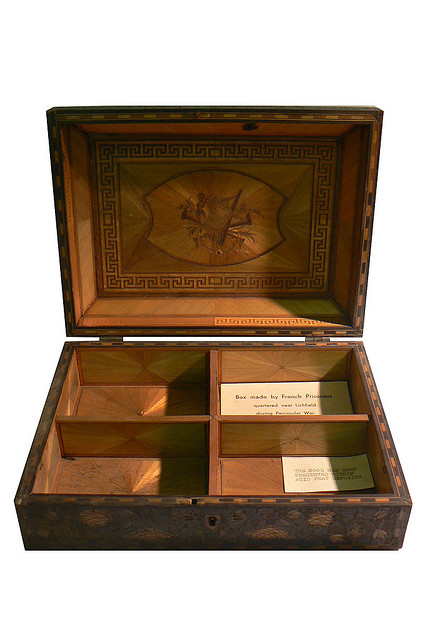
Box made by French Prisoners of War (c) Lichfield District Council

Sadly, I think that this ‘Disney’ story doesn’t have a happy ending as the outbuilding was been demolished and the treasures inside lost (although there is the possibility that as the murals were still in existence in the 1950s/1960s someone may have been foresighted enough to photograph them?). However, there is a small consolation at Lichfield Heritage Centre in the form of a wooden box carved by French prisoners quartered in the area.

Edit 18/6/2015
A display at Lichfield Museum at St Mary’s features a photograph and a chunk of the mural together with the wooden box and some information about the soldiers themselves. St Mary’s is also staging a costume drama called ‘Lichfield’s Waterloo’ by the Lichfield Players on Friday 26th June and Saturday 27th June. More information here

Notes

(1) Does anyone have anymore information on the Bolton Warehouse Company’s shop, particularly where it was on Bird St?

(2) Could this have been a representation of Borrowcop Gazebo? The PMSA record (here) says ‘In 1694 a building called ‘the Temple’, probably stood on Borrow Cop Hill, in the 1720s an arbour was recorded, by 1750 this replaced by a summerhouse which may have been the cruciform building there in 1776. In 1756 the corporation ordered a line of trees along the path to the summit, with extra trees in 1783, possibly in connection with a fete champetre held in that year. By 1805 the building was replaced with one of brick with two arches each side and seats around to admire the view, the funds were raised by public subscription’. On the subject of Borrowcop, I just found at that an information board was installed up there in September (more about that here).

(3) Again, where would this have been?

(4) I understand that the clinic occupied the former premises of the Victoria Nursing Home which was on Sandford St until it moved to the Friary and became the Victoria Hospital.

(5) Any ideas as to what building this could be depicting?

Sources

Lichfield and Archaeological & Historical Society Transactions vol 2 1961

Lichfield: Education’, A History of the County of Stafford: Volume 14: Lichfield (1990), pp. 170-184

Lichfield: From the Reformation to c.1800′, A History of the County of Stafford: Volume 14: Lichfield (1990), pp. 14-24

The European Magazine for 1810

Lichfield Mercury 21st September 1951

A Frank Discussion

I’m a big fan of place names that actually mean something, rather than the pretty but ultimately empty kind that are sometimes embraced by developers. The authors of one of my all time favourite books ‘England in Particular’ have this to say on the subject,

“Names carry resonances and secrets. Respect local names and add new ones with care. It is not good enough to call a new estate Badger’s Mead when the badgers have been destroyed.”

Recently there was a notice in the Lichfield Mercury that the name ‘Halfpenny Lane’ had been assigned to a new development off the Walsall Road (1).  If streets, buildings, etc, are to be name after local people, then I think its important to know who those people were and what contribution they’ve made to that place. The following information was very kindly provided by Colin Halfpenny, son of Frank and Mary Halfpenny.

Frank Halfpenny was born on 11th September 1897 in Goldenhill, Stoke on Trent. At the age of fourteen he was apprenticed to Marsdon and Sons, a tailor and outfitting firm in Newcastle under Lyme. Between 1916 and 1919 Frank served in the Staffordshire Yeomanry as a signaller, spending time in Egypt and Palestine.

This photograph was sent to me by Ron Myatt of the Great Wyrley Local History Society. Ron and I had a chat about it – we understand that it shows Frank Halfpenny whilst serving in WW1, but the identities of the other men are unknown. If anyone can help, Ron and I would be very grateful!

On his return, Frank was appointed manager of John Key and Sons Tailors and Outfitters  in Market Street , Lichfield and lodged with the Misses Arnold of the Coffee Shop on Church Street (opposite to the vehicle entrance to Wintertons Saleyard). He was a keen sportsman, playing football and cricket for Lichfield teams. In 1923, Frank was appointed theMidland Area Representative for D Gurteen and Sons, clothing manufacturers of Haverhill, Suffolk. On New Year’s Eve 1924 Frank married Mary Emma Tayler.  Both were lifelong Methodists holding active posts both in the Lichfield Church and on the Lichfield and Tamworth Circuit. Eleven years later, Frank purchased Mr B T Sadler`s drapery and ladies outfitting shop opposite the Johnson Statue in Market Square

At the 1935 AGM of the cricket club Sam Brown (the father of Cuthbert Brown who published several books on growing up on Beacon St) the Treasurer told the members that the club finances were very low and that a method of raising them had to be found.  Frank offered the club a cup to be played for with an annual competition, this was agreed to and the competition was started amongst local village clubs in 1936. This has been played for every year since then and is thought to be the oldest 20×20 competition in the country. He was also a member of several bowls clubs, the allotments association and the City Institute where he enjoyed a game of billiards or snooker.

In 1936 he was elected to the City Council and became Sheriff in 1938. At the same time his father in law, Councillor F M Tayler, (later to become Alderman and a Freeman of the city) started his second year as Mayor. Many people will know the photograph of Frank maintaining the tradition of the Sheriff’s Ride in 1939, accompanied by Sam Ashley who at 70 years of age had followed the ride each year from when he was 7 years old.  Sam had walked to Four Oaks and collected the horses then rode to Lichfield , round the city boundary, back to Four Oaks and walked home again. The following year, Frank presented Sam with a copy of this photo. Sam replied that the day had always been a pleasure all his life and he had always enjoyed it, noting that ‘there were not above three people alive who went round when he was a boy and he hoped to go on as long as he could’. During the War Frank was also a prominent member of the ARP and spoke all over the Midlands for the Ministry of Information on national security, instructing Home Guard units on signalling.

Frank was a member of many committees and was Chairman of the Lichfield, Tamworth and Sutton Coldfield Hospital Committee for a long time and was also elected onto Staffordshire County Council. He was a magistrate on the County Justices Bench and Mary his wife was on the City Justices Bench. In 1965/6 Frank was elected Mayor of Lichfield, and after his death on May 12th 1966 , his wife Mary took his place as Deputy Mayor for 1966/7. Mary Halfpenny he was then appointed Sheriff in 1968 (when Ena Millard was Mayor) and became Mayor in 1971.

Mrs Halfpenny is on the front row of the above photograph, fourth from left. Until writing this I have to confess that I had assumed that the lane had been named after Mr Halfpenny, but clearly Mrs Halfpenny was also an active member of the community, and so perhaps the name should commemorate both of them? The photo was very kindly sent to me by David Shaw whose father John Shaw is sitting on the second row (second from left). In a nice bit of synchronicity, John wrote wonderful local history books, one of which is about the street names in Lichfield!

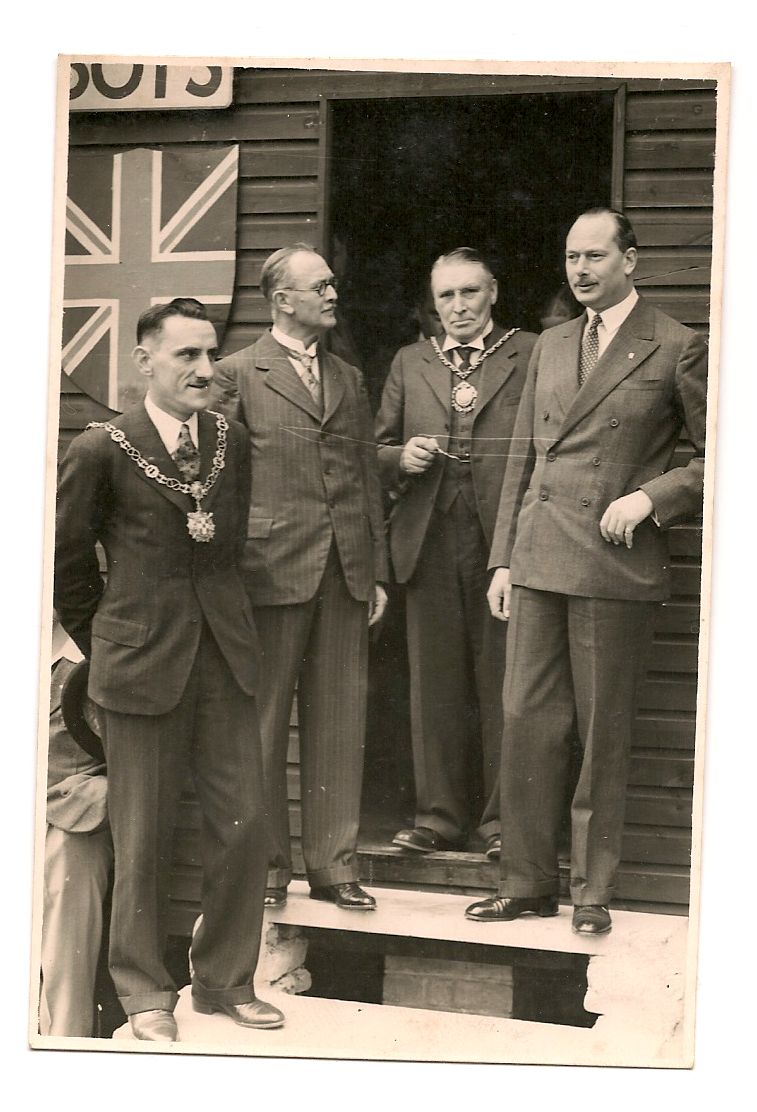
Colin Halfpenny also provided this photograph taken outside Christ Church Boys Club in 1939, when the Duke of Gloucester visited. It shows Cllr Halfpenny (the Sheriff), his father-in-law Cllr Tayler (the Mayor), and the chairman of the Youth club committee (name unknown, possibly a local bank manager?) with the Duke.

Notes:
(1) I can’t think whereabouts this is and am a little reluctant to go and look as with my poor sense of direction and the labyrinthine nature of the estate I always struggle to find my way back out again! Does anyone else know?
(2) Thanks so much to Colin, David and Ron for providing the above information and photographs.
(3) Information on presentation of photo to Sam Ashley taken from Lichfield Mercury archive

Get The Drift?

Over at Curborough Craft Centre today, I noticed a plaque on one of the converted farm buildings explaining that it was a former drift house, possibly built on the foundations of an earlier building.

Back at home, I tried to find out what exactly a drift house was used for.  It seems there are plenty of them around (including one in Stonnall) but no real explanations as to exactly what purpose they served. And believe me I’ve looked – I googled, I read (an English Heritage study into farm buildings of the West Midlands and some ye olde book on farming) and I attempted to apply logic but all to no avail.

However, what I did find was that the drift house at Curborough was surveyed in August 1984 along with other agricultural buildings in the Curborough and Elmhurst area. The report on the Heritage Gateway site includes the following information – “Mrs Hollinshead referred to this as a ‘drift barn’. It is in a poor condition; the doors are blocked with corrugated sheeting, the roof is gone and is replaced with corrugated sheeting and the north-east side has been repaired”. The report was part of the Domesday survey of barns in Staffordshire co-ordinated by the Society for the Protection of Ancient Buildings in 1985 and clearly the building has had a lot of TLC since then. You can read it here.

Anyway, eventually, I gave up and went off on a tangent. I’d read previously that the place name Curborough is thought to derive from the Old English ‘cweorn burna’. However, what I didn’t know is that there have been an abundance of archaeological finds in the area, indicating that Curborough was inhabited long before the Anglo-Saxons decided to build a mill on the stream here.  A site near to the farm has been identified as a possible Roman settlement with large quantities of coins, brooches, pottery, tiles and glass being discovered in the late 1990s. It seems even the Romans were relative latecomers, with Mesolithic, Bronze Age and Iron Age finds also being unearthed nearby. So many wonderful discoveries and so much more to learn about this fascinating place I’m sure. However, at this moment in time, I’ll settle for an explanation of what a drift house (or barn) is, if anyone can help!

Sources

http://www.heritagegateway.org.uk/Gateway/Results_Single.aspx?uid=MST4660&resourceID=1010

‘Townships: Curborough and Elmshurst’, A History of the County of Stafford: Volume 14: Lichfield (1990)

Alas Smith

With my ongoing fascination with the blacksmiths of Lichfield, I was interested to find a short article in an old newspaper about William Goodwin. At the time of the article, August 1950, Mr Goodwin was the oldest trading smith in the city, working with his son in the business his father had started before him.

The article says that at the turn of the century there had been around ten blacksmiths in Lichfield, with demand from stables at local inns and estates. Mr Goodwin remembered shoeing more than fifty horses a week, but in 1950 was doing less than ten. As a result of this reduced demand for the trade, Mr Goodwin’s forge was one of only three remaining in the city. Another of the three was Mr W Ball of St John St, who started his business after the First World War. He explained that his survival was down to the priority attached to agriculture, adding that his main work was now with agricultural implements and fixing wheels, most of the dealings with horses being confined to riding stables.

Of course, now there are none remaining.  Whilst Lichfield is clearly no Birmingham or Black Country, it did of course have its trades and sites of industry. I think that this is sometimes forgotten and so I’m always pleased to be reminded of where Mr Goodwin’s forge (the one where apparently a man from France had his dancing bear shod of course!) stood on Beacon Street and of the other blacksmiths of Lichfield, when I see the street names ‘Smithy Lane’ and ‘Forge Lane’. Place names can tell stories, and should always be chosen with care.


A Burny Inn

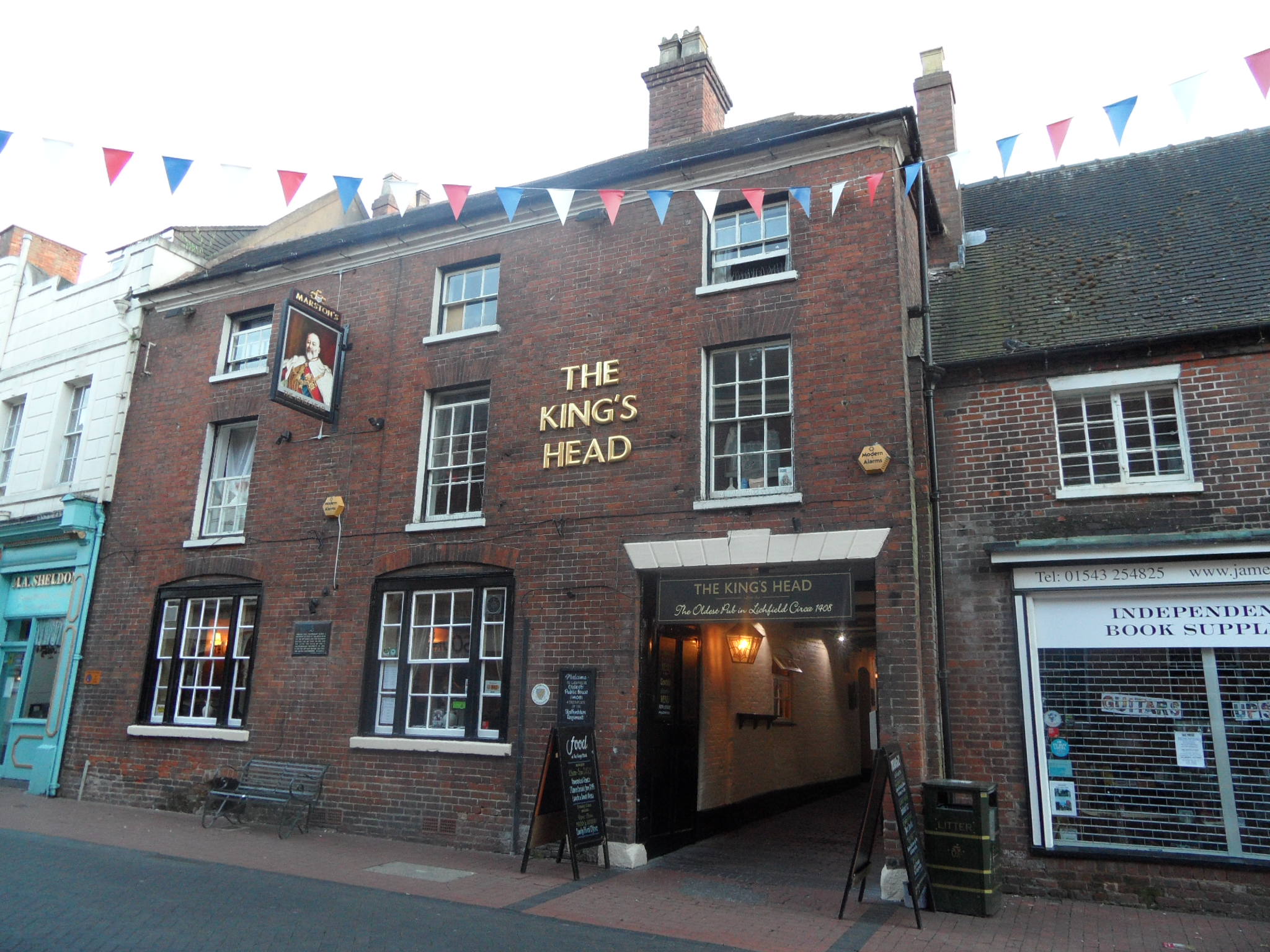
The King’s Head is one of the oldest pubs in Lichfield (1) and somewhere I’ve spent many a happy evening.(2) The sign across the entrance and John Shaw’s legendary ‘The Old Pubs of Lichfield’ date it to 1408, when it was known as ‘The Antelope’. By 1650, it had been renamed as The King’s Head.  I’ve been reading the old papers again, and it seems that in the 1930s, we nearly lost this fine old drinking establishment to fire…twice!

Which window did Mrs Shellcross climb out of I wonder?

On the night of June 27th 1932, landlady Mrs Shellcross went to bed in the King’s Head for the last time, leaving a small fire burning in the dining room grate.  The following day new tenants were arriving, and she would be leaving the King’s Head. Yet as she climbed the wooden staircase to her room, she would never have imagined that she would not be leaving the pub via the door but through a first floor window!

In the early hours of the morning, one of the hotel’s residents, Mr Corbett, was awoken by the sound of falling crockery. After discovering that the building was on fire, he raised the alarm. However, the five occupants of the pub found the staircase ablaze and their escape route blocked. They were left with no choice but to escape from upstairs windows. Mr Corbett jumped from the first storey and flagged down a passing motor van and trailer. The van driver positioned his vehicle close to the wall of the hotel, beneath a third storey (4) window, enabling Mr Dunmow, a commercial traveller to break his fall by jumping on top of the van.  Landlady Mrs Shellcross managed to climb through a first floor window onto a wall bracket but this gave way and she fell fifteen feet down onto the pavement. Another resident, a Mr King of Broxbourne in Hertfordshire, escaped using his bedclothes as a makeshift rope.

Although Mr Dunmow was admitted to the Victoria Hospital with shock, the others luckily suffered nothing more than cuts and bruises. However, the building itself had not been so fortunate. The dining room was destroyed, and the upstairs function room severely damaged. Several valuable paintings and ornaments were also lost. The ‘buff regalia’ was damaged by water (does anyone know what this refers to?).  It was said that the prompt turnout from the Lichfield Fire Brigade had saved the building from being burnt to the ground.

New tenants, the Evans family, arrived at the King’s Head to find ‘a charred mass of ashes, a ruined dining room, scorched and blackened walls, and everything soaked with water’.  There can barely have been time to make good this damage when just eighteen months later, an old oak beam in the chimney in the dining room and clubroom caused another major blaze at the pub. In the early hours of a December morning in 1933, Major Evans was awoken by the smell of smoke. This time, there was just time for the Evans family and the five hotel guests to escape down the staircase, which according to the Mercury was ‘a mass of flames’ immediately afterwards. The Major led his family and other guests to safety before returning to the burning pub to telephone for the fire brigade. There was no response as one of the hotel guests had already alerted the brigade who were now on the scene. It took two hours to put out the fire, and although the front of the building was saved, the dining room and clubroom were ‘burnt beyond recognition’. Apparently, the properties on either side of the pub were also at risk for a while.

Perhaps a little opportunistically, there is an advertisement for the Prudential Assurance Co. beneath the story asking readers ‘If this had been your property would it have been adequately insured? Don’t wait until you have to call the Fire Brigade before answering this question.’

On the Lichfield Ghost Walk, we were told a young woman working as a maid had died in a fire here and that sometimes her candle could be seen flickering in one of the upstairs windows. Perhaps this story harks back to an earlier blaze. It would be interesting to do some research and see if there is any truth in this. After all when it comes to ghost stories, there’s usually no smoke without fire….

Notes

(1) The Kings Head is said to be the oldest pub, the Duke of York over the other side of the city at Greenhill is said to be the oldest inn. I’m just glad they are both still open and serving beer!

(2) A particular highlight was the folky carol service I attended here in 2010. I hope they do it again this Christmas.

(3) As many will know, Col. Luke Lillingston formed a regiment here in 1705, and you can read more about this aspect of the pub’s history at The Staffordshire Regiment Museum website here. Or even better go and visit the museum to find out more!

(4) Third storey window? I’m guessing this means what I would call the second floor?

Sources:

Lichfield Mercury Archive

Lichfield: From the Reformation to c.1800′, A History of the County of Stafford: Volume 14: Lichfield (1990), pp. 14-24. URL

The Old Pubs of Lichfield, John Shaw

Friends and Romans

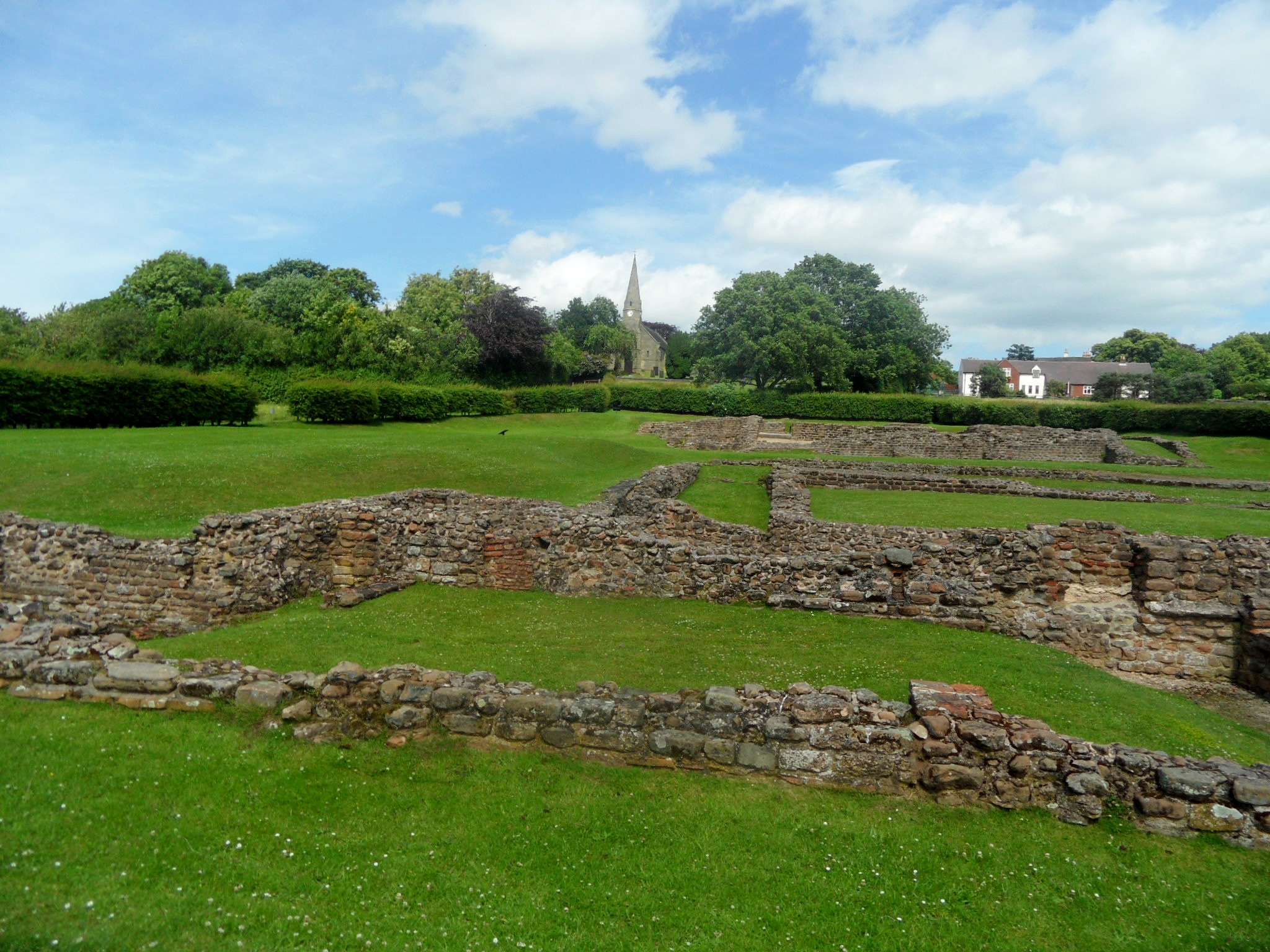
Wall is just a few miles south west of Lichfield and is of course the site of a Roman settlement known as Letocetum. Remains of a bath house and a ‘mansio‘ are still visible at the site, and there’s also a small museum in the village displaying some of the archaeological finds from the area, although sadly not the statue of Minerva, supposedly broken into pieces shortly after discovery to mend the bank of a drain (assuming that such a statue actually existed in the first place…)

Since visiting Wall last month, my interest in the place has grown and grown. As well as the occupation of the site by the Romans themselves, I’m also interested in the period prior to their arrival –  several carved stone thought to indicate the presence of a Celtic shrine at the site have been discovered.

Roman re-enactors at Kelmarch 2013 A D, but was the real thing in Lichfield in 300 A.D?

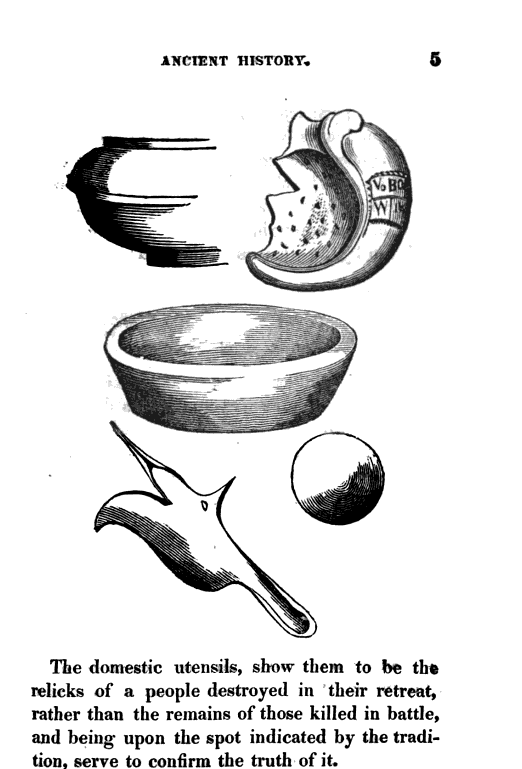
I’m also intrigued by how Letocetum relates to the later settlement at Lichfield.  One of the early medieval buildings excavated at Cross Keys, during work on the car park in 2007/08, was found to incorporate reused Roman masonry and there have also been other stray Roman finds in and around the city. Coins have been discovered near Sandfields and at Streethay. Roman pottery, including an inscribed mortarium, was apparently discovered at a place known as ‘Toad’s Hole Piece’, an area later known as Christian Fields and in 1802, a Roman Cyathus, fragments of pottery and human bones were reported to have been discovered during construction of a malt house on the causeway between Bird St and Beacon St.

Some of the finds discovered at Toad’s Hole Piece, later part of the area known as Christian Fields.

Wall is a fascinating place and a lovely village to visit. What’s more, there is a family open day at the site tomorrow (Sunday 4th August) between 11am and 4pm, organised by the Friends of Letocetum. I understand that as well as guided walks around the site and the village, there will also be children’s activities and replicas of items from the Staffordshire Hoard on display. You can find out more via their Facebook site here.

Sources: https://lichfieldlore.co.uk/wp-content/uploads/2013/08/lichfieldeusreportfinal.pdf http://www.pastscape.org.uk/hob.aspx?hob_id=306575 http://www.pastscape.org.uk/hob.aspx?hob_id=307078
http://www.sahs.uk.net/Volume%20XXXIII.pdf