Daisy, Daisy

Recently, I’ve spent more time in churches than ever before in my life (with the possible exception of the Summer of 2004, when I went to so many weddings that I was able to recite 1 Corinthians 13 off by heart). When I was younger, history for me was all about the castles. Churches were boring. The only remotely interesting thing about them was that, with their crenellations, some of them looked a bit like castles. Now I know that they can tell stories just as good as any castle, but you just need to know where to look.
SAM_1851

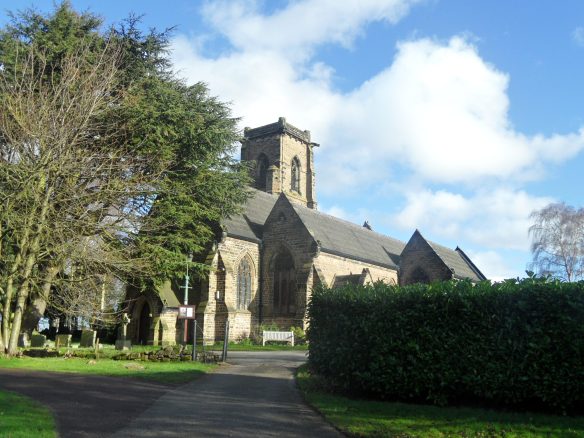
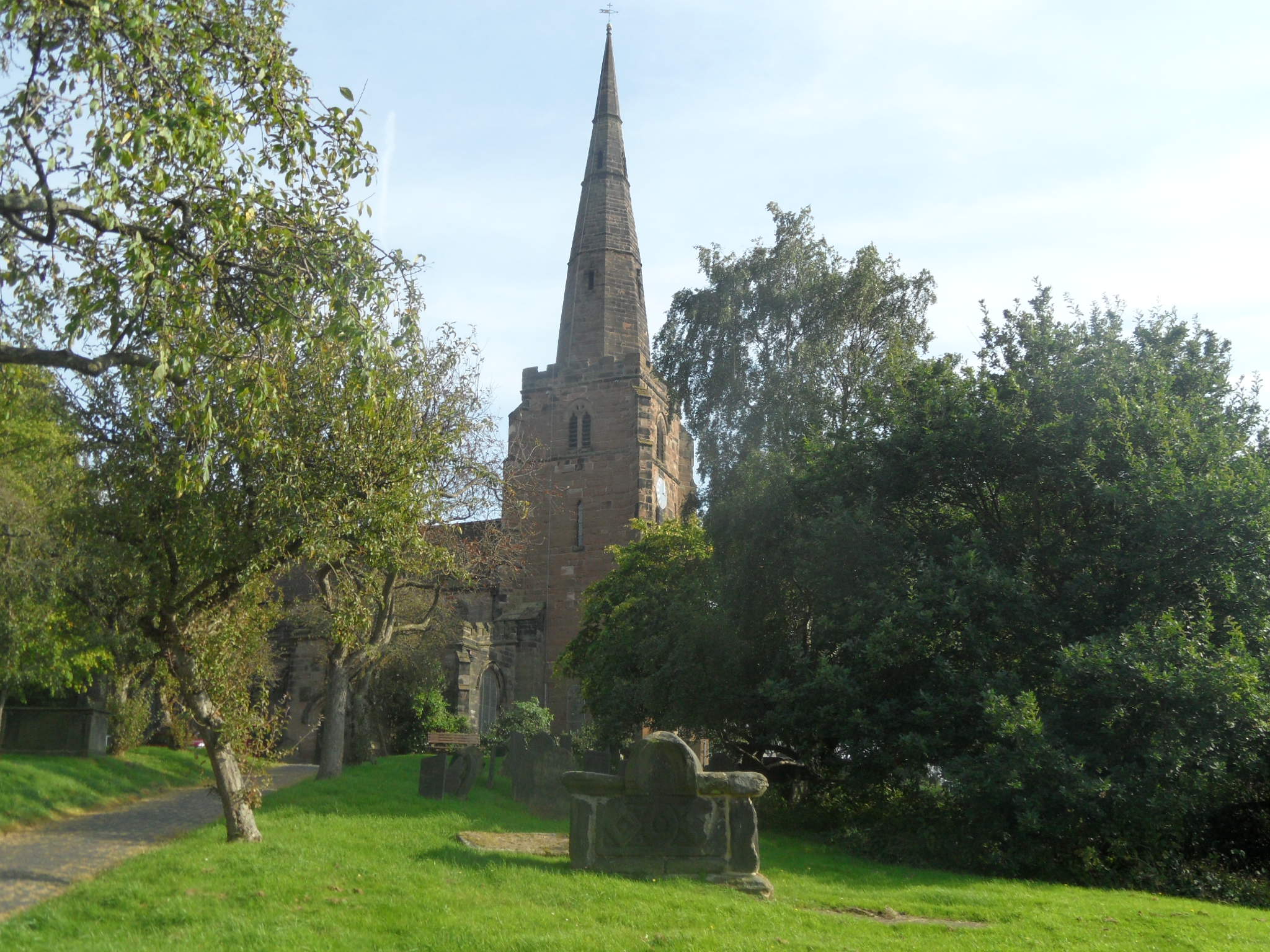
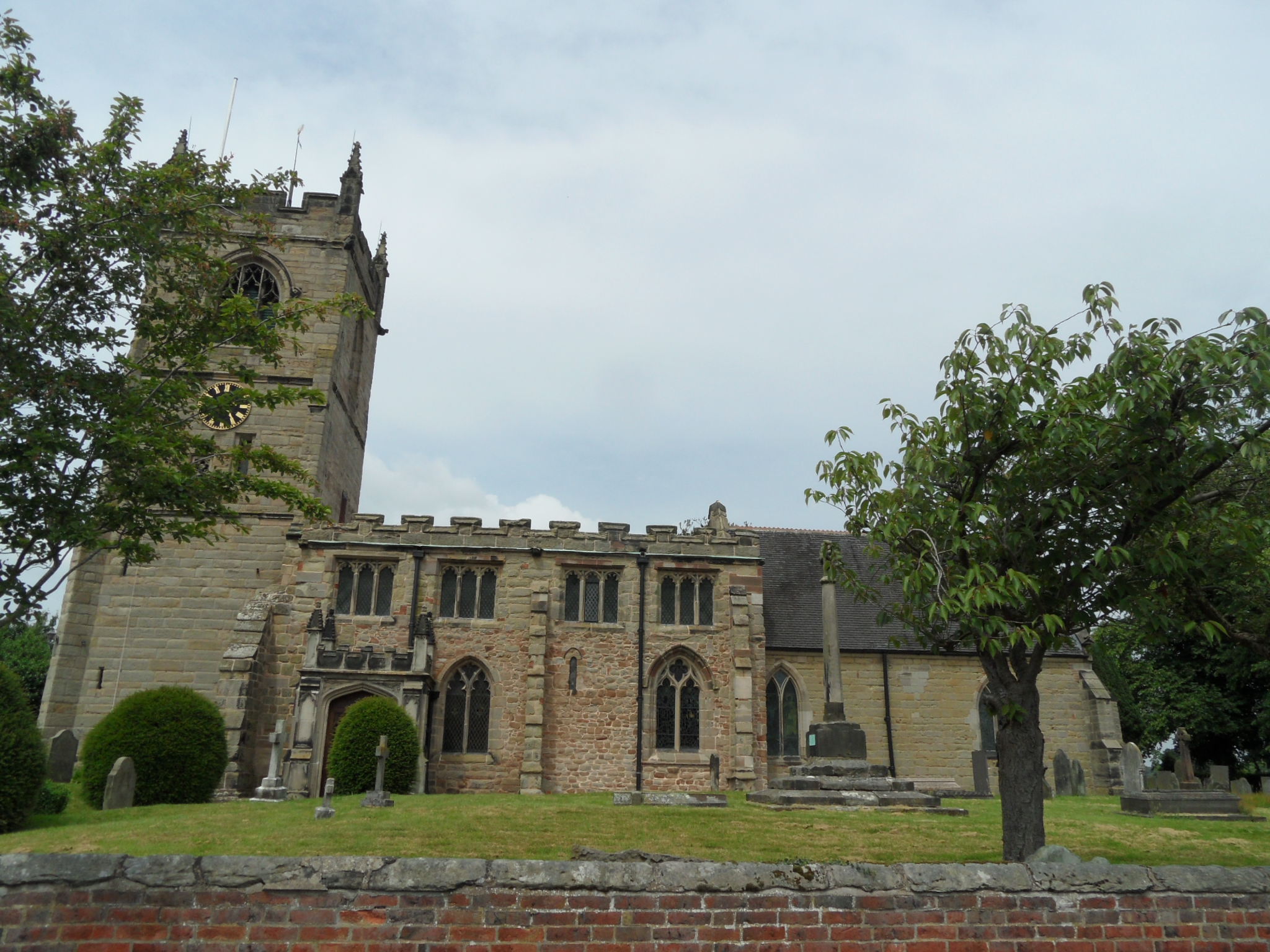
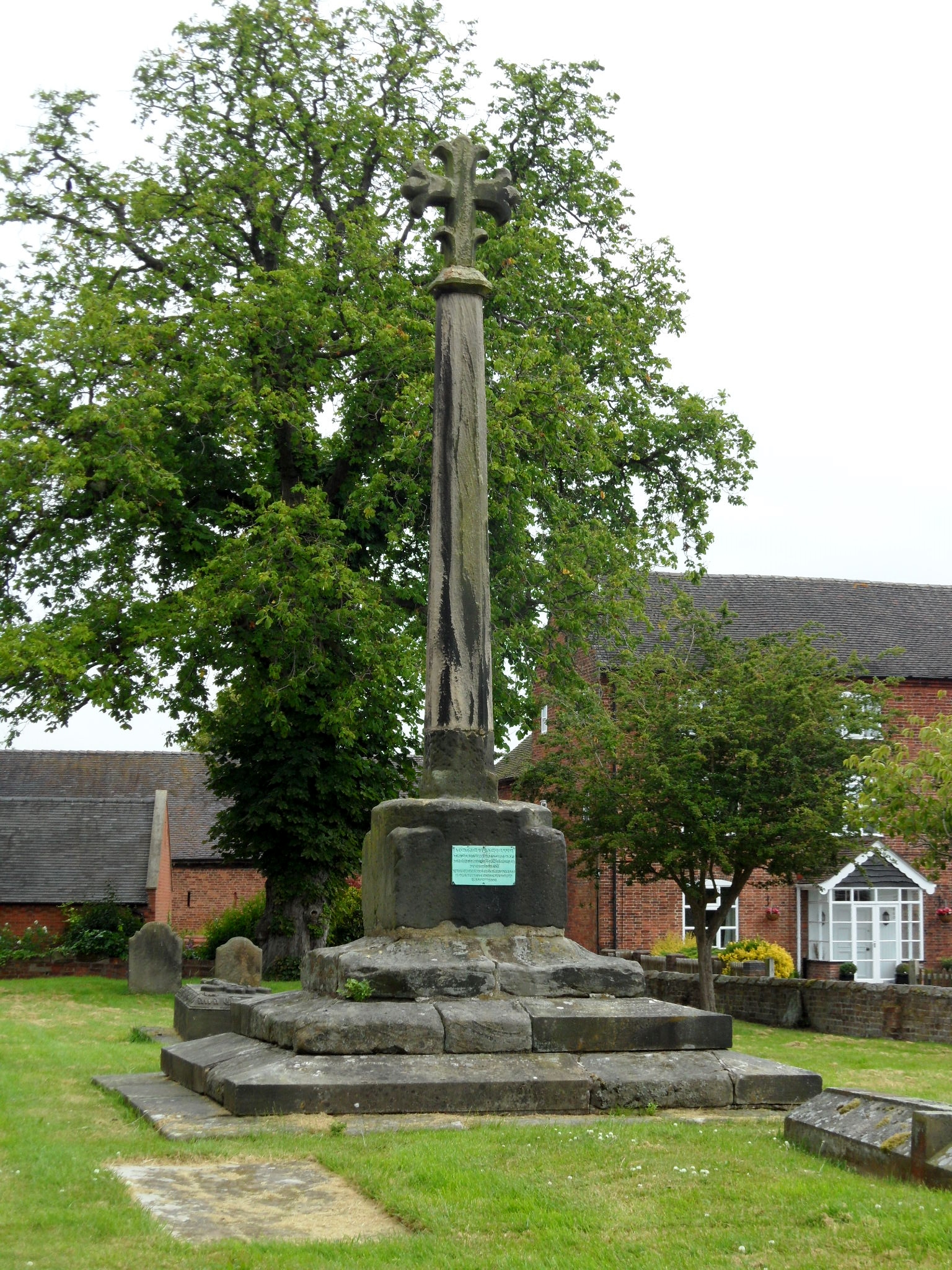
Before even stepping inside All Saints in Kings Bromley, there are plenty of interesting tales. ‘Lady Godiva’s’ cross in the churchyard, originally dates back to the 14th century, but was restored in 1897.
SAM_1842

I was delighted but intrigued to see a reference to one of my childhood heroines here. The story I knew as a little girl was that Godiva pleaded with her husband Leofric, Earl of Mercia, to reduce the taxes he imposed on the people of Coventry. Leofric tried calling her bluff by saying he would do so, if she rode through the marketplace in the buff. Unfortunately for him, his wife not only had compassion, but also really, really long hair which according to Roger of Wendover who first recorded the story, ‘covered the whole of her body like a veil’, as she climbed onto her horse and successfully carried out her legendary protest. The connection with Kings Bromley is that Godiva and Leofric had a summer residence or hunting lodge here, where Leofric died in 1057 and may well have been involved with an earlier church which could have stood on this site.
SAM_1844

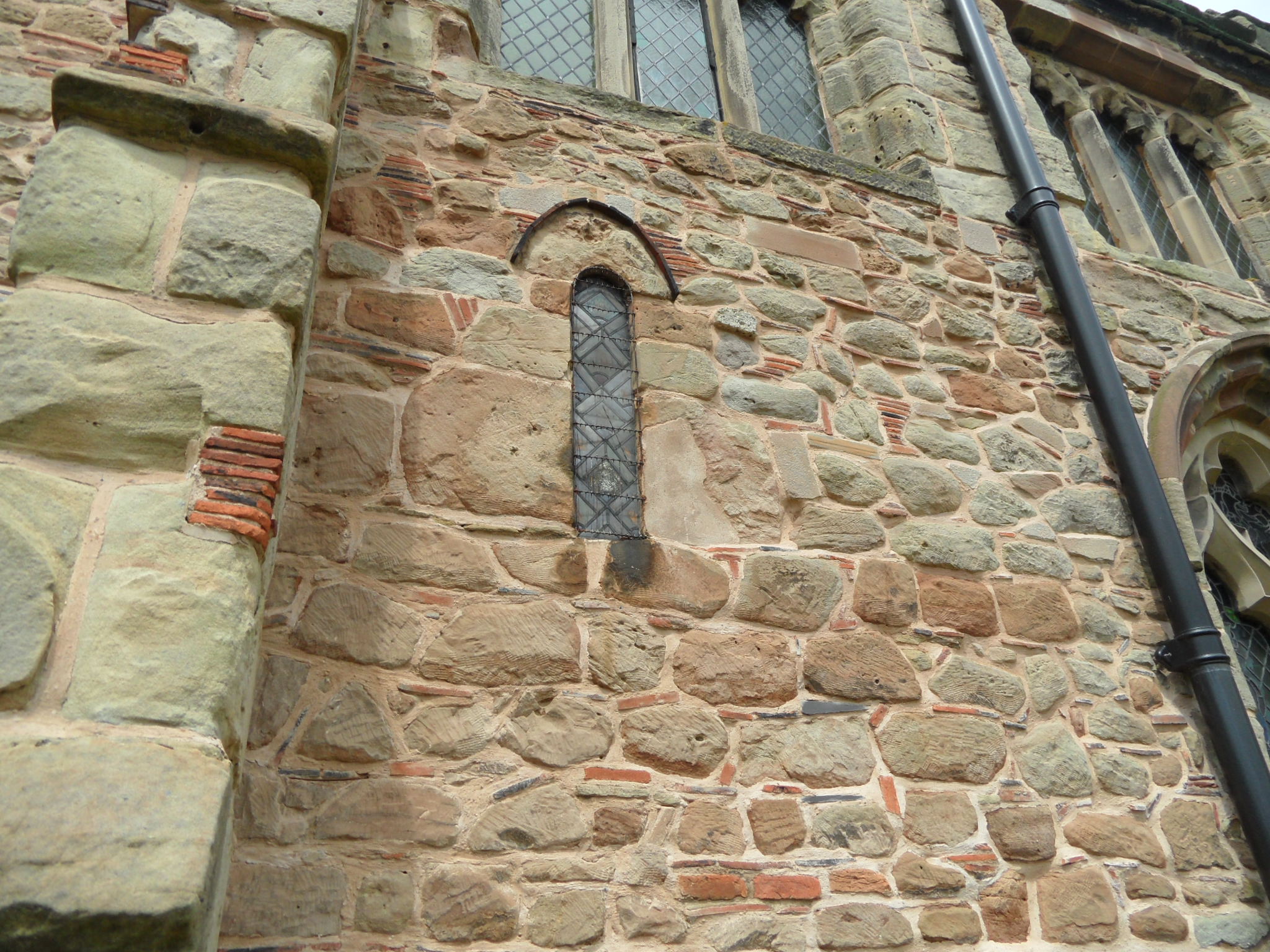
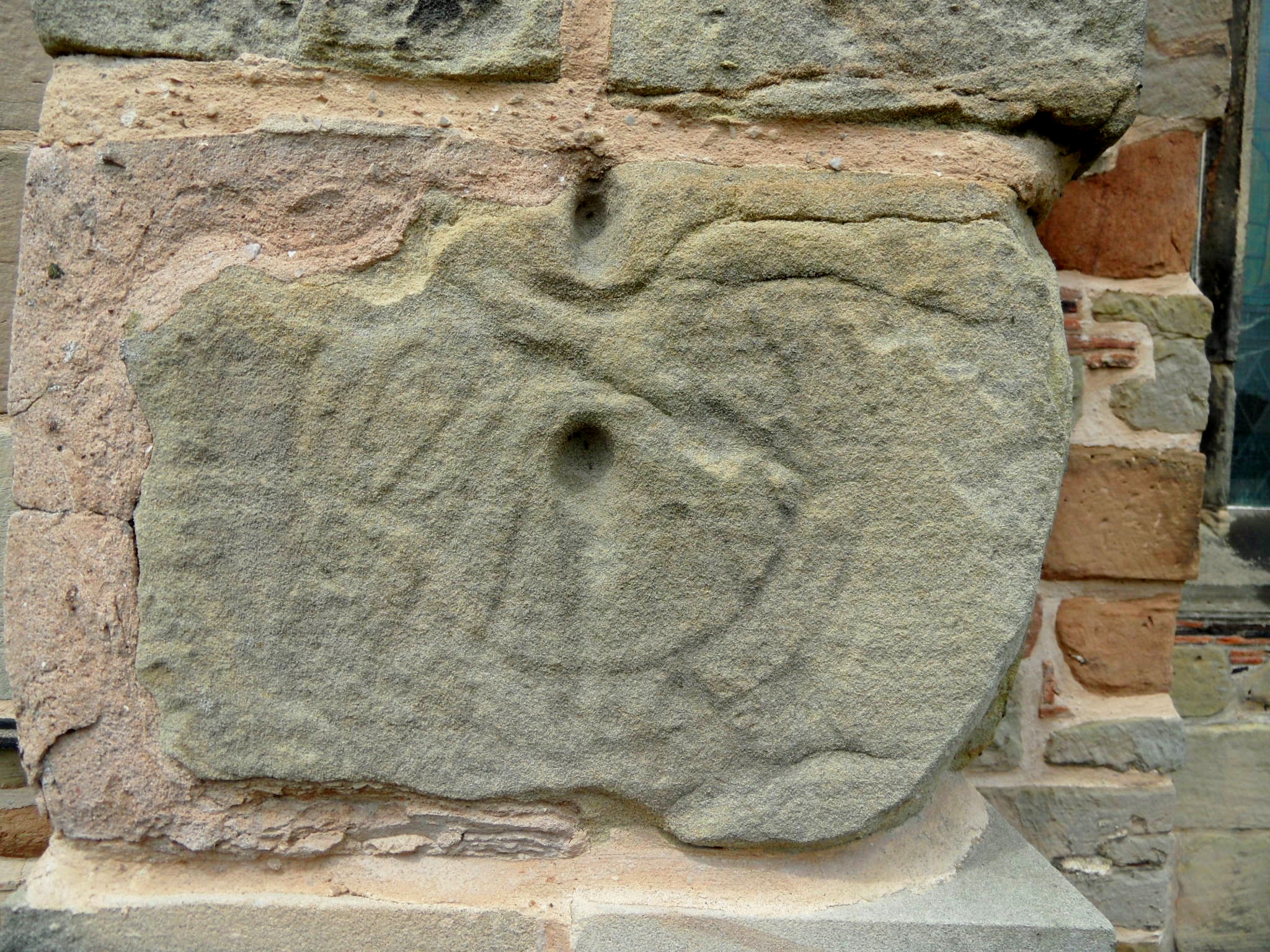
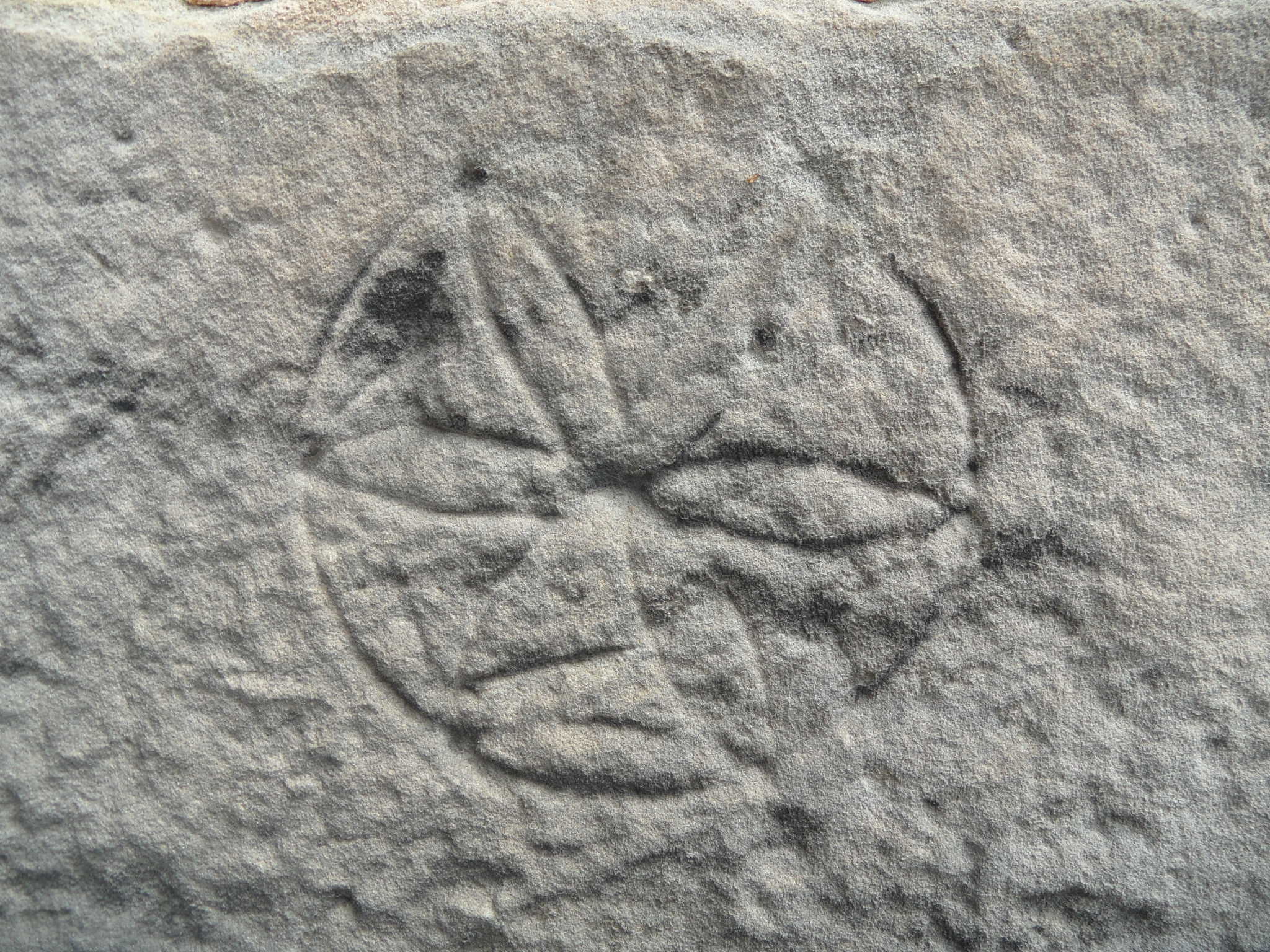
Unlike others I’ve seen recently, I’m pleased to say the church itself hasn’t been fully restored by those pesky Victorians, but has a range of architectural styles and features dating back to at least the eleventh century, but possibly even earlier than that – the HER description says that this is an Anglo-Saxon wall, and somewhere within it there is possibly even a Romano-British brick. On a buttress near to this ancient wall is a medieval scratch dial which, with the assistance of the sun, would once have helped the priest be on time for mass. On the buttress in-between the porch and the sixteenth century tower there is another carving, but unlike the scratch dial, no-one is quite sure of its significance.
SAM_1845

The daisy wheel carving is described as a mason’s mark in the churches information sheet. Although this is the first I’ve seen, this symbol regularly crops up on old buildings, especially churches. Whilst some believe these carvings have a practical function, others believe they were carved for good luck or protection against evil spirits.
SAM_1846

On a bit of a tangent, on the subject of childhood and daisies and folklore, I did wonder about some of the little rituals surrounding these flowers that we unthinkingly carried out as kids. The name is thought to come from the old English ‘Daes Eage’ meaning ‘day’s eye’, and refers to the way the flower opens and closes with sunlight. I’ve read that wearing daisy chains was thought to protect you from being abducted by fairies (must work, I’m still here!) and that one of its folk names is ‘Measure of Love’, from the game where you pull off the petals one by one, chanting, ‘He loves me, he loves me not’. Apparently, there is another less risky version of this game in which you chant, ‘He loves me, he loves me lots’. If only someone had told me this at the time, I wouldn’t have had to cheat so much.

SAM_1858

Anyway, as it says in those half remembered lines from Corinthians, I’ve put away childish things. Well, most of them anyway….
SAM_1866

Sources

http://www.medievalgraffitisurrey.org/circles.html

Encrypted

I first heard of the crypt beneath St Editha’s in Tamworth town centre a couple of years back when Mark from Tamworth Time Hikes visited and wrote about the place (see here). A recent article in the Tamworth Herald reminded me of its existence and so with an hour or so to kill in the town before an appointment, I went to take a look for myself.

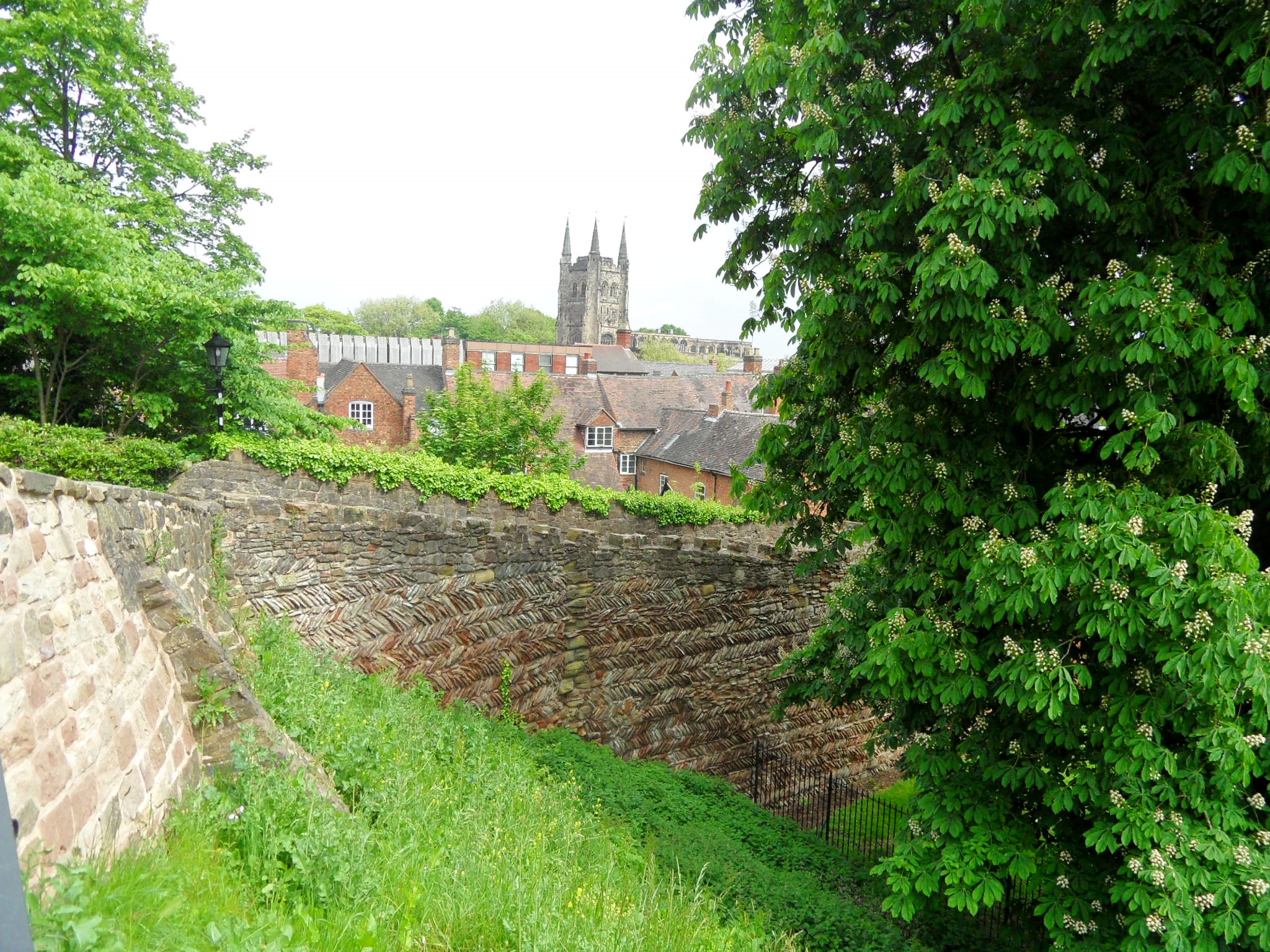
St Editha's from Tamworth Castle

St Editha’s from Tamworth Castle

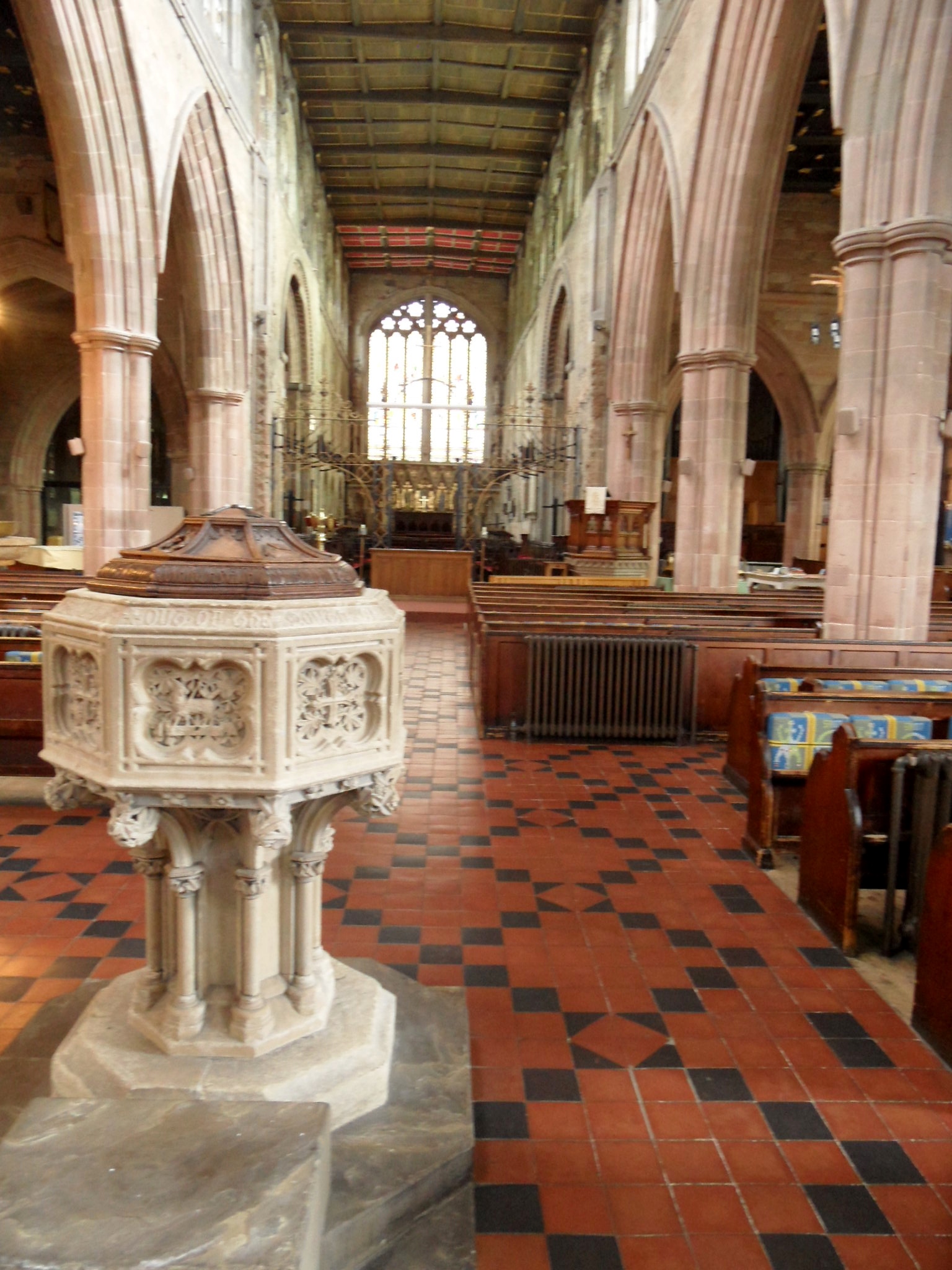
Exisiting stonework shows that the church dates back to at least 1080 but it’s thought the Normans may have built on the site of an existing Saxon church. It’s a wonderful mixture of architectural styles, with some beautiful stained glass and monuments to the great and good (and probably not so good) of Tamworth, plus a rare double spiral staircase in the tower. However, with only limited time, all of these wonders would have to wait for another day as I wanted to focus on the crypt.

SAM_1148

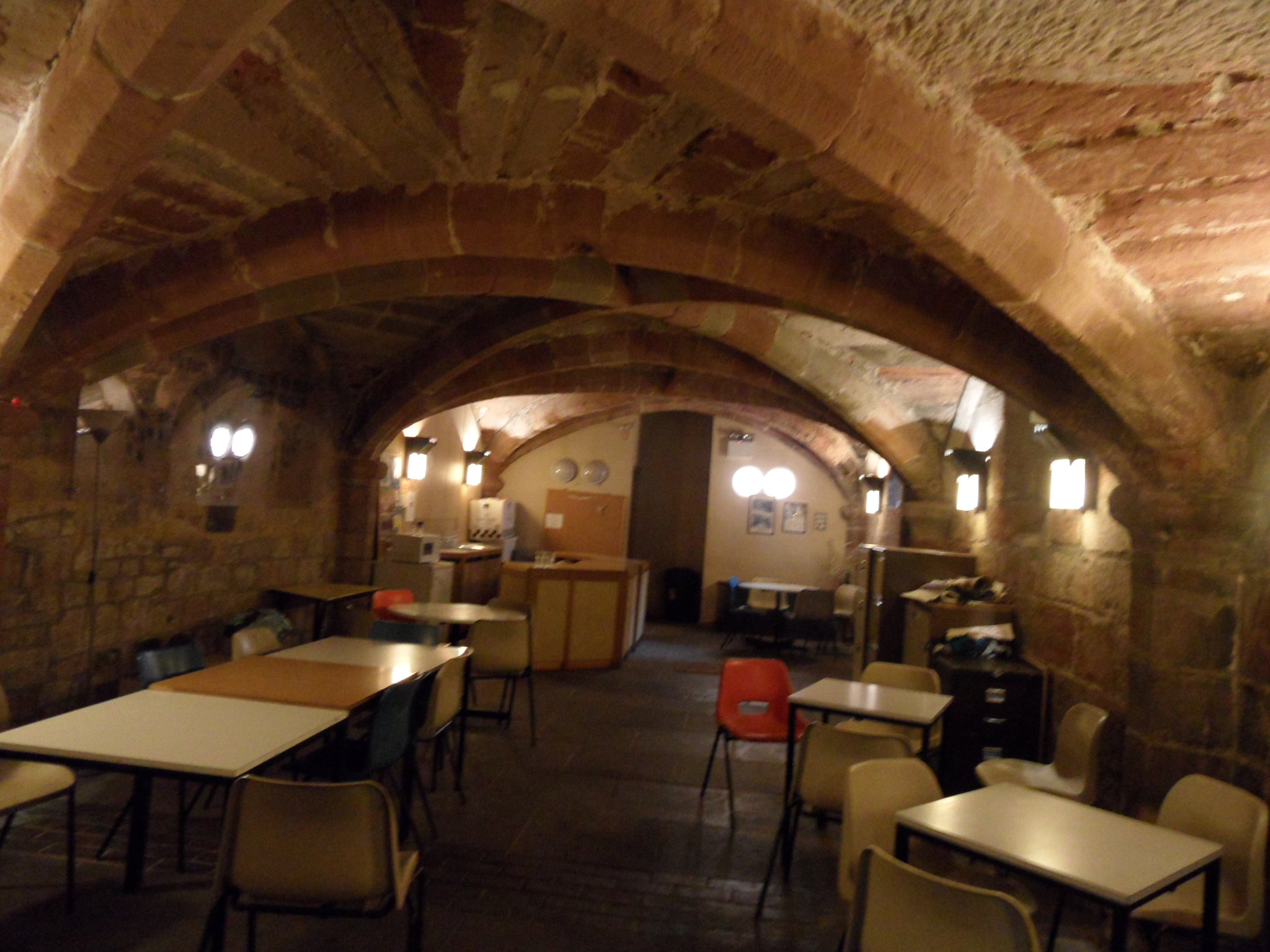
In the 1860s, the entrance was apparently down through a trap door and along a narrow passage. These days the crypt is reached via a flight of steps, making it far more accessible, but perhaps a little less atmospheric, especially as what looks like a Mothercare stairgate has been installed to prevent people tumbling to their doom.  Rightly or wrongly, I’m not the sort of woman who goes around opening stairgates without first seeking permission and so I went over to the bookshop to ask.  Here, I got a little distracted from the task in hand and ended up buying a book on ‘The Castles and Moated Mansions of Staffordshire’ (within which I’m sure lie the beginnings of many future wanderings) but soon got back on track and asked about going down into the crypt. Luckily for me, the church guide was sat in a nearby pew reading a newspaper and he offered to take me down there and tell me all about its history.

SAM_1137

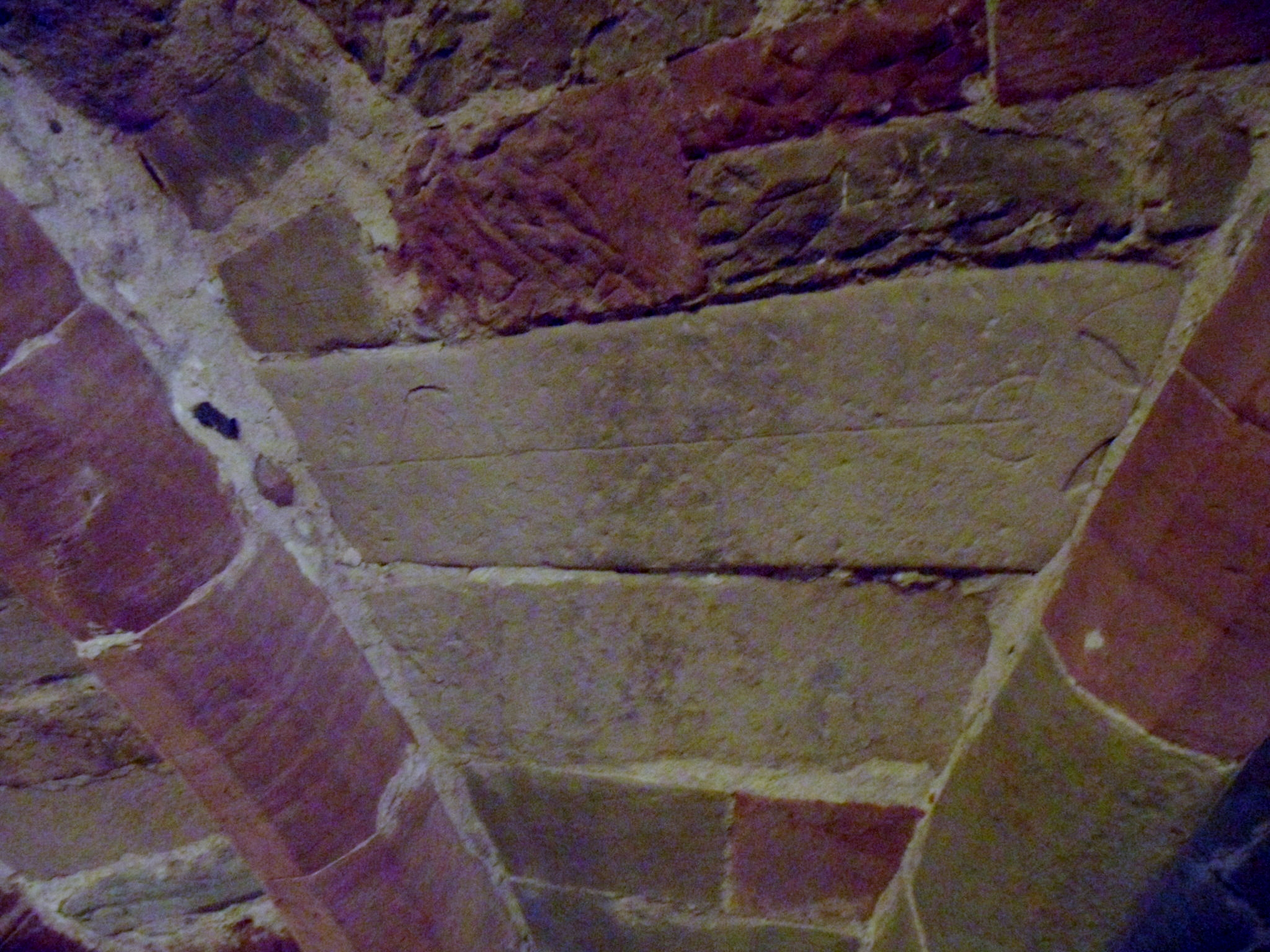
One theory is that seven hundred years ago the crypt was part of a stand alone chapel, that may even have been Saxon in origin. At some point in the fourteenth century it was incorporated into the main church. During the reign of Elizabeth I, it started to be used as a charnel house to accommodate the old bones that were disturbed when new graves were being dug in the churchyard. This remained its purpose until 1869, when the crypt was needed to house a boiler and the bones were returned to the churchyard, reburied in the north east corner. I nearly fell off my plastic chair when we were told that there was a plague pit beneath our feet and coffin lids in the roof above our heads, including one thought to have belonged to a crusader and on which faint carvings can still be seen.

You can just about make out the carvings on what is said to be the stone coffin lid of a crusader

You can just about make out the carvings on what is said to be the stone coffin lid of a crusader

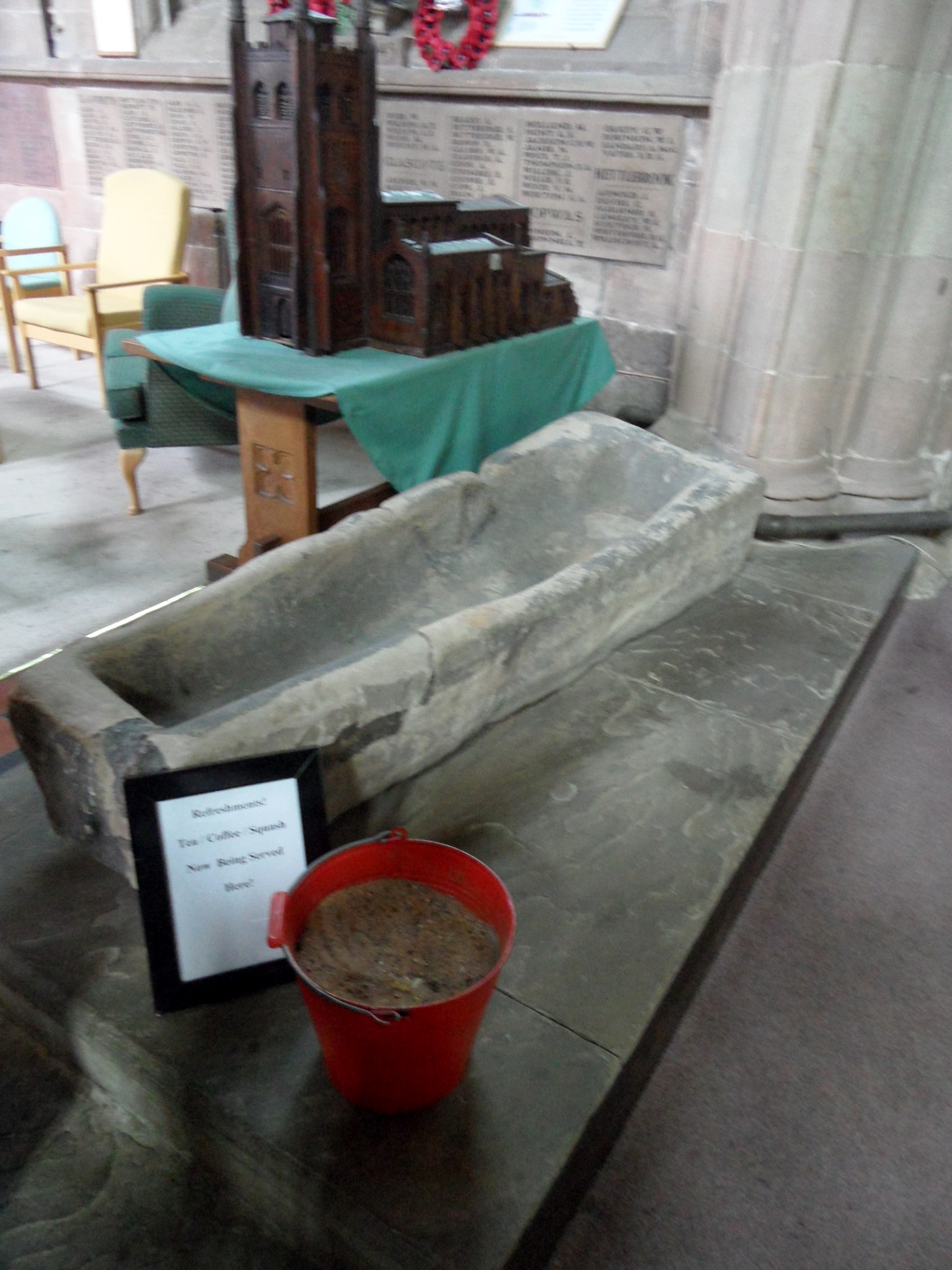
I’m assuming the coffins themselves were destroyed during the Victorian renovations, although one does survive in the main body of the church, near the entrance to the Comberford chapel.

One of the stone coffins can now be found outside the Comberford chapel

One of the stone coffins can now be found outside the Comberford chapel

When Mark wrote about the crypt he included this brilliant drawing of it from a Victorian account of Tamworth by Charles Ferrers Raymund Palmer.

According to Ferrers, when he entered the crypt, the bones were stacked up in very regular order and occupied the whole of the east end, where local folklore had it that a passageway ran from here to the Castle. In trying to find this passageway, Ferrers says he made a path through the bones by ‘carefully piling them aside’ but found ‘nothing there, except the remains of the ancient altar; the stone slab of which is gone’. He was unable to examine the floor at the base of the altar as there was nowhere to store the bones, which were ‘so rotten, that they crumbled to pieces beneath our feet’ as ‘in spite of all our efforts, they returned to our feet, and their dull clatter seemed a reproach to us, for disturbing their long and quiet repose in the sacred place’.

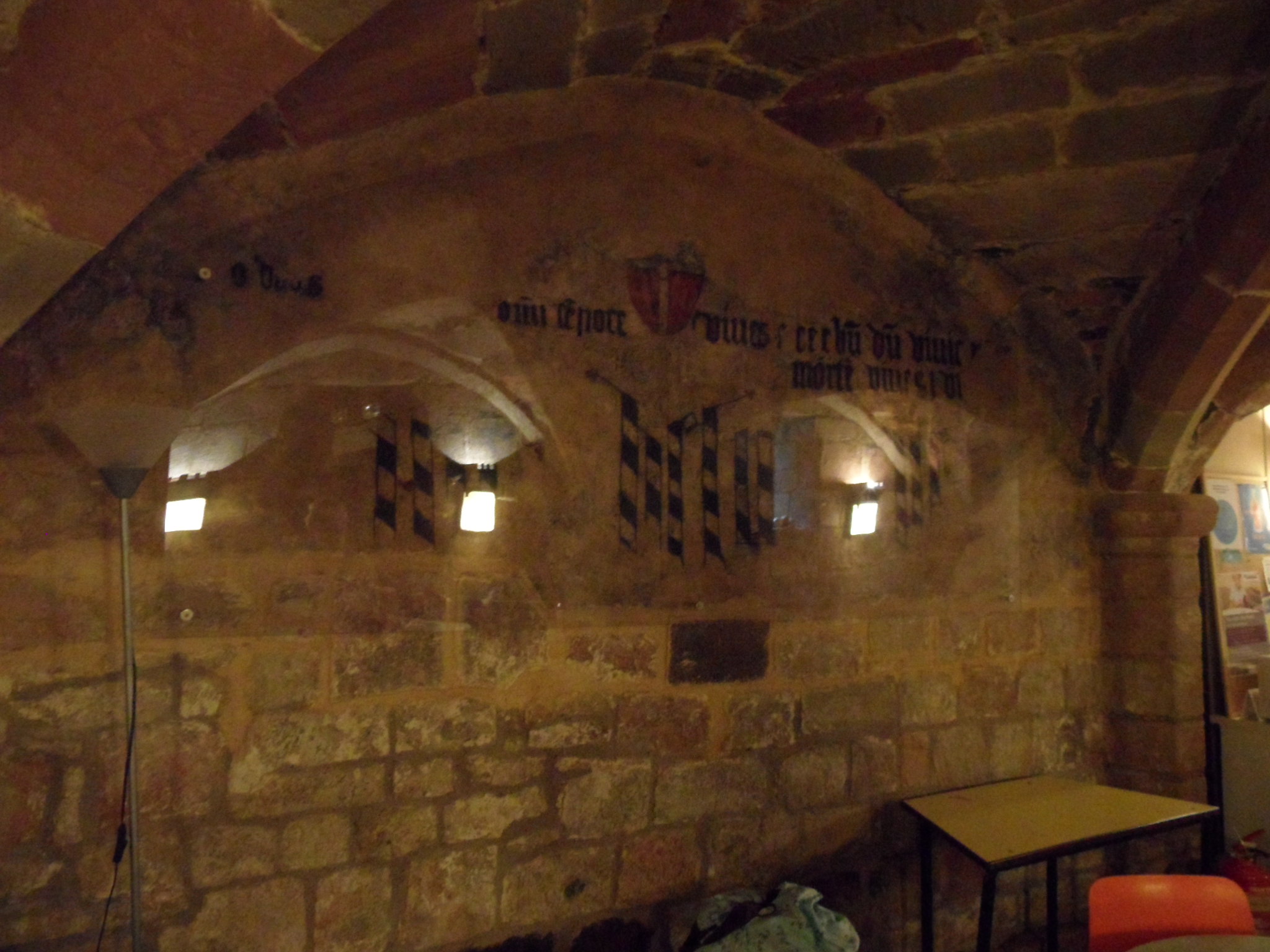
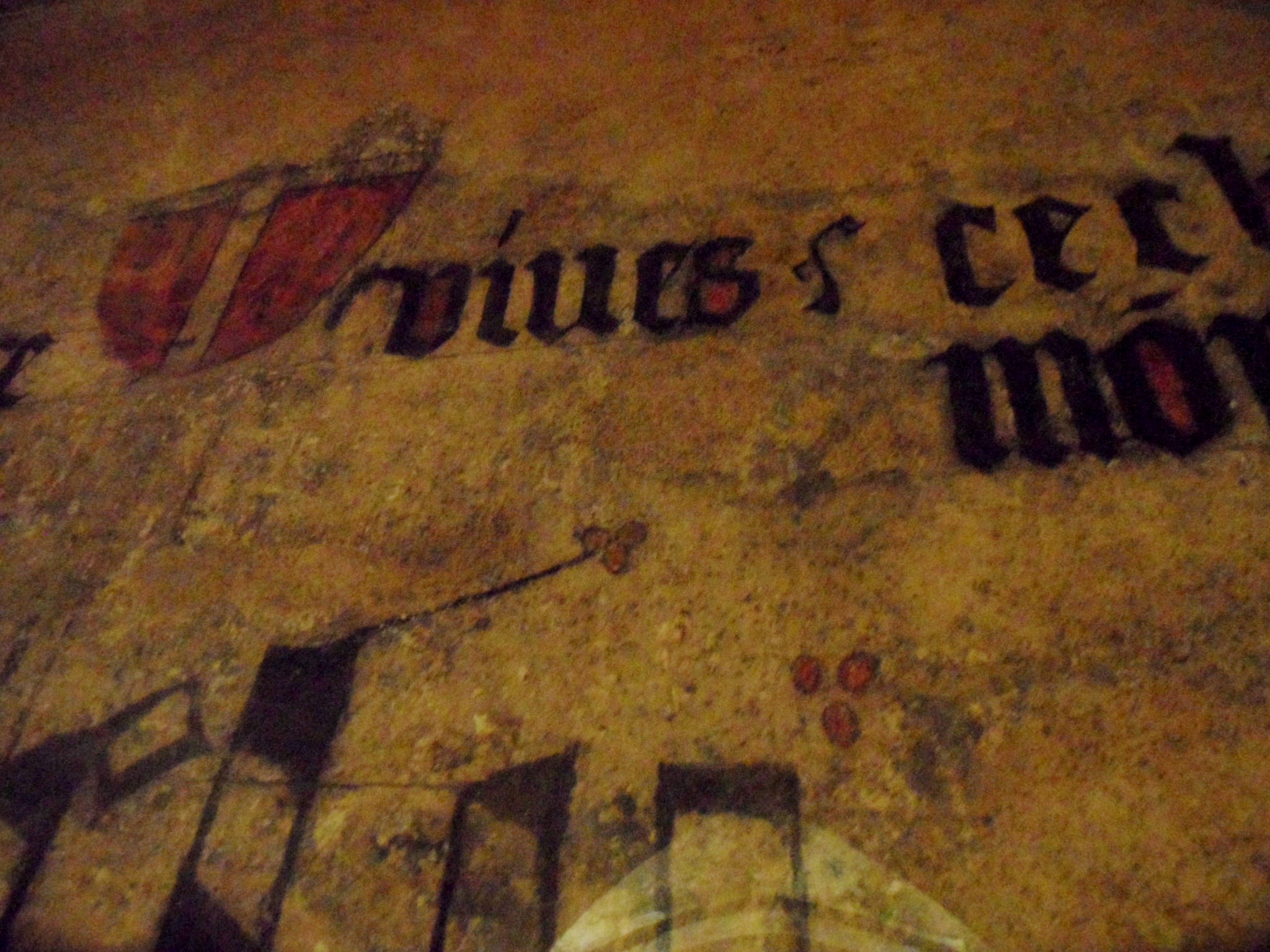
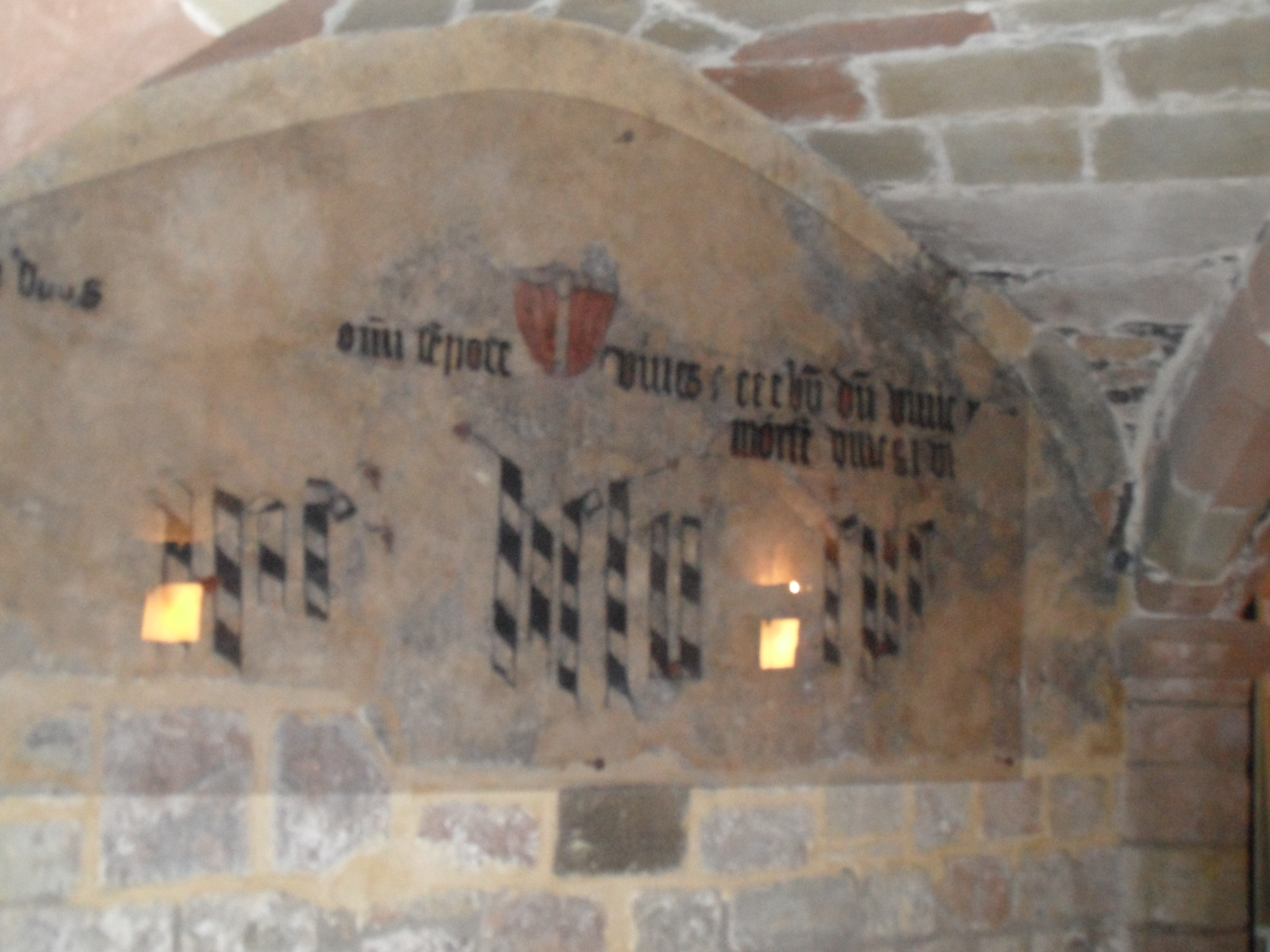
Ferrers is clearly made out of sterner stuff than me. Stood in near darkness with the bones of ancient Tamworthians rolling around his feet he even stayed down the crypt long enough to examine an ancient Latin inscription on the wall. Still visible today, the verse is thought to date back to the fourteenth century and is now protected by glass. Apparently it translates as:

O Lord of wealth and power
Thou shalt not live for evermore
Do well whilst life thou hast
If thou should live when death is past

SAM_1121

Crypt Tamworth

SAM_1141

All the guide wanted in return for his time and knowledge, was a comment in the visitor book. So, if you ever go, and I really hope you do because it’s such an incredible place, don’t forget to sign it on the way out (you may notice a comment from a very enthusiastic and delighted Kate Gomez of Lichfield…)

Sources:

The history of the town and castle of Tamworth by Charles Ferrers Raymund Palmer

A Short History and Tour of St Editha’s Church, Tamworth by Stan T Parry

http://tamworthtimehikes.wordpress.com/2010/12/24/the-crypt/


Wolverhampton Wandering

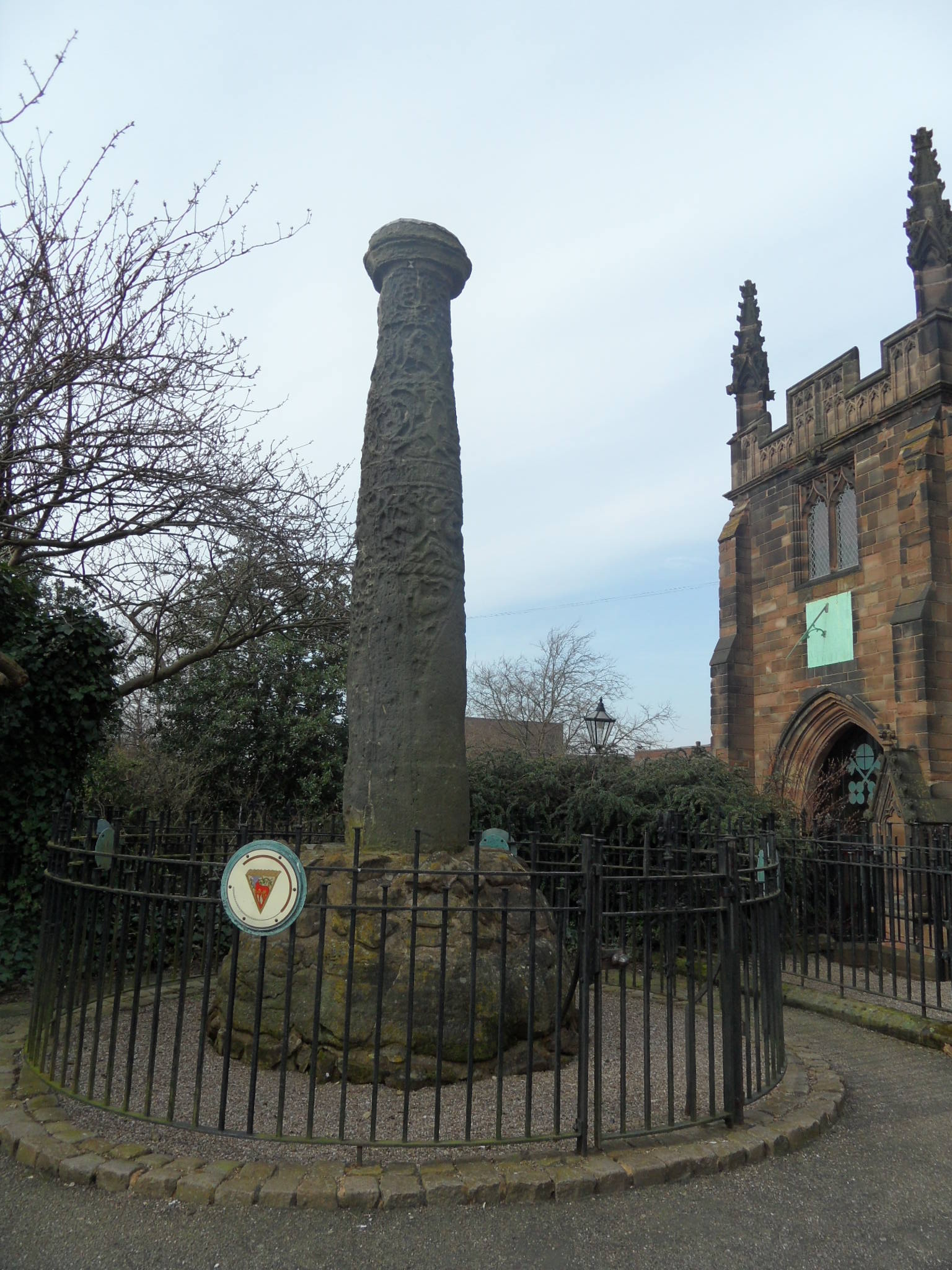
I had to pop into Wolverhampton today. I knew from my search for an ancient cross in Lichfield a couple of years back that there was a Saxon cross shaft here and went to find it.  Unlike the Lichfield cross, I didn’t have to try too hard – it’s huge! Its size, and also the fact that it is made from sandstone not found in Wolverhampton, has led some archaeology types to suggest that it is probably a reused Roman column, possibly from Wroxeter or even just up the road in Wall.

Saxon Cross Shaft, WolverhamptonThe elements and pollution have not treated the shaft kindly but its still clear that this was an incredible piece of craftmanship – the Black Country History website describes it as, ‘one of the finest cross shafts in the Midlands’. The carvings of acanthus leaves which decorate the shaft alongside those of birds and beasts have given archaeologists some problems when trying to establish a date as they suggest different periods. The plaque accompanying the shaft in the churchyard has decided to go with the earlier date of the ninth century, whilst others believe late tenth century is more accurate.

Cross Shaft Wolverhampton

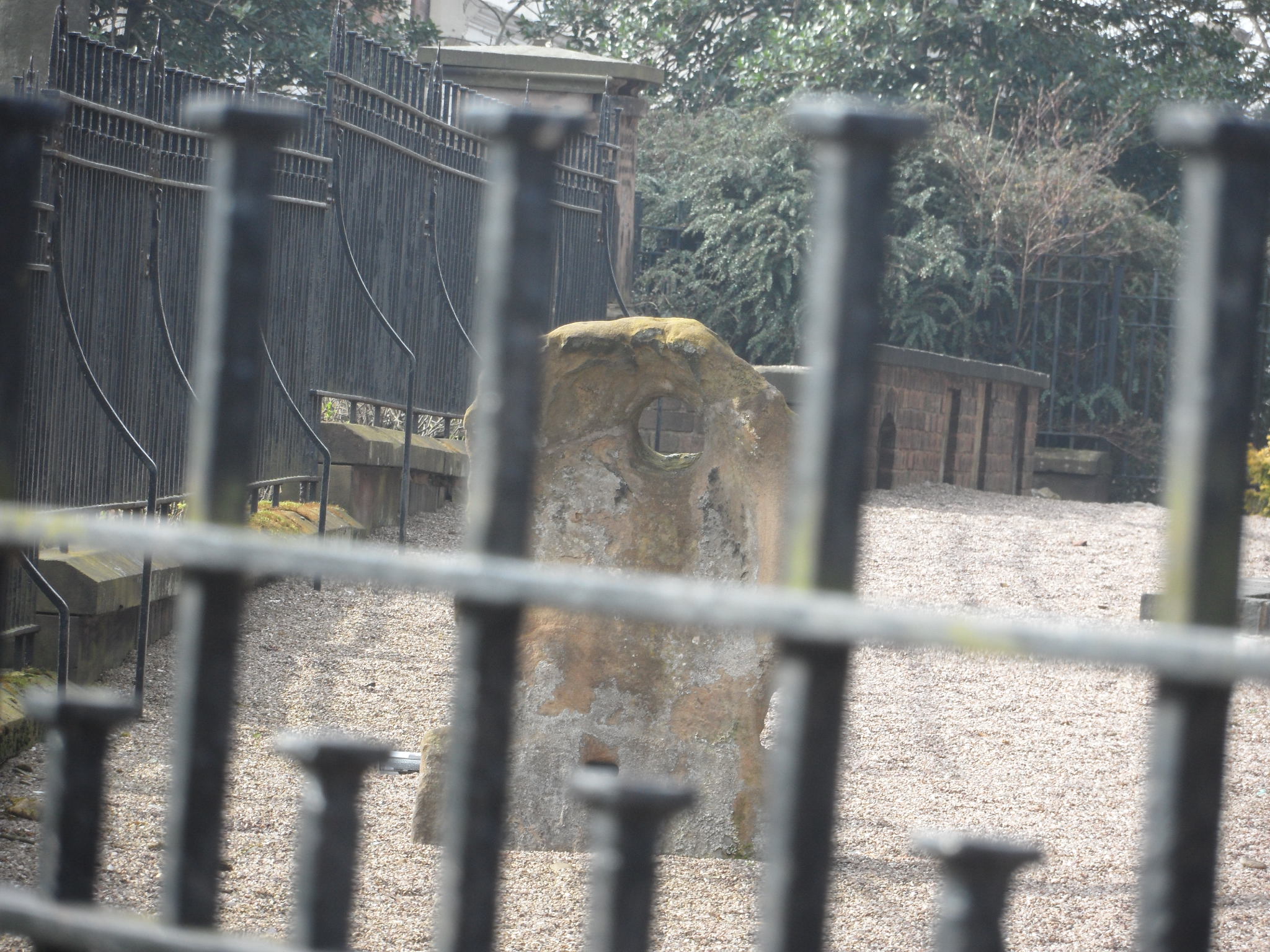
On the way out of the churchyard I noticed another stone with a good back story. Known as the Bargain Stone, its said to be where the good (and probably not so good) folk of Wolverhampton would agree sales and make deals by shaking hands through the hole. The nearby plaque suggests it is an old gargoyle and the hole is what remains of its mouth.

SAM_0031

Talking of hands, why didn’t it occur to me to put my hands over the railings to take a better photo?

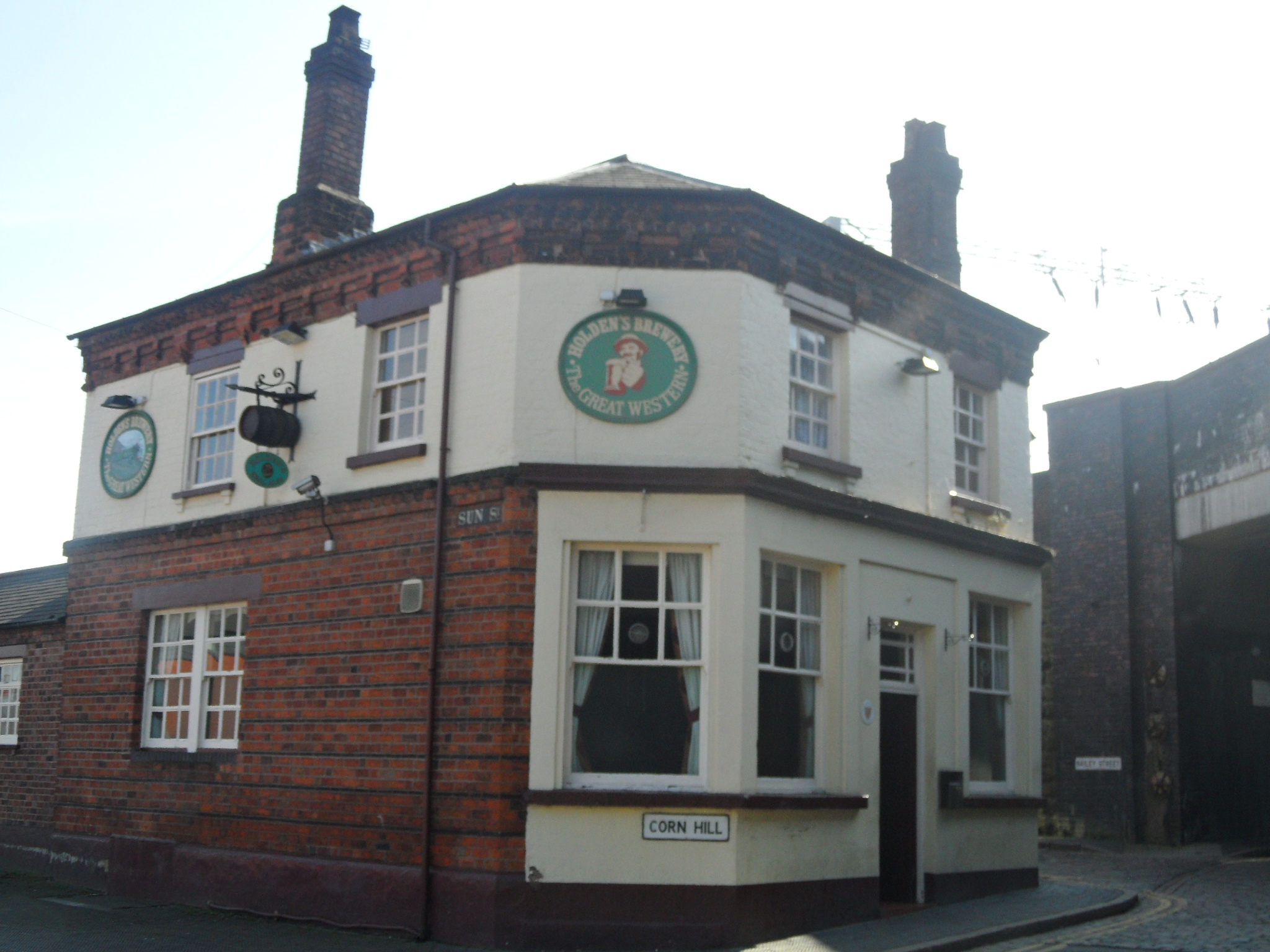
As if ancient crosses and stones weren’t enough of a treat, we also found Holden’s Brewery’s Great Western near to the train station. This is a proper pub – cobs on the bar, Holden’s Golden Glow (amongst other delights) on tap and really friendly staff. Although we were tempted to sit outside in the sun, the interior was so quirky and there was such a nice atmosphere, we sat inside.

Great Western

Wished I’d got the train. Definitely not driving next time.

The Great Western

The great Great Western

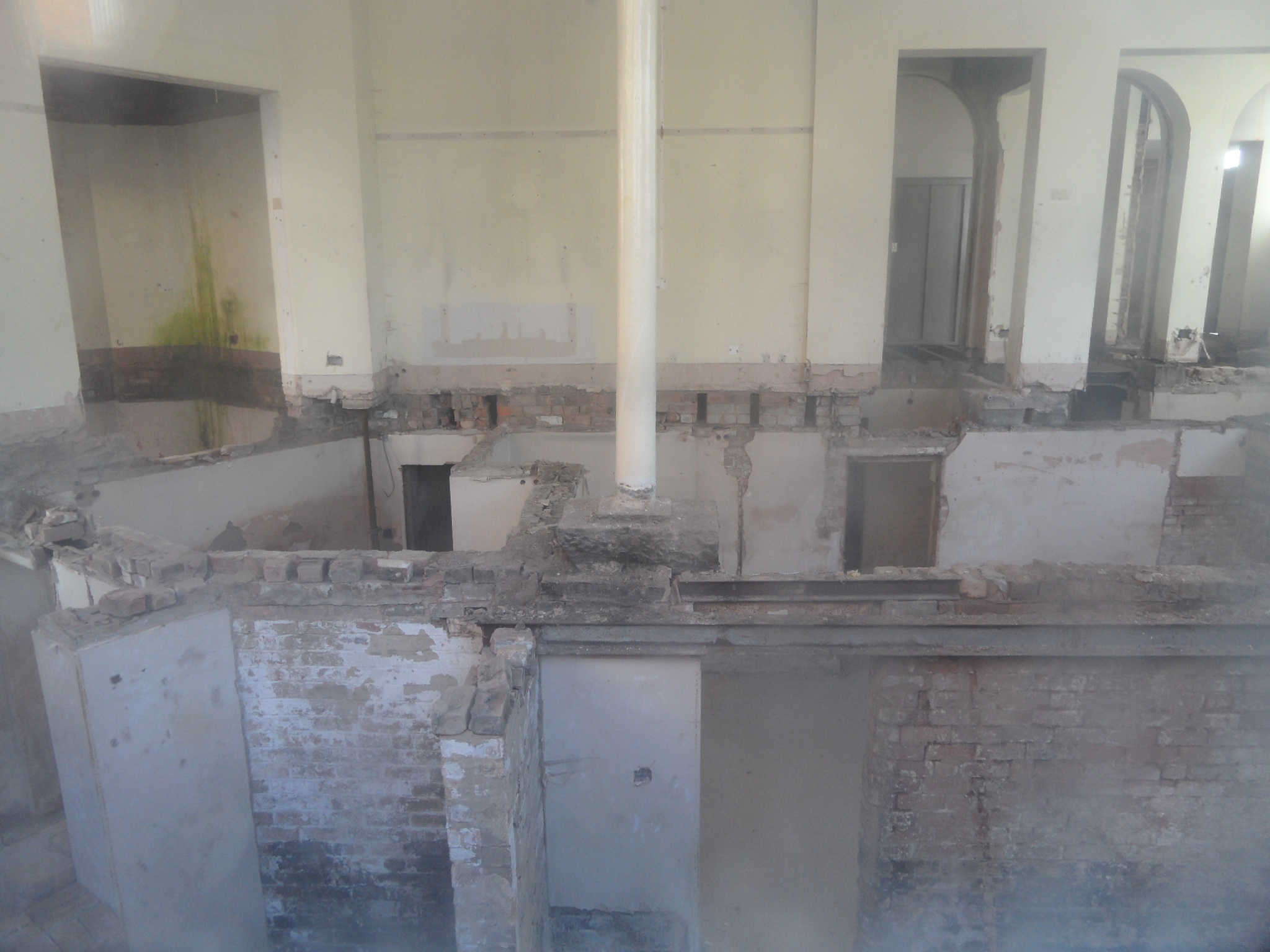
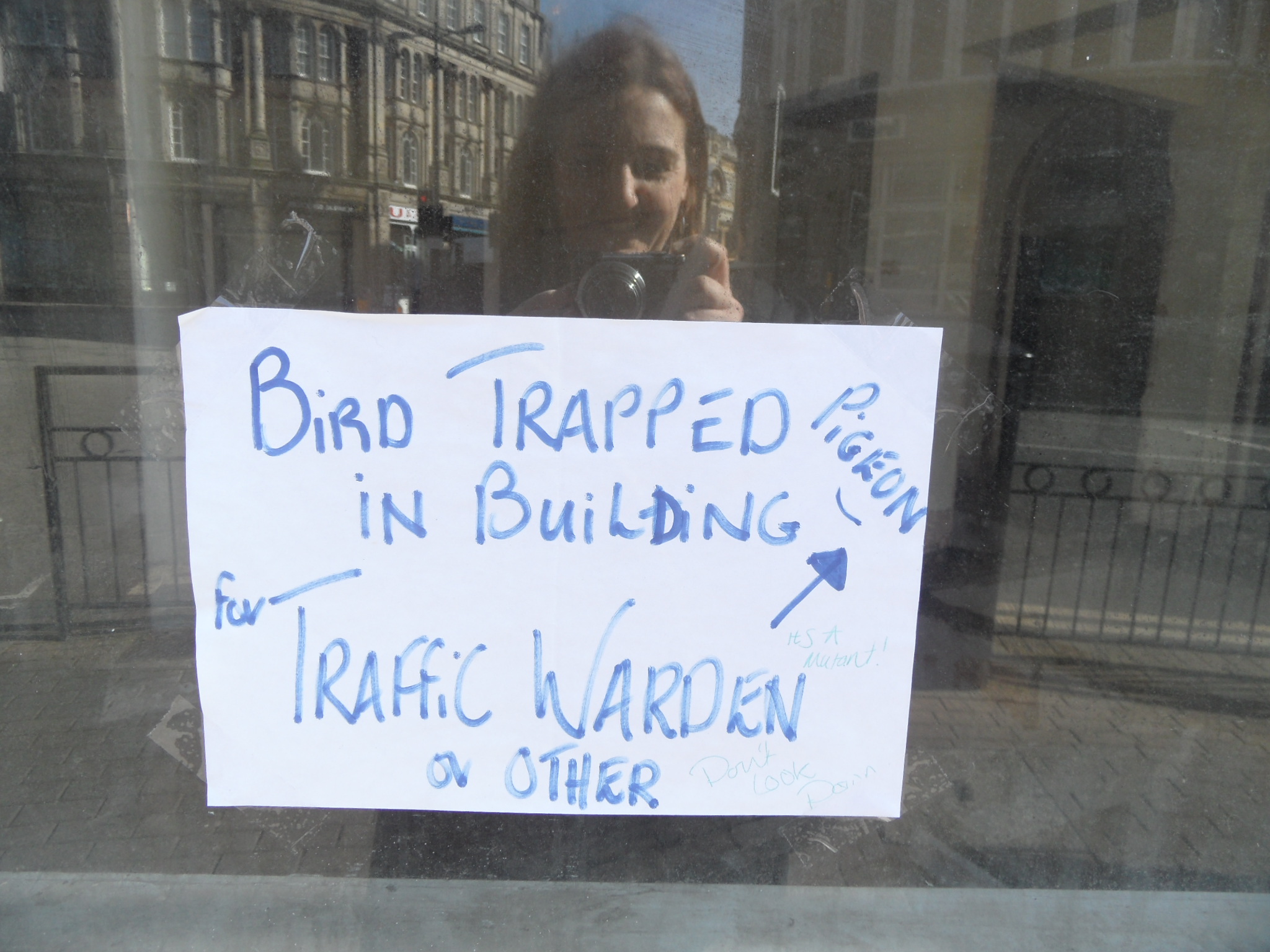
We walked off our pork baps with a little bit of a wander around the city streets. This building caught my eye, not only because it has no floors, meaning you can see down into the cellar, but also because of the handwritten sign someone had stuck to the window.

SAM_0045SAM_0046I’m not sure a traffic warden would be the person I’d turn to in a trapped bird scenario but maybe they do things differently in Wolverhampton.

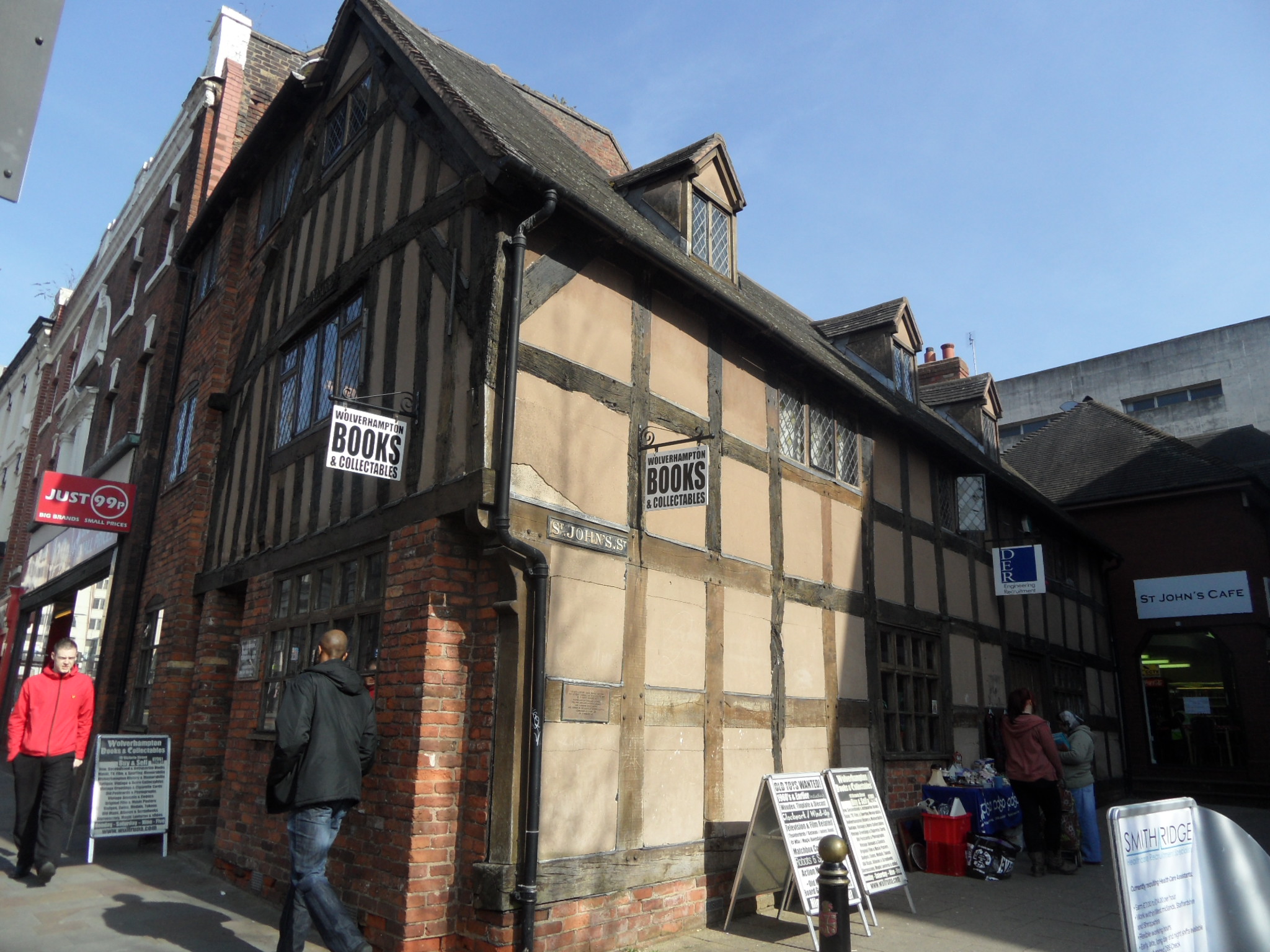
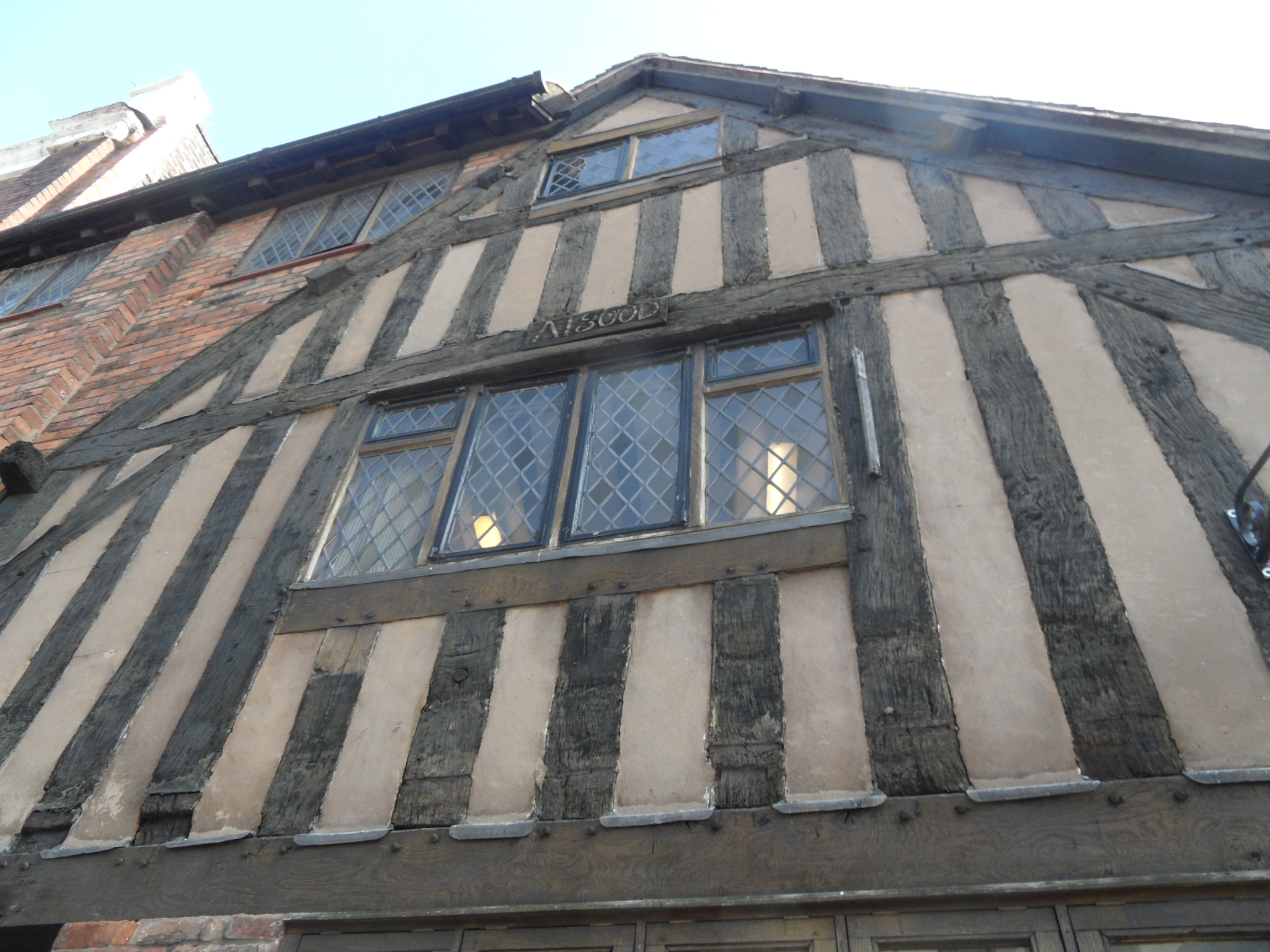
Another perplexing sign is the one suggesting that the half timbered building on the junction of Victoria St and St John’s Lane was built in AD1300. It wasn’t and no-one knows the reason behind the claim – the best suggestions anyone has seems to be that it was some kind of joke to emphasise that it was a really, really old building! It more likely dates back to the seventeenth century when it was once an inn known as The Hand. These days its home to Wolverhampton Books & Collectables, where you can buy anything from an ancient tome on the history of Staffordshire to a souvenir 1950s Wolverhampton Wanderers hankerchief (which you may, or may not, wish to blow your nose on, depending on your allegiances…).

SAM_0053

SAM_0055

We took the scenic route back to Lichfield (not through choice but because I went the wrong way on the ring road), passing through Wednesfield, Sneyd, the intriguingly named New Invention and Brownhills before stopping off at Waitrose for a couple bottles of Golden Glow.

Sources:

http://blackcountryhistory.org/collections/getrecord/WOHER_MBL337/

http://www.historywebsite.co.uk/listed/lindylou.htm

The Two Towers

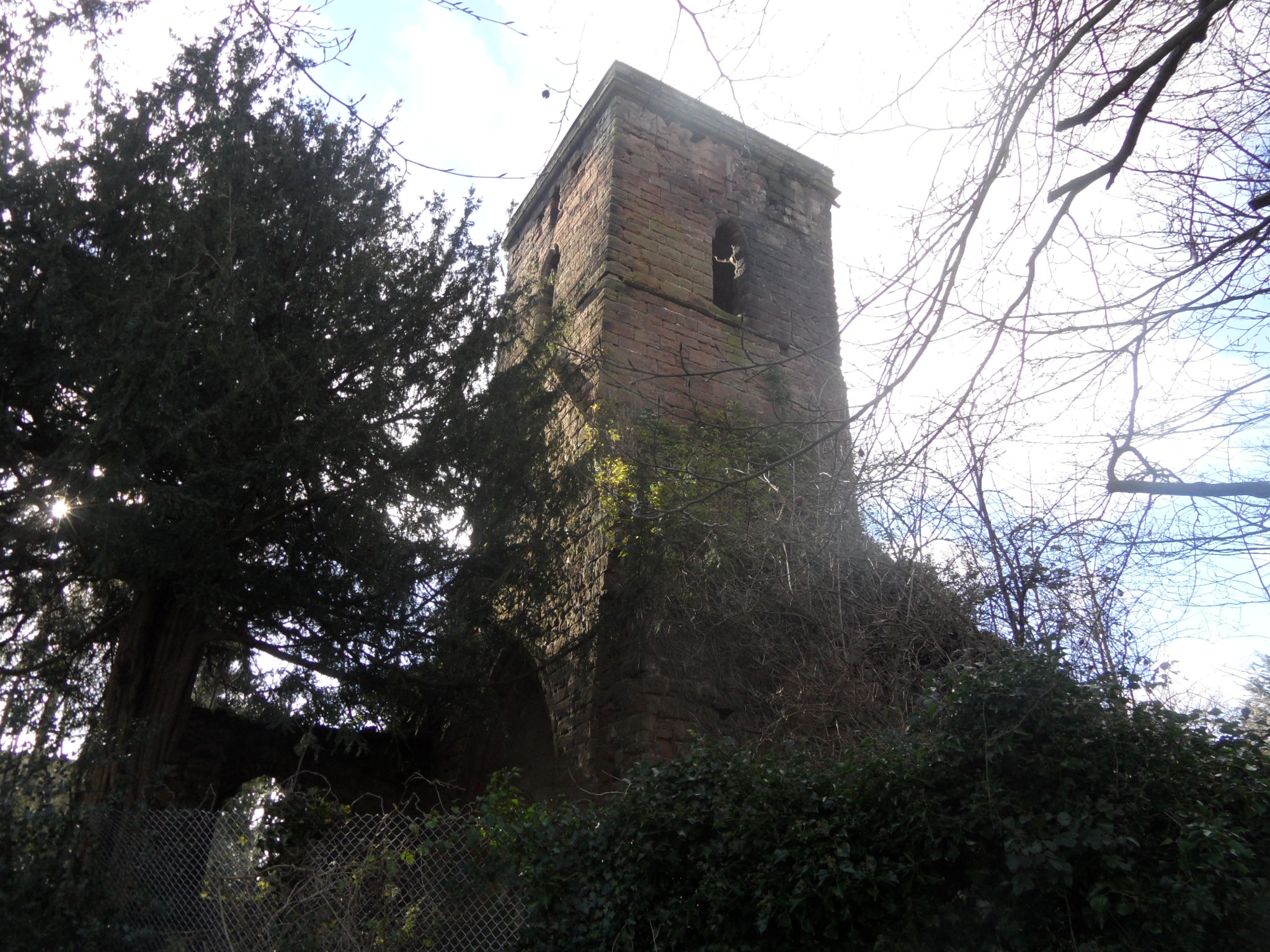
With ‘Heritage at Risk’ the theme of our Lichfield Discovered meeting this month, I was having a flick through the English Heritage At Risk Register to see whether there were any other buildings in the district keeping the Angel Croft Hotel company on the list. It seems much of what’s considered ‘at risk’ in these parts is landscape features – a causewayed enclosure and settlement sites in Fradley/Streethay, a round barrow at Alrewas and a site near Elford, although built heritage does appear in the form of the walls and gate piers at Colton House, the ruined remains of an old manor house at Hamstall Ridware and the old church tower at Shenstone. The inclusion of the latter was of particular interest as I’d been there for a nose just days before.

SAM_9814SAM_9807

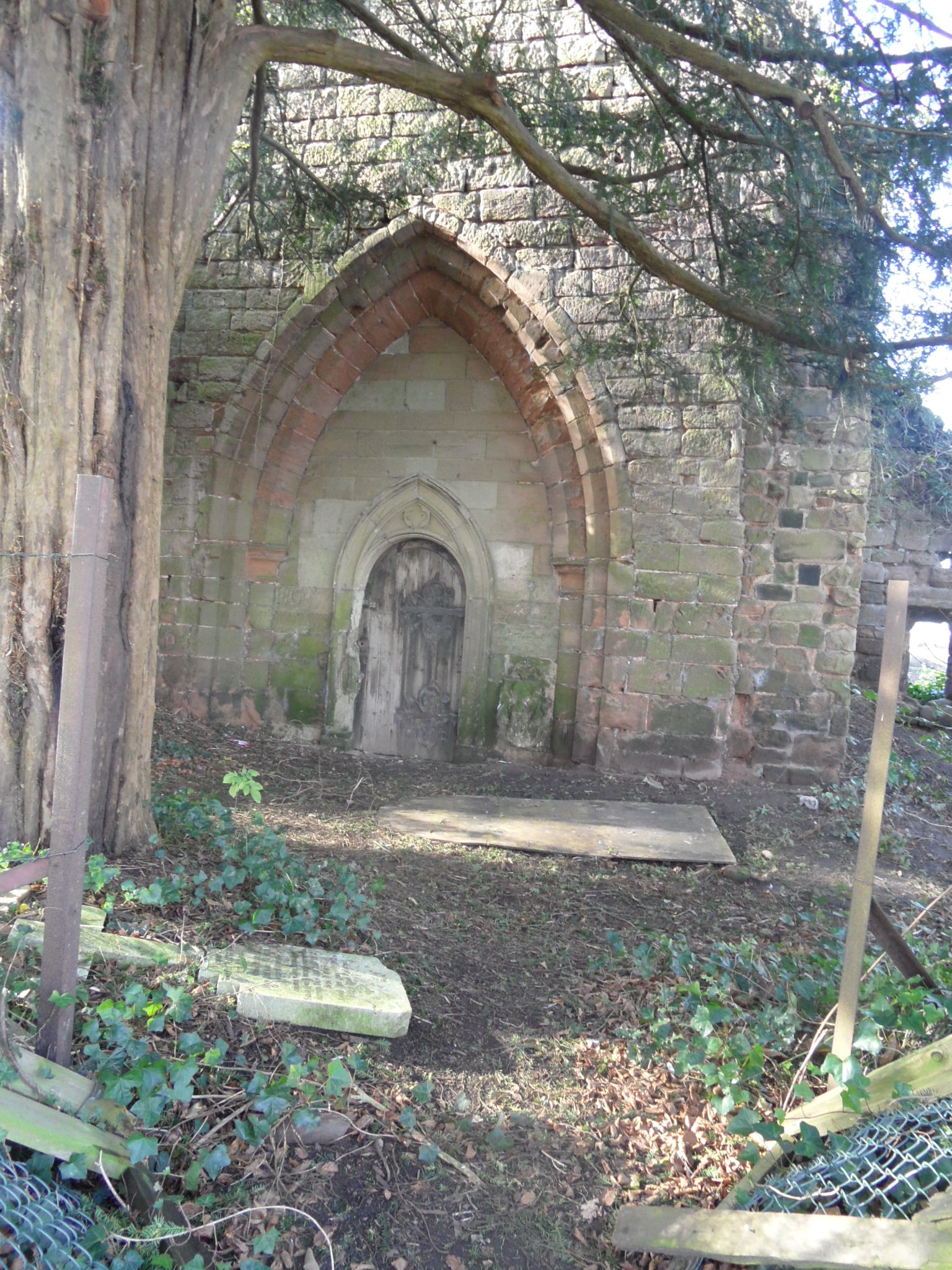
When the present church of St John’s was built in the 1850s, the existing church was partly demolished leaving just the tower and the south door visible. Time and nature are doing their best to finish the job the Victorians started – English Heritage have assessed it as being category A meaning that it is at ‘Immediate risk of further rapid deterioration or loss of fabric; no solution agreed’.

SAM_9830

The tower had a wooden ladder but no staircase

The ruins are thought to incorporate Norman features and possibly some Anglo-Saxon masonry.

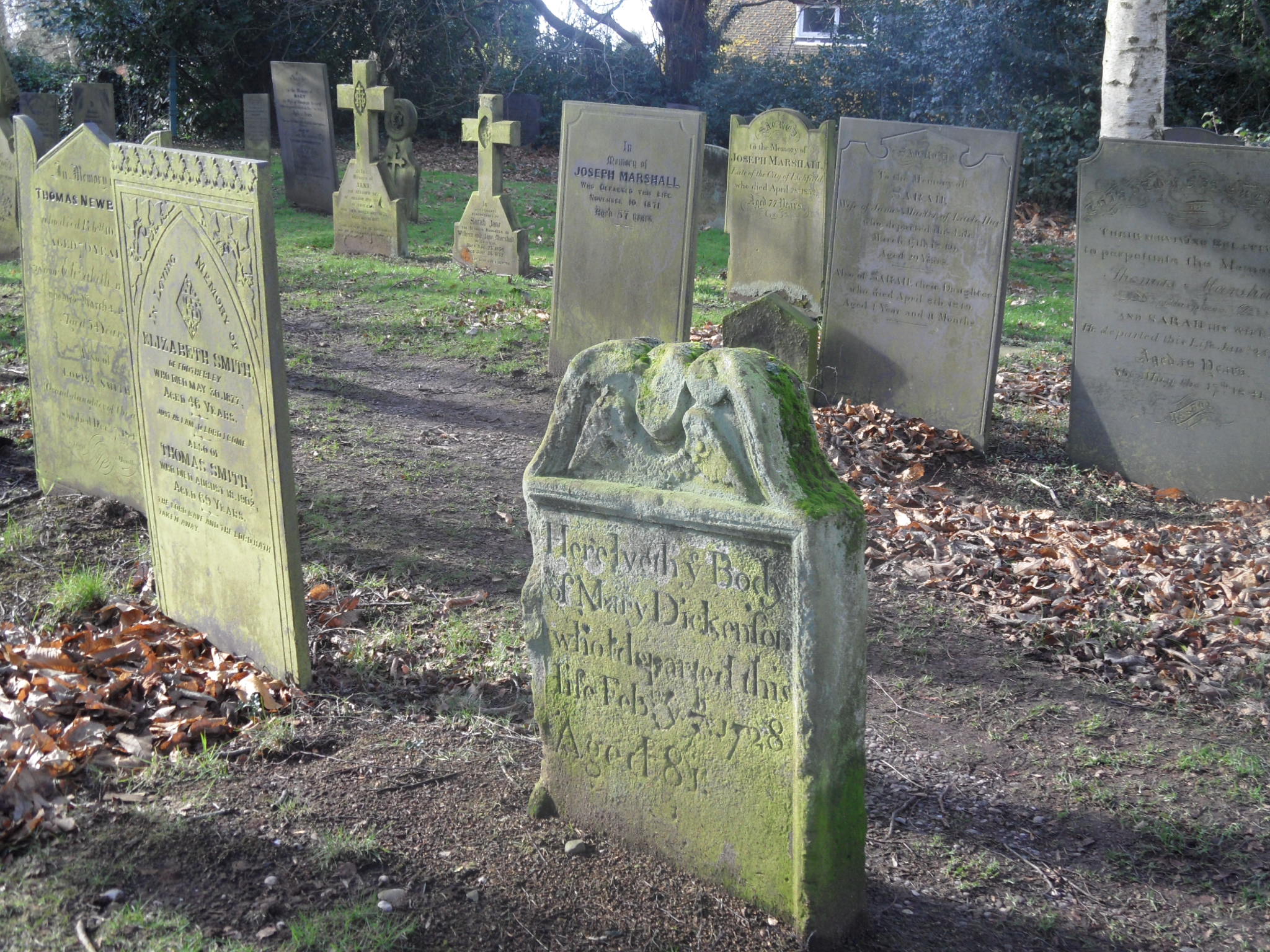
As you’d expect, many of the village’s old residents are to be found here in their eternal rest. According to William Pitt, at least one of them did not go gentle into that good night – Susannah Southwell of Shenstone was married at the age of 112 (although he doesn’t record how old the groom was nor how long it was until death did them part). The Wikipedia entry for Shenstone says that a 2007 survey found that it was one of the ten worst places in England for finding single women. Perhaps that’s always been the case?

SAM_9818

Local sandstone was used to build both new and old churches and it’s this geology that caused David Horovitz to question whether the place name Shenstone really does mean ‘shining stone’, suggesting that sandstone could “hardly be described as ‘bright, shining or beautiful'” (although anyone who has seen Lichfield Cathedral glowing in the late afternoon sunshine may well disagree). Mr Horovitz has suggested that Shenstone may instead refer to a personal name, or even to stone monuments left behind by the Romans (remains of a villa have been discovered on the outskirts of the village and Wall is only around a mile away).One of the reasons I love the study of place names is that it can give us a glimpse of somewhere as seen through the eyes of people who once lived there hundreds, if not thousands, of years ago. The view can be a little hazy though and sometimes we can only guess at why our ancestors chose the descriptions they did.

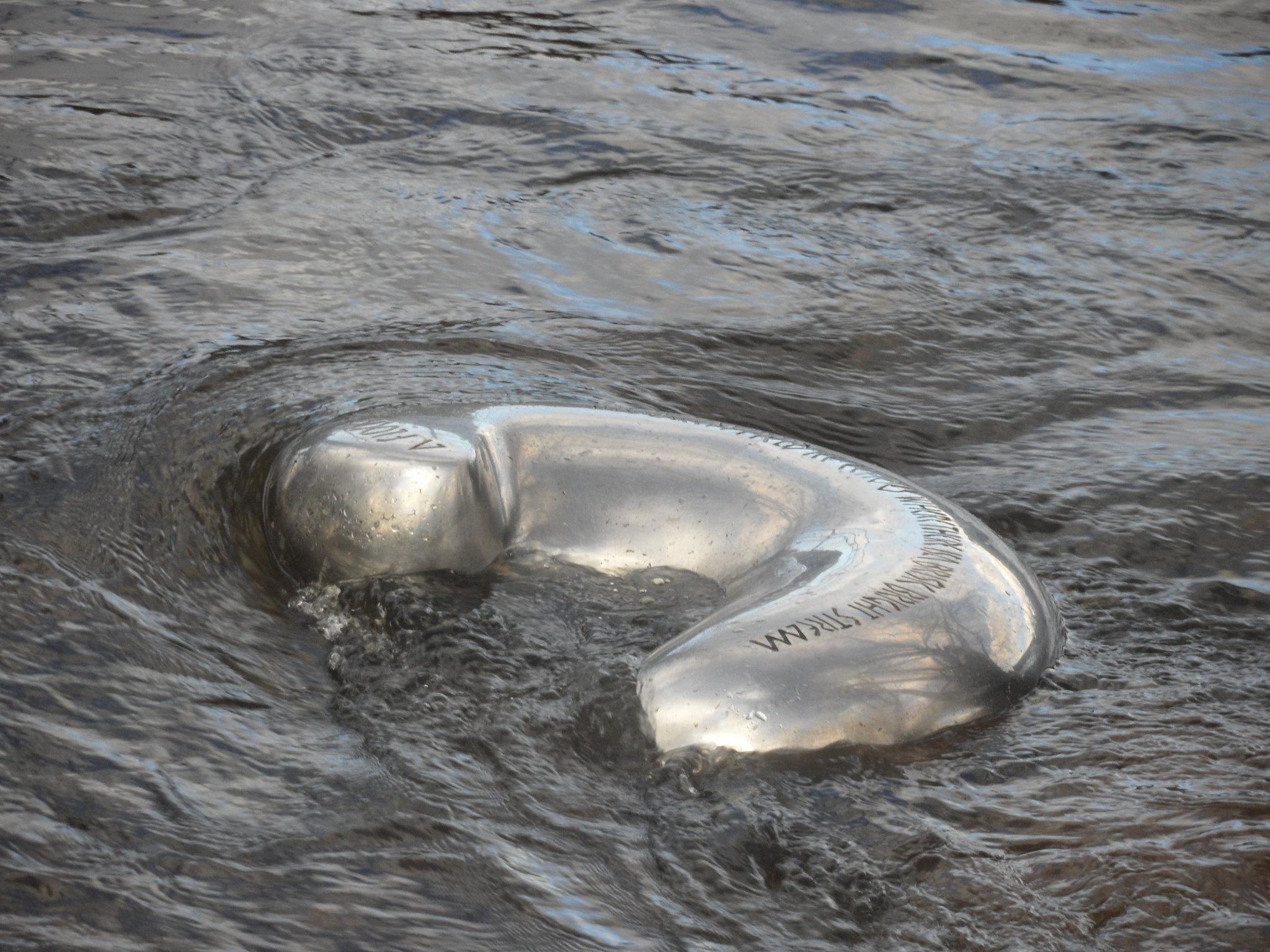
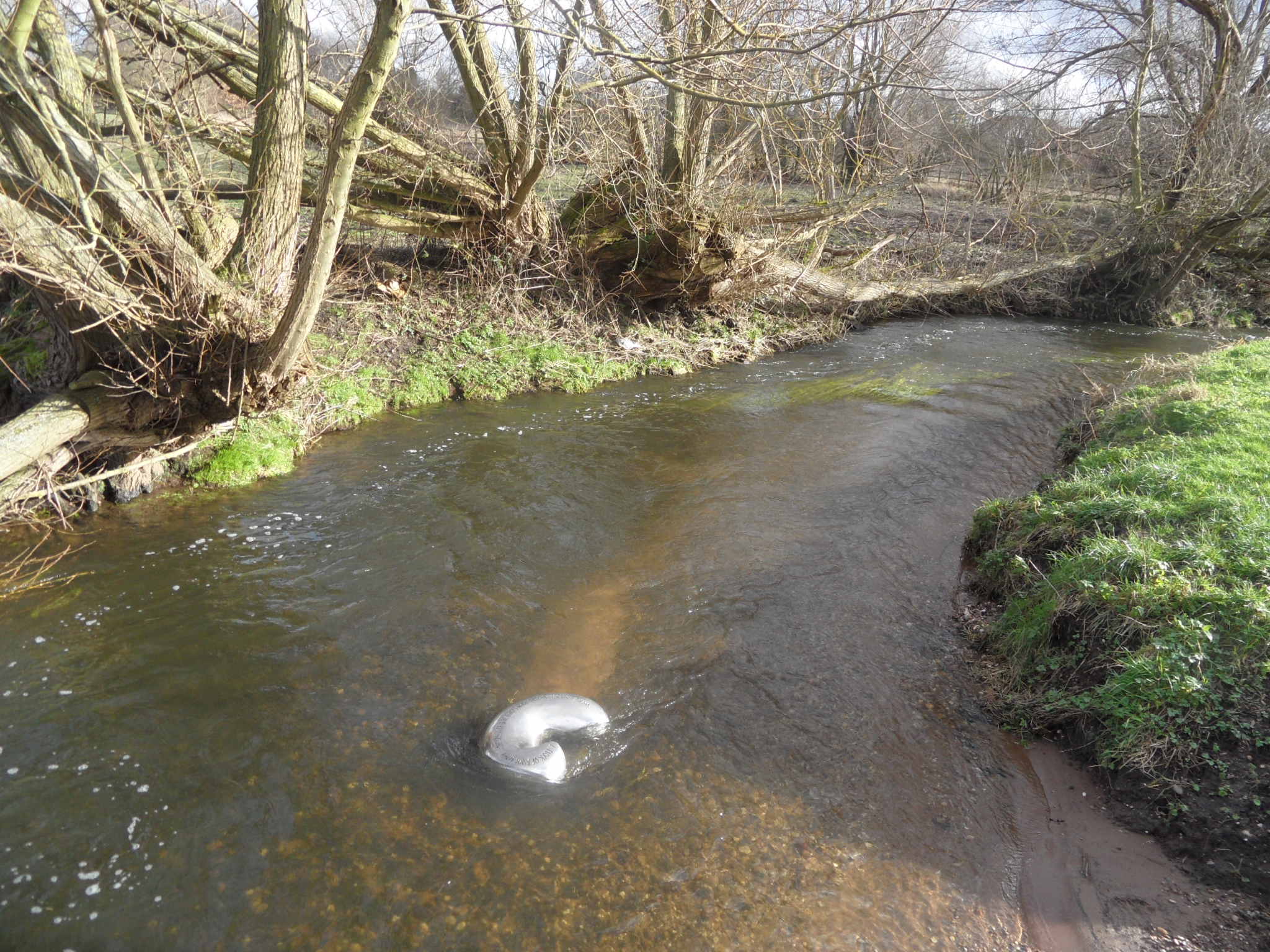
Whatever the true meaning may be, it is the ‘shining stone’ theory that inspired Jo Naden’s steel sculpture for the village’s Lammas Land in 2002, described by the invaluable PMSA website as follows, “(The artist) chose to site her sculpture in the Black Brook, which runs through the Lammas Lands used by the Celts as a site for harvest festival rites, in order to make a connection with Celtic culture. Trees, held sacred by the Celts, are reflected in the mirror finish of the stainless steel, while the text inscribed on it* is taken from the words of an unknown ninth-century Irish author. The placing of the stone at a point near where a bridge built on a north-south orientation crosses a stream running from west to east would have been considered sacred by the Celts because it symbolised the meeting of polar opposites”.
*A flock of birds settle ….. the green field re- echoes where there is a brisk bright stream

I stood on the little footbridge watching the swollen Black Brook flow over the sculpture for a few minutes until I was ordered off by a toddler clutching a handful of twigs ready to make an offering of pooh sticks to the water at this sacred spot.

SAM_9843SAM_9842Sources:

A Landscape Survey of the Parish of Shenstone, edited by Richard Totty for The Staffordshire Archaeological and Historical Society Lichfield 2009

A Topographical History of Staffordshire, William Pitt

‘A Survey and Analysis of the Place-Names of Staffordshire’
by David Horovitz, LLB

ExpLore – Lanes Around Leomansley

Walking is such a pleasure. I get seriously itchy feet if deprived for more than a day or so, and my spirits are always lifted after a good old trudge around. Exploring somewhere for the first time is fantastic, but I also love to walk around the places I know. It somehow gives me feel warm and comfortable feeling, like a favourite old cardigan. And of course, sometimes there can be surprises up even the most familiar sleeve…

I’ve decided I’d like to try and put some walks here so that people can get out and explore for themselves.  One of my best loved walks is of course around Leomansley, so here’s a walk around the lanes that I hope you’ll enjoy doing for yourself. Naturally,  I always encourage straying from the path to investigate something that looks interesting. Getting lost is part of the fun!

Lanes Around Leomansley

The map below gives a rough idea of the route, which is about 2km (depending on how many diversions you take!). I’ve marked some of the points that I think are of interest but of course there may be other things…….Below the map is a PDF with a written version of the route, giving information about each of the points. Hope you enjoy it, I’d like to hear how you get on!

Lanes Around Leomansley walk


Elegy Written in a Lichfield Churchyard

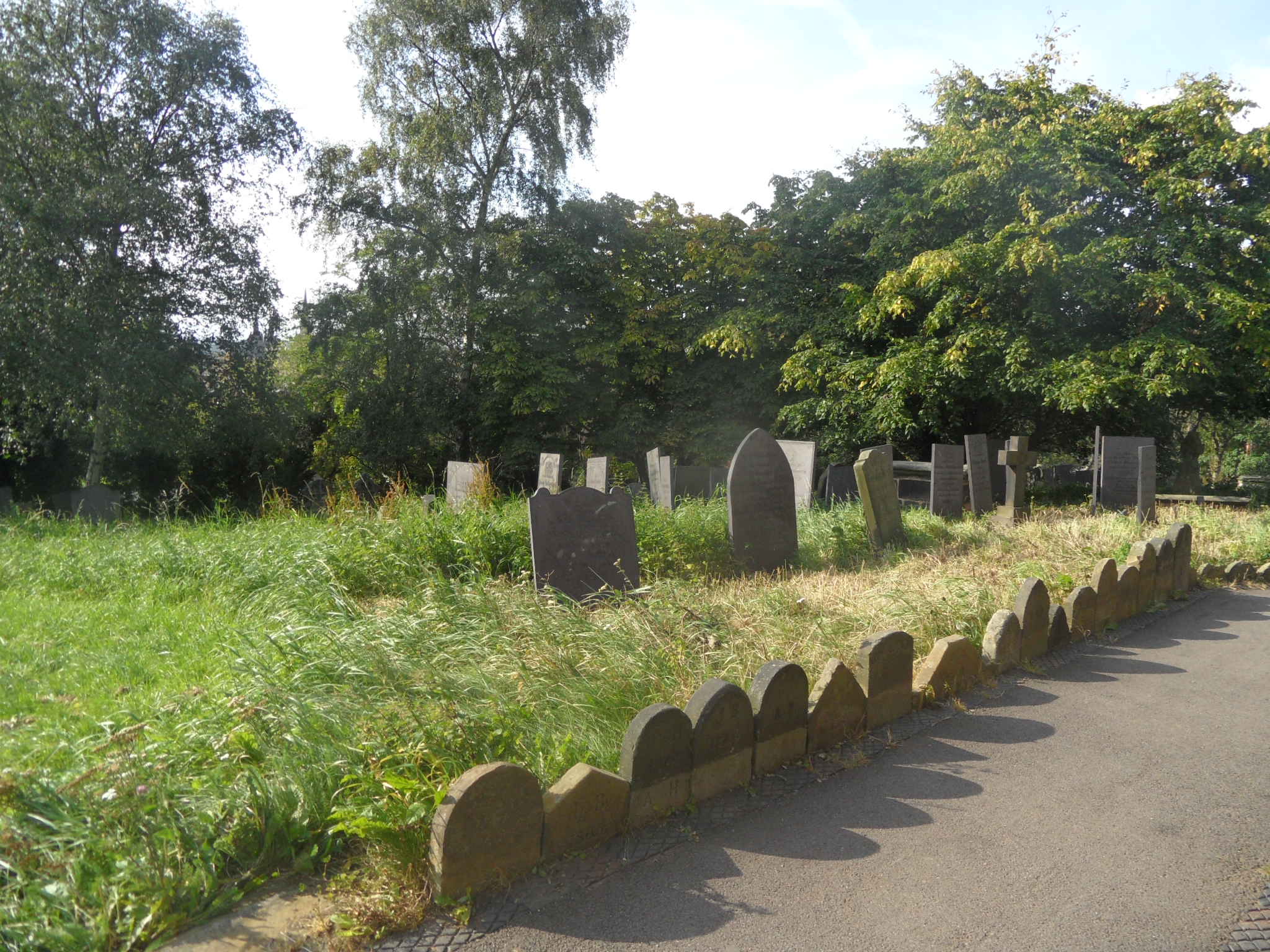
Many churches dedicated to St Michael are found on hills. Lichfield’s St Michael’s of course is at Greenhill, on a sandstone ridge 104 metres above sea level.   It’s thought a church has been on the site since 1190, but that the surrounding churchyard is older. There are hints as to this earlier history of this site, but as far as I can see things are still very much at the questions, rather than answers stage. Many people believe the position of the church on a hill, and its dedication to St Michael may indicate a previous pagan site.   I hadn’t realised until reading that the crypt was liable to flooding, that there are natural springs on the hill. Is this relevant to the story, and if so, how?

The answers we do have were, of course, mostly provided by archaeology. Evidence suggests there may have been activity here in the mesolithic era. In 1978, an excavation in the South East corner of the churchyard discovered five flints (albeit not in a primary context).

Four years earlier, the building of a new vestry at the church gave archaeologists the opportunity to open a trench. Unsurprisingly for a churchyard they discovered human remains – forty nin complete or partial skeletons. Of these, all but two were buried in the customary Christian manner, with their head to the west. However the head of ‘Skeleton 21’, was to the east. Apparently, this can sometimes suggest that the remains of a Christian priest have been uncovered. By being buried with their feet to the west they were ready to rise and face their flock on judgement day, as they had done in life. However, the archaeologist noted the absence of a chalice and patten, objects that priests were often buried with (as was the case with the remains of the priest near the old leper hospital in Freeford).  ‘Skeleton 58’ also differed from the others being buried with his/her knees tucked under the chin. This crouched burial style is apparently more associated with Pre-Norman conquest burials, although I’m still doing some background reading to try and shed more light on what exactly this kind of burial is thought to signify in this context.

The archaeology report also mentions skeletons 2 and 8,  those of an adult, and a baby placed on the adult’s shoulder, and speculates this may be a woman who died in childbirth. It’s discoveries like this, I think, that remind you that these were real people with real lives (that were all too short in many cases).

By the mid 16th century, church records are kept (I’ve used those transcribed by Harwood), and begin to tell us a much more detailed story of the churchyard,  enabling us to gives names and identities to those laid to rest here. For example, this is the entry for 1560

– Recevyd for the ffyrst grasse of the Churche Yarde
– for the later Grasse of the Churche Yarde
– of gatherynge in Easter Wyke
– for light at the buryall of Jamys Bywater’s Wyffe and her Chylde
– for light at the monthe mynde of Roberte Walker
– for light at the monthe mynde of Roger Walker
– for light at the buryall of a Chylde of the Walle
– for light at the mynnynge of Mr Swynfen
– for light at the buryall of Roberte Cowper’s Wyffe

The church records also records costs for ‘killing molldiwarps’ in 1597, bestowing ‘on the workmen at several tymes in beare and ale’ in 1602, and money ‘payd for catching urchins’ in 1612 (urchins meant hedgehogs. I hope!).

While some things never change – a footnote tells how a person named Hollingbury was tried at Lichfield in 1612 for stealing lead from the church, others thankfully have – ‘William Key of Bliffeld and Nicholas Hatherton of Lichfield two prisoners condemned according to the Laws of this land and executed here at this Cittie were both buryed in one grave the 17th day of October 1592’.

There are still those buried at a later date whose names are not specifically recorded. An entry in the register says that for ‘From April 14 1642 to Feb 19 1645 were buried twenty five soldiers’, and I’ve either read or been told that victims of the plagues that struck Lichfield (51 per cent of Lichfield’s population died of plague in 1593-4, and 32 per cent, in 1645-6) were buried in pits here.

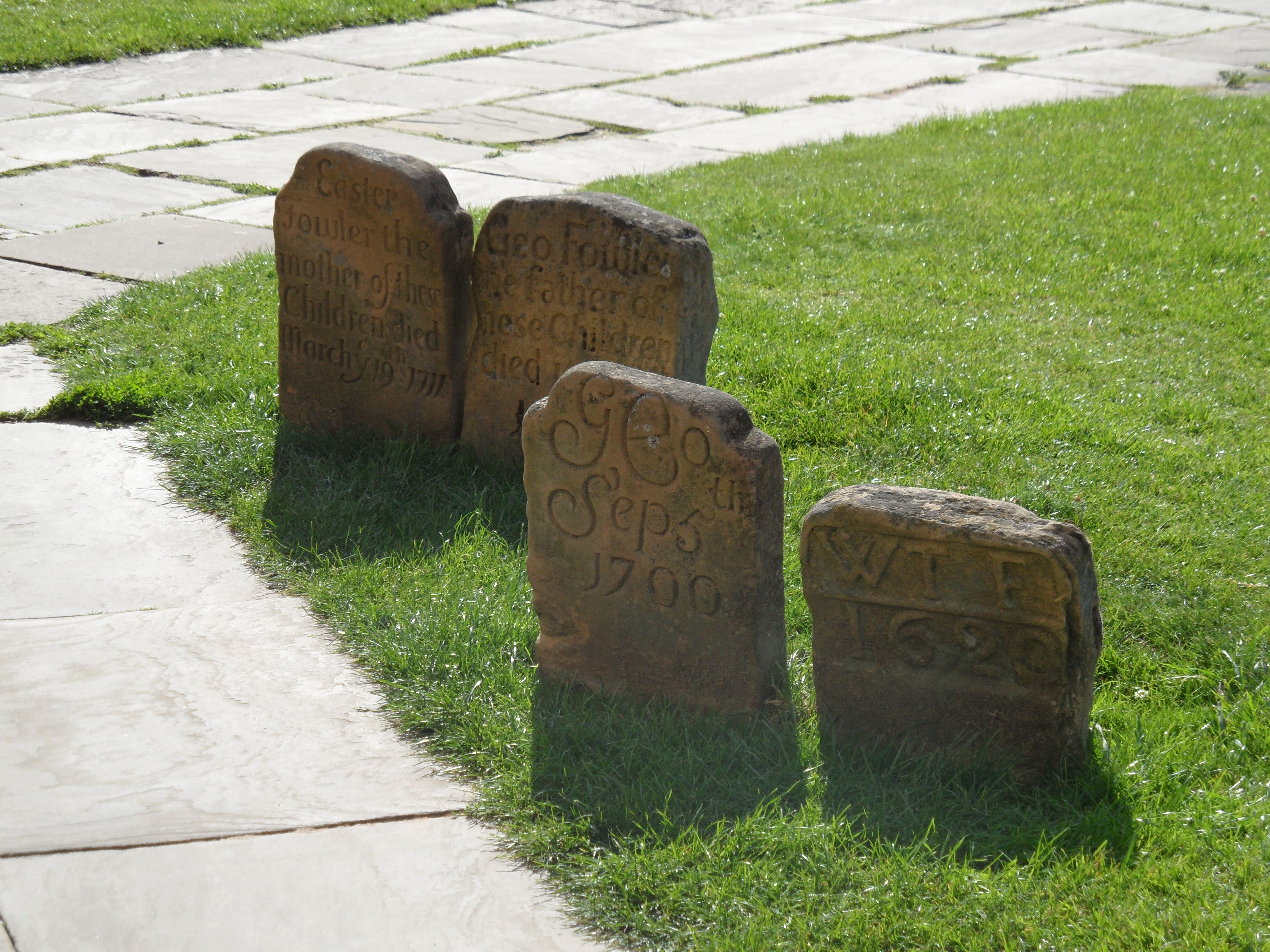
The majority of headstones seem to date from the 18th century onwards, although there may be earlier memorials here. I have seen examples of gravestones dating back to the early 1600s in other churchyards, such as this one at Southwell Minster in Nottinghamshire.

Examples older gravestones at Southwell Minster

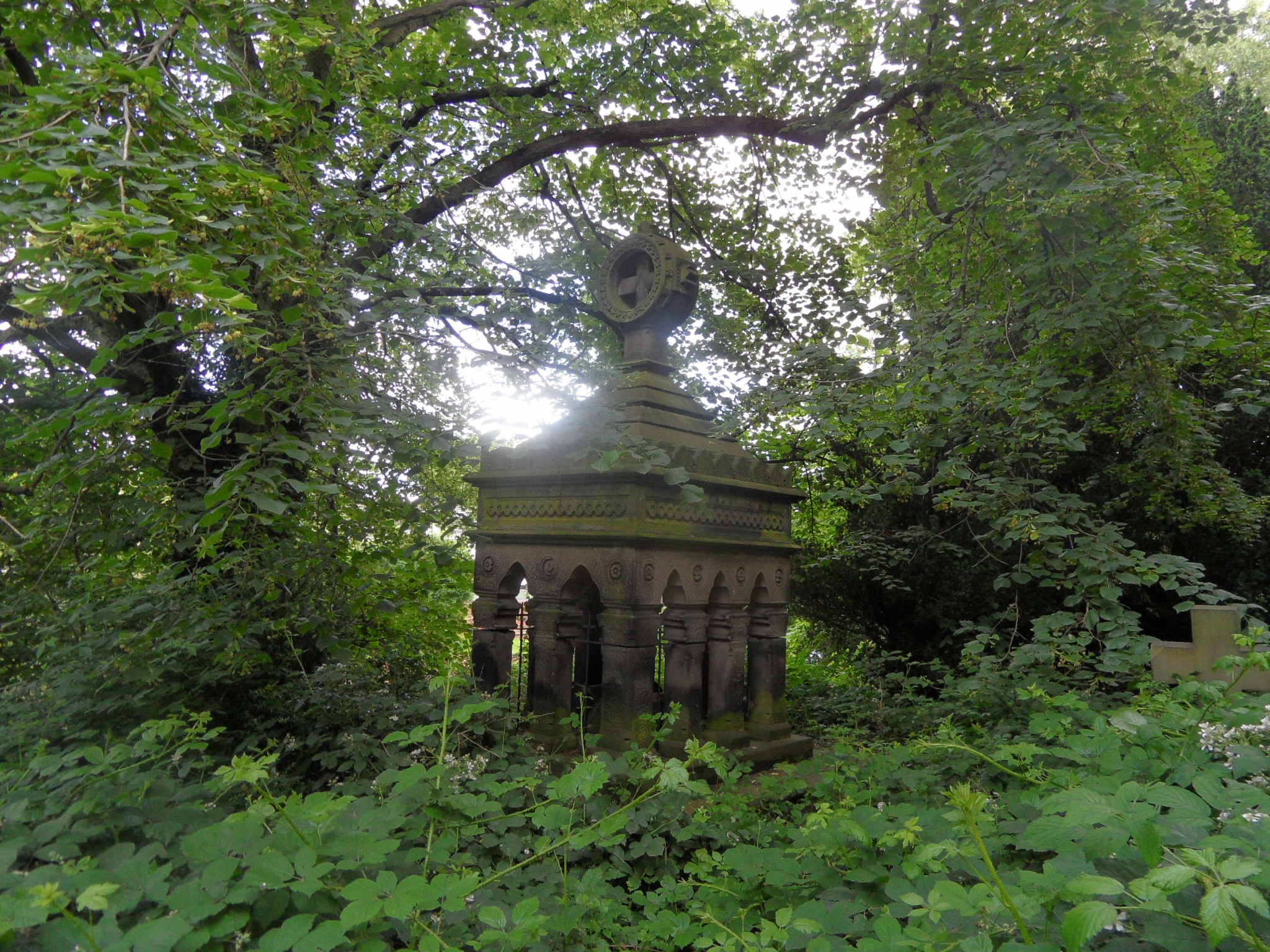
Of course, some people, presumably those wealthy citizens of the city, even erected monuments like this well known one belonging to Chancellor Law, which used to have a clock in the centre.

As with many places, we might never get definitive answers about the origins of St Michael’s churchyard, but who knows? As we’ve seen before, one discovery can change everything. And in the meantime, it’s a fascinating part of the city to keep asking questions about!

Sources

Gould, Dorothy & Gould, J 1974-5 `St Michael’s churchyard, Lichfield, Staffs’ Trans S Staffordshire Archaeol Hist Soc 16 58-61 

The history and antiquities of the church and city of Lichfield by Thomas Harwood


Bell Vista

A while ago, I wrote about the architect Thomas Johnson and how he had been involved in the restoration of the church of St Michael on Greenhill in 1842/3. In the newspaper archive, I found a report of a meeting of parishioners held at the church, prior to these restoration works.

The article is a bit blurry and hard to read but after much squinting it seems that there was concern that the church was at risk of ‘being reduced to ruins’ and that the churchwardens had appointed Mr Johnson to assess the extent of the dilapidations.  His diagnosis was that the roof, ceiling, spire and a portion of the walls were so unsafe that a large sum of money would be needed to keep up the building. The parishioners expressed their surprise at how bad the situation was. To illustrate just how bad things had got, it was revealed that rabbits had managed to get into the mausoleum of the Marquis of Donegal (he of Fisherwick) and were breeding in the coffins. The outcome was that the land owning parishioners agreed to increase their rates to pay for the necessary work which according to the County History included

 “the reroofing of the nave, the repair of the side aisles and the nave clerestory, the reintroduction of Perpendicular windows in the north aisle, the rebuilding of the north porch, and the remodelling of the south aisle with new buttresses and a south door in place of a window. The gallery was removed. The mausoleum and the vestry room were replaced by a stokehold over which a clergy vestry was built with doors into the chancel and the south aisle; an organ loft was built over the vestry”.

St Michael’s above Stowe Pool

I have never been into the church myself. However, I notice via facebook that the church will be open for viewing tomorrow (between 3pm & 5.30pm) during the launch of the Bell Restoration Fund. You can find out more on their facebook page here and you can read the great article Annette Rubery wrote about the fund here.

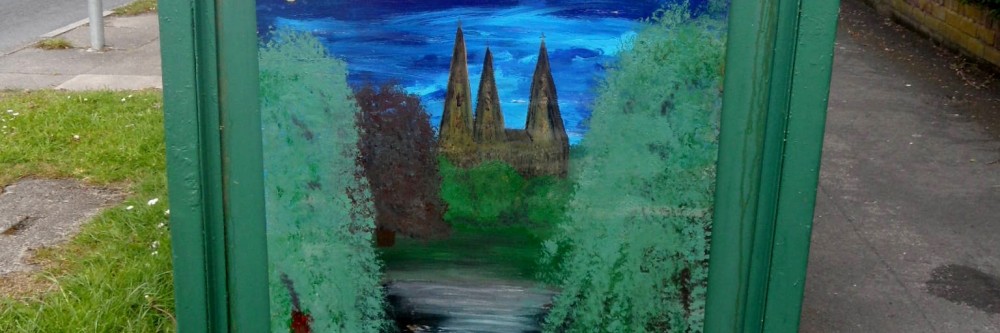
The church is of course featured on the ward banner for this part of Lichfield (along with what I had assumed was the Greenhill Bower House, although looking at it again now I’m not so sure…)

Although I’ve never been inside the church, I have been to the churchyard. With claims on Wikipedia that it could be a Mercian tribal necropolis, the site of one of the earliest settlements in Lichfield or the burial place of followers of St Amphibalus, it certainly merits a post of its own one day!

Steps leading up to the churchyard

Edit: I’ve just been thinking about the building on the ward flag, below the church. Could it in fact be the gateway to the old Lichfield Union Workhouse (subsequently St Michael’s Hospital).

Sources:

Lichfield Mercury Archive

Lichfield: Churches’, A History of the County of Stafford: Volume 14: Lichfield (1990), pp. 134-155