Nail Art

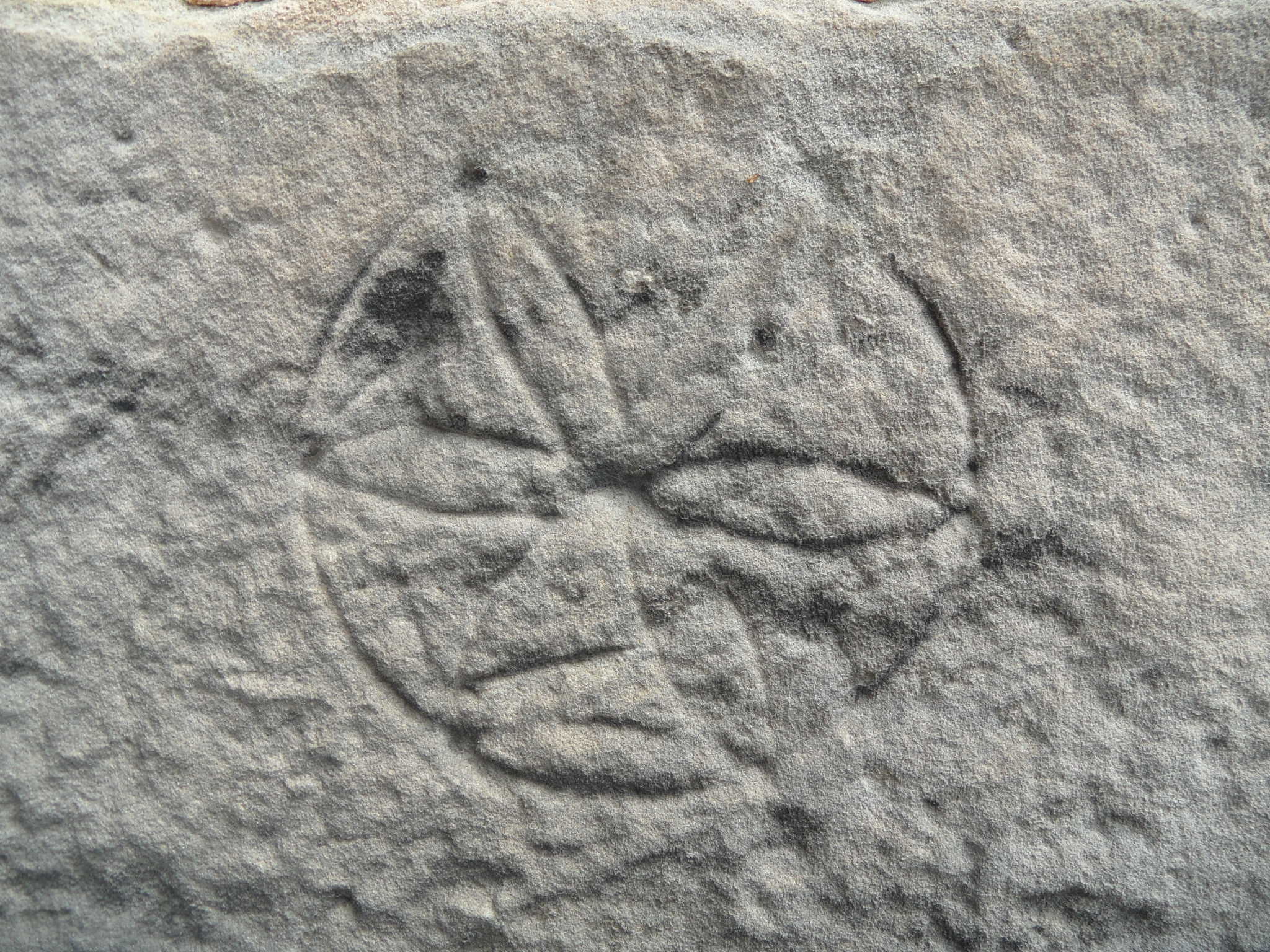
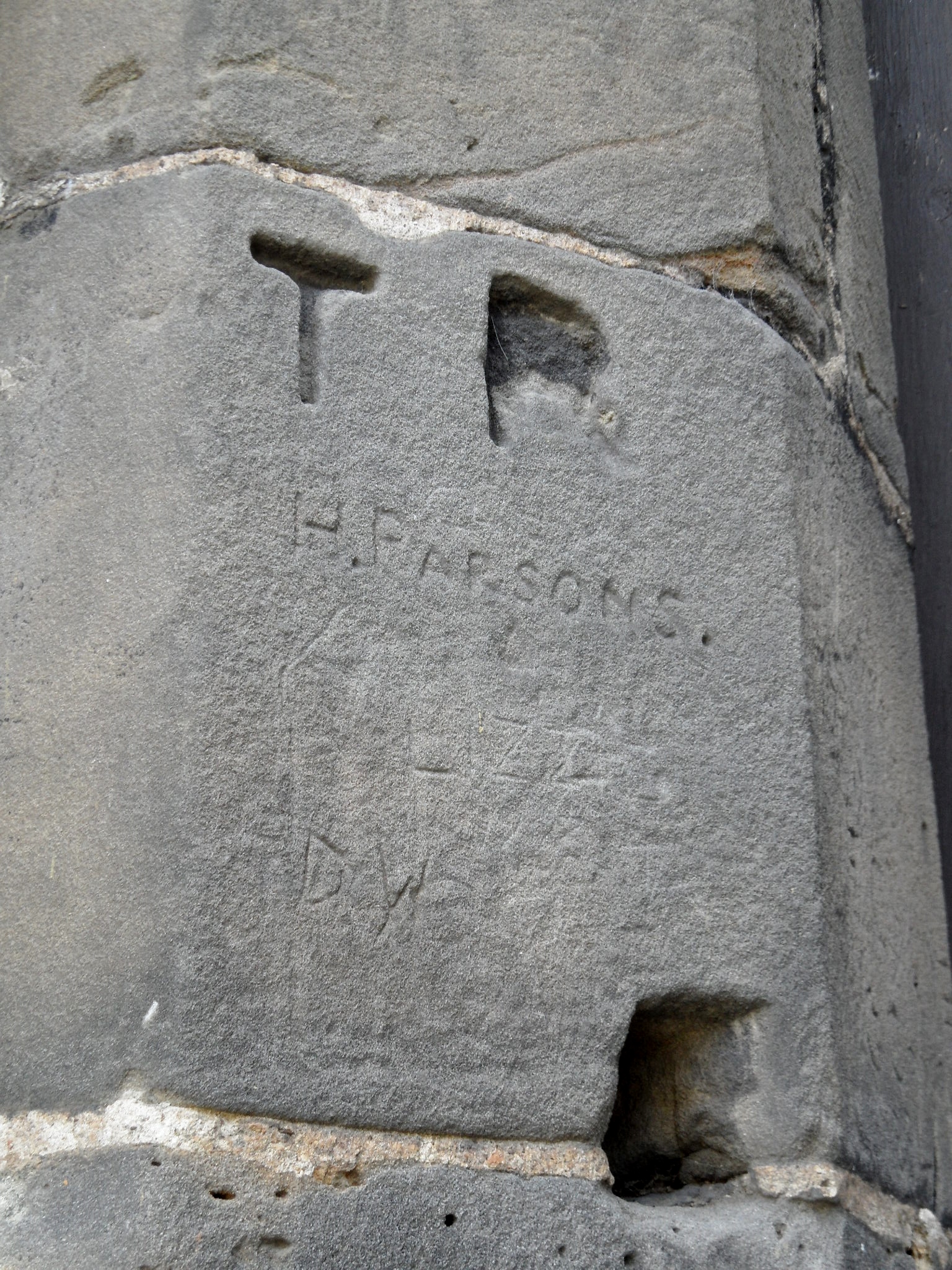
As objects are the theme of our Lichfield Discovered meeting on Monday, and I had an hour to myself this afternoon, I decided to head over the border to have a look for the nailers’ stones that I’d been told were in the churchyard at Christ Church, Burntwood. The only reference to them I’ve found is on the Christ Church website which says,

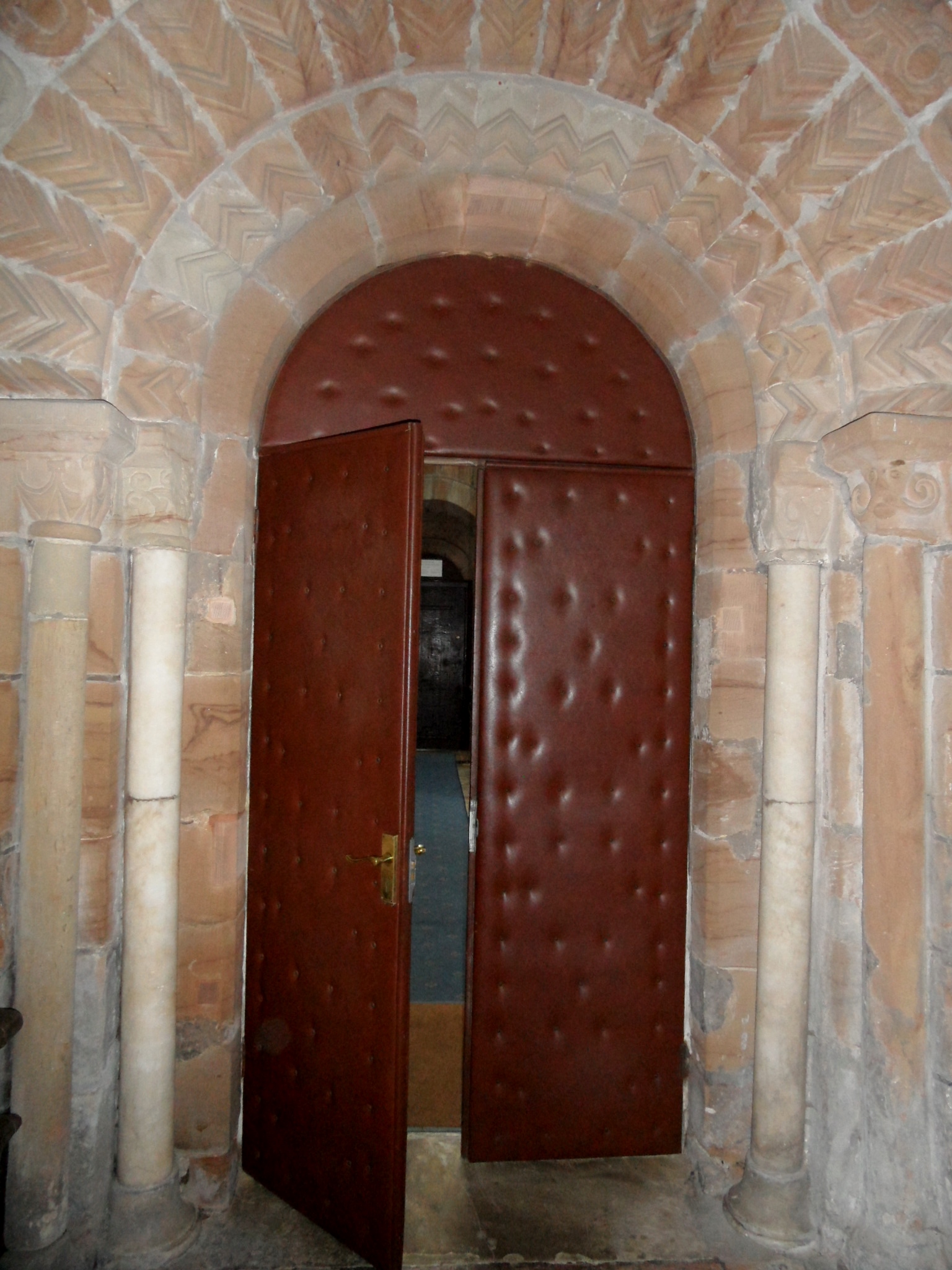
‘Visitors will firstly note the magnificent west doors, believed to be original. The huge nails which have been used are indicative of Burntwood having been a nail making area due to the plentiful supply of charcoal and iron ore. (Nail making was very much a cottage industry, and should the visitor wish to, enter the churchyard, will find there several nail stones of different sizes).’

I wasn’t exactly sure what I was looking for and had to rely on the, ‘I’ll know it when I see it’ method, which I’ve used many times before, with varying degrees of success. On this occasion it worked out just fine.

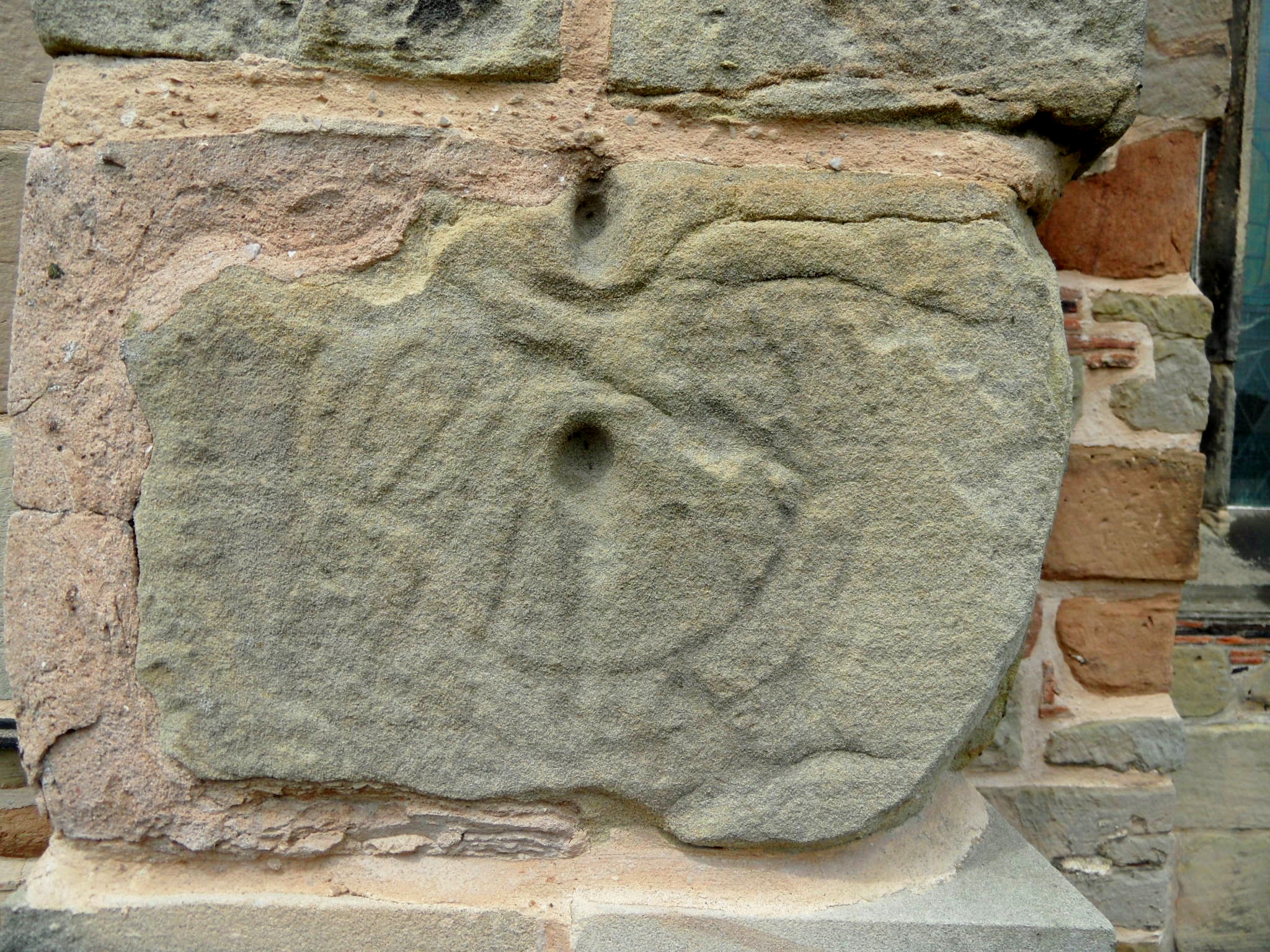
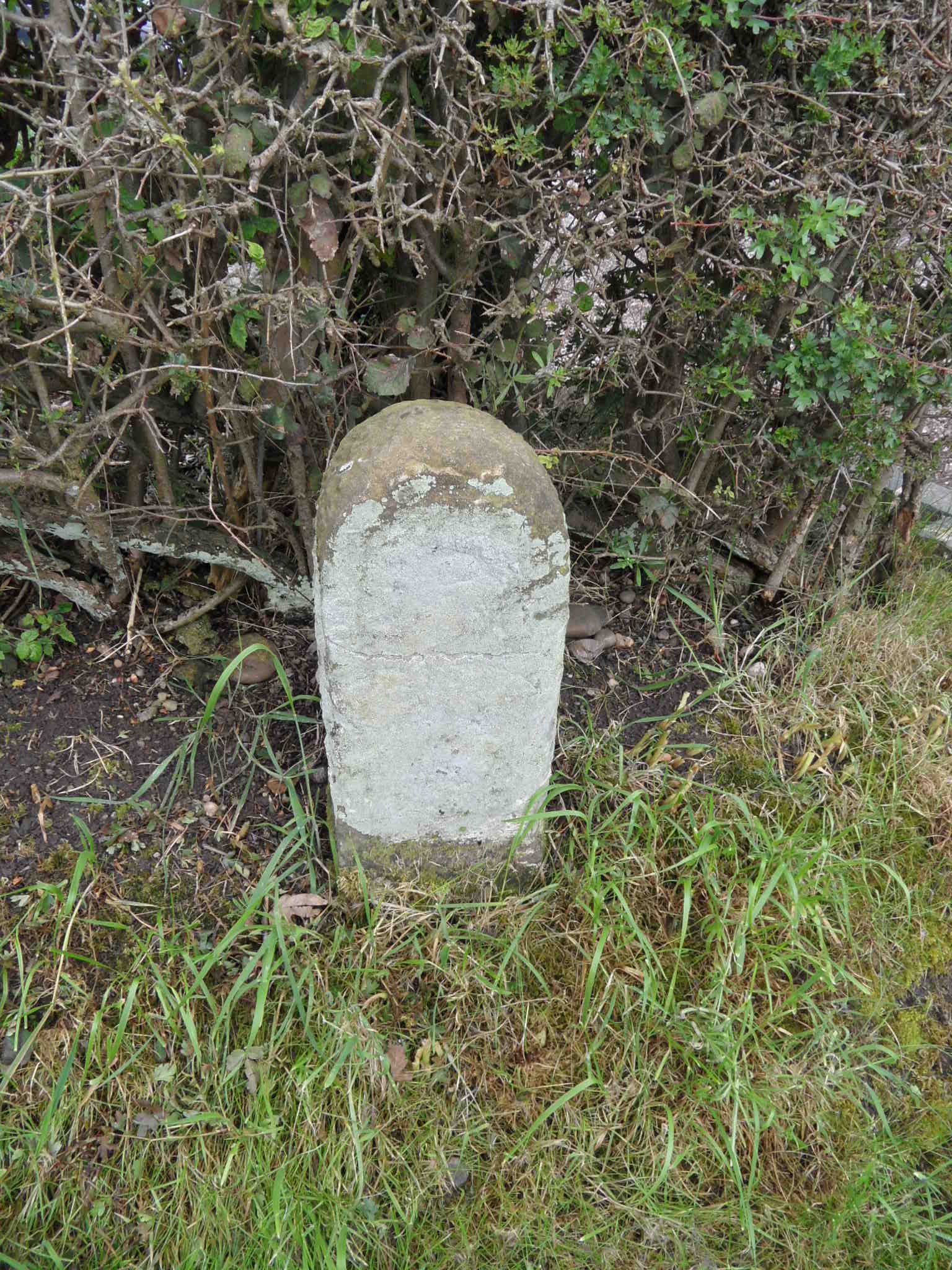
Nailer's Stone. Burntwood

Nailer's Stone. Burntwood 2

Group of nailers' stones

The above arrangement of stones reminds me of a stone circle of sorts

Group of nailers' stones, Burntwood 2

I wonder whether the nails in this door really were created locally?

I wonder whether the nails in this door really were made locally?

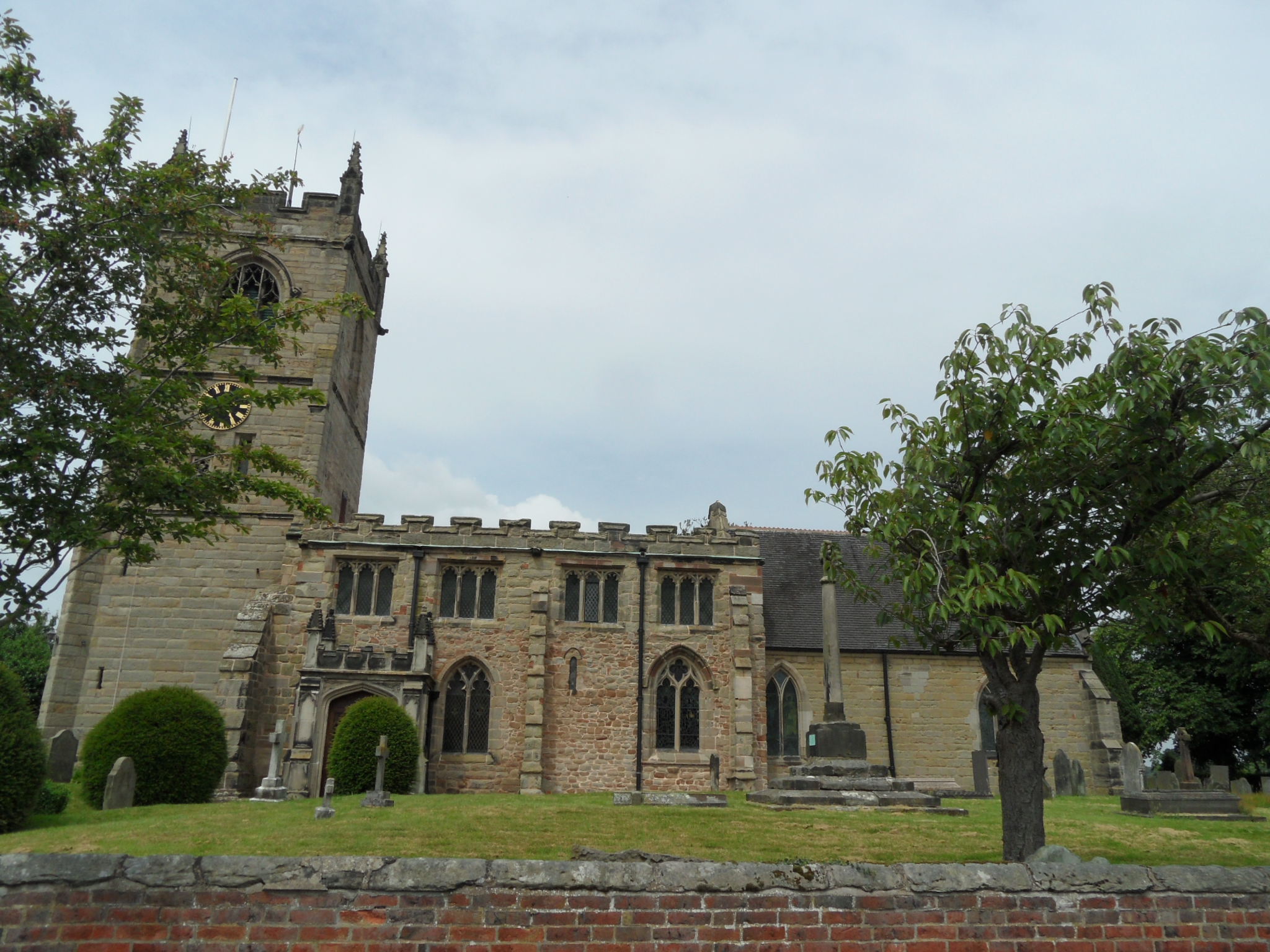
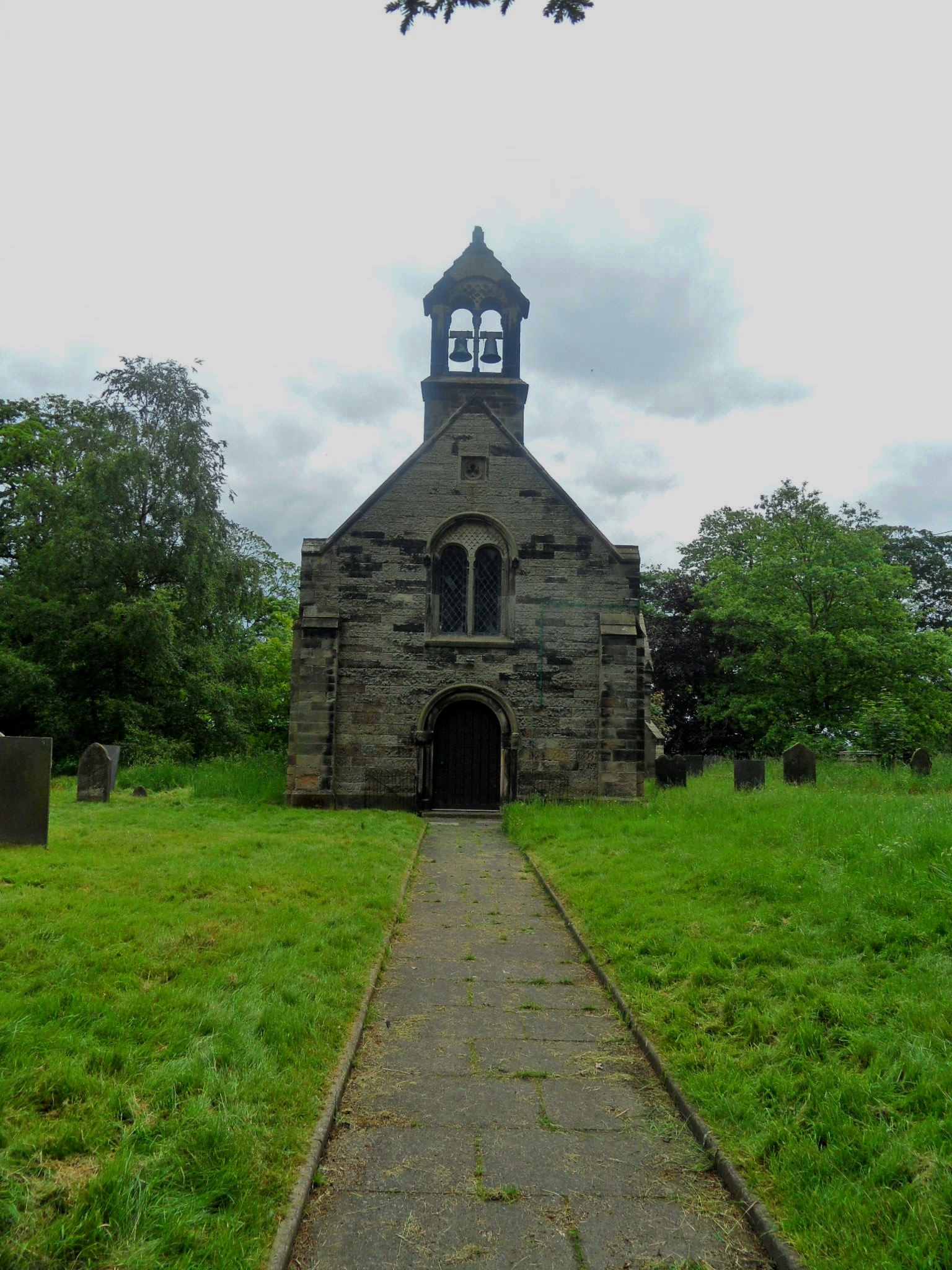
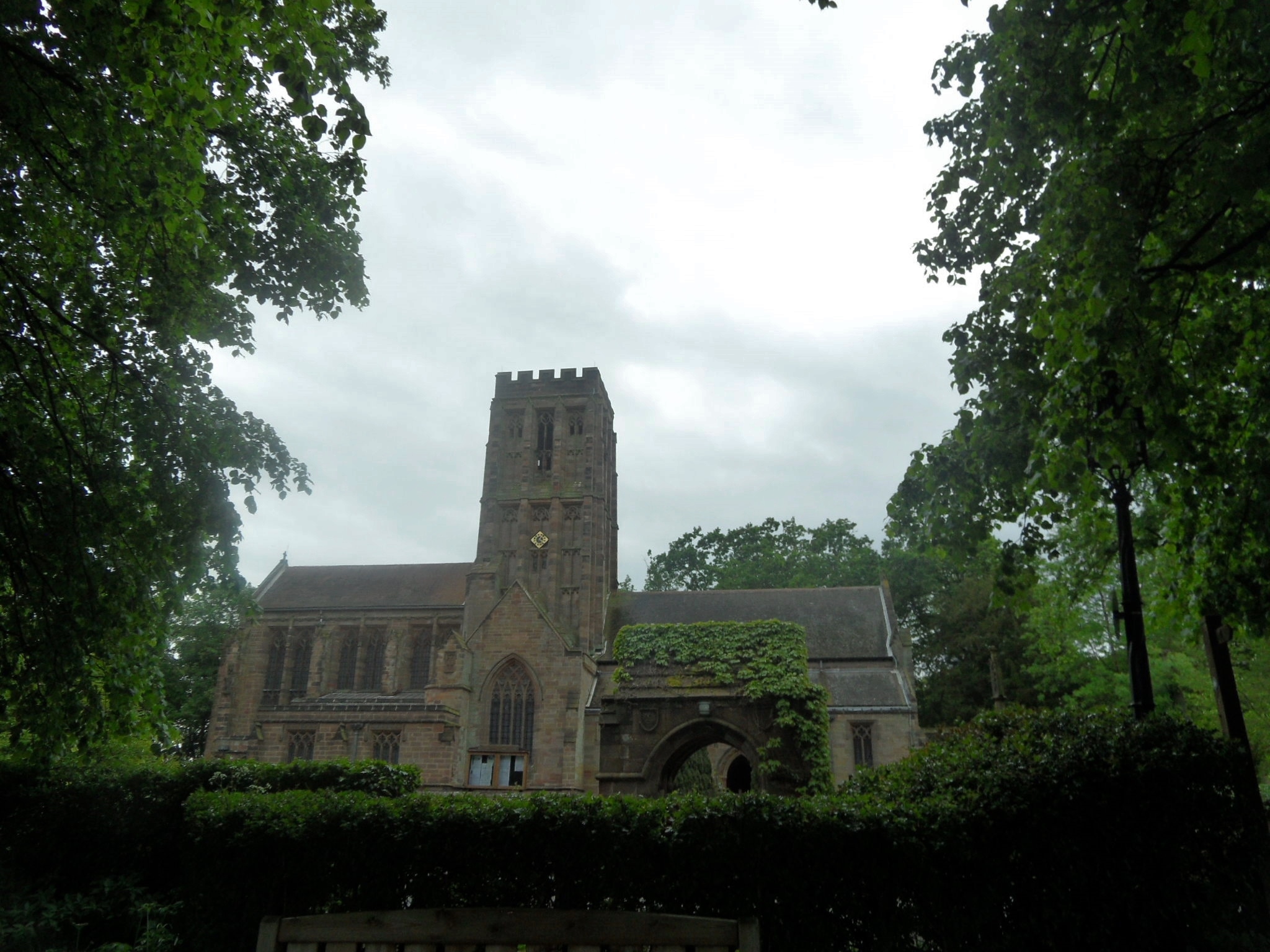
The first church in Burntwood. Apparently before it opened in 1820, the area was part of the St Michael's, Lichfield parish meaning a very long walk on a Sunday morning!

Before Christ Church opened in 1820, the area was part of the parish of St Michael’s, Lichfield, meaning a very long walk on a Sunday morning!

I couldn’t come all the way to Burntwood and not visit the world’s smallest park (is this official now?) with its trees known as Faith, Hope and Charity and so I had a five minute sit down and a bit of ‘We need a bigger park’ banter with a passerby, before heading to the Star Inn.

World's Smallest Park...or is it?

SAM_9977

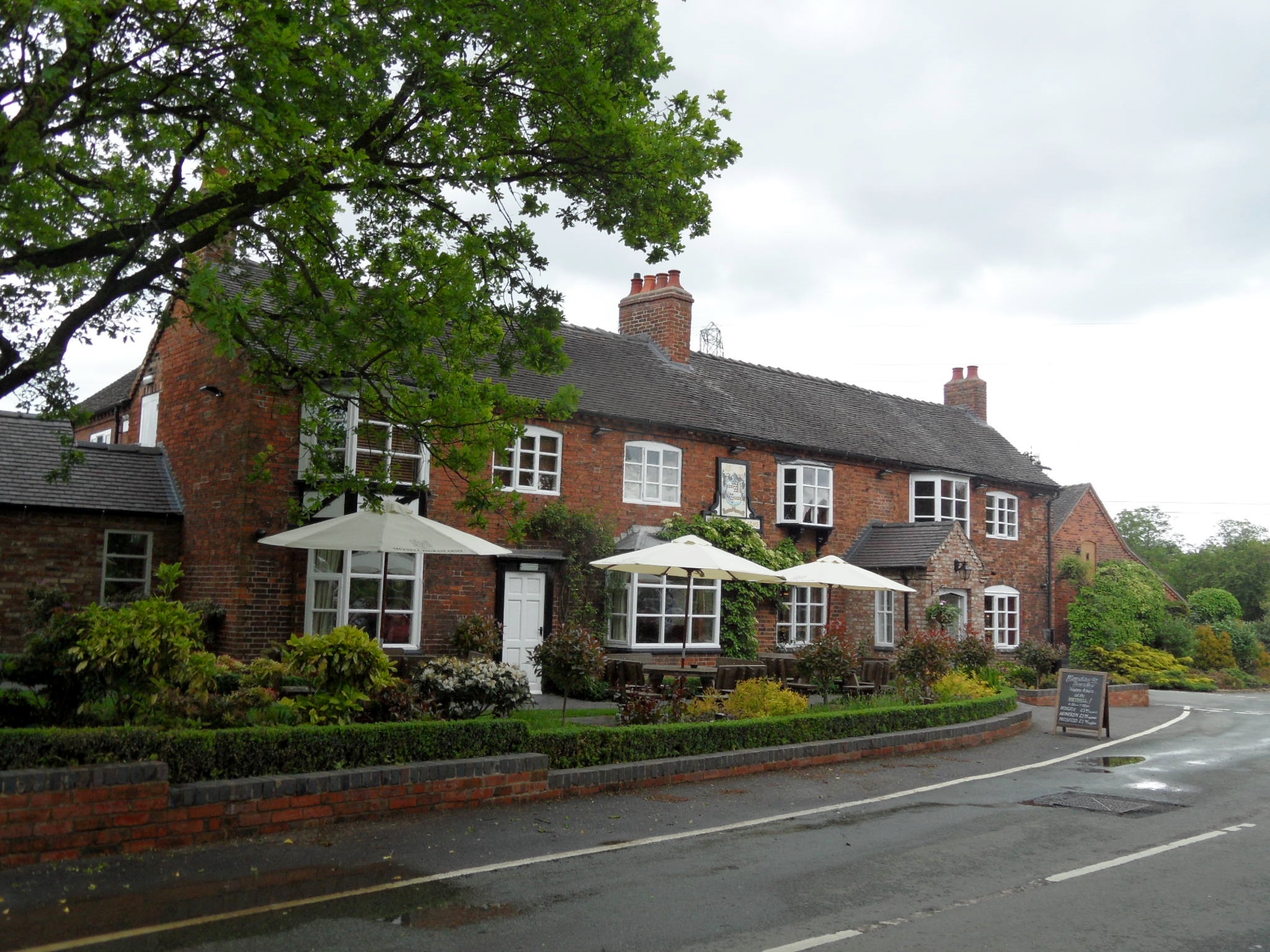
According to the Burntwood Heritage Trail booklet, the Star Inn was where local nailers would take their products to be be weighed and paid for by ‘middle men’, who would also replenish their supplies of iron. The pub building itself is relatively modern but, according to the booklet, there has been a drinking establishment on this site since at least 1600 when a local blacksmith was licensed to keep an alehouse here, becoming known as the Star Inn by 1790.

The Star Inn. Burntwood

Unintentionally shining Star

Star Inn Plaque

One of the blue plaques on the Burntwood Heritage Trail, created by the fantastically named ‘Keepers of the Archive’.

Back home, I had a look for other examples of nailers’ stones and found that the Black Country History website has a photograph here of one very similar which they describe as a nail making anvil from St Peter’s Rd, Darby End.

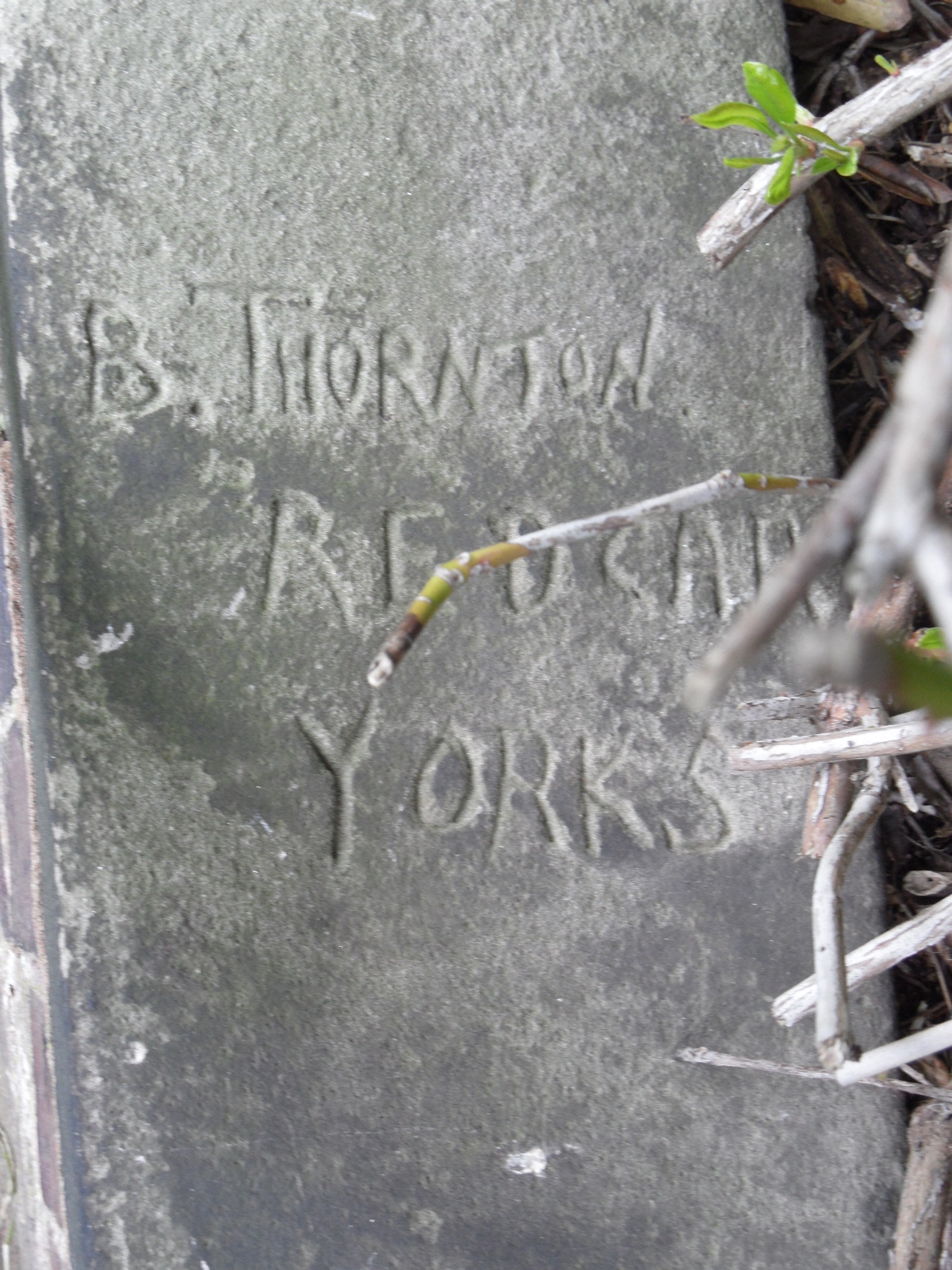
I notice that there appear to be initials or names on the stones and it would be fantastic to know more about their provenance. The heritage booklet says that making nails was a way for a farming family to make extra money, and that the work was often carried out by the woman of the household.

I know these are Burntwood objects, rather than Lichfield ones but they tell the story of everyday folk trying to make a living for themselves and their families in an industry that’s now long gone, and that’s got to be worth sharing.

(For more on the nailmaking industry, please see the ‘Nailed it’ post on Brownhills Bob’s Brownhills Blog here)

Walsall Legends

My husband grew up in the Highgate area of Walsall, where the malty aroma from the local brewery used to hang in the air and the local kids would tell stories about the mysterious ruined windmill. Thought to have been built in the late 1600s to grind corn, Highgate windmill has a fascinating history which you can read more about here in this article by Walsall historian and writer Stuart Williams. If you want to go and have a look yourself, go sooner rather than later. Once spring gets properly underway, it’ll be hard to see the mill for the trees.

Highgate Windmill

Highgate Windmill, Walsall

Last Summer I could barely see the windmill but did spot this painted board through the trees.

Last Summer I could barely see the windmill but did spot this painted board through the trees.

Sadly, there’s not even a whiff of brewing in the air at the moment – the Grade II Listed Highgate Brewery hasn’t been operational since 2010 and stands unused behind the locked centenary gates (purchased and installed by the Friends of Highgate Brewery in 1998), its future uncertain at present.

Highgate Brewery

Highgate Brewery

Yesterday, as well as visiting the family, we went to have a look around the Art Gallery and the town. On the way back we passed the pub that we once knew and loved as the Brewery Stores & Vaults. Back in the late 1990s, it was one of the liveliest places in town but now, like the brewery whose name it bears, it stands empty, expect perhaps for the hooded figures and disembodied heads said to lurk in the cellars

SAM_9911

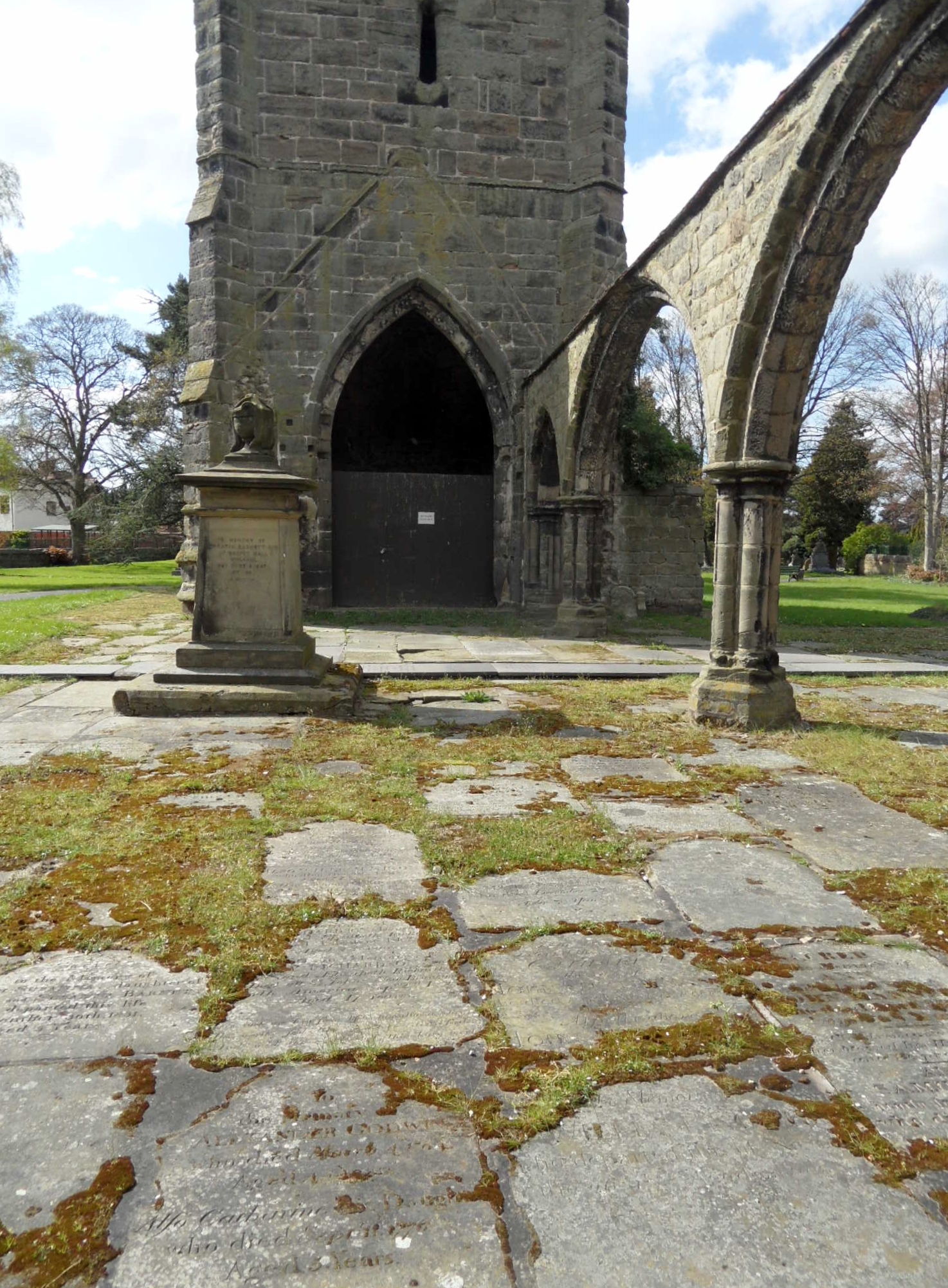
We continued our way back over the limestone hill where the church of St Matthew’s has dominated the Walsall skyline since at least the thirteenth century (although it has only been know by that name since the eighteenth century – it was previously ‘All Saints’). The first time we walked up this hill together, Mr Gomez told me that it was paved with medieval cobbles. I’m not sure if that is true but it’s something that has fascinated me ever since, as has the arched passage on the east end of the church, covered in graffiti and with curious niches on the east side.

As well as this overground passageway, there are supposedly underground tunnels running from here to the White Hart Inn at Caldmore, Barr Beacon and Rushall Hall.  In a history section of the Walsall Council website, there’s a quote from a Mr G of Bath St who in the 1950s said one of the entrances to the tunnels was located at the bottom of some steps of a toilet which once stood on Caldmore Green. He also added that he had been told by some old women that during the reformation, some priests went down the tunnels to escape and were killed after they were filled in.

St Matthew's Walsall

St Matthew’s church, Walsall

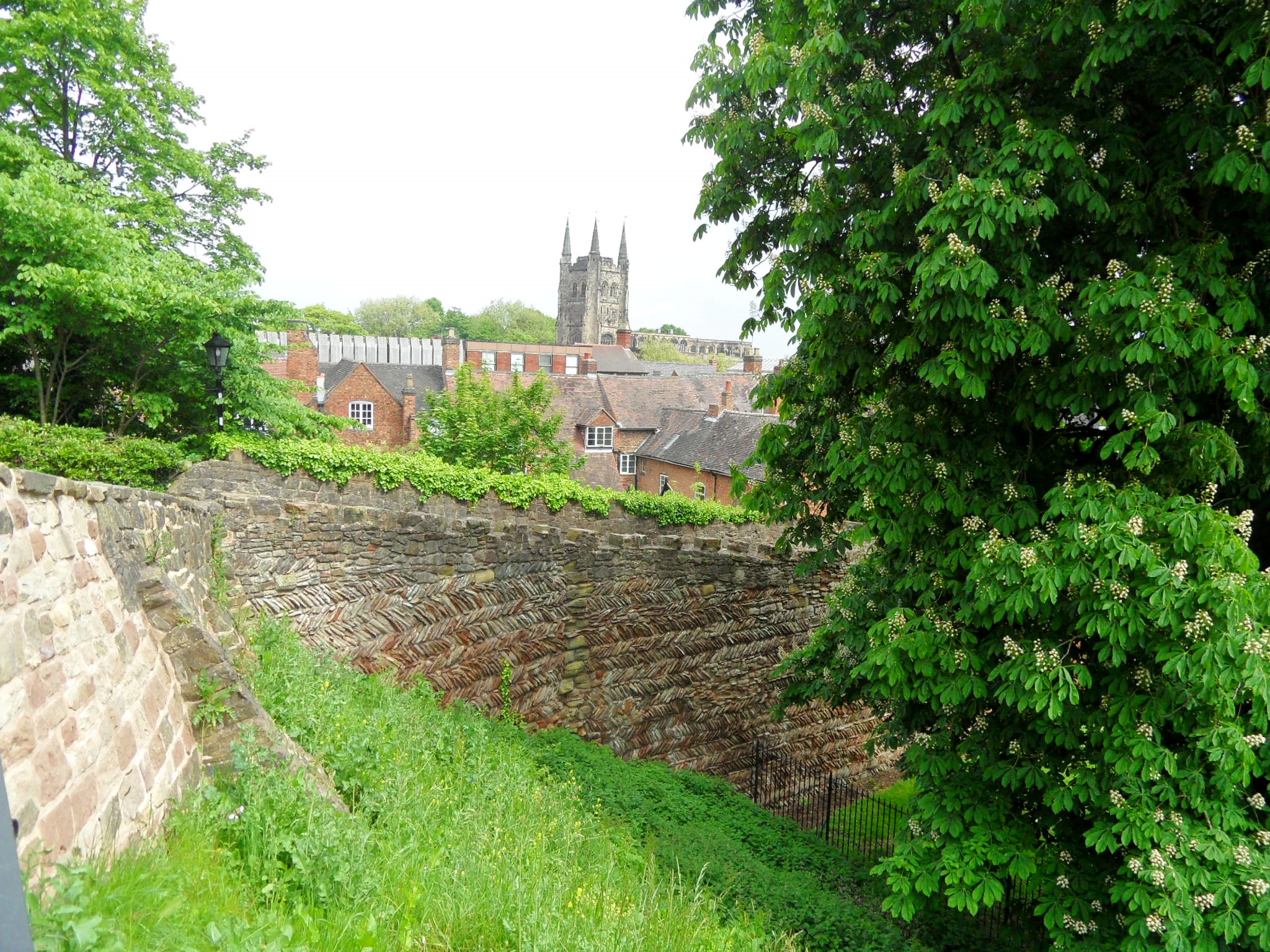
Wasall from the Art Gallery.

St Matthew’s Walsall as seen from the Art Gallery.

Medieval cobbles

Medieval cobbles leading up the hill?

Passageway under the chancel of St Matthew's

Passageway under the chancel of St Matthew’s

SAM_9929

Niches in St Matthews passageway

Niche interest

One of my favourite stories about St Matthew’s and Walsall is one I read recently in a book of Staffordshire folktales.  Apparently, the church was originally supposed to have been built on a meadow at the ‘Churchery’, now known as the Chuckery. However, this was where the fairy folk danced and so, naturally, they objected to the plans and took matters into their own tiny hands, moving the foundations of the new church up the hill to the site where it stands today. In another version of the story, the church was moved by witches who had transformed themselves into white pigs.

We walked up a good appetite in Walsall and so we finished our day at the legendary Hargun’s Sweet Centre on the Caldmore Rd, intending to take some goodies back to Lichfield, although they never actually made it past Walsall Wood in the end. Anyway, what I learned today is not only that you can eat a lot of baklava in a twenty minute car journey, but also that once in a while, it’s good fun to explore what’s on someone else’s doorstep.

Sources

Walsall: Economic history’, A History of the County of Stafford: Volume 17: Offlow hundred (part) (1976), pp. 180-208.

http://www2.walsall.gov.uk/History_Projects/Caldmore/A_Walk_Around_the_Green/18.asp

http://www.stmatthews-walsall.org.uk/info/mainhistory.shtml

http://www.blackcountrybugle.co.uk/TALE-WALSALL-PARISH-CHURCH-FAIRIES/story-20122807-detail/story.html

Staffordshire Folk Tales by The Journeyman

Objects of My Affection Pt 1

Our next Lichfield Discovered meeting is fast approaching (7pm on 10th March at Lichfield Heritage Centre) and this time round we’re having a bit of a show and tell. We’ll be having a go at telling one hundred years of Lichfield History in twelve objects and we want people to get involved by bringing along their Lichfield related objects to show us all.

There are loads of objects that I’d love to be able to bring along with me, but can’t, either because they’re lost, immovable or I’d be arrested. So instead, over the next week or so, I’ll share some of them here instead.

First up, the earthenware jars found in the south wall of Farewell Church during its partial demolition.

Farewell Church

St Bartholomew’s in Farewell was once the site of a Benedictine Nunnery. The place name refers to the ‘pure or clear’ spring which still flows here. The original church incorporated material from the nunnery, but much of it was demolished and rebuilt in brick in the 1740s.

Trust me, there is a spring beneath here.

Trust me, there is a spring beneath here.

In my opinion, it takes something pretty special to top an ancient spring, but here at Farewell, the most interesting thing for me is the discovery of three rows of different sized earthenware vessels in the south wall of the church at the time of the renovations. The jars were lying on their sides, their openings facing inside the church, covered with a thin coat of plaster. Sadly most were broken during the work but one of the jars found its way to Mr Greene’s Museum of Curiosities on Market St, Lichfield. Its whereabouts is now unknown but luckily, someone did make a woodcut engraving of it, as seen here on Staffordshire Past Track. The purpose of the jars remains a bit of a mystery. The accepted explanation is that they were ‘acoustic jars’, used, as the name suggests, to improve the acoustics in the church, based on a theory from a Roman architect called Vitruvius. However, others have suggested that they may be related to the idea of votive offerings (interesting article here).

It’s a good example of how important is it to not to separate objects from their stories . Without knowing the context in which it was found, the jar becomes just another piece of pottery and without being able to examine the jar itself, the real reason why (and when) it was placed in a church wall in Farewell centuries ago may never be known.

When Spring finally does arrive, do try and visit Farewell via Cross in Hand Lane, the old pilgrims route & former road to Stafford. It’s a lovely walk to a lovely place with the banks of the ancient holloways covered in flowers and the Ashmore Brook running alongside if you fancy a paddle.

farewell

Bench Marked

Public benches can be found all around our parks and along our city streets. As well as being places to sit (or lie down, although I’ve never found them that comfortable) and rest, read, drink, chat, canoodle, sleep, picnic or daydream, they are also often places where people choose to commemorate a loved one, a group of people or an event, via a small plaque or inscription.

Workhouse BenchOn the current Google street view there is a chap with a stick having a rest on this bench on the corner at St Michael Rd. I suspect he, like most other people, hasn’t even thought about why it’s there. Why would he? It’s just a bench. You may not have even have noticed it is there. There’s no plaque reminding you to sit a while and enjoy the view of Aldi and the churchyard, and facing onto the busy Trent Valley Rd, it’s not the most serene of spots.

I probably wouldn’t have taken any notice of it either had it not been for Bob Houghton (of the Burntwood Family History Group) telling me about a conversation he’d had with a woman who had lived all of her long life in the Trent Valley Road area. She remembered a time before the NHS, when St Michael’s Hospital was still the Workhouse (officially known as the Lichfield Public Assistance Institution from 1930s, but no doubt still known by the majority by its former name and reputation), and told Bob how some of the elderly residents would take a stroll around the area (according to ‘This Won’t Hurt Much’, in 1937 the Master, Mr Standing had put forward a recommendation that male patients over sixty should be allowed out between 6 and 8pm on summer evenings). Apparently at some point, the authorities decided to provide a bench for them to rest their weary legs and although the Workhouse and its successor the Public Assistance Institution are long gone, this bench (not the original bench sadly) still remains in that position. Perhaps it’s still well used by folks making their way to and from appointments at the new Samuel Johnson hospital opened near the site of the old Workhouse in January 2007?

From now on, I’ll always think of this story when I pass, and share it if I happen to be with someone. Perhaps there should be a plaque here to tell people of its origins? Maybe, but I imagine that plaques require permission and money. Sharing stories with each other costs nothing but it keeps them alive. There’s no paperwork to fill in either.  If even the position of a bench has a story to tell us, then who or what else could?

Entrance to the former Workhouse on Trent Valley Road

Entrance to the former Workhouse on Trent Valley Road

Buildings at St Michael's Hospital, former Workhouse

Buildings at St Michael’s Hospital, former Workhouse

Behind the former Workhouse

Behind the former Workhouse

Sources:

This Won’t Hurt: A History of the Hospitals of Lichfield, Mary Hutchinson, Ingrid Croot and Anna Sadowski
With thanks to Bob Houghton for sharing this story with me


Shine On

Still curious about the old church of St John the Baptist at Shenstone, I did a bit more reading.  Inevitably, I’ve ended up even more curious than I was before.

In 1890, the Lichfield stone mason and sculptor Robert Bridgeman was appointed by a restoration committee to carry out work on the now disappeared pinacles of the tower. (You can see how the old church used to look, pinnacles and all, from drawings of the church in the late eighteenth and early nineteenth century here on Staffordshire Past Track). At the time Mr Foulkes, an architect living at The Ivy House, in Shenstone, wrote to the committee saying,

I am anxious to assure the Restoration Committee how fully I concur in the steps they have taken to preserve the old tower, for both on practical and sentimental ground it should be upheld. The appointment of Mr Bridgeman as restorer is the best your Committee could make, and I know he will thoughtfully and carefully carry out the work entrusted to him.

Mr Foulkes then goes on to give some of the history about the old church saying,

The old tower so called is really not very ancient, except perhaps the internal base; the upper part boasts of no architectural feature of note, the details being of a debased character, and early in the present century there evidently existed a kind of central beacon flag-pole and vane combined. There were also diagonal shaped dials upon the tower. One other feature worthy of mention, and of which I fear no trace remains, was a stone hollowed out in the Romish times, for the reception of holy water. It formerly stood near the north door and over it was carved the figure of a lamb’.

It took a while for the last line to click but eventually I remembered reading about a carved stone in the report of the excavation of the old church in 1973 by Dorothy and Jim Gould of the South Staffordshire Archaeolgical and History Society. A note by Mr J W Whiston, appended to the SAHS report says that there is no reference to the carving in any published description of the church, but that, ‘although mutilated, the carving can be identified as the arms originally granted to the Merchant Taylors Company of London before, in the time of Elizabeth I, the chief of augmentation was added (a lion passant and guardanty). These arms were frequently used by provincial merchant-taylors’. It also mentions that there is a similar carving on the porch of St Michaels in Lichfield. When I checked back on my photos of St Michaels from last spring, I found it (which saved me a trip). Funny how you see things that you don’t realise the significance of at the time, but fit into the big jigsaw eventually.

St Michaels Carving

The carving at St Michaels, Lichfield

Not knowing anything about the Merchant Taylors’ Company I looked them up and found that their patron saint is St John the Baptist. As you can see from the above (sort of), their coat of arms features a pavilion with a mantle either side, with the Holy Lamb within a sun. Perhaps this is the lamb to which Mr Foulkes was referring? You can read more about the company here.

Bottom right hand side of door - is this the carved stone?

Bottom right hand side of door – is this the carved stone? Should have taken a closer look.

According to William Whites Directory of Staffordshire (1834), the annual feast or wake at Shenstone was held on the Sunday after St John the Baptist’s day. Something that’s not mentioned in the archaeology report, or the newspaper report as far as I can see, is the existence of a holy well somewhere in the churchyard. On the saint’s day (or Midsummer if you prefer), St John’s Well  was believed to be a place of healing and of miracles. I can’t see it on any of the old ordnance survey maps but I am hoping it’s still gurgling away and hasn’t dried up. On the subject of St John and Midsummer, I know I probably shouldn’t speculate about the place name Shenstone – bright/beautiful/shining stone or rocky place – but the idea of the sun and bonfires associated with the festivities of St John’s Eve and Midsummer has popped into my head and now I can’t get rid of it. Feel free to shoot me down in flames.

I’ll try and distract myself with another example of pieces of the jigsaw fitting together eventually.  In an account of ‘ Ancient Shenstone’ by Madge Rogers in the Lichfield Mercury in the late 1940s that I was reading, she mentions, ‘A Peat Moor once stretched highly polished stone was erected in the churchyard, and was the tomb of 25 year old Richard Burgess of Leicester who journey by stage coach to the Welsh Harp in Stonnall and there took his own life’.

I don’t really understand the bit about Peat Moor but the story of Richard Burgess sounded familiar.  I remembered that a while ago, when trawling the newspaper archive for something to do with pubs, I had read a story from the Derby Mercury, June 1754, about a young Gentleman who was travelling with the Chester Stage Coach, on his way to Ireland to be married. Apparently, en-route he had received a letter from his fiancee’s Father, telling him not to pursue his journey, as she would not marry him. When the stage coach stopped off at Noon at the Welsh Harp near Lichfield, the young man took his own life. Surely this must be the same tragic young man?

To think up until recently the only place I’d ever visited in Shenstone was the Tesco Express. What a fascinating place it is, and I haven’t even started to read about the prehistoric and Roman connections yet.

Sources
The History and Antiquities of Shenstone in the County of Stafford, Henry Sanders
South Staffordshire Archaeological and Historical Society Transactions XV
Derby Mercury Archive
Lichfield Mercury Archive

This Ain't A Love Song

I’ll sing you a song about two lovers,
Who from Lichfield town they came, 
The young man’s name was William Taylor,
The lady’s name was Sarah Gray

So begins one version of the ballad ‘Bold William Taylor’ in which William leaves Lichfield to go and fight a war.  Sarah doesn’t get on well with her parents and so decides she too will become a soldier in order to be reunited with her true love. She disguises herself as a sailor but after suffering a wardrobe malfunction aboard the ship she is working on, it becomes apparent to the captain of the ship that she is in fact a woman. Understandably curious, the Captain wants to know what she’s doing on board his ship and Sarah explains that she’s there looking for her lover. The Captain gives her the devastating news that William Taylor has gone off and married a rich young lady but tells her that if she rises before the break of day she’ll find him out walking with his new wife. Sarah does just that and, on spying the happy couple together, calls for a sword and pistol and shoots William dead. In this version, the Captain is so impressed he puts Sarah in command of the ship and all his men. All’s fair in love and war? There’s a great performance of the song by Jim Moray here on YouTube.

As I’m quickly discovering, establishing the origins of folk songs and ballads is nigh on impossible. It seems this may have originated in Lincolnshire but why Lichfield was chosen as the home town of the unhappy couple is a mystery and to confuse matters further, in some versions, Lichfield isn’t mentioned at all. Of course, I wanted to know if there were any more songs or ballads that mentioned Lichfield. I found that the Bodleian Library has a huge, searchable archive of over 30,000 broadside ballads. According to them, ‘Broadside ballads were popular songs, sold for a penny or half-penny in the streets of towns and villages around Britain between the sixteenth and early twentieth centuries. These songs were performed in taverns, homes, or fairs — wherever a group of people gathered to discuss the day’s events or to tell tales of heroes and villains’.  I was really pleased to find that the collection includes several political ballads relating to Lichfield elections in the eighteenth and nineteenth century.

Apparently, these broadside ballads didn’t have their own music, but came with a suggestion of a well known tune that they could be sung to. I’m reading them with an image in my head of people stood around in the Ye Olde City’s pubs and taverns rowdily joining in with lines like,

With the help of Dick Dyott
We’ll keep ’em all quiet
And soon cool their Courage, and Fire:
If I give up this place
May I ne’er show my face
Till I’m hang’d by my Toes on the Spire

The above lines come from a sheet dated 1799 (it has the year handwritten on it). However, this can’t be right as on the same page is the story of Sarah Westwood, a Lichfield woman was executed for murdering her husband, a nailer from Burntwood, in January 1844. If you want to read the full story of the case it’s well documented elsewhere, especially as Sarah was the last woman to be executed at Stafford Gaol. The inclusion of scandals and sensations such as this, along with the songs have led to many describing them as the tabloids of their day. You can search the Broadside Ballad archive yourself here.

King's Head

As I’ve said before, we often focus on the visual changes of places, but the sounds change as well. I’m thinking that with its mixture of traditional songs, contemporary folk songs, drinking songs, ballads, humour, monologues and poems, the Folk Singaround at the King’s Head looks like a great way to get an idea of what our pubs may once have sounded like and hope to get down there for one of the sessions soon.

The Two Towers

With ‘Heritage at Risk’ the theme of our Lichfield Discovered meeting this month, I was having a flick through the English Heritage At Risk Register to see whether there were any other buildings in the district keeping the Angel Croft Hotel company on the list. It seems much of what’s considered ‘at risk’ in these parts is landscape features – a causewayed enclosure and settlement sites in Fradley/Streethay, a round barrow at Alrewas and a site near Elford, although built heritage does appear in the form of the walls and gate piers at Colton House, the ruined remains of an old manor house at Hamstall Ridware and the old church tower at Shenstone. The inclusion of the latter was of particular interest as I’d been there for a nose just days before.

SAM_9814SAM_9807

When the present church of St John’s was built in the 1850s, the existing church was partly demolished leaving just the tower and the south door visible. Time and nature are doing their best to finish the job the Victorians started – English Heritage have assessed it as being category A meaning that it is at ‘Immediate risk of further rapid deterioration or loss of fabric; no solution agreed’.

SAM_9830

The tower had a wooden ladder but no staircase

The ruins are thought to incorporate Norman features and possibly some Anglo-Saxon masonry.

As you’d expect, many of the village’s old residents are to be found here in their eternal rest. According to William Pitt, at least one of them did not go gentle into that good night – Susannah Southwell of Shenstone was married at the age of 112 (although he doesn’t record how old the groom was nor how long it was until death did them part). The Wikipedia entry for Shenstone says that a 2007 survey found that it was one of the ten worst places in England for finding single women. Perhaps that’s always been the case?
SAM_9818

Local sandstone was used to build both new and old churches and it’s this geology that caused David Horovitz to question whether the place name Shenstone really does mean ‘shining stone’, suggesting that sandstone could “hardly be described as ‘bright, shining or beautiful'” (although anyone who has seen Lichfield Cathedral glowing in the late afternoon sunshine may well disagree). Mr Horovitz has suggested that Shenstone may instead refer to a personal name, or even to stone monuments left behind by the Romans (remains of a villa have been discovered on the outskirts of the village and Wall is only around a mile away).One of the reasons I love the study of place names is that it can give us a glimpse of somewhere as seen through the eyes of people who once lived there hundreds, if not thousands, of years ago. The view can be a little hazy though and sometimes we can only guess at why our ancestors chose the descriptions they did.
Whatever the true meaning may be, it is the ‘shining stone’ theory that inspired Jo Naden’s steel sculpture for the village’s Lammas Land in 2002, described by the invaluable PMSA website as follows, “(The artist) chose to site her sculpture in the Black Brook, which runs through the Lammas Lands used by the Celts as a site for harvest festival rites, in order to make a connection with Celtic culture. Trees, held sacred by the Celts, are reflected in the mirror finish of the stainless steel, while the text inscribed on it* is taken from the words of an unknown ninth-century Irish author. The placing of the stone at a point near where a bridge built on a north-south orientation crosses a stream running from west to east would have been considered sacred by the Celts because it symbolised the meeting of polar opposites”.
*A flock of birds settle ….. the green field re- echoes where there is a brisk bright stream

I stood on the little footbridge watching the swollen Black Brook flow over the sculpture for a few minutes until I was ordered off by a toddler clutching a handful of twigs ready to make an offering of pooh sticks to the water at this sacred spot.

SAM_9843SAM_9842Sources:

A Landscape Survey of the Parish of Shenstone, edited by Richard Totty for The Staffordshire Archaeological and Historical Society Lichfield 2009

A Topographical History of Staffordshire, William Pitt

‘A Survey and Analysis of the Place-Names of Staffordshire’
by David Horovitz, LLB

Banned Stand

How do you make a bandstand? Take away the chairs. Or if you’re lucky, a local dignitary will provide you with one. In July 1893, during his third stint as Mayor of Lichfield, Major John Gilbert presented the city with a bandstand to mark the marriage of Princess Mary of Teck and the Duke of York (later George V and Queen Mary).

The Bandstand in 1905, taken from Wikipedia Commons

The Bandstand in 1905, taken from Wikipedia Commons

It stood in the Recreation Grounds of what is now Beacon Park but by 1925, Major Gilbert’s gift had become a bit of a problem. In March, the secretary of the Lichfield Cycling Institute wrote to the City Council saying that since the cycle track had been created in the Recreation Grounds, many thought that the bandstand should be removed. Even with padding around the structure, there was the risk of an appalling accident. Councillor Perrins agreed with the cyclists. In his opinion the bandstand was a death-trap and should be removed, or the track shut. Alderman Winter wanted the wishes of the late donor’s family to be taken into account but Councillor Tayler thought this was ‘sentiment before service’. In the end, the matter was referred to the Museum Committee. In December 1925, the Mercury gave an update on ‘that bandstand’. Lichfield City Council had decided to keep it where it was as it would collapse if it was moved. It was fortified with concrete, bricks and stone (some of which came from the old Friary – more bits of that ancient building can supposedly be found at the toilets in the park).  One member of the council defended the bandstand’s retention on the grounds it was an object of beauty.  However, the Mercury correspondent’s view was that ‘it is even less useful than it is beautiful’. One concession that was made to public demand was that the railings near to the cycle track were taken in line with the base of the stand. The Mercury concluded by suggesting that Lichfield be grateful for these small mercies, ‘even if the circumstances do not incline us to raise a song of joy about them’.

I think the bandstand was round abouts here

I think the bandstand was round abouts here

I believe that eventually the bandstand was eventually removed due to costs of upkeep. I’m not sure exactly when this was but believe it to have been sometime in the 1960s (it doesn’t show on a 1966 map of Lichfield). When I went to have a look at where the bandstand once stood, I spotted this old metal post. It looks to me as if it was part of the old gates leading into the recreation grounds, which you can see on the postcard above.

You never know what's lurking in the shrubbery...

You never know what’s lurking in the shrubbery…

Rumour has it that the bandstand itself is also still to be found in the park somewhere… Sounds a little unlikely? You’d be amazed at what people leave lying around gathering moss. I’ve heard that over the years people have called for a new Beacon Park bandstand. Yet, prior to its removal the original doesn’t seem to have been that popular or well used (although some blamed the lack of interest on Lichfield’s junior citizens for running around the bandstand making a noise, and driving the spectators away). Is a new bandstand a good idea or rose tinted nostalgia? Either way, I’d love to know if you find any bits of the old one in the shrubbery.


Sign of the Times

On Facebook, another member of the Lichfield Discovered group posted a photograph of a shop sign that had been hiding underneath a Connells Estate Agents sign on Bore Street.

What other old signs lurk beneath the plastic facades?

What other old signs lurk beneath plastic facades?

I started to do a bit of reading about the use of signs and lettering on buildings and came across an article in the Independent, which features a self confessed font geek called Anthony Harrington. “Typefaces work well as little milestones,” he says. “They anchor a building to a time and a function, whether it’s commercial or social, and this is a heritage worth preserving”. There’s also a map and an app which aims, ‘to photographically record publicly available lettering and type throughout the capital’.

It’s an interesting idea and so I had a wander around to see what other examples I could find in the Lichfield. In October 1953, the School of Art principal Miss EM Flint declared that city was remarkably deficient in the provision of well-rendered signs and notices. Is this still true sixty years later? Anymore good examples out there?

SAM_9740

SAM_9714

SAM_9737

SAM_9707

You have to include a sign that has letters with eyebrows

SAM_9735SAM_9719SAM_9715

SAM_9731

SAM_9726SAM_9705SAM_9739SAM_9741SAM_9722SAM_9738

Trouble at t'mill

Unlike the fulling mill built on Leomansley Brook in 1790, which only seems to have lasted for a hundred years or so, the nearby mill on the Trunkfield Brook was part of the landscape for a long, long time.

Up until the nineteenth century it seems it was known as Sandford Mill, but at some point became known as Trunkfields. Owned by St John’s hospital, it first appears in records in 1294, and again in 1658 when the miller got into trouble for encroaching on the highway when re-building it. Cartography wise, the first map I can see that shows the mill (just as a symbol), is the 1775 Yates one. In 1853 the Conduit Land Trustees rented it out and converted it to steam power and shortly afterwards was apparently used as a bone mill. Jame Meacham gave up the mill in 1872 and it fell into disuse. In 1883 it was suggested as a potential site for a small pox and infectious diseases hospital .The property owners and inhabitants in the area were not happy and came up with the following list of reasons why the site was, in their opinion,  ‘in every way disadvantageous, not only to the immediate neighbourhood but to the whole city’.

1. The road past the pool was the only access road to a good deal of field property in the area.

2. A public footpath, much frequented, leading to the Birmingham Rd goes within a few yards of the building.

3. There are no less than eighty homes on the Walsall Rd, with a population of around 480 and there are other properties close by including the vicarage and the cottages (presumably those on what is now Christchurch Lane).

4. The site is in the midst of a large and respectable population.

5. There is a prospect of a considerable increase in the number of houses.

6. The prevalent wind on this side of the City of Lichfield is that which blows almost direct from the Trunkfield Pool to the city.

7. The site is notoriously damp and unhealthy and thoroughly unsuited for a hospital of any description

8.Many of the cottagers are in the habit of going to the pool for their water supply.

9. Trunkfield Pool is the only public place for skating within the precincts of the city.

In the end, there was no hospital on the site of Trunkfields Mill. Instead, it became a farm (and people carried on skating there for some years – an advert in the Lichfield Mercury, February 2 1917 carried an advert that simply said ‘Skating!!! Skating!!! at Trunkfields Pool, Walsall Road, Lichfield. You’d think people would have been more wary after horrific accidents like this in London 1867).

There's not much left to suggest there was a mill here although there are sluice gates along the brook

There’s not much left to suggest there was a mill here although there are sluice gates along the brook

On the Burntwood Family History website there is a great photograph of Mr and Mrs David Blair (see here) who came from Scotland to Trunkfields Farm in 1890. There is a snippet in the Lichfield Mercury about a not very neighbourly spat between David Blair and fellow farmer Edward Thomas Sankey of Sandfields Farm in November 1895, when the latter summoned the former for assault. According to Sankey he was making his way home via Trunkfields when Blair stopped him and told him he was trespassing. Sankey said it was a public highway and Blair apparently took hold of his coat and collar and pushed him. Then Mrs Blair came out and told Sankey to go home via Mr Hollier’s field. Sankey refused and Blair hit him in the face and threatened to throw him into the mill pond. Blair accused Sankey of being drunk and said if he had pushed him, as he was accused of doing, he would have fallen down. Another farmer, Joseph Standley was called as a witness.  He had seen part of the dispute and was ‘so amused that he ‘nearly burst himself with laughing’, although he did support Mr Blair’s assertion that Sankey was drunk and hadn’t been hit or pushed by him. The case was dismissed and Sankey ordered to pay the costs.

Several sources, including the county history and local HER records record the mill pool being backfilled in 1930. However, this seems to be a bit at odds with an article in the Lichfield Mercury on 14th February 1947, which reported that Mr Saxton, the owner of Trunkfield Mill Pond, had been thanked by the Lichfield City Council health committee  for agreeing that the pond could be used for controlled tipping without rent but given back to him when filled in. I’m sure the residents weren’t quite as thankful – what about the detrimental effect on the respectable population and their winter skating?

Apparently some of the mill/farm buildings remained until the 1980s/90s, which is before my time in Lichfield but there must be plenty that do remember. What I do recall is that until recently there was a derelict modern-ish property on the site, known as Blair House (presumably after David Blair and his family). This has now been demolished with new houses currently being built on the site.

Took me a while to work out what was going on with the chimney

Took me a while to work out what was going on with the chimney

There were objections to this, based on the fact that vehicular approach to the new houses was a narrow lane used by children walking to school. I suspect this must also have been the lane that the protesters against the isolation hospital were referring to. It’s now been given a (new?) name which turns out to be Halfpenny Lane, the road I was looking for back in October last year.  Now split into two by the realignment of the Walsall Road in the 1830s (the other part is known as Middle Lane) it led to Christchurch Lane (the original Walsall Road) for at least two hundred years, if not longer.

Found a Halfpenny

Found a Halfpenny

I had intended to walk down this lane, but it was blocked off due to the building work and so I was forced to negotiate the labyrinth that is the Walsall Rd estate. I eventually found my way out and was rewarded for my efforts by the discovery of an old metal gatepost in some shrubbery near to the old Conduit Lands Pumping Station cottage on the Walsall Road which may be a left over relic from those days. More info on the pumping station on Brownhillls Bob’s blog here.

I was chuffed to spot this. I am very easily pleased.

I was chuffed to spot this. I am very easily pleased.

I also saw some graffiti on the side of a house. I don’t condone it but I do confess to being a little intrigued…..

PR Graffiti

Question mark?


Sources:

Lichfield: Economic history’, A History of the County of Stafford: Volume 14: Lichfield(1990), pp. 109-131

Click to access cstaffs.pdf

Click to access lichfieldeusreportfinal.pdf