Wolverhampton Wandering

I had to pop into Wolverhampton today. I knew from my search for an ancient cross in Lichfield a couple of years back that there was a Saxon cross shaft here and went to find it.  Unlike the Lichfield cross, I didn’t have to try too hard – it’s huge! Its size, and also the fact that it is made from sandstone not found in Wolverhampton, has led some archaeology types to suggest that it is probably a reused Roman column, possibly from Wroxeter or even just up the road in Wall.
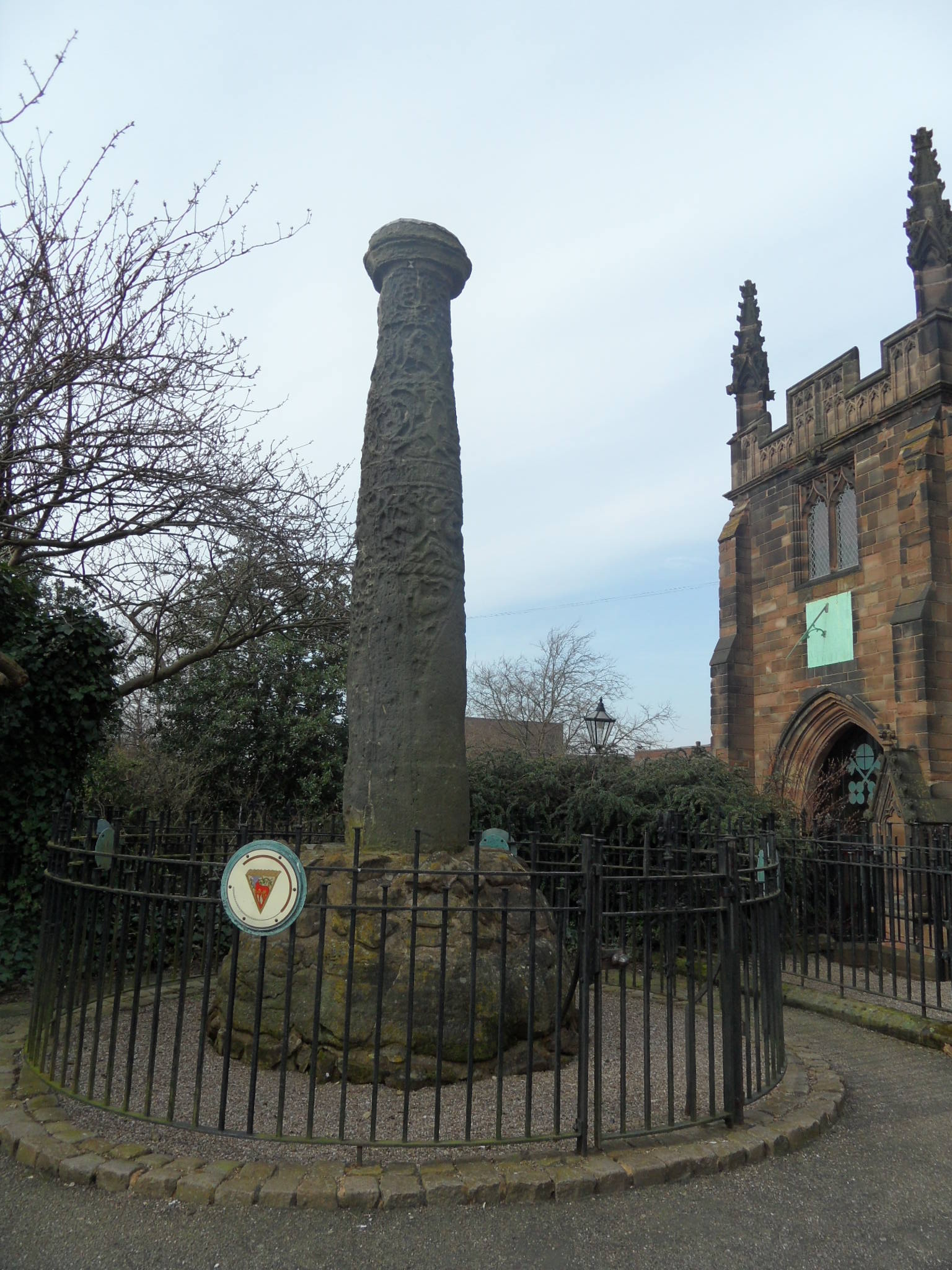
Saxon Cross Shaft, WolverhamptonThe elements and pollution have not treated the shaft kindly but its still clear that this was an incredible piece of craftmanship – the Black Country History website describes it as, ‘one of the finest cross shafts in the Midlands’. The carvings of acanthus leaves which decorate the shaft alongside those of birds and beasts have given archaeologists some problems when trying to establish a date as they suggest different periods. The plaque accompanying the shaft in the churchyard has decided to go with the earlier date of the ninth century, whilst others believe late tenth century is more accurate.

Cross Shaft Wolverhampton

On the way out of the churchyard I noticed another stone with a good back story. Known as the Bargain Stone, its said to be where the good (and probably not so good) folk of Wolverhampton would agree sales and make deals by shaking hands through the hole. The nearby plaque suggests it is an old gargoyle and the hole is what remains of its mouth.
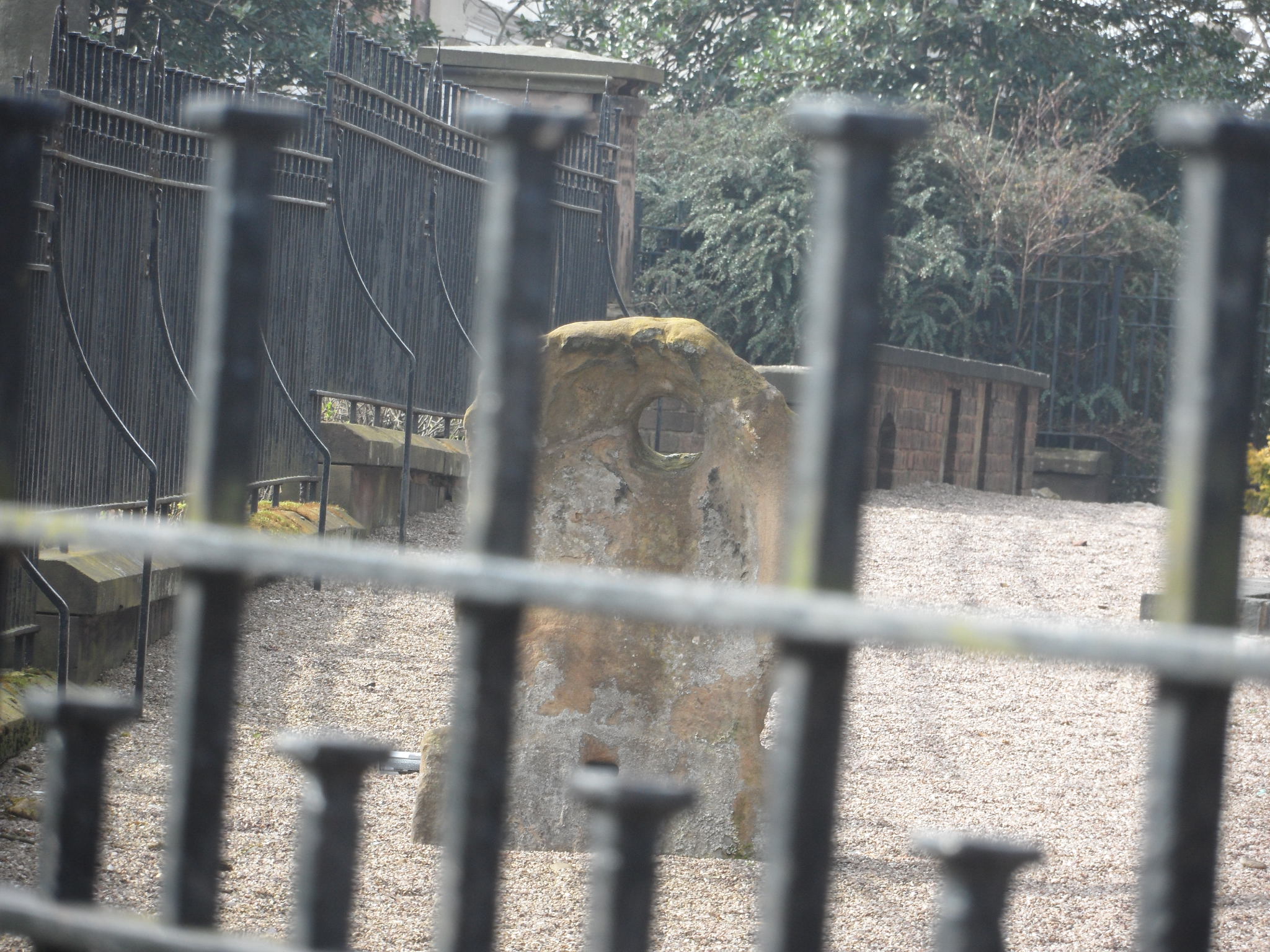
SAM_0031

Talking of hands, why didn’t it occur to me to put my hands over the railings to take a better photo?

As if ancient crosses and stones weren’t enough of a treat, we also found Holden’s Brewery’s Great Western near to the train station. This is a proper pub – cobs on the bar, Holden’s Golden Glow (amongst other delights) on tap and really friendly staff. Although we were tempted to sit outside in the sun, the interior was so quirky and there was such a nice atmosphere, we sat inside.

Great Western

Wished I’d got the train. Definitely not driving next time.
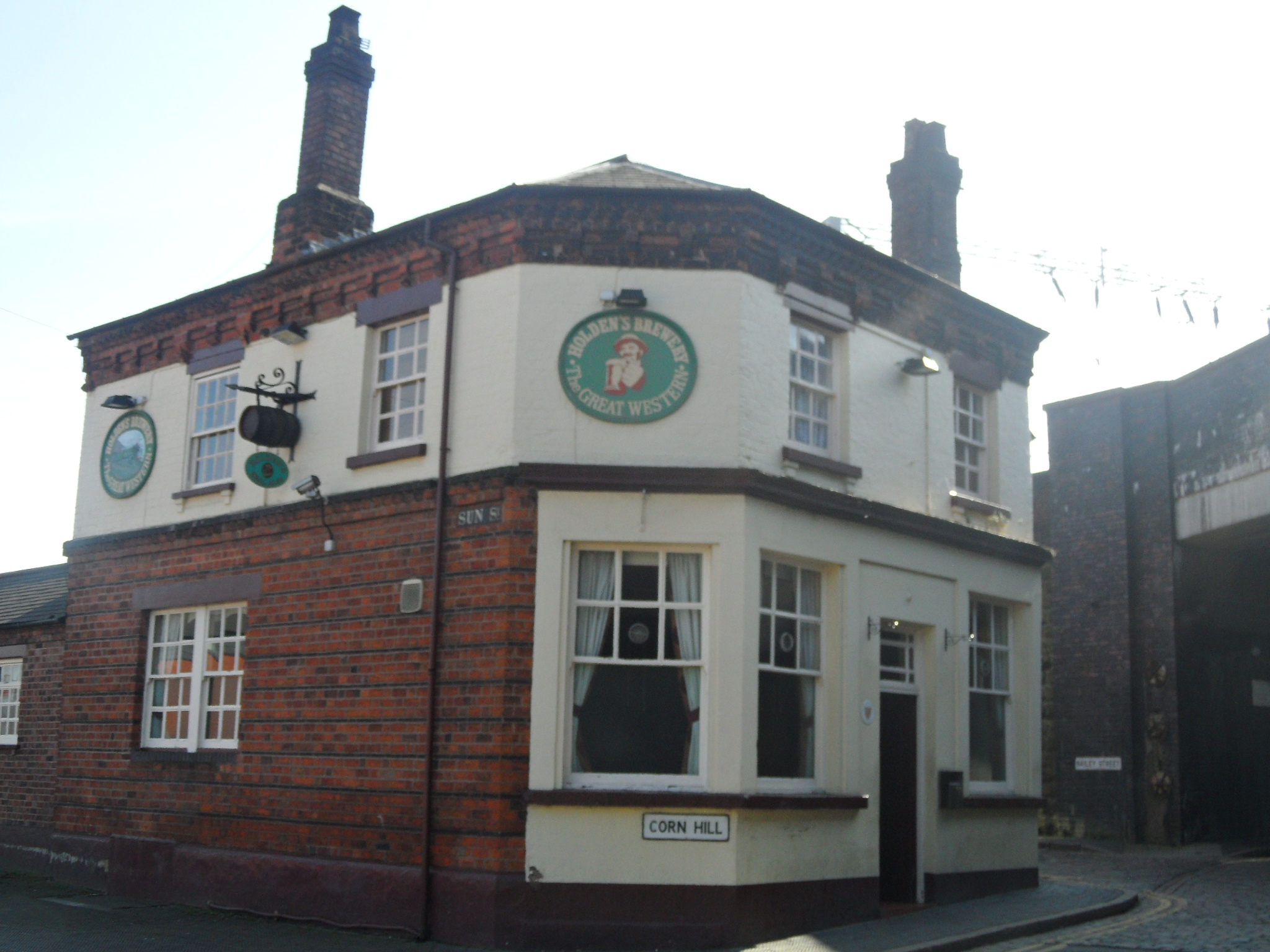
The Great Western

The great Great Western

We walked off our pork baps with a little bit of a wander around the city streets. This building caught my eye, not only because it has no floors, meaning you can see down into the cellar, but also because of the handwritten sign someone had stuck to the window.
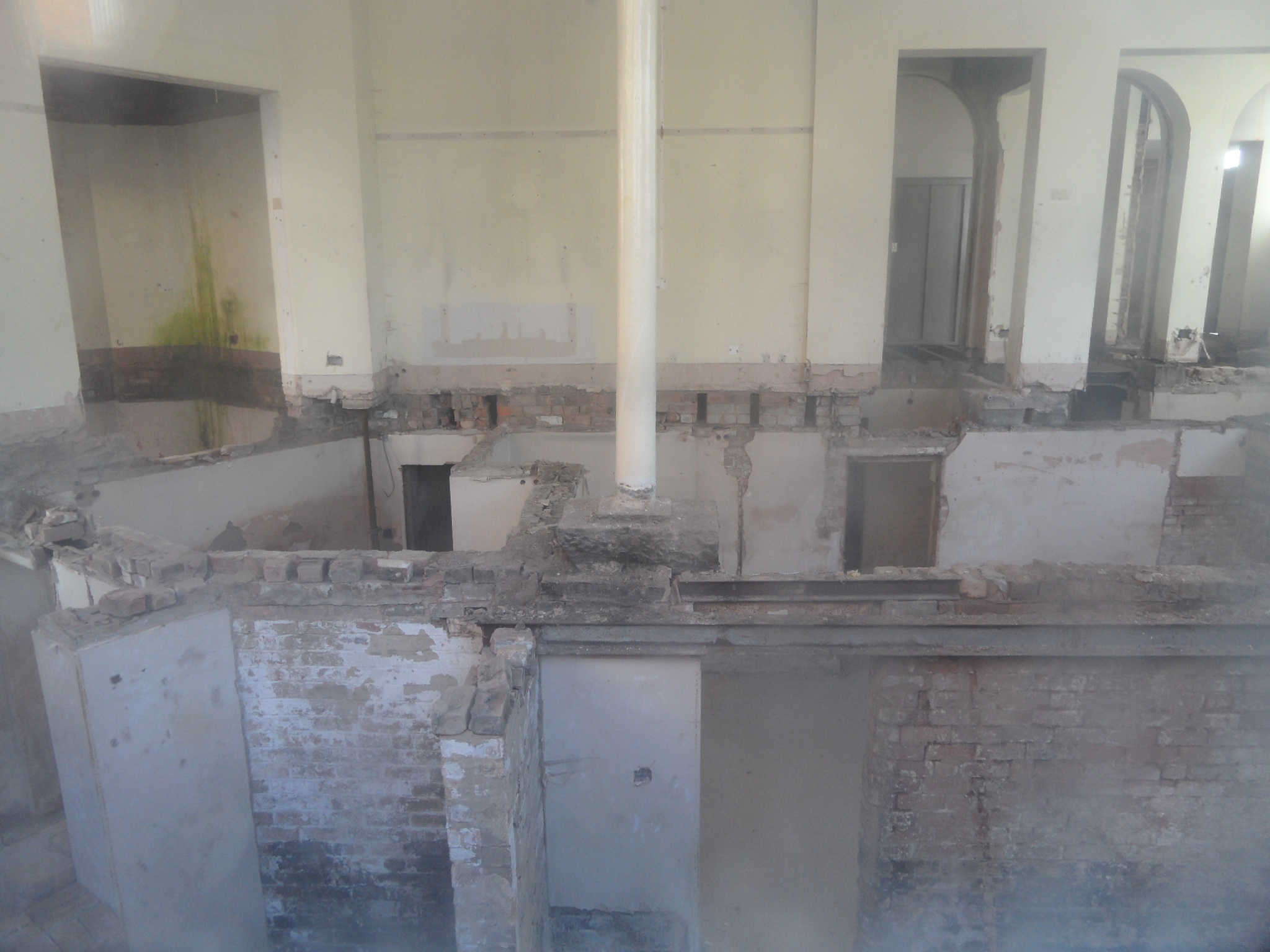
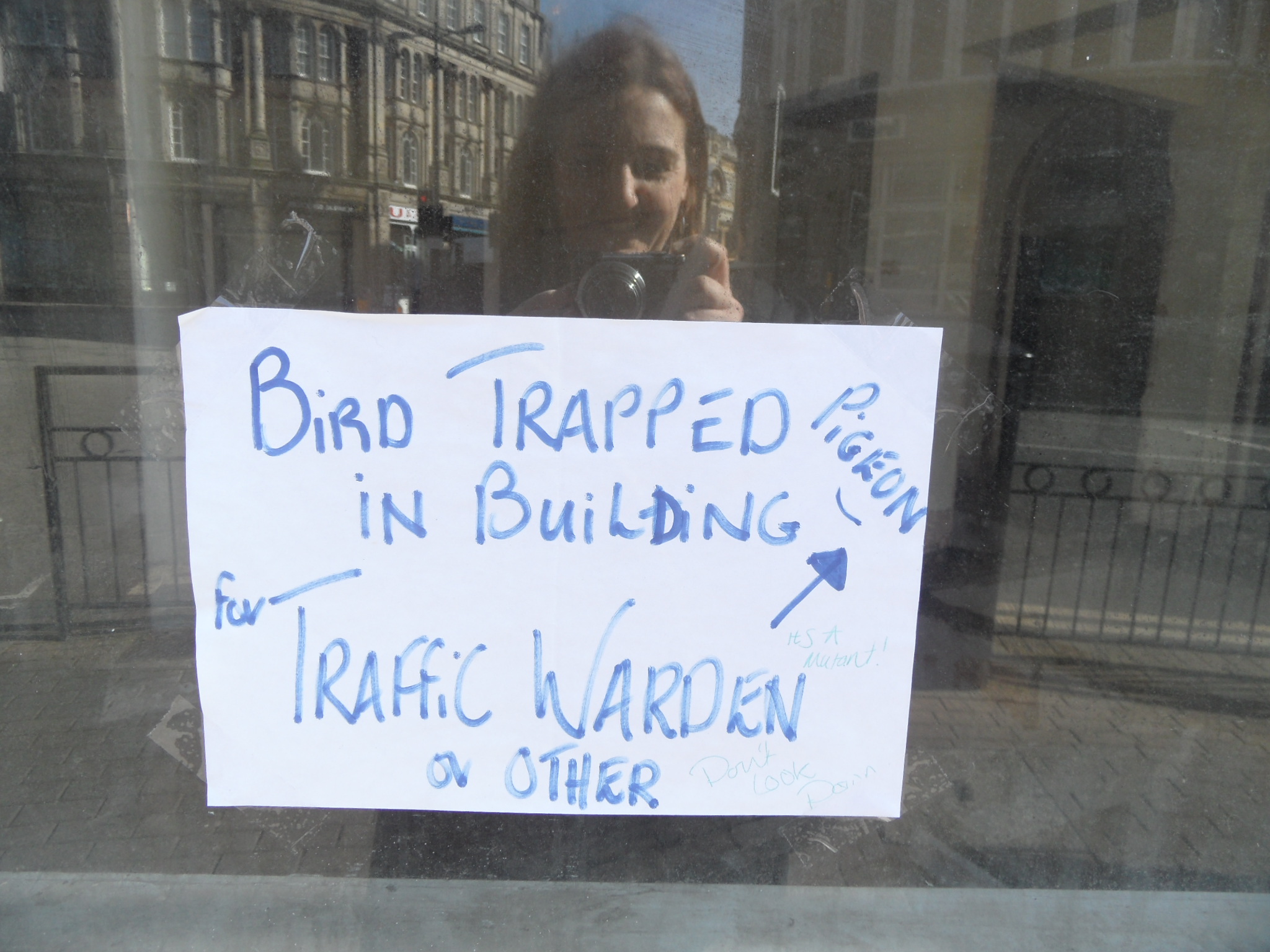
SAM_0045SAM_0046I’m not sure a traffic warden would be the person I’d turn to in a trapped bird scenario but maybe they do things differently in Wolverhampton.

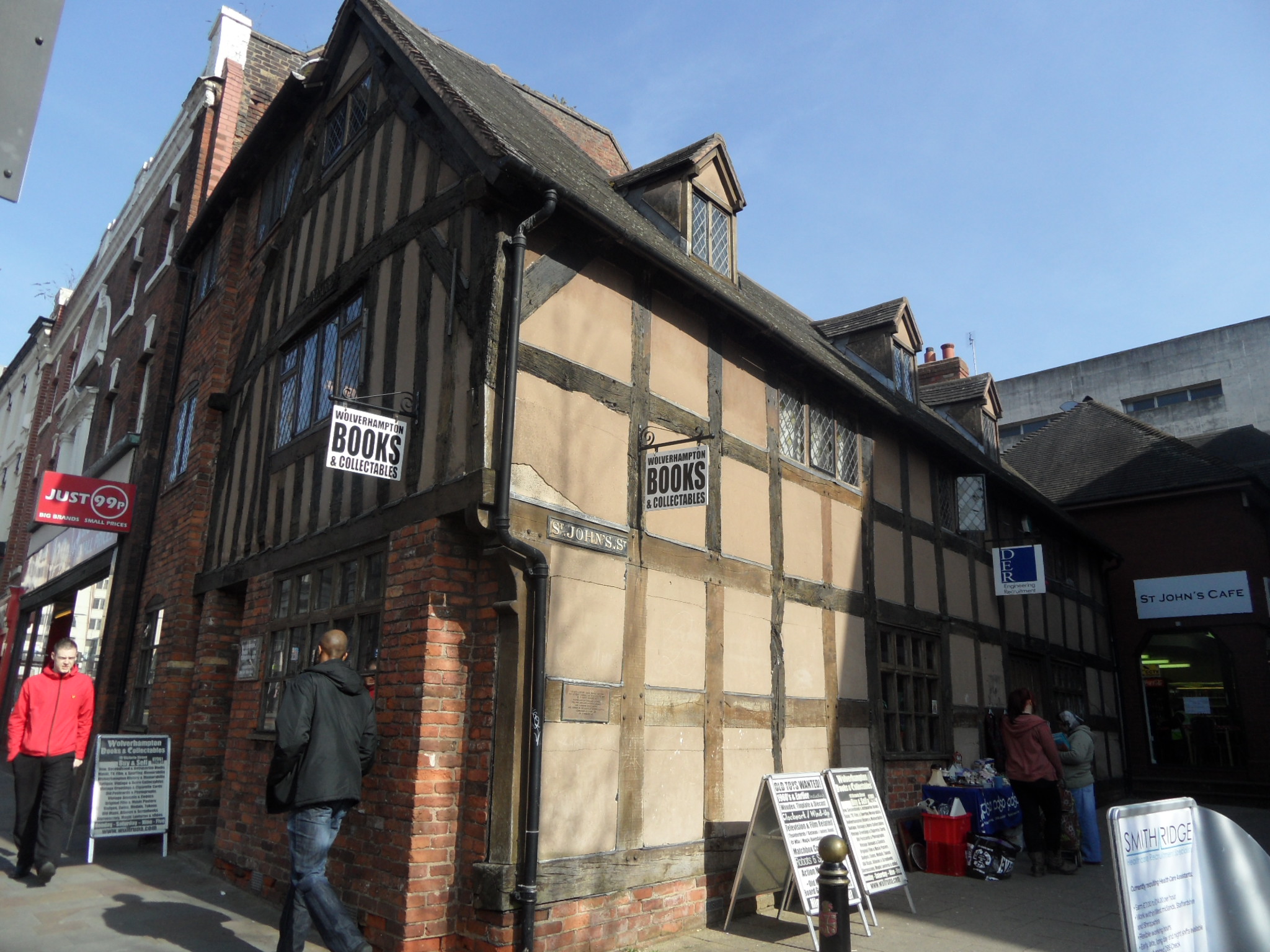
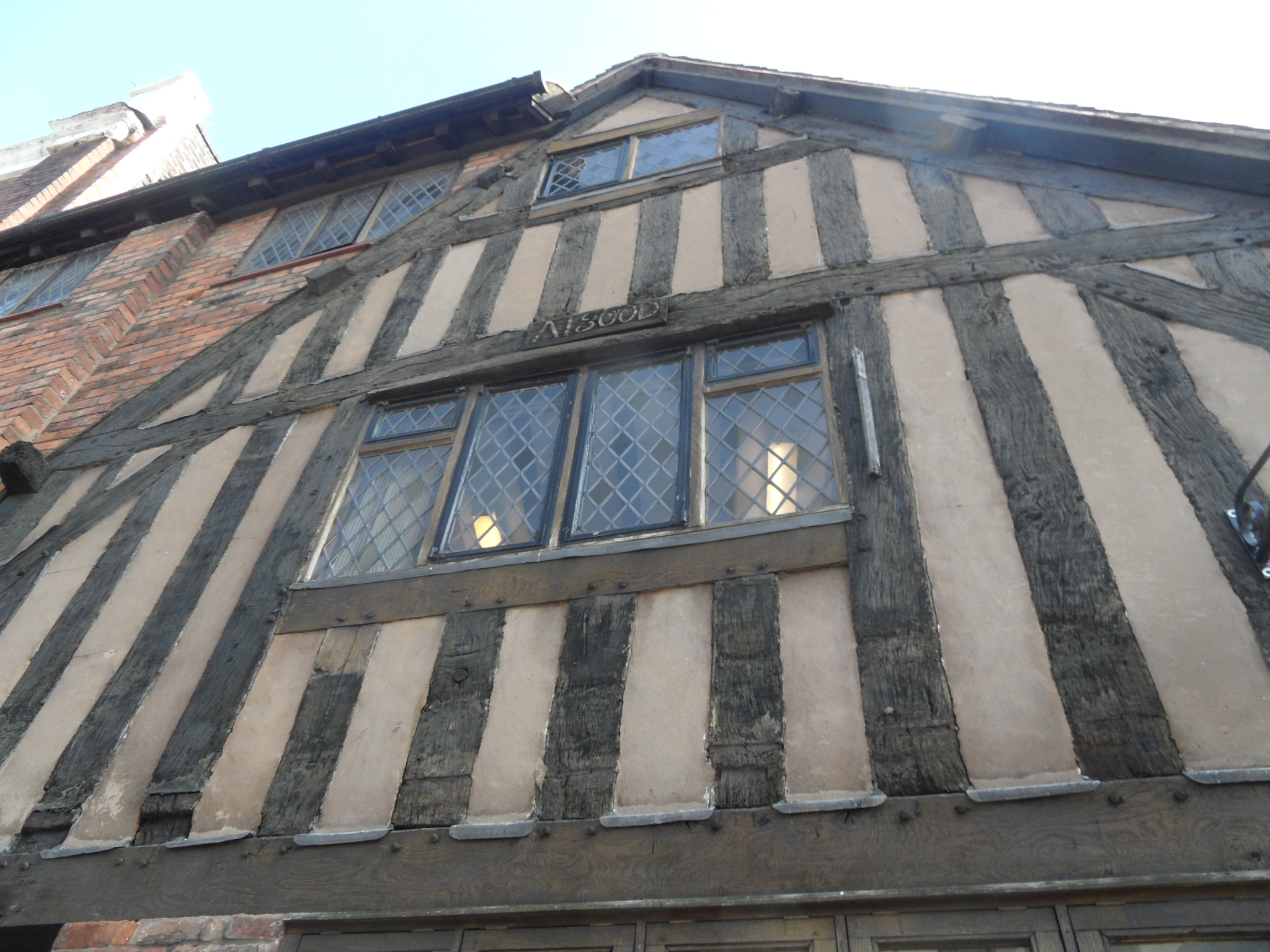
Another perplexing sign is the one suggesting that the half timbered building on the junction of Victoria St and St John’s Lane was built in AD1300. It wasn’t and no-one knows the reason behind the claim – the best suggestions anyone has seems to be that it was some kind of joke to emphasise that it was a really, really old building! It more likely dates back to the seventeenth century when it was once an inn known as The Hand. These days its home to Wolverhampton Books & Collectables, where you can buy anything from an ancient tome on the history of Staffordshire to a souvenir 1950s Wolverhampton Wanderers hankerchief (which you may, or may not, wish to blow your nose on, depending on your allegiances…).
SAM_0053

SAM_0055

We took the scenic route back to Lichfield (not through choice but because I went the wrong way on the ring road), passing through Wednesfield, Sneyd, the intriguingly named New Invention and Brownhills before stopping off at Waitrose for a couple bottles of Golden Glow.

Sources:

http://blackcountryhistory.org/collections/getrecord/WOHER_MBL337/

http://www.historywebsite.co.uk/listed/lindylou.htm
Lamb Carvery

Just a very quick update on the old church tower at Shenstone. I haven’t had chance to get over there since writing the previous posts on the subject and so this morning, I was really grateful to receive a couple of photographs, taken just today, which show the carved stone on the tower really clearly.

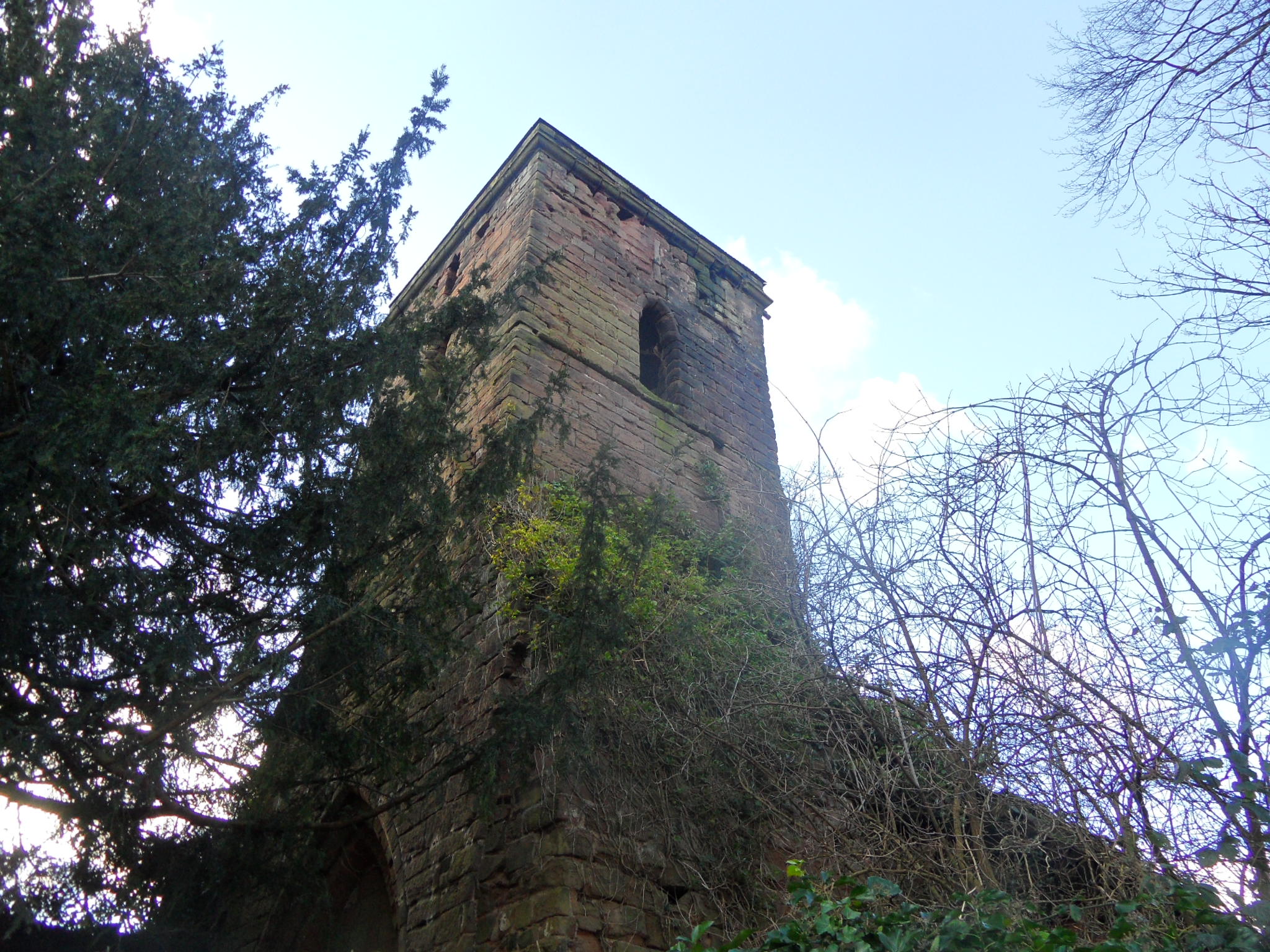
In the churchyard at the top of the hill is an old tower...

In the churchyard, at the top of the hill, there is an old tower…

...and in the old tower is a door...

…and in the old tower, there is a door…

The carved stone at the ruined old church at Shenstone

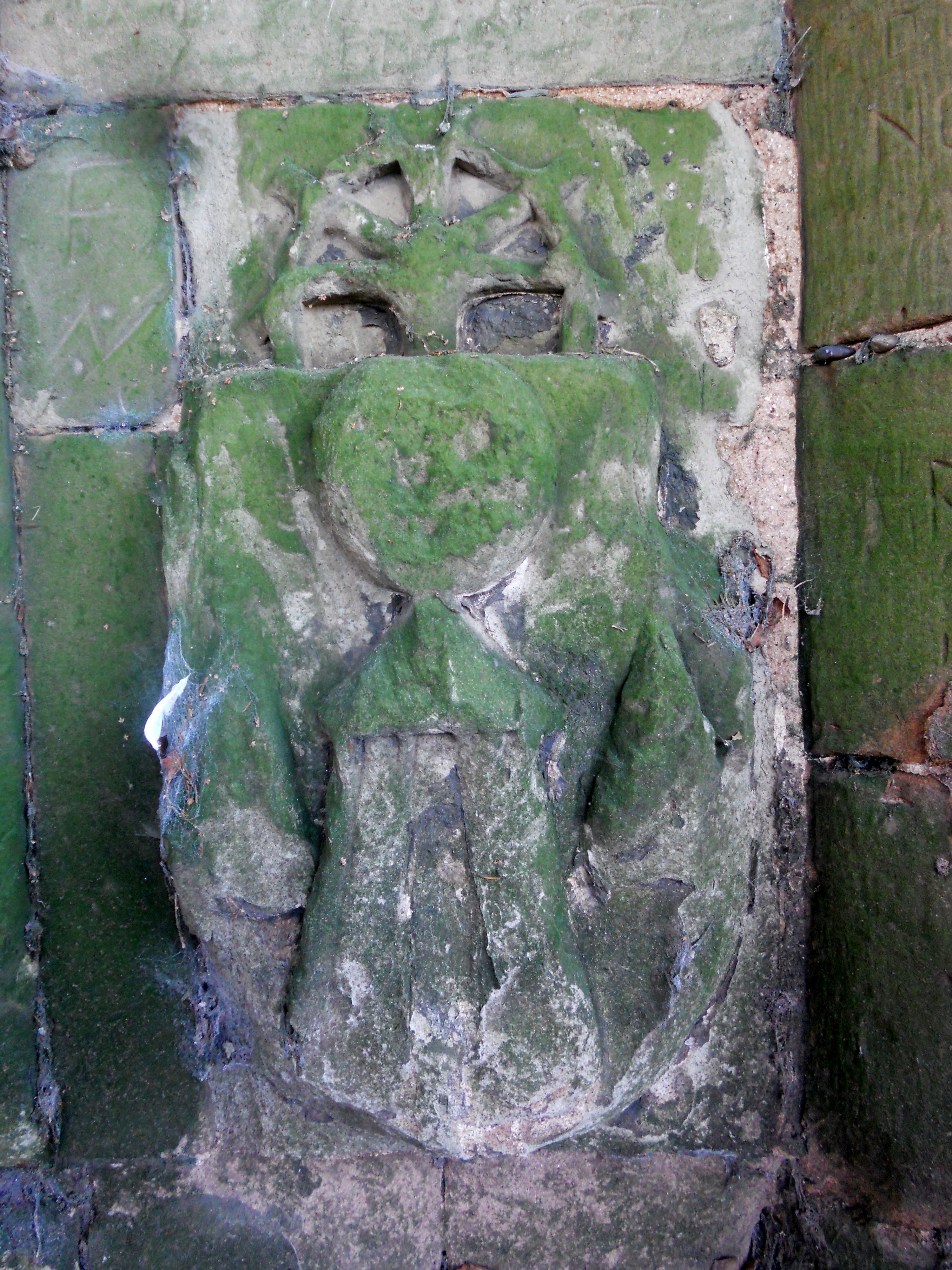
…and next to the door is this carved stone

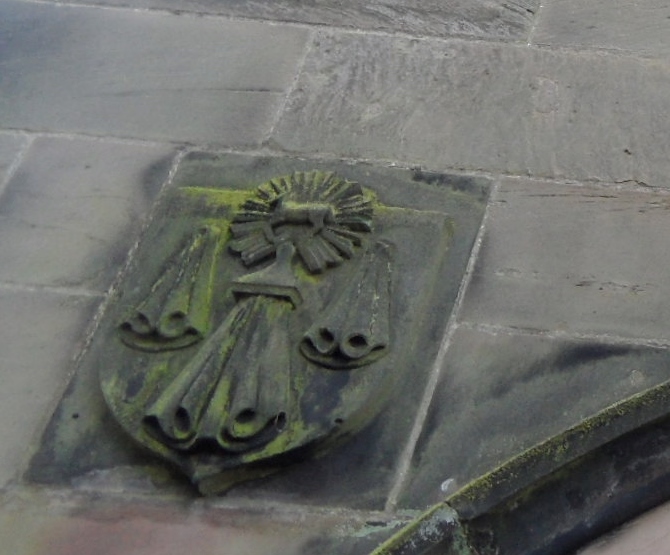
Although centuries of exposure to the elements has worn away much of the detail, including the lamb (which Mr Foulkes may have been referring to when he reported seeing a stone with a carving of a lamb near to the north door in the late 1890s), it can be identified as the arms of the Merchant Taylors, one of the twelve great Livery Companies of London. It shows a tent (which apparently the Taylors would once have made for jousting tournaments) with an ermine robe either side (another nod to their trade) beneath a lamb within a sun. The lamb represents John the Baptist, the saint whose name was given to both the old church and the more recent church here.  It looks like there is some graffiti carved into the old sandstone blocks of the tower too, which may also be of interest.

St Michael's Church at Lichfield's version of the arms

St Michael’s Church at Lichfield also has a version of the arms on the porch.

There was a story that after the old church was abandoned as it was deemed unsafe, ‘it was found to be so remarkably sound that blasting operations were required to demolish the masonry’. Eventually they succeeded and materials from the old church were sold in 1853/54 for £111 2s 8d.

I am not sure what the connection between the Worshipful Company of Merchant Taylors of the City of London, and parish churches at Shenstone and Lichfield could have been, but I’ll keep looking and if anyone has any ideas or suggestion in the meantime, please share them!

Sources:

Parliamentary Papers, House of Commons and Command, Volume 48

Walsall Legends

My husband grew up in the Highgate area of Walsall, where the malty aroma from the local brewery used to hang in the air and the local kids would tell stories about the mysterious ruined windmill. Thought to have been built in the late 1600s to grind corn, Highgate windmill has a fascinating history which you can read more about here in this article by Walsall historian and writer Stuart Williams. If you want to go and have a look yourself, go sooner rather than later. Once spring gets properly underway, it’ll be hard to see the mill for the trees.

Highgate Windmill

Highgate Windmill, Walsall

Last Summer I could barely see the windmill but did spot this painted board through the trees.

Last Summer I could barely see the windmill but did spot this painted board through the trees.

Sadly, there’s not even a whiff of brewing in the air at the moment – the Grade II Listed Highgate Brewery hasn’t been operational since 2010 and stands unused behind the locked centenary gates (purchased and installed by the Friends of Highgate Brewery in 1998), its future uncertain at present.

Highgate Brewery

Highgate Brewery

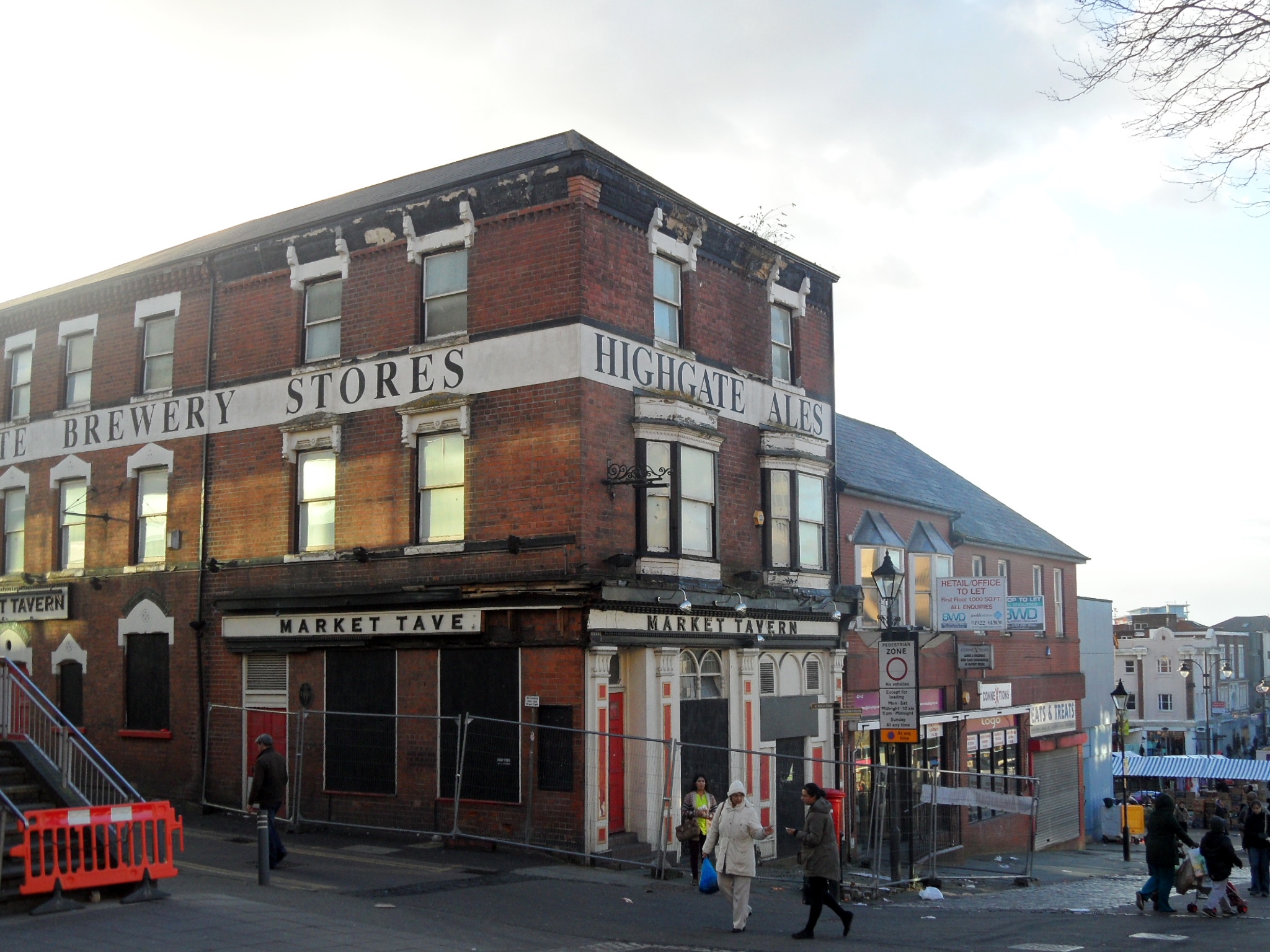
Yesterday, as well as visiting the family, we went to have a look around the Art Gallery and the town. On the way back we passed the pub that we once knew and loved as the Brewery Stores & Vaults. Back in the late 1990s, it was one of the liveliest places in town but now, like the brewery whose name it bears, it stands empty, expect perhaps for the hooded figures and disembodied heads said to lurk in the cellars

SAM_9911

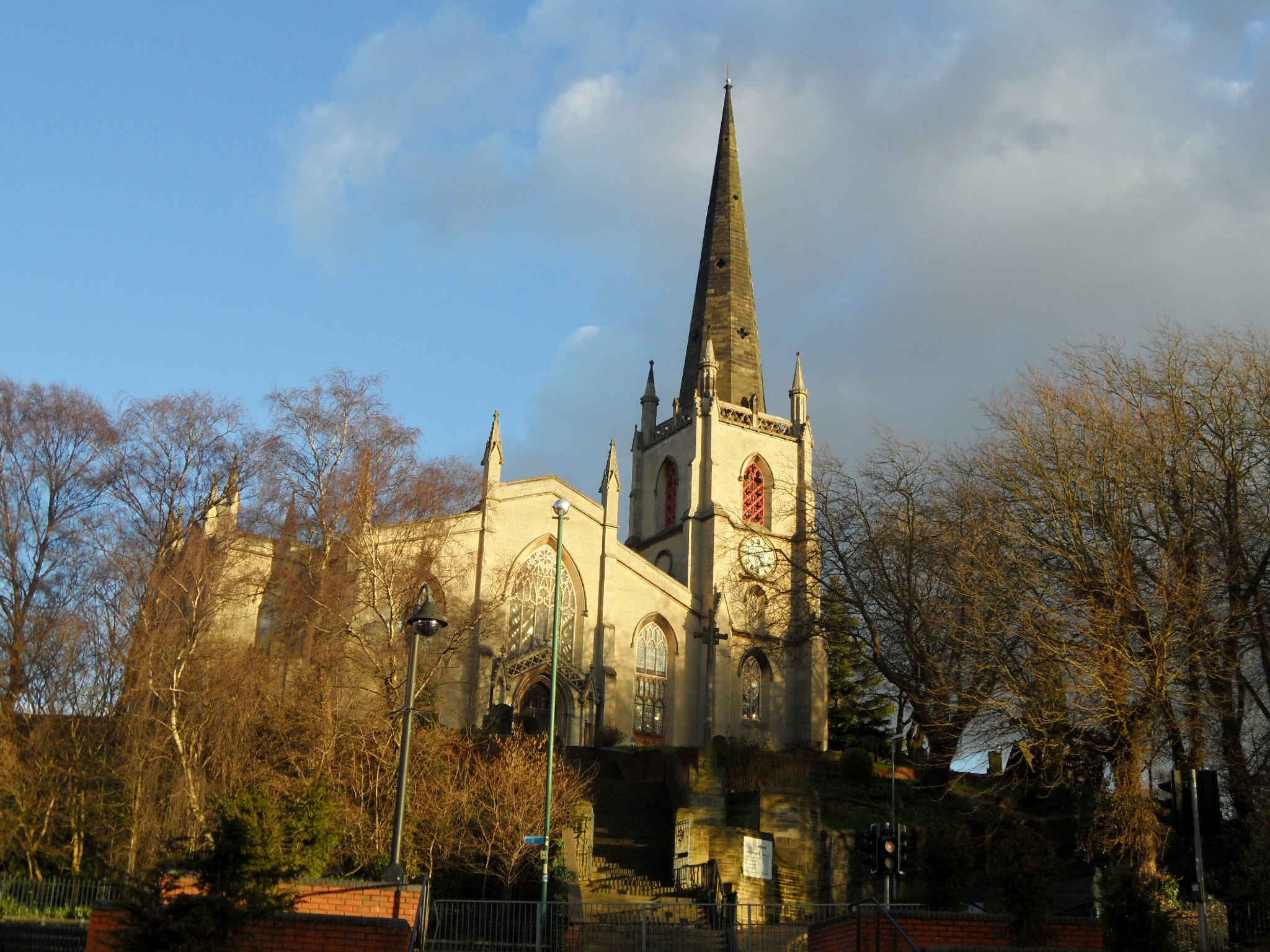
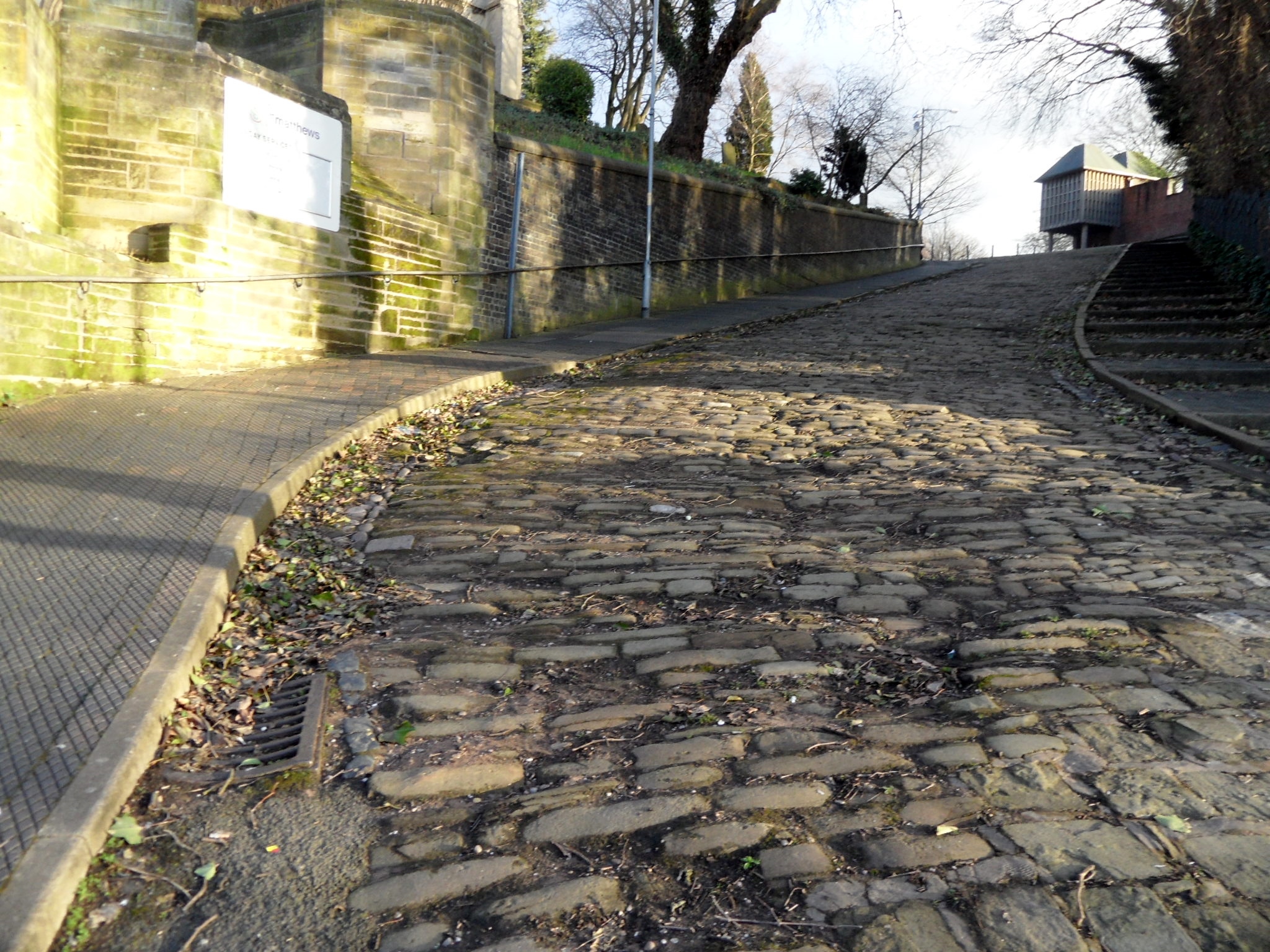
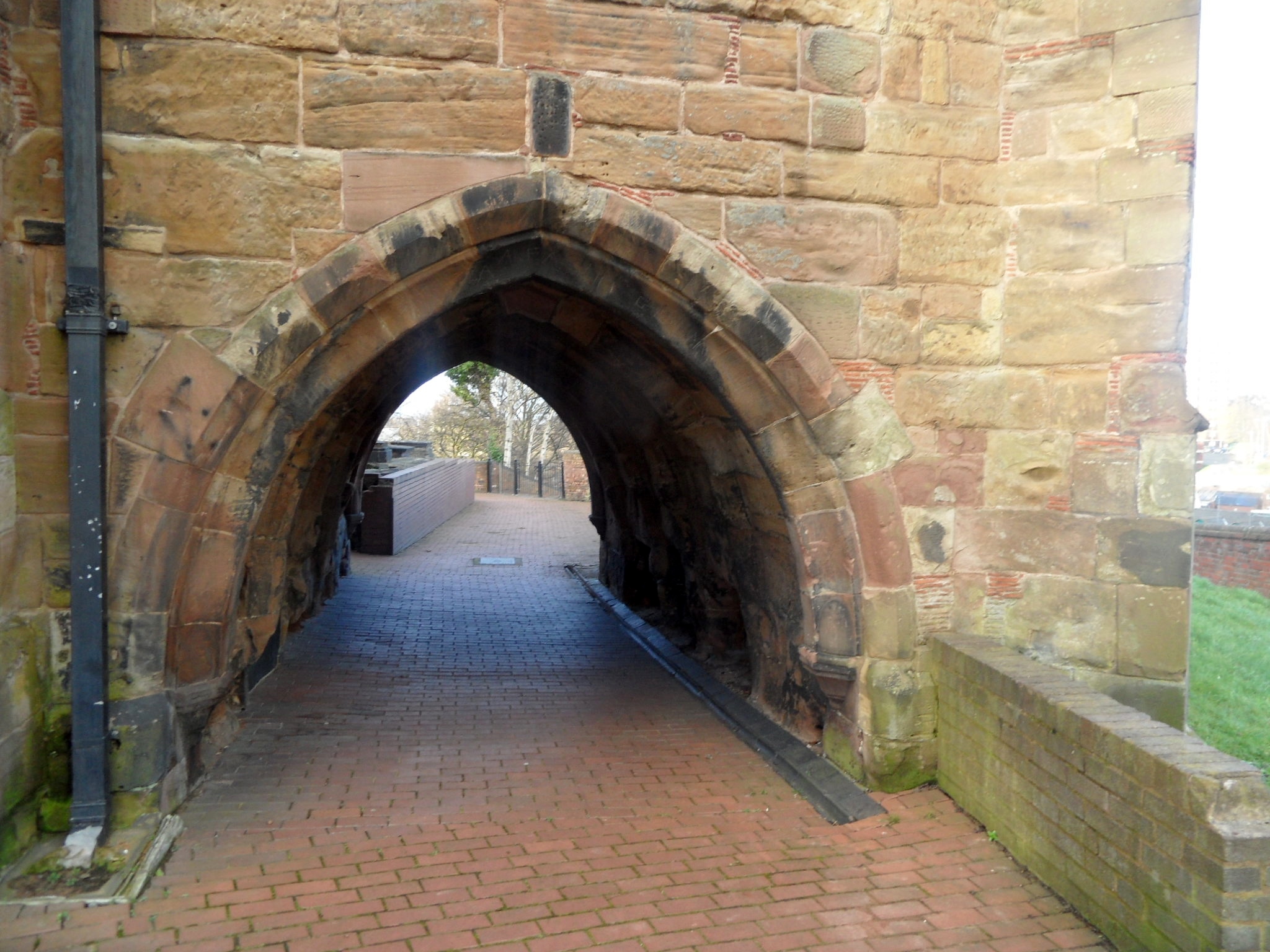
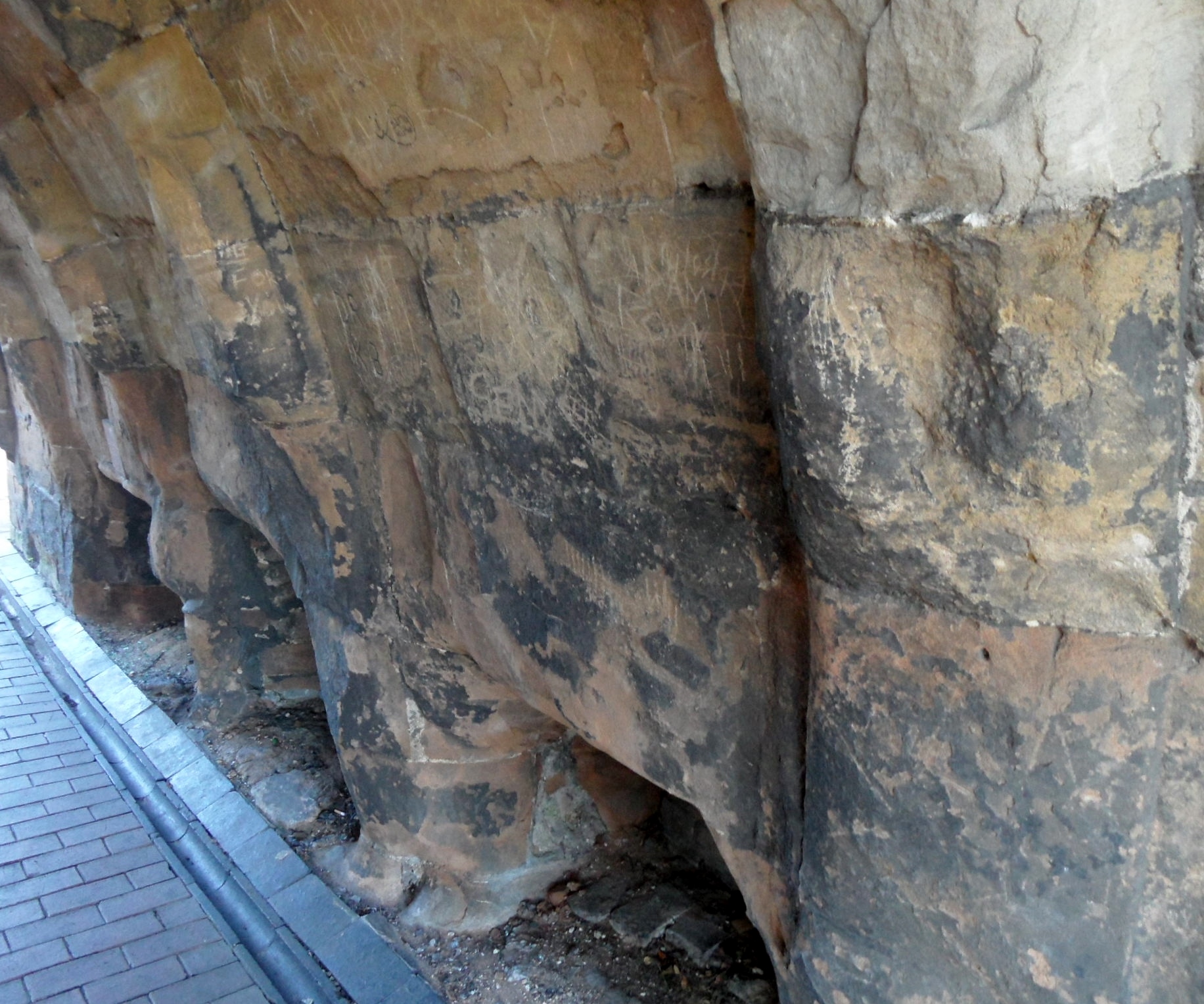
We continued our way back over the limestone hill where the church of St Matthew’s has dominated the Walsall skyline since at least the thirteenth century (although it has only been know by that name since the eighteenth century – it was previously ‘All Saints’). The first time we walked up this hill together, Mr Gomez told me that it was paved with medieval cobbles. I’m not sure if that is true but it’s something that has fascinated me ever since, as has the arched passage on the east end of the church, covered in graffiti and with curious niches on the east side.

As well as this overground passageway, there are supposedly underground tunnels running from here to the White Hart Inn at Caldmore, Barr Beacon and Rushall Hall.  In a history section of the Walsall Council website, there’s a quote from a Mr G of Bath St who in the 1950s said one of the entrances to the tunnels was located at the bottom of some steps of a toilet which once stood on Caldmore Green. He also added that he had been told by some old women that during the reformation, some priests went down the tunnels to escape and were killed after they were filled in.

St Matthew's Walsall

St Matthew’s church, Walsall

Wasall from the Art Gallery.

St Matthew’s Walsall as seen from the Art Gallery.

Medieval cobbles

Medieval cobbles leading up the hill?

Passageway under the chancel of St Matthew's

Passageway under the chancel of St Matthew’s

SAM_9929

Niches in St Matthews passageway

Niche interest

One of my favourite stories about St Matthew’s and Walsall is one I read recently in a book of Staffordshire folktales.  Apparently, the church was originally supposed to have been built on a meadow at the ‘Churchery’, now known as the Chuckery. However, this was where the fairy folk danced and so, naturally, they objected to the plans and took matters into their own tiny hands, moving the foundations of the new church up the hill to the site where it stands today. In another version of the story, the church was moved by witches who had transformed themselves into white pigs.

We walked up a good appetite in Walsall and so we finished our day at the legendary Hargun’s Sweet Centre on the Caldmore Rd, intending to take some goodies back to Lichfield, although they never actually made it past Walsall Wood in the end. Anyway, what I learned today is not only that you can eat a lot of baklava in a twenty minute car journey, but also that once in a while, it’s good fun to explore what’s on someone else’s doorstep.

Sources

Walsall: Economic history’, A History of the County of Stafford: Volume 17: Offlow hundred (part) (1976), pp. 180-208.

http://www2.walsall.gov.uk/History_Projects/Caldmore/A_Walk_Around_the_Green/18.asp

http://www.stmatthews-walsall.org.uk/info/mainhistory.shtml

http://www.blackcountrybugle.co.uk/TALE-WALSALL-PARISH-CHURCH-FAIRIES/story-20122807-detail/story.html

Staffordshire Folk Tales by The Journeyman

A Stone's Throw Away

I recently read a great post about the map maker John Ogilby on Kate Shrewsday’s wonderful blog. In 1675, Mr Ogilby was the creator of the first ever British road atlas, and after reading Kate’s post, I took another look at the section of his map of the London to Chester road, as it passed over the Warwickshire border into Staffordshire and on through Lichfield. You can see the map here.

The majority of the place names are recognisable and in use today, albeit with some changes to the spelling –  Burowcop Hill, Cank Wood and Sutton Cofield amongst others.There are however a handful of names that appear to have been lost over the last three hundred or so years. One intriguing feature marked on the route is the ‘Bishop’s Heap of Stones’, eight miles or so from Lichfield, between Canwell Hall (or Sir Francis Lawley‘s Cannell Hall as it’s shown on the map) and Hints.

The name seems to refer to a literal heap of stones, and it seems there are at least two  possible explanations for why this pile of pebbles was associated with a bishop. Thomas Pennant, when writing about his journey from Chester to London, discovered a handwritten note in a copy of William Dugdale’s ‘Warwickshire’, added by Dugdale himself, which read as follows:

There is a common report (which passeth for currant amongst the vulgar) that the great heape of stones, which lyeth near the road way from Litchfeild towards Coleshill, upon Bassets heath, called the Bishops Stones, and those other lesser heapes, which lye in the valley below; were at first laid there in memorie of a bishop and his retinue, who were long since rob’d and killed, as they were travailing upon that way: but this is a meere fabulous storye: for upon an inquisition made in King James his time, concerning the extent of common upon that heath, betwixt Weeford and Sutton;there was an old woman, called old Bess of Blackbrooke, being then above an hundred yeares of age, who deposed (inter alia) that the Bishop of Exeter living then at Moore Hall: taking notice how troublesome such a number of pibble stones as then lay in the roade thereabouts, were to all passengers, caused them to be pickt up, and thus layd upon heapes

In 1769, in his book The History and Antiquities of Shenstone, in the County of Stafford, the Reverend Henry Sanders, gives a similar but more detailed explanation. Sanders says that a woman from Blackbrook came to the inquiry into the parish boundaries and testified that in the reign of Henry VIII, or just after, John Vesey, the Bishop of Exeter had decided to become a benefactor to his birthplace of Sutton Coldfield. Bishop Vesey obtained a charter of incorporation for the town, revived the market and also built a number of stone houses (1) as part of an attempt to create an industry manufacturing Kersey, as they did in Devon. Bess (I’m assuming that she is ‘the woman from Blackbrook’ Sanders refers to), also told how when the Bishop was at Sutton he was annoyed by the rolling pebbles on the road which caused travellers’ horses to stumble and sometimes fall and so he employed poor people to gather them and lay them in heaps. Sanders describes the position of these heaps as follows:

On the hollow way between Weeford Hills or rather between Swynfen and Canwell lie divers heaps and one great one at the top of the hill at Weeford park corner which according to the tradition of the country people were placed there in memory of a bishop of Lichfield who riding with many attendants was slain with those servants by robbers and that these heaps were where the bodies were found which agreeable to this account and to honest and accurate antiquaries is entirely fabulous

I also think these stories are fabulous, but I suspect not quite in the way that the Reverend meant! It seems the tale of the murdered bishop didn’t ever hold much weight, but what about the version given by the local centenarian (who sounds like a legend in her own right!)? Were the stones gathered by the poor at the request of a Bishop or did they serve another purpose?  It’s interesting that there may have been more than one heap. Piles of stones are of course found across the world, and have many meanings and significances. I suspect that the Bishop’s heaps of stones will have been swept away, perhaps gradually scattered back onto the roads from where they came. It’s interesting to think that even a humble pebble beneath your feet may once have been part of a much bigger story.

Notes:

1 You can see one of the stone houses built by Vesey here

2 Kersey was a coarse cloth, often used to make servants clothing, and although it takes its name from the village in Suffolk, I understand that in Vesey’s time it was Devon that was at the centre of the Kersey industry in England.


Friars on the Run

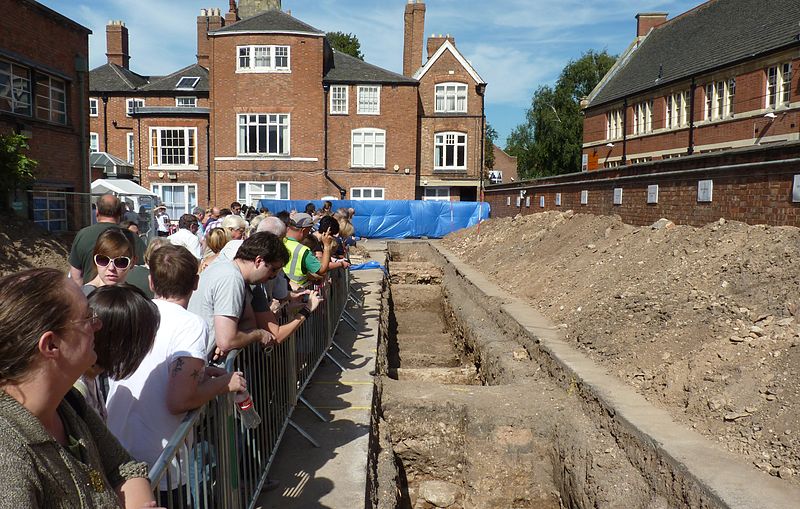
On Monday morning we’ll learn if human remains found beneath a car park in Leicester are those of Richard III, buried in the city’s Greyfriars church after his defeat at Bosworth in 1485.

Archaeological Dig Open Day at Greyfriars Leicester. 8th September 2012.
Image by RobinLeicester, Wikimedia Commons.

Naturally, the possible discovery of England’s lost king has generated a huge amount of interest and last week I had an email from someone in Lichfield who has been doing some background reading on the subject. In trying to find out more about the story of Greyfriars and King Richard III, they found that the Greyfriars were also linked to King Richard II. The reason for the email was to see if anyone knew anything more about the role of Lichfield in the story, as per the the following passage from the ‘History of the County of Leicestershire’.

The sympathies of the Leicester Franciscans for Richard II brought serious consequences upon the friary in 1402. A Franciscan declared to Henry IV that he and ten other friars of the house at Leicester, together with a master of divinity, had conspired in favour of the deposed Richard. In consequence eight Franciscans of Leicester, with the master of divinity, were arrested and brought to London for trial. The remaining two friars escaped. After two juries had failed to convict, a third jury found the prisoners guilty, and they were executed. Two other Franciscans from Leicester, presumably the two who had at first escaped, were executed at Lichfield about the same time.  In 1402, at a general chapter of the Franciscans held at Leicester, it was forbidden to any of the Order to speak against the king.


My anonymous correspondent wondered why the friars were executed here in Lichfield? What had brought them here in the first place, and was there any sympathy for them or Richard II amongst the Franciscan population here?

Remains of North Wall of Nave of Lichfield’s Franciscan Friary.

Other sources expand on the story a little to tell us that it was Prince Henry, the future Henry V (or at least members of his household) who caught and beheaded the friars at Lichfield. Our own county history tells us that in 1402, Henry IV had ‘ordered knights, squires, and yeomen from various parts of the country to meet him at Lichfield for his campaign against Owain Glyn Dŵr‘. This explains perhaps in part why the friars came to be executed here, but if there’s anyone who can add anything further to this story of fugitive Leicester friars in Lichfield, it’d be great to hear from you.

Notes:

A programme called ‘Richard III:The King in the Car Park’ will be shown on Channel 4 at 9pm on Monday 4th February.

Talking of archaeology digs in car parks, I believe that the report on the Friary Outer is due out anytime now – as far as I’m aware Victorian cellars and medieval pottery were the main discoveries. Of course, everyone knows that if you want to find lost kings in Lichfield, it’s Borrowcop you need to investigate….

Richard II visited Lichfield several times. Most famously he spent Christmas in 1397 at the Bishops Palace, returning to the city two years later as a prisoner of his cousin Henry Bolingbroke, soon to be Henry IV.

Edit 4/2/2013 – I probably don’t need to tell you this but it’s been confirmed beyond any reasonable doubt that it is him! King Richard the Third’s remains will now be interred at Leicester Cathedral. I believe there may be a link between this story and Elford too?

Sources:

Friaries: Friaries in Leicester’, A History of the County of Leicestershire: Volume 2(1954), pp. 33-35. URL: http://www.british-history.ac.uk/report.aspx?compid=38172

Historical Dictionary of Late Medieval England, 1272-1485, page 212 edited by Ronald H. Fritze and William Baxter Robison

Lichfield: History to c.1500′, A History of the County of Stafford: Volume 14: Lichfield(1990), pp. 4-14. URL: http://www.british-history.ac.uk/report.aspx?compid=42336

These Routes Were Made for Walking

Last weekend I had an email telling me about a history project over at Bonsall, a village in the Peak District. The Heritage Lottery Fund has awarded them an All Our Stories grant to create six walking trails and accompanying illustrated leaflets, each focusing on different aspects of the village’s history. Getting people involved in the exploration and the celebration of their history is key to the Bonsall project – the trails and leaflets will be researched and developed by the people of the village themselves. To further encourage participation from the community, a programme of talks, workshops, visits and film shows has been put together.  You can follow the progress of the project by following their blog here and the trails will be launched on Sunday 12th May 2013. I’m already planning to visit in the summer, to discover more about the landscape and stories of a place shaped by mining and mills.

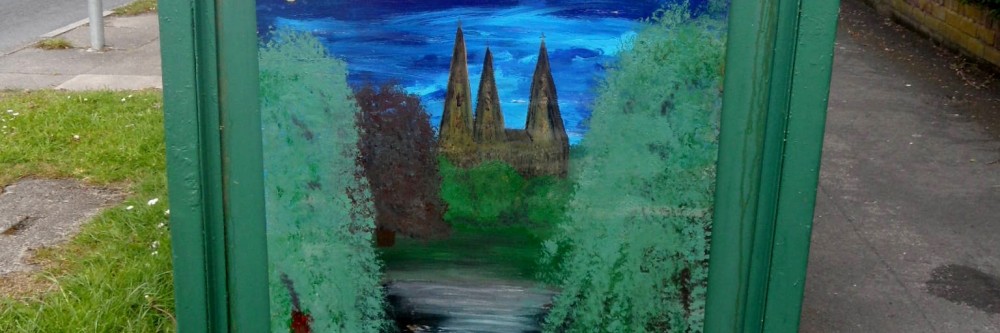
Header from the Bonsall History Blog – A walk through history

Walking trails are a gentle guide, holding your hand as they show you around, but always happy to let go and allow you to make your own discoveries. One of the beauties of exploring places in this way is that even when following the same trails, your walk will be different to my walk, and tomorrow’s walk will be different to today’s.

It’s always inspiring to see what’s going on elsewhere, be it in Bonsall, or the Black Country or anywhere else a wider range of people are encouraged to get involved with telling the stories of a wider range of people and places. Looking at things from a different perspective opens your eyes to possibilities in the place you live in and offers suggestions on how you might listen to the untold stories that surround you. Exploring new places is always a pleasure, but finding new ways of exploring familiar places can be just as rewarding.


Fools & Hobby Horses

The Abbots Bromley Horn Dance takes place each year on Wakes Monday (the first Monday following the first Sunday after 4th September), which means that this year it will be on 10th September.

As far as I can gather, the horn dance is one of those traditions where no-one is quite sure what it’s all about. There are six dancers carrying reindeer antlers, a fool, a hobby horse, Maid Marian, a boy with a bow and arrow, an accordion player & a triangle player. The horns are collected from the church of St Nicholas at 8am and are returned 12 hours later after the participants have danced around the village and out to Blithfield Hall. According to the horn dance of Abbots Bromley website, when one of the horns was damaged in 1976, a piece was sent to be carbon dated. It was found to date back to 1065 (plus or minus 80 years) although the general consensus is that this doesn’t really help to date the dance itself.

I’m ashamed to say that every year I’ve planned to go and watch the dance, but haven’t made it for one reason or another. I have been to the village on several non-horn dance occasions though and it is a lovely place.  However, Mr J Carver, in his 1779 book ‘The Universal Traveller’ wasn’t impressed , saying,

It stands at the distance of a hundred and twenty eight miles from London but contains nothing worthy of note

(Lichfield fares a little better. In Mr Carver’s opinion, ‘It is a long, straggling place but has some handsome houses’).

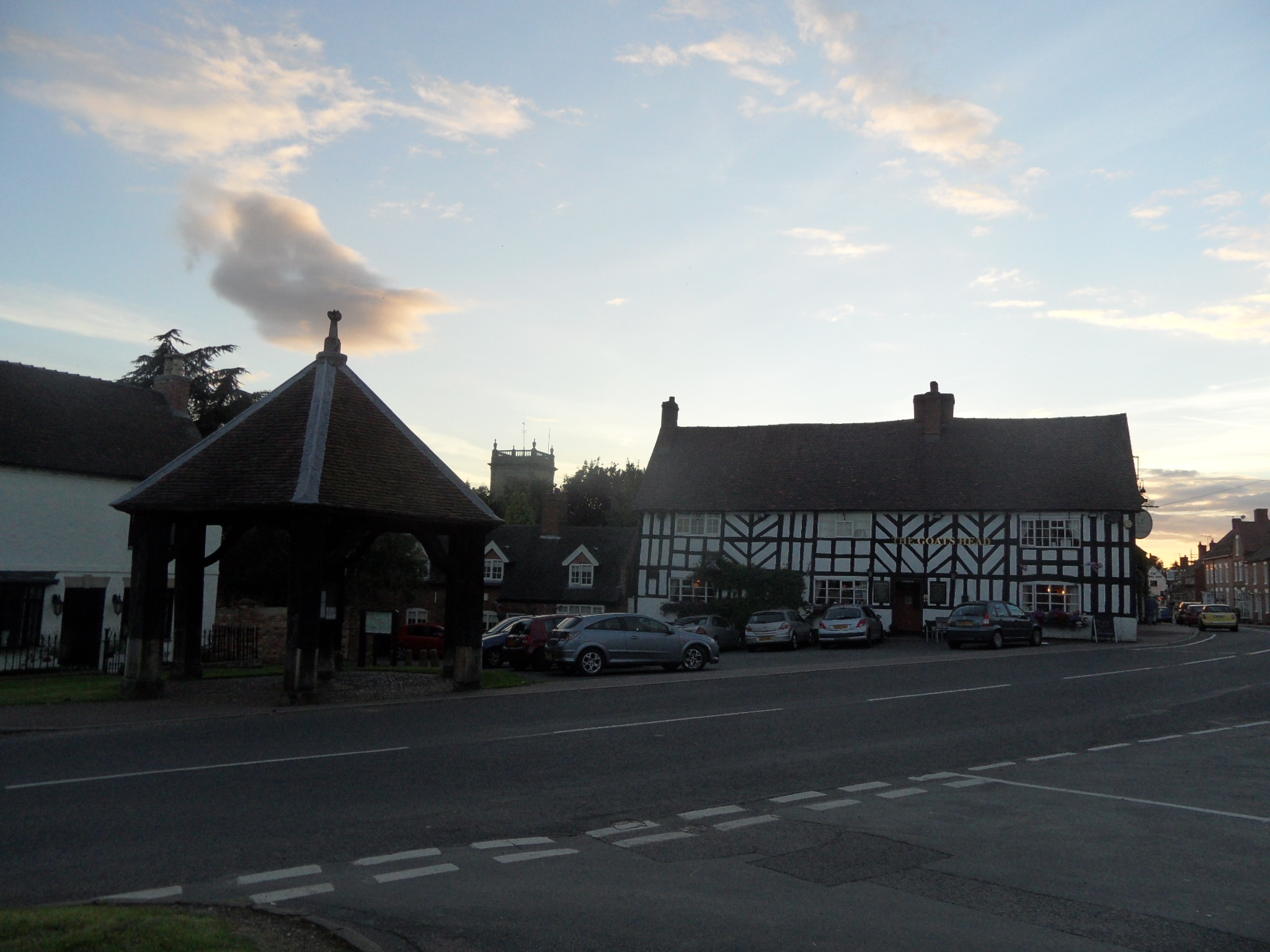
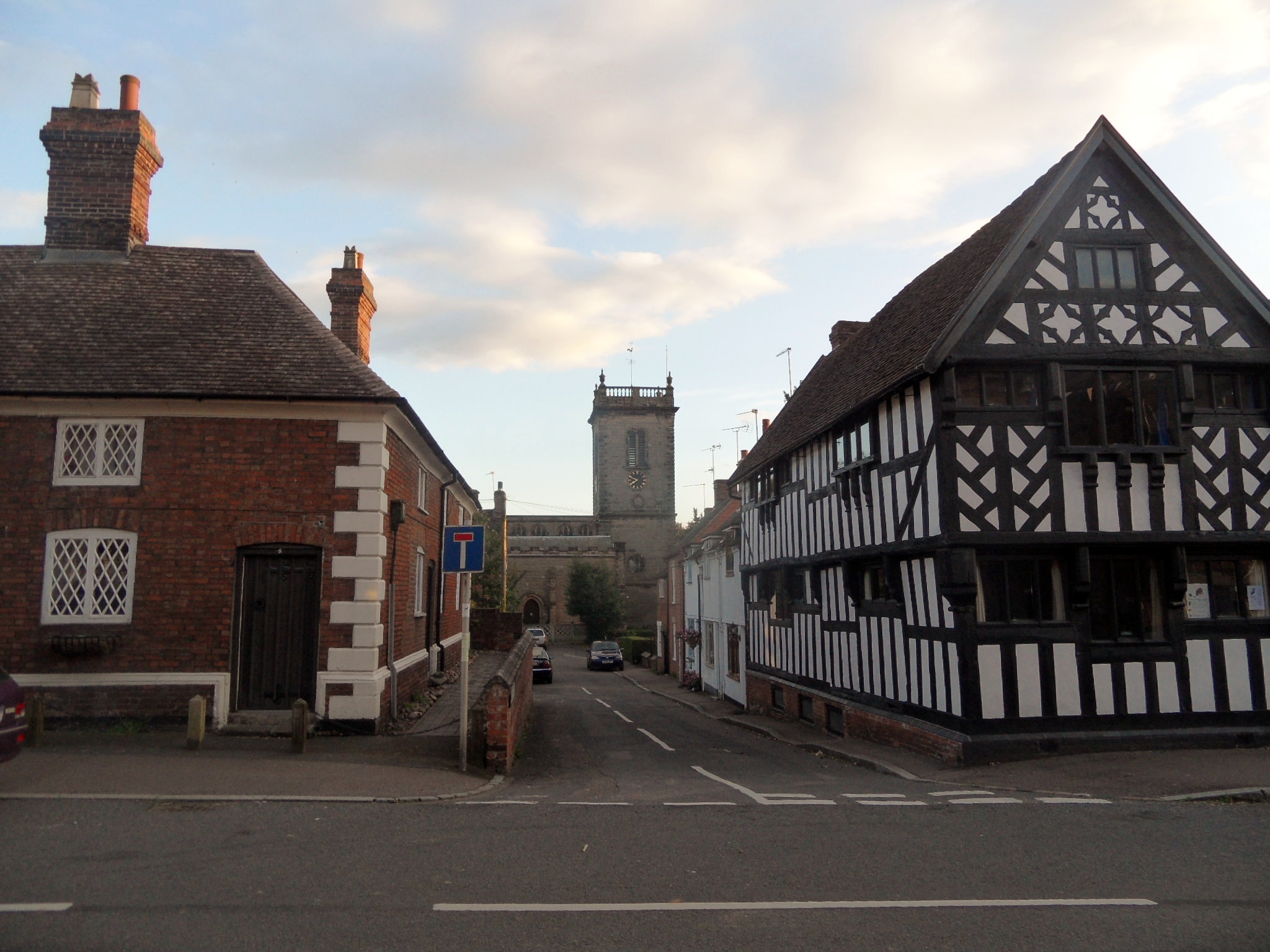
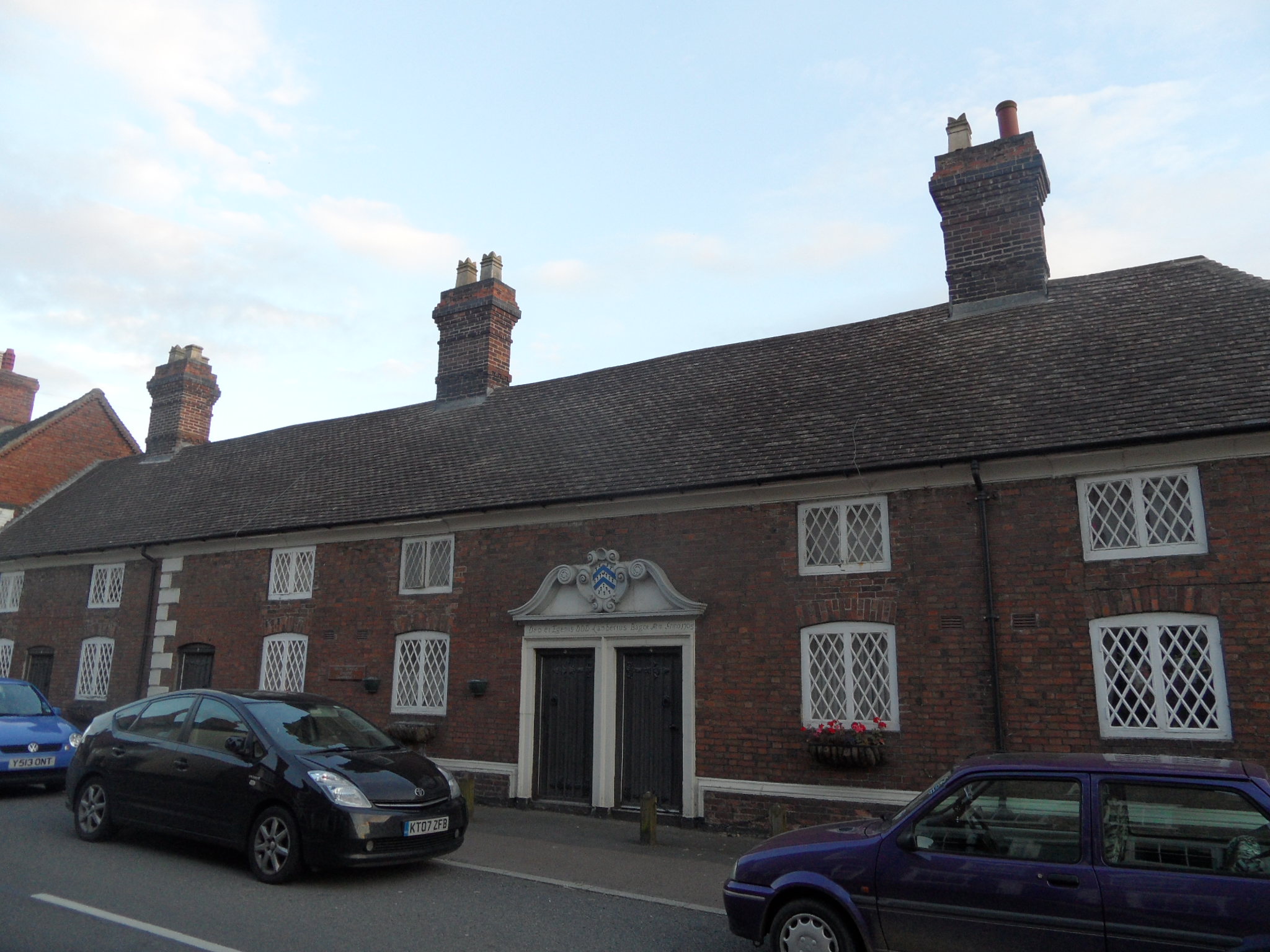
Walking through the village, to my 21st century eyes, practically every building looks worthy of note. Amongst many others, there’s the Butter Cross (or Burger Cross as a practical joker would have it in 2002), the Goat’s Head Inn (which is thought to date back to the early 1600s, with possibly even older cellars and of course, a secret passage story!) and Almshouses (above the doors are the Bagot family arms and the inscription Deo et Igenis DDD Lamberius Bagot Arm Anno 1705).

The Butter Cross, The Goats Head Inn & St Nicholas Church

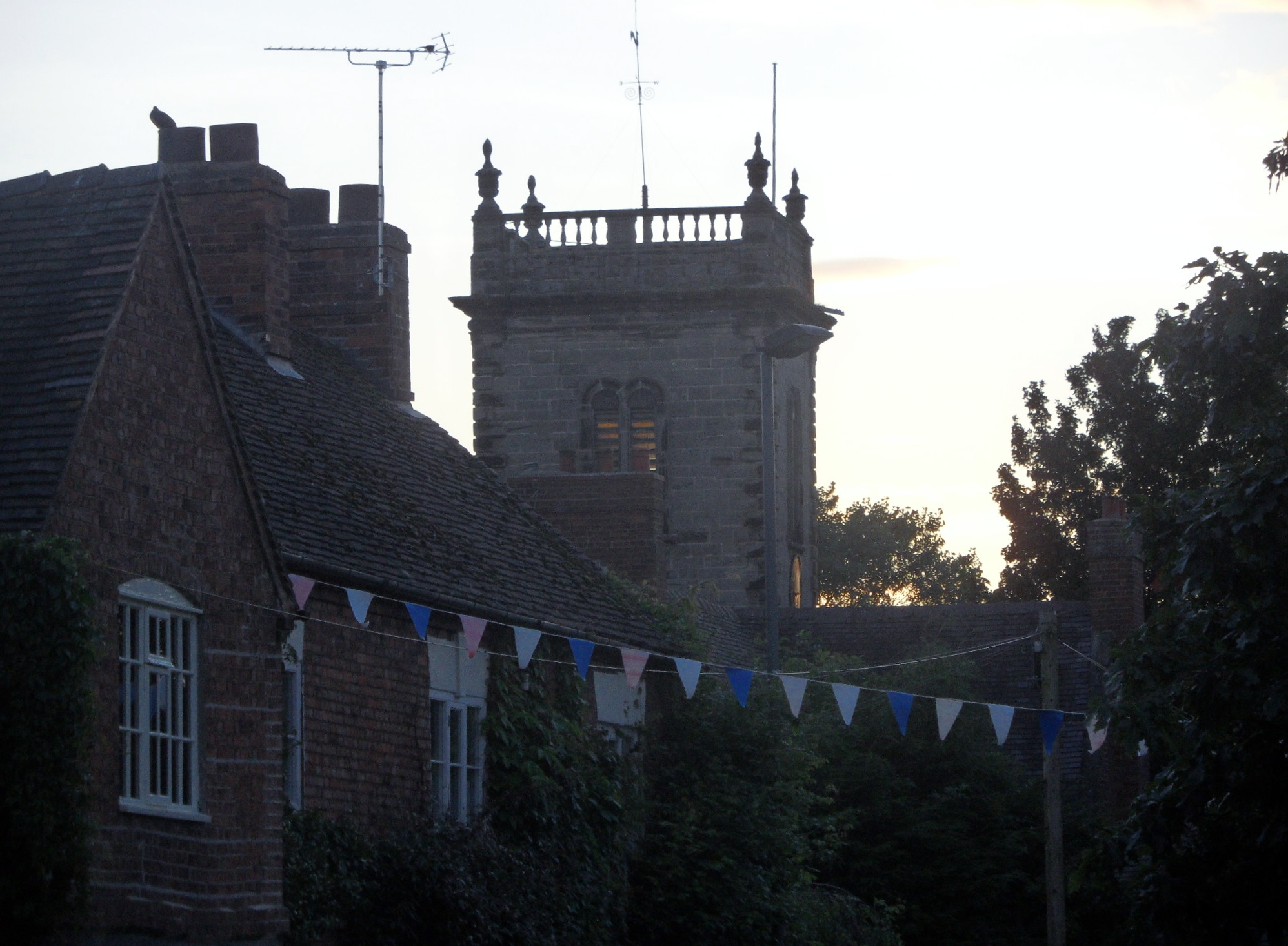
View of St Nicholas, where the horns are displayed throughout the year.

Church of St Nicholas, from the High St

Almshouses

A couple of years ago the BBC made a programme about folk dancing in England and you can see the clip about the horn dance here. There are also some photographs of the tradition taking place in the 1930s here on the Staffordshire Past Track website.

I believe that the horns never leave the parish boundary (when not in use they are stored in the church of St Nicholas) although the dance can be performed elsewhere (another set of antlers is used on these occasions). I’ve also just discovered that this year the third annual Abbots Bromliad will take place in California, where they are hoping to beat their own record for most people dancing the horn dance at once (144 in 2010). You can even order your own set of acrylic antlers for $20 to help you feel the part! Hmmm, I wonder what the postage & packaging would be to get a pair sent to Lichfield….and would they get here in time to wear on the 10th September?

Seriously, we’re lucky to live so near to a place where one of the country’s best known (and possibly one of the oldest) traditions takes place and I really must make an effort to go this year to see it for myself.


Paper Flowers

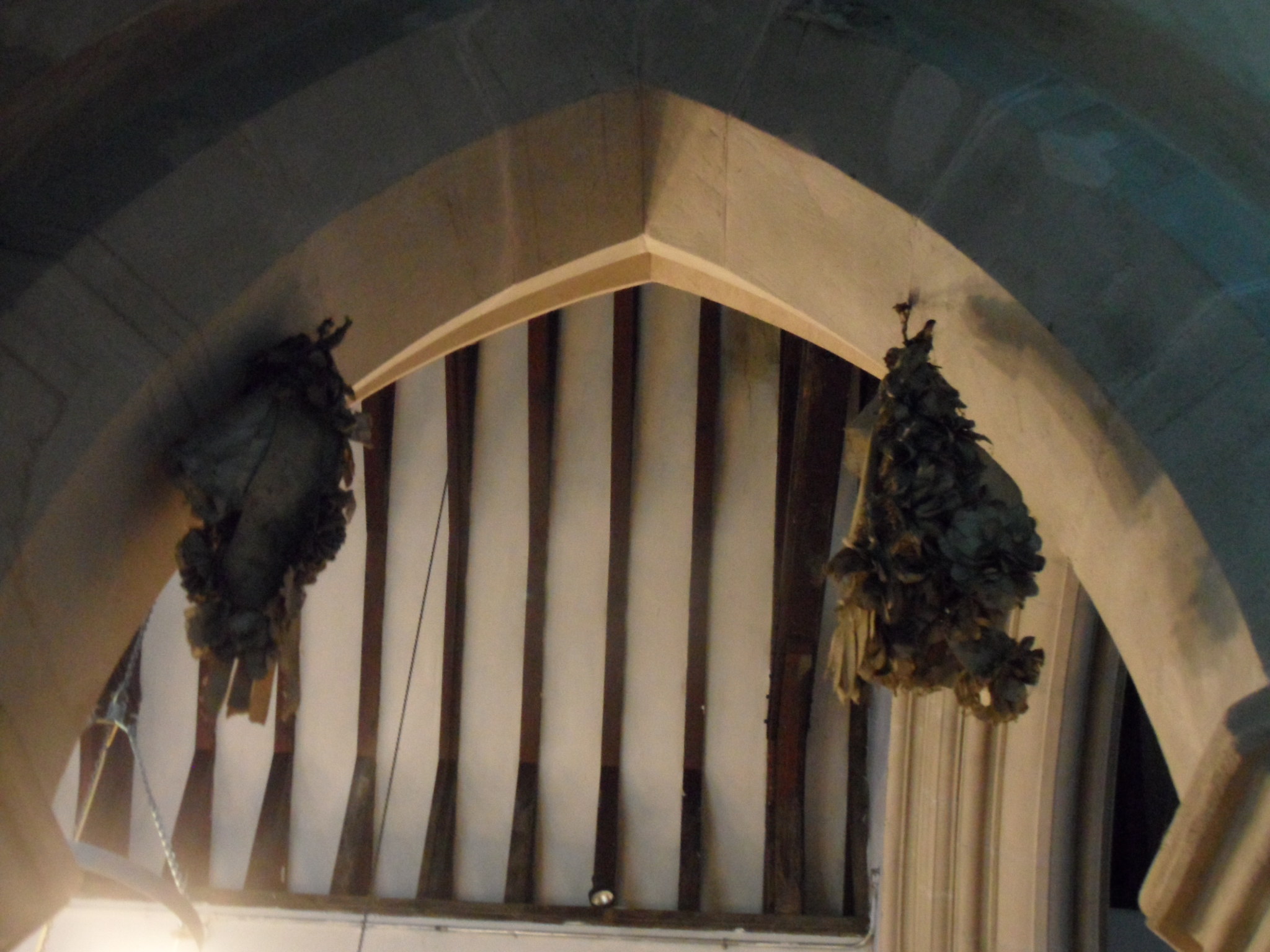
As you walk through the archway into the chapel of St Betram, in the Church of the Holy Cross, IIam in Staffordshire, you notice these.


They are Maidens’ Garlands and relatively few churches in England are thought to have surviving examples. It’s thought they may have been used during the funeral service of an unmarried woman, but there is evidence in other parts of the country that they may have been made for young men too.  Further information can be found in this article in the Birmingham Post a few years ago, but most importantly there is the work undertaken by Rosie Morris who as a child saw garlands hanging from hooks in her church in Shropshire and wondered what they were. Years later having been unable to find much information on them, decided to make them the subject of her dissertation and later Phd. Rosie’s website on Maidens’ Garlands is here.

Not only do I think the garlands and the stories attached to them are of interest, I also really like the idea that Rosie’s curiosity for an object she saw as a child led to her doing such great work to research and share this tradition.

Cross County

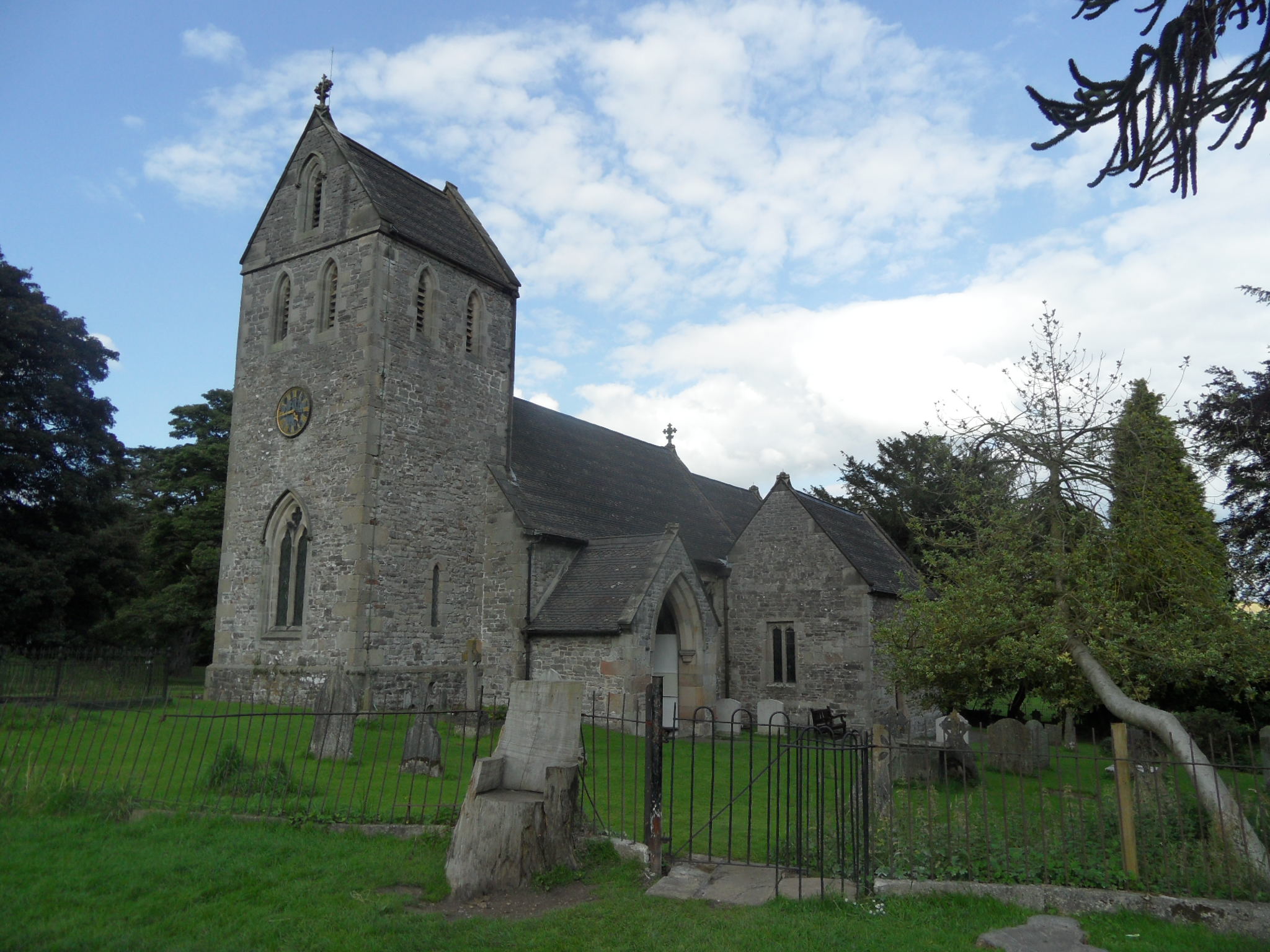
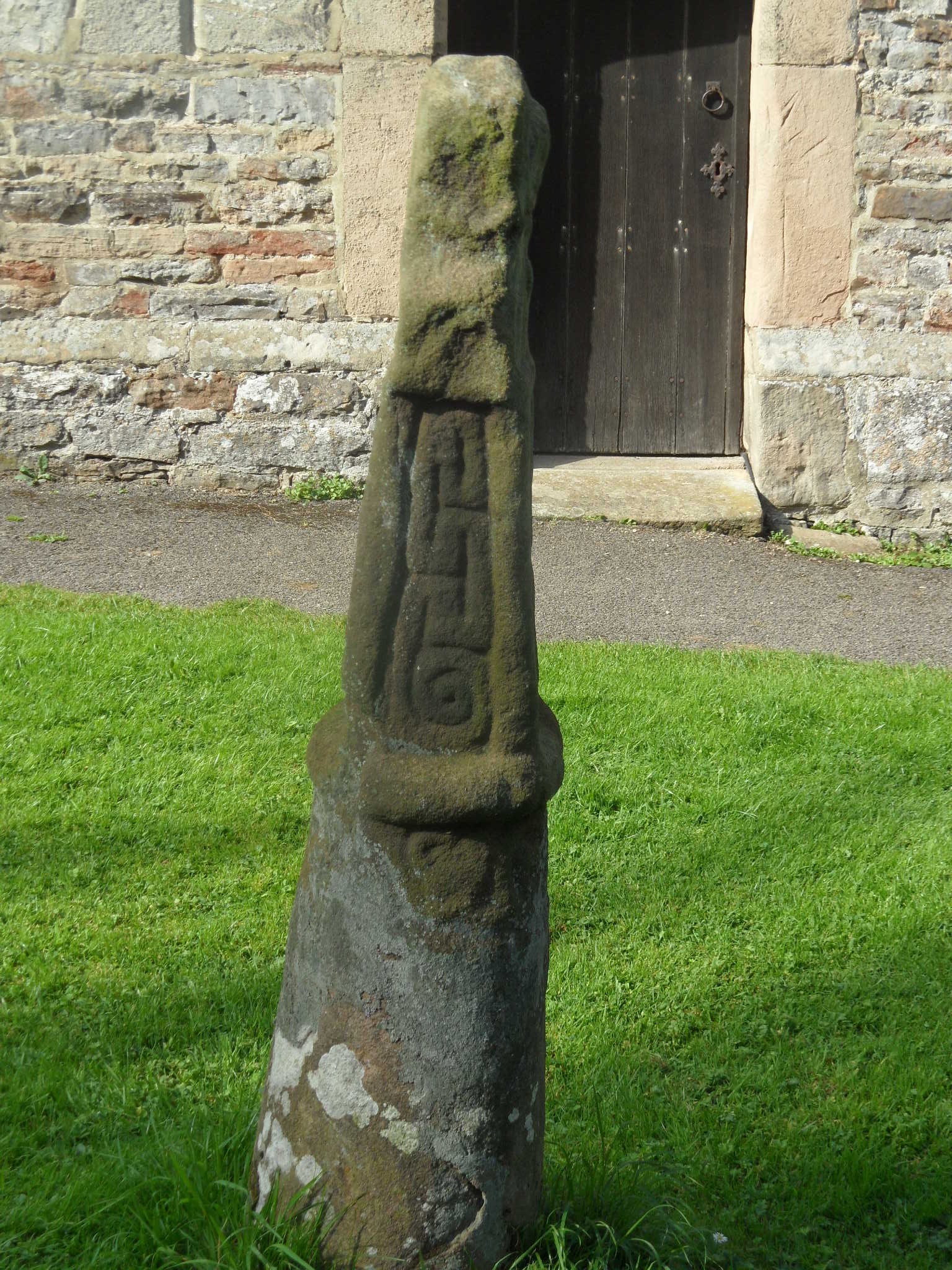
Looking for ancient crosses in Lichfield, has so far lead only to hints of their existence – a one line reference in an old book here, a placename there. Nothing concrete (or should I say stone?).  So imagine how happy I was when I visited Ilam Park yesterday and found that were two thought to date back to the 10thc standing in the churchyard with a third shaft incorporated into the church wall…..

Church of the Holy Cross, Ilam, Staffs


…..and imagine how much I kicked myself when I got home and found out there was yet another stone, known as ‘The Battle Stone’, located in the grounds of Ilam Hall that I had missed!

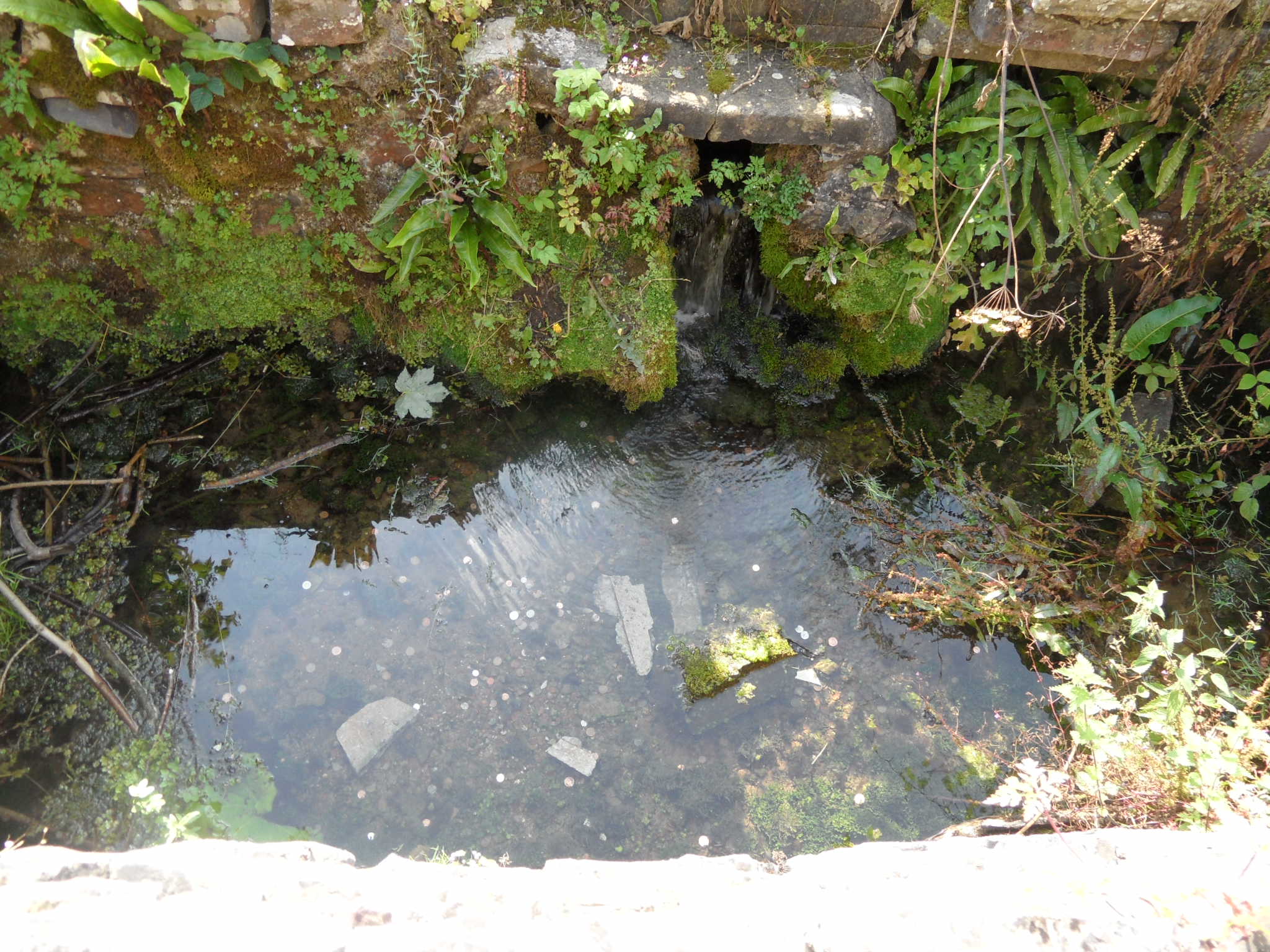
However, as a consolation, I learnt at home that this spring near to the church is thought by some to be St Bertram’s Well (although others place this on a hillside near to the village).

St Bertram’s Well?

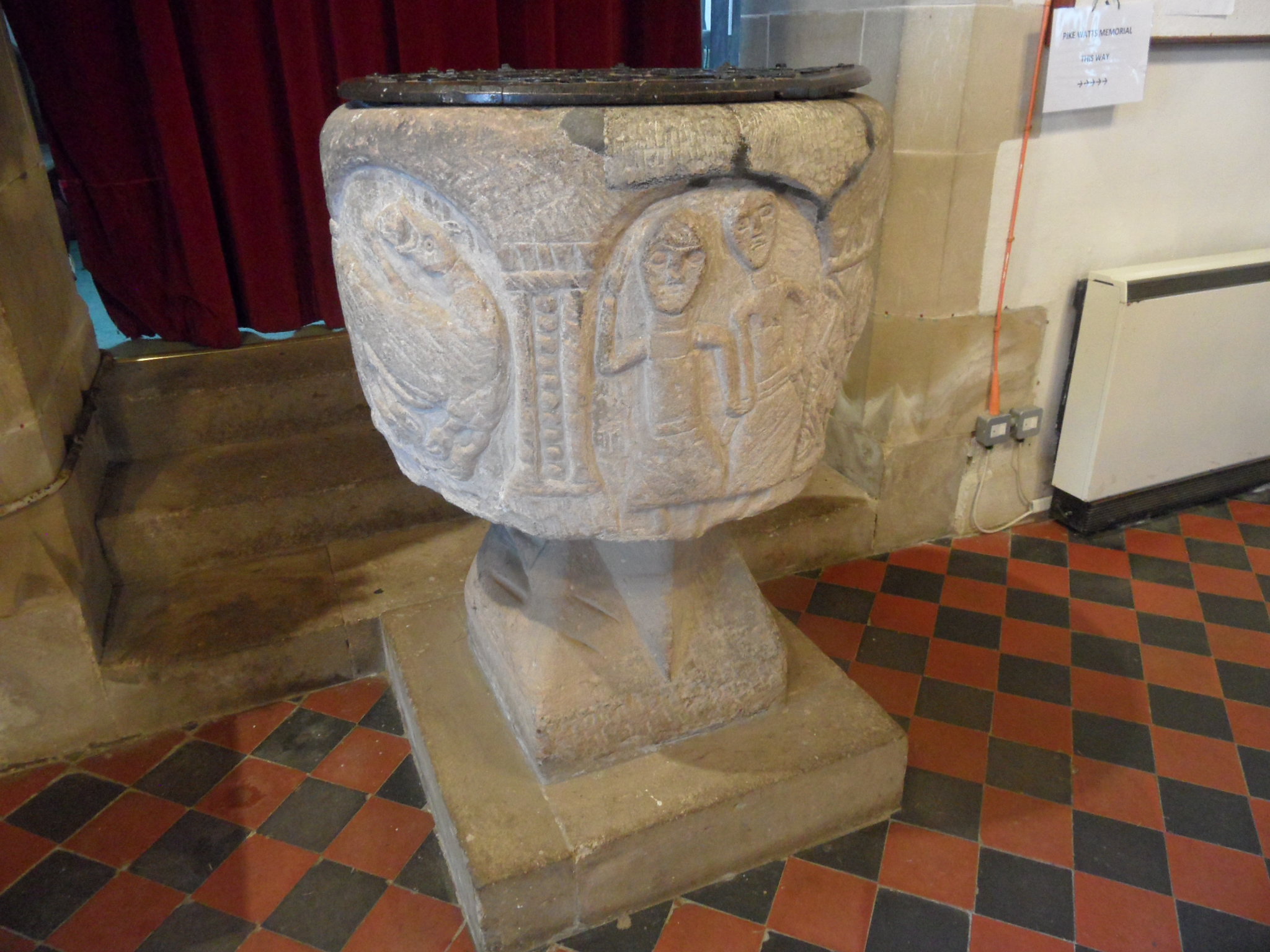
The Shrine of St Bertram (also known as St Bertelin or maybe Beorhthelm of Stafford) is inside the church. As you might expect, there is more than one account of St Bertram’s life. The most well known version seems to be the tragic story that he was a Mercian Prince whose wife gave birth to a child in a forest. The wife and baby were killed by wolves and St Bertram became a hermit near to Ilam, It’s thought this story might be represented on the churches font, which dates back to around the 12thc.

You can decide for yourself, if you look at this website on Romanesque sculpture, which gives a detailed description of the font, together with photos.

However, Stafford Borough Council have this version on their website, which doesn’t feature the tragic part of the legend.

The legend of St Bertelin derives from the 14th century account of him by Capgrave in his ‘Nova Legenda Anglie’, retold by Dr Robert Plot in his ‘Natural History of Staffordshire’ (1686). He is reputed to have been the son of the Mercian prince, the friend and disciple of St Guthlac who, after St Guthlac’s death c 700, continued his holy vocation on the islet of Betheney now Stafford. Here, he remained until forced to retreat from the ill-will of jealous detractors, when he repaired to Ilam, in Dovedale, Derbyshire where ultimately he died. His burial place in Ilam church was once a place of pilgrimage.

His burial place still seems to be a place where people come, not just seeking out history like me, but for spiritual reasons. As you can see from the photo of the shrine, prayers (I didn’t read them) and candles are still left there.

I have found a copy of the ‘Nova Legenda Anglie’, but as my Latin only stretched to ‘Caecilius est pater’, I need a bit of time alone with google translate.  So, I’ll leave the legend of St Bertram/Bertelin there for now other than to say that it’s believed that the remains of St Bertelin’s chapel in Stafford were excavated in the 1950s and they discovered part of a 1,000 year old cross. And this one is made of wood!

Ilam, Stafford and I’ve seen references to existing crosses in Wolverhampton, Leek, Chebsey (between Eccleshall & Stafford), amongst other places. With the discovery of the ‘Battlestone’ in Ilam (the one that I missed!) in the foundations of a cottage, during a restoration in 1840, I’m still clinging to the hope that at least a fragment of one survives somewhere in Lichfield!

Sources:

http://www.heritagegateway.org.uk/gateway/

http://list.english-heritage.org.uk/ (Entry numbers 1038113, 1012654, 1012653,

Corpus of Romanesque Sculpture in Britain & Island http://www.crsbi.ac.uk/index.html

http://www.geograph.org.uk/photo/705619

http://www.megalithic.co.uk/ (St Bertram’s Well http://www.megalithic.co.uk/article.php?sid=14731)

http://www.staffordbc.gov.uk/in-touch-with-the-past

Dig Days of Summer

Dig the Abbey is a community archaeology project, running over two consecutive summers, where volunteers (many of them local people) are excavating the site of Polesworth Abbey alongside professional archaeologists.

I went along to a Dig the Abbey 2011 tour last summer, not knowing what to expect. I found it so interesting that I was really looking forward to going again this year & took some friends, to see what kind of new discoveries had been made. We weren’t disappointed. Despite the rain, community archaeologist Tim Upson-Smith gave us a great tour of the site and answered all of our many, many questions (they weren’t just about just about the dig at Polesworth but they did all relate to archaeology!).

Amongst other things, we saw in situ medieval floor tiles, a medieval toilet (and learned what a useful find this is!) and a vessel (on which you could see the thumbprints of the potter that crafted it) lifted from the earth just that day. We learned a little about the procedure for the discovery of human remains and how they are dated. We heard about how the discovery of some structures in the trenches has answered questions about how the Abbey would have once looked, but how the discovery of others has created yet more questions.   We were made really nice cups of tea while we waited for the rain to give over a little!  We were so enthralled we forgot to take any photos! Luckily, the dig has its own regularly updated website, with photographs of the finds, maps of the trenches and news reports.

We’re definitely going back again towards the end of the dig. It hardly needs to be said but, if you have an interest in history or archaeology, I highly recommend going and taking a tour yourself. It took us around 30 minutes to get there from Lichfield (but that included unintentionally taking the scenic route through Tamworth town centre!).

Tours run every day of the dig at 2.15pm (1) The final tours will be on Saturday 8th and Sunday 9th of September, to coincide with the Open Heritage weekend (2). For more information, visit www.digtheabbey.co.uk

Notes:

(1) Monday to Friday (until 7th September) Saturday (25th August and 1st September)

(2) Please note that the heritage weekend here in Lichfield takes place on 22nd -23rd September, to coincide with the Johnson Birthday celebrations. I don’t want to confuse anyone!