A Lost Place

A couple of years ago, I learned that there had once been a place in Lichfield known as Bessy Banks Grave. Appearing on several old maps, the name is also referred to in a newspaper advertisement from 1914, but seems to have disappeared shortly afterwards. The plot of land was in The Dimbles area and I suspect that the name may have been lost when the council began building houses there in the early twentieth century.

Attempts to discover the story behind the name led to a poem written by Anna Seward for her friend Honora Sneyd, at the place known as Bessy Banks Grave, which Miss Seward refers to as ‘the grave of a suicide’.

“It suits the temper of my soul to pour
Fond, fruitless plaints beneath the lonely bower,
Here, in this silent glade, that childhood fears,
Where the love-desperate maid, of vanish’d years,
Slung her dire cord between the sister trees,
That slowly bend their branches to the breeze,
And shade the bank that screens her mouldering form,
From the swart Dog-Star, and the wintry storm….”

David Garrick also knew the place, adding that it was supposedly haunted and in 1805, John Jackson remarked that the spot was ‘once the famous rendezvous of lovers….now no more is remembered than that poor Betsy (sic) is said to have fallen victim to hapless love’.

After reading the original post, “Margaret” left a comment to say that she had found a poem called ‘The Circuit Lane’, in the 1859 book ‘Rustic Rhymes’, by Frederick Price. The Circuit Lane marked part of the boundary of Lichfield, as can be seen in the following extract which appears in several history books from the early nineteenth century:

“… and so along that little cross lands unto another lane that leadeth from Lichfield to King’s Bromley and then along that lane towards Lichfield unto a little lane lying between the Grange Ground and Collin’s Hill Field commonly called the Circuit lane unto the further end of it betwixt two fields the one called Hic filius and the other Piper’s Croft and so over across a lane that leadeth from Lichfield to Elmhurst and then into another little lane between Stichbrooke Ground and Gifforde’s Crofte and so along that little lane to a green lane at the further side of the Lady Leasowe being the land of Zachary Babington Esquire and down that lane to a brook called Pone’s Brook and so over that brook into another lane called Stepping stones lane…”

As well as painting a picture of a disappeared landscape, Frederick Price’s poem also refers to the lost story of Bessy Banks. The full poem is here, but I have included an excerpt below

Daisy, ladysmock, and kingcup,
And the broad-leaved flag so gay,
With which we in pride would prink up
Doorsteps on the first of May –
Where bright flies their wings are sunning
Where shells strangely marked are found
Where the rippling brook is running
In which Bessy Banks was drowned.

Pass we these, and onward pressing
Where o’er head tall elm trees wave,
‘Tween banks rich in Nature’s dressing
Till we come to Bessy’s grave:
Here four cross-roads meet; a green mound
Indicates her place of rest;
Few spots are more lone, I ween, found
On old England’s face imprest.

Hawthorn blossoms fall and slumber
O’er where the betrayed one lies –
One more victim to the number
Sung in great Hood’s ‘Bridge of Sighs’
The betrayer, in corruption,
Lies in fetid church-yard soil,
Where e’en earthworms meet destruction
Fit ‘last home’ for one so vile.

Hence the lane has been neglected
From that time : the rustic swain
Since that hour the road rejectes
Nor dare traverse it again
Burdocks, thistles, nettles, tansy,
And the nightshade flourish there;
But the primrose or the pansey
Scarce are known to blossom near.

You’ll notice that Price’s version of the story differs from the earlier one told by Anna Seward. Perhaps the clue to this lies in the reference Price makes to ‘Hood’s Bridge of Sighs’, relating to the poem by Thomas Hood, written in 1844 and said by the Victoria and Albert Museum to be a ‘classic stereotype of the harlot and her destiny‘?



A Stone's Throw Away

I recently read a great post about the map maker John Ogilby on Kate Shrewsday’s wonderful blog. In 1675, Mr Ogilby was the creator of the first ever British road atlas, and after reading Kate’s post, I took another look at the section of his map of the London to Chester road, as it passed over the Warwickshire border into Staffordshire and on through Lichfield. You can see the map here.

The majority of the place names are recognisable and in use today, albeit with some changes to the spelling –  Burowcop Hill, Cank Wood and Sutton Cofield amongst others.There are however a handful of names that appear to have been lost over the last three hundred or so years. One intriguing feature marked on the route is the ‘Bishop’s Heap of Stones’, eight miles or so from Lichfield, between Canwell Hall (or Sir Francis Lawley‘s Cannell Hall as it’s shown on the map) and Hints.

The name seems to refer to a literal heap of stones, and it seems there are at least two  possible explanations for why this pile of pebbles was associated with a bishop. Thomas Pennant, when writing about his journey from Chester to London, discovered a handwritten note in a copy of William Dugdale’s ‘Warwickshire’, added by Dugdale himself, which read as follows:

There is a common report (which passeth for currant amongst the vulgar) that the great heape of stones, which lyeth near the road way from Litchfeild towards Coleshill, upon Bassets heath, called the Bishops Stones, and those other lesser heapes, which lye in the valley below; were at first laid there in memorie of a bishop and his retinue, who were long since rob’d and killed, as they were travailing upon that way: but this is a meere fabulous storye: for upon an inquisition made in King James his time, concerning the extent of common upon that heath, betwixt Weeford and Sutton;there was an old woman, called old Bess of Blackbrooke, being then above an hundred yeares of age, who deposed (inter alia) that the Bishop of Exeter living then at Moore Hall: taking notice how troublesome such a number of pibble stones as then lay in the roade thereabouts, were to all passengers, caused them to be pickt up, and thus layd upon heapes

In 1769, in his book The History and Antiquities of Shenstone, in the County of Stafford, the Reverend Henry Sanders, gives a similar but more detailed explanation. Sanders says that a woman from Blackbrook came to the inquiry into the parish boundaries and testified that in the reign of Henry VIII, or just after, John Vesey, the Bishop of Exeter had decided to become a benefactor to his birthplace of Sutton Coldfield. Bishop Vesey obtained a charter of incorporation for the town, revived the market and also built a number of stone houses (1) as part of an attempt to create an industry manufacturing Kersey, as they did in Devon. Bess (I’m assuming that she is ‘the woman from Blackbrook’ Sanders refers to), also told how when the Bishop was at Sutton he was annoyed by the rolling pebbles on the road which caused travellers’ horses to stumble and sometimes fall and so he employed poor people to gather them and lay them in heaps. Sanders describes the position of these heaps as follows:

On the hollow way between Weeford Hills or rather between Swynfen and Canwell lie divers heaps and one great one at the top of the hill at Weeford park corner which according to the tradition of the country people were placed there in memory of a bishop of Lichfield who riding with many attendants was slain with those servants by robbers and that these heaps were where the bodies were found which agreeable to this account and to honest and accurate antiquaries is entirely fabulous

I also think these stories are fabulous, but I suspect not quite in the way that the Reverend meant! It seems the tale of the murdered bishop didn’t ever hold much weight, but what about the version given by the local centenarian (who sounds like a legend in her own right!)? Were the stones gathered by the poor at the request of a Bishop or did they serve another purpose?  It’s interesting that there may have been more than one heap. Piles of stones are of course found across the world, and have many meanings and significances. I suspect that the Bishop’s heaps of stones will have been swept away, perhaps gradually scattered back onto the roads from where they came. It’s interesting to think that even a humble pebble beneath your feet may once have been part of a much bigger story.

Notes:

1 You can see one of the stone houses built by Vesey here

2 Kersey was a coarse cloth, often used to make servants clothing, and although it takes its name from the village in Suffolk, I understand that in Vesey’s time it was Devon that was at the centre of the Kersey industry in England.


These Routes Were Made for Walking

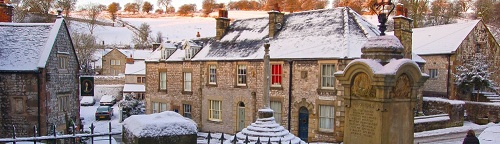
Last weekend I had an email telling me about a history project over at Bonsall, a village in the Peak District. The Heritage Lottery Fund has awarded them an All Our Stories grant to create six walking trails and accompanying illustrated leaflets, each focusing on different aspects of the village’s history. Getting people involved in the exploration and the celebration of their history is key to the Bonsall project – the trails and leaflets will be researched and developed by the people of the village themselves. To further encourage participation from the community, a programme of talks, workshops, visits and film shows has been put together.  You can follow the progress of the project by following their blog here and the trails will be launched on Sunday 12th May 2013. I’m already planning to visit in the summer, to discover more about the landscape and stories of a place shaped by mining and mills.

Header from the Bonsall History Blog – A walk through history

Walking trails are a gentle guide, holding your hand as they show you around, but always happy to let go and allow you to make your own discoveries. One of the beauties of exploring places in this way is that even when following the same trails, your walk will be different to my walk, and tomorrow’s walk will be different to today’s.

It’s always inspiring to see what’s going on elsewhere, be it in Bonsall, or the Black Country or anywhere else a wider range of people are encouraged to get involved with telling the stories of a wider range of people and places. Looking at things from a different perspective opens your eyes to possibilities in the place you live in and offers suggestions on how you might listen to the untold stories that surround you. Exploring new places is always a pleasure, but finding new ways of exploring familiar places can be just as rewarding.


Adooration

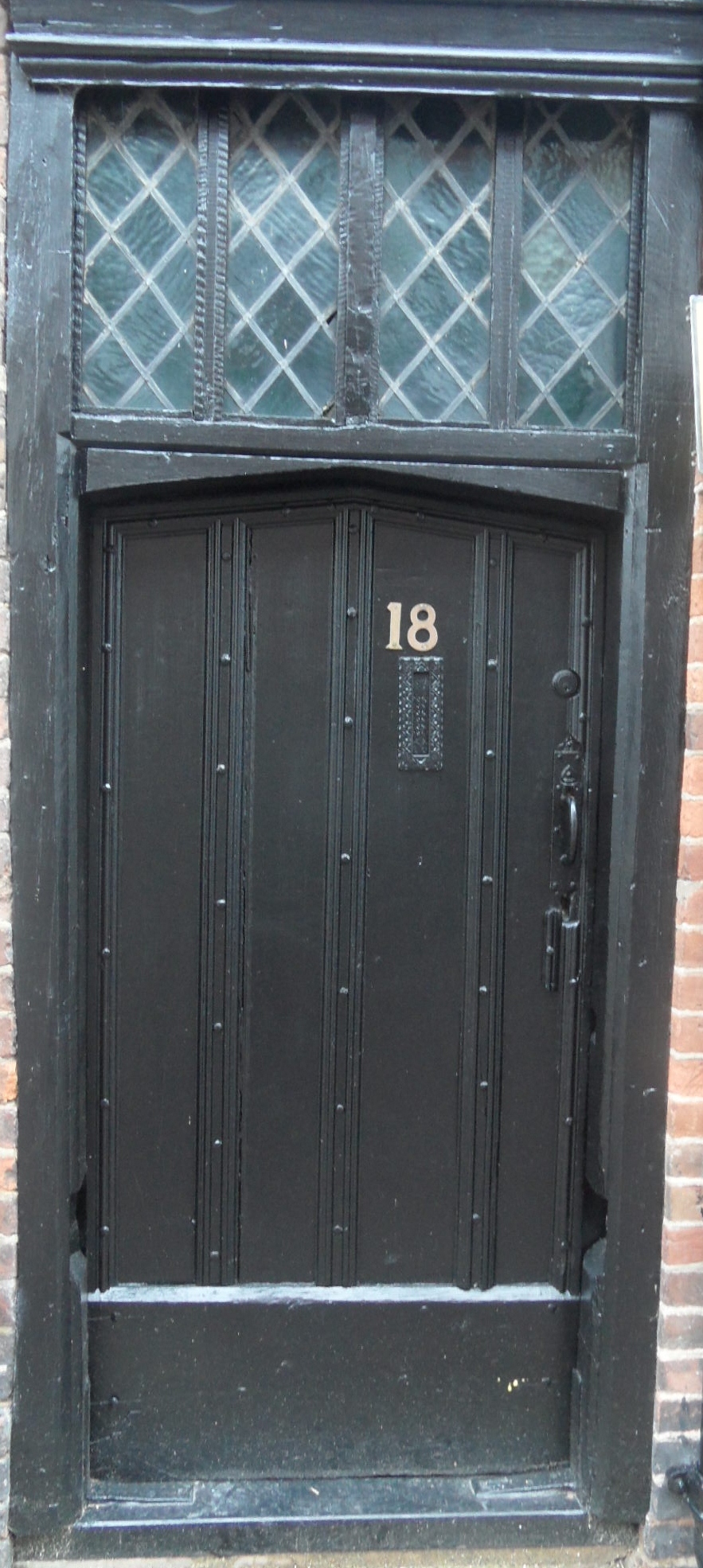
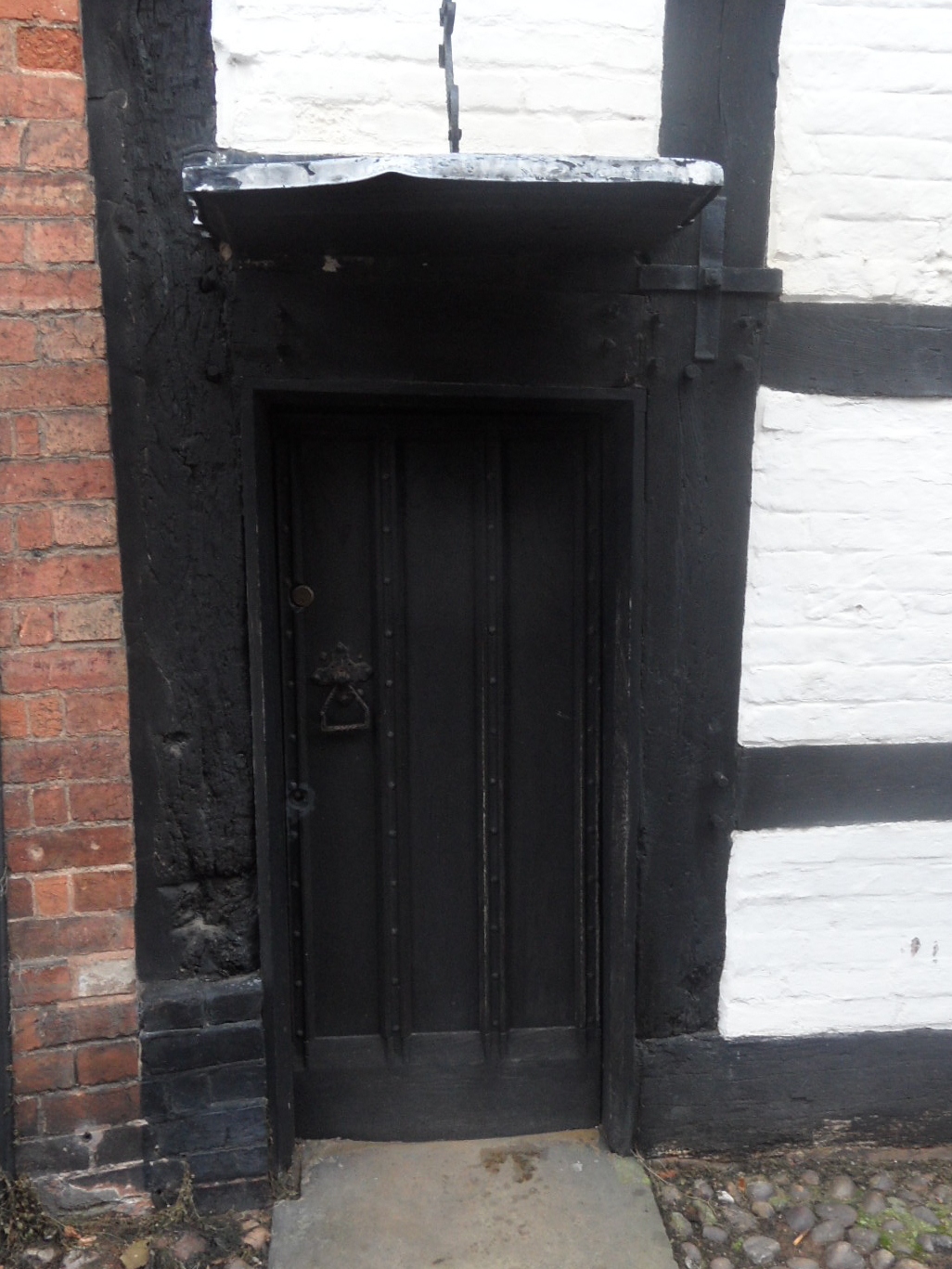
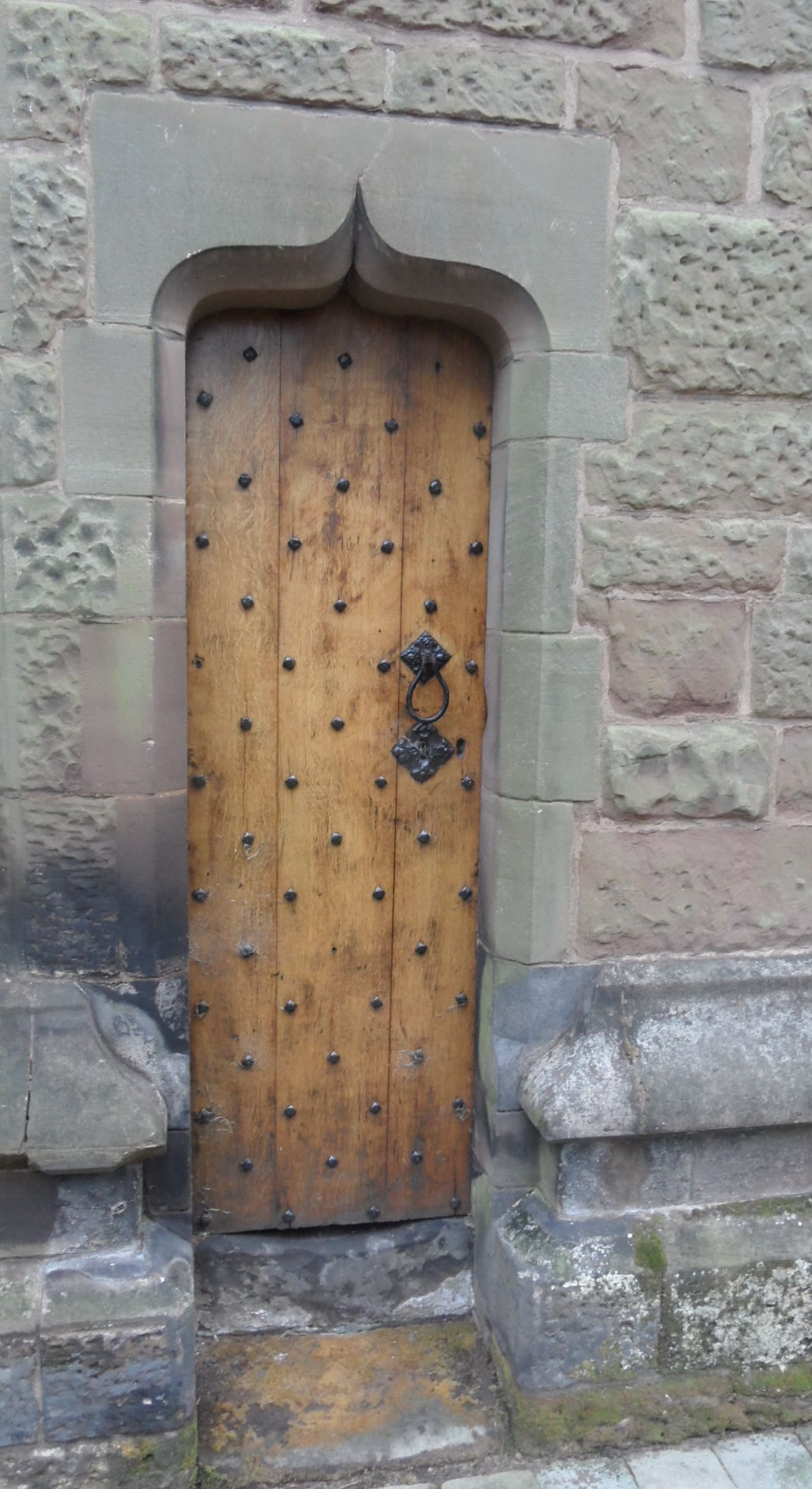
By now you’ve probably opened all of the doors on your advent calendar. So here are a few more (although I’m afraid there’s no chocolate). What’s behind these doors? Some we know already, as they are already open to the public.  What about those that aren’t though? Can we open more doors in 2013?

Whilst there’s no doubt that curiosity is one of the reasons I (and I’m sure others!) would like to have a look behind these doors, there are some nobler reasons I promise!  Behind closed doors, things can deteriorate or become lost, without us even knowing that they existed in the first place. Opening these doors allows us to explore and learn and question. It helps us to feel connected to a place, to each other and to all those who have walked through those doors previously.

Things are moving in the right direction. The gaol cells reopened again this yearGareth Thomas, from Lichfield District Council, showed us behind the doors of the council offices and regularly shares the deeds and maps he finds in his magical strongroom. Another important development, that will hopefully gain more momentum in the new year is Dave Moore’s vision regarding the future of Sandfields Pumping Station, a building that’s not only part of Lichfield’s history, but also that of the Black Country and South Staffordshire. Something I would like to see next year is more buildings open for the Heritage Weekend in September (at least), more community involvement in our history, improved access to local history resources, and of course more people getting out there exploring their surroundings, finding out what it is that matters to and interests them.

So that’s my rallying cry for 2013, more on this in the new year, but for now, I’d like to say thank you to everyone who has commented and got involved with this blog in 2012, and of course have a very, Merry Christmas!

Familiar Looking

Always happy to be distracted from shopping, I had a wander down Quonians Lane to take a photo of a door (that’s a whole different post!).  Everyone loves Quonians Lane with its strange name and its carvings and plaques. Annette Rubery wrote a lovely piece about it back in May, which you can read here.  I love Quonians Lane too, although now my visits are tinged with sadness that the company, whose workers created these wonderful objects and many more across the city, the county and the country, is no more.

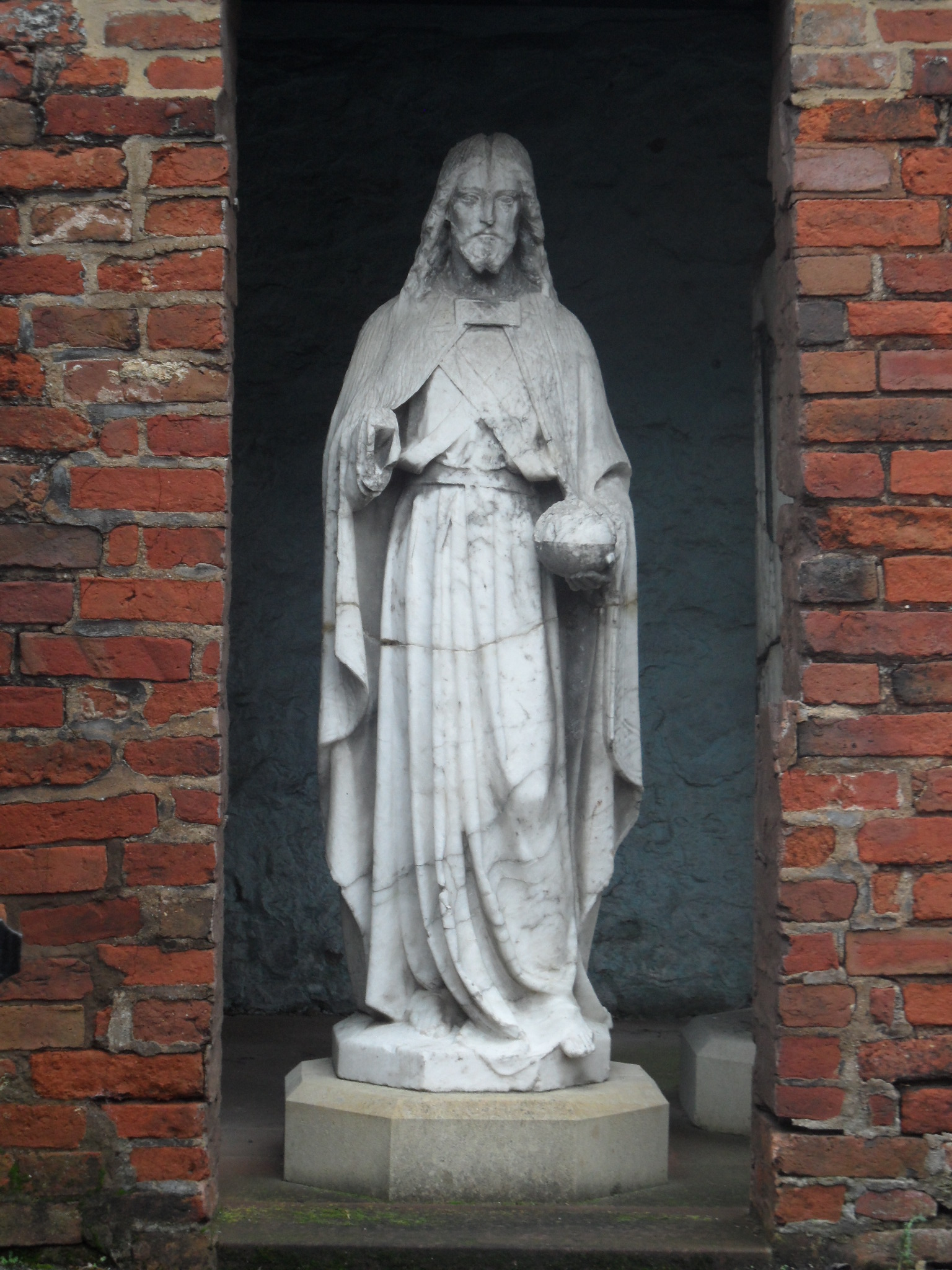
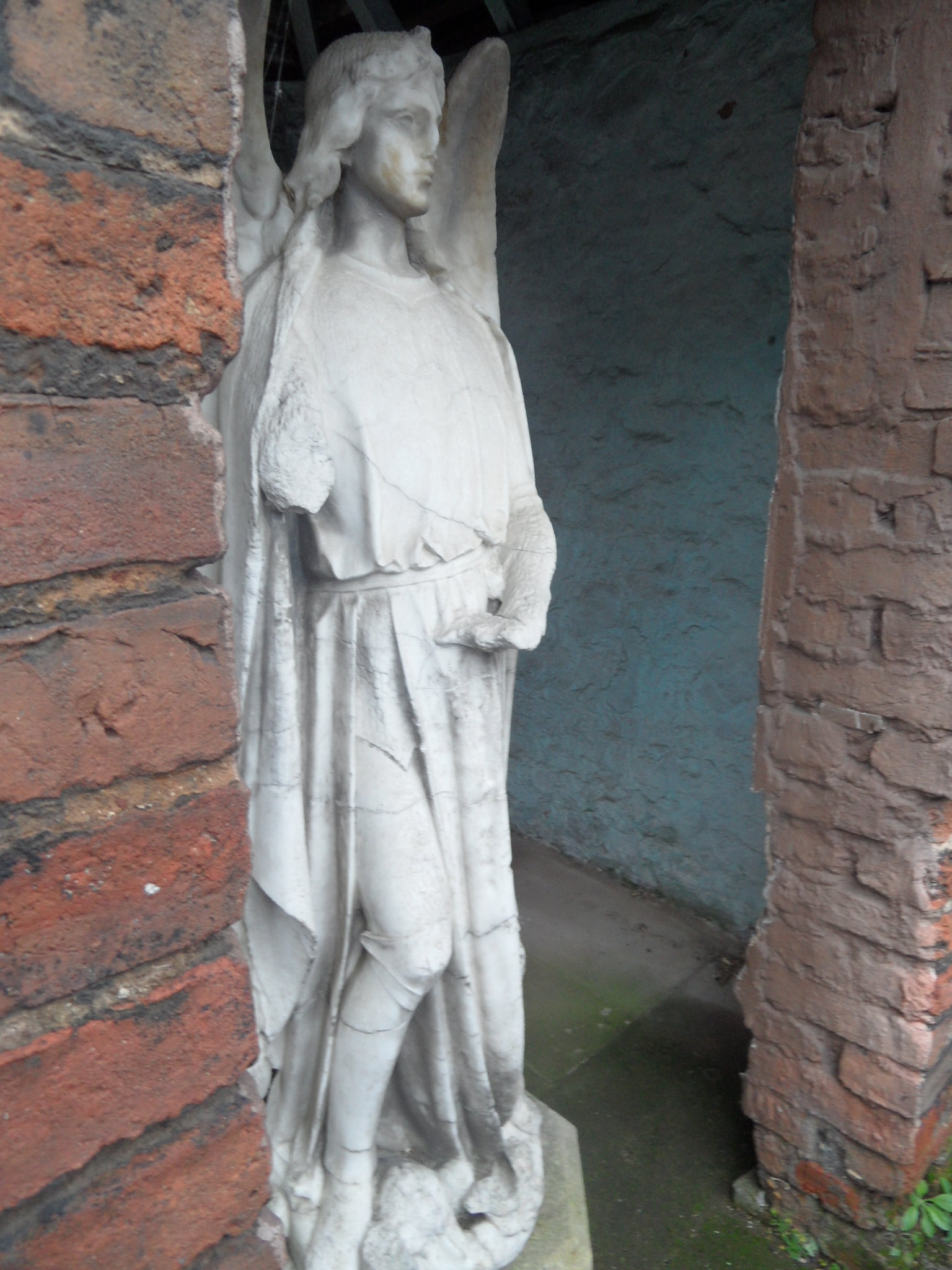
I saw the triangular roof of a small outbuilding above the brick wall and went to have a look, thinking it would be quite interesting in its own right. It was a lovely surprise to find these two marble statues stood in the doorways. If you want to see them for yourselves, go down Quonians Lane, and just after you get to the headless angel take a right, through the wall.

So the moral of this story once again is what I say in my ‘About Lichfield Lore‘ spiel.  “Go out and have a look at what’s around you. Then when you’ve done that, go back and have another look!”  I believe this more with each day I do this blog. I think that you can make new discoveries in the same place, depending on a whole range of things including the weather, your mood, what you’re thinking about at the time, the time of day or year or who you’re with. Actually I might change that to include having a smell/touch/listen too. Not sure about taste because I’m not sure I should be encouraging the kind of thing this young man got up to here…..

Anyway, today is a perfect day for me to bang on about this, as it’s the day we heard the news that around ninety further objects had been found at the Staffordshire Hoard site, three years after the original discovery was made. If that doesn’t convince you of the merits of having at least a second look, then I don’t know what will….


Time On Our Hands

On my way to do some Christmas shopping in Lichfield,  I went to Beacon Park to see our new old friend Erasmus Darwin properly now that the crowds had dispersed. I thought it would just be me and the good doctor this Saturday lunchtime, but in fact there were already people reading the plaque, when I arrived and another small group turned up whilst I was there. I touched the shell in Darwin’s hand, and continued over to The Close, as with all the talk of water and conduits recently, I also wanted to have another look at the old pump outside the Cathedral.

Wall of Bishop’s Palace, North East corner of The Close

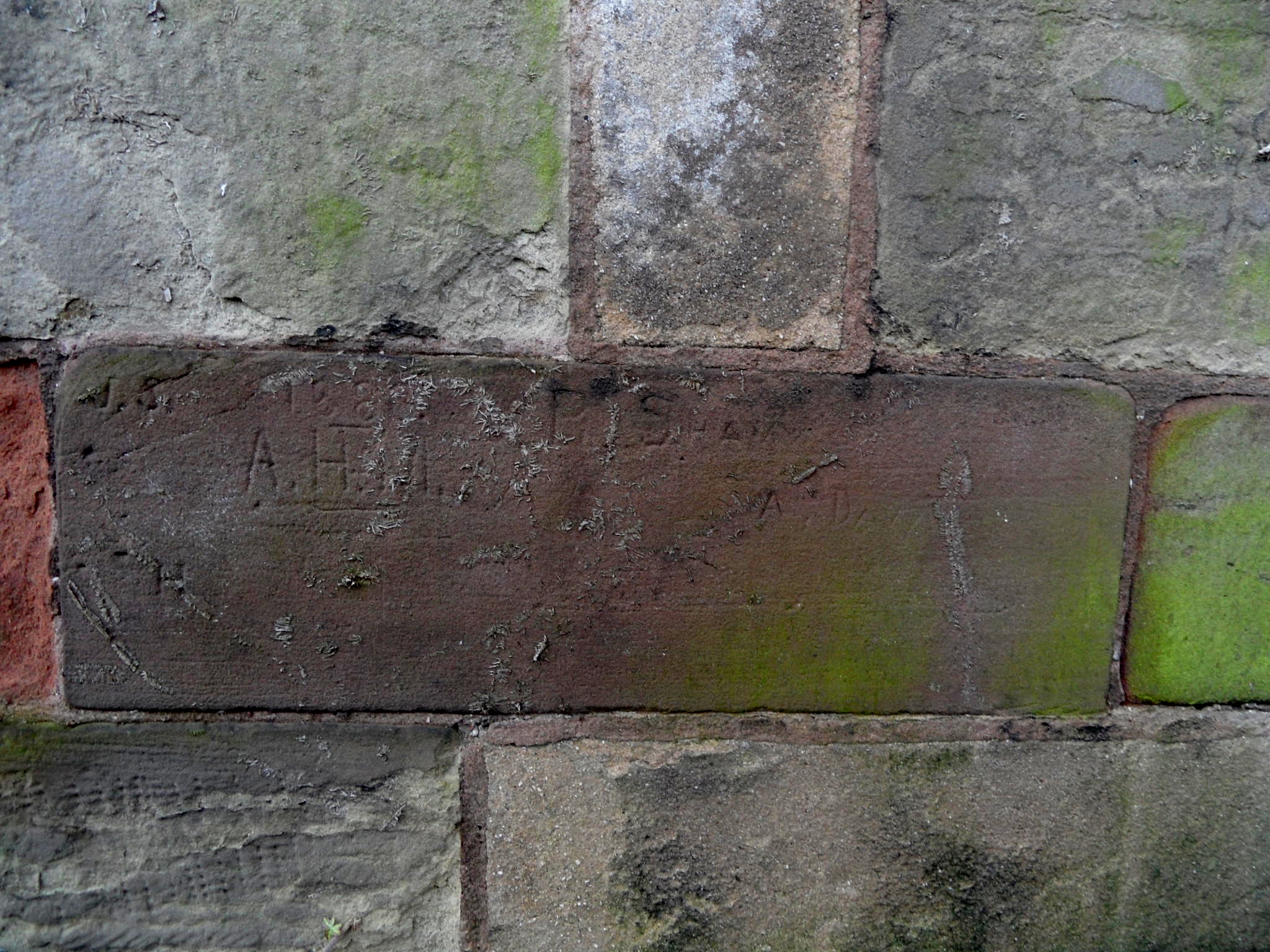
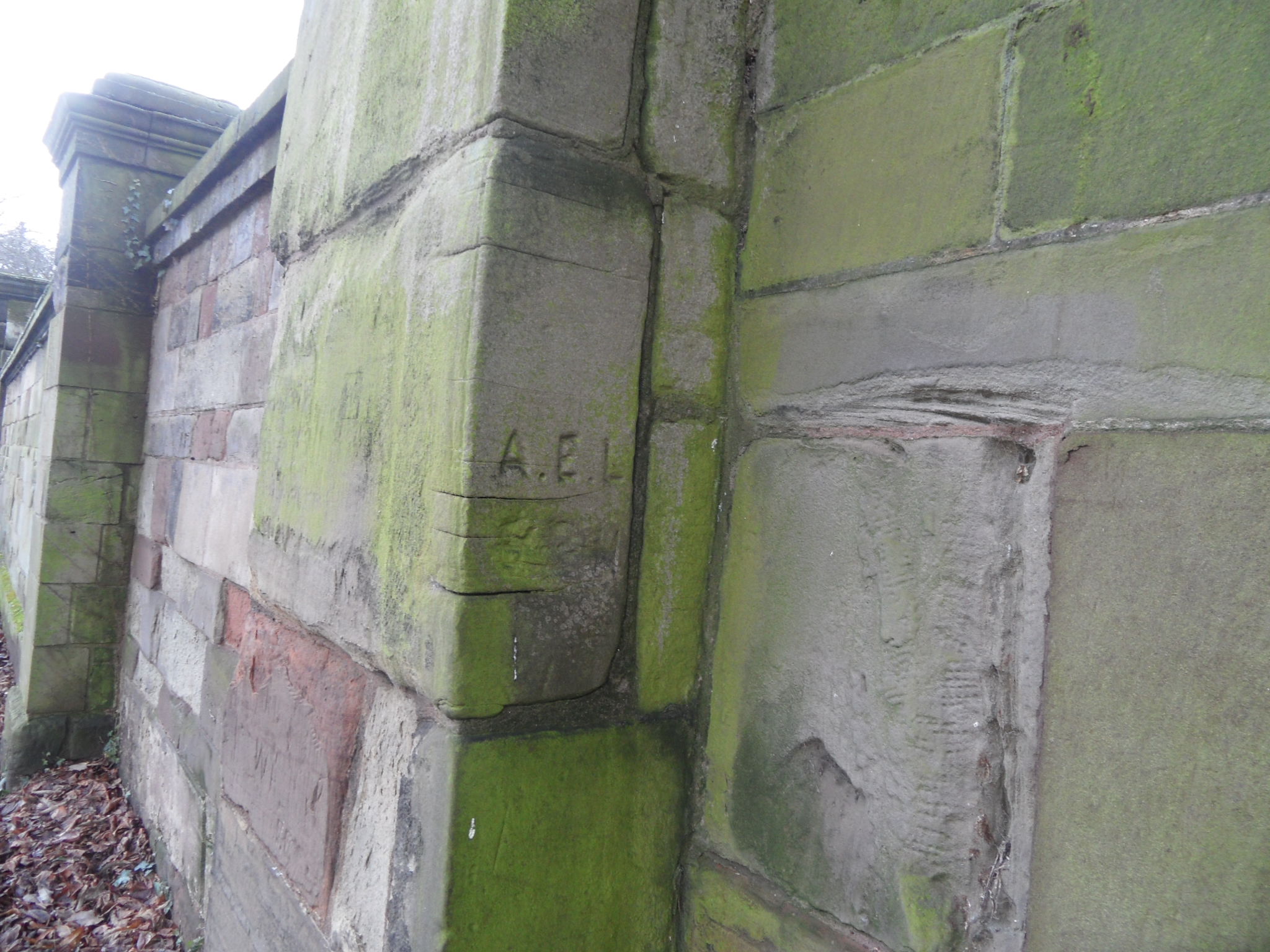
I then continued my walk north of the Cathedral, along the wall of the Bishop’s Palace, wondering about the provenance of the stone used to build it. In the north east corner of The Close, next to a pile of old grass cuttings and leaves, I peered over into what would have been the old ditch surrounding The Close. Something on one of the worn sandstone blocks caught my eye. Graffiti carved into the wall! Was there any more? Retracing my steps back along the wall I found several more examples.

Unfortunately, most of the markings either aren’t dated, or the dates have weathered away. So we are left with a series of initials, and not much else to work with. They may have been carved within weeks of each other or centuries apart. They may belong to pupils of the school, or they may belong to someone passing by with time on their hands. All that we really know, is that at various points in time, people decided to make their presence known in this quiet corner of The Close

One of the only legible dates on the wall. 188?

The listed building description for the wall (which can be found here) tells us that it’s probably over 300 years old. I haven’t yet been able to find where the stone was quarried from but the variation in colour and texture is beautiful. (Yes, I touched this too!)

The wall dates back to the rebuilding of the Bishops Palace in 1687. The original palace sustained severe damage in the Civil War and since then has actually only been the residence of the Bishop of Lichfield for a relatively short period. Bishop Selwyn took up residence in the 1860s and just under a hundred years later, in 1953, Bishop Reeve moved into a house on the south side of The Close. Since then the Palace has been part of Lichfield Cathedral School.

I have a photograph of the Bishop’s Palace from the back, but not the front. I do wonder about my thought process sometimes…

Of course, if anyone has any insights or information, please do get in touch. If it was you that stood here and added your initials to this old wall, I’d love to know when and why. However, I think that sometimes we have to accept that we will never know all the answers and just enjoy the time spent asking the questions.

Sources:

Lichfield: The cathedral close’, A History of the County of Stafford: Volume 14: Lichfield (1990), pp. 57-67

Features and Reviews

Hopefully, anyone reading the blog recently has found the old graffiti interesting. I know that Gareth and I, and (for a few days at least!) a large broadcasting corporation did. After all of the excitement, I thought it was time for a bit of musing….

The discoveries (or perhaps rediscoveries is more accurate) in the Lichfield District Council offices got me thinking about the potential for other ‘unseen’ history out there. There’s unseen in the sense of being hidden away from view –  in attics, down pub cellars and down the bottom of the garden. However, I also think that something in plain view can be unseen –  people may pass by everyday, but no longer see what’s actually there or the potential of it, due to familiarity. During discussions about the graffiti, someone said to me, “I’ve walked past that graffiti loads of times and never even thought about it”.

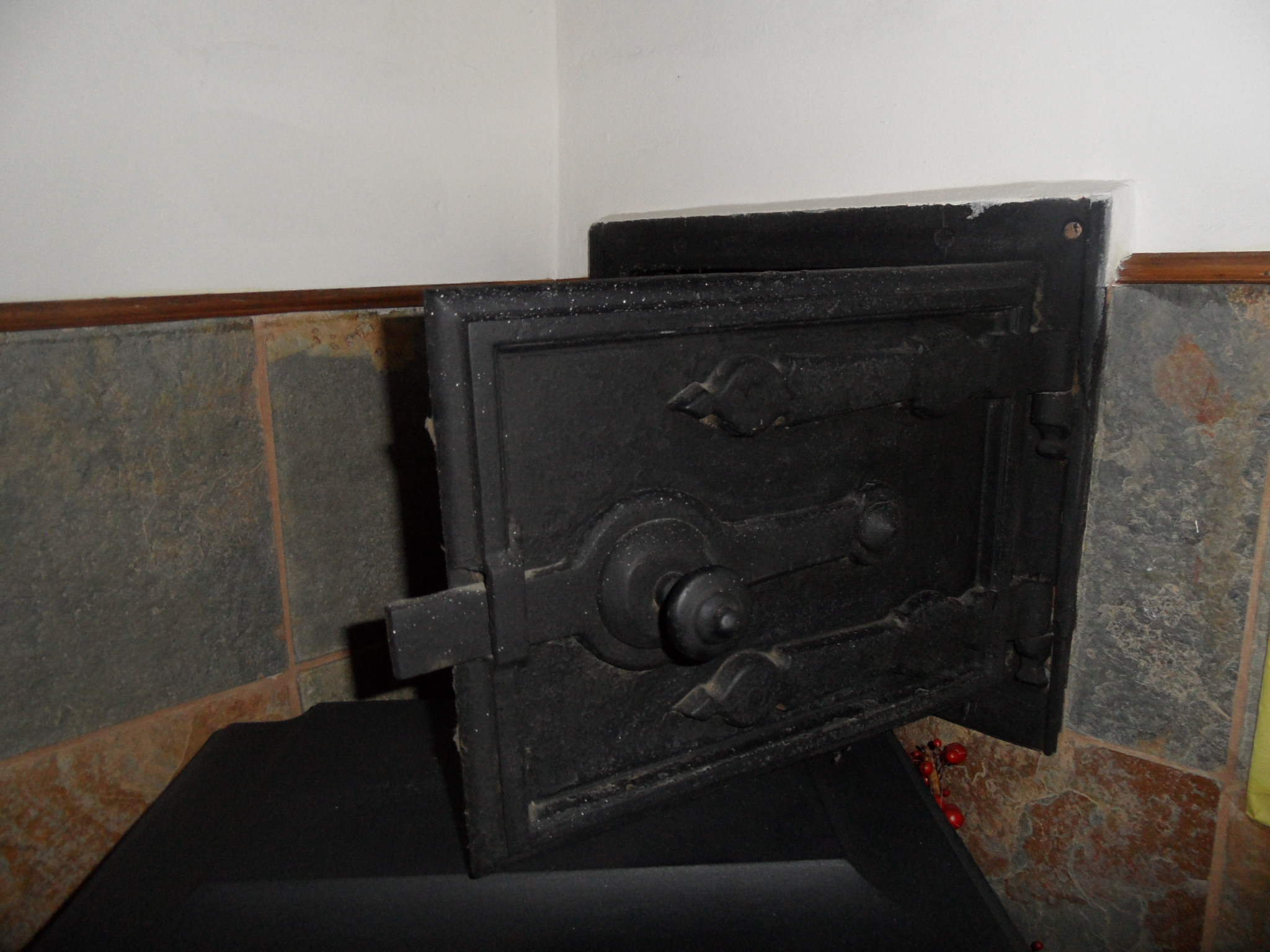
The bread oven above is in the house of someone I know. I remember them buying the property years ago and excitedly telling me after their first viewing with the estate agent, “It has an old bread oven!”. When they moved in we all keen to peer inside but prior to taking the photo, it was last interacted with as part of an Easter Egg hunt.  However, taking the photo to show a friend, sparked a whole new conversation about the oven. Was it original? If so, would this have been the kitchen? Wasn’t it once divided into two houses? How was it laid out back then? Why was the house built in the first place? And so on….My point is, sometimes, we need to look with a fresh pair of eyes to see what’s in front of our nose.

I don’t think that the history in question even has to be a specific feature like the bread oven. I find the traces of people’s everyday lives fascinating. I visited a house in The Close last Christmas. Unfortunately, I hadn’t had nearly enough mulled wine to pluck up the courage to ask if I could take photos, so I’ll have to describe it. There were stone steps down into the cellar, worn away in the centre by centuries worth of footsteps. There were attic beams with layers of fading wallpaper still clinging to them up in the attic. To describe the place as ‘lived in’ would be an understatement.  The next question inevitably is ‘lived in by who’? Actually, photos wouldn’t really have done the place justice anyway because it was more than a visual thing. You wanted to touch, as well as see. ….

I’m really hoping that Lichfield District Council open their offices up for the next heritage weekend, so that people get to look around what was one the Old Grammar School for themselves. I’m not suggesting people throw the doors of their homes open to the public, but perhaps if we want to explore the history of the city and all its inhabitants, we sometimes need to look at the ‘normal’ buildings and places, where people lived and worked, and still do! I’m by no means detracting from those special, extraordinary buildings like the Cathedral, just saying that sometimes it might be worth looking again a little closer to home.

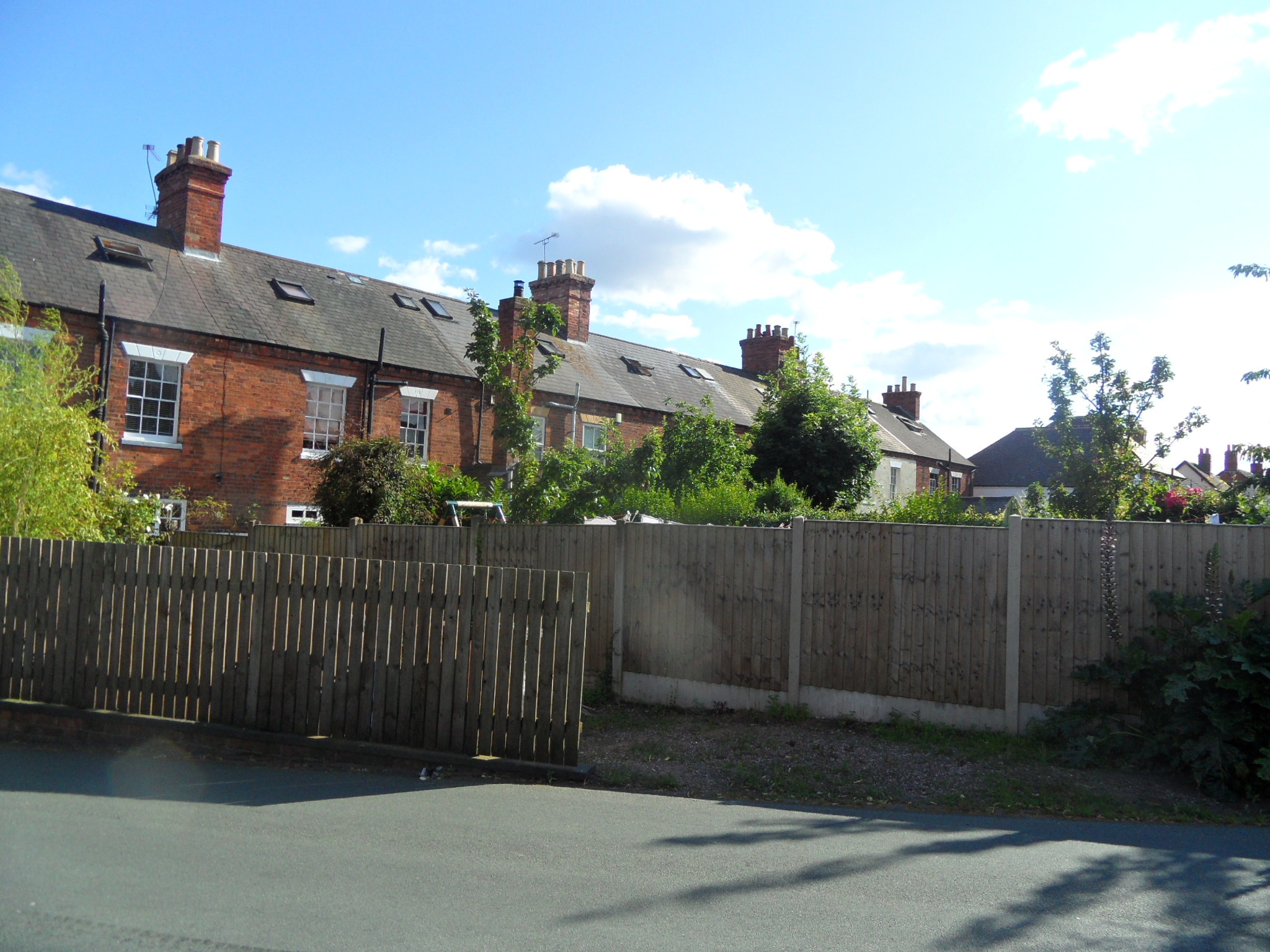
One of these terraced houses in Leomansley still has a tall chimmney at the back. An old washroom?

A wall brace on Greenhill. Does that say R Crosskex? Who was that? See edit below.


A selection of objects found in the garden Of Vicky Sutton’s Nan’s house near to Beacon Park (not including the pink flowery plate!).

The remains of a cherry orchard can still be found near…Cherry Orchard!

Edit:

After I woke up properly, I realised this actually said R Crosskey. I found a book about Henry William Crosskey, a geologist and Unitarian minister from Lewes (1) and found that his younger brother, Rowland Crosskey came to Lichfield as an apprentice ironmonger. He emigrated to Australia for a while and then,  after he returned to England, he started a business in Birmingham. Afterwards, he took over the Lichfield firm where he had served his apprenticeship. In 1868 he became Mayor of Lichfield and donated a civic sword to the City (Is this the one still used in processions today?).  He died in 1890. From census records, it looks like his home and business premises were initially in Market St. In 1888, he was in Bore St, trading as a ‘Military Camp and Store Furnisher’ with premises on the Burton Rd in partnership with Charles John Corrie. Also, just as a point of interest, Rowland was his Mother’s maiden name.


(1)Henry William Crosskey, LL.D., F.C.S. : his life and work by Richard Agland Armstrong; with chapters by E. F. M. MacCarthy and Charles Lapworth. http://www.ebooksread.com/authors-eng/e-f-m-maccarthy-richard-acland-armstrong.shtml

(2) London Gazette 1888


Paths that Cross

On my way to pick up some tickets from the Garrick the other day, I passed Lichfield Library. I couldn’t resist popping in to have a quick peek at the local history section to see if they had any more information on the history on the grammar school,  following on from Gareth’s graffiti photographs.  (They did. A whole book in fact and I’ve updated the post accordingly!). So inevitably, my quick peek turned into two hours.

There was an added bonus to the visit too. Anyone who read my Cross City and Cross County posts will know that I was hoping there would be an ancient cross somewhere in Lichfield. Well, I finally found one! Actually that’s a fib. What I found is a photograph in a book of archaeologists finding one. A decorated cross shaft was discovered built into the foundations of the north wall of the nave of Lichfield Cathedral. It’s thought to be Saxon or Saxo-Norman, and could be a surviving remnant of the earlier church on the site. I wish I could share a photograph here, but all I can do is tell you that it’s on plate 1 in the ‘South Staffordshire Archaeological and Historical Society Transactions 1980-1981 Volume XXII’ book, on the local history shelves at the library!.

I have a confession to make. Generally, I’ve thought that places like the Cathedral are so well known, there’s nothing much left to say. Yet, now I recognise that this was wrong. Whether it’s the magnificent discovery of the Lichfield Angel in 2003, the downright curious tale of a live frog embedded in one of the stones used to repair the Cathedral during the restoration*, or rolls of parchment, beer and tobacco found in the gilded balls on the top of the central spire – the Cathedral, as everywhere, is made of stories, as much as it is made of stone. There are those we know well, those we don’t, and those that haven’t even been told yet.  We need to make sure we  are listening, just as Gareth was when he discovered and questioned that graffiti on the walls of the old Grammar school.

*I’m not making this up…..but someone else may well have been!

The Grave of Poor Bessy Banks

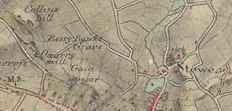
I spotted a place labelled Bessy Banks’ Grave on the 1815 Ordnance Survey drawing of Lichfield by Robert Dawson 1815.

Immediately, I thought of the story of Kitty Jay on Dartmoor. A little investigation has revealed a few details. In ‘History of the City and Cathedral of Lichfield’ by John Jackson (1805), I found the following;

“…of Betsy Banks grave* once the famous rendezvous of lovers….now no more is remembered than that poor Betsy is said to have fallen victim to hapless love.

*there is a spot in a field in Lichfield still distinguished by that name”

Anna Seward wrote to her friend Honora Sneyd about the place in a letter dated May 1772, that she described as ‘Written in a summer evening from the grave of a suicide’. I’ve only included the first part as its quite long.

“It suits the temper of my soul to pour
Fond, fruitless plaints beneath the lonely bower,
Here, in this silent glade, that childhood fears,
Where the love-desperate maid, of vanish’d years,
Slung her dire cord between the sister trees,
That slowly bend their branches to the breeze,
And shade the bank that screens her mouldering form,
From the swart Dog-Star, and the wintry storm….”

Another reference can be found in one of David Garrick’s letters.  He wrote that “the name Dimble is given to a sunken road leading north from Lichfield past a spot, supposedly haunted called Betty Honks Grave. Two sister trees form an elegant arch over a stream”.

By 1791, it was found that the sister trees had been recently cut down.

So who was Bessy Banks, did she really exist? If so, is her grave still there, now unmarked and unremembered?

Edit 5/9/2011

I recently had the St Chad’s tithe map (1849) out in Lichfield Record Office, looking for something else. A whole plot of land is listed as ‘Bessy Banks’. Born a Lichfeldian has kindly worked out where the stream in this area would have been. Taking into account this and the tithe map it seems that ‘Bessy Banks’ was somewhere in the region between Dimbles Lane and Greencroft.
John Jackson’s description suggects that in 1805 the story is already an old one. It does seem a fairly well-known tale, to have actual places on maps marked after it, as well as being mentioned by Garrick (albeit with the name Betty Honks!) & Seward.  Was it just a made-up story, or did it arise from actual events? I wonder when (and why?) the people of Lichfield stopped telling the story? Or could there even still be people who could tell us the tragedy of Lichfield’s ‘love-desperate maid?’

Edit: 15/4/2012

A notice in the Lichfield Mercury 20th February 1914 lists a lot for sale as garden land, known as Bessy Banks, adjoining a plot of arable land let by T Chapman and located next to Gaiafields House and Gaia Fields Cottage.