If ever there was an instance of picking on the wrong person, it was at Fenton Toll Gate on a January morning in 1834. Mr Dawes, a surgeon from Stoke on Trent, was walking back home from Lane End, later to become known as Longton, when he passed three men. One of them raised their arm and struck him in the face, knocking him to the ground. As Mr Dawes lay stunned, the man began to rifle through his pockets whilst the two others assisted with this daylight robbery. As the surgeon regained his senses, he started to shout, ‘Murder!’ but one of the thieving trio place his hand across his mouth to silence him.
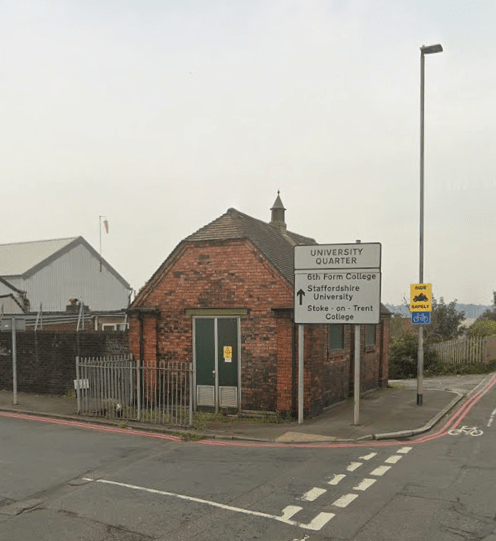
I think this might be the site of the Fenton Toll Gate (taken from Google maps). I also think the Sixth Form College the sign here points to was the first purpose built sixth form college in the UK which is nothing to do with this story but is a great bit of Staffordshire history,
Dawes saw an opportunity to defend himself and managed to bite down on the man’s forefinger. The more he struggled, the harder Dawes held on. Eventually, the failed footpad managed to escape but left part of his finger in the jaws of Dawes.
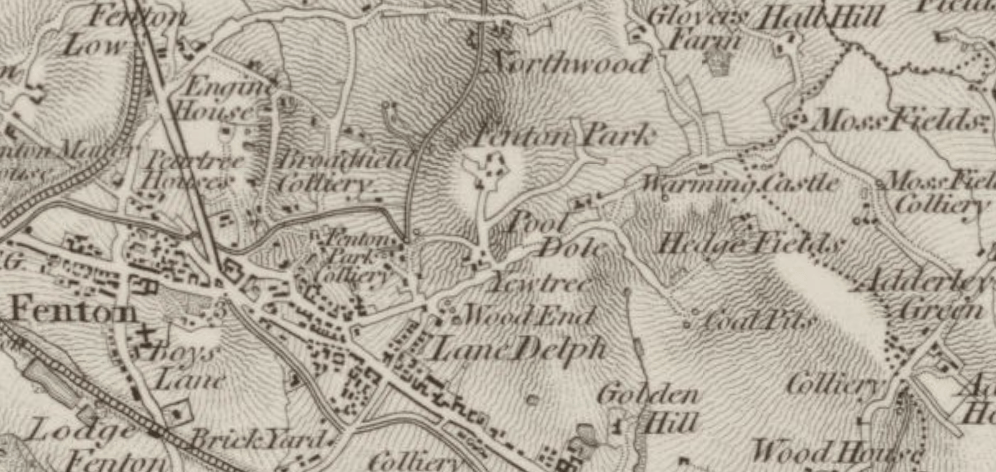
Lane Delph, where the Evans Bros. came to the end of the road. Think we need to continue on our journey to the intriguing sounding Warming Castle however
When another Stokie surgeon called Mr Chadwick heard of the attempted robbery, he tipped off the police that he has just attended to a collier who was missing the end of his index finger and pointed them in the direction of the Evans brothers of Lane Delph. Apprehended at the their residence, the missing finger (carefully preserved by Dawes in a bottle of spirits) was found to be a match for Charles Evans’ manual wound and they were arrested. Out of shear desperation at the trial, he claimed he had cut it off when carving mutton in a public house but, despite their denial of any wrongdoing, the Evans brothers were nailed and sentenced to 14 years transportation. Who needs fingerprints when you have the actual finger?
What became of their accomplice and perhaps more interestingly, the incriminating index finger, remains a mystery. Is this body of evidence still preserved in a bottle of spirits somewhere on a shelf in Stoke?
When John Duncalf was released from the House of Correction in Kingswinford in 1675, he swore he would never set his feet in the town again as long as he lived. It was a promise that was to become grimly prophetic.
On leaving Kingswinford, he embarked on a life of petty crime and sin. He would later confess to, ‘Idleness, Stealing, Cursing, Swearing, Drunkeness and Uncleanness with Women’, although he explained that he had not actually committed actual Fornication or Adultery with a woman except in the thoughts of his heart, and by lascivious words and gestures, whereby he had endeavoured to tempt them to lewdness in divers places. I think we can infer from this that his lack of lewd action was not for want of trying.
The chapter of crime he was to become truly infamous for was the theft of a bible. If he’d only read one of them, paying particular attention to the eight commandment, things could have turned out a lot differently. But, on 5th January 1677, Duncalf turned up on the doorstep of Grange Mill, masquerading as a beggar. It was the home of Margaret Babb and when she charitably invited him in for a drink to celebrate Twelfth Night, the bad man stole her good book.
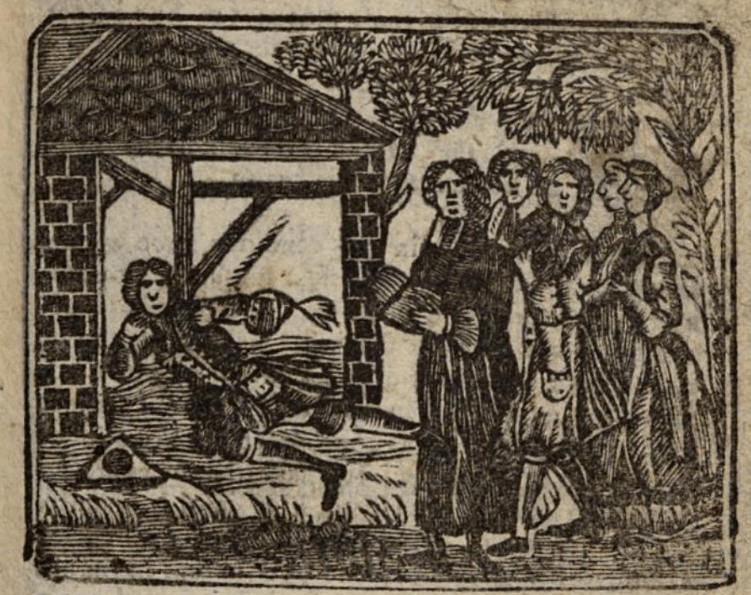
Duncalf stealing the Bible from Margaret Babb as she fetched him a drink. I’m not quite sure exactly what Mr Babb is doing. (Woodcut from Divine Judgement and Mercy Exemplified In a Variety of Surprising Instances)
Duncalf sold Babb’s Bible on to a maid at Heath Forge at Wombourne but its provenance was discovered and suspicion fell on Duncalf. He swore it wasn’t him apparently, ‘wishing his hands might rot off, if that were true’. It would turn out to be the second prescient statement Duncalf would make. Soon afterwards, the flesh around his wrists began to turn black. His ungodly wish was about to be granted.
A few weeks later, Duncalf was working in Dudley with a joiner called Thomas Osborn when he felt weak and faint and feverish. It was Shrove Tuesday and he headed home towards Codsall but collapsed in a barn at Perton Hall in Tettenhall en-route. After two days and two nights, he was discovered unable to walk and so was carried back to his last place of settlement. And so it was that John Duncalf found himself back in the town of Kingswinford but, just as he had sworn, without actually set foot in the place. He was taken in by a man called John Bennett and at first he was lodged in a barn belonging to the Three Crowns Inn on the Wolverhampton to Kidderminster Road. After a fortnight, he was taken to Bennett’s house in Wall Heath where his blackened flesh began to rise in lumps at his hands and wrists before beginning to decay.
A vicar visits Duncalf just before he’s about to lose his left hand (Woodcut from Divine Judgement and Mercy Exemplified In a Variety of Surprizing Instances)
The account I’ve read comes from James Illingworth, one of the clergymen who visited him amidst the crowds. He says that by the end of April, ‘many little Worms came out of the rotten flesh, such as are usually seen in the dead Corpes (sic)’. Many visitors also appeared, posies pressed to their nostrils to block out the putrid smell, hoping to see the man who they believed was being literally and directly punished by God for his sins. Despite everything, Duncalf did not appear to have learned his lesson. Illingworth heard him tell his keeper John Bennet that he wished his visitors’ noses might drop off and asked why he did not dash out their teeth to stop them from grinning at him.
Eventually, Duncalf asked for Margaret Babb to visit, and she came with the maid he had sold the stolen book to. He confessed his crime to them and asked their forgiveness, which both of them granted. When his hands rotted off, there was hope that penance had now been paid and that God would punish him no more. Yet, the suffering continued. By 8th May, both of his lower legs had fallen off at the knee, although he didn’t realise it until Bennett held them up to show him.
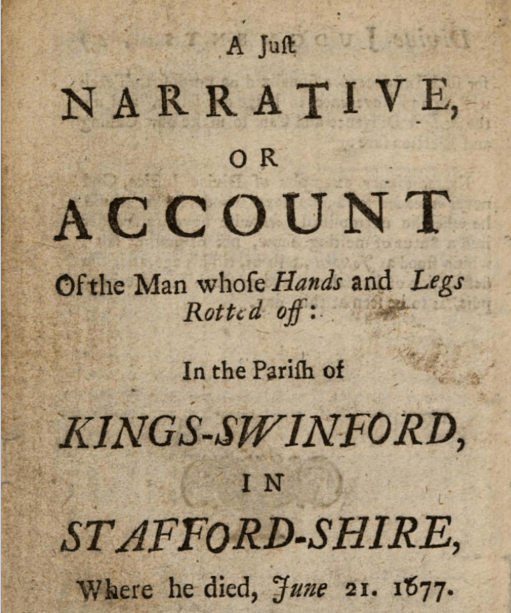
According to the Dudley Archives and Local History Service, the entry in the parish register at Kingswinford shows that John Duncalf was buried on 22nd June 1677, and is described as, ‘the man that did rott both hands & leggs’. The entry notes that he stole a bible, a charge, ‘he wickedly denyed with an imprecation, wishing that if he stole it his hands might rot of which afterwards they did in a miserable manner’. It adds that, ‘many people (I verily believe hundreds) saw him as hee lay with his hands & leggs rotting off, being a sad spectacle of God’s justice and anger’ and ends by saying it was registered as, ‘a certain trueth, to give warning to posterity to beware/ of false oathes’.
Clearly there is a certain trueth to this story which elevates the death of John Duncalf to more than mere folklore but what did cause his terrible demise if it wasn’t a punishment dished out via divine judgement?
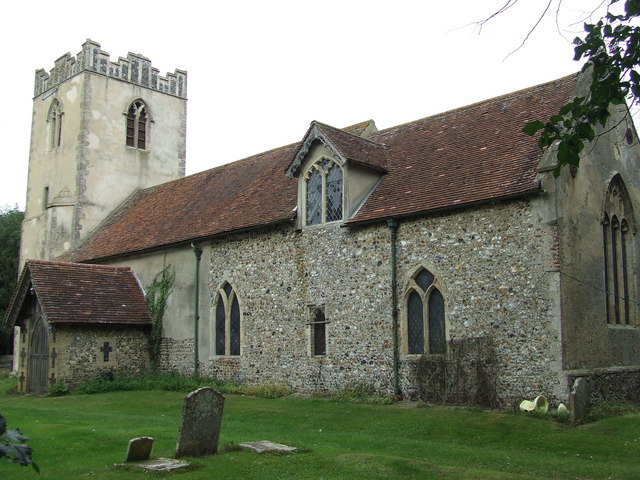
Keith Evans / St Nicholas Wattisham / CC BY-SA 2.0
A memorial in the tower (which you can see here around 13m20s in) and an entry in the parish register at the now disused church of St Nicholas at Wattisham in Suffolk describe the sad fate of the Downing family who all lost their feet in 1762, although four of them survived. I’ll spare you from the full gory details but belief amongst local people was that the poor family were victims of witchcraft. The local vicar Rev Bones (I kid you not) was not convinced and set out to ascertain the cause of their affliction sending several letters to the Royal Society who concluded the culprit was gangrenous ergotism caused by eating grains infected by the fungus Claviceps purpurea.
I’ve seen this ‘tragic ‘singular calamity’ as Rev Bones called it, described as the only recorded case of ergot poisoning in England. However, I strongly suspect that John Duncalf may have been another of its victims and possibly, had John Bennett and others sought medical attention for him rather than condemning him to be some sort of religious freak-show, he may even have survived.
I definitely wouldn’t swear on it though…
Sources
Ian Atherton (2022): ‘John Duncalf the Man that Did Rott Both Hands & Leggs’: Chronicle of a Staffordshire Death Retold in the Long Eighteenth Century, Midland History, DOI: 10.1080/0047729X.2022.2126237
The plan was to spend the day foraging for folklore in the villages to the west of Stafford but we accidentally ended up at Acton Trussell and then found out that archaeologists had accidentally found a Roman villa underneath the local church.
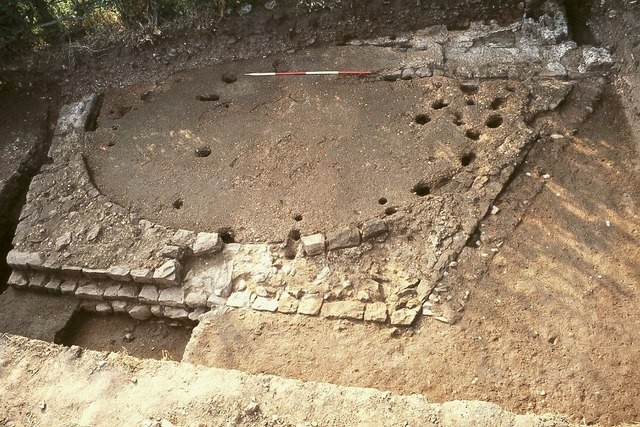
In the 1970s, a local archaeology group started to wonder why the church of St James was built someway outside the village. Clearly the two women we asked for directions to the church who after asking, ‘What church?’ then sent us in entirely the wrong direction, thought it should have been nearer to the village too. The obvious assumption was that the centre of Acton Trussell has shifted over the years but when fieldwalking between the church and village produced just a scattering of late medieval pottery, this seemed unlikely. What did start showing up however was evidence that there had been Roman activity at the site. Several sherds of pottery and two coins from the 3rd century posed a new question. What were the Romans doing here?
To the south of the St James, the field-walkers found fragments of roof tiles, suggesting the source of the Roman remains was somewhere near the churchyard. and then an excavation which began in May 1984 revealed that the church of St James and its graveyard actually stood upon the site of a Romano-British villa. Was this just a coincidence or could there be some sort of deliberate continuity here?
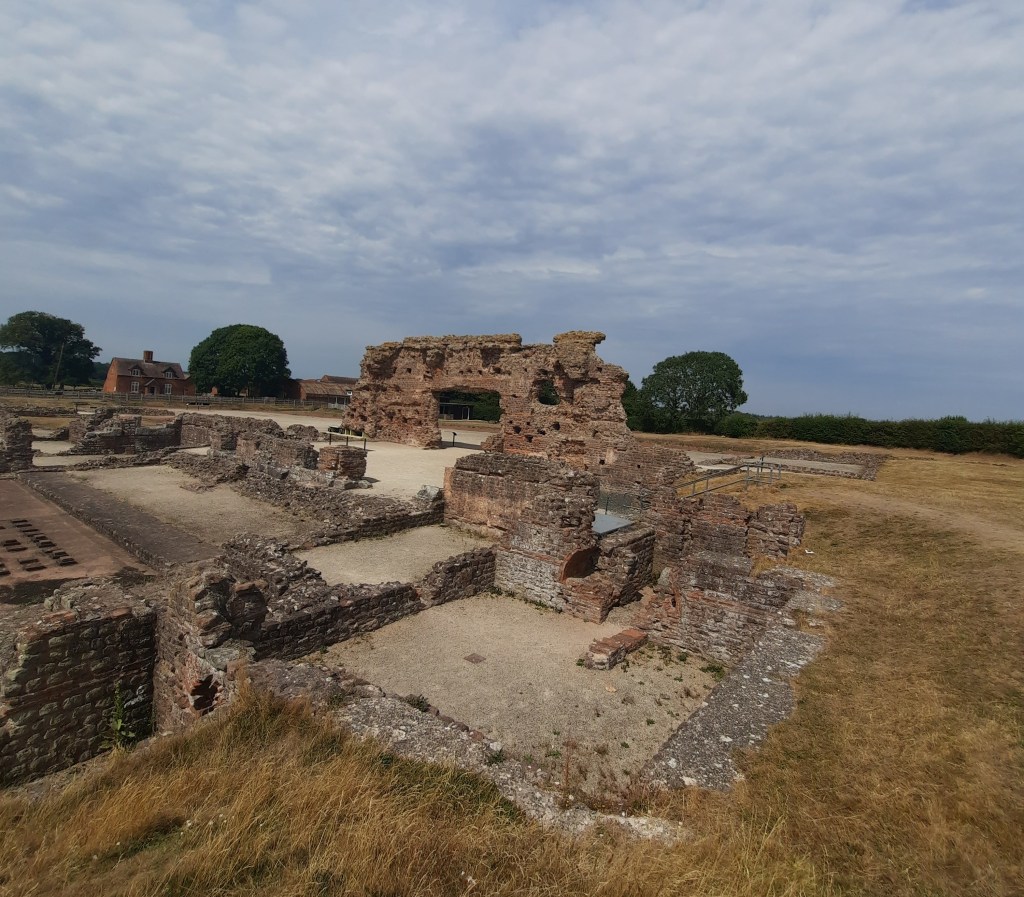
It’s not unknown for Roman sites to have been converted to Christianity. I was at Wroxeter in the summer and read that part of the Roman complex at Viriconium may have been adapted for use as an early church. It’s not watertight but the availability of a cold plunge pool in the frigadarium and bodies found nearby hint that the baths may have been used for those two Christian bookends of baptism and burial.
Wroxeter Roman City
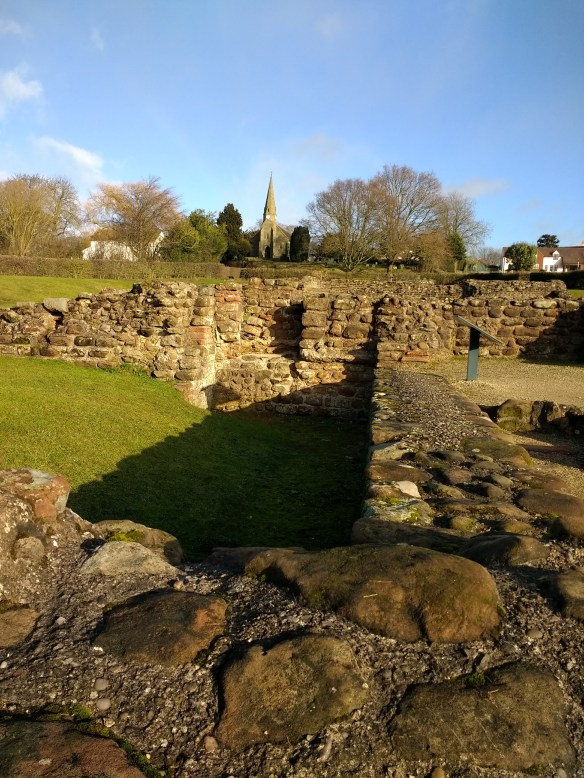
This brings me back down the A5, and makes me wonder about Wall, where there are clues that Letocetum may have been home to an early Christian community. Again, evidence is mostly circumstantial but the most convincing argument comes in the form of a long lost bronze bowl with a Chi-Ro symbol on it. It was discovered in a grave in 1922 along with 30 coins dating to the 4th century and one of the 1st century and exhibited by Mr F Jackson at Wroxeter at a meeting of the Birmingham Archaeological Society. Afterwards it disappeared. and is now probably in a private collection but it belongs in a museum (yes, I have been watching Indiana Jones over the Christmas holiday). Thankfully, the other physical evidence that Christians once worshipped at Wall is in a museum. Well, in the Birmingham Museum Collection Centre anyway. Amidst stones carved with heads and horns, believed to have come from a Romano-British shrine local to Letocetum and rebuilt into the walls at Wall, was a stone carved with a cross.
Archaeologist Jim Gould suggests stylistically the cross most likely belongs to the period of the 6th to 9th century, which would tie it into the time-frame of the tantalising verse that is, ‘The Death Song of Cynddylan’ which recalls three battles fought by Prince Cynddylan of Powys. One of these was at a place called ‘Caer Luitcoed’, which translates to ‘the fortified grey wood’ or, as everyone now calls, Lichfield. Here’s a translation of the relevant part of the poem:
Before Lichfield they caused gore beneath the ravens and fierce attack Lime-white shields were shattered before the sons of Cynddylan. I shall lament until I would be in the land of my resting place for the slaying of Cynddylan, famed among chieftains. Grandeur in battle, extensive spoils Moriel bore off before Lichfield 1500 cattle from the front of battle, 80 stallions and equal harness. The chief bishop wretched in his four-cornered house The book clutching monks did not protect those who fell in the battle before the splendid warrior.
The relevance to a possible early Christian community in the area are those book-grasping monks and the bishop in his four cornered house. According to Jim Gould, written evidence can also be found in Eddius Stephanus’ Life of Bishop Wilfrid which suggests that there was some sort of church and monastery in the area before St Chad set up alongside the spring at Stowe. Wulfhere, King of Mercia between 657 and 674, gave lands to Bishop Wilfred to found monasteries at existing holy places deserted by British Christians.
It wouldn’t be a complete leap of faith to imagine this could have included Lichfield, would it?
The Archaeology of Roman Letocetum (Wall, Staffordshire), Implications of the proposed West Midlands Northern Relief Road, Draft for Consultation, County Planning and Development Department Staffordshire County Council
Gould, J 1993. ‘Lichfield before St Chad’, in Medieval Archaeology and Architecture at Lichfield (ed J Maddison), Brit Archaeol Assoc Conference Trans 13, 1–10, Leeds: Maney Publishing
I’m reading the memoirs of a man named William Purcell Witcutt. Like me he had connections to both Birmingham and Staffordshire, and was fascinated by folklore. Unlike me, he was an protestant vicar who converted to Catholicism before being exiled to the furthest outpost of the Diocese for the crime of commenting on the corrupt nature of many medieval priests. Yes, they sent him to Leek.
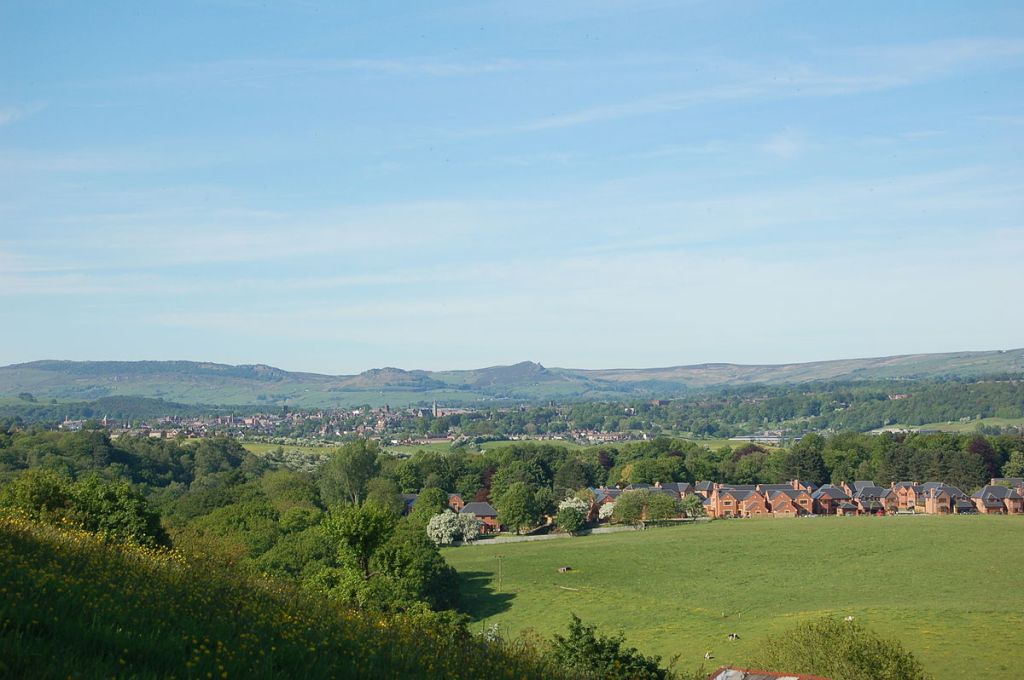
In his book, ‘Return to Reality’ there is a chapter called ‘The Valley of Phantoms’, in which he describes how, ‘Leek lay hidden in mist and woods in the middle distance, and one of the older boys tried to convince me that it was invisible from the air. Leek will never be bombed said he, and quoted with assurance the prophecy that there would come a time when, ‘there will be no safety in the land save ‘twixt Mow Cop and Morridge’.
No I can definitely see it
Witcutt was soon to find plenty more superstition in this Staffordshire Moorland town. It seemed to him that the valley and moors around it swarmed with ghosts and bogies, which people still believed in. There was the Headless Horseman, or in Leek dialect, ‘a man on an ‘oss without yed on, an awful gory sight’, and nearby was a Black Dog who guarded the graves of those who died a violent death. According to Witcutt, the Queen of the Leek demons was the Mermaid of Black Mere, who I wrote about many years ago here. A new story to me was that of ‘Ball Haye Jack’, a little grey man whose appearance in front of one of the mills was believed to bring bad luck. One curious custom Witcutt noted was that on seeing his collar, the girls and women who worked in the mills would touch the factory railings, a somewhat unsettling reaction given it seems to be linked to the superstition that touching iron would protect against the power of a sorcerer.
One of the strangest spots Witcutt writes about is the Coombes Valley, When he visited in May 1940 he found a farmer planting potatoes and as the man sowed his spuds, he shared stories of the valley. At a place nearby, the spectre of a murdered man was said to ride up and down the ridge. Once seven priests came to lay him but all but one of the gathered fathers fled. The final man standing held up a stone in the brook, dismissing the pleas of the phantom for mercy, and laid him beneath the rock. The process appears to have been unsuccessful however and so the dead man rode out once more. This next time he was laid beneath a hawthorn tree at a place known very appropriately as Spirit Hole. Even that was only sort of successful though as he still haunts the valley, although now in far less malevolent form of a bird heard singing as the night falls at the Spirit Hole. The stone which had failed to keep the ghost grounded was still there when Witcutt visited (and I believe it still is), and according to the farmer it had once been a stone of sacrifice.
No wonder the valley is full of phantoms.
Source: WITCUTT, W.P. Return to reality, Macmillan, 1955.
Three men, three deaths all seemingly linked. Somewhere in the story there must be a clue to tell us whether it was coincidence or if something creepier was at play here.
As the harvest of 1853 was gathered from the fields at Rownall in Staffordshire, Colonel Thomas Powys sat beneath the shade of a small oak tree, overseeing the work of the new labourers he had hired. Hours passed and day turned to dusk, but still Powys remained sat under the tree until Jack Shaw, one of the seasoned workers wandered over and found him in a state of insensibility, muttering the same phrases over and over. ‘And then another’, ‘Yet another’ and then, ‘The grass’.
Shaw shouted to the other men to stop their work in the meadow and together they carried the near comatose Captain back to his home Westwood Hall. The doctor was called for and when he arrived Powys was still saying those strange words. ‘And then another…then another…the grass’, although his voice was now not much more than a whisper. Soon afterwards, he was dead.
When Jack Shaw returned to the tree where the Captain had sat he noticed the grass where the man’s feet had rested had withered. Shaw’s son, telling the story to the Newcastle Under Lyme Times in October 1940, said he had witnessed it himself and that no grass would grow on the spots for some years after. Another odd detail about the death of Captain Powys is that when Mr Leese the coffin-maker was called to measure him for his coffin, he noticed that the corpse hadn’t stiffened and still hadn’t done so by the time it was placed in it.
The story would be strange enough as it stands but several years later another man died in the very same spot beneath the oak tree. Mr Yates, the tenant of the farm had felt faint and gone to sit in the shade. Just like the Captain before him, he had to be helped home and never recovered from what ever malady struck him that day. And just like the Captain, his corpse never stiffened.
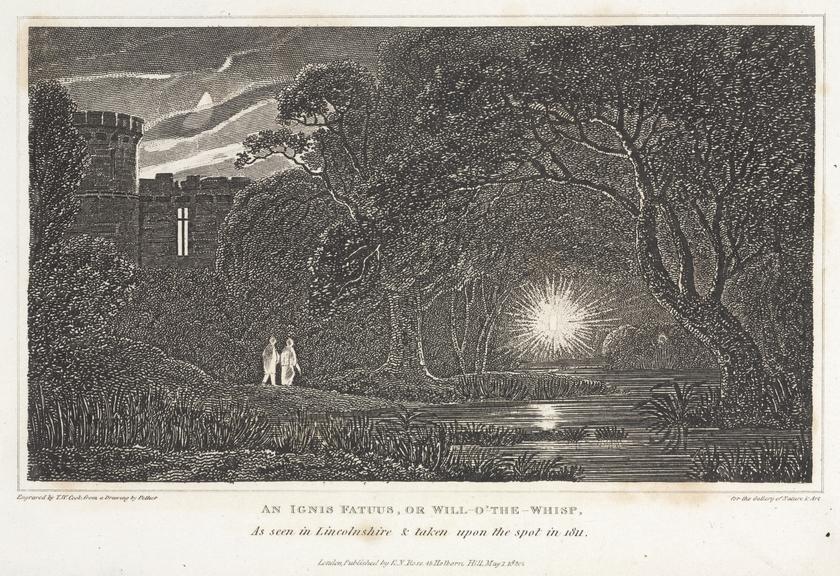
A man named Heath became a tenant of the farm and, one day whilst cutting rushes in the same meadow where the other men had been stricken, he too was taken ill and died shortly afterwards. Shaw Jnr could not confirm whether or not he had sat in the same spot as Powys and Yates prior to his demise but he does recall that Heath’s body remained flexible even as he was placed in his coffin. He adds that after each of the three men died, so one of the tree’s branches. Of course, there were theories from the locals. One was that all three had entered into some sort of trance and that they were still under it when they died. If true, it would make a strange story truly sinister as it suggests they may have been buried alive. Shaw Jnr’s own explanation was that all three contracted some sort of illness from the marshy ground at the end of the field. He had seen the will o’ th’ wisp there on several occasions and as the explanation for these eerie lights is that they are caused by the spontaneous combustion of gases, perhaps he was on to something?
I am a storyteller, not a scientist, and so I am asking any readers of this post to share their theories regarding the mystery of these three strange deaths in the Staffordshire Moorlands.
There’s folklore and there’s legendary
Sources
Newcastle-under-Lyme Times – Friday 04 October 1940
We are over half way through October and I don’t feel like I have indulged in anywhere near enough spookiness as I should have this year. I’m going to try and play creepy catch-up starting with the bizarre burial of Charles Blood at Church Leigh nr Uttoxeter, which took place while the village was cut off after a snowstorm in March 1909.
Once the funeral service had concluded & the mourners dispersed, the sexton, Edward Alcock, was filling in the grave of Charles Blood when he became aware of a knocking, seemingly coming from inside the coffin below him. He described it as the sound of someone rapping on an empty box and counted twenty taps in total, loud at first but gradually becoming fainter. Concerned the poor man had been buried alive, he called over to his brother Harry to fetch Samuel Hollins the undertaker. As the small group of mystified men stood together in the snowy churchyard, they received instructions from the rector in his warm bed, to raise the coffin from the cold grave and carry it into the church. It was something of a struggle due to the corpulent nature of the corpse within but eventually they managed to manoeuvre it. Once inside the chancel, the undertaker unscrewed the lid. It was immediately clear that there were no signs of life and nothing to suggest anything sinister was afoot. The only change was that the hands, originally placed on the deceased’s stomach, were now lying by his sides. A doctor’s assistant from Tean who was passing by the church yard was called in to confirm that Charles Blood was definitely dead and that he definitely had been when he was placed in the coffin.
Weirdly, when the coffin was lowered back into the earth, the tapping began again although this time Charles Blood was left to lie in peace. Well, it would have been peaceful apart from the tapping.
The undertaker’s explanation of the mystery was that the unnerving noises were caused by compressed air in the coffin. He dismissed the suggestion that it was earth falling on the wood, as the taps were too regular. The sexton had no rational explanation for the strange sounds, having buried hundreds of bodies before without incident. It seems he may have suspected a supernatural cause for the sounds as it’s reported that after the strange affair, he would walk a mile out of his way at night to avoid the churchyard. He wasn’t alone. Some of the more superstitious villagers at Church Leigh were convinced it was a sign of some impending disaster.
I’ve been to visit the churchyard but couldn’t see, or hear, the grave of Charles Blood. I reckon this chap knows more that he is letting on though…
It took me a while to find the wishing stone at Pye Green and it’s taken me even longer to write up what I found about the tale behind it on here. This story appeared in an old newspaper, told to the writer by a ‘greybeard’, one of the descendants of a family of Cannock Chase foresters, and I’ve taken the liberty of retelling it in my own words.
During the English Civil War, the Wishing Stone was the place where a young soldier and one of the daughters of the Cannock Chase foresters would meet. One day the soldier was called away to fight for the King at Worcester and left his lover with a promise to return. Every day that followed, she would wait at the stone for him and those passing her on the old packhorse route known as Blake St would hear her wishing for his return. Weeks passed by and one evening, when she didn’t return home, her father went looking for her. The local women suggested he try the stone and that’s where he found her, lips no longer wishing for her soldier to return but blue and still. The local women speculated whether it was the cold or a broken heart that took her in the end. When the soldier returned and asked where he could find her, ‘her body is in Cannock churchyard’ the local women replied, ‘but her soul is at the place we now call the Wishing Stone’.
Centuries later, if you stand at the stone and listen carefully, you can hear what sounds like a voice saying ‘I wish, I wish, I wish’. It might just be the wind blowing through the trees which surround the stone but the local women will tell you otherwise.
Newton Road Rail Station opened 1837. Closed 1945
Two summers ago, I went to find another wishing stone over Walsall way (yes, I really do need to work on writing stuff up sooner). It’s described as being by a stile in a field leading to Newton Road Old Station on the London and North Western Railway. Folklore says all true lovers who step on the stone will have whatever they wish for come true in twelve months and a day. According to the author of the article in the Walsall Advertiser, you would often find love sick couples loitering around the place but all I could see was cows. I think the stone is on the opposite side of the River Tame to where I was but I wasn’t willing to wade over, even for a wish. I am hoping to go back tomorrow however, as I want to find an aqueduct with a haunted patch of grass and the ruins of the priory alongside the eponymous Sand Well. Is it a wishing well though?
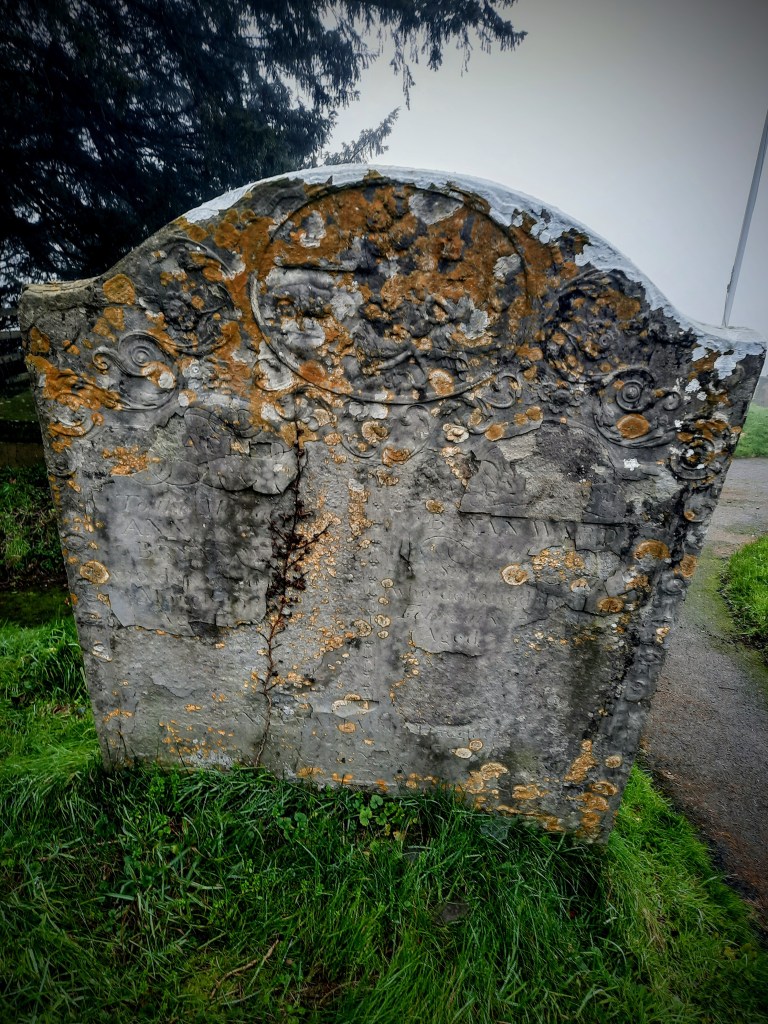
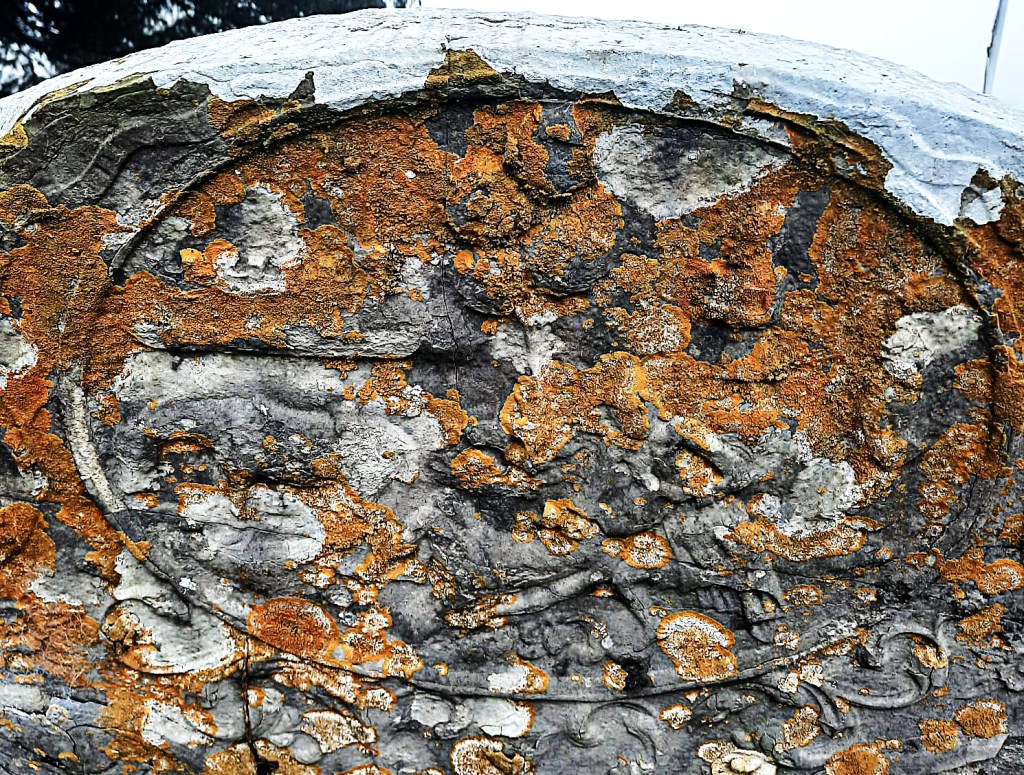
I love a tomb with a tale attached and the churchyard at Sandon delivered. An article in the Staffordshire Sentinel in December 1955, talks of, ‘a grave, said to be that of a highwayman who met his death at Sandon. Certainly the curious shape of a horse and rider on the gravestone would bear out this legend’. A misty winter’s morning, in the dead days of last December, provided the ideal conditions to seek it out and, as the fog swirled around our feet, we found it. Sadly, those curious shapes are now encrusted with lichen and much-weathered by the sixty-nine winters which have passed since the description in the Sentinel was published.
Six months on and I’m still trying to solve the mystery of the so-called highwayman’s headstone. A figure lays stricken on the floor, a man leaning over with his hand on their heart. Whether he’s trying to slay or save them isn’t obvious. To the right, two men stand look-out and at the back is a riderless horse. There’s a church in the carving but as it has a spire this can’t be Sandon, which does not. I’m describing it from a photo taken in 1965 ago which is in the Historic England collection. Unfortunately, their copyright rules don’t allow me to share it here for you to see yourself although I have contacted them to see if I can get permission.
The inscriptions on the tomb are as follows:
To the Memory of Ann the Wife of BRYAN WARD who departed this life March 19th 1807 Aged 65 Years
BRYAN WARD of Smallrice, Gent who departed this life February XX 1809 Aged 74
Anna Maria their daughter died September 15th 1797
Something else is written below the inscriptions for both Ann and Bryan but was illegible even on the 1965 photo.
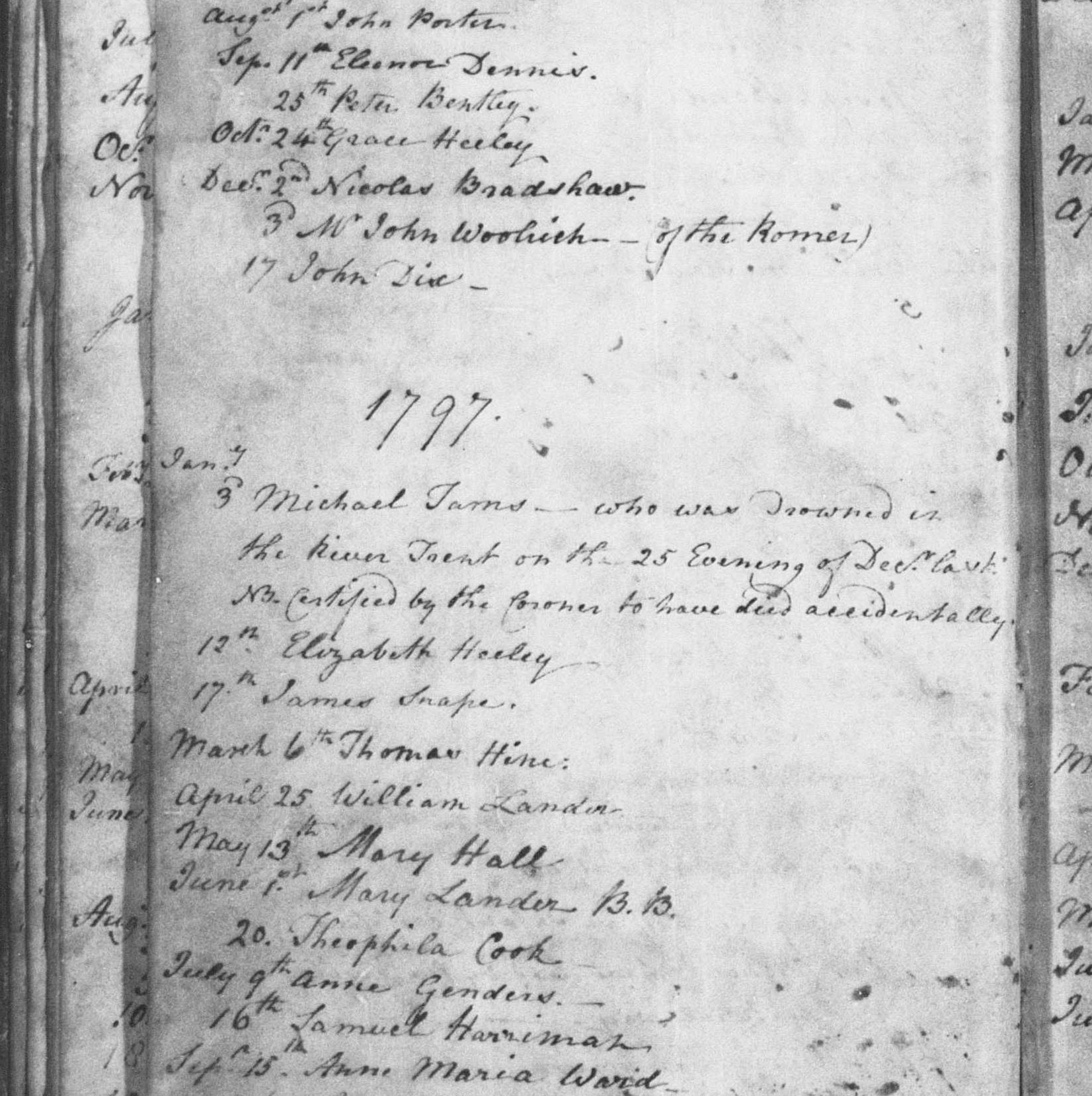
The All Saints parish register has the entries for Mr Brian Ward’s burial on 23rd February 1809 and five year old Anna Maria Ward’s burial on 15th September 1797. Neither has a note attached to suggest there was anything unusual or untoward about their deaths. I’m sure that had there been, the Vicar of Sandon would have included something as above the entry of Anna Maria’s is a record of the burial of Michael Tams supplemented to say he was drowned in the River Trent on the 25 Evening of December.
The burial record for Anne Maria Ward on 15th September 1797
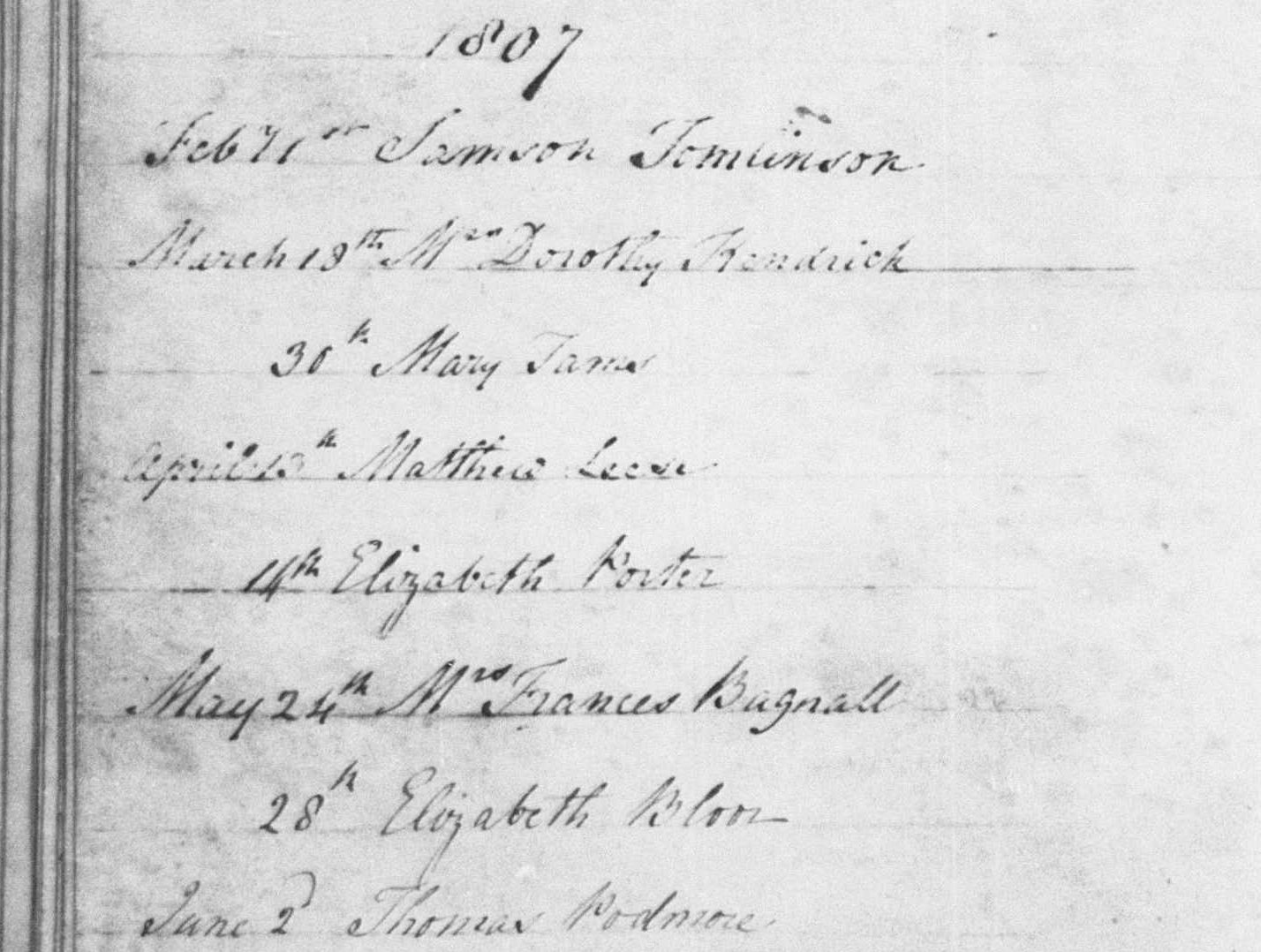
What I can’t find in the Sandon register is a record of the burial of Ann Ward in 1807. In fact, I can’t find any record of her burial at all.
I’m starting to suspect that the curious carving at Sandon might depict the death of Ann Ward in someway but if she wasn’t buried beneath it here at All Saints, then where is she? Are we going to be able to solve the mystery and rewrite the local legend of The Highwayman’s Grave?
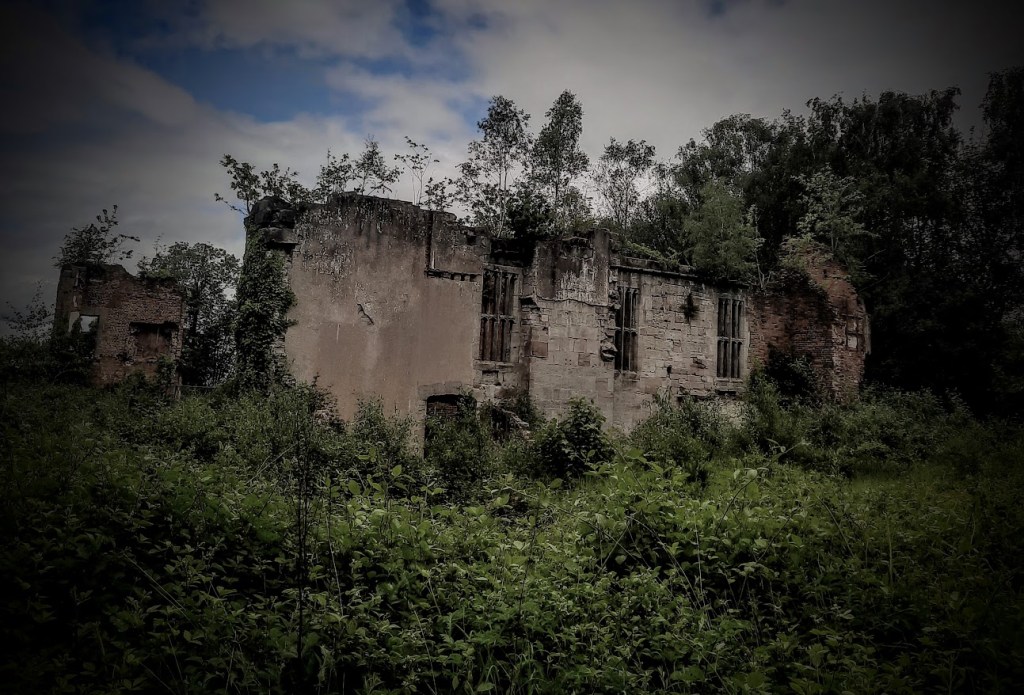
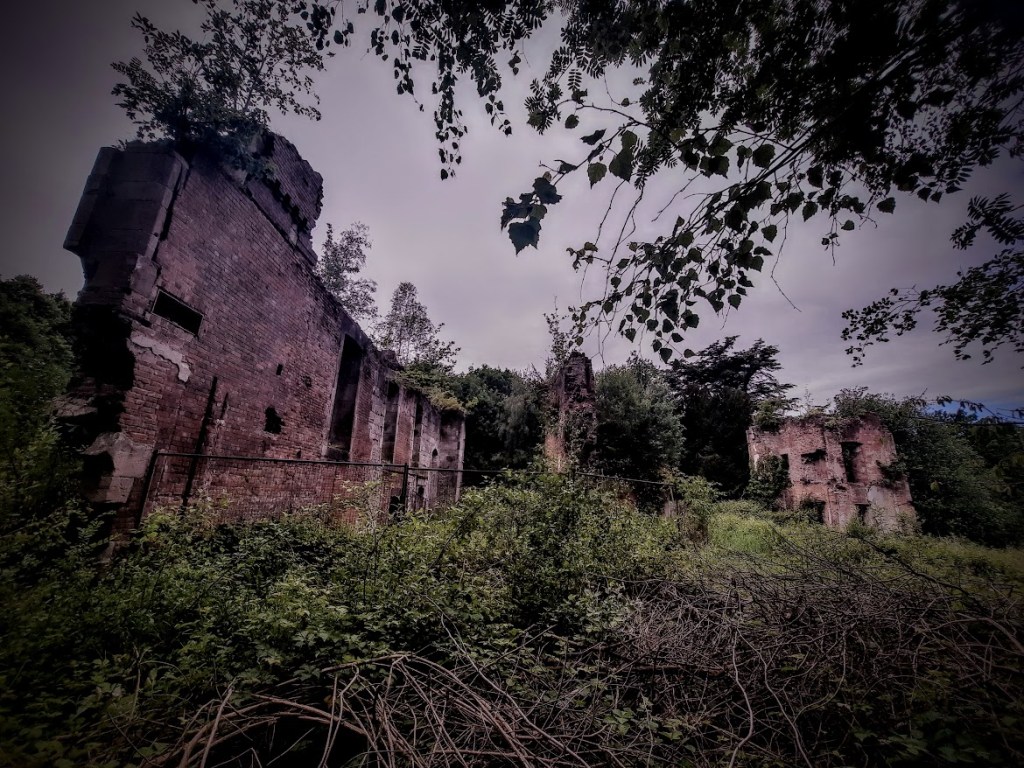
The story of Beaudesert Hall features an incredible cast of characters. There’s Lady Florence Paget, the ‘Pocket Venus’ who eloped with her lover Henry Hastings, and married him on the very same day she was supposed to wed his best friend, Henry Chaplin. More famously, there’s Toppy aka The Dancing Marquess, and a film about the decadent 5th Marquess of Anglesey, ‘Madfabulous‘, has just been shown at Cannes. And of course, there is the first Marquess of Anglesey, who rests in peace in a crypt below Lichfield Cathedral (and no, I’m not going to make any missing leg jokes). For me though, it’s the beginning of Beaudesert and its (sort of) end that has captured my imagination most thanks to a fabulous guided walk and talk there last weekend with my friend JP.
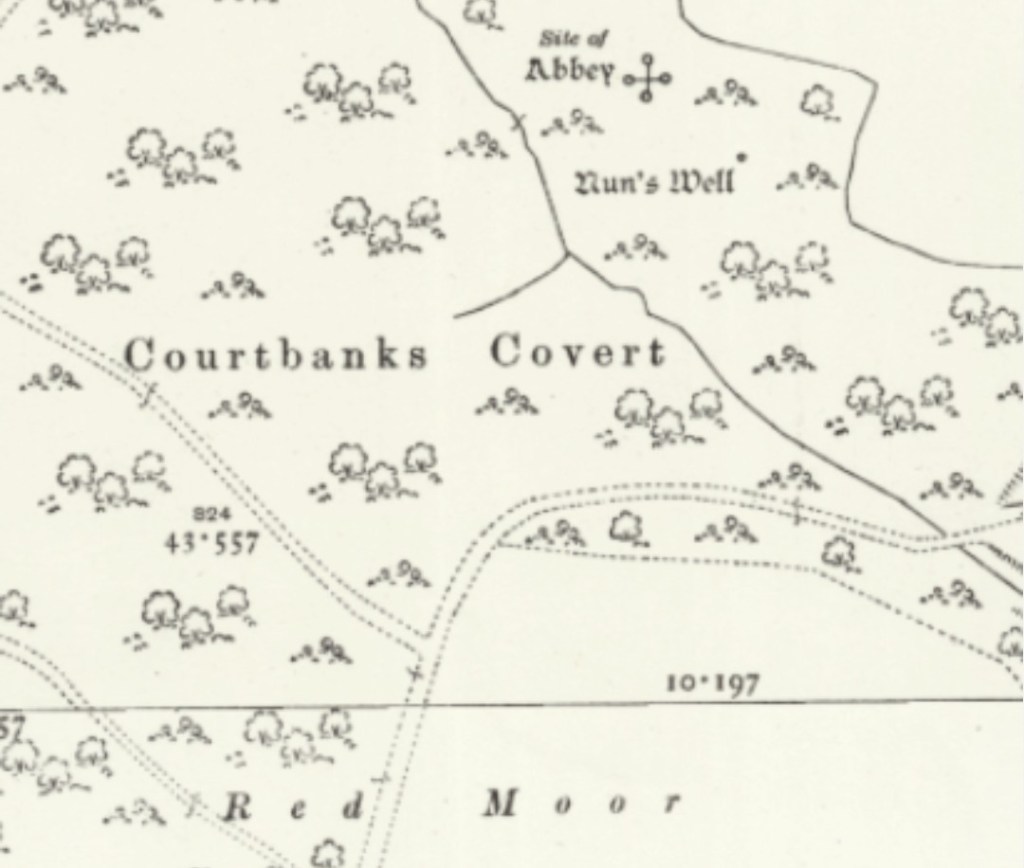
Some of the most substantial remains still standing date back to the 15th century, when the place belonged to the Bishops of Lichfield. They christened it the ‘Beautiful Wilderness’, inspired by the surrounding countryside of Cannock Chase. The story of how it came into their possession is still unfolding and the idea that Beaudesert, first mentioned in the 13th century, may also be connected to two other nearby sites is an intriguing possibility. And how does the mysterious Nun’s Well fit into all of this?
At Cannock Wood, a hermitage was established by King Stephen c.1130, which later became a short lived Cistercian Abbey dedicated to St Mary. Tired of being taken advantage of by the local foresters, the monks begged their benefactor, Henry II, to find their somewhere they could pray in peace. He agreed and swapped the site with what then became Stoneleigh Abbey. King Henry was happy with the exchange and turned Radmore, or Red Moor, into a royal hunting lodge. Despite the site of the Abbey being marked on maps, and evidence of a moated site, WH Duignan, the Walsall solicitor and antiquarian, cast doubt on the location suggesting heaps of furnace slag had been mistaken for ancient ruins. He believed the Abbey had instead stood within the ramparts of Castle Ring, where the foundations of a small building are still visible, although this has more recently been interpretated as another medieval hunting lodge.
Beaudesert belonged to the Bishop until the Reformation when Sir William Paget was given the house by Henry VIII. Paget had risen from humble beginnings to become a key member of the king’s court, thanks to his ability rather than ancestory. Many sources speculate he was the son of a nail maker in Wednesbury but what is certain is that this self-made man managed to keep his head, both physically and politically, throughout the turbulent times of the Tudor monarchs. The property stayed in the ownership of the Pagets until the 6th Marquess of Anglesey made the difficult decision to dispose of his Staffordshire seat in. In the end, he couldn’t even give it away and so the place was sold off piecemeal.
If you’ve read this blog before, you’ll know I have a fascination with what becomes of the fixtures and fittings of a lost country house and there are some tantalising trails to follow from Beaudesert. Pitman, writing for The Friends of Cannock Chase, described seeing, ‘Oak floors, decorative plaster ceilings, Jacobean overmantels, fire grates and irons of ancient dates, (and) marble bathroom equipment’, being dismantled by, ‘the bargain-maker’s men’. Many of these items were bought up by Sir Edward and Ursula Hayward and shipped down under to Carrick Hill House in Adelaide, including the Waterloo staircase, so named for the portrait of the 1st Marquess which hung above it. Oak from the Long Gallery went to Birmingham, where the City Council intended, ‘to keep it ready for use when occasion arises’. Did the Beaudesert panelling ever make it into a Brummie building? With the help of a local councillor, I’ve found a house in Armitage which was once a game larder on the estate and there are stories that more of the stonework found its way to Hanch Hall and to the collection of a man who kept curiosities in a disused rail station in Sutton Coldfield. (Yes, the temptation to go off track and delve further into this has been immense!).
According to the Staffordshire Advertiser, reporting on the sale in July 1935, buyers had 28 days to remove their new property. The demolition firm then had two years to, ‘clear the site, it being understood that he demolishes the building to the ground level and leave the site in a reasonably level and neat condition’. As we know, they never quite succeeded and thanks to the firm becoming bankrupt, some of Beaudesert Hall still survives, ready for another chapter in its long and eventful history. To uncover the full story so far, I can’t recommend enough that you book yourself onto a tour and let the experts guide you around this beautiful wilderness.
Charlotte Sophia Burne, the first woman to become president of the Folklore Society, once said of Staffordshire, ‘It is comparatively an ordinary occurrence for this or that lately deceased person to ‘come again’ after death’.
I can’t help but wonder if she’d heard of the post-mortem wanderings of Preston Moore and his father in the village of Weston, near Stafford. A book called ‘Phantasms of the Living’, contains the following account from a Mrs J Bennett written in 1882 about the eerie events of 13th April 1860.
“My daughter Annie and I had been drinking tea with the late Mrs Smith and Miss Moore, and talking about their brother Preston being very ill and not expected to recover, and were returning home in the evening when between the little wicket which opens out of the Vicarage field and Mrs Newbould’s house, we met the identical man in face, form and figure, dressed as he was always wont; slouched hat, old frock coat, open in front, knee-breeches and gaiters, with a long stick. He passed so near us that we shrank aside to make way for him. As soon as we got to Mrs Newbould’s she exclaimed, ‘So Preston Moore is dead!’, when we both exclaimed, ‘Oh no, we have just seen him!’. We found, in fact, that he had died about half an hour before he appeared to us’.
Something wicked this way comes
Mrs Bennett was adamant that it could not have been a case of mistaken identity. According to her, ‘We cannot call to mind anyone at all resembling the individual in question; his appearance, dress and gait were utterly unlike anyone else residing in or about the neighbourhood’. More intriguing details emerged during psychical researcher Eleanor Sidgwick’s interview with Mrs Bennett. There was apparently something forbidding about Preston Moore and his sister Miss Moore was also considered odd. Preston may also have had a thing for Mrs Bennett. He once bought her pansies pinched from a neighbouring gentleman’s garden and another time, cauliflowers, also illegitimately acquired. Perhaps I should have saved this story for Valentines Day? ‘Roses are red, violets are blue, here are some vegetables, I’ve stolen for you. Violets are blue, roses are red, I’ll still be around, even after I’m dead’.
A lovely pub. We will definitely come again.
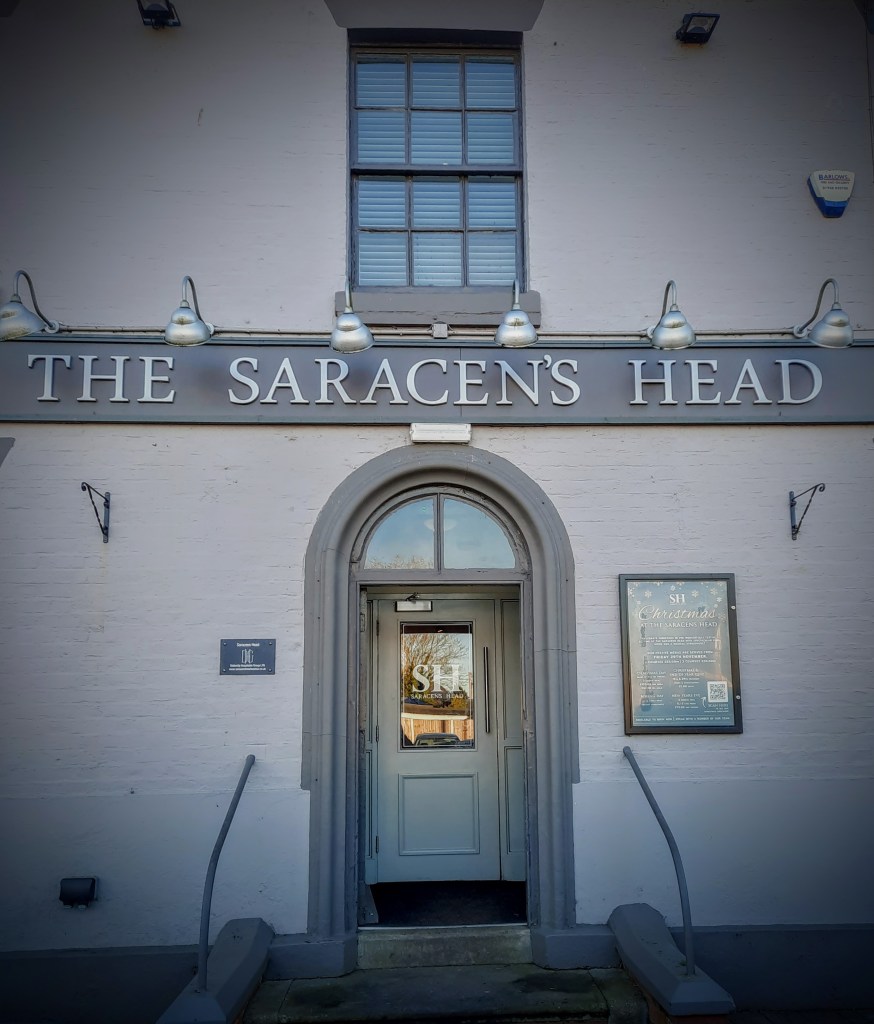
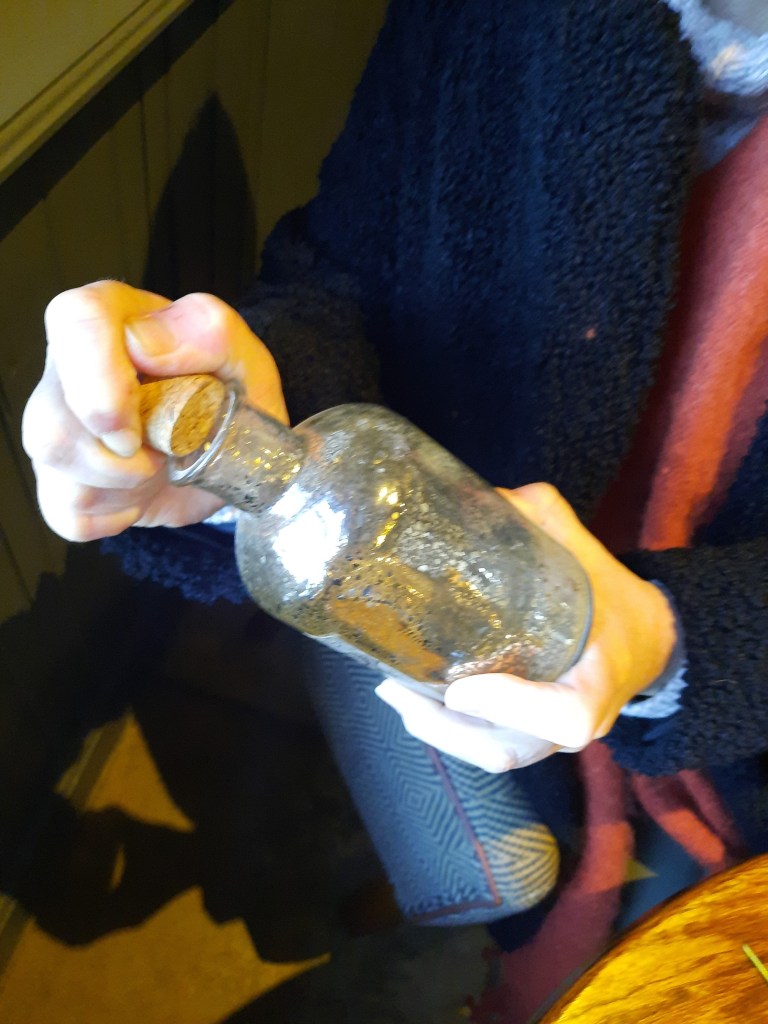
The story as it stands is strange enough but reader, there is a twist in this tale of a dead man walking. An article in the Staffordshire Advertiser in 1901 claims that Preston Moore was not the first of his family to ‘come again’ after his death. There was a legend in the local area that his father’s shade had roamed up and down the road between Stowe and Weston, until locals decided it had had enough exercise and it was time to exorcise this restless spirit. It was laid in a bottle and bricked up in the cellar of the Saracen’s Head Inn to remain there, ‘whilst holly and ivy are green’. It seems that during his life Mr Moore senior may have been the landlord at the inn making the real horror here the idea of being trapped in your workplace for eternity.
She wouldn’t let it lie!
Obviously my good friend Jacky and I went to investigate, by which I mean we popped into the pub for a coffee and pretended we’d found the bottle containing the spirit of Mr Moore on a shelf nearby where we sitting. I am convinced there’s more to be found out about the mysterious Moore family which may explain why the family seem to have been at the centre of village superstition. In the meantime, if you work at the pub, would you pop into the cellar and see if you can find where the old landlord lies? We should have asked but we didn’t have the bottle…
Sources
Staffordshire Folk and the Lore, Charlotte Sophia Burne
Phantasms of the Living, Edmund Gurney, FWH Myers and Frank Podmore




 Lichfield Lore