A Storm Brewing

A comment from Mrs P on an earlier post about the City Brewery on the Birmingham Rd revealed another unhappy chapter in the story of Lichfield’s brewing industry.

In 1900, in many towns and cities across the north and west of the country, there was a huge rise in cases of what was originally thought to be alcohol related neuritis. Eventually doctors in Manchester, one of the worst hit places, began to suspect that alcohol may not be the cause.  After discovering arsenic in samples of local beer these suspicions were confirmed – people were in fact being poisoned.

There were thought be around six thousand cases of poisoning across the country, of which at least seventy were fatal.  On February 15th 1901 The Mercury reported that ninety one cases were discovered in the Lichfield urban district but there were no fatalities.

Samples from the City Brewery on the Birmingham Rd and the Lichfield Brewery on Upper St John St were taken. These tests showed that whilst beer from the City Brewery was arsenic free, the poison was present in beer brewed by the Lichfield Brewery.  Along with the other affected breweries across the country, they had been using contaminated brewing sugar from Bostock & Co of Liverpool. The sugar had been produced using sulphuric acid designed for industrial use, rather than of a food grade quality.  Bostock & Co blamed their supplier – a Leeds company called Nicholson & Son, whose defence was that Bostock & Co had not specified the need for ‘pure’ acid.

Offices of the former Lichfield Brewery, Upper St John St

Unsurprisingly, the City Brewery and another local rival, the Old Brewery on Sandford St were keen to inform consumers that their beers were arsenic free and took out large adverts in the Mercury announcing this. The Lichfield Brewery used the local press for a damage limitation exercise. On 12th December 1900, they printed the certificate that the public analyst and consulting chemist Dr Bostock Hill had issued to them from his laboratory in the Unity Buildings on Temple St, Birmingham, which included the following statement:

Gentlemen – I beg to report that I have analysed the three samples of Ales, and one of Stout, received from you on the 11th instant and find them to be PURE AND FREE FROM ARSENIC OR OTHER DELETERIOUS MATTER

Dr Bostock Hill’s opinion was also reported in the Mercury – he believed the brewery was not to blame and was instead a victim of circumstance. The report also praises the brewery for their honesty and openness in dealing with the matter noting that,

‘the strain on the executive has naturally been considerable, but it is in process (sic) of being completely relieved, The ordinary shareholders may possibly experience a slight temporary depression in the value of their holdings – nothing more; for the position of the company is now so secure, owing to its large reserve fund that the incident can only have a temporary effect, especially in view of the fact that it is one over which they had, under the circumstances, not the slightest control …despite the loss, the commercial value, importance and position of the Lichfield Brewery Company is quite unshaken’.

It seems the ‘considerable strain’ on the executive was relieved and the Lichfield Brewery continued for another thirty or so years, until Ind Coope & Allsopp Ltd took over the brewery and its 198 licensed houses in 1935.  So far, I have not been able to find a report into the strain on the health or livelihoods of those actually poisoned by the arsenical beer.

For a much fuller account of how events unfolded across the country, please read the article ‘Death in the beer-glass: the Manchester arsenic-in-beer epidemic of 1900-1 and the long-term poisoning of beer‘ by Matthew Copping. It also makes some very interesting points regarding how in addition to the complacency of the brewing industry, prejudice and stereotyping of those affected (mainly the working class) may also have contributed to these terrible events.

In the article, Matthew Copping describes the arsenic poisoning episode as a wake up call for those at fault, a phrase that’s has been heard again in recent days, due to the ongoing enquiry into contaminated meat. The timing of this post is actually coincidental (isn’t it, Mrs P?) and I don’t want to try too hard to draw parallels between these two events, separated by over a century. However, I think it is fair to say that, as in 1900, the public has been let down by complacency and broken systems once again.

Sources

Click to access poison.pdf

The Arsenic Century:How Victorian Britain was Poisoned at Home, Work, and Play by James C. Whorton

http://www.weasteheritagetrail.co.uk/salford-people/biographies/entry/the-salford-poisoned-beer-scandal.htm

All The Small Things

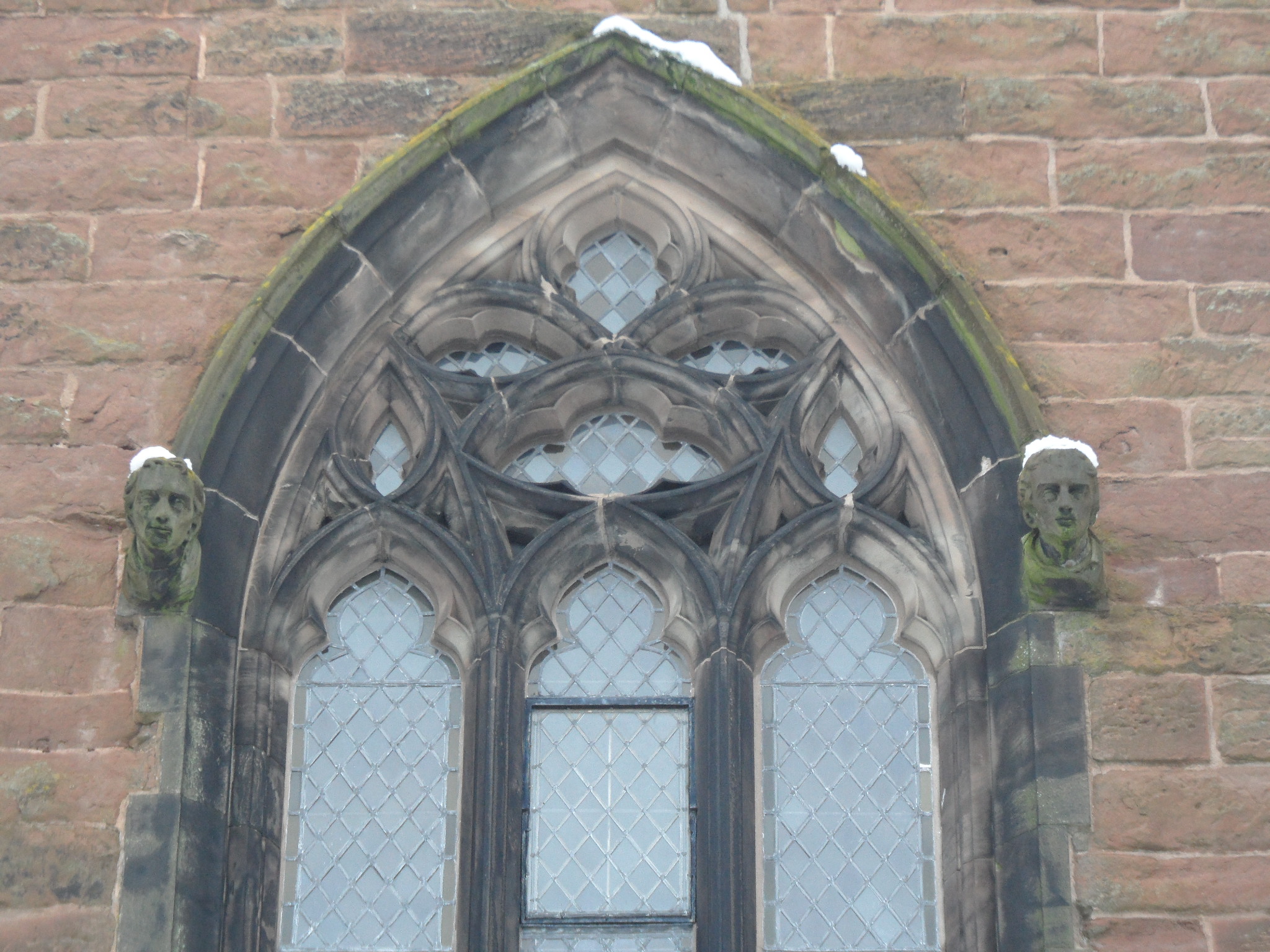
Tomorrow’s walk will be different to today’s walk….I have walked past Christ Church three times in as many weeks. Each time was different. The first was a bleak midwinter day, the biting cold numbing my fingers as I photographed the stone heads around the church. By the second, the scene had changed and even the heads were capped in snow.

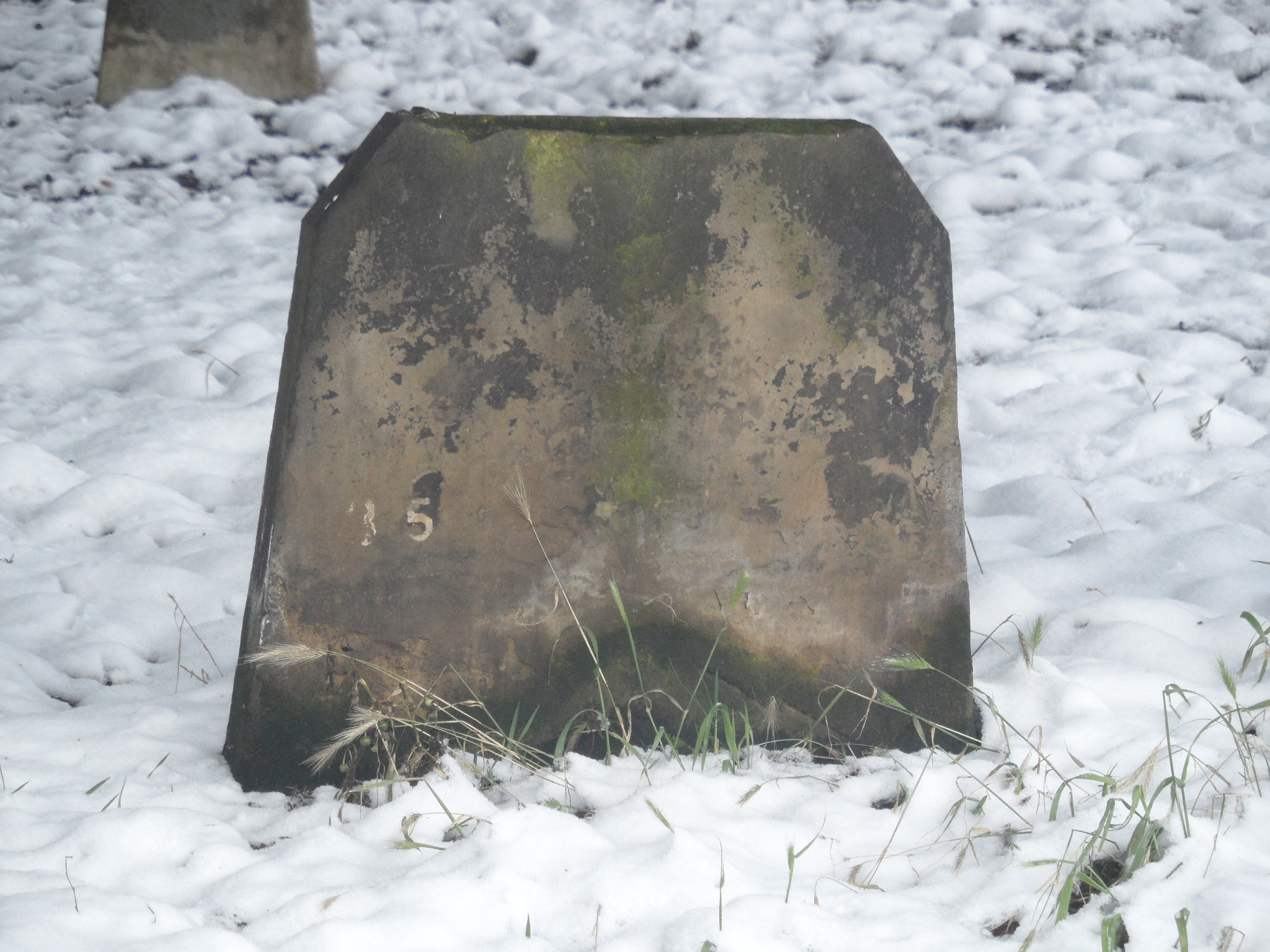
Whether somehow related to the snow or whether the weather was incidental, numbers on the reverse of head stones that I had previously passed were suddenly evident where I had never noticed them before. Interesting that only two of the several stones I could see from the road had numbers on them, so I’m guessing that they were some sort of reference mark made by the stone mason? Naturally, we look to the inscriptions on the front of headstones for information, but can the back sometimes tell us something as well?

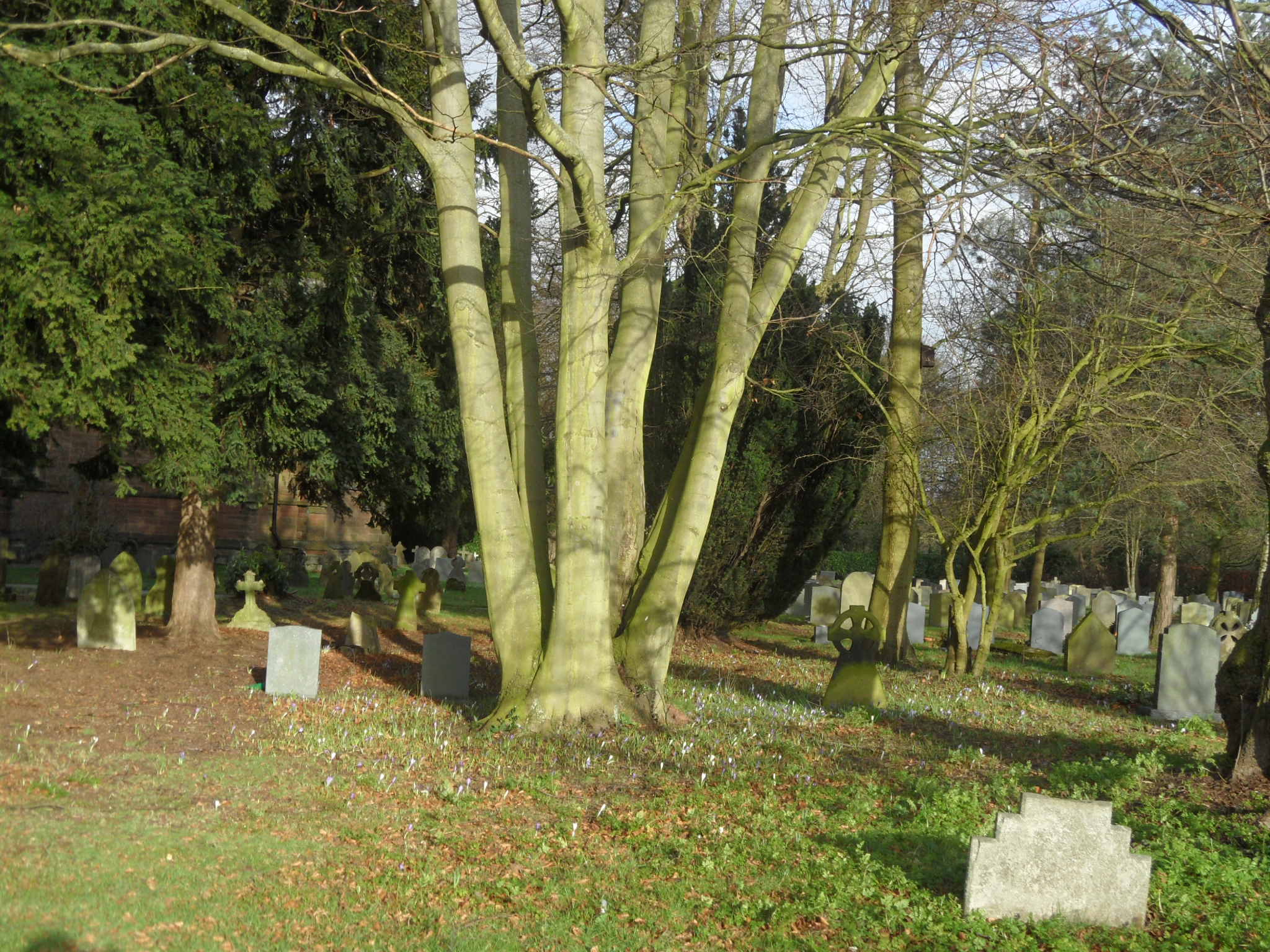
On my third visit yesterday, the snow has been replaced by snowdrops and crocuses, the first flowers of the year and a welcome reminder after last week’s mini ice age that spring is on its way (I know we’re not out of the winter woods yet, but I’m optimistic!).

Another weather and season influenced walk was up Abnalls Lane on a wet and windy day.  Tipping my head back to gather my hair in a pony tail to stop it blowing in my eyes caused me to look up and notice fungi growing half way up a tree up high on a bank that may have been missed on a calm and sunny wander. On the same walk the bareness of winter revealed some sort of post in a hedge (I have no idea what this is – some sort of utilities marker?)

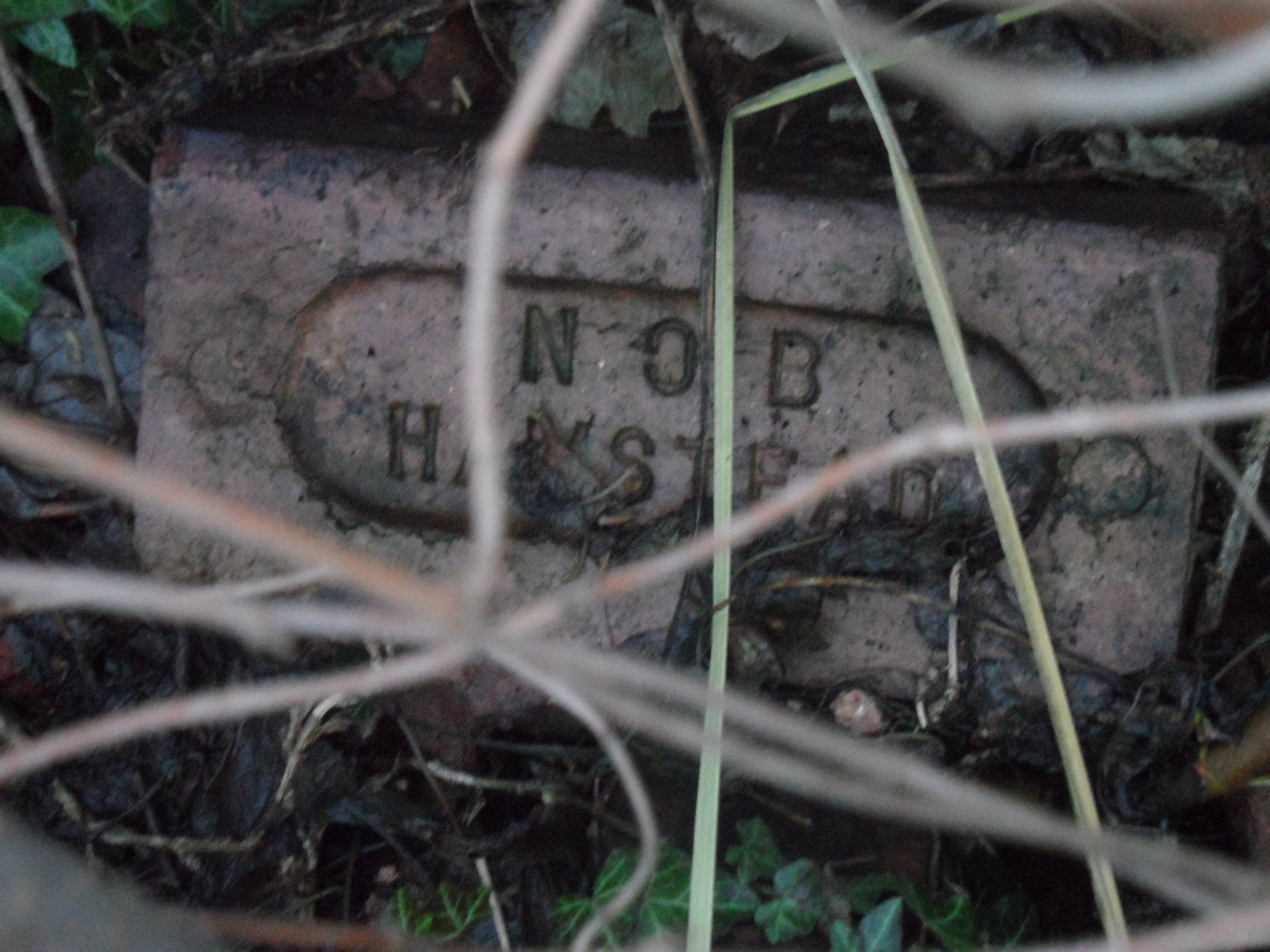
The light was poor and Abnalls Lane was more of a stream in places. With the amount of cars passing, it was only a matter of time before I ended up soaked or worse….so I changed my route. Later, outside the derelict Sandyway Farm, a pub known as the Royal Oak for the first half of the nineteenth century, one of the bricks had worked its way free of the decaying shell and lay under brambles alongside the Walsall Rd. I understand that the stamp ‘NCB Hamstead’ means it came from brickworks at the Hamstead Colliery in Birmingham, when it was part of the National Coal Board.

Is the C the wrong way around or is it me?

Admittedly, all of the above are small things but whether small things help you to build a bigger picture of the place you live in or even if they just make you smile, I think they’re worth noticing.


These Routes Were Made for Walking

Last weekend I had an email telling me about a history project over at Bonsall, a village in the Peak District. The Heritage Lottery Fund has awarded them an All Our Stories grant to create six walking trails and accompanying illustrated leaflets, each focusing on different aspects of the village’s history. Getting people involved in the exploration and the celebration of their history is key to the Bonsall project – the trails and leaflets will be researched and developed by the people of the village themselves. To further encourage participation from the community, a programme of talks, workshops, visits and film shows has been put together.  You can follow the progress of the project by following their blog here and the trails will be launched on Sunday 12th May 2013. I’m already planning to visit in the summer, to discover more about the landscape and stories of a place shaped by mining and mills.

Header from the Bonsall History Blog – A walk through history

Walking trails are a gentle guide, holding your hand as they show you around, but always happy to let go and allow you to make your own discoveries. One of the beauties of exploring places in this way is that even when following the same trails, your walk will be different to my walk, and tomorrow’s walk will be different to today’s.

It’s always inspiring to see what’s going on elsewhere, be it in Bonsall, or the Black Country or anywhere else a wider range of people are encouraged to get involved with telling the stories of a wider range of people and places. Looking at things from a different perspective opens your eyes to possibilities in the place you live in and offers suggestions on how you might listen to the untold stories that surround you. Exploring new places is always a pleasure, but finding new ways of exploring familiar places can be just as rewarding.


Thirsty Work

My efforts to find out more about the City Brewery (Lichfield) Co were rewarded this week when I came across the work of Alfred Barnard. Between 1889 and 1891, Mr Barnard toured more than 100 breweries recording his visits and research across four epic volumes known as ‘The Noted Breweries of Great Britain and Ireland.

Happily, Mr Barnard considered two of our breweries here in Lichfield to be noted – the aforementioned City Brewery Company, and the Trent Valley Brewery Company (which I shall cover in another post). Although by and large, both breweries have disappeared, we can still take a look at these buildings through Mr Barnard’s eyes (though sadly not his tastebuds).

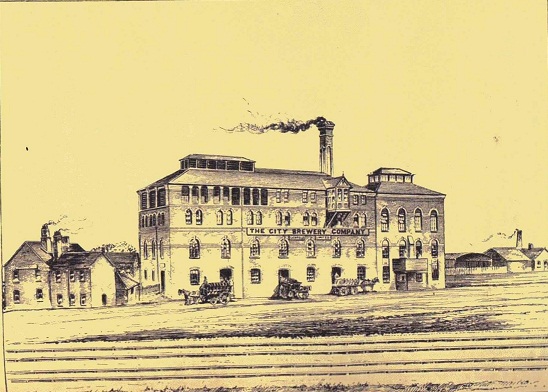
And so to the City Brewery in 1891, seventeen years old and,

‘a stately block of red-brick buildings, five storeys high…..built on the Company’s own freehold land, facing the South Staffordshire Railway, from which a siding has been planned, and will shortly be constructed. Immediately at the back of the brew house there is a small harbour on the Birmingham Canal, together with a wharf and warehouse, so that the brewery possesses every convenience for land and water carriage’.

The malt house (which survives today) is about to be built to the right of the West Brewery Yard and on-site there is also:

– a well, 70 feet deep from where water is pumped up to a reservoir in the roof of the brew house.

– a washing out shed, where the casks are cleaned, next to a cooperage employing four men

–  a horse-chop room (just to clarify this was where food for the horses was prepared!)

– new model stables with six stalls, each with a Staffordshire blue-brick manger and across the yard, the head horse keeper’s house and old stables with eighteen stalls (plus a further three for travellers ‘nags’)

– a dray shed that accommodates twelve drays

–  the  brewery foreman’s house and other cottages for workers behind the cask washing department

–  a store for maturing old ales, a blacksmith’s shop and a carriage house on the wharf

–  general offices near the main entrance, just past the engine-room (with a horizontal engine of fifteen horse power and two Cornish steel boilers).

– a bottling department where ales and stouts are bottled for the firm’s public houses (there is a further bottling store at St Mary’s Chambers in the city).

– the manager’s house with an adjoining two storey building containing a counting-house, cashiers office, a manager’s office and a board-room.

Mr Barnard doesn’t record the names of those who live and work at the City Brewery, together with their families, but of course the census helps us with this (the one below is for 1891, the year of the visit).

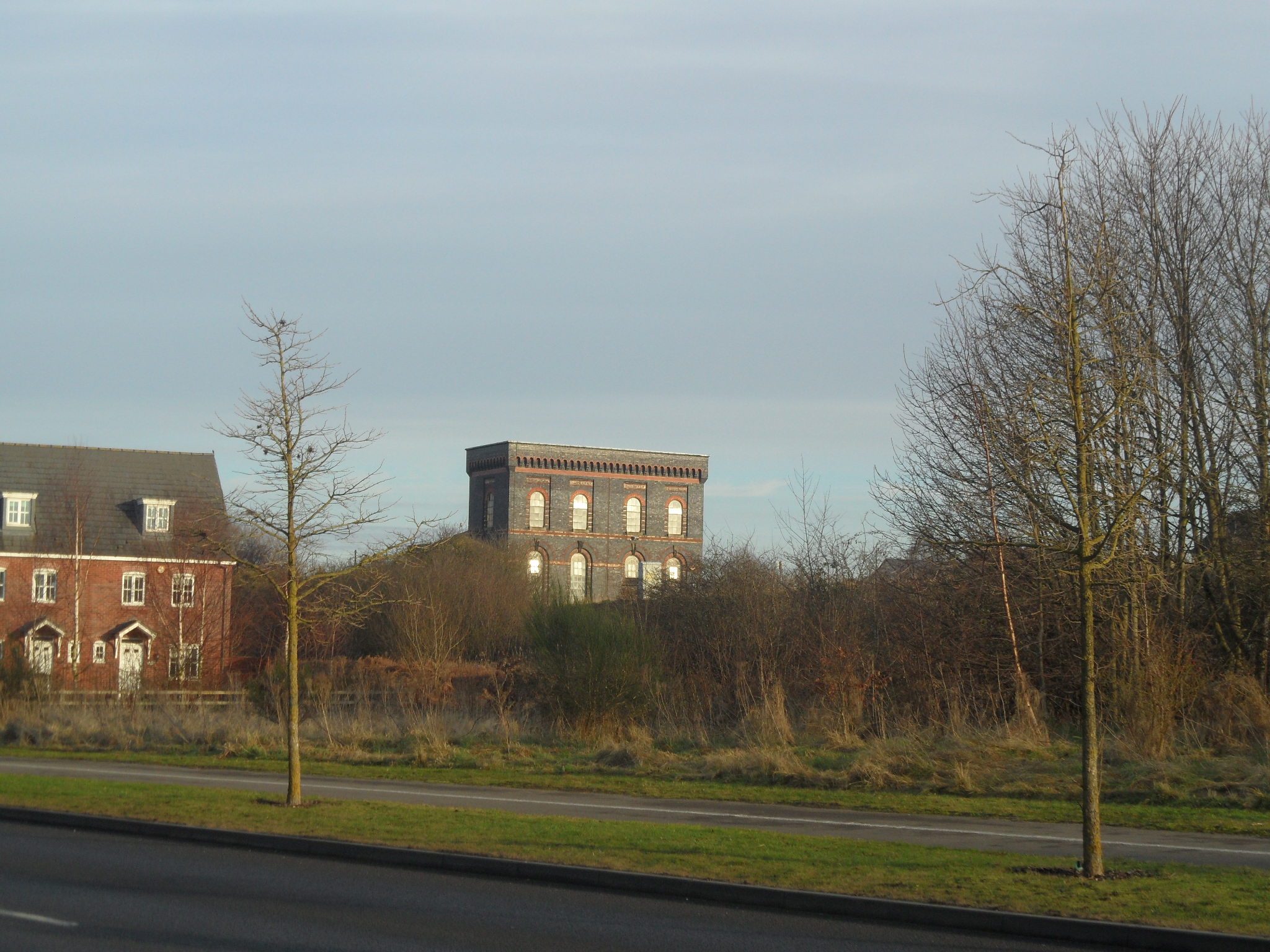
As discussed in earlier posts, most of the brewery was lost to a fire in the early hours of an October morning in 1916. After burning for ten hours, all that was saved the malt house and the manager’s house and offices (I think this is on the left of the picture. Today it is divided into three houses). Seventy men lost their job, and possibly some of them lost their homes.

I’ve been thinking about the visual differences of the scene today, but of course the sounds and smells have also disappeared. Would there have been a malty aroma mingling in the air with the smoke from the chimneys, and the trains? The sound of horses hooves and the noise of the engine room? As for a taste of the City Brewery, all that’s left now are the empty bottles that turn up in collections across the world, and so we shall have to take Mr Barnard’s word for it that the East India Pale Ale was ‘pleasant to the taste, bright and invigorating, and well-flavoured with the hop’, that the bitter ale was ‘clean to the palate, of light-specific gravity, sparkling as champagne, and highly suitable for family use’, that the XXX old ales were the most suitable drink for a working man, and the stout, although heavy was wholesome and nutritious. Cheers, Mr Barnard!

Notes

This was Mr Barnard’s follow up to his earlier tour of every whisky distillery in the UK – 162 in all.

The remaining houses and offices together with the malt house can be seen from the Birmingham Rd, next to Magnet.

Huge hat tip to Steve Williams and his blog here as this is where I discovered that the four volumes were available on line.

I have only included a fraction of the information given by Mr Barnard. Anyone who wishes to read the accounts for themselves (there is a lot more detail on the brewing process for example), or to look at some of the other breweries included, can find it here on the Ask About Ireland website

Concrete Evidence

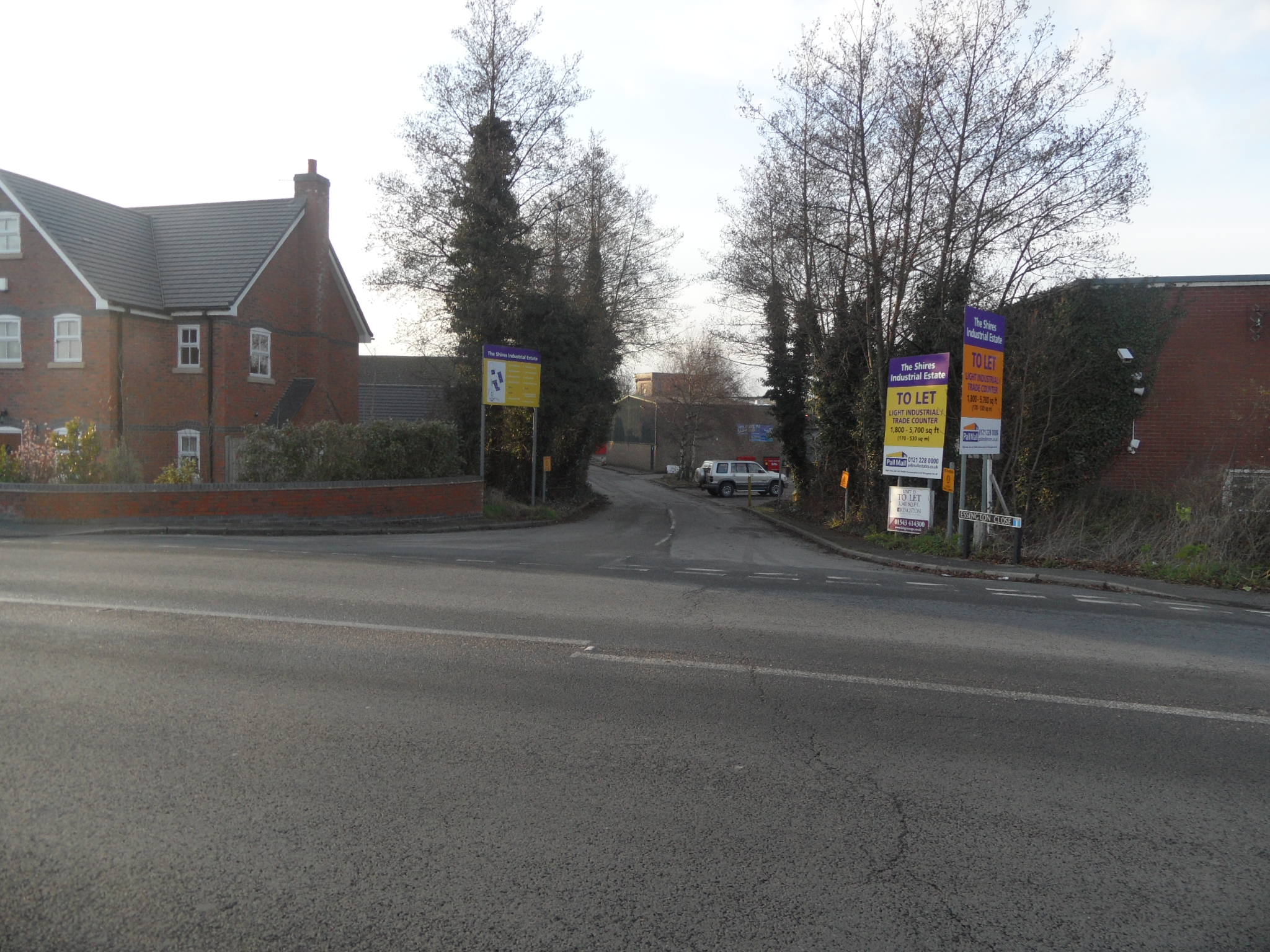
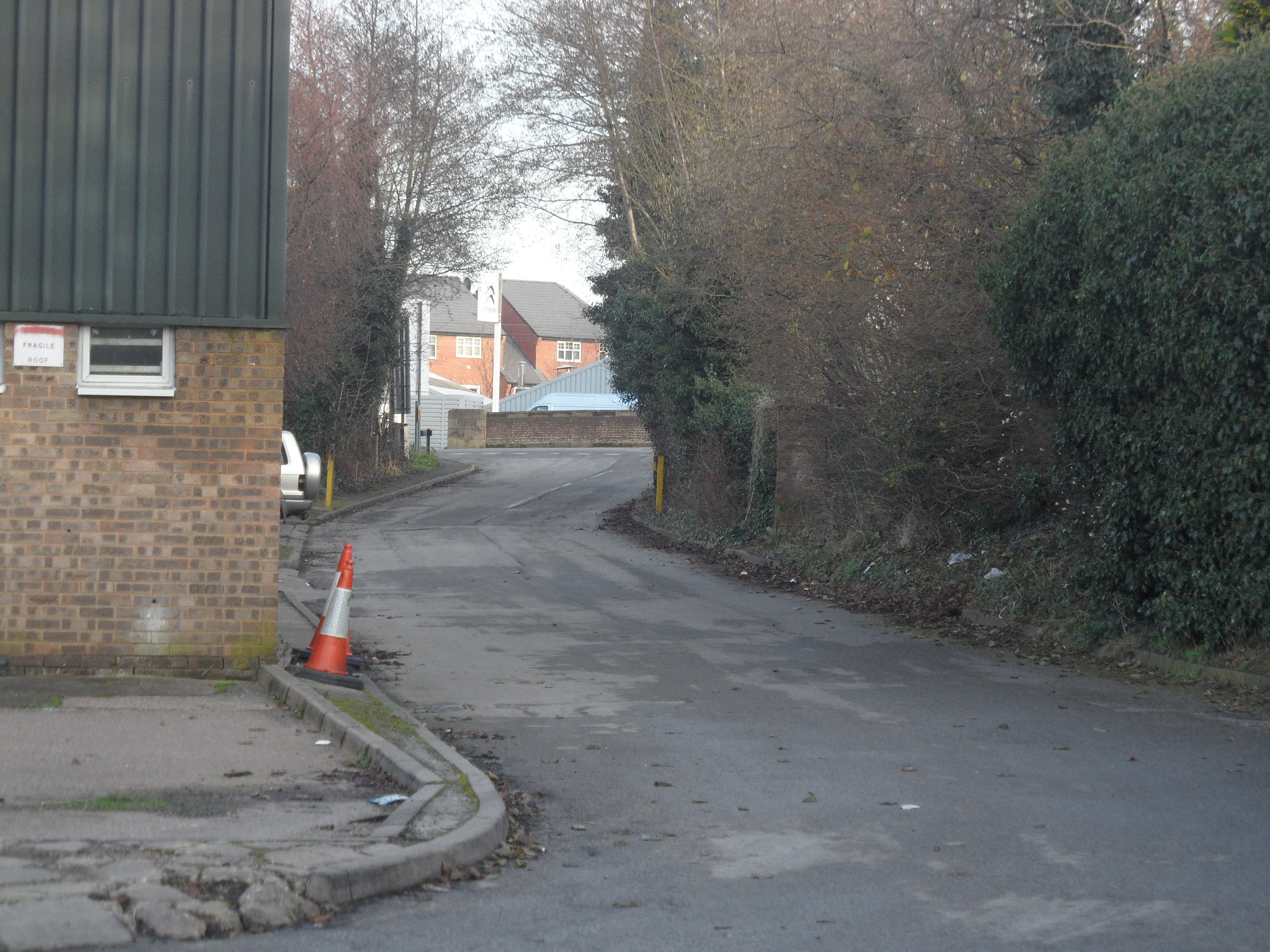
Due to a vague notion I had that canals had to follow a straight line, my previous attempt to follow the route of the Wyrley & Essington canal from the London Rd bridge to Sandfields Pumping Station had not been a resounding success. Determined to find the stretch of the Curly Wyrley (the canal’s nickname derived from the way it, ahem, doesn’t follow a straight line) that I’d missed,  I had a walk along the Birmingham Rd. Near to the Duke of Wellington, half a canal bridge and two modern street names – ‘Wyrley Close’ and ‘Essington Close – confirmed that this had once been part of the route of the canal between Shortbutts Lane and Sandfields.

Canal where?

Essington Close and Wyrley Close to the left as you look at the photo.

Standing in Essington Close looking back up the line of the canal towards the bridge.

In fact, I’d already been over the bridge plenty of times before but just never taken any notice of the clues staring me in the face. My excuse is that my head is always turned the other way, ready to look out for the old Maltings on the other side of the road.

Lichfield Maltings

One of my first friends in Lichfield used to live on the site.  One of our favourite topics of conversation, inevitably, was the history of the building we could see from her house, especially on those occasions when my friend had chatted with one of the employees and was able to regale me with tales of burning buildings, footsteps and orchards.  Through these chats and a bit of reading, we discovered that the malthouse had belonged to The City Brewery Company (Lichfield). In October 1916, a fire destroyed most of the brewery leaving only this building, and the red brick brewery manager’s house and offices (see my earlier post on the fire here). Shortly afterwards, Wolverhampton & Dudley Breweries took over the site.

What we didn’t appreciate enough at the time is that as we were scouring the archives for events that took place nearly a century ago, history was also happening right there under our noses – in 2004, this was one of only six remaining operational floor maltings in the country.The following year, it closed and the building was eventually purchased by a propery developer. Thanks to a Historic Building Assessment and photographs from urban explorers, the architectural features of the building have been documented. However, I wish we’d have talked to more people and asked more questions and recorded the first hand experiences of people doing a job that would very shortly cease to exist, in a building that would soon no longer be used for its primary purpose. You live and learn….

After standing unused for several years, scaffolding now surrounds the malthouse, and the adjoining modern shed has now gone. This could be an indication that the building’s transformation from industrial to residential use is now underway.  It seems to me that giving new life to an old building like this is a good way to balance the need to protect the past and the need to look to the future.  I hope that wherever possible the old features that tell the story of the building’s old life are retained, as recommended by the Historic Building Consultant’s assessment.

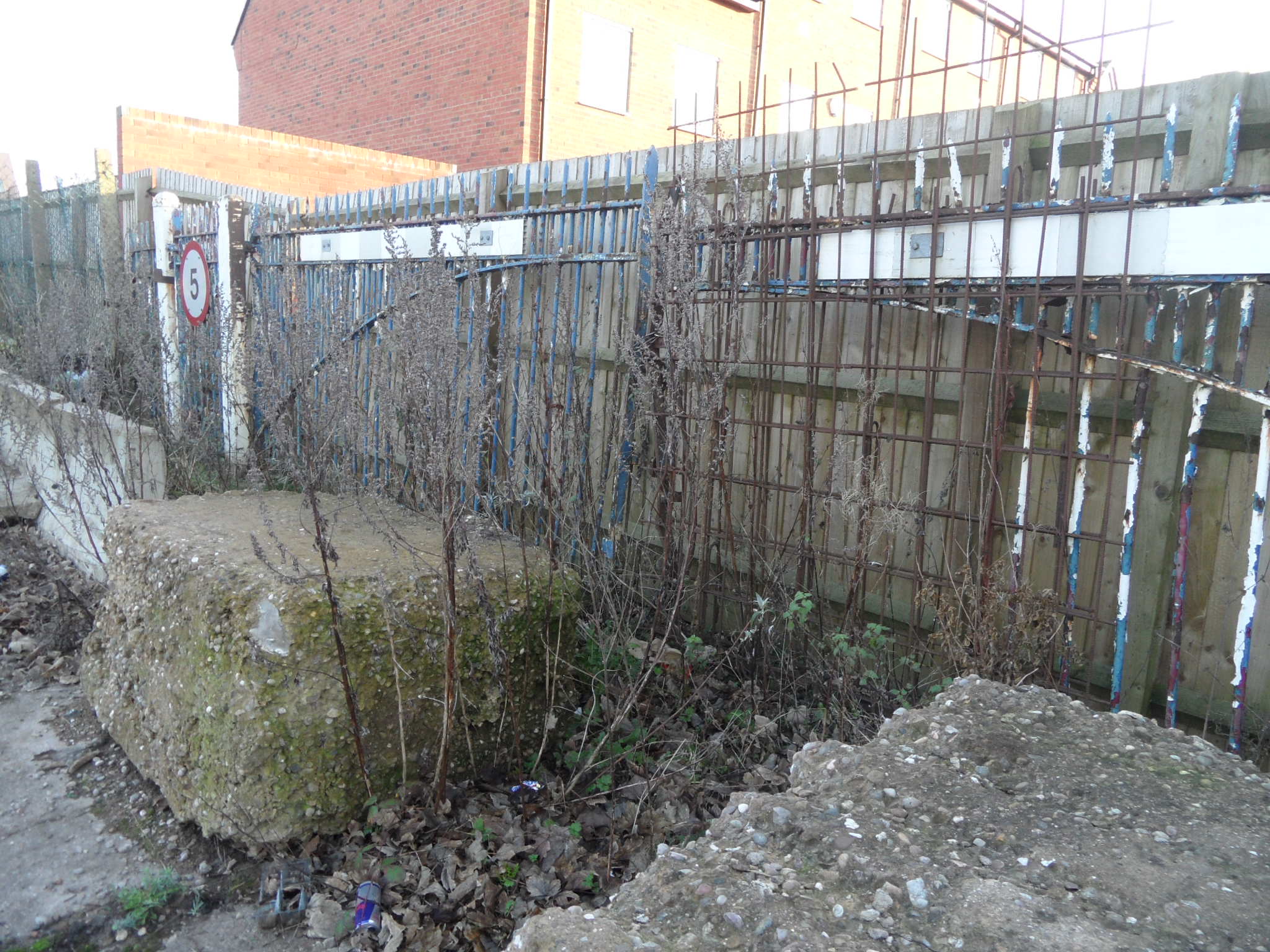
On the opposite side of the road to the Maltings, I followed a drive that lead under a railway bridge to some rusting gates. Until I got home and looked at an old map, I had no idea that this had formerly been a concrete works. Back in 1986, the Domesday project recorded that this was once the site of Bison Concrete. Unlike the canal and the maltings, I can see no reference to the site’s recent history. Maybe the time when we celebrate concrete is still to come…

I think that those of us that don’t have the nerve to explore & photograph the inside of derelict buildings or the necessary funds to pay for the physical restoration of a building, do have another weapon that we can employ in the defence of our history – the ability to listen.

The three places I visited above are all a part of Lichfield’s industrial heritage. On my way over to them, I passed a fourth – Sandfields Pumping Station. David Moore is gaining a lot of support for his campaign to safeguard this overlooked yet important part of our social and industrial history. You can listen to what he has to say by visiting his blog here!

Notes

I think my research could also be described as a bit ‘curly wurly’ as I never seem to be able to resist taking the scenic route instead of going from A to B. When I was on the Domesday site, I read some of the other entries for the Birmingham Rd area and the one that especially caught my eye was ‘Shire Horses – Lichfield’, with an accompanying photograph of said horses emerging from stables on the Birmingham Rd. Does anyone know anything about these in addition to the short description here?

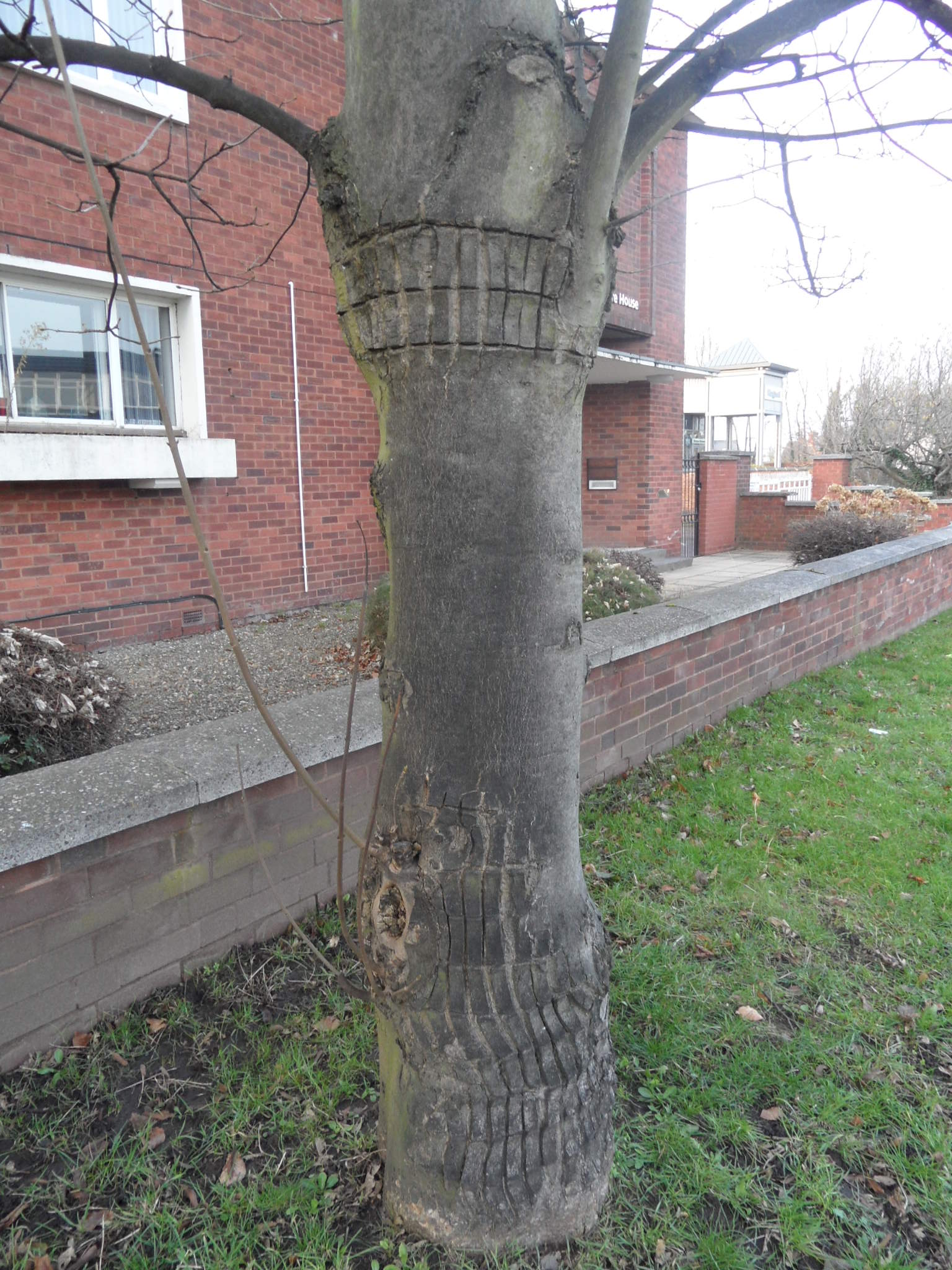
On a final curly wurly note, this tree on the Birmingham Rd looks like it has teeth.  The one next to it doesn’t, so I’m not sure why…

Bark worse than its bite?

Sources:

http://www.english-heritage.org.uk/publications/maltings

Fallen Angel

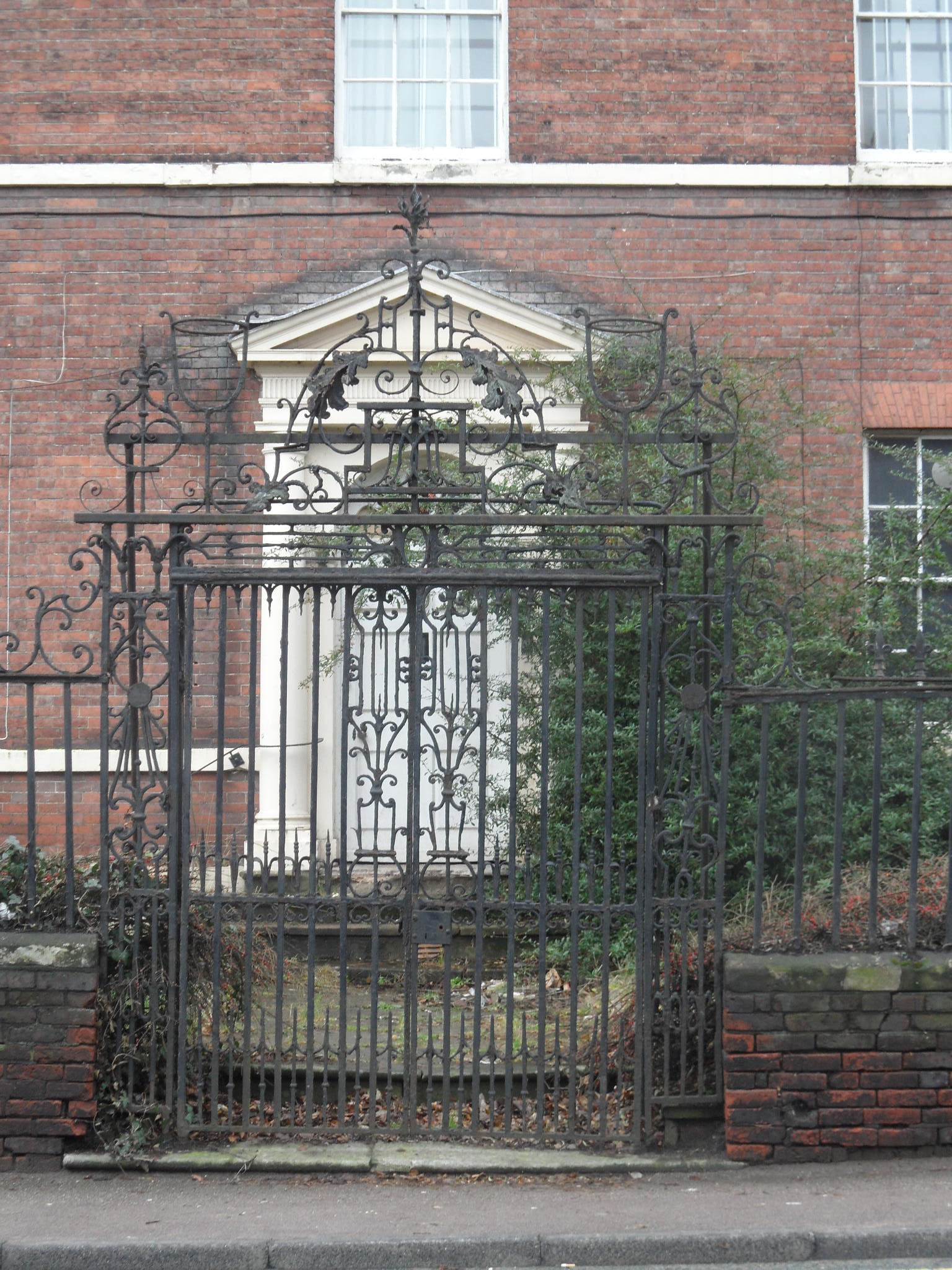
I’m certainly not the first person to write about the deteriorating condition of the Angel Croft hotel, and I suspect that I won’t be the last – it doesn’t look like it will be relinquishing its place on the English Heritage at Risk register any time soon.

Personally, I have no connection with the building, I’ve never even been inside. As awful as it sounds, I can barely remember the days when it actually was a hotel.  It seems to have taken on a new identity as a case study in decaying grandeur, about which regrets are expressed and rumours abound, but about which no one seems to know quite what to do.

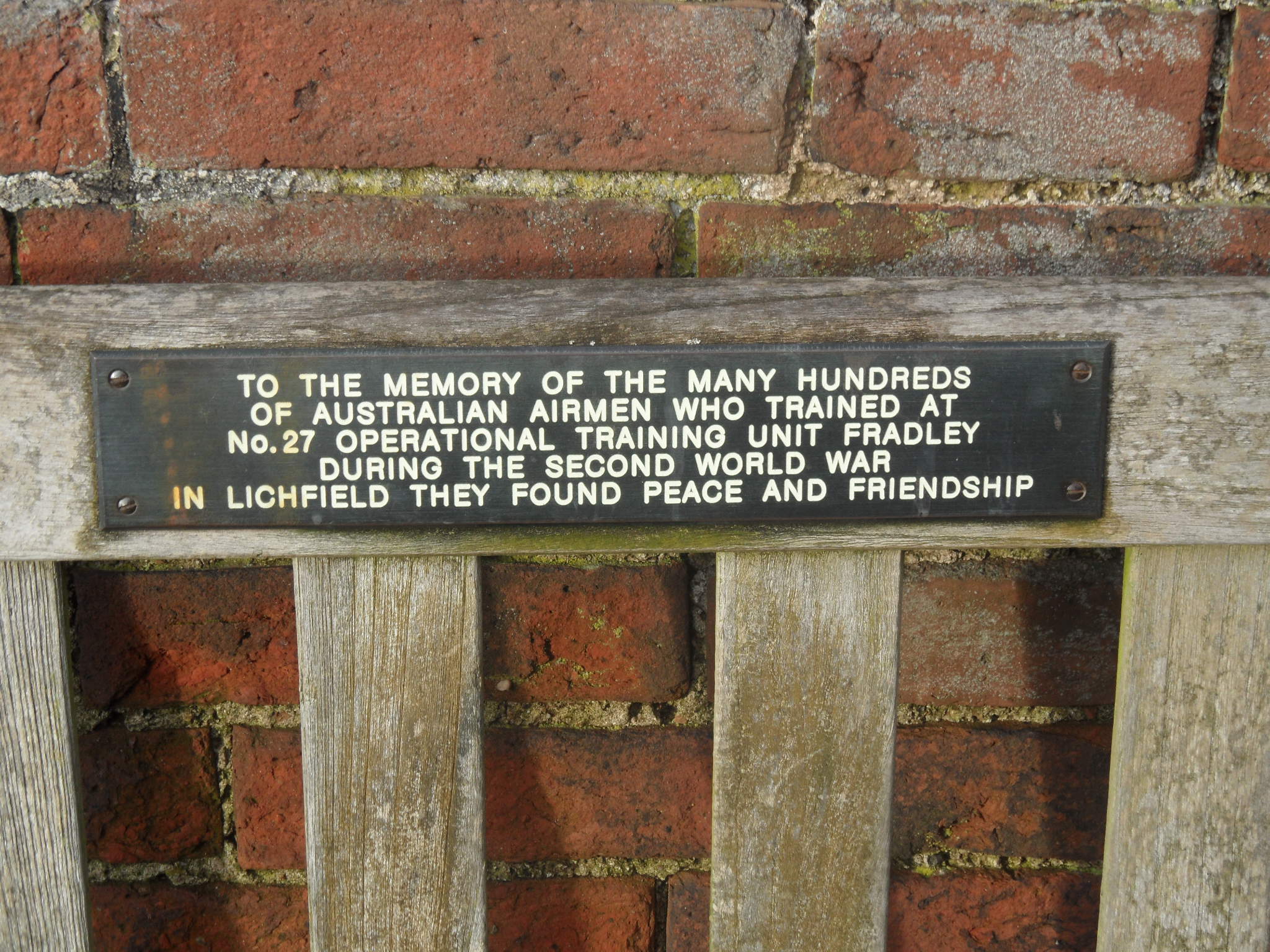
Of course other people will have memories of the Angel Croft – a wedding reception,  a work do, a meeting, a reunion dinner, or even a weekend stay. Walking through The Close recently, I saw this plaque on a bench, and it reminded me of an intriguing story I’d seen on the subject of the Angel Croft and memories a while back.

It features on a blog about a man’s research into his great uncle Jack Purcell’ s time in the Royal Australian Air Force. Jack Purcell was posted to RAF Fradley and in the collection of his documents handed down to his great nephew Adam Purcell was a postcard of a view across Minster Pool marked with a small ‘x’. Adam believes the cross could be marking the Angel Croft Hotel… you can read the whole post in full here.

It’s a fascinating story, but also a good reminder that it’s not only buildings that are  vulnerable to the ravages of time, but memories too. Of course, it’s important to preserve architecture of note, but I have to ask, what are we doing to preserve the memories and stories that make buildings so much more than an entry on a list or register?

Note – I hope Adam Purcell doesn’t mind me featuring the story of his Great Uncle’s time in Lichfield. I shall contact him.


Passing Time

Happy New Year! A couple of days ago, many of us will have seen in 2013 to the bongs of Big Ben. Rather appropriately, Gareth Thomas from Lichfield District Council has found another fantastic document in his treasure trove, relating to our very own clock tower here in Lichfield, said to have been inspired by that famous London landmark. Gareth, in his characteristic generosity, has scanned it on and sent it over for me to share here. A while back I did another post on the Clock Tower (which you can read here), and it’s fantastic when more parts of the jigsaw come to light!

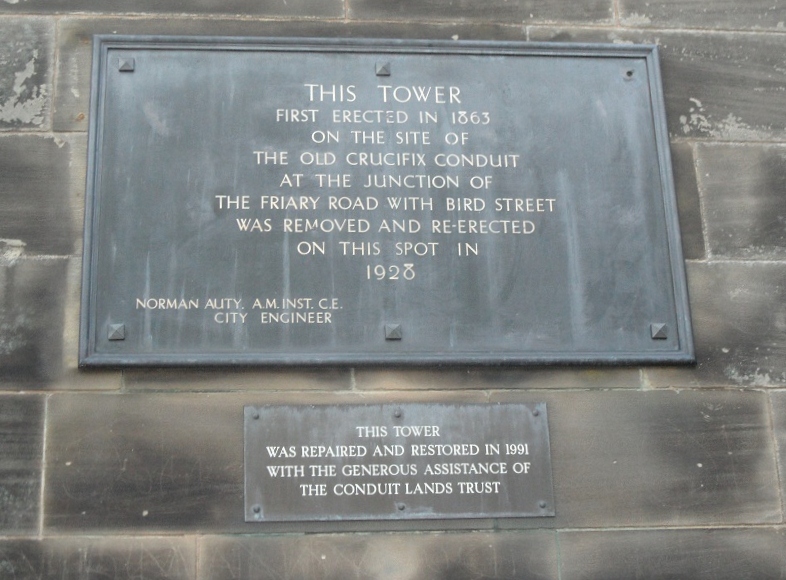
Entitled ‘ Agreement for sale and purchase of the Clock Tower situated in Saint John Street in the City of Lichfield’, the document describes how on 24th August 1927, the Lichfield Conduit Lands Trustees (some of their names will be familiar I’m sure!) agreed to sell the Clock Tower to the Mayor Alderman and Citizens of the City of Lichfield for £50. One of my favourite parts is where it states that:

‘any coins or other articles of value or antiquity which may be discovered shall be considered the property of the Trustees and shall be handed over to the Warden immediately they are found (sic)’

I wonder if they did find anything? And if so, did they hand it over?!

A plaque recording this event can be found on the Clock Tower:

The document can be seen by clicking on the PDF links below (it was too big to add as one whole document!)

Clock 1

Clock 2

Clock 3

Clock 4

As you may know,  the Clock Tower was erected in 1863, making it 150 years old this year. I think it would be fantastic if, as a celebration, we could give people  a closer look at the tower that they pass by and the clock that they hear each day, by opening it up to the public (I did go up Birmingham’s ‘Big Brum’ clock tower once so I don’t think it’s too harebrained an idea).

Here is a bona fide harebrained idea though – what about starting a new tradition of seeing in the New Year with the bongs of the Lichfield Clock Tower? I wonder if there are any records of people doing this in the past, when we didn’t have Jools Holland on the tellybox to see in the New Year with. Shall we make a date then?  New Year’s Eve 2013 in the Festival Gardens. I’ll bring some party poppers….

Sources:

http://www.lichfielddc.gov.uk/info/200161/tourism/760/heritage_trail/9

http://en.wikipedia.org/wiki/Lichfield_Clock_Tower

Gareth Thomas and his magical storeroom 😉

Halfpenny For Your Thoughts

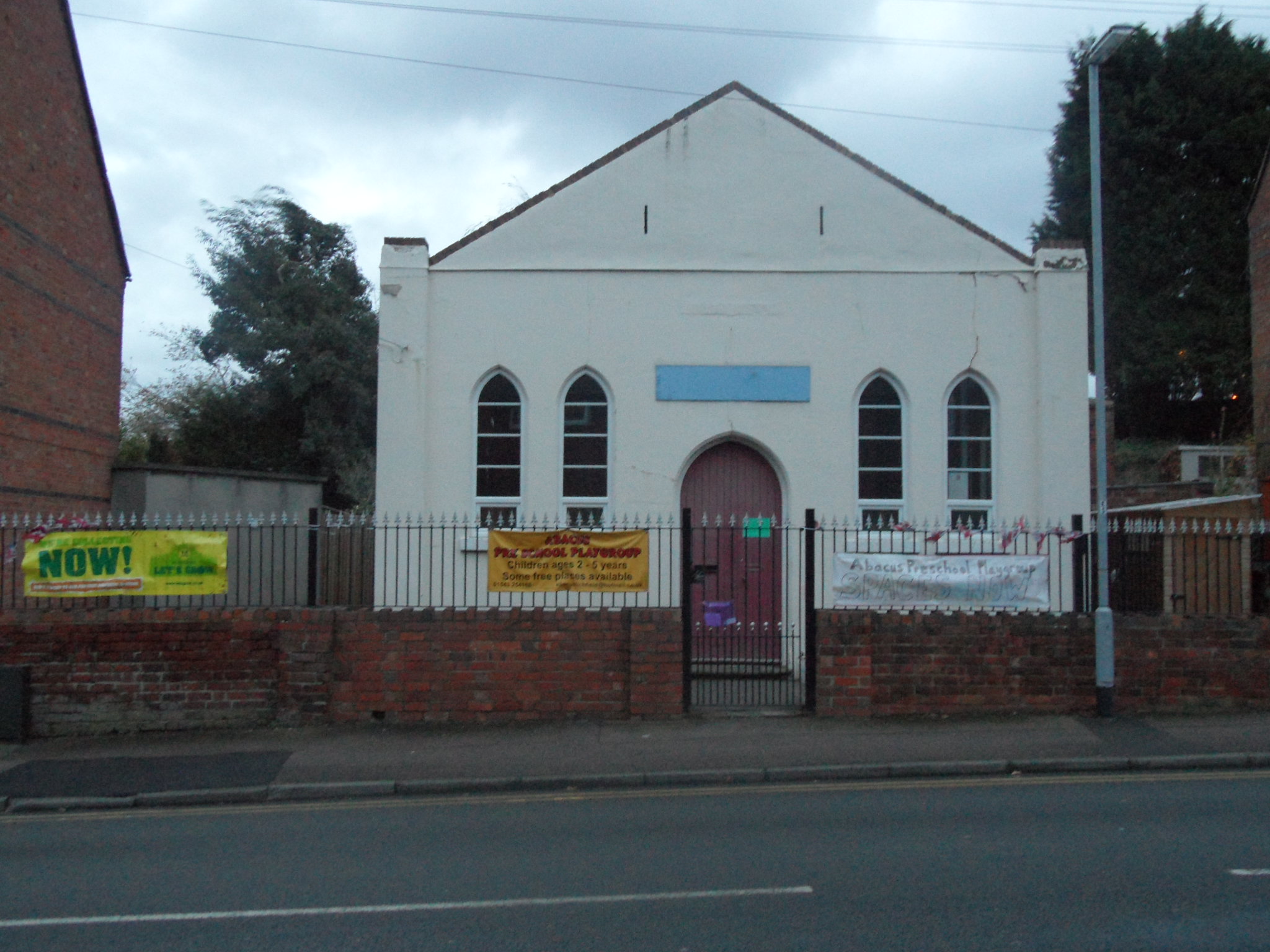
There’s a saying ‘It’s what is on the inside that counts…’, and it’s rather appropriate for describing Frank Halfpenny Hall, a plain and unassuming building half way up George Lane. The hall is home to the wonderful Abacus Pre-School, and inside is a place full of colour and music, imagination and laughter.

Frank Halfpenny Hall, George Lane, Lichfield

People have many fond memories of the hall. Responses to requests for information on  the Lichfield Facebook group show that this is a building that’s been an important part of the community over the years. People talked about attending Sunday school there, still having the ‘Peter and Jane Go to School’ book from their last day at playgroup, eating school dinners there when at St Chad’s school and regular jumble sales being hosted. It was even the venue for one woman’s wedding reception!

The hall is named after Frank Halfpenny, a Labour councillor, who I believe went on to become Lichfield’s first Labour mayor in 1965. He was the Sheriff of Lichfield, when war broke out in 1939 and the photograph below shows him maintaining the tradition of the Sheriff’s ride that September, accompanied by just one other rider.

Frank Halfpenny ensuring the tradition of the Sheriff’s Ride is maintained. Photograph used with thanks to Annette Rubery http://www.annetterubery.co.uk/

Cllr Halfpenny bought the hall and in 1958, donated it to the Lichfield and Tamworth Constituency Labour Party. I’ve been told that the hall was used as the Labour Party HQ during the two general elections of 1974 (in May the Conservative Party held the Lichfield and Tamworth seat but lost it to Labour in the October election later that year). It had originally been built as a Primitive Methodist Chapel in 1848 and a map from 1884 shows it had 130 seats for the congregation. It the 1930s, it was used by the Salvation Army.

Sources:

Lichfield: Town government’, A History of the County of Stafford: Volume 14: Lichfield(1990), pp. 73-87

Lichfield: Roman Catholicism and Protestant nonconformity’, A History of the County of Stafford: Volume 14: Lichfield (1990), pp. 155-159

http://en.wikipedia.org/wiki/Lichfield_and_Tamworth_(UK_Parliament_constituency)

Features and Reviews

Hopefully, anyone reading the blog recently has found the old graffiti interesting. I know that Gareth and I, and (for a few days at least!) a large broadcasting corporation did. After all of the excitement, I thought it was time for a bit of musing….

The discoveries (or perhaps rediscoveries is more accurate) in the Lichfield District Council offices got me thinking about the potential for other ‘unseen’ history out there. There’s unseen in the sense of being hidden away from view –  in attics, down pub cellars and down the bottom of the garden. However, I also think that something in plain view can be unseen –  people may pass by everyday, but no longer see what’s actually there or the potential of it, due to familiarity. During discussions about the graffiti, someone said to me, “I’ve walked past that graffiti loads of times and never even thought about it”.

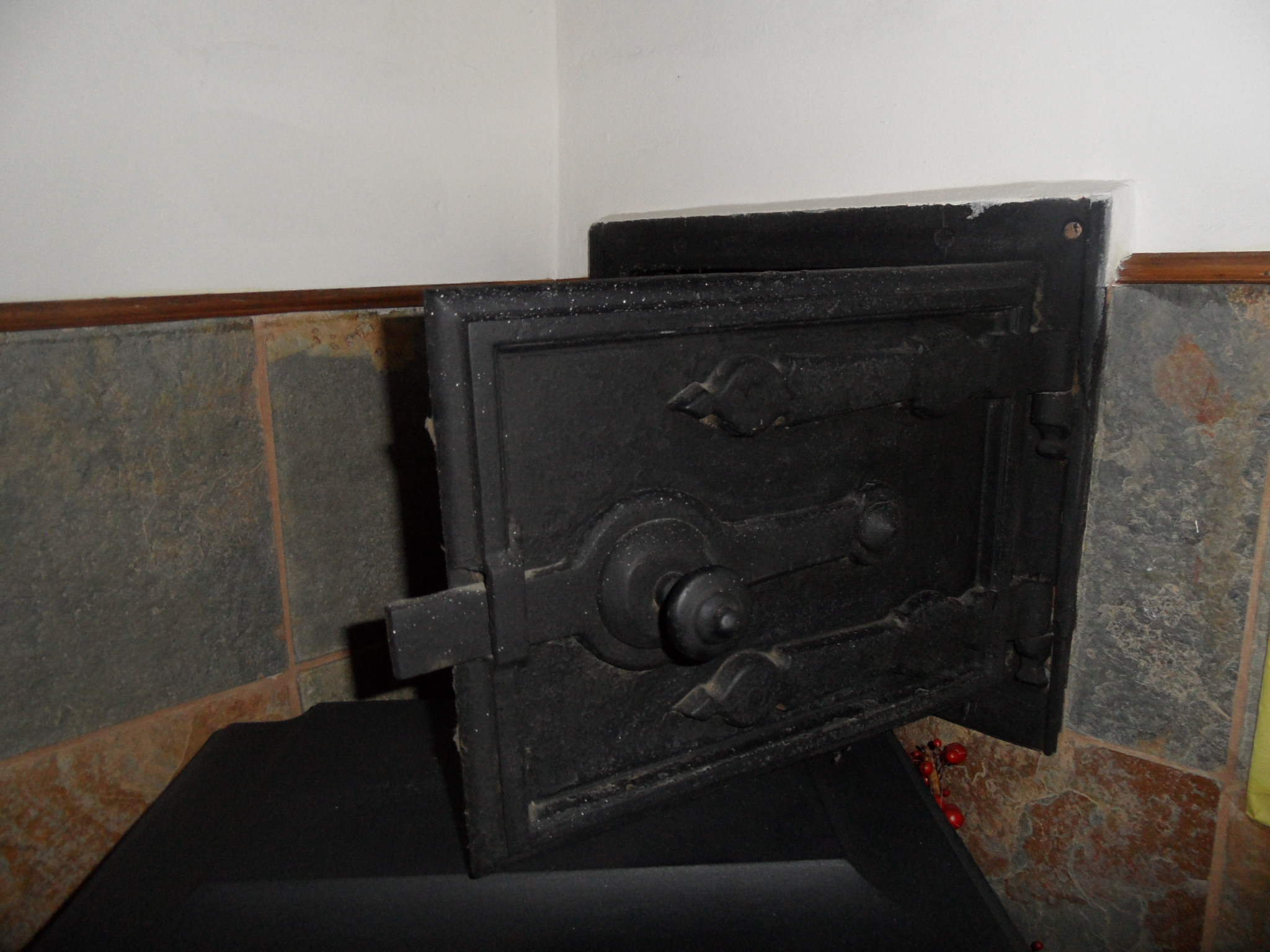
The bread oven above is in the house of someone I know. I remember them buying the property years ago and excitedly telling me after their first viewing with the estate agent, “It has an old bread oven!”. When they moved in we all keen to peer inside but prior to taking the photo, it was last interacted with as part of an Easter Egg hunt.  However, taking the photo to show a friend, sparked a whole new conversation about the oven. Was it original? If so, would this have been the kitchen? Wasn’t it once divided into two houses? How was it laid out back then? Why was the house built in the first place? And so on….My point is, sometimes, we need to look with a fresh pair of eyes to see what’s in front of our nose.

I don’t think that the history in question even has to be a specific feature like the bread oven. I find the traces of people’s everyday lives fascinating. I visited a house in The Close last Christmas. Unfortunately, I hadn’t had nearly enough mulled wine to pluck up the courage to ask if I could take photos, so I’ll have to describe it. There were stone steps down into the cellar, worn away in the centre by centuries worth of footsteps. There were attic beams with layers of fading wallpaper still clinging to them up in the attic. To describe the place as ‘lived in’ would be an understatement.  The next question inevitably is ‘lived in by who’? Actually, photos wouldn’t really have done the place justice anyway because it was more than a visual thing. You wanted to touch, as well as see. ….

I’m really hoping that Lichfield District Council open their offices up for the next heritage weekend, so that people get to look around what was one the Old Grammar School for themselves. I’m not suggesting people throw the doors of their homes open to the public, but perhaps if we want to explore the history of the city and all its inhabitants, we sometimes need to look at the ‘normal’ buildings and places, where people lived and worked, and still do! I’m by no means detracting from those special, extraordinary buildings like the Cathedral, just saying that sometimes it might be worth looking again a little closer to home.

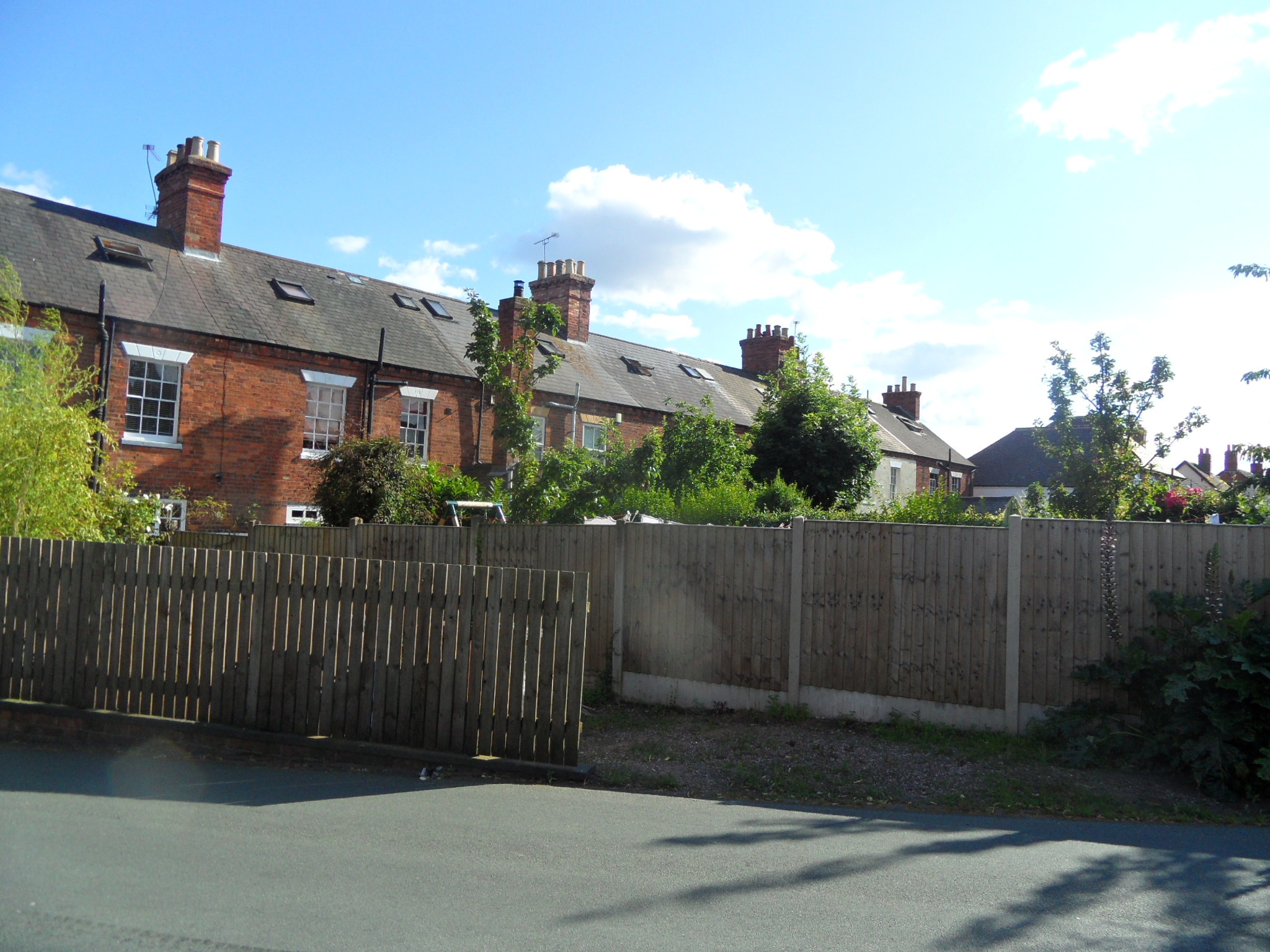
One of these terraced houses in Leomansley still has a tall chimmney at the back. An old washroom?

A wall brace on Greenhill. Does that say R Crosskex? Who was that? See edit below.


A selection of objects found in the garden Of Vicky Sutton’s Nan’s house near to Beacon Park (not including the pink flowery plate!).

The remains of a cherry orchard can still be found near…Cherry Orchard!

Edit:

After I woke up properly, I realised this actually said R Crosskey. I found a book about Henry William Crosskey, a geologist and Unitarian minister from Lewes (1) and found that his younger brother, Rowland Crosskey came to Lichfield as an apprentice ironmonger. He emigrated to Australia for a while and then,  after he returned to England, he started a business in Birmingham. Afterwards, he took over the Lichfield firm where he had served his apprenticeship. In 1868 he became Mayor of Lichfield and donated a civic sword to the City (Is this the one still used in processions today?).  He died in 1890. From census records, it looks like his home and business premises were initially in Market St. In 1888, he was in Bore St, trading as a ‘Military Camp and Store Furnisher’ with premises on the Burton Rd in partnership with Charles John Corrie. Also, just as a point of interest, Rowland was his Mother’s maiden name.


(1)Henry William Crosskey, LL.D., F.C.S. : his life and work by Richard Agland Armstrong; with chapters by E. F. M. MacCarthy and Charles Lapworth. http://www.ebooksread.com/authors-eng/e-f-m-maccarthy-richard-acland-armstrong.shtml

(2) London Gazette 1888


Kindred Spirit

I’ve referenced J(ohn) W(alters) Jackson several times in this blog and really wanted to find out a bit more about him. So here we go….

Mr Jackson was 2 years old when he came to Lichfield in 1864. He was a music teacher and the organist at Christ Church. He lived at 81, Walsall Rd until he left the city to live with his son in Newport,  Shropshire in October 1940 at the age of 78. During his time in Lichfield he was ‘City Librarian’. The Lichfield Mercury reported that after his appointment the number of readers increased from 70 a week to 500.

In the 1930s and 40s, Mr Jackson had a local history column in the Lichfield Mercury in  which he answered readers’ queries and shared an assortment of historical facts, folklore and transciptions from old documents. Each ‘subject’ is given a paragraph at most, so if one snippet didn’t interest, the next one wasn’t far behind!

I thought I’d share one of my favorites with you, to give you a flavour of Mr Jackson’s work. I like this one especially because the ancient manor of Abnalls is one of my favourite places in Lichfield and I love a good ghost story (this one has the added bonus of an intrepid one-man paranormal investigation as well). So I’ll hand you over to Mr Jackson…..

“The Abnalls dates back to the time of Edward I. The present hall has taken the place of the ancient manor. Many years ago it was said to be haunted. Half a century ago considerable alarm was caused by reports of a spectre being seen by various passers-by at belated hours. The writer personally visited (at midnight when ghosts are said to appear) on several occasions but after patiently waiting saw nothing of a spectral character further than weird forms in the trees and bushes in the dim light, and on one occasion the gentle waving of a white nightgown pegged on a clothes line.”

The site of the old manor off Abnalls Lane. I know it doesn't look it from the photo but it is very intriguing place and a scheduled ancient monument.The aerial view from googlemaps reveals a lot more but I'm having trouble adding it to the post at the minute, so in the meantime, maybe do your own investigation & see if you can find it!

 This kind of history might not be to everyone’s taste (but then what is?) but it sure is to mine –  I think it’s entertaining, accessible and a great source of information. If you get the chance I highly recommend that you have a look at the Lichfield Mercury archives (warning – give yourself plenty of time as you’ll be engrossed).  

I love the way that us humans,  no matter what age we belong to, are curious about the stories of the places that surround us and the people that came before us (well, most of us are anyway). Investigate the blog list to the right of this post and you’ll find a lot of curious* & entertaining souls. I like to think that if Mr Jackson was around today, he’d be doing a blog. I hope he doesn’t mind being included on this one!

 *curious in the inquisitive sense, not in the strange sense. I think 😉