Cell Mates

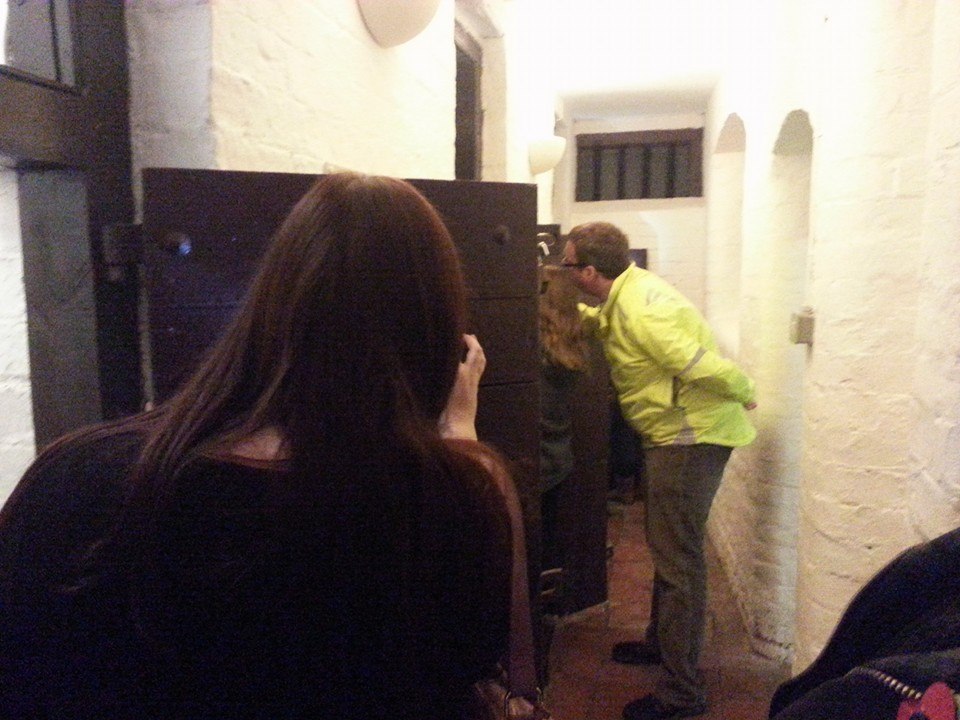
The Lichfield Discovered gang will be back at the old Gaol Cells at Lichfield Guildhall this coming Saturday (21st February 2015) between 2pm and 4pm, to resume our quest to record the graffiti left behind by prisoners. There’s plenty of it, but we’re up against the ravages of time and liberal applications of varnish. We did manage to pick up one definite name on our last visit. John Lafferty who, judging by the reports in the Lichfield Mercury, appears to have been a serial offender from Sandford St in the late nineteenth century, scratched his name into one of the cell doors along with the words ‘7 days’, presumably the length of his stay…on that occasion.

Gaol Graffiti 1

Lafferty graffiti

The cells officially reopen to the public in April, and will then be open every Saturday between 10am and 4pm until September.  Since 2012, over 7,000 people have visited and in order to continue to be able to give people access to this part of Lichfield’s history, Joanne Wilson, the city’s Museum and Heritage Officer, is recruiting a team of volunteers to welcome visitors to the cells, keep a record of visitor numbers, answer questions and provide information. You don’t need any previous experience just an interest in heritage, enthusiasm and the ability to smile when you hear, ‘You’re not going to lock us in, are you?’ for the twenty-seventh time that day. Each volunteer session usually lasts around three hours, but dates and times are flexible and you can do as much or as little as you are able to. It’s a great opportunity to get involved in the city’s history and to share it with all kinds of people – I volunteered a couple of years ago and welcomed local people, wedding guests, day trippers, and even someone who’d worked at the Guildhall for years without realising what was behind the red door at the end of the corridor.

Fifty shades of varnish

If you would like to know more about volunteering, please contact Joanne on 01543 264 972 or via email at sjmuseum@lichfield.gov.uk. Alternatively, pop into the Samuel Johnson Birthplace Museum on Breadmarket St. You are also very welcome to join us on Saturday. And yes, we promise not to lock you in.


My Bloody Valentine

For those of you who aren’t feeling the love for Valentines Day, here’s some black magic. And I’m not talking chocolates. In his Lichfield Mercury column ‘Historical Gleanings – Lichfield Over a Century Ago’, JW Jackson recalled the following article in a local paper from 1836,

“On Saturday, the sexton of a certain church observing an elegantly dressed female walking mysteriously up and down the churchyard, watched her secretly, when he saw her rake up the earth with her foot and, after depositing something in the ground, cover it up. Induced by curiosity he opened up the place and found a hare’s heart in which 365 pins were stuck buried there. It was an old superstition in this county that if a person who had been foresaken by one professing love for her shall bury a hare’s heart full of pins near a newly made grave in the churchyard, as the heart decays, so the health of the faithless swain will decline, and that he will die when it has mouldered to dust. The fair deceived one had been instigated by revenge to this act of folly and credulity.”


Getting revenge on a faithless swain. Sweeter than a whole box of Thorntons. Frederick William Hackwood also mentions a similar practice in his Mercury column on “Staffordshire Superstitions’ (1923), ‘Among the lingering superstitions are present-day memories of an old woman given to witchcraft sticking a bullock’s heart full of pins with the vicious intent of piercing the heart of some deadly enemy with whom she had quarrelled beyond all hopes of forgiveness or reconciliation”.

Luckily, a defence against these dark arts did exist.  In a book published by the Folklore Society in 1890, Alexander M McAldowie tells of two witch brooches which his brother Robert found in Staffordshire.   One was discussed in a section of the 1896 Journal of the British Archaeological Society called ‘Notes on North Staffordshire’ and is described as being heart-shaped with unequal sides, little more than an inch in height and made of silver with eighteen crystals. Apparently, these talismans were often bought alongside wedding rings and would keep the wearer safe from harm. In a post on witch brooches, the Spyders of Burslem blog includes the notes given to the North Staffordshire Field Club in 1891 by Robert McAldowie. What’s extra interesting for us here is that he mentions a witch brooch he got in Lichfield from a jeweller who had bought two of them from an old servant of a family once living near the city but had melted one down for silver.

I’ve not managed to track down the whereabouts of any the Staffordshire brooches yet, assuming they even still exist. There is a Victorian one for sale on a vintage site here if you want a belated present that looks pretty and has the added bonus of protecting your beloved from witches and evil in general.

Antique Victorian Witch Brooch. Image from rubylane.com

Antique Victorian Witch Brooch. Image from rubylane.com

However, if it’s a hare’s or bullock’s heart you’re after, I’m afraid I can’t help you. Try Waitrose.

Sites for Sore Eyes

Springs and wells are sources not only of water but also of folklore and legend. There are healing springs and fortune telling wells. Some are associated with saints, others with spirits.

St Chad's in Lichfield. Photo by Lichwheeld

St Chad’s in Lichfield was believed to cure sore eyes (photo by Lichwheeld)

On Monday 9th February, Ross Parish, author of the Holy and Healing Wells blog and a series of books on the subject, will be giving a talk to our Lichfield Discovered group. Ross will be telling us about some of the sites we have here in Staffordshire and some of the traditions and stories associated with them. The talk starts at 7.30pm at St Mary’s in the Market Square (where there was a once a well of the same name at the west end!) and there is no entry charge, although voluntary donations towards the running of St Mary’s are always welcome. After the talk, people are invited to stay behind to discuss the future vision of the county’s archive and heritage service, over a cup of Staffordshire water (plus milk and teabag).

Two Minutes of Your Time

Whether you’re Dimbles born and bred or a Katie-come-lately like me, everyone who has ever called Lichfield home is a part of the city and its history. A new project, led by artist and sculptor Peter Walker, wants to hear from you about what it’s like growing up, living and working here.

The aim of the project is to collect two minute long stories and anecdotes, and/or related photographs.  These will then be combined with archive images of the city to create a present day digital record of Lichfield and the surrounding district, as told through the voices of local people. The project began in Burntwood, where hundreds of images and stories have already been collected from people from all different backgrounds, and is part of a wider art project. As Peter explained in his email,

“We believe it is significant that we make a record of what it was like to grow up in the area from the community’s point of view.  There are many shared memories alongside individual successes that deserve to be recorded for posterity. Your story may be for example, the day you first went to school, winning a trophy for your local team, or simply memories of buildings and shops or people you knew. If you don’t wish to be recorded or bring a picture then you can still come along and write an anonymous postcard with information relating to your memory, to give to the collection to tell your story. Images and stories collected will be turned into digital formats and displayed on-line, with some being made into a short digital film and all stories will be archived as a digital time capsule.”

If you want to contribute, there are sessions at Lichfield Library on 5th and 6th of February 2015 between 10.30am to 1pm and 2pm to 4pm. Like Lichfield itself, it’ll be what you make it.

Day to day life in Lichfield

Day to day life in Lichfield, Summer 2014

Bit Map

Here’s a map of the Christ Church Lane area of Leomansley in Lichfield which Chris Pattison very kindly sent to me recently. The map is dated 1935 and as with everywhere, some things have changed (including the spelling of the name), whilst others have stayed the same.

South Staffordshire Waterworks Company map of Leomansley. Thanks to Chris Pattison

South Staffordshire Waterworks Company map of Leomansley. Thanks to Chris Pattison

Yet, all is not what it seems.  Christ Church school is shown in its original location, yet in 1910 it was rebuilt on the opposite side of the road. As someone else pointed out to me, the row of terraced houses known as Leomansley Villas was built in 1903 and so they should also appear but don’t. Another curious omission is the cottage near to the gates of Christ Church.  This dates back to at least August 1875, as there are documents at Lichfield Record Office which show it was used as the residence of the schoolmaster or mistress of Christ Church school (who of course had to be ‘competent, of good character and a member of the Church of England’) at the time. Prior to this, it was a lodge for Beacon House (or Place) in what is now Beacon Park.

The Cottage, Christ Church, Lichfield

The Cottage, Christ Church, Lichfield

The obvious answer is that this plan was drawn in 1935 but was based on a much older map. However, whilst this would explain most of the ‘errors’, it doesn’t account for all of them.

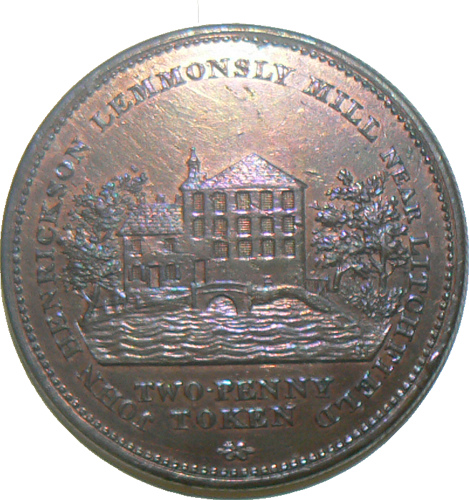
A group of buildings on the far left of the map are labelled ‘Leomansley Mill’, yet I’m sure that this is actually Leomansley Mill Farm. The mill itself, disused and dismantled by 1860, stood somewhere near the site marked as ‘Leamonsley Cottages’ (now known as ‘Leomansley Manor’).

Token for Leomansley Mill taken from Lichfield District Council flickr stream.

Token for Leomansley Mill c.1815 taken from Lichfield District Council Flickr stream.

Errors aside, it still gives us a glimpse of when all this were fields. Well, when a lot of it was anyway. If anyone’s interested in exploring the history of Leomansley further, there are some notes to accompany a walk around the area which I produced a couple of years back which you can access here.

The Mortal City

After reading that an inquest into a young boy’s death from drowning in the nearby canal at Sandfields in 1884 had been held at the Three Tuns Inn on the Walsall Road, I wanted to know more about the use of pubs in these circumstances.

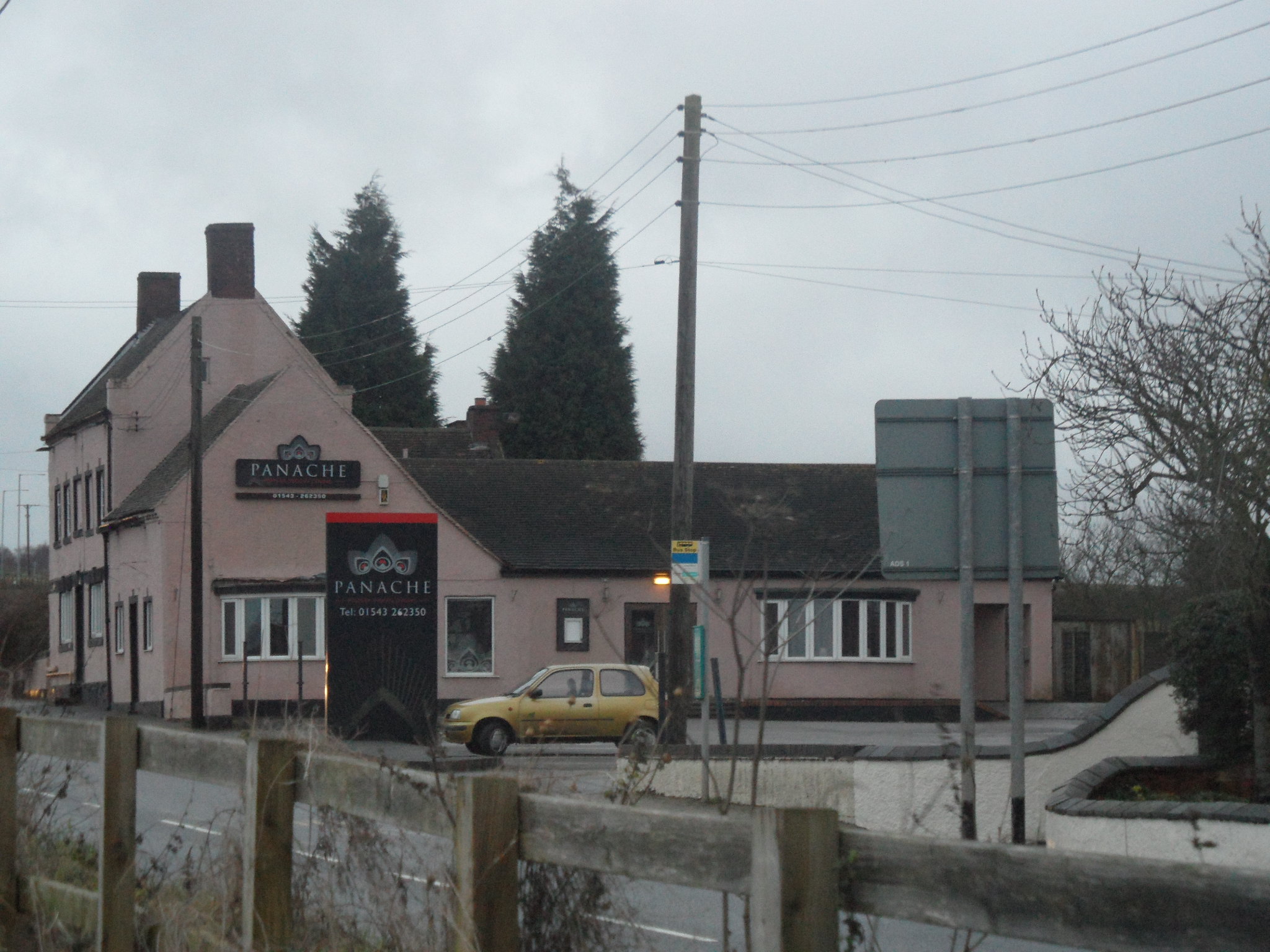
The Three Tuns Inn, Walsall Rd, Lichfield, formerly Panache Restaurant & currently being developed

I had a look at the newspaper archive and found another report in the Lichfield Mercury, this time from December 1885, regarding the death of a soldier who had been found in the Birmingham Canal near Quarry Lodge. After being discovered, the body was taken to the Shoulder of Mutton in a cart on a Monday afternoon, where it was examined by Brigade Surgeon G Simon M.D. The following evening Mr C Simpson, the City Coroner, held an inquest into the death where a verdict of ‘drowned’ was returned by the jury.

I understand that this was how things were done all across the country. I think I’m right in saying that until the Public Health Act of 1875, there were no public mortuaries and in the event of a sudden or unnatural death, inquests were held at a nearby public building, often an inn or public house. If a body was discovered outdoors, the pub would also become a temporary mortuary.

On Google books, I found a document from 1840 detailing Coroners’ Reports for England and Wales. The Lichfield Coroner at the time, Mr Simpson, submitted a return giving the number of inquests held in Lichfield in each of the years between 1834 and 1839, together with a schedule of allowances and disbursements to be paid by the Coroner, as follows:

To the bailiff of the court for summoning the jury and witnesses attendances on the coroner and at the inquest: 5 shilling
To the witnesses not exceeding per day (besides travelling expenses): 3 shilling
For the jury, each juror: 1 shilling
For the use of the room: 5 shilling

The returns submitted by Coroners vary from place to place in the amount of detail included. For example, the return for Ripon outlines further payments made, including 5 shillings paid per day, ‘to expenses of room and trouble, where dead body is deposited till inquest held’, and ‘to the crier of any township for crying when body found and not known’. The return of Mr H Smith, the Coroner for Walsall, gives names of the deceased and the dates on which the inquests were held. In Leicester, John Gregory recorded the number of inquests in the four years ending August 1839 and added an explanatory note that the increase in inquests in the last year was mostly due to accidents occurring in the formation of the Midlands County Railway through the county. In a handful of towns, the Coroner also recorded the verdict (e.g. accidental, visitation of God, wilful murder) of the inquest. It doesn’t make for pleasant reading, but it’s a fascinating and important document for local or family historians.

By the late nineteenth century, things began to change. As previously mentioned, the Public Health Act 1875 gave permission for local authorities to provide public mortuaries and in the early twentieth century, The Licensing Act of 1902 stated that:

From and after the thirty-first day of March one thousand
nine hundred and seven, no meeting of justices in petty or special
sessions shall be held in premises licensed for the sale of intoxicating
liquors, or in any room, whether licensed or not, in any
building licensed for the sale of intoxicating liquors ; nor shall
any coroner’s inquest be held on such licensed premises where
other suitable premises have been provided for such inquest.

Yet at this time in Lichfield, there was no suitable premises, as can be seen from a further report in the Lichfield Mercury on 24th April 1903, regarding an inquest into the death of a woman in Old Sandford St.  The inquest was held at the nearby Hen and Chickens pub, although the post mortem was carried out by Dr F M Rowland at the deceased’s address, as her body had been discovered at home in bed. At the inquest, the coroner, S W Morgan commented on the situation, stating that it was a case that should have been taken to a mortuary. The room was nine or ten feet square, with a window right down to the floor. The double bed in the room had to be taken out and a table brought in. All of the utensils had to be borrowed, as there was nothing in the house that could be used. The Foreman of the Jury, a Mr Cooney, was reported as saying it was ‘disgraceful’. He considered it a scandal that there wasn’t a mortuary, though he was under the impression that one had been built in the city over at the council property on Stowe Street. With the rest of the jury sounding their agreement, the Coroner added,

“I called the attention of the council to this matter…12 or 18 months ago, when a recommendation was passed by a Jury. It is astonishing that the City of Lichfield does not possess a mortuary, when one takes into consideration the fact that there are two stations in the place, and how frequently people meet with fatal accidents on the railway. It is most unfair that publicans should be called upon to take in these cases, and it is unfair to ask them to do it. Suppose a tramp happened to die, whilst passing through the town, that man, unless some kind publican happened to take him would have to be hawked around from public house to public house, until someone consented to take the body. It is simply a scandal and a disgrace that such a state of things should exist especially when a mortuary could be built at a small cost”.

Dr Rowland added that there had been plans for a mortuary, but they had been shelved, to which the Coroner replied, ‘It is not fair to the medical gentlemen to ask them to make the post-mortem examination under such conditions’. The Jury recorded a verdict of ‘Death from Natural Causes’, and added to it a rider calling on the City Council to proceed with the erection of a mortuary.

In May 1903, the body of a man was found on the railway line at Shortbutts Lane. The Duke of Wellington refused to admit the body, but the landlord of the Marquis of Anglesey allowed his stable to be used. The Coroner commented that it was as if the fates were conspiring to emphasise the need for a public mortuary in Lichfield. By June that year, plans to convert one of the storerooms at the Stowe Street Depot had been put forward amidst concerns by some members of the council that a scheme to erect a purpose built mortuary in the city was too costly. By August, discussions over the expense were continuing. Councillor Johnson claimed he was in favour of a mortuary but not wasting money on it. Councillor Raby replied by saying that the City had been brought into oppobrium enough through not having a mortuary, and that ‘the ghost of obstruction which Mr Johnson had conjured up should be buried’.

Finally, in November 1903, the Surveyor reported that the Stowe Street mortuary had been completed at a cost of £48 9s 5d. Exactly a year later, the City Council’s attention was drawn to the fact that dead bodies covered in sheets could be seen from Stowe Pool Walk. It was agreed that a blind should be installed and lowered when the mortuary was occupied, an almost symbolic drawing of the veil between those living in this world and those who had joined the next. Death in Lichfield was no longer in the public eye.

Far From the Madding Crowd

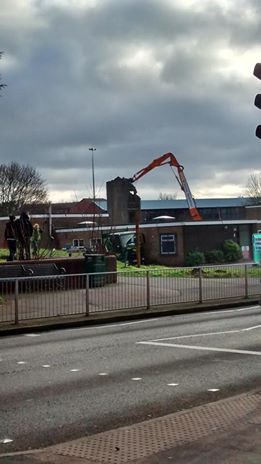
Once, when Cuthbert Brown was a boy and the circus came to town (sorry, city), one of the elephants died and was buried on Levett’s Fields. Mr Lichwheeld and I had joked that we should organise a community archaeological dig to look for Nelly but with work starting on the demolition of Lichfield’s Fire Station recently, this may prove unnecessary.

Demolition of Lichfield fire station tower, January 2015.Photo by Joe Gomez

Demolition of Lichfield fire station tower, Levett’s Fields January 2015.Photo by Joe Gomez

Welephant wins 2011 Lichfield Pancake Race. Image from Lichfield Live

Nelly is not the only elephant with links to Lichfield Fire Station. Image from Lichfield Live

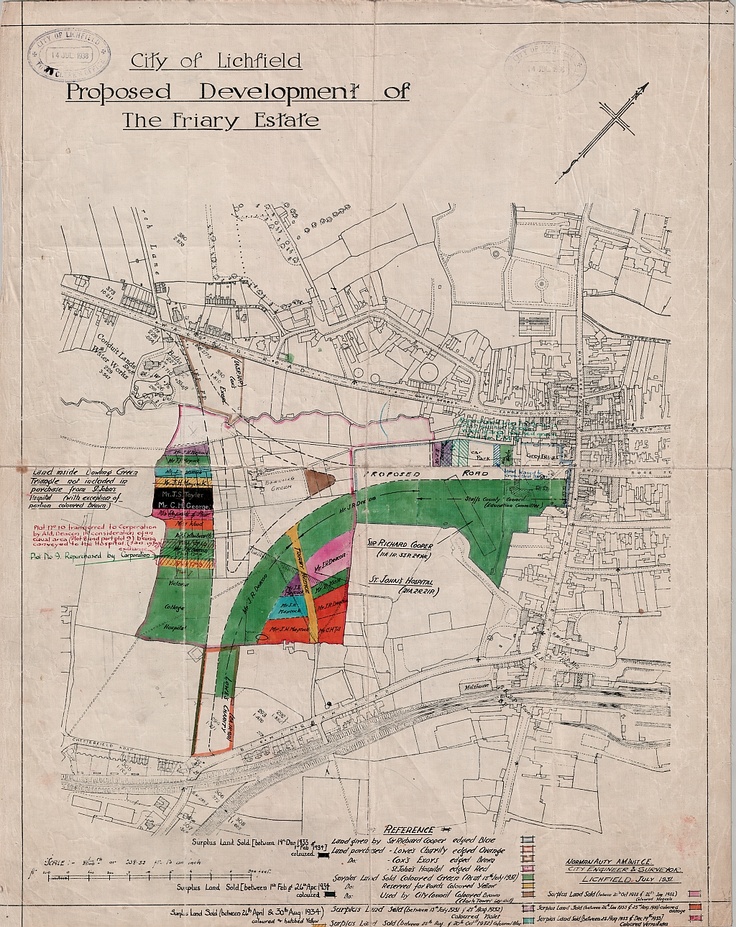
In the pre-Friary Road days, the Big Top also used to pitch up at the Bowling Green fields. Presumably at that time the Bowling Green pub was still a seventeenth century timber framed building. The only image of this I can find online is included in the 1732 engraving of the south west prospect of the city, as seen here on Staffordshire Past Track (zoom in and it’s the building in the foreground, beneath the central spire of the cathedral). The pub was rebuilt in the 1930s but the Victoria County History mentions that a clubhouse still in existence in the 1980s may be the same one which existed in 1796. Definitely worth a trip to the pub.

The Friary prior to development. Taken from Gareth Thomas' (GIS Officer for Lichfield District Council) Pinterest site

The Friary prior to development. Taken from Gareth Thomas’ (GIS Officer for Lichfield District Council) Pinterest site

One of the best things about looking through old newspapers is that you come across stories that you wouldn’t even think to look for. Whilst searching for more information on the Bowling Green, I came across the following obituary from March 1820.

At Lichfield, aged 67, John Edwards, the Hermit of the Bowling Green in that city. He came to the neighbourhood in the prime of life – a perfect stranger, retiring with disgust or disappointment from other and brighter scenes of life; but further particulars have never transpired respecting his history. The subscriptions of the benevolent have contributed to shed a comparative comfort on his latter days. A short time previous to his decease, he published a short “Essay on Freemasonry”. The medical gentlemen gratuitously attended his during his illness.

So many questions about Mr Edwards arise from this small snippet but I suppose if further particulars respecting his history had not transpired back then, the chance of uncovering anything now is fairly slim. Is it fair to say that Mr Edwards’ attempts to distance himself from society seem to have inadvertently made him into a celebrity of sorts? I wonder what became of his Essay on Freemasonry?

Whatever Mr Edwards’s reasons for preferring a life a solitude, it seems that in the eighteenth century it could be a career choice. Of sorts. Apparently, always on the lookout for opportunities to impress or outdo their friends and neighbours,eighteenth century land owners employed professional hermits to sit and be mystical amidst their fake temples and other follies. I found an example in the form of Mr Powys of Morcham (Morecambe?) near Preston, Lancashire, who advertised an annuity of £50 per annum for life to,

…any man who would undertake to live seven years underground, without seeing anything human, and to let his let his toe and finger nails grow, with his hair and beard, during the whole time.

Board and lodging was provided in the form of apartments said to be, ‘very commodious with a cold bath, a chamber organ, as many books as the occupier pleased, and provisions served from his (Mr Powys’) own table’.  By 1797, it was reported that the ‘hermit’, a labouring man,  was in his fourth year of residence, and that his large family were being maintained by Mr Powys. Just what quality of life must a man with a family have been leaving behind to agree to live like this? If this was about showing off to others, it’s curious that Powys stipulated that his ‘hermit’ was to live without seeing anything human.

Great Haywood Cliffs by Jason Kirkham

Great Haywood Cliffs by Jason Kirkham

In August 2002, around two hundred years after this dark appointment, notices appeared in The Guardian, The Stage, The London Review of Books and the Staffordshire Newsletter, advertising for an ‘ornamental hermit’ to take up residence at the Great Haywood Cliffs near the Shugborough estate in Staffordshire, as part of an exhibition called ‘Solitude’. The Shugborough Hermit would be required to live in a tent near to the cliffs (living inside them was deemed too risky) and only had to commit to the weekend of the 21st and 22nd September 2002. Out of  two hundred and fifty enquiries from all over the world,  artist Ansuman Biswas was chosen and I’d love to hear from anyone who visited him at Shugborough that weekend. Mr Biswas went on to spend forty days and forty nights alone in the Gothic Tower at Manchester Museum in 2009, with the aim of becoming, ‘symbolically dead, renouncing his own liberty and cutting himself off from all physical contact”‘.

I think I’d rather run away and join the circus.

Sources:

The Hermit in the Garden: From Imperial Rome to Ornamental Gnome, Gordon Campbell,  Oxford University Press 2013

 http://news.bbc.co.uk/1/hi/england/2205188.stm

Plane Site

Over the weekend I had the following message from David Mace on the subject of RAF Lichfield.

At the Jet Age Museum, Staverton, Gloucester; we are reconstructing the cockpit section of a Hawker Typhoon 1B to be included as a museum exhibit. The remains of this aircraft cockpit were recovered from Flower’s scrap yard, Chippenham in the mid-90’s. Information on the project is available here:

http://www.jetagemuseum.org/Typhoon.aspx

No. 51 Maintenance unit scrapped approximately 900 Hawker Typhoons at Royal Air Force Station Lichfield, also known as Fradley Aerodrome between 1945 and 1947, and, although most of the airframes were recycled, it is possible that some items remain in the surrounding woodlands and hedges/ditches. It was quite common for the salvage crews to dump parts in these locations.

The Typhoon Project team are seeking information as to the possible whereabouts of surviving items that can be included in the rebuild project, and any information would be much appreciated.


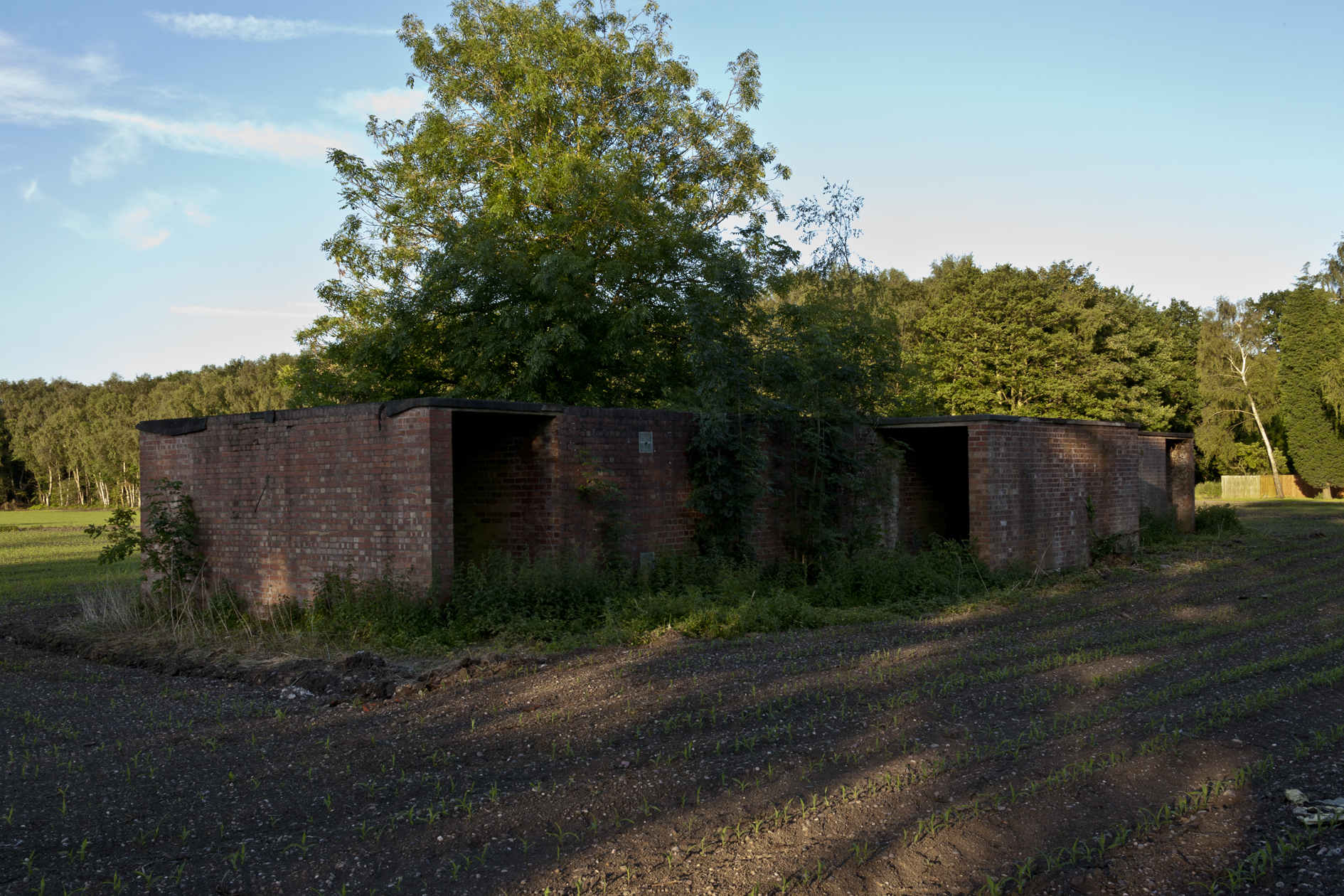
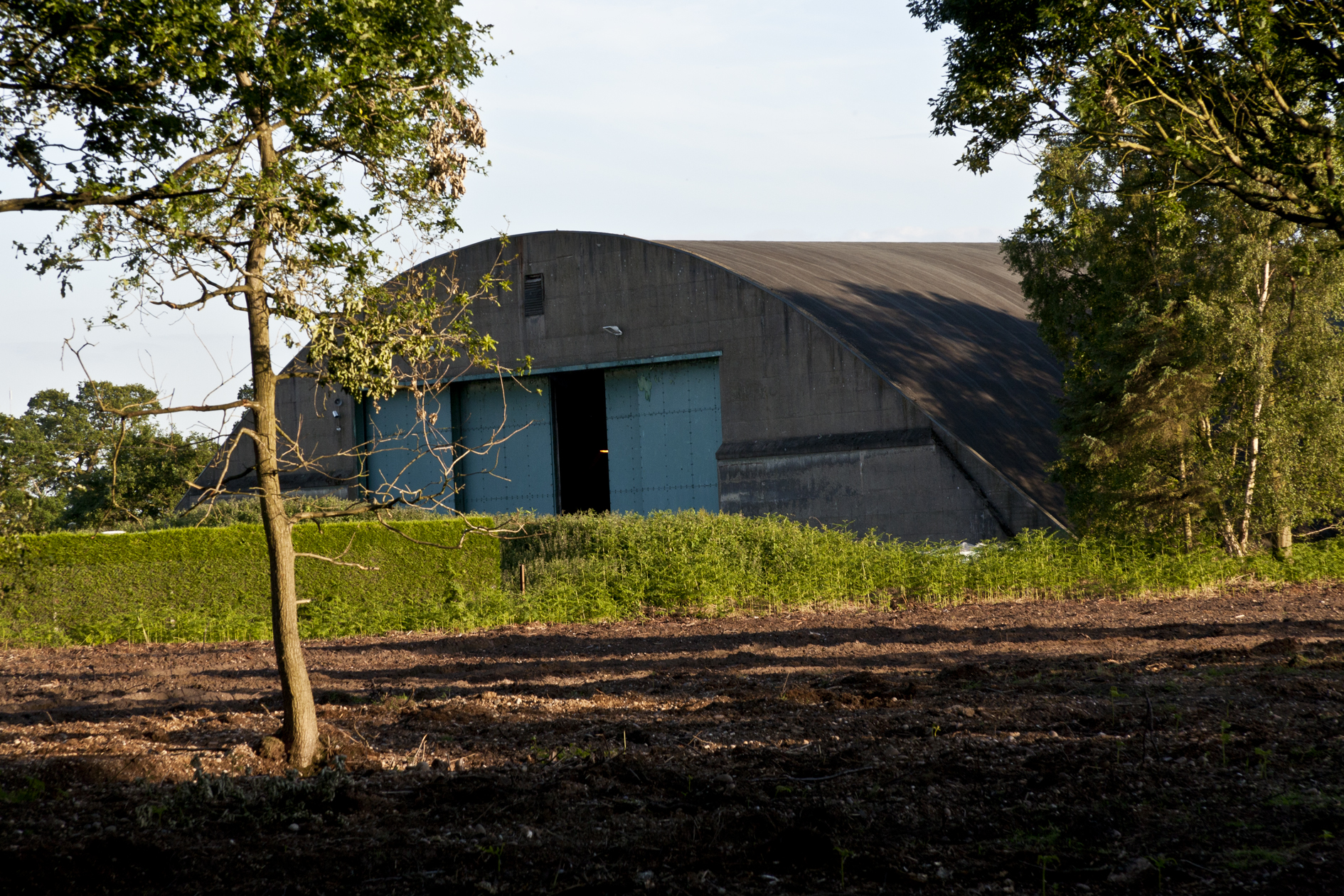
David believes that much of the scrapping was carried out in the Curborough area, south of the airfield. We’re hoping to do a Lichfield Discovered walk over the next month or so to see if we can turn anything up (we never need much of an excuse to go and rummage around in ditches!). RAF Lichfield was Staffordshire’s busiest wartime airfields and although closed in 1958, and sold four years later, the following photographs, taken by David Moore on our RAF Fradley walk last summer, show just how much of interest still exists at the site. More details on the walk to follow, but in the meantime if anyone does have any information, please get in touch and I’ll forward it on to David Mace.

RAF Fradley 1

RAF Fradley 4

RAF Fradley 3

RAF FRadley 2

Serving Time

Throughout the year, the Lichfield Discovered group has hosted some fascinating talks on a range of subjects from symbolism in cemeteries (we never did find out about the mackerel!) to urban exploration and we’ve visited pubs, the Cathedral Close, Roman forts, pill boxes and tunnels. Before we hang up our boots and put the lid back on the biscuit tin for 2014, we have two more events coming up, which I want to let people know about.

This coming Monday (10th November), we are delighted to welcome local author and journalist Joss Musgrove Knibb who will be taking a look at the previously unpublished letters of four Staffordshire Regiment soldiers who fought, and in some cases died, in the trenches of WW1. The vibrant letters of Alfred Bull of Lichfield, Sydney Norton of Tamworth, James Stevenson of Stoke-on-Trent and Jake Armes on the 1914 Christmas Truce bring the voices of these men vividly to life. With lots of photographs, stories and ‘trench humour’, it will be a thought provoking way of marking the centenary. The event takes place at 7pm at St Mary’s in the Market Square, Lichfield. There is no charge, but donations towards the centre are always appreciated.

First Lines by Joss Musgrove Knibb

First Lines by Joss Musgrove Knibb

The letters are part of Joss’ recently published book – First Lines. First Lines is published by Gazelle Press and is available to purchase across the region. Local outlets include WH Smiths (Three Spires Shopping Centre), St Mary’s Heritage Centre, The Cathedral Shop and the National Memorial Arboretum. First Lines retails at £9.99.

On Saturday 15th November we are meeting at the Guildhall at 2pm, where we’ll be exploring what remains of the city’s old gaol, first opened in 1548. After three hundred years, changes in the law meant that Lichfield’s prisoners were transported to Stafford after their trial, but a small number of cells were retained and used as the city lock-up. In 1847, the Inspector of Prisons visited the gaol and found that ‘the initials and names of many prisoners were cut deep into the wood work’. On our visit we’ll be attempting to locate and record this graffiti and have access to some of the cells which are not usually open to the public. Any names or initials that are discovered will then be compared with prison documents held by Lichfield Record Office at a later date. As it would be good to have an idea of numbers (it might get a bit cosy in those cells if there are too many of us!), please let me know if you would like to join us. We also need people to bring torches and cameras to help with the recording process.

prison door

We’re currently working on next year’s programme of events for Lichfield Discovered but so far we’ve pencilled in a visit to the Spital Chapel – one of Tamworth’s oldest and loveliest buildings, a talk on Holy Wells of the Midlands, a visit to the timber framed Sinai Park House (where there’s also a holy well!) and closer to home, an exploration of Beacon Park and Beacon Street. As ever, we are open to suggestions and so if there’s anywhere you’d like to visit, or anything you’d like to know more about, tell us and we’ll see what we can do! Dates to follow, so watch this space. You can also keep up to date by following us on twitter @lichdiscovered or liking us on Facebook.

Spital Chapel of St James, Tamworth

Spital Chapel of St James, Tamworth. During an archaeological dig in the latter half of the 20thc, to find any earlier structures on site, three skeletons were unexpectedly discovered in the area where the table is.


Pubs and Publishing

There’s been a lot of curiosity about what’s happening at the site of the former Three Tuns Inn on the Walsall Road. Panache Restaurant closed some months back and since then there has been a fair bit of activity at the site. Judging by accounts set up on social media, it seems it will be reopening in Spring 2015 as a pub/bar/restaurant known as The Barn.

Former Three Tuns Inn, Walsall Road Lichfield. Photo by John Gallagher
October 2014. Former Three Tuns Inn, Walsall Road Lichfield. Photo by John Gallagher

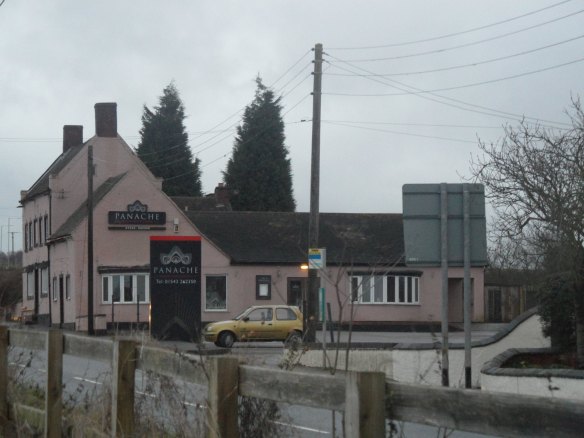
Panache Restaurant, former Three Tuns Inn, December 2012

Panache Restaurant, former Three Tuns Inn, December 2012

Whilst we wait to see what the future holds for the pub, I thought I’d have a quick look at its past. As always in hostelry related matters I had a look in John Shaw’s ‘The Old Pubs of Lichfield, which tells us that the Three Tuns inn was first recorded in 1771 and would originally have served the wagon trade as a roadhouse of its day.

Local historian J W Jackson’s ‘Victorian Lichfield’ column, written for the Mercury in the 1930s, talks about the ‘Cherry Wakes’ held at the inn. Crowds of visitors would arrive to enjoy the ripe white heart cherries grown in an adjoining orchard, and wash them down with ale. I wonder when the orchard was grubbed up and if any of the trees are still there?

In September 1938, F H Shilcock took over from Peter Radford as landlord and remained at the Three Tuns for fifteen years.Mr Shilcock was also a poet and in 1950 an anthology of his work,‘Poems by a Lichfield Innkeeper’ was published. From time to time, his verses appeared in the Lichfield Mercury, including this one published in August 1943 about the gathering in of the harvest in the fields behind the pub.

Near to the quiet of a country inn,
I daily watched the field of wheat
The summer wind made wave,
And swayed the ears of corn,
The sun did change the shades of green to golden brown,
And nature gave each head a golden crown.
Then harvest time drew near,
And reapers made a way;
The binder came that day
And laid the precious grain in sheaves upon the ground.
Now the field is still,
And fowl from farm are taking fill,
With duck and sparrow joining in the band –
No doubt they think life is grand.
Enjoying fallen grain upon the stubble,
Where once the partridge had his cover.
Dame Nature, be so kind:
By peaceful ways
Another sanctuary find.

Along with every other pub in Lichfield, the Three Tuns gets a mention in this poetical pub crawl, published in the Mercury in September 1922. It’s a long poem (there were a lot of pubs to get round back then!) so here’s an abridged version:

King George the Fourth one day
Stood on the Bowling Green
‘Midst Staffordshire Nut and Acorn,
Where Bluebell had been seen.

A frown was seen upon the face
Of Little George the brave;
For Prince of Wales, his royal grace
Would not a pardon crave.

He’d frankly said at Windsor Castle
The Earl of Lichfield’s land
Contained a freak, a Bald Buck rascal.
Pleasing all the courtly band.

The reason for this conduct,
Which seemed so out of bounds,
The George who ruled the country
Sought for here around

Also from the forest
Whence Robin Hood had come-
The Royal Oaks rocked with laughter
At what the King had done

He’d come one day with Greyhound bay
Horse and Jockey colours gay,
Ere long he saw the ghastly freak
The reason of his son’s outbreak

So all, who knew the Fountain head
Of our Britannia’s shore
Could never hope for laurel green
Hunting Swan or else the boar.

As fierce Red Lion, his anger grew,
And in his rage he swore,
His Constitution could not stand
His heart in great uproar.

That night, beneath the Hollybush.
With Rodney and with Smithfield
A duel was fought (and our sons are taught)
The one duel fought in Lichfield).

On one side stood the Old Crown
The hero of the tale,
And ‘cross the great Queen’s Head was seen
Like Angel, sad and pale.

‘Three Crowns I’ll stake, they won’t checkmate’
Was said by Anglesey,
And Gresley Arms were held aloft
(These never could agree)

The King’s Head man from rivals ran,
The father and the son;
Brave Duke of York was standing there
With Duke of Wellington.

Others, too, were there that day
Beneath the greenwood tree,
All Chequers of a bloody end,
Assistant hopes to be.

The Duke of Cambridge afterwards
Most thoroughly agreed
The Scale ne’er turned, nor honour burned
By foul or ugly deed

The nighttime fell and Malt Shovel
Ceased its plying hire
Carpenters’ Arms from work bench strayed
To pewters round the Turk’s Head fire.

The tenants of the land that night,
O’er Three Tuns, ‘neath the trees,
Spoke of duel and fighting
And many of Cross Keys

The Goat’s Head too, looked o’er the wall
Of cottage old and grey
Saw he the George and Dragon
Cross the Bridge at break of day

At night the Hen and Chickens
Made the Feathers fly;
One thought perhaps they visioned-
A Spread Eagle in the sky.

I leave the rest and how the test
Of rivals, youth and age.
And parentage – the end I leave
To fill another page.

So visions fill my thoughts,
Because I am a glutton
I long to see Hotel Trent Valley
So near Shoulder of Mutton

I’ve strayed far from the tale
The Sheriff told to me,
A Bridge I’ve built between the years
Of Lichfield’s memory.

Now Railway runs where duels were fought
Of which no book has ever taught
Ten bells ring out – Cathedral, keep
Guard over Lichfield while we sleep

To waken with a startling cry
The Sheriff has now said ‘Goodbye’
But satisfied I’ve made the test
At the Hen and Chickens find the best.

G W Gardner, Lichfield

Some of the pubs featured in the verse can be found amongst the old photos of Lichfield added to Flickr by Lichfield District Council GIS Manager Gareth Thomas. .
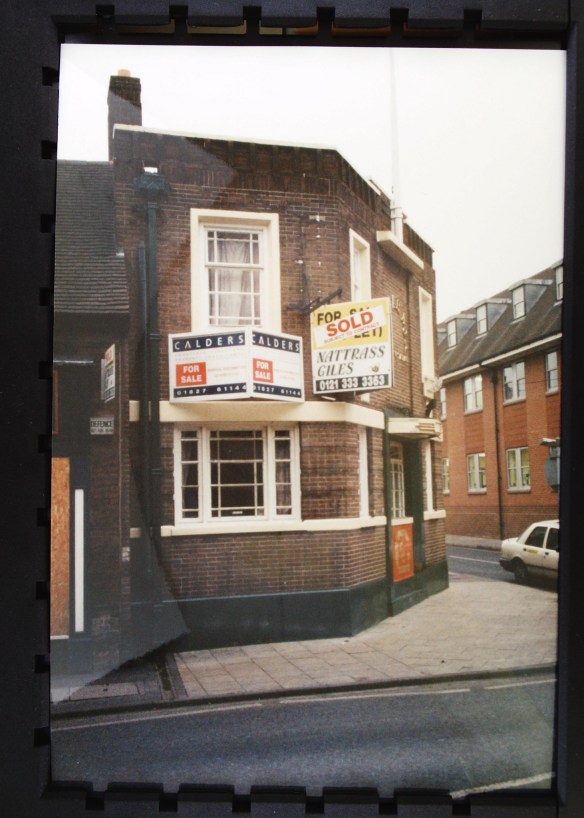
Robin Hood, Frog Lane. I think! Taken from Lichfield GIS flickrstream

Robin Hood, Frog Lane, Lichfield. I think! Taken from Lichfield GIS flickrstream

Holly Bush pub, Tamworth Street, Lichfield

Holly Bush pub, Tamworth Street, Lichfield

Delivery to the Earl of Lichfield, Conduit Street, Lichfield

Beer delivery to the Earl of Lichfield, Conduit Street, Lichfield

You can see more of the photos here. Some are long gone, but Lichfield is still a great place for pubs. Just last Thursday, mid eighteenth century Angel Inn on Market Street re-opened, reverting back to its earlier name, after having been known as Samuels since the late 1970s. ‘Sammies’ may not have enjoyed the best reputation, but it’s still part of our history and it’s good to see the old sign, with its portrait of Dr Johnson, hanging on the wall. It seems only right to give our most famous poet and lexicographer the (much-quoted) last words on the subject of pubs – ‘There is nothing which has yet been contrived by man, by which so much happiness is produced by a good tavern or inn’.
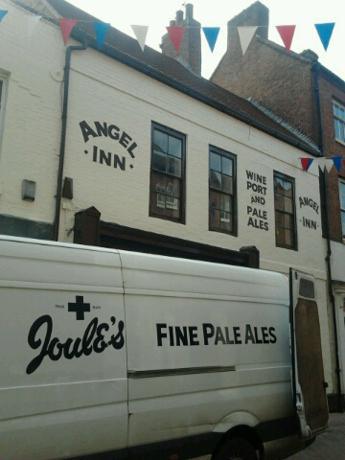
Joules delivery to the Angel Inn, Market St, Lichfield. Unintentionally echoing the Marstons/ Earl of Lichfield photo above!

Joules delivery to the Angel Inn, Market St, Lichfield. Unintentionally echoing the Marstons/ Earl of Lichfield photo above! Autumn 2014

Update: I had a fascinating email from Mike Cooper (appropriate name!) who told me that his great grandfather (x4) bought the Three Tuns Estate in 1777 for the princely sum of £1100.00 pounds of which £700.00 was in the form of a mortgage. The estate covered the pub, its outbuildings and 22 acres of land. He bought the pub from the estate of one Fettiplace Nott Esq (splendid name!), former High Steward of Lichfield, who died on the 6th of June 1775 & who decreed in his will that the sale of the Three Tuns & other possessions were to pay off the gambling debts of his son who was also named Fettiplace Nott. Back in 1777,  Lichfield Racecourse, now where Whittington Golf course stands, was in full swing & where Fettiplace Nott Jnr was want to spend his spare time! On the 6th of May 1801 Thomas Cooper sold the land but not the pub to Henry, Earl of Uxbridge for the sum of £1498.5s. In February 1818, Thomas Cooper, who by then was in his eighties sells the Three Tuns to his son-in-law James Neville & his brother John Neville who then sell it to their younger brother Charles on November 27th 1818. Thomas Cooper died in Lichfield on the 28th January 1828 & is buried in the churchyard at St John’s Hammerwich.


I’m really grateful to Mike for providing this information on the early days of the Three Tuns. Mike – I owe you a drink when it re-opens!