Pay Days

“Nothing really seems to happen in this sleepy old town, except plenty of work….”, begins the Summer 1935 entry for Lichfield in The Royal Army Pay Corps Journal.

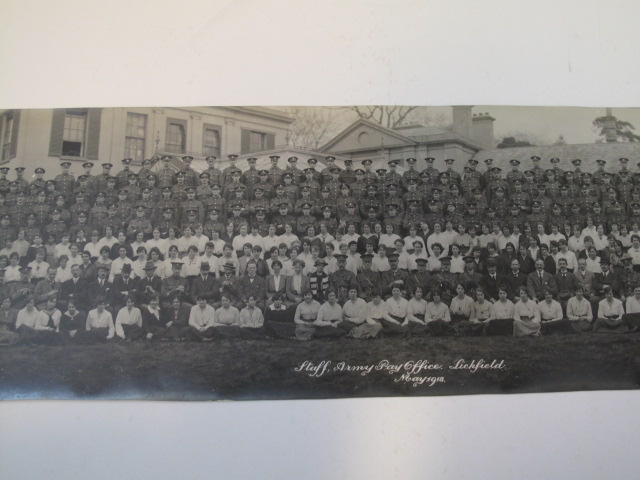
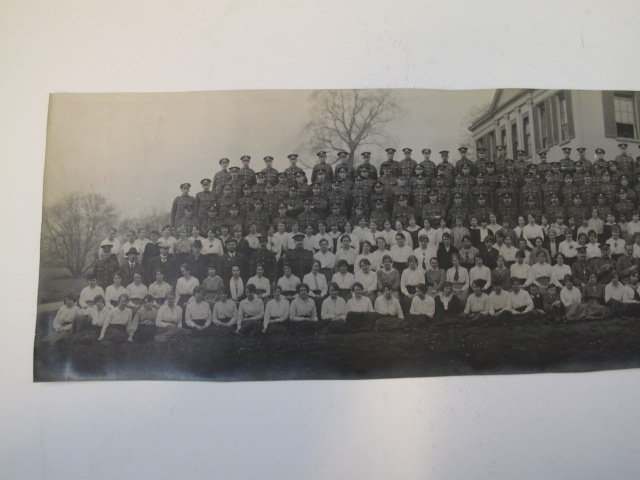
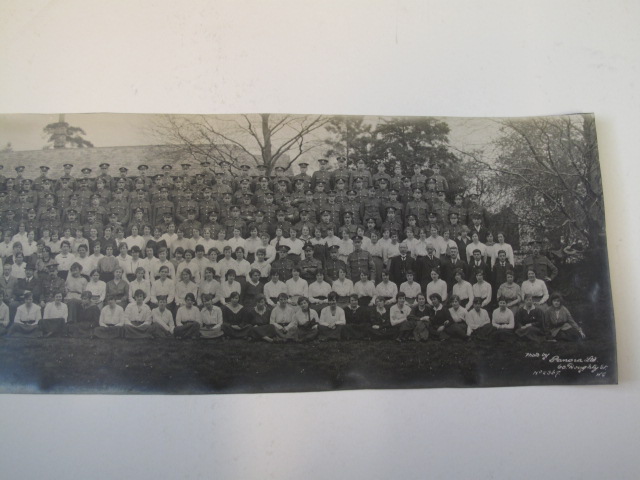
For at least 20 years, possibly longer, Lichfield was home to one of the army’s regimental pay offices.  The Army Pay Corps (known as Royal Army Pay Corps from 1920) if my understanding is correct, was the payroll department for the army. The office at Lichfield seems to have been based at Beacon Place, the house whose grounds formed much of what is now Beacon Park. This staff photo was taken outside there in May 1918. The photo is huge and so is in three parts.
The quarterly journal entries that I have copies of begin in Spring 1931 and focus mainly on sports, but inbetween the reports of cricket, tennis, football, bridge and table tennis there are other snippets of life at Beacon Place, and in Lichfield as a whole, during the period.

Here are some extracts from Spring 1937:

Spring must be on the way: the surest sign here is that the white lines on the tennis courts have been painted….Flannels are being sent to the cleaners, rackets are being plonked banjo fashion and sent to be restrung, and the good players are looking up the season’s catalogues and deciding on something really posh for this season….

Lichfield, in common with other great cities, is according to the press, going to do itself well for the Coronation. Flood lighting of the Cathedral and other important buildings, sports in the recreation grounds, glee-singing on Minster Pool (of course, this may be a stunt to make spome of these three-feet pike give themselves up), presentation of mugs to the children in the Market Place, after they have watched and cheered the Lord Mayor and all the City’s dignitaries. It will be a fine rehearsal for the Lichfield Bower which happens the following Monday and all who know Lichfield know what a fine day that is.

SQMS H Horan and Sgt R Mackreth have left us for Woolwich and Egypt respectively and Sgt R Tolley and L/Sgt J Duckworth, to whom we also extend the welcome mitt, have joined us from Palestine and Egypt respectively.

The decision to close the Lichfield office, due to a reorganisation of the system, was reported in The Tamworth Herald on April 24th 1937. Documents were transferred to York and Shrewsbury and it was said that,

The closing of Beacon Place, with the resultant removal of the entire staff would be a great loss to Lichfield

The last entry for the Lichfield office in the Royal Army Pay Corps journal that I have is Autumn 1937. I understand that Beacon Place was taken over by The Royal Army Service Corps during the Second World War, something I haven’t even begun to look at yet!

The photo and the journal entries were sent to me by Mr Bailey, curator of the AGC Museum in Winchester, after I made some enquiries for a walk I was doing in Beacon Park.  Mr Bailey has been incredibly helpful in helping me to discover more about the use of Beacon Place by the Army Pay Office and in telling me more about the RAPC generally. I have several other pieces of information that Mr Bailey has sent me, including lists of some of the employees at various times . One thing he mentioned that I find particularly interesting is that research by Dr John Black has indicated that following the campaign on the Somme in 1916, Army Pay Corps staff were sent to the Western Front and women were recruited locally to replace these men. Are these the women in the 1918 staff photo? Unfortunately, Mr Bailey hasn’t been able to find any records of names for the soldiers who departed or of the women who replaced them.

I’m especially interested in finding out more about the local people who worked at the Beacon Place office. If anyone has any further information regarding any of the above, it’s be great to hear from you.
Smoky Bacon

Why is Beacon St called Beacon St? Once upon a time it was known as Bacon St (or variations of this such as Bacunne). It’s suggested that at some point around the beginning of the 19thc, someone decided that Beacon St was a more fitting name.  It’s pure speculation on my part, but I wonder whether this name change had anything to do with the building of Beacon Place around 1800? The man who built the house was called George Hand. As there’s a cut of pork called ‘the Hand’, maybe he was keen to distance himself from all things porcine? As I said, mere speculation.

In books about Lichfield published at the beginning of the 1800s, both names are often given. One (1) gives the following description:-

Bacon or Beacon street anciently written Bakun or Bacun street, takes its name from a beacon placed upon the top of a tower which stood the Dean’s croft and adjoining field. It was the principal street of the town and was burnt down in 1646 at which time it was chiefly inhabited by cappers whose business was staple of the place

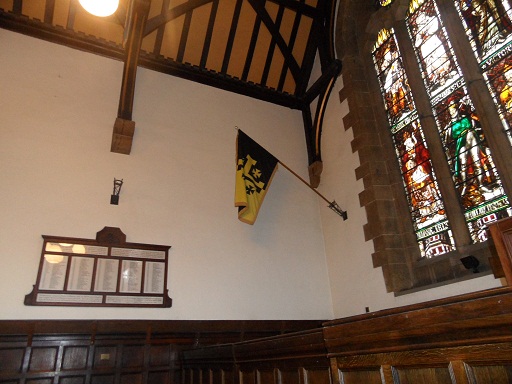
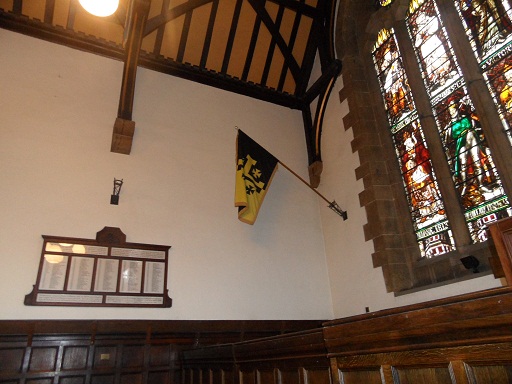
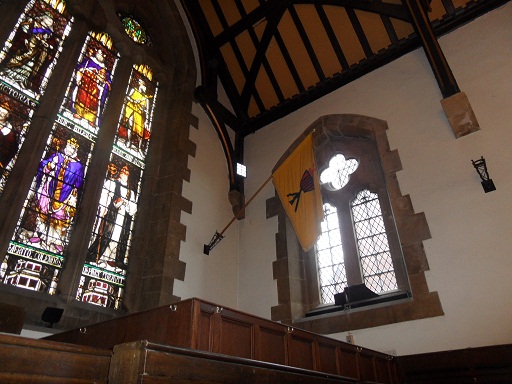
Beacon St Ward banner?

Is there any truth in this explanation? Or is a story, created to support the name change?  Is there any other evidence of an actual Beacon?  The above ward banner in the Guildhall surely relates to the Beacon St ward (although it’s another one where the name plaque is obscured). Alone it’s not evidence for the Beacon theory, although as I’ve mentioned before, I would be interested to see when/where the designs for these banners came from. There is a place in Lichfield called Dean’s Croft, but it’s near St Michaels, not Beacon St.

Thomas Harwood’s book (2) throws another explanation into the ring.

It is probable from the situation of Bacon street that name is an abbreviation from Barbican or Barbacane a word of Arabic original (sic). A barbacan is a sort of hold or fort for the security of the a munition placed in the front of a castle or an outwork.

In 1886, the William Salt Archaeology Society noted (3)’The present spelling of the name of this street is altogether unauthorised, and an innovation of this century. It is found spelt Bacon, Bacun, or Bacune uninterruptedly from the 13th to the 18th century’.

Likewise, I’m not convinced by the Beacon or Barbican theory….yet. As ever, would like to know what others think. I wonder what the good people of the Bacon Beacon Street Blog, think?

Edit 15/7/2012

Referring to the Beacon St area, the Collections for a History of Staffordshire Part II- Vol VI (1886) record that there is a reference to a Bacone’s Cross, along with a Swane Lane (now Shaw), Merliches Well, Poole Hall and Whitehall that I missed before.

Sources:

(1)A short account of the city and close of Lichfield by Thomas George Lomax, John Chappel Woodhouse, William Newling

(2) The history and antiquities of the church and city of Lichfield by Thomas Harwood

(3) Collections for a History of Staffordshire Part II- Vol VI (1886)

A View from the Bridge

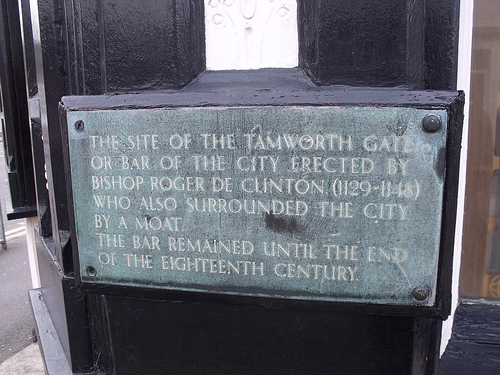
A quick trip to the shop turned into a two hour walk, a good proportion of which was spend in the Stowe area of Lichfield. I found the plaque marking the approximate site of the old gate or barr into the city and then I remembered that the Cruck House was nearby.

Cruck House


Site of Stowe Gate, end of George Lane/Lombard St

Stowe Gate plaque

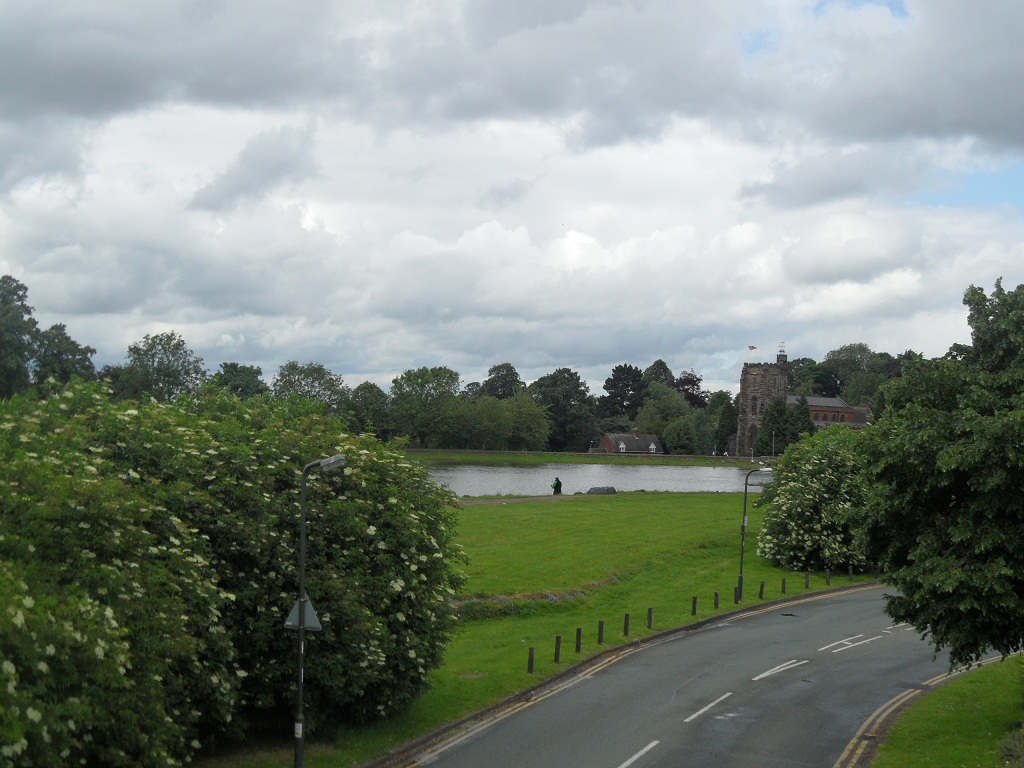
 I wanted to get over to Stowe Pool, to see if there were any water lilies this year and crossed over using the bridge,  something I hadn’t ever done in 8 years of living in Lichfield!

View from the bridge


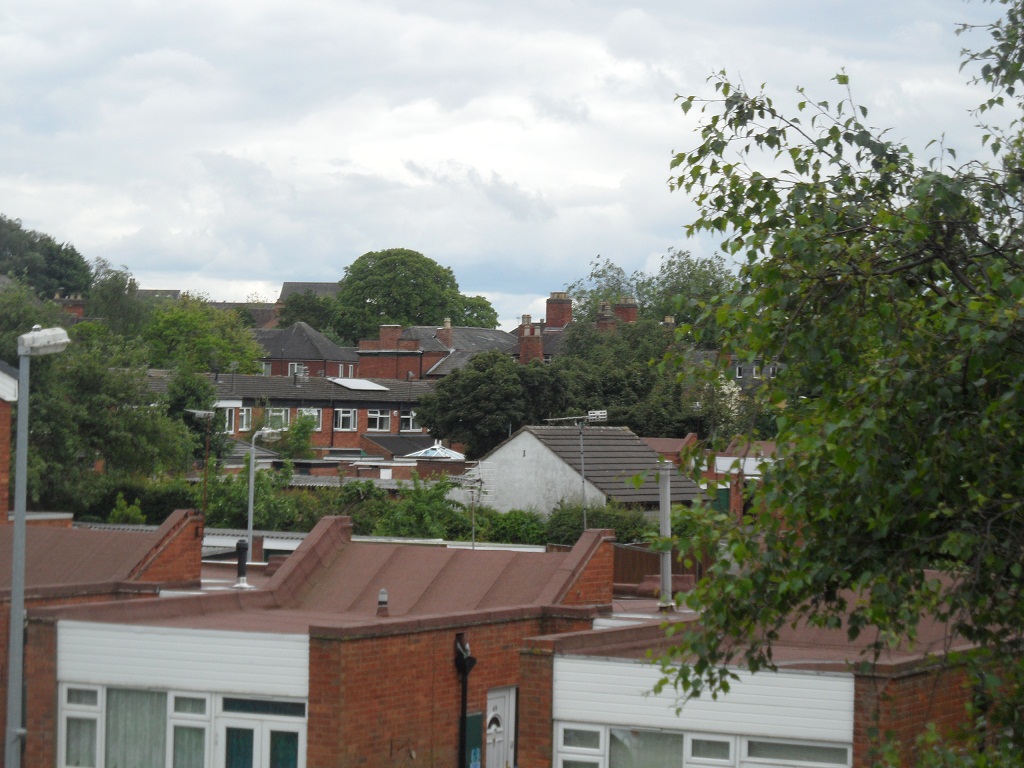
The rooftops of Stowe


Willows


There were water lilies in the pool although possibly not as many as there were the same time last year. Whether this is because the sun has gone awol this year, I don’t know. I didn’t spot any nests amongst them either. This might be as they’ve chosen to move onto the specially built wildfowl islands built in the centre of the pool instead!

June 2012


June 2011


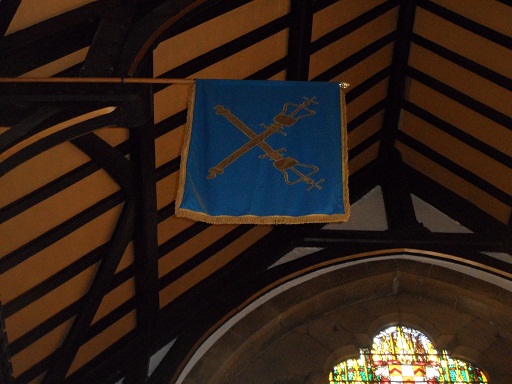
Back to the ward banners in the Guildhall and I think that Stowe’s is the one showing St Chad’s cross, relating to the fact that St Chad’s Church and St Chad’s well are found inside this ward.

Although the Stowe St gate is long gone,  I do get a sense of being outside the city here. It’s a wonderful place to explore and enjoy. One of the definitions I’ve seen for the placename Stowe is ‘meeting place’, and from my lookout point up on the bridge I saw children playing, people out for a walk and couples sat talking. If you ever get the chance to join them, you should.

Bit of a Bore

Last night in the Horse & Jockey on Sandford Street, the Holden’s Golden Glow and the football were in full flow. The former was definitely more satisfying than the latter. As Spain made their millionth pass around the forty minutes mark, my mind started to wander. It wandered back to Bore St, where I was still trying to work out which of the ward banners belonged to this Lichfield ward and why (some of the name plaques underneath the flags were obscured when I went back to check).

Bore St ward banner?


It dawned on me that this flag showed the city maces, which are used in civic processions and date from 1664 and 1690. The centre of civic events in Lichfield is of course the Guildhall on Bore St where of course the flag is hanging. So I should probably  have worked this one out a bit quicker!

The maces being carried in the 2012 Lichfield Bower procession


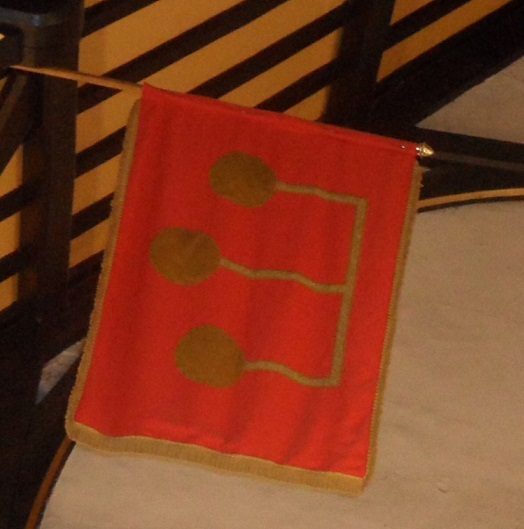
Whilst we’re on the subject of football, what about the golden balls of the Lombard St ward banner? I didn’t know until now but Lombard is another name for a pawn broker, and of course this type of business has long been identified by this symbol. Wikipedia explains that the concept originated in the Lombardy region of Italy.

Lombard St was once known as Stowe St infra barras (i.e. the part of Stowe St inside the barrs (or gate) of the city). Did the name change occur when this kind of business was set up in the street? Or is there another reason?

Lombard Ward banner

Hospital Ward

In 1781, John Snape carried out a census of Lichfield, making a list of the different wards of the city in the process. The wards are as follows: Bacon St (now Beacon St), Bird St, Sandford St, Sandford St below the water, St John’s St, St John’s St above the bars, Sadler St (now Market St), Bore St, Wade St, Dam St, Tamworth St, Lombard St, Stow St and Greenhill.

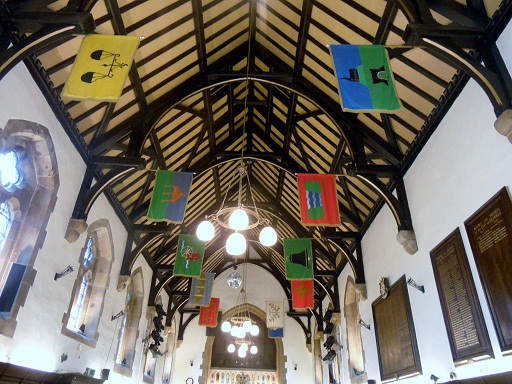
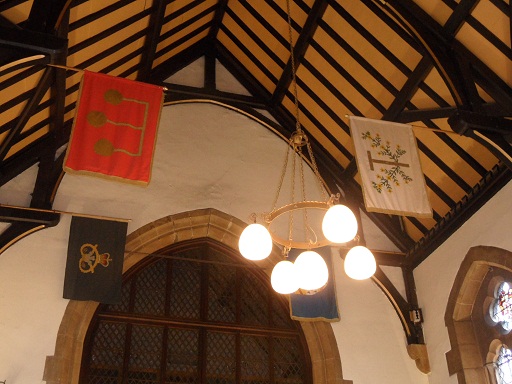
I think that these are the wards depicted by the flags hanging from the ceiling of the Guildhall, discussed here in my previous post. Now that I’ve finally made it back into the Guildhall to check which flag corresponds with which ward, I’m going to take each one in turn, trying to discover the significance of the design on each flag. Some I’m pretty sure of, others I’m really not (I’m talking about you Sandford St below the water ward!)


Photo from Ell Brown via flickr

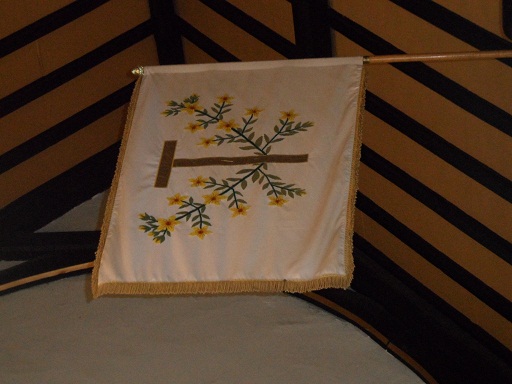
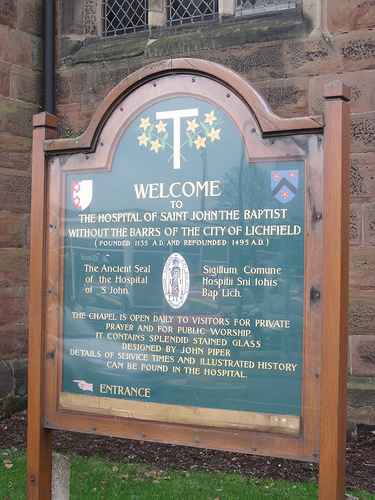
 I’m starting with the flag that represents St John’s ward. Not only is it my favourite of the banners, it’s also seasonal with the feast of St John’s (or Midsummer’s Day) on 24th June. St John St gets its name from The Hospital of St John The Baptist (the place with the chimmneys!). The design from the flag is also on the board outside St John’s chapel, but what does it represent? The yellow flowers must be St John’s Wort, associated both with the saint and midsummer. What are the flowers growing around though?  Well, it’s taken a lot of googling but I think that it’s St Anthony’s Cross (also known as the Cross of Tau), often associated with St Francis. This possibly explains its inclusion, as the site of the Franciscan Friary lies within this ward . Part of the old Friary wall can still be seen on St John St.

Please feel free to join in with the speculation on this and any of the other flags that follow!

Photo of St John’s board from Ell Brown’s Lichfield Group photo set on his flickr stream, included with thanks.

A Flag Post

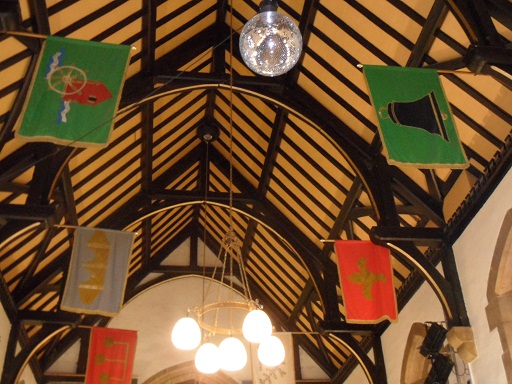
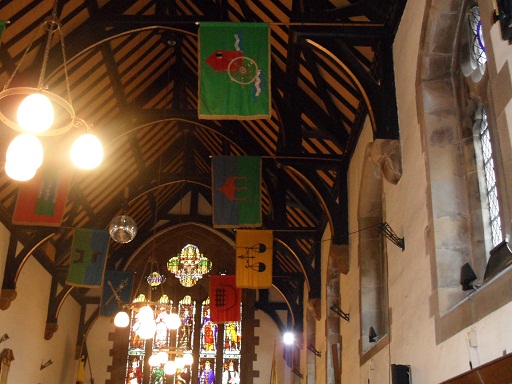
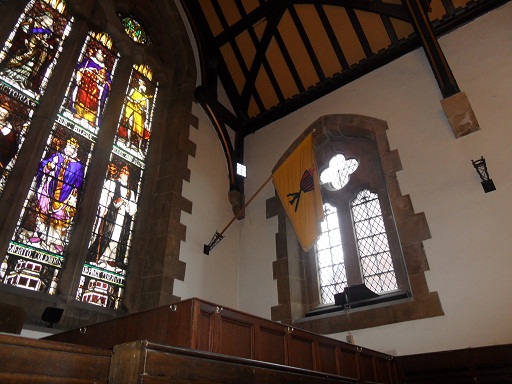
Hanging in the main hall of Lichfield’s Guildhall are banners representing the city’s wards. I’ve read on an information sheet about the Guildhall that these flags were created in 1975, by students from Lichfield’s School of Art. However, I’m wondering if they are based on anything earlier or if they are just recent(ish) designs? It does seem possible that each ward may have had its own symbol in the past – talking about The Court of Array in 1805, Thomas Harwood said,

“The public officers of the city attend and various processions are made by the constables and dozeners of each ward who in these processions anciently bore tutelary saints but which are now converted into garlands of flowers or emblems of their trade”.


Now, I had written down which flag in the Guildhall related to which ward on a piece of paper but I left it at the pub over the jubilee weekend (Ye Olde Windmill in Gentleshaw where I had a lovely steak & ale pie.  In fact, as the name suggests there is a ruined old windmill in the grounds, so the pub probably deserves a post of its own). I’ve been back to the Guildhall several times since, but haven’t been able to get into the main hall for one reason or another.

I can remember all but two. I think. Some are definitely more obvious than others. I reckon the best thing to do is put the photos up and see if anyone has any ideas about which flag relates to which ward and why. In the meantime I’ll try and get back to the Guildhall to make another list and hold onto it this time!  

.


By the way, there is no flag for Leomansley, so I’ll just have to design my own. If anyone from the Lichfield School of Art Class of 1975 wants to get in touch to give me a hand with this, or to share the story of how the other banners came to be made,  that would be fantastic!

(1) History, Gazeteeer & Directory of Staffordshire William White 1834

A Short Account of the City & Close of Lichfield’ by Thomas George Lomax, John Chappel Woodhouse, William Newling (1819)

Lichfield: Town government, A History of the County of Stafford: Volume 14: Lichfield (1990), pp. 73-87


In defence of Lichfield

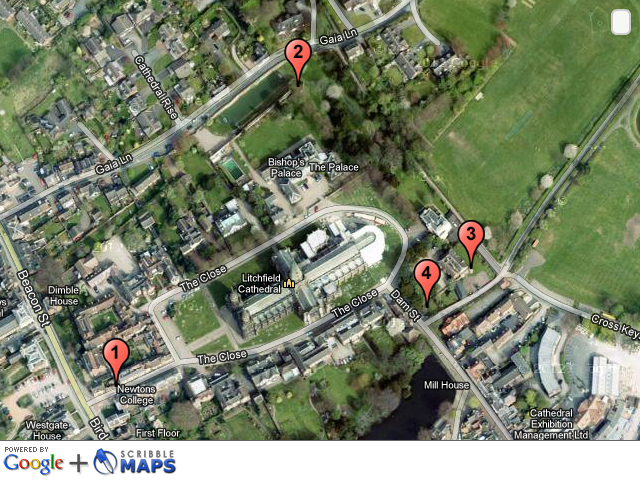
As I mentioned in the last post about the West Gate, some other remnants of the Close’s medieval defences are visible.  I’ve marked the ones I know about, on the map below, with a bit of information on each. I’m sure there’s probably more, and we could probably work out where the other defences were, but it’s a start!

1. Site of the West Gate – see previous post here

2. Remains of North East Tower & ditch. A scheduled monument, sometimes known as the Bishop’s Tower, this was part of the original, medieval bishop’s palace. The pastscape record can be seen here. A description of the tower and how it fitted into the rest of the palace can be found in several books on the Cathedral & Close (1) and is based on a plan that was held in the Bodleian Library (is it still there?). A plan drawn from this can also be found here.

At the north east corner was a tower fifty two feet high and each of its ten sides thirteen feet on the outside. It was called the bishop’s tower and the ruins yet remain. Adjoining this tower was a square room with stone stairs leading to the top on the north west of which was an apartment with a cellar underneath twenty two feet in breadth and sixty three feet in length. The bishop’s lodging room was forty feet by thirty two with a leaden roof and cellar underneath. On the north side of this room was a large chimney piece opposite to which a door led to the dining room sixty feet long and thirty broad. At the east end was a door opening into the second tower which consisted of five squares eleven feet in width and thirty two in height. There were two apartments each twenty feet by seven separated from each other by the large hall chimney, , the lady’s chamber…the brewhouse…and the kitchen.


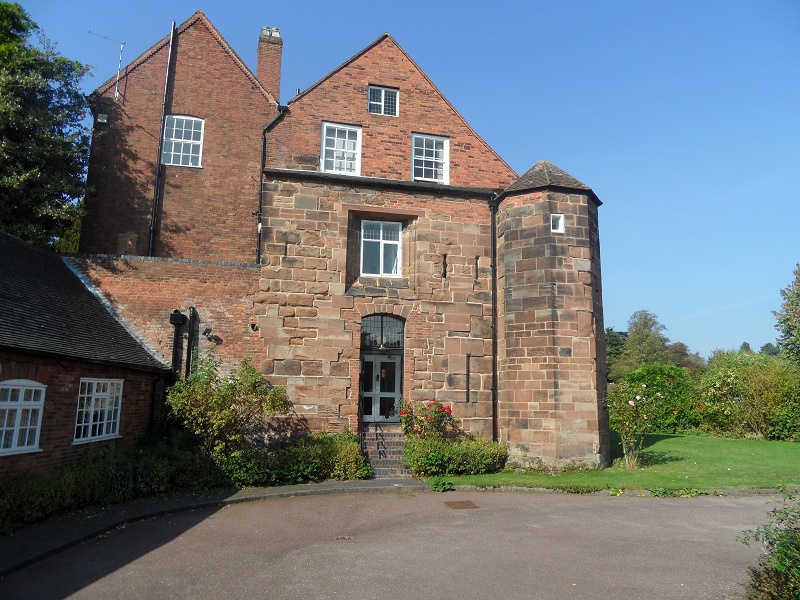
 3. St Mary’s House. Incorporates a turret and part of the Close wall on the east and south side. Not only are there are arrow slits, but there are also rumours of a secret tunnel down below….Actually, it’s not that secret as loads of people seem to have heard about it.

 4. Remains of Eastern Tower of South East Gate. This description comes from the ‘Lichfield: The cathedral close’, A History of the County of Stafford: Volume 14: Lichfield

The gate built by Langton at the south-east corner of the Close had two towers. The eastern one, whose base was excavated in the late 1980s, was a half-octagon with 12-ft. sides. The western tower was presumably of similar dimension. The gate had a portcullis in 1376.  There was a drawbridge, still in existence in the earlier 18th century, which crossed the outflow of water from Minster Pool, and also a wicket for pedestrians. The gate was removed in the mid 18th century in order to improve access for coaches into the Close.


There’s also this bit of wall behind the Chapters coffee shop, which provoked a bit of discussion on Brownhills Bob’s Brownhills Blog, and with Annette Rubery. Especially about what that recess is!

While I was having a flick through googlebooks trying to find information on the subject, I came across an interesting snippet. Adrian Pettifer, in ‘English Castles: A County Guide’ makes the point that that unlike the majority of cathedral cities, there was no wall around the city of Lichfield as a whole.

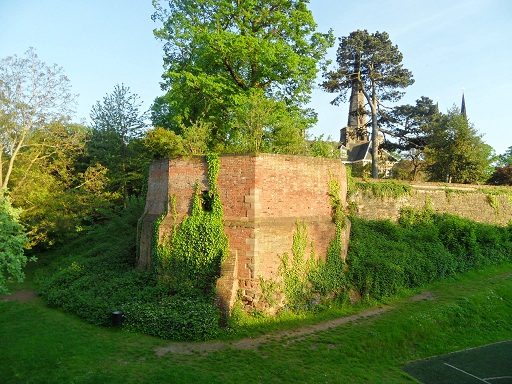
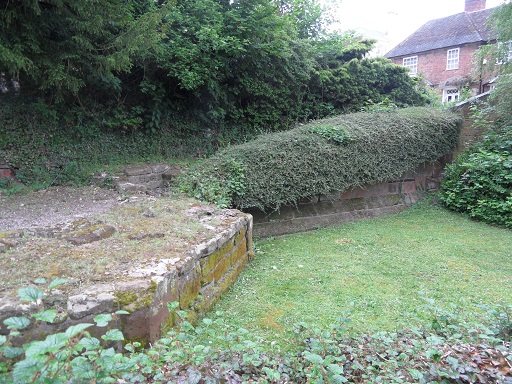
So whilst the Close was protected by a strong wall, a ditch, 50ft towers, drawbridges and portcullises (when you put it like that it really does sound like a castle!), what did the rest of the city have? Well, there was a ditch. It’s thought even this was used more for controlling traders coming in and out of the city, than for defences. An archaeological dig carried out on the Lichfield District Council carpark in Frog Lane, also confirmed that the ditch was used as the city dump and found a variety of material, including it appears, the dog from Funnybones. There were gates too, the positions of which are still marked by plaques. Again, though it’s thought these might not have been defensive. I think the ditch and the gates deserve a post of their own, so I’ll come back to them another time.

Credit: Ell Brown (taken from flickr photostream)

This will also give me time to think about my latest question (one I’m sure has been thought about and answered by clever people already!). Was the city of Lichfield defended, along with the Close? And if not, then why not? Of course, if anyone has any ideas about this in the meantime, please let me know!

Footnootes:

(1) This particular description is taken from ‘A short account of the city and close of Lichfield by Thomas George Lomax, John Chappel Woodhouse, William Newling

(2) Thanks to this website http://gatehouse-gazetteer.info/English%20sites/3329.html for pointing me in the direction of some great links.

(3) I’ve also used this book From: ‘Lichfield: The cathedral close’, A History of the County of Stafford: Volume 14: Lichfield (1990)

West Side Story

The view of the Cathedral as you turn from Beacon St into the Close, must be one of the most photographed in Lichfield. It’s stunning. However, if you can tear your eyes away from the spectacular west front of the Cathedral, there’s something else here that I think is rather special.

Remains of the West Gate.

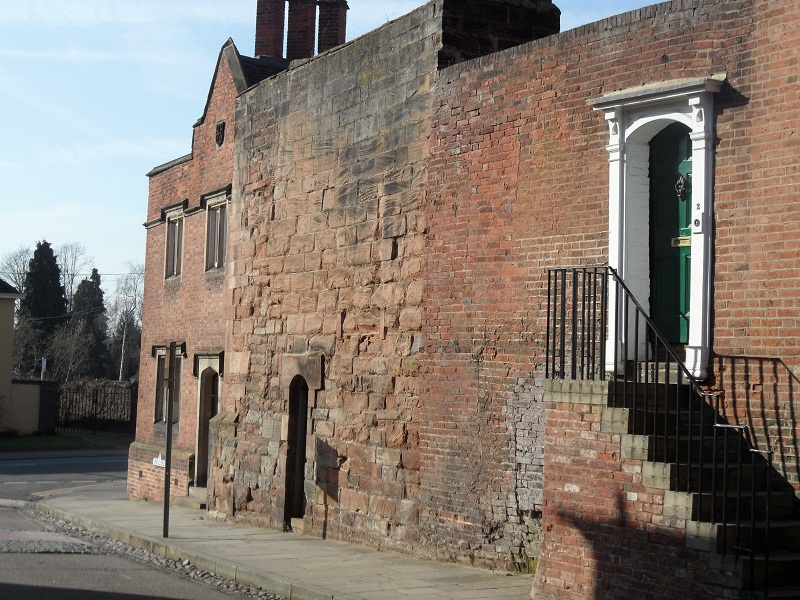
Sandwiched between two houses are the remains of the West Gate, dating back to the early fourteenth century. The rest of the gate was demolished in 1800, as Thomas Harwood describes, “…that noble gate at the west entrance into the Close, a beautiful structure worthy of its munificent founder and which in April 1800 was with a barbarous taste, pulled down, and the materials applied to lay the foundation of a pile of new buildings for the residence of necessitous widows of clergymen”. (The new buildings Mr Harwood describes is Newton’s College opposite. If this is true it’s a bit more house old recycling!).

In the same book, Harwood mentions the gate again saying,”At the entrance into the close on the west stood the beautiful gate which was built by Bishop Langton in the early part of the fourteenth century. It was a very strong a double gate with portcullis of great strength and majesty. The strong tower over the gate was finished in the time of Bishop Northburgh, the successor of Langton. This noble structure which had unimpaired during the revolution of five centuries and had withstood the destructive ravages of civil war was pulled down in April 1800 to widen the road into the Close”

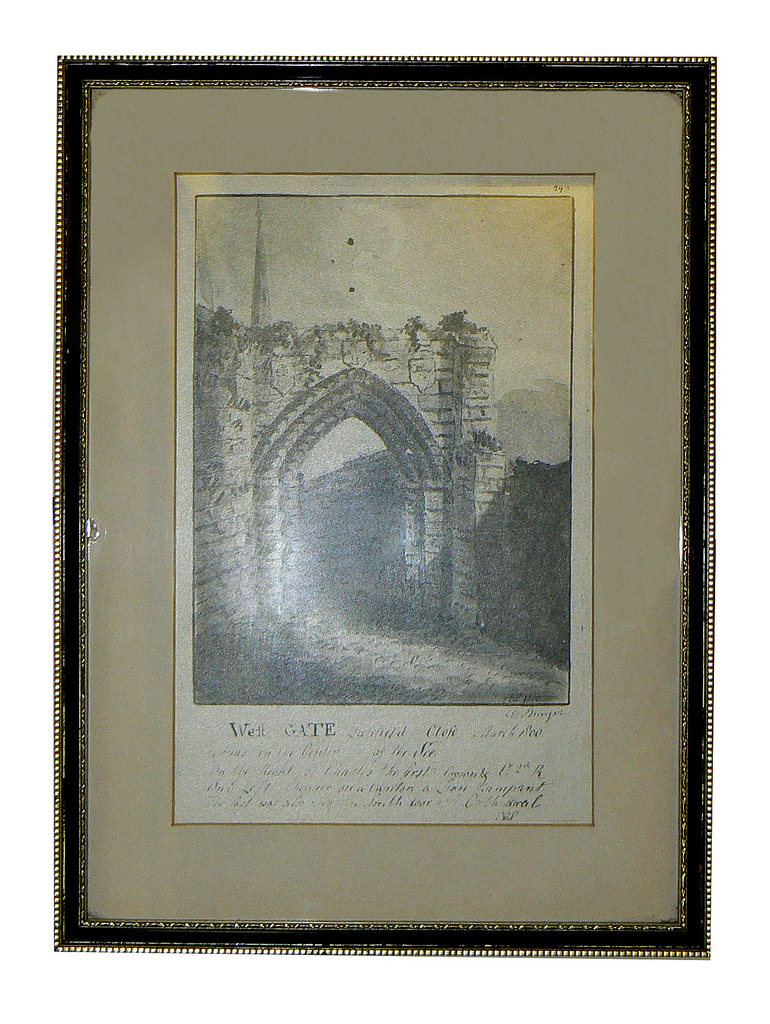
Personally I’m a big fan of crumbling, old bricks, but if the gate had remained then, we wouldn’t be treated to that amazing view. Whether the decision to demolish the gate was barbarous or not, all we have now are these remaining stones and the descriptions, together with some maps and drawings.  The rest is down to our imagination….

The Lichfield District Council flickr stream has this image.

Taken from Lichfield District Council flickr group

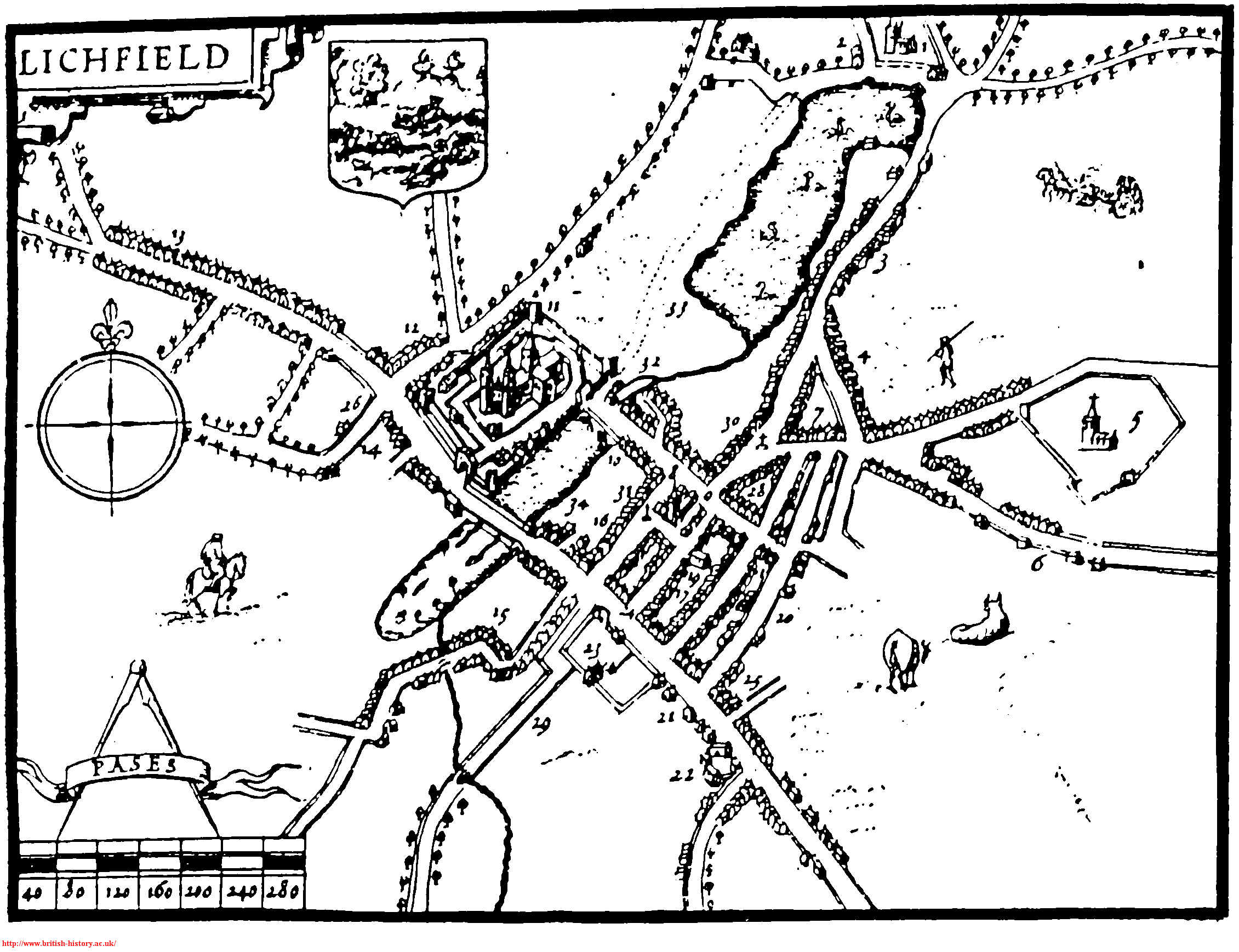
On the Staffordshire Past Track website, you can also see a view of the gate published in 1805. Still a ruin, but in slightly better repair than the previous image. There’s another image here , this time from further away showing how the gate fitted into the area around the Close. This ‘ancient view’ of the Close, seems to be an artist’s impression from 1805 to show how the Close would have looked surrounded by its protective walls, gates and towers. John Speed’s 1610 map also shows the defences, including the gate.

1610 map of Lichfield

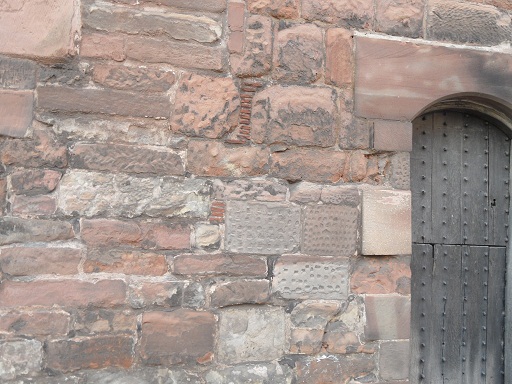
I’d like to explore the other remaining fragments of the defences, but for now I’ve got enough questions about this part to be going on with! Why leave this portion of wall   – why not demolish the whole thing? On the wall itself, why do some of the stones have dimples on (I bet there is a technical term for this!) Were materials really used for Newton’s College?

And what about that door! What’s behind there? Who was the last person to go in there (and did they ever come out again!). Why is there a door there at all? To access the ‘strong’ tower in Harwood’s descriptions?  Most importantly, where do they keep the key and could they open it for the Heritage Weekend?!

Edit: Take a look at the comments section – some of the questions have already been answered by Nigel, Managing Director of Lichfield Lock & Key, up on Church St and Pat, who seems to know a thing or two about old bricks!

Sources

The History & Antiquities of the Church and City of Lichfield – Thomas Harwood

Lichfield: The cathedral close – A History of the County of Stafford: Volume 14: Lichfield (1990), pp. 57-67. URL: http://www.british-history.ac.uk/report.aspx?compid=42343

Well Being

My visit to Farewell several weeks ago got me interested in finding out more about wells. Brownhills Bob showed me a map of the area around Farewell and it’s amazing to see how many other ‘well’ related placenames there are in that area alone e.g. Stoneywell, Cresswell, Coldwell, Nuns Well and my own personal favourite, Giddywell (wonder what was in the water there?!).

I’ll come back to these another time but for now I thought it would be interesting to find out a bit about what’s probably the most well known well in our area – St Chad’s Well here in Lichfield.

The well has changed a fair bit over the years. The earliest description of the well is said to come from Leland who visited in the 1500s and is quoted in a Lichfield history book published in 1819 as saying “…Stowe church on the east of the towne where is St Chad’s well a spring of pure water where is seen a stone in the bottom of it on which some say St Chad was wont naked to stand in the water and pray at this stone…”.

Today, St Chad’s Well looks like this.


Below is a picture of the well and church drawn by William Stukeley in 1736. As far as I know, it’s the oldest image of the well that there is.

However, James Rawson reported that by 1833 the well had ‘degenerated into a most undignified puddle, more than 6 feet deep’. He seems to dispute Stukeley’s drawing, saying that there was no outlet for escape of water and the brook was not near to the well as depicted above. The well basin had become ‘filled up with mud and filth’ which Rawson believed was due to drainage in the surrounding meadows. As a result an octagonal building was erected over the well, which remained in place until 1947, when I understand that the well was actually moved to its present position and took on its current form. It would be interesting to see if there are any first hand accounts of this?

St Chad's Well, 1915. Image from Wikipedia

 
At some point it seems people may have thought the water in the well was harmful to drink. In a volume of ‘The Antiquary’, published in 1889 a Rev C F R Palmer is quoted as saying “It is popularly believed that it is dangerous to drink of the water of St. Chad’s Well, as it is sure to give a fit of the ” shakes,” Yet, in spite of the attendant’s remonstrances, I took a good draught, and, instead of ague, experienced only great refreshment in a fatiguing walk on a sultry day”. Like Rev Palmer, the lad in the photo looks like he’s about to take a good draught and doesn’t seem too concerned!

In 1806, Thomas Harwood wrote that ” The superstitious custom of adorning this well with boughs and of reading the gospel for the day at this and at other wells and pumps is yet observed in this city on Ascension Day”.  According to St Chad’s church website, the tradition of well dressing (mostly associated with our neighbours over in Derbyshire) was revived in 1995 to commemorate the 50th anniversary of Christian Aid. I think the last well dressing was in 2010 with a girl guide theme. I wonder if the custom will be revived again?

I had always assumed that the well and the spring were one and the same, but it seems that it was separate, or at least it became separate at some point. I don’t feel too bad about my ignorance though, as in 1923, the churchwarden Thomas Moseley said ‘no living person knew where the water came from’. In a book published in 1846, I’ve read that ‘The water of the well is sulphurated and near to it is a pretty iron pump giving water from a second well which is a superfine chalybeate’ and in an archaeological survey from 2006, it refers to a little brick building containing the spring. The survey was carried out as there was a proposal to build a visitors centre in the well’s vicinity. I understand that plans for the centre were abandoned in February 2008 but the survey makes for an interesting read and you can find it here.

Though plans for a visitors centre didn’t come to fruition, there is another project that will bring people to the well. On 1st April,  at 2.30pm the Bishop of Lichfield will be opening the first interpretation panel on the Two Saints Way, a pilgrimage route linking Lichfield Cathedral and St Chad’s Well with the shrine of St Werburgh at Chester Cathedral. I hope this is a success and I wish David Potts and all those involved……well!

Sources:

Some account of Croyland Abbey, read by JM Gresley by William Stukeley

A Short Account of ther City and Close of Lichfield by Thomas George Lomax, John Chappel Woodhouse and William Newling

The Gentleman’s magazine, Volume 217

www.saintchads.org.uk/sitebuildercontent/sitebuilderfiles/parishprofile2011.pdf

www.stchads.org.uk

 The Wanderings of a Pen & Pencil by F P Palmer (1846)

The Antiquary Vol 22

http://archaeologydataservice.ac.uk/catalogue/adsdata/arch-841-1/dissemination/pdf/oxfordar1-50626_1.pdf


Monumental Task

I’ve used this database created by the Public Monuments & Sculptures Association a lot. It’s a national recording project that aims to collect information on all British public sculpture and monuments, whether historic or contemporary.

As well as including Lichfield’s usual suspects, the database also features some of our less obvious works such as the Calming Stone in Beacon Park, the etched glass in the Library foyer, the facade of Boots in Tamworth St and the Standing Stones I formed a bit of an attachment to back in November 2011.


Facade of Boots created 1908. Decorations include an owl, a beehive and a piper. There must have been a good reason for this motley crew!

They're outside!


Not everything on the list is still around – there’s an entry for Dean Denton’s Market Cross which was pulled down in 1849. There are also entries on the database that don’t seem to have made it as fully fledged pieces of Lichfield public sculpture.  Since Pat brought it to our attention back in November 2011 an entry has now appeared on the database about the Vision & Youth sculpture.

As the association says,  ‘The database is an excellent resource for students & researchers, conservators, local historians, art buffs, enthusiasts, genealogists and all who want to know more about public sculpture: statues; obelisks; columns; sculptures; installations; fountains; follies; commemorative clocks; wayside markers; and towers – from the Stuart era to the present day.’ I think it’s fantastic and you can read more about future plans & how you can get involved in contributing information here.

One to be added to the database in the future is the proposed statue of Erasmus Darwin at Cathedral Walk (I think there’s another one planned for Beacon Park too). I’ve just been reading a few of the comments about this on the S106 document. One person said that they were in favour of the statue, as Darwin is a local hero we should be proud of. However, the comment goes on to say that Lichfield should also celebrate more contemporary heroes relevant to young people and also more women ‘not just old blokes’.* I think this is potentially a whole new blog post but this is a really interesting point. Who or what should we be commemorating with our future public art & monuments?  

*I remember when I was a young person. A young person who used to go out on a Saturday night instead of sitting in reading the comments on S106 consultations 😉