I’m reading the memoirs of a man named William Purcell Witcutt. Like me he had connections to both Birmingham and Staffordshire, and was fascinated by folklore. Unlike me, he was an protestant vicar who converted to Catholicism before being exiled to the furthest outpost of the Diocese for the crime of commenting on the corrupt nature of many medieval priests. Yes, they sent him to Leek.
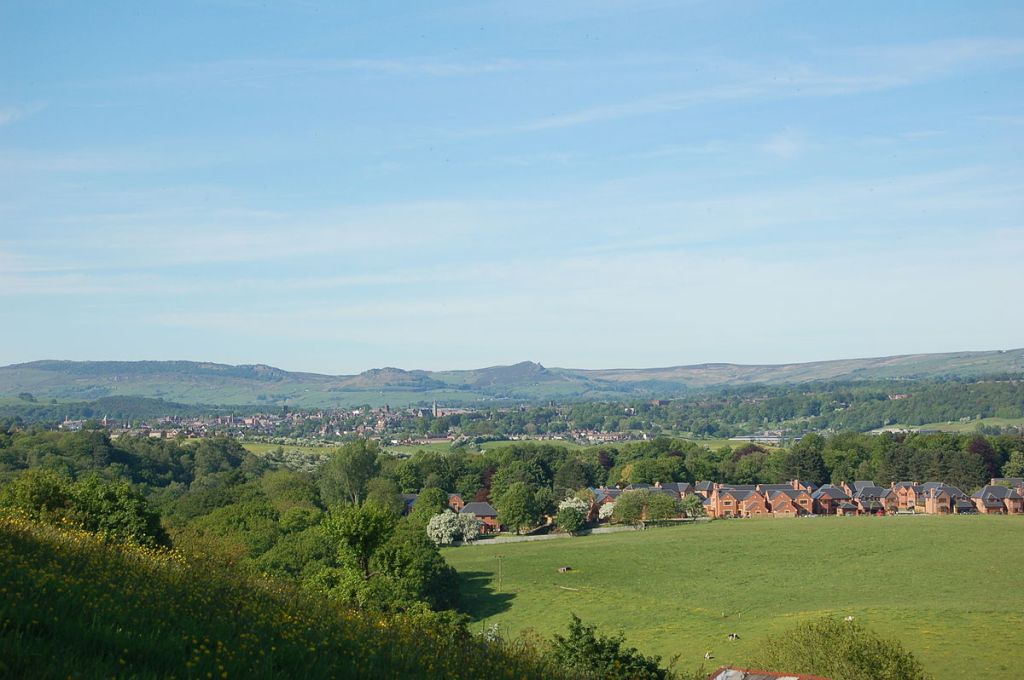
In his book, ‘Return to Reality’ there is a chapter called ‘The Valley of Phantoms’, in which he describes how, ‘Leek lay hidden in mist and woods in the middle distance, and one of the older boys tried to convince me that it was invisible from the air. Leek will never be bombed said he, and quoted with assurance the prophecy that there would come a time when, ‘there will be no safety in the land save ‘twixt Mow Cop and Morridge’.
No I can definitely see it
Witcutt was soon to find plenty more superstition in this Staffordshire Moorland town. It seemed to him that the valley and moors around it swarmed with ghosts and bogies, which people still believed in. There was the Headless Horseman, or in Leek dialect, ‘a man on an ‘oss without yed on, an awful gory sight’, and nearby was a Black Dog who guarded the graves of those who died a violent death. According to Witcutt, the Queen of the Leek demons was the Mermaid of Black Mere, who I wrote about many years ago here. A new story to me was that of ‘Ball Haye Jack’, a little grey man whose appearance in front of one of the mills was believed to bring bad luck. One curious custom Witcutt noted was that on seeing his collar, the girls and women who worked in the mills would touch the factory railings, a somewhat unsettling reaction given it seems to be linked to the superstition that touching iron would protect against the power of a sorcerer.
One of the strangest spots Witcutt writes about is the Coombes Valley, When he visited in May 1940 he found a farmer planting potatoes and as the man sowed his spuds, he shared stories of the valley. At a place nearby, the spectre of a murdered man was said to ride up and down the ridge. Once seven priests came to lay him but all but one of the gathered fathers fled. The final man standing held up a stone in the brook, dismissing the pleas of the phantom for mercy, and laid him beneath the rock. The process appears to have been unsuccessful however and so the dead man rode out once more. This next time he was laid beneath a hawthorn tree at a place known very appropriately as Spirit Hole. Even that was only sort of successful though as he still haunts the valley, although now in far less malevolent form of a bird heard singing as the night falls at the Spirit Hole. The stone which had failed to keep the ghost grounded was still there when Witcutt visited (and I believe it still is), and according to the farmer it had once been a stone of sacrifice.
No wonder the valley is full of phantoms.
Source: WITCUTT, W.P. Return to reality, Macmillan, 1955.
Charlotte Sophia Burne, the first woman to become president of the Folklore Society, once said of Staffordshire, ‘It is comparatively an ordinary occurrence for this or that lately deceased person to ‘come again’ after death’.
I can’t help but wonder if she’d heard of the post-mortem wanderings of Preston Moore and his father in the village of Weston, near Stafford. A book called ‘Phantasms of the Living’, contains the following account from a Mrs J Bennett written in 1882 about the eerie events of 13th April 1860.
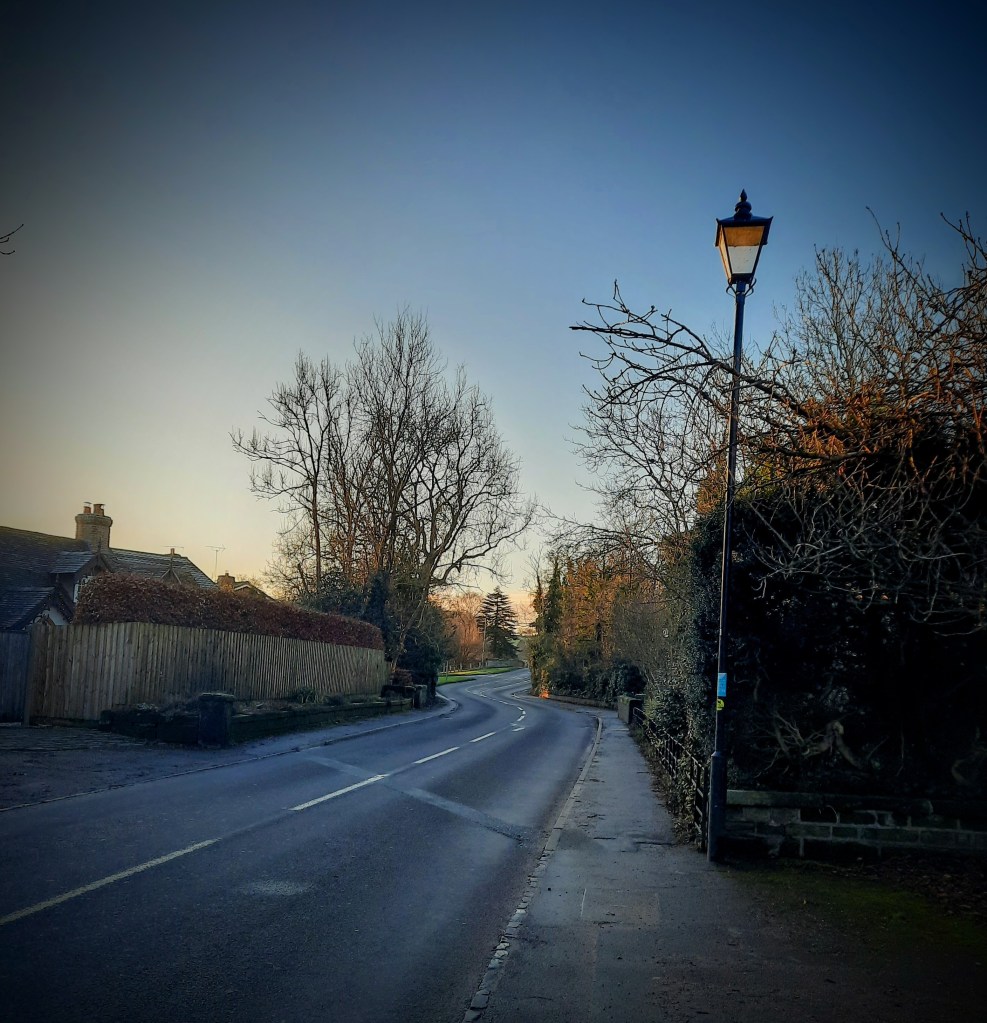
“My daughter Annie and I had been drinking tea with the late Mrs Smith and Miss Moore, and talking about their brother Preston being very ill and not expected to recover, and were returning home in the evening when between the little wicket which opens out of the Vicarage field and Mrs Newbould’s house, we met the identical man in face, form and figure, dressed as he was always wont; slouched hat, old frock coat, open in front, knee-breeches and gaiters, with a long stick. He passed so near us that we shrank aside to make way for him. As soon as we got to Mrs Newbould’s she exclaimed, ‘So Preston Moore is dead!’, when we both exclaimed, ‘Oh no, we have just seen him!’. We found, in fact, that he had died about half an hour before he appeared to us’.
Something wicked this way comes
Mrs Bennett was adamant that it could not have been a case of mistaken identity. According to her, ‘We cannot call to mind anyone at all resembling the individual in question; his appearance, dress and gait were utterly unlike anyone else residing in or about the neighbourhood’. More intriguing details emerged during psychical researcher Eleanor Sidgwick’s interview with Mrs Bennett. There was apparently something forbidding about Preston Moore and his sister Miss Moore was also considered odd. Preston may also have had a thing for Mrs Bennett. He once bought her pansies pinched from a neighbouring gentleman’s garden and another time, cauliflowers, also illegitimately acquired. Perhaps I should have saved this story for Valentines Day? ‘Roses are red, violets are blue, here are some vegetables, I’ve stolen for you. Violets are blue, roses are red, I’ll still be around, even after I’m dead’.
A lovely pub. We will definitely come again.
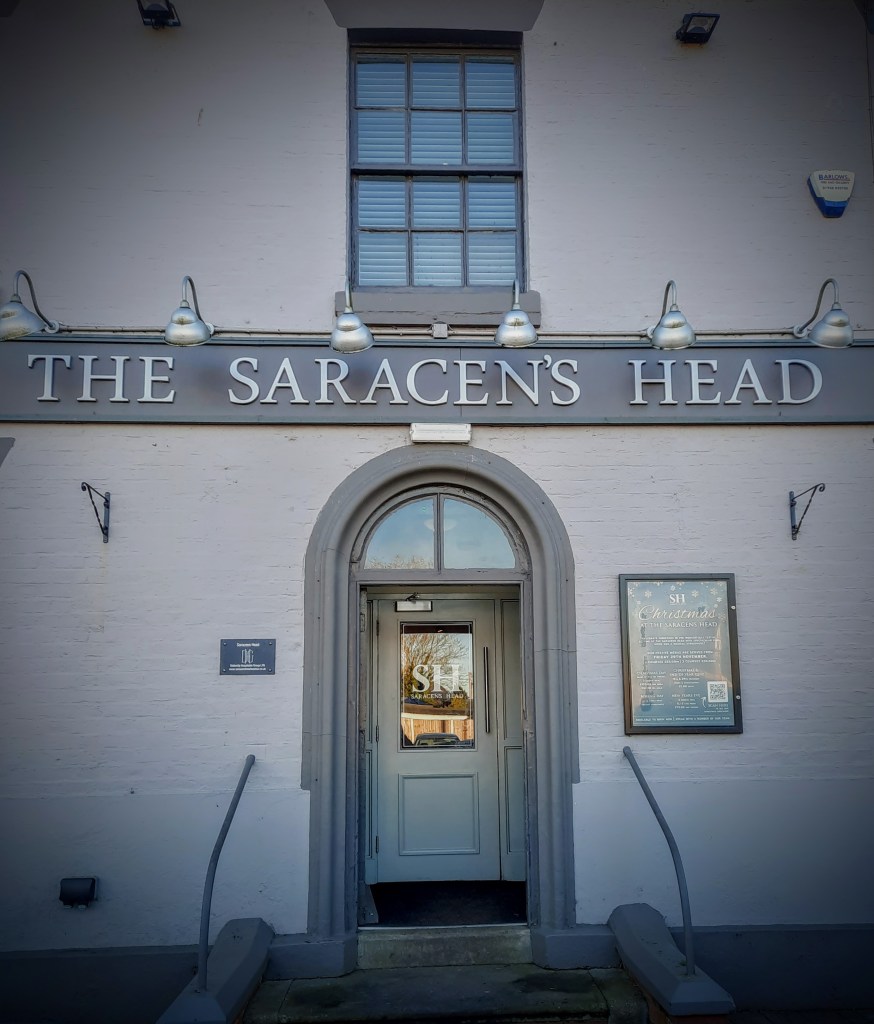
The story as it stands is strange enough but reader, there is a twist in this tale of a dead man walking. An article in the Staffordshire Advertiser in 1901 claims that Preston Moore was not the first of his family to ‘come again’ after his death. There was a legend in the local area that his father’s shade had roamed up and down the road between Stowe and Weston, until locals decided it had had enough exercise and it was time to exorcise this restless spirit. It was laid in a bottle and bricked up in the cellar of the Saracen’s Head Inn to remain there, ‘whilst holly and ivy are green’. It seems that during his life Mr Moore senior may have been the landlord at the inn making the real horror here the idea of being trapped in your workplace for eternity.
She wouldn’t let it lie!
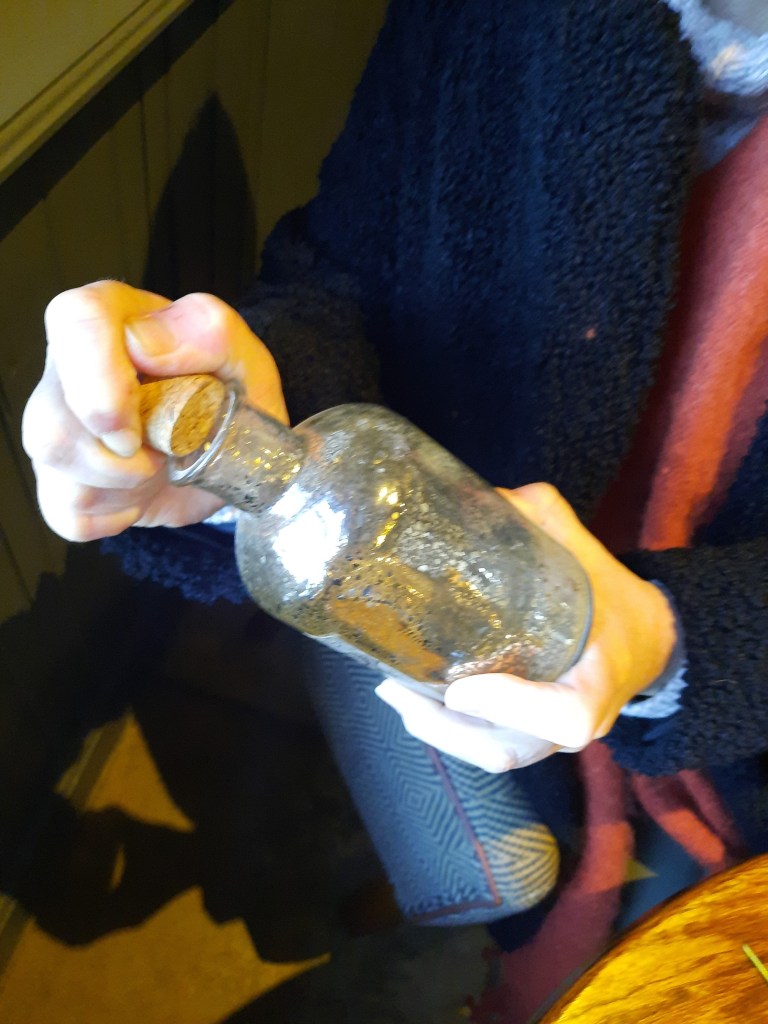
Obviously my good friend Jacky and I went to investigate, by which I mean we popped into the pub for a coffee and pretended we’d found the bottle containing the spirit of Mr Moore on a shelf nearby where we sitting. I am convinced there’s more to be found out about the mysterious Moore family which may explain why the family seem to have been at the centre of village superstition. In the meantime, if you work at the pub, would you pop into the cellar and see if you can find where the old landlord lies? We should have asked but we didn’t have the bottle…
Sources
Staffordshire Folk and the Lore, Charlotte Sophia Burne
Phantasms of the Living, Edmund Gurney, FWH Myers and Frank Podmore
There are many reasons one might visit a pub. To sample the fare, to enjoy an ale, to meet with companions. I went to the Dog and Doublet because it’s named after a murder. Or a dog wearing a jacket. Either way, I headed to the village of Sandon in Staffordshire, in my mystery machine (which looks a lot like a Toyota Avensis) to do a bit of investigating.
The first possible explanation for the pub’s name is that a former landlord was murdered by robbers and his faithful hound found the corpse. In what sounds like a gothic horror version of Lassie, he took his master’s blood-stained doublet back to the inn and then led a search party back to the body. The second less gory story says that a travelling fair came to Sandon and its star act was a performing pooch in a little jacket. The villagers thought he was such a good boy they decided to name their pub after him. A dog in a doublet was clearly a novelty back then. Nowadays I see some canines out walking in Leomansley Woods who have better wardrobes than I do.
The current building dates to 1906, and is described as having been erected by the Earl of Harrowby on a site adjoining that of the original. The tithe map seems to show that there was an inn there back in 1838, but it was known as the Packhorse. It’s all a bit confusing, even before you’ve had a drink, but I think I understand what happened with these hostelries. There was definitely a Dog and Doublet in the village dating back to at least the mid-18th century as I’ve found a reference for it in Aris’s Birmingham Gazettee. It seems to have stood on the other side of the road, at a place now known as Sandon Lodge and/or Erdeswicke House. When Sandon Hall burned down in the summer of 1848, the Earl of Harrowby made it his temporary family home, and had the pub sign moved to the Packhorse which presumably was also renamed at this point. He didn’t relocate the resident ghost though, as a man described as wearing brown clothes and a small wig and believed to be a former landlord, was still reported to be haunting his old hostelry in the 1950s.
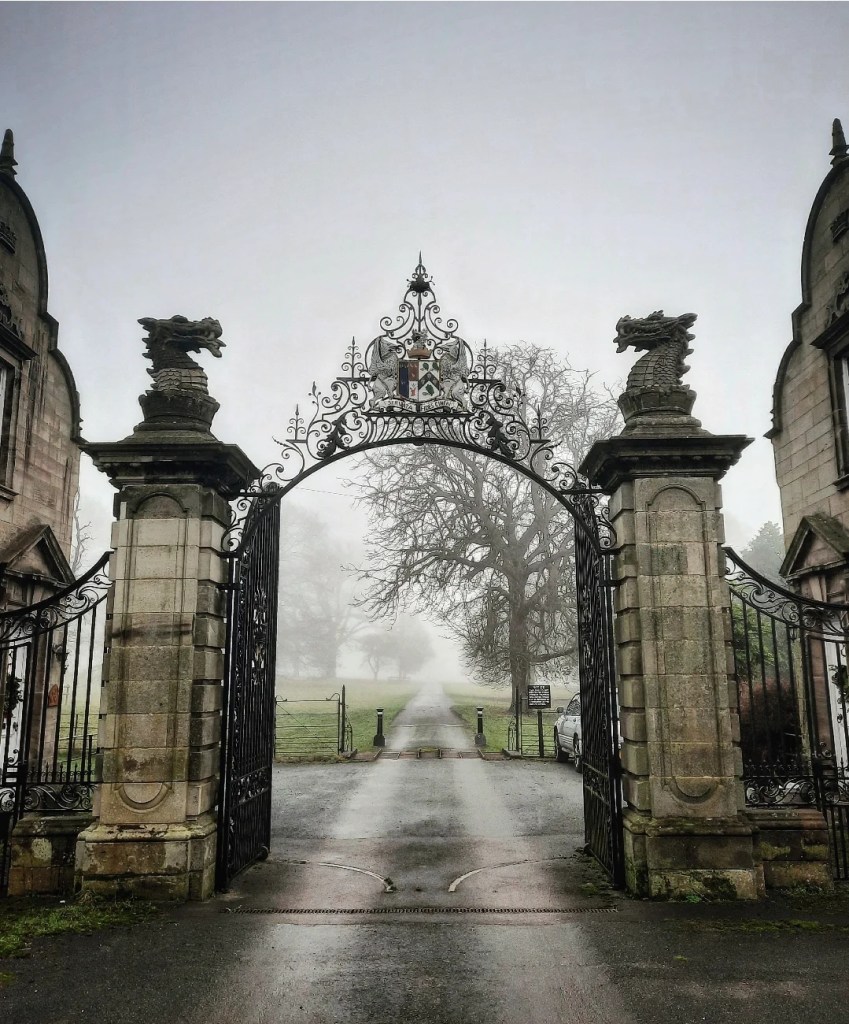
The gates to Sandon Hall
This information comes from Sam Berrisford, a former chairman of the Parish Council, who lived in part of Sandon Lodge. He also mentions an overgrown circular bowling green in the grounds of the old inn, which he suggested was Elizabethan. According to the listed building description, the oldest parts are 17th century and so certainly old enough that tales of parliamentarian troops draining quart pots and plunging their heads into vats of beer in the inn’s cellar prior to the Battle of Hopton Heath could be true. If so, it’s no wonder the Royalists defeated them eh? (put down your swords Roundheads, I’m just jesting. I know the outcome of the only Civil War battle to take place on Staffordshire soil isn’t that straightforward).
During its 18th century coaching inn days the hospitality of the hostelry was renowned and, in the absence of Trip Advisor, a satisfied customer is said to have scratched this verse onto one of the smoke-room windows of the old pub.
‘Most travellers to whom these roads are known Would rather stay at Sandon than Stone Good chaises, horses, treatment and good wines, They always meet with at James Ballantine’s’.
Not everyone met with such a cordial welcome from Mr Ballantine however. There’s a story his daughter eloped with a young man and that when the boy broke into the inn to collect some of her belongings, Ballatine was there waiting for him. He handed his estranged son-in-law over to the law and the lad was hanged for theft. It’s said that on the night of the execution, a crowd of villagers surrounded the inn, chanting the 69th psalm and cursing James Ballantine. Possibly related to this family drama is a second verse that the Staffordshire Advertiser says was scratched into another of the inn’s windows which read, ‘Let the man that hates peace, and endeavours to trouble it, Be hung up by the neck, like this dog in the doublet’.
Whitehall, Beacon St. Once the Coach & Horses inn
Whether the story of Sandon’s star cross’d lovers is true I don’t yet know but I have found out that James Ballantine and his wife Catherine had six daughters in total. One of them was called Ann and in November 1779 she married Alderman John Fern, an eminent Wine and Brandy Merchant from Lichfield. So far, so respectable but then you learn the groom was sixty-two years old and Ann only twenty-one. I believe they’d have lived at Whitehall on Beacon Street in, another former inn with an intriguing past. Fern died in Lichfield on 16th February 1801 and his short obituary in the Whitehall Evening Post, refers to him as the ‘Father of the Corporation of that city’. Although surely he was old enough to be its Grandad…
Back to the Dog though and by December 1802, the landlord there was Mr Tomlinson who was paid a visit by a swindler, who may have been enticed by the Trip Advisor review for good horses in the window. He had, ‘very much the appearance of a gentleman aged about forty years, five feet eight or nine, dark curled hair, smooth face, smiling countenance and had on a dark mixture cloth coat, with one of his boots patched across the toe’. He arrived in a post-chaise from Cheadle and claimed to have left his horse at Leek due to the bad weather, asking for a horse for the following morning to take him to the banking house of Messrs Stevenson and Co. Inevitably, that was the last Mr Tomlinson saw of his horse and when enquiries were made at the bank in Stafford, it probably didn’t come as a shock that no such person had been there. A five guinea reward was offered by Tomlinson, along with ten pounds from ye olde neighbourhood watch scheme, the Sandon Association for Prosecuting Felons.
To the church. Let’s not split up eh gang?
And so it turns out there there are far more than two tales at the Dog and Doublet even if some of them are just shaggy dog stories. I’m not quite ready to fire up the Toyota Avensis and leave Sandon just yet though. There’s a mystery up at the church that needs solving…
Sources:
Birmingham Weekly Post 20th October 1950
Stone – The History of a Market Town, Norman A Cope
Afternoon tea at Weston Hall is my annual festive treat and though we didn’t spot any ghosts of governments past in the form of the MP from Stone eating scones again this year, plenty of other spectres are still present here.
Scones and spooks is my idea of heaven
The Jacobean hall is said to be so haunted that when it was used by the ATS in World War Two, there’s a story that the women stationed there opted to sleep outside in tents rather than risk meeting the legendary Grey Lady. It seems a less effective strategy when you learn that the wraiths of Weston Hall are not confined within its walls. A Green Lady walks up the stones steps to the entrance, a White Lady rushes across the nearby road and disappears into a hedge during a full moon and the sounds of a ghostly carriage and horses can be heard pulling up outside on the gravel, despite the driveway having been long paved over.
Stairway to heaven
Given there are so many ghosts, the house must surely have had a colourful history but details of its original owners are a little sketchy. In Henry Edward Chetwyn-Stapylton’s book on the Chetwynds of Ingestre, he suggests Weston was built by Lady Dorothy Devereux, youngest daughter of the former favourite of Elizabeth I, and William Stafford of Batherwyke, her second husband. He notes that Robert Plot says she was living there at the time he wrote his History of Staffordshire in 1686 but as she died in 1636 he must have been mistaken. Unless she’s the Grey Lady and it’s her ghost he saw…
Seems a bit scary on the outside but lovely on the inside. Just like me 😉
A later owner, Francis Lycett died there on the evening of 6th May 1792 from a fractured skull, a few days after falling down the stairs at The Falcon Inn at Stone. One of his spurs had caught on his great coat. I have read elsewhere on the internet that Francis is an ancestor of fellow Brummie (but not fellow comedian) Joe Lycett but haven’t yet been able to substantiate this.
By 1818, the hall was described as a farmhouse in a rather neglected state in the Staffordshire General and Commercial Directory. In the early twentieth century, the property was used as a pauper asylum by Staffordshire County Council to relieve overcrowding at Stafford. There were 45 female patients in August 1908 but again information is scarce. Afterwards it was allegedly sold to pay gambling debts and converted into flats. An application to convert the property to a nursing home in 1991 was abandoned and the hall stood derelict until Paul Reynolds rescued and restored the building a few years later.
The Falcon at Stone, where Francis Lycett had a fateful trip
For me it’s not so much generic stories of women in white (or grey, or green) that float my ghost ship, but something with more substance. An event in the past which may help to explains why there may be a perception of paranormal activity. When the hall was reopened as a hotel in the 1990s, staff reported tables being cleared, glasses being collected and ashtrays being emptied by an unknown entity. I can’t help but wonder if there’s a link here to the tragic events of March 1945 when a twenty five year old mess orderly in the canteen was accidentally killed when she was shot through the chest by an eighteen year old private in charge of a detachment of German POWs working at Weston Hall.
I’ll be haunting somewhere around here
Whoever it is that haunts Weston Hall, there are far worse places to spend your afterlife. In fact I love it so much that in years to come there may be reports of another female phantom who turns up at Christmas and sits by the fire stuffing herself with scones.
Sources
Paranormal Staffordhire, Anthony Poulton-Smith
Staffordshire Newsletter 4th October 1996
Stafford Post 21st March 1996
Staffordshire Sentinel 23rd July 1985
Staffordshire Newsletter 19th November 1976
Staffordshire Sentinel 6th July 1945
The Gentlemans Magazine and Historical Chronicle 1792
Many people are familiar with the story of John Neve, William Weightman and James Jackson, the last men to be hanged in Lichfield on 1 June 1810, for the crime of forgery. Their shared headstone can be seen tucked away under the tower at St Michael’s, although they are buried elsewhere in the churchyard in a now unmarked a communal grave. One particularly poignant postscript to these events is that after his execution, the friends of John Neve commissioned three mourning rings to be made, each with an inscription to his memory and containing a lock of his hair. I wonder whether it was these same friends who erected a headstone as to my knowledge there are no memorials to any of the other executed criminals buried here?
Amongst them is another tragic trio, Thomas Nailor, Ralph Greenfield and William Chetland who met the same end for the same crime at the same place on 13th April 1801. Prior to their execution, two of the men had attempted to escape from Lichfield gaol by filing through their irons and putting them back together with shoe maker’s wax. Their cunning plan had been to knock down the gaoler when he came to lock them up for the night and they would have gotten away with it had it not been for pesky Joseph Vaughton, a private in the 38th regiment of foot, to whom Nailor had given a pattern of the wrench he wanted making and a Bailiff called Mr Scott who discovered the file they had been using. Headstone they may not have but incredibly a tangible link to this execution does apparently exist. In 1947, the Town Clerk of Lichfield received a letter from a Mr Clayton W McCall of Canada to say a morbid memento had turned up in an antique shop in Vancouver in the form of a silver salver, ‘Presented by the Corporation of the City of Lichfield to Revd. Bapt. Jno. Proby, Vicar of St Mary’s, for his pious attention to three unhappy convicts who were executed in that City April 13th 1801’. However, as with the rings, its current location is unknown.
One very unhappy convict sentenced to be hanged at the gallows on 6th September 1782 was 62 year old William Davis who had been convicted of horse theft. The Derby Mercury, reported that in his final moments, David’s behaviour was bold, paying little attention to anything that was said to him. Then, just as the executioner was about to send him eternity, Davis threw himself from the cart with such force, that the rope snapped. After much confusion and delay, the rope was replaced and Davis’s last earthly words are recorded as having been, ‘This is murder indeed!’.
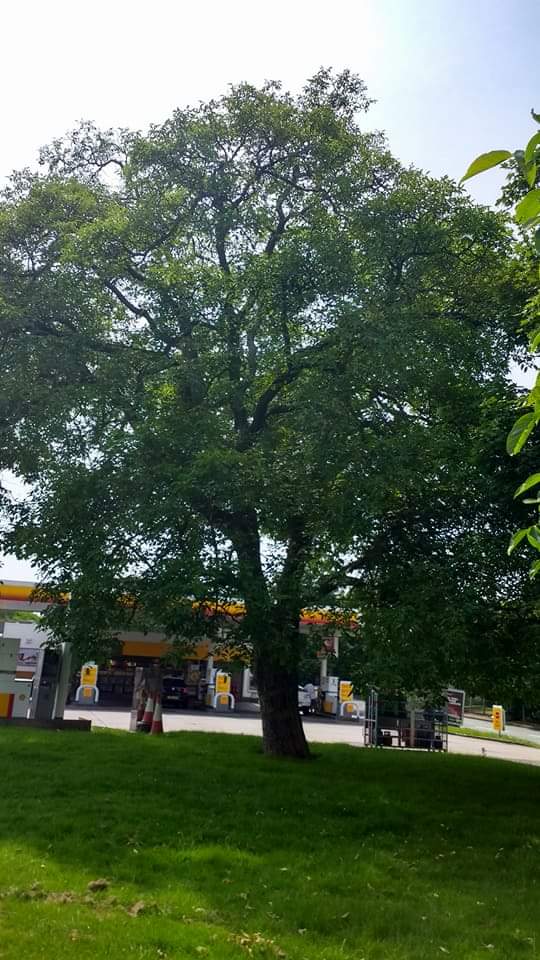
In 1935, the site of the old gallows was described as being ‘preserved and indicated to passers-by with an inscription recording its ghastly use in bygone days’. The area has developed significantly since then, but I was told by Janice Greaves, former Mayor and current Sheriff of Lichfield, that the exact spot where the gallows stood is now marked by a walnut tree growing on the patch of grass alongside the garage. There has been some discussion about what form the gallows actually took, but there is evidence to suggest that there was a permanent structure to which the cart carrying the condemned convicts would be brought. In Aris’s Birmingham Gazette it describes how ‘On Friday Night last, Richard Dyott Esq, who lives near Lichfield was going home from thence, he was stopp’d near the Gallows by two Footpads, who robb’d him of five Guineas, and in the Scuffle he lost his hat’.
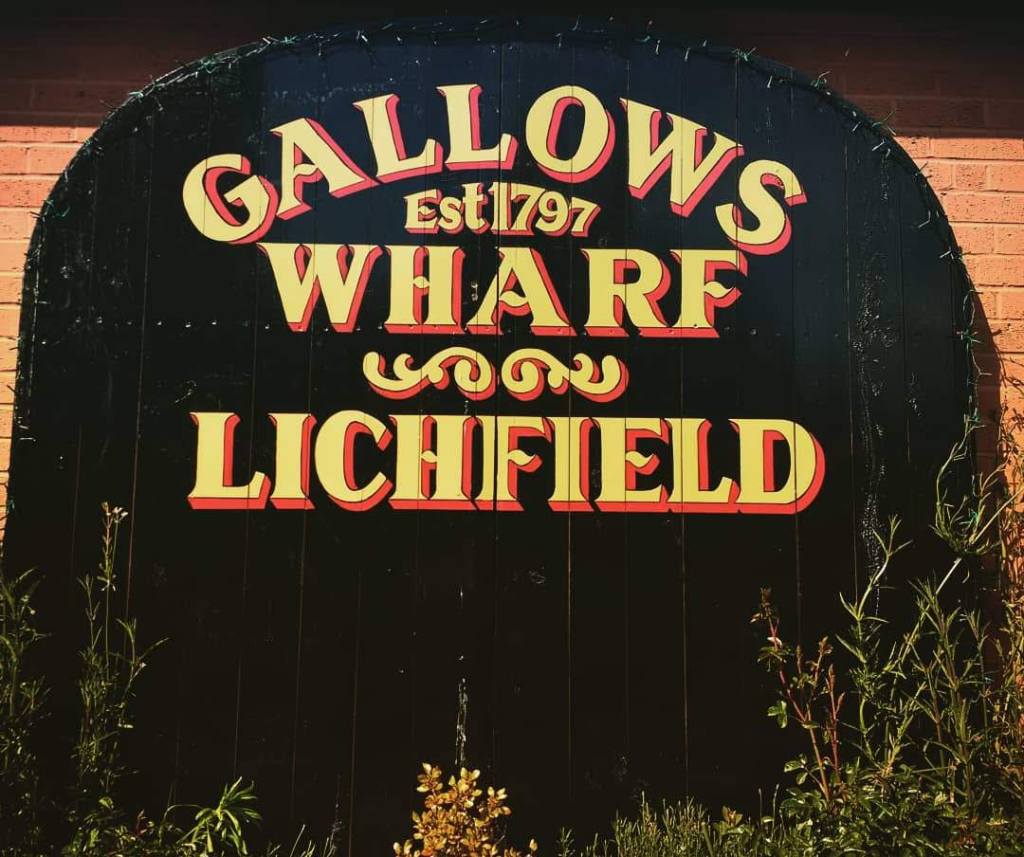
My plea to you this Halloween is to keep your eyes on Ebay for Neve’s mourning rings and the silver salver. If however you decide to take a wander over to Gallows Wharf in search of Richard Dyott’s hat, please be warned that an ex-executioner from centuries past appears to have been sentenced to linger at the spot and you may well feel a push from behind as he attempts to dispatch you to your doom.
I recently visited the Staffordshire village of Colwich. It’s a lovely place but as is my wont, the outcome of the outing is a tale of murder and mystery.
We start our story in May 1977, when a member of the congregation of St Michael’s and All Angels took a walk through the churchyard and almost disappeared into an unmarked vault. The vicar at the time was the daring David Woodhouse who decided to descend into the dark depths to discover what, or who, was down there. Inside the vault, he found two skeletons and whilst there is nothing unusual about bones beneath a graveyard per se, there was something not quite rite about these burials. Skeleton One lay in a coffin and Rev Woodhouse mentions two odd things about it. Firstly, a small hole in the skull and secondly, the finger bones were disarticulated suggesting that this may have been a victim of both murder and grave robbery. The strangeness doesn’t stop there though as the remains of Skeleton Two are described as surrounding the coffin containing the first. One of the keywords for me here is ‘remains’, suggesting to me that this corpse may not have been complete when it was interred here.
The vicar’s theory was the vault was built for a wealthy family who fell on hard times and were then unable to afford a memorial to the two individuals resting in peace (or more aptly in one case, pieces) within it. Everyone seemed satisfied with this explanation, the hole was bricked up and, as far as I am aware, no-one has ever thought anymore about it until I read about the mysterious vault and started doing a bit of digging that is…
Back now to 18th July 1773 and a woodland just outside of Stone, Staffordshire where John Challenor and his son, also John, are working together. The two men have just eaten lunch when an argument flares up and John Jnr throws the iron cooking pot at John Snr’s head. It’s thrown with such force that once of the metal legs pierces the older man’s skull. He dies three days later and his son is sent to gaol for parricide. On 23rd August 1773 John Challenor Jnr is executed and his body taken down and hanged in chains at a spot near to the scene of his crime.
I don’t think you need to be DCI Barnaby to work out the links between this high-summer murder and the skeletons below ground at Colwich. The hole in the skull of Skeleton One clearly corresponds with the fatal injury sustained by John Challenor Snr. What’s more, the lack of a coffin together with the seemingly jumbled and incomplete nature of Skeleton Two is in keeping with a body that’s been gibbeted and later cut down and hastily buried, although not seemingly not quickly enough to prevent time, the weather or macabre souvenir hunters from starting to take their their toll. Perhaps it was the Challenors, who not only had a very literal reminder of the skeletons in their family closet displayed for all to see at a spot near Stone, but who may also have been concerned that without a Christian burial of sorts, their relative would not be resurrected to heaven but condemned to eternal damnation. Was it enough to save John Challenor’s soul though?
Thanks to information provided by Fulford Parish Council I believe I have located the place where his body was hung in chains. On their website they say ‘On the left of Hilderstone Road when travelling towards the ‘Wheatsheaf’, and just a short distance from Spot Acre cross roads, is a stand of Beech trees known locally as ‘The Rookery’. According to local lore the gibbets used to stand here, hence the overgrown lane which runs down past Idlerocks to Moddershall being called Gibbets Lane’.
Now, as regular readers of the blog will know, I love ghost stories but if you Scooby Don’t, then stop reading now as the next part of this story requires a little belief in such matters. You see, Stone lore also tells of a boggart which haunts these parts. And what on earth is a boggart I hear the non-northerners amongst you ask? Well, you know us Lichfield people love a dictionary and so I’ve looked it up in the OED and found the following definition: “A spectre, goblin, or bogy; in dialectal use, esp. a local goblin or sprite supposed to ‘haunt’ a particular gloomy spot, or scene of violence”.
Could the the boggart be the unquiet spirit of John Challenor? I mean it doesn’t get much more gloomy than having your corpse displayed on a gibbet does it? If the naysayers are still with us at this point I’m sure they’re saying, well, nay way but I’m tempted to head over there to see if I can find any more answers. In 1933, a Mr P C Dutton of Stone told members of the North Staffordshire Field Club that the boggart took the form of a dog or a calf and so this may involve me quizzing the local cows and canines to see if they’re the spectral incarnation of an 18th century murderer. More Doctor Doolally than Doolittle I know.
On a slightly more serious note, I am increasingly keen to not only share the stories which give us a sense of place but to bring something along to the party as well. I hope my version of events has given people some food for thought but as we know from the iconic Marmite, when it comes to a Staffordshire legend there is always a risk that some people might hate it 🙂
Something happens to me once the clock strikes 12 on 25th December. Maybe it’s a response to the sugar rush that comes from stealing the kids’ selection boxes, but my thoughts turn away from those Christmas lights to the darker side of local history.
Ooops
I always take my ghost stories and legends with a decent pinch of salt and if they’re served with a measure of good humour too, so much the better. As such, I was delighted to discover a story in the Lichfield Mercury from Friday 2nd September 1932, called ‘The Haunted Secret Passage of Lilleshall’.
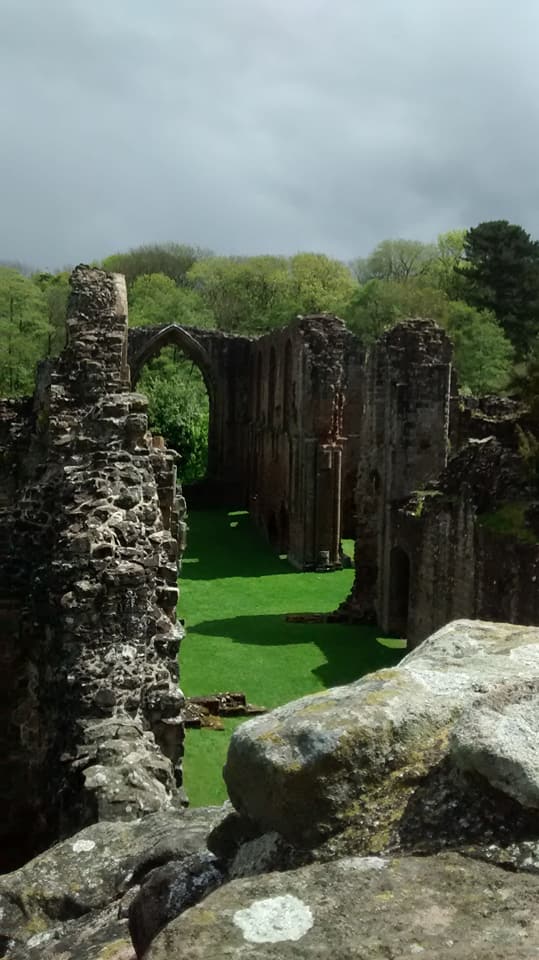
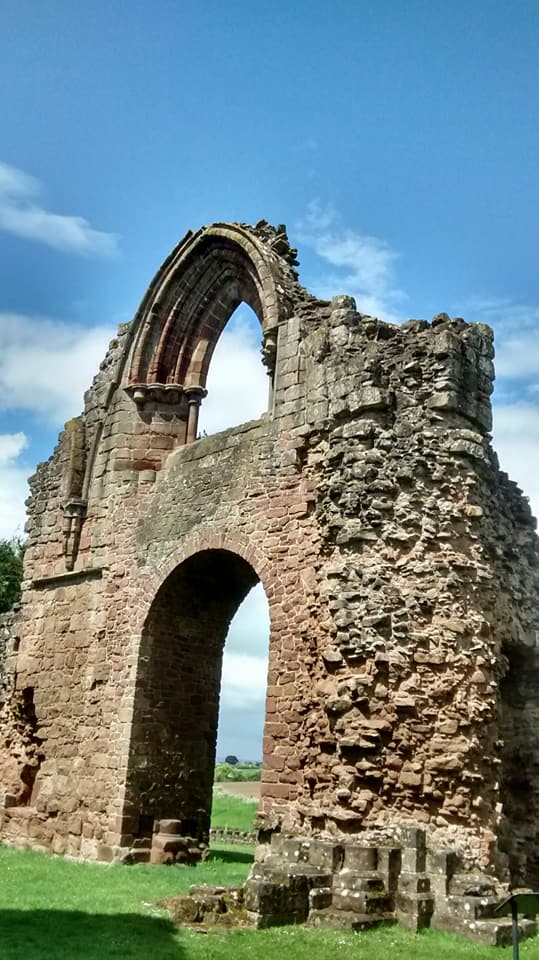
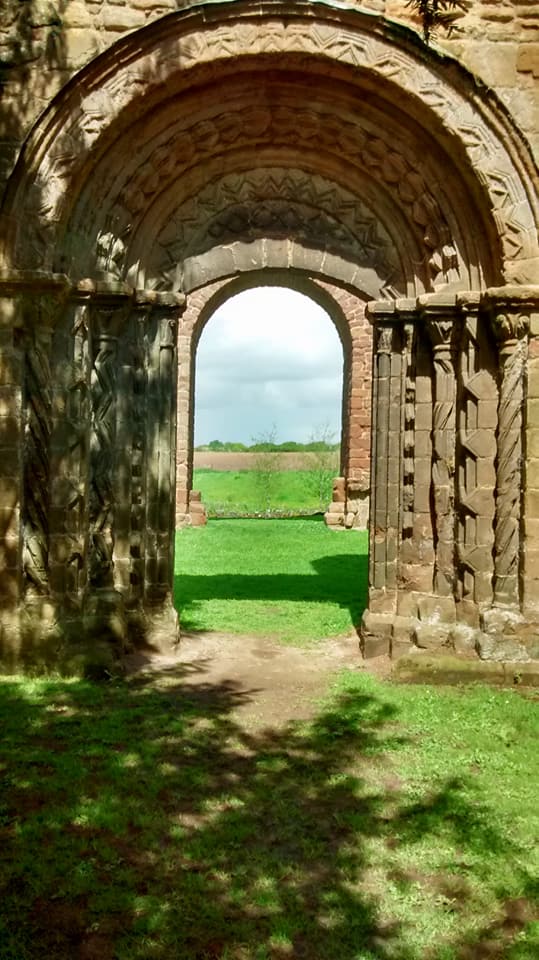
In what sounds like my ideal night out, a group of archaeologists and diviners congregated in a candle lit vault next to the so-called dungeon at Lilleshall Abbey. As they waited to hear if diggers had located an underground tunnel, ‘the sounds of the shovels and picks ‘awoke eerie echoes in the leper’s cell above’. The reason for the gathering, according to the BBC’s Domesday Reloaded site, was that in 1928 a caretaker and his family had moved into a cottage on the site and heard ghostly moaning from beneath the Abbey. At first, they attributed the sounds to the men working at Lilleshall Colliery. However, when it was discovered that the mine didn’t extend as far as the Abbey, and the son reported seeing a shadowy figure and the sounds of the pages of a book being turned, they began to suspect a more unearthly cause. A £50 prize was promised by the estate agent to anyone who could locate the subterranean passage the noises were believed to be coming from and people began turning up to try and solve the mystery in a variety of idiosyncratic ways. These included a man with a hazel twig he manipulated between his fingers, a white bearded professor, who refused to communicate with anyone and ‘went around the ruins with a little toffee hammer, sounding the ground at various places’ and an old tutor of the Duke of Sutherland, whose family owned the Abbey until 1917, who was relying on his memory to tell him where the entrance to the tunnel was.
The ruins of Lilleshall Abbey
A psychic dental surgeon from Birmingham agreed to spend a night in the dungeon. Surely if anyone was going to find an old cavity, it would be him? However, as dawn broke the following morning, he was nowhere to be found, having fled in terror. Two young men who spent the night in one of the old Abbey cells reported ghostly footsteps and ‘a monk with a high-pitched voice saying prayers in a foreign language’. Although to be honest, that could just have been the frit Brummie dentist running away.
Lilleshall Abbey
The shenanigans also involved a Mr Noel Buxton, a member of the Cambridge Antiquarian Society, who declared he was prepared to stay on-site until the tunnel was found. I didn’t see him when I visited with friends last summer, so perhaps that means it was… The reports at the time are ambiguous – in the Birmingham Gazette on Friday 26th August 1932 it was reported that in a vault next to a dungeon, a diviner received a violent shock which led to the discovery of an underground passage. However, the estate agent said it had not yet been decided whether or not it was the tunnel they were looking for.
Diviner: OMG I did it! I found an underground tunnel!
Estate Agent: Yes…but is it the right underground tunnel?
Diviner: Yes. It is a tunnel and it is underground. Now give me my £50.
Estate Agent: Yes but if it was the right tunnel it would have ghostly monks in and as you can see, this one is phantom friar free. Sorry old chap, better luck next time. Um, please put the stick down…
So, whilst the competition and the talk of haunted dungeons were a clever bit of marketing to attract tourism, it’s fair to say that the notion of a underground tunnel at Lilleshall was not entirely without foundation. As well as the diviner’s discovery, in June 1886, in Eddowes’s Journal, and General Advertiser for Shropshire, and the Principality of Wales, a correspondent writes that his mother, then aged 75, visited the Abbey as a girl and remembered stories of an underground passage said to run from the Abbey to Longford Church, or Longford Hall, and that once a heavy cart passing over Longford Fields broke into it, but ‘it was not explored on account of the air in it being so foul’. Was this the same tunnel that tuned up in the 1930s?
Lilleshall Abbey
I am genuinely fascinated by the idea of secret tunnels and subterranean passages because everyone else is so fascinated by them! As we’ve discussed before on the blog, Lichfield is apparently riddled with them (as is pretty much every city, town and village in the country) if the stories are to be believed. And that’s the £50 question – are they?
Notes
Fascinating article here from November 2017 about how ten out of twelve water companies in the UK use water dowsing to find leaks and pipes https://www.theguardian.com/business/2017/nov/21/uk-water-firms-admit-using-divining-rods-to-find-leaks-and-pipes
I am available for secret tunnel hunting – you do not have to pay me £50 and I can supply my own toffee hammer too.
My husband grew up in the Highgate area of Walsall, where the malty aroma from the local brewery used to hang in the air and the local kids would tell stories about the mysterious ruined windmill. Thought to have been built in the late 1600s to grind corn, Highgate windmill has a fascinating history which you can read more about here in this article by Walsall historian and writer Stuart Williams. If you want to go and have a look yourself, go sooner rather than later. Once spring gets properly underway, it’ll be hard to see the mill for the trees.
Highgate Windmill, Walsall
Last Summer I could barely see the windmill but did spot this painted board through the trees.
Sadly, there’s not even a whiff of brewing in the air at the moment – the Grade II Listed Highgate Brewery hasn’t been operational since 2010 and stands unused behind the locked centenary gates (purchased and installed by the Friends of Highgate Brewery in 1998), its future uncertain at present.
Highgate Brewery
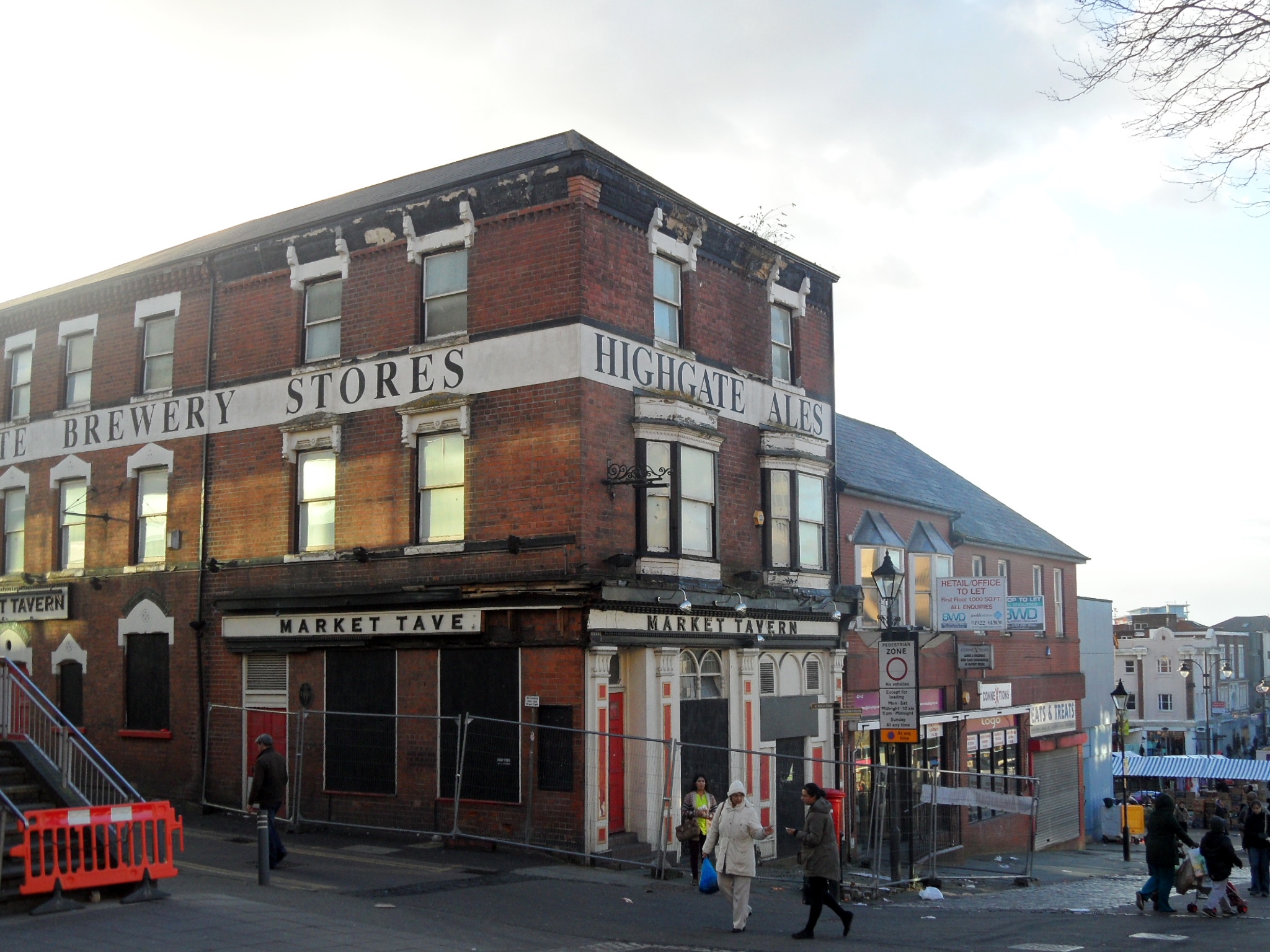
Yesterday, as well as visiting the family, we went to have a look around the Art Gallery and the town. On the way back we passed the pub that we once knew and loved as the Brewery Stores & Vaults. Back in the late 1990s, it was one of the liveliest places in town but now, like the brewery whose name it bears, it stands empty, expect perhaps for the hooded figures and disembodied heads said to lurk in the cellars…
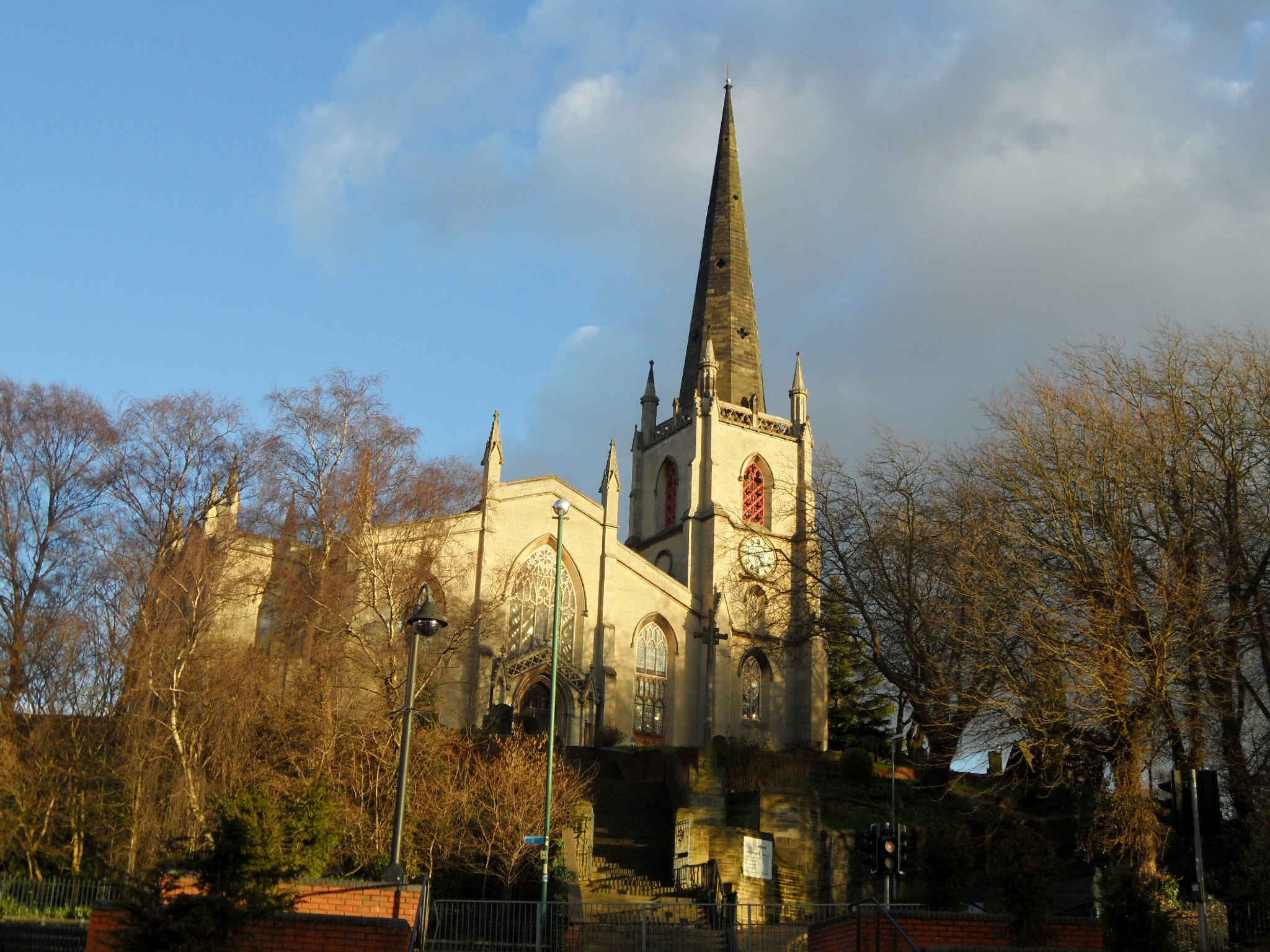
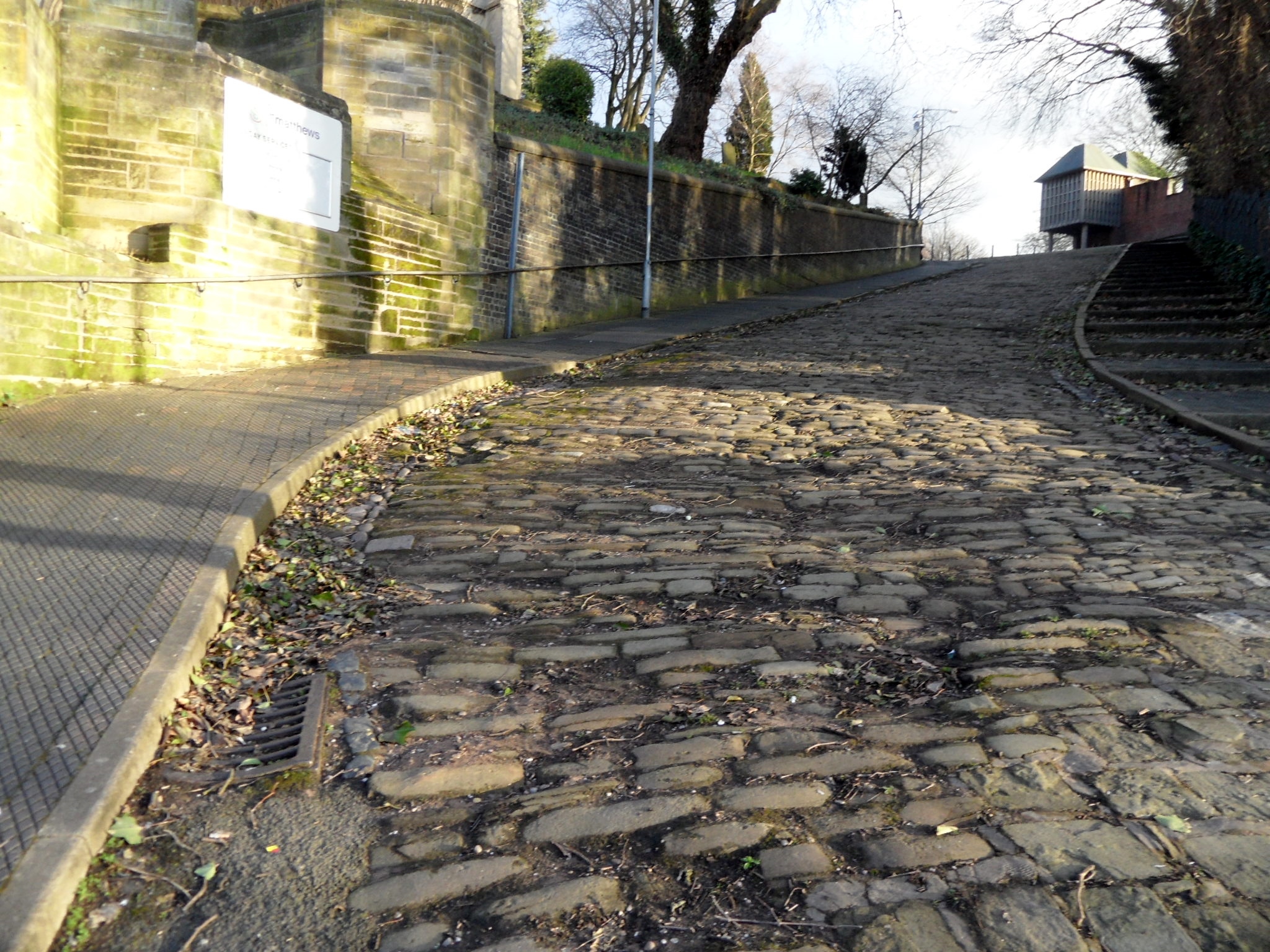
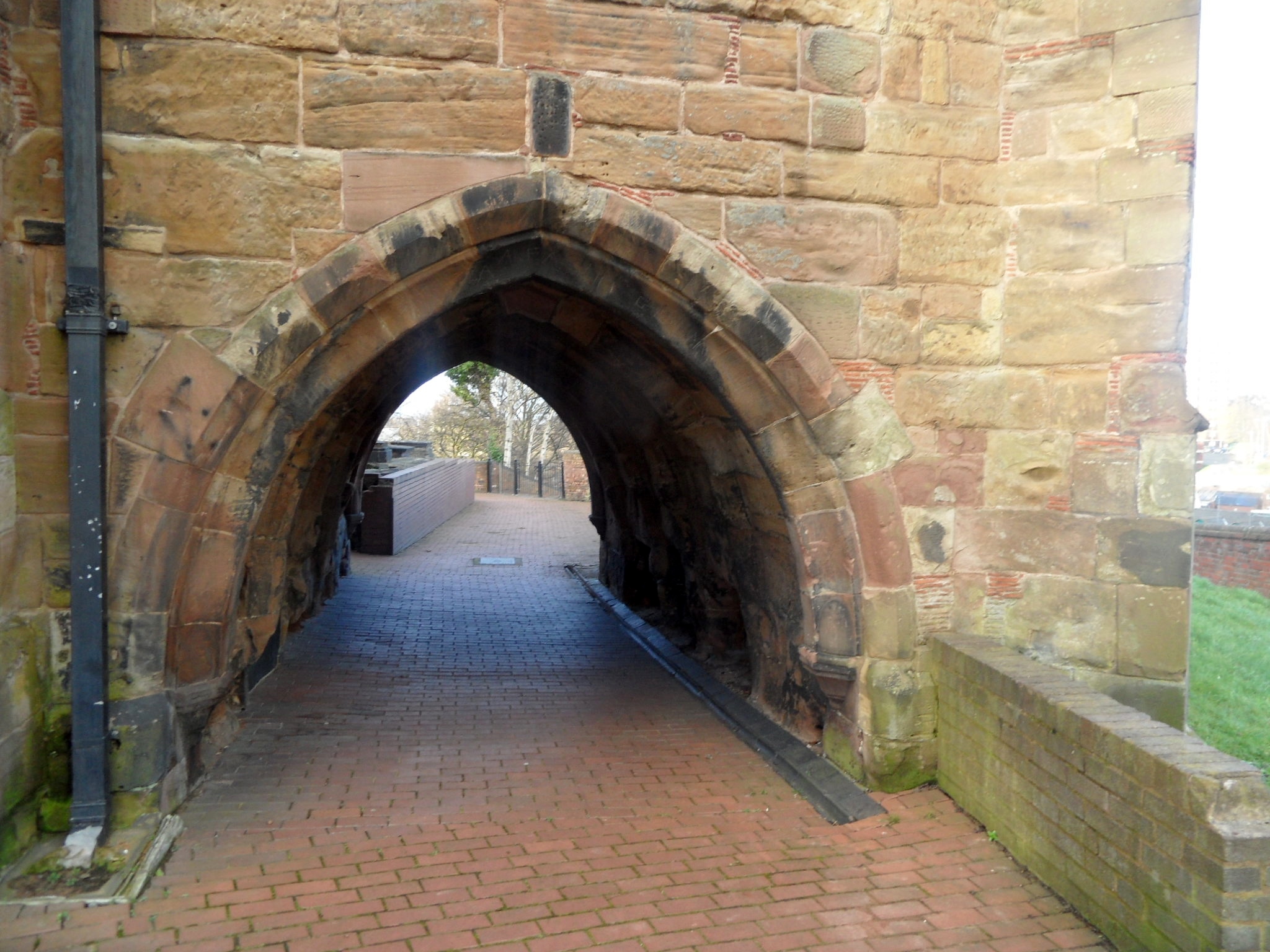
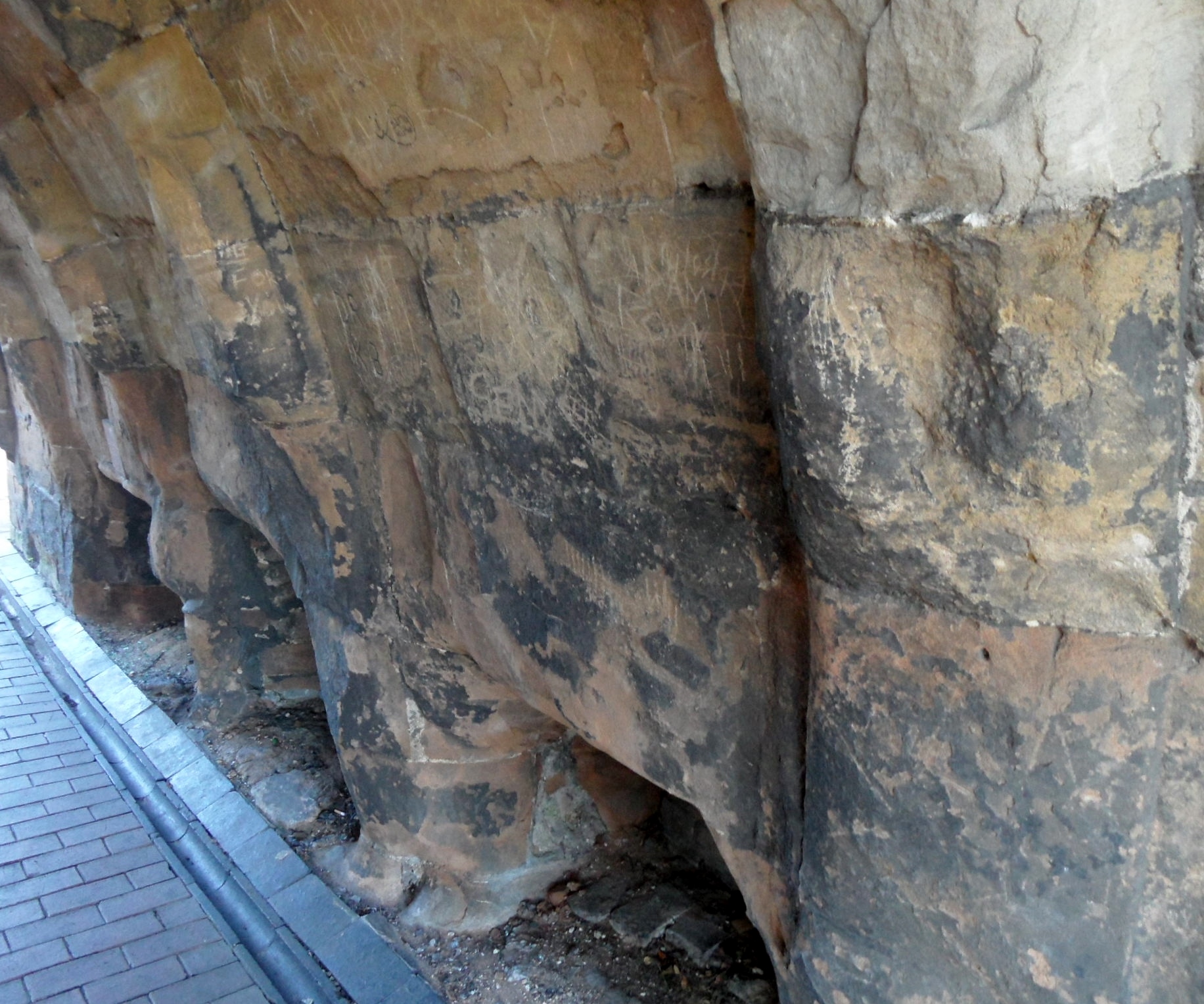
We continued our way back over the limestone hill where the church of St Matthew’s has dominated the Walsall skyline since at least the thirteenth century (although it has only been know by that name since the eighteenth century – it was previously ‘All Saints’). The first time we walked up this hill together, Mr Gomez told me that it was paved with medieval cobbles. I’m not sure if that is true but it’s something that has fascinated me ever since, as has the arched passage on the east end of the church, covered in graffiti and with curious niches on the east side.
As well as this overground passageway, there are supposedly underground tunnels running from here to the White Hart Inn at Caldmore, Barr Beacon and Rushall Hall. In a history section of the Walsall Council website, there’s a quote from a Mr G of Bath St who in the 1950s said one of the entrances to the tunnels was located at the bottom of some steps of a toilet which once stood on Caldmore Green. He also added that he had been told by some old women that during the reformation, some priests went down the tunnels to escape and were killed after they were filled in.
St Matthew’s church, Walsall
St Matthew’s Walsall as seen from the Art Gallery.
Medieval cobbles leading up the hill?
Passageway under the chancel of St Matthew’s
Niche interest
One of my favourite stories about St Matthew’s and Walsall is one I read recently in a book of Staffordshire folktales. Apparently, the church was originally supposed to have been built on a meadow at the ‘Churchery’, now known as the Chuckery. However, this was where the fairy folk danced and so, naturally, they objected to the plans and took matters into their own tiny hands, moving the foundations of the new church up the hill to the site where it stands today. In another version of the story, the church was moved by witches who had transformed themselves into white pigs.
We walked up a good appetite in Walsall and so we finished our day at the legendary Hargun’s Sweet Centre on the Caldmore Rd, intending to take some goodies back to Lichfield, although they never actually made it past Walsall Wood in the end. Anyway, what I learned today is not only that you can eat a lot of baklava in a twenty minute car journey, but also that once in a while, it’s good fun to explore what’s on someone else’s doorstep.
Sources
Walsall: Economic history’, A History of the County of Stafford: Volume 17: Offlow hundred (part) (1976), pp. 180-208.
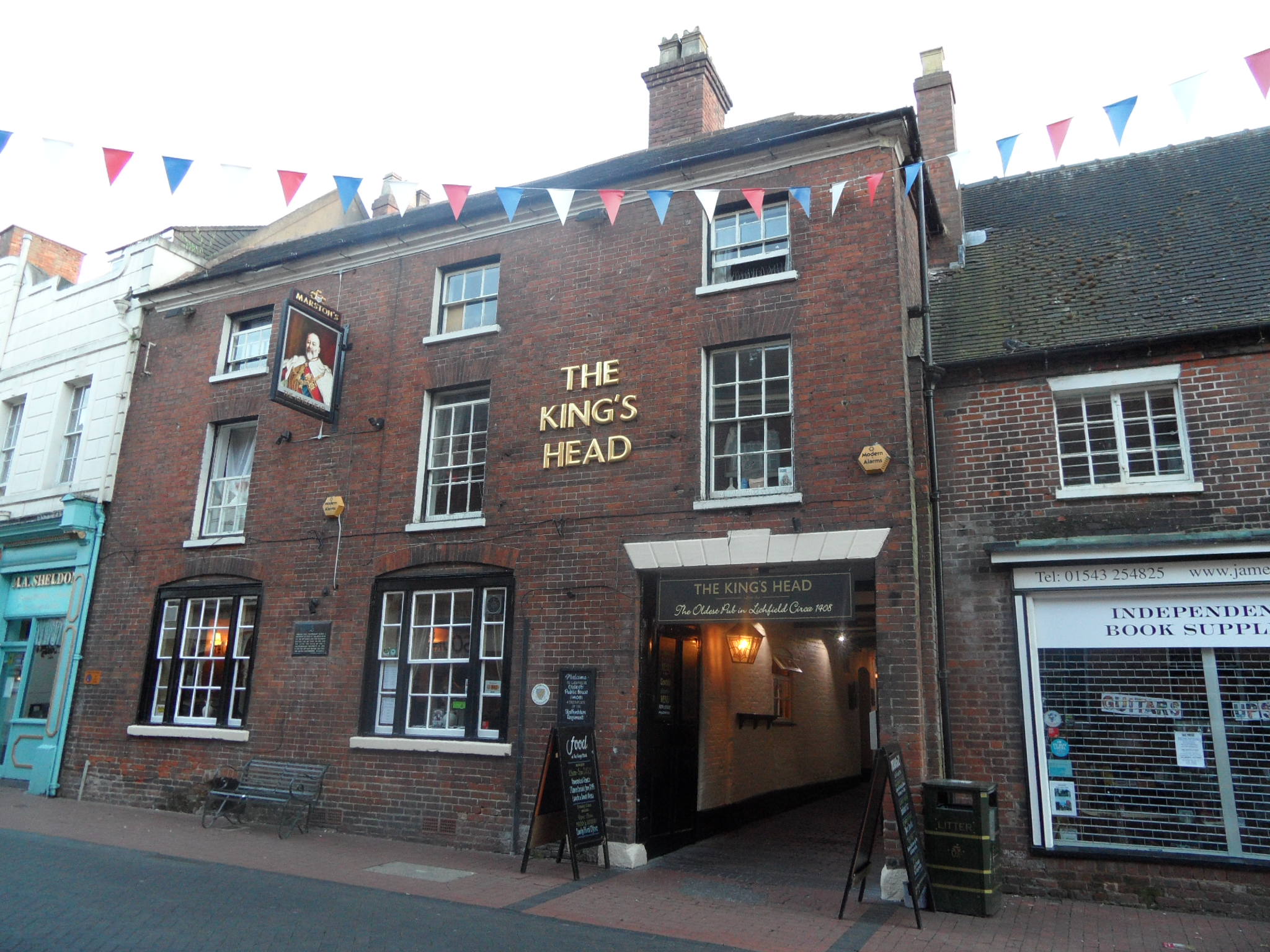
The King’s Head is one of the oldest pubs in Lichfield (1) and somewhere I’ve spent many a happy evening.(2) The sign across the entrance and John Shaw’s legendary ‘The Old Pubs of Lichfield’ date it to 1408, when it was known as ‘The Antelope’. By 1650, it had been renamed as The King’s Head. I’ve been reading the old papers again, and it seems that in the 1930s, we nearly lost this fine old drinking establishment to fire…twice!
Which window did Mrs Shellcross climb out of I wonder?
On the night of June 27th 1932, landlady Mrs Shellcross went to bed in the King’s Head for the last time, leaving a small fire burning in the dining room grate. The following day new tenants were arriving, and she would be leaving the King’s Head. Yet as she climbed the wooden staircase to her room, she would never have imagined that she would not be leaving the pub via the door but through a first floor window!
In the early hours of the morning, one of the hotel’s residents, Mr Corbett, was awoken by the sound of falling crockery. After discovering that the building was on fire, he raised the alarm. However, the five occupants of the pub found the staircase ablaze and their escape route blocked. They were left with no choice but to escape from upstairs windows. Mr Corbett jumped from the first storey and flagged down a passing motor van and trailer. The van driver positioned his vehicle close to the wall of the hotel, beneath a third storey (4) window, enabling Mr Dunmow, a commercial traveller to break his fall by jumping on top of the van. Landlady Mrs Shellcross managed to climb through a first floor window onto a wall bracket but this gave way and she fell fifteen feet down onto the pavement. Another resident, a Mr King of Broxbourne in Hertfordshire, escaped using his bedclothes as a makeshift rope.
Although Mr Dunmow was admitted to the Victoria Hospital with shock, the others luckily suffered nothing more than cuts and bruises. However, the building itself had not been so fortunate. The dining room was destroyed, and the upstairs function room severely damaged. Several valuable paintings and ornaments were also lost. The ‘buff regalia’ was damaged by water (does anyone know what this refers to?). It was said that the prompt turnout from the Lichfield Fire Brigade had saved the building from being burnt to the ground.
New tenants, the Evans family, arrived at the King’s Head to find ‘a charred mass of ashes, a ruined dining room, scorched and blackened walls, and everything soaked with water’. There can barely have been time to make good this damage when just eighteen months later, an old oak beam in the chimney in the dining room and clubroom caused another major blaze at the pub. In the early hours of a December morning in 1933, Major Evans was awoken by the smell of smoke. This time, there was just time for the Evans family and the five hotel guests to escape down the staircase, which according to the Mercury was ‘a mass of flames’ immediately afterwards. The Major led his family and other guests to safety before returning to the burning pub to telephone for the fire brigade. There was no response as one of the hotel guests had already alerted the brigade who were now on the scene. It took two hours to put out the fire, and although the front of the building was saved, the dining room and clubroom were ‘burnt beyond recognition’. Apparently, the properties on either side of the pub were also at risk for a while.
Perhaps a little opportunistically, there is an advertisement for the Prudential Assurance Co. beneath the story asking readers ‘If this had been your property would it have been adequately insured? Don’t wait until you have to call the Fire Brigade before answering this question.’
On the Lichfield Ghost Walk, we were told a young woman working as a maid had died in a fire here and that sometimes her candle could be seen flickering in one of the upstairs windows. Perhaps this story harks back to an earlier blaze. It would be interesting to do some research and see if there is any truth in this. After all when it comes to ghost stories, there’s usually no smoke without fire….
Notes
(1) The Kings Head is said to be the oldest pub, the Duke of York over the other side of the city at Greenhill is said to be the oldest inn. I’m just glad they are both still open and serving beer!
(2) A particular highlight was the folky carol service I attended here in 2010. I hope they do it again this Christmas.
(3) As many will know, Col. Luke Lillingston formed a regiment here in 1705, and you can read more about this aspect of the pub’s history at The Staffordshire Regiment Museum website here. Or even better go and visit the museum to find out more!
(4) Third storey window? I’m guessing this means what I would call the second floor?
Sources:
Lichfield Mercury Archive
Lichfield: From the Reformation to c.1800′, A History of the County of Stafford: Volume 14: Lichfield (1990), pp. 14-24. URL
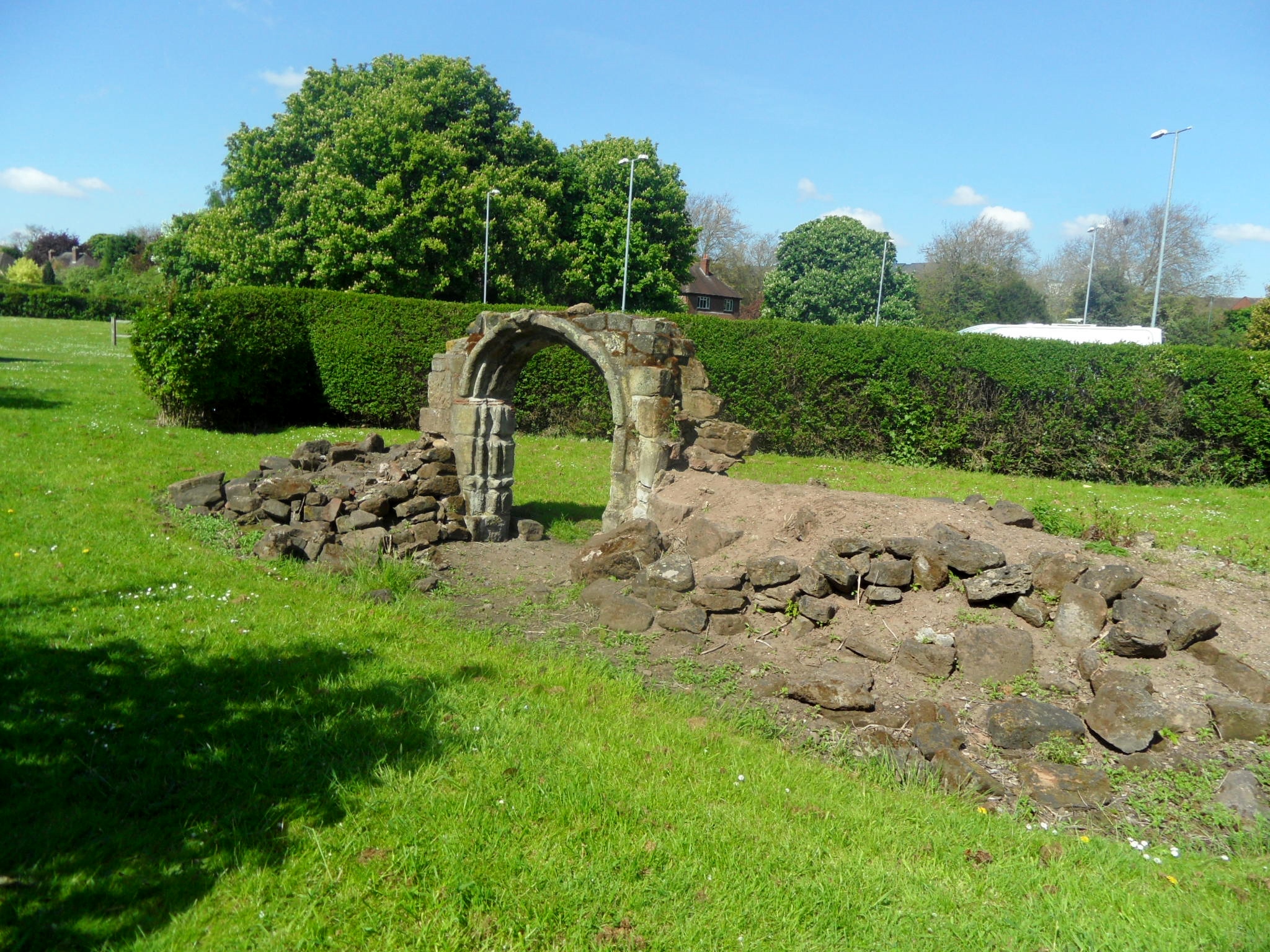
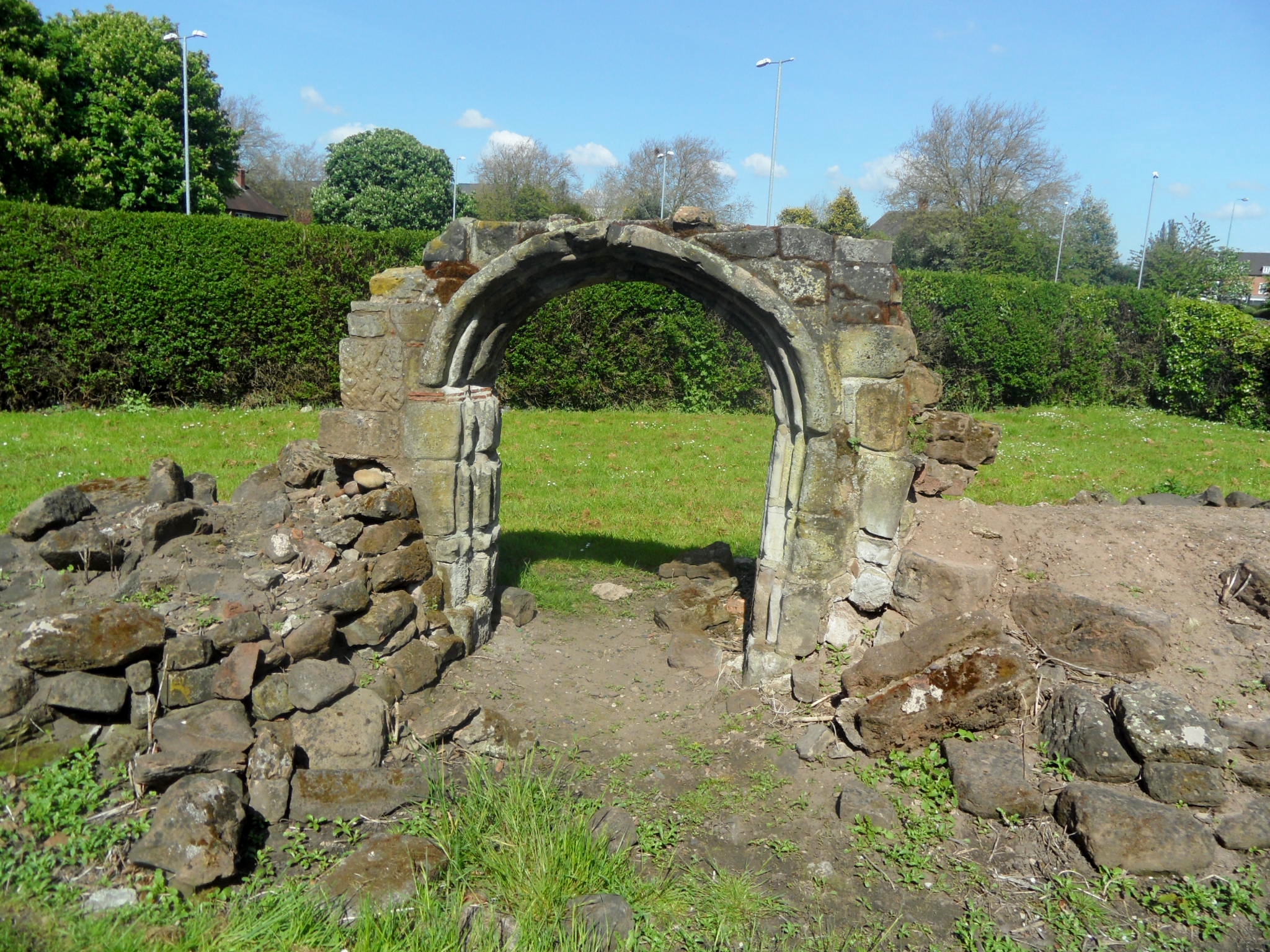
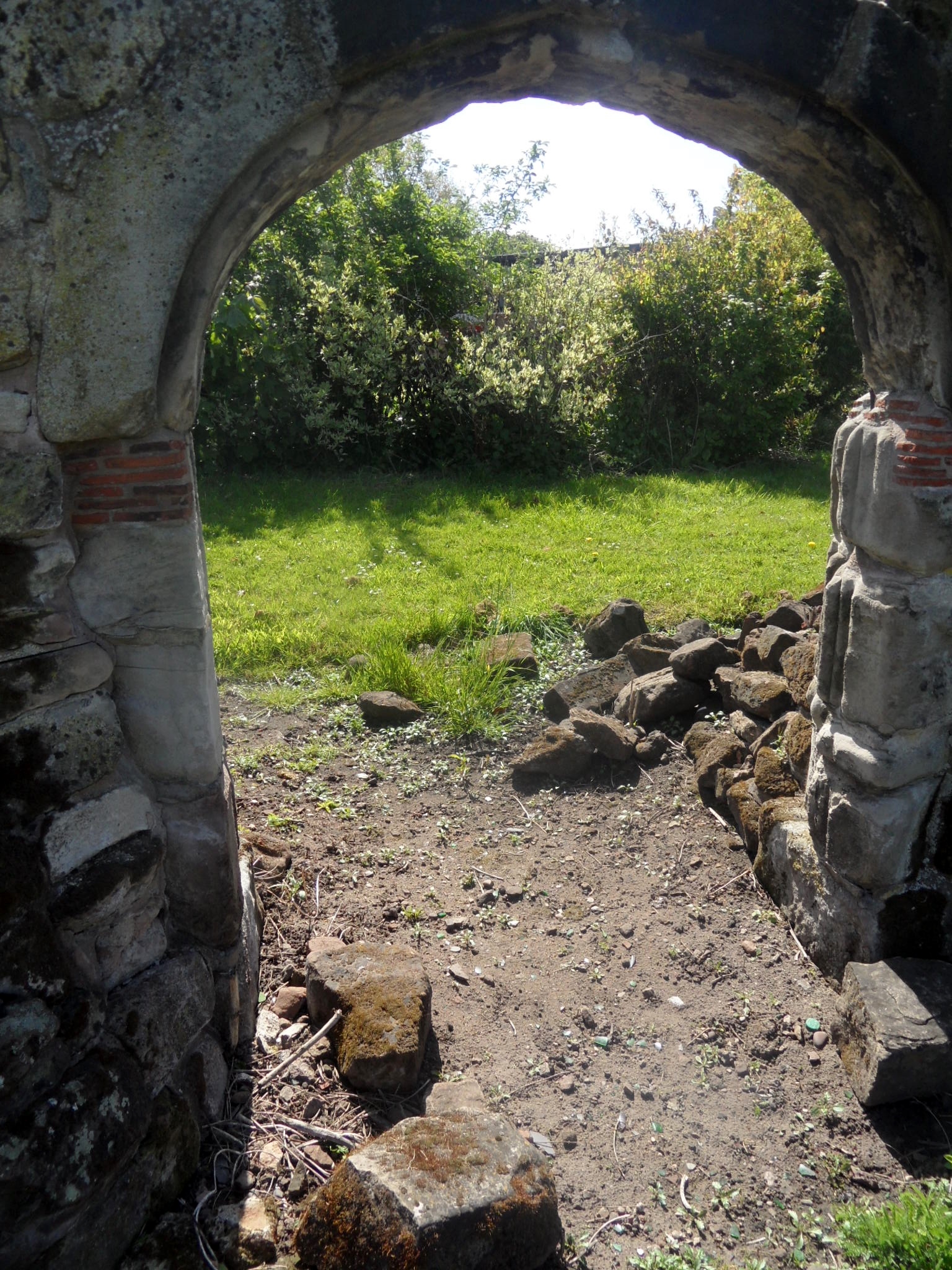
A stone arch stands in the grounds of the Lichfield Campus of South Staffs college and I’ve never been sure whether it is a folly, or part of the Franciscan Friary which once stood on the site. According to a book on the history of the Friary School (1), the arch was discovered in the walls of outbuildings taken down to make way for the new Friary Road in the 1920s. Apparently, it was incorporated into the staff entrance to the school, which used the buildings now occupied by the Library from the 1920s until the 1980s. A former pupil describes the arch as standing on the lacrosse field during her time at the school. Inevitably, over the years the imagination of school children and the history of the site have combined to create legends and stories, including one about a ghostly monk that people are said to have seen passing through the arch.
Another intriguing discovery made nearby during the 1920s was the gravestone of Richard the Merchant. Actually, rediscovery would be a more accurate description, as the stone had first been uncovered in 1746, when a former owner of the Friary was laying the foundations for a garden wall. Thankfully, sketches were made of the stone and its inscription as nowadays, its markings can be barely made out and the stone itself is even more hidden away now than when I wrote this post about it back in July 2011.
Tombstone of Richard the Merchant,now in the wall of Lichfield Library
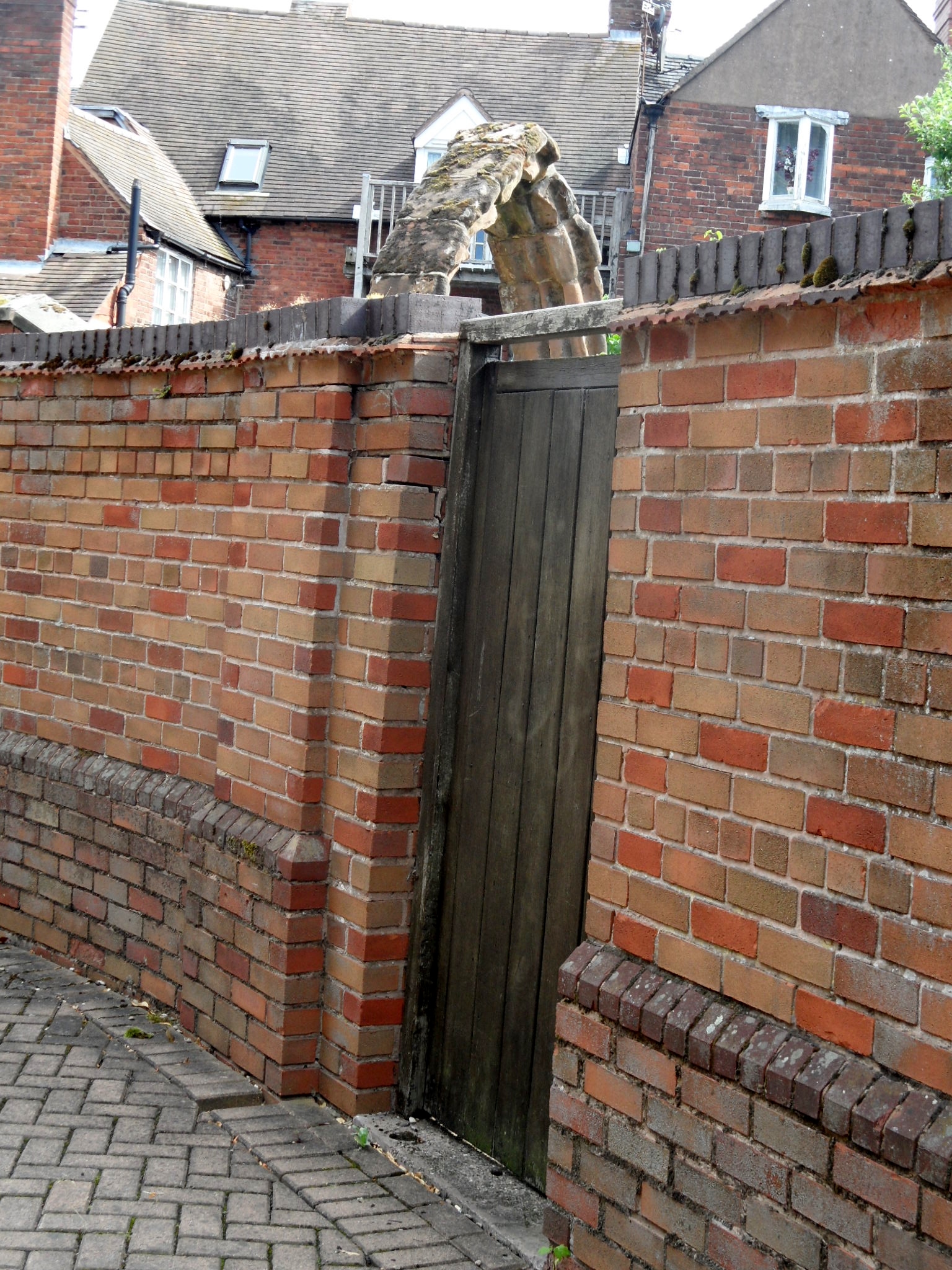
Today I was walking between Dam St and the Bird St car park (which I still call the Woolworth’s car park despite that shop not having been there for years), when I caught a glimpse of what seems to be another arch, over a garden wall which must belong to one of the properties on Dam St. Does anyone have any information on where this arch is from, and why it is here? And of course, if anyone has any stories of ghostly Lichfield residents walking through this one, please let us know!
Notes:
(1) The History of the Friary School, Helen Mullins 1981
(2) I suppose it would actually be a friar, rather than a monk (there is a difference!) but as we’re talking ghost stories here it’s probably not the place to worry too much about historical accurancy!












 Lichfield Lore