Gathering Moss

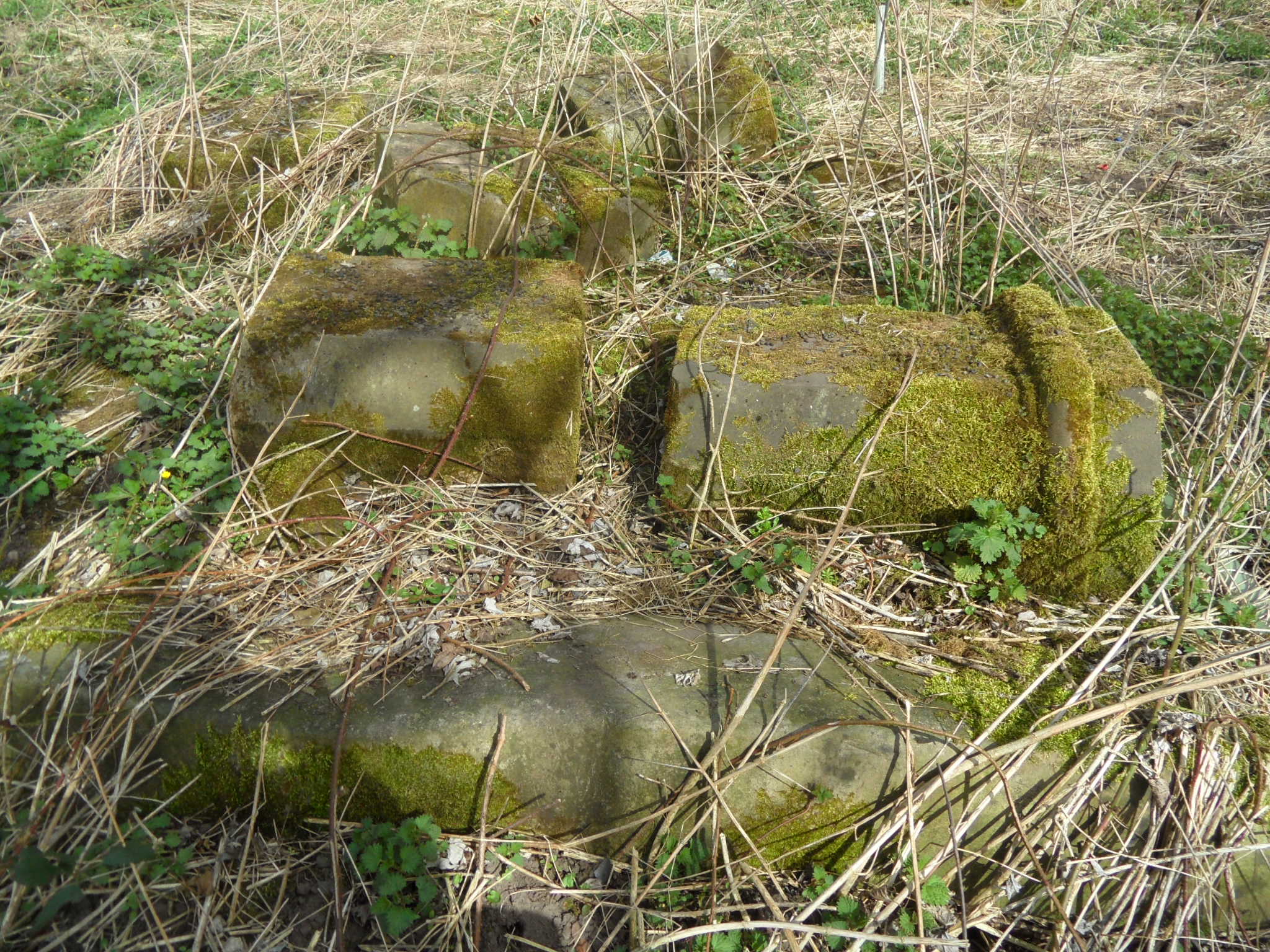
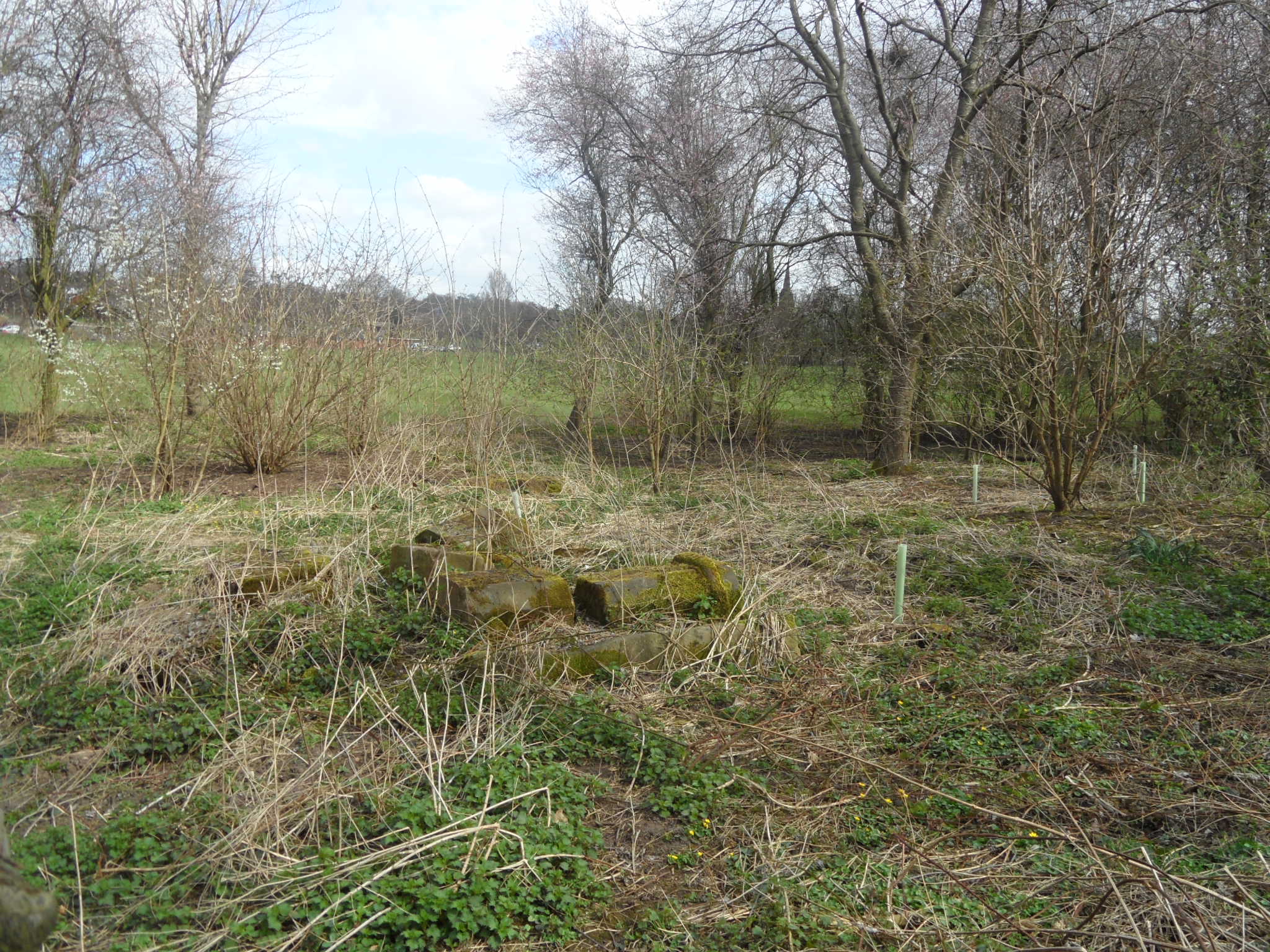
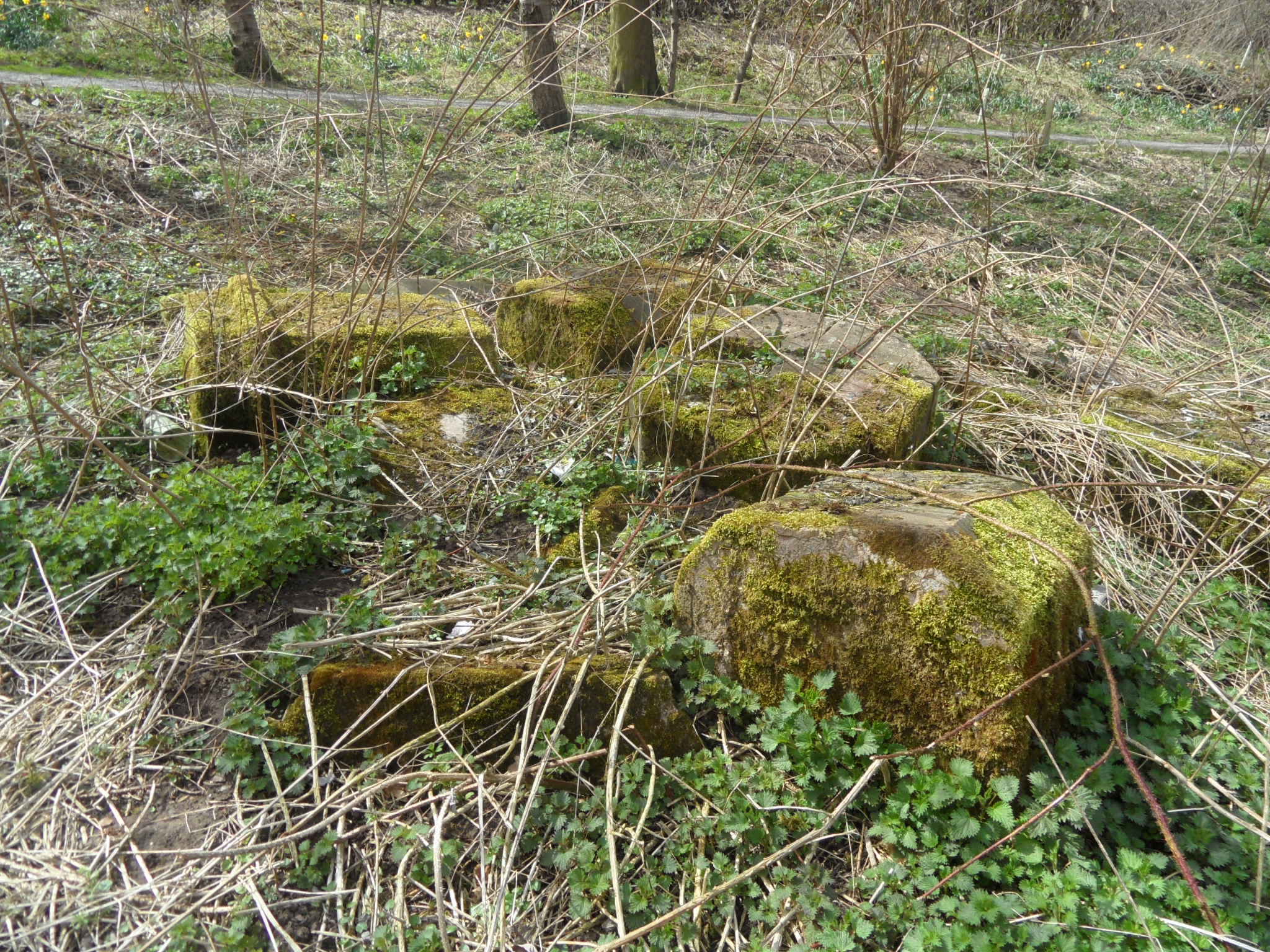
Walking around the edge of Beacon Park, I noticed a pile of moss covered stones in the undergrowth that I’d never seen before.  To me, they look like part of an old building, possibly pillars? It’s a long shot I know, but does anyone recognise them or have any idea as to where these pillars (if that’s what they are!) may have come from?

Whilst on the subject of ‘parts of old buildings found in unexpected places’, I have to mention my old favourite Fisherwick Hall. Back in January, I wrote an article for the Lichfield Gazette which mentioned that the hall had been demolished, but that parts of it had been reused elsewhere. After lying around for some years covered in moss, the pillars from Fisherwick went to the George Hotel in Walsall – you can read the great post written about the hotel by Stuart Williams of Walsall Local History Centre here. However,  I had no idea what had happened to the pillars, following the demolition of the hotel in the 1930s. Therefore, I was delighted when Paul (the editor of the Lichfield Gazette) told me that someone had contacted him, saying that some years ago he had seen them lying on a patch of ground near to the cricket ground in the Highgate area of Walsall. The gentleman described them as lying in pieces and covered with moss and lichen. Sounds familiar! Coincidentally, the site the gentleman described is a stone’s throw from where some of my relatives live, and so the next time I visited I went to take a look, but I had no luck in finding them. So near, yet so far….

Back to our Beacon Park stones, and someone from the Beacon Street Area Residents’ Association has very kindly said that he will ask the people in the know i.e. the Parks team and the Civic Society if they can shed any light on the matter. In the meantime, he’s left me pondering the fact that parts of the old bandstand and cycle track are also apparently also still around in the park somewhere…

Beacon Park bandstand c.1905
Source: Wikimedia Commons

Sole Trader

Whilst having a browse in Lichfield Record Office,  I came across an account of more archaeological finds discovered at Minster Pool.  During the construction of a storm water sewer in the 1970s, surplus soil was taken from the pool to a council rubbish tip. One day Mr Miller, from the city’s Engineering and Surveyoring department, happened to notice fragments of Cistercian ware amongst the peaty earth and alerted local experts. On examining the tip more closely, they discovered that the soil from Minster Pool also contained lots of fragments of leather.

Mr Miller and the others had discovered the remains of medieval leather shoes from a cobbler’s workshop that had been operating near to Minster Pool between the years 1400 and 1550. It’s thought that after being repaired several times, the shoes were in such bad condition that they were discarded by the cobbler (only for them to resurface on another rubbish heap some five hundred years later!). The account I read said that after their discovery, the shoes had been taken to Lichfield Museum. On returning home I was delighted to see that some kind soul had photographed some of them and added them to the Lichfield District Council flickr stream. However, in two and a half years they’ve only had sixteen views (and I think three of those were me!) so now you know the story behind how they were found, please pop and over and take a look at them here! It’s a shame that we’ll probably never know the story of the people the shoes belonged to, or the story of the cobblers who patched them up time and time again….

Three examples of 500 year old leather shoes found in soil from Minster Pool on the council rubbish dump! Image taken from Lichfield District Council flickr stream.

Sources:

South Staffordshire Archaeological and Historical Society (SAHS) Transactions XIV – XVI, 1972 – 1975

Deep and Meaningful

I mostly associate Stowe and Minster Pools with the ducks (or to be more precise the mallards, moorhens, coots, Canada geese, mute swans, and common pochards) that live on these waters. However, for the purposes of this post, it’s what has been found beneath the surface of the pools that I’m interested in.

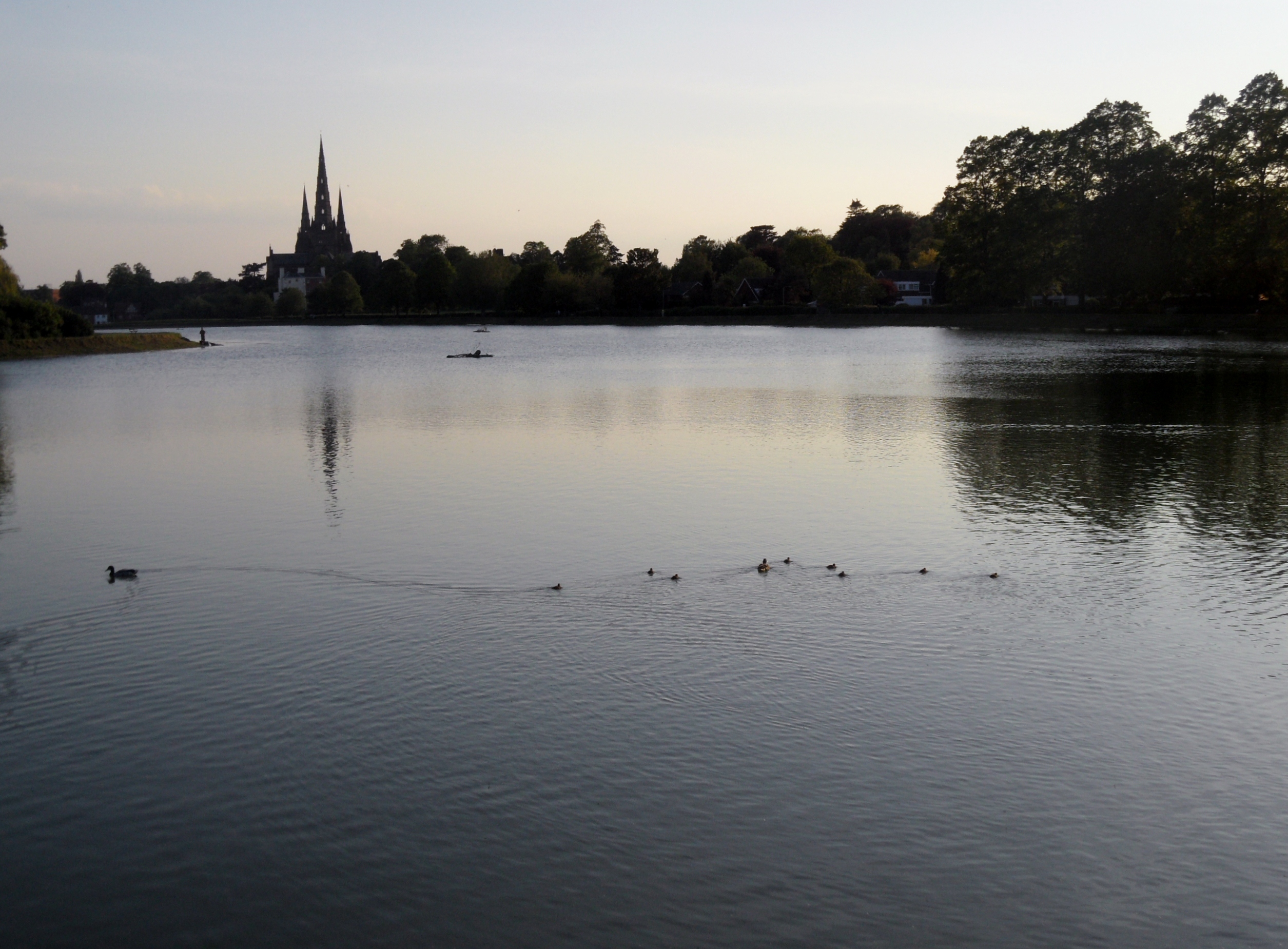
Ducklings making their way over Stowe Pool last summer

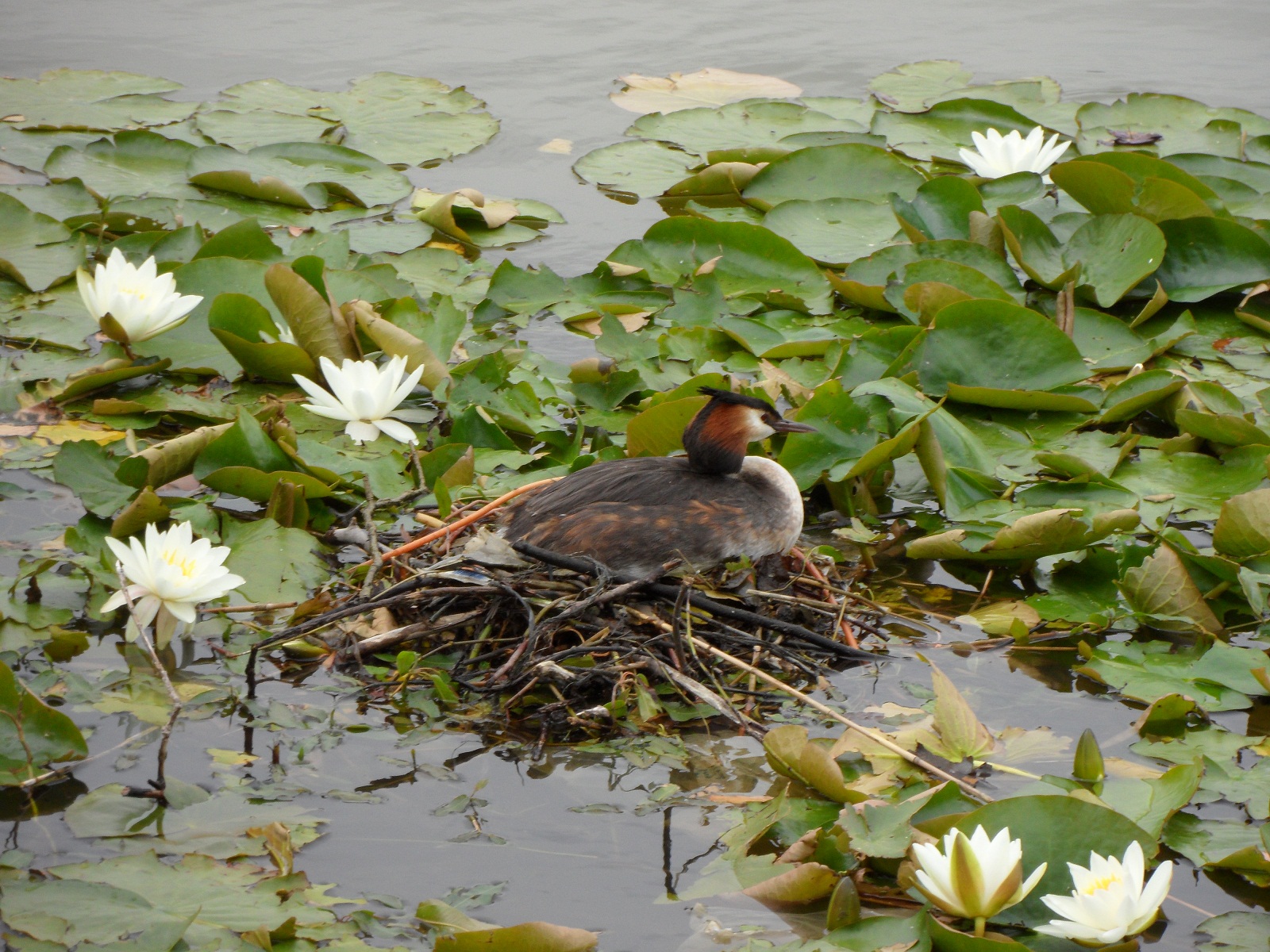
Nesting on Stowe Pool, 2011

At a meeting of the Leicestershire Architectural Society in June 1858, the Rev J M Gresley produced a number of objects that had been discovered in the city’s pools, during the process of their conversion into reservoirs for the South Staffordshire Waterworks Company. As well as numerous cannon balls and shells, some of the other finds were described, including:

A small iron battle axe, seventeen inches in length

A spur singularly shaped of perhaps the last century

An ancient steel horse shoe by striking the holes for the nails several of which remain in them. The outer edge has a scalloped shape

Several narrow sharp pointed knives from 7 to 9 inches long of the sixteenth century. The shaft of one of them is of black bone inlaid with trefoils and ornaments of brass

A large clasp knife with buck’s horn haft twelve inches in length

Several keys of the fifteenth or sixteenth centuries and a small one of still older date

A piece of early English pottery perhaps of the twelfth or thirteenth century. It is of reddish and grey clay with a green glaze. The head and tail are broken off. It is hollow and has a large aperture at the breast but it does not look as if it could ever have been used as a jug or bottle The length of it is 6 inches

Fragment of the neck of a Flemish stone ware jug called a Greybeard or Bellarmine of the sixteenth or seventeenth century

Soles of shoes of the thirteenth or fourteenth century with small heels narrow instep broad across the ball of the foot and quite a sharp point at the toe

Soles of shoes of the fifteenth century much the same shape as the others but round at the toe

A leaden seal or bull of one of the Popes whose name is obliterated. Two rude faces upon the other side have over them S PA(ULUS) S PE(TRUS)

A number of brass counters commonly called Nuremburg tokens formerly used for making calculations…upon these tokens are various and interesting consisting of ornamental crosses, fleur de lis, heraldic bearings, ships, the globe surmounted by the cross. One was plainly an imitation of the silver pennies of Edward I and II but with pellats in place of the legend

Two leaden counters one of them with the letter K, the other apparently a saint’s head and glory about it

An angel of the seventeenth year of James I with a hole through it for suspension it having been given to a person when touched by the King for the evil. The reverse has a ship with the royal arms on the mainsail

Lichfield Coventry and Tamworth tokens of the seventeenth century

A considerable quantity of stags horns

Another discovery in Minster Pool led to a court case in 1896 between South Staffs water and a labourer named Sharman. This case is still quoted as an example in legal textbooks today. Sharman, the defendant, had been employed by the water company to clean the pool and in the course of this work found two gold rings. The court ruled that it was not a matter of finders keepers and ordered the rings to be handed over.

Whilst it seems reasonable to assume that the cannon balls and shells ended up in the pools after falling short of their intended targets during the civil war, how did these other objects end up in the water? Unfortunately I haven’t been able to find a description of the gold rings, not even a date range, and so for now we’ll have to imagine the stories behind them finding their way into Minster Pool!  Perhaps we could have a more educated guess at the origin of some of the other objects though? In the past, both pools were used as mill ponds, with tenters to dry cloth set up along the stream which fed into Stow Pool. There were also tanyards in the area and the site of the parchment works of Michael Johnson (bookseller and father of Samuel) was nearby, as can be seen on the 1781 Snape map of Lichfield (a wonderful, big-res version of the map can be found here on BrownhillsBob’s Brownhills Blog). Possibly related to these industries, the tenant of a skinhouse claimed the privilege to wash skins in Minster Pool.

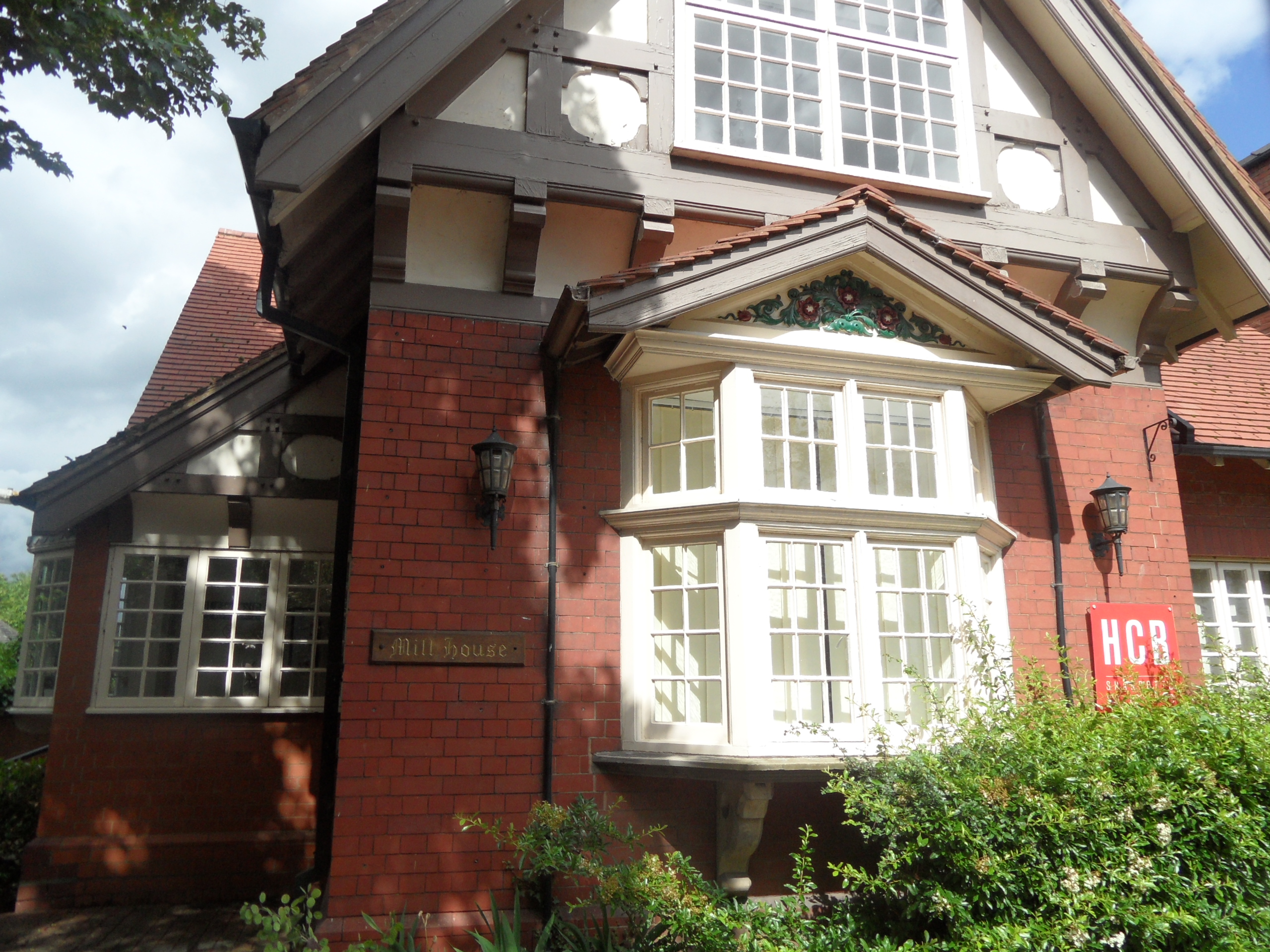
Mill House, Dam St in the vicinity of the old mill

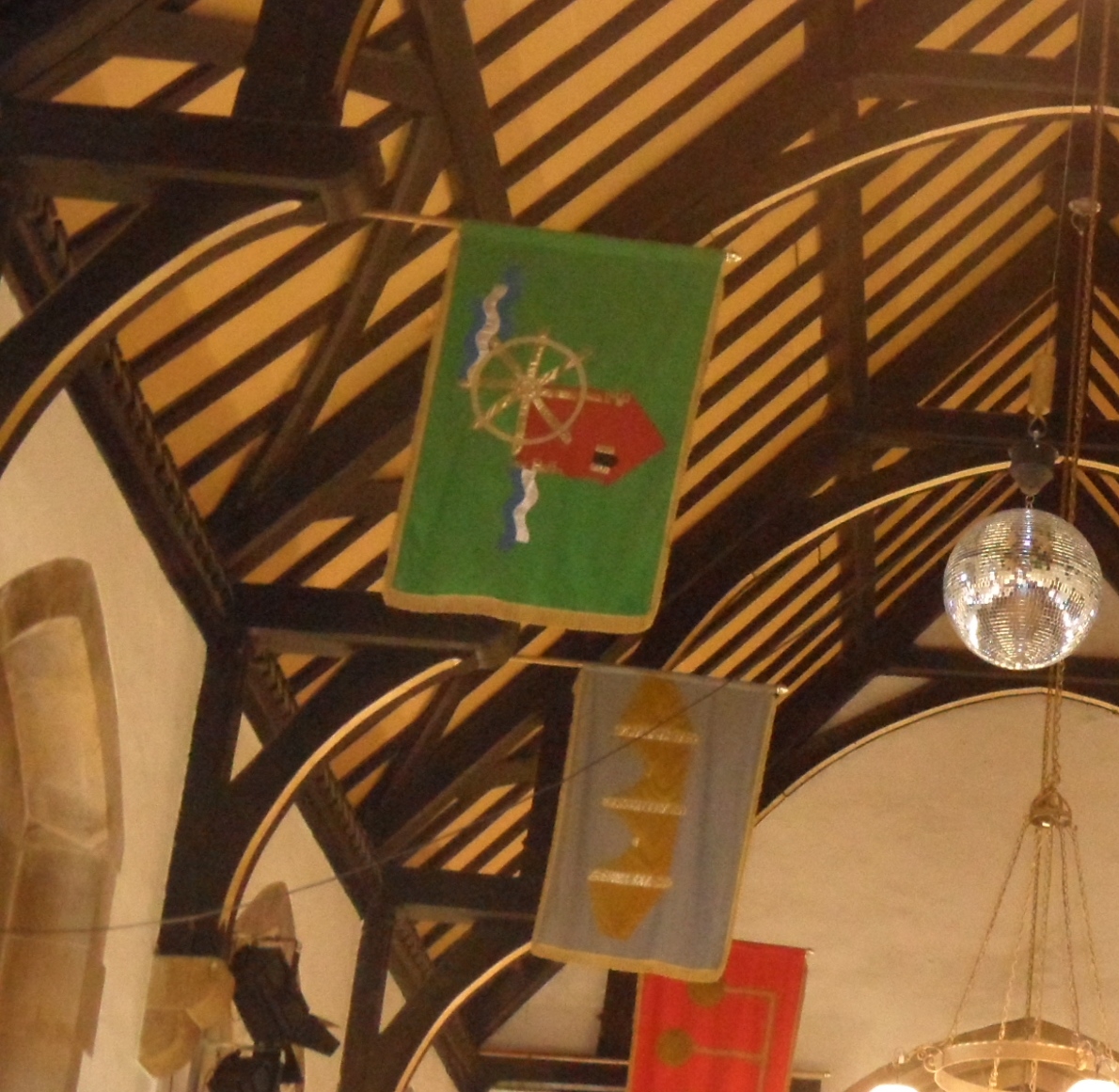
This ward banner in the Guildhall relates to Dam St, and I think it represents the mill between Minster and Stow Pool.

These objects have been lost and found once already, but where are they now? Is it possible to find them once again?

Edit: Philip just asked me about where the tanneries were, and in comparing the Snape map with Googlemaps, I found that in one of the spots marked as a tan yard on the former, there is a little road called the Tanyard (off Stowe St) on the latter!

Sources:

A survey by the Lichfield Wildlife Group in 2009, looking at the natural heritage of The Close http://www.staffs-wildlife.org.uk/files/documents/250.pdf

Thanks to Philip Mantom for drawing my attention to the legal case South Staffs Water Co v. Sharman (1896)

Smith and Keenan’s English Law Text and Cases 15th Edition – Denis Keenan

Transactions, Volume 1,  Leicestershire Architectural and Archaeological Society

Lichfield: Economic history’, A History of the County of Stafford: Volume 14: Lichfield(1990), pp. 109-131

Friars on the Run

On Monday morning we’ll learn if human remains found beneath a car park in Leicester are those of Richard III, buried in the city’s Greyfriars church after his defeat at Bosworth in 1485.

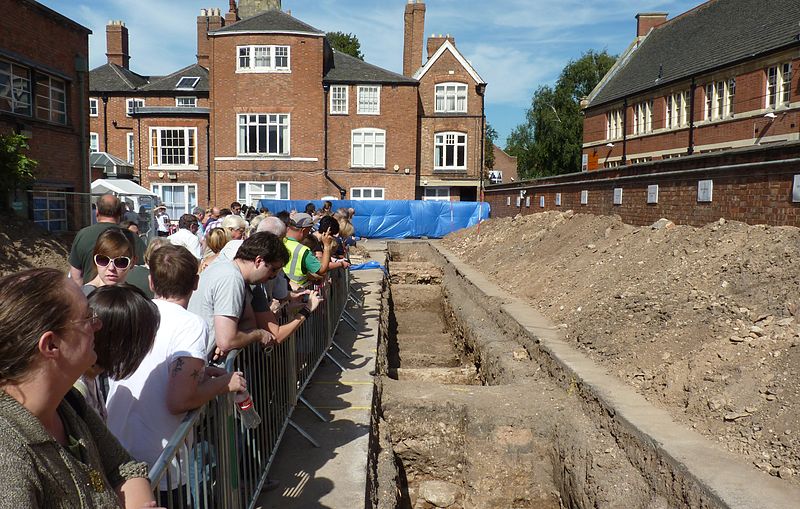
Archaeological Dig Open Day at Greyfriars Leicester. 8th September 2012.
Image by RobinLeicester, Wikimedia Commons.

Naturally, the possible discovery of England’s lost king has generated a huge amount of interest and last week I had an email from someone in Lichfield who has been doing some background reading on the subject. In trying to find out more about the story of Greyfriars and King Richard III, they found that the Greyfriars were also linked to King Richard II. The reason for the email was to see if anyone knew anything more about the role of Lichfield in the story, as per the the following passage from the ‘History of the County of Leicestershire’.

The sympathies of the Leicester Franciscans for Richard II brought serious consequences upon the friary in 1402. A Franciscan declared to Henry IV that he and ten other friars of the house at Leicester, together with a master of divinity, had conspired in favour of the deposed Richard. In consequence eight Franciscans of Leicester, with the master of divinity, were arrested and brought to London for trial. The remaining two friars escaped. After two juries had failed to convict, a third jury found the prisoners guilty, and they were executed. Two other Franciscans from Leicester, presumably the two who had at first escaped, were executed at Lichfield about the same time.  In 1402, at a general chapter of the Franciscans held at Leicester, it was forbidden to any of the Order to speak against the king.


My anonymous correspondent wondered why the friars were executed here in Lichfield? What had brought them here in the first place, and was there any sympathy for them or Richard II amongst the Franciscan population here?

Remains of North Wall of Nave of Lichfield’s Franciscan Friary.

Other sources expand on the story a little to tell us that it was Prince Henry, the future Henry V (or at least members of his household) who caught and beheaded the friars at Lichfield. Our own county history tells us that in 1402, Henry IV had ‘ordered knights, squires, and yeomen from various parts of the country to meet him at Lichfield for his campaign against Owain Glyn Dŵr‘. This explains perhaps in part why the friars came to be executed here, but if there’s anyone who can add anything further to this story of fugitive Leicester friars in Lichfield, it’d be great to hear from you.

Notes:

A programme called ‘Richard III:The King in the Car Park’ will be shown on Channel 4 at 9pm on Monday 4th February.

Talking of archaeology digs in car parks, I believe that the report on the Friary Outer is due out anytime now – as far as I’m aware Victorian cellars and medieval pottery were the main discoveries. Of course, everyone knows that if you want to find lost kings in Lichfield, it’s Borrowcop you need to investigate….

Richard II visited Lichfield several times. Most famously he spent Christmas in 1397 at the Bishops Palace, returning to the city two years later as a prisoner of his cousin Henry Bolingbroke, soon to be Henry IV.

Edit 4/2/2013 – I probably don’t need to tell you this but it’s been confirmed beyond any reasonable doubt that it is him! King Richard the Third’s remains will now be interred at Leicester Cathedral. I believe there may be a link between this story and Elford too?

Sources:

Friaries: Friaries in Leicester’, A History of the County of Leicestershire: Volume 2(1954), pp. 33-35. URL: http://www.british-history.ac.uk/report.aspx?compid=38172

Historical Dictionary of Late Medieval England, 1272-1485, page 212 edited by Ronald H. Fritze and William Baxter Robison

Lichfield: History to c.1500′, A History of the County of Stafford: Volume 14: Lichfield(1990), pp. 4-14. URL: http://www.british-history.ac.uk/report.aspx?compid=42336

Familiar Looking

Always happy to be distracted from shopping, I had a wander down Quonians Lane to take a photo of a door (that’s a whole different post!).  Everyone loves Quonians Lane with its strange name and its carvings and plaques. Annette Rubery wrote a lovely piece about it back in May, which you can read here.  I love Quonians Lane too, although now my visits are tinged with sadness that the company, whose workers created these wonderful objects and many more across the city, the county and the country, is no more.

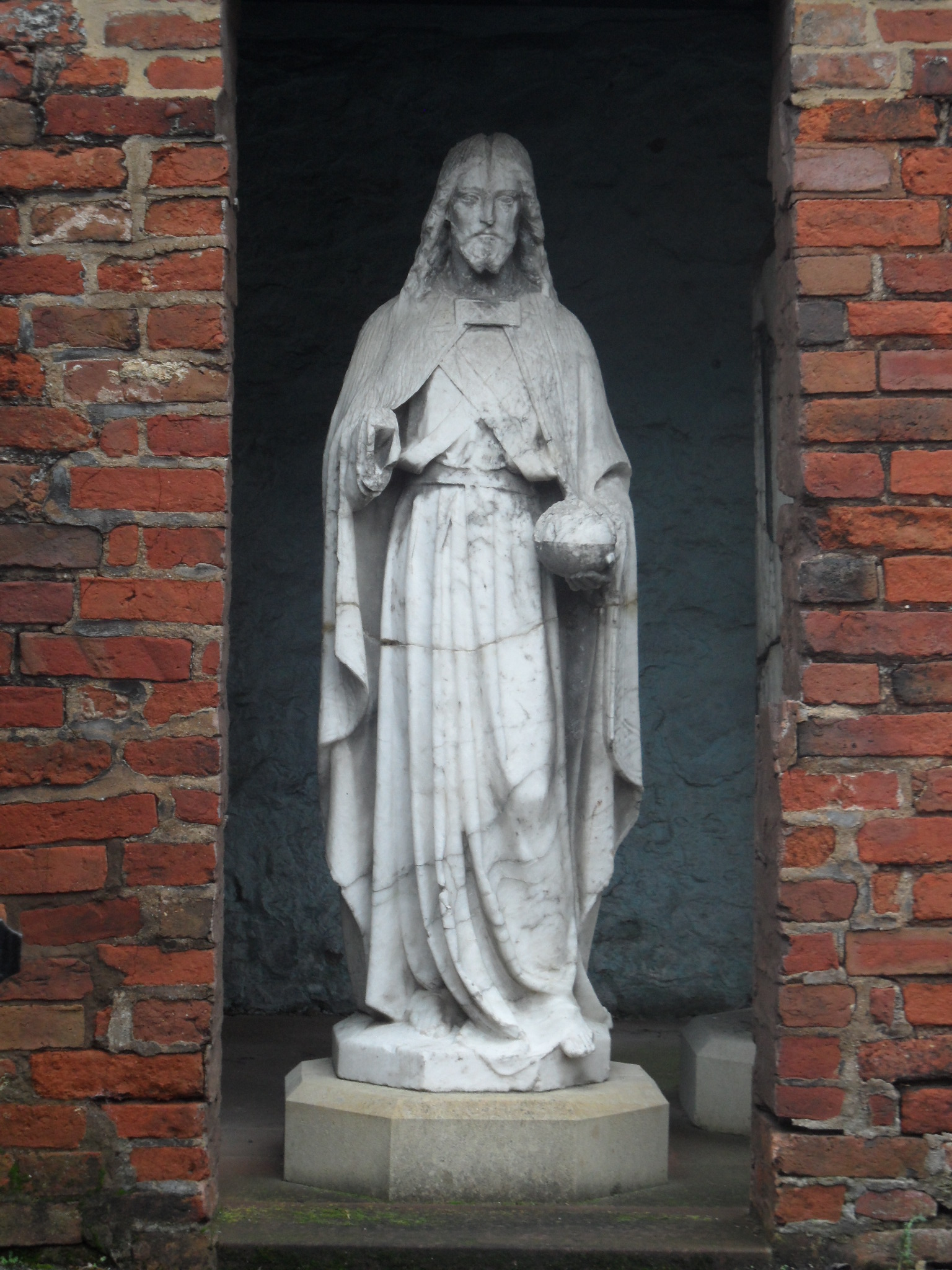
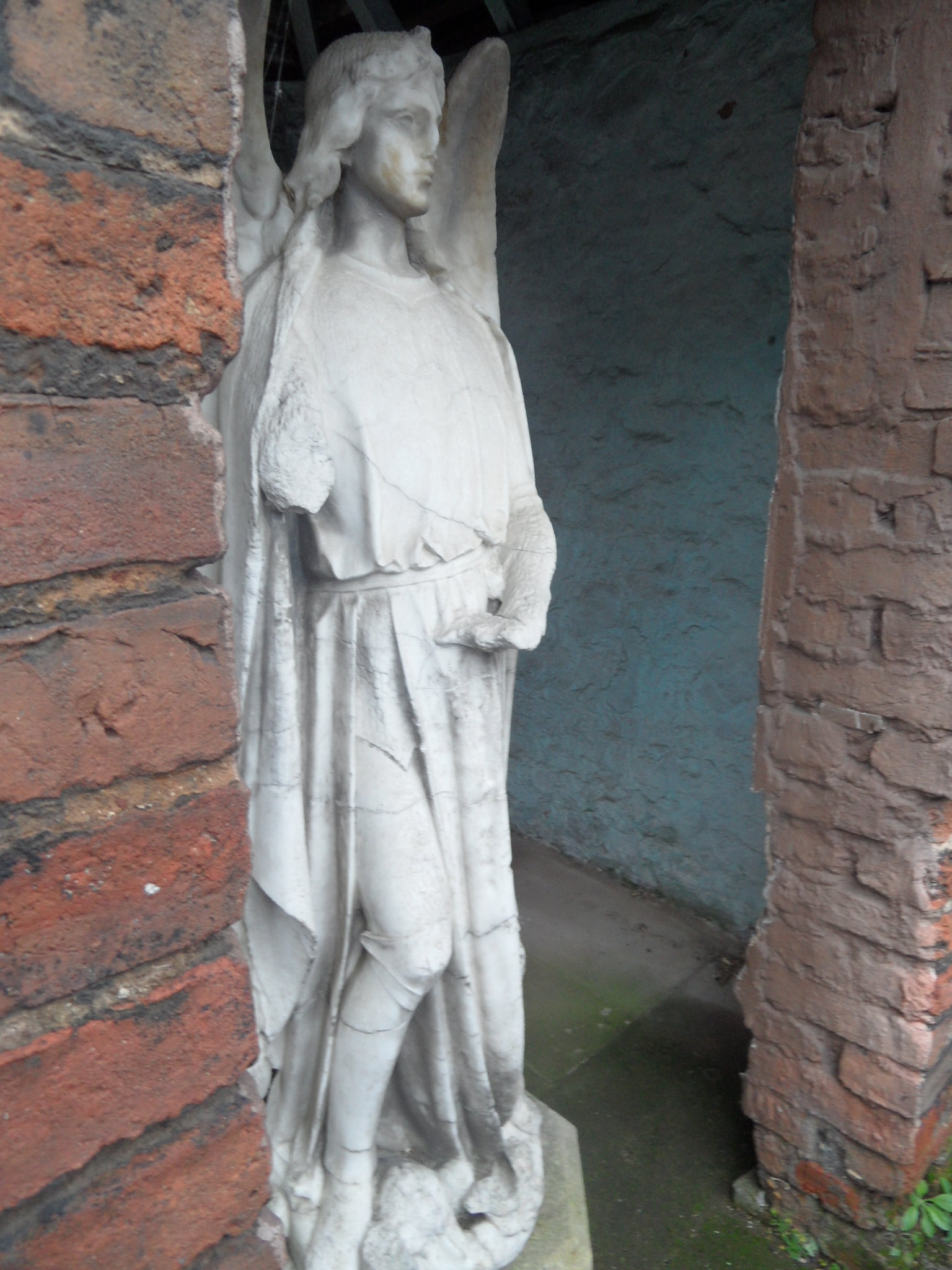
I saw the triangular roof of a small outbuilding above the brick wall and went to have a look, thinking it would be quite interesting in its own right. It was a lovely surprise to find these two marble statues stood in the doorways. If you want to see them for yourselves, go down Quonians Lane, and just after you get to the headless angel take a right, through the wall.

So the moral of this story once again is what I say in my ‘About Lichfield Lore‘ spiel.  “Go out and have a look at what’s around you. Then when you’ve done that, go back and have another look!”  I believe this more with each day I do this blog. I think that you can make new discoveries in the same place, depending on a whole range of things including the weather, your mood, what you’re thinking about at the time, the time of day or year or who you’re with. Actually I might change that to include having a smell/touch/listen too. Not sure about taste because I’m not sure I should be encouraging the kind of thing this young man got up to here…..

Anyway, today is a perfect day for me to bang on about this, as it’s the day we heard the news that around ninety further objects had been found at the Staffordshire Hoard site, three years after the original discovery was made. If that doesn’t convince you of the merits of having at least a second look, then I don’t know what will….


Paths that Cross

On my way to pick up some tickets from the Garrick the other day, I passed Lichfield Library. I couldn’t resist popping in to have a quick peek at the local history section to see if they had any more information on the history on the grammar school,  following on from Gareth’s graffiti photographs.  (They did. A whole book in fact and I’ve updated the post accordingly!). So inevitably, my quick peek turned into two hours.

There was an added bonus to the visit too. Anyone who read my Cross City and Cross County posts will know that I was hoping there would be an ancient cross somewhere in Lichfield. Well, I finally found one! Actually that’s a fib. What I found is a photograph in a book of archaeologists finding one. A decorated cross shaft was discovered built into the foundations of the north wall of the nave of Lichfield Cathedral. It’s thought to be Saxon or Saxo-Norman, and could be a surviving remnant of the earlier church on the site. I wish I could share a photograph here, but all I can do is tell you that it’s on plate 1 in the ‘South Staffordshire Archaeological and Historical Society Transactions 1980-1981 Volume XXII’ book, on the local history shelves at the library!.

I have a confession to make. Generally, I’ve thought that places like the Cathedral are so well known, there’s nothing much left to say. Yet, now I recognise that this was wrong. Whether it’s the magnificent discovery of the Lichfield Angel in 2003, the downright curious tale of a live frog embedded in one of the stones used to repair the Cathedral during the restoration*, or rolls of parchment, beer and tobacco found in the gilded balls on the top of the central spire – the Cathedral, as everywhere, is made of stories, as much as it is made of stone. There are those we know well, those we don’t, and those that haven’t even been told yet.  We need to make sure we  are listening, just as Gareth was when he discovered and questioned that graffiti on the walls of the old Grammar school.

*I’m not making this up…..but someone else may well have been!

An Overview of Lichfield

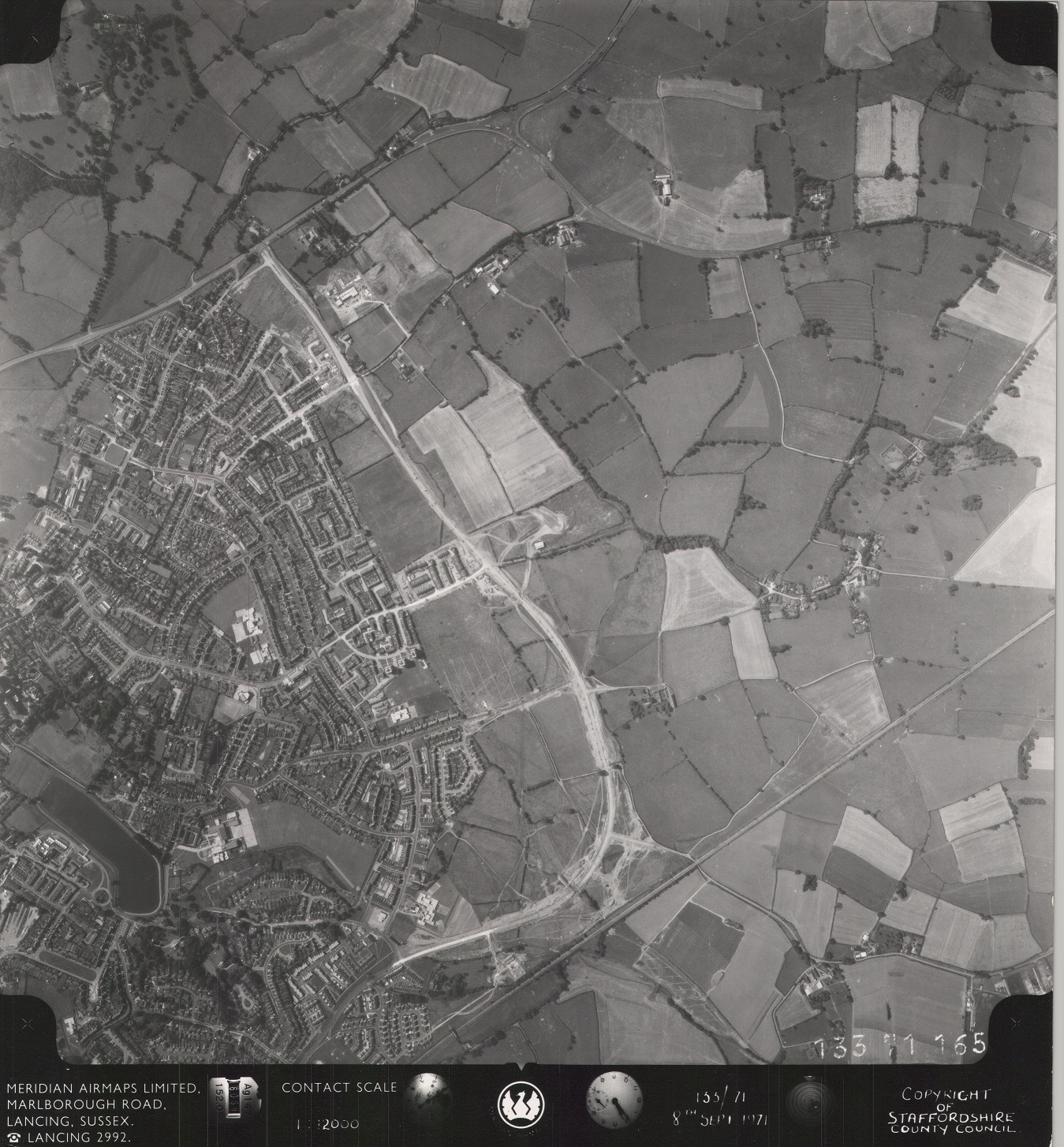
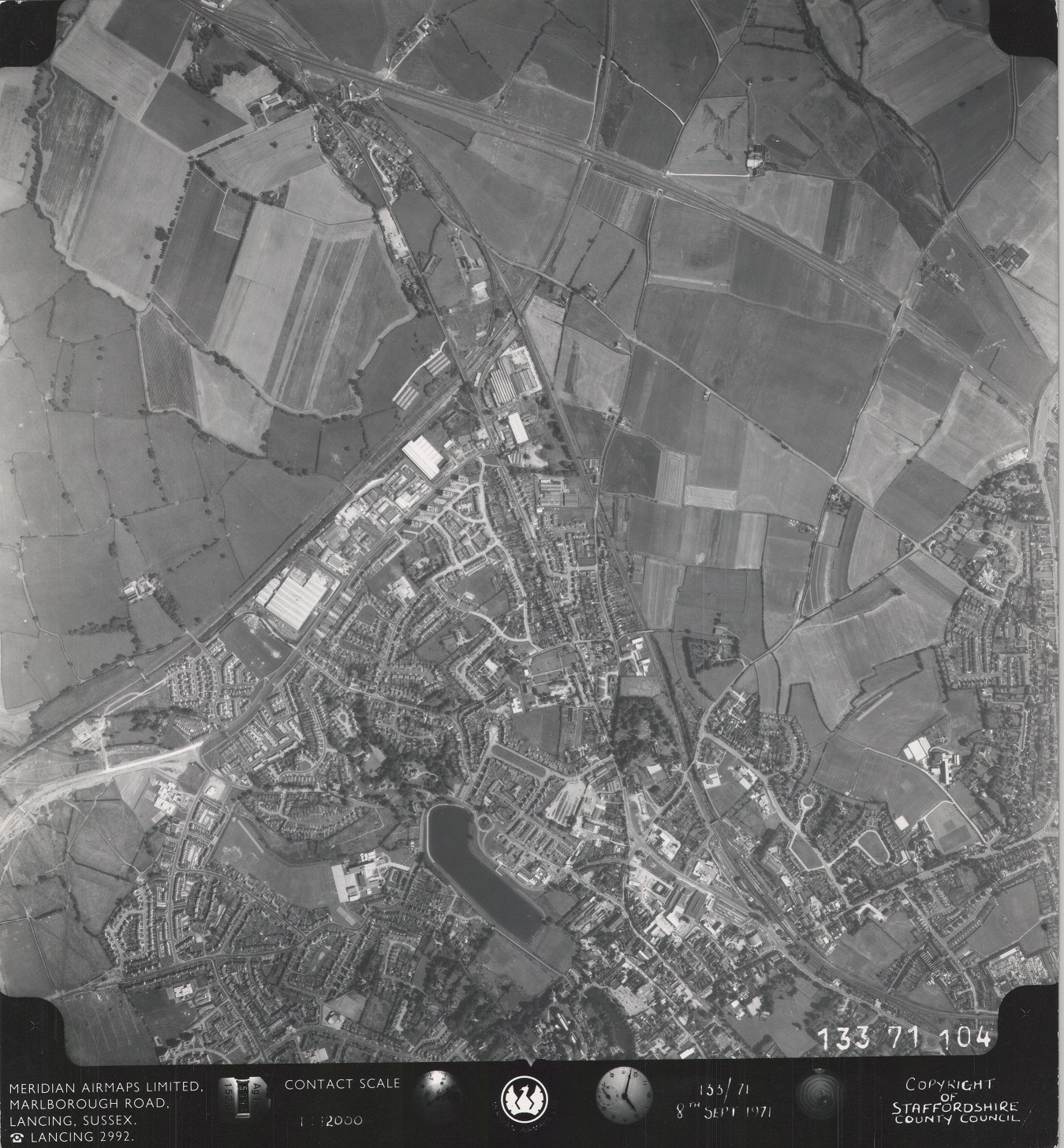
Gareth Thomas, from Lichfield District Council, has very kindly sent me some aerial photographs of Lichfield. Taken in 1963 and 1971, they provide a record of how the  city has developed and grown in the last 50 or so years (a quick look at the population figures shows that in 1961 the population was 14,090, growing to 22,660. In 2008 it was 30,583) (1)

Lichfield 10th June 1963

Lichfield 8th September 1971

Another aerial view of Lichfield taken 8th September 1971

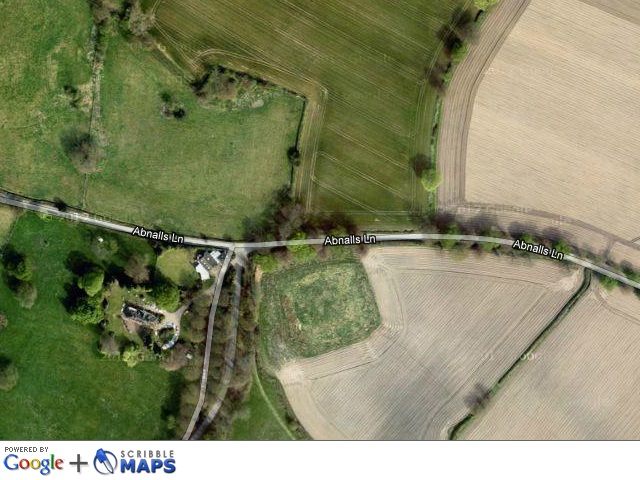
One of the things I like about aerial photography is that it gives you a different perspective on places. A good example of this are the earthworks off Abnalls Lane, thought to be the remains of a medieval moated manor house, that I’ve mentioned before. At ground level you might well walk past, unaware of its existence. Look at it from above however, and you get a whole different impression of the site. What’s exciting for me (and yes, maybe I do need to get out more!), is that the aerial photograph that Gareth has sent seem to show more of the structure than can be seen on today’s aerial photos. To my untrained eye, back in the 1960s, it looks like the moat had some sort of channel running from it, and branching off into two.  Looking at the recent google earth maps, this part of the feature seems to have disappeared.

Crop of aerial photo taken 8th September 1971, to show Abnalls Lane area

Abnalls Lane Moated site circa 2010

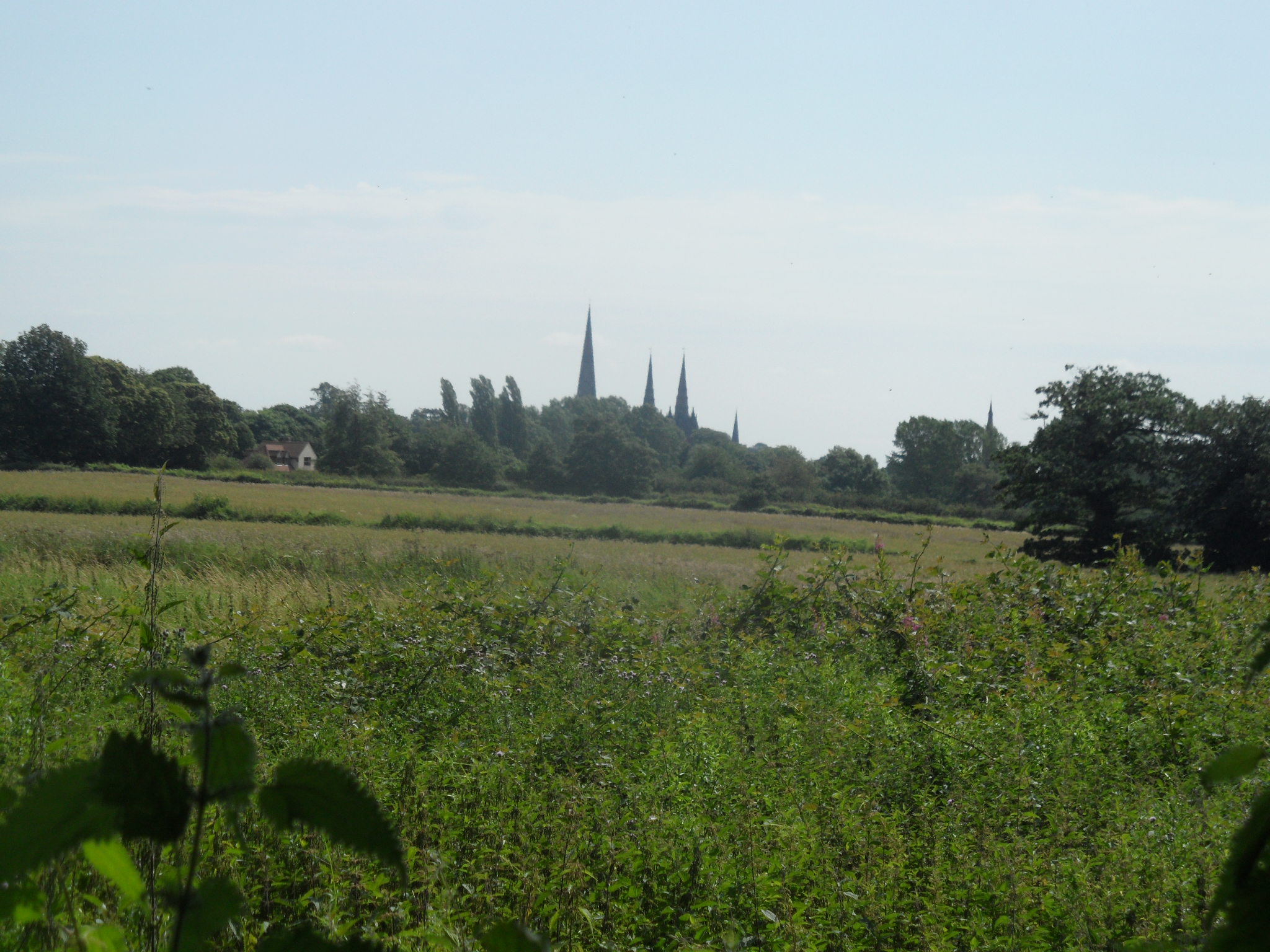
View of the moated site from the ground,  August 2012

Massive thanks once again to Gareth. I’m really enjoying studying these photographs and I hope that others do too (On one occasion, I was so engrossed I forgot I was in 1971 not 2012 and was momentarily confused looking for the non-existent little yellow man to do a street view).  Gareth also has a great pinterest site here where he’s adding the local maps he discovers and there’s a great range on there covering different parts of the city & district, so once you’ve had your fill of photos, go and have a look!

Also, I should say that there are some posts & discussions on BrownhillsBob’s Brownhills Blog, based around aerial photographs of Chasewater, Shire Oak and Stonnall, also provided by Gareth.

(1) Source – Lichfield City Council http://www.lichfield.gov.uk/cc-statistics.ihtml

Potholes

After visiting the Christian Fields Local Nature Reserve, it seemed a good time to revisit the story that gave a name to the immediate area, and according to some, to the wider city as well.

Legend has it that in around 300AD, one thousand (or 999 depending on which version you read) Christians were massacred by a Roman army and their bodies left unburied in a place that would become known as the ‘Field of Corpses’ aka Lichfield (from the OE lic – body/corpse).   From 1548, versions of this story were depicted on the city seal, examples of which can still be seen in several places across the city, including the Martyrs Plaque at Beacon Park, 19thc police badges on display in the City Gaol, and in the main hall at the Guildhall.
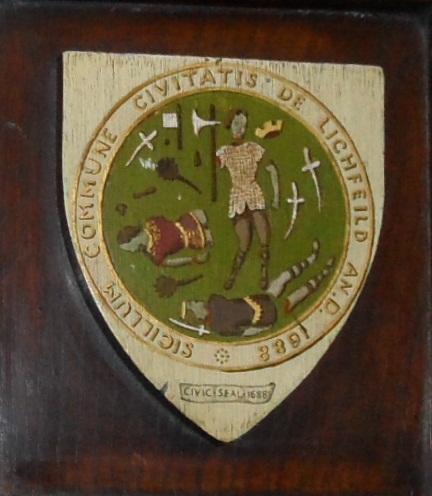
Version of the City Seal from 1688, Main Hall, Guildhall

Several fairly obvious locations in the city have been mooted as possibilities for the specific location of the massacre, including Borrowcop Hill, St Michael’s Churchyard and the site of the Cathedral. However, what was it about this parcel of land, a mile north of the Cathedral that convinced people to such an extent, that it was given the name ‘Christian Fields’?

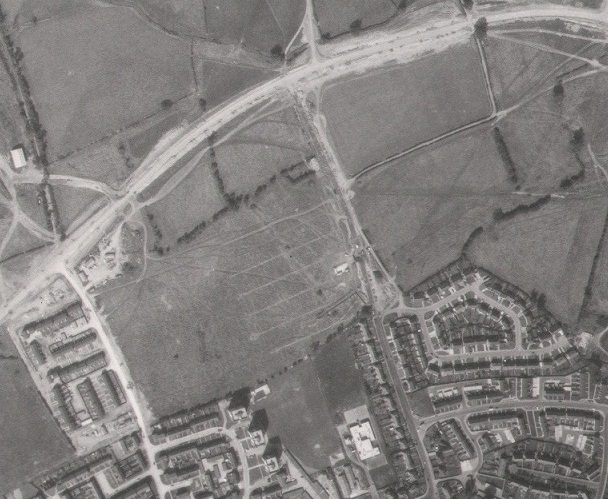
The image below is an aerial view of the area from 1971. Christian Fields is south of Eastern Avenue, between Dimbles Lane and Curborough Rd.  (Shortly afterwards, a new housing estate was built on the field. Perhaps as a nod to the site’s legendary history, the streets were named after saints. Funnily enough, one of these new houses was my husband’s childhood home – I must ask my in-laws if they ever found anything of interest in the garden!)

An aerial view of Christian Fields, 1971. Reproduced with thanks to Gareth Thomas, Lichfield District Council

Lichfield District Council’s information on the site says,

In the 17th-century the antiquarian Robert Plot declared that the area, now known as Christian Fields, had been the site of the martyrdom and it has born the name ever since. Needless to say Robert Plot’s claim has never been substantiated and no archaeological evidence has ever been presented in its support.

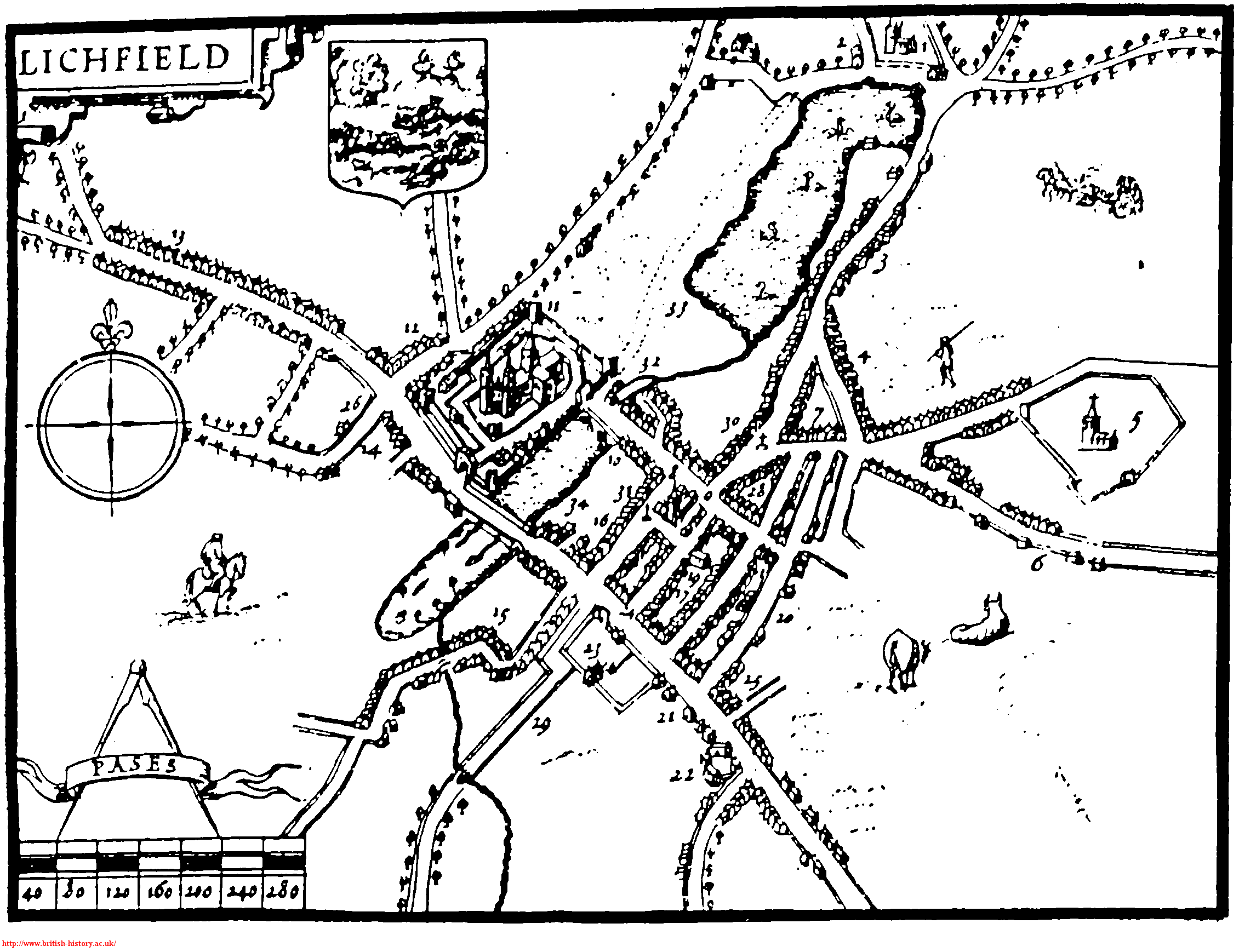
Looking at John Speed’s 1610 map of the city, I wonder whether the idea that the massacre took place at Christian Fields actually pre-dates Robert Plot? At the end of a road leading north from the Cathedral (possibly Dimbles Lane?), in the vicinity of Christian Fields, is an illustration depicting a scene that looks like a representation of the legend, similar to that found on the city seal.

John Speed’s 1610 map of Lichfield

In the early 1800s, local historians wrote about a series of discoveries near to the site, that persuaded them that the legend was true. The pastscape record has the following description, taken from a history book of the time,

In a meadow adjoining CHRISTIAN FIELDS, known by the name of the TOAD’S HOLE PIECE, have been recently found a considerable quantity of human bones, various pieces  of earthenware, some of which are Roman, a stone bowl or dish perhaps used for grinding corn, a stone ball, fragments of weapons including the head of a pike or halberd and several horseshoes  pierced for nails at the top as well as the sides. The objects  were discovered nearly four feet below the surface in a peaty soil, amongst and covered by great quantities of roots and decaying branches.

I found the book (1) on googlebooks and found it contained illustrations of the objects.


A letter to the Gentleman’s Magazine in November 1817 gave a little more information,

The articles of which I have sent you drawings were found near some land known by the singular names of Hic Filius and Christian’s field so called, according to tradition, from having been the place where the early converts to Christianity had used to assemble  and where the massacre from which Lichfield derives its name took place.

The letter goes on to describe what I think are these drawings from the Staffordshire Past Track site. – “a stone dish one foot diameter used perhaps for grinding was placed in the earth as a cover for a smooth red earthenware broken by the eagerness of the workmen to examine the contents (proved earth only). The black spots arc metallic. Also, the head of a weapon in preservation the wooden staff was broken off near the head, the iron is 21 inches in length.  There are also weapons found in 1817 in the foundation of one of the canons houses on the North side of the Close with some bones and broken armour”.

I’m not suggesting that the objects are proof of the legend, which along with the ‘Field of the Dead’ explanation of the place name of Lichfield is generally accepted to be untrue (the current favoured explanation of the name is ‘the common pasture in or beside the the grey wood).  However, and I may be reading into things too much here, I do think it’s a little curious that these items seem to almost be a tick list of props for the martyrs’ story…. Bones? Check. Horses & weapons? Check. A link to the Romans? Check.  The question I’m finding it hard to find an answer to is, if it’s agreed that these objects aren’t part of the story of the Christian Martyrs, in some way, shape or form, then whose story or stories are they part of?

Edit 6/10/2012

A further reference from the same book says the following,

About three quarters of a mile from (St Chad’s Well) are Hic filiius and Christians Fields where the converts of Ampbibalus are said to have been massacred; a considerable quantity of human bones have been found in the adjoining fields a few feet beneath the surface.

It has been the custom of civilized nations to collect and burn or bury the bodies of those slain in battle here fragments of bones are found scattered through a space exceeding half a mile and in one place only have they been met with under the appearance of having been buried which was in a field near Pones mill on the east side of the brook these had probably been dug up and thrown into an excavation as were several cart loads found in the field adjoining to that in which the earthen ware before noticed was discovered which were thrown into a marl pit near the spot. Tradition says the bodies of the massacred christians were left unburied a prey to the birds and beasts of the forest.

On maps from the later 1800s, there is a marl pit in the corner of the field marked as ‘Christian Fields’.

Sources

(1) A Short Account of the City and Close of Lichfield by Lomax, Woodhouse & Newling (1819)

(2) Derbyshire Record Office Online Catalogue

(3) Holinshed’s Chronicles ofEngland, Scotland & Ireland

http://www.english.ox.ac.uk/holinshed/index.php

http://www.british-history.ac.uk/report.aspx?compid=42340#s1
 

Hidden Depths

Circuit Brook marks part of the northern boundary of the city and runs through the Christian Fields Local Nature Reserve.  Last week I went for a walk to find the brook and found a whole lot more besides.

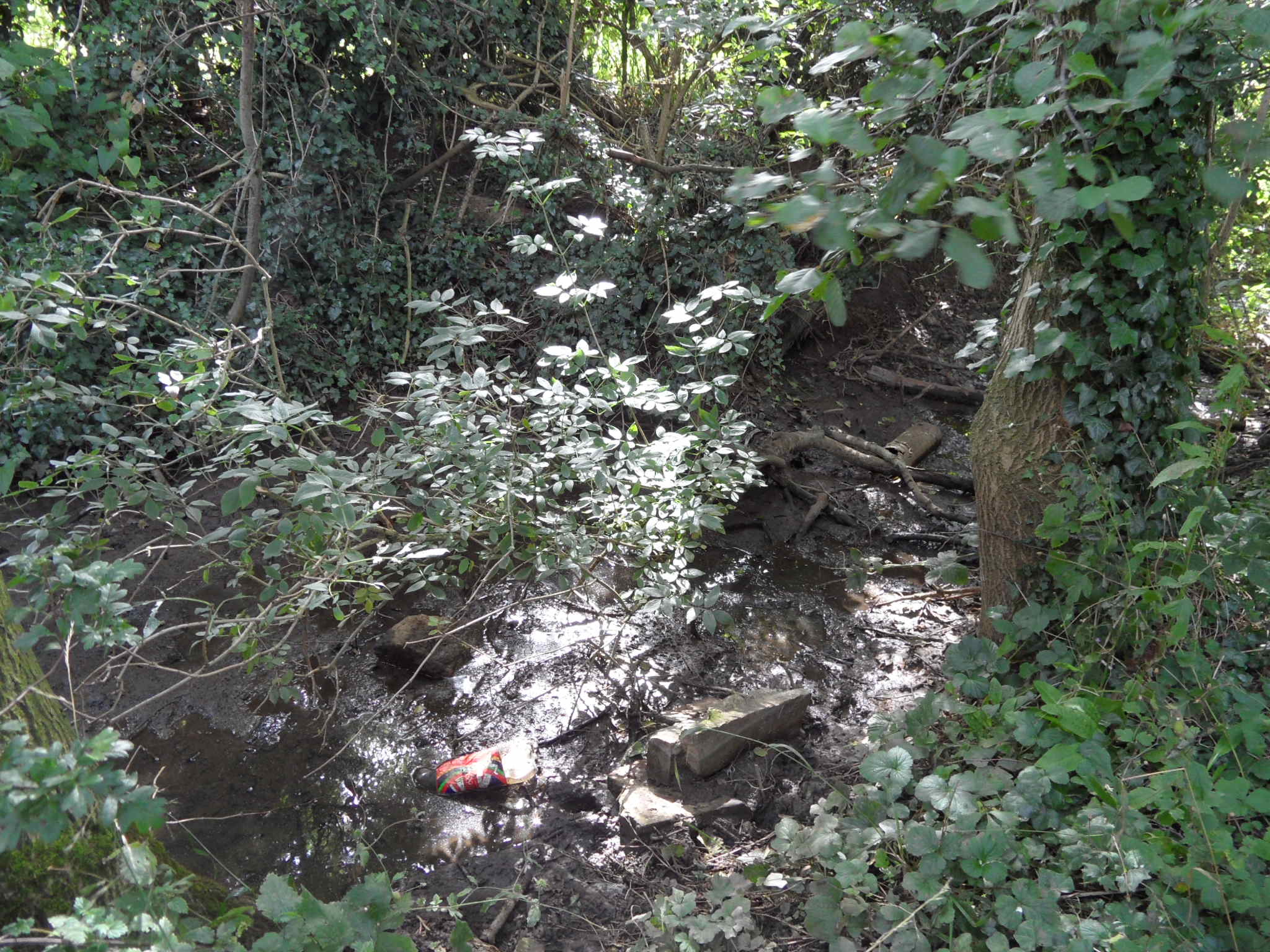
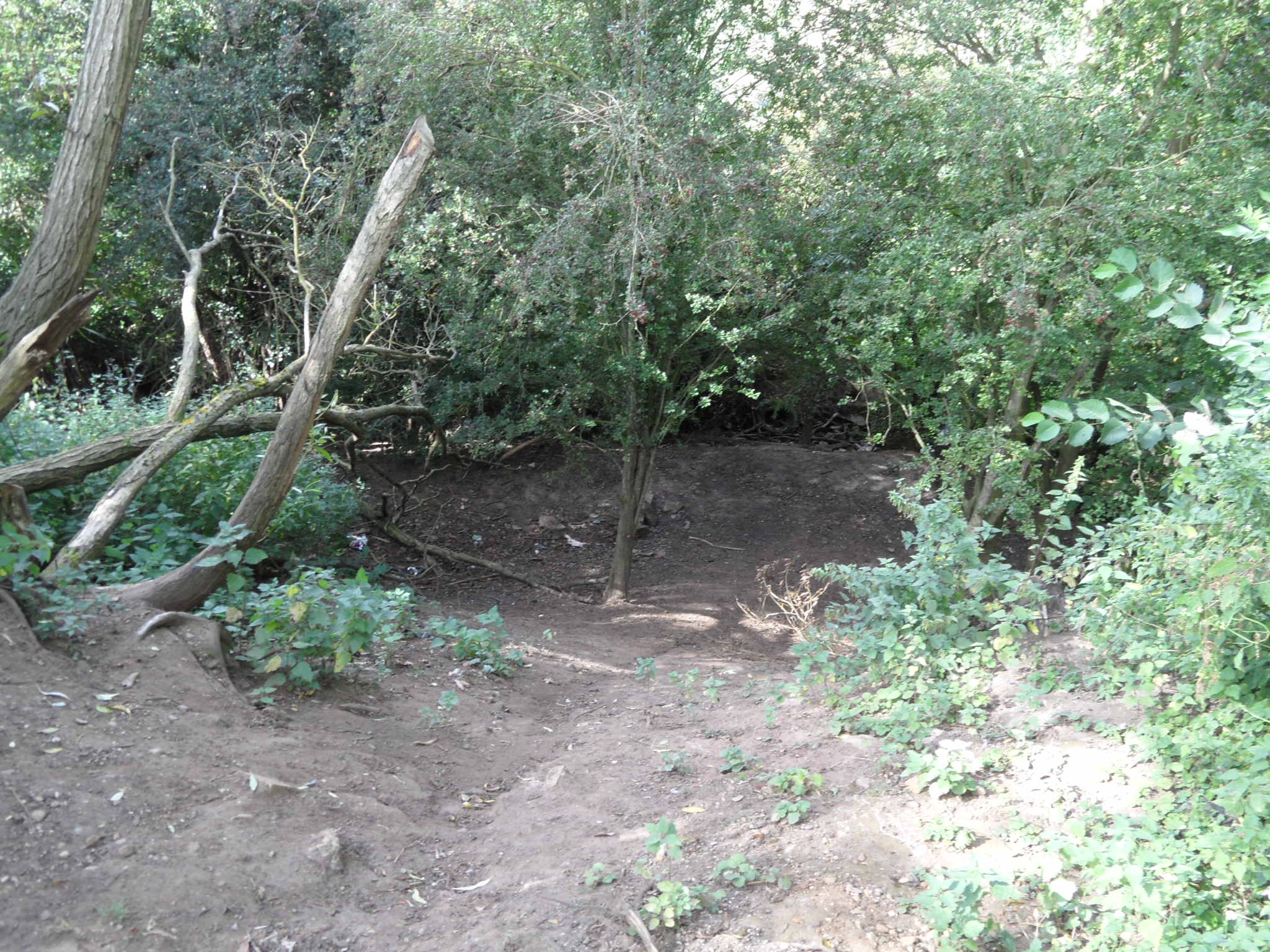
Despite the blue lines on the map, water was scarce, although some evidence of its presence lingered on in the channels it had forged over the centuries.

For much of the walk, we were separated from the route of the stream by steep embankments and rampant nettles, and at particularly challenging points, both!  Concerned about both the possibility of broken limbs and the availability of dock leaves, I didn’t stray far from the path, and used the zoom on my camera instead. Not very adventurous I know, but at least I lived to tell the tale!

Steeper than it looks! No, really it is!

Zoom.

Amidst the nettles is this green post. Any ideas?

A little way into the walk, watery looking plants and a visible outline convinced us that we’d found the site of the well marked on our Ordnance Survey map.

The smell of mint is what first alerted us to what we think is a well

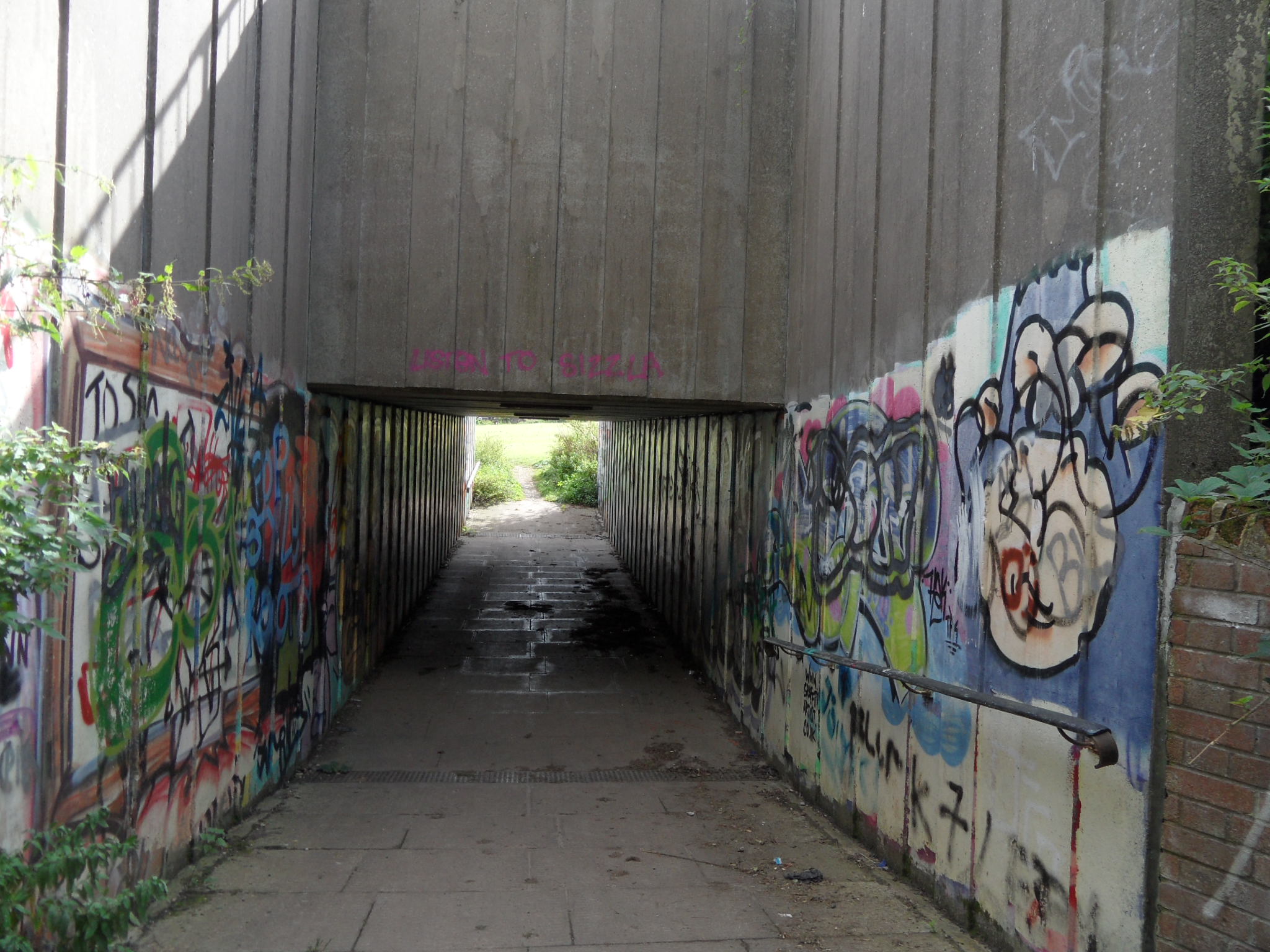
At the point where we lost the route of the brook altogether we retraced our steps back and tried to pick it up again further upstream. This time the route took us along a flat, public footpath with woodland and fields to our left and the busy western bypass and underpasses to our right,  reminding us that we were right on the fringe of the city here.

Bypass underpass

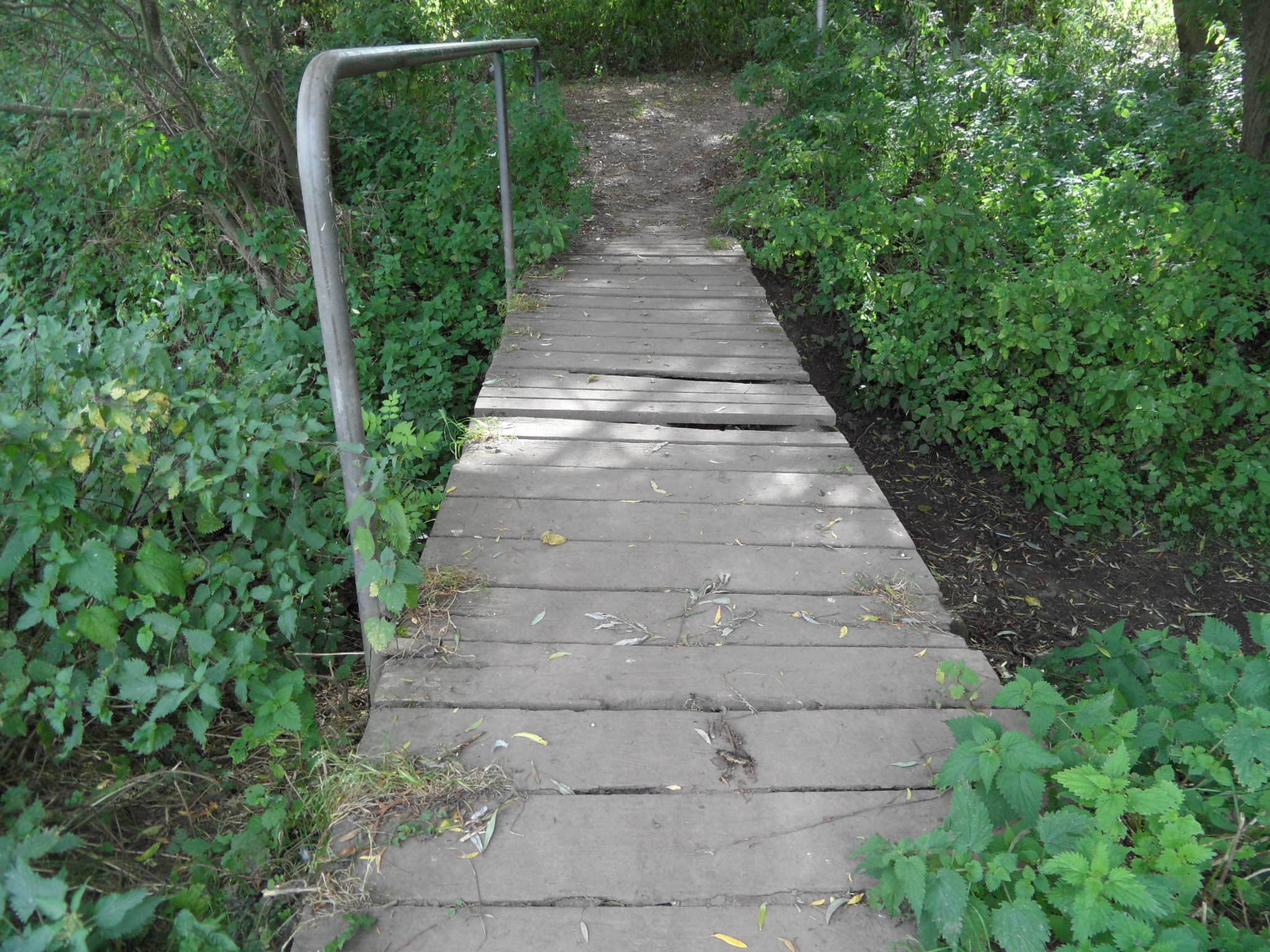
A footbridge gave us easy access to the stream here, but once again it was dry.

Had we not turned back, we’d have found ourselves in Elmhurst.  What I hadn’t realised at the time was that part of the route apparently dates back to Saxon times, and incorporates an archaeological feature known as ‘The Dimble’. It’s great that the name is still evident in the area today. I’d like to find out more about this ancient walkway (the information I’ve included here is pretty much all I’ve been able to find so far), and also clarify exactly what  a ‘Dimble’ is, as I’ve seen a couple of different definitions.

I was also unaware until reading up on it, that the Christian Fields LNR was a landfill site until the 1980s when it was capped. Twenty or so years of allowing nature (and volunteers) to reclaim the site, has resulted in a place reclaimed for people to enjoy and explore. So go and enjoy & explore!

Notes:

Big thanks to Brownhills Bob for providing me with a map of the site and information about the nature of water, especially the advice to keep an eye on that well…..

Information on Christian Fields LNR taken from http://www.lichfielddc.gov.uk/info/200029/countryside/83/site_management/4

Dig Days of Summer

Dig the Abbey is a community archaeology project, running over two consecutive summers, where volunteers (many of them local people) are excavating the site of Polesworth Abbey alongside professional archaeologists.

I went along to a Dig the Abbey 2011 tour last summer, not knowing what to expect. I found it so interesting that I was really looking forward to going again this year & took some friends, to see what kind of new discoveries had been made. We weren’t disappointed. Despite the rain, community archaeologist Tim Upson-Smith gave us a great tour of the site and answered all of our many, many questions (they weren’t just about just about the dig at Polesworth but they did all relate to archaeology!).

Amongst other things, we saw in situ medieval floor tiles, a medieval toilet (and learned what a useful find this is!) and a vessel (on which you could see the thumbprints of the potter that crafted it) lifted from the earth just that day. We learned a little about the procedure for the discovery of human remains and how they are dated. We heard about how the discovery of some structures in the trenches has answered questions about how the Abbey would have once looked, but how the discovery of others has created yet more questions.   We were made really nice cups of tea while we waited for the rain to give over a little!  We were so enthralled we forgot to take any photos! Luckily, the dig has its own regularly updated website, with photographs of the finds, maps of the trenches and news reports.

We’re definitely going back again towards the end of the dig. It hardly needs to be said but, if you have an interest in history or archaeology, I highly recommend going and taking a tour yourself. It took us around 30 minutes to get there from Lichfield (but that included unintentionally taking the scenic route through Tamworth town centre!).

Tours run every day of the dig at 2.15pm (1) The final tours will be on Saturday 8th and Sunday 9th of September, to coincide with the Open Heritage weekend (2). For more information, visit www.digtheabbey.co.uk

Notes:

(1) Monday to Friday (until 7th September) Saturday (25th August and 1st September)

(2) Please note that the heritage weekend here in Lichfield takes place on 22nd -23rd September, to coincide with the Johnson Birthday celebrations. I don’t want to confuse anyone!