Tree following: April Showers…..

It was time to revisit my tree on the lane next to Christ Church.  

Now I think it might be a horse chestnut.

I managed to dodge the heavy showers that had been falling on and off all day, but there was plenty of evidence of them. The air had an earthy smell and looking back towards Christchurch Lane from the A51 end, I noticed the reflection of the trees in the puddles. I’m not sure whether the onion ring crisp spillage adds to or detracts from the scene.

Soggy Crisps

I bet that the crisps were an after school snack, dropped in the haste to get get home before the next shower, but I wonder how these flowers came to be here? From the nearby churchyard perhaps?

Discarded flowers

 It was good to see some new arrivals along the lane.


This reminds me. How are those bluebells in Leomansley Woods coming along?

Verdun Acorns


This plaque is in Lichfield’s Garden of Remembrance.  It seems that the planting of acorns from Verdun was not unique to Lichfield and that there are oaks grown from Verdun acorns at many other places in the country, including Kew Gardens, Coventry, and Reading.

In a forum (1), I found a possible explanation for this. It suggests that a box of chestnuts and acorns were sent from Verdun to the London and North-West Railway Company, so that they could be sold to raise funds  for the benefit of the War Seal Foundation (L & N-W Section). It also says that sample boxes were sent to towns and cities along the route of the railway (of which Lichfield would be one?).

I’m going to have a look throught the newspaper archive to see if there is any information on this. In the meantime, it would be great to know if anyone has ever heard of this before or has any further information. I wonder who Mr Knights was?

Oak tree thought to be grown from an acorn, from an oak tree grown from a 'Verdun Acorn'.


Edit 16/4/2012

I had a quick look through the British Newspapers archive and there is this snippet from the Western Times, Tuesday 24th July 1917.

“A resident of Ealing has presented the town with two chestnut trees and an oak tree grown from chestnuts and an acorn gathered by the Mayor of Verdun from the devasted forests of Vaux and Douaumount. They are to be planted in the Walpole Park as a memorial to the defence of Verdun’.

 Sources:

Statuesque

Walking home last Monday I took a detour past the Cathedral to have another look for the remaining five original, medieval statues.  I was pretty sure that I’d found two on the northwest tower –  one nameless woman next to Eve and another to the left of Deborah. The Victorian statues tend to have names on their pedestals. There’s an old photograph of the western front of the Cathedral pre-restoration on the English Heritage Viewfinder website, which you can see here. It shows the front looking strangely bare – above the row of kings only the niches containing the few remaining original statues are filled.

Medieval statue?, Deborah, Rachel, Rebekah, Sarah, Medieval statue?, Eve

According to a comment someone left on here, there are other statues on the other side of the north west tower. Unfortunately, my timing wasn’t great as someone was cutting the grass alongside the tower and a Midlands Today van had not long pulled up nearby and were making preparations to film (I later found out they were there to cover the Olympic Torch route story). As I didn’t fancy making a cameo appearance, dodging the mower in the background of a news report, I took a hasty few photos of the tower and carried on around the back of the Cathedral.  Stupidly, I didn’t check them before I got home and it’s not easy to make out much.  Another trip is in order….

Affix quality control sticker here

The medieval statue hunt continued as I walked around, in case one had sneaked in somewhere other than the northwest tower. I found Christopher Wren, Elias Ashmole and Dr Johnson amongst others along the way.

“The world is not yet exhausted; let me see something tomorrow which I never saw before” said Dr Johnson.

Most of the statues are accompanied by something symbolic – Johnson of course has his dictionary.  It’s the same for the kings (e.g. William the Conqueror holds the Domesday Book) and the biblical characters (I knew nothing about Deborah, but according to wikipedia she was a prophet and a judge and delivered her verdicts near a palm tree which explains why there’s one behind her statue).  I was wondering about Eve? Surely that’s an apple near her foot but what is she holding in her hand?  Imagine if you someone was to create a statue of you and they had to sum up your life with an object or two!

Image taken from Wikipedia

Just past Dr Johnson and his big, papery thing is another statue.  She has no name and as far as I can see there is no clue to her identity. I’m speculating, but is this one of the many statues destroyed or defaced by the parliamentary troops during the Civil War?   Most of the other damaged statues were removed – where did they end up I wonder? I came across some great photos of a figure of Christ on Aidan McRae Thomson’s flickrstream at a church in Swynnerton, Staffordshire together with an interesting theory that the statue originated from Lichfield Cathedral. If anyone else has any theories or even evidence of where the statues ended up, I’d love to hear them!

I have to confess that for me, sometimes the Cathedral is just there, part of the scenery as I go about the city. However, there are other times when, either by chance (catching the light a certain way) or by design (medieval statue hunting), the Cathedral commands my full attention and once again, I am reminded of what an incredible building this is, and the skill and talent of the craftspeople who made it so.

Tree following: Tree Routes

As far I understand it, the path running past Christ Church was at one point the old Walsall Rd, ‘realigned under an Act of 1832 with the new Queen Street and Walsall Road bypassing the route along Lower Sandford Street and what was later called Christchurch Lane. That lane takes its name from the church opened in 1847, and by then it had been continued south-west from the church to the new Walsall road, the old line from Lower Sandford Street having been turned into a drive for Beacon Place’.(1)

The path is surrounded by trees that I believe were planted in the mid-19th century by the Hinckleys of Beacon Place, the estate that occupied most of what is now Beacon Park between 1800-ish and 1964, when the house was demolished.

So that’s a bit of historical scene setting, now what about the tree!

There’s one along this path in particular that seems to attract attention. Several people have commented on it in the past. I even heard a girl refer to it as ‘The Skeleton Tree’! I’m not even sure what kind of tree this is but how could I resist following it?!

How do holes like this form in a tree? As usual, on nature matters I can’t offer any upfront answers (though rest assured I shall be trying to find out, part of the reason I’m doing this is to learn things!) but I can give you a peep into the hole nearest to the ground.


And a close up of the one at the top…….


Nearby, the snowdrops are looking very shabby now.

I love to see these little flowers at the end of the winter, but I have to confess I’m even happier when I see these…

Not quite a host, but enough to signal that spring has arrived in this part of Lichfield! The wild garlic has also made an appearance. The aroma from the leaves is incredible, I’m sorry I can’t share it. No pretty white flowers yet though, let’s see what April brings for the Old Walsall Road!

Talking of Walsall, I’ve just found out that the brilliant & enthusiatic Morgan, a Walsall Countryside Ranger has started a Walsall Wildlife blog. She’s one of the most knowledgable people I know about nature and I’ve learnt loads from her (although clearly this is very much an ongoing education 😉 ). I really recommend that you check out this and the Walsall Wildlife flickrstream.  I bet Morgan even knows how those holes in the trees got there……!

Sources:

(1)’Lichfield: The 19th century’, A History of the County of Stafford: Volume 14: Lichfield (1990), pp. 24-32. URL: http://www.british-history.ac.uk/report.aspx?compid=42338  Date accessed: 25 March 2012.


Well Being

My visit to Farewell several weeks ago got me interested in finding out more about wells. Brownhills Bob showed me a map of the area around Farewell and it’s amazing to see how many other ‘well’ related placenames there are in that area alone e.g. Stoneywell, Cresswell, Coldwell, Nuns Well and my own personal favourite, Giddywell (wonder what was in the water there?!).

I’ll come back to these another time but for now I thought it would be interesting to find out a bit about what’s probably the most well known well in our area – St Chad’s Well here in Lichfield.

The well has changed a fair bit over the years. The earliest description of the well is said to come from Leland who visited in the 1500s and is quoted in a Lichfield history book published in 1819 as saying “…Stowe church on the east of the towne where is St Chad’s well a spring of pure water where is seen a stone in the bottom of it on which some say St Chad was wont naked to stand in the water and pray at this stone…”.

Today, St Chad’s Well looks like this.


Below is a picture of the well and church drawn by William Stukeley in 1736. As far as I know, it’s the oldest image of the well that there is.

However, James Rawson reported that by 1833 the well had ‘degenerated into a most undignified puddle, more than 6 feet deep’. He seems to dispute Stukeley’s drawing, saying that there was no outlet for escape of water and the brook was not near to the well as depicted above. The well basin had become ‘filled up with mud and filth’ which Rawson believed was due to drainage in the surrounding meadows. As a result an octagonal building was erected over the well, which remained in place until 1947, when I understand that the well was actually moved to its present position and took on its current form. It would be interesting to see if there are any first hand accounts of this?

St Chad's Well, 1915. Image from Wikipedia

 
At some point it seems people may have thought the water in the well was harmful to drink. In a volume of ‘The Antiquary’, published in 1889 a Rev C F R Palmer is quoted as saying “It is popularly believed that it is dangerous to drink of the water of St. Chad’s Well, as it is sure to give a fit of the ” shakes,” Yet, in spite of the attendant’s remonstrances, I took a good draught, and, instead of ague, experienced only great refreshment in a fatiguing walk on a sultry day”. Like Rev Palmer, the lad in the photo looks like he’s about to take a good draught and doesn’t seem too concerned!

In 1806, Thomas Harwood wrote that ” The superstitious custom of adorning this well with boughs and of reading the gospel for the day at this and at other wells and pumps is yet observed in this city on Ascension Day”.  According to St Chad’s church website, the tradition of well dressing (mostly associated with our neighbours over in Derbyshire) was revived in 1995 to commemorate the 50th anniversary of Christian Aid. I think the last well dressing was in 2010 with a girl guide theme. I wonder if the custom will be revived again?

I had always assumed that the well and the spring were one and the same, but it seems that it was separate, or at least it became separate at some point. I don’t feel too bad about my ignorance though, as in 1923, the churchwarden Thomas Moseley said ‘no living person knew where the water came from’. In a book published in 1846, I’ve read that ‘The water of the well is sulphurated and near to it is a pretty iron pump giving water from a second well which is a superfine chalybeate’ and in an archaeological survey from 2006, it refers to a little brick building containing the spring. The survey was carried out as there was a proposal to build a visitors centre in the well’s vicinity. I understand that plans for the centre were abandoned in February 2008 but the survey makes for an interesting read and you can find it here.

Though plans for a visitors centre didn’t come to fruition, there is another project that will bring people to the well. On 1st April,  at 2.30pm the Bishop of Lichfield will be opening the first interpretation panel on the Two Saints Way, a pilgrimage route linking Lichfield Cathedral and St Chad’s Well with the shrine of St Werburgh at Chester Cathedral. I hope this is a success and I wish David Potts and all those involved……well!

Sources:

Some account of Croyland Abbey, read by JM Gresley by William Stukeley

A Short Account of ther City and Close of Lichfield by Thomas George Lomax, John Chappel Woodhouse and William Newling

The Gentleman’s magazine, Volume 217

www.saintchads.org.uk/sitebuildercontent/sitebuilderfiles/parishprofile2011.pdf

www.stchads.org.uk

 The Wanderings of a Pen & Pencil by F P Palmer (1846)

The Antiquary Vol 22

http://archaeologydataservice.ac.uk/catalogue/adsdata/arch-841-1/dissemination/pdf/oxfordar1-50626_1.pdf


I Spy….

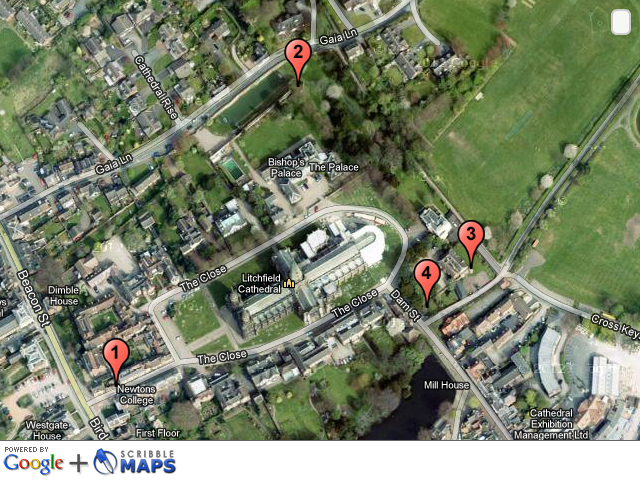
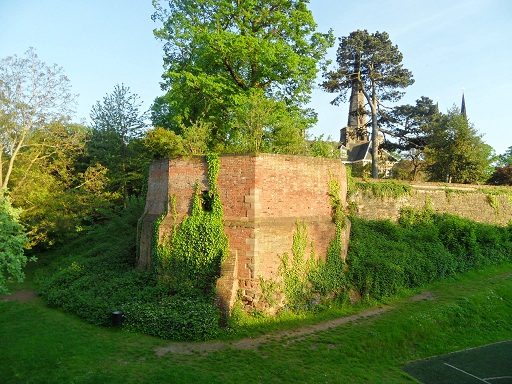
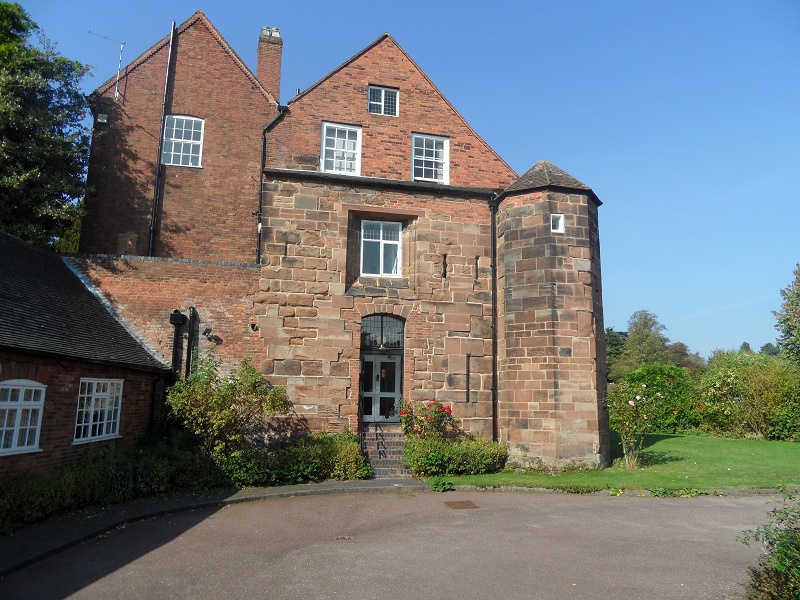
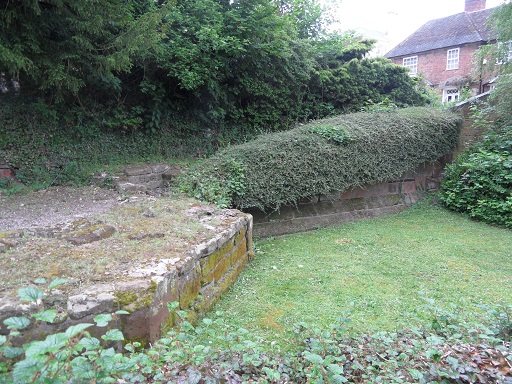
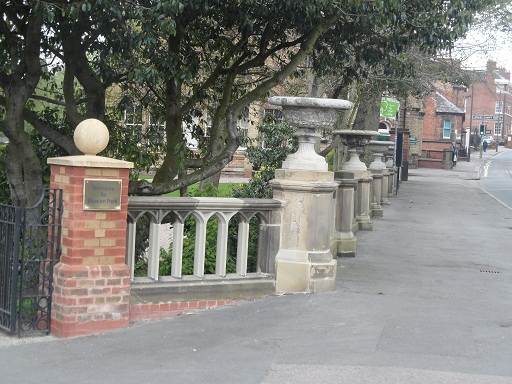
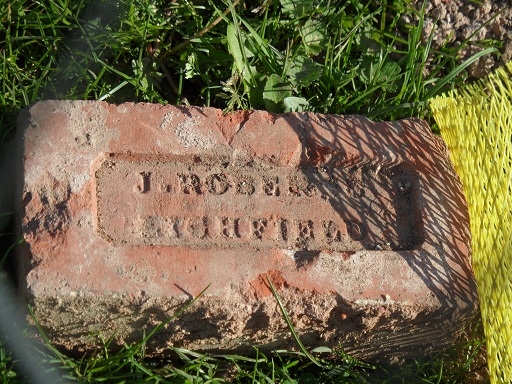
David Evans, who does some great work over on BrownhillsBob’s Brownhills Blog, has set a challenge! There are two photos below, and David wonders whether anyone knows where in Lichfield each of them were taken.

Where is this?


We have a clue for this one! 'A cut(let) above the rest, perhaps?'

As Pat recently sent me an email about the remaining medieval statues on the Cathedral, this seems like a good subject for a third question! I’ve read that there are five original statues on the north west tower. Has anyone ever identified which they are? I think I’d hazard a guess that there are two of them on the following photo, but I’d be interested to know what others think.


Thanks to David for contributing these photos, and encouraging us to keep our eyes open and not being one of the millions, as referred to on that sign!

Source:

Public sculpture of Staffordshire and the Black Country by George Thomas Noszlopy, Fiona Waterhouse

Tree Following: Sticking it out

To contrast with Leomansley Woods, I’m also following the newly planted cider orchard at The Walled Garden at Woodhouse Community Farm.

The majority of the orchard was planted on a cold but sunny day in January, but there were 8 more trees to be planted and so I went along last Sunday. Another sunny day, but a bit warmer this time!

There will be apples.....


.....one day.

Some buds are starting to form, but other than that, there’s not much change.  So it looks like it might be some time before we get to make any cider. Until then, sitting & chatting in the sun in the beautiful surroundings of the farm,  a cup of tea and one of Annamarie’s cakes will do just fine 🙂

By the way, The Walled Garden have their own website here where you can find out more about the farm and sign up for their community supported agriculture scheme.

Tree Following: Yellow

This week I went along to Leomansley Woods to do my first bit of tree following. It probably sounds ridiculous but choosing one tree wasn’t that easy. You can’t see the tree for the woods or something I suppose. In the end I decided on this tree, at the edge of the wood.

The surrounding debris & hazy memories of last year lead me to believe this is an Oak.

Jumbled branches


The trunk. I'll take a tape measure next time to get some clue to the tree's age?


Lichen


Is this a coaltit getting in on the act?

While I was there, I thought following the entrance to the woods, the woodland floor and the hedgerows running alongside the lane might be nice too.

The entrance to the woods. The path running alongside forms part of The Darwin Walk and will take you to Pipe Green

Judging by the green shoots, it won’t be long before the woods are covered in bluebells. I think though, the colour of March is going to be yellow.

Lesser celandine?


Even I know that these are daffodils!


I don't know these though - they were growing in the hedgerow.

As a bit of a disclaimer (though if you read the captions above it hardly needs to be said!), I don’t know that much about trees & plants. I can’t tell my ash from my elder. One of the reasons I want to do this, is because it’ll be a good opportunity to learn more. For example, I now know what Lesser Celandine is, and that as one of the first flowers of the year, it is known as Spring Messenger. Slightly less picturesque is one of its alternative names – Pilewort.

I’ve already had some great input from a couple of people, on where to find interesting trees in our area. There could well be a ‘Tree Hunting’ spin off! So a big thanks to Roger and Pat for this – I shall be keeping my eyes open!

Also, over to the right are some links to people who actually know what they are talking about when it comes to flora and fauna, and they take some fabulous photographs to prove it! I definitely recommend taking a look!

Take a Bough

I’ve heard about a project called Tree Following via Gary Webb on Twitter, who is following a London Plane at Compton Verney. The project is being run by Lucy Corrander on her Loose and Leafy blog and the idea is to follow the life of a tree or a group of trees, returning at various points in the year to note the changes and what’s going on.

I love how trees reflect the changing seasons but also what they can tell us about our changing surroundings. For example, some like those at Beacon Park, are reminders of an old estate, when the buildings themselves are long gone.  I like the idea that each species of tree has a history, with its own uses and customs and also that there have been trees in the past which have been so important they have given their name to an area, such as the Shire Oak at Walsall Wood.

Which tree(s) should I follow though? Here are some contenders, in and around Lichfield.

My current thoughts are that I’ll choose a tree at Leomansley Wood and also our cider orchard at Fisherwick. I hope the comparison between a mature woodland tree and an orchard sapling will be interesting. Although, as you can see from the photo, the cider trees aren’t much more than sticks at the moment, so we’ll see!

Bricks & Water

With traces of snow on the ground, but the sun shining, I headed back to Farewell last weekend.  Following my previous visit, I’d had a look at some old maps and another extremely helpful conversation with BrownhillsBob on the subject of wells. I was hopeful that this time I’d be able to find the site of the well, that gave the place its name.

This description of the well is from ‘A Tale of Fairwell’, set at the priory in 1527 and published in the early 1800s  – ‘Exactly in the centre, the sparkling tide of a large well or rather fountain leapt from a carved stone basin and hurrying hither and thither amidst rich grass floated under an arch in the wall into the pool that supplied the mill.’ Whether there is any element of truth in this description or whether it’s completely imagined, I don’t know!

All I could find is this hollow, which is marked on maps ranging from 1884 to the late 1960s, as a pond. The maps also show a well or spring to the north east marked as ‘Well’ or ‘Fare Well’.

 Just down from this old pond, is a small brook in which there are some big chunks of stone. This brings me onto the next question! What remains of the priory of St Mary, initially founded as a hermitage but shortly afterwards converted into a nunnery?

The priory was dissolved in 1527. It seems that the old nunnery chapel was retained as a church but most of it was rebuilt in 1747 in brick,  leaving only the stone chancel.

The two different parts of the church.

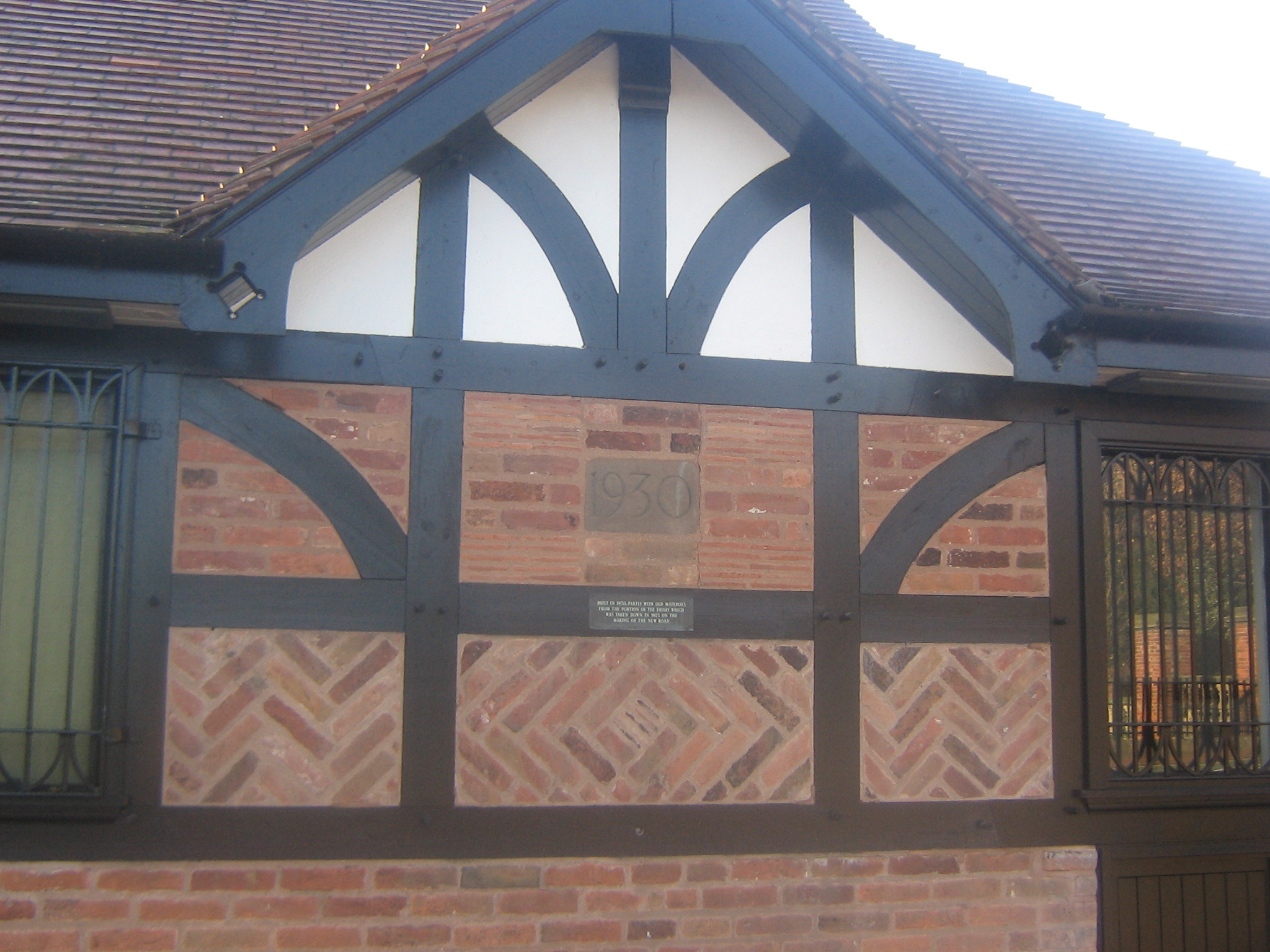
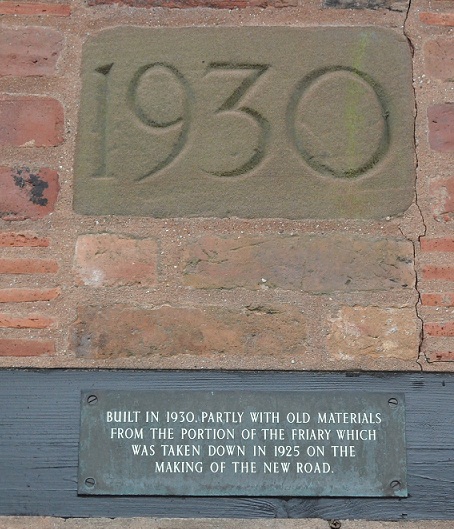
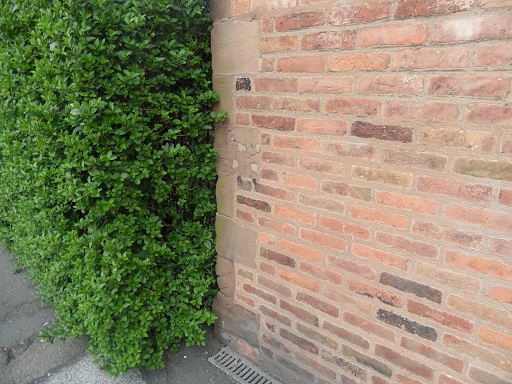
Pat suggested that a nearby wall might contain some of the stone from the earlier building(s).

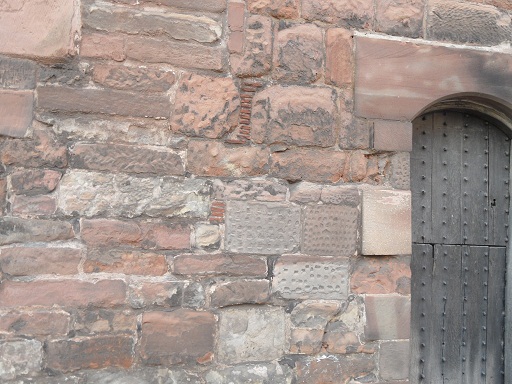
A brick wall has been built around the church yard, and this too seems to incorporate some older stone?

A archaeological resistivity survey carried out in 1992 located areas of higher resistivity thought to relate to demolition debris from structures associated with the church. Staffordshire Record Office hold the results of the survey which ‘revealed significant archaeological remains relating to the priory, including walls of buildings and the remains of the precinct wall’. I wonder whereabouts?

Until I can get my grubby mitts on a copy of this or any other real evidence, I’ll just have to be content that Farewell is a lovely place to speculate about!