Higher Ground

As these things go, the highest village in England is a decent title to have. Far better than being say the wettest place (1) or the most haunted village (2). Yet, it appears wherever there there’s a superlative at stake, there will always be controversy and more often than not a good story to go along with it.  Just ask the good people of Burntwood about their park.

Flash village sign

Someone at Visit Cumbria was presumably high on Kendal Mint Cake when they wrote that Nenthead  in their county was England’s highest village.  The title belongs to Flash, Staffordshire, 1,518ft above sea level, and they have the paper sign to prove it.  The official village sign goes one step further however, proclaiming Flash to be the highest village in Britain, a claim disputed by Scotland’s highest village Wanlockhead. However in 2007 the BBC One show intervened and declared the Staffordshire village was indeed the higher of the two and perfectly entitled to look down on its Scottish rival. (3)

Flash villageElsewhere on t’internet, you will see the bold statement that there is no doubt that the Methodist Church in Flash is the highest in the country. However, the chapel has been converted to a residential property (it’s rather lovely and currently up for sale). Is a deconsecrated church still a church? Perhaps we should ask the people in charge of the second highest Methodist Church in England what they think….

Flash methodist church.jpg
To even begin contemplating whether the New Inn at Flash is the highest pub in Britain, England or even Staffordshire, I’d need a stiff drink  but sadly on my visit, the pub was closed (although only for the afternoon). Instead I had to be content with Flash’s other watering hole i.e. the village well, dressed every year (the 2016 blessing will take place at 2.30pm on 18th June ) as is the custom in these parts.

Flash villag well

Flash’s well dressing tradition is a recent one, an addition to the annual and much older teapot parade, surely the highest teapot parade in the country. Ok, the only teapot parade in the country. It celebrates the village’s friendly society, established in 1846 to provide for residents who had fallen on hard times and only dissolved in the 1990s. The name is believed to derive from the vessel used to collect and hold the funds until someone needed them. There’s a fantastic write up and photographs here by the wonderful Pixy Led who attended the festivities in 2014.

Flash pub sign

New Inn Flash.jpg

Although several people have started singing this when I’ve mentioned the village name, the traditional or folk etymology relates to something rather less heroic. A villainous looking character appears on the pub sign, and represents the gang who supposedly set up presses here making counterfeit or ‘flash’ money.  However, in David Horovitz’s invaluable survey of Staffordshire place names, he suggests the place name likely derives from a Scandinavian word meaning a swamp, or a pool of water. As a folklore loving linguist I shall sit on the fence.  And if the fence is in Flash it might be the highest fence in Britain…ok, I’ll stop now.

Flash cat

The highest cat and the highest Kate in the country. Possibly.


Notes

(1) There is indeed a good story about this. Earlier this year, the village of Eglwyswrw in South Wales had had rain for 83 consecutive days and were just six days short of the record set by Eallabus, Scotland in 1923. It was national news. The Telegraph reported on it imaginatively illustrating an article on a wet place in Wales with an umbrella and a sheep and even had a timer counting down the days, hours and seconds until Eglwyswrw claimed the soggy crown from the Scots but it was not to be and so Eallabus retains the title.

(2) A title awarded by the Guinness Book of Records in 1989 as it has twelve ghosts. Or more accurately perhaps, twelve ghost stories.

(3) Whilst on the subject please let’s take a few moments to think about Bwlchgwyn which erected signs announcing it was the highest village in Wales, but later discovered it is only the third highest. And yes, the Telegraph, the Metro and numerous others have already done the ‘left feeling low’ pun. Bet they wish they’d made their sign out of paper…


Dark Water

In Hans Christian Andersen’s fairy tale, the Little Mermaid lives, ‘Far out in the ocean, where the water is as blue as the prettiest cornflower, and as clear as crystal”. Our Staffordshire mermaid lives in Blake Mere high up in the Peak District, where the water is as black as the local peat, and as murky as the truth behind this classic bit of local folklore.

At midnight, the Blake Mere mermaid rises from her pool to entice single men travelling along the road between Leek and Buxton to a watery grave. Some say that animals refuse to drink there, sensing this malevolent presence in the dark water. Others insist the pool is bottomless, although I certainly wouldn’t call it that after seeing a man skinny dipping in there.  As it was around two in the afternoon, he presumably hadn’t been lured in by the siren’s call. To be honest, even if she’d been singing her heart out he’d probably not have heard her anyway as she’d  have been drowned out by the sound of my kids arguing about crisps.

Black Mere Pool

Black Mere Pool. Not always bottomless

One version of the mermaid’s tale is that a sailor from the nearby village of Thorncliffe fell in love with her and brought her back to landlocked Staffordshire from the sea like a goldfish won at a fair. This may explain her animosity towards single men. A more sinister explanation for her presence is that she was once a young woman who rejected the advances of a local man called Joshua Linnet. Hell hath no fury like a man scorned and he accused her of being a witch, convincing some of the other locals to drown her in the pool. Three days later he was found dead in the water, his face clawed to pieces.

Of course, I don’t believe in mermaids but I also don’t believe that such stories emerge from out of the blue. In 1679, a woman was murdered by a man who overheard her talking about the money she’d earned from selling lace at Leek and followed her home over the moors where he attacked and robbed her, throwing her body into Blake Mere. The pool was also the scene of an attempted murder, undated but described in detail by Robert Plot in his Natural History of Staffordshire (1686). However, in recounting events, Plot makes no mention of the mermaid folklore and I can’t help but wonder if someone took the true events which took place here and reworked them into a legend.

Mermaid Inn

The Mermaid Inn. And yes I will be looking up where and what ‘Royal Cottage’ is

But who and why? There is a reported sighting of the mermaid in the mid nineteenth century when locals apparently began to drain the pool in an attempt to discover whether it truly was bottomless. Their antics supposedly incurred the wrath of the watery wraith, causing her to get up from her lakebed before midnight for once to warn them that she’d flood nearby Leek and Leekfrith if they didn’t stop immediately.  It seems to have been around this time that The Mermaid Inn got its name and somewhere within its walls the legend of the eponymous creature has been inscribed.

She calls on you to greet her
Combing her dripping crown
And if you go to greet her
She ups and drags you down

I suspect the story may have been a clever PR stunt by the landlord possibly in cahoots with the locals (I’d happily say I saw a mermaid in Minster Pool if Suzie at The Drum offered me free beer). Or perhaps I’m being a cynical southerner and strange things really do happen up in the wild and mysterious north…..  These days The Mermaid Inn is self catering accommodation and so you’ll have to go elsewhere if you want to drink like a fish. I headed for Flash and what’s probably the highest pub in England. Other drinking establishments are available (as I found out when that was shut too, albeit it only for the afternoon).


Taylor Made

Whilst I’ve been in Wolverhampton attempting to master the phonemic alphabet and the forty four sounds of spoken English, things have been a bit quiet here on lɪtʃˌfiːld lɔː However, the exams are over and my final assignment for the second year has been handed in (note to those who say I leave things to the last minute, I actually had a good seven minutes to spare) and so a summer of stone gazing awaits.

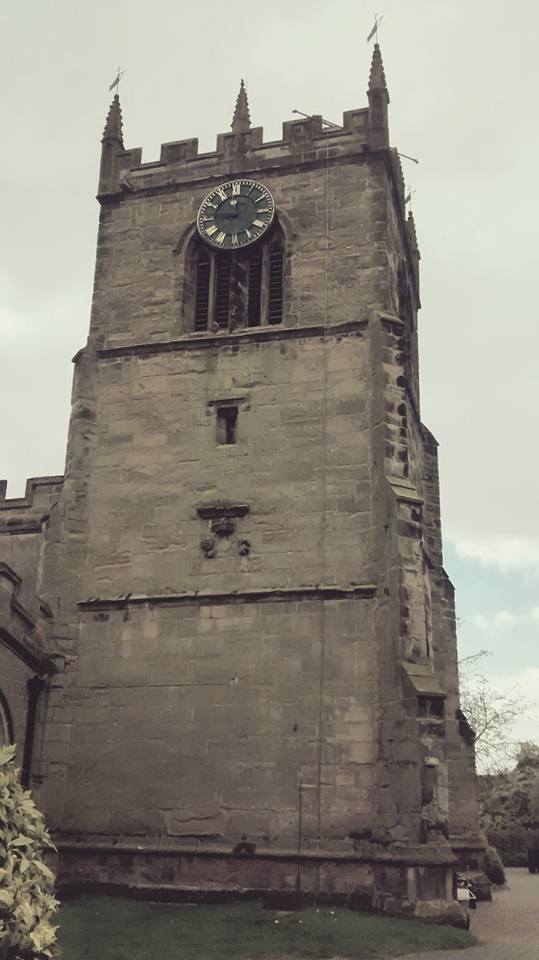
My first ride out of the season took me to Barton Under Needwood and specifically to St James, the only church in Staffordshire to be built in the Tudor period I believe. According to Greenslade, it stands on the site of the cottage where founder Dr John Taylor was born in 1480(ish), the eldest of triplets. The story of the Taylor triplets is well known although several versions exist.  In perhaps the most romantic of these, King Henry VII was hunting in Needwood Forest when he became separated from his companions. He stopped off at a small cottage to seek directions back to Tutbury Castle and found that the couple living there were the parents of three strong healthy triplets. Perhaps a more likely story is that three surviving triplets were presented to the King as, if not quite a miracle, something that may have appeared close to one in those days when between a third and a half of children didn’t make it to their fifth birthday (the King would himself go on to lose three children in their infancy). What is certain is that Henry took it upon himself to be responsible for the boys’ education. In John’s case, there is note in the Royal Privy purse expenses of 1498 ‘for the wages of the King’s Scoler John Taillor at Oxenford’. A career in the church and as civil servant followed, with John eventually holding the position of Master of the Rolls between 1527 and 1534. It may sound like he was in charge of the King’s packed lunches but it was actually the third most senior judicial position in the country.

The tower of St James at Barton under Needwood

The tower of St James at Barton under Needwood

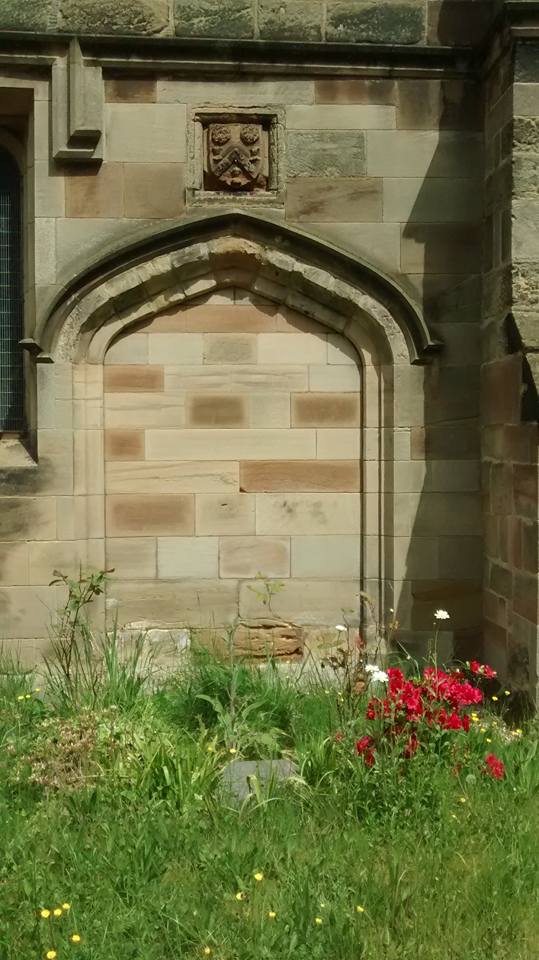
Taylor’s initials can be found on the church tower alongside the year 1517, when work commenced at St James (then dedicated to Mary Magdalene). Work was completed in 1533, and Taylor died the following year. However, his final resting place is elsewhere. John Stow’s survey of London in 1598 records it as being at St Anthony’s Hospital in London. However, there is a suggestion that the intention was for it to be here at St James which would have brought the local lad done good’s life full circle. Pevsner suggests that a blank arch in the north wall of the chancel may have been designed to house his tomb although why this never came to be is unknown. Another gap or three, based on the reading I’ve done so far, is what became of the other Taylor triplets Rowland and Nathaniel Taylor and also their elder sister Elizabeth, denied the opportunities of her brothers as she was not a) a triplet or b) male. How does her life compare to theirs? Taylor’s tale may be well known, but it seems to me to that the story of Barton’s most famous son and his family is far from being all sewn up.

Above this blocked doorway at St James is the coat of arms of John Taylor. Look closely and you'll se it features three little heads, representing John and his brothers.

Above this blocked doorway at St James is the coat of arms of John Taylor. Look closely and you’ll see it features three little heads, representing John and his brothers.

Greenslade, M (1996) Catholic Staffordshire Gracewing:Leominster


Heaven Knows I’m Misericords Now

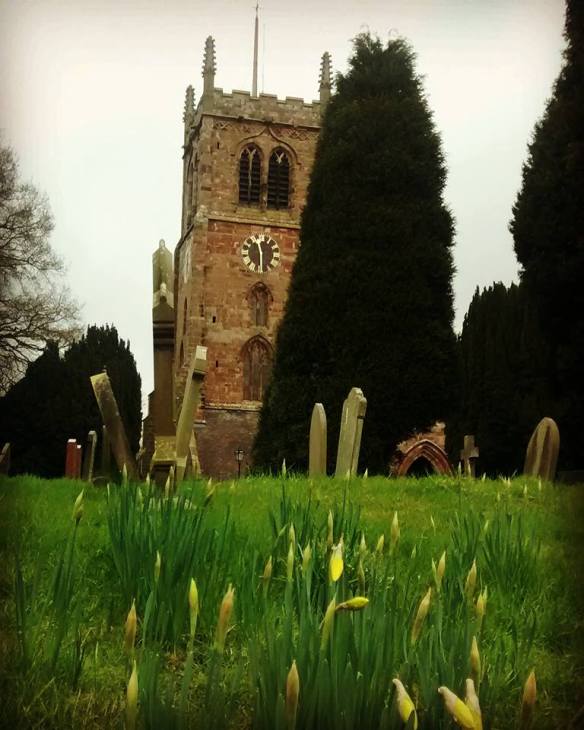
The introduction to the guidebook for Holy Trinity at Eccleshall includes the following modern version of Psalm 84 Verse 10,  “I’d rather scrub the floors in the house of my God than be honoured as a guest in the palace of sin”.

Thirteenth century sandstone font and some plumped up cushions

Appropriate then that my brilliant friend Patti Wills and I had inadvertently visited on the day the church was being spring cleaned. I may have had to climb over a vaccum cleaner to see a stone effigy at at the entrance to the tower but the bonus was that parts of the church that wouldn’t normally have been open were. And in addition, there were some very nice people there to point out the locations of the tombs of the Bishops of Lichfield who are buried here.

eccleshall church

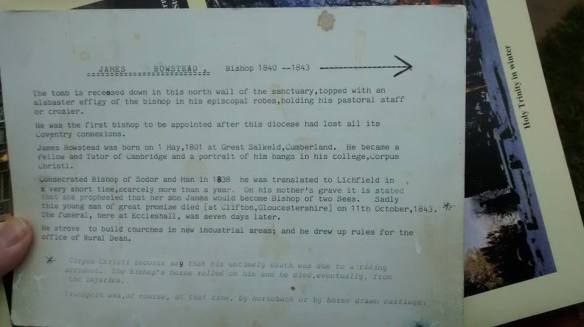
Near the altar are the tombs of William Overton (1525 – 1609) who was responsible for bringing French glassmakers to the area, with furnaces set up in the nearby Bishop’s Wood and James Bowstead (1801 – 1843) the former Bishop of Sodor (I honestly thought this was a made up place in Thomas the Tank Engine until now) and Man who became the Bishop of Lichfield (but not Coventry) in 1840. Extra information given on a card in the church (which I almost stole after getting distracted by some fossils) includes the slightly odd story that his mother’s grave states that she once prophesised that James would become the Bishop of two Sees. Think that warrants further investigation.

Ooops

I promise I took it back!

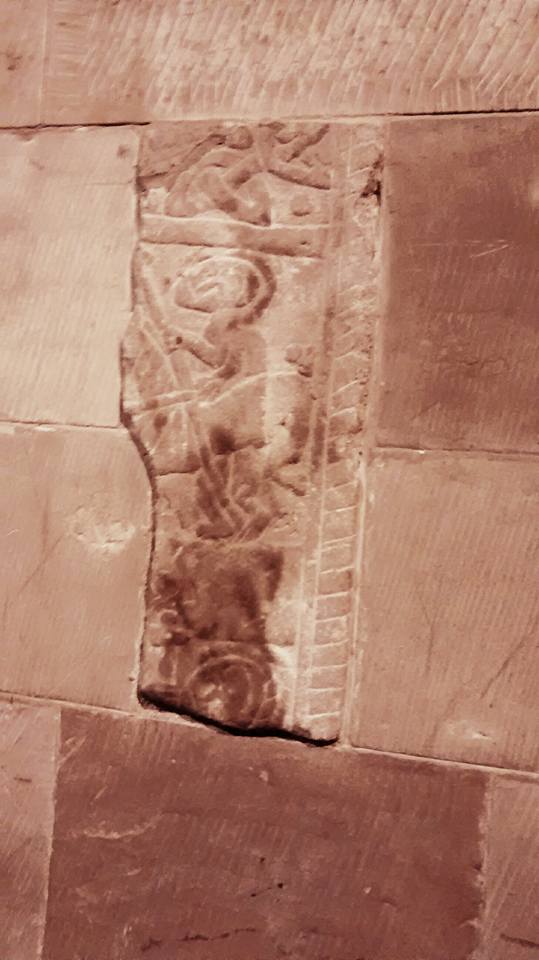
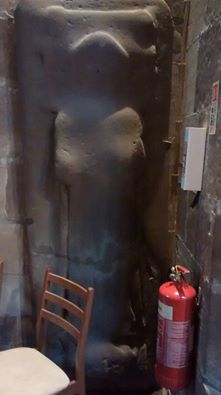
In the Choir Vestry, relocated from the Chantry, is the tomb of Thomas Bentham (1513 – 1578) who became the first Bishop of Lichfield under Elizabeth I and also the first who was a married man. There are also two fragments of a Saxon preaching cross, one featuring two figures separated by a tree and the other, a man and a horse. The pair of figures on the former have been interpreted by some as Adam and Eve alongside the Tree of Life and the figure on the latter as a possible early representation of St Chad, who was of course the first Bishop of Lichfield. Although there is little other evidence at present, the presence of the cross and the name Eccleshall itself suggest that there may have been an early Christian community here. According to Horovitz, the Eccles element of the name derives from the Welsh word for exactly that.

Eccleshall anglo saxon carving

John Lonsdale (1788 – 1867), the last Bishop of Lichfield to live in Eccleshall Castle, has a commemorative tablet on the south wall of the Chancel and is buried in the churchyard here although he also has an effigy in Lichfield Cathedral. I’m also assuming that Robert Wright, the Bishop who died at Eccleshall Castle in September 1643 and whose burial was delayed as the castle was under siege from the parliamentarians, was eventually laid to rest somewhere here too. According to the church guide, this stone was once thought to have been his badly worn effigy but as it has been dated to a much earlier period that can’t be Wright. Sorry right.

stone effigy eccleshall

Over in the Old Baptistry, one of those areas of the church which is usually locked but was open for dusting, is the tomb of Bishop Richard Samson (c.1470 – 1554) who gained favour with Henry VIII thanks to his support for the King’s divorce from Catherine of Aragon. On top of the tomb someone has carved the outline of a hand complete with a bracelet (as on the porch of Longdon Church here).

hand carving eccleshall

We were excited about this graffiti find and so was the man with the duster when we told him about it. In the Baptistry, there are also three medieval misericords from the old choir stalls displayed on the wall here, each with images that hint at stories and imagery that possibly wouldn’t be found in Psalm 84 or anywhere else in the Bible.  Patti told me that due to their purpose in life it was deemed inappropriate to decorate misericords with saints and angels and other religious imagery. Instead, the craftsmen were given a free reign, carving everyday, humorous or folkloric scenes of a far more earthy than heavenly nature. If any of you are regulars at the palace of sin and can tell us the meaning behind any of these carvings, Patti and I will be eternally grateful. Note: You can count. I’ve only included two of the three because the photo of the third has come out as a blurry bit of wood. I blame the polish fumes.

eccleshall misericord

misericord

References:

Holy Trinity Church Eccleshall, A Guide

Horovitz, D. (2003) A Survey and Analysis of the Place-Names of Staffordshire

The awesome knowledge of Patti Wills

Eccleshall EUS Report (2012) Staffordshire County Council

Lichfield ‘The Cathedral’ A History of the County of Stafford : Volume 14 Lichfield ed M W Greenslade (1990)

Women’s Writes

Last week, on International Women’s Day, one of my brilliant friends Patti shared an article with me on Facebook. It’s not all about pictures of dogs that look like muffins you know. The article was an interview with proper historian Dr Bettany Hughes on the subject of why women were written out of history. Dr Hughes points out women only occupy around 0.5% of recorded history despite making up 50% of the population. It’s a fascinating article but what really stood out for me was this sentence,

“We need to actively look for women’s stories, and put them back into the historical narrative, there are so many women that should be household names but just aren’t”.

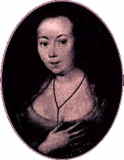
After reading this, I thought of Eleanor Davies whose story I first became aware of at Christmas, when reading Peter Ackroyd’s book on the Civil War.  Eleanor, a fervent anti-papist, believed she was a prophet and that she could predict events in England based on anagrams she found in the Bible and specifically, the Book of Daniel and Revelation. She even managed to create an anagram from her own name – ‘Reveal O Daniel’ – which she considered evidence of her gift (although this form of prophecy was later mocked when at one of her trials it was discovered that another anagram of her name was ‘Never Soe Mad a Ladie’). I’ve been holding out on this intriguing woman until I felt I could do her greater justice. But perhaps saying nothing about her, rather than sharing what I do know about her, however incomplete, is a bigger injustice.

Eleanor Davies (from www.ancestry.com)

Eleanor Davies (from http://www.ancestry.com)

Given that I dabble in local history a bit, I was surprised that I hadn’t come across Eleanor before. Although frequently in trouble for publishing her prophecies in the form of pamphlets, both with her husbands and with the authorities, it was here in Lichfield where she embarked on her one instance of direct action. At Michaelmas 1636, Eleanor moved from The Angel into the Cathedral Close to live with Susan Walker. Eleanor, Susan, and another local woman called Marie Noble, were said to have spent a lot of time discussing religion and went everyday to the Cathedral to protest against the seating arrangements which gave priority based on social rank and office, by sitting in the seats reserved for gentlewomen and the wives of the bishop, dean and canons. According to Esther Cope’s biography, there is no record of what specifically led Eleanor and the other women to protest but we do know that Eleanor wrote to the Bishop to express her disapproval about whatever it was. When no reply was received, she took her protest to the next level, sprinkling the new altar hangings at the Cathedral with a mixture of tar, pitch and puddle water and sitting on the bishop’s throne where she declared herself ‘primate and metropolitan’.  On hearing of this, the Privy Council ordered that she be sent to Bedlam without trial, although Eleanor actually remained here in the city until mid February as the messengers bringing the order were delayed by bad weather. According to Cope, both Susan Walker and Marie Noble were also later prosecuted for ‘discussing religion’.

Events in Lichfield are clearly a significant chapter in the complex story of Eleanor Davies (1) Going back to Bettany Hughes’ views on putting women back into the historical narrative wherever possible, perhaps Eleanor Davies, and indeed Susan Walker and Marie Noble, should be also be included as a significant chapter in the story of Lichfield?

Notes & References

(1) I’ve focused here on Eleanor Davies’ time in Lichfield for obvious reasons but I highly recommend reading the journal article by Esther Cope “Eleanor Davies Never Soe Mad a Ladie” for a more detailed look at her life, and it can be found online here 

The Prophetic Writings of Lady Eleanor Davies

Cope, E S. (1993) Handmaid of the Holy Spirit: Dame Eleanor Davies, Never Soe Mad a Ladie Michigan:University of Michigan Press

Cope, E S Dame. Eleanor Davies Never Soe Made a Ladie? Huntingdon Library Quarterly 50(2) 133 0 144

Youth Hostelling With….

I’ve had an email from Nick, who is looking for information of Lichfield’s Youth Hostels as he’s doing a talk on the subject.

Apart from a photo of a Lichfield Youth Hostel badge (showing the Cathedral!), all I can find is a list of dates from Wikipedia, showing that there was a hostel in Lichfield from 1937 to 1939, 1940 to 1941 and then from 1944 to 1973. We know that there was one on the Birmingham Rd (where Magnet is) and that this was once the Regional Office, but whether the earlier ones were here or elsewhere is uncertain.

If there is anyone out there who has any memories or photographs of the YHA in Lichfield that they are happy to share, please get in touch and I’ll pass your information on to Nick.

Thanks!


Last Christmas

I started this blog around this time last year. I was looking for the medieval conduit in the woods at Pipe Hill and thought I’d start a blog to record this & all of the other things I found out about Lichfield just in case anyone else was interested.

A year on and I’ve had a fantastic time exploring Lichfield and its nearby places. The best thing by far has been the discussions that have taken place whether on here, twitter, facebook, by email or sometimes even in real life! So thanks for reading, contributing and making this a joy to do. Happy Christmas to everyone, I’m really excited about &  looking forward to all that’s to come in 2012.

By the way, I still haven’t found that conduit head…New Years Resolution number 1?

I Love Archives!

I just want to enthuse about archives for a moment. For example, the documents I looked at regarding Elford also included a huge amount of information on how the City of Birmingham prepared for WW2, how they coped during the war and also their VE day celebration plans. Alongside this momentous stuff, there are also incredibly human documents for example, letters documenting an argument between two members of the council, after one was sat next to someone he didn’t like at a dinner! Archives and Record Offices, whether in Birmingham or Lichfield or wherever hold such wide range of important and fascinating information. I’m also pleased to say that in my experience, I have received nothing but incredibly helpful and knowledgeable assistance when using these services. Please use them too, whether it’s family or local history you’re interested in. And then let me know what you found out because I’m nosey 😉

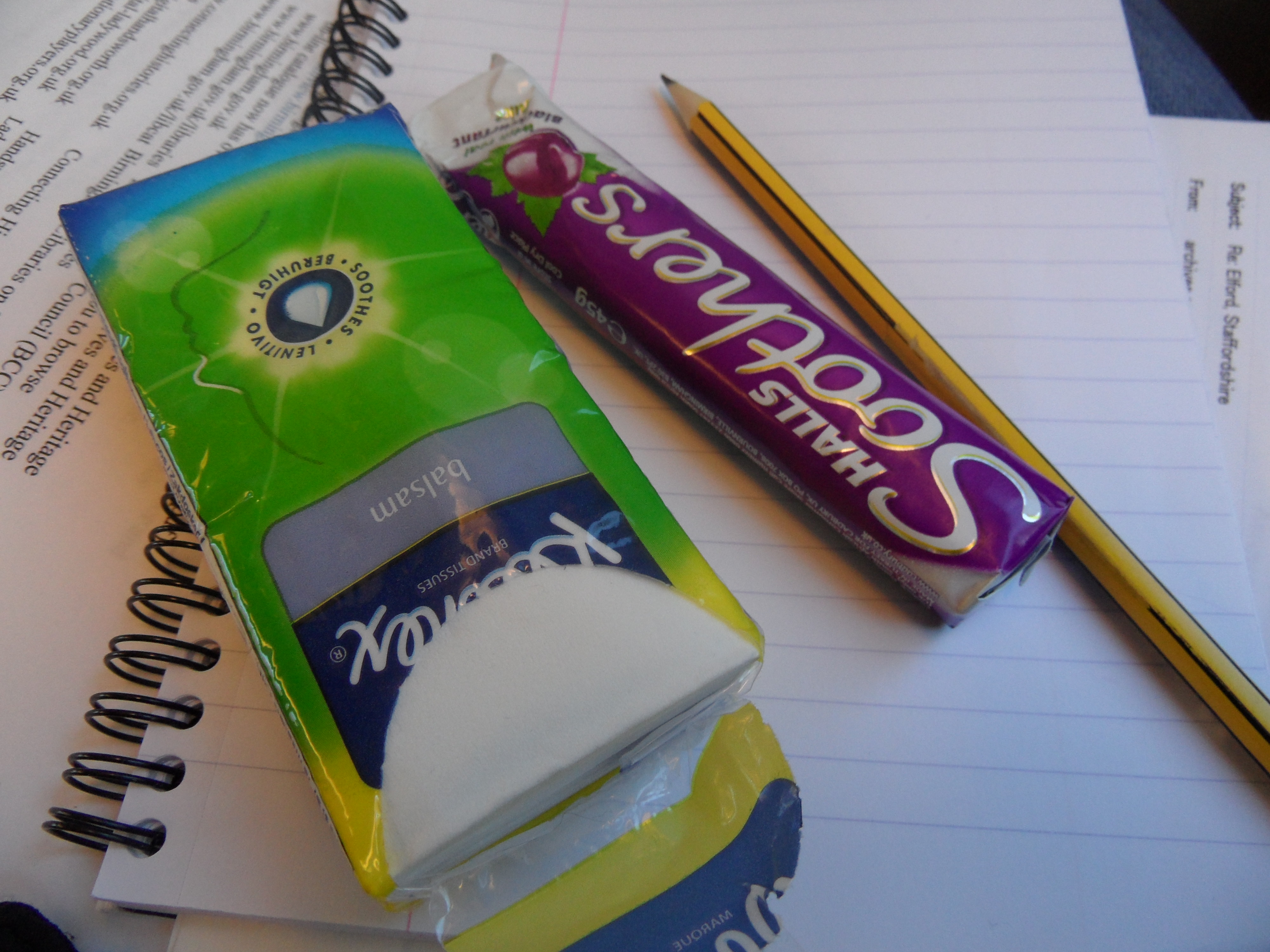
My got-a-cough-&-cold archives survival kit.On my way to Birmingham, I'd eaten half the soothers by Shenstone

The Garden of Elford

A few months ago I wrote the Pomology post about the Elford Pippin apple and the rhubarb and grapes raised at Elford Hall gardens by Mr William Buck, gardener to the Hon FG Howard.

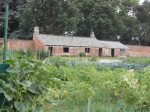
Although Elford Hall has been demolished, the gardener’s house, which would presumably have been home to Mr Buck in the early 1800s, still stands alongside the walled garden & its associated buildings.  The Elford Hall Garden Project was set up to restore the garden, which had lain unused and overgrown for some years. Birmingham City Council own the land and after some negotiating, agreed to lease it to the group.

A week or so ago, I went up to the gardens to have a look. Despite it being early evening,  I was given a wonderfully warm welcome by one of the project’s volunteers who then showed me around. The progress that has been made is fantastic.  Some of the buildings have been restored already, such as the melon house and stables and there are plans to do the same for other buildings such as the vinery (where apparently a 15lb bunch of grapes was grown in 1823!) and the mushroom house. The garden was filled with flowers, fruit and vegetables – this latest generation of Elford gardeners would even give Mr Buck a run for his money!

I am looking at the history of Elford Hall in more depth, but for today, I’ll leave you with a couple of photographs and a recommendation that you take a trip over there to see this lovely place for yourself. If you do go soon, ask if you can try one of those little yellow plums, they’re delicious.

Festival of History

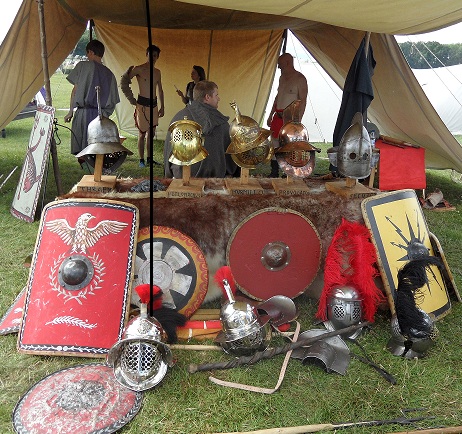
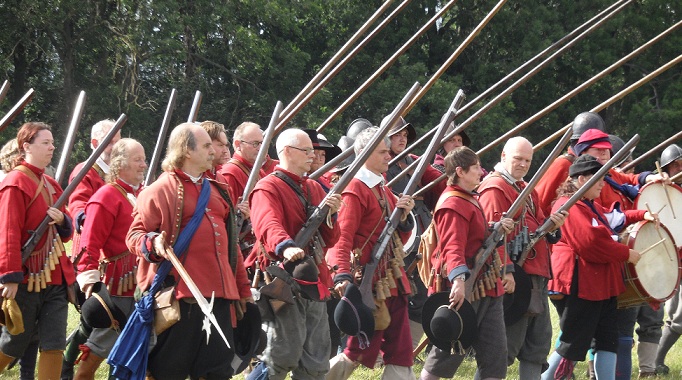
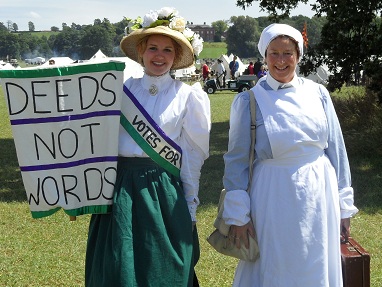
I’ve been at Kelmarsh Hall, Northants, today for the English Heritage Festival of History. I know it’s not about Lichfield, but I thought I’d share a few photos anyway….

Ermine Street Guard

The Roman Tortoise

Gladiators Ready!

Battle of Bosworth Archers

Pikemen

King Richard III


Oliver's Army

Deeds not Words


First World War Trench


Inside the WWI Trench

Dig for Victory!

The Pub

Highgate Brewery Walsall!

Ausweis Ausstellen!

Army Bikes

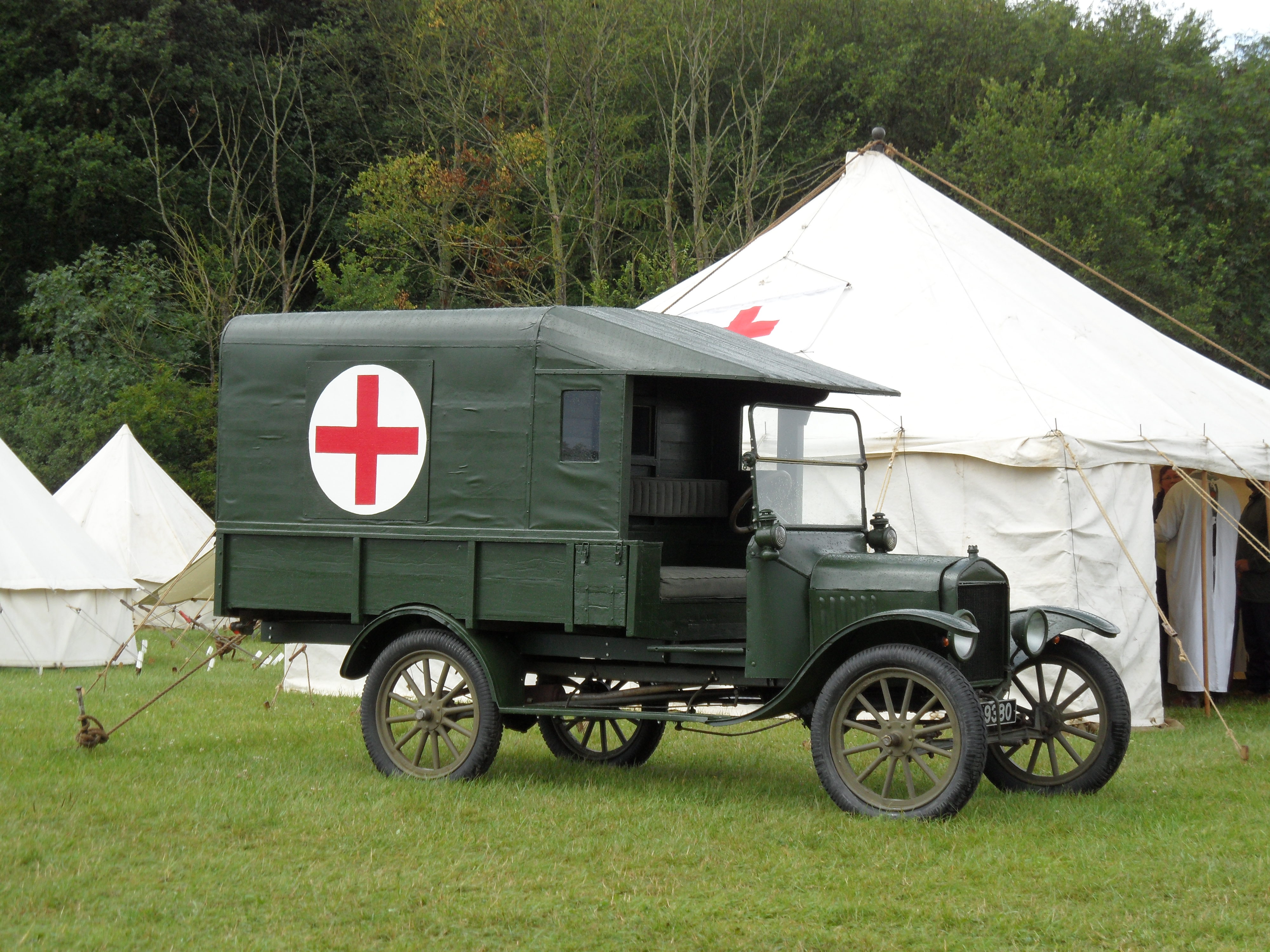
Medical Truck

The Black Bear