Lily's Medieval Jigsaw Puzzle

Recently, twelve year old Lily made a very interesting discovery in Lichfield. Here’s her account of how the contents of a cardboard box found in an old gaol cell turned out to be far more exciting than than anyone could have imagined….

“In November 2014, I went to the Lichfield Gaol Cells in the Guildhall. It was a Lichfield Discovered event, and we were going to look and see if we could find any graffiti, names, or dates on the gaol cell doors. About 7 or 8 of us came to the event all in all, I came with my Dad. Everyone else managed to find lots of writing and names on the doors, I didn’t find much. Near the end of the session, we were looking inside the third jail cell, the one that is not normally open to the public. My Dad pointed out 2 boxes of old looking tiles on the floor, we took a quick look, but we didn’t pay much attention to them.
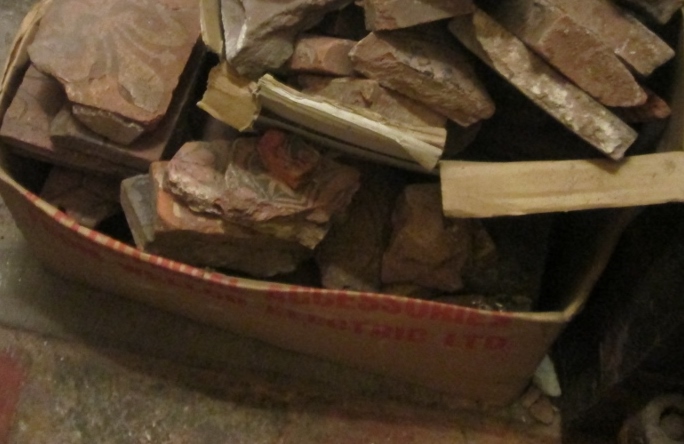
Tiles 1

Tiles in cardboard boxes in gaol cell now used for storage

The next time we came to the gaol cells was on 21st February, we had come back to see if there was any more graffiti that we had missed, also to take a second look at the boxes of tiles (Jo at the museum said it was ok). This time I had come with my Mom and there was around 8 people that turned up this time. Me and my Mom started looking through the tiles, we had picked about 5 up and we laid them on a chair to photograph them, but they werereally dusty so we couldn’t see if there were any other patterns on them.

There were so many tiles that we couldn’t fit any more on, we decided to move all of the tiles into the 4th cell, onto a wooden bed that the prisoners used to sleep in, (personally I would NEVER think of sleeping on one of them). We started taking some more tiles out of the box and moving them onto the bed. We moved them a few at a time, because the box was too heavy to lift. I had realised that there were a few tiles with the same pattern on. I really wanted to get a better look at what the patterns looked like, so my mom went to Wilko (just up the road) to buy 2 paintbrushes. When she got back we started brushing off the dust and dirt from the tiles we had got out, we could see the patterns a lot clearer. We had nearly finished emptying out the first box of tiles, and at the bottom my Mom found a bit of tile with ‘Lichfield Friary’ written on the back. She showed it to Kate and she said “Maybe it came from the old Friary!” and then we all got really excited!

tiles 2

Tile with Lichfield Friary writing on the back

We had found lots of bone shaped tiles that were exactly like the one that said ‘Lichfield Friary’ on it.
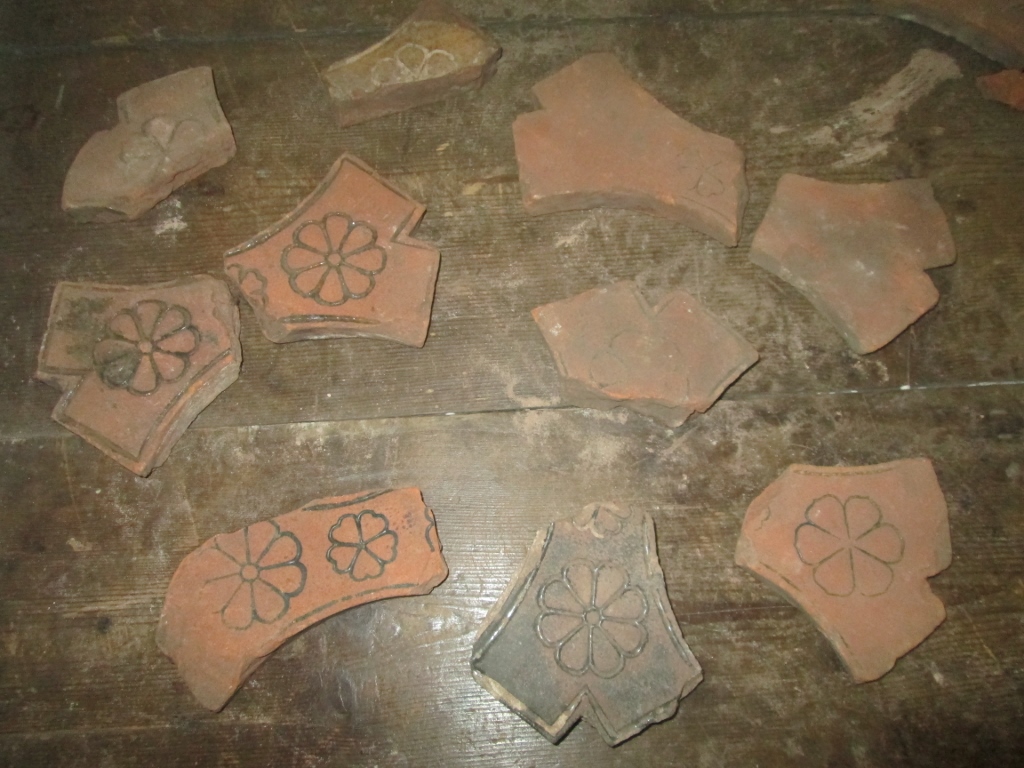
Tiles 3

“Bone” shaped tiles

Whatever the floor was, it was really big. We had found LOADS of tiles that looked the same, and maybe they belonged to the same floor. I started trying to see if any of the tiles might fit together, there were loads of circular tiles, some with patterns on, and some without. There was one round tile, with a triangle and circles intertwined in a pattern. There were also pizza shaped tiles, without a tip, like someone had taken a pizza and cut the middle out with a cookie cutter, if you get what I mean. Those tiles had a kind of moon, with a starfish shape in the middle.
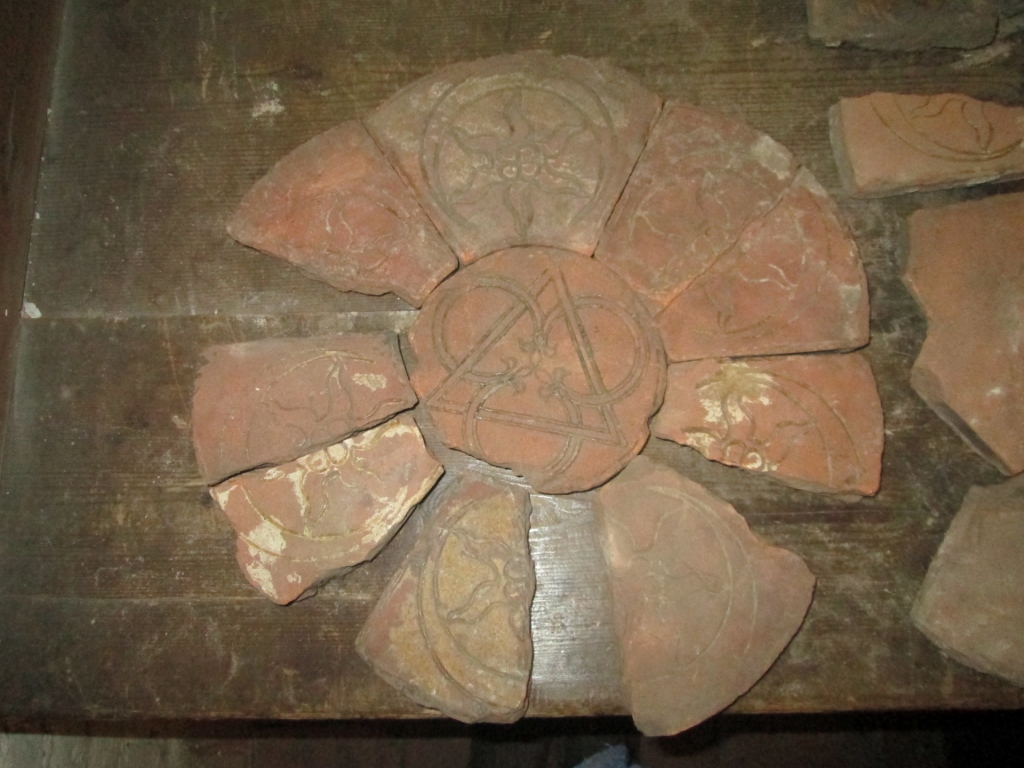
Tiles 4

Circular “pizza” tiles with moon and star pattern

tiles 5

Plain “pizza” tiles

We had found one of these tiles that was complete and one that was broken, but fitted back together again. All the rest were broken, but I managed to get a full circle out of the fragments we had found. It was like a massive jigsaw-puzzle, but I did it in the end, and what was even more exciting, was that the circular tile fit perfectly inside the ring of pizza shaped tiles! Same with the tiles with no pattern on, but we didn’t find another circular tile.

There was also another set of tiles. We had found about 8-10 of the same type, they were square, and they all had the same pattern on, the kind that can make 2 different types of patterns, depending on which way you put them.
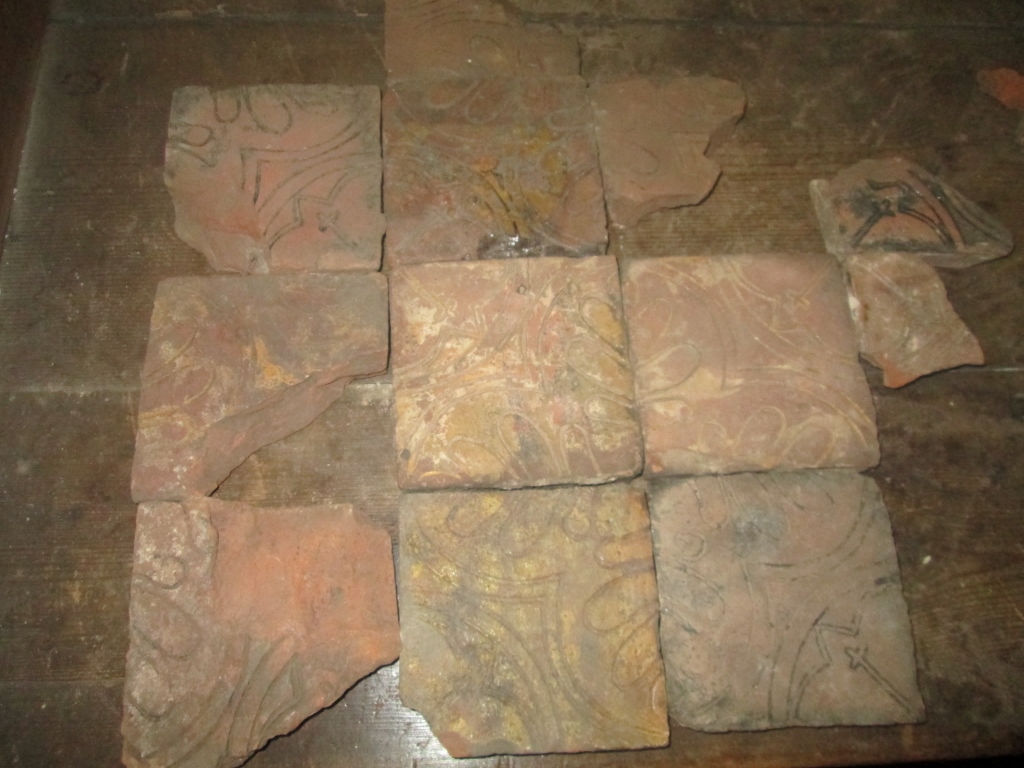
Tiles 6

Square tiles with pattern – my faves 🙂

Most of them were complete, apart from 3-4 of them which we only had corners of. I put them together, and they nearly made a 9 square pattern. These were my favourite tiles, and I hoped we found some more of them, we only had half a box or so left to get out. We did find a couple more of these tiles eventually. We finished emptying out the box, and then we started taking pictures of all the tiles. There wasn’t much time left, so we took all of the photos really quickly. As a result, not many of the pictures were very good. And the light was quite dim in the cells, so the light wasn’t the best either.

It was nearing the end of the session, so we had to put all of the tiles back in the boxes. I couldn’t help thinking that the tiles were from the old medieval Friary. At least some of them.

Kate asked me if I could do some research to see if the tiles were from the Friary, Me and my Mom went to the Lichfield Records Office, to go and look at ‘The Lichfield Friary’ by P. Laithwaite, which was reprinted from the Transactions of the Birmingham Archaeological Society where a report of Councillor T. Moseley’s findings from his exploration of the site in 1933 was given.
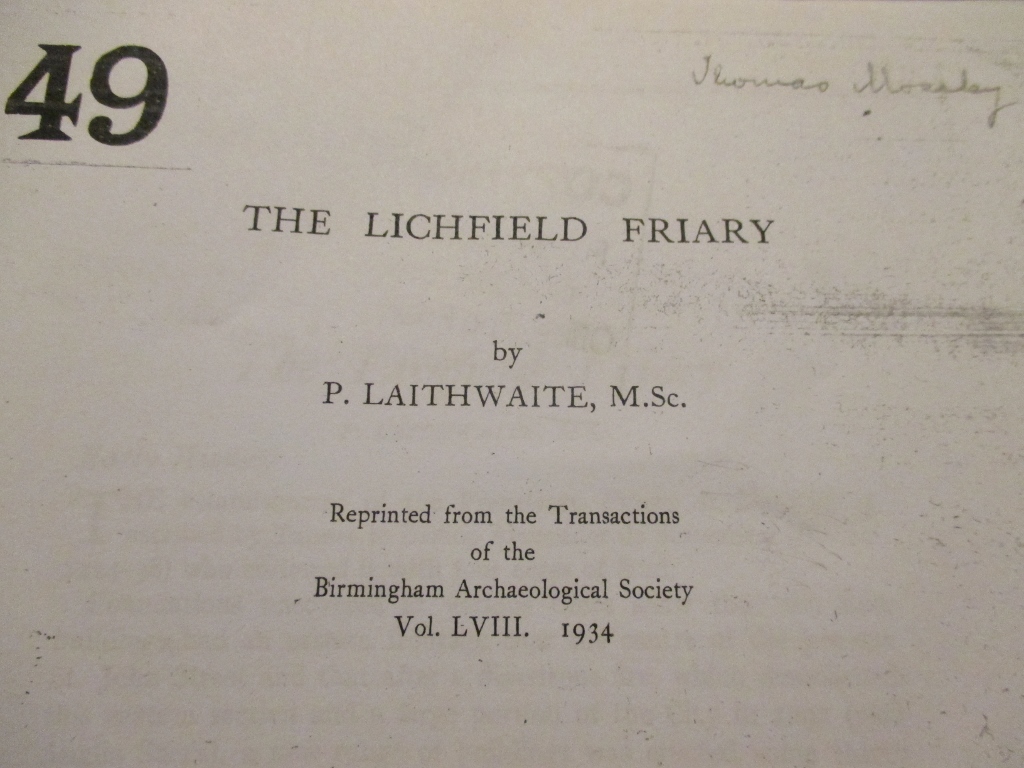
Laithwaite BAS 1934

D77/23/67 Copyright Lichfield Record Office

There were only 6 pages in the book. Page 5 had a drawing of some if the exact tiles we had found (the ones that looked like pizzas with the middle cut out) some with patterns, and some without.
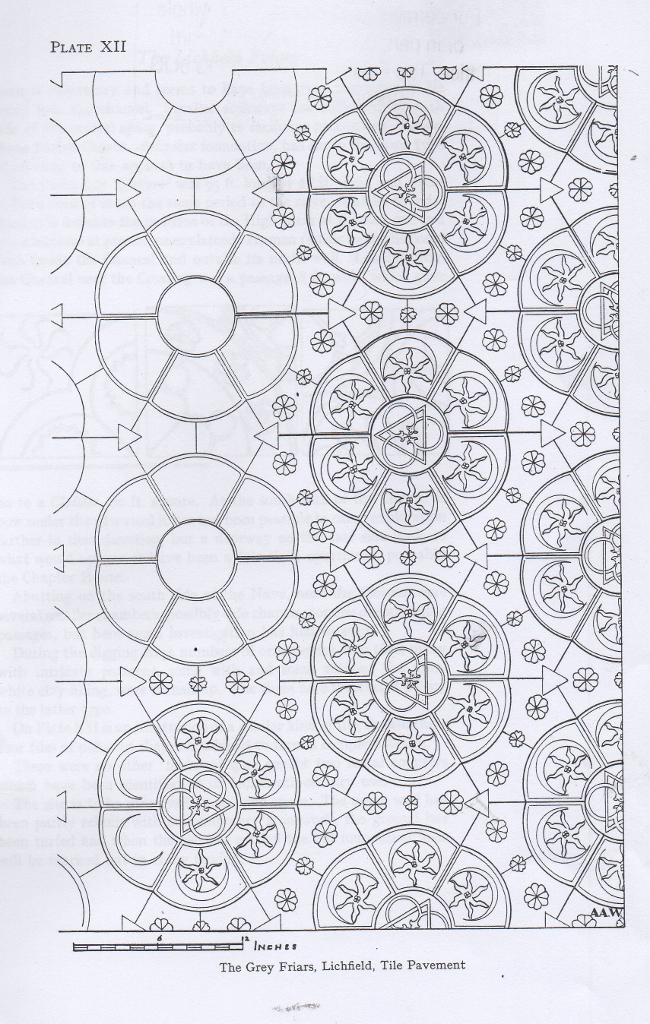
EPSON scanner image

D77/23/67 The Lichfield Friary by P.Laithwaite Copyright Lichfield Records Office

Me and my mom were like O-O (AMAZED!). On the next page (page 6) there was a drawing on 3 tiles with different patterns on, all of which we had found in the box of tiles! 😀 (and my favourite one, the one that we had got like a 9 block square of the floor.)

EPSON scanner image

D77/23/67 Drawing of square tiles from The Lichfield Friary by P.Laithwaite Copyright Lichfield Records Office

We had found what we had come looking for, proof that the tiles in the boxes were Medieval from The Grey Friars’ Church at The Friary!”

Note – this is not where the story ends! Lily is having an afternoon on the tiles with Jo Wilson, Lichfield City Council Museum and Heritage Officer and medieval tiles expert, Karen Slade this week, so look out for an update soon. Lily’s doing such a great job – the initial discovery, the ongoing research, and writing it all up afterwards – that I’m thinking of joining the Right Revd Jonathan Gledhill in retirement and leaving Lichfield Lore in her more than capable young hands.


Water Slides

Ross Parish has been researching holy wells since the 1980s and has published several books on the subject.  Ross is currently working on a Staffordshire volume and a couple of weeks back, we were delighted to have him at our Lichfield Discovered meeting to share his research with us. Ross took us through the history of holy wells, and some of the customs associated with them, pouring cold water on some of the popular views that have sprung up around them. At the risk of firing up inter-county rivalry, you’ve heard the saying ‘The best bits of Derbyshire are in Staffordshire’?. Well, Staffordshire is also a bit hard done by when it comes to the tradition of well dressing. Google it and you’ll find claims aplenty that it’s ‘unique to Derbyshire’. Try telling the people of Endon and Mayfield that. Interestingly, we also went through a phase of decorating St Chad’s well here in Lichfield for a time, but this tradition seems to have dried up in 2010.

St Chad's Well Lichfield,  only decorated by nature these days.

St Chad’s Well Lichfield, only decorated by nature these days.

With so many fascinating sites to chose from,  we forgave Ross for not including St Chad’s in his top ten list of Staffordshire wells. You can discover the ones that did make it, along with an abundance of other fascinating information, on the slides of the talk that Ross has very kindly shared with us online here.

If you’ve a thirst to know more about holy wells and sacred springs, here in Staffordshire and further afield, please do check out Ross’ blog here and also take a look at the Facebook group he’s involved in here.


My Bloody Valentine

For those of you who aren’t feeling the love for Valentines Day, here’s some black magic. And I’m not talking chocolates. In his Lichfield Mercury column ‘Historical Gleanings – Lichfield Over a Century Ago’, JW Jackson recalled the following article in a local paper from 1836,

“On Saturday, the sexton of a certain church observing an elegantly dressed female walking mysteriously up and down the churchyard, watched her secretly, when he saw her rake up the earth with her foot and, after depositing something in the ground, cover it up. Induced by curiosity he opened up the place and found a hare’s heart in which 365 pins were stuck buried there. It was an old superstition in this county that if a person who had been foresaken by one professing love for her shall bury a hare’s heart full of pins near a newly made grave in the churchyard, as the heart decays, so the health of the faithless swain will decline, and that he will die when it has mouldered to dust. The fair deceived one had been instigated by revenge to this act of folly and credulity.”


Getting revenge on a faithless swain. Sweeter than a whole box of Thorntons. Frederick William Hackwood also mentions a similar practice in his Mercury column on “Staffordshire Superstitions’ (1923), ‘Among the lingering superstitions are present-day memories of an old woman given to witchcraft sticking a bullock’s heart full of pins with the vicious intent of piercing the heart of some deadly enemy with whom she had quarrelled beyond all hopes of forgiveness or reconciliation”.

Luckily, a defence against these dark arts did exist.  In a book published by the Folklore Society in 1890, Alexander M McAldowie tells of two witch brooches which his brother Robert found in Staffordshire.   One was discussed in a section of the 1896 Journal of the British Archaeological Society called ‘Notes on North Staffordshire’ and is described as being heart-shaped with unequal sides, little more than an inch in height and made of silver with eighteen crystals. Apparently, these talismans were often bought alongside wedding rings and would keep the wearer safe from harm. In a post on witch brooches, the Spyders of Burslem blog includes the notes given to the North Staffordshire Field Club in 1891 by Robert McAldowie. What’s extra interesting for us here is that he mentions a witch brooch he got in Lichfield from a jeweller who had bought two of them from an old servant of a family once living near the city but had melted one down for silver.

I’ve not managed to track down the whereabouts of any the Staffordshire brooches yet, assuming they even still exist. There is a Victorian one for sale on a vintage site here if you want a belated present that looks pretty and has the added bonus of protecting your beloved from witches and evil in general.

Antique Victorian Witch Brooch. Image from rubylane.com

Antique Victorian Witch Brooch. Image from rubylane.com

However, if it’s a hare’s or bullock’s heart you’re after, I’m afraid I can’t help you. Try Waitrose.

Sites for Sore Eyes

Springs and wells are sources not only of water but also of folklore and legend. There are healing springs and fortune telling wells. Some are associated with saints, others with spirits.

St Chad's in Lichfield. Photo by Lichwheeld

St Chad’s in Lichfield was believed to cure sore eyes (photo by Lichwheeld)

On Monday 9th February, Ross Parish, author of the Holy and Healing Wells blog and a series of books on the subject, will be giving a talk to our Lichfield Discovered group. Ross will be telling us about some of the sites we have here in Staffordshire and some of the traditions and stories associated with them. The talk starts at 7.30pm at St Mary’s in the Market Square (where there was a once a well of the same name at the west end!) and there is no entry charge, although voluntary donations towards the running of St Mary’s are always welcome. After the talk, people are invited to stay behind to discuss the future vision of the county’s archive and heritage service, over a cup of Staffordshire water (plus milk and teabag).

Brideshand Revisited

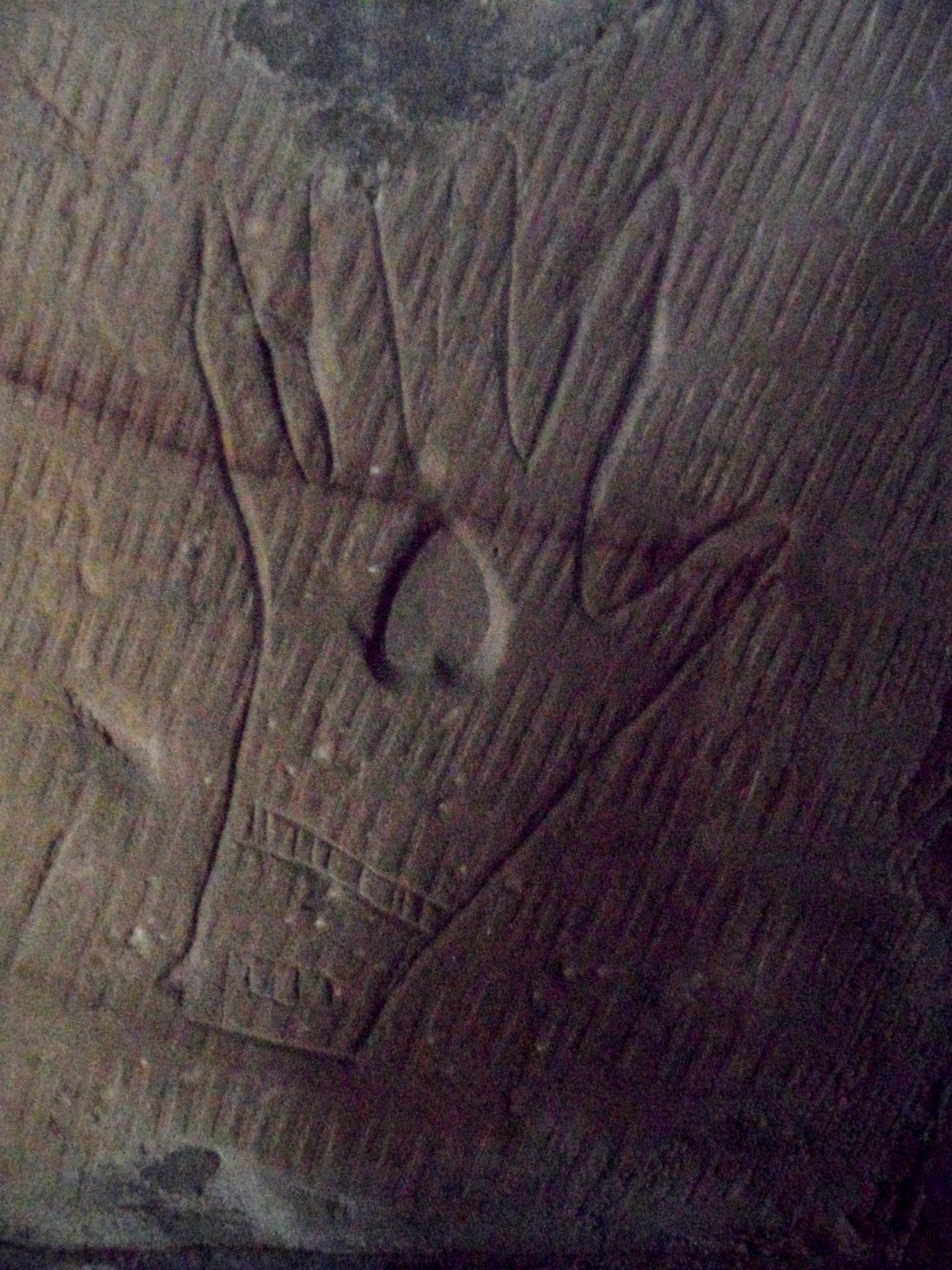
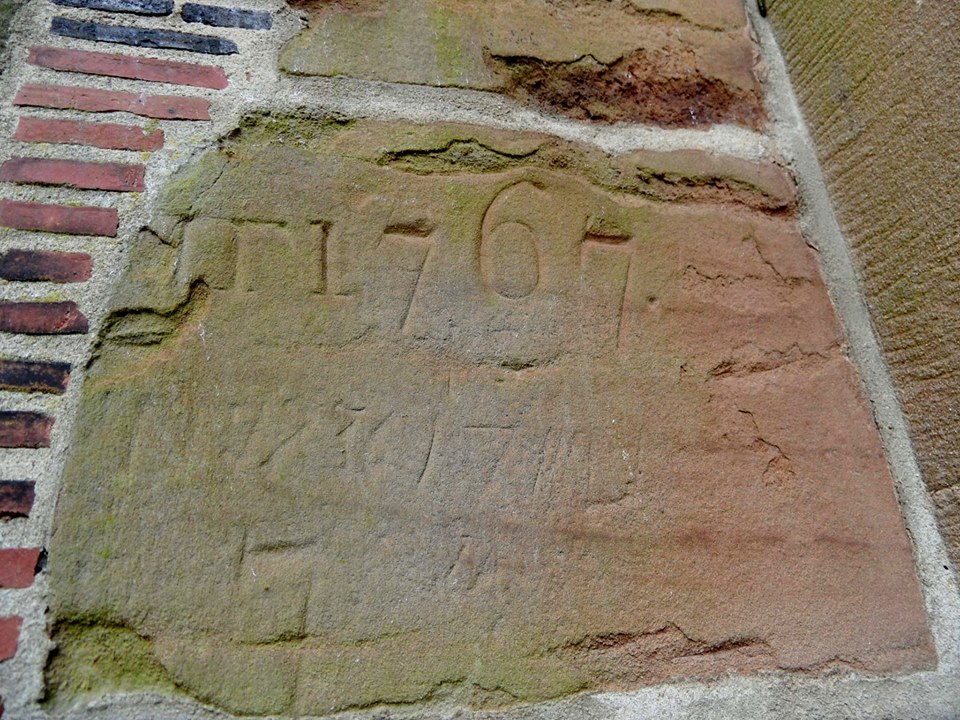
Last Summer, I wrote about the ‘Bride’s Hand’ carved into the stonework of the south porch of St James the Great at Longdon. It’s an old tradition that brides arriving at the church would place their own hand against it, in the hope that it would bring good fortune and fertility to their impending marriage. Apparently, some twenty-first century Longdon brides-to-be still partake in this ritual.

The 'Bride's Hand' Carving, St James the Great, Longdon

The ‘Bride’s Hand’ Carving, St James the Great, Longdon

Yesterday, I was idly scrolling through Twitter when two hands, similar to the one at Longdon, grabbed my attention. The image had been taken from Timothy Easton’s article on symbols which appears in the Winter edition of the Society for the Preservation of Ancient Buildings‘ magazine (1), and the carvings themselves are to be found on the south doors of two churches in the neighbouring Gloucestershire villages of Ampney St Mary and Ampney Crucis.  Until now, I wasn’t sure whether the Bride’s Hand was just a quirky bit of history unique to Longdon but the appearance of similar symbolism, in a similar position, at churches one hundred miles south of here suggests not. Timothy Easton believes that the carvings were added to send a very definite ‘Stop!’ sign to any evil spirits attempting to sneak inside.

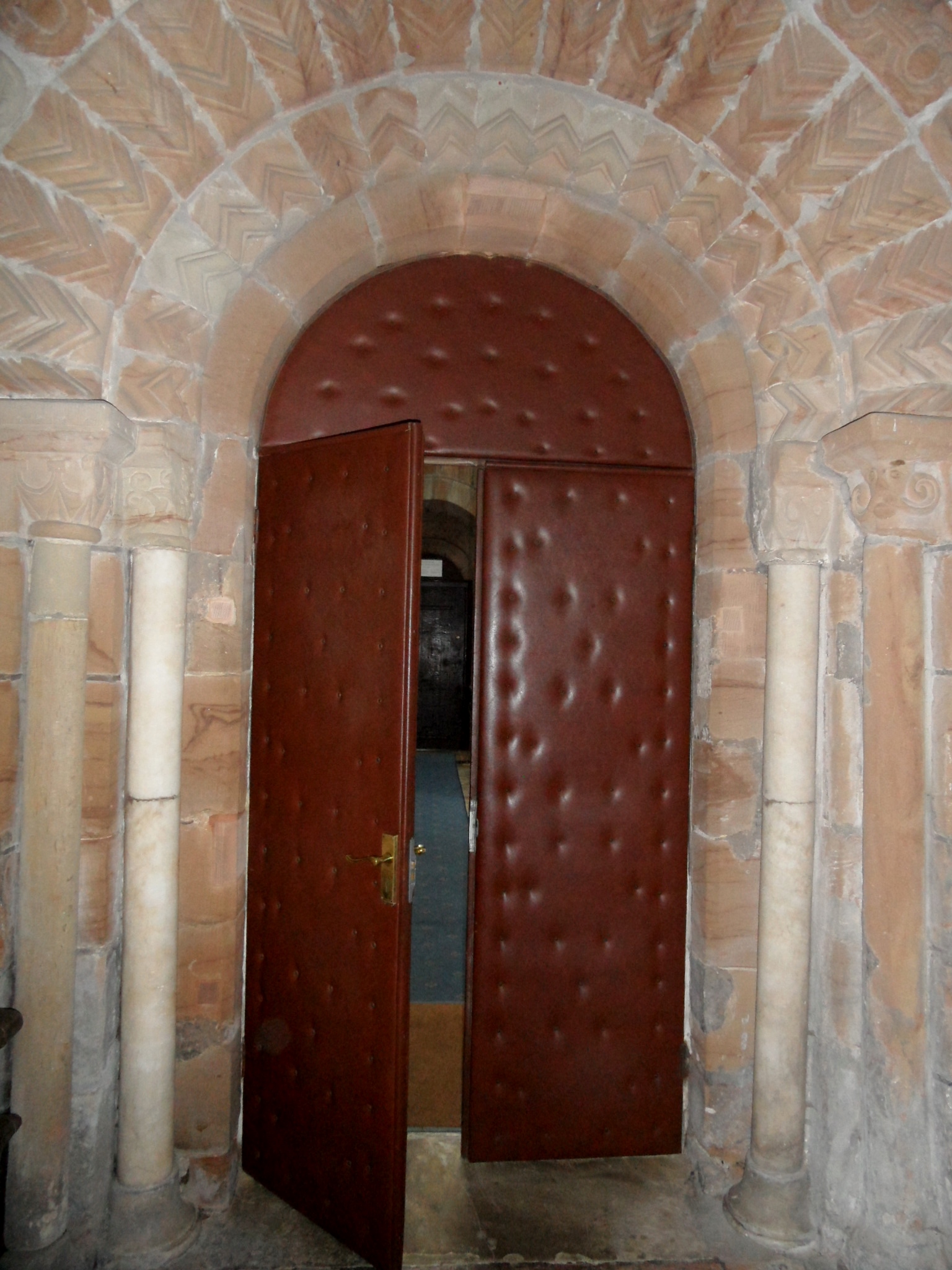
South porch of St James, Longdon where the carving can be found.

South porch of St James, Longdon where the carving can be found.

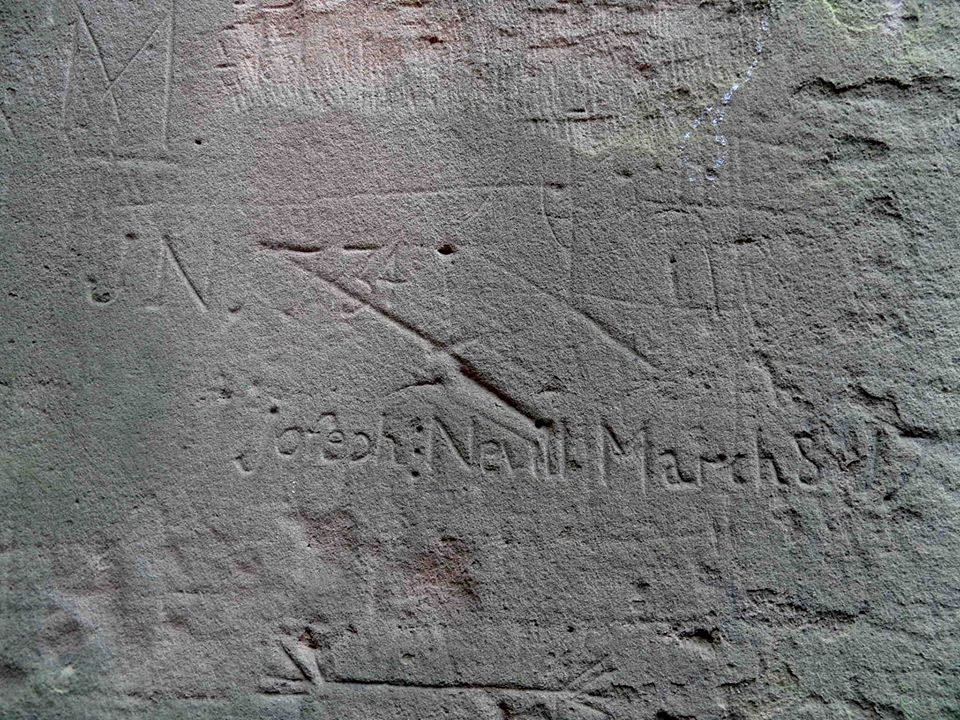
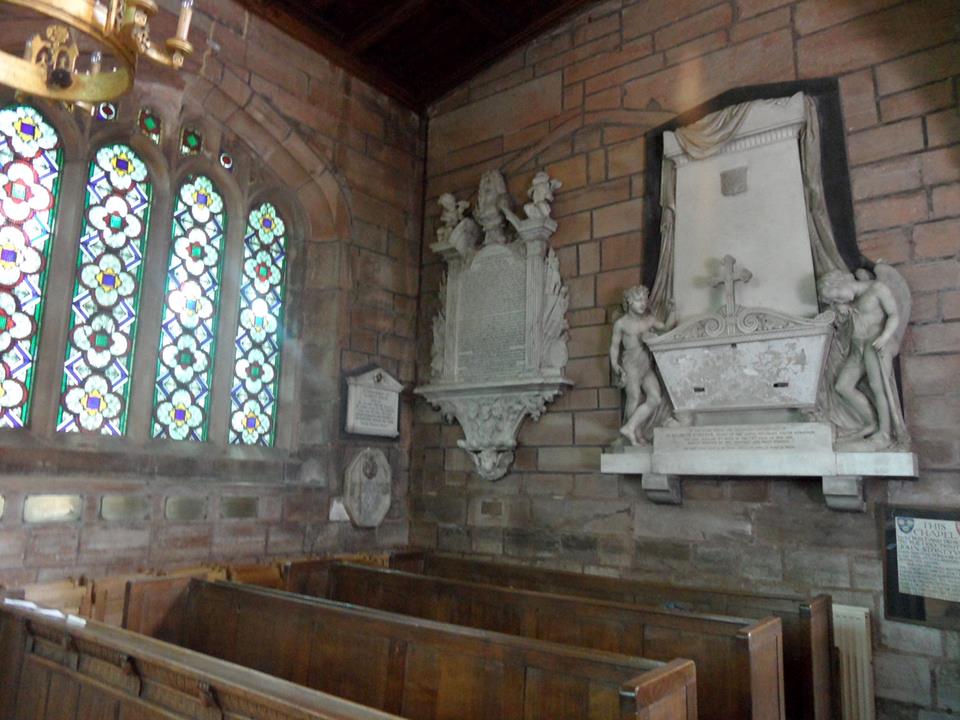
As anyone who follows the Medieval Graffiti project will know, these hands are just one of the many types of markings that can be found in our churches. Some were an attempt to ward off evil spirits and no doubt some were an attempt to ward off boredom. St James the Great may be filled with beautiful carvings but I can’t help being drawn to these ones that aren’t really supposed to be there. For me, a crudely etched protective symbol and Joseph Nevill’s graffiti trump the Forster family’s weeping cherubs and marble tombs. Hands down.

Longdon graffiti

Graffiti at St James the Great, Longdon

Longdon carvings

The Stoneywell Chapel, used as a private chapel between 1520 and 1944, by families including the Ormes and the Forsters, former owners of nearby Hanch Hall

Longdon graffiti 2

Graffiti at St James the Great, Longdon

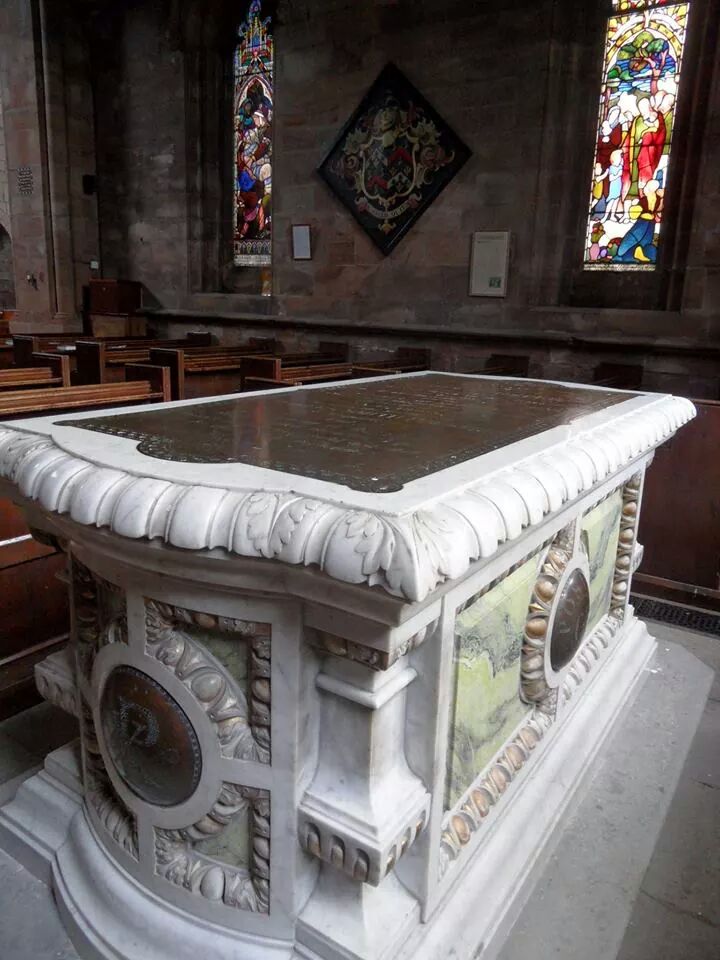
The tomb of John Forster, Hanch Hall

The tomb of John Forster, Hanch Hall

(1) Which their press officer very kindly sent to me after I sent an excited tweet telling them I’d seen one just like that.

Far From the Madding Crowd

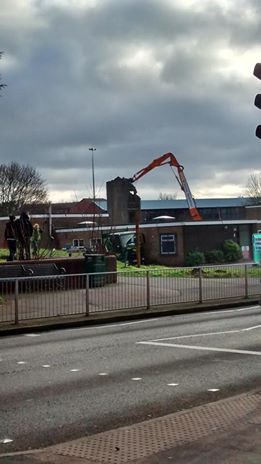
Once, when Cuthbert Brown was a boy and the circus came to town (sorry, city), one of the elephants died and was buried on Levett’s Fields. Mr Lichwheeld and I had joked that we should organise a community archaeological dig to look for Nelly but with work starting on the demolition of Lichfield’s Fire Station recently, this may prove unnecessary.

Demolition of Lichfield fire station tower, January 2015.Photo by Joe Gomez

Demolition of Lichfield fire station tower, Levett’s Fields January 2015.Photo by Joe Gomez

Welephant wins 2011 Lichfield Pancake Race. Image from Lichfield Live

Nelly is not the only elephant with links to Lichfield Fire Station. Image from Lichfield Live

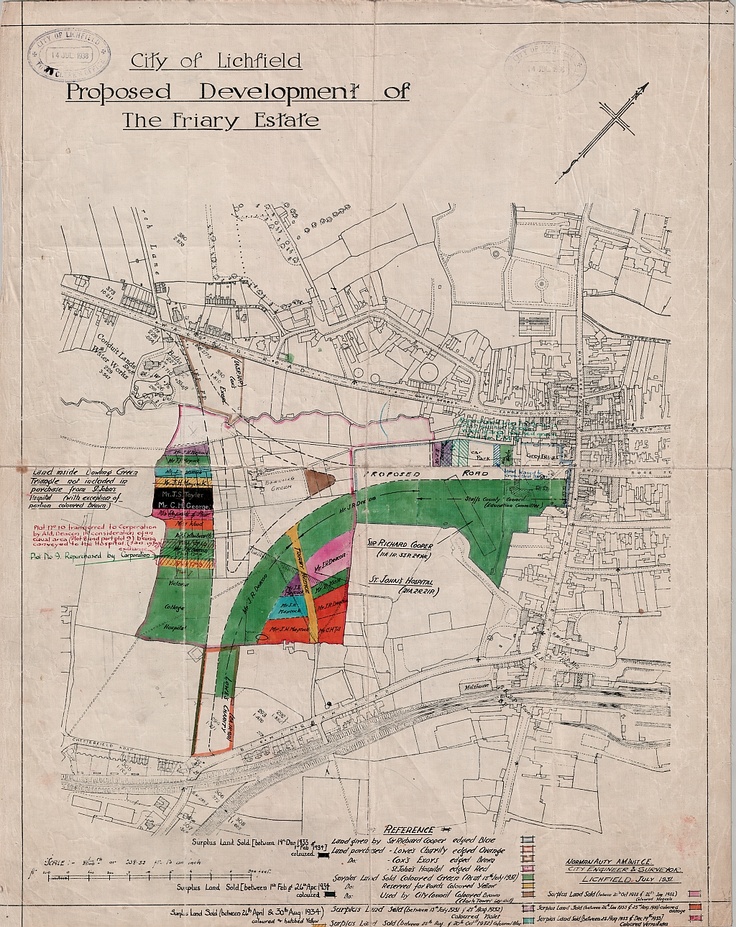
In the pre-Friary Road days, the Big Top also used to pitch up at the Bowling Green fields. Presumably at that time the Bowling Green pub was still a seventeenth century timber framed building. The only image of this I can find online is included in the 1732 engraving of the south west prospect of the city, as seen here on Staffordshire Past Track (zoom in and it’s the building in the foreground, beneath the central spire of the cathedral). The pub was rebuilt in the 1930s but the Victoria County History mentions that a clubhouse still in existence in the 1980s may be the same one which existed in 1796. Definitely worth a trip to the pub.

The Friary prior to development. Taken from Gareth Thomas' (GIS Officer for Lichfield District Council) Pinterest site

The Friary prior to development. Taken from Gareth Thomas’ (GIS Officer for Lichfield District Council) Pinterest site

One of the best things about looking through old newspapers is that you come across stories that you wouldn’t even think to look for. Whilst searching for more information on the Bowling Green, I came across the following obituary from March 1820.

At Lichfield, aged 67, John Edwards, the Hermit of the Bowling Green in that city. He came to the neighbourhood in the prime of life – a perfect stranger, retiring with disgust or disappointment from other and brighter scenes of life; but further particulars have never transpired respecting his history. The subscriptions of the benevolent have contributed to shed a comparative comfort on his latter days. A short time previous to his decease, he published a short “Essay on Freemasonry”. The medical gentlemen gratuitously attended his during his illness.

So many questions about Mr Edwards arise from this small snippet but I suppose if further particulars respecting his history had not transpired back then, the chance of uncovering anything now is fairly slim. Is it fair to say that Mr Edwards’ attempts to distance himself from society seem to have inadvertently made him into a celebrity of sorts? I wonder what became of his Essay on Freemasonry?

Whatever Mr Edwards’s reasons for preferring a life a solitude, it seems that in the eighteenth century it could be a career choice. Of sorts. Apparently, always on the lookout for opportunities to impress or outdo their friends and neighbours,eighteenth century land owners employed professional hermits to sit and be mystical amidst their fake temples and other follies. I found an example in the form of Mr Powys of Morcham (Morecambe?) near Preston, Lancashire, who advertised an annuity of £50 per annum for life to,

…any man who would undertake to live seven years underground, without seeing anything human, and to let his let his toe and finger nails grow, with his hair and beard, during the whole time.

Board and lodging was provided in the form of apartments said to be, ‘very commodious with a cold bath, a chamber organ, as many books as the occupier pleased, and provisions served from his (Mr Powys’) own table’.  By 1797, it was reported that the ‘hermit’, a labouring man,  was in his fourth year of residence, and that his large family were being maintained by Mr Powys. Just what quality of life must a man with a family have been leaving behind to agree to live like this? If this was about showing off to others, it’s curious that Powys stipulated that his ‘hermit’ was to live without seeing anything human.

Great Haywood Cliffs by Jason Kirkham

Great Haywood Cliffs by Jason Kirkham

In August 2002, around two hundred years after this dark appointment, notices appeared in The Guardian, The Stage, The London Review of Books and the Staffordshire Newsletter, advertising for an ‘ornamental hermit’ to take up residence at the Great Haywood Cliffs near the Shugborough estate in Staffordshire, as part of an exhibition called ‘Solitude’. The Shugborough Hermit would be required to live in a tent near to the cliffs (living inside them was deemed too risky) and only had to commit to the weekend of the 21st and 22nd September 2002. Out of  two hundred and fifty enquiries from all over the world,  artist Ansuman Biswas was chosen and I’d love to hear from anyone who visited him at Shugborough that weekend. Mr Biswas went on to spend forty days and forty nights alone in the Gothic Tower at Manchester Museum in 2009, with the aim of becoming, ‘symbolically dead, renouncing his own liberty and cutting himself off from all physical contact”‘.

I think I’d rather run away and join the circus.

Sources:

The Hermit in the Garden: From Imperial Rome to Ornamental Gnome, Gordon Campbell,  Oxford University Press 2013

 http://news.bbc.co.uk/1/hi/england/2205188.stm

The King's Touch

This Christmas, for the first time ever, I watched the Queen’s Speech. I’d read somewhere that there had been a flurry of bets on the Queen abdicating and though sceptical, I interrupted a FIFA match between Walsall and Barcelona to seize momentary control of the television just in case. Of course, it had been nothing but a rumour and Charles remains a king in waiting.

Earlier that week, I’d been to visit a house associated with another King Charles to be. Following defeat at the Battle of Worcester on 3rd September 1651, Charles Stuart had fled north to Shropshire, hoping to sneak across the border into Wales and sail from there to Europe. The Parliamentarians were one step ahead of him and were closely guarding the River Severn crossing places and ferries, thwarting this plan. In the early hours of 8th September 1651, Charles arrived at Moseley Old Hall in Staffordshire, looking for a place to hide and a new escape route.  He was met at the back door by owner Thomas Whitgreave and the family priest John Huddleston (1), who gave up his four poster bed (2) and shared his hiding place with the future King when Cromwell’s soldiers came seeking him.

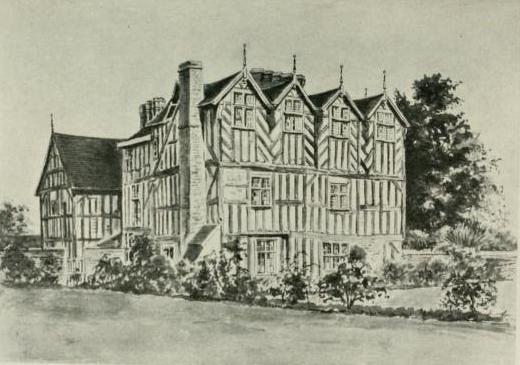
Moseley Old Hall as it was....

Moseley Old Hall as it was…. taken from ‘The Flight of the King by Allan Fea (1908)

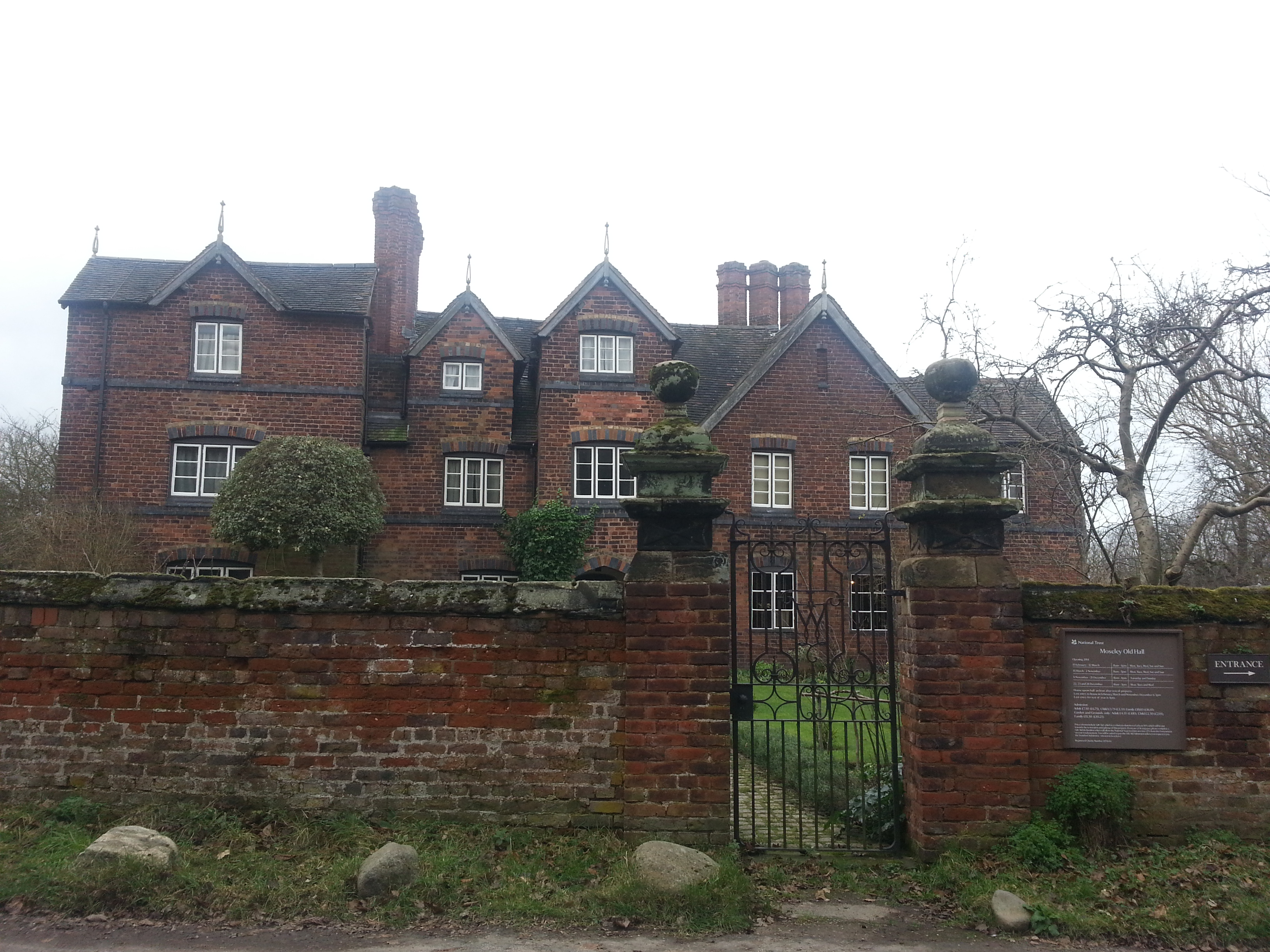
....and as it is today. Well, last Sunday anyway.

….and as it is today. Well, last Sunday anyway.

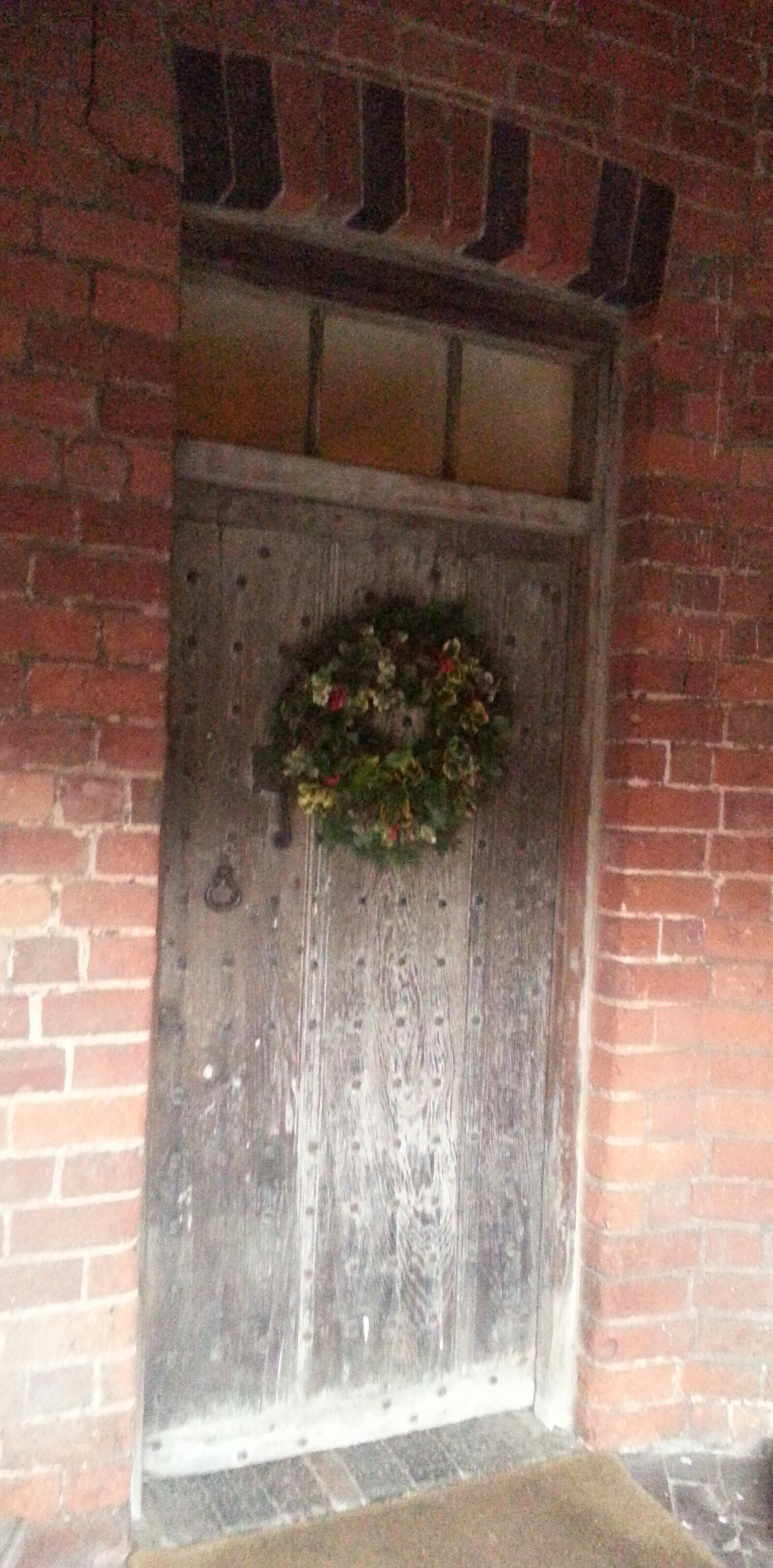
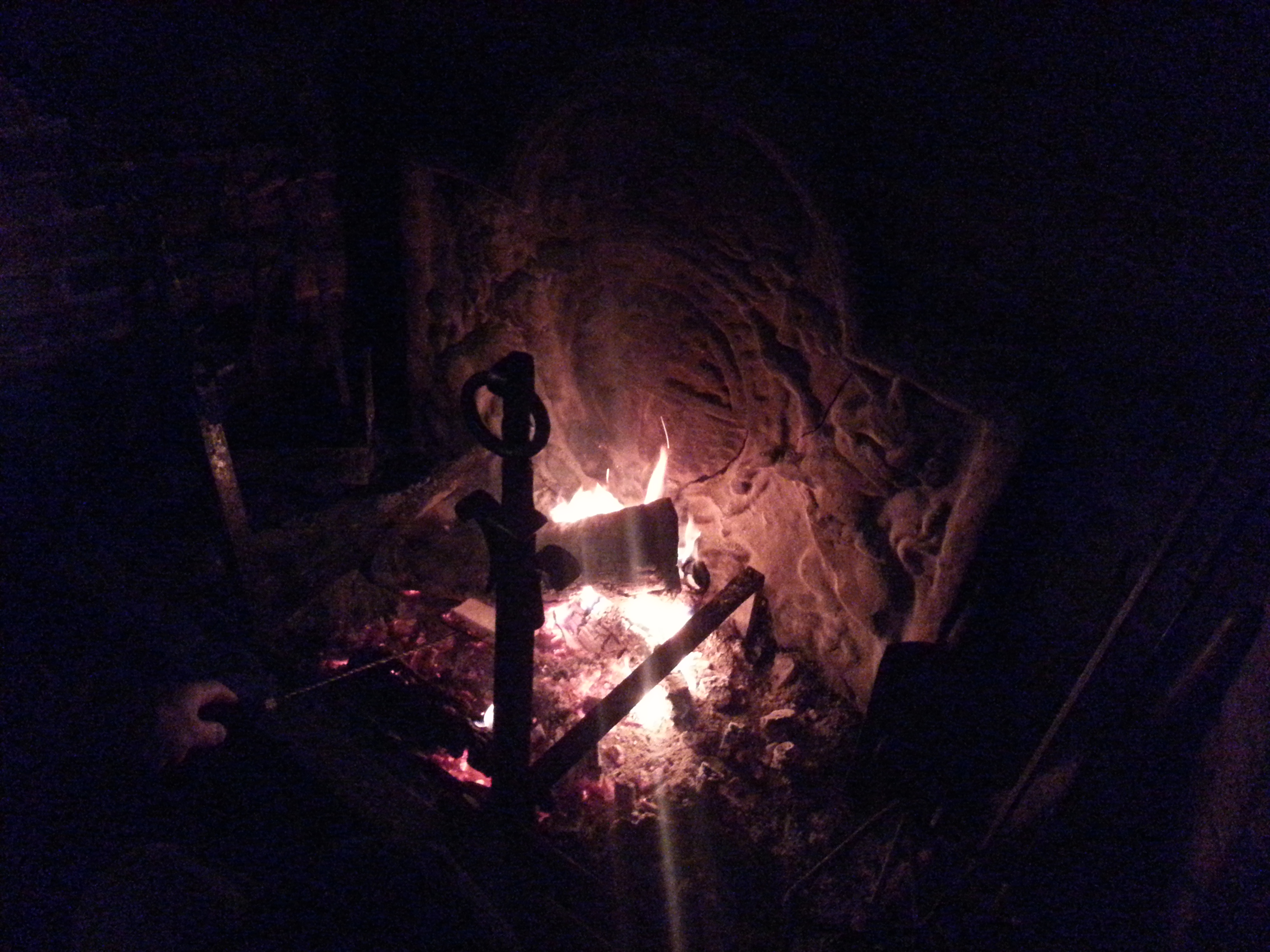
The house which hid the King is now hidden itself behind a Victorian redbrick facade. As we waited outside, making jokes about standing under the mistletoe, the guide informed us that we were about to enter the hall through the very same door as the King had, and told the assembled children to let their teachers know about it. Mine were only here because I’d promised they’d be able to toast some bread over an open fire at the end but they seemed suitably impressed (3). One little lad wanted to know if there was going to be a ride. I suppose in a way there was.

The back door through which Charles entered Moseley Olf Hall on 8th September 1651

The back door through which Charles entered Moseley Old Hall on 8th September 1651

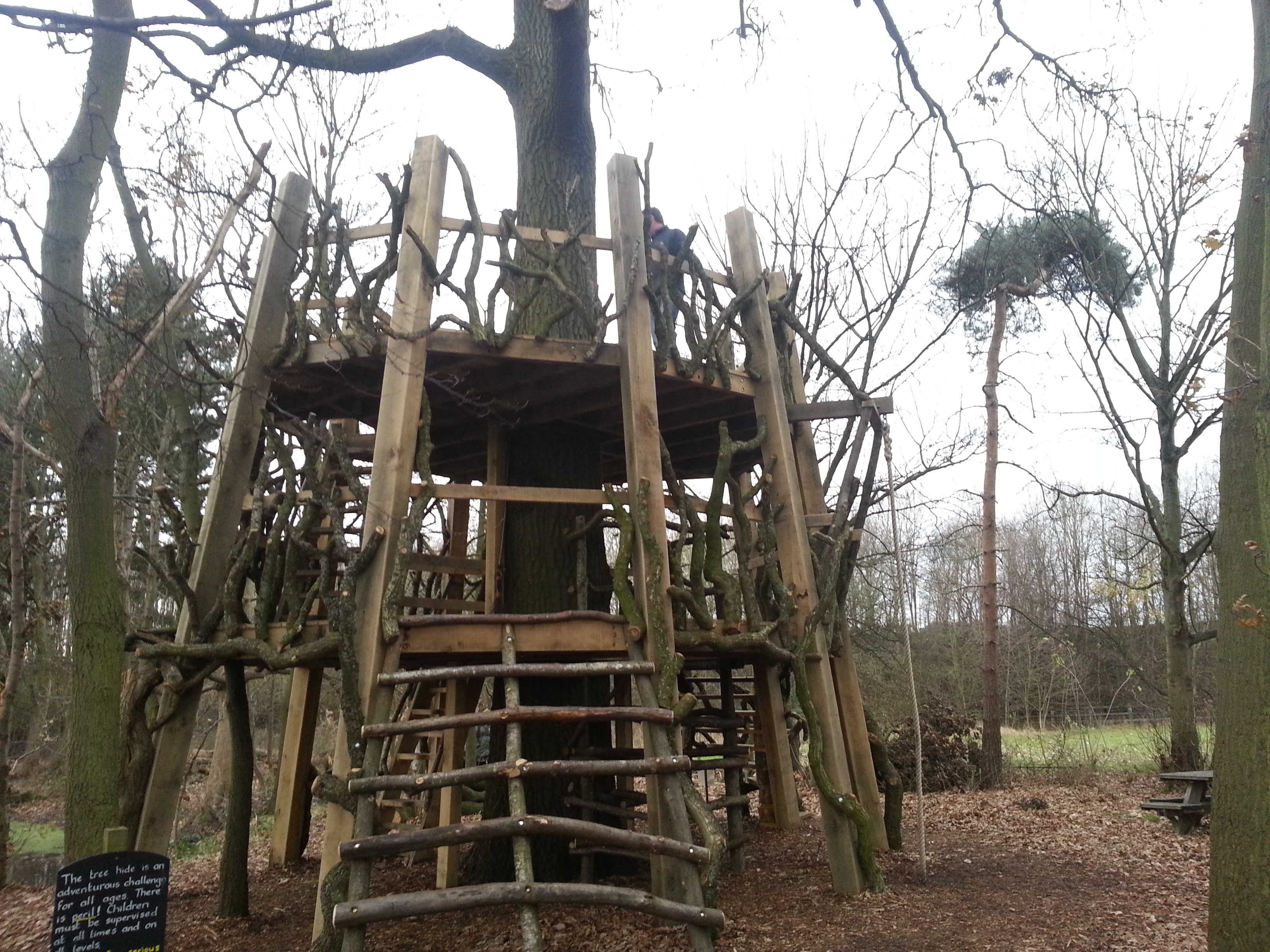
As everyone knows (4), before the King came to lie low at Moseley he’d been hiding high at Boscobel, nine miles away on the Staffordshire/Shropshire border. A tree house inspired by the Royal Oak, the most famous of all the places the King found refuge, is a recent addition to the King’s Wood at Moseley.  There are signs warning of peril, and whilst the element of danger here is not quite on a par with that of a man with a thousand pound bounty on his head hiding in a tree, it’s enough to get overprotective parents like me muttering, ‘Be careful!’, as if it were a charm to invoke protection.

The Moseley Old Hall Tree House

The Moseley Old Hall Tree Hide

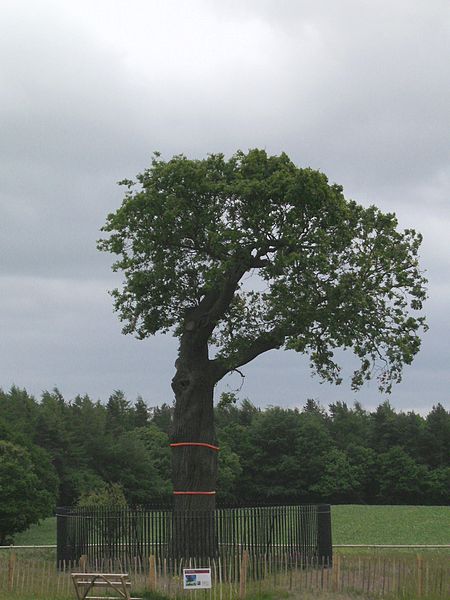
The Royal Oak in 2011, Boscobel House, Shropshire by The Royal Oak in 2011, Boscobel House, Shropshire  Uploaded to Wikipedia  in May 2011 Sjwells53 by  CC BY-SA 3.0

The Royal Oak in 2011, Boscobel House, Shropshire
Uploaded to Wikipedia in May 2011 Sjwells53 CC BY-SA 3.0

I’ve yet to visit Boscobel, owned by English Heritage. I understand that today’s Royal Oak grew from an acorn of the original tree which was destroyed by visitors in the seventeenth century who, in the absence of a gift shop, took away branches and boughs to fashion into souvenirs. In his book ‘Boscobel’, Thomas Blount described,

‘this tree was divided into more parts by Royalists than
perhaps any oak of the same size ever was, each man
thinking himself happy if he could produce a tobacco
stopper, box etc made of the wood.’

These trinkets still turn up at auctions. In 2012, a snuff box sold at Bonhams for almost £7,000.  Another prized relic at the time of Charles’ great escape was a rag he’d used to mop up a nosebleed. Father Huddleston passed this ‘bloody clout’ to a Mrs Braithwaite who kept it as a remedy for the King’s Evil, another name given to the disease known as scrofula. Since the reign of Edward the Confessor, it had been thought that the disease could be cured by a touch from a King or Queen. Of all the royal touchers, Charles II was the most prolific. The British Numismatic Society estimate he touched over 100,000 people during his reign. The tradition was continued, somewhat reluctantly, by King James II who carried out a ‘touching’ ceremony at Lichfield Cathedral in 1687 (5). The last English Monarch to partake in the ritual was Queen Anne, who ‘touched’ a two year old Samuel Johnson at one of the ceremonies in 1712. The touch piece or coin which the Queen presented young Samuel with, which he is said to have worn throughout his life, is now in the British Museum.

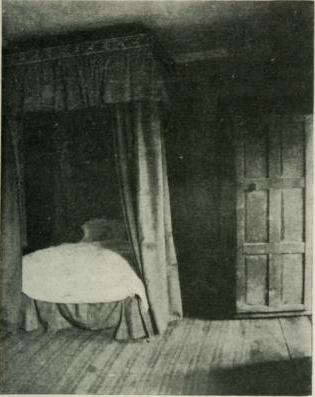
John Huddleston's room now known as the King's Bedroom

John Huddleston’s room now known as the King’s Bedroom from The Flight of the King by Allan Des (1908)

By the mid twentieth century, Moseley Old Hall was suffering from neglect and subsidence. This ‘atmospheric Elizabethan farmhouse that saved a King‘ was itself saved by the National Trust, when they took over in 1962. Every year, thousands of people pass through that door to see that bed and hiding place. Seems that three hundred years on the King hasn’t lost his touch. Or maybe they are just here for the toast?

Moseley Toast

Notes

(1) As the king lay dying in February 1684, Huddleston was said to have been brought to his bedside with the words, “This good man once saved your life. Now he comes to save your soul”.

(2) The bed at Moseley is the original one the King slept on top of. It was bought by Sir Geoffrey Mander of Wightwick Manor in 1913, but was returned to the hall in 1962 by his widow, Lady Mander.

(3) It seems the King’s victory was only short-lived. One of them just asked what I was writing about and when I told them it was Moseley Old Hall they replied, ‘Oh yes, the place with the toast’.

(4) If you didn’t know, take a look at this great map from englishcivilwar.org which plots all of the stages on the King’s journey from the Battle of Worcester to his arrival in Fécamp, France

(5) More information can be found in ‘Touching for the King’s Evil: James II at Lichfield in 1687’, in Volume 20 of the The Staffordshire Archaeological and Historical Society transactions.

Sources: 

Moseley Old Hall, National Trust Guidebook

Staffordshire Archaeological and Historical Society Transactions Volume XL

http://www.coinbooks.org/esylum_v17n40a13.html

http://www.britishmuseum.org/explore/highlights/highlight_objects/cm/d/dr_johnsons_touch-piece.aspx

The Odd Couple

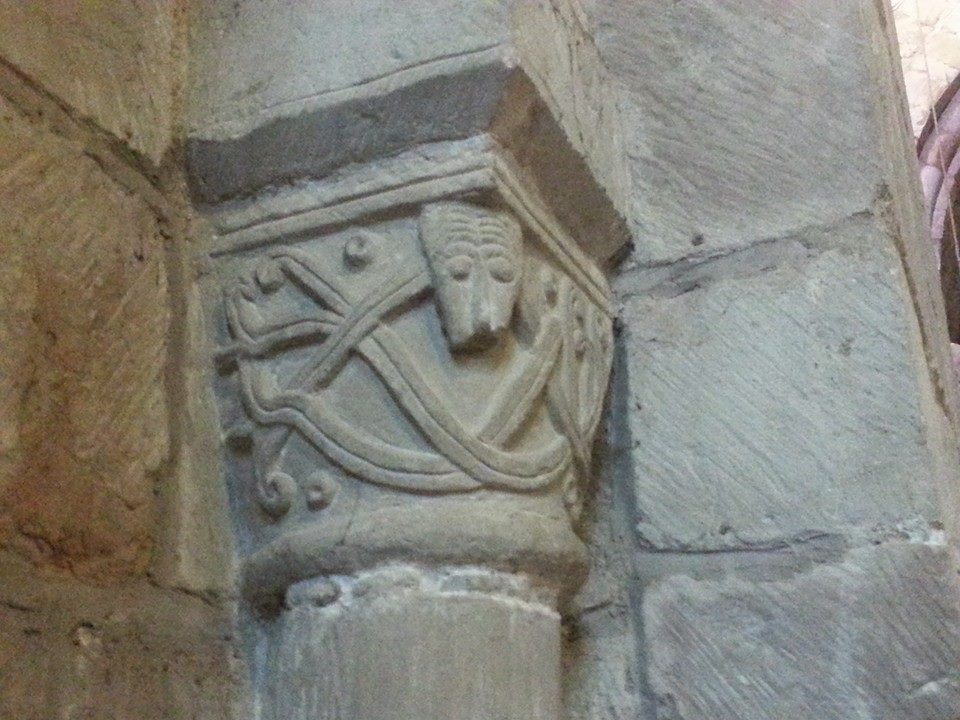
According to Pevsner, the Church of St Lawrence features some of the most exciting Norman work in the county.  Here be dragons and other fantastical creatures, Saxon and Scandinavian influences, a green man and other ancient faces. There are no wolves though.

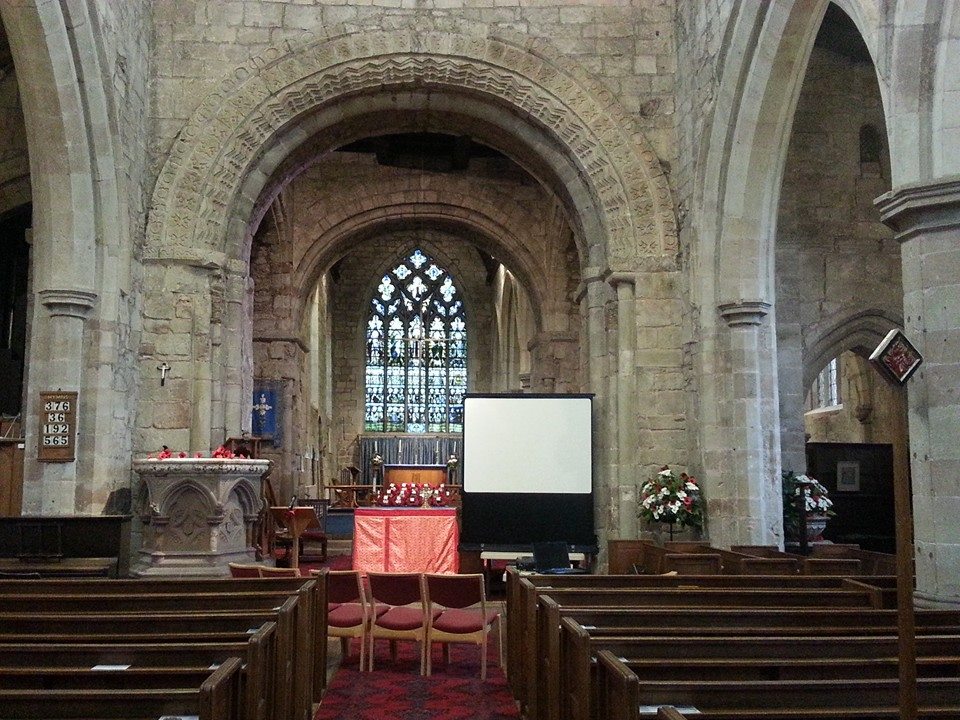
Norman arch, Gnosall church

Norman arch, Gnosall church

Carving at Gnosall

Carving at Gnosall

Possible Saxon stonework, Gnosall

Possible Saxon stonework, Gnosall

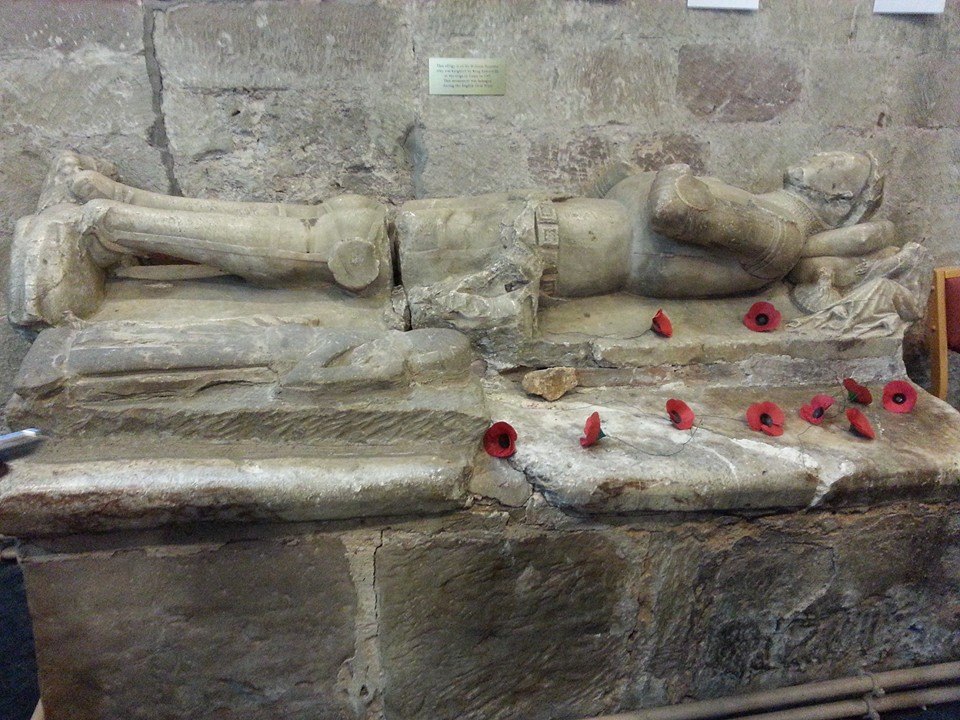
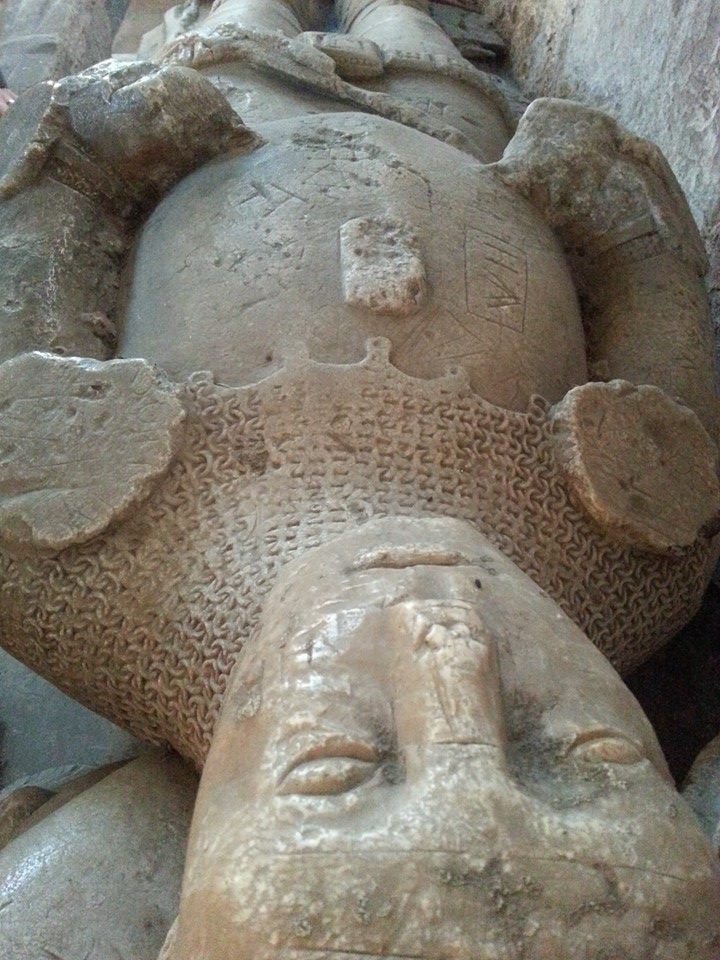
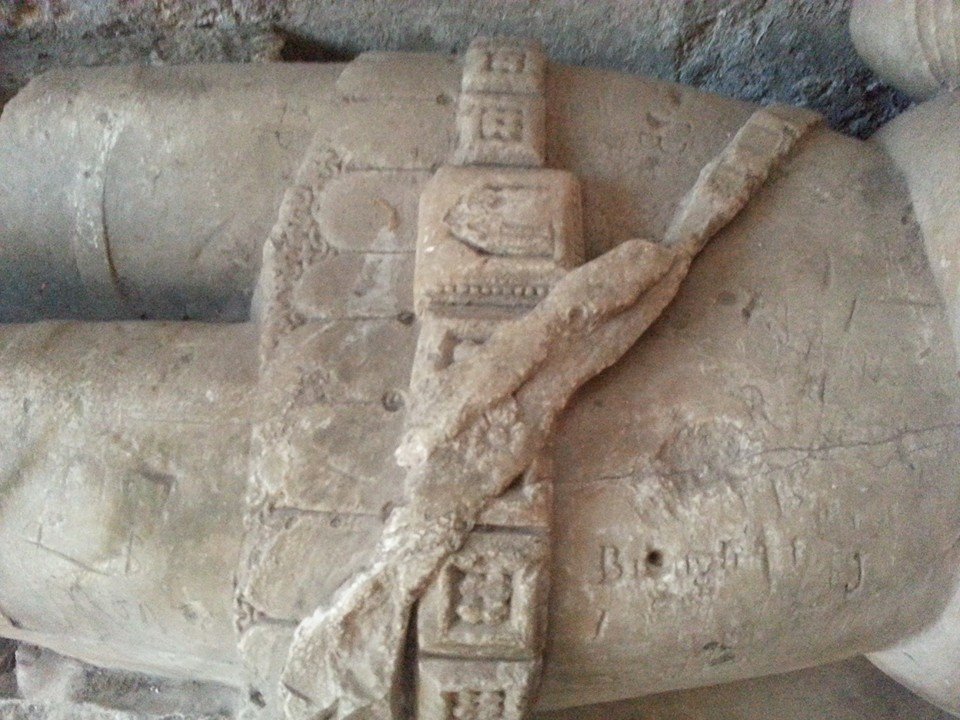
Legend has it that the last wolf in Staffordshire was killed here in Gnosall in a pit near Brough Hall and that the effigy in the Lady Chapel is that of its slayer, Baron Brough  As much as I wish it were true, there is no evidence for this tale and no reason to believe the Baron ever even existed outside of Gnosall mythology. Several other names have been linked with the alabaster knight over the years, but his true identity remains unknown. Whilst such personal details are lacking, there is physical detail here in abundance, from the broken angel and the helmet at his head, to the lion at his now missing feet and experts have used these features to date the monument to the early fifteenth century. In recent years, the knight has been joined by the church’s only other effigy, taken from the recess on the opposite side of the church known as the Easter Sepulchre.

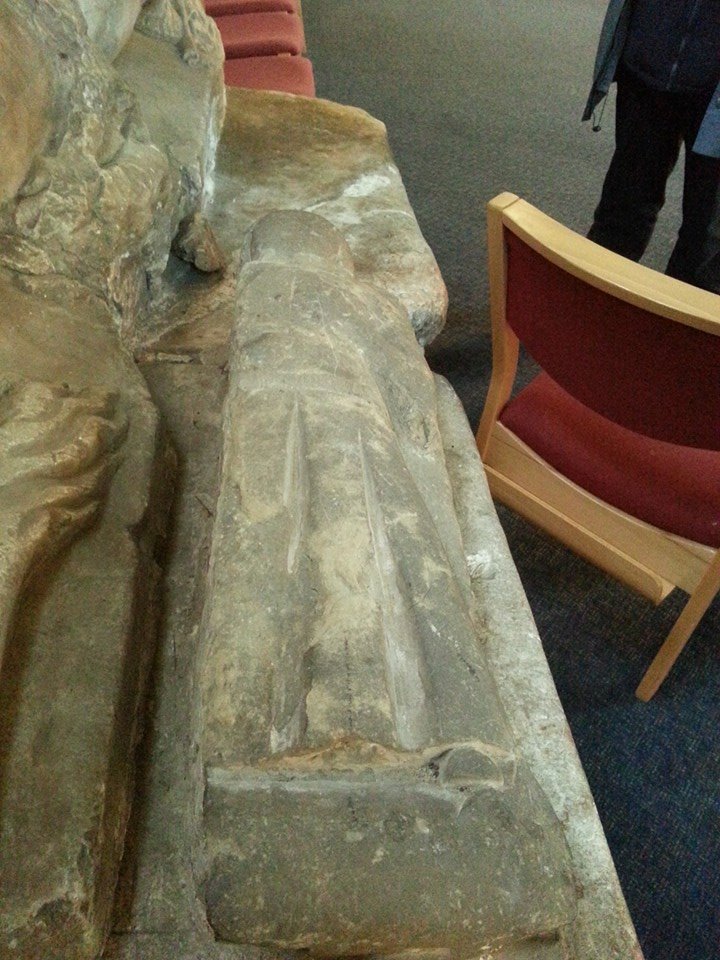
Two effigies at Gnosall church

Two effigies at Gnosall church

The unknown knight of Gnosall

Defaced – the unknown knight of Gnosall

Gnosall effigy belt

Even less is know about this second effigy, but due to its diminutive stature, it is often described as depicting a child. However, after visiting the church, words that I’d read in a paper by Dr Sophie Oosterwijk in relation to the famous Stanley Boy monument at Elford came back into my mind – “A small-sized tomb may deceive the beholder into thinking that it must commemorate a child, but there may be other explanations”. One of Dr Oosterwijk’s other explanations is that these tiny tombs may represent heart burials. It’s not only the size of the effigy that’s convinced me that someone left their heart here in Gnosall, but also the position of his or her hand over the chest, a feature it has in common with another example thought to be a fourteenth century heart burial at Coberley in Gloucestershire.

Effigy possibly depicting a heart burial at Gnosall

Effigy possibly depicting a heart burial at Gnosall

Despite the abundance of surviving Romanesque architecture here, the church is missing its original font.  However, at nearby Bradley. and Church Eaton there are examples which date to the twelfth century and recall some of the patterns and themes found at Gnosall, perhaps giving us an idea of what the Norman font at St Lawrence may have looked like. Interestingly, the broken Church Eaton font was reinstated at St Editha’s after apparently being found buried in a garden, and so it’s possible that Gnosall’s is out there somewhere, awaiting discovery under someone’s lawn.

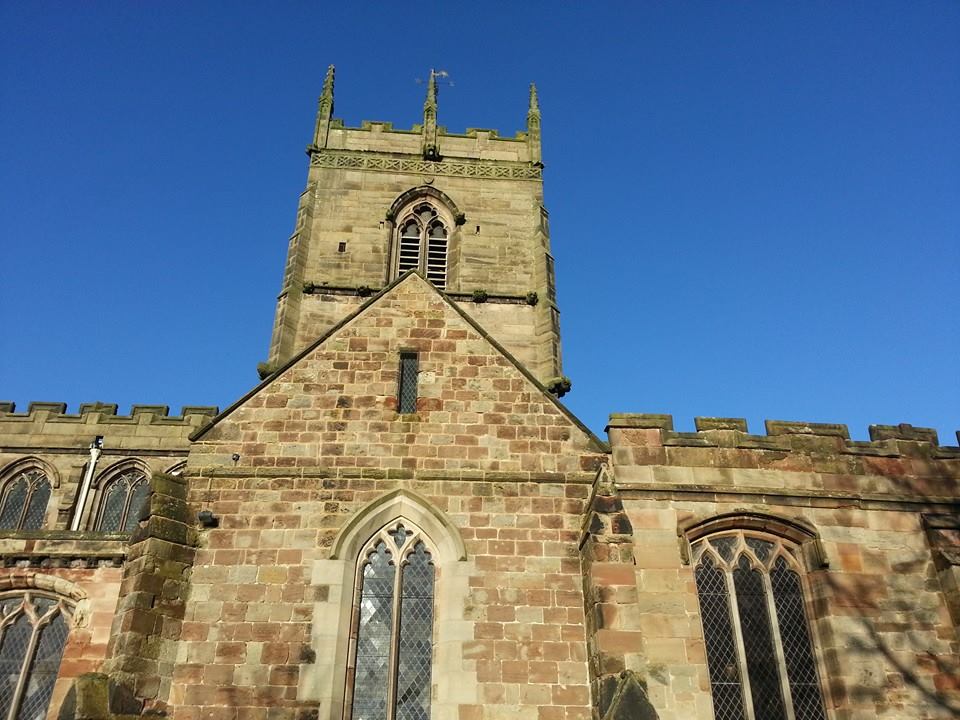
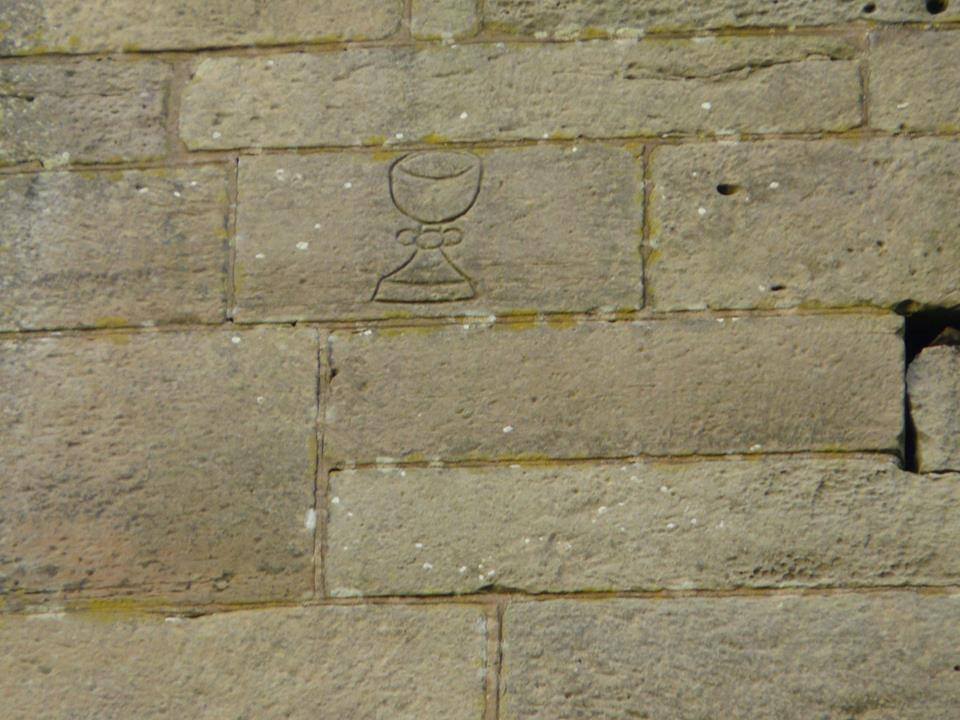
One of Gnosall’s most intriguing features can be found outside, high on the south side of the church where stonemasons (we assume) who extended the tower in the mid fifteenth century have carved a large chalice into the stonework alongside the belfry window.

South face of the church tower at Gnosall

South face of the church tower at Gnosall

Chalice carving on Gnosall church tower (photo by Kenneth Ingram)

Chalice carving on Gnosall church tower (photo by Kenneth Ingram)

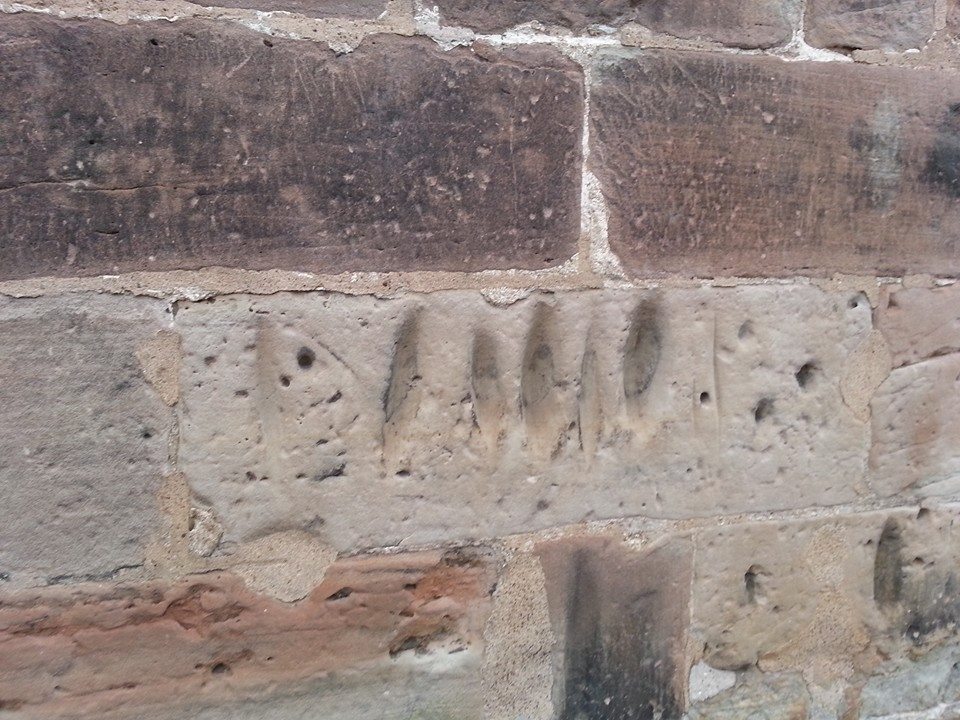
Less mysterious in origin, but still of interest, are the grooves along the wall, said to have been created by the sharpening of arrows when the grounds were used for archery practice.

Arrow grooves, Gnosall Church

Arrow grooves at Gnosall Church

There is also a rumour that this wall of the church bears the scars of target practice during the Civil War (Rodwell: 223). What we do know for certain about the church of St Lawrence and the civil war is that there are two soldiers buried here. The parish register records that on 1st October 1642, a tall young man known as John Bayne (or Bayle), ‘one of the King’s souldiers’, was buried here and that on 25th March 1643, David James, another of ‘the King’s souldiers’, was laid to rest. The date of the second may be especially significant, coming less than a week after the Battle of Hopton Heath, fought just ten miles away. Amidst the other burials and baptisms of the parish register, an interesting entry appears on an otherwise blank page. At some time between 20th March 1684 and 19th April 1685, an ‘unlettered’ hand has written the following:

Fere god and honour the King
Honor your parents at all times
Wimins tongues air like [unfinished]

Whether the writer of the verse was interrupted or simply ran out of inspiration is unknown, but we are left to draw our own conclusions on the nature of  ‘wimins tongues’. However, when it comes to singing the praises of this incredible building, I shall not be holding mine. See it for yourself on the weekend of 4th/5th July 2015, when the Church of St Lawrence, including the tower, will be open for tours as part of the G-Fest celebrations held in the village each year. Now that is exciting.

Tombstone in the graveyard at the Church of St Lawrence, Gnosall/

Tombstone in the graveyard at the Church of St Lawrence, Gnosall

With thanks to Norman and Sheila Hailes, for their tour and invaluable knowledge of the church, and to Kathleen Ingram and Cllr Kenneth Ingram and the other residents of Gnosall, for showing us around not once, but twice!

References:

Rodwell,W. (2012) The Archaeology of Churches Stroud: Amberley

Oosterwijk, S. (2010)  Deceptive appearances. The presentation of children on medieval tombs Ecclesiology Today

http://www.gnosallweb.org.uk/articles/stlawren.htm

Hard Labour

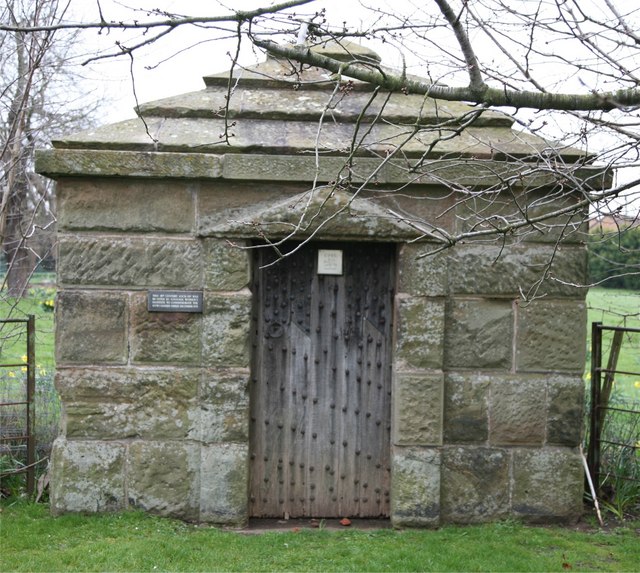
Gnosall’s lock-up dates to 1832 and was designed and built by local architect James Trubshaw of Great Haywood. It’s one of only four remaining in Staffordshire (1). Originally it stood at the junction of High Street, Brookhouse Road and Stafford Street but in the 1960s, Staffordshire County Council suggested that the building be moved to the county museum at Shugborough in order that the junction could be widened. Understandably, the Gnosall WI were keen that the lock-up remain in the village and set about securing a piece of land where it could be re-erected. As if to prove the council’s point about the road being a bit narrow, a lorry ran in to it in 1969 but fortunately didn’t cause enough damage to prevent it being rebuilt on its current site on Sellman St in 1971.

Gnosall lock-up

Gnosall lock-up

Why was the lock-up built in Gnosall in the first place?  The English Heritage Listing says ‘…as a result of rising unemployment and low wages, Gnosall was plagued by unrest and poaching…. with the threat of the Swing Riots, a widespread uprising by agricultural workers in southern England, spreading northwards, it was decided to build a lock-up’. In Stafford Borough Council’s Conservation Appraisal of the area, they attribute it to ‘rising unemployment, poaching and agricultural riots in the south’.

The arrival of canal navigators in the village may also have influenced the decision to build a lock-up.  In November 1829, Aris’s Birmingham Gazette reported that two thousand labourers employed on the Birmingham and Liverpool Canal were living in the village (2). The Gazette suggested that the navigators were responsible for a spate of sheep and poultry thefts in the area and also reported that they ‘advanced from acts of midnight depredation to proceedings of a tumultuous and riotous description in the open day’. The most serious incident that I can find involving the navigators at Gnosall took place in March 1830 when it was reported that a labourer working on the canal was attacked in the Horseshoes pub at Gnosall by two men described as ‘navigators’, as they tried to steal his watch. A judgement of death was recorded against the prisoners, but their lives were spared (2). Apparently, these proceedings so alarmed the inhabitants of Gnosall and the neighbourhood that they applied for the appointment of a large body of special constables and were also ‘desirous that a small military force be stationed in the parish’.

Whilst some navigators may have found themselves on the wrong side of the law at times, the Truck System operated by some of their employers was nothing short of criminal. According to a report in the Staffordshire Advertiser in February 1830, ‘none of his Majesty’s subjects are more imposed upon by the infamous ‘Truck System’ than these said ‘navigators’ who are ostensibly earning large wages under their gaffers but instead of money they receive a ticket to a Tommy (3) shop where they are charged 8d per lb for cheese (which they might purchase with money in Stafford Market for 4d) and bacon, butter, beef, bread and coffee at extravagant prices. The master of the Tommy shop returns the gaffer five percent on the gross amount of his monthly bill’.

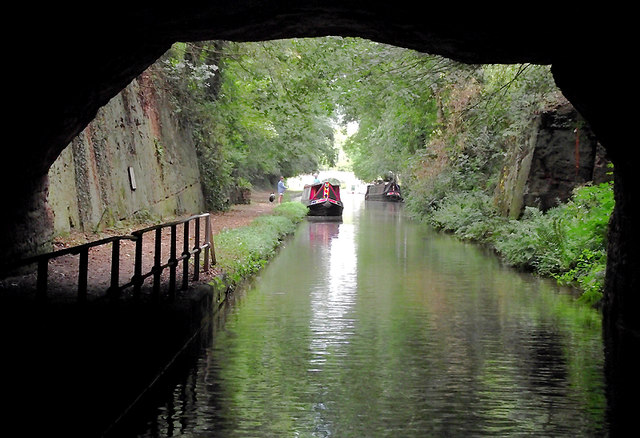
Sometimes it was not crime but death which brought the names of the navigators to the pages of the local press. Richard Barnett was injured by a quantity of earth falling on the lower half of his body and died as he was being conveyed home on a cart. In December 1830, the Staffordshire Advertiser reported on ‘The Navigator’s Funeral’. James Wheeler was helping to cut a tunnel through the solid rock when he fell to the bottom of Cowley Quarry in Gnosall and later died of his injuries.  One hundred of his colleagues each contributed one shilling to ensure he had a decent burial and when they discovered his coffin had already been nailed shut, demanded the lid be removed to check nothing was amiss.  Six of the men were under-bearers and the wives of six men supported the pall. Six overseers of the works followed as chief mourners and behind them came one hundred fellow navigators, two abreast. The report noted that whilst the mourners were not wearing black, they were decently attired and looked clean and respectable. The women wore their brightly coloured clothes, the men wore smock-frocks. During the burial, some of those assembled at the graveside expressed anxiety about the security of the corpse and assisted the sexton in filling up the grave. Afterwards, the mourners held a wake at the Roe Buck and the Advertiser expressed sorrow that many of them had stayed out until late and ‘finished up the solemnities of the day with a fight’. However, it also commended the navigators for their praiseworthy practice of not only subscribing towards the funeral expenses of their colleagues but of also clubbing together something out of their wages every week to support the sick amongst them.

Cutting north of Cowley Tunnel at Gnosall Heath, Staffordshire  © Copyright Roger Kidd and licensed for reuse under this Creative Commons Licence

Cutting north of Cowley Tunnel at Gnosall Heath, Staffordshire © Copyright Roger Kidd and licensed for reuse under this Creative Commons Licence

We are all familiar with the canals that run through our towns and villages, but what do we really know about the men that worked on the Shroppie in Gnosall and elsewhere?  Where did they live? Did they rent rooms or live in makeshift camps on the outskirts of the village? One of the newspaper reports shows that the men were accompanied by their wives, but what role in the community did these women play? Did any stay on after the completion of the canal? How much of what appeared in the papers was based on fact and how much was based on rumour and reputation? The navigators are part of our history but for the most part we seem to have cast them in a peripheral role as hard-working, hard-drinking, trouble-making outsiders. We need to dig deeper than that.

Notes

(1) The others can be found at Alton, Stafford and Penkridge. References to other lock-ups in Staffordshire appear in documents and newspaper reports but without further research it’s unclear whether these refer to purpose built structures such as those at Gnosall, or rooms in other buildings used as lock-ups. I understand that sometimes rooms were attached to public buildings such as the town hall and in other places there were rooms in some public houses which were used as lock-ups. This is not to be confused with lock-ins.

(2) I understand that this seemingly confusing sentence handed out by the judge related to the Judgement of Death Act 1823, where judges were given the discretion to pass a lesser sentence on the two hundred or so offences which carried a mandatory death sentence but still had to record a sentence of death.

(3) Tommy was a word for food.

(With thanks to Cllr Kenneth Ingram, Norman and Sheila Hailes and the other residents of Gnosall for their warm welcome and for showing us around the village on such a cold and damp day, More to follow!).

Pubs and Publishing

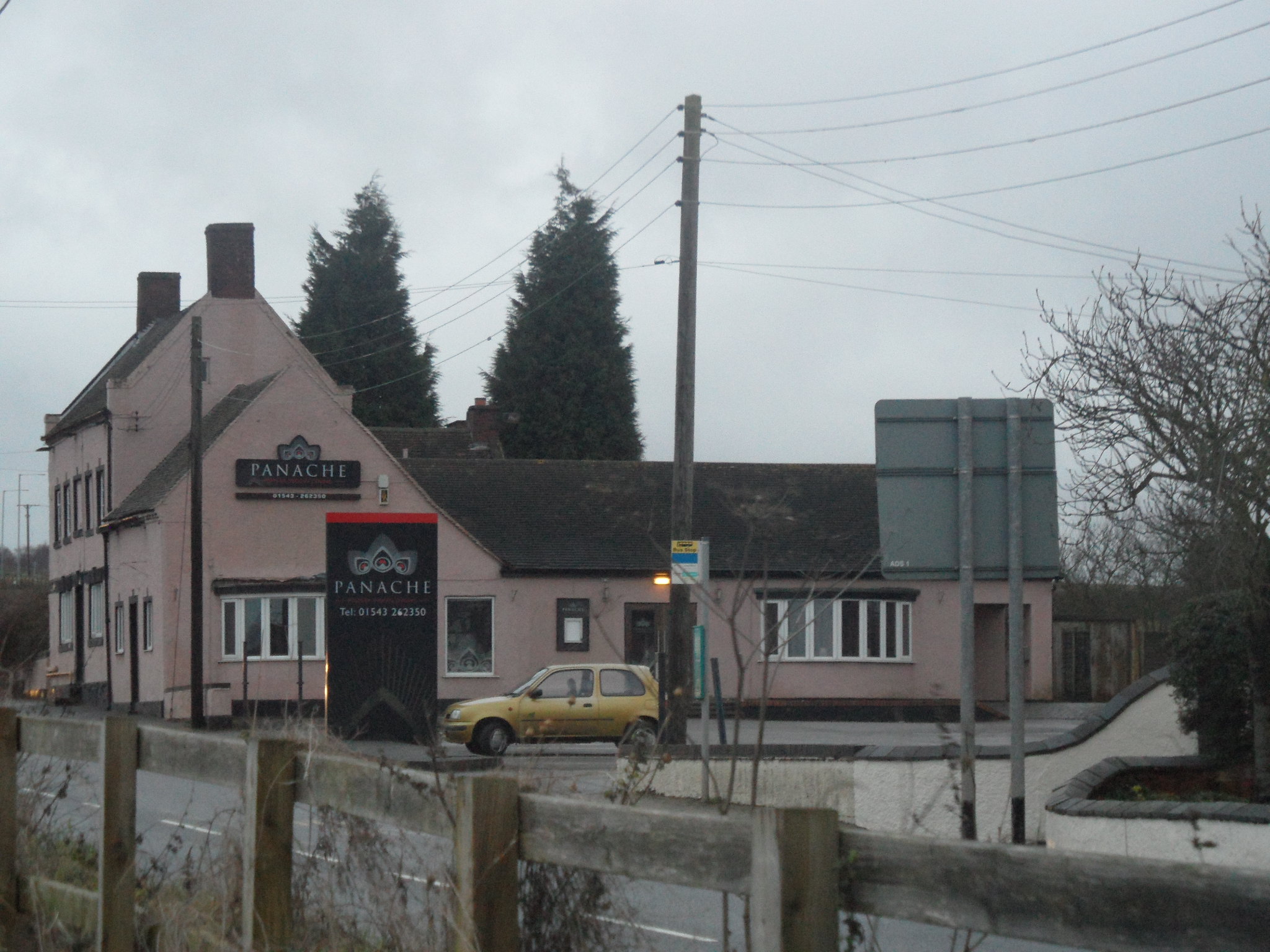
There’s been a lot of curiosity about what’s happening at the site of the former Three Tuns Inn on the Walsall Road. Panache Restaurant closed some months back and since then there has been a fair bit of activity at the site. Judging by accounts set up on social media, it seems it will be reopening in Spring 2015 as a pub/bar/restaurant known as The Barn.

Former Three Tuns Inn, Walsall Road Lichfield. Photo by John Gallagher

October 2014. Former Three Tuns Inn, Walsall Road Lichfield. Photo by John Gallagher

Panache Restaurant, former Three Tuns Inn, December 2012

Panache Restaurant, former Three Tuns Inn, December 2012

Whilst we wait to see what the future holds for the pub, I thought I’d have a quick look at its past. As always in hostelry related matters I had a look in John Shaw’s ‘The Old Pubs of Lichfield, which tells us that the Three Tuns inn was first recorded in 1771 and would originally have served the wagon trade as a roadhouse of its day.

Local historian J W Jackson’s ‘Victorian Lichfield’ column, written for the Mercury in the 1930s, talks about the ‘Cherry Wakes’ held at the inn. Crowds of visitors would arrive to enjoy the ripe white heart cherries grown in an adjoining orchard, and wash them down with ale. I wonder when the orchard was grubbed up and if any of the trees are still there?

In September 1938, F H Shilcock took over from Peter Radford as landlord and remained at the Three Tuns for fifteen years.Mr Shilcock was also a poet and in 1950 an anthology of his work,‘Poems by a Lichfield Innkeeper’ was published. From time to time, his verses appeared in the Lichfield Mercury, including this one published in August 1943 about the gathering in of the harvest in the fields behind the pub.

Near to the quiet of a country inn,
I daily watched the field of wheat
The summer wind made wave,
And swayed the ears of corn,
The sun did change the shades of green to golden brown,
And nature gave each head a golden crown.
Then harvest time drew near,
And reapers made a way;
The binder came that day
And laid the precious grain in sheaves upon the ground.
Now the field is still,
And fowl from farm are taking fill,
With duck and sparrow joining in the band –
No doubt they think life is grand.
Enjoying fallen grain upon the stubble,
Where once the partridge had his cover.
Dame Nature, be so kind:
By peaceful ways
Another sanctuary find.

Along with every other pub in Lichfield, the Three Tuns gets a mention in this poetical pub crawl, published in the Mercury in September 1922. It’s a long poem (there were a lot of pubs to get round back then!) so here’s an abridged version:

King George the Fourth one day
Stood on the Bowling Green
‘Midst Staffordshire Nut and Acorn,
Where Bluebell had been seen.

A frown was seen upon the face
Of Little George the brave;
For Prince of Wales, his royal grace
Would not a pardon crave.

He’d frankly said at Windsor Castle
The Earl of Lichfield’s land
Contained a freak, a Bald Buck rascal.
Pleasing all the courtly band.

The reason for this conduct,
Which seemed so out of bounds,
The George who ruled the country
Sought for here around

Also from the forest
Whence Robin Hood had come-
The Royal Oaks rocked with laughter
At what the King had done

He’d come one day with Greyhound bay
Horse and Jockey colours gay,
Ere long he saw the ghastly freak
The reason of his son’s outbreak

So all, who knew the Fountain head
Of our Britannia’s shore
Could never hope for laurel green
Hunting Swan or else the boar.

As fierce Red Lion, his anger grew,
And in his rage he swore,
His Constitution could not stand
His heart in great uproar.

That night, beneath the Hollybush.
With Rodney and with Smithfield
A duel was fought (and our sons are taught)
The one duel fought in Lichfield).

On one side stood the Old Crown
The hero of the tale,
And ‘cross the great Queen’s Head was seen
Like Angel, sad and pale.

‘Three Crowns I’ll stake, they won’t checkmate’
Was said by Anglesey,
And Gresley Arms were held aloft
(These never could agree)

The King’s Head man from rivals ran,
The father and the son;
Brave Duke of York was standing there
With Duke of Wellington.

Others, too, were there that day
Beneath the greenwood tree,
All Chequers of a bloody end,
Assistant hopes to be.

The Duke of Cambridge afterwards
Most thoroughly agreed
The Scale ne’er turned, nor honour burned
By foul or ugly deed

The nighttime fell and Malt Shovel
Ceased its plying hire
Carpenters’ Arms from work bench strayed
To pewters round the Turk’s Head fire.

The tenants of the land that night,
O’er Three Tuns, ‘neath the trees,
Spoke of duel and fighting
And many of Cross Keys

The Goat’s Head too, looked o’er the wall
Of cottage old and grey
Saw he the George and Dragon
Cross the Bridge at break of day

At night the Hen and Chickens
Made the Feathers fly;
One thought perhaps they visioned-
A Spread Eagle in the sky.

I leave the rest and how the test
Of rivals, youth and age.
And parentage – the end I leave
To fill another page.

So visions fill my thoughts,
Because I am a glutton
I long to see Hotel Trent Valley
So near Shoulder of Mutton

I’ve strayed far from the tale
The Sheriff told to me,
A Bridge I’ve built between the years
Of Lichfield’s memory.

Now Railway runs where duels were fought
Of which no book has ever taught
Ten bells ring out – Cathedral, keep
Guard over Lichfield while we sleep

To waken with a startling cry
The Sheriff has now said ‘Goodbye’
But satisfied I’ve made the test
At the Hen and Chickens find the best.

G W Gardner, Lichfield

Some of the pubs featured in the verse can be found amongst the old photos of Lichfield added to Flickr by Lichfield District Council GIS Manager Gareth Thomas. .

Robin Hood, Frog Lane. I think! Taken from Lichfield GIS flickrstream

Robin Hood, Frog Lane, Lichfield. I think! Taken from Lichfield GIS flickrstream

Holly Bush pub, Tamworth Street, Lichfield

Holly Bush pub, Tamworth Street, Lichfield

Delivery to the Earl of Lichfield, Conduit Street, Lichfield

Beer delivery to the Earl of Lichfield, Conduit Street, Lichfield

You can see more of the photos here. Some are long gone, but Lichfield is still a great place for pubs. Just last Thursday, mid eighteenth century Angel Inn on Market Street re-opened, reverting back to its earlier name, after having been known as Samuels since the late 1970s. ‘Sammies’ may not have enjoyed the best reputation, but it’s still part of our history and it’s good to see the old sign, with its portrait of Dr Johnson, hanging on the wall. It seems only right to give our most famous poet and lexicographer the (much-quoted) last words on the subject of pubs – ‘There is nothing which has yet been contrived by man, by which so much happiness is produced by a good tavern or inn’.

Joules delivery to the Angel Inn, Market St, Lichfield. Unintentionally echoing the Marstons/ Earl of Lichfield photo above!

Joules delivery to the Angel Inn, Market St, Lichfield. Unintentionally echoing the Marstons/ Earl of Lichfield photo above! Autumn 2014

Update: I had a fascinating email from Mike Cooper (appropriate name!) who told me that his great grandfather (x4) bought the Three Tuns Estate in 1777 for the princely sum of £1100.00 pounds of which £700.00 was in the form of a mortgage. The estate covered the pub, its outbuildings and 22 acres of land. He bought the pub from the estate of one Fettiplace Nott Esq (splendid name!), former High Steward of Lichfield, who died on the 6th of June 1775 & who decreed in his will that the sale of the Three Tuns & other possessions were to pay off the gambling debts of his son who was also named Fettiplace Nott. Back in 1777,  Lichfield Racecourse, now where Whittington Golf course stands, was in full swing & where Fettiplace Nott Jnr was want to spend his spare time! On the 6th of May 1801 Thomas Cooper sold the land but not the pub to Henry, Earl of Uxbridge for the sum of £1498.5s. In February 1818, Thomas Cooper, who by then was in his eighties sells the Three Tuns to his son-in-law James Neville & his brother John Neville who then sell it to their younger brother Charles on November 27th 1818. Thomas Cooper died in Lichfield on the 28th January 1828 & is buried in the churchyard at St John’s Hammerwich.


I’m really grateful to Mike for providing this information on the early days of the Three Tuns. Mike – I owe you a drink when it re-opens!