Lost in the Woods

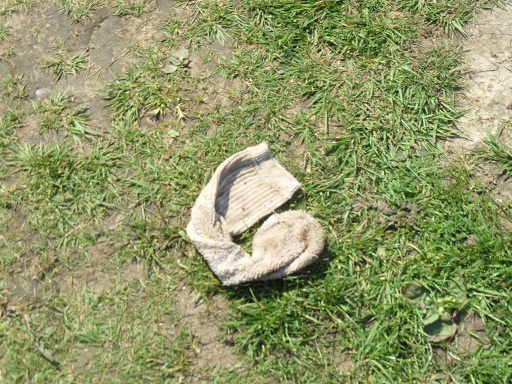
Whenever I see an object out of place it intrigues me.  I’m not talking litter here, I mean the things that are dropped by accident, things that are left behind. Lost property. Things that might (or might not!) interest future archaeologists if they were to discover them in a couple of centuries time.  I want to know the story behind them, who they belonged to & how they ended up lost, but I realise that I might be on my own with this one! 

I’ve put together a gallery of things found on the path past Leomansley Wood to Pipe Green and on the Green itself.

Lost by a horse, found by a friend. Brownhills Bob told me that it's not that old. Still lucky though!


Dropped by someone in need of a lucky horseshoe? Or on the way home from the fair?

Lost whilst blackberrying?


Dropped after an impromptu paddle in the brook?


See above!


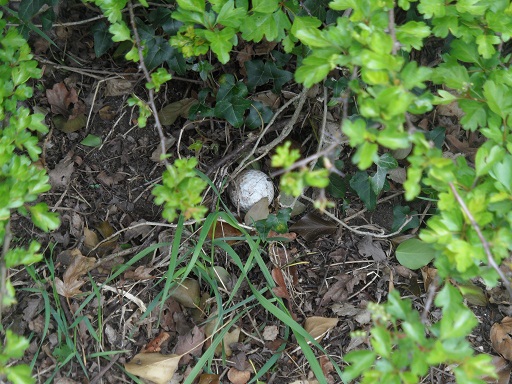
In the rough. Not sure Leomansley Wood makes a great fairway.

Or a great rugby pitch either.

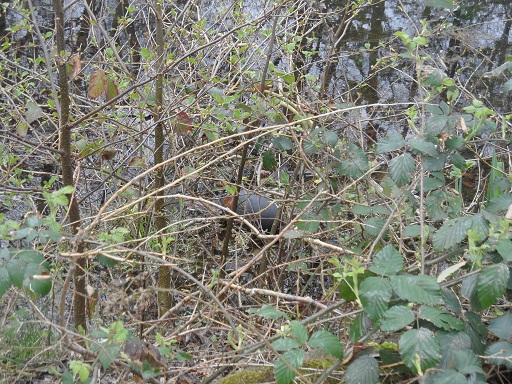
I guess the robber escaped from the cop.


The remnants of an overenthusiastic dog's toy?

I would ask people to send me photographs of things they’ve found, but I appreciate that I might be the only person in Lichfield who goes around taking photographs of old socks!


Tree following: White Heat

“No, I can’t come out with you, I’m supposed to be working”. “You know you want to… I’m only going to be around for the next few days and then I don’t know when I’ll be back in Lichfield again”. “Oh, go on then…..”

Yes, my old friend summer is back in town, and so I went to see how my tree that I follow on the path from Leomansley Wood to Pipe Green is getting on. To be honest I’m now following pretty much the whole path, so the tree doesn’t get that much of a look in these days. I’m sure it’ll come in to its own as the seasons progress though!

It was a delight for most of the senses.  Birdsong and drumming woodpeckers, butterflies and an abundance of mostly white flowers along the floor and hedgerows, the warmth of the sun, the cool of the breeze and the shade of the trees and of course the scent of early summer in the air. Taste is the only one that eluded me on my walk (although I’m sure there were probably some wild goodies I could have tried if I was both more knowledgeable and brave about these things). I think my tea & cake when I got home might just about count though.

Tree following: Mayday

It took a bit of effort to drag myself out into the murky, wet evening. Glad I made the effort though. Before I’d even got to the woods, I had a treat when a heron swooped down onto a roof and remained there for a few moments before flying off in the direction of Waitrose. I’ve spotted a heron a couple of times near the old mill pool over there. On twitter, Brownhills Bob & someone from the Pipe Green Trust thought he may have been heading to a heronry at Aldershawe.

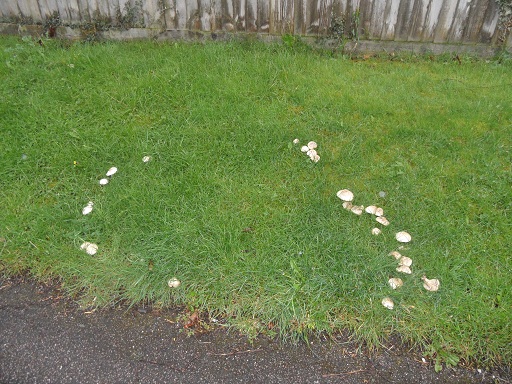
Another few steps and I found myself passing a slightly wonky fairyring of mushrooms. I didn’t get too near. I’ve read what happens to mortals who do…..

Once in the woods, the trees, plants and hedgerows glistened, but with drops of recent rainfall, rather than may dew.

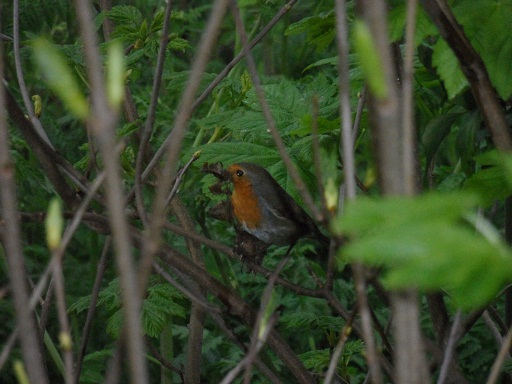
I wanted to measure my tree, to get an idea of how old it was. It soon became apparent that this was no task to undertake alone. The people in the flats overlooking the lane, and this robin that turned up to watch, probably wondered what on earth I was doing.

Happily, I managed to enlist someone’s help and we discovered that the trunk measured about 3.2m which could mean that it is anything from around 210 years old to around 130 years old. According to the Royal Forestry Society, a tree could grow between 1.5cm & 2.5cm per year, depending on things like location, soil quality.  So I’m going to read up on Mitchell’s Rule and then maybe I’ll have another go at estimating the age!

Tree measuring task completed, I headed back down the lane and met a couple out for a walk. They didn’t seem to mind the weather, in fact they thought it was lovely…….


Into the woods….

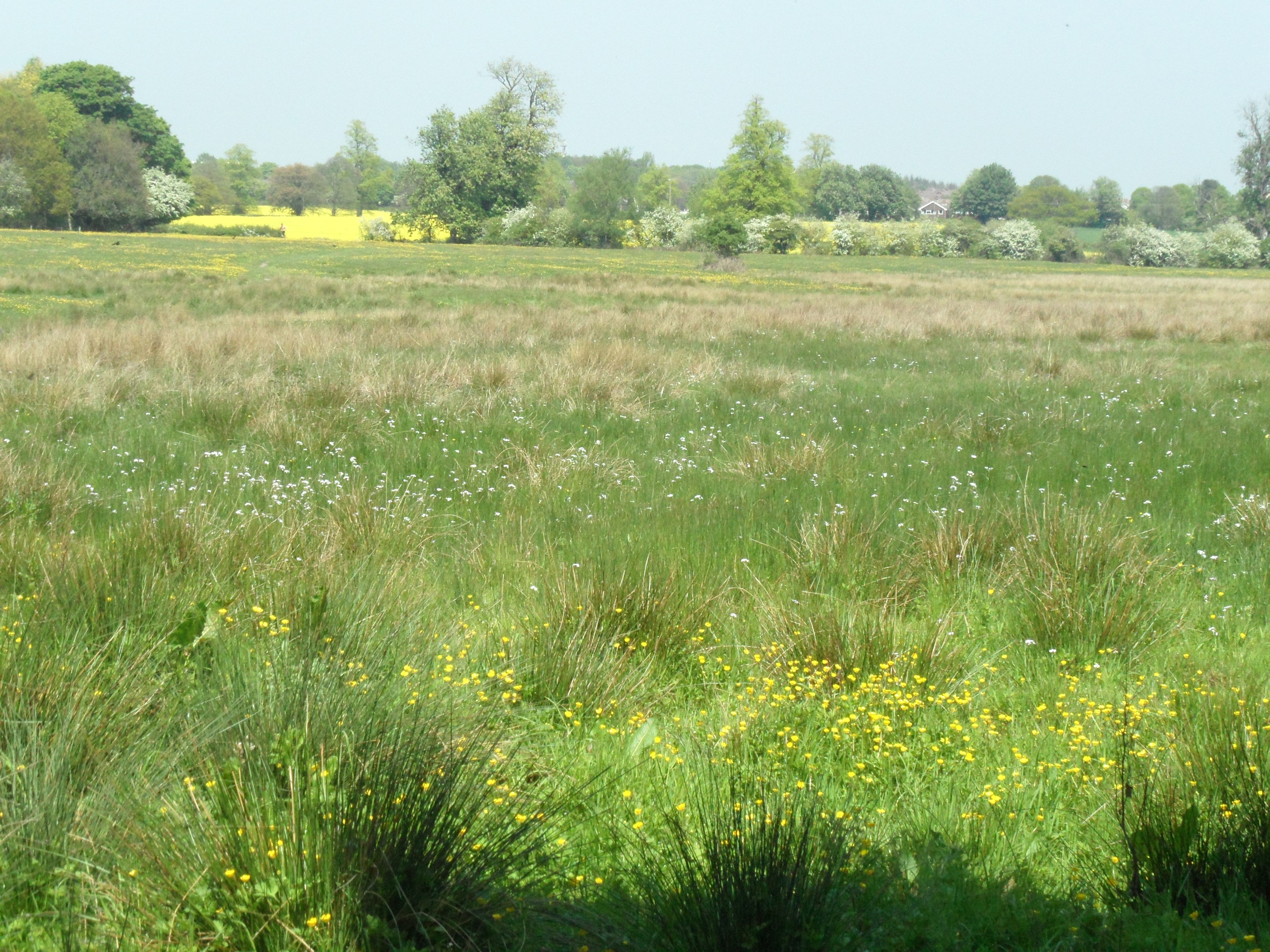
I was lured into the woods by the promise of wood anemones…..then along the path past the old Leomansley mill pools….and finally onto the edge of Pipe Green common.


Tree following: …..bring May flowers

Leomansley Woods are lovely all year round but within the next few weeks they will be at the peak of their beauty. Well, I think so. You’ll have to visit and see if you agree.

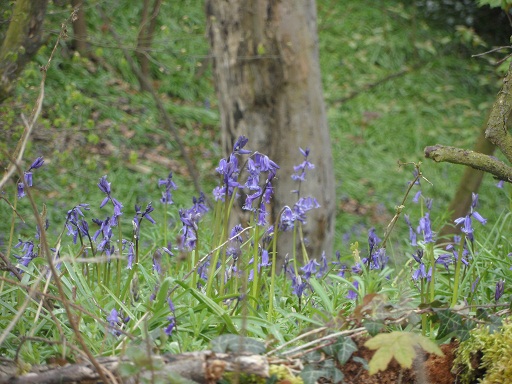
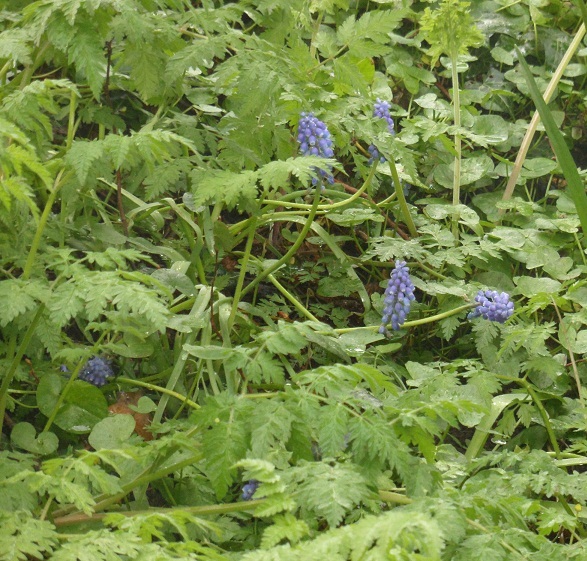
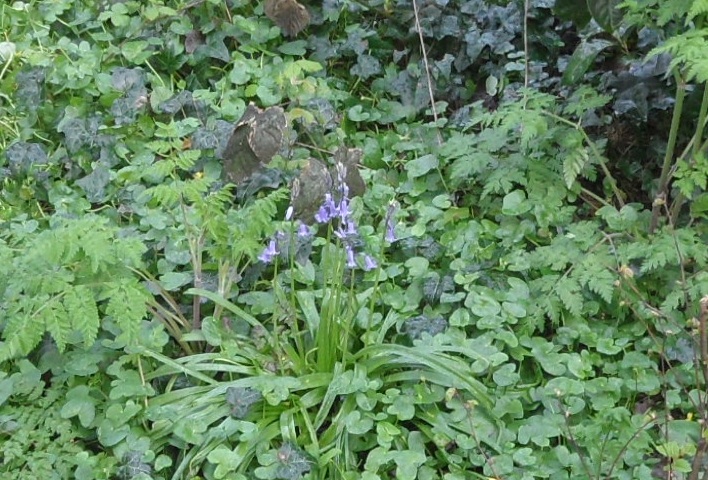
There’s just a smattering at the moment, but soon the bluebells will fill the gaps between the trees and paint the woodland floor with their colour.

Getting bluer by the day

I could put a photo on here from last year but why spoil the anticipation? It’s not long to wait now! In the meantime there’s plenty more going on of interest, although I confess I’m not always sure what exactly. I’m still fumbling my way through with a variety of Woodland Trust swatch books and a junior nature guide but I am learning slowly. I’ve realised that trying to identify the plants from photographs is not the way to do it. Clearly, it’s a bit tricky to see if the leaves smell of anything (for example, according to my book, hemlock has ‘the strong smell of mice’!) and it’s hard to see other subtle details from a photograph too.

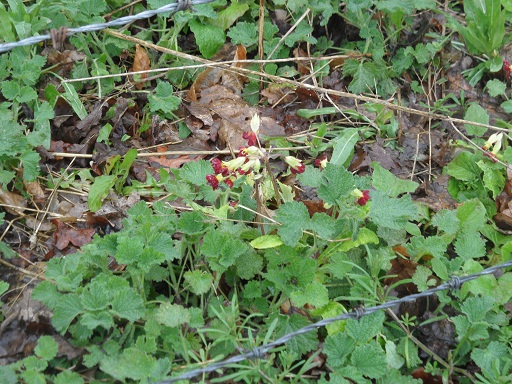
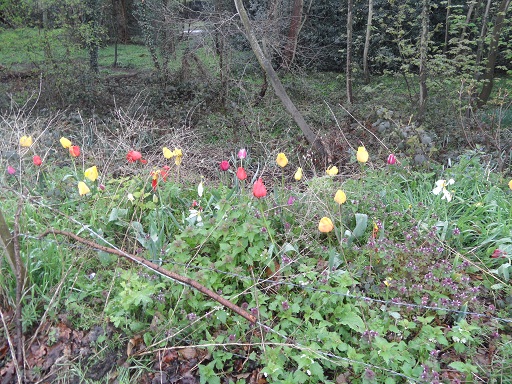
I know these are tulips.....

Fungus

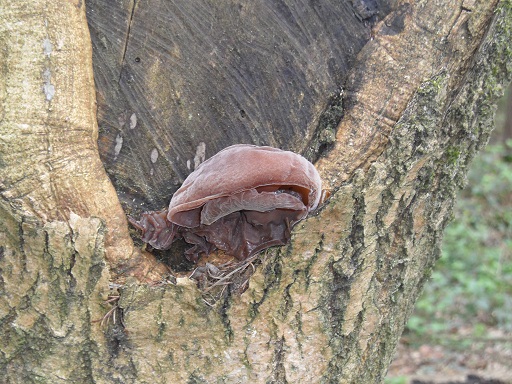
This is some kind of fungus......

No idea???


No idea part 2????

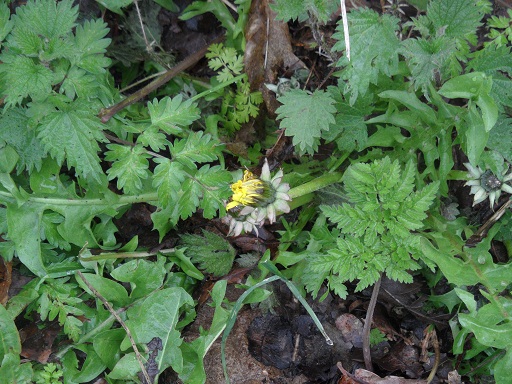
The dandelions had closed up due to the rain (or maybe they’ were hiding, having heard of my plans to turn them into marmalade……).

Not so dandy

Elsewhere along the lane, other plants were still showing evidence of the last downpour.

Raindrops on leaves

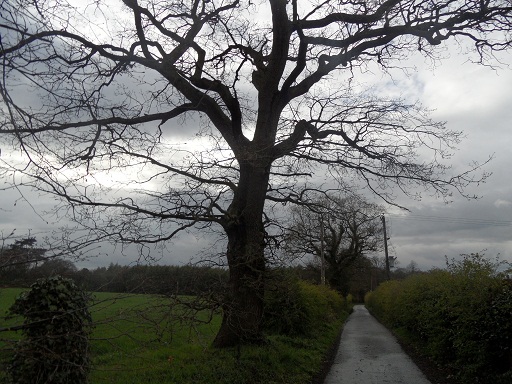
The tree itself now has buds and I’m pretty sure that it is an oak. The path running past the tree goes past Leomansley House/Manor and leads to Pipe Green. Pipe Green is a wonderful area of meadowland managed by a trust and they have an equally wonderful website with details of all the birds, plants and animals you might spot whilst you are there. Have a look at the website here and then go and visit! I’m going to go and see if I can spot the wood anemones.

Oak Aged

Galls & Buds come out to play

Following the sale of the Maple Hayes Estate, to which it belongs, Leomansley Wood now has a new owner. Let’s hope that it will now be cared for and managed as well as it should be.


Tree following: April Showers…..

It was time to revisit my tree on the lane next to Christ Church.  

Now I think it might be a horse chestnut.

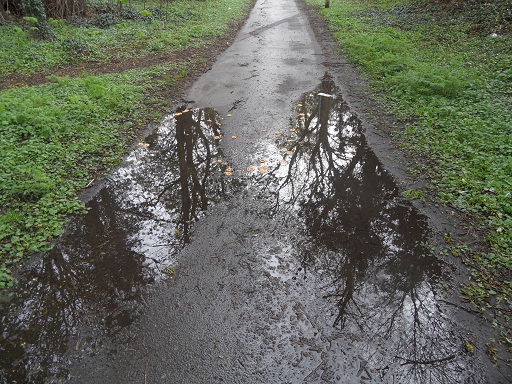
I managed to dodge the heavy showers that had been falling on and off all day, but there was plenty of evidence of them. The air had an earthy smell and looking back towards Christchurch Lane from the A51 end, I noticed the reflection of the trees in the puddles. I’m not sure whether the onion ring crisp spillage adds to or detracts from the scene.

Soggy Crisps

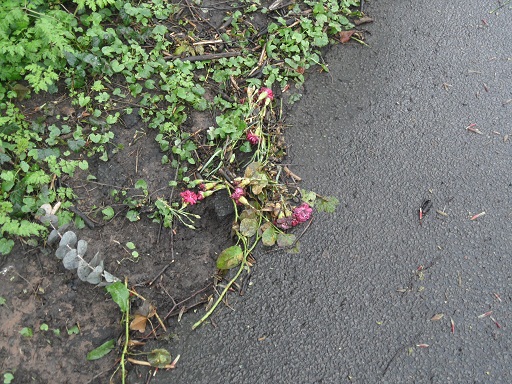
I bet that the crisps were an after school snack, dropped in the haste to get get home before the next shower, but I wonder how these flowers came to be here? From the nearby churchyard perhaps?

Discarded flowers

 It was good to see some new arrivals along the lane.


This reminds me. How are those bluebells in Leomansley Woods coming along?

Tree following: Tree Routes

As far I understand it, the path running past Christ Church was at one point the old Walsall Rd, ‘realigned under an Act of 1832 with the new Queen Street and Walsall Road bypassing the route along Lower Sandford Street and what was later called Christchurch Lane. That lane takes its name from the church opened in 1847, and by then it had been continued south-west from the church to the new Walsall road, the old line from Lower Sandford Street having been turned into a drive for Beacon Place’.(1)
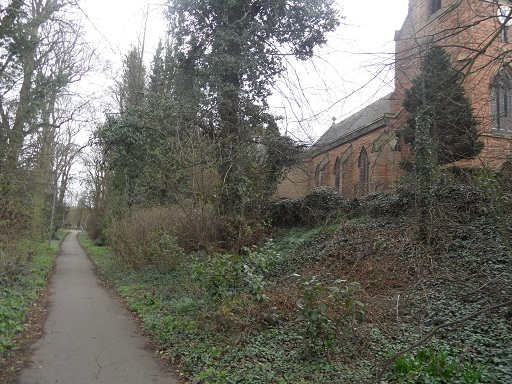
The path is surrounded by trees that I believe were planted in the mid-19th century by the Hinckleys of Beacon Place, the estate that occupied most of what is now Beacon Park between 1800-ish and 1964, when the house was demolished.

So that’s a bit of historical scene setting, now what about the tree!

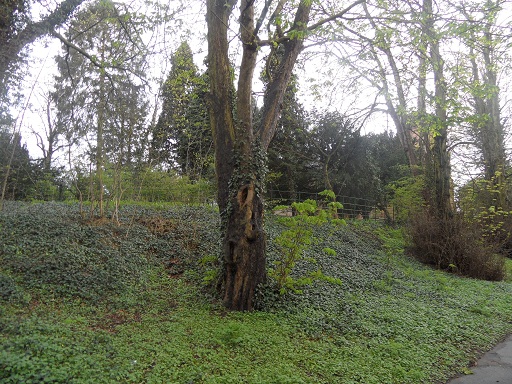
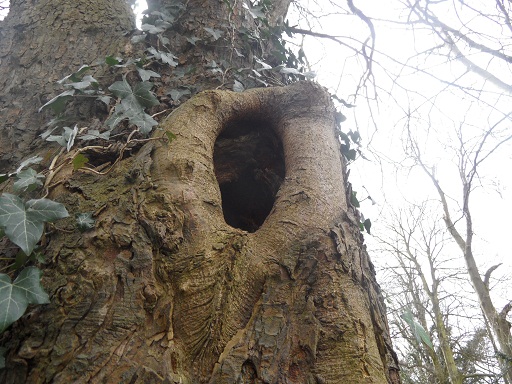
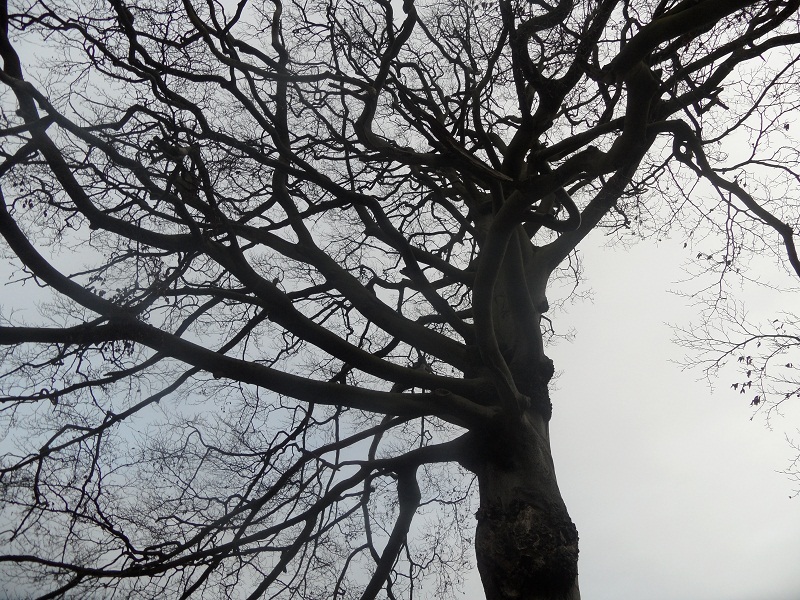
There’s one along this path in particular that seems to attract attention. Several people have commented on it in the past. I even heard a girl refer to it as ‘The Skeleton Tree’! I’m not even sure what kind of tree this is but how could I resist following it?!
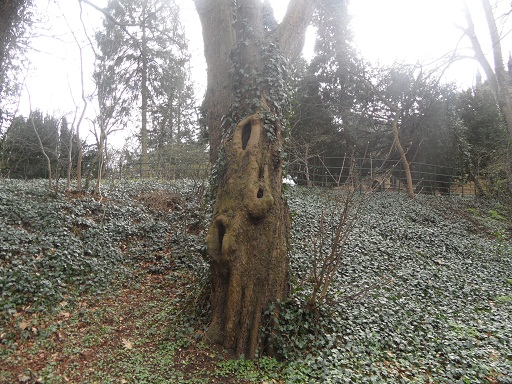
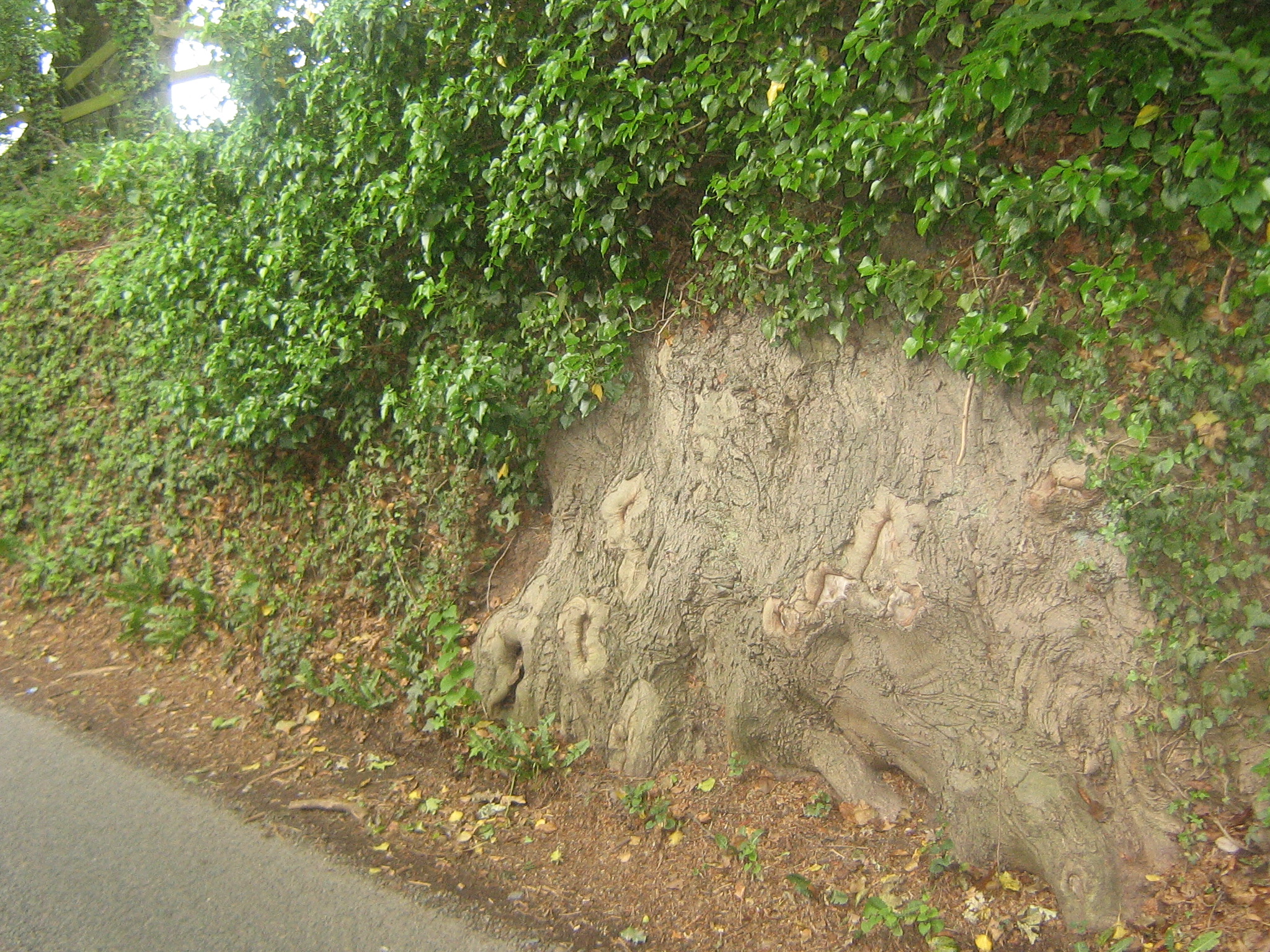
How do holes like this form in a tree? As usual, on nature matters I can’t offer any upfront answers (though rest assured I shall be trying to find out, part of the reason I’m doing this is to learn things!) but I can give you a peep into the hole nearest to the ground.
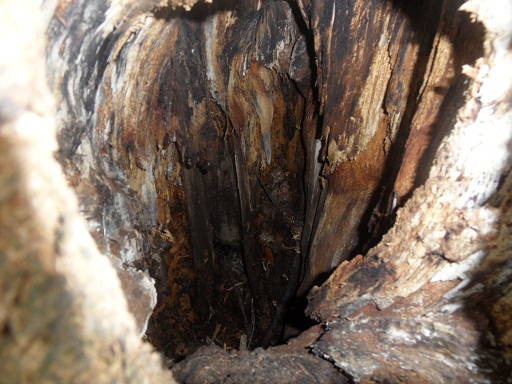

And a close up of the one at the top…….


Nearby, the snowdrops are looking very shabby now.
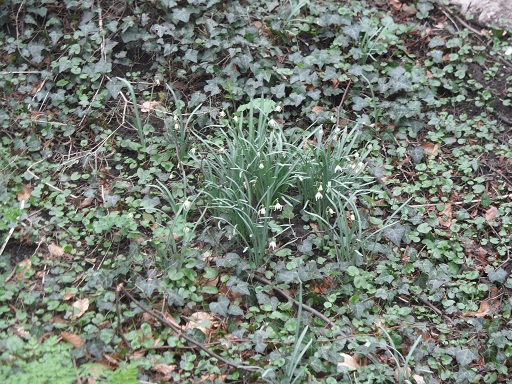
I love to see these little flowers at the end of the winter, but I have to confess I’m even happier when I see these…

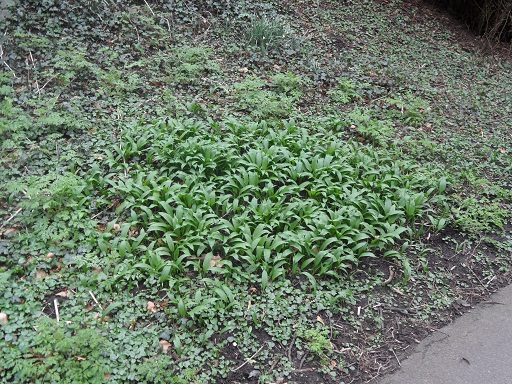
Not quite a host, but enough to signal that spring has arrived in this part of Lichfield! The wild garlic has also made an appearance. The aroma from the leaves is incredible, I’m sorry I can’t share it. No pretty white flowers yet though, let’s see what April brings for the Old Walsall Road!
Talking of Walsall, I’ve just found out that the brilliant & enthusiatic Morgan, a Walsall Countryside Ranger has started a Walsall Wildlife blog. She’s one of the most knowledgable people I know about nature and I’ve learnt loads from her (although clearly this is very much an ongoing education 😉 ). I really recommend that you check out this and the Walsall Wildlife flickrstream.  I bet Morgan even knows how those holes in the trees got there……!

Sources:

(1)’Lichfield: The 19th century’, A History of the County of Stafford: Volume 14: Lichfield (1990), pp. 24-32. URL: http://www.british-history.ac.uk/report.aspx?compid=42338  Date accessed: 25 March 2012.
 

Tree Following: Yellow

This week I went along to Leomansley Woods to do my first bit of tree following. It probably sounds ridiculous but choosing one tree wasn’t that easy. You can’t see the tree for the woods or something I suppose. In the end I decided on this tree, at the edge of the wood.
The surrounding debris & hazy memories of last year lead me to believe this is an Oak.

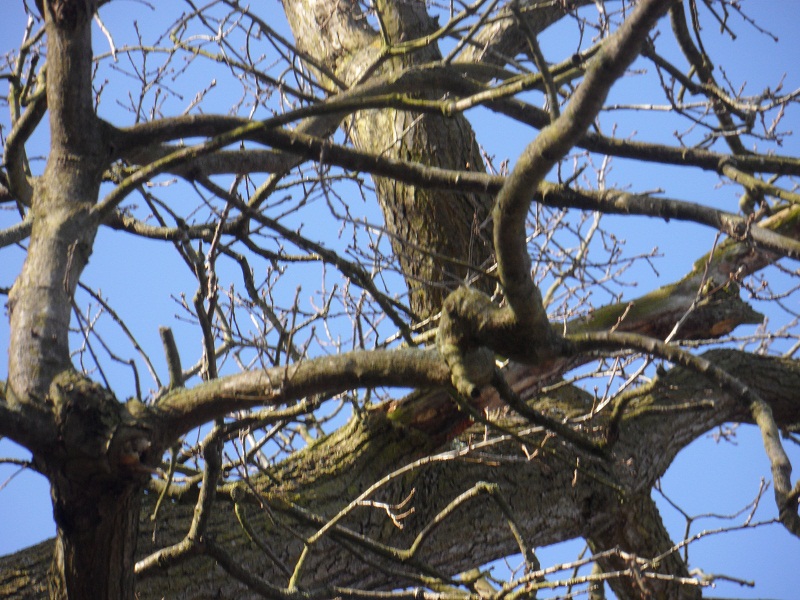
Jumbled branches


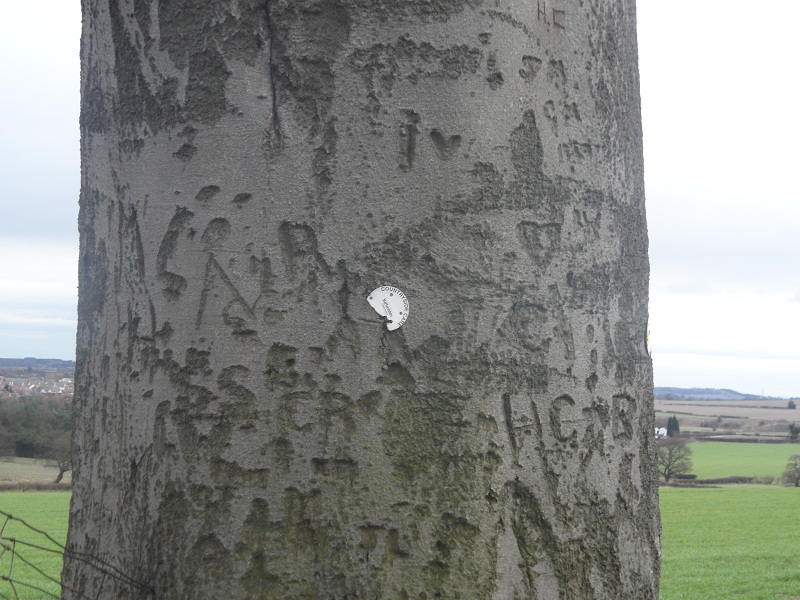
The trunk. I'll take a tape measure next time to get some clue to the tree's age?


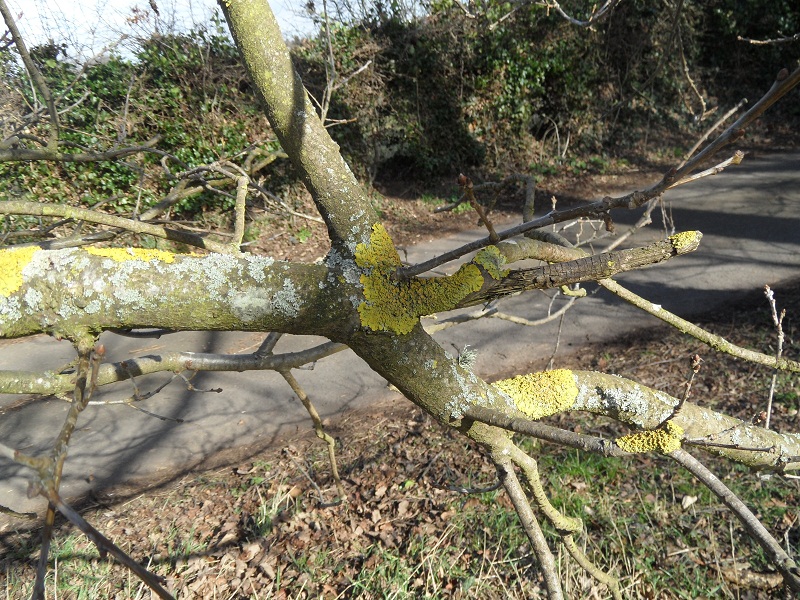
Lichen


Is this a coaltit getting in on the act?

While I was there, I thought following the entrance to the woods, the woodland floor and the hedgerows running alongside the lane might be nice too.

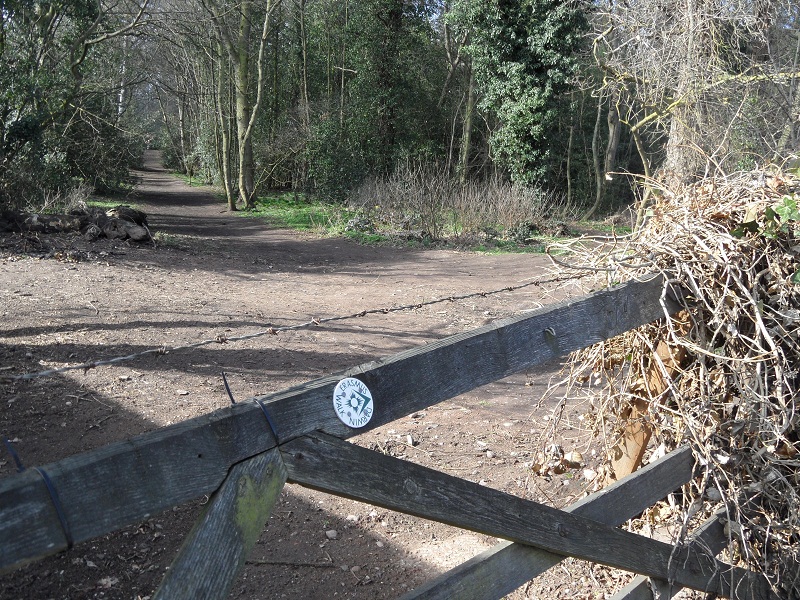
The entrance to the woods. The path running alongside forms part of The Darwin Walk and will take you to Pipe Green

Judging by the green shoots, it won’t be long before the woods are covered in bluebells. I think though, the colour of March is going to be yellow.

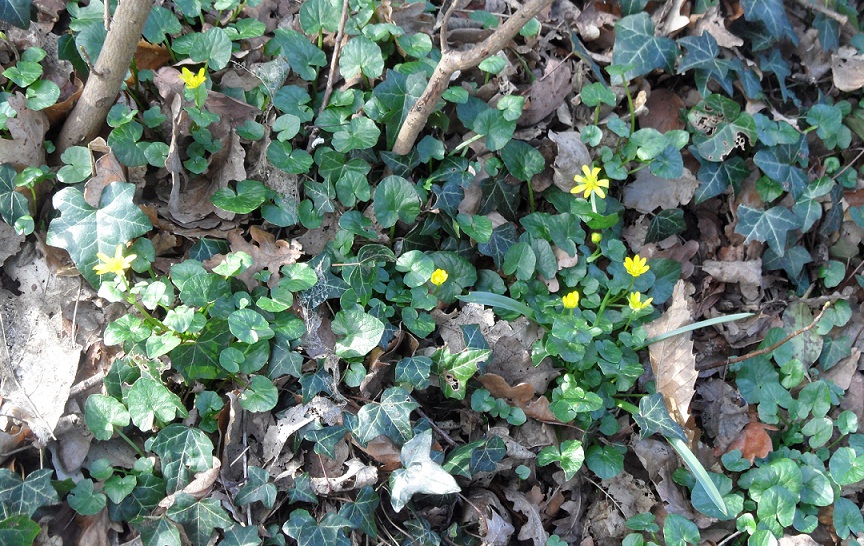
Lesser celandine?


Even I know that these are daffodils!


I don't know these though - they were growing in the hedgerow.

As a bit of a disclaimer (though if you read the captions above it hardly needs to be said!), I don’t know that much about trees & plants. I can’t tell my ash from my elder. One of the reasons I want to do this, is because it’ll be a good opportunity to learn more. For example, I now know what Lesser Celandine is, and that as one of the first flowers of the year, it is known as Spring Messenger. Slightly less picturesque is one of its alternative names – Pilewort.

I’ve already had some great input from a couple of people, on where to find interesting trees in our area. There could well be a ‘Tree Hunting’ spin off! So a big thanks to Roger and Pat for this – I shall be keeping my eyes open!

Also, over to the right are some links to people who actually know what they are talking about when it comes to flora and fauna, and they take some fabulous photographs to prove it! I definitely recommend taking a look!

Take a Bough

I’ve heard about a project called Tree Following via Gary Webb on Twitter, who is following a London Plane at Compton Verney. The project is being run by Lucy Corrander on her Loose and Leafy blog and the idea is to follow the life of a tree or a group of trees, returning at various points in the year to note the changes and what’s going on.

I love how trees reflect the changing seasons but also what they can tell us about our changing surroundings. For example, some like those at Beacon Park, are reminders of an old estate, when the buildings themselves are long gone.  I like the idea that each species of tree has a history, with its own uses and customs and also that there have been trees in the past which have been so important they have given their name to an area, such as the Shire Oak at Walsall Wood.

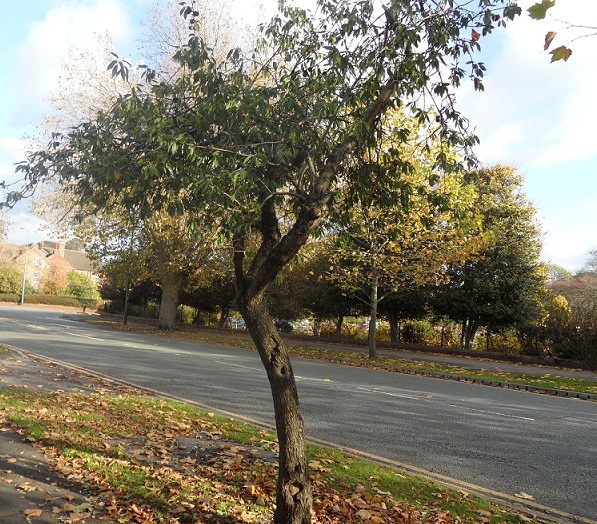
Which tree(s) should I follow though? Here are some contenders, in and around Lichfield.

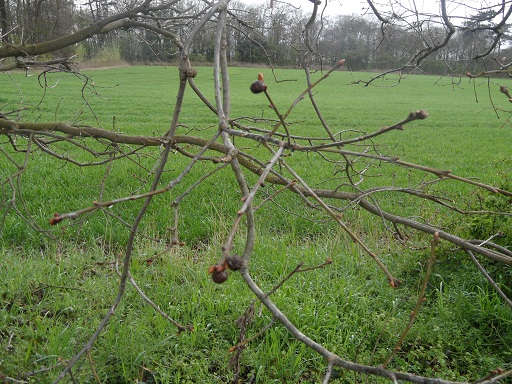
My current thoughts are that I’ll choose a tree at Leomansley Wood and also our cider orchard at Fisherwick. I hope the comparison between a mature woodland tree and an orchard sapling will be interesting. Although, as you can see from the photo, the cider trees aren’t much more than sticks at the moment, so we’ll see!

The Gates of Christ Church

I often walk past the gates of Christ Church and was delighted when David Tucker, designer and creator of the gates, responded to my request for information about this wonderful part of our surroundings.

David is a Master Blacksmith based in Derbyshire and thanks to him I’ve discovered not just about this thoughtfully crafted, original ironwork we have here in Leomansley, but also something about this traditional craft in the 21st century.

Christ Church Millenium Gates by David Tucker

Here’s David’s own account of the creation of the gates:

These gates were commissioned to celebrate the Millennium and were completed and installed in the year 2000.

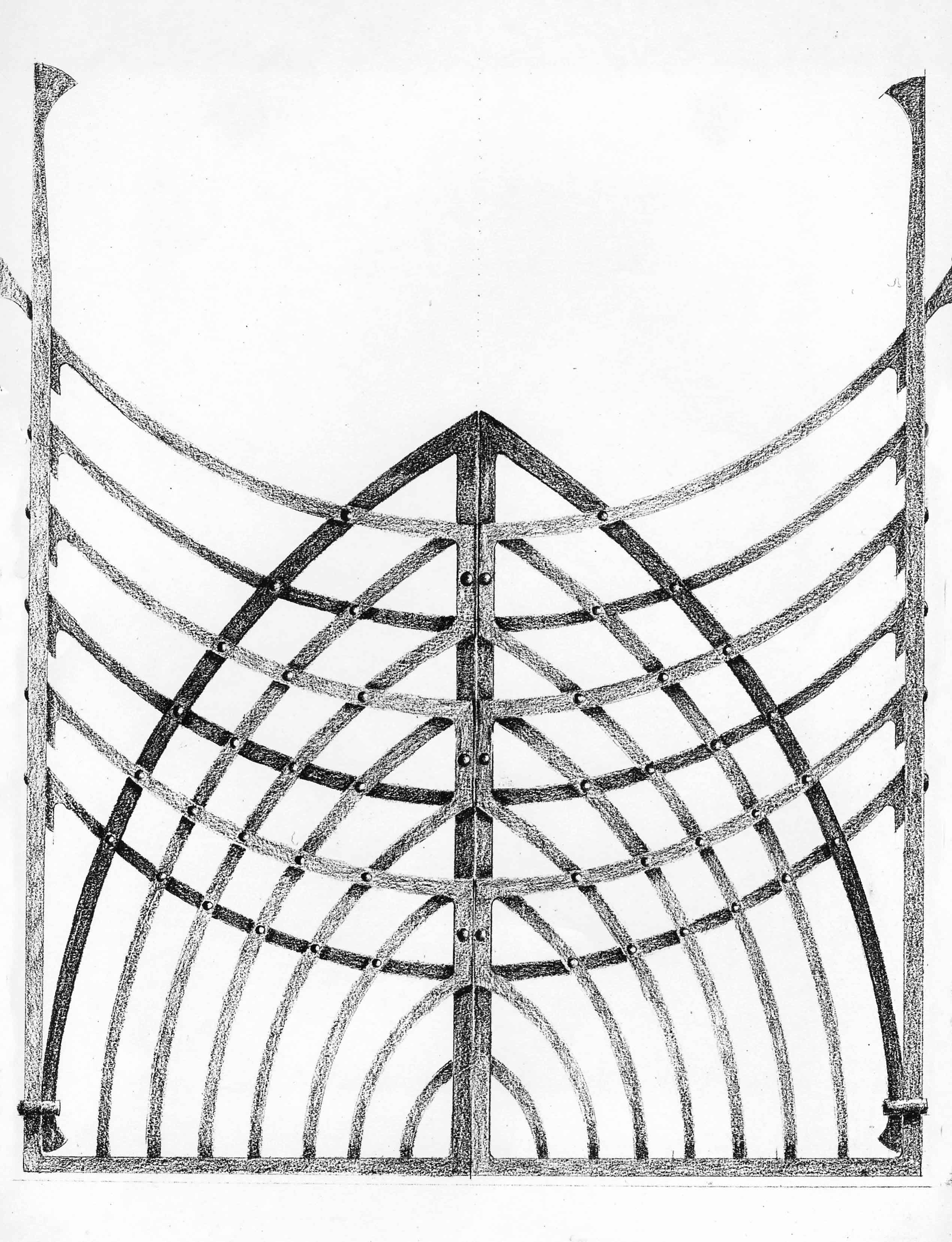
I am a Master Blacksmith and hand forge individually designed ironwork in response to the character and history of the setting. In this case, I was immediately struck by the lovely gothic arches and decided that I would like to reflect these strong forms in my gate. The gothic arch is synonymous with the church and I liked the idea of looking through my gates and seeing the same arches within the building.

Structure is important to me and I always try to create forms where all is not immediately apparent. I want the regular visitor to discover new facets and aspects to the design over time. The gates are made up of repeated downward-facing arcs and upward-facing gothic arches, placed on opposite sides of the gate, to re-inforce the forms and to create a three-dimensional structure. I love ‘honest’ and traditional methods of fixing and so chose to join the bars together with rivets and collars which just seem to say ‘here we are, holding these bars together’.

In the end, I designed three different options for the gate; a more traditional option, a cheaper option and this one, my own favourite and the most contemporary of the three. I was delighted when the commitee said that they would prefer an original and contemporary option, rather than pastiche. The gates were hand forged by me at my Derbyshire forge. I developed detailing such as hinges and latches etc. as I went along, so they would compliment the over-all design.


David's drawing of the gates


David does of course take commissions and it’s a pleasure to include his business card here.