A Study in Orange

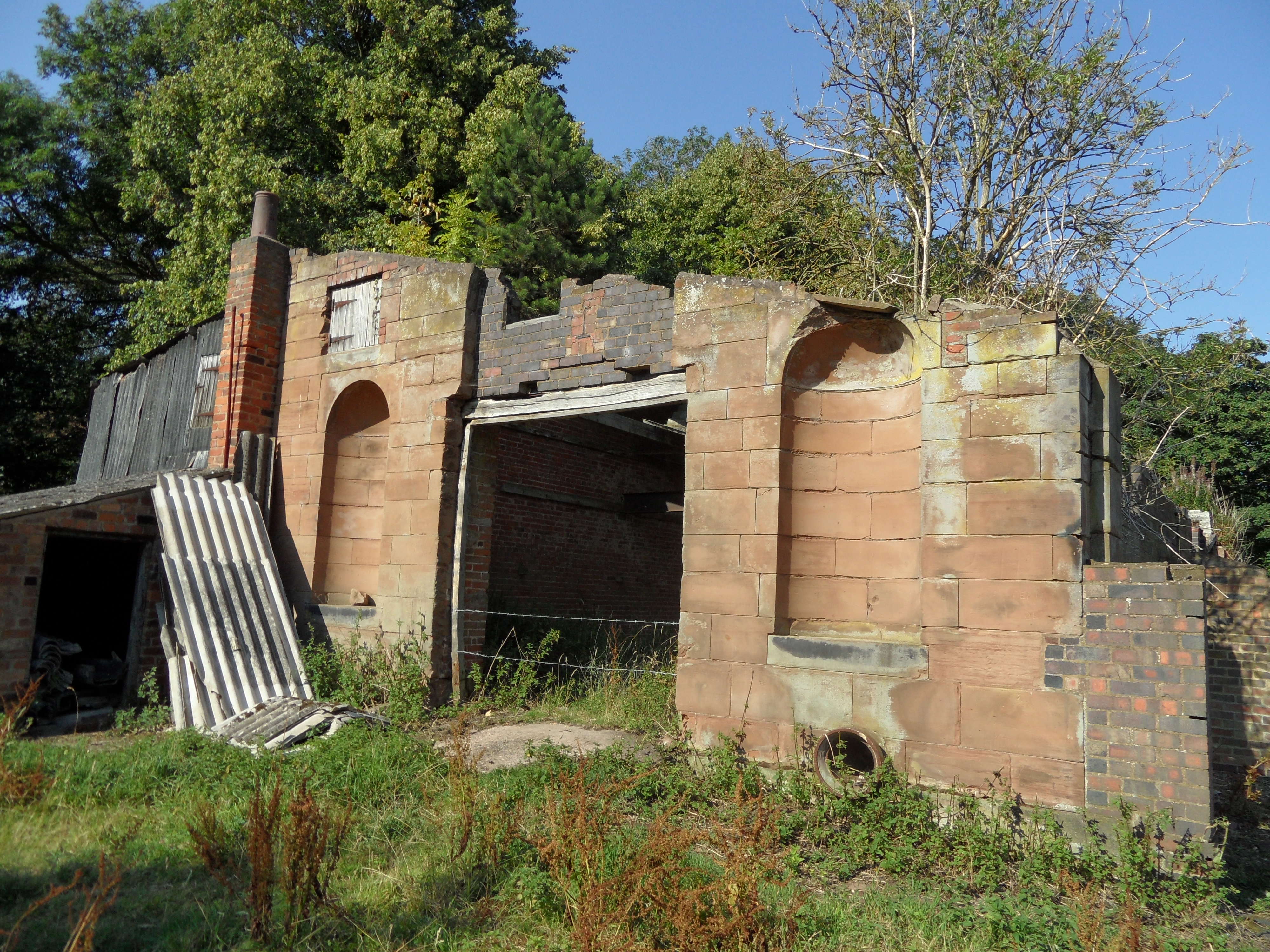
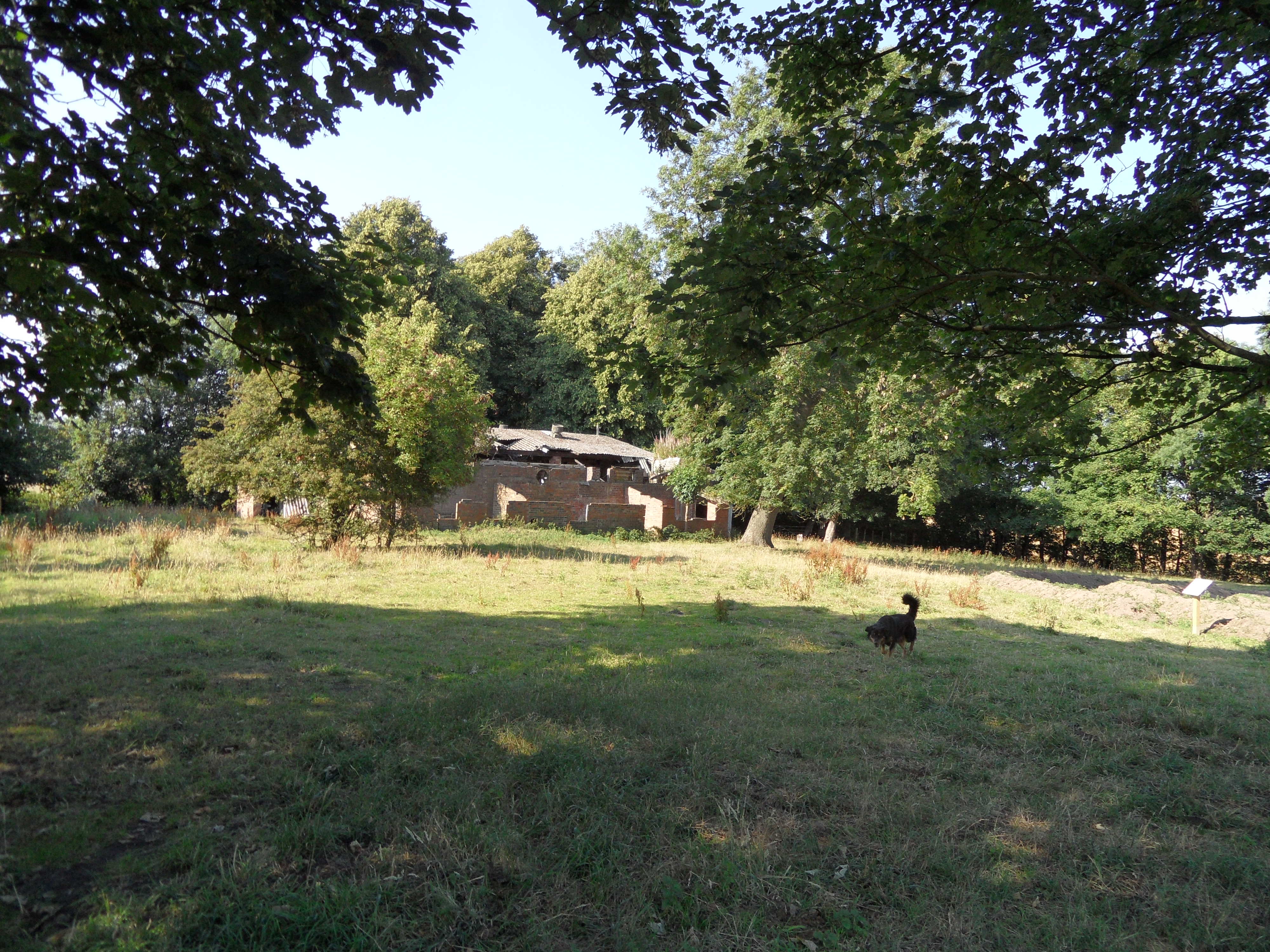
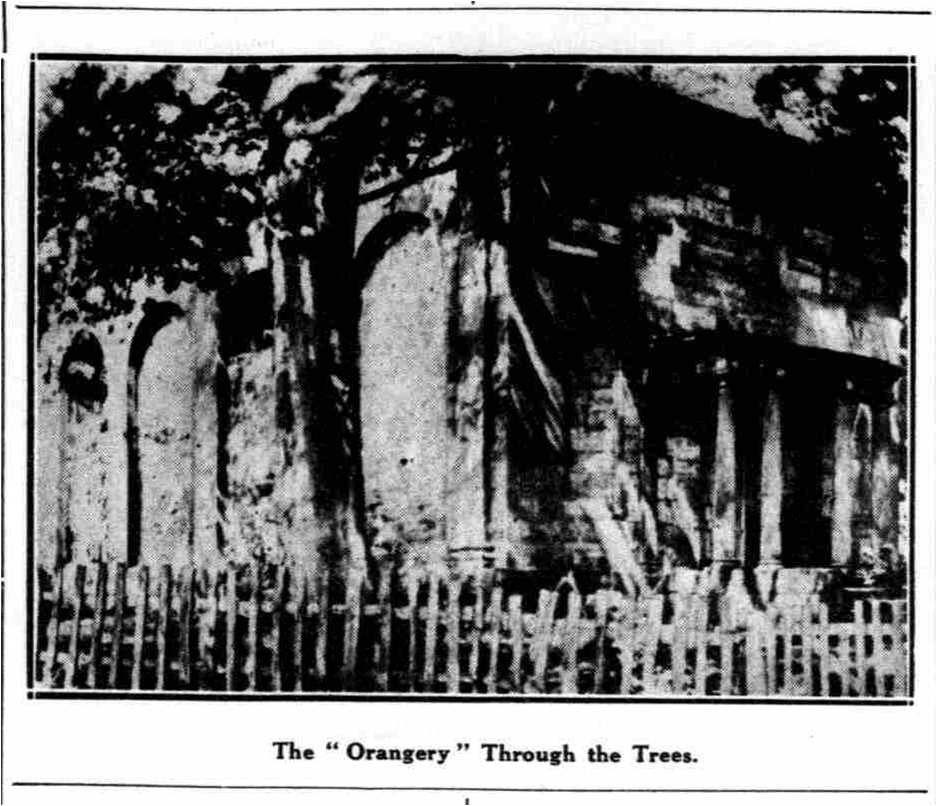
The fascination for all things Fisherwick Hall continues. Recently, I discovered that the Marquess of Donegal’s Orangery once sported a rather fine portico supported by four carved pillars. Although the Orangery itself is still miraculously standing in the grounds of what is now Woodhouse Farm, despite being struck by lightning and used as a cow shed for decades, the portico has disappeared. We know it was still there in July 1935, when the Lichfield Mercury ran their, ‘The Beauty that is England’ feature on local country houses past and present, and included both a description and a photograph of it. However, it was gone by January 1947 when an article by ‘A Contributor’ suggested that the portico had been made use of at Moor Hall and Shenstone Court before eventually being purchased by the Lichfield Corporation in the 1930s to mark the entrance to the public gardens on the site of the old Friary opposite what is now the Library and (not for much longer sadly) the Record Office. However, although the portico at the Friary is thought to have come from Shenstone Court I think its highly unlikely that it started out at Fisherwick.

Much more convincing is the detective work carried out by Patti Wills.  Patti contacted me last week to say she knew of a farmhouse in Elford with a portico. Although locally it had been suggested that the structure originated at Elford Hall, Patti noticed the similarity between the portico at Upfields Farm and the old photograph of the Fisherwick Orangery portico. What’s more, the listed building description for Upfields says, “The porch is reputed to have come from Fisherwick Hall (demolished) by Capability Brown”. I think Patti is right but have a look below and see what you think.

Upfields Farm, Elford. Photograph used with kind permission of Patti Wills

The Orangery, Woodhouse Farm, part of Fisherwick Estate taken from the Lichfield Mercury

The Orangery, Woodhouse Farm, part of Fisherwick Estate taken from the Lichfield Mercury

I’m very grateful to Patti for this information and so pleased that another piece of the Fisherwick jigsaw puzzle has been found.  It’s not over yet though! It’s said that a staircase from Fisherwick was taken to a house on Beacon Street known as Ardmore, solid mahogany doors were made use of at 15, Bird Street and various bits and bobs can be found in Tamworth, including monogrammed wrought iron gates at Bole Hall On a slightly more macabre note, the location of the remains of the Marquess of Donegall and other members of his clan is also a mystery, after the family mausoleum was destroyed during work on St Michael’s church in the mid nineteenth century. The Fisherwick treasure hunt continues….

Sources:

Lichfield Mercury Archive

Parishes: Bolehall and Glascote’, A History of the County of Warwick: Volume 4: Hemlingford Hundred (1947), pp. 248-249.
Orange Peel

In the mid 1930s, the Lichfield Mercury ran a series of articles called ‘The Beauty that is England’, featuring local country houses – ‘what they are and have been’ – around Lichfield. Each article blends the author’s description of the house (if still standing) and grounds with a heady mix of folklore, hearsay, historic records and poor quality photographs. Taken with a pinch off salt, they make for fascinating reading. As well as describing the past, they are now the past, providing us with a snapshot of almost eighty years ago – a ‘Now and Then and Then’, if you like.
The Orangery at the old Fisherwick Estate. Just about.

The Orangery at the old Fisherwick Estate. Photo from the Lichfield Mercury July 19th, 1935.

I was delighted that number eight in the series was Fisherwick, the site of a once grand mansion built for the Marquess of Donegal in the 1760s, but torn down and sold off to pay family debts after barely half a century. It’s a place I know well and I recognise much of it from the description from the 1930s – the beauty of its woods, the old arched bridges, the River Tame meandering through rich and colourful meadows. Yet of course in eighty years there have been changes. The red brick of the now demolished Elford Hall can no longer be seen in the distance, Fisherwick Hall’s ice house, ‘a brick enclosed fissure, built into the side of the hill’, near Home Farm has since disappeared, as has the pub in nearby Whittington which took its name from Robert Peel who purchased some of the dismembered Fisherwick estate.

Still hanging on in there just is the Orangery, although its portico (just visible in the above image), supported by four pillars with carved ionic capitals and reached by four worn steps has vanished since the 1930s, as has the frieze around the walls, said to have been carved in white stone with goats’ or sheep skulls linked by flowers. It’s a miracle anything survives at all. Even eighty years ago the author described its ‘crumbling sandstone, rotting bricks and decaying beams’, noting how ‘the ravages of time and nature are playing havoc with the beauty it barely possesses’. Then, in the 1970s, Nature upped her game and the Orangery was struck by lightening and scheduled for demolition. Why this never took place, I don’t know but I’m pleased it didn’t. It gives us an idea of what the rest of the estate may have looked like, and has the added interest of carved graffiti – the author thought everyone in Lichfield had added their signatures, based on the number and variety of names scribbled all over it.

Orangery

SAM_5150

Fisherwick 016

The Lichfield Mercury article ends with a tantalising yet unsubstantiated snippet of a story, saying that, ‘in 1800, a fatal duel was fought at Fisherwick, where a suitable enclosure near the hall had been lent for the combat’. I don’t know who the two gentlemen were, or what their quarrel was over, but this is just one of the many tales which have weaved their way around this intriguing place.  If you’d like to hear more Fisherwick Stories and explore the Orangery and whatever else remains of the estate today, including the community farm which has grown up in and around the former walled garden, then you are more than welcome to join us on our Lichfield Discovered walk –  2pm on Saturday 5th April at Woodhouse Farm and Garden.


Wolverhampton Wandering

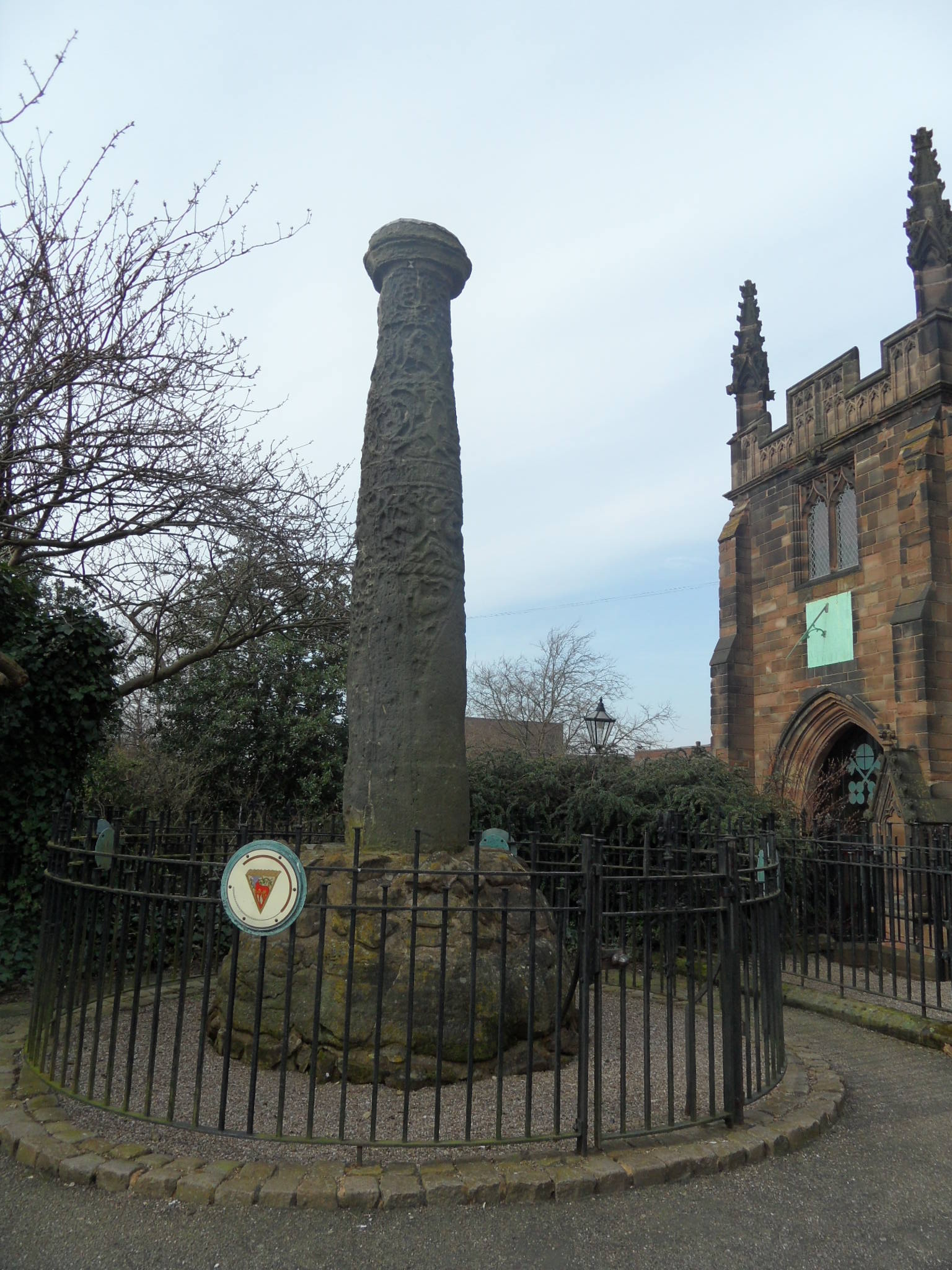
I had to pop into Wolverhampton today. I knew from my search for an ancient cross in Lichfield a couple of years back that there was a Saxon cross shaft here and went to find it.  Unlike the Lichfield cross, I didn’t have to try too hard – it’s huge! Its size, and also the fact that it is made from sandstone not found in Wolverhampton, has led some archaeology types to suggest that it is probably a reused Roman column, possibly from Wroxeter or even just up the road in Wall.

Saxon Cross Shaft, WolverhamptonThe elements and pollution have not treated the shaft kindly but its still clear that this was an incredible piece of craftmanship – the Black Country History website describes it as, ‘one of the finest cross shafts in the Midlands’. The carvings of acanthus leaves which decorate the shaft alongside those of birds and beasts have given archaeologists some problems when trying to establish a date as they suggest different periods. The plaque accompanying the shaft in the churchyard has decided to go with the earlier date of the ninth century, whilst others believe late tenth century is more accurate.

Cross Shaft Wolverhampton

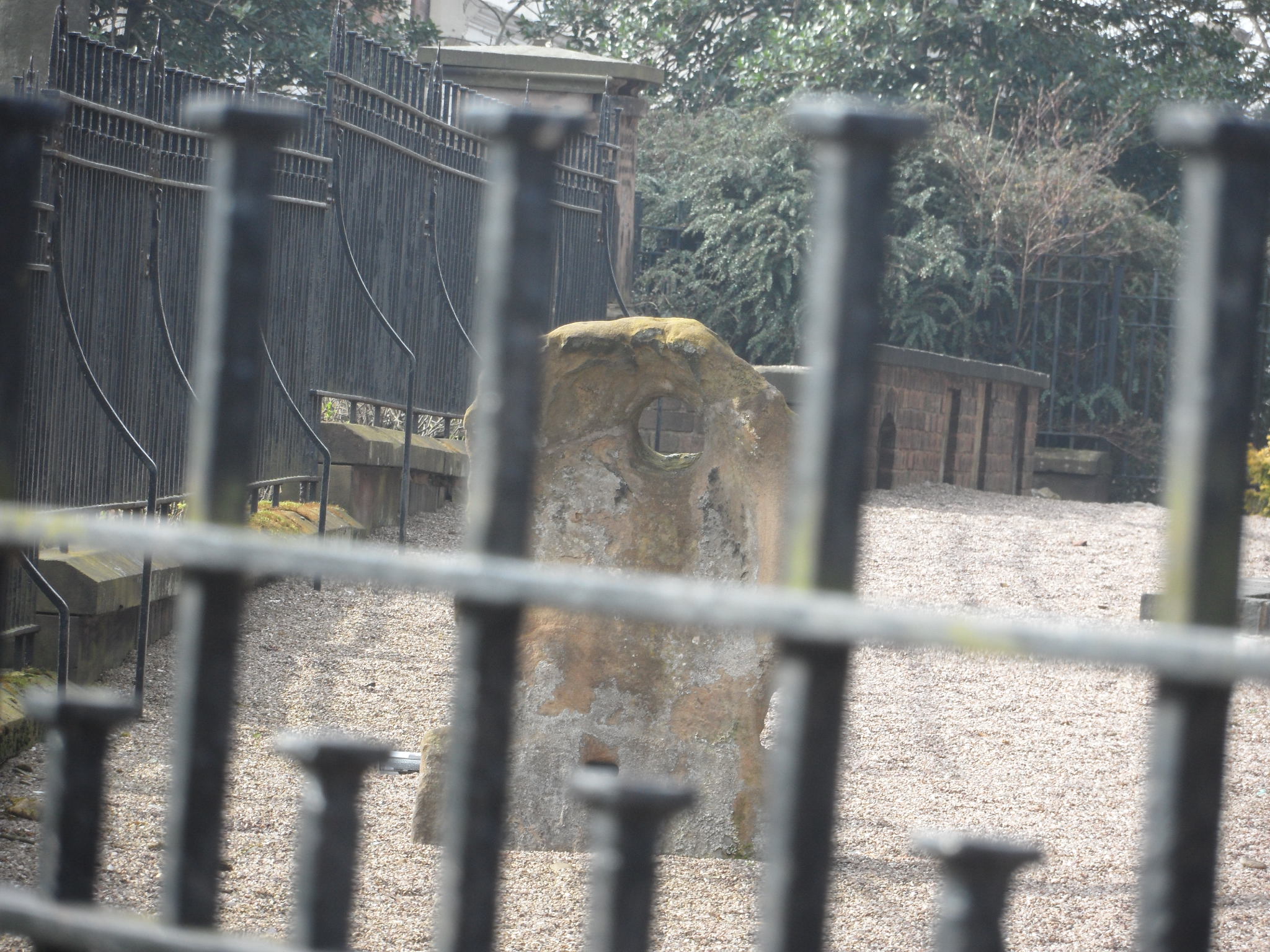
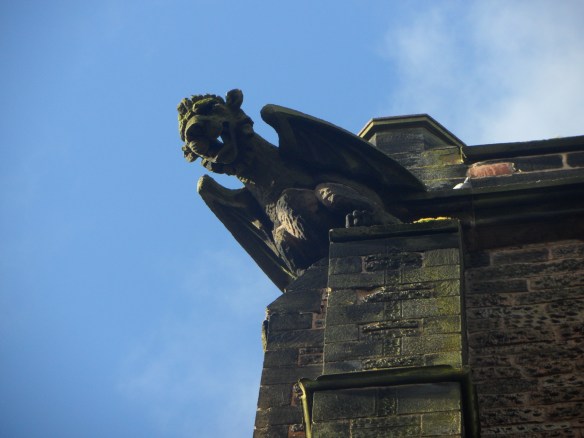
On the way out of the churchyard I noticed another stone with a good back story. Known as the Bargain Stone, its said to be where the good (and probably not so good) folk of Wolverhampton would agree sales and make deals by shaking hands through the hole. The nearby plaque suggests it is an old gargoyle and the hole is what remains of its mouth.

SAM_0031

Talking of hands, why didn’t it occur to me to put my hands over the railings to take a better photo?

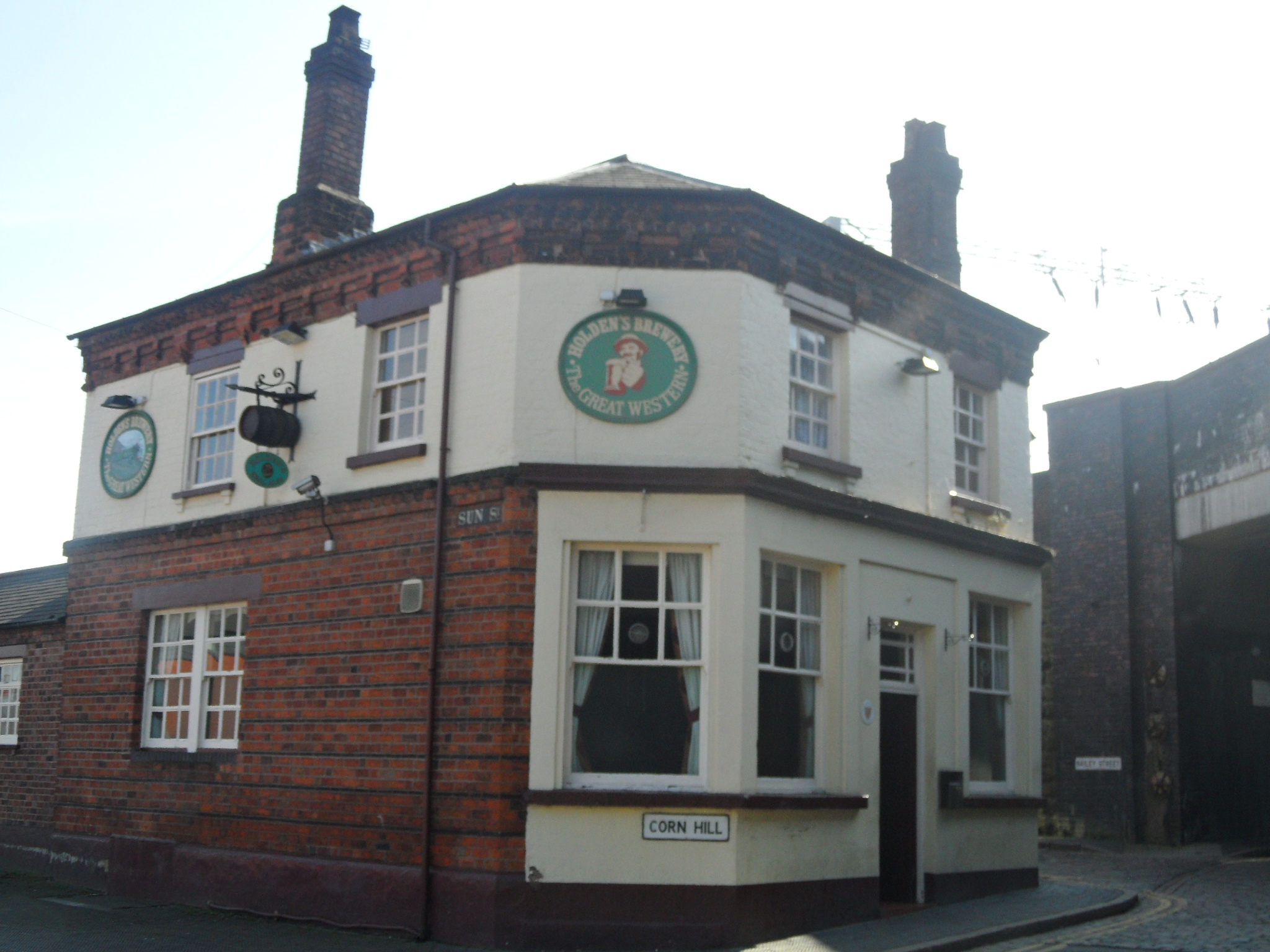
As if ancient crosses and stones weren’t enough of a treat, we also found Holden’s Brewery’s Great Western near to the train station. This is a proper pub – cobs on the bar, Holden’s Golden Glow (amongst other delights) on tap and really friendly staff. Although we were tempted to sit outside in the sun, the interior was so quirky and there was such a nice atmosphere, we sat inside.

Great Western

Wished I’d got the train. Definitely not driving next time.

The Great Western

The great Great Western

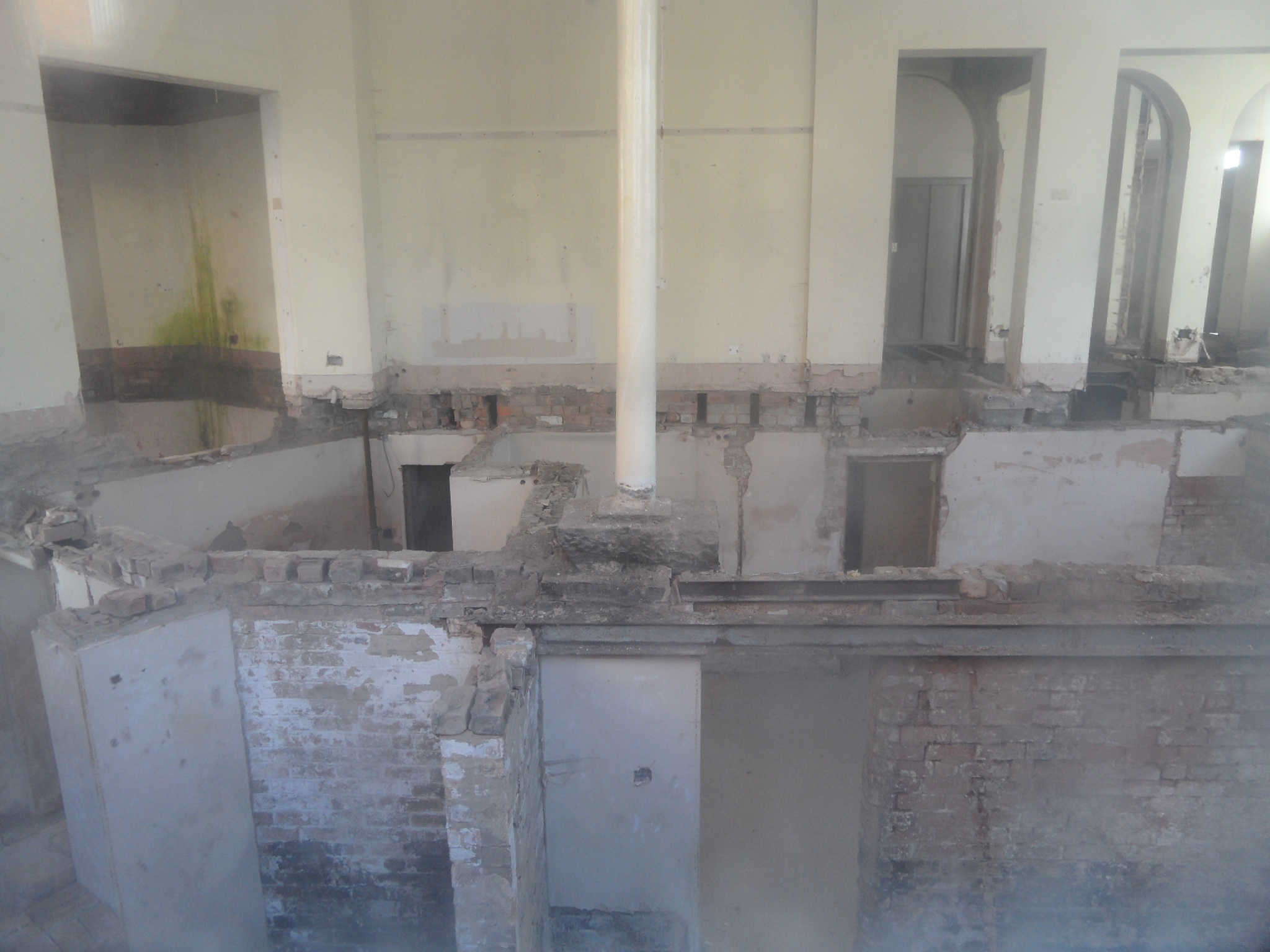
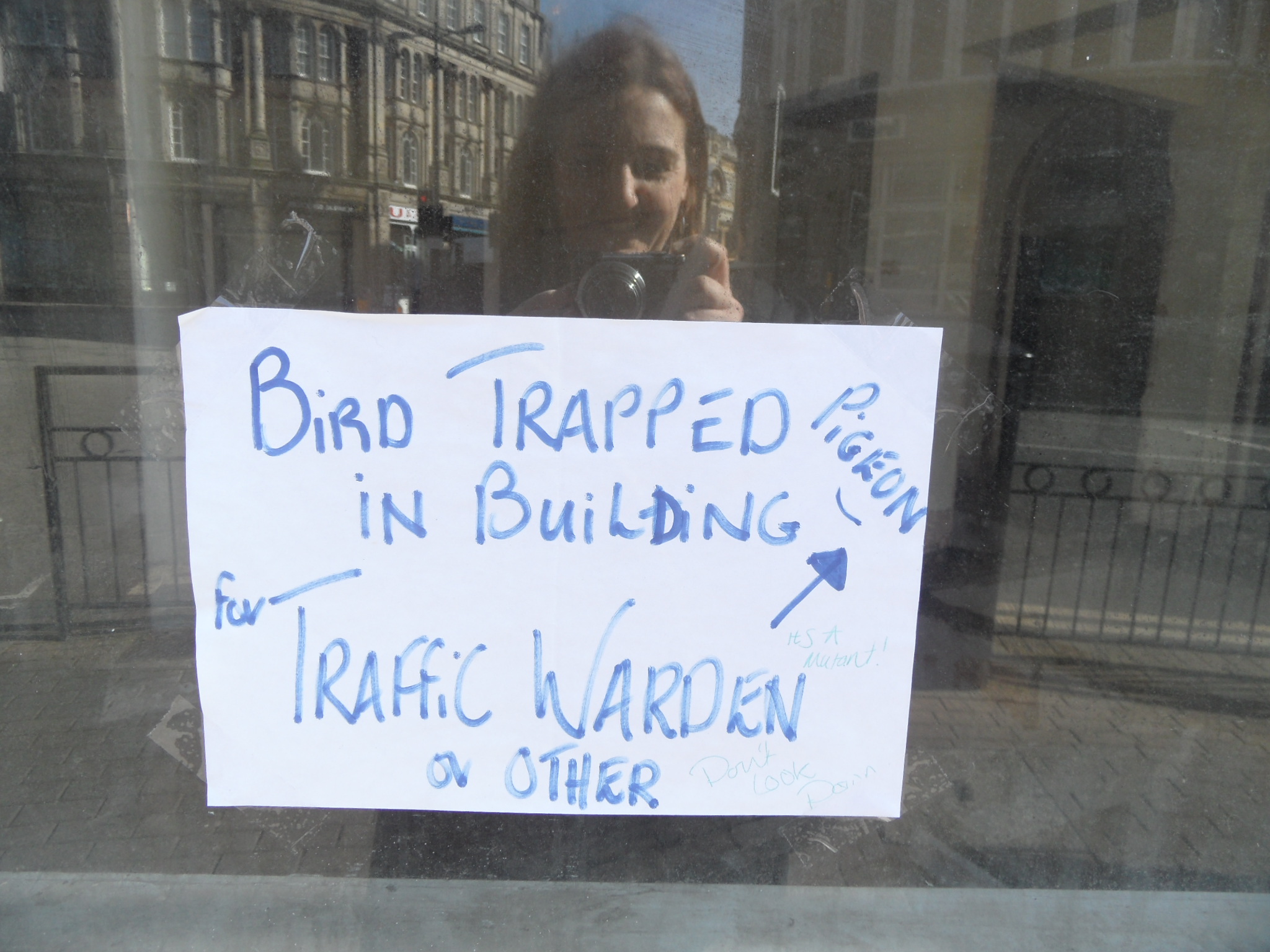
We walked off our pork baps with a little bit of a wander around the city streets. This building caught my eye, not only because it has no floors, meaning you can see down into the cellar, but also because of the handwritten sign someone had stuck to the window.

SAM_0045SAM_0046I’m not sure a traffic warden would be the person I’d turn to in a trapped bird scenario but maybe they do things differently in Wolverhampton.

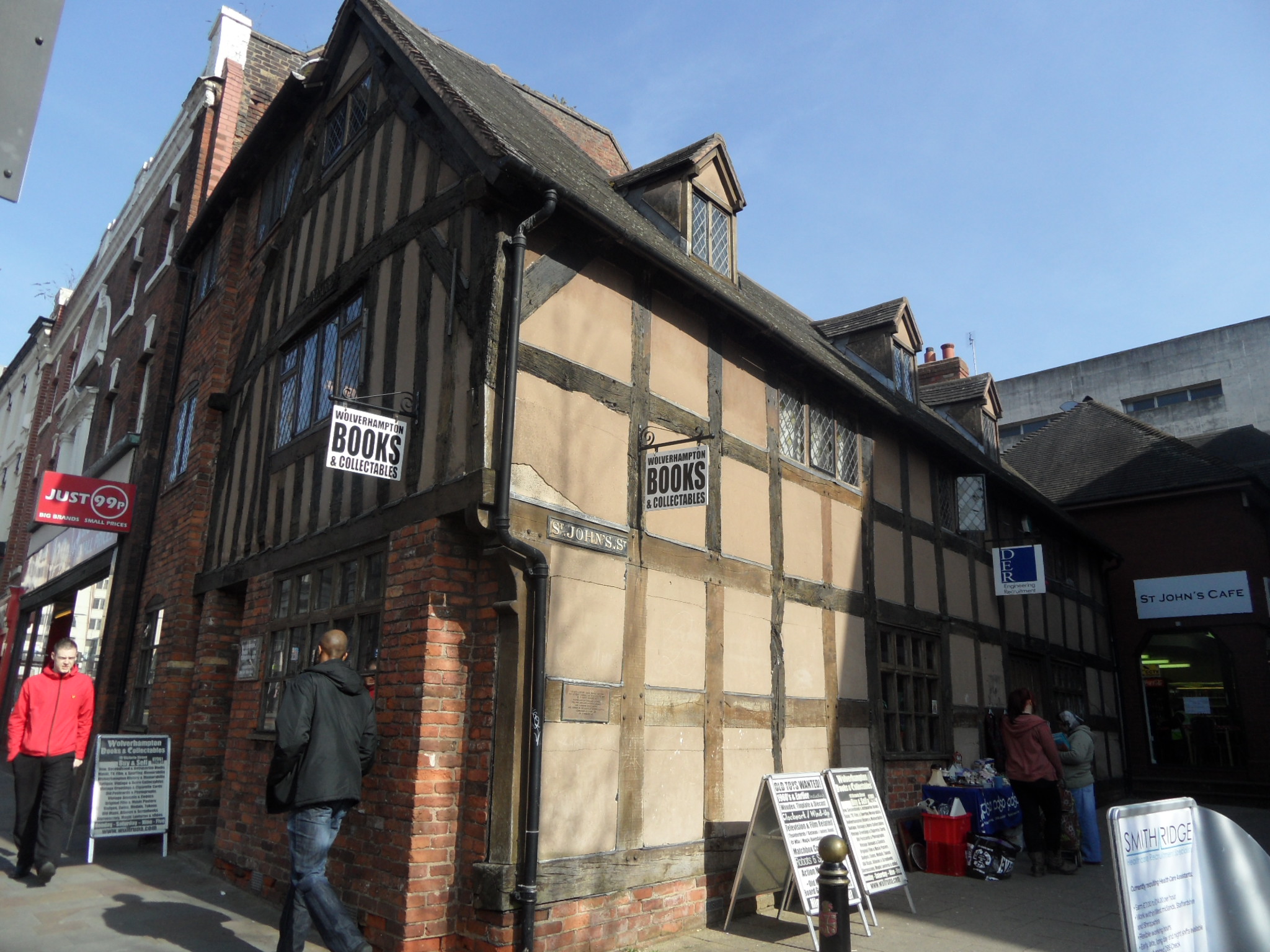
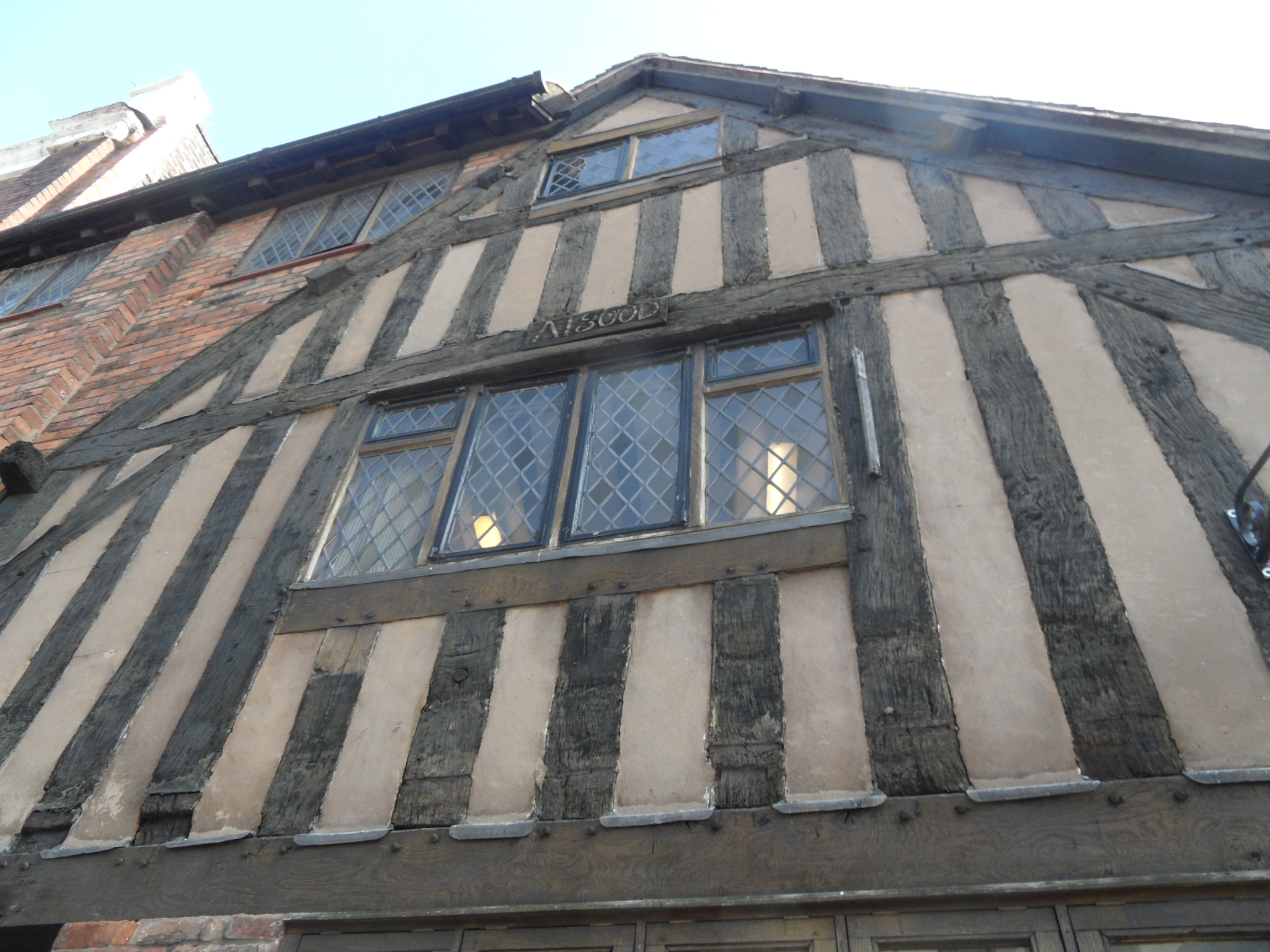
Another perplexing sign is the one suggesting that the half timbered building on the junction of Victoria St and St John’s Lane was built in AD1300. It wasn’t and no-one knows the reason behind the claim – the best suggestions anyone has seems to be that it was some kind of joke to emphasise that it was a really, really old building! It more likely dates back to the seventeenth century when it was once an inn known as The Hand. These days its home to Wolverhampton Books & Collectables, where you can buy anything from an ancient tome on the history of Staffordshire to a souvenir 1950s Wolverhampton Wanderers hankerchief (which you may, or may not, wish to blow your nose on, depending on your allegiances…).

SAM_0053

SAM_0055

We took the scenic route back to Lichfield (not through choice but because I went the wrong way on the ring road), passing through Wednesfield, Sneyd, the intriguingly named New Invention and Brownhills before stopping off at Waitrose for a couple bottles of Golden Glow.

Sources:

http://blackcountryhistory.org/collections/getrecord/WOHER_MBL337/

http://www.historywebsite.co.uk/listed/lindylou.htm

Objects of My Affection Pt 1

Our next Lichfield Discovered meeting is fast approaching (7pm on 10th March at Lichfield Heritage Centre) and this time round we’re having a bit of a show and tell. We’ll be having a go at telling one hundred years of Lichfield History in twelve objects and we want people to get involved by bringing along their Lichfield related objects to show us all.

There are loads of objects that I’d love to be able to bring along with me, but can’t, either because they’re lost, immovable or I’d be arrested. So instead, over the next week or so, I’ll share some of them here instead.

First up, the earthenware jars found in the south wall of Farewell Church during its partial demolition.

Farewell Church

St Bartholomew’s in Farewell was once the site of a Benedictine Nunnery. The place name refers to the ‘pure or clear’ spring which still flows here. The original church incorporated material from the nunnery, but much of it was demolished and rebuilt in brick in the 1740s.

Trust me, there is a spring beneath here.

Trust me, there is a spring beneath here.

In my opinion, it takes something pretty special to top an ancient spring, but here at Farewell, the most interesting thing for me is the discovery of three rows of different sized earthenware vessels in the south wall of the church at the time of the renovations. The jars were lying on their sides, their openings facing inside the church, covered with a thin coat of plaster. Sadly most were broken during the work but one of the jars found its way to Mr Greene’s Museum of Curiosities on Market St, Lichfield. Its whereabouts is now unknown but luckily, someone did make a woodcut engraving of it, as seen here on Staffordshire Past Track. The purpose of the jars remains a bit of a mystery. The accepted explanation is that they were ‘acoustic jars’, used, as the name suggests, to improve the acoustics in the church, based on a theory from a Roman architect called Vitruvius. However, others have suggested that they may be related to the idea of votive offerings (interesting article here).

It’s a good example of how important is it to not to separate objects from their stories . Without knowing the context in which it was found, the jar becomes just another piece of pottery and without being able to examine the jar itself, the real reason why (and when) it was placed in a church wall in Farewell centuries ago may never be known.

When Spring finally does arrive, do try and visit Farewell via Cross in Hand Lane, the old pilgrims route & former road to Stafford. It’s a lovely walk to a lovely place with the banks of the ancient holloways covered in flowers and the Ashmore Brook running alongside if you fancy a paddle.

farewell

Shine On

Still curious about the old church of St John the Baptist at Shenstone, I did a bit more reading.  Inevitably, I’ve ended up even more curious than I was before.

In 1890, the Lichfield stone mason and sculptor Robert Bridgeman was appointed by a restoration committee to carry out work on the now disappeared pinacles of the tower. (You can see how the old church used to look, pinnacles and all, from drawings of the church in the late eighteenth and early nineteenth century here on Staffordshire Past Track). At the time Mr Foulkes, an architect living at The Ivy House, in Shenstone, wrote to the committee saying,

I am anxious to assure the Restoration Committee how fully I concur in the steps they have taken to preserve the old tower, for both on practical and sentimental ground it should be upheld. The appointment of Mr Bridgeman as restorer is the best your Committee could make, and I know he will thoughtfully and carefully carry out the work entrusted to him.

Mr Foulkes then goes on to give some of the history about the old church saying,

The old tower so called is really not very ancient, except perhaps the internal base; the upper part boasts of no architectural feature of note, the details being of a debased character, and early in the present century there evidently existed a kind of central beacon flag-pole and vane combined. There were also diagonal shaped dials upon the tower. One other feature worthy of mention, and of which I fear no trace remains, was a stone hollowed out in the Romish times, for the reception of holy water. It formerly stood near the north door and over it was carved the figure of a lamb’.

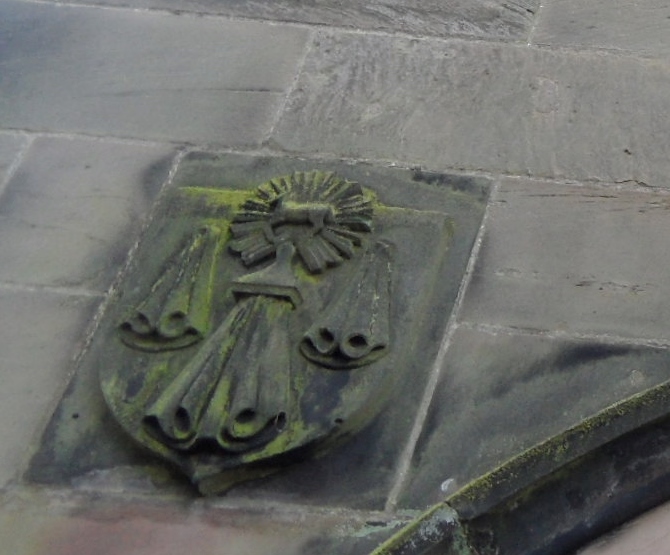
It took a while for the last line to click but eventually I remembered reading about a carved stone in the report of the excavation of the old church in 1973 by Dorothy and Jim Gould of the South Staffordshire Archaeolgical and History Society. A note by Mr J W Whiston, appended to the SAHS report says that there is no reference to the carving in any published description of the church, but that, ‘although mutilated, the carving can be identified as the arms originally granted to the Merchant Taylors Company of London before, in the time of Elizabeth I, the chief of augmentation was added (a lion passant and guardanty). These arms were frequently used by provincial merchant-taylors’. It also mentions that there is a similar carving on the porch of St Michaels in Lichfield. When I checked back on my photos of St Michaels from last spring, I found it (which saved me a trip). Funny how you see things that you don’t realise the significance of at the time, but fit into the big jigsaw eventually.

St Michaels Carving

The carving at St Michaels, Lichfield

Not knowing anything about the Merchant Taylors’ Company I looked them up and found that their patron saint is St John the Baptist. As you can see from the above (sort of), their coat of arms features a pavilion with a mantle either side, with the Holy Lamb within a sun. Perhaps this is the lamb to which Mr Foulkes was referring? You can read more about the company here.

Bottom right hand side of door - is this the carved stone?

Bottom right hand side of door – is this the carved stone? Should have taken a closer look.

According to William Whites Directory of Staffordshire (1834), the annual feast or wake at Shenstone was held on the Sunday after St John the Baptist’s day. Something that’s not mentioned in the archaeology report, or the newspaper report as far as I can see, is the existence of a holy well somewhere in the churchyard. On the saint’s day (or Midsummer if you prefer), St John’s Well  was believed to be a place of healing and of miracles. I can’t see it on any of the old ordnance survey maps but I am hoping it’s still gurgling away and hasn’t dried up. On the subject of St John and Midsummer, I know I probably shouldn’t speculate about the place name Shenstone – bright/beautiful/shining stone or rocky place – but the idea of the sun and bonfires associated with the festivities of St John’s Eve and Midsummer has popped into my head and now I can’t get rid of it. Feel free to shoot me down in flames.

I’ll try and distract myself with another example of pieces of the jigsaw fitting together eventually.  In an account of ‘ Ancient Shenstone’ by Madge Rogers in the Lichfield Mercury in the late 1940s that I was reading, she mentions, ‘A Peat Moor once stretched highly polished stone was erected in the churchyard, and was the tomb of 25 year old Richard Burgess of Leicester who journey by stage coach to the Welsh Harp in Stonnall and there took his own life’.

I don’t really understand the bit about Peat Moor but the story of Richard Burgess sounded familiar.  I remembered that a while ago, when trawling the newspaper archive for something to do with pubs, I had read a story from the Derby Mercury, June 1754, about a young Gentleman who was travelling with the Chester Stage Coach, on his way to Ireland to be married. Apparently, en-route he had received a letter from his fiancee’s Father, telling him not to pursue his journey, as she would not marry him. When the stage coach stopped off at Noon at the Welsh Harp near Lichfield, the young man took his own life. Surely this must be the same tragic young man?

To think up until recently the only place I’d ever visited in Shenstone was the Tesco Express. What a fascinating place it is, and I haven’t even started to read about the prehistoric and Roman connections yet.

Sources

The History and Antiquities of Shenstone in the County of Stafford, Henry Sanders
South Staffordshire Archaeological and Historical Society Transactions XV
Derby Mercury Archive
Lichfield Mercury Archive

The Two Towers

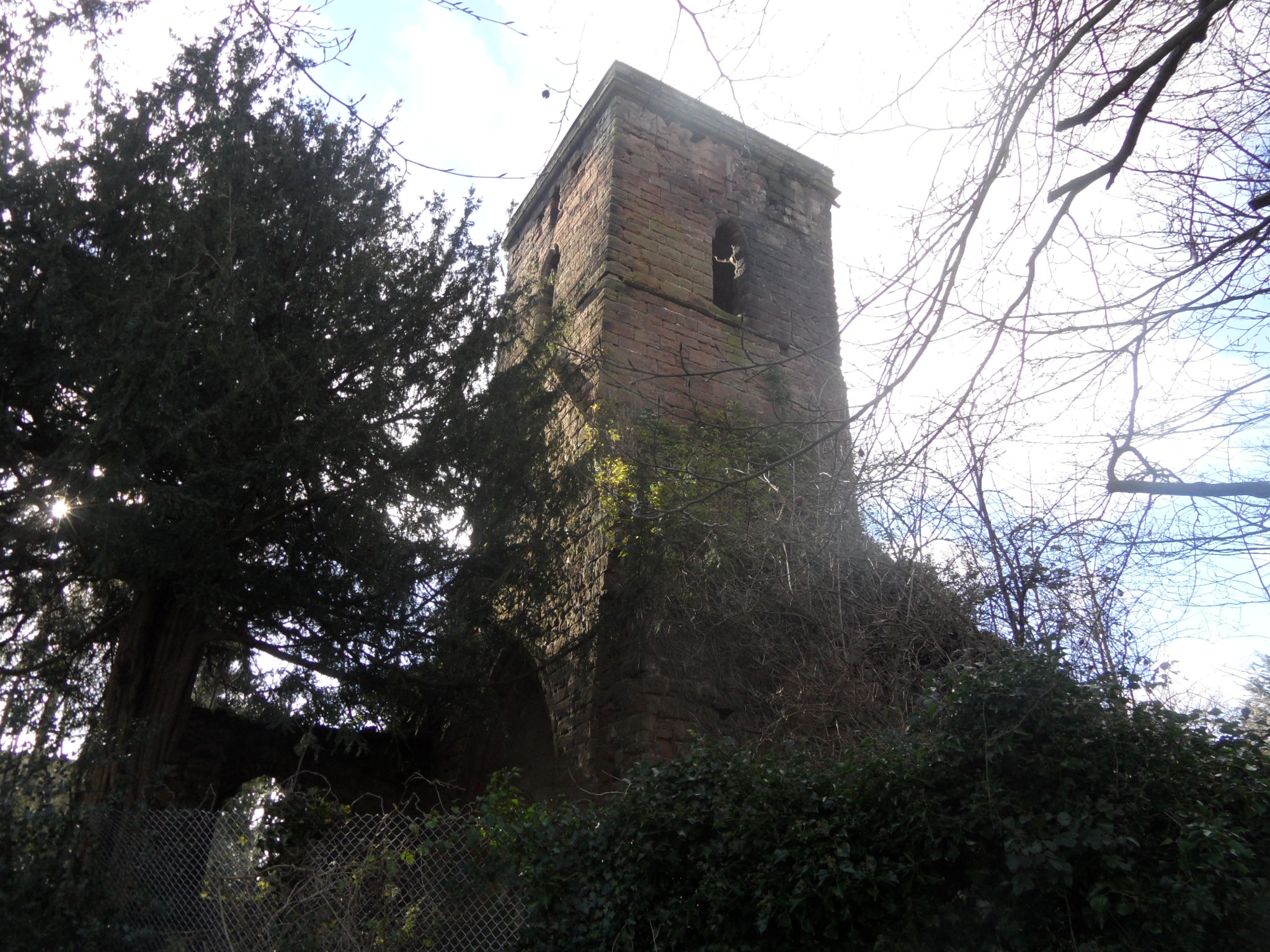
With ‘Heritage at Risk’ the theme of our Lichfield Discovered meeting this month, I was having a flick through the English Heritage At Risk Register to see whether there were any other buildings in the district keeping the Angel Croft Hotel company on the list. It seems much of what’s considered ‘at risk’ in these parts is landscape features – a causewayed enclosure and settlement sites in Fradley/Streethay, a round barrow at Alrewas and a site near Elford, although built heritage does appear in the form of the walls and gate piers at Colton House, the ruined remains of an old manor house at Hamstall Ridware and the old church tower at Shenstone. The inclusion of the latter was of particular interest as I’d been there for a nose just days before.

SAM_9814SAM_9807

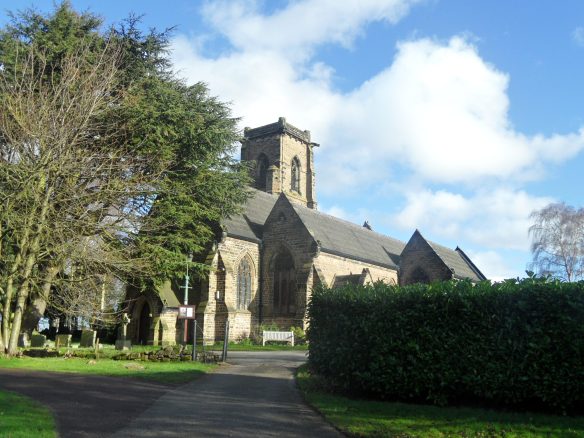
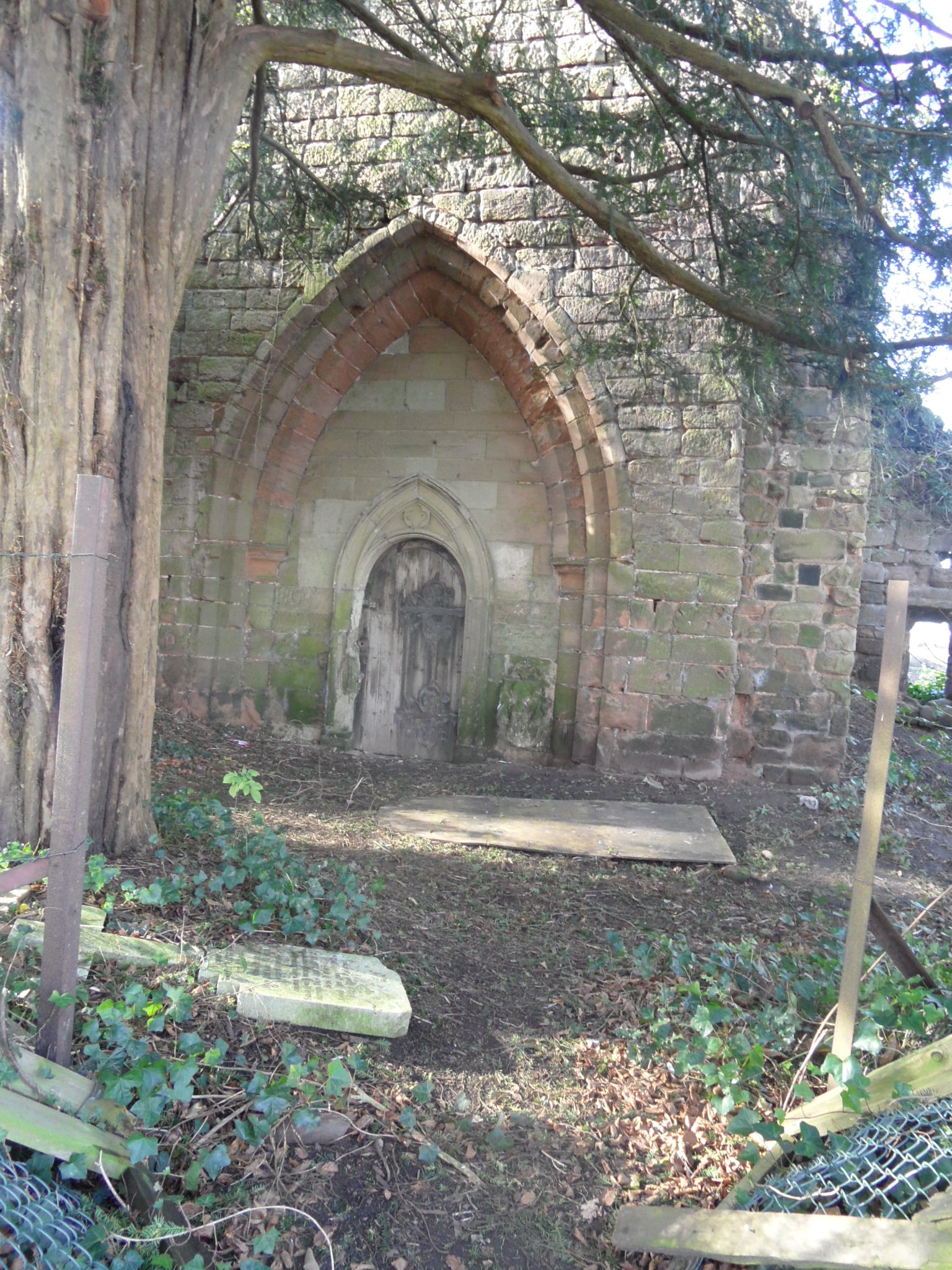
When the present church of St John’s was built in the 1850s, the existing church was partly demolished leaving just the tower and the south door visible. Time and nature are doing their best to finish the job the Victorians started – English Heritage have assessed it as being category A meaning that it is at ‘Immediate risk of further rapid deterioration or loss of fabric; no solution agreed’.

SAM_9830

The tower had a wooden ladder but no staircase

The ruins are thought to incorporate Norman features and possibly some Anglo-Saxon masonry.

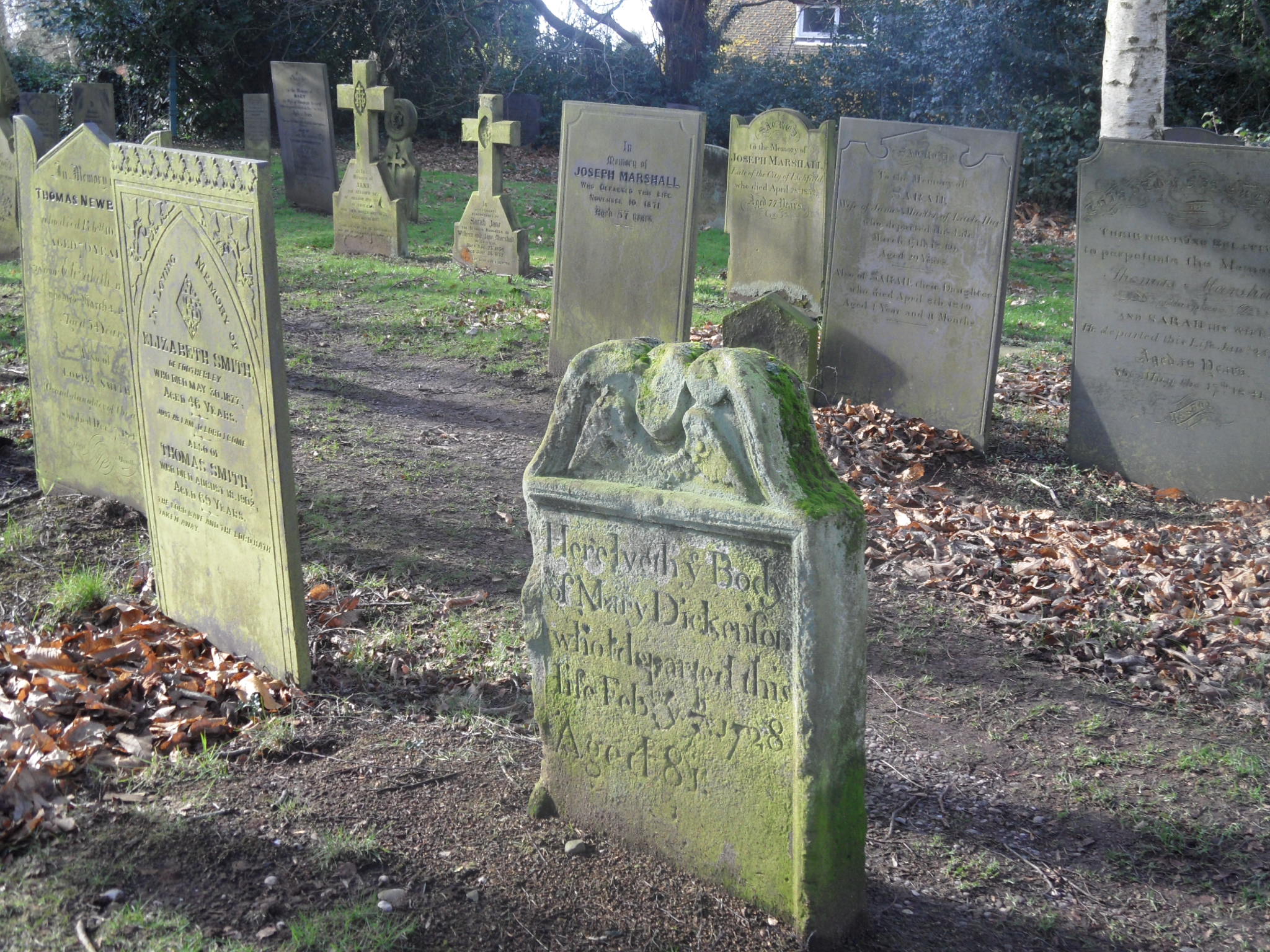
As you’d expect, many of the village’s old residents are to be found here in their eternal rest. According to William Pitt, at least one of them did not go gentle into that good night – Susannah Southwell of Shenstone was married at the age of 112 (although he doesn’t record how old the groom was nor how long it was until death did them part). The Wikipedia entry for Shenstone says that a 2007 survey found that it was one of the ten worst places in England for finding single women. Perhaps that’s always been the case?

SAM_9818

Local sandstone was used to build both new and old churches and it’s this geology that caused David Horovitz to question whether the place name Shenstone really does mean ‘shining stone’, suggesting that sandstone could “hardly be described as ‘bright, shining or beautiful'” (although anyone who has seen Lichfield Cathedral glowing in the late afternoon sunshine may well disagree). Mr Horovitz has suggested that Shenstone may instead refer to a personal name, or even to stone monuments left behind by the Romans (remains of a villa have been discovered on the outskirts of the village and Wall is only around a mile away).One of the reasons I love the study of place names is that it can give us a glimpse of somewhere as seen through the eyes of people who once lived there hundreds, if not thousands, of years ago. The view can be a little hazy though and sometimes we can only guess at why our ancestors chose the descriptions they did.

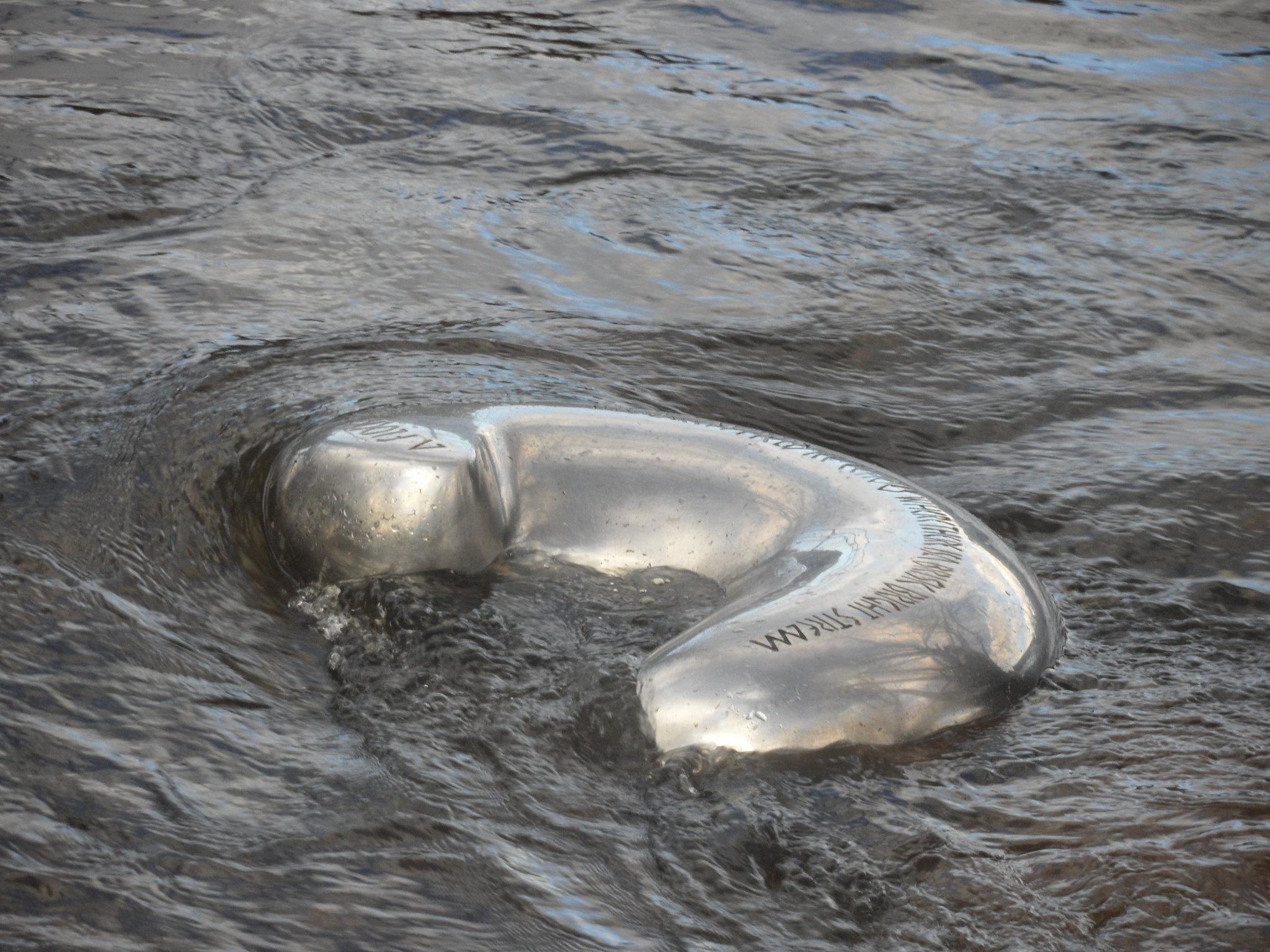
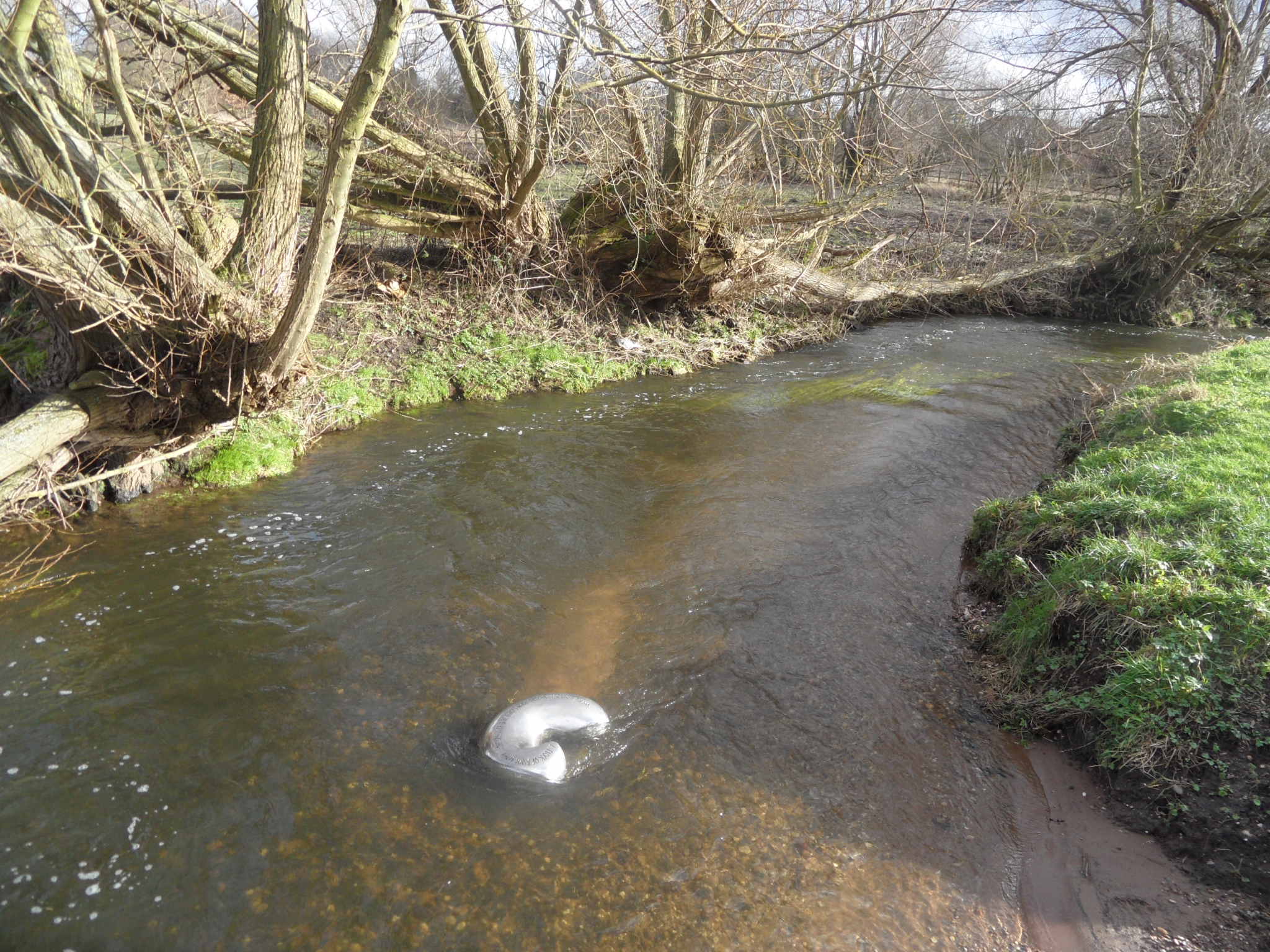
Whatever the true meaning may be, it is the ‘shining stone’ theory that inspired Jo Naden’s steel sculpture for the village’s Lammas Land in 2002, described by the invaluable PMSA website as follows, “(The artist) chose to site her sculpture in the Black Brook, which runs through the Lammas Lands used by the Celts as a site for harvest festival rites, in order to make a connection with Celtic culture. Trees, held sacred by the Celts, are reflected in the mirror finish of the stainless steel, while the text inscribed on it* is taken from the words of an unknown ninth-century Irish author. The placing of the stone at a point near where a bridge built on a north-south orientation crosses a stream running from west to east would have been considered sacred by the Celts because it symbolised the meeting of polar opposites”.
*A flock of birds settle ….. the green field re- echoes where there is a brisk bright stream

I stood on the little footbridge watching the swollen Black Brook flow over the sculpture for a few minutes until I was ordered off by a toddler clutching a handful of twigs ready to make an offering of pooh sticks to the water at this sacred spot.

SAM_9843SAM_9842Sources:

A Landscape Survey of the Parish of Shenstone, edited by Richard Totty for The Staffordshire Archaeological and Historical Society Lichfield 2009

A Topographical History of Staffordshire, William Pitt

‘A Survey and Analysis of the Place-Names of Staffordshire’
by David Horovitz, LLB

Holy Stones

Although St Peter’s Church at Elford was largely rebuilt in the nineteenth century, it is famous for its medieval monuments.  The most well known is the ‘Stanley Boy’, said to depict young John Stanley, last of the male line, holding a tennis ball in his left hand, and pointing to the place where it fatally hit him with his right. On face value, it’s a great story, but the fact that it has been cast into doubt by some makes it even more interesting in my opinion. Nikolaus Pevsner and an article called ‘The so-called Stanley boy monument at Elford’ by Sophie Oosterwijk for the Church Monument Society date the monument as thirteenth century whereas, according to the story, John Stanley died in around 1460. It has been suggested that at some point the effigy may have been modified to add weight to the local legend. It’s a nice reminder that when it comes to history, you can’t even trust what’s carved into stone. There’s a drawing of the effigy from the eighteenth century here on Staffordshire Past Track.

Unfortunately, on my recent visit, I didn’t manage to see the Stanley Boy (or whoever it may be!) close up. The wooden gates separating the Stanley Chapel from the rest of the church seemed to be locked and I didn’t try to hard to open them.  A lady doing her stint on the flower rota had told me that the church had suffered from a recent lead theft and I didn’t want to add to its troubles by breaking anything. Anyway, there were plenty of consolations including the beautiful Minton tiles, stained glass and another curious monument outside.

Just one of the lead pipes stolen for scrap metal, leaving the church vulnerable to water damage.

I’ve walked around my fair share of churchyards and although I’ve seen plenty of worn and weathered stones,  I can’t remember having ever seen a hole in one like this before and would be grateful for any explanations (or failing that, guesses!) for what’s happened here.

Co-operation

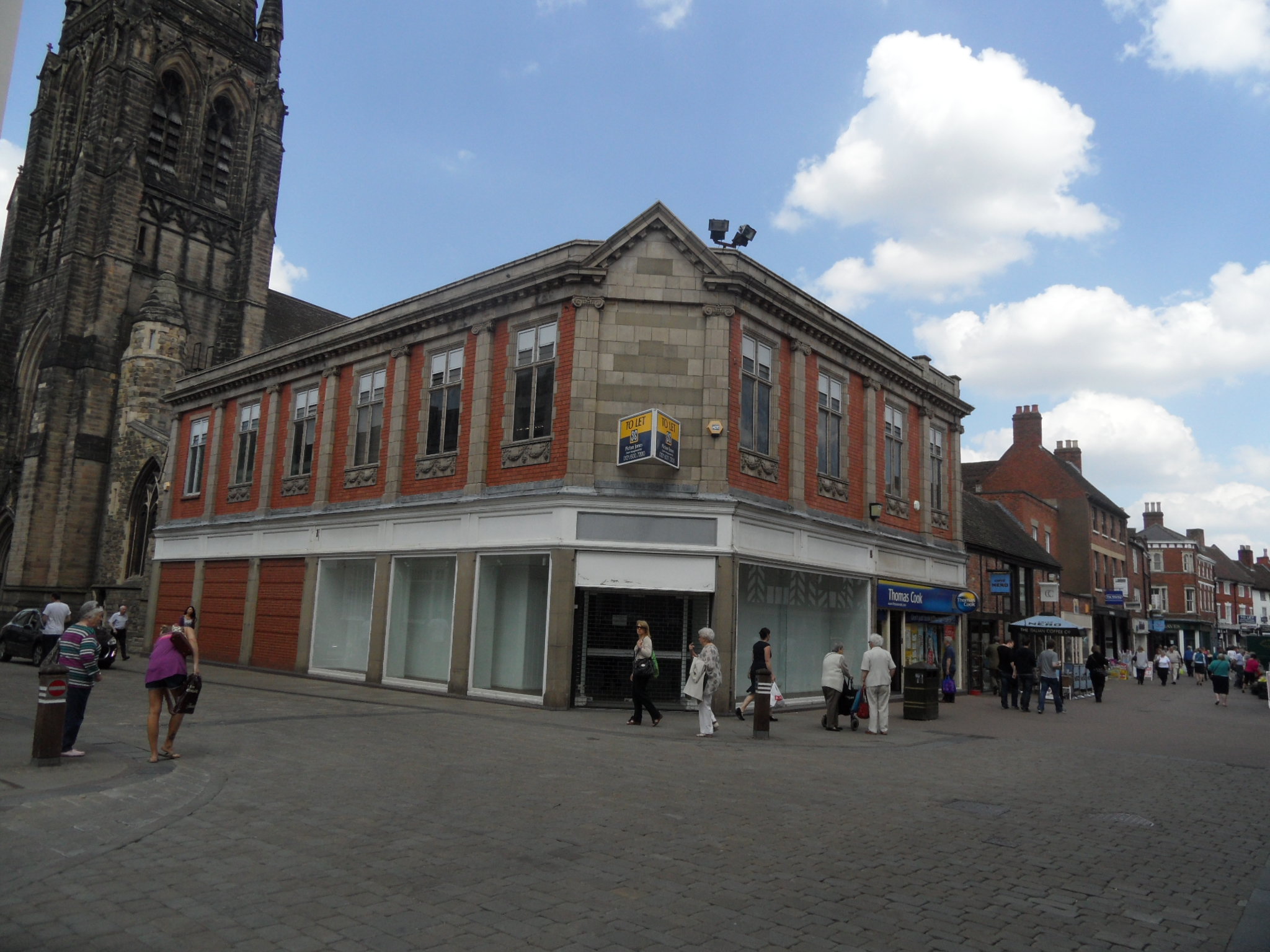
On the corner of Bore St and Breadmarket St is a building that I’ve never paid much attention to before. However, after hearing that someone carrying out some work there in the 1970s had uncovered a dolphin mosaic, I thought I’d fish a bit deeper into the building’s history…

The someone in question was Frank Clarke, a regular contributor to the fabulous Facebook group ‘You’re probably from Lichfield, Staffs if…..’. Frank found the mosaic under rotting floorboards when carrying out renovation work there in the 1970s. According to Frank, the mosaic was concreted over and may still be there to this day. Unfortunately, it seems that due to practicalities (involving concrete and money!) it’s unlikely we’ll ever know for sure.

What we do know though is that the Dolphin Inn once stood on the site, demolished in 1912 and replaced by the current building in 1913 by local builders JR Deacon to house the Walsall and District Co-operative Society Ltd Branch No.13. You can still see where the lettering for this ever so catchy name used to be, as shown in all its glory here, on the Staffs Past Track site. Burtons were the most recent occupiers, but they left in March this year, leaving the property empty. (1)

Built in 1913, this was once the Co-op, more recently Burtons.

According to John Shaw and his now legendary book, The Old Pubs of Lichfield, the Dolphin is first listed in 1818. However,after finding out that the original building on the site was timber framed, dating back to the 16th century, I was hoping to find out something about the building’s earlier uses. After reading the obituary of Rev John Kirk (d.1851),  it seems that prior to becoming an inn, the building had been occupied by a baker, with some of the upper rooms being used as a Roman Catholic chapel created in 1801.(2)

Rev Kirk had been the priest at the chapel at Pipe Hall from 1788 to 1793, where Catholics in Lichfield had previously worshipped. When this chapel was closed following the sale of the property to a non-Catholic he was asked to return to Lichfield as the resident priest at the new chapel. However, Kirk found the location and conditions far from ideal – the sanctuary was apparently directly above the baker’s oven and Kirk wasn’t happy about living in such close quarters with the baker and his family. By 1803, Rev Kirk had built a new chapel dedicated to St Peter and St Paul in Upper St John St.  Due to religious sensitivities, the chapel was originally designed to look like a dwelling house, but 1834 a turret and a new entrance was added, and the name changed to Holy Cross. The congregation was relatively small, but numbers were often boosted by those passing on their way to London and French Prisoners of War.

Holy Cross, Lichfield.
Source: Dennis Blenkinsopp (http://www.geograph.org.uk/profile/43370)

Back to the mosaic, which started all of this off! You would have to assume that its depiction of a dolphin is a reference to the name of the Inn. No great mystery there (although I would like to know why that particular name was chosen for a Lichfield pub!). What is more of a puzzle is how the mosaic came to be in the new building. Was it rescued during the demolition of the old one? Was it created to reference the history of the building that previously stood on the site? Or was the previous building not fully demolished, just significantly altered? I don’t know, and it seems probably never will.

I’m very grateful to Gareth Thomas for bringing the matter to the attention of the experts at Lichfield District Council, and also to the Civic Society for making enquiries as well. I think it’s great that members of the facebook group, the Civic Society, the council and even me have all been able to contribute to the discussion. This is how it should be, and I would like to see people working together more in the future, building on the great work that Gareth has done to bridge the gap between council and its residents, not least by making historic photographs and documents available through his own blog, and elsewhere.

I understand that talks are ongoing, however, the general feeling at present seems to be that without further evidence, the cost and disruption arising from trying to retrieve the mosaic (if indeed it has survived the last forty years) could not be justified. A shame, but for now it seems we shall have to let sleeping dolphins lie….unless anyone out there knows any more?

Edit 12/5/2013 Just reading about the opening of the Co-op. Apparently the builder, Councillor Deacon handed the chairman of the Co-op a walking stick made from one of the wooden beams of the old Dolphin Inn, which is quite a nice little addition to the story. No mention of a mosaic yet though 😉 

Notes

(1) Burtons previously had a branch on Market St, where you can still see the two foundation stones commemorating the opening by two of business founder Montague Burton’s sons. The post I did on this ages ago is here 

(2) So that takes us back to 1800-ish. Still three hundred years or so of the building’s history to account for though!

Sources:

Thanks to Frank Clarke for allowing me to share the story of his discovery here.

The Old Pubs of Lichfield, John Shaw

Catholic Staffordshire 1500 – 1850, M R Greenslade

The Gentlemans Magazine Volumes 191 – 192

Lichfield: Roman Catholicism and Protestant nonconformity’, A History of the County of Stafford: Volume 14: Lichfield (1990), pp. 155-159

http://www.staffspasttrack.org.uk/

Scratching the Surface

I had an hour to spend in Abbots Bromley and so I grabbed my camera and went for a walk.

The theme seemed to be ‘things found on buildings’, be it wooden and painted signs, carved heads and crosses on the church, horns outside a restaurant alluding to the village’s famous tradition (the Abbots Bromley Horn Dance), or an old post box.  Until I got home and did a bit of reading, I had no idea that a very famous visitor had also left her mark on one of the village’s buildings. Mary, Queen of Scots is believed to have stayed overnight at Abbots Bromley’s Manor House during what was to be her last journey. A pane of glass with the inscription ‘Maria Regina Scotiae quondam transibat istam villam 21 Septembris 1585 usque Burton’, said have been scratched by Mary with a diamond ring, was taken from the house and is now in the William Salt Library.

I’m back in Abbots Bromley for another hour next week! In the meantime, maybe I’ll look a bit deeper…

Gathering Moss

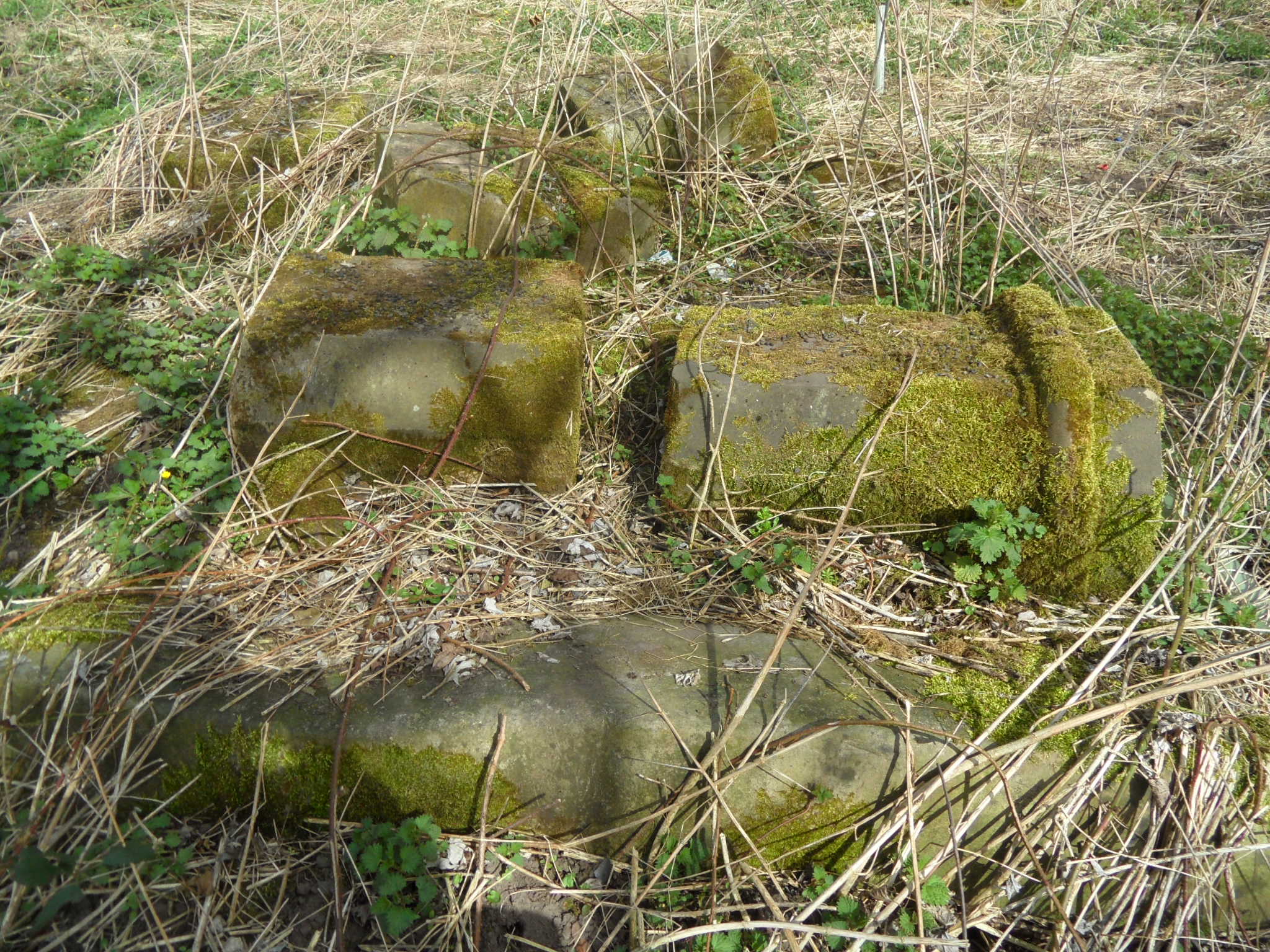
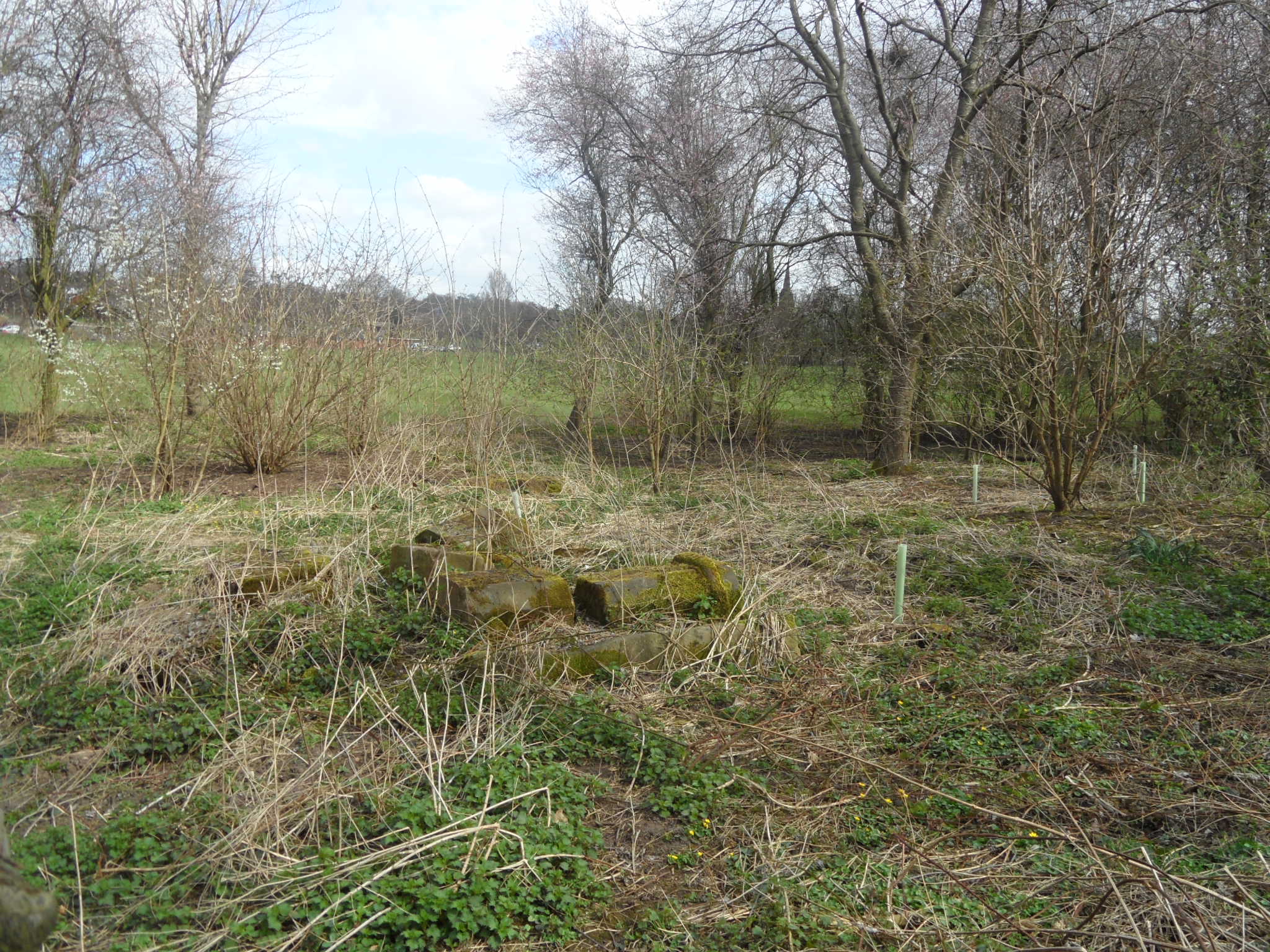
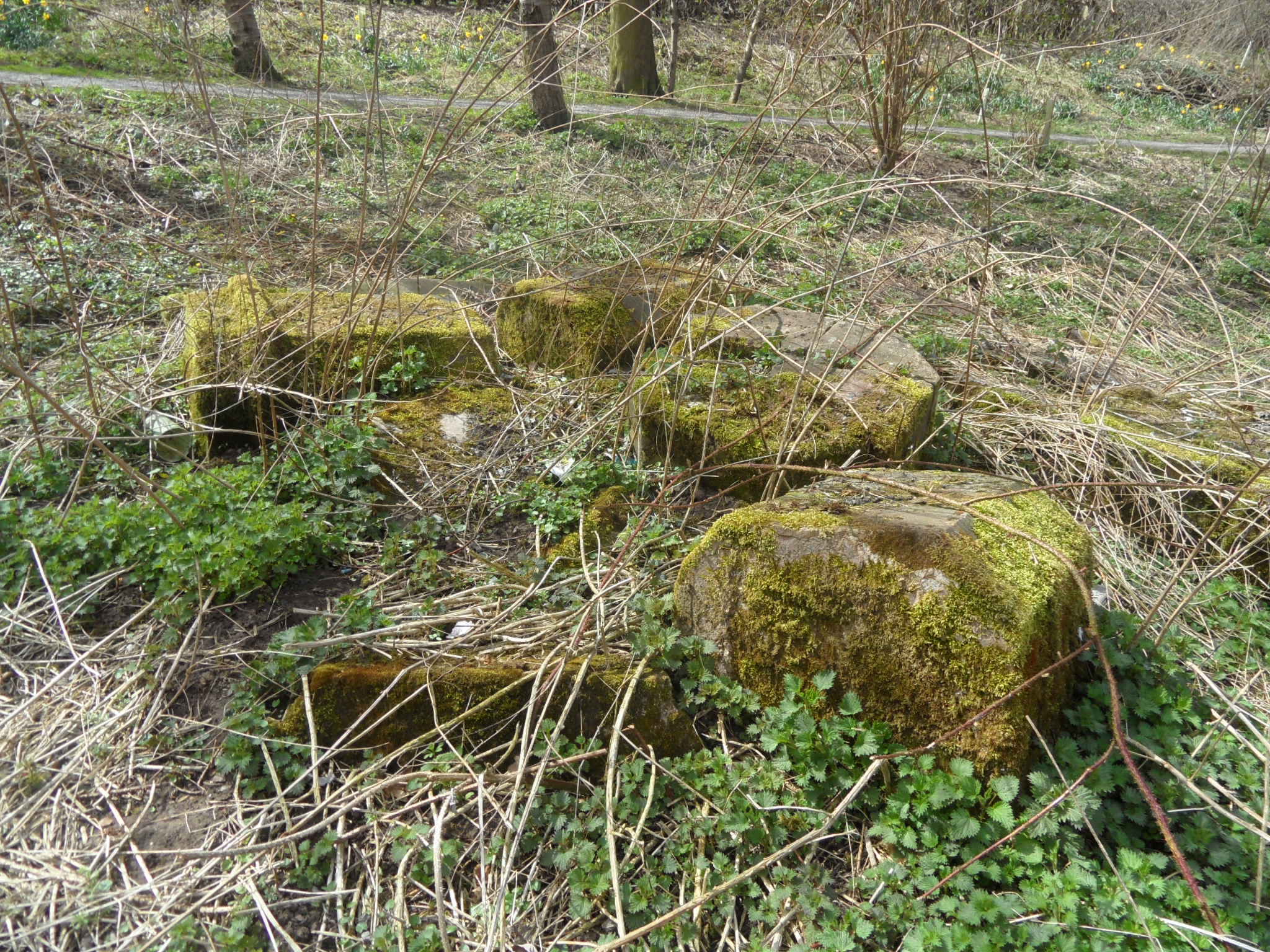
Walking around the edge of Beacon Park, I noticed a pile of moss covered stones in the undergrowth that I’d never seen before.  To me, they look like part of an old building, possibly pillars? It’s a long shot I know, but does anyone recognise them or have any idea as to where these pillars (if that’s what they are!) may have come from?

Whilst on the subject of ‘parts of old buildings found in unexpected places’, I have to mention my old favourite Fisherwick Hall. Back in January, I wrote an article for the Lichfield Gazette which mentioned that the hall had been demolished, but that parts of it had been reused elsewhere. After lying around for some years covered in moss, the pillars from Fisherwick went to the George Hotel in Walsall – you can read the great post written about the hotel by Stuart Williams of Walsall Local History Centre here. However,  I had no idea what had happened to the pillars, following the demolition of the hotel in the 1930s. Therefore, I was delighted when Paul (the editor of the Lichfield Gazette) told me that someone had contacted him, saying that some years ago he had seen them lying on a patch of ground near to the cricket ground in the Highgate area of Walsall. The gentleman described them as lying in pieces and covered with moss and lichen. Sounds familiar! Coincidentally, the site the gentleman described is a stone’s throw from where some of my relatives live, and so the next time I visited I went to take a look, but I had no luck in finding them. So near, yet so far….

Back to our Beacon Park stones, and someone from the Beacon Street Area Residents’ Association has very kindly said that he will ask the people in the know i.e. the Parks team and the Civic Society if they can shed any light on the matter. In the meantime, he’s left me pondering the fact that parts of the old bandstand and cycle track are also apparently also still around in the park somewhere…

Beacon Park bandstand c.1905
Source: Wikimedia Commons