Stumped

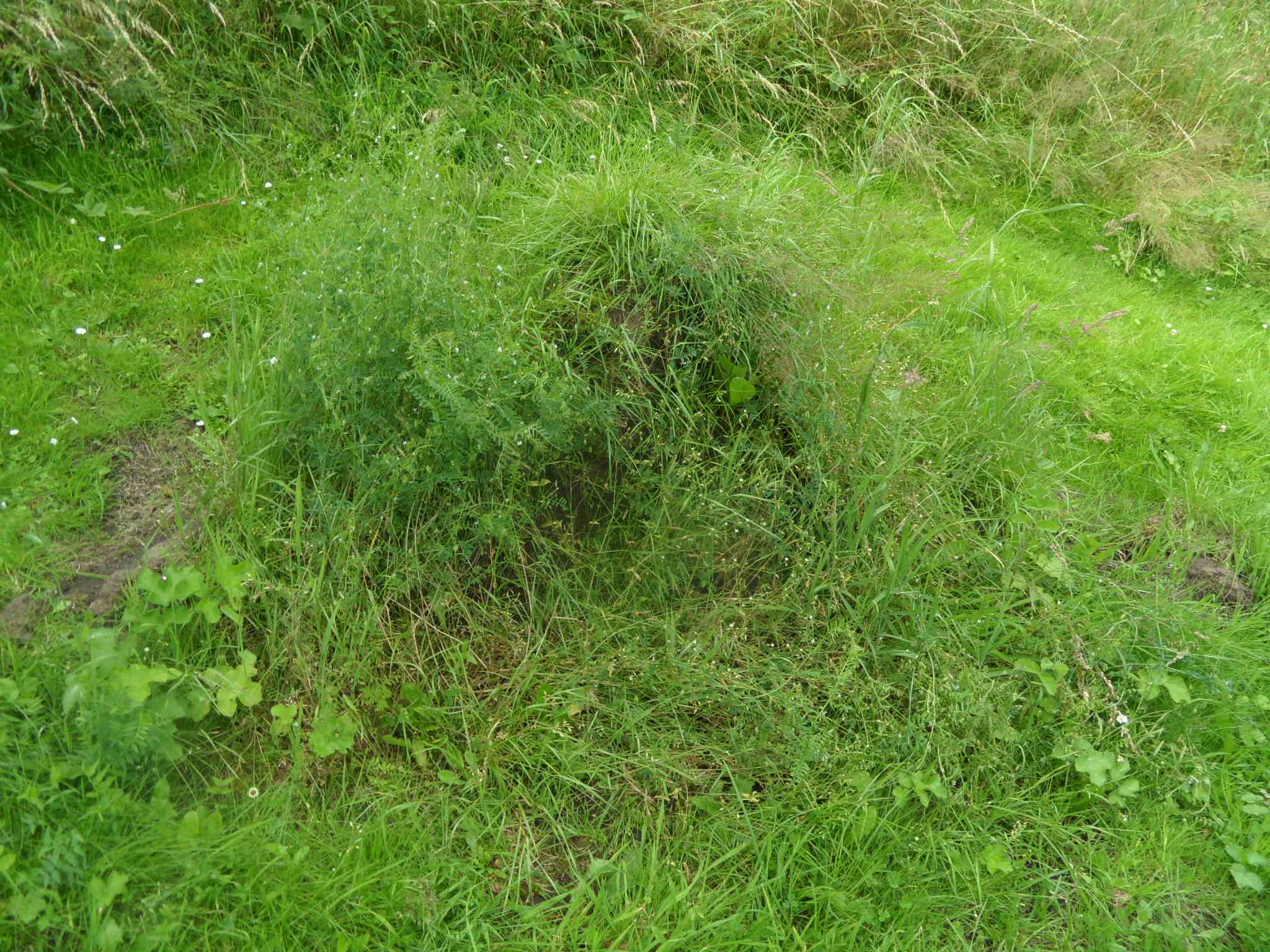
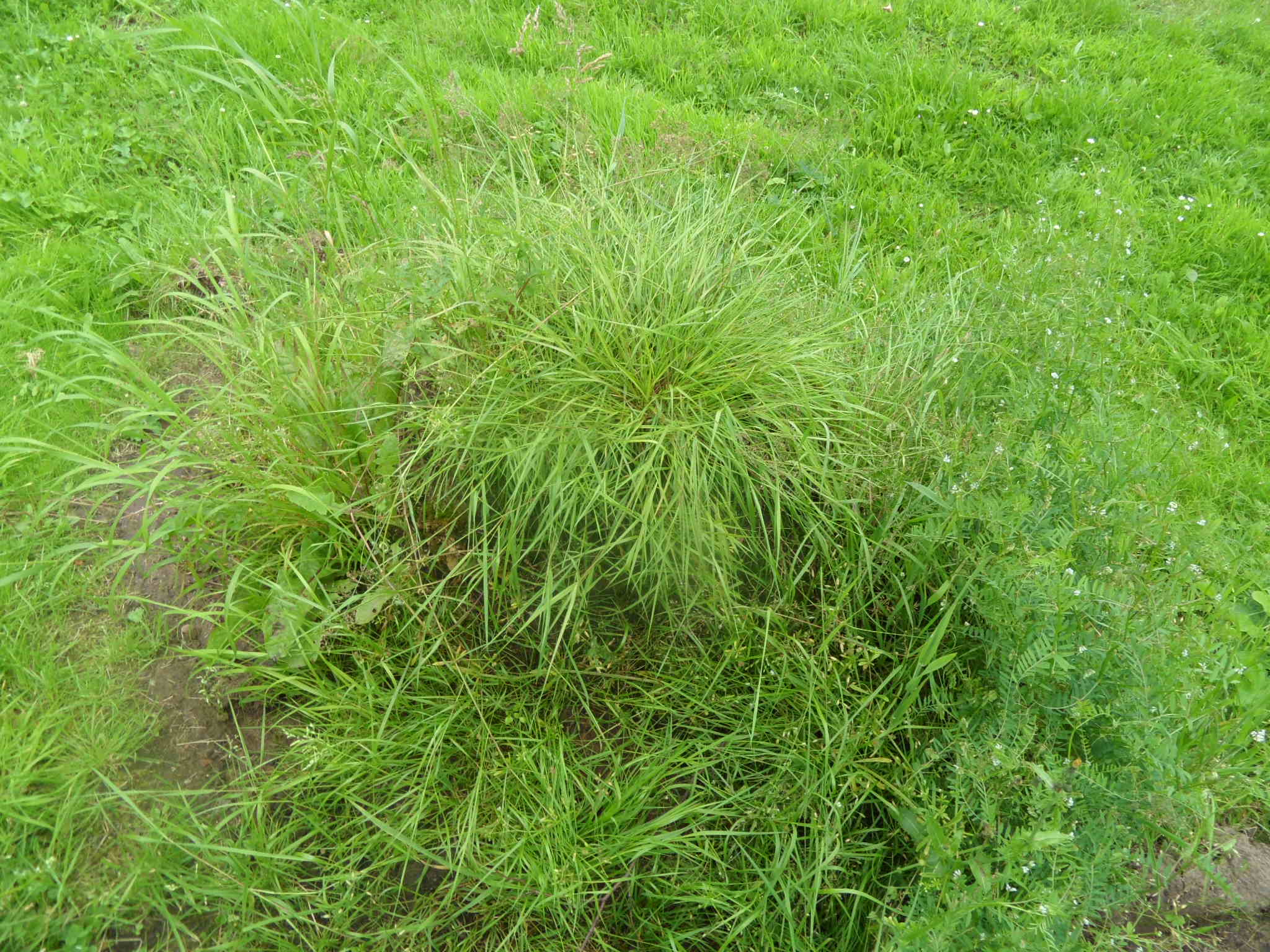
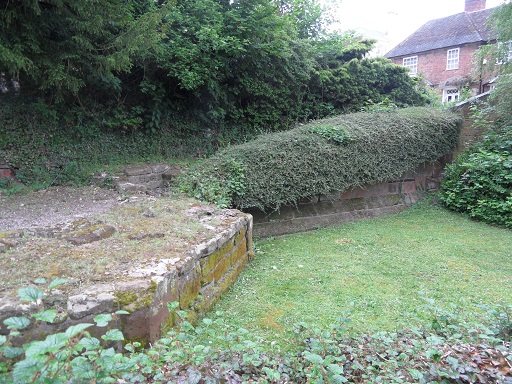
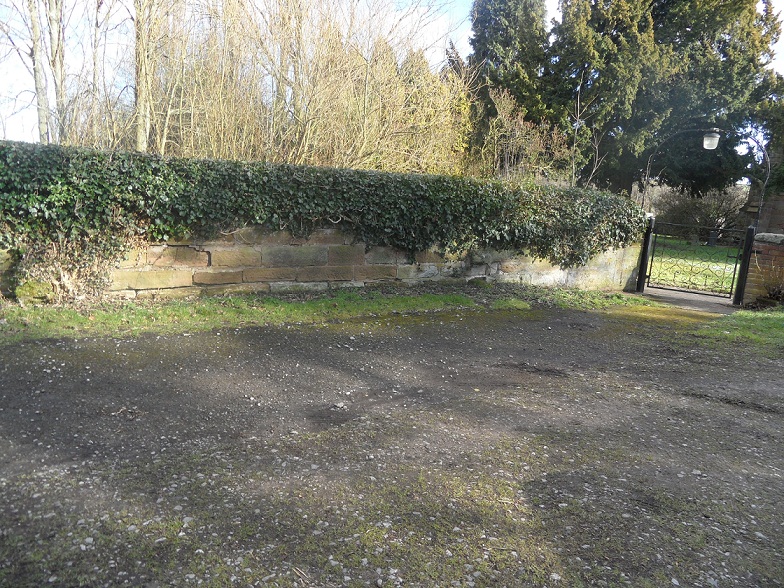
I had an email from Pat telling me there was a lump on the side of the A51, near to the junction with Abnalls Lane.  I assumed that it was an old tree stump, but Pat thinks it might be something more than that, and recalls seeing some stone there last year.

I went and had a closer look. Pat said in his comment on the Cross City post, the lump is covered in vegetation, but there is likely to be something solid underneath, as the grass is cut around it. I took a few photos and then the self -conciousness of being stood on a busy A-road taking photos of a grassy lump got the better of me and I headed back up Abnalls Lane.

So, does anyone else know anything about this, or do we just have to wait until the grass dies away in the Autumn to get a better look?!

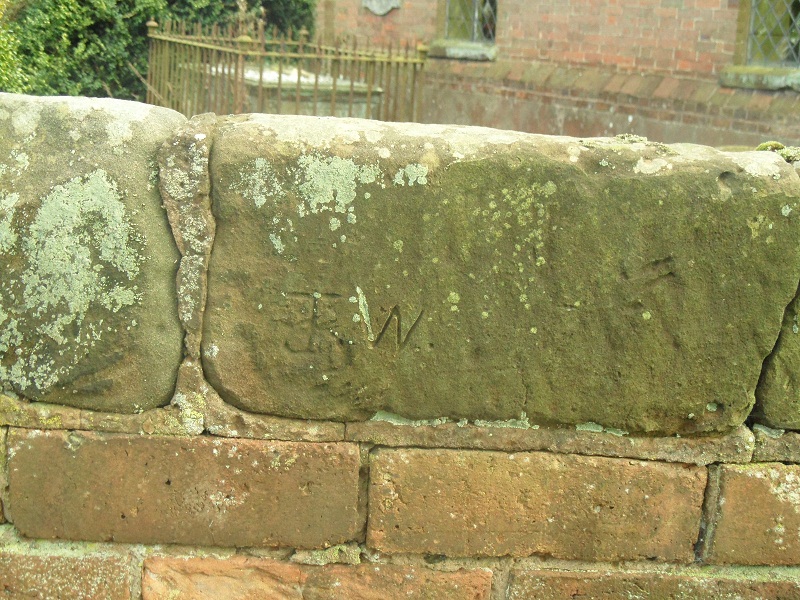
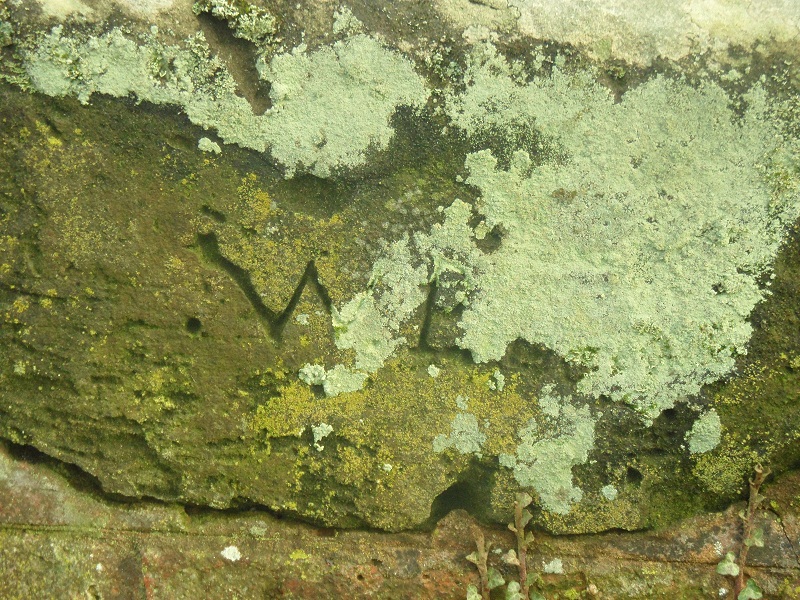
In the meantime, it’s worth taking a trip up Abnalls Lane. In parts, it’s thought to be a holloway, and at times you’re surrounded by hedgerows, tree roots and sandstone, with carved names and dripping water.  It takes you past the site of one of Lichfield’s Scheduled Ancient Monuments – a moated site on the edge of Pipe Green and over the border into Burntwood.  It also passes nearby the site of Erasmus Darwin’s botanical garden, although unfortunately the site is not open to the public.

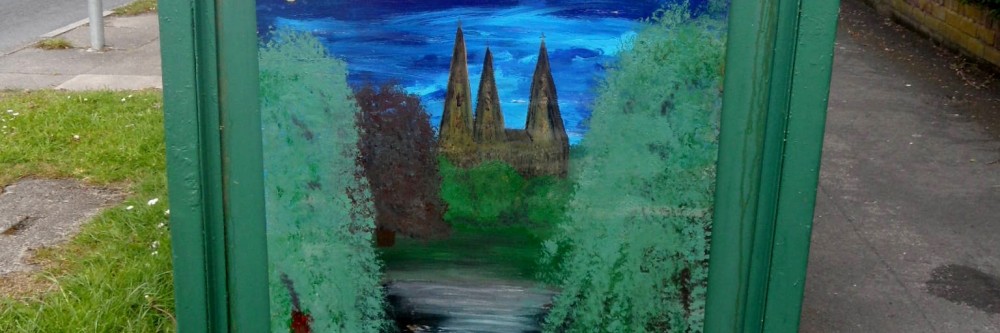
Spires of Lichfield from moated site at Abnalls Lane on the Lichfield/Burntwood Boundary

Interestingly, a section on Burntwood in the History of the County of  Stafford says that,

The road, now Abnalls Lane, was known as Pipe Lane at least between 1464 and 1683.  The point where it goes over the boundary was described in 1597 as ‘the place where the broken cross in Pipe Lane stood’; a ditch at Broken Cross was mentioned in 1467.

Is this one of the crosses already counted in Cross City, or a different one? 

Also, on the subject of research into stone things, at the end of Abnalls Lane, there are some interesting names – The Roche and Hobstonehill (according to the History of the County of Stafford, the placename ‘Hobbestone’ was mentioned in 1392).   

I think I need to spend my summer holidays at Lichfield Record Office.

Sources:

‘Townships: Burntwood’, A History of the County of Stafford: Volume 14: Lichfield (1990), pp. 195-205. URL: http://www.british-history.ac.uk/report.aspx?compid=42356  Date accessed: 27 July 2012.


Rolling in the Shallow

One of my absolute favourite things in a landscape is water – waterfalls, oceans, lakes, canals.  All wonderful.  Here, in Leomansley we’ve got a brook and I love that too.

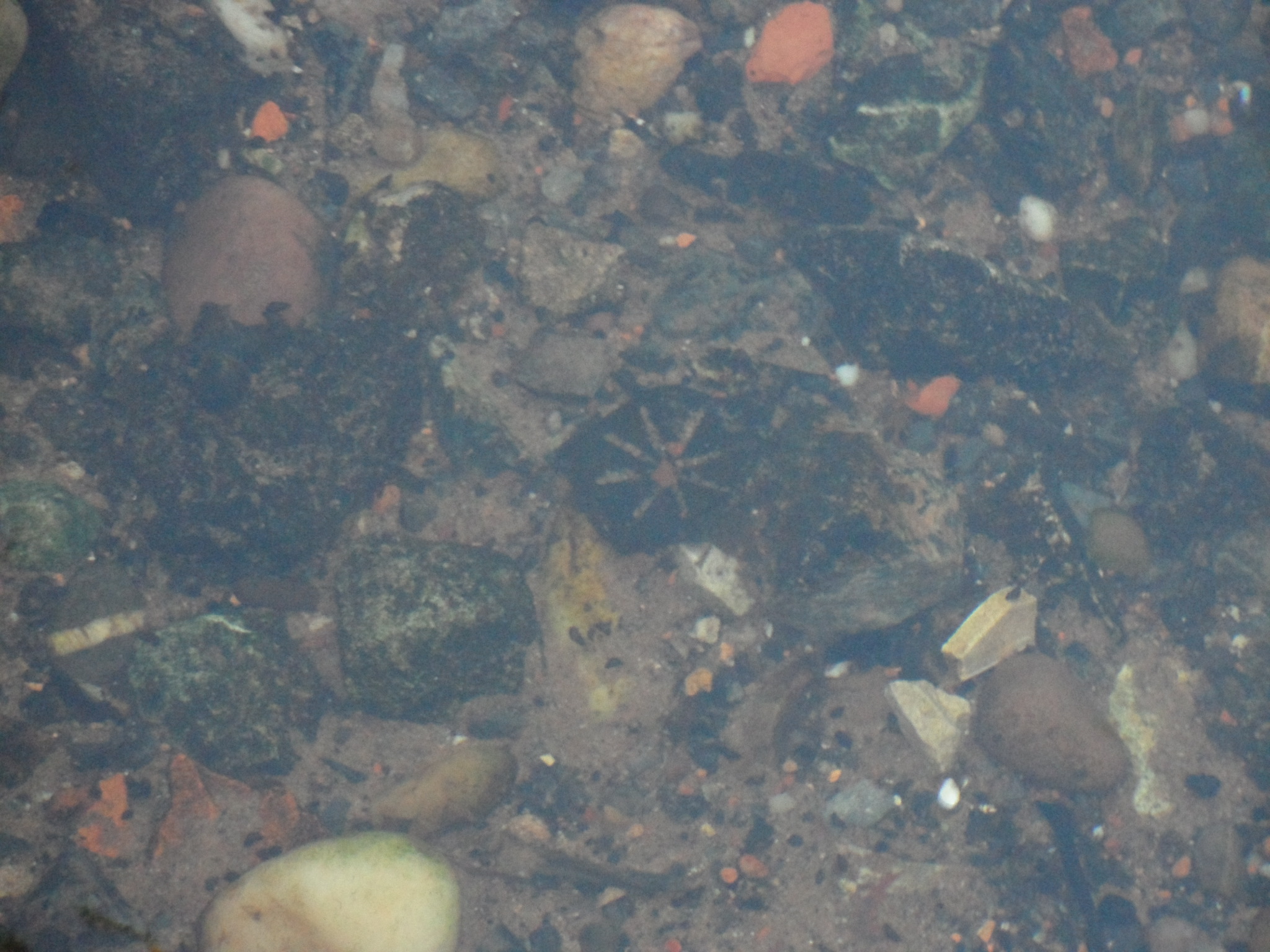
Two days ago I stopped and paused at a small bridge that crosses over Leomansley Brook. It was flowing more than usual, with little fishes darting about in the clear water. I would have gone home happy just having seen the fish but then as I watched them, something else caught my eye.

It looks like a stone with a star etched on to it. Unfortunately, as well as raising the water level, the rain has also raised the nettles and so I couldn’t get down for a closer look. I went back the following day with a fishing net and my Mum but the net was far too short and my Mum wasn’t game enough to take on the stingers either! And so there it remains, still in the brook, where it may have been for hundreds or years….or since last week! I took another photo and it looked a bit different. (This time I noticed a big nail a little further upstream too).

What is it and how or why does it have those markings? Is it even a stone? I would love to hear any theories anyone has!

A little later I’m going to write up a post about another little mystery around these parts. This and the stone might not be anything at all, but I actually don’t think that matters. What I think does matter is getting out there and looking, thinking, sharing and most importantly enjoying what’s around you.

Cross City

There’s some evidence that there were several stone crosses in Lichfield, although as far as I know, no physical remains have ever been found.

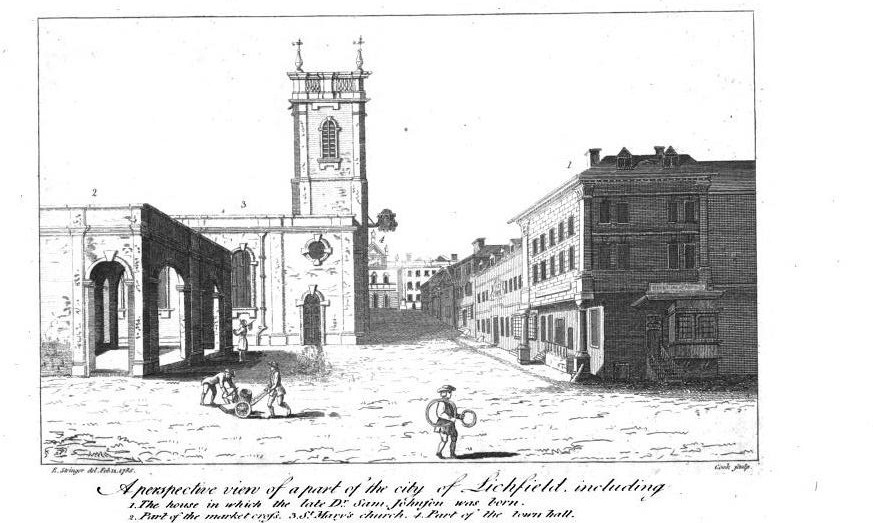
The most well documented of these is the market cross. According to the Lichfield volume of the History of the County of Stafford (1), a market cross stood north of St. Mary’s in the late Middle Ages and then some time around 1530, Dean Denton surrounded it with eight arches and added a roof  to keep the market traders dry. The building was topped with eight statues of apostles, two brass crucifixes on the east and west sides, and a bell, as you can see in this picture on the Staffordshire Past Track site.    The cross was destroyed in the civil war, and replaced with a market house, as shown in the illustration below (although it is referred to as a cross on the notes?) which has also now disappeared.
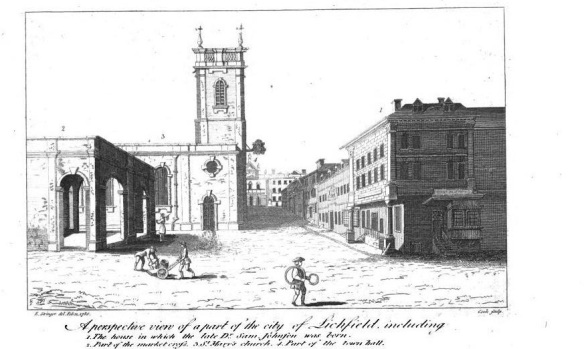
Taken from John Jackson’s book, History of the City and Cathedral of Lichfield, 1805

There is a possibility that there was a preaching cross in the grounds of St John’s Hospital as documentation shows that Dean FitzRalph preached outside in the cemetery. (2) Information on this specific example is really sketchy, but there is a surviving preaching cross in Bloxwich which you can read about in a great article on The Borough Blog.

More evidence exists for a cross at the junction of Tamworth St and Lombard St. There is a cross like structure shown there on John Speed’s 1610 map, and in 1805 Thomas Harwood wrote that there was a stone cross in Tamworth St. (3) There are also a couple of references in old property deeds such as one from April 1316 describing a ½ burgage in street between the Stone Cross and Stow Gate.(4)
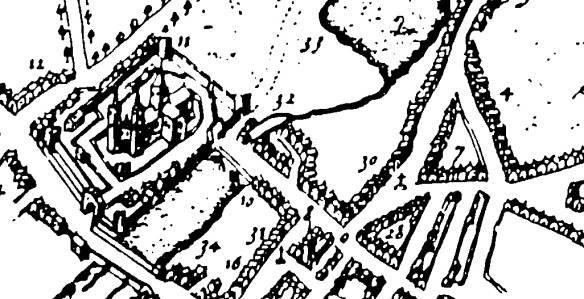
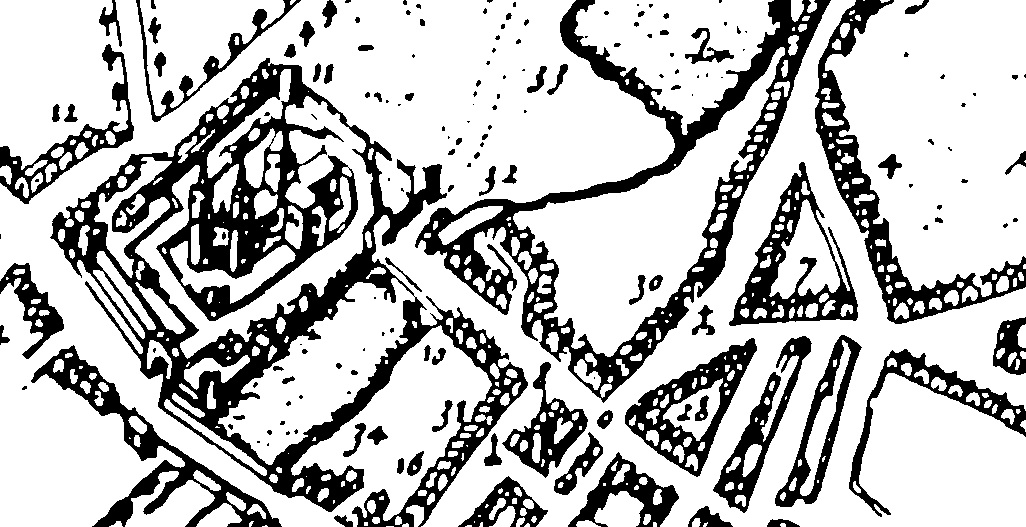
The Market Cross and the Stone Cross at Tamworth St can be seen depicted on John Speed’s 1610 map of Lichfield

A cross apparently stood near Cross in Hand Lane in Lichfield, giving rise to a theory that it this is where the lane got its name from (the other theory is that is was a pilgrimage route, to St Chad’s shrine, where people would walk with ‘cross in hand’. The route has recently been incorporated into a new pilgrimage and heritage route called Two Saints Way). Harwood said,  “(Beacon Street) extends from the causeway over the Minster pool which separates it from Bird Street to houses at the extremity of the city called the Cross in the Hand and where stood an ancient cross ad finem villas.’ The pastscape record for the cross is here.

This week I came across another reference, this time Bacone’s Cross, and which was also thought to be in Beacon St, at the end of the town. Was the ancient cross at Cross in Hand Lane and Bacone’s Cross the same cross?

The Bacone’s Cross/The Cross in Hand and the Tamworth St cross were both situated at the ends of the town. Does this mean that they were boundary markers of some sort?  If so, could there have been more crosses marking other places on the City’s boundary.  There were city gates at both Beacon St and Tamworth St.  However, the probable sites of the gates don’t correspond exactly with the probable sites of the crosses e.g. the above example says ‘between the Stow Gate and the Stone Cross’.
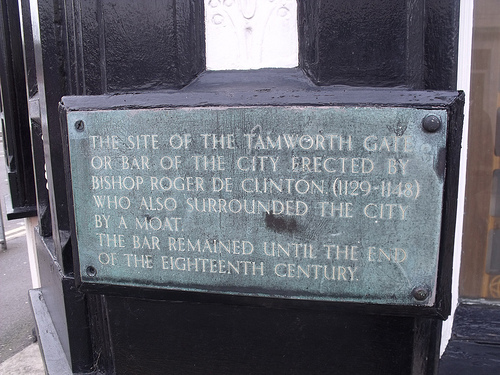
Tamworth Gate plaque on Lee Garden Chinese Restaurant Credit: Ell Brown (taken from flickr photostream).

In the absence of more information about Lichfield specifically, I looked elsewhere to see if crosses would have been used to mark boundaries. St Albans was surrounded by a ditch, like Lichfield (and there’s a link with the story of the  Christian martyrs but that’s a bit too much of a tangent for now!). The History of the County of Hertford, says this about the city’s boundary (5)

Crosses were at an early date erected at important points in the line of boundary, and at each of the entrances to the town, namely, the Stone Cross or North Gate Cross  at the north on the Sandridge Road, the Red Cross in Sopwell Lane, at the entrance by the old road from London, the Cross with the Hand in Eywood Lane, the Black Cross, probably at the angle where Tonmans Dike goes from the boundary of the houses in Fishpool Street towards the Claypits, and St. John’s Cross at an angle of the boundary in what is now known as Harley Street, but lately as Mud Lane.

It’s interesting to see that some of the names are the same – Stone Cross, Cross with the Hand – but I don’t want to start jumping to conclusions until there is much more evidence!

Finally, there is a document relating to property in Freeford (4), which describes ‘three selions of land at Lichfield, near Le Hedeless Cross, on the road towards Freeford’ in the time of Edward III – Henry V. Does this refer to the Tamworth St Stone Cross, or another cross altogether?

What happened to these crosses? Time? Religious differences? Where did they end up? There’s something in one of my all time favourites book that gives me hope (possibly misguided) that there is a chance, no matter how slim, that things that have long been thought to have vanished might turn up again one day in some form or another. In England in Particular (6), in the section on Wayside and Boundary Crosses, it says that,

Some crosses have been found in hedgebanks, with shafts used as gateposts. A number have been found by researching field names:two fields called Cross Park revealed previously undiscovered stones.

Fingers crossed!

Edit:

In view of the above, I thought it’d be worth having a look at field names etc, in Lichfield. There is an entry in an transcribed inventory relating to the real estate of the vicars that says Deanslade: Falseway to cross called Fanecross (4). There’s a Banecross on another transcription and I think one of these could be down to a typo and that they could be the same place, There is also an entry for a place known as Croscroft, which was on the road to Elford, near St Michael’s Churchyard (3)

Another edit:

I was hoping there would be an ancient cross somewhere in Lichfield. Well, I finally found one! Actually that’s a fib. What I found is a photograph in a book of archaeologists finding one. A decorated cross shaft was discovered built into the foundations of the north wall of the nave of Lichfield Cathedral. It’s thought to be Saxon or Saxo-Norman, and could be a surviving remnant of the earlier church on the site. I wish I could share a photograph here, but all I can do is tell you that it’s on plate 1 in the ‘South Staffordshire Archaeological and Historical Society Transactions 1980-1981 Volume XXII’ book, on the local history shelves at the library!.

Sources:

(1) Lichfield: Economic history’, A History of the County of Stafford: Volume 14: Lichfield(1990), pp. 109-131http://www.british-history.ac.uk/report.aspx?compid=42349#s6

(2) Hospitals: Lichfield, St John the Baptist’, A History of the County of Stafford: Volume 3(1970), pp. 279-289

(3) The history and antiquities of the church and city of Lichfield by Thomas Harwood

(4) Collections for a History of Staffordshire Part II- Vol VI (1886), William Salt Archaeological Society

(5)  ‘The city of St Albans: Introduction’, A History of the County of Hertford: volume 2 (1908), pp. 469-477

(6) England in Particular, Sue Clifford & Angela King for Common Ground
Under the Bridge

It might not have rained on St Swithin’s day here in Lichfield but water was still the theme this weekend. On Saturday, I was supposed to be at the Festival of History at Kelmarsh in Northamptonshire. However, it seems that nature wanted to get involved in the reenactment of history too and successfully managed to put the marsh back into Kelmarsh. Maybe Dr Rawson was right when he warned “Drive nature out as you will, and she will come back”!

Here in Lichfield, I’ve read that marshy land was known as ‘moggs’ and that the Museum Gardens were once known as Swan Moggs or the Bishop’s Fish Pool.  You can see an artist’s impression from 1848 of the scene in 1548 here.

A causeway was built to separate the Moggs from from Minster Pool in the early 1300s, and the road became known as Newebrugge St, later Brugge St and eventually Bird St. According to Rawson, the original bridge was widened by 5 foot in 1768. It was replaced by a new bridge in 1816, but I was quite excited to see that the listed building description  says that the remains of the old bridge could still be below the water of Minster Pool. Has anyone anyone ever been down there to have a look, I wonder? I’m probably not quite excited enough to hire a wetsuit and go looking for it, but you never know!

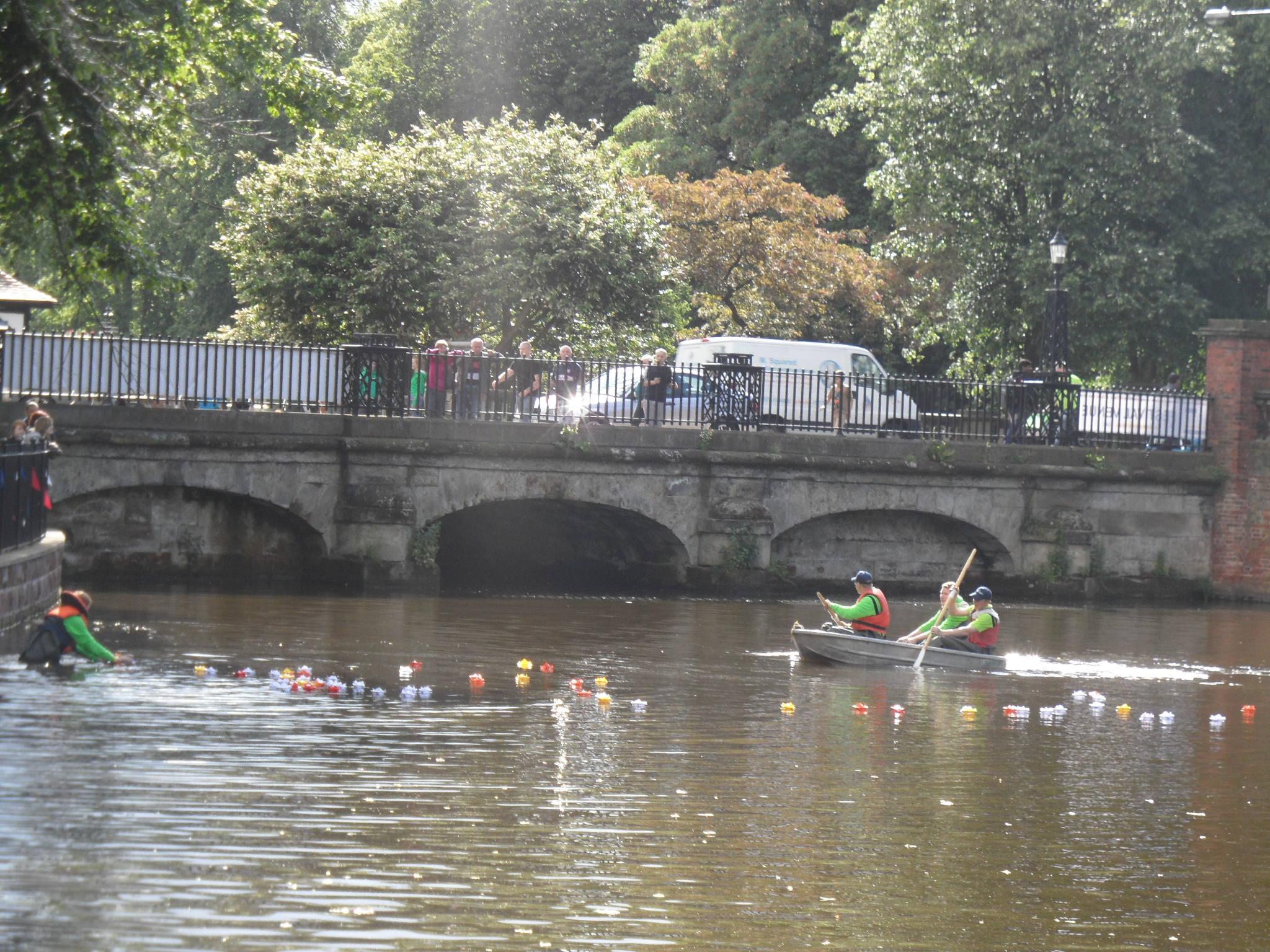
Adding Olympic Flames to the waters of Minster Pool, near the Causeway Brige

It seems that other interesting discoveries have been made near the site of the bridge. According to the Pastscape record, during the 19th century there was a malthouse on the causeway and in 1802, when they were digging a well they discovered a roman goblet called a cyathus and fragments of several human remains. How did they come to be there?

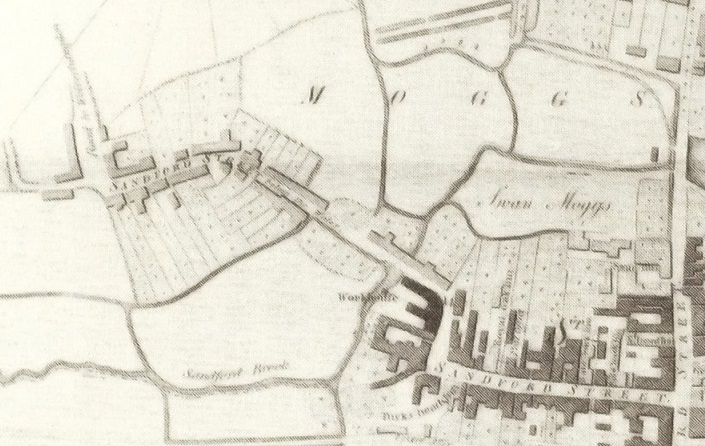
Once again, it’s worth taking a look at John Snape’s 1781 map of Lichfield as it show the extent of the Moggs at that time.

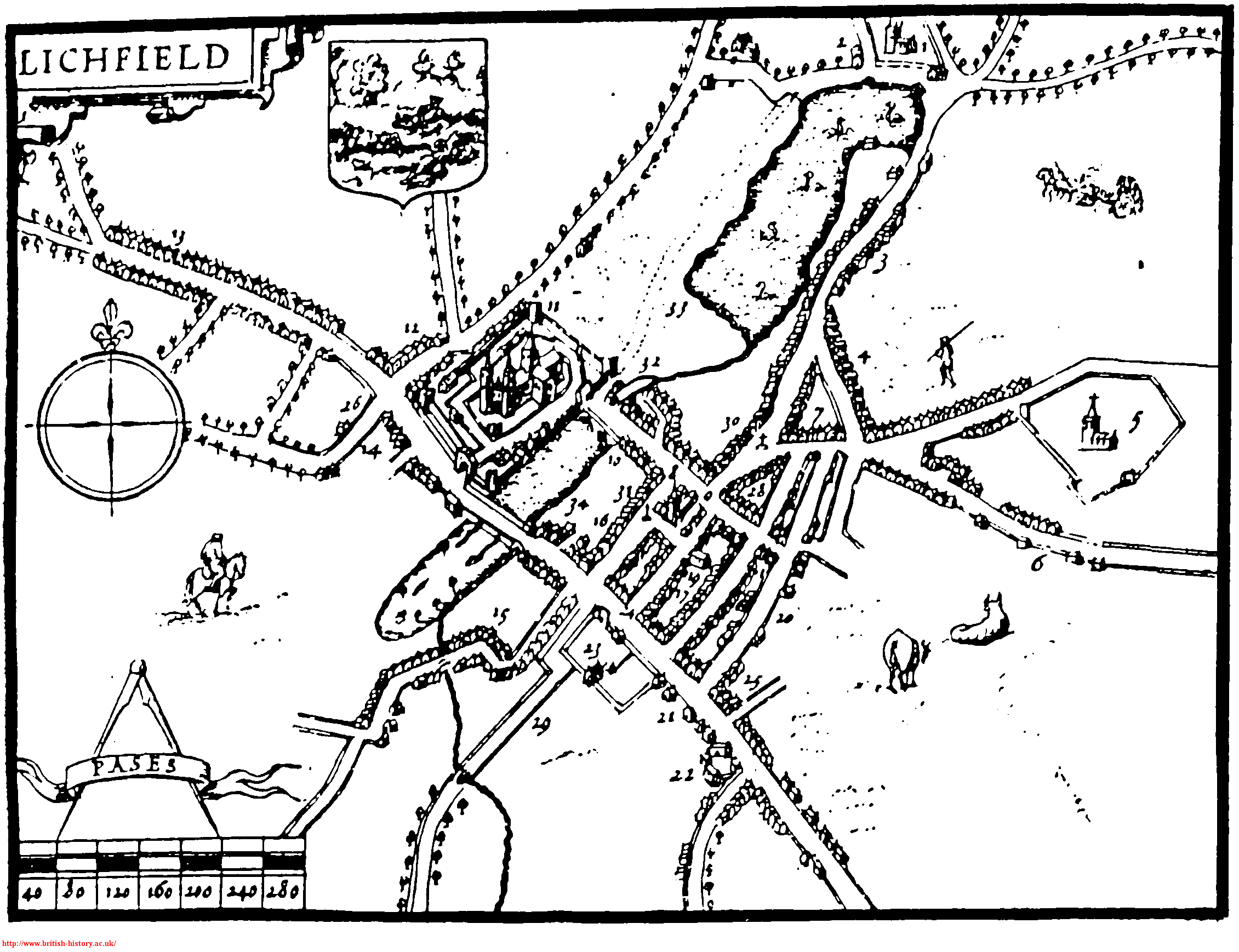
While we’re at it, here’s John Speed’s 1610 map again as well!

1610 map of Lichfield

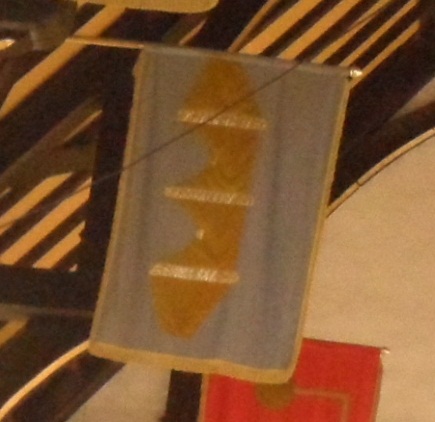
As you might expect, the Bird St ward banner features the Causeway.

Something I’m especially interested in relating to all this are the references I’ve seen to a well in the vicinity. So far, I’ve seen it called Merelynswele, Merliche Well and Maudlin’s Well and various sources seem to place it adjoining the Bishop’s Fish Pool, and accessible from Shaw Lane.

View down Shaw Lane, off Beacon St

I might be wrong but is the original name made up of three watery elements i.e. Mere-lyns-wele with mere as in Windemere, lyn deriving from the celtic word for for lake and of course wele for well?

The name of the well seems to have changed over the years.  For example, John Jackson suggested that the well became known as Maudlin’s as, ‘Tradition says some person having enjoyed his bottle rather too freely tumbled into this well which has since been distinguished by its present epithet Maudlin signifying a state of inebriation. It is clearly however an abbreviation of Magdalen’s’. Dr Rawson referred to it as Merliche, the pool-marsh well.

What I really need to do is to get down to the record office to have a look at the plan of Maudlins Well and Dean’s Croft that they I’ve just found out that they have. Wait, Dean’s Croft? That sound’s familiar….. Might wait until it stops raining AGAIN though 😦

Sources:

(1) An inquiry into the history and influence of the Lichfield waters by Rawson 1840

(2) A short account of the city and close of Lichfield by Thomas George Lomax, John Chappel Woodhouse, William Newling

History & Antiquities of the Church & city of Lichfield by Thomas Harwood

Collections for a History of Staffordshire Part II- Vol VI (1886)

History of the City and Cathedral of Lichfield by John Jackson

A History of the County of Stafford Vol 14: Lichfield edited by MW Greenslade


In defence of Lichfield

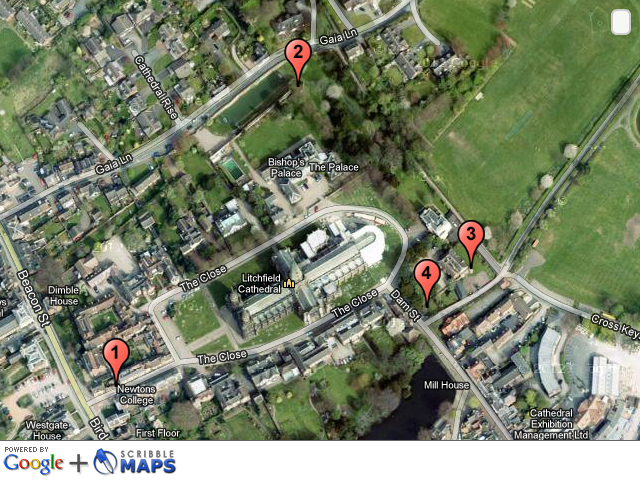
As I mentioned in the last post about the West Gate, some other remnants of the Close’s medieval defences are visible.  I’ve marked the ones I know about, on the map below, with a bit of information on each. I’m sure there’s probably more, and we could probably work out where the other defences were, but it’s a start!

1. Site of the West Gate – see previous post here

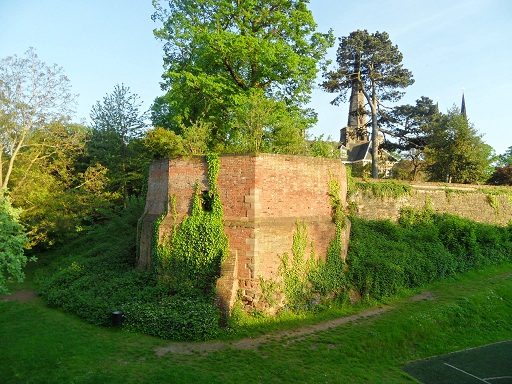
2. Remains of North East Tower & ditch. A scheduled monument, sometimes known as the Bishop’s Tower, this was part of the original, medieval bishop’s palace. The pastscape record can be seen here. A description of the tower and how it fitted into the rest of the palace can be found in several books on the Cathedral & Close (1) and is based on a plan that was held in the Bodleian Library (is it still there?). A plan drawn from this can also be found here.

At the north east corner was a tower fifty two feet high and each of its ten sides thirteen feet on the outside. It was called the bishop’s tower and the ruins yet remain. Adjoining this tower was a square room with stone stairs leading to the top on the north west of which was an apartment with a cellar underneath twenty two feet in breadth and sixty three feet in length. The bishop’s lodging room was forty feet by thirty two with a leaden roof and cellar underneath. On the north side of this room was a large chimney piece opposite to which a door led to the dining room sixty feet long and thirty broad. At the east end was a door opening into the second tower which consisted of five squares eleven feet in width and thirty two in height. There were two apartments each twenty feet by seven separated from each other by the large hall chimney, , the lady’s chamber…the brewhouse…and the kitchen.


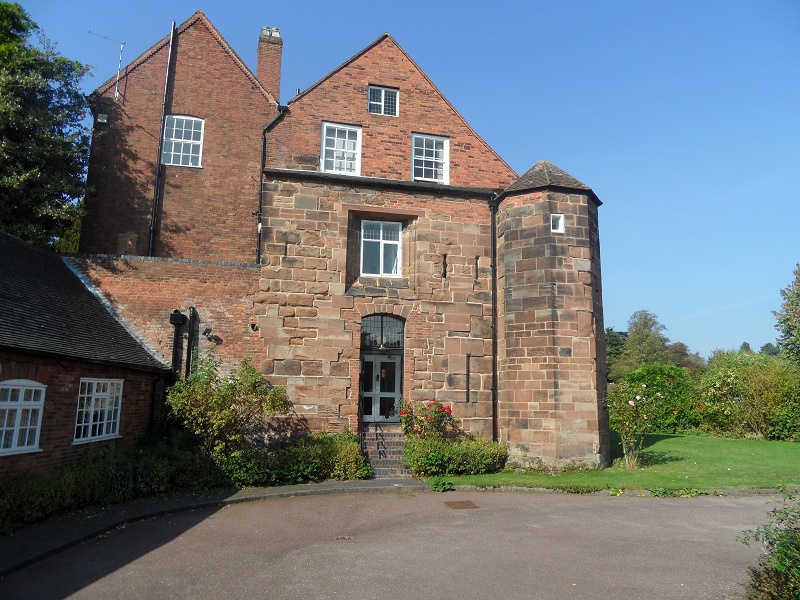
 3. St Mary’s House. Incorporates a turret and part of the Close wall on the east and south side. Not only are there are arrow slits, but there are also rumours of a secret tunnel down below….Actually, it’s not that secret as loads of people seem to have heard about it.

 4. Remains of Eastern Tower of South East Gate. This description comes from the ‘Lichfield: The cathedral close’, A History of the County of Stafford: Volume 14: Lichfield

The gate built by Langton at the south-east corner of the Close had two towers. The eastern one, whose base was excavated in the late 1980s, was a half-octagon with 12-ft. sides. The western tower was presumably of similar dimension. The gate had a portcullis in 1376.  There was a drawbridge, still in existence in the earlier 18th century, which crossed the outflow of water from Minster Pool, and also a wicket for pedestrians. The gate was removed in the mid 18th century in order to improve access for coaches into the Close.


There’s also this bit of wall behind the Chapters coffee shop, which provoked a bit of discussion on Brownhills Bob’s Brownhills Blog, and with Annette Rubery. Especially about what that recess is!

While I was having a flick through googlebooks trying to find information on the subject, I came across an interesting snippet. Adrian Pettifer, in ‘English Castles: A County Guide’ makes the point that that unlike the majority of cathedral cities, there was no wall around the city of Lichfield as a whole.

So whilst the Close was protected by a strong wall, a ditch, 50ft towers, drawbridges and portcullises (when you put it like that it really does sound like a castle!), what did the rest of the city have? Well, there was a ditch. It’s thought even this was used more for controlling traders coming in and out of the city, than for defences. An archaeological dig carried out on the Lichfield District Council carpark in Frog Lane, also confirmed that the ditch was used as the city dump and found a variety of material, including it appears, the dog from Funnybones. There were gates too, the positions of which are still marked by plaques. Again, though it’s thought these might not have been defensive. I think the ditch and the gates deserve a post of their own, so I’ll come back to them another time.
Credit: Ell Brown (taken from flickr photostream)

This will also give me time to think about my latest question (one I’m sure has been thought about and answered by clever people already!). Was the city of Lichfield defended, along with the Close? And if not, then why not? Of course, if anyone has any ideas about this in the meantime, please let me know!
Footnootes:

(1) This particular description is taken from ‘A short account of the city and close of Lichfield by Thomas George Lomax, John Chappel Woodhouse, William Newling

(2) Thanks to this website http://gatehouse-gazetteer.info/English%20sites/3329.html for pointing me in the direction of some great links.

(3) I’ve also used this book From: ‘Lichfield: The cathedral close’, A History of the County of Stafford: Volume 14: Lichfield (1990)

Lost in the Woods

Whenever I see an object out of place it intrigues me.  I’m not talking litter here, I mean the things that are dropped by accident, things that are left behind. Lost property. Things that might (or might not!) interest future archaeologists if they were to discover them in a couple of centuries time.  I want to know the story behind them, who they belonged to & how they ended up lost, but I realise that I might be on my own with this one! 

I’ve put together a gallery of things found on the path past Leomansley Wood to Pipe Green and on the Green itself.

Lost by a horse, found by a friend. Brownhills Bob told me that it's not that old. Still lucky though!


Dropped by someone in need of a lucky horseshoe? Or on the way home from the fair?

Lost whilst blackberrying?


Dropped after an impromptu paddle in the brook?


See above!


In the rough. Not sure Leomansley Wood makes a great fairway.

Or a great rugby pitch either.

I guess the robber escaped from the cop.


The remnants of an overenthusiastic dog's toy?

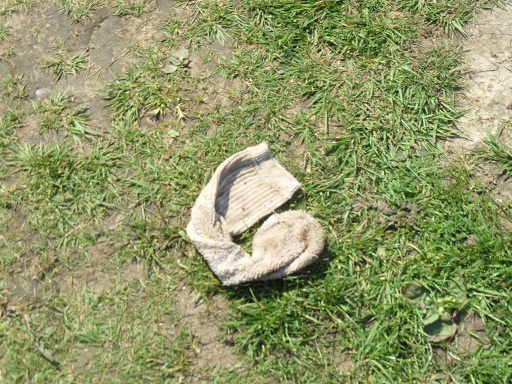
I would ask people to send me photographs of things they’ve found, but I appreciate that I might be the only person in Lichfield who goes around taking photographs of old socks!


Good Foundations

I stopped by the Outer Friary carpark yesterday and hovered around until one of the archaeologists was near enough to pounce on (not literally, there was a metal fence between us). He very kindly explained that they thought they’d found a victorian house, but that they would keep looking in case any evidence of earlier activity had survived e.g. field boundaries. One thing he did mention that I thought was fantastic was how people passing by were offering their interpretations and anecdotes – one chap apparently swore that he remembered buying records out of the cellar you can see on Dave Gallagher’s photo below (which he has very kindly said I can use!).

Hope the hi-vis jacket is waterproof! Photo by Dave Gallagher

There are more of Dave’s photos on the ‘You’re probably from Lichfield, Staffs if………’ Facebook group, accompanied by some interesting discussions about what the dig has revealed.

Whether people have read about the dig on Lichfield Live, seen Annette Rubery’s great post, been made aware of what’s going on thanks to Brownhillsbob’s blog, have joined in the discussion on Facebook, or have just stopped by in the street to wonder what’s going on I think its great that we’ve all had the opportunity to see this. Of course with archaeology we all want exciting things to be discovered, but even if the archaeologists don’t turn up anything that they consider ‘significant’,  it’s allowed people to witness a dig (that isn’t on Time Team) and got people interested in what’s going on around them, which is never a bad thing. Plus it’s given us all something to talk about other than the weather….

Edit 14/5/2012

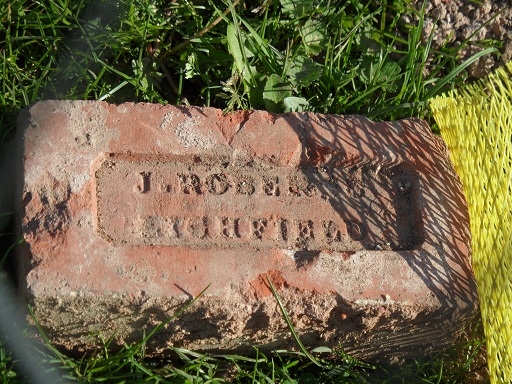
Walking past on Saturday I noticed this brick on the side of the excavations. I have found a reference to a ‘Mr Roberts’ brickyard at Streethay, near Lichfield’, in a book from 1869 (Burton on Trent: Its Water And Its Breweries by William Molyneux) which may be where this brick was made. (Mr J Roberts from Streethay also won second prize for his pony at the annual show of The Staffordshire Agricultural Society in 1867!) According to the pastscape record there was a post-medieval brickworks, including a yard and a claypit, at the helpfully named ‘Brickyard Farm’ at Streethay.  The brickworks and the associated pits show up brilliantly on the 1883 OS map, sitting near to the canal, inbetween Bearshay and Hilliards Cross.

I think bricks are underestimated so I think I’m going to do a post in honour of the not so humble brick.

A local brick


Update: 28 May 2012

The dig has been completed and the trenches have been filled in. There’s a short post here from Lichfield District council, who expect a full report to be available in three to six months.

What lies beneath Lichfield?

A very quick post to say that there is an archaeological investigation taking place at the Friary Outer car park. You can read a little more here at the project redevelopment website http://www2.lichfielddc.gov.uk/friaryouter/2012/05/02/friary-outer-archaeology-investigations/. It says they will be posting updates should anything be found.

I passed by last night and the dig has revealed what looks like the foundations of at least one building, including steps, a cellar and what could be a tiled floor.* I’m having a look at some old maps to see what used to occupy that site.

Unfortunately & unusally for me I didn’t have my camera or even my phone with me to take a photo. I’ll try and get one later but if you’ve got 10 minutes to spare on this dull bank holiday Monday, go and have a look and see it for yourself before it’s hidden from view once more. It’s intriguing to think how much history must lie beneath us, revealed to us from time to time by either by accident or design, or even nature (moles are particularly good at this apparently!)

* disclaimer – this is what it looked like to my untrained eyes. It could be something completely different!

Edit: Keep an eye on Annette Rubery’s blog as unlike me, Annette had the good sense to take a camera and will be posting some photos later! It’s here –  http://www.annetterubery.co.uk/

Edit part 2: This of course isn’t the first archaeological investigation in the Sandford St area. The Staffordshire Heritage gateway contains information about the previous discoveries near here for example,  a possible section of the ditch thought to have formed part of Lichfield’s medieval defences, remains of a house dating to around the C14th , tanning pits from the C16th to C17th, a possible post-medieval iron working complex and of course discoveries relating to the Friary complex.

Source:

Staffordshire Historic Environment Record, accessed via the Heritage Gateway


Well Being

My visit to Farewell several weeks ago got me interested in finding out more about wells. Brownhills Bob showed me a map of the area around Farewell and it’s amazing to see how many other ‘well’ related placenames there are in that area alone e.g. Stoneywell, Cresswell, Coldwell, Nuns Well and my own personal favourite, Giddywell (wonder what was in the water there?!).

I’ll come back to these another time but for now I thought it would be interesting to find out a bit about what’s probably the most well known well in our area – St Chad’s Well here in Lichfield.

The well has changed a fair bit over the years. The earliest description of the well is said to come from Leland who visited in the 1500s and is quoted in a Lichfield history book published in 1819 as saying “…Stowe church on the east of the towne where is St Chad’s well a spring of pure water where is seen a stone in the bottom of it on which some say St Chad was wont naked to stand in the water and pray at this stone…”.

Today, St Chad’s Well looks like this.


Below is a picture of the well and church drawn by William Stukeley in 1736. As far as I know, it’s the oldest image of the well that there is.

However, James Rawson reported that by 1833 the well had ‘degenerated into a most undignified puddle, more than 6 feet deep’. He seems to dispute Stukeley’s drawing, saying that there was no outlet for escape of water and the brook was not near to the well as depicted above. The well basin had become ‘filled up with mud and filth’ which Rawson believed was due to drainage in the surrounding meadows. As a result an octagonal building was erected over the well, which remained in place until 1947, when I understand that the well was actually moved to its present position and took on its current form. It would be interesting to see if there are any first hand accounts of this?

St Chad's Well, 1915. Image from Wikipedia

 
At some point it seems people may have thought the water in the well was harmful to drink. In a volume of ‘The Antiquary’, published in 1889 a Rev C F R Palmer is quoted as saying “It is popularly believed that it is dangerous to drink of the water of St. Chad’s Well, as it is sure to give a fit of the ” shakes,” Yet, in spite of the attendant’s remonstrances, I took a good draught, and, instead of ague, experienced only great refreshment in a fatiguing walk on a sultry day”. Like Rev Palmer, the lad in the photo looks like he’s about to take a good draught and doesn’t seem too concerned!

In 1806, Thomas Harwood wrote that ” The superstitious custom of adorning this well with boughs and of reading the gospel for the day at this and at other wells and pumps is yet observed in this city on Ascension Day”.  According to St Chad’s church website, the tradition of well dressing (mostly associated with our neighbours over in Derbyshire) was revived in 1995 to commemorate the 50th anniversary of Christian Aid. I think the last well dressing was in 2010 with a girl guide theme. I wonder if the custom will be revived again?

I had always assumed that the well and the spring were one and the same, but it seems that it was separate, or at least it became separate at some point. I don’t feel too bad about my ignorance though, as in 1923, the churchwarden Thomas Moseley said ‘no living person knew where the water came from’. In a book published in 1846, I’ve read that ‘The water of the well is sulphurated and near to it is a pretty iron pump giving water from a second well which is a superfine chalybeate’ and in an archaeological survey from 2006, it refers to a little brick building containing the spring. The survey was carried out as there was a proposal to build a visitors centre in the well’s vicinity. I understand that plans for the centre were abandoned in February 2008 but the survey makes for an interesting read and you can find it here.

Though plans for a visitors centre didn’t come to fruition, there is another project that will bring people to the well. On 1st April,  at 2.30pm the Bishop of Lichfield will be opening the first interpretation panel on the Two Saints Way, a pilgrimage route linking Lichfield Cathedral and St Chad’s Well with the shrine of St Werburgh at Chester Cathedral. I hope this is a success and I wish David Potts and all those involved……well!

Sources:

Some account of Croyland Abbey, read by JM Gresley by William Stukeley

A Short Account of ther City and Close of Lichfield by Thomas George Lomax, John Chappel Woodhouse and William Newling

The Gentleman’s magazine, Volume 217

www.saintchads.org.uk/sitebuildercontent/sitebuilderfiles/parishprofile2011.pdf

www.stchads.org.uk

 The Wanderings of a Pen & Pencil by F P Palmer (1846)

The Antiquary Vol 22

http://archaeologydataservice.ac.uk/catalogue/adsdata/arch-841-1/dissemination/pdf/oxfordar1-50626_1.pdf


Bricks & Water

With traces of snow on the ground, but the sun shining, I headed back to Farewell last weekend.  Following my previous visit, I’d had a look at some old maps and another extremely helpful conversation with BrownhillsBob on the subject of wells. I was hopeful that this time I’d be able to find the site of the well, that gave the place its name.

This description of the well is from ‘A Tale of Fairwell’, set at the priory in 1527 and published in the early 1800s  – ‘Exactly in the centre, the sparkling tide of a large well or rather fountain leapt from a carved stone basin and hurrying hither and thither amidst rich grass floated under an arch in the wall into the pool that supplied the mill.’ Whether there is any element of truth in this description or whether it’s completely imagined, I don’t know!

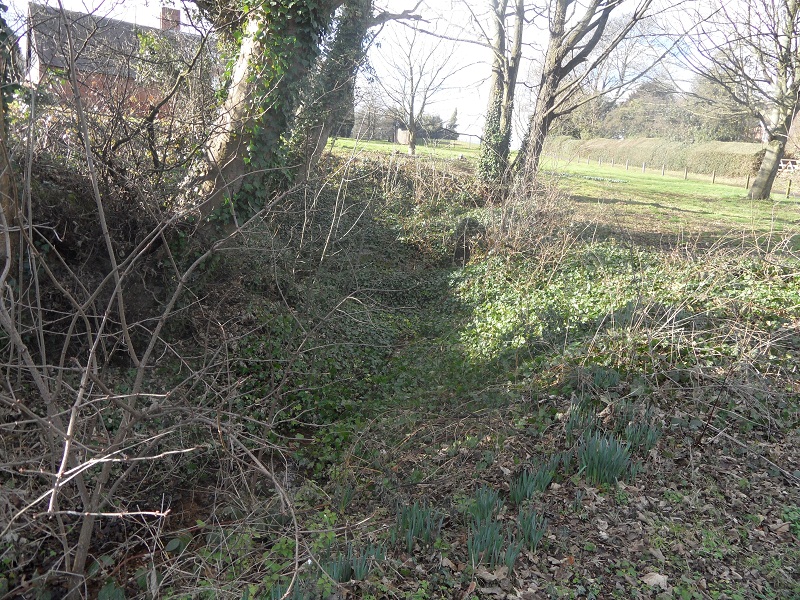
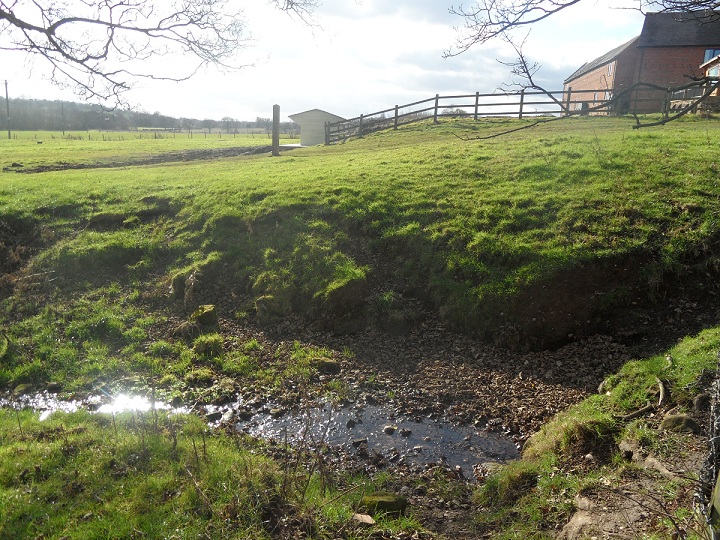
All I could find is this hollow, which is marked on maps ranging from 1884 to the late 1960s, as a pond. The maps also show a well or spring to the north east marked as ‘Well’ or ‘Fare Well’.

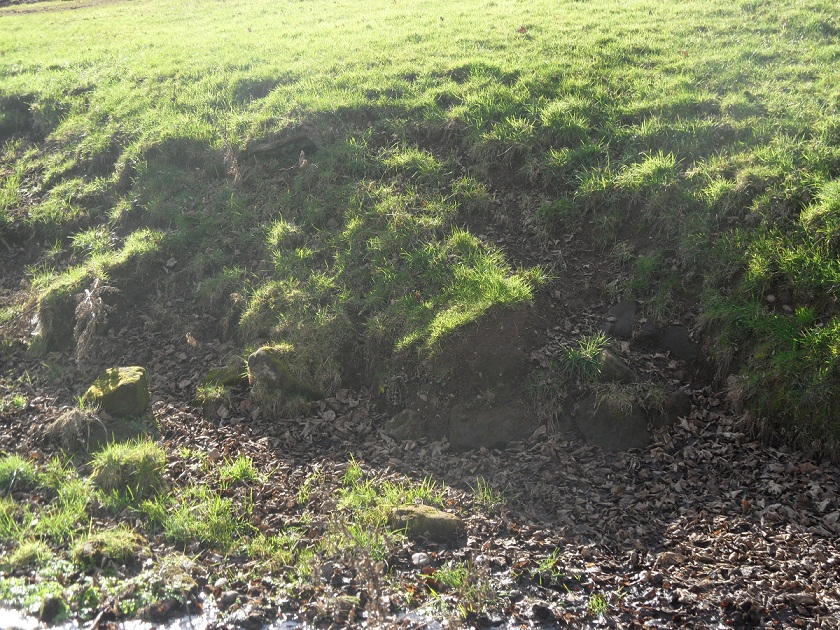
 Just down from this old pond, is a small brook in which there are some big chunks of stone. This brings me onto the next question! What remains of the priory of St Mary, initially founded as a hermitage but shortly afterwards converted into a nunnery?

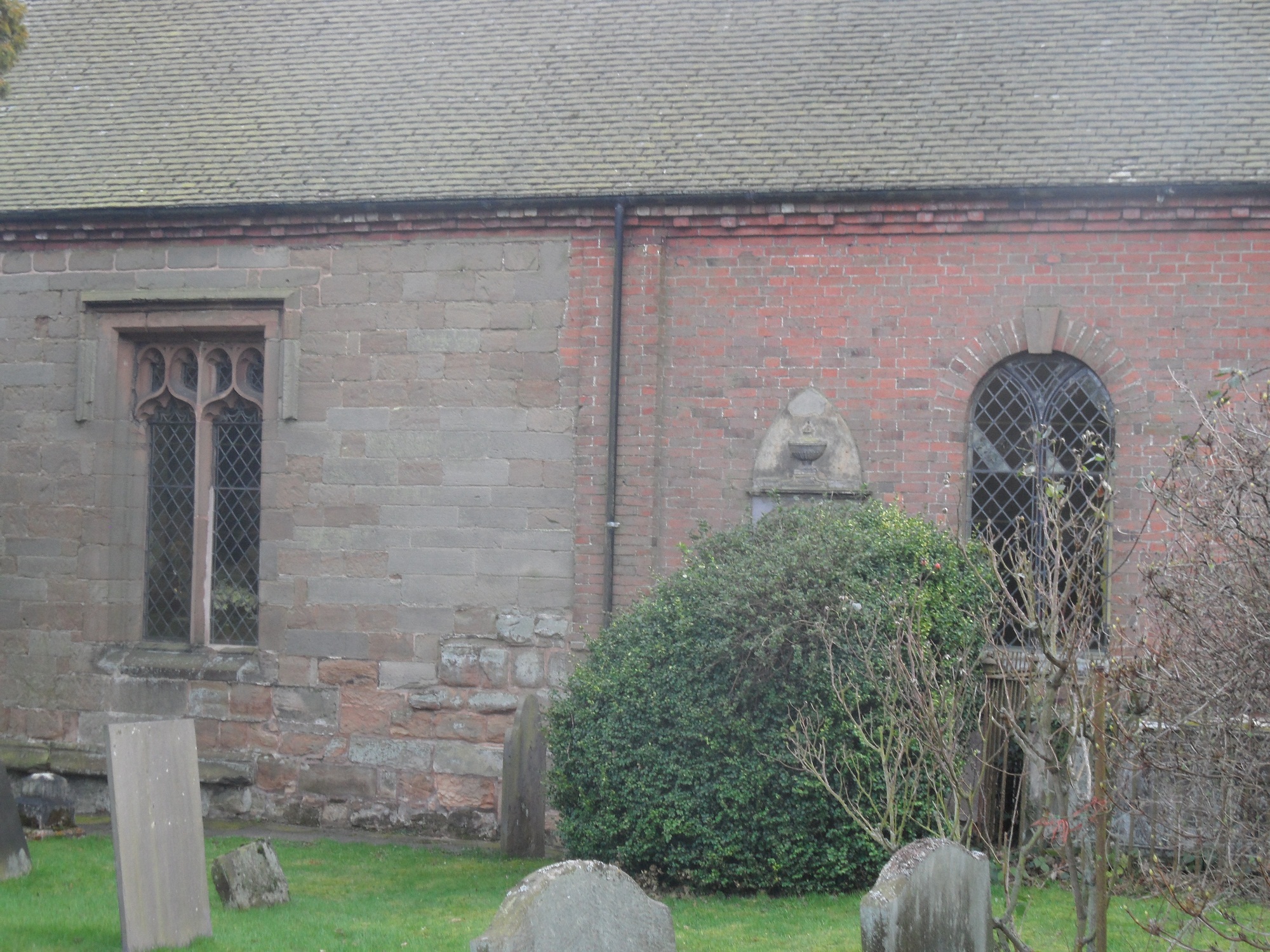
The priory was dissolved in 1527. It seems that the old nunnery chapel was retained as a church but most of it was rebuilt in 1747 in brick,  leaving only the stone chancel.

The two different parts of the church.

Pat suggested that a nearby wall might contain some of the stone from the earlier building(s).

A brick wall has been built around the church yard, and this too seems to incorporate some older stone?

A archaeological resistivity survey carried out in 1992 located areas of higher resistivity thought to relate to demolition debris from structures associated with the church. Staffordshire Record Office hold the results of the survey which ‘revealed significant archaeological remains relating to the priory, including walls of buildings and the remains of the precinct wall’. I wonder whereabouts?

Until I can get my grubby mitts on a copy of this or any other real evidence, I’ll just have to be content that Farewell is a lovely place to speculate about!