Familiar Looking

Always happy to be distracted from shopping, I had a wander down Quonians Lane to take a photo of a door (that’s a whole different post!).  Everyone loves Quonians Lane with its strange name and its carvings and plaques. Annette Rubery wrote a lovely piece about it back in May, which you can read here.  I love Quonians Lane too, although now my visits are tinged with sadness that the company, whose workers created these wonderful objects and many more across the city, the county and the country, is no more.

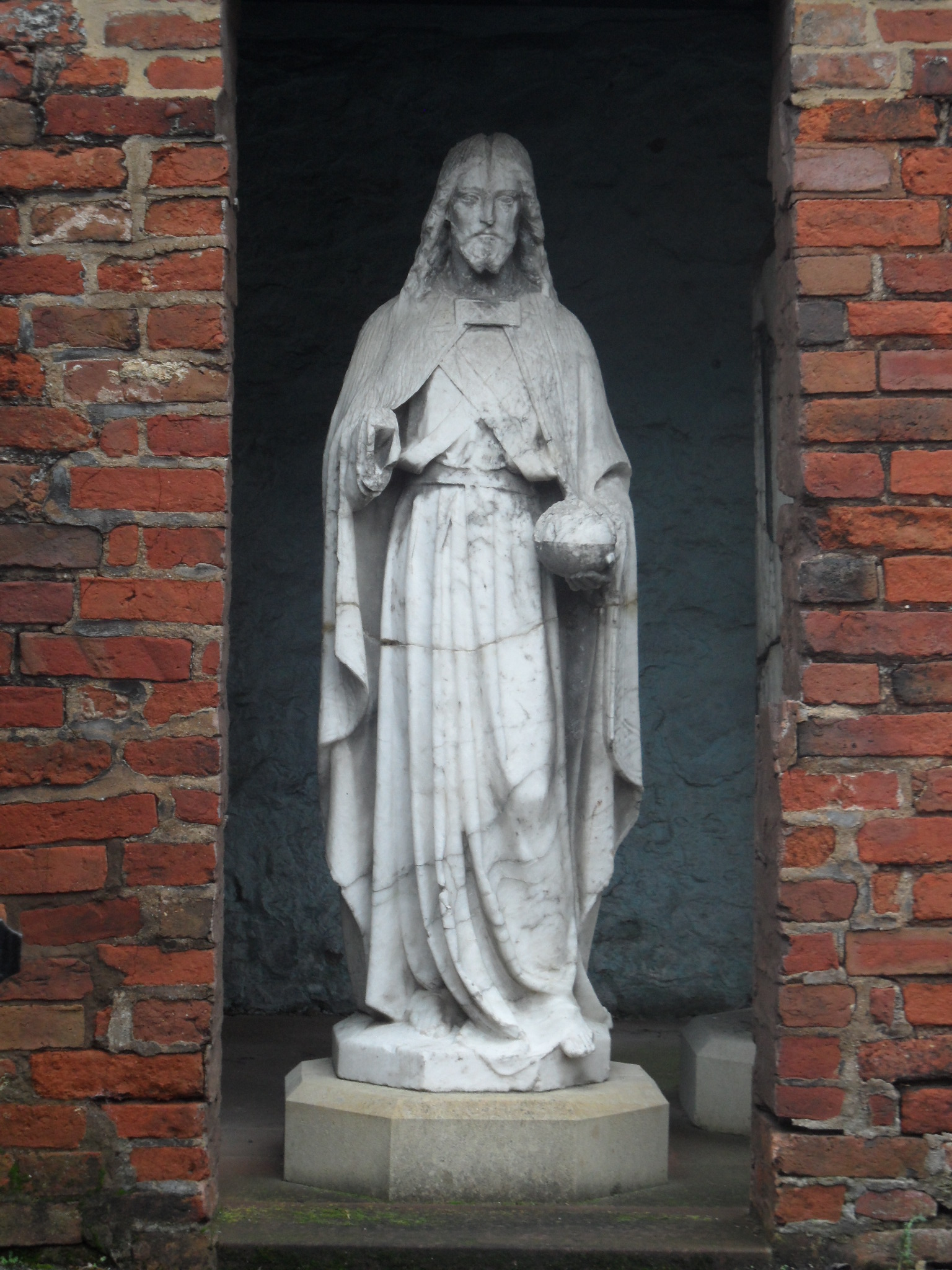
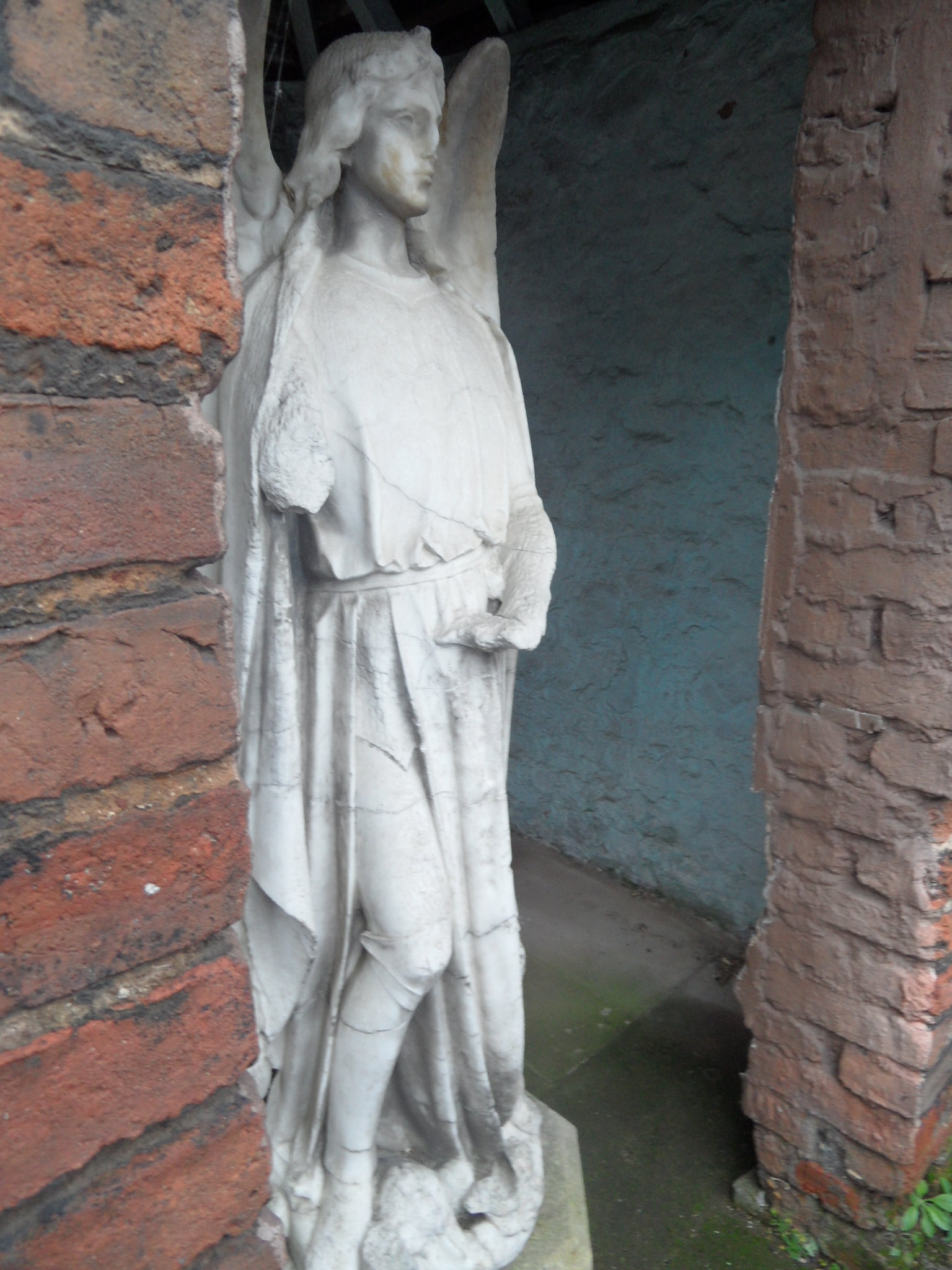
I saw the triangular roof of a small outbuilding above the brick wall and went to have a look, thinking it would be quite interesting in its own right. It was a lovely surprise to find these two marble statues stood in the doorways. If you want to see them for yourselves, go down Quonians Lane, and just after you get to the headless angel take a right, through the wall.

So the moral of this story once again is what I say in my ‘About Lichfield Lore‘ spiel.  “Go out and have a look at what’s around you. Then when you’ve done that, go back and have another look!”  I believe this more with each day I do this blog. I think that you can make new discoveries in the same place, depending on a whole range of things including the weather, your mood, what you’re thinking about at the time, the time of day or year or who you’re with. Actually I might change that to include having a smell/touch/listen too. Not sure about taste because I’m not sure I should be encouraging the kind of thing this young man got up to here…..

Anyway, today is a perfect day for me to bang on about this, as it’s the day we heard the news that around ninety further objects had been found at the Staffordshire Hoard site, three years after the original discovery was made. If that doesn’t convince you of the merits of having at least a second look, then I don’t know what will….


Elegy Written in a Lichfield Churchyard

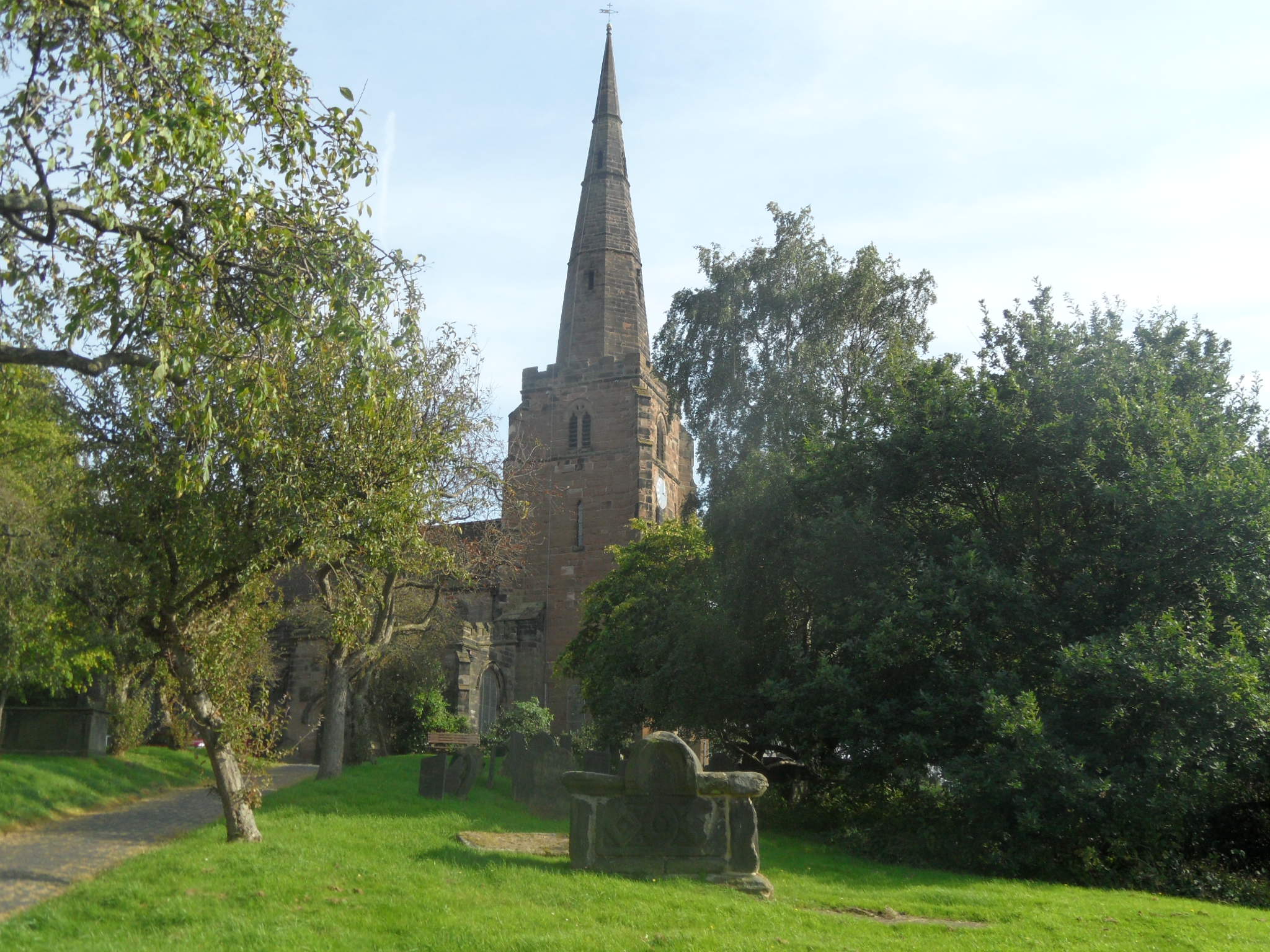
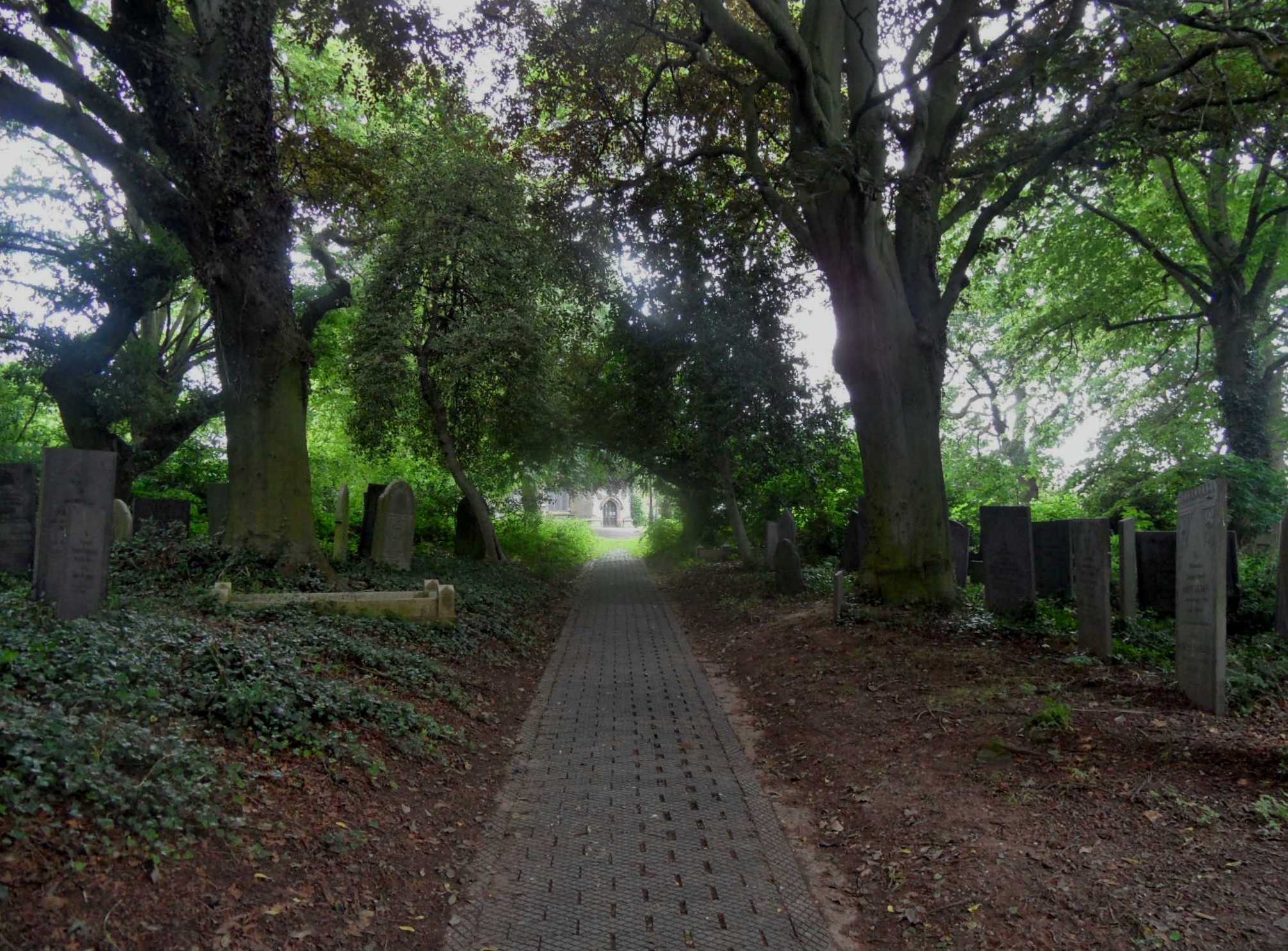
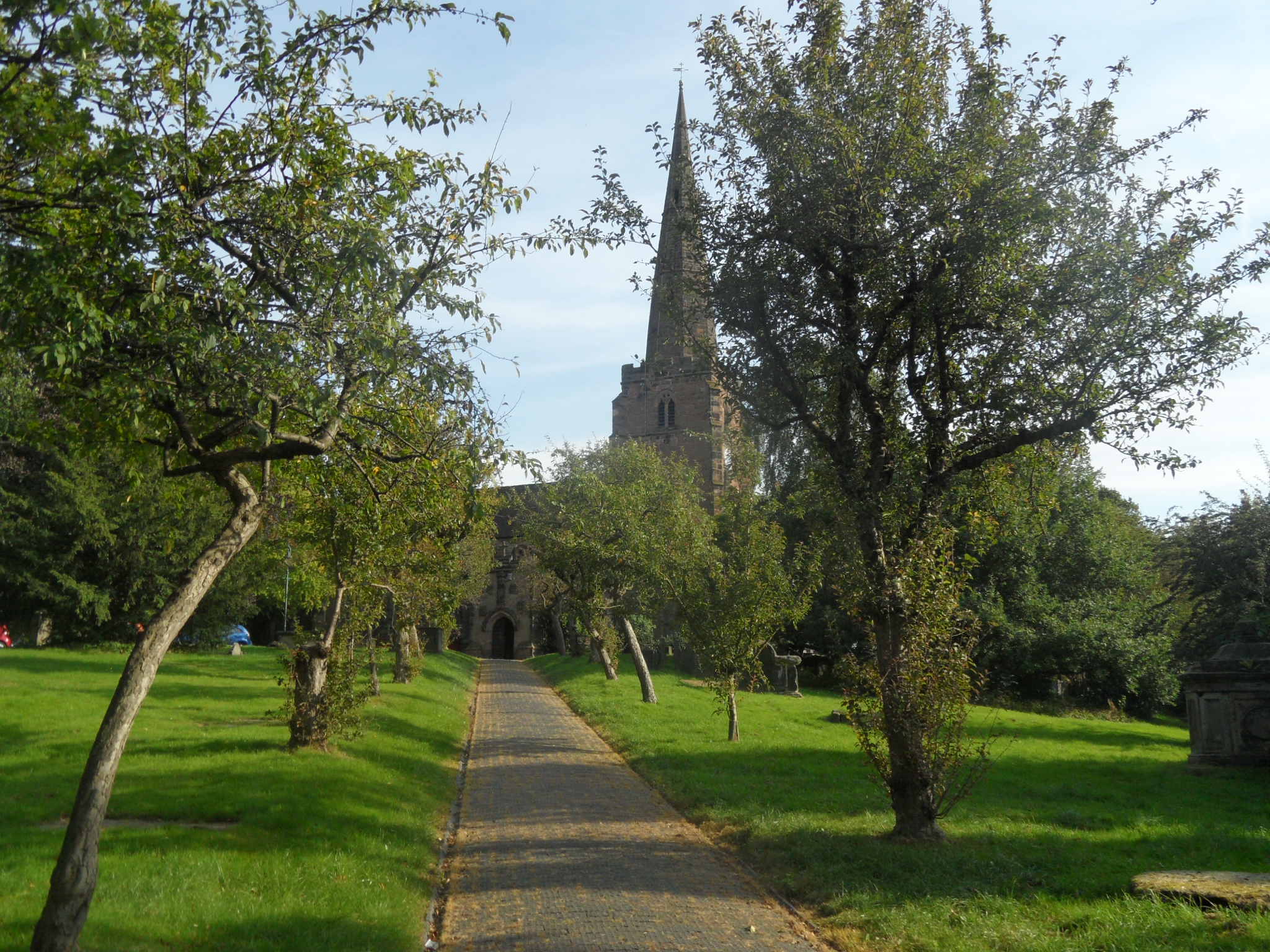
Many churches dedicated to St Michael are found on hills. Lichfield’s St Michael’s of course is at Greenhill, on a sandstone ridge 104 metres above sea level.   It’s thought a church has been on the site since 1190, but that the surrounding churchyard is older. There are hints as to this earlier history of this site, but as far as I can see things are still very much at the questions, rather than answers stage. Many people believe the position of the church on a hill, and its dedication to St Michael may indicate a previous pagan site.   I hadn’t realised until reading that the crypt was liable to flooding, that there are natural springs on the hill. Is this relevant to the story, and if so, how?

The answers we do have were, of course, mostly provided by archaeology. Evidence suggests there may have been activity here in the mesolithic era. In 1978, an excavation in the South East corner of the churchyard discovered five flints (albeit not in a primary context).

Four years earlier, the building of a new vestry at the church gave archaeologists the opportunity to open a trench. Unsurprisingly for a churchyard they discovered human remains – forty nin complete or partial skeletons. Of these, all but two were buried in the customary Christian manner, with their head to the west. However the head of ‘Skeleton 21’, was to the east. Apparently, this can sometimes suggest that the remains of a Christian priest have been uncovered. By being buried with their feet to the west they were ready to rise and face their flock on judgement day, as they had done in life. However, the archaeologist noted the absence of a chalice and patten, objects that priests were often buried with (as was the case with the remains of the priest near the old leper hospital in Freeford).  ‘Skeleton 58’ also differed from the others being buried with his/her knees tucked under the chin. This crouched burial style is apparently more associated with Pre-Norman conquest burials, although I’m still doing some background reading to try and shed more light on what exactly this kind of burial is thought to signify in this context.

The archaeology report also mentions skeletons 2 and 8,  those of an adult, and a baby placed on the adult’s shoulder, and speculates this may be a woman who died in childbirth. It’s discoveries like this, I think, that remind you that these were real people with real lives (that were all too short in many cases).

By the mid 16th century, church records are kept (I’ve used those transcribed by Harwood), and begin to tell us a much more detailed story of the churchyard,  enabling us to gives names and identities to those laid to rest here. For example, this is the entry for 1560

– Recevyd for the ffyrst grasse of the Churche Yarde
– for the later Grasse of the Churche Yarde
– of gatherynge in Easter Wyke
– for light at the buryall of Jamys Bywater’s Wyffe and her Chylde
– for light at the monthe mynde of Roberte Walker
– for light at the monthe mynde of Roger Walker
– for light at the buryall of a Chylde of the Walle
– for light at the mynnynge of Mr Swynfen
– for light at the buryall of Roberte Cowper’s Wyffe

The church records also records costs for ‘killing molldiwarps’ in 1597, bestowing ‘on the workmen at several tymes in beare and ale’ in 1602, and money ‘payd for catching urchins’ in 1612 (urchins meant hedgehogs. I hope!).

While some things never change – a footnote tells how a person named Hollingbury was tried at Lichfield in 1612 for stealing lead from the church, others thankfully have – ‘William Key of Bliffeld and Nicholas Hatherton of Lichfield two prisoners condemned according to the Laws of this land and executed here at this Cittie were both buryed in one grave the 17th day of October 1592’.

There are still those buried at a later date whose names are not specifically recorded. An entry in the register says that for ‘From April 14 1642 to Feb 19 1645 were buried twenty five soldiers’, and I’ve either read or been told that victims of the plagues that struck Lichfield (51 per cent of Lichfield’s population died of plague in 1593-4, and 32 per cent, in 1645-6) were buried in pits here.

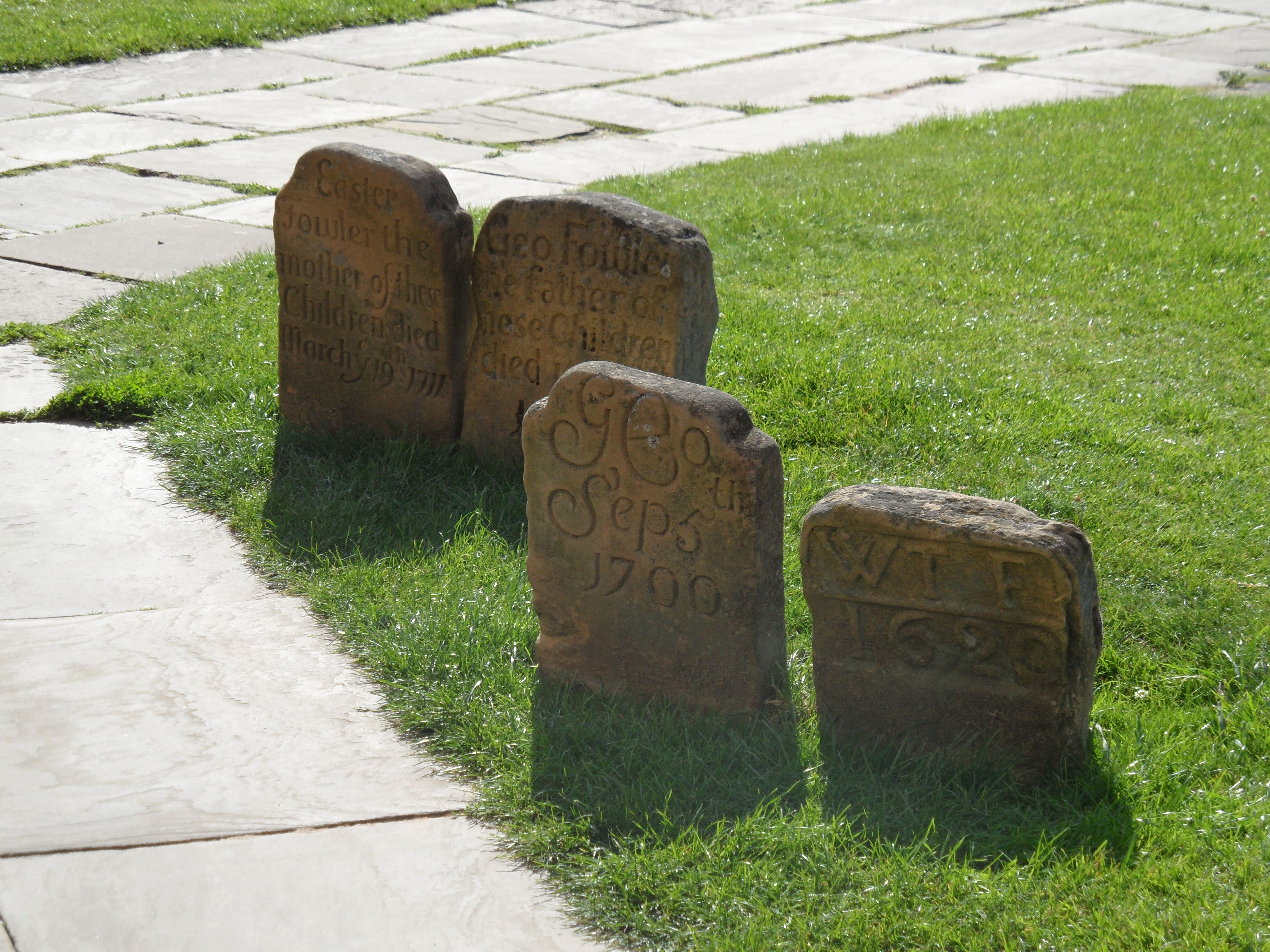
The majority of headstones seem to date from the 18th century onwards, although there may be earlier memorials here. I have seen examples of gravestones dating back to the early 1600s in other churchyards, such as this one at Southwell Minster in Nottinghamshire.

Examples older gravestones at Southwell Minster

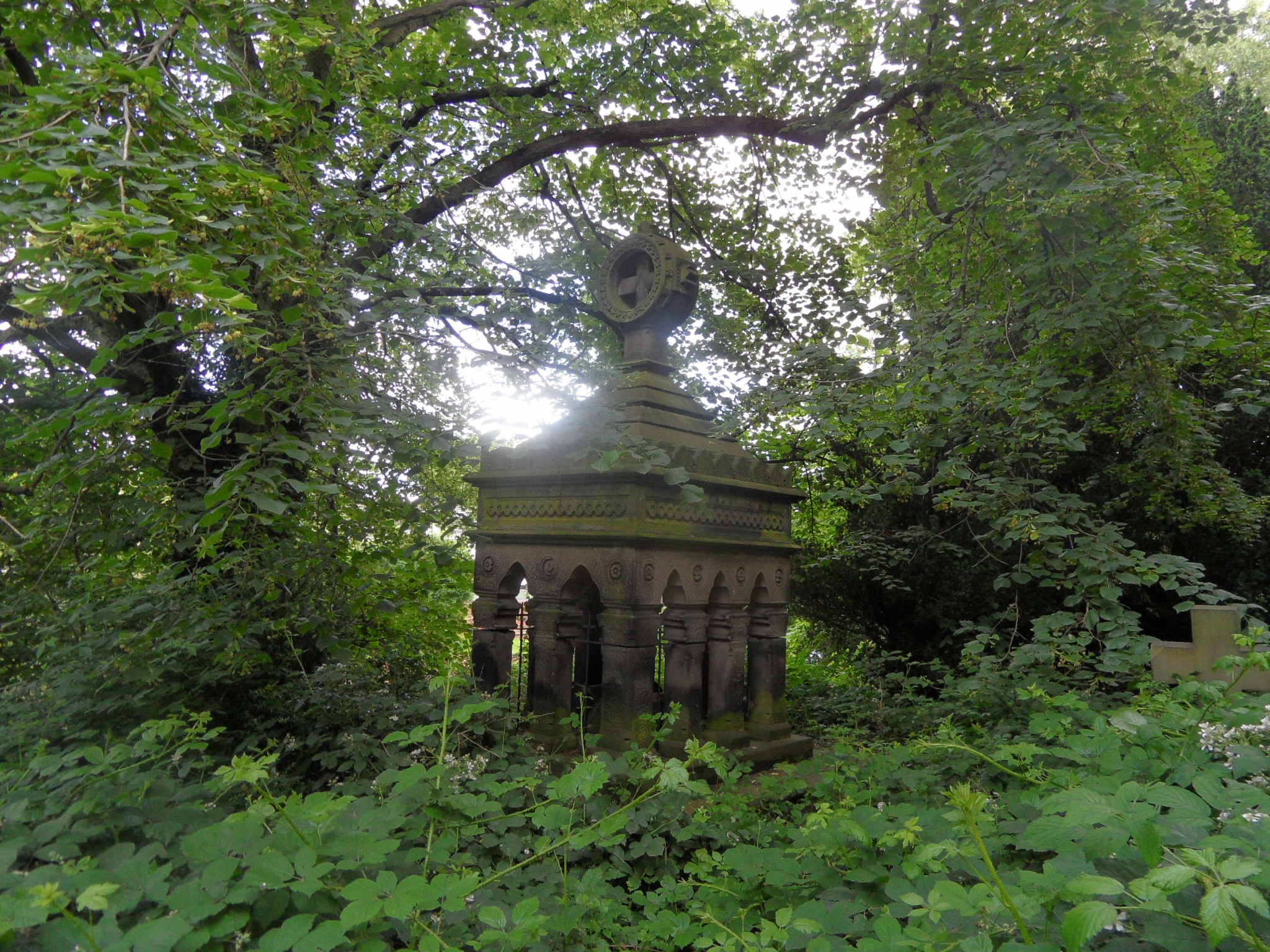
Of course, some people, presumably those wealthy citizens of the city, even erected monuments like this well known one belonging to Chancellor Law, which used to have a clock in the centre.

As with many places, we might never get definitive answers about the origins of St Michael’s churchyard, but who knows? As we’ve seen before, one discovery can change everything. And in the meantime, it’s a fascinating part of the city to keep asking questions about!

Sources

Gould, Dorothy & Gould, J 1974-5 `St Michael’s churchyard, Lichfield, Staffs’ Trans S Staffordshire Archaeol Hist Soc 16 58-61 

The history and antiquities of the church and city of Lichfield by Thomas Harwood


Features and Reviews

Hopefully, anyone reading the blog recently has found the old graffiti interesting. I know that Gareth and I, and (for a few days at least!) a large broadcasting corporation did. After all of the excitement, I thought it was time for a bit of musing….

The discoveries (or perhaps rediscoveries is more accurate) in the Lichfield District Council offices got me thinking about the potential for other ‘unseen’ history out there. There’s unseen in the sense of being hidden away from view –  in attics, down pub cellars and down the bottom of the garden. However, I also think that something in plain view can be unseen –  people may pass by everyday, but no longer see what’s actually there or the potential of it, due to familiarity. During discussions about the graffiti, someone said to me, “I’ve walked past that graffiti loads of times and never even thought about it”.

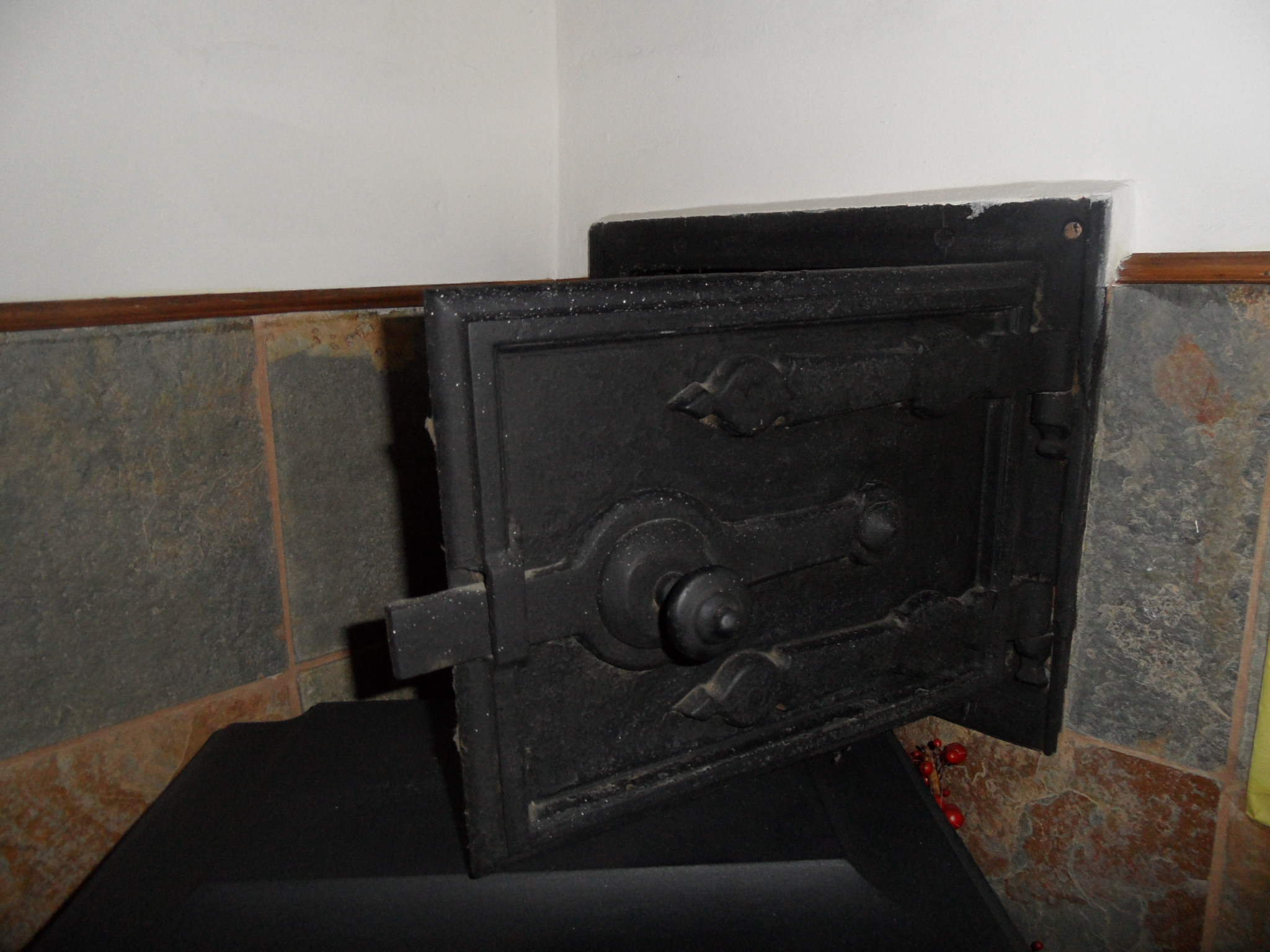
The bread oven above is in the house of someone I know. I remember them buying the property years ago and excitedly telling me after their first viewing with the estate agent, “It has an old bread oven!”. When they moved in we all keen to peer inside but prior to taking the photo, it was last interacted with as part of an Easter Egg hunt.  However, taking the photo to show a friend, sparked a whole new conversation about the oven. Was it original? If so, would this have been the kitchen? Wasn’t it once divided into two houses? How was it laid out back then? Why was the house built in the first place? And so on….My point is, sometimes, we need to look with a fresh pair of eyes to see what’s in front of our nose.

I don’t think that the history in question even has to be a specific feature like the bread oven. I find the traces of people’s everyday lives fascinating. I visited a house in The Close last Christmas. Unfortunately, I hadn’t had nearly enough mulled wine to pluck up the courage to ask if I could take photos, so I’ll have to describe it. There were stone steps down into the cellar, worn away in the centre by centuries worth of footsteps. There were attic beams with layers of fading wallpaper still clinging to them up in the attic. To describe the place as ‘lived in’ would be an understatement.  The next question inevitably is ‘lived in by who’? Actually, photos wouldn’t really have done the place justice anyway because it was more than a visual thing. You wanted to touch, as well as see. ….

I’m really hoping that Lichfield District Council open their offices up for the next heritage weekend, so that people get to look around what was one the Old Grammar School for themselves. I’m not suggesting people throw the doors of their homes open to the public, but perhaps if we want to explore the history of the city and all its inhabitants, we sometimes need to look at the ‘normal’ buildings and places, where people lived and worked, and still do! I’m by no means detracting from those special, extraordinary buildings like the Cathedral, just saying that sometimes it might be worth looking again a little closer to home.

One of these terraced houses in Leomansley still has a tall chimmney at the back. An old washroom?

A wall brace on Greenhill. Does that say R Crosskex? Who was that? See edit below.


A selection of objects found in the garden Of Vicky Sutton’s Nan’s house near to Beacon Park (not including the pink flowery plate!).

The remains of a cherry orchard can still be found near…Cherry Orchard!

Edit:

After I woke up properly, I realised this actually said R Crosskey. I found a book about Henry William Crosskey, a geologist and Unitarian minister from Lewes (1) and found that his younger brother, Rowland Crosskey came to Lichfield as an apprentice ironmonger. He emigrated to Australia for a while and then,  after he returned to England, he started a business in Birmingham. Afterwards, he took over the Lichfield firm where he had served his apprenticeship. In 1868 he became Mayor of Lichfield and donated a civic sword to the City (Is this the one still used in processions today?).  He died in 1890. From census records, it looks like his home and business premises were initially in Market St. In 1888, he was in Bore St, trading as a ‘Military Camp and Store Furnisher’ with premises on the Burton Rd in partnership with Charles John Corrie. Also, just as a point of interest, Rowland was his Mother’s maiden name.


(1)Henry William Crosskey, LL.D., F.C.S. : his life and work by Richard Agland Armstrong; with chapters by E. F. M. MacCarthy and Charles Lapworth. http://www.ebooksread.com/authors-eng/e-f-m-maccarthy-richard-acland-armstrong.shtml

(2) London Gazette 1888


Paths that Cross

On my way to pick up some tickets from the Garrick the other day, I passed Lichfield Library. I couldn’t resist popping in to have a quick peek at the local history section to see if they had any more information on the history on the grammar school,  following on from Gareth’s graffiti photographs.  (They did. A whole book in fact and I’ve updated the post accordingly!). So inevitably, my quick peek turned into two hours.

There was an added bonus to the visit too. Anyone who read my Cross City and Cross County posts will know that I was hoping there would be an ancient cross somewhere in Lichfield. Well, I finally found one! Actually that’s a fib. What I found is a photograph in a book of archaeologists finding one. A decorated cross shaft was discovered built into the foundations of the north wall of the nave of Lichfield Cathedral. It’s thought to be Saxon or Saxo-Norman, and could be a surviving remnant of the earlier church on the site. I wish I could share a photograph here, but all I can do is tell you that it’s on plate 1 in the ‘South Staffordshire Archaeological and Historical Society Transactions 1980-1981 Volume XXII’ book, on the local history shelves at the library!.

I have a confession to make. Generally, I’ve thought that places like the Cathedral are so well known, there’s nothing much left to say. Yet, now I recognise that this was wrong. Whether it’s the magnificent discovery of the Lichfield Angel in 2003, the downright curious tale of a live frog embedded in one of the stones used to repair the Cathedral during the restoration*, or rolls of parchment, beer and tobacco found in the gilded balls on the top of the central spire – the Cathedral, as everywhere, is made of stories, as much as it is made of stone. There are those we know well, those we don’t, and those that haven’t even been told yet.  We need to make sure we  are listening, just as Gareth was when he discovered and questioned that graffiti on the walls of the old Grammar school.

*I’m not making this up…..but someone else may well have been!

An Overview of Lichfield

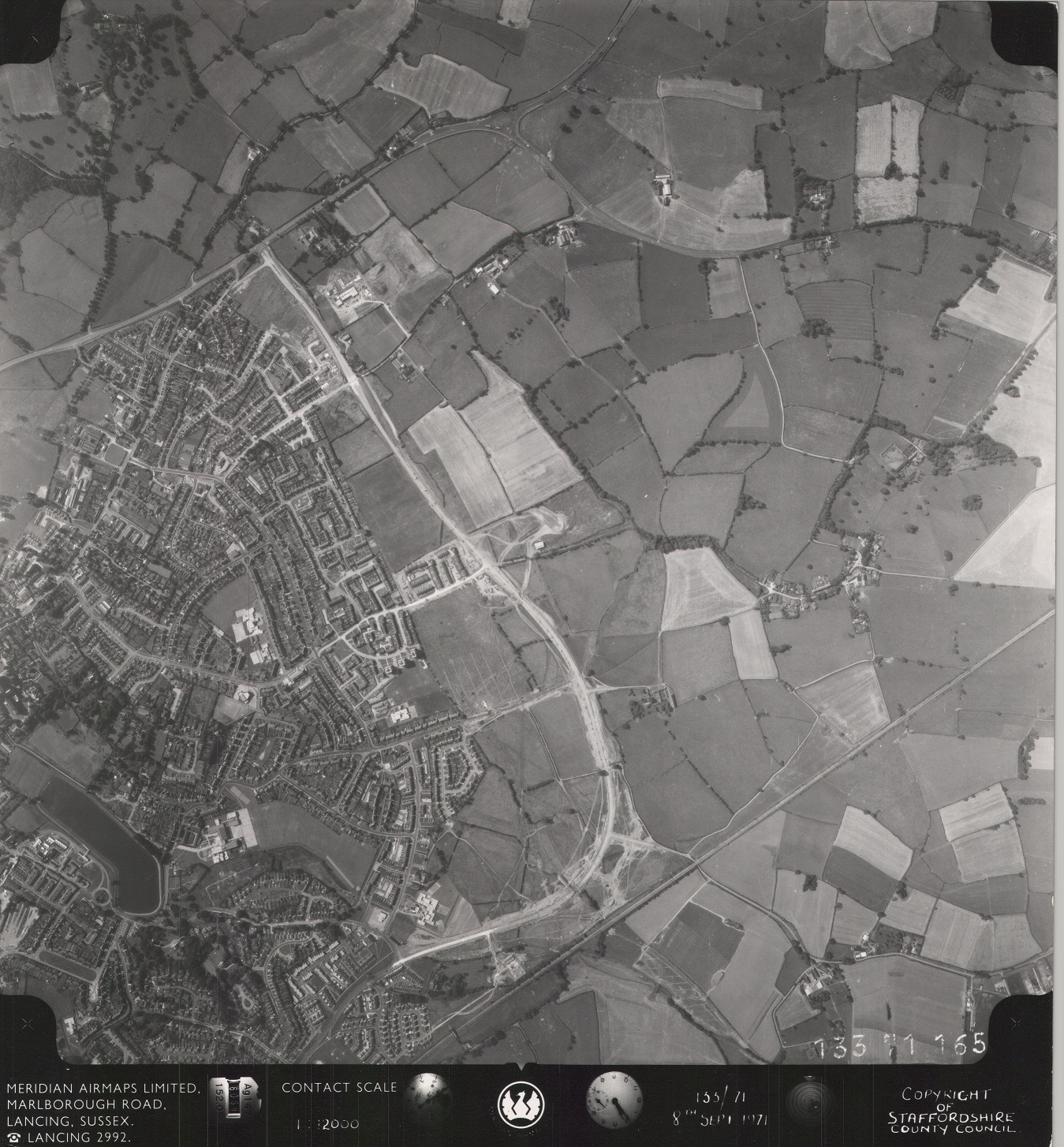
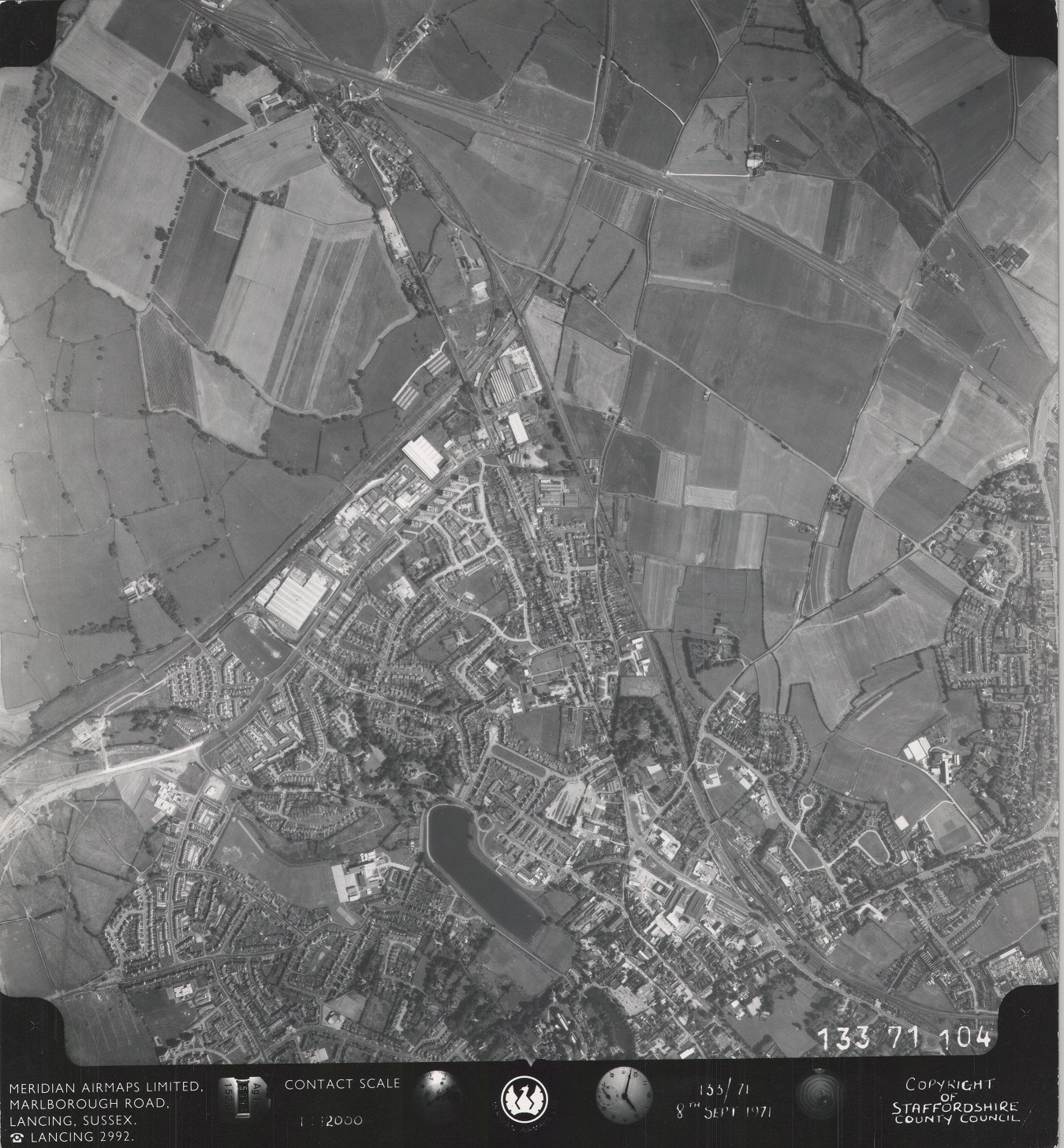
Gareth Thomas, from Lichfield District Council, has very kindly sent me some aerial photographs of Lichfield. Taken in 1963 and 1971, they provide a record of how the  city has developed and grown in the last 50 or so years (a quick look at the population figures shows that in 1961 the population was 14,090, growing to 22,660. In 2008 it was 30,583) (1)

Lichfield 10th June 1963

Lichfield 8th September 1971

Another aerial view of Lichfield taken 8th September 1971

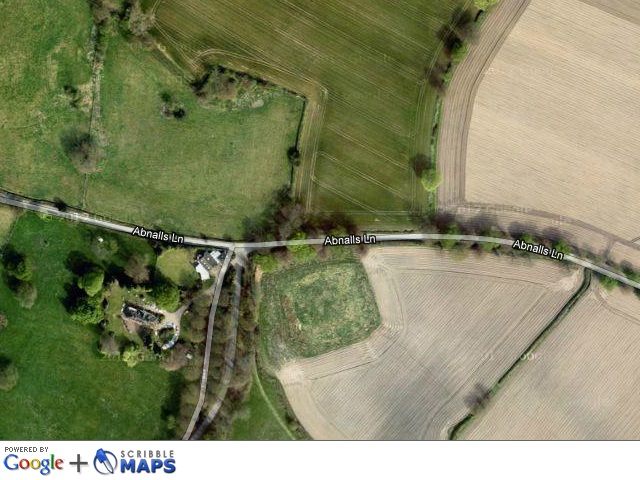
One of the things I like about aerial photography is that it gives you a different perspective on places. A good example of this are the earthworks off Abnalls Lane, thought to be the remains of a medieval moated manor house, that I’ve mentioned before. At ground level you might well walk past, unaware of its existence. Look at it from above however, and you get a whole different impression of the site. What’s exciting for me (and yes, maybe I do need to get out more!), is that the aerial photograph that Gareth has sent seem to show more of the structure than can be seen on today’s aerial photos. To my untrained eye, back in the 1960s, it looks like the moat had some sort of channel running from it, and branching off into two.  Looking at the recent google earth maps, this part of the feature seems to have disappeared.

Crop of aerial photo taken 8th September 1971, to show Abnalls Lane area

Abnalls Lane Moated site circa 2010

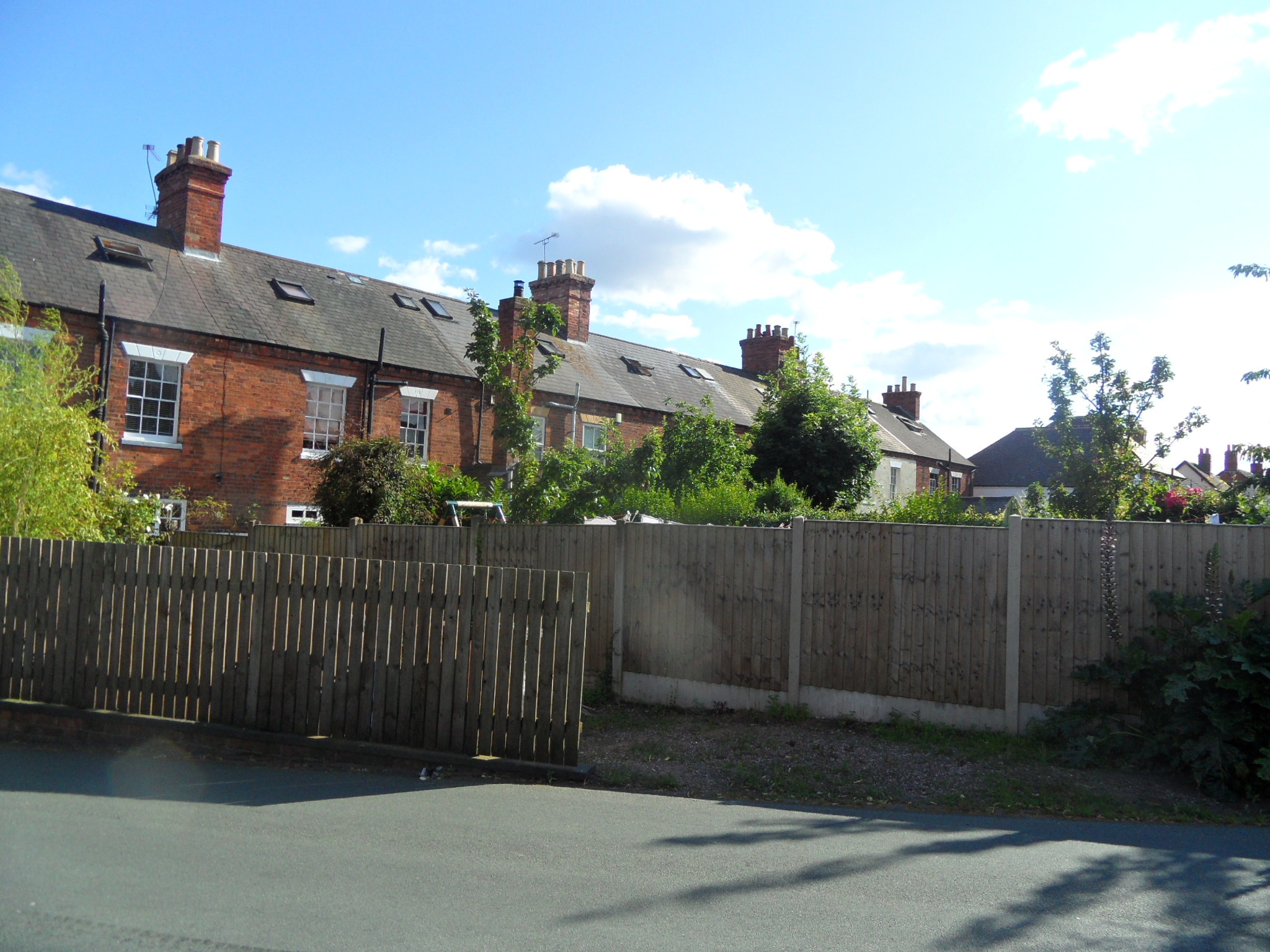
View of the moated site from the ground,  August 2012

Massive thanks once again to Gareth. I’m really enjoying studying these photographs and I hope that others do too (On one occasion, I was so engrossed I forgot I was in 1971 not 2012 and was momentarily confused looking for the non-existent little yellow man to do a street view).  Gareth also has a great pinterest site here where he’s adding the local maps he discovers and there’s a great range on there covering different parts of the city & district, so once you’ve had your fill of photos, go and have a look!

Also, I should say that there are some posts & discussions on BrownhillsBob’s Brownhills Blog, based around aerial photographs of Chasewater, Shire Oak and Stonnall, also provided by Gareth.

(1) Source – Lichfield City Council http://www.lichfield.gov.uk/cc-statistics.ihtml

Potholes

After visiting the Christian Fields Local Nature Reserve, it seemed a good time to revisit the story that gave a name to the immediate area, and according to some, to the wider city as well.

Legend has it that in around 300AD, one thousand (or 999 depending on which version you read) Christians were massacred by a Roman army and their bodies left unburied in a place that would become known as the ‘Field of Corpses’ aka Lichfield (from the OE lic – body/corpse).   From 1548, versions of this story were depicted on the city seal, examples of which can still be seen in several places across the city, including the Martyrs Plaque at Beacon Park, 19thc police badges on display in the City Gaol, and in the main hall at the Guildhall.
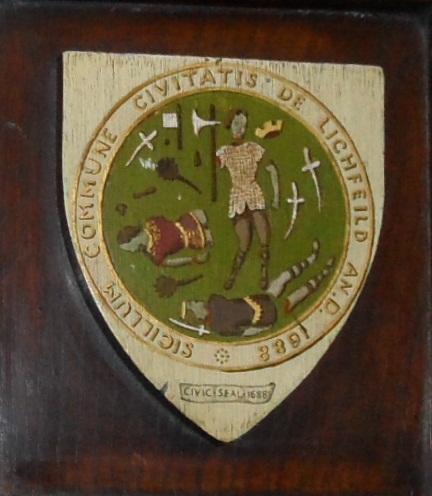
Version of the City Seal from 1688, Main Hall, Guildhall

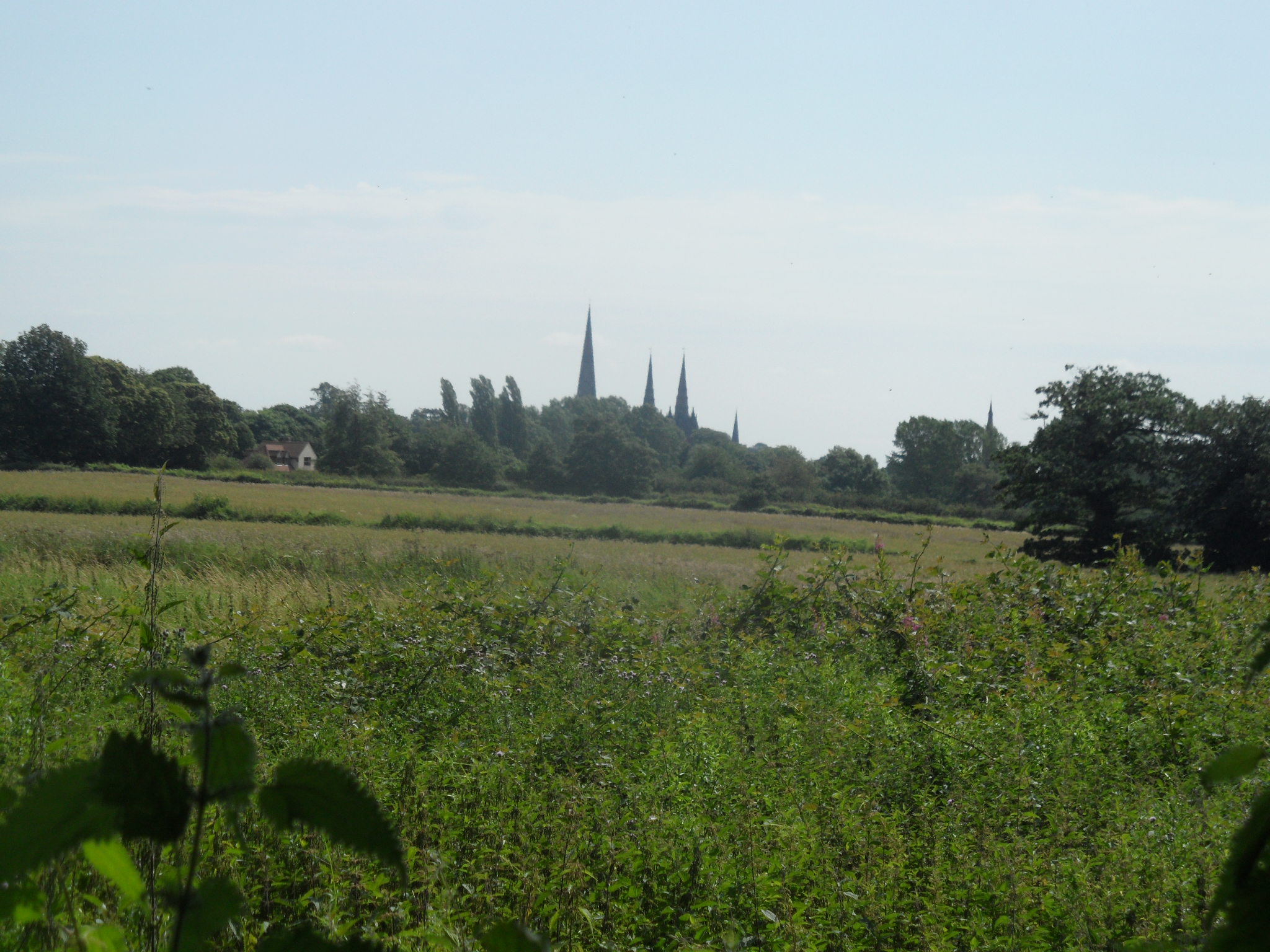
Several fairly obvious locations in the city have been mooted as possibilities for the specific location of the massacre, including Borrowcop Hill, St Michael’s Churchyard and the site of the Cathedral. However, what was it about this parcel of land, a mile north of the Cathedral that convinced people to such an extent, that it was given the name ‘Christian Fields’?

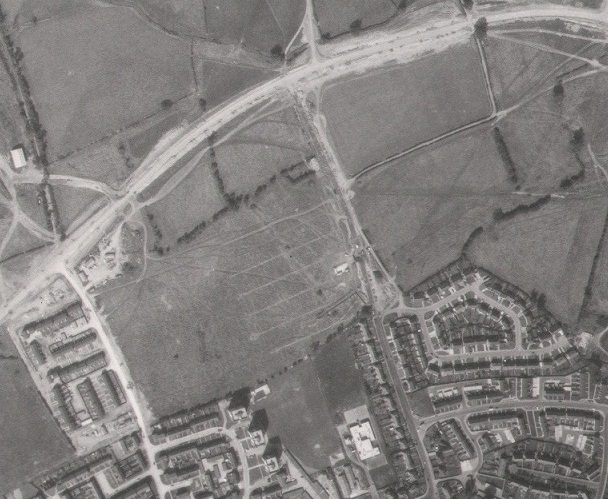
The image below is an aerial view of the area from 1971. Christian Fields is south of Eastern Avenue, between Dimbles Lane and Curborough Rd.  (Shortly afterwards, a new housing estate was built on the field. Perhaps as a nod to the site’s legendary history, the streets were named after saints. Funnily enough, one of these new houses was my husband’s childhood home – I must ask my in-laws if they ever found anything of interest in the garden!)

An aerial view of Christian Fields, 1971. Reproduced with thanks to Gareth Thomas, Lichfield District Council

Lichfield District Council’s information on the site says,

In the 17th-century the antiquarian Robert Plot declared that the area, now known as Christian Fields, had been the site of the martyrdom and it has born the name ever since. Needless to say Robert Plot’s claim has never been substantiated and no archaeological evidence has ever been presented in its support.

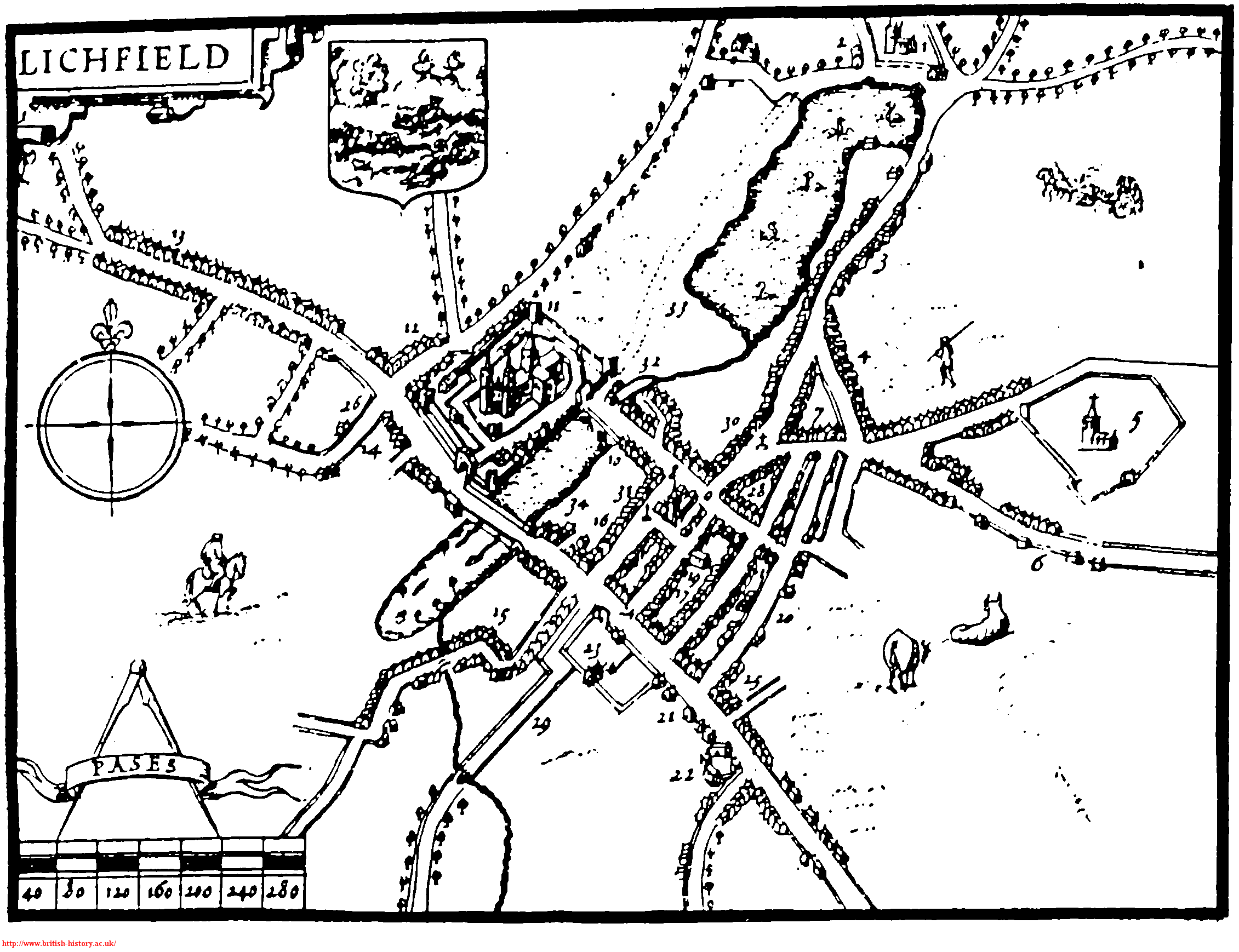
Looking at John Speed’s 1610 map of the city, I wonder whether the idea that the massacre took place at Christian Fields actually pre-dates Robert Plot? At the end of a road leading north from the Cathedral (possibly Dimbles Lane?), in the vicinity of Christian Fields, is an illustration depicting a scene that looks like a representation of the legend, similar to that found on the city seal.

John Speed’s 1610 map of Lichfield

In the early 1800s, local historians wrote about a series of discoveries near to the site, that persuaded them that the legend was true. The pastscape record has the following description, taken from a history book of the time,

In a meadow adjoining CHRISTIAN FIELDS, known by the name of the TOAD’S HOLE PIECE, have been recently found a considerable quantity of human bones, various pieces  of earthenware, some of which are Roman, a stone bowl or dish perhaps used for grinding corn, a stone ball, fragments of weapons including the head of a pike or halberd and several horseshoes  pierced for nails at the top as well as the sides. The objects  were discovered nearly four feet below the surface in a peaty soil, amongst and covered by great quantities of roots and decaying branches.

I found the book (1) on googlebooks and found it contained illustrations of the objects.


A letter to the Gentleman’s Magazine in November 1817 gave a little more information,

The articles of which I have sent you drawings were found near some land known by the singular names of Hic Filius and Christian’s field so called, according to tradition, from having been the place where the early converts to Christianity had used to assemble  and where the massacre from which Lichfield derives its name took place.

The letter goes on to describe what I think are these drawings from the Staffordshire Past Track site. – “a stone dish one foot diameter used perhaps for grinding was placed in the earth as a cover for a smooth red earthenware broken by the eagerness of the workmen to examine the contents (proved earth only). The black spots arc metallic. Also, the head of a weapon in preservation the wooden staff was broken off near the head, the iron is 21 inches in length.  There are also weapons found in 1817 in the foundation of one of the canons houses on the North side of the Close with some bones and broken armour”.

I’m not suggesting that the objects are proof of the legend, which along with the ‘Field of the Dead’ explanation of the place name of Lichfield is generally accepted to be untrue (the current favoured explanation of the name is ‘the common pasture in or beside the the grey wood).  However, and I may be reading into things too much here, I do think it’s a little curious that these items seem to almost be a tick list of props for the martyrs’ story…. Bones? Check. Horses & weapons? Check. A link to the Romans? Check.  The question I’m finding it hard to find an answer to is, if it’s agreed that these objects aren’t part of the story of the Christian Martyrs, in some way, shape or form, then whose story or stories are they part of?

Edit 6/10/2012

A further reference from the same book says the following,

About three quarters of a mile from (St Chad’s Well) are Hic filiius and Christians Fields where the converts of Ampbibalus are said to have been massacred; a considerable quantity of human bones have been found in the adjoining fields a few feet beneath the surface.

It has been the custom of civilized nations to collect and burn or bury the bodies of those slain in battle here fragments of bones are found scattered through a space exceeding half a mile and in one place only have they been met with under the appearance of having been buried which was in a field near Pones mill on the east side of the brook these had probably been dug up and thrown into an excavation as were several cart loads found in the field adjoining to that in which the earthen ware before noticed was discovered which were thrown into a marl pit near the spot. Tradition says the bodies of the massacred christians were left unburied a prey to the birds and beasts of the forest.

On maps from the later 1800s, there is a marl pit in the corner of the field marked as ‘Christian Fields’.

Sources

(1) A Short Account of the City and Close of Lichfield by Lomax, Woodhouse & Newling (1819)

(2) Derbyshire Record Office Online Catalogue

(3) Holinshed’s Chronicles ofEngland, Scotland & Ireland

http://www.english.ox.ac.uk/holinshed/index.php

http://www.british-history.ac.uk/report.aspx?compid=42340#s1
 

Hidden Depths

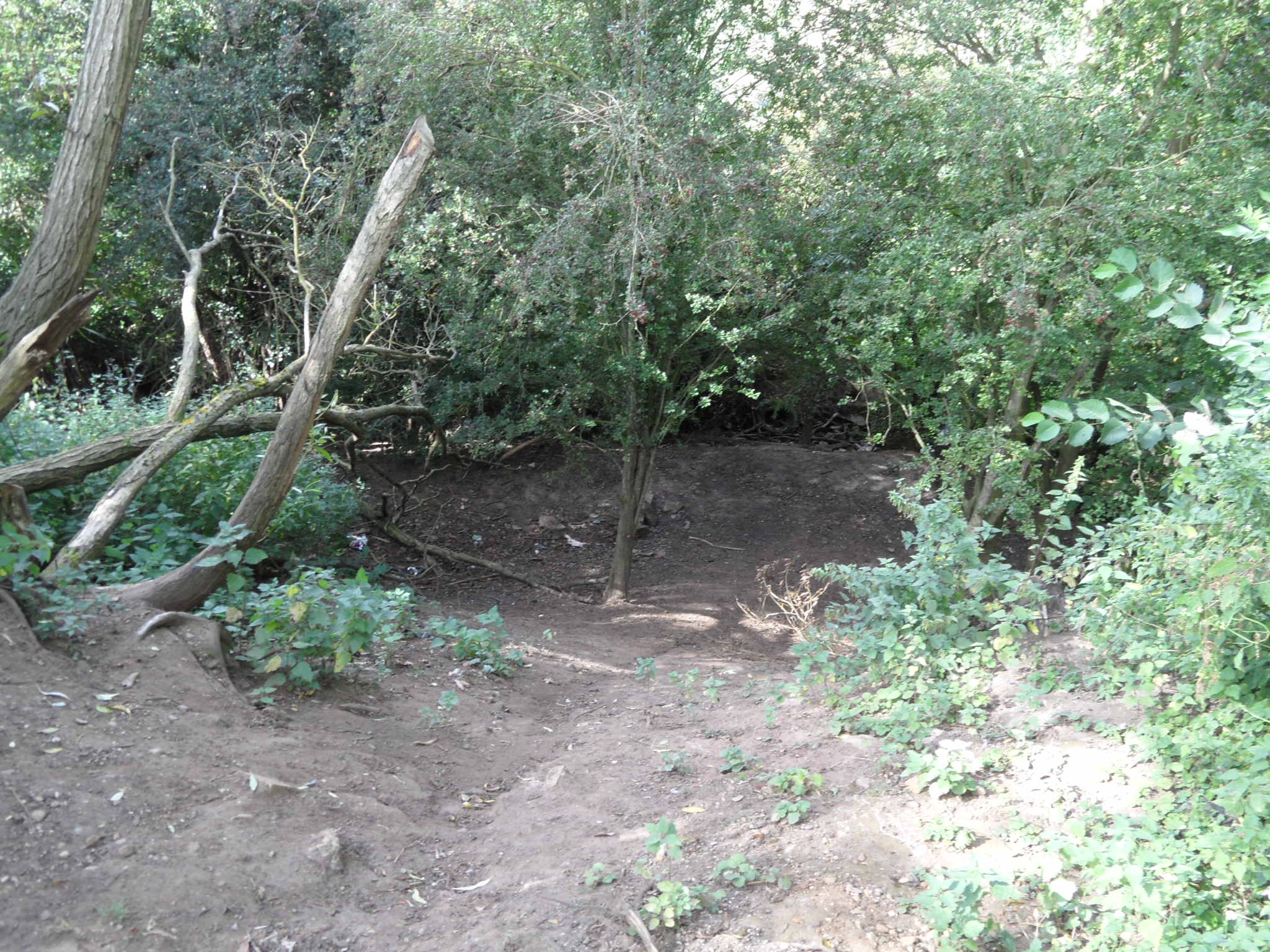
Circuit Brook marks part of the northern boundary of the city and runs through the Christian Fields Local Nature Reserve.  Last week I went for a walk to find the brook and found a whole lot more besides.

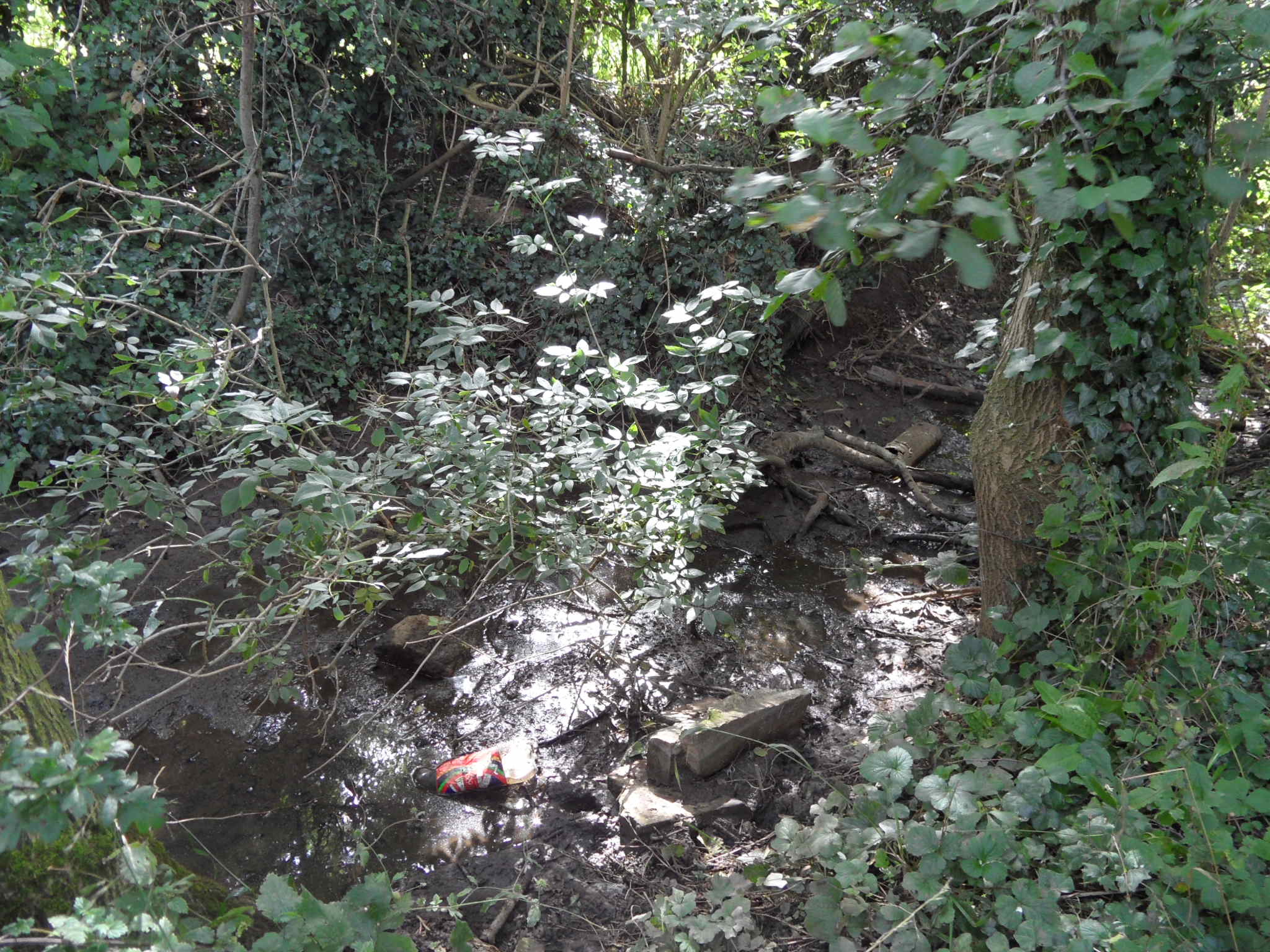
Despite the blue lines on the map, water was scarce, although some evidence of its presence lingered on in the channels it had forged over the centuries.

For much of the walk, we were separated from the route of the stream by steep embankments and rampant nettles, and at particularly challenging points, both!  Concerned about both the possibility of broken limbs and the availability of dock leaves, I didn’t stray far from the path, and used the zoom on my camera instead. Not very adventurous I know, but at least I lived to tell the tale!

Steeper than it looks! No, really it is!

Zoom.

Amidst the nettles is this green post. Any ideas?

A little way into the walk, watery looking plants and a visible outline convinced us that we’d found the site of the well marked on our Ordnance Survey map.

The smell of mint is what first alerted us to what we think is a well

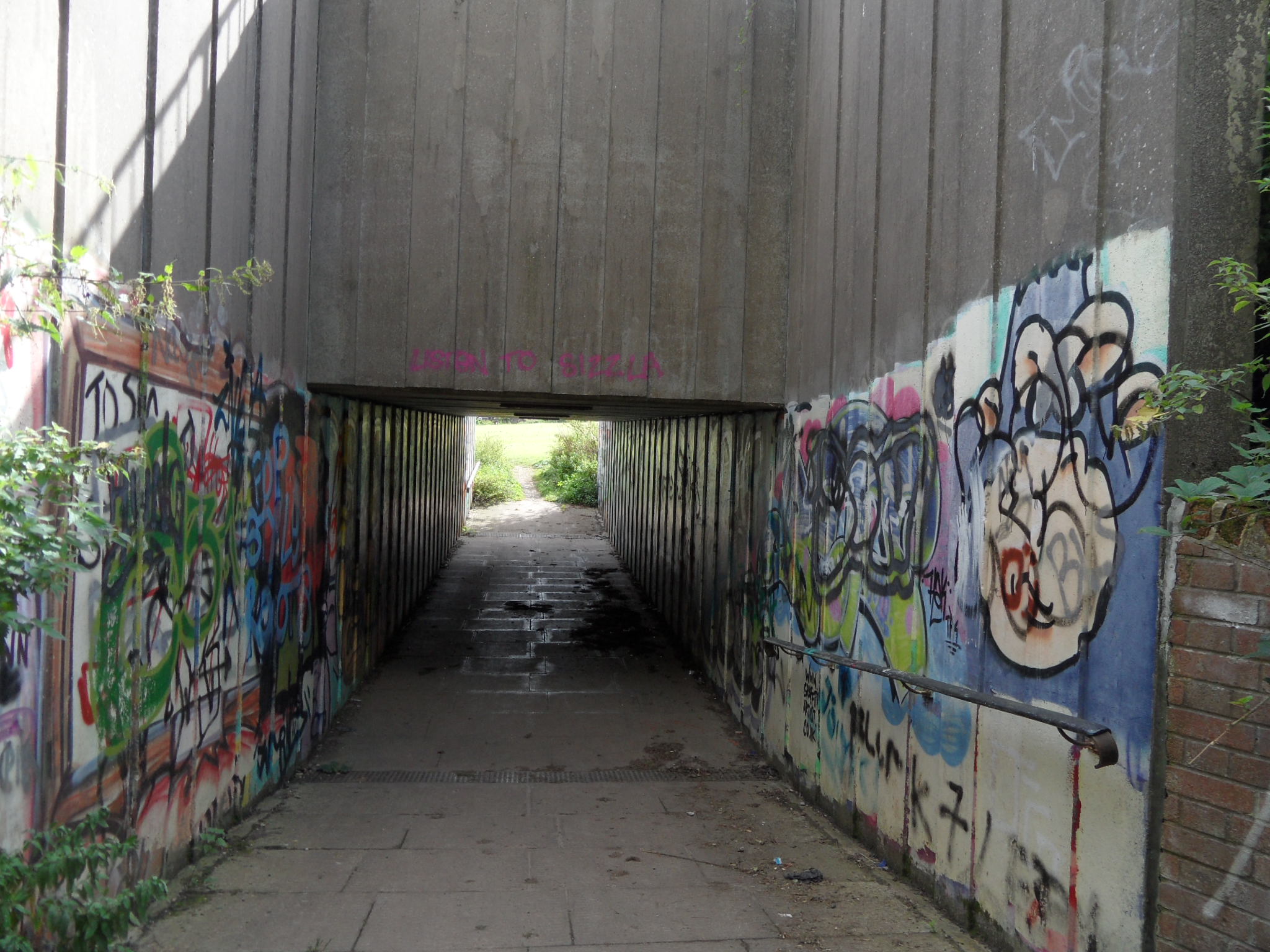
At the point where we lost the route of the brook altogether we retraced our steps back and tried to pick it up again further upstream. This time the route took us along a flat, public footpath with woodland and fields to our left and the busy western bypass and underpasses to our right,  reminding us that we were right on the fringe of the city here.

Bypass underpass

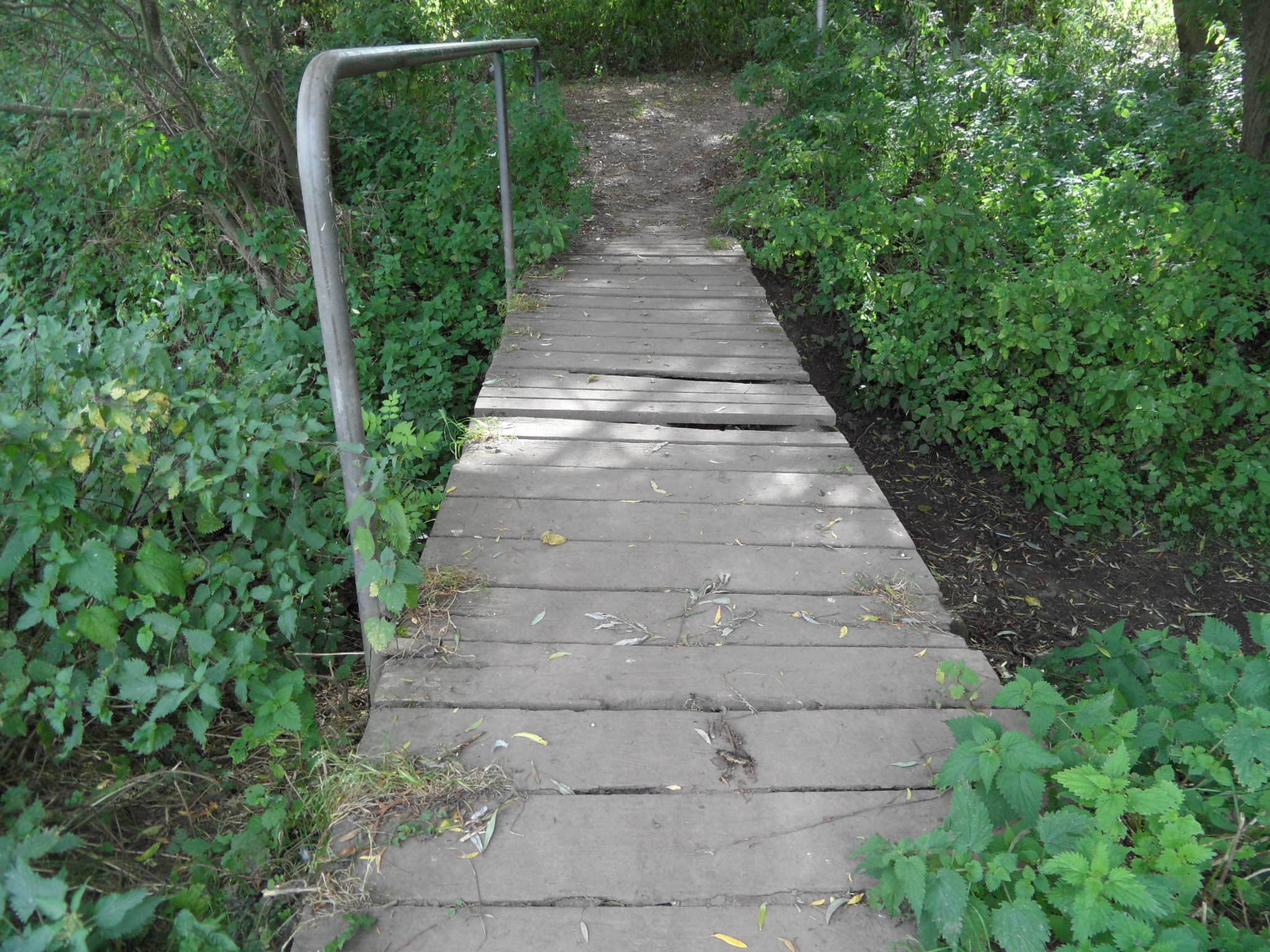
A footbridge gave us easy access to the stream here, but once again it was dry.

Had we not turned back, we’d have found ourselves in Elmhurst.  What I hadn’t realised at the time was that part of the route apparently dates back to Saxon times, and incorporates an archaeological feature known as ‘The Dimble’. It’s great that the name is still evident in the area today. I’d like to find out more about this ancient walkway (the information I’ve included here is pretty much all I’ve been able to find so far), and also clarify exactly what  a ‘Dimble’ is, as I’ve seen a couple of different definitions.

I was also unaware until reading up on it, that the Christian Fields LNR was a landfill site until the 1980s when it was capped. Twenty or so years of allowing nature (and volunteers) to reclaim the site, has resulted in a place reclaimed for people to enjoy and explore. So go and enjoy & explore!

Notes:

Big thanks to Brownhills Bob for providing me with a map of the site and information about the nature of water, especially the advice to keep an eye on that well…..

Information on Christian Fields LNR taken from http://www.lichfielddc.gov.uk/info/200029/countryside/83/site_management/4

Appeal of Bells

If you heard the bells of St Michael’s ringing out late yesterday afternoon, you were listening to the launch of a restoration fund for the bells, which are in need of essential maintenance work.

According to the churchwardens accounts, the bells have been rung in the past to mark important national occasions, and in the bell tower there are plaques commemorating some of these and more locally significant events.

The blue plaque commemorates the ringing of bells for the marriage of Charles & Diana; the brown one commemorates a farewell peal for the retirement of Prebendary P Howard in 1947

Bell Tower steps

After negotiating the narrow and windy staircase back down into the church, I had a look around the rest of this lovely building. According to the listed building description, although the church is thought to be 13th century in origin (with a 14thc tower), much of the building dates back to the restoration of 1842/3 by Thomas Johnson. However, the church history booklet (a snip at £1.50!) suggests that whilst the church had undoubtedly needed some restoration work at this time, much of this work was  unnecessary and things of historic interest may have been lost. The booklet goes on to say that some of the restoration work was undone at the end of the 19thc.

Royal coat of arms(1711) above the chancel

The royal arms, as seen above the chancel, are from 1711, and replaced an earlier version. I’ve read that after the reformation, anglican churches were encouraged to display the royal coat of arms somewhere prominent, reminding people that the monarch was also head of the Church of England. The custom of displaying the royal arms continued until Victorian times, but these days can be found in only around 15% of churches. You can read more about the Churches Conservation Trust’s guide to Royal Arms in English churches here.

Having previously read that the Marquis of Donegal had erected a spacious family mausoleum near the chancel, I have to confess I was a little disappointed to find no trace at all of the ostentatious Chichesters of Fisherwick Hall. However, the church booklet explained that the rabbit infested mausoleum had been replaced by a stokehold in the 1842/3 restoration, and the bones buried elsewhere. Seems like none of Donegal’s buildings were destined to last long….

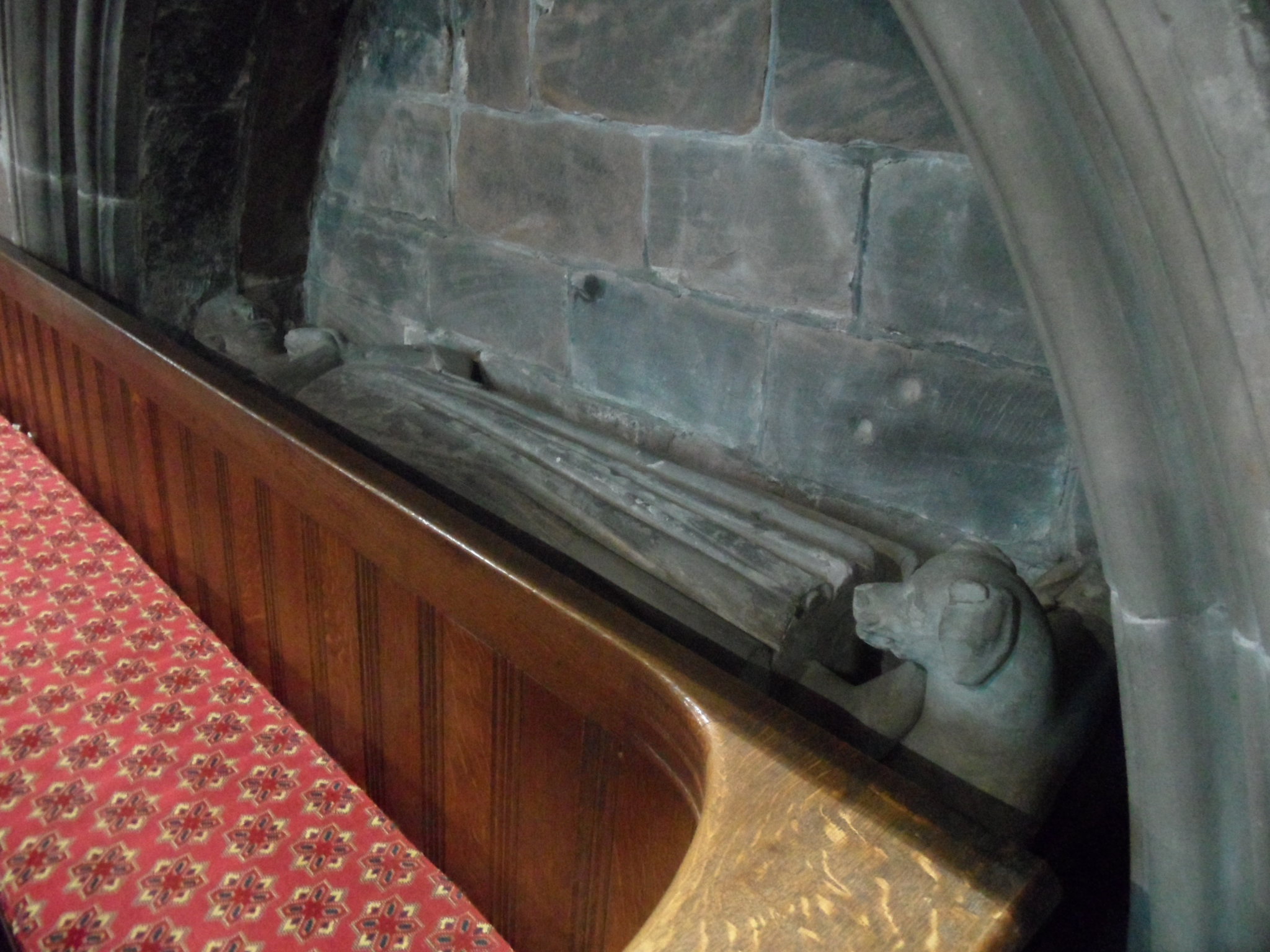
The chap below fared a little better than Donegal. Whilst his bones also ended up elsewhere, his effigy survived the ‘restoration’ and is behind a bench in the chancel. It’s thought to be William de Walton who endowed the church with land and died around 1344. I particularly like the inclusion of the faithful dog watching over his master in death.

One man & his dog – William de Walton’s effigy

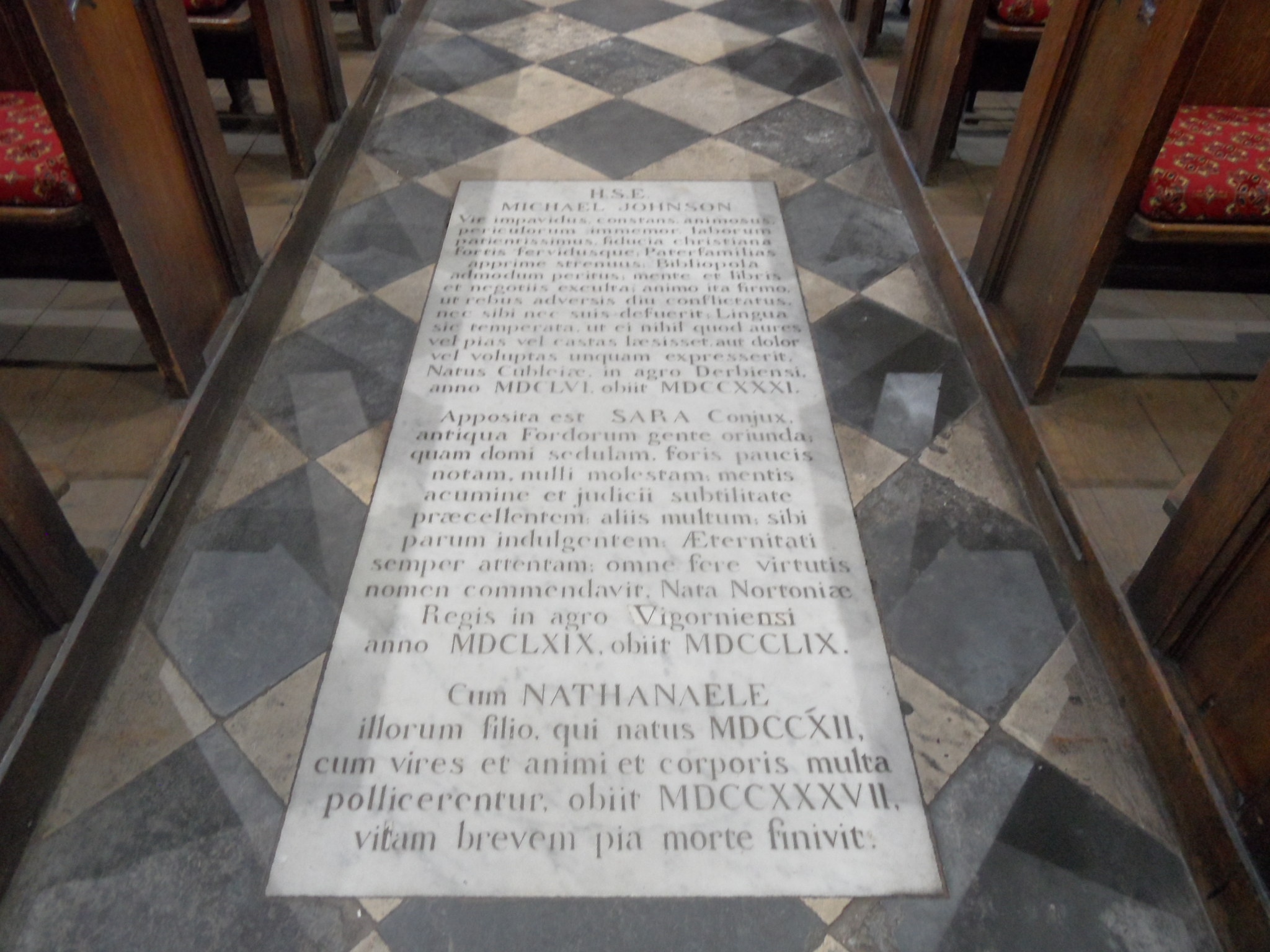
The church has several other monuments, including most famously, that of Samuel Johnson’s mother, father and brother.

Back outside in the churchyard,  a woman approached me and asked ‘Are you thinking the same as me?’. Actually I wasn’t, because whilst I was thinking about missing bones, the woman was thinking about missing apples. Apparently in previous years, rich windfall pickings were to be had from the trees growing alongside the footpath. This year it was hard to spot a single fruit.

Peals but no peel

One thing I read in the history booklet, which I’d love to hear people’s thoughts on,  is that around the year 2000, a pump was installed to keep the crypt from flooding. I read in an archaeology report that ‘St Michael’s is a low hill with natural springs’. Could this have anything to do with the flooding?  I’ll explore this ancient burial ground in a post of its own. In the meantime, perhaps we could get the University of Leicester involved in a hunt for William de Walton and the Marquis of Donegal. They seem quite good at that sort of thing…..

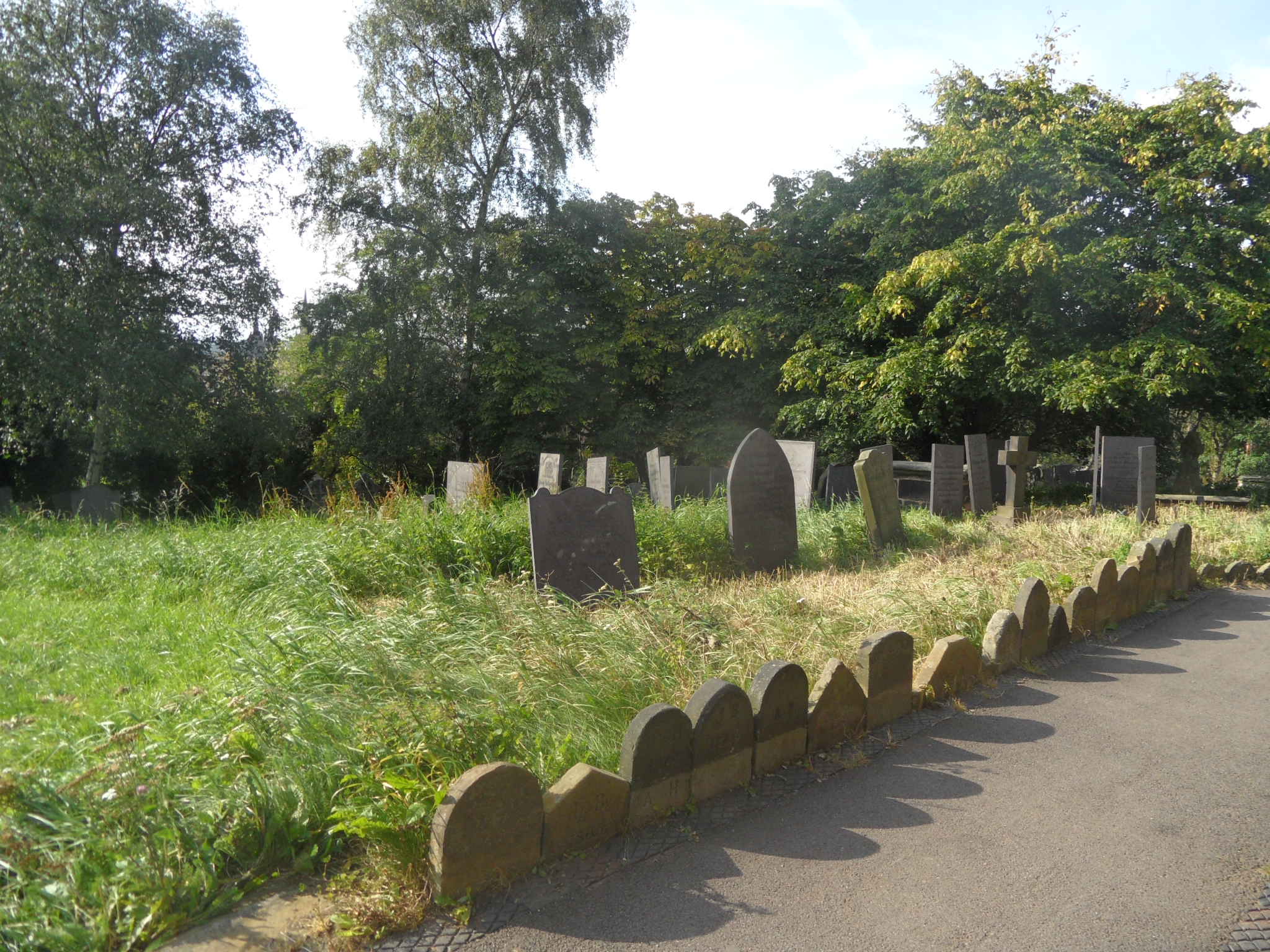
Part of the 9 acres making up St Michael’s churchyard

Sources:

St Michael’s Church. Lichfield – A Short History by Rev Carpenter 1947

A short account of the city and close of Lichfield – Thomas George Lomax, John Chappel Woodhouse & William Newling

Archaeological Desktop Survey OSA Report No. OSAO6DTO2 (Onsite Archaeology January 2006)

Cross County

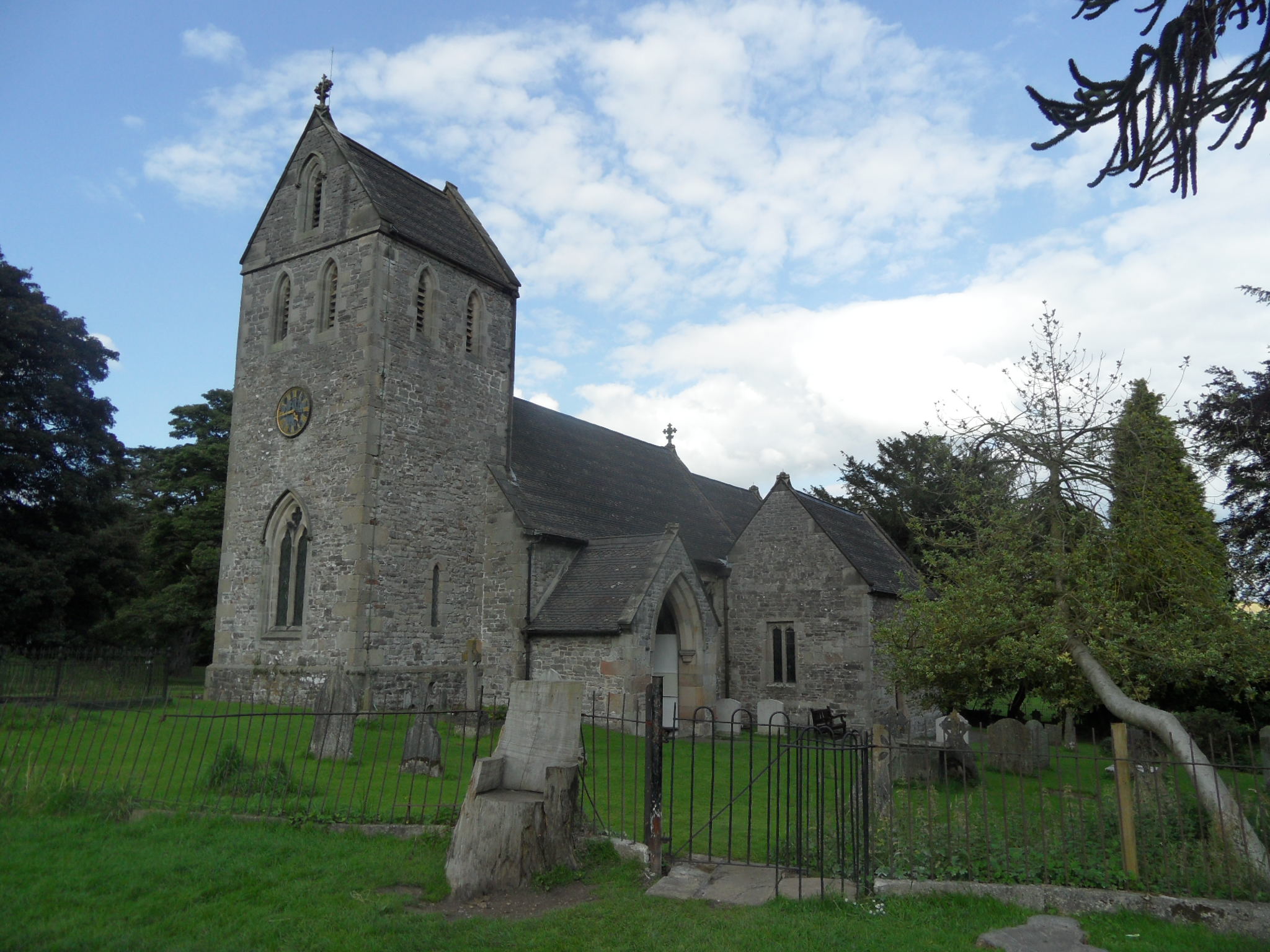
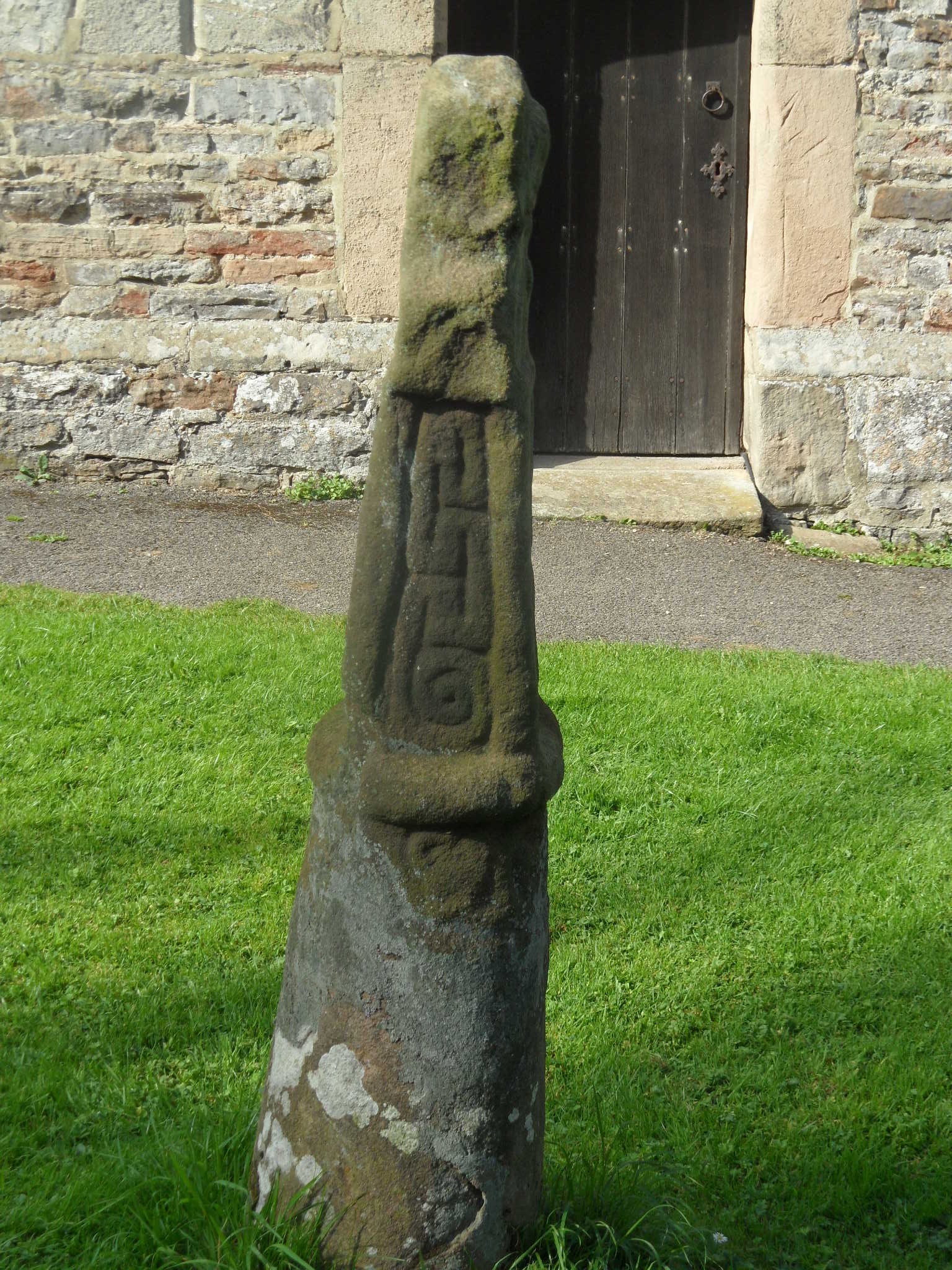
Looking for ancient crosses in Lichfield, has so far lead only to hints of their existence – a one line reference in an old book here, a placename there. Nothing concrete (or should I say stone?).  So imagine how happy I was when I visited Ilam Park yesterday and found that were two thought to date back to the 10thc standing in the churchyard with a third shaft incorporated into the church wall…..

Church of the Holy Cross, Ilam, Staffs


…..and imagine how much I kicked myself when I got home and found out there was yet another stone, known as ‘The Battle Stone’, located in the grounds of Ilam Hall that I had missed!

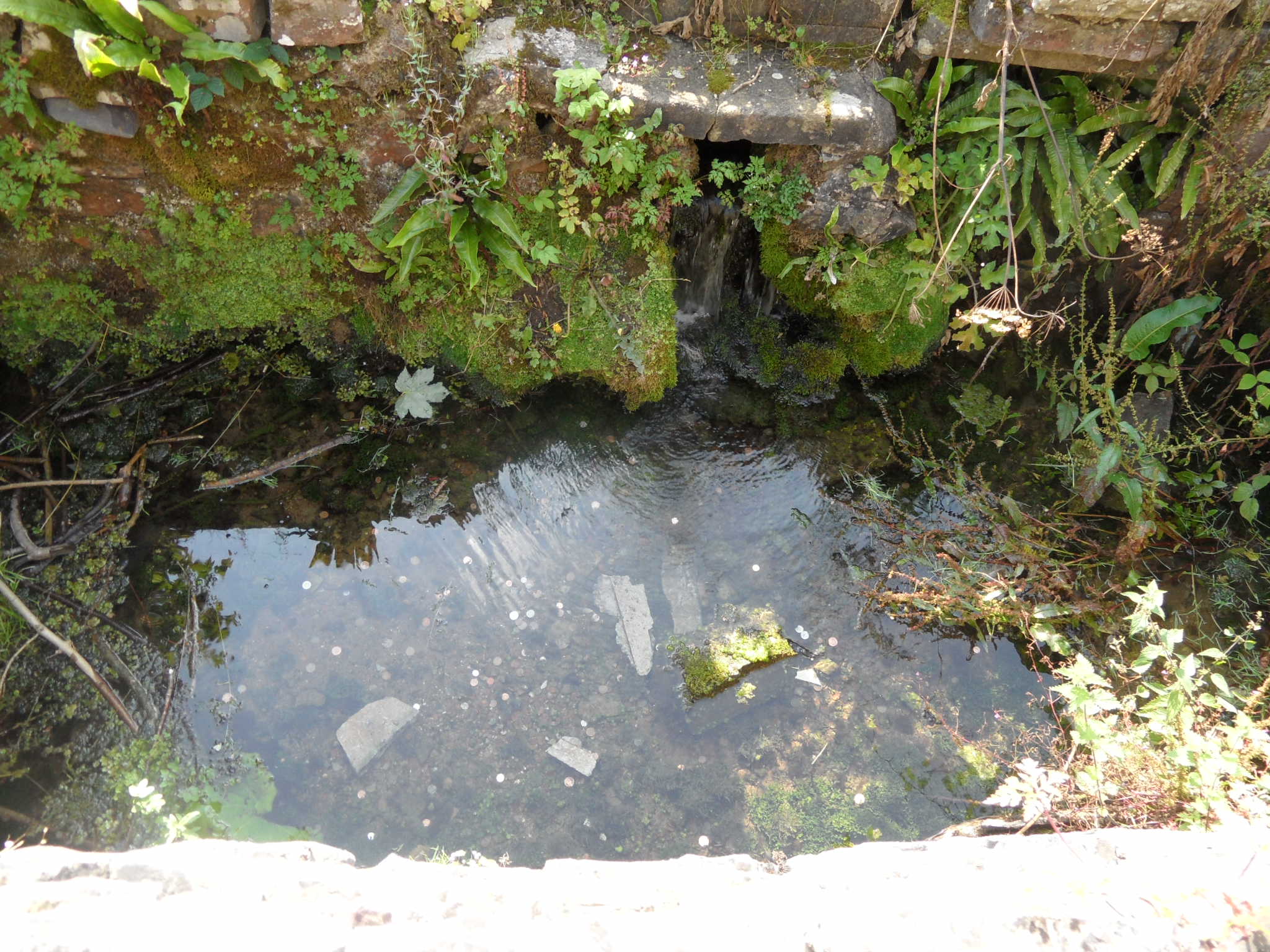
However, as a consolation, I learnt at home that this spring near to the church is thought by some to be St Bertram’s Well (although others place this on a hillside near to the village).

St Bertram’s Well?

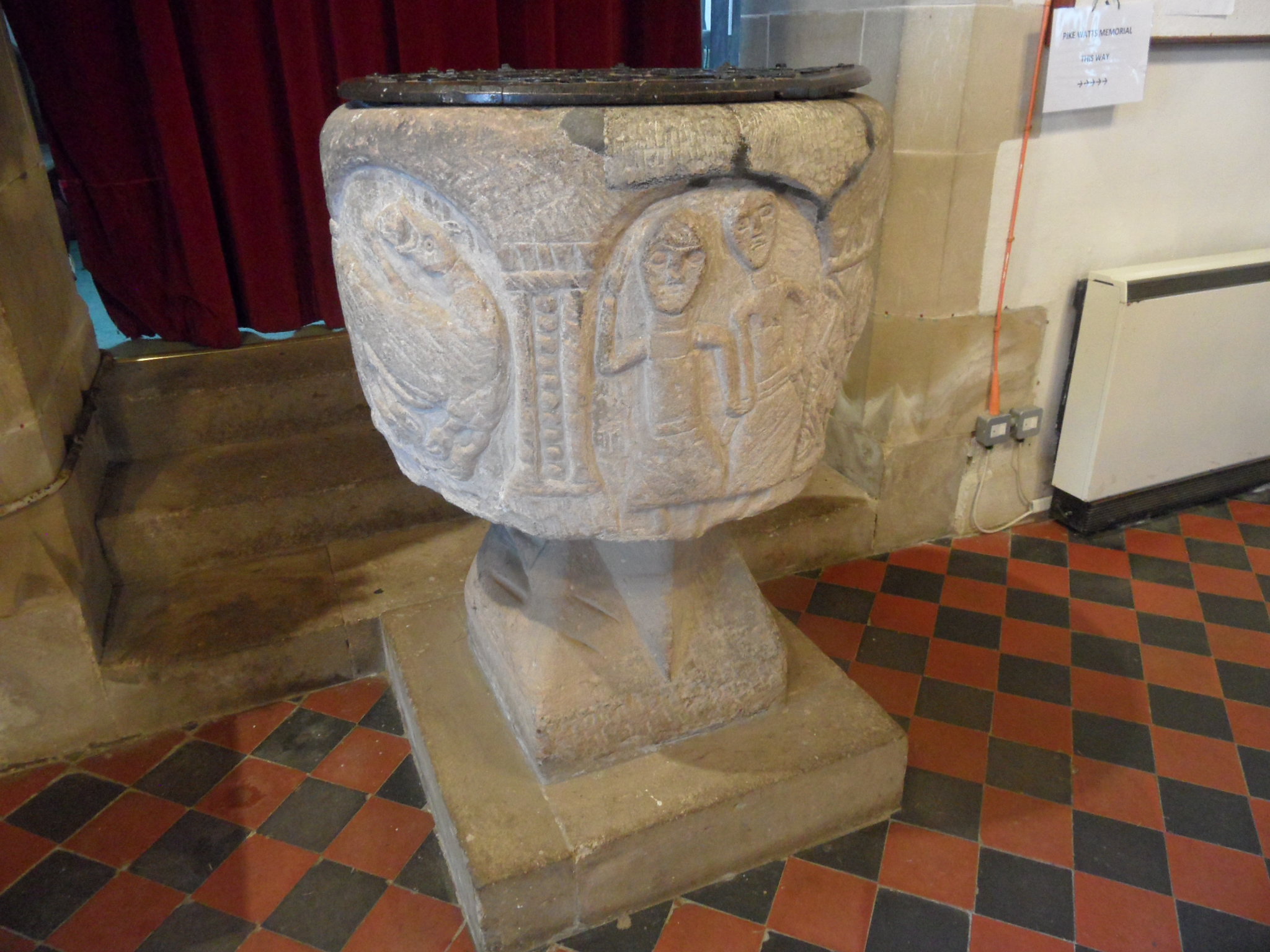
The Shrine of St Bertram (also known as St Bertelin or maybe Beorhthelm of Stafford) is inside the church. As you might expect, there is more than one account of St Bertram’s life. The most well known version seems to be the tragic story that he was a Mercian Prince whose wife gave birth to a child in a forest. The wife and baby were killed by wolves and St Bertram became a hermit near to Ilam, It’s thought this story might be represented on the churches font, which dates back to around the 12thc.

You can decide for yourself, if you look at this website on Romanesque sculpture, which gives a detailed description of the font, together with photos.

However, Stafford Borough Council have this version on their website, which doesn’t feature the tragic part of the legend.

The legend of St Bertelin derives from the 14th century account of him by Capgrave in his ‘Nova Legenda Anglie’, retold by Dr Robert Plot in his ‘Natural History of Staffordshire’ (1686). He is reputed to have been the son of the Mercian prince, the friend and disciple of St Guthlac who, after St Guthlac’s death c 700, continued his holy vocation on the islet of Betheney now Stafford. Here, he remained until forced to retreat from the ill-will of jealous detractors, when he repaired to Ilam, in Dovedale, Derbyshire where ultimately he died. His burial place in Ilam church was once a place of pilgrimage.

His burial place still seems to be a place where people come, not just seeking out history like me, but for spiritual reasons. As you can see from the photo of the shrine, prayers (I didn’t read them) and candles are still left there.

I have found a copy of the ‘Nova Legenda Anglie’, but as my Latin only stretched to ‘Caecilius est pater’, I need a bit of time alone with google translate.  So, I’ll leave the legend of St Bertram/Bertelin there for now other than to say that it’s believed that the remains of St Bertelin’s chapel in Stafford were excavated in the 1950s and they discovered part of a 1,000 year old cross. And this one is made of wood!

Ilam, Stafford and I’ve seen references to existing crosses in Wolverhampton, Leek, Chebsey (between Eccleshall & Stafford), amongst other places. With the discovery of the ‘Battlestone’ in Ilam (the one that I missed!) in the foundations of a cottage, during a restoration in 1840, I’m still clinging to the hope that at least a fragment of one survives somewhere in Lichfield!

Sources:

http://www.heritagegateway.org.uk/gateway/

http://list.english-heritage.org.uk/ (Entry numbers 1038113, 1012654, 1012653,

Corpus of Romanesque Sculpture in Britain & Island http://www.crsbi.ac.uk/index.html

http://www.geograph.org.uk/photo/705619

http://www.megalithic.co.uk/ (St Bertram’s Well http://www.megalithic.co.uk/article.php?sid=14731)

http://www.staffordbc.gov.uk/in-touch-with-the-past

Dig Days of Summer

Dig the Abbey is a community archaeology project, running over two consecutive summers, where volunteers (many of them local people) are excavating the site of Polesworth Abbey alongside professional archaeologists.

I went along to a Dig the Abbey 2011 tour last summer, not knowing what to expect. I found it so interesting that I was really looking forward to going again this year & took some friends, to see what kind of new discoveries had been made. We weren’t disappointed. Despite the rain, community archaeologist Tim Upson-Smith gave us a great tour of the site and answered all of our many, many questions (they weren’t just about just about the dig at Polesworth but they did all relate to archaeology!).

Amongst other things, we saw in situ medieval floor tiles, a medieval toilet (and learned what a useful find this is!) and a vessel (on which you could see the thumbprints of the potter that crafted it) lifted from the earth just that day. We learned a little about the procedure for the discovery of human remains and how they are dated. We heard about how the discovery of some structures in the trenches has answered questions about how the Abbey would have once looked, but how the discovery of others has created yet more questions.   We were made really nice cups of tea while we waited for the rain to give over a little!  We were so enthralled we forgot to take any photos! Luckily, the dig has its own regularly updated website, with photographs of the finds, maps of the trenches and news reports.

We’re definitely going back again towards the end of the dig. It hardly needs to be said but, if you have an interest in history or archaeology, I highly recommend going and taking a tour yourself. It took us around 30 minutes to get there from Lichfield (but that included unintentionally taking the scenic route through Tamworth town centre!).

Tours run every day of the dig at 2.15pm (1) The final tours will be on Saturday 8th and Sunday 9th of September, to coincide with the Open Heritage weekend (2). For more information, visit www.digtheabbey.co.uk

Notes:

(1) Monday to Friday (until 7th September) Saturday (25th August and 1st September)

(2) Please note that the heritage weekend here in Lichfield takes place on 22nd -23rd September, to coincide with the Johnson Birthday celebrations. I don’t want to confuse anyone!