Route Canal

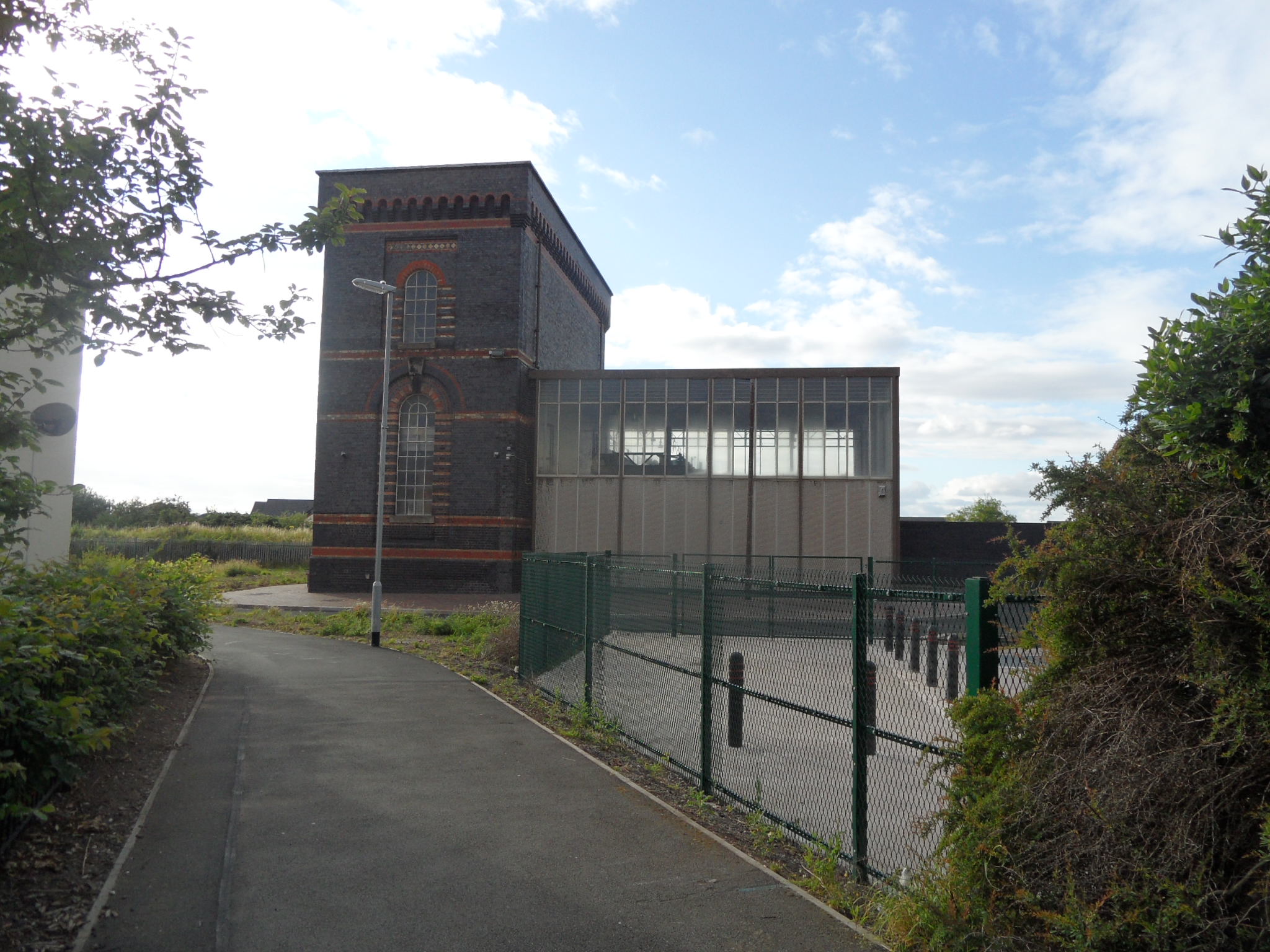
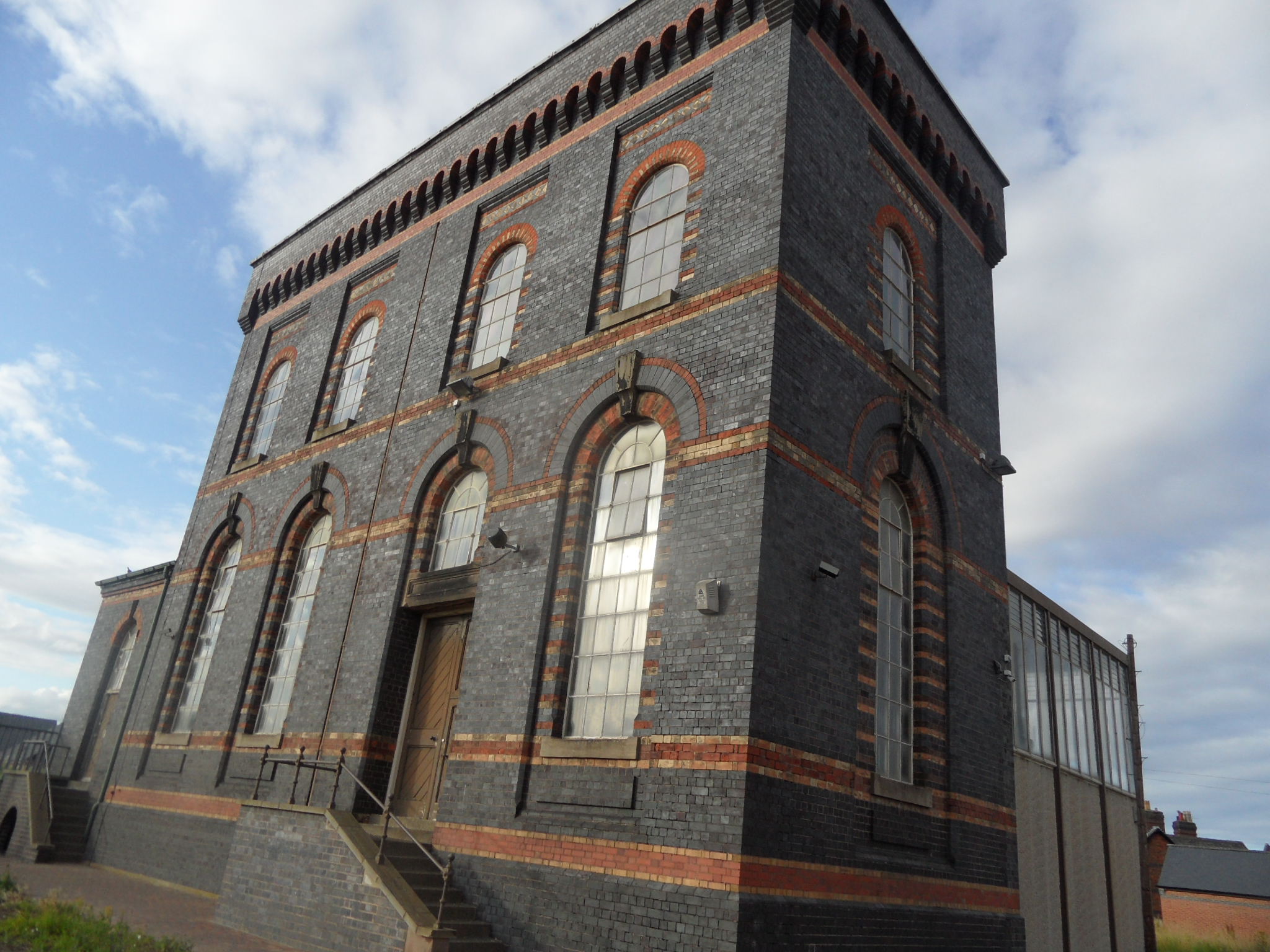
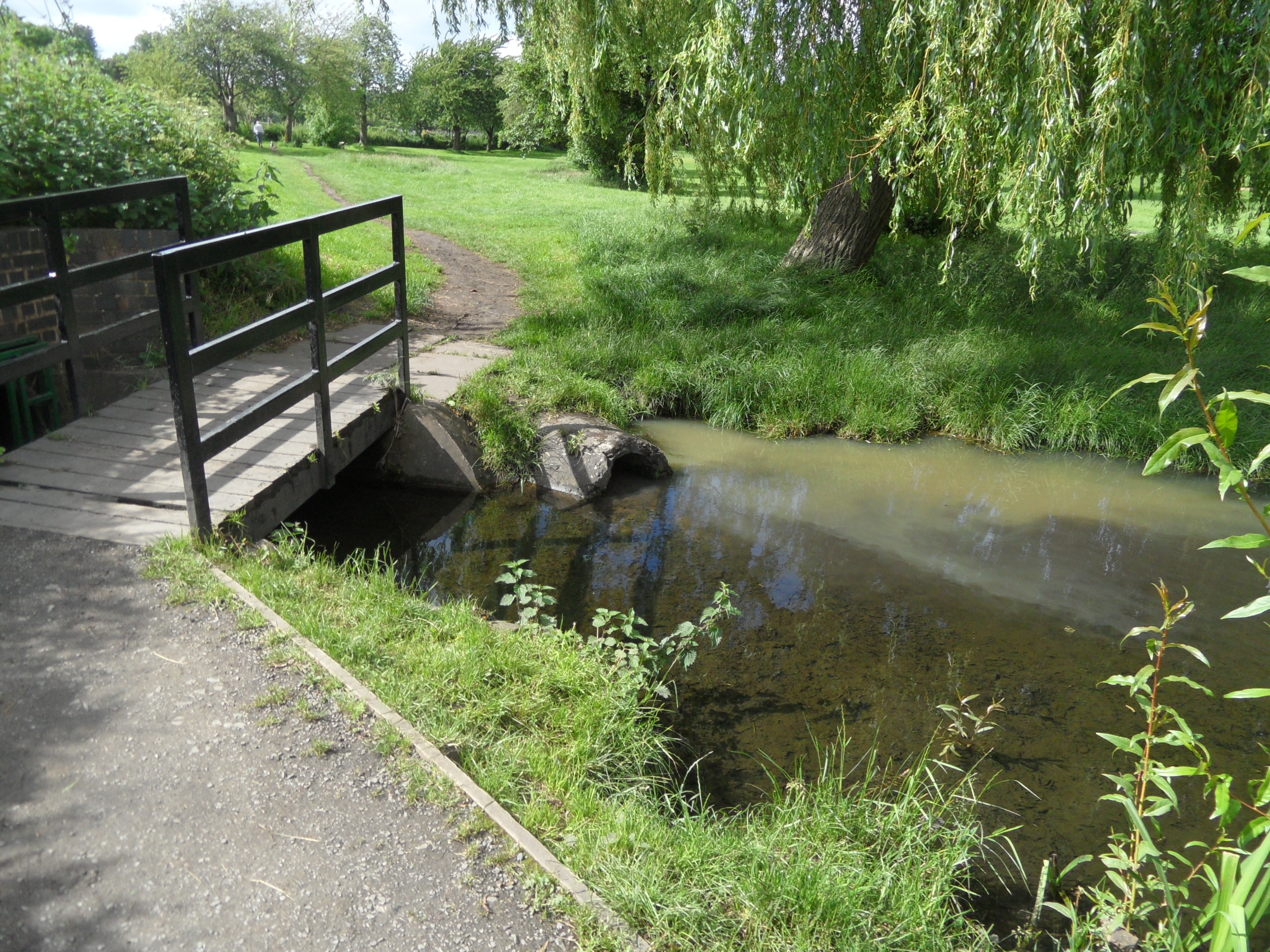
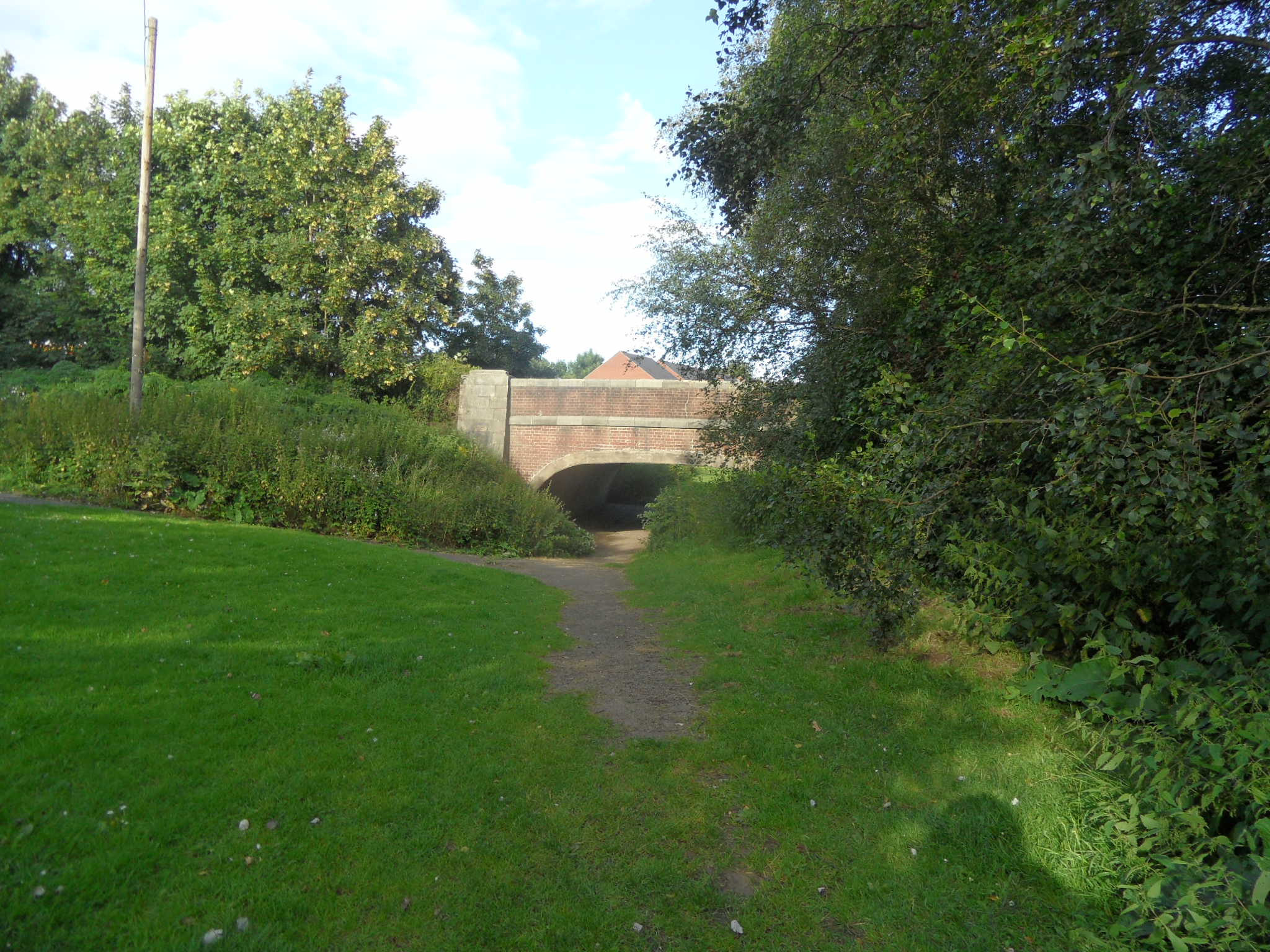
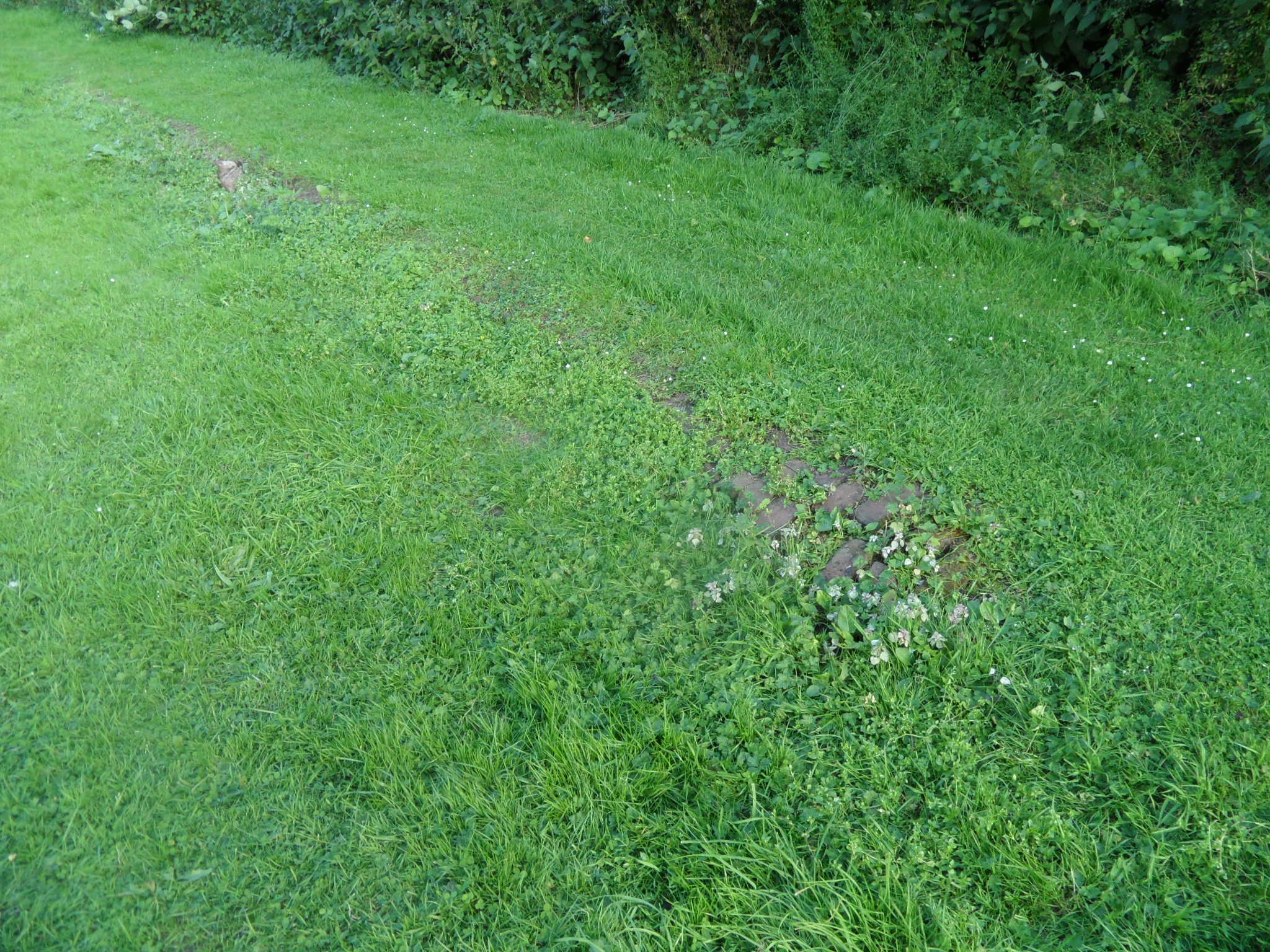
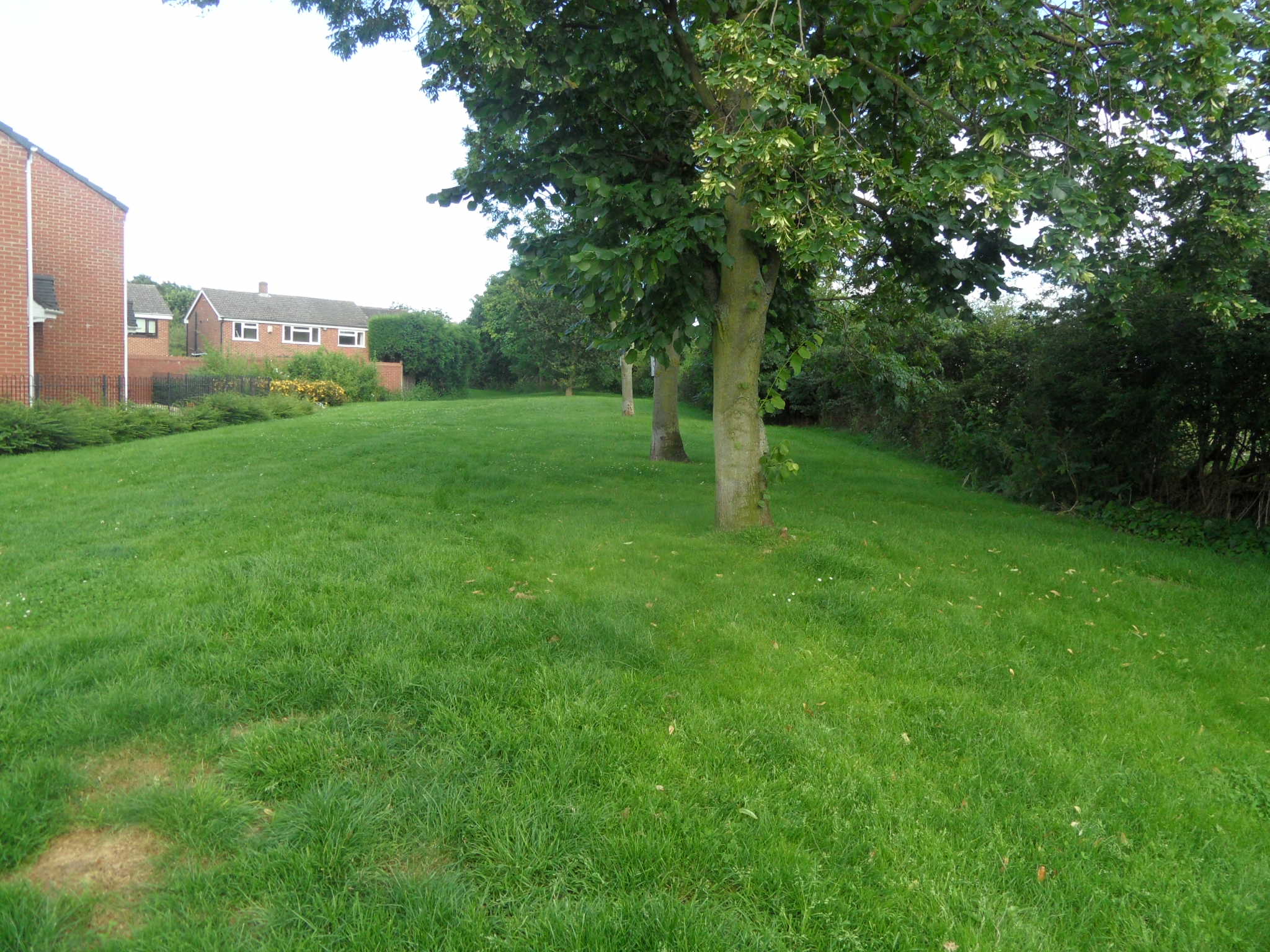
Following on from yesterday’s post, I had an email from David Moore pointing me in the direction of an aerial photograph of the canal running past Sandfields Pumping Station. You can see it on his flickr stream here, and you can also see lots of other great images, including my own personal favourite photograph – the Sandfields staff in 1893 here. Please go and take a look! If you do manage to rejoin me at some point, here’s a fairly recent aerial view of the pumping station, plus some photos I took myself in summer this year. I thought that the canal was in front of the building (I know, I’m an idiot sometimes!), but clearly it ran parallel to the railway line on the opposite side of the pumping station. (On that note, it would be interesting to explore the relationship between all of these elements  of the landscape – the canal, the brewery, the railway, Sandfields etc).

The last photograph doesn’t show anything to do with the route of the canal, but I’ve included it because if you looked at David’s photograph of the Sandfields workers in 1893, you might recognise the steps! If you haven’t been over to David’s website on the history and future of Sandfields yet, you can find it here – please do go and take a look now. David’s also going to hopefully add some more photographs of the canal later and I thank him for all his help in steering me in the right direction!

Finally, I’d also like to mention that Philip John has let me know that the route of the Lichfield Canal has been mapped by the volunteers at the OpenStreetMap project that he’s involved in. There are mobile apps too, so when I attempt to follow the route of the canal beyond Sandfields, I can download one of these to stop me going too curly wurly!

Passing Time

Happy New Year! A couple of days ago, many of us will have seen in 2013 to the bongs of Big Ben. Rather appropriately, Gareth Thomas from Lichfield District Council has found another fantastic document in his treasure trove, relating to our very own clock tower here in Lichfield, said to have been inspired by that famous London landmark. Gareth, in his characteristic generosity, has scanned it on and sent it over for me to share here. A while back I did another post on the Clock Tower (which you can read here), and it’s fantastic when more parts of the jigsaw come to light!

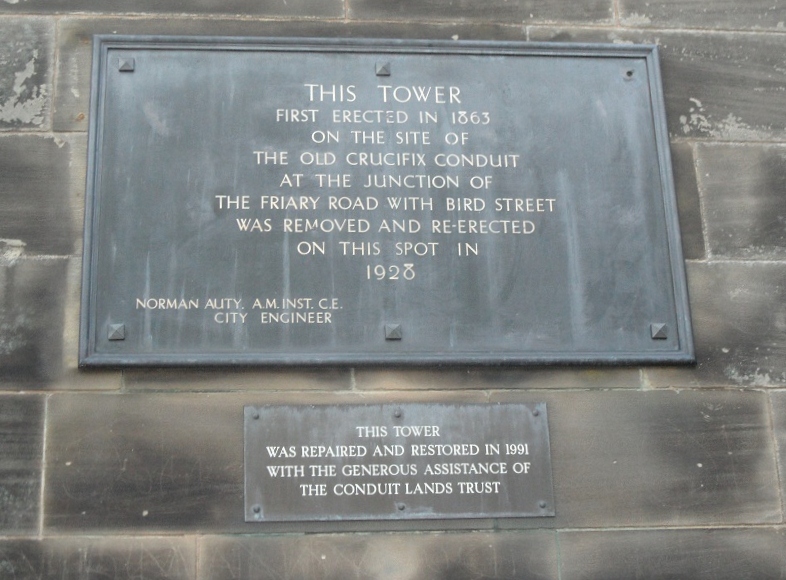
Entitled ‘ Agreement for sale and purchase of the Clock Tower situated in Saint John Street in the City of Lichfield’, the document describes how on 24th August 1927, the Lichfield Conduit Lands Trustees (some of their names will be familiar I’m sure!) agreed to sell the Clock Tower to the Mayor Alderman and Citizens of the City of Lichfield for £50. One of my favourite parts is where it states that:

‘any coins or other articles of value or antiquity which may be discovered shall be considered the property of the Trustees and shall be handed over to the Warden immediately they are found (sic)’

I wonder if they did find anything? And if so, did they hand it over?!

A plaque recording this event can be found on the Clock Tower:

The document can be seen by clicking on the PDF links below (it was too big to add as one whole document!)

Clock 1

Clock 2

Clock 3

Clock 4

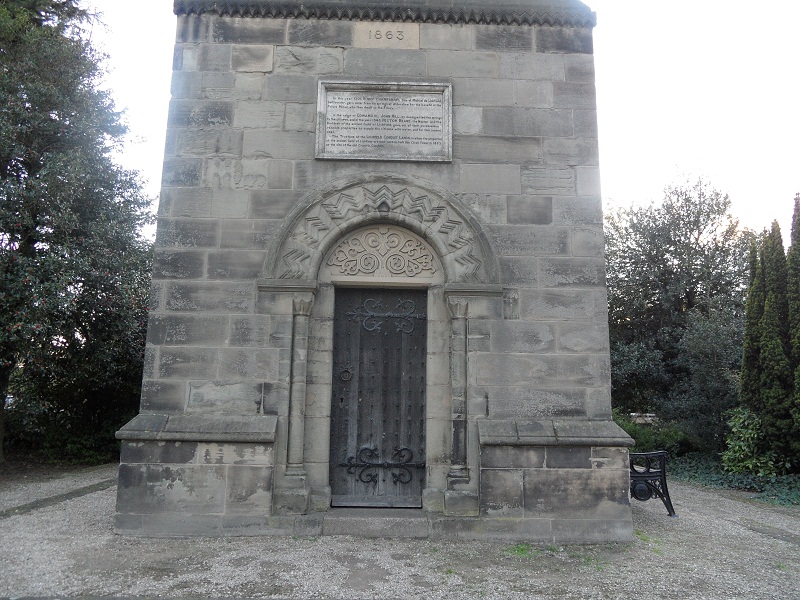
As you may know,  the Clock Tower was erected in 1863, making it 150 years old this year. I think it would be fantastic if, as a celebration, we could give people  a closer look at the tower that they pass by and the clock that they hear each day, by opening it up to the public (I did go up Birmingham’s ‘Big Brum’ clock tower once so I don’t think it’s too harebrained an idea).

Here is a bona fide harebrained idea though – what about starting a new tradition of seeing in the New Year with the bongs of the Lichfield Clock Tower? I wonder if there are any records of people doing this in the past, when we didn’t have Jools Holland on the tellybox to see in the New Year with. Shall we make a date then?  New Year’s Eve 2013 in the Festival Gardens. I’ll bring some party poppers….

Sources:

http://www.lichfielddc.gov.uk/info/200161/tourism/760/heritage_trail/9

http://en.wikipedia.org/wiki/Lichfield_Clock_Tower

Gareth Thomas and his magical storeroom 😉

Water Tower

I pass by the Clock Tower at the Friary several times a week and in the stillness of the night, I can hear it chime, slightly out of synch with the Christ Church clock. According to Annette Rubery‘s wonderful new book, Lichfield Now and Then, the tower was built in 1863 to mark the 300th anniversary of the Conduit Lands Trust. When the new Friary Rd was built, the tower was moved to its present location. The Wikipedia entry here has some photos of it in its original site at the junction of Bird St and Bore St. The Staffordshire Past Track has some great photos of the tower being dismantled, including one of the bells being lowered down (is this one of those I can hear?).

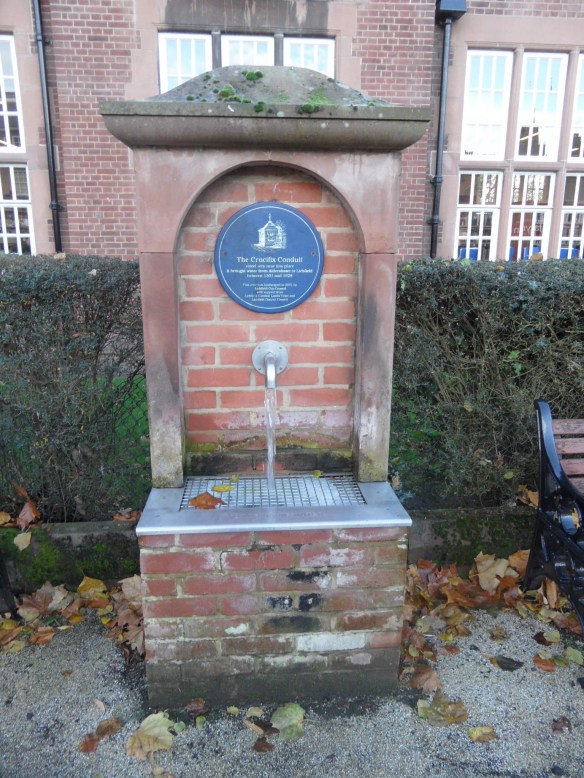
The tower was originally built over the site of an ancient water conduit, known as the Crucifix conduit. Some say this name came from a crucifix on top, others say it derived from its location near to The Friary.  Back in 1865*, someone called CW wrote in to ‘Notes and Queries’ (a publication resembling a magazine, but actually sold under the description of ‘A Medium of Inter-Communication for Literary Men, General Readers, etc’!) on the subject:

At Lichfield is a structure The Crucifix Conduit. It has been rebuilt within the last few years and now there is a plain cross on the top. Did the original have a crucifix? Was the crucifix, if any, destroyed in Puritan times?  Is there any drawing of the building in existence And if so where can see it?

A literary man (or possibly a general reader!) replied as follows:

The old conduit at the Friary gate does not appear have been surmounted with a crucifix but was so called from Crucifix being the name of the locality on which stood. Gregorius Stoneing receiver of the rents of possessions of the Fryars Minors of Lichfield after dissolution thereof in his account in the court of Augmentation answered, and so was charged with, and the rent of a certain water course within the compass circuit of the late house of Fryars aforesaid running from Poolefurlonge to Lichfield street, viz to a certain called the Crucifix demised to John Weston at the will of the Lord. (Shaw’s Staffordshire  1820) A engraving of the old crucifix conduit will be found A Short Account of the Ancient and Modern State Lichfield 1819′.

A quick search on the invaluable googlebooks finds that book, and as promised, a drawing of the crucifix as it looked in 1819.

I had thought that the Crucifix conduit was no longer in use by the time the clock tower was built – the listed building description says it was built over the ‘redundant conduit’. However, different accounts suggest that the conduit was still used as a public water supply beyond this date.  The County History says ‘In 1863 it (the Crucifix Conduit) was adapted as the base of a clock tower designed in a Romanesque style by Joseph Potter the younger, but the conduit continued in use’.This probably explains why what look like drinking fountains can be seen built into this section of the tower!
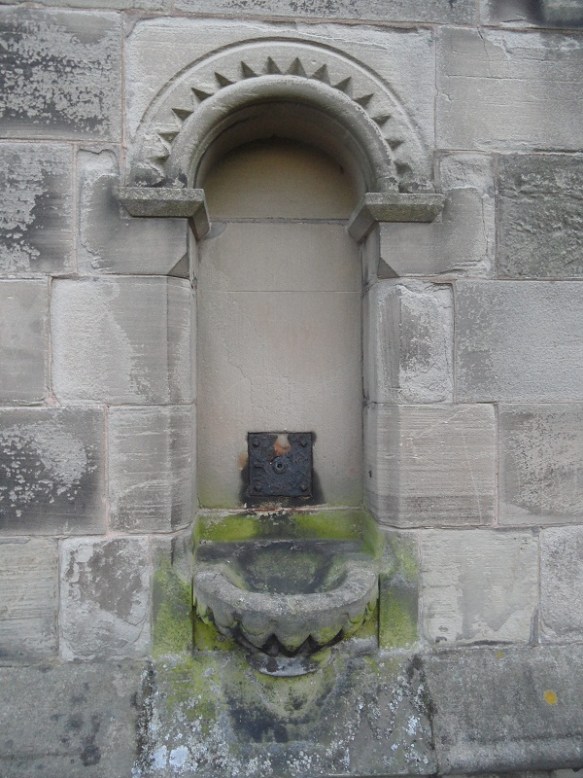
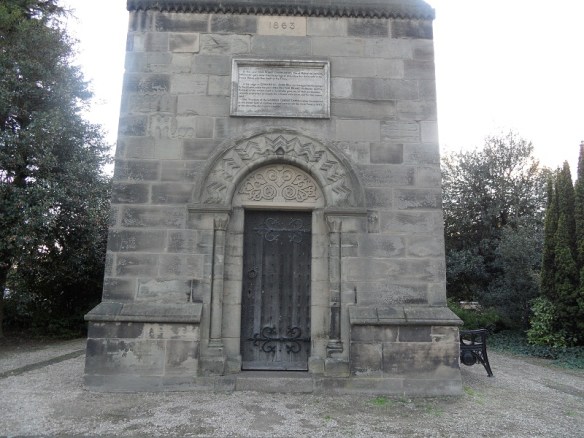
I find this next bit confusing and am happy to be corrected! What I understand is that the water came from a spring at Aldershaw. In 1301, Henry Bellfounder granted the Fransican monks the right to built a conduit head over the spring, and to pipe the water to the Friary. He apparently did this for motives of charity and for the sake of his and his ancestors’ souls’ health.  Although it seems the water was supposed to be for the friars’ use only, a public conduit was built outside the Friary gates.  When the Friary was dissolved in the mid-16th century, I understand that the Conduit Lands Trust took over the responsibility for maintaining the water supply to Lichfield when the spring at Aldershaw was granted to the ‘Burgesses, Citizens and Commonalty’ of the City of Lichfield. A fountain marks the approximate site of the original public conduit (and of course the later clock tower) near to  the library and record office. Although the water is no longer suitable for drinking, it serves as a symbolic reminder of the water supply that was once available here.
A stone conduit head dating back to 1811 can apparently still be found over the spring at Aldershaw. The spring was known as Foulwell which may not sound like the most appealing place to get water from, but as BrownhillsBob explained to me that the name ‘foul’ is most likely to mean ‘obstructed’ in this context. What’s also interesting is that the well seems to have an alternative name – Donniwell, which crops up in some transcriptions of old documents (dating back to the 4th year of the reign of Edward VI which would be 1551. I think.) that Thomas Harwood made in 1806.

Funnily enough, searching to find an interpretation of the name lead me back to another edition of ‘Notes and Queries’, (this earlier issue from 1855 was described as a ‘Medium of Inter-Communication between for Literary Men AND Artists, Antiquaries, Genealogists etc). Someone else had questioned the meaning of Donniwell in relation to the spring near Lichdfield, and received the following answer from WLN of Bath.

The word Donni or Donny in Donniwell is merely the old Keltic (sic) vocable don (otherwise on or an), water,  with the diminutive y, and signifies the little stream or brook The word is still retained in the name of the rivers Don in Yorkshire, the Don which falls into the sea at Aberdeen, another Don in county Antrim Ireland, and in the Don in Russia. Hence, too, the Keltic name for the Danube, Donau, latinised Danubius. There is also Donnyland in Essex and the two rivers Oney in Salop and Herts, Honiton or Onyton in Devon and the Uny in Cornwall are all different forms of the same root.

I might offer many other illustrations but will refer only to the same word in the primitive nomenclature of Palestine the Dan which, with the later Hebrew prefix Jor (river) we now by a double pleonasm, call the river Jordan

So there’s one idea…..anyone have any other ideas of where this name may have derived from?
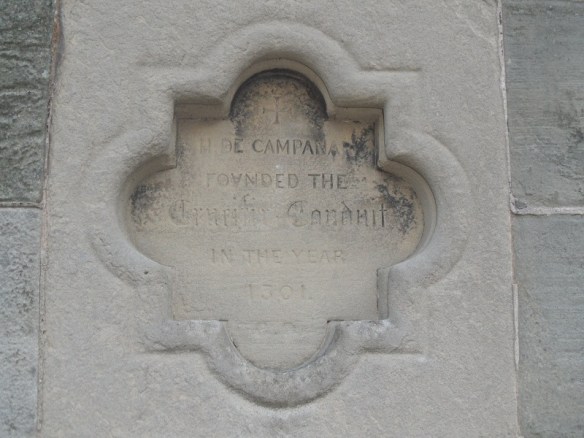
Coincidentally yet appropriately, today is the 8th December, the Feast of the Conception of St. Mary, the date on which two wardens were appointed each year to keep the conduits and watercourses of Lichfield’s water supply in repair.  I also like the idea that the chiming bells of the Clock Tower provide an appropriate, yet coincidental link to the name and occupation of the man who originally gave the spring at Aldershaw which fed the conduit (at least I think its coincidental….). I also find it interesting that back in the mid 19th century people were asking similar questions to the ones that I’m asking today. It seems it’s not just me that is fascinated by the idea of springs, wells, conduits and water in general!

Now I know a little more about where the water came from, and where it went to, I’d like to know more the inbetween part i.e. the actual route of the water. That also goes for the conduit between Pipe Hill and the Cathedral Close too. As it looks unlikely that I’ll be able to go looking for the conduit head at Aldershaw (it’s on private property) as I did with the one at at Pipe Hill, I shall have to concentrate instead on tracking down the archaeology reports and journals that reveal more about our medieval conduits,  at Lichfield Record Office.

Also, for more about the Friary, Gareth Thomas has added some original deeds and plans to his blog All About Lichfield.

*This date is a little strange as the Clock Tower was built in 1863. Perhaps the letter was written before this time and not published until 1865.

Edit: 10/12/12

I’ve just been reading part of The History of the South Staffordshire Water Works Company. This suggests that a public water conduit of some description, pre-dates the granting of the spring at Aldershaw to the Friars. Apparently, there was a public conduit in the early 13thc, and there are also references in the Cathedral records to a Conduit St, and a conduit in the high street.  Are these are connected to the Crucifix conduit or separate? And where did this water come from?

The document also gives some really interesting information on the pipes themselves. It says that originally wooden pipes were used (bored tree trunks). It refers to a document from 1707, that says the pipes ‘being made of alder had become rotten, leaky and in decay and accordingly taken up and replaced by leaden pipes’. Interesting that the pipes were made of Alder, and the water came from Aldershaw. It also says that in 1801, the Conduit Lands Trust replaced a small gauge lead conduit from Aldershaw with a larger diameter cast iron main, which enabled a greater volume of water to be carried to the City. It also gives this interesting information on what happened when supply started to exceed demand.

By 1821, Aldershaw was proving to be inadequate source and a scheme was devised to supplement the spring’s supply, by collecting the surface water from Tunstalls Pool, the Moggs and other pools and diverting water into the common conduits. When the situation worsened in the mid 1850’s, the trustees acquired the Trunkfield Mill and Reservoir and a pumping engine was installed to increase the supply. In 1868 the supply of Aldershaw yielded 15,000 gallons a day. Trunkfield supplied 160,000 gallons a day, all of which was pumped to Crucifix Conduit. Water was provided to fifty seven public pumps, thirteen standpipes and public taps, thirty fire hydrants and three hundred and forty three houses.

The document isn’t too specific about their sources, so having to take what they say on face value for now. Lots more reading to do I think….Luckily for me, local historian Clive Roberts is going to send me some information he has on the Conduit Lands Trust!

Sources:

Lichfield Then and Now Annette Rubery

A short account of the city and close of Lichfield by Thomas George Lomax, John Chappel Woodhouse, William Newling

The History & Antiquities of the City of Lichfield by Thomas Harwood (1806)

Lichfield: Public services’, A History of the County of Stafford: Volume 14: Lichfield(1990), pp. 95-109

Water Technology in the Middle Ages: Cities, Monasteries, and Waterworks after the Roman Empire by Roberta J Magnusson

Walsall Road, Lichfield, Staffordshire. A Report on an Archaeological Evaluation
Marches Archaeology Lyonshall : Marches Archaeology, 2000, 18pp, figs, tabs
Work undertaken by: Marches Archaeology

History of the city and cathedral of Lichfield by John Jackson

Notes and Queries 12th Volume 1855

Notes and Queries 3rd Series Volume 8, 1865
An Inconstant Stream

According to place name expert Margaret Gelling, Leomansley Brook has a pre-English name. It’s thought the name could contain the Celtic word lēmo, meaning ‘elm’ (1) or lēme meaning ‘limetree’ (2).

1- Conduit Heads; 2 – Start of Leomansley Brook?; 3 Site of Leomansley Mill/House/Manor; 4 – Former Beacon Place fishponds, now Beacon Park boating lake

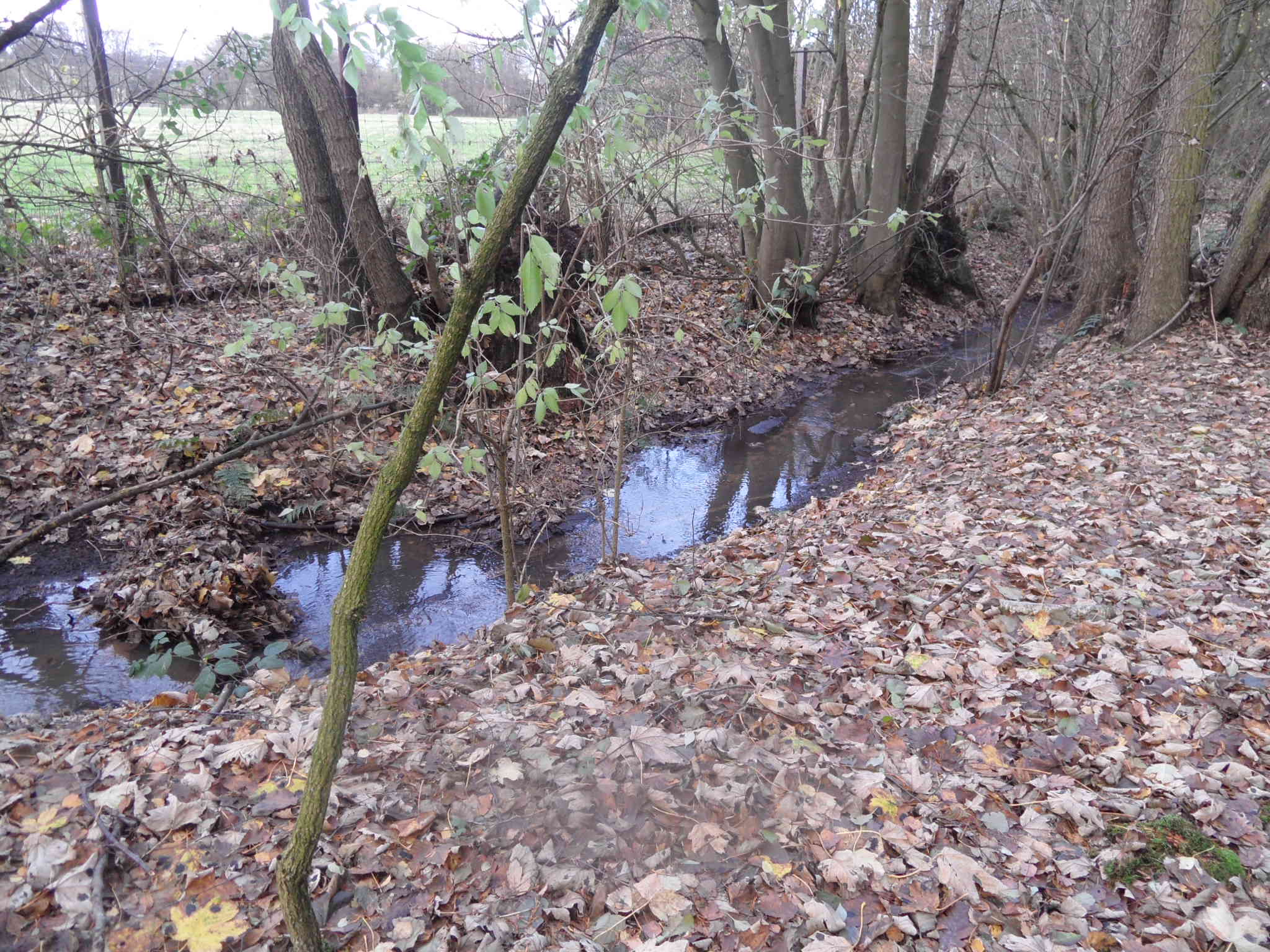
The brook rises near to the conduit heads at Pipe Hall Farm, Burntwood (at a place I’ve just noticed was also known as The Dimbles, just as the area near to the Circuit Brook is/was!), and crosses the Lichfield/Burntwood boundary, to fill a series of pools on the edge of Leomansley/Sloppy Wood before meandering through Pipe Green.

As mentioned in my previous post, Leamonsley Mill was built on the brook at the edge of Pipe Green in the 1790s. There are a few traces of the industry that was once here – ‘Leomansley Mill Cottage’ is a little further back down the track towards Christ Church Lane and there are also some possibly related brick structures. The second photo shows the place where the brook re-emerges to flow through Pipe Green, and is shown on some maps from the late 19th and early 20th century as a ‘Spout’.

Taken June 2011. On old maps, this is marked as sluice. This part of the watercourse was filled with water once again this weekend

Taken December 2010. Shows as spout on old maps.

I found a recollection by someone who spent the summer of 1984 at the old mill cottages then known as Leomansley House (which they have included a photo of!) producing the first and only issue of what they describe as a ‘local anarcho-DIY philosophy magazine’. In their description of the old house, they describe how Leomansley Brook ran past the front door.

The other stories I’ve found about the pool relate to changes brought about by nature. In February 1902, the frozen pool was used for ice skating.  The Lichfield Mercury reported that on the Friday after the freeze, the pool was quiet, but by Saturday a group of ‘horrid hockey people’ (as one unnamed woman described them) had discovered it and monopolised the best part of the pool.

Another Mercury story, from April 1976 when the artist Eilidh Armour Brown lived at Leomansley House, tells of a water shortage at the pool

Lichfield District Council Staff had been prepared to move fish from Leomansley Pool, after the water levels dropped to a dangerous level for the fish. The fish were to be transferred to Minster Pool until the water level at Leomansley had risen. Luckily a storm that weekend brought the much needed rain and it was no longer necessary.

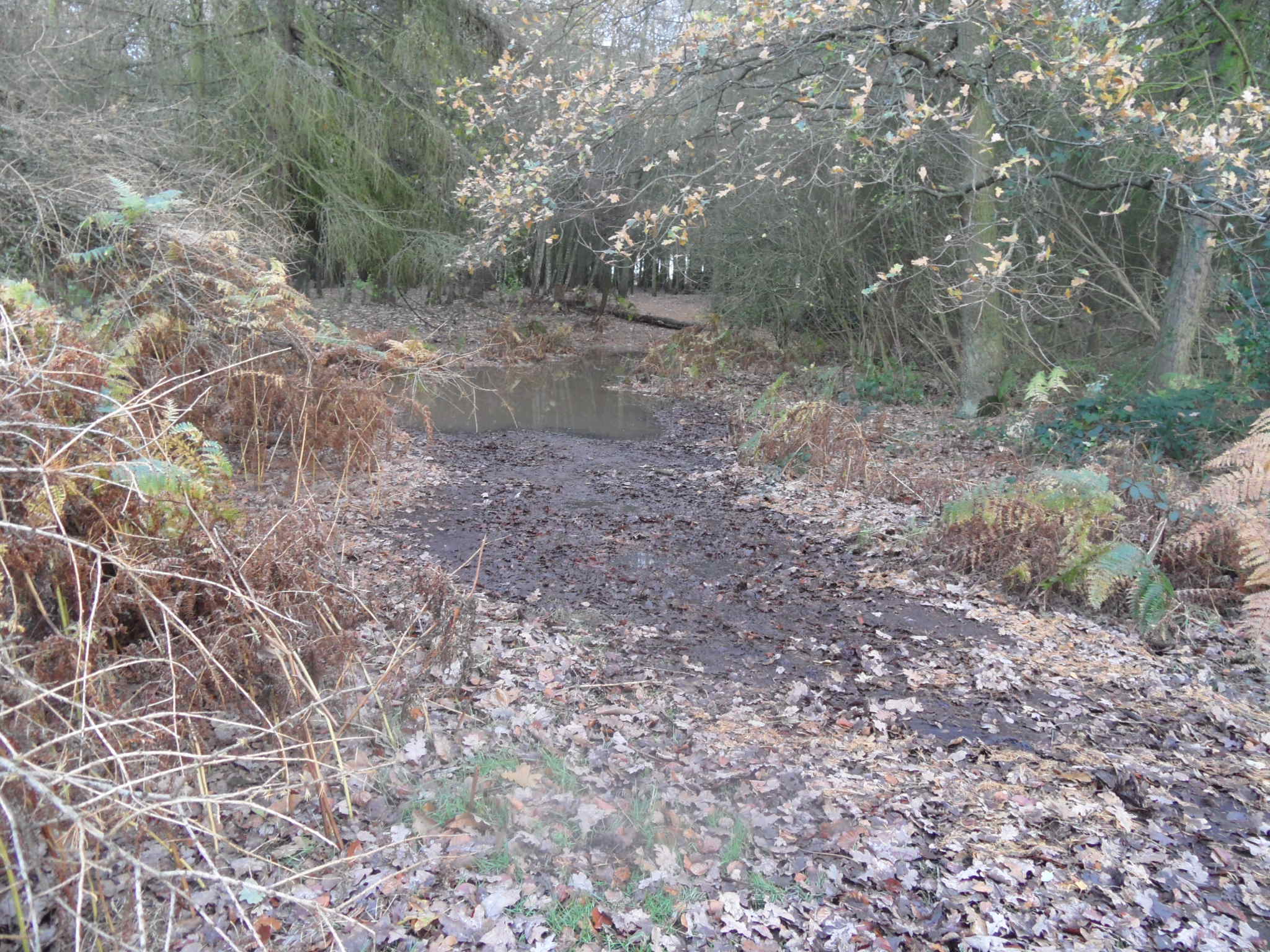
Things couldn’t have been more different this weekend. The normally dry part of the course along the edge of the woods was full, and levels in the pools were high, as you’d expect.

Taken November 2012. This part of the brook is normally dry.

Taken November 2012. I was told there used to be a bridge somewhere near here for farm carts to cross into the adjacent field.

Taken November 2012

As you can see in the above photo, not only was the brook refilled,  but the water was also claiming parts of the path. I imagine that’s how the name Sloppy Wood came about!

From Pipe Green, the brook is culverted under the A51, and then flows through Beacon Park, filling what used to be the fishponds for Beacon Place (now the boating lake in the park), before finally ending up at Minster Pool.

November 2012 – Through Pipe Green


November 2012 – Looking back towards Leomansley House/Mill/Manor!

June 2012 – Leomansley Brook enters Beacon Park via a culvert under the A51. The reason the water looks murky by the pipe is that a little dog was paddling just before I took the photo!

June 2012 – Passing the play area in Beacon Park. This used to be a fish pond for the mansion Beacon Place (demolished 1964).

I don’t know anywhere near as much about streams and brooks as I’d like to but am really interested in them and their importance in the development of our landscape, e.g., the formation of natural boundaries and giving names to places that grew up along them. I’m also fascinated by our relationship with watercourses like these and our attempts to manage them, for better or for worse.

Sources

(1) ‘Lichfield: The place and street names, population and boundaries ‘, A History of the County of Stafford: Volume 14: Lichfield (1990), pp. 37-42.

(2) http://finds.org.uk/staffshoardsymposium/papers/mattiasjacobsson

Tow Bone

As I’ve been telling anyone who’ll listen, I went to Manchester at the weekend. One of the highlights (or should that be lowlights?) was a tour beneath one of the city’s warehouses to see the remains of the Manchester and Salford Junction canal.

Standing in the canal! Tow path to the left.

I’m not going to say any more about it,  writing about a place 82 miles away is stretching it even for me (but for anyone interested, there’s some more of my photos and a bit about the  experience here). So, I’ll say a bit about the Lichfield canal instead…

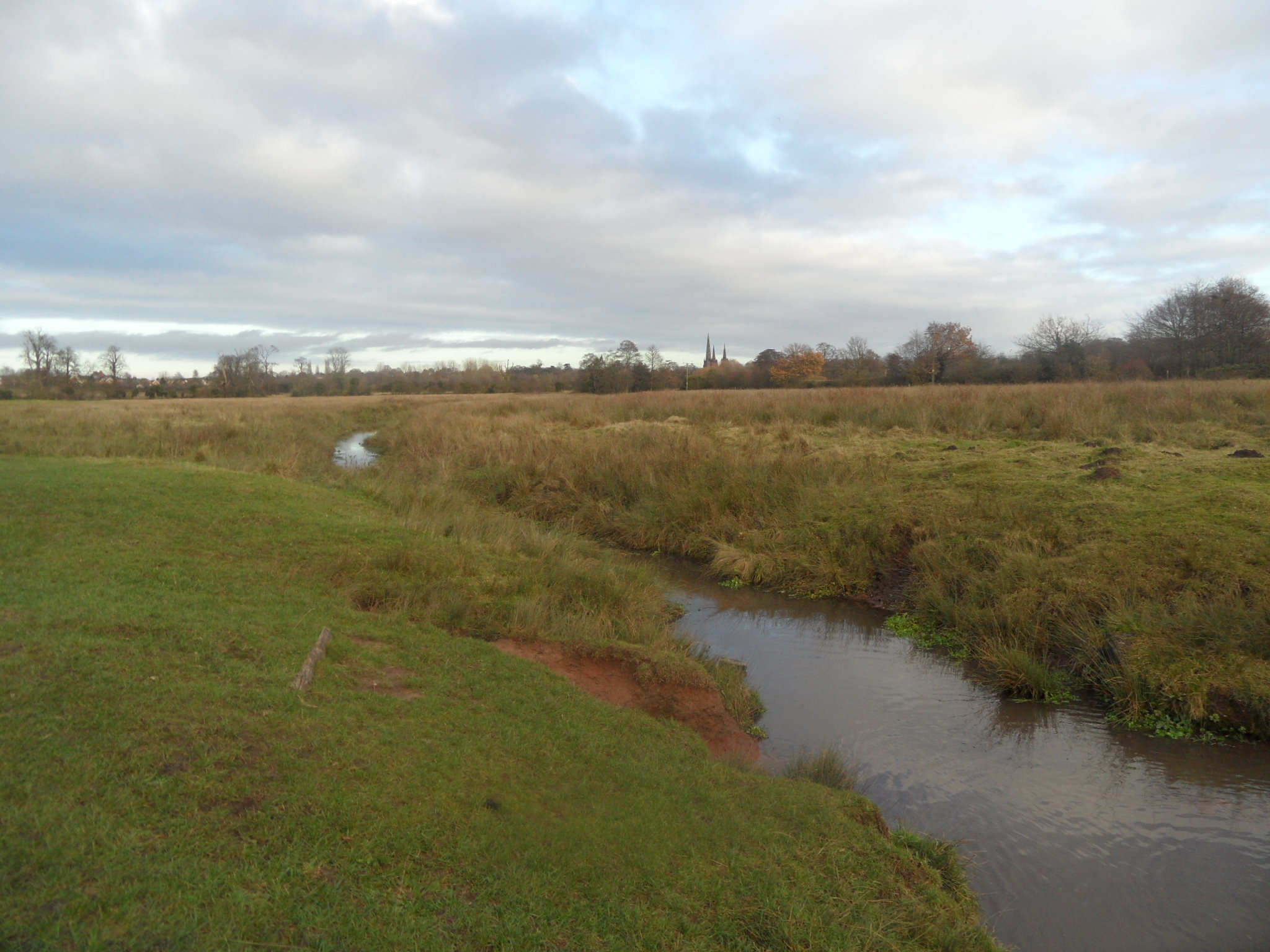
I imagine most people know that there is an ongoing project being carried out by the Lichfield and Hatherton Canals Restoration Trust and you can read about and see photographs of the sections of the Lichfield Canal that are already under restoration on their website. A while ago, I was at the bridge on the London Rd, and decided to walk home following the route of the disappeared canal, down to Sandfields. I know there was a section of canal here, because I had read about it in a post Annette Rubery did about Sandfields Pumping station. Here are some photos of the walk, featuring one of my favourite things – bits of old brick hinting at a trace of something long gone!

I think somewhere around here was Gallows Wharf. The gallows were apparently located somewhere near to the Shell Garage on the London Rd.


The obvious route of the canal finished about here on Shortbutts Lane.

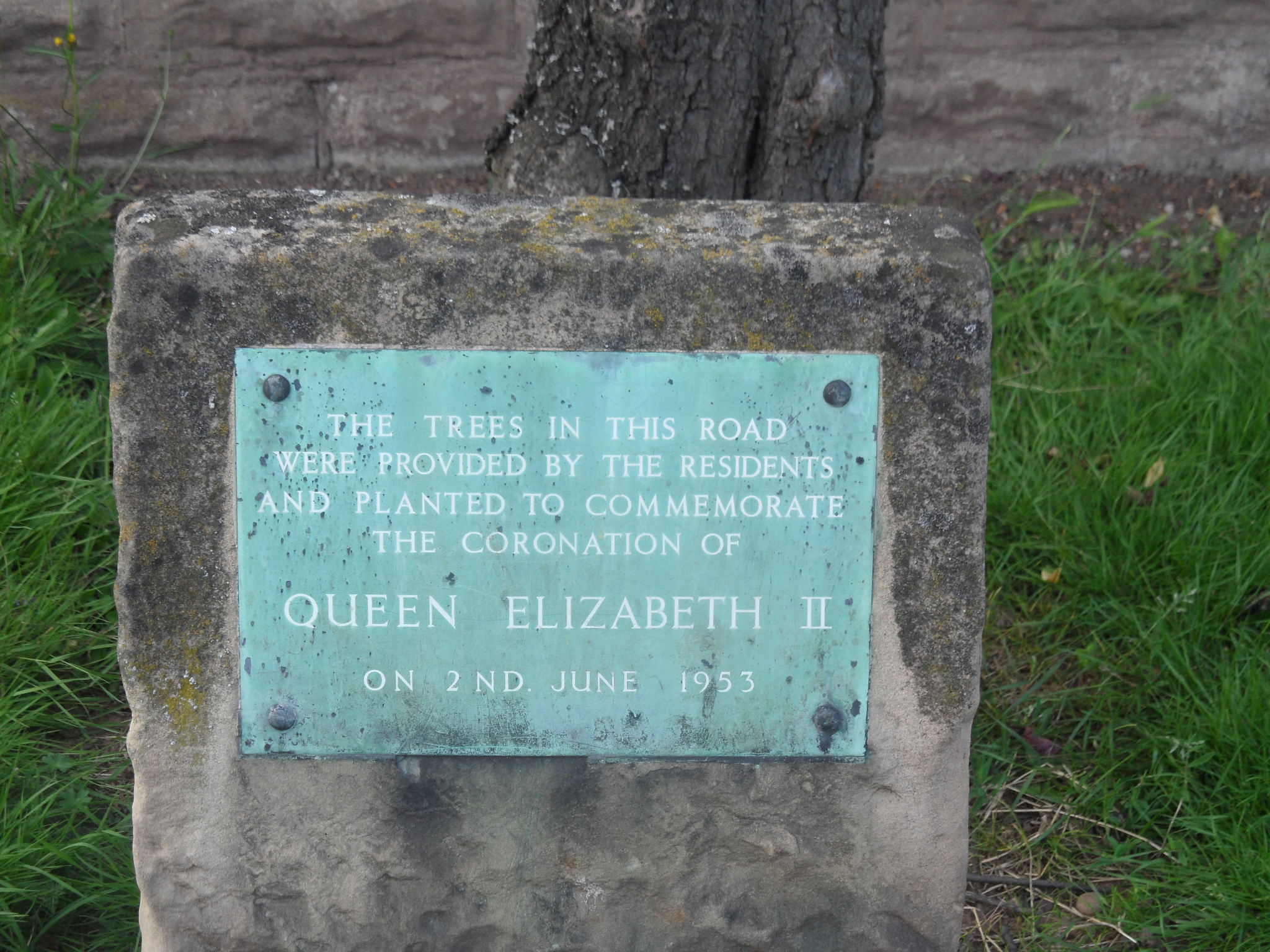
Then I mistakenly went up Fosseway instead of taking a right onto the Birmingham Rd and lost the canal route altogether but I did find a nice plaque!

Plus some interesting but I think non-canal related bricks at the junction of Fosseway and Shortbutts Lane with the Birmingham Rd.

I knew that if I got to Sandfields Pumping Station, I’d manage to pick the canal back up!

I noticed on an 1834 map of Lichfield that the canal in this area passed something called ‘The Bone House’. The county history says ‘There was a bonehouse evidently on the north side of the Wyrley and Essington Canal west of Chesterfield Road by 1806. The miller, Thomas Wood, was ordered that year to stop production following a complaint by the vicar of St. Mary’s that the works was ‘a noisome and offensive building and a great nuisance to the inhabitants of the city’. He was still in business in 1818 and the bonehouse remained there in 1836′.

I imagine it was used to grind down animal bones to make fertiliser, but if anyone knows any different, please let me know!

The idea of exploring the impact that the presence of water had on the surrounding landscape is something that really interests me. I think walking alongside our streams and canals, around our pools and millponds gives you the chance to look at a places from a different perspective. Next time though, I might take a map!

Sources:

Lichfield: Economic history’, A History of the County of Stafford: Volume 14: Lichfield(1990), pp. 109-131

Perspexive

This morning, I went to the dentist. On the way home I walked past St John’s Hospital. With the sun shining, I decided to pop in and allow myself a minute to take in the lovely surroundings and the calm atmosphere of the courtyard, before heading home.

At least that was my intention. As hospitable as ever, someone in the courtyard came over to welcome me, and invited me to have a look around the chapel. Never one to miss an opportunity to be nosey, I accepted with thanks.

I have been inside once before, but that visit was dominated by standing in front of John Piper’s striking window for the first time. Today, I sat on a back pew and found myself next to a perspex window. A small sticker told me that the stonework behind the perspex was the remains of a Norman water stoup. I understand that this would once have held holy water, into which those entering the chapel could dip their fingers, and make the sign of the cross. Apparently, many stoups were destroyed during the reformation but whether this is the case here I don’t know.  As the chapel has been heavily restored and altered over the centuries, I was delighted to have this chance encounter with part of the older fabric of the chapel.   Unfortunately, as I hadn’t anticipated there being many photo opportunities on a trip to the dentists, I had no camera. But the chapel is open everyday until 5pm, so if you can, please do go and take a look yourself, and enjoy visiting the grounds at the same time.

This got me thinking about the idea of layers of history within buildings, where generations of people have made their mark, by accident or by design, for better or for worse.  When I was volunteering at the Guildhall, someone told me I could get out using the back door. It was news to me that there was a back door but once through it, I made the even more exciting  discovery that  traces of the older building were still in evidence. For example, whilst the main hall and the front of the Guildhall date to the mid 1800s, the blocked window on the photograph below is thought to date to the 16thc.

Brickwork from different periods, round the back of the Guildhall

Another couple of examples to be going on with – what’s gone on here with all the different brickwork at this house in The Close?

This metal….thing, above a restaurant on Bird St, must have played some role in the building’s past, but what?

And when we’re talking about layers of history, should we also consider the present and future of buildings? I notice that the Angel Croft hotel has unsurprisingly made its annual appearance on the English Heritage At Risk register…..

Sources

http://www.british-history.ac.uk/report.aspx?compid=37864

Rolling in the Shallow

One of my absolute favourite things in a landscape is water – waterfalls, oceans, lakes, canals.  All wonderful.  Here, in Leomansley we’ve got a brook and I love that too.

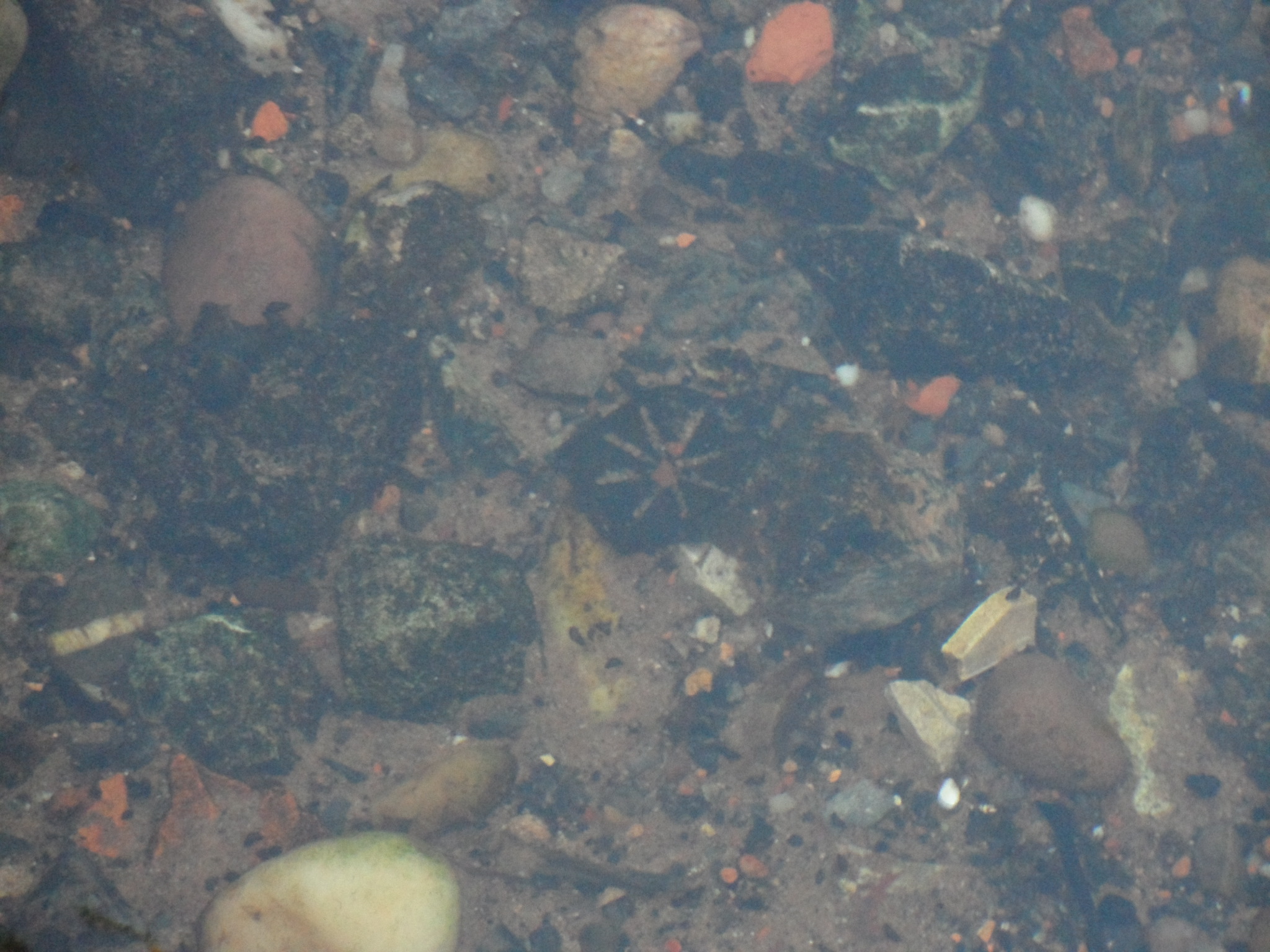
Two days ago I stopped and paused at a small bridge that crosses over Leomansley Brook. It was flowing more than usual, with little fishes darting about in the clear water. I would have gone home happy just having seen the fish but then as I watched them, something else caught my eye.

It looks like a stone with a star etched on to it. Unfortunately, as well as raising the water level, the rain has also raised the nettles and so I couldn’t get down for a closer look. I went back the following day with a fishing net and my Mum but the net was far too short and my Mum wasn’t game enough to take on the stingers either! And so there it remains, still in the brook, where it may have been for hundreds or years….or since last week! I took another photo and it looked a bit different. (This time I noticed a big nail a little further upstream too).

What is it and how or why does it have those markings? Is it even a stone? I would love to hear any theories anyone has!

A little later I’m going to write up a post about another little mystery around these parts. This and the stone might not be anything at all, but I actually don’t think that matters. What I think does matter is getting out there and looking, thinking, sharing and most importantly enjoying what’s around you.

Under the Bridge

It might not have rained on St Swithin’s day here in Lichfield but water was still the theme this weekend. On Saturday, I was supposed to be at the Festival of History at Kelmarsh in Northamptonshire. However, it seems that nature wanted to get involved in the reenactment of history too and successfully managed to put the marsh back into Kelmarsh. Maybe Dr Rawson was right when he warned “Drive nature out as you will, and she will come back”!

Here in Lichfield, I’ve read that marshy land was known as ‘moggs’ and that the Museum Gardens were once known as Swan Moggs or the Bishop’s Fish Pool.  You can see an artist’s impression from 1848 of the scene in 1548 here.

A causeway was built to separate the Moggs from from Minster Pool in the early 1300s, and the road became known as Newebrugge St, later Brugge St and eventually Bird St. According to Rawson, the original bridge was widened by 5 foot in 1768. It was replaced by a new bridge in 1816, but I was quite excited to see that the listed building description  says that the remains of the old bridge could still be below the water of Minster Pool. Has anyone anyone ever been down there to have a look, I wonder? I’m probably not quite excited enough to hire a wetsuit and go looking for it, but you never know!
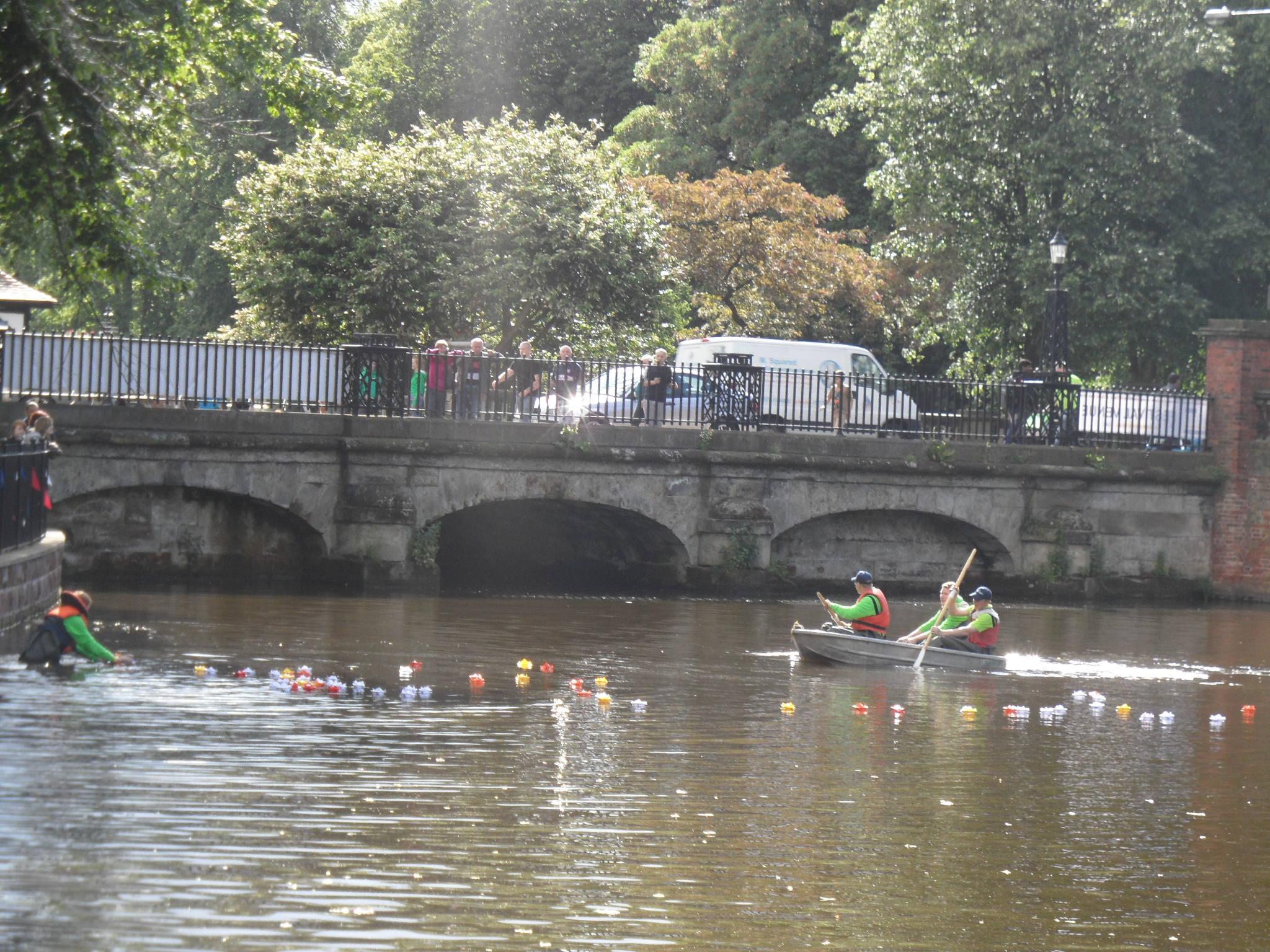
Adding Olympic Flames to the waters of Minster Pool, near the Causeway Brige

It seems that other interesting discoveries have been made near the site of the bridge. According to the Pastscape record, during the 19th century there was a malthouse on the causeway and in 1802, when they were digging a well they discovered a roman goblet called a cyathus and fragments of several human remains. How did they come to be there?

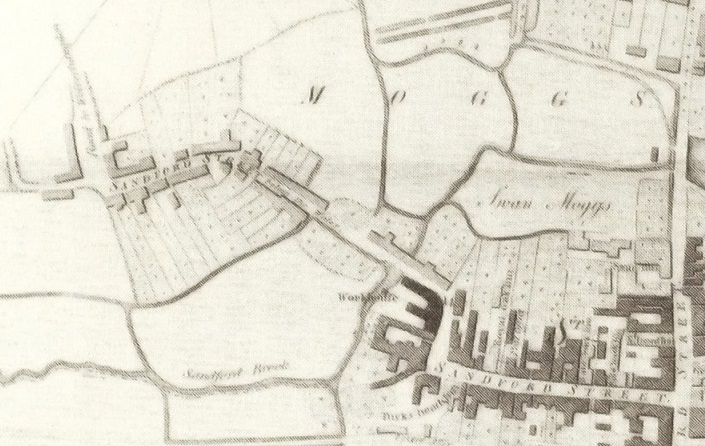
Once again, it’s worth taking a look at John Snape’s 1781 map of Lichfield as it show the extent of the Moggs at that time.

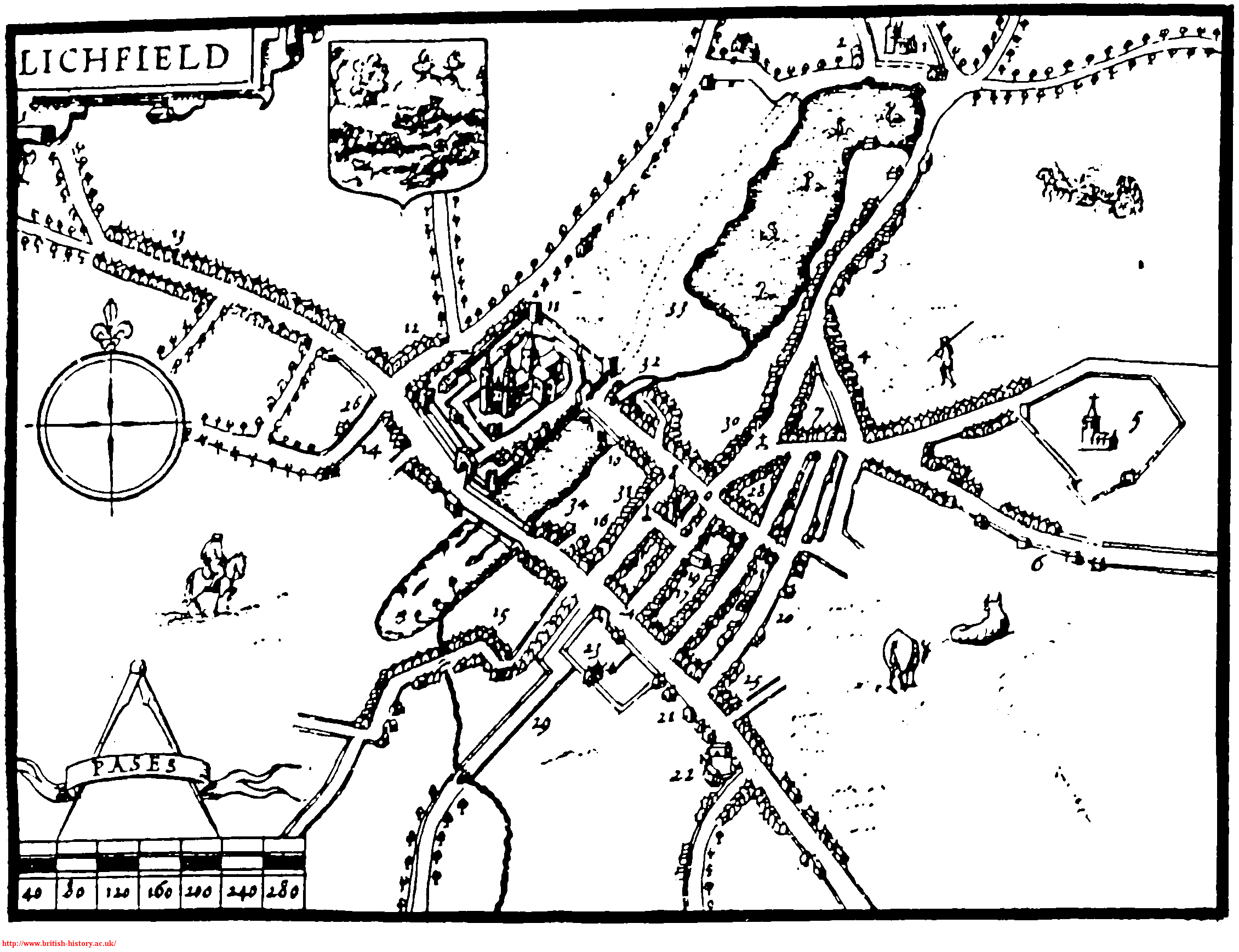
While we’re at it, here’s John Speed’s 1610 map again as well!

1610 map of Lichfield

As you might expect, the Bird St ward banner features the Causeway.

Something I’m especially interested in relating to all this are the references I’ve seen to a well in the vicinity. So far, I’ve seen it called Merelynswele, Merliche Well and Maudlin’s Well and various sources seem to place it adjoining the Bishop’s Fish Pool, and accessible from Shaw Lane.

View down Shaw Lane, off Beacon St

I might be wrong but is the original name made up of three watery elements i.e. Mere-lyns-wele with mere as in Windemere, lyn deriving from the celtic word for for lake and of course wele for well?

The name of the well seems to have changed over the years.  For example, John Jackson suggested that the well became known as Maudlin’s as, ‘Tradition says some person having enjoyed his bottle rather too freely tumbled into this well which has since been distinguished by its present epithet Maudlin signifying a state of inebriation. It is clearly however an abbreviation of Magdalen’s’. Dr Rawson referred to it as Merliche, the pool-marsh well.

What I really need to do is to get down to the record office to have a look at the plan of Maudlins Well and Dean’s Croft that they I’ve just found out that they have. Wait, Dean’s Croft? That sound’s familiar….. Might wait until it stops raining AGAIN though 😦

Sources:

(1) An inquiry into the history and influence of the Lichfield waters by Rawson 1840

(2) A short account of the city and close of Lichfield by Thomas George Lomax, John Chappel Woodhouse, William Newling

History & Antiquities of the Church & city of Lichfield by Thomas Harwood

Collections for a History of Staffordshire Part II- Vol VI (1886)

History of the City and Cathedral of Lichfield by John Jackson

A History of the County of Stafford Vol 14: Lichfield edited by MW Greenslade


Bell-ow the Water

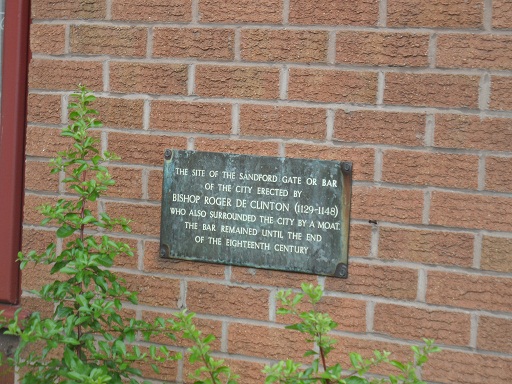
Water is in abundance at the moment, so Sandford Street seems quite an appropriate topic.   The street was once split into two parts -Sandford St and Sandford St, below the water. I believe that the latter is now known as Lower Sandford St, lay outside the city gate, and was once the main road to Walsall.

This plaque is near to the traffic lights on Swan Rd (confusing!) & the corner of Lower Sandford St


Hopefully, this will make more sense in conjunction with John Snape’s 1781 map.

John Snape 1781 map, taken from wikipedia

I’ve only just found out that around the same time as this map was made, an artist called John Glover painted a view of  Lichfield Cathedral from Sandford St. It’s in the Samuel Johnson Birthplace Museum and can be seen here.

The water in question seems to be Trunkfield Brook (formerly Sandford Brook) which still flows, with varying success, through the Festival Gardens. It’s thought that the name Sandford (earlier Sondeforde) might relate to a crossing over the brook, near to the gate. Apparently, a bridge was built there around 1520. I wonder if the brook was bigger in the past, as I’m pretty sure even I could jump over it. Almost.

Trunkfield Brook, often more mud than water.


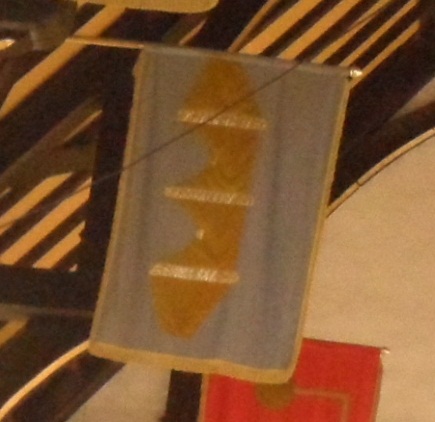
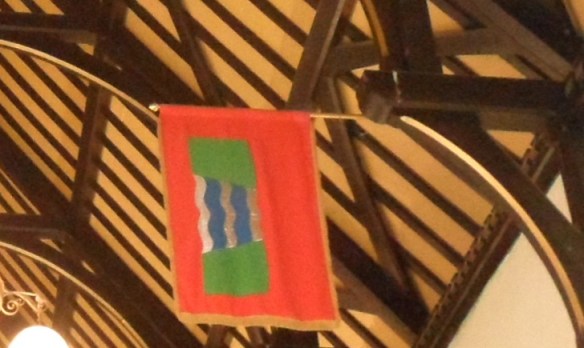
In view of the above, I think that the symbol on the Sandford St below the water ward banner, as shown below, is pretty self explanatory.

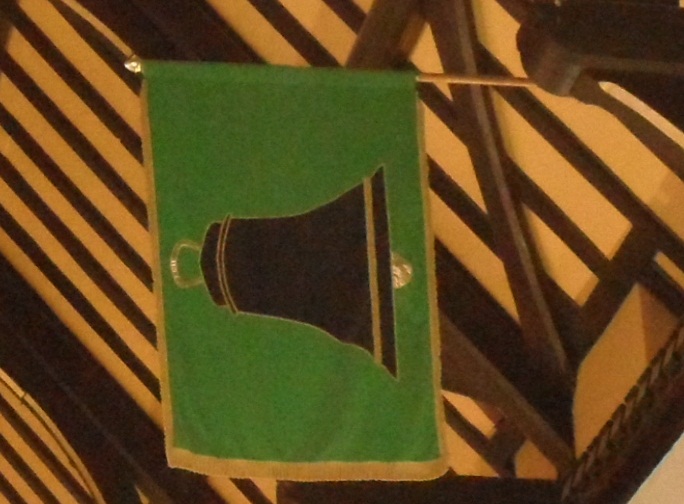
More of a challenge to decipher is the banner for the other part of Sandford St (i.e the bit within the city). Why did they choose to represent this with a bell?

In the absence of anything I can find that links this part of Lichfield specifically to bells, so far all that I can think of is that it might relate to the iron & brass foundry set up in Sandford St in 1879. On an 1884 town plan, it’s shown behind the Queen’s Head. Although it was set up by a Yoxall based firm called Perkins & Sons, Tuke & Bell, who already had a foundry on Beacon St bought it in 1923 and renamed it the Lichfield Foundry Ltd. The Sandford Street works lasted right up until 1983, so there must be plenty who remember it, or even worked there.

On a street somewhere in Lichfield. I’ll be honest, I forgot to note down which one!

So, does this explain the bell? If so, it’s interesting that the foundry wasn’t in existence until 1879, and so the design on the ward banner is unlikely to date to before then. If not…..???

Sources:

‘Lichfield: Economic history’, A History of the County of Stafford: Volume 14: Lichfield (1990), pp. 109-131. URL: http://www.british-history.ac.uk/report.aspx?compid=42349&strquery=sand  Date accessed: 07 July 2012.

A short account of the city and close of Lichfield by Thomas George Lomax, John Chappel Woodhouse, William Newling

Into the woods….

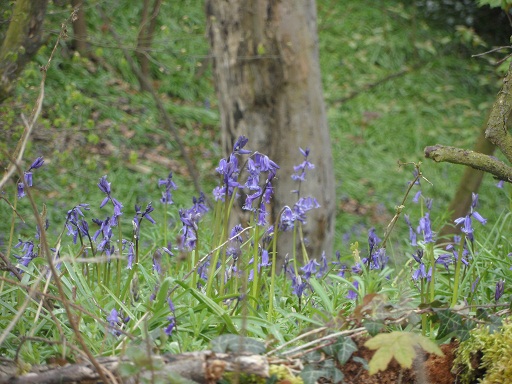
I was lured into the woods by the promise of wood anemones…..then along the path past the old Leomansley mill pools….and finally onto the edge of Pipe Green common.