The Funeral

I’ve long contemplated the idea of writing semi-fiction, taking inspiration from the legends and folklore I love and bringing in elements of my own story telling and experiences. Would it work though, I’ve wondered? Well, I’ve finally concluded that there is only one way to find out….

This is my first attempt. Please be gentle with me.

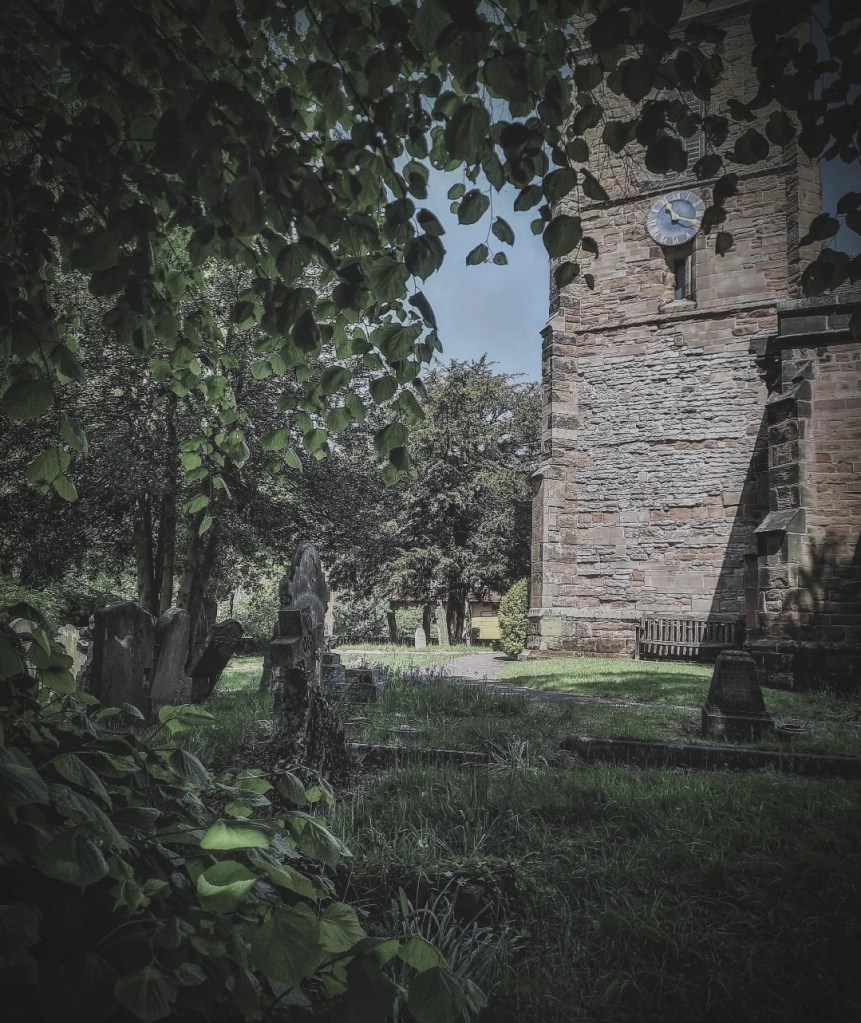
In 1974, a group of children were spooked by the sight of a figure in white rising from a grave in the churchyard of St James, Aldon on their way home from youth club. There was no indication of which grave it was in the newspaper report which had intrigued Felicity Murray and when she arrived at Aldon church on a warm July afternoon in 2021, she found no clues. The cemetery contained the usual assortment of Victorian tombs, any one of which could have been a contender for those strange events explained away as a trick of the light fifty years prior.

After taking a few photographs of the carvings on the church doorway, Felicity took a moment to sit in the sunshine on the bench outside.  On hearing the sound of horses’ hooves, she looked up from her phone and the message she was sending and noticed a funeral cortege approaching the church gates. The two black horses adorned with blue and white plumes and ribbons and pulling a Victorian hearse made for a fine sight but feeling uncomfortable as an uninvited onlooker, Felicity decided to leave the churchyard before the mourners began to get out of their cars. As she slipped out of the gate, Felicity muttered an awkward apology to the female undertaker but received no acknowledgement.

Felicity’s own car was parked just around the corner and as she pulled out of the space, she thought she’d take another look at the horses as she drove past the church. Yet on turning the corner, the horses were no-where to be seen. Neither was the hearse, the undertaker, the mourners’ cars. Nothing was there to indicate the presence of a funeral and the church doors remained shut. Getting back to her car had taken just minutes and even with the greatest efficiency, there was surely no way everyone was already inside.

As a bemused Felicity drove home, she tried to rationalise the experience. Perhaps the church had been a stop off on someone’s last journey and their final destination had been elsewhere? Maybe she’d catch up with cortege a little further up the road. Even the idea that she’d witnessed something paranormal, perhaps the replaying of a past funeral or a time slip crossed her mind but no. Despite the vintage touch of the horse-drawn hearse, every other element had been indisputably contemporary, especially the female undertaker. Distracted by her thoughts, Felicity didn’t notice the cyclist as she pulled out of a junction until it was too late.

The funeral of Jack Sharp took place at St James, Aldon on a warm July afternoon. He was brought to the church in a hearse pulled by two black horses, each adorned with blue and white plumes and ribbons, the colours of his favourite football team. On arriving, the undertaker thought for a brief moment that she’d seen a woman sitting outside the church door but concluded that it must have been a trick of the light.
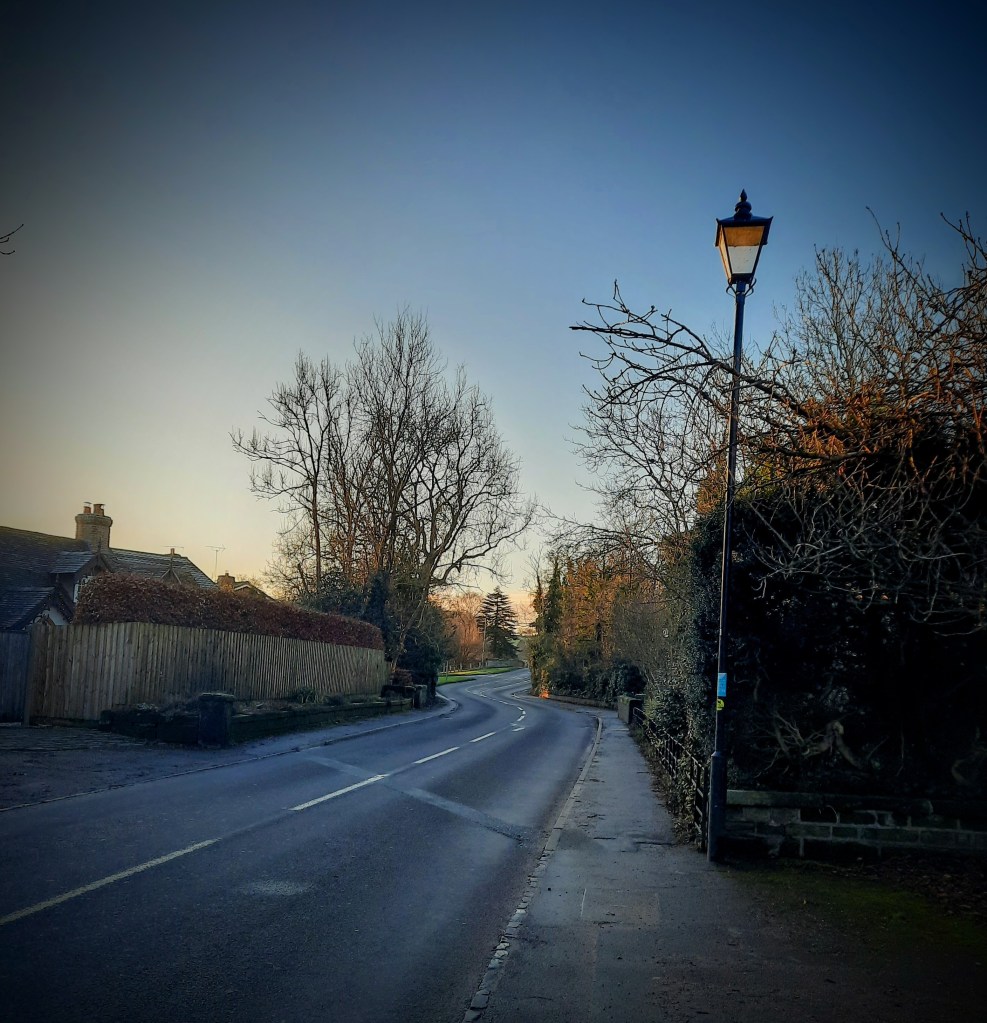
The Walking Dead of Weston

Charlotte Sophia Burne, the first woman to become president of the Folklore Society, once said of Staffordshire, ‘It is comparatively an ordinary occurrence for this or that lately deceased person to ‘come again’ after death’.

I can’t help but wonder if she’d heard of the post-mortem wanderings of Preston Moore and his father in the village of Weston, near Stafford. A book called ‘Phantasms of the Living’, contains the following account from a Mrs J Bennett written in 1882 about the eerie events of 13th April 1860.

“My daughter Annie and I had been drinking tea with the late Mrs Smith and Miss Moore, and talking about their brother Preston being very ill and not expected to recover, and were returning home in the evening when between the little wicket which opens out of the Vicarage field and Mrs Newbould’s house, we met the identical man in face, form and figure, dressed as he was always wont; slouched hat, old frock coat, open in front, knee-breeches and gaiters, with a long stick. He passed so near us that we shrank aside to make way for him. As soon as we got to Mrs Newbould’s she exclaimed, ‘So Preston Moore is dead!’, when we both exclaimed, ‘Oh no, we have just seen him!’. We found, in fact, that he had died about half an hour before he appeared to us’.

Something wicked this way comes

Mrs Bennett was adamant that it could not have been a case of mistaken identity. According to her, ‘We cannot call to mind anyone at all resembling the individual in question; his appearance, dress and gait were utterly unlike anyone else residing in or about the neighbourhood’. More intriguing details emerged during psychical researcher Eleanor Sidgwick’s interview with Mrs Bennett. There was apparently something forbidding about Preston Moore and his sister Miss Moore was also considered odd. Preston may also have had a thing for Mrs Bennett. He once bought her pansies pinched from a neighbouring gentleman’s garden and another time, cauliflowers, also illegitimately acquired. Perhaps I should have saved this story for Valentines Day? ‘Roses are red, violets are blue, here are some vegetables, I’ve stolen for you. Violets are blue, roses are red, I’ll still be around, even after I’m dead’.

A lovely pub. We will definitely come again.

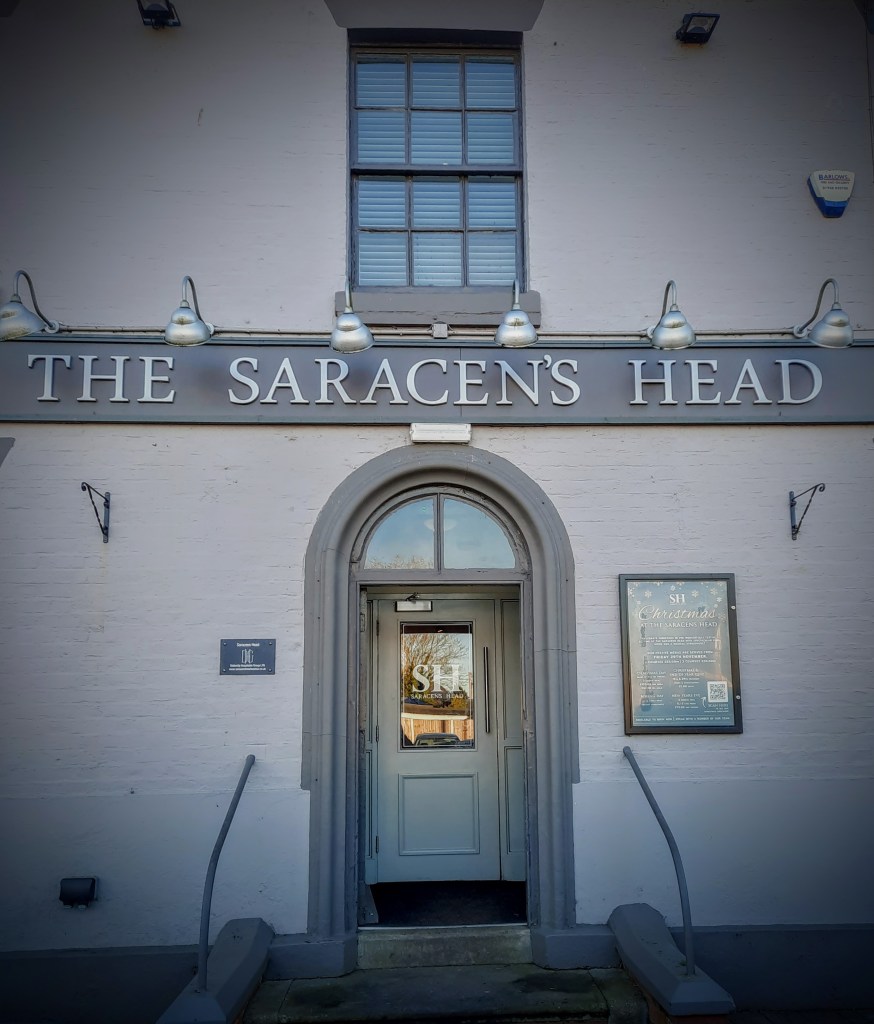
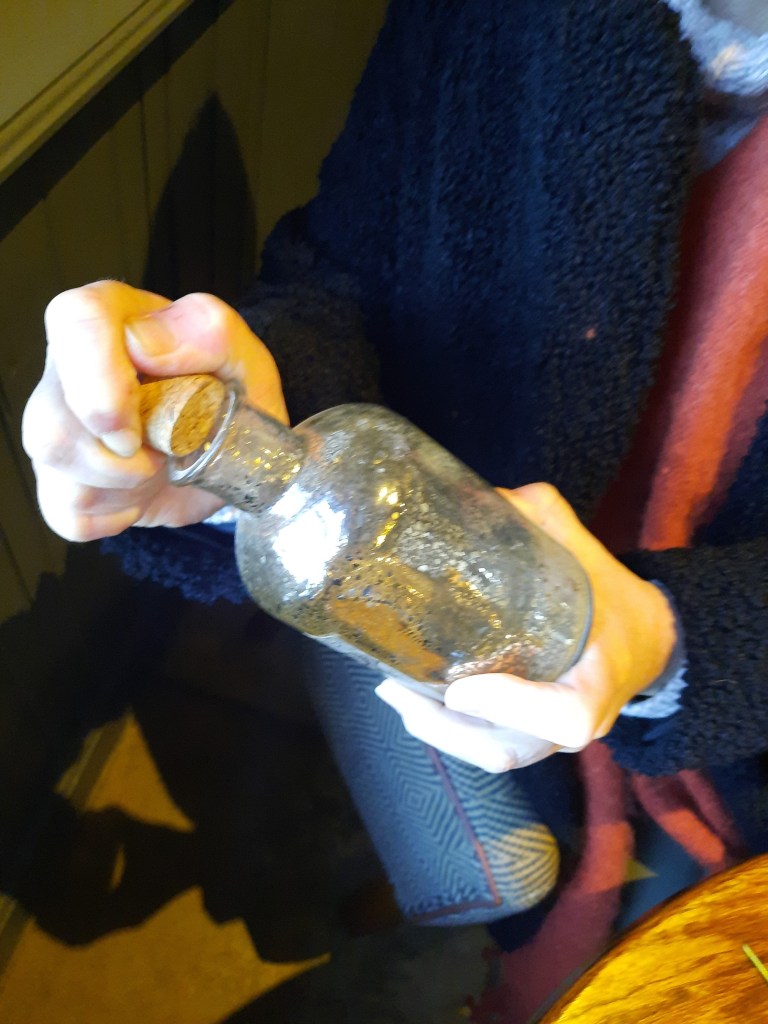
The story as it stands is strange enough but reader, there is a twist in this tale of a dead man walking. An article in the Staffordshire Advertiser in 1901 claims that Preston Moore was not the first of his family to ‘come again’ after his death. There was a legend in the local area that his father’s shade had roamed up and down the road between Stowe and Weston, until locals decided it had had enough exercise and it was time to exorcise this restless spirit. It was laid in a bottle and bricked up in the cellar of the Saracen’s Head Inn to remain there, ‘whilst holly and ivy are green’. It seems that during his life Mr Moore senior may have been the landlord at the inn making the real horror here the idea of being trapped in your workplace for eternity.

She wouldn’t let it lie!

Obviously my good friend Jacky and I went to investigate, by which I mean we popped into the pub for a coffee and pretended we’d found the bottle containing the spirit of Mr Moore on a shelf nearby where we sitting. I am convinced there’s more to be found out about the mysterious Moore family which may explain why the family seem to have been at the centre of village superstition. In the meantime, if you work at the pub, would you pop into the cellar and see if you can find where the old landlord lies? We should have asked but we didn’t have the bottle…

Sources

Staffordshire Folk and the Lore, Charlotte Sophia Burne

Phantasms of the Living, Edmund Gurney, FWH Myers and Frank Podmore

Staffordshire Advertiser 2nd March 1901

Staffordshire Advertiser 2nd March 1901

The Banshee at Weeford Rectory

In June 1863, Alice and Emmeline, daughters of the Rev Robert Cowpland were woken from their sleep at Weeford Rectory by an unearthly wailing. The only other member of the household to have been stirred by the sound was the family bulldog, who was found trembling with terror in a pile of wood. By the end of the month, their mother Jane was dead at the age of 57.

Many years passed, and then at around midnight on a still and calm August night in 1879, the sisters were again woken by, ‘ a terrible sound of shrieking or wailing, unlike anything which we have ever heard, except on the other occasion here mentioned, but louder’. The noise seemed to come from the passage leading past the door to their father’s bedroom, and so the sisters leapt from bed, lit candles and rushed from the room without even pausing to put on dressing gowns. Outside on the landing, they met their brother, the groom, the cook and the housemaid, all who had been woken by the supernatural sounds. Even the dogs in the house were said to be bristling with fear at the nocturnal noise which was later described by Alice Cowpland as being seemingly borne by a wind inside the house and amongst the rafters, an awful howling which seemed to rush past her, accompanied by a strong wind, although everything outdoors was perfectly still. As whatever it was left via a window, silence returned to the house save for the sobs of the cook. She knew what had just been amongst them and that it was a warning that her master’s days were now numbered.

Only the Rev Cowpland remained asleep throughout the banshee’s visit and confirmed at breakfast the following morning that he’d not heard a thing. As the cook had feared however, the wailing had been a warning and a fortnight later, on 9th September 1879, he died at the age of 75. It is somewhat ironic given the events of that evening, that the Lichfield Mercury describes him as having quietly passed away.

The church at Weeford where the Rev Cowpland is buried

By the middle of May 1885, Alice was married and living at The Firs in Bromyard. Her sister Emmeline was staying with her, and her brother Francis was at Upper House, Bishop’s Frome, around five miles away. Once again the two sisters, along with a woman called Emily Corbett and other servants, heard the wailing one night, though not as loud as it had been at Weeford and by the end of the month, Francis was dead.

At the end of August that year, the banshee returned again to The Firs. This time around, Alice not only heard the harbinger of death but she also saw one. On 1st September, she noticed a black dress in her bedroom, which rose up and took the form of a figure. It looked straight at her for a few seconds and she saw it was her sister Annie, her face pale and with a look of anguish. She was wearing a bonnet and a veil and the vision was so clear, she could see the freckles on her sister’s nose. The figure did not disappear instantly, but seemed to fade away. The same evening, a niece staying at the house also saw an apparition of Annie Cowpland. In her written account of those strange events, she says she was taking a bath when something compelled her to look towards a couch near the bed, where she noticed a figure dressed in black crepe. She immediately recognised it as her aunt and asked how it was that she was there. The figure then faded again. The following night at dinner, a message arrived at the house to say Annie Cowpland was dangerously ill. She died of diptheria two days later.

According to Alice, her mother Jane had sometimes experienced supernatural visits from those who were about to pass. In 1857, she saw her brother-in-law, the Rev William Cowpland, rector of Acton Beauchamp in Worcestershire, in her bedroom. She asked when he had arrived but received no response and the following day, a telegram arrived to say he had been found dead in his bed at the age of 55. Three years later, Jane heard footsteps in the hall of the Rectory at Weeford and saw William Dunn, a gardener at the house of a relative. It later transpired that he had died around the same time as his apparition had been seen, and shortly before his passing had expressed a wish to see Mrs Cowpland. In a way the strangest apparition of all occurred in 1862, when Mrs Cowpland saw an acquaintance of hers, known as Mrs F, at the foot of her bed. Again the appearance coincided with the time of death but as the two women weren’t close, Jane Cowpland always wondered why she had been the recipient of the woman’s final visit.

Alice passed away in 1915 and it would be fascinating to know if anything was heard from the banshee on the occasion of her death and indeed why it appears to have attached itself to them in the first place. It’s a subject that fascinates me given that I have my own family chronicles of deaths foretold, albeit in more hushed tones than the wails of the Cowplands’ banshee.

Sources

Proceedings of the Society for Psychic Research