The Wishing Stones

It took me a while to find the wishing stone at Pye Green and it’s taken me even longer to write up what I found about the tale behind it on here. This story appeared in an old newspaper, told to the writer by a ‘greybeard’, one of the descendants of a family of Cannock Chase foresters, and I’ve taken the liberty of retelling it in my own words.
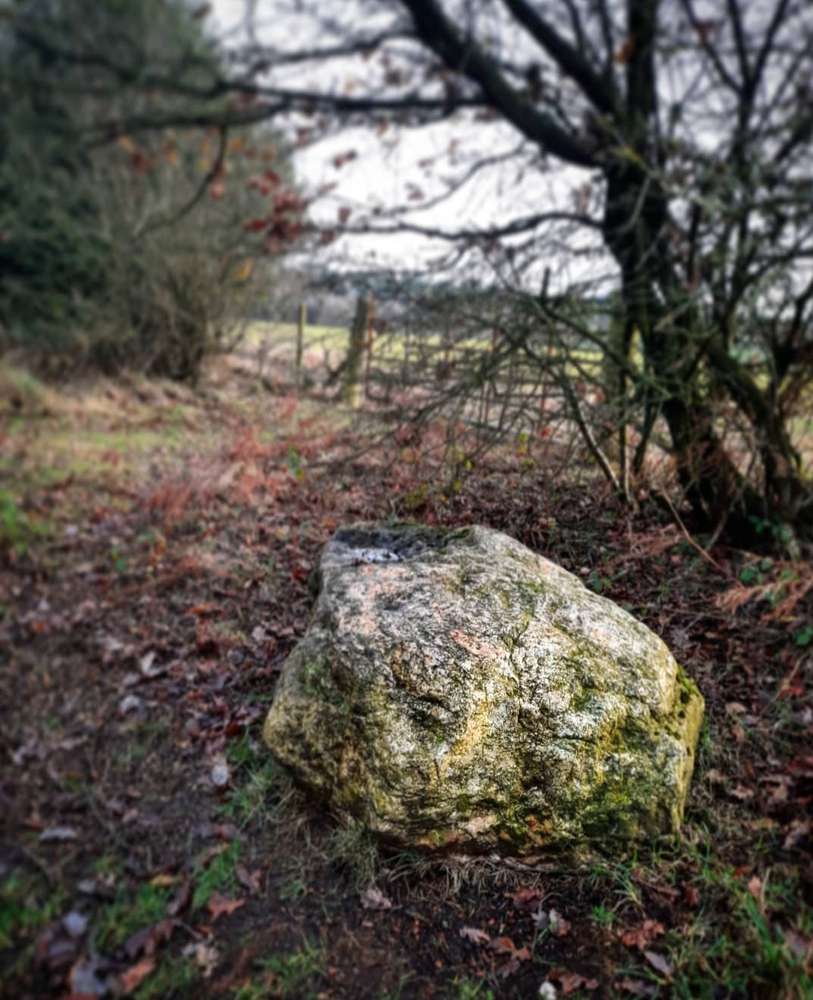

During the English Civil War, the Wishing Stone was the place where a young soldier and one of the daughters of the Cannock Chase foresters would meet. One day the soldier was called away to fight for the King at Worcester and left his lover with a promise to return. Every day that followed, she would wait at the stone for him and those passing her on the old packhorse route known as Blake St would hear her wishing for his return. Weeks passed by and one evening, when she didn’t return home, her father went looking for her. The local women suggested he try the stone and that’s where he found her, lips no longer wishing for her soldier to return but blue and still. The local women speculated whether it was the cold or a broken heart that took her in the end. When the soldier returned and asked where he could find her, ‘her body is in Cannock churchyard’ the local women replied, ‘but her soul is at the place we now call the Wishing Stone’.

Centuries later, if you stand at the stone and listen carefully, you can hear what sounds like a voice saying ‘I wish, I wish, I wish’. It might just be the wind blowing through the trees which surround the stone but the local women will tell you otherwise.

Newton Road Rail Station opened 1837. Closed 1945

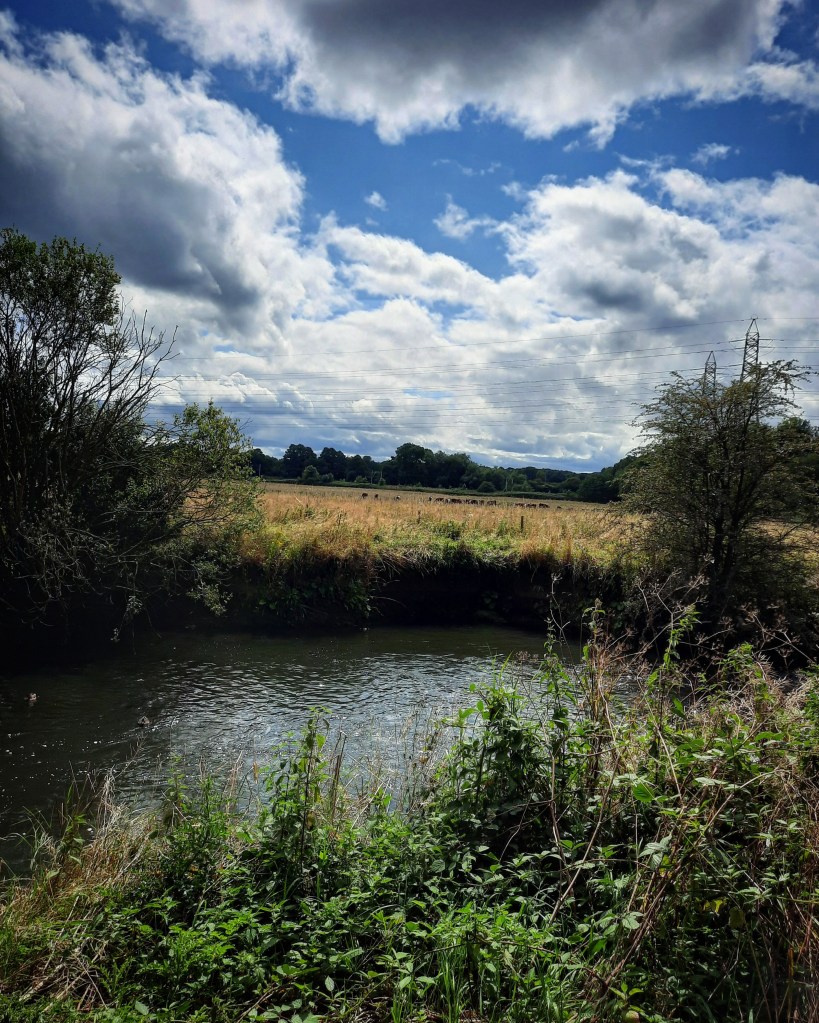
Two summers ago, I went to find another wishing stone over Walsall way (yes, I really do need to work on writing stuff up sooner). It’s described as being by a stile in a field leading to Newton Road Old Station on the London and North Western Railway. Folklore says all true lovers who step on the stone will have whatever they wish for come true in twelve months and a day. According to the author of the article in the Walsall Advertiser, you would often find love sick couples loitering around the place but all I could see was cows. I think the stone is on the opposite side of the River Tame to where I was but I wasn’t willing to wade over, even for a wish. I am hoping to go back tomorrow however, as I want to find an aqueduct with a haunted patch of grass and the ruins of the priory alongside the eponymous Sand Well. Is it a wishing well though?
Cannock Chase Courier 21st September 1912

Walsall Advertiser 6th September 1913

Every Picture Tells a Story

In 1961, the 21st Earl of Shrewsbury sold Ingestre Hall to what was then the West Bromwich Corporation. Along with the red-brick Jacobean style mansion came sixty-six paintings, most of them portraits of the Earl’s ancestors – the Chetwynd, Talbot and Shrewsbury family.The collection was catalogued in 2013 by the Ingestre Festival Association to celebrate the 400th anniversary of the building of the hall and is available to view on the BBC website here, as part of their ‘Your Paintings’ project.

Ingestre Hall

Ingestre Hall by Jason Kirkham

Amongst them are George Talbot, Keeper of Mary Queen of Scots for fifteen years and his wife Bess of Hardwick, arguably the second most powerful woman in Elizabethan England. The 19th Earl of Shrewsbury, Charles John Chetwynd-Talbot, appears twice – aged four and wearing a red dress and aged around twenty five and wearing full dress uniform. The infamous Anna Maria is here too, as a young woman of seventeen, in the year that she wed Francis Talbot and became Countess of Shrewsbury. The marriage would end with the Earl’s death, fatally wounded by his wife’s lover, George Villiers, 2nd Duke of Buckingham, in a duel that took place on 16th March 1667. The event was recorded by Samuel Pepys who described Anna Maria as, ‘my Lady Shrewsbury, who is a whore, and is at this time, and hath for a great while been, a whore to the Duke of Buckingham’.There were reports elsewhere that she had attended the duel disguised as the Duke’s page but whether these rumours (or the ones about what happened in that bloodstained shirt afterwards) are true, we’ll never know.  Also at Ingestre is a portrait of the Shrewsbury’s younger son, John Talbot, who in a twist of fate was also killed in a duel, sometime around his 21st birthday in February 1686.  This cause this time was not infidelity but, ‘having given the Duke of Grafton very unhandsome and provoking language’.

The grand staircase aka The Blue Staircase. By Jason Kirkham

The grand staircase aka The Blue Staircase. By Jason Kirkham

As far as I can see, there is no portrait of Francis Talbot. Perhaps it was destroyed in the devastating fire which swept through the hall on the night of 12th October 1882.  Unfortunately, no inventory was taken until afterwards. A contemporary account tells us that, “Some valuable paintings…were saved”, but that “The grand historical paintings on the staircase, however, were all destroyed”.

Hanging on the staircase in the place of these lost paintings are portraits which reflect a chapter in the history of the hall’s present owners, Sandwell Metropolitan Borough Council. There are paintings of the Earl of Dartmouth, and Alderman Reuben Farley who persuaded him to lease part of his estate for a nominal rent of £1 in order that a park could be established for the people of West Bromwich. Under Sandwell Council’s ownership, the hall is used mainly as a residential arts centre, although it can also be hired out for weddings. I’m sure that dreams of having a photograph taken on the grand blue staircase in a nice white frock have influenced many a prospective bride’s decision in choosing Ingestre as the setting for their big day.

Blue Staircase with portrait of Alderman Reuben Fairley JP

Blue Staircase with portrait of Alderman Reuben Fairley JP. By Jason Kirkham

Impressive as the grand staircase is, it was the nearby secret staircase hidden behind a wall which captured my imagination. Leading to what was easily the shabbiest of all the rooms we saw, it would be quite easy to believe that no-one else had stepped inside here since 1961.

Inside the not-so-secret waiting room

Inside the not-so-secret waiting room. By Jason Kirkham

It’s thought the room may have been used by those waiting for a signal from the Pavilion to tell them that the coast was clear for illicit night time activities of some description to commence.  If only those carved Talbot dogs could talk…

One of the many Talbot dogs at Ingestre

One of the many Talbot dogs at Ingestre. By Jason Kirkham

Bookcase Ingestre

In the library. By Jason Kirkham

There’s yet another concealed door in the library, in a bookshelf full of pretend books. As Joss Musgrove Knibb from the Lichfield Gazette pointed out to me, even more shocking than this literary deception is that whoever was responsible didn’t even take the opportunity to include puns along the lines of, ‘Percy Vere, in 15 large volumes’ as they had done at Chatsworth. Seems the conclusion to be drawn from an afternoon at Ingestre is this – it’s the paintings and not the books which tell the stories here.

Notes: Thanks to Jason Kirkham of UK Urbex, who has very kindly let me use his photographs as I forgot my camera. And then couldn’t download the ones I took on my phone. (Let’s be honest, it’s probably worked out better that way)

Sources:

http://www.telegraph.co.uk/news/obituaries/1423544/Nadine-Countess-of-Shrewsbury.html
http://www.altontowers.com/alton-towers-heritage/heritage/family/the-11th-earl-francis/ The Diary of Samuel Pepys, Volume 2
A Short History of Ingestre by Anne Andrews
Catalogue of Paintings – Ingestre Hall Residential Arts Centre
Portraits of Illustrious Personages of Great Britain by Edmund Lodge