The Valley of Phantoms

I’m reading the memoirs of a man named William Purcell Witcutt. Like me he had connections to both Birmingham and Staffordshire, and was fascinated by folklore. Unlike me, he was an protestant vicar who converted to Catholicism before being exiled to the furthest outpost of the Diocese for the crime of commenting on the corrupt nature of many medieval priests. Yes, they sent him to Leek.

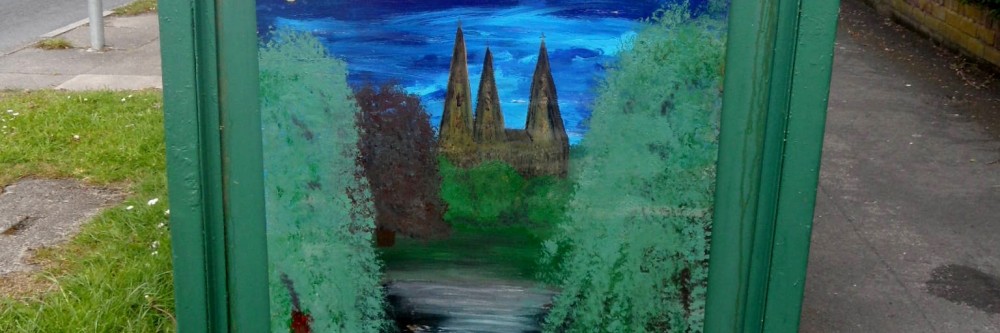
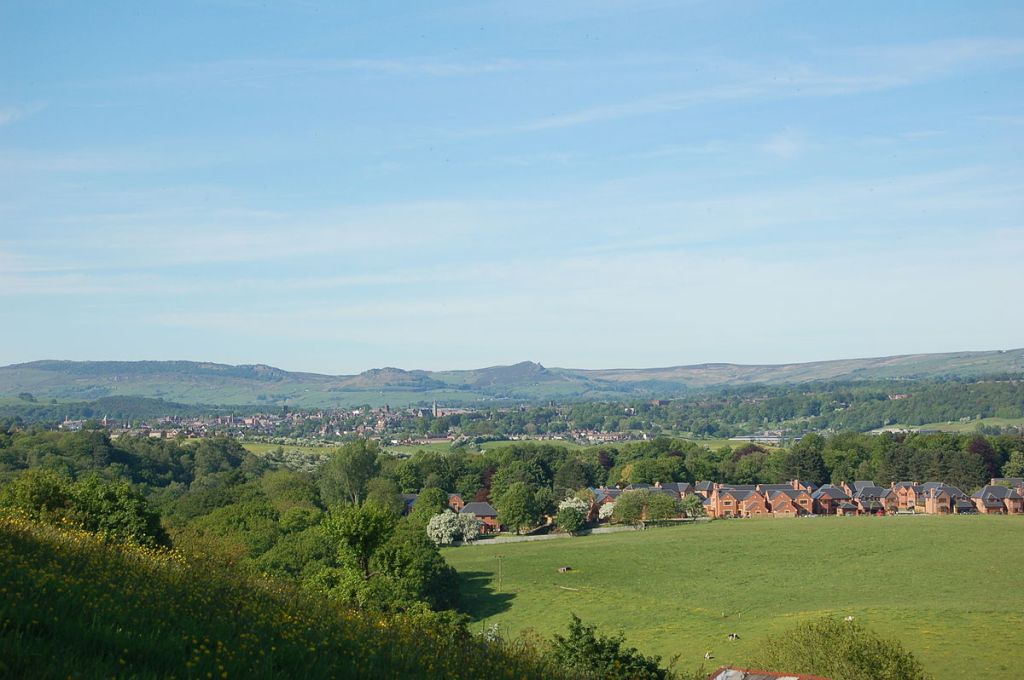
In his book, ‘Return to Reality’ there is a chapter called ‘The Valley of Phantoms’, in which he describes how, ‘Leek lay hidden in mist and woods in the middle distance, and one of the older boys tried to convince me that it was invisible from the air. Leek will never be bombed said he, and quoted with assurance the prophecy that there would come a time when, ‘there will be no safety in the land save ‘twixt Mow Cop and Morridge’.

No I can definitely see it

Witcutt was soon to find plenty more superstition in this Staffordshire Moorland town. It seemed to him that the valley and moors around it swarmed with ghosts and bogies, which people still believed in. There was the Headless Horseman, or in Leek dialect, ‘a man on an ‘oss without yed on, an awful gory sight’, and nearby was a Black Dog who guarded the graves of those who died a violent death. According to Witcutt, the Queen of the Leek demons was the Mermaid of Black Mere, who I wrote about many years ago here. A new story to me was that of ‘Ball Haye Jack’, a little grey man whose appearance in front of one of the mills was believed to bring bad luck. One curious custom Witcutt noted was that on seeing his collar, the girls and women who worked in the mills would touch the factory railings, a somewhat unsettling reaction given it seems to be linked to the superstition that touching iron would protect against the power of a sorcerer.

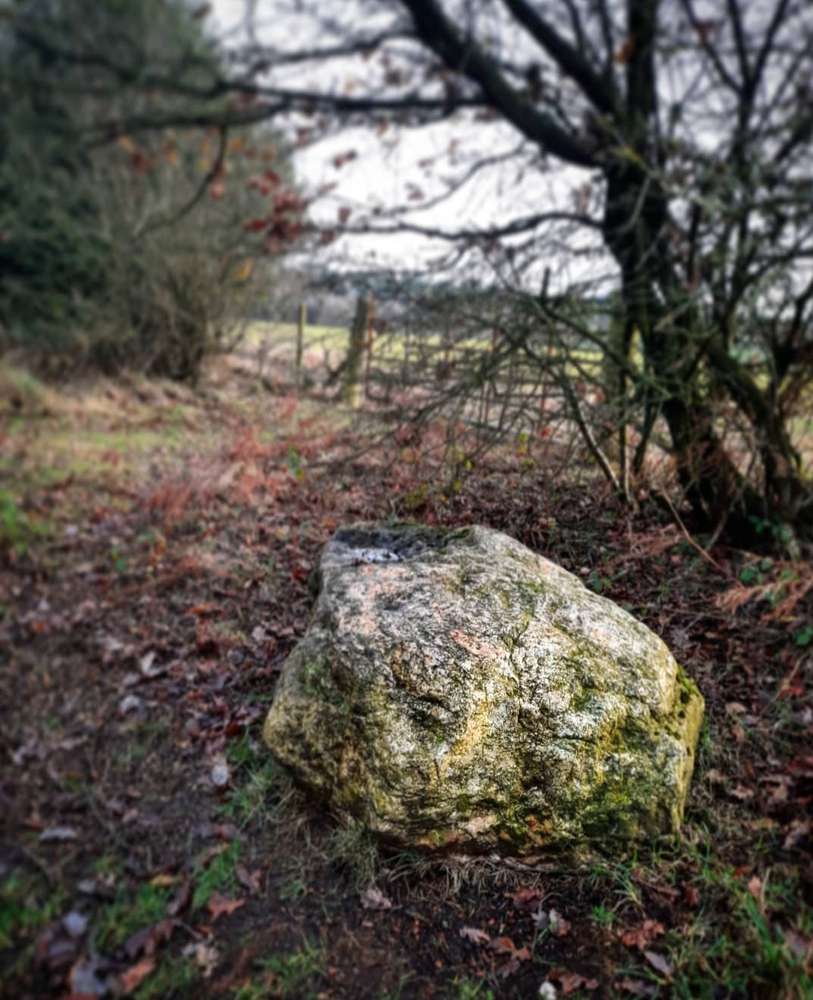
One of the strangest spots Witcutt writes about is the Coombes Valley, When he visited in May 1940 he found a farmer planting potatoes and as the man sowed his spuds, he shared stories of the valley. At a place nearby, the spectre of a murdered man was said to ride up and down the ridge. Once seven priests came to lay him but all but one of the gathered fathers fled. The final man standing held up a stone in the brook, dismissing the pleas of the phantom for mercy, and laid him beneath the rock. The process appears to have been unsuccessful however and so the dead man rode out once more. This next time he was laid beneath a hawthorn tree at a place known very appropriately as Spirit Hole. Even that was only sort of successful though as he still haunts the valley, although now in far less malevolent form of a bird heard singing as the night falls at the Spirit Hole. The stone which had failed to keep the ghost grounded was still there when Witcutt visited (and I believe it still is), and according to the farmer it had once been a stone of sacrifice.

No wonder the valley is full of phantoms.

Source: WITCUTT, W.P. Return to reality, Macmillan, 1955.

The Wishing Stones

It took me a while to find the wishing stone at Pye Green and it’s taken me even longer to write up what I found about the tale behind it on here. This story appeared in an old newspaper, told to the writer by a ‘greybeard’, one of the descendants of a family of Cannock Chase foresters, and I’ve taken the liberty of retelling it in my own words.


During the English Civil War, the Wishing Stone was the place where a young soldier and one of the daughters of the Cannock Chase foresters would meet. One day the soldier was called away to fight for the King at Worcester and left his lover with a promise to return. Every day that followed, she would wait at the stone for him and those passing her on the old packhorse route known as Blake St would hear her wishing for his return. Weeks passed by and one evening, when she didn’t return home, her father went looking for her. The local women suggested he try the stone and that’s where he found her, lips no longer wishing for her soldier to return but blue and still. The local women speculated whether it was the cold or a broken heart that took her in the end. When the soldier returned and asked where he could find her, ‘her body is in Cannock churchyard’ the local women replied, ‘but her soul is at the place we now call the Wishing Stone’.

Centuries later, if you stand at the stone and listen carefully, you can hear what sounds like a voice saying ‘I wish, I wish, I wish’. It might just be the wind blowing through the trees which surround the stone but the local women will tell you otherwise.

Newton Road Rail Station opened 1837. Closed 1945

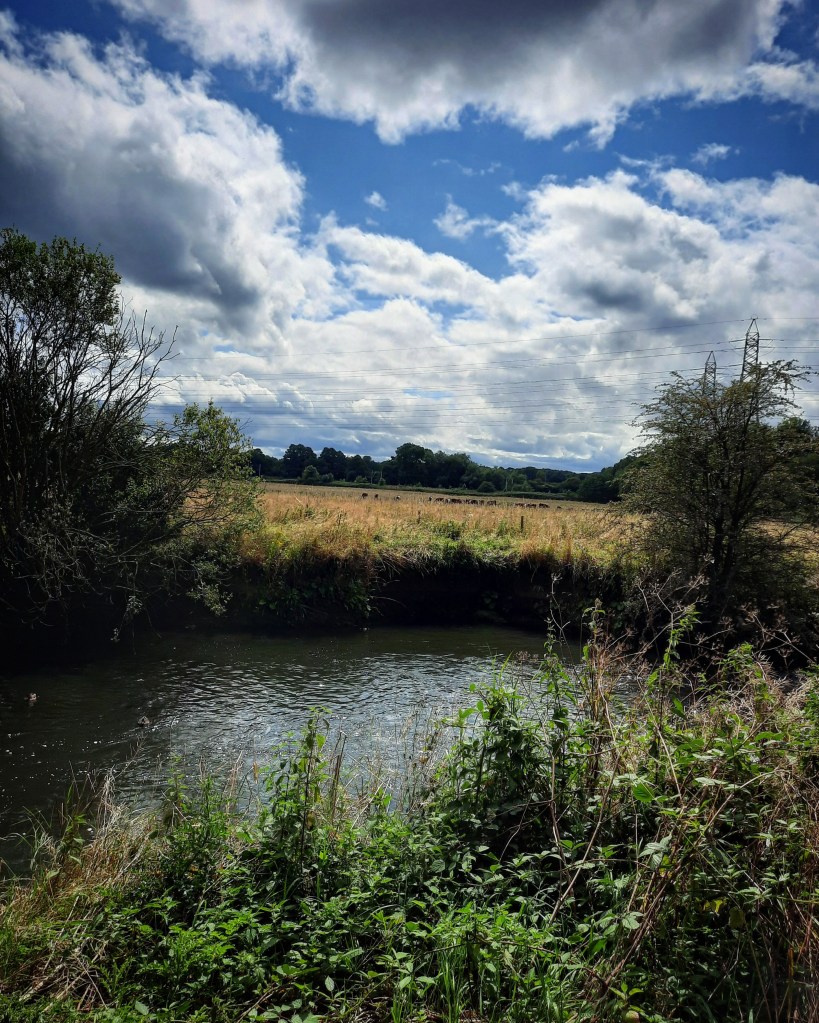
Two summers ago, I went to find another wishing stone over Walsall way (yes, I really do need to work on writing stuff up sooner). It’s described as being by a stile in a field leading to Newton Road Old Station on the London and North Western Railway. Folklore says all true lovers who step on the stone will have whatever they wish for come true in twelve months and a day. According to the author of the article in the Walsall Advertiser, you would often find love sick couples loitering around the place but all I could see was cows. I think the stone is on the opposite side of the River Tame to where I was but I wasn’t willing to wade over, even for a wish. I am hoping to go back tomorrow however, as I want to find an aqueduct with a haunted patch of grass and the ruins of the priory alongside the eponymous Sand Well. Is it a wishing well though?

Cannock Chase Courier 21st September 1912

Walsall Advertiser 6th September 1913

The Highwayman’s Grave

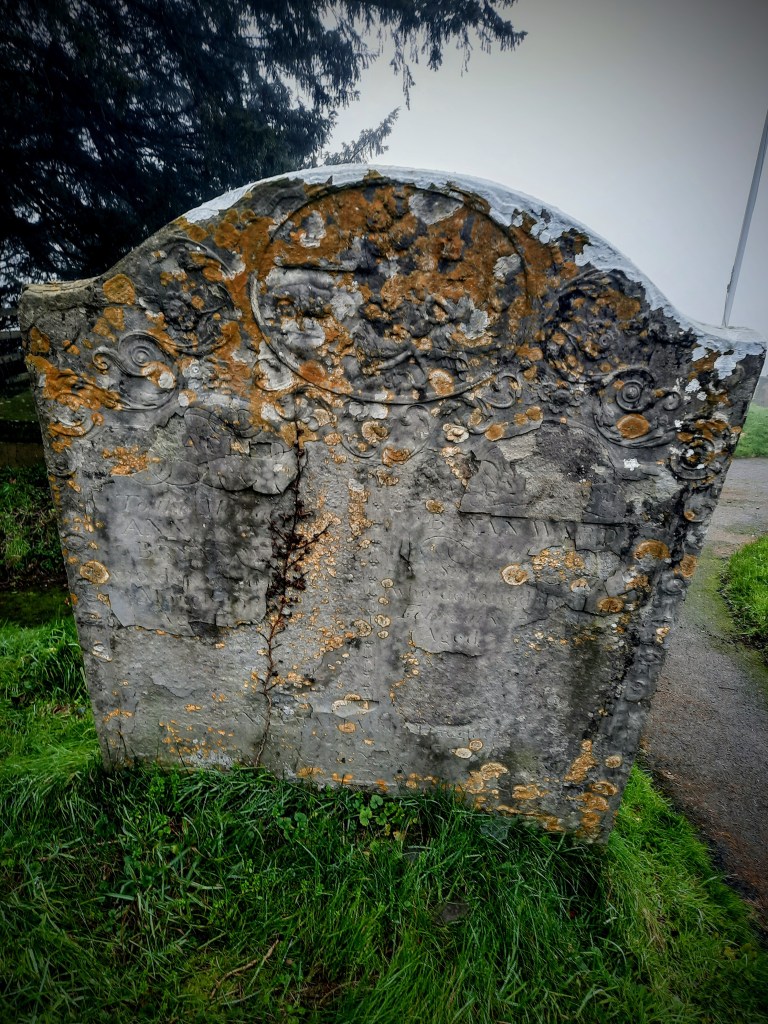
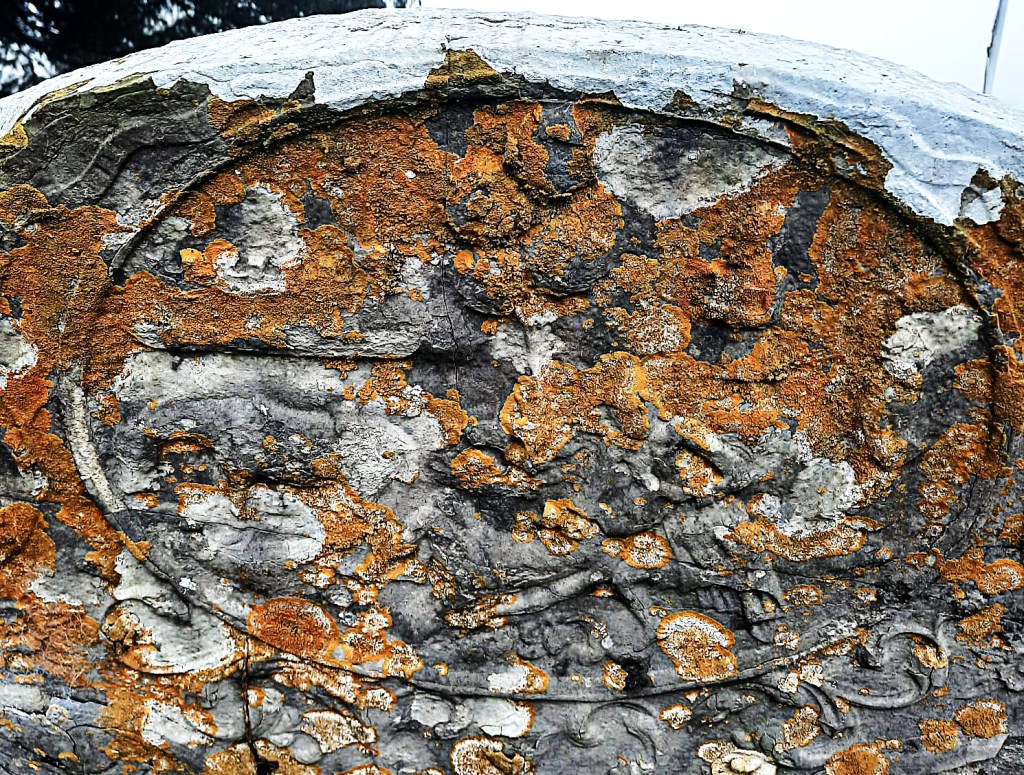
I love a tomb with a tale attached and the churchyard at Sandon delivered. An article in the Staffordshire Sentinel in December 1955, talks of, ‘a grave, said to be that of a highwayman who met his death at Sandon. Certainly the curious shape of a horse and rider on the gravestone would bear out this legend’. A misty winter’s morning, in the dead days of last December, provided the ideal conditions to seek it out and, as the fog swirled around our feet, we found it. Sadly, those curious shapes are now encrusted with lichen and much-weathered by the sixty-nine winters which have passed since the description in the Sentinel was published.

Six months on and I’m still trying to solve the mystery of the so-called highwayman’s headstone. A figure lays stricken on the floor, a man leaning over with his hand on their heart. Whether he’s trying to slay or save them isn’t obvious. To the right, two men stand look-out and at the back is a riderless horse. There’s a church in the carving but as it has a spire this can’t be Sandon, which does not. I’m describing it from a photo taken in 1965 ago which is in the Historic England collection. Unfortunately, their copyright rules don’t allow me to share it here for you to see yourself although I have contacted them to see if I can get permission.

The inscriptions on the tomb are as follows:

To the Memory of
Ann the Wife of
BRYAN WARD
who departed this life
March 19th 1807
Aged 65 Years

BRYAN WARD
of Smallrice, Gent
who departed this life
February XX 1809
Aged 74

Anna Maria their daughter
died September 15th 1797

Something else is written below the inscriptions for both Ann and Bryan but was illegible even on the 1965 photo.

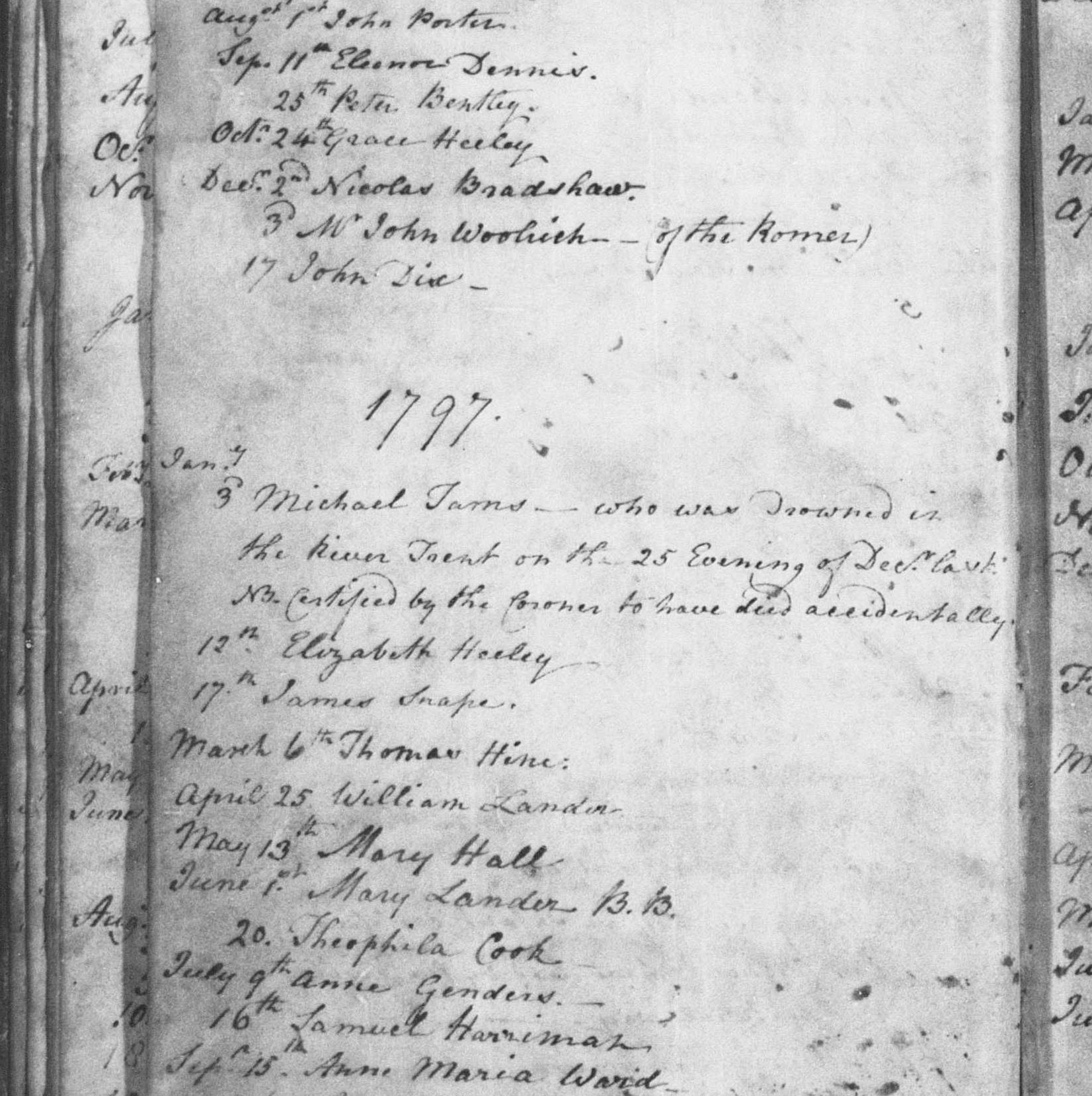
The All Saints parish register has the entries for Mr Brian Ward’s burial on 23rd February 1809 and five year old Anna Maria Ward’s burial on 15th September 1797. Neither has a note attached to suggest there was anything unusual or untoward about their deaths. I’m sure that had there been, the Vicar of Sandon would have included something as above the entry of Anna Maria’s is a record of the burial of Michael Tams supplemented to say he was drowned in the River Trent on the 25 Evening of December.

The burial record for Anne Maria Ward on 15th September 1797

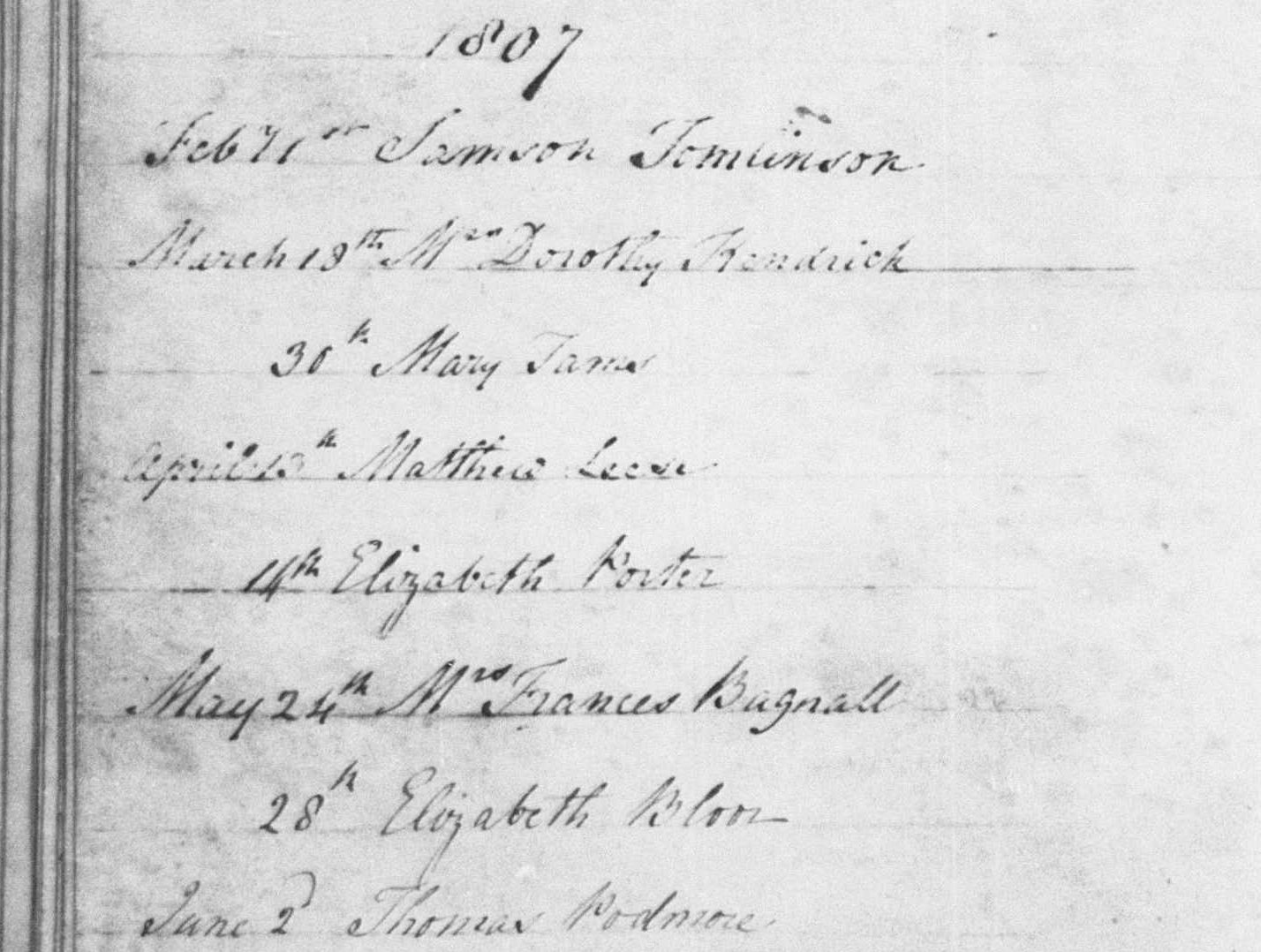
What I can’t find in the Sandon register is a record of the burial of Ann Ward in 1807. In fact, I can’t find any record of her burial at all.

I’m starting to suspect that the curious carving at Sandon might depict the death of Ann Ward in someway but if she wasn’t buried beneath it here at All Saints, then where is she? Are we going to be able to solve the mystery and rewrite the local legend of The Highwayman’s Grave?

Soul Sister

Friend and well hunting expert Pixy Led described Nun’s Well at Cannock Wood as being, “…perhaps the most hidden of all the springs and wells I have investigated”, and it was only thanks to his post about the site on his brilliant Holy and Healing Wells blog that this well hunting amateur was able to locate it. Between Pixy’s and my visits, it appears the site has been tidied up considerably and this is my attempt to do the same historywise, purely to satisfy my own curiosity.  It’s much more appealing than sorting out the cupboard under the stairs. Or cleaning for the Queen.

nuns well board

Nun’s Well is a spring rising in a chamber cut from rock with a sixteenth century Tudor style brickwork arch. Legend has it that the well has healing powers, specifically for sore eyes, and takes its name from a nun who was murdered there. Centuries after she was pushed to her death, two farm labourers discovered her earthly remains in the sealed up well and her ghost materialised before them. As Pixy points out on his blog, however, two of the best known works on Staffordshire folklore don’t even mention the well let alone its resident spirit.  I have found a reference in Robert Garner’s 1844 Natural History of the County of Stafford, which also doesn’t mention the ghost story but does offer an alternative explanation of how the well got its name,

“To descend to more recent times we lately visited a spot where one of our early monastic institutions was placed, Redmore, from which the nuns were soon removed to Polesworth because the gay cavaliers riding that way to hunt on Cannock Chase spoiled their devotions. With some trouble we found the solitary quadrangular site not far from Gentleshaw in some low ground embosomed in a wood through which a brook flows now ochrey from the scoriae of an ancient smelting place above and here also is a well considered medicinal and still called the nun’s well”.

It’s still not an entirely satisfactory version of events though (although there’s something undeniably satisfying about seeing something described as being embosomed in a wood. Must be the logophile in me).
nunswell sign

There does appear to have to have been a monastic institution near to the well. Records show that in 1141, King Stephen granted land at Radmore or Red Moor to two hermits called Clement and Hervey and their companions. Frequent disturbances from passing foresters, rather than gay cavaliers, interrupted the quiet contemplations of Clement, Hervey and co, causing them to ask Empress Matilda if she could find them somewhere a bit quieter. It’s recorded that she agreed to this on the condition that their religious house be converted to the Cistercian order. It seems the hermits kept their part of the deal, and the retreat became a Cistercian abbey but according to the History of the County of Warwick, the foresters continued to cause problems. As soon as Henry II ascended the throne in 1154, the now Cistercian Monks petitioned him to transfer them to his manor at Stoneleigh. Henry did so and traces of the original abbey can still be found at Stoneleigh Abbey, now a grand country house.

Whether anything of the original abbey remains at Radmore is where things get really messy. Ordnance Survey maps of the area from the 1880s onwards show the site of a priory near to the well (see the 1949 map incorporated in Brownhills Bob’s post on Gentleshaw Reservoir here). According to Walsall place names expert and tricycle rider Duignan this is actually a muck up on behalf of the surveyors who, “… have mistaken furnace slag for ancient ruins (of the abbey)”.  What he found on the site was, “heaps of furnace slag, evidently of great antiquity, with 300-400 year old oak tress standing on and beside the slag”. It seems from the description of the site given by Historic England that that these could mark the site of a medieval bloomery or iron furnace. A medieval moated site also exists in the vicinity and there are suggestions that this is the site of a royal lodge established by Henry II shortly after the monks moved on to pastures quieter. As Staffordshire County Council’s Historic Environment Character Assessment report says, ‘the precise location of the abbey is unknown, but it is believe to have stood near Courtbank Coverts near Cannock Wood where a scheduled moated site and bloomery survive’.

nuns well fence

So, in the area we have a moated site, a hunting lodge, iron working and a short-lived abbey (somewhere) but how and where does the nun fit in to all this? Duignan suggests the name arose as the land was owned by the nunnery at Farewell. I read an interesting line in the History of the County of Stafford’s section on the Abbey at Radmore which says, ‘King Stephen granted Radmore, probably between 1135 and 1139, to Clement, Hervey, and their companions as the site for a hermitage…Bishop Roger de Clinton confirmed this grant and gave the hermits permission to follow any rule they wished and to receive and instruct any holy women who came to them after adopting a rule”. That suggests to me that there may have been holy women here at Radmoor…nuns? Hardly the most watertight of etymological explanations I know but then I don’t think Duignan’s is that convincing either. Is it? Although Nun’s Well is not technically a wishing well, please do feel free to throw in your two pence worth.

nunswell water


Sources:

G C Baugh, W L Cowie, J C Dickinson, Duggan A P, A K B Evans, R H Evans, Una C Hannam, P Heath, D A Johnston, Hilda Johnstone, Ann J Kettle, J L Kirby, R Mansfield and A Saltman, ‘Houses of Cistercian monks: The abbey of Radmore’, in A History of the County of Stafford: Volume 3, ed. M W Greenslade and R B Pugh (London, 1970), p. 225 http://www.british-history.ac.uk/vch/staffs/vol3/p225 [accessed 4 March 2016].

https://historicengland.org.uk/listing/the-list/list-entry/1003750

‘Parishes: Stoneleigh’, in A History of the County of Warwick: Volume 6, Knightlow Hundred, ed. L F Salzman (London, 1951), pp. 229-240 http://www.british-history.ac.uk/vch/warks/vol6/pp229-240 [accessed 7 February 2016].

http://cistercians.shef.ac.uk/abbeys/stoneleigh.php