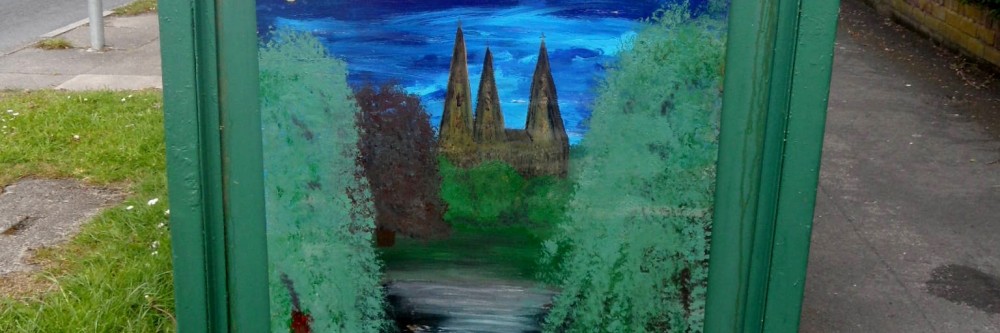
Making a Mark

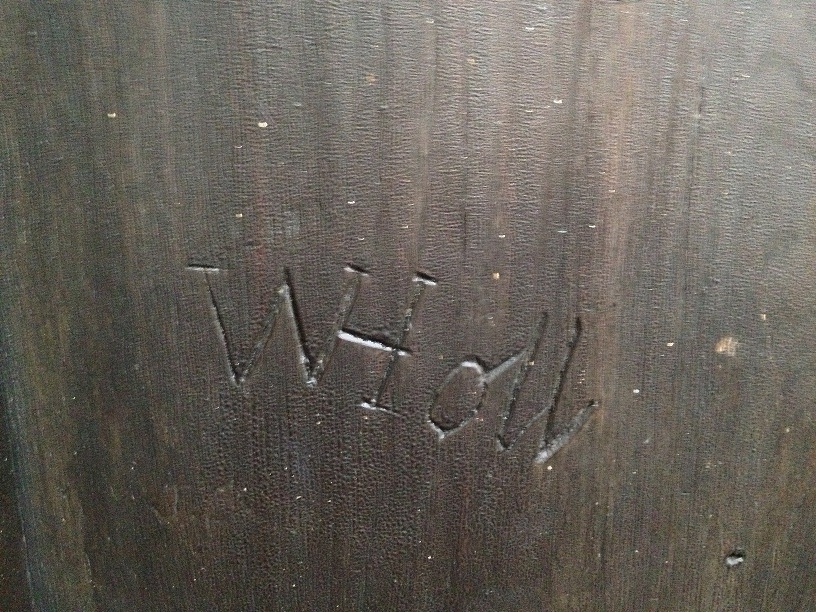
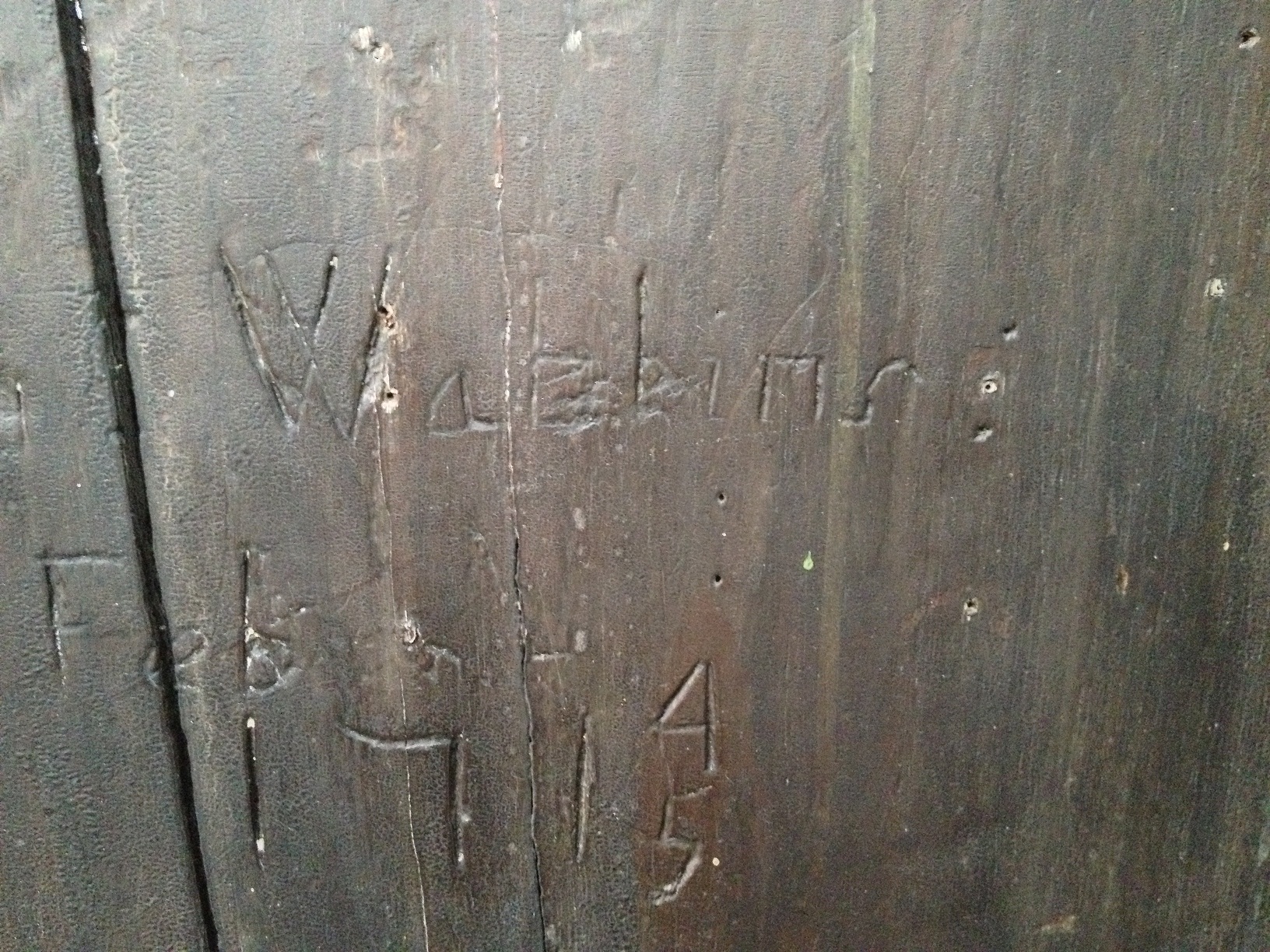
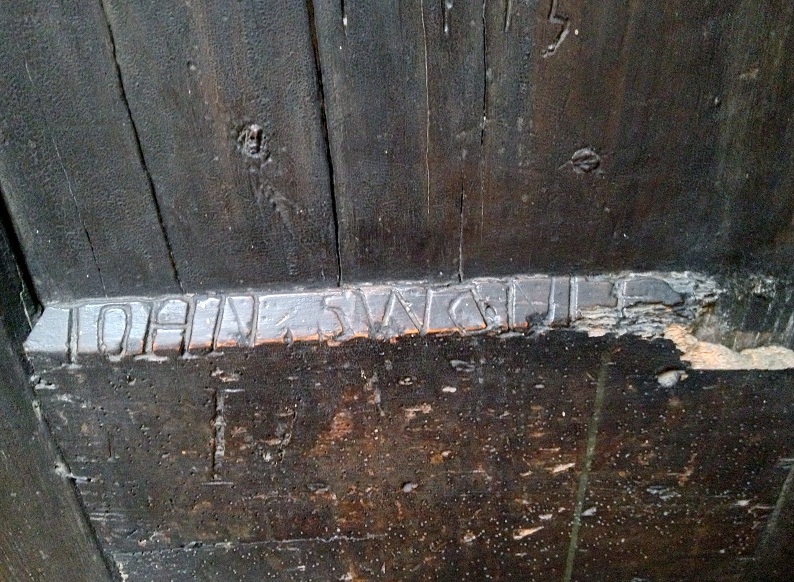
I’m pleased to say that Gareth took my hint and very kindly sent me some great photographs of the names carved into old attic doors in the Lichfield District Council office building on St John St.  This part of the offices was the old school master’s house, dating back to 1682 and it’s thought the attic was used as a dormitory for boarders at the old grammar school.

One of the carvings seems to be dated 1715. If authentic, it means this door could be around 300 years old, possibly even original? Also there’s a rogue 4 nearby, is this a red herring or something to do with the change in calendar from Julian to Gregorian? This is about as clear as a pint of guinness to me, so any possible explanation would be welcomed!
 

Gareth also sent me a scan of a document – an indenture outlining the sale of the school buildings to Theophilus Basil Percy Levett, dated Christmas Eve 1902, and signed by the the school’s governors. It’s a fascinating document, there’s  information about the buildings,  the stamp of the Birmingham Paper and Parchment dealer, the seals and the names and professions of the governors (some are more familiar than others -Lonsdale, Cooper, Lomax, Ashmall and Andrews stand out for me).   In 1903 the school moved from St John St to Upper St John’s St, merging with Kingshill Secondary Modern in 1971, to form the present King Edward VI school.
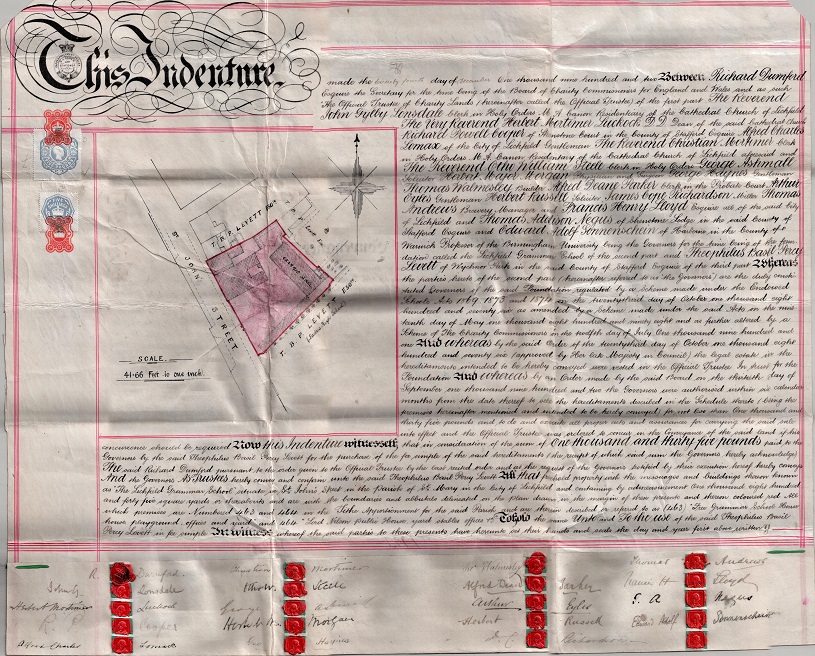
Gareth’s photographs and images from the last few days are fascinating, but what I also think is interesting is the contrast.  The inky signatures of men who have already made their way in the world, compared with names carved into wood and brick by children starting out in life.  And what about the contrast of these grammar school boys with their peers?  Whilst they may or may not have gone on to fulfil their potential (see the comments on my previous post)  what of those other children that never even had the opportunity?

A couple of weeks ago, I was listening to the headteachers of our state secondary schools here in Lichfield talk about what their school offered to students. Each of them spoke convincingly about their commitment to giving each and every pupil in their care, regardless of ability or background, the opportunity to reach their potential in life.   I found myself moved by their words. This is how it should be.

Edit 2/11/2012

Yesterday at Lichfield Library, I found the book ‘A Short History of Lichfield Grammar School’ written by Percy Laithwaite in 1925. Mr Laithwaite refers to the graffiti, and I suspect this may be the original source (I found out about the existence of the graffiti on a Lichfield District Council document. I also saw it referenced in Howard Clayton’s Coaching City, whilst I was at the library yesterday). As well as providing small biographies of some of the masters and pupils of the school,  Mr Laithwaite also mentions that wooden panelling from the old school room is now used in the council offices, and that an oak desk from the school room was used as a locker at Bridgeman’s on Quonians Lane. If we could track that down, that’d be something!

Footnote:


I’m really pleased to say that Gareth Thomas who provided me with the graffiti photos and the indenture document, as well as other information over the last weeks has started his own blog http://lichfield.keepsblogging.com/ Gareth’s going to be sharing the things he discovers and judging by the gems he’s come up with so far, it’s going to a great read for those of us who enjoy exploring the history of this old city.

Sources:

http://www.lichfielddc.gov.uk/info/100004/council_and_democracy/588/history_of_district_council_house/2

http://www.kingedwardvi-lichfield.staffs.sch.uk/history.html

https://wiki.leeds.ac.uk/index.php/HIST2530_Building_the_literate_nation:_the_historical_debate#Literacy_Rates

Rolling in the Shallow

One of my absolute favourite things in a landscape is water – waterfalls, oceans, lakes, canals.  All wonderful.  Here, in Leomansley we’ve got a brook and I love that too.

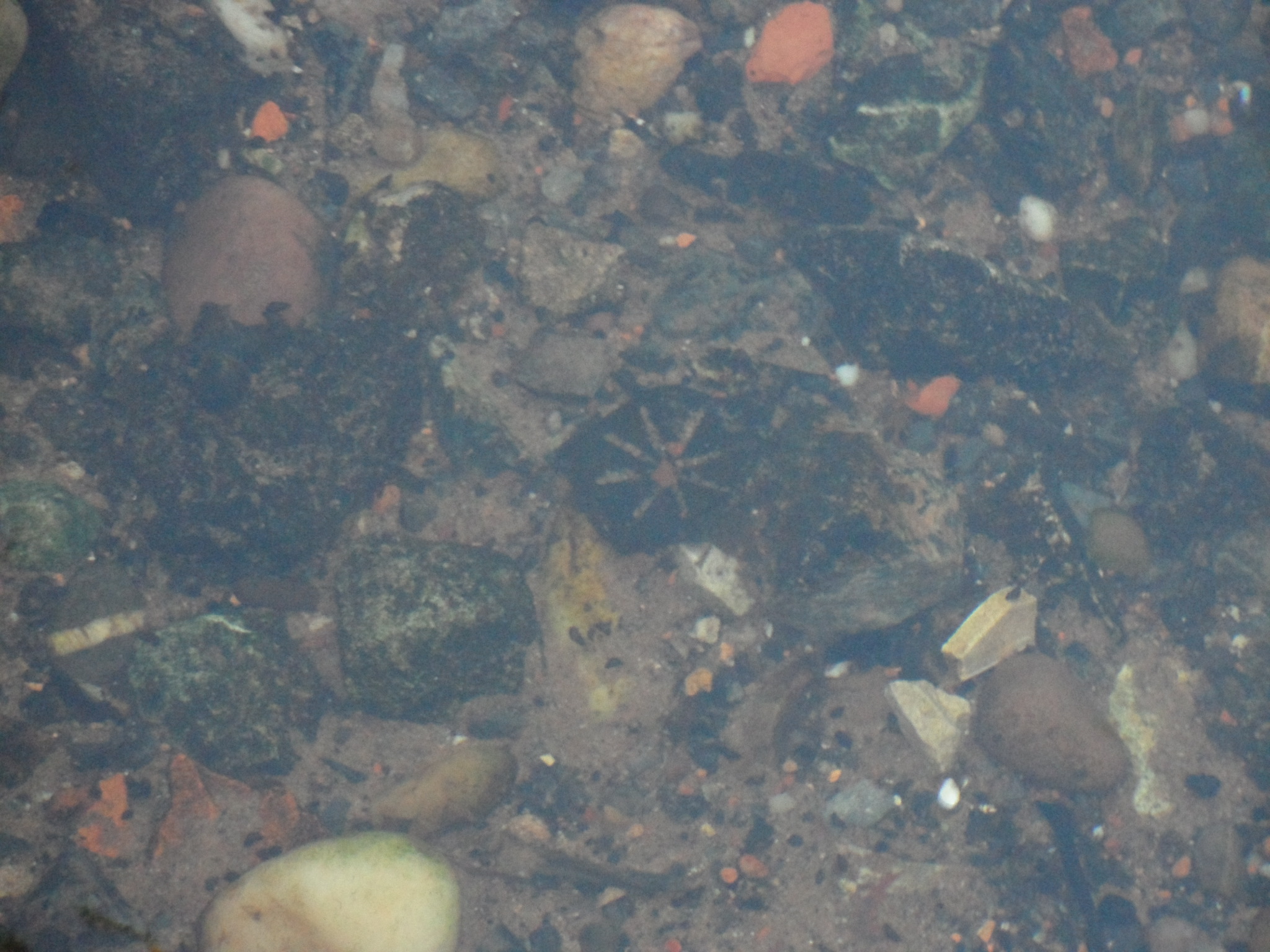
Two days ago I stopped and paused at a small bridge that crosses over Leomansley Brook. It was flowing more than usual, with little fishes darting about in the clear water. I would have gone home happy just having seen the fish but then as I watched them, something else caught my eye.

It looks like a stone with a star etched on to it. Unfortunately, as well as raising the water level, the rain has also raised the nettles and so I couldn’t get down for a closer look. I went back the following day with a fishing net and my Mum but the net was far too short and my Mum wasn’t game enough to take on the stingers either! And so there it remains, still in the brook, where it may have been for hundreds or years….or since last week! I took another photo and it looked a bit different. (This time I noticed a big nail a little further upstream too).

What is it and how or why does it have those markings? Is it even a stone? I would love to hear any theories anyone has!

A little later I’m going to write up a post about another little mystery around these parts. This and the stone might not be anything at all, but I actually don’t think that matters. What I think does matter is getting out there and looking, thinking, sharing and most importantly enjoying what’s around you.

Statuesque

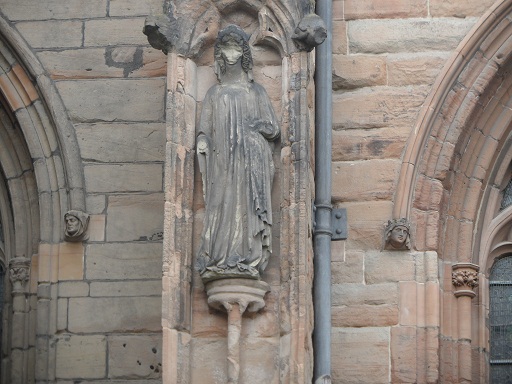
Walking home last Monday I took a detour past the Cathedral to have another look for the remaining five original, medieval statues.  I was pretty sure that I’d found two on the northwest tower –  one nameless woman next to Eve and another to the left of Deborah. The Victorian statues tend to have names on their pedestals. There’s an old photograph of the western front of the Cathedral pre-restoration on the English Heritage Viewfinder website, which you can see here. It shows the front looking strangely bare – above the row of kings only the niches containing the few remaining original statues are filled.

Medieval statue?, Deborah, Rachel, Rebekah, Sarah, Medieval statue?, Eve

According to a comment someone left on here, there are other statues on the other side of the north west tower. Unfortunately, my timing wasn’t great as someone was cutting the grass alongside the tower and a Midlands Today van had not long pulled up nearby and were making preparations to film (I later found out they were there to cover the Olympic Torch route story). As I didn’t fancy making a cameo appearance, dodging the mower in the background of a news report, I took a hasty few photos of the tower and carried on around the back of the Cathedral.  Stupidly, I didn’t check them before I got home and it’s not easy to make out much.  Another trip is in order….

Affix quality control sticker here

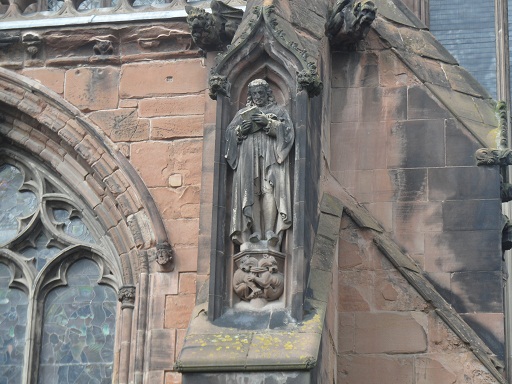
The medieval statue hunt continued as I walked around, in case one had sneaked in somewhere other than the northwest tower. I found Christopher Wren, Elias Ashmole and Dr Johnson amongst others along the way.

“The world is not yet exhausted; let me see something tomorrow which I never saw before” said Dr Johnson.

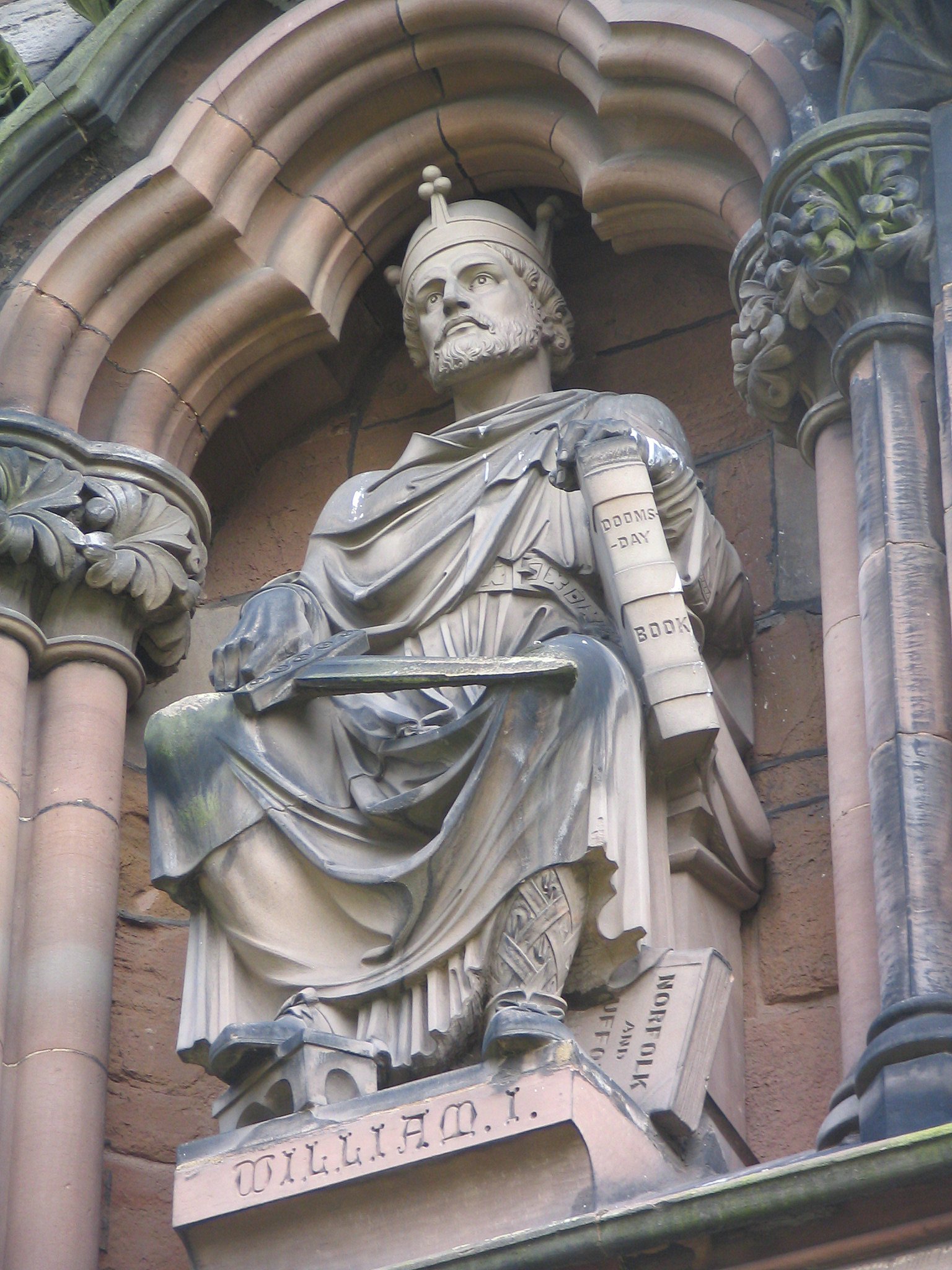
Most of the statues are accompanied by something symbolic – Johnson of course has his dictionary.  It’s the same for the kings (e.g. William the Conqueror holds the Domesday Book) and the biblical characters (I knew nothing about Deborah, but according to wikipedia she was a prophet and a judge and delivered her verdicts near a palm tree which explains why there’s one behind her statue).  I was wondering about Eve? Surely that’s an apple near her foot but what is she holding in her hand?  Imagine if you someone was to create a statue of you and they had to sum up your life with an object or two!

Image taken from Wikipedia

Just past Dr Johnson and his big, papery thing is another statue.  She has no name and as far as I can see there is no clue to her identity. I’m speculating, but is this one of the many statues destroyed or defaced by the parliamentary troops during the Civil War?   Most of the other damaged statues were removed – where did they end up I wonder? I came across some great photos of a figure of Christ on Aidan McRae Thomson’s flickrstream at a church in Swynnerton, Staffordshire together with an interesting theory that the statue originated from Lichfield Cathedral. If anyone else has any theories or even evidence of where the statues ended up, I’d love to hear them!

I have to confess that for me, sometimes the Cathedral is just there, part of the scenery as I go about the city. However, there are other times when, either by chance (catching the light a certain way) or by design (medieval statue hunting), the Cathedral commands my full attention and once again, I am reminded of what an incredible building this is, and the skill and talent of the craftspeople who made it so.

Written in Stone

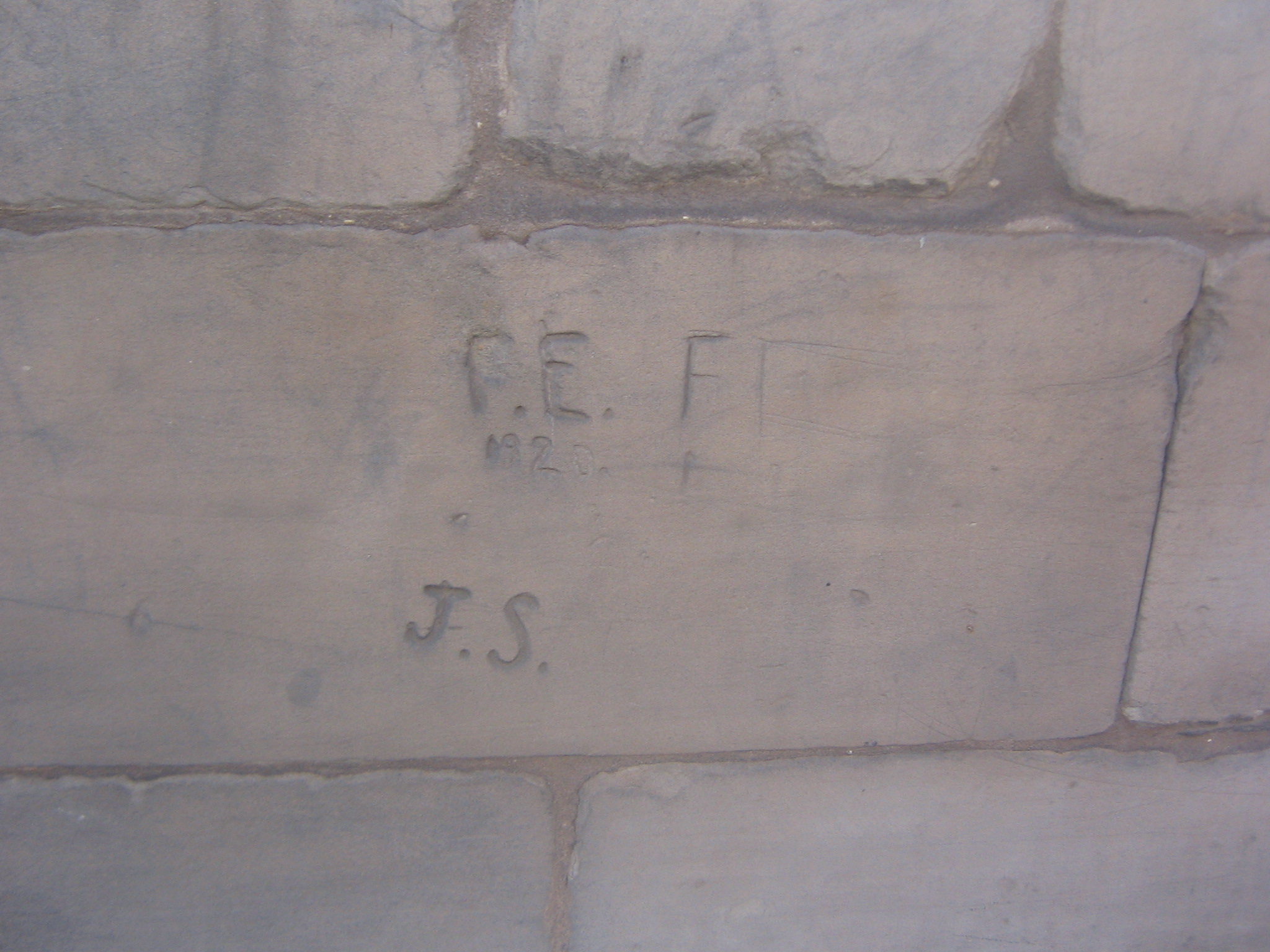
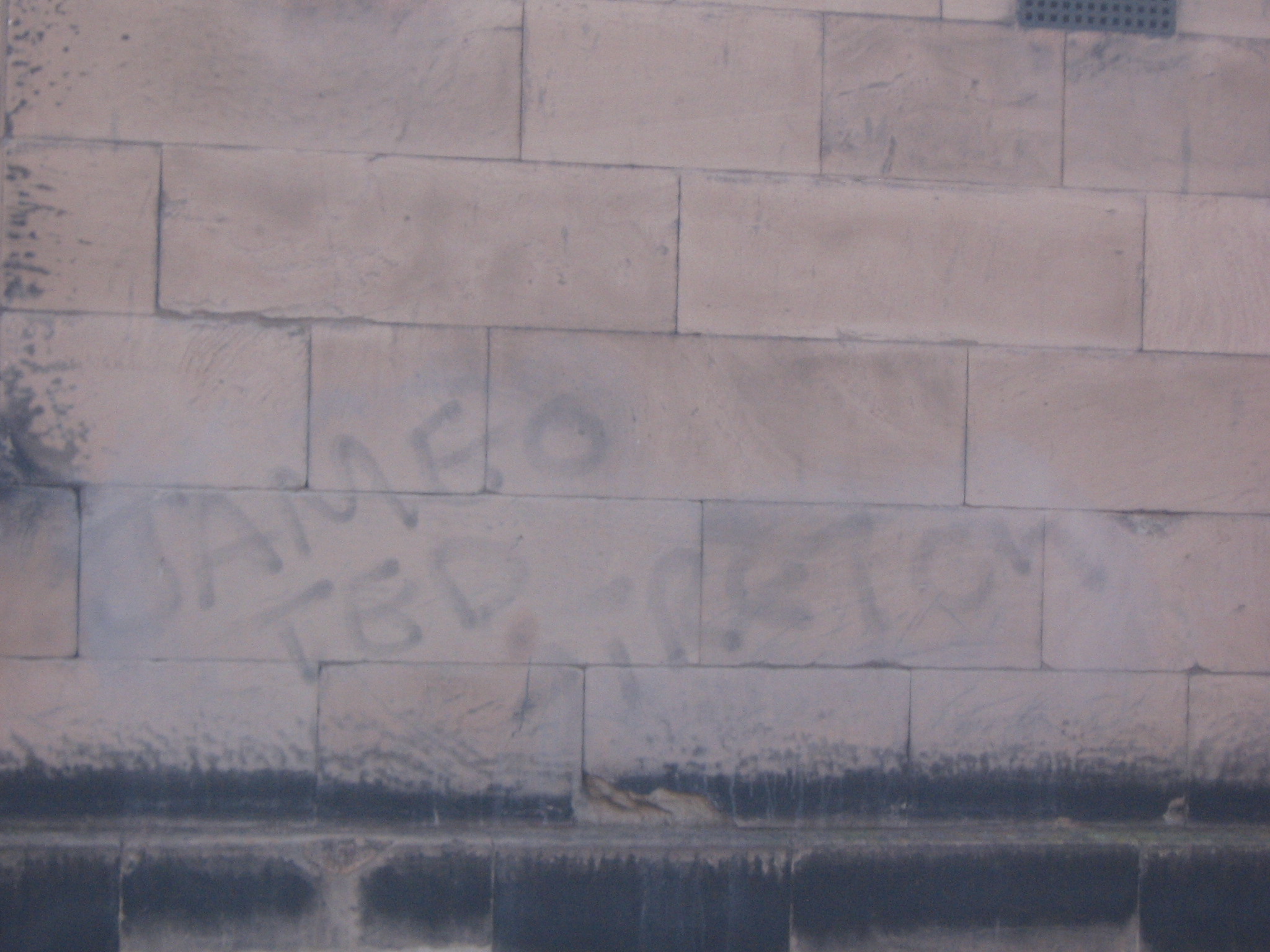
Walking past Newtons College in The Close, I noticed two lots of graffiti on the same building. One lot is spraypainted (I think) and looks like a name (it’s not the best penmanship ;)), the other consists of initials and a date of 1920. You can see these both below in the gallery.

I have no problem with the second one, in fact I enjoy finding a name or something else carved into stone. I do however have a problem with the first one. Why I am ok with PE leaving his or her mark in 1920 but not the graffiti artist in 2011?

Slightly different, but still maybe relevant, there was a recent story about Sex Pistols graffiti being historically and archaeologically important.

I’m still trying to work through my thoughts on this whole area. In the meantime, if anyone has any thoughts, or opinions of their own, please get in touch 🙂

 Edit 6/12/2011

Off on a bit of a tangent, a couple of stories about graffiti with a story! Thanks to Mark from Tamworth Time Hikes for letting me know about this one in Sheffield, which in turn reminded me of this one in Hagley, Worcestershire. Not at all to do with Lichfield, but of interest on the theme of graffiti I hope you’ll agree. Anyone know of any more?

 A bit later on 6/12/2011….some of my photos of graffiti…..

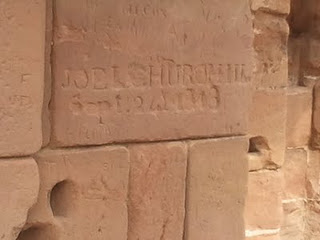
The Kenilworth photo reminds of going there as a little girl and noticing this kind of graffiti for the first time.  I temporarily abandoned my quest for portcullises, drawbridges and moats (which always disappointed by not being filled with water anyway) and played ‘Who can find the oldest graffiti?’. I remember seeing a date in the 1700s and realising that I was just one of the latest in a long, long line of people who had been there. I suppose, in a way those people, rightly or wrongly, became a part of the history of that building themselves. There are loads of photographs of this kind of graffiti around, there’s a whole flickr group here. I wonder if this kind of immortality was their aim or if it was more a case that they got fed up of looking for portcullises, and it gave them something to do?It seems some of our old vandals seemed happy to be easily identified, like Mr Joel Churchill at Kenilworth.  Perhaps it was an acceptable thing to do at the time?

Edit 9/12/2011

Another bit of Lichfield graffiti from the excellent Beacon Street Blog here.

The Tombstone at Lichfield Library

I may be wrong but I’m assuming that there aren’t many libraries which have a 14th century tombstone embedded in their wall. I couldn’t quite believe that Lichfield library did either and so after watching the Queen travel up Bird St to the Cathedral, it was time for the really exciting part of yesterday to commence! Sorry Ma’am.

I was reading a copy of ‘Hyacinths and Haricot Beans: Friary School Memories’ by Jean Bird.  The book tells of a slab from a tomb found during renovations in 1926 being incorporated in the Friary building itself, which of course housed the school prior to its move to Eastern Avenue.

Checking the site’s listed building description confirmed this:

“…window to right of entrance has ex-situ gravestone of C14 or earlier below: calvary cross fleury and worn inscription to Richard the Merchant, found in 1746”

Another fairly recent reference was the Public Monument and Sculpture Association National Recording Project which described the stone as being placed ‘at the rear of Tamworth & Lichfield College, set into the wall by founder’s door’.

Anyone passing would never notice the stone....

At the rear? Well, at least that would explain how I managed to visit at least once a week, without noticing a large tombstone embedded into the wall.  In fact, once I got to the back of the building and the founder’s door, it was clear that few would notice the stone. Partially obscured by a shrub, a faint carving of a cross can be detected. Time and weather have not treated the stone well.

The fading stone

A trip to the Staffs Past track website reveals a drawing of the stone as it was around 250 years ago. It seems the stone was found in 1746 and then somehow lost and then rediscovered in 1926!  Bulldozers working on the new Friary Road in the 1920s cut through the site of the Grey Friars cemetery.  One of the contributors to the Friary School book recalls the bones that were uncovered being reburied ‘in the site opposite’.  Perhaps that’s where the remains of Richard are today.

Whilst round the back of the library, I also discovered the wonderful Monk’s Walk garden, which I shall do a separate post on.  Something else I hadn’t noticed on all of my visits to the library. That’s one of the things with Lichfield, you just never know what’ll turn up next……

Edit 29/8/2011

In ‘A Topographical History of Staffordshire ed. William Pitt’ (1817), I came across a description of how the tombstone turned up in 1746. Apparently on October 14th of that year, Mr Michael Rawlins was living at the Friary and was building a wall with a gate. Whilst digging the foundations, he found the grave stone about 6 foot under the surface with a coffin and bones underneath it. He placed the stone in a niche in the wall of the stables.

 Sources:

Hyacinths and Haricot Beans: Friary School Memories 1892 – 1992 by Jean Bird

From: ‘Lichfield: Education’, A History of the County of Stafford: Volume 14: Lichfield (1990), pp. 170-184. URL: http://www.british-history.ac.uk/report.aspx?compid=42354 Date accessed: 20 July 2011.

http://lichfielddc.limehouse.co.uk/portal/planning/conservation_area_appraisals/lichfieldcaa?

http://www.staffspasttrack.org.uk

Public Monument and Sculpture Association National Recording Project