Anchors Away

It’s the first day of Autumn today, meaning yesterday was the last day of Summer and it definitely went out with a bang. The storm seems to have subsided a little but the pounding rain continues its bleak fall and so I’m virtually visiting Streethay this afternoon. The village sits on the Roman Ryknild Street, just beyond the boundary of Lichfield City and, most appropriately given the weather, it’s a place with some watery links that I want to explore.

The Anchor Inn, had already been boarded up for two years when I took this photo in February 2017.

The new housing estates springing up around the outskirts of Lichfield are certainly controversial but one positive development at Streethay, is the arrival of Bod. I’m a big fan of the Titanic brewery bar and I do wonder whether this new influx of people would have kept Streethay’s previous pub ‘The Anchor’ afloat, if it had happened sooner. It was not to be however, and it closed in January 2015.

At Bod, I found a tiny mermaid swimming in a glass of porter….(with apologies to Eliza Carthy) Created by Louise from Under a Pewter Sky.

The building still survives and is now occupied by an Osteopathy Clinic and apartments but let’s go back in time to those days when it still served as an inn. It was clearly in existence by November 1848 when an inquest was held there on the body of Henry Crutchley, a fourteen year old lad who died after climbing onto an engine and slipping beneath the wheels of the wagons it was pulling, but was rebuilt around 1906, when the Lichfield Brewery Company was granted permission on the basis that ‘the house was in a most dilapidated condition and it was impossible to repair it’. I’ve yet to find a photo of its former form but I have found a reference in 1779 to a public house ‘known by the sign of the Queen’s Head’ which stood on the turnpike from Lichfield to Burton at Streethay and I’m wondering if this might be an earlier name. There are also mentions of a inn known as The Dog, around the same time and I’d like to sniff out where exactly that was.

The Anchor, when it was still afloat in 2009
Photo © David Rogers (cc-by-sa/2.0)

In the Lichfield Mercury in 1972 an advert for the Anchor appeared with a curious reference to the ‘Klondyke Bar’, inviting you to enjoy your drink, ‘in the pleasant atmosphere of the Gold Rush’. One of the new apartments built in the grounds of the Anchor has been named after this, with the estate agents’ details explaining it was named after the ‘large wooden drinking hut’. Now I was given many nicknames by my brother when we were growing up, and one of them was ‘Klondyke Kate’. Whilst I’d like to think it was based on American vaudeville actress who provided inspiration for Scrooge McDuck’s girlfriend, I suspect it was more likely a reference to the British female wrestler. The Anchor’s Klondyke however is clearly a reference to the gold in them thar Canadian hills in the 1890s and was decorated with old photos and posters and, erm, pheasants, in a bid to recreate a prospectors’ bar. Much more of a mystery is why a bar on the outskirts of Lichfield chose it as a theme. In May 1979, the new licensees Norma and George Wolley presumably asked themselves the same question and relaunched the annexe bar as ‘The Mainbrace’. The hut itself had originally been a first world war army hut and this brings us nicely to a really interesting period in the pub’s history.

During the Second World War, the pub was frequented by personnel from RAF Lichfield. Jean Smith, in an interview with Adam Purcell, described how she and fellow WAAFs would stop off for a half a pint there on the way back home to their quarters on the opposite side of the road. On winter nights, when it was announced that flights had been cancelled due to fog and rain, the women would get their gladrags on and head out to the inn. Soon, the sound of bikes being propped against the wall of the pub would be heard as the lads from the aerodrome arrived at The Anchor, and the grounded pilots would soon be filling the air with cigarette smoke and tunes from the piano. The full interview with Jean can be found here and it’s a fascinating read, which really captures what the atmosphere was like for those young people living their lives in Lichfield, surrounded by the ever present threat of death.

This post was actually intended to be a deep dive into the village as a whole but I’ve got a bit overboard with the history of the Anchor Pub and so we’ll have to return to Streethay and its moated manor and plunge pool, the brewery and the canal wharf, and the lost hamlet of Morughale another day because we’ve only just dipped our toe in…

Brewery Row, once home to workers from the Trent Valley Brewery

Sources

Birmingham Journal 25th November 1848

Lichfield Mercury 16th March 1906

https://www.onthemarket.com/details/8779282/

Lichfield Mercury 25th May 1979

Lichfield Mercury 7th April 1972

Adam Purcell, “Interview with Jean Smith,” IBCC Digital Archive, accessed September 22, 2024, https://ibccdigitalarchive.lincoln.ac.uk/omeka/collections/document/3488.

http://raf-lichfield.co.uk/Anchor%20Pub.htm

https://www.british-history.ac.uk/vch/staffs/vol14/pp273-282
Wolverhampton Wandering

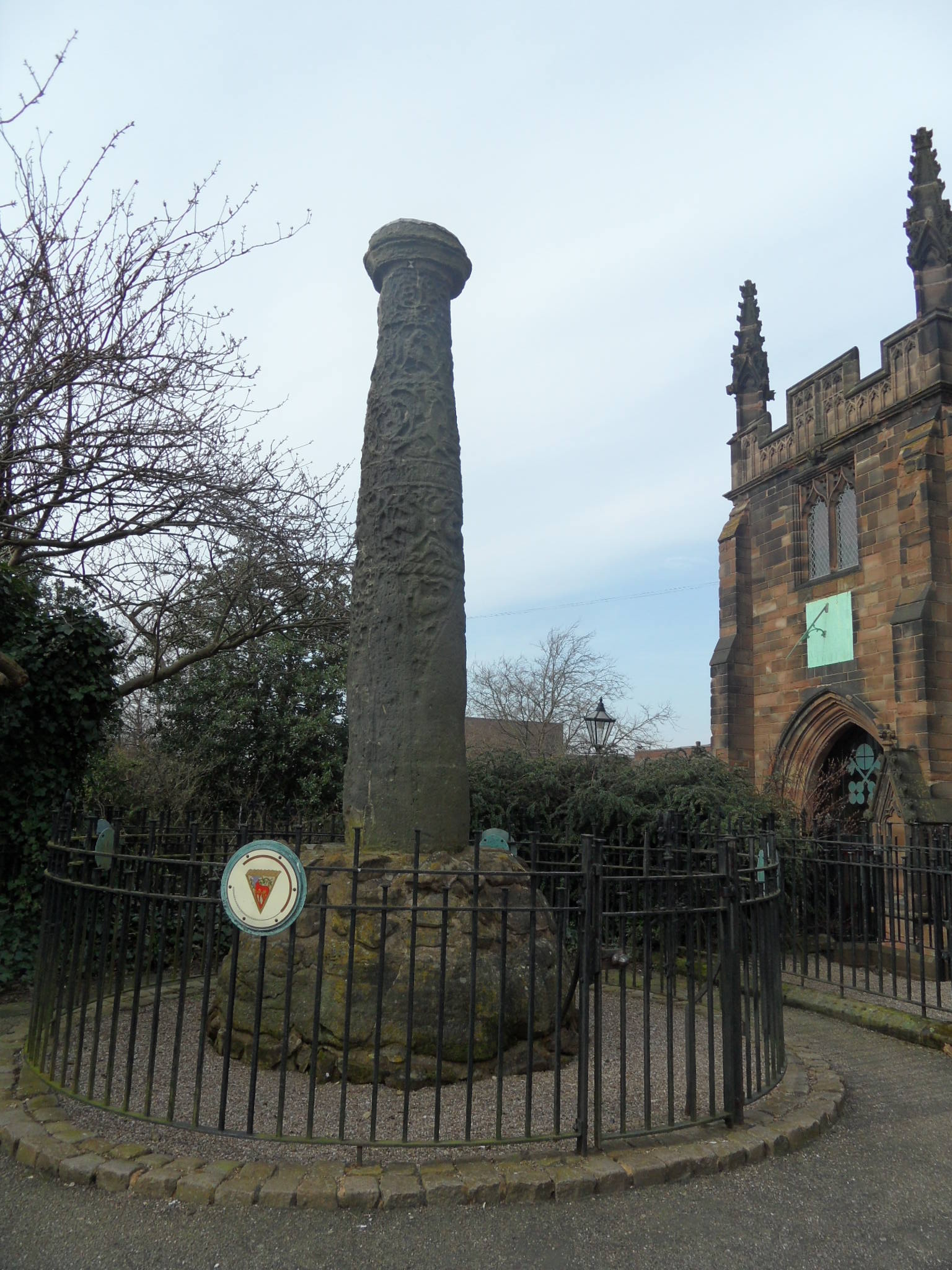
I had to pop into Wolverhampton today. I knew from my search for an ancient cross in Lichfield a couple of years back that there was a Saxon cross shaft here and went to find it.  Unlike the Lichfield cross, I didn’t have to try too hard – it’s huge! Its size, and also the fact that it is made from sandstone not found in Wolverhampton, has led some archaeology types to suggest that it is probably a reused Roman column, possibly from Wroxeter or even just up the road in Wall.

Saxon Cross Shaft, WolverhamptonThe elements and pollution have not treated the shaft kindly but its still clear that this was an incredible piece of craftmanship – the Black Country History website describes it as, ‘one of the finest cross shafts in the Midlands’. The carvings of acanthus leaves which decorate the shaft alongside those of birds and beasts have given archaeologists some problems when trying to establish a date as they suggest different periods. The plaque accompanying the shaft in the churchyard has decided to go with the earlier date of the ninth century, whilst others believe late tenth century is more accurate.

Cross Shaft Wolverhampton

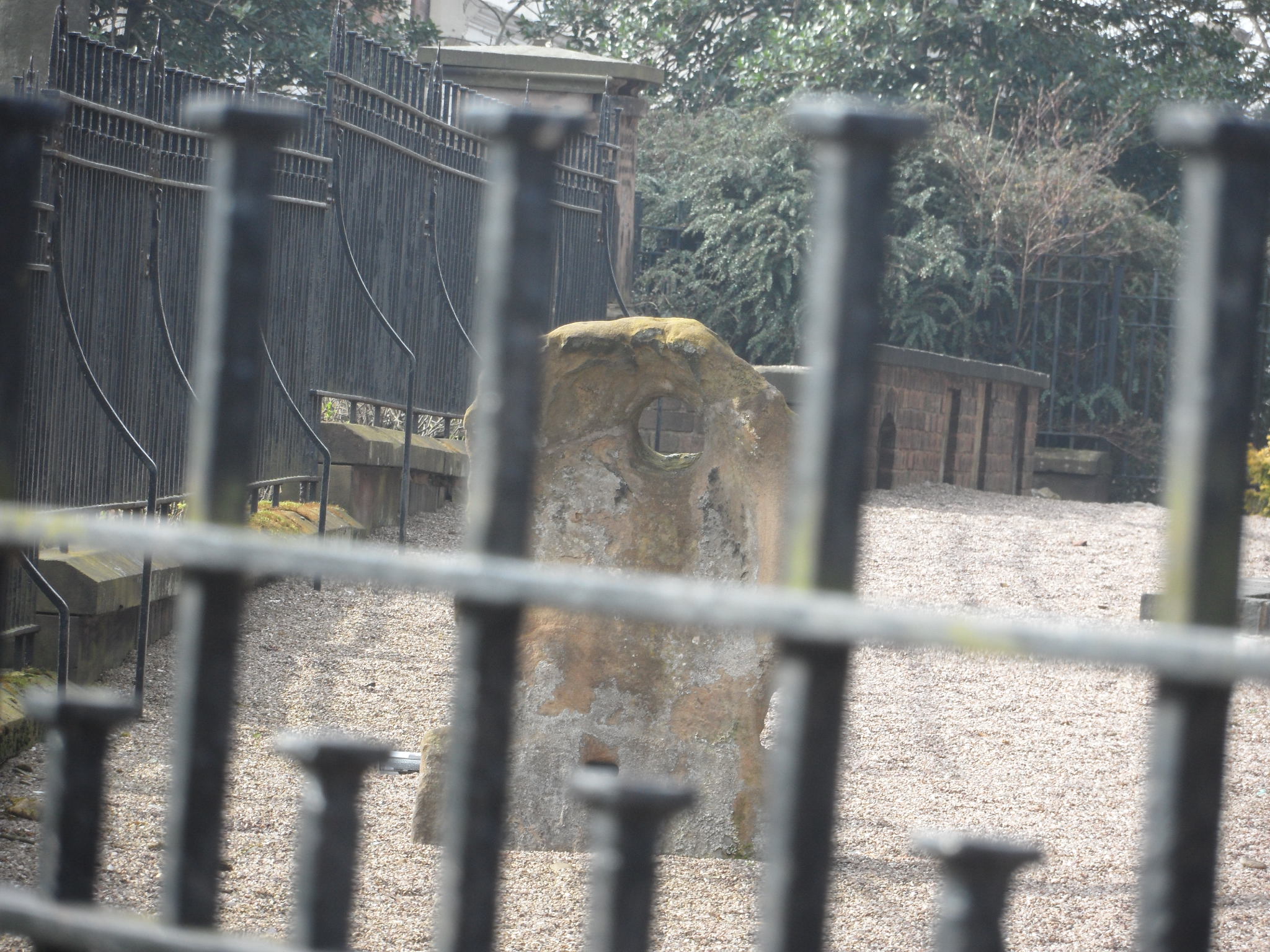
On the way out of the churchyard I noticed another stone with a good back story. Known as the Bargain Stone, its said to be where the good (and probably not so good) folk of Wolverhampton would agree sales and make deals by shaking hands through the hole. The nearby plaque suggests it is an old gargoyle and the hole is what remains of its mouth.

SAM_0031

Talking of hands, why didn’t it occur to me to put my hands over the railings to take a better photo?

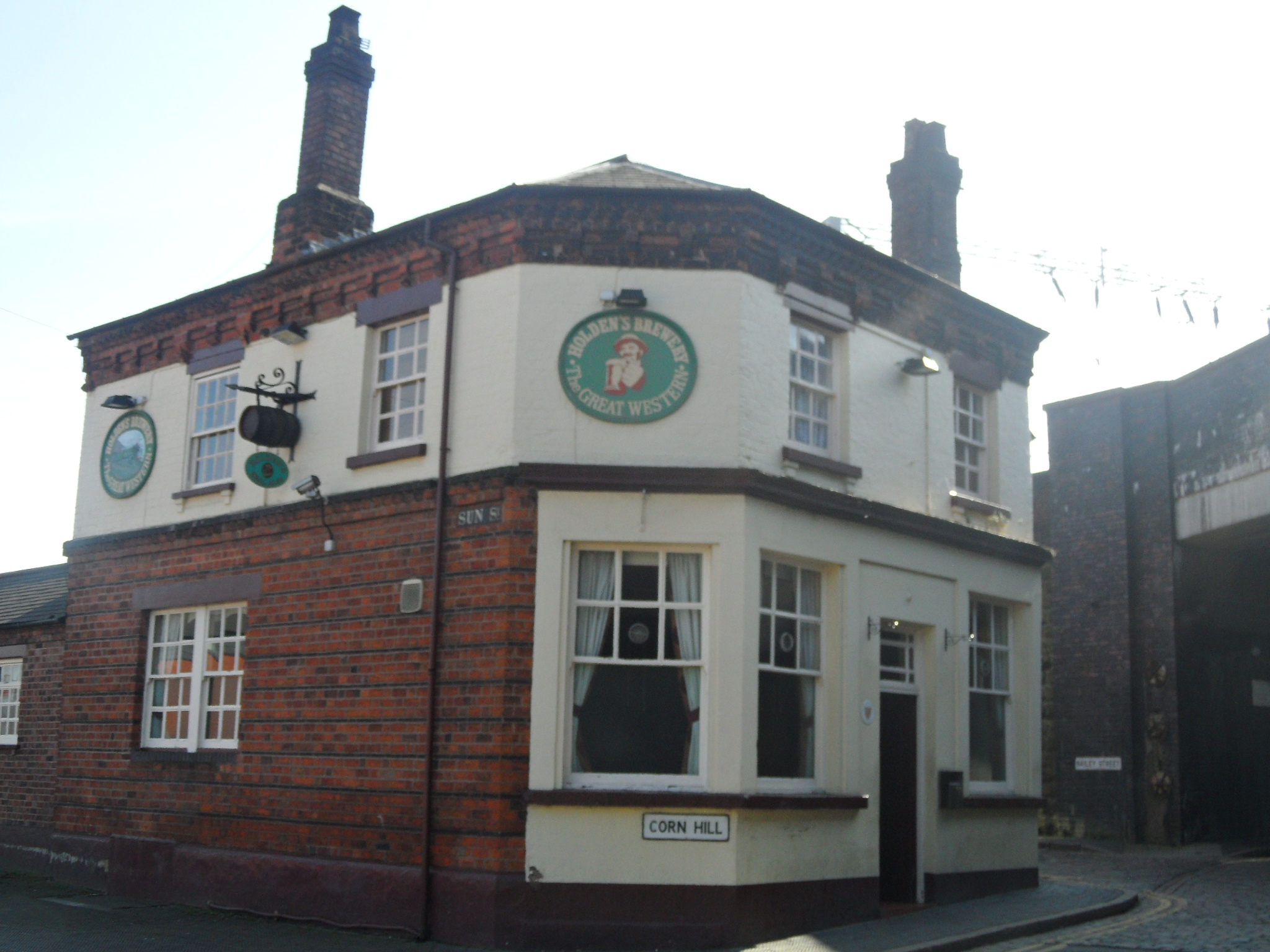
As if ancient crosses and stones weren’t enough of a treat, we also found Holden’s Brewery’s Great Western near to the train station. This is a proper pub – cobs on the bar, Holden’s Golden Glow (amongst other delights) on tap and really friendly staff. Although we were tempted to sit outside in the sun, the interior was so quirky and there was such a nice atmosphere, we sat inside.

Great Western

Wished I’d got the train. Definitely not driving next time.

The Great Western

The great Great Western

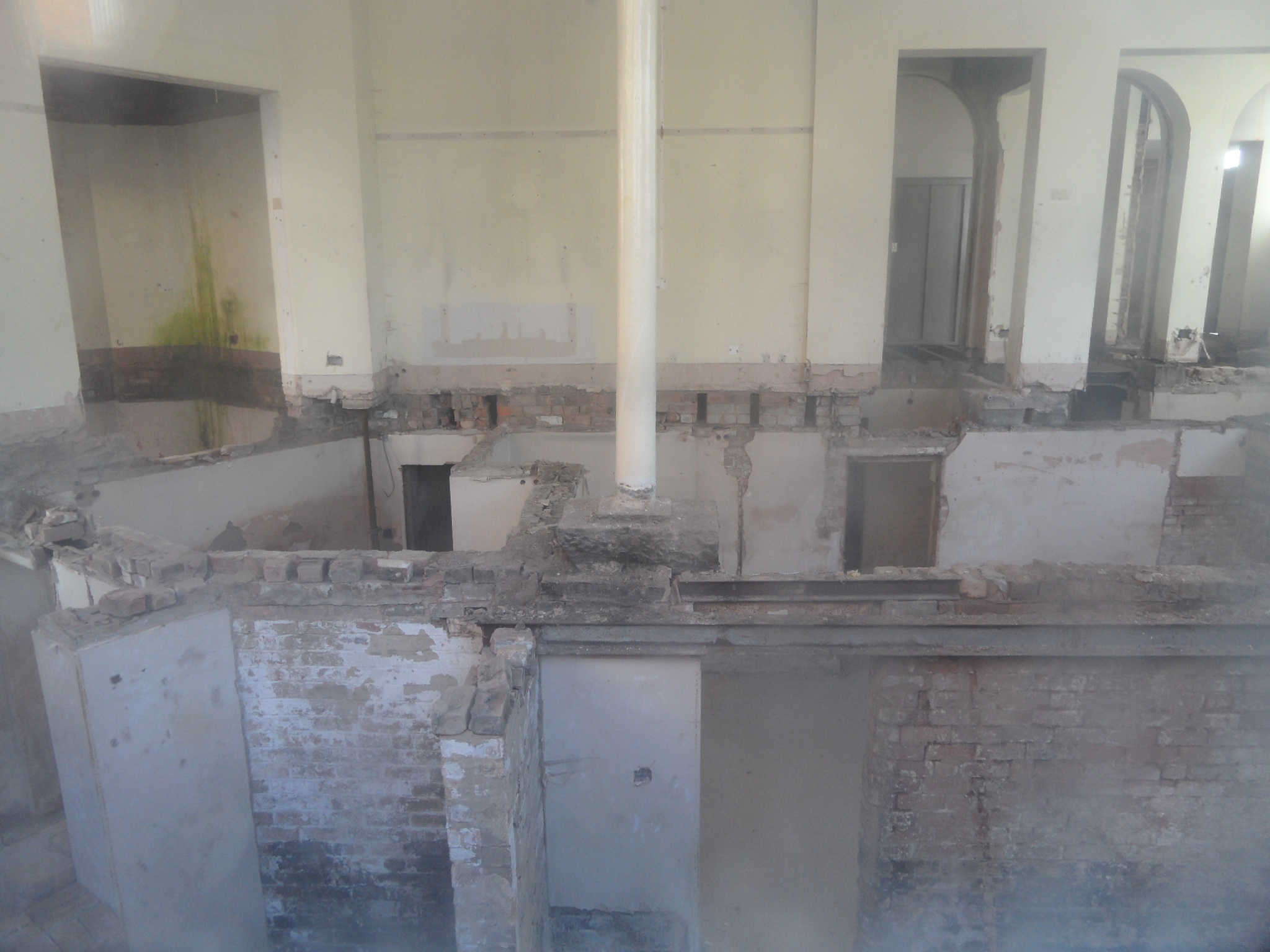
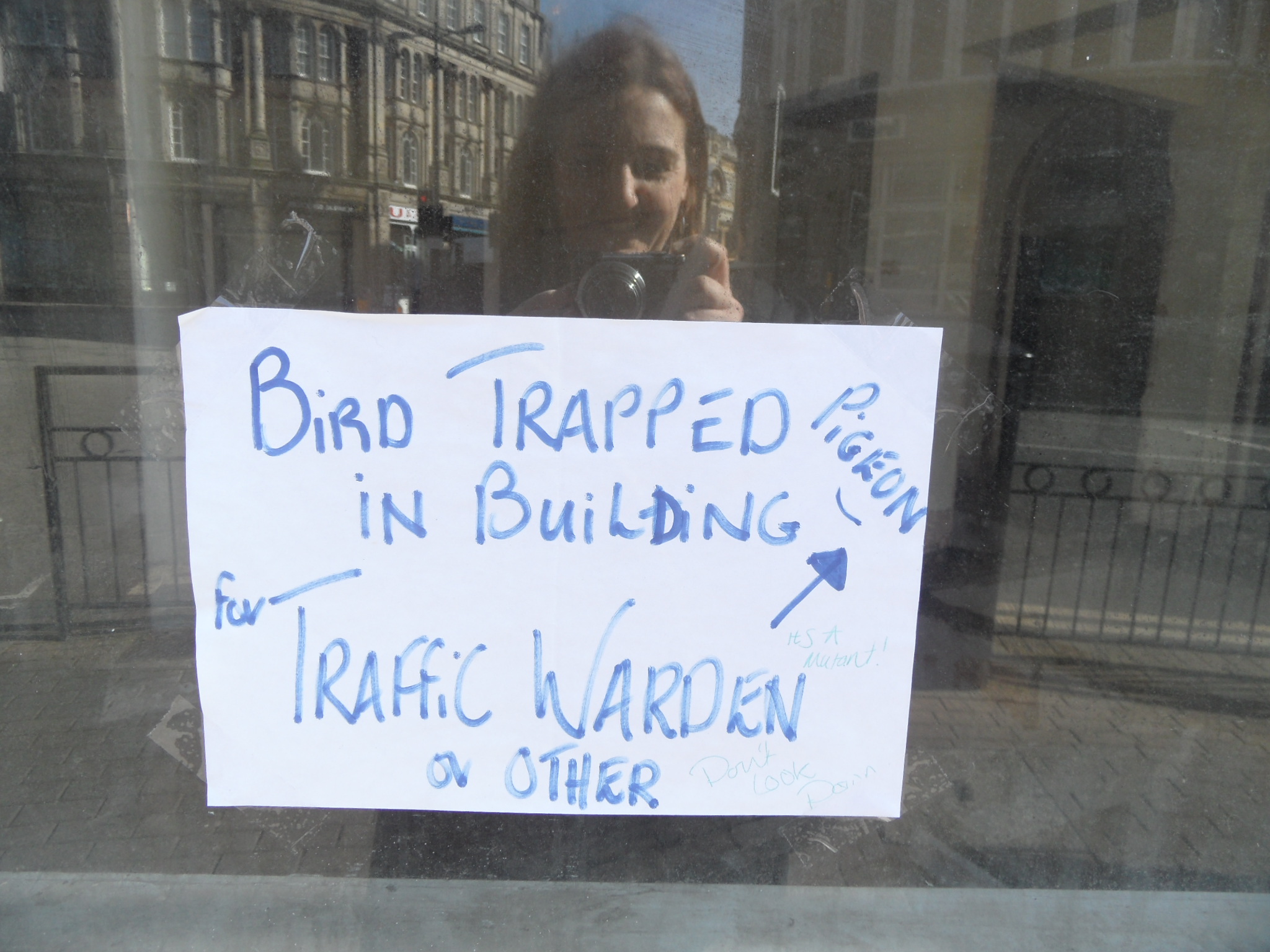
We walked off our pork baps with a little bit of a wander around the city streets. This building caught my eye, not only because it has no floors, meaning you can see down into the cellar, but also because of the handwritten sign someone had stuck to the window.

SAM_0045SAM_0046I’m not sure a traffic warden would be the person I’d turn to in a trapped bird scenario but maybe they do things differently in Wolverhampton.

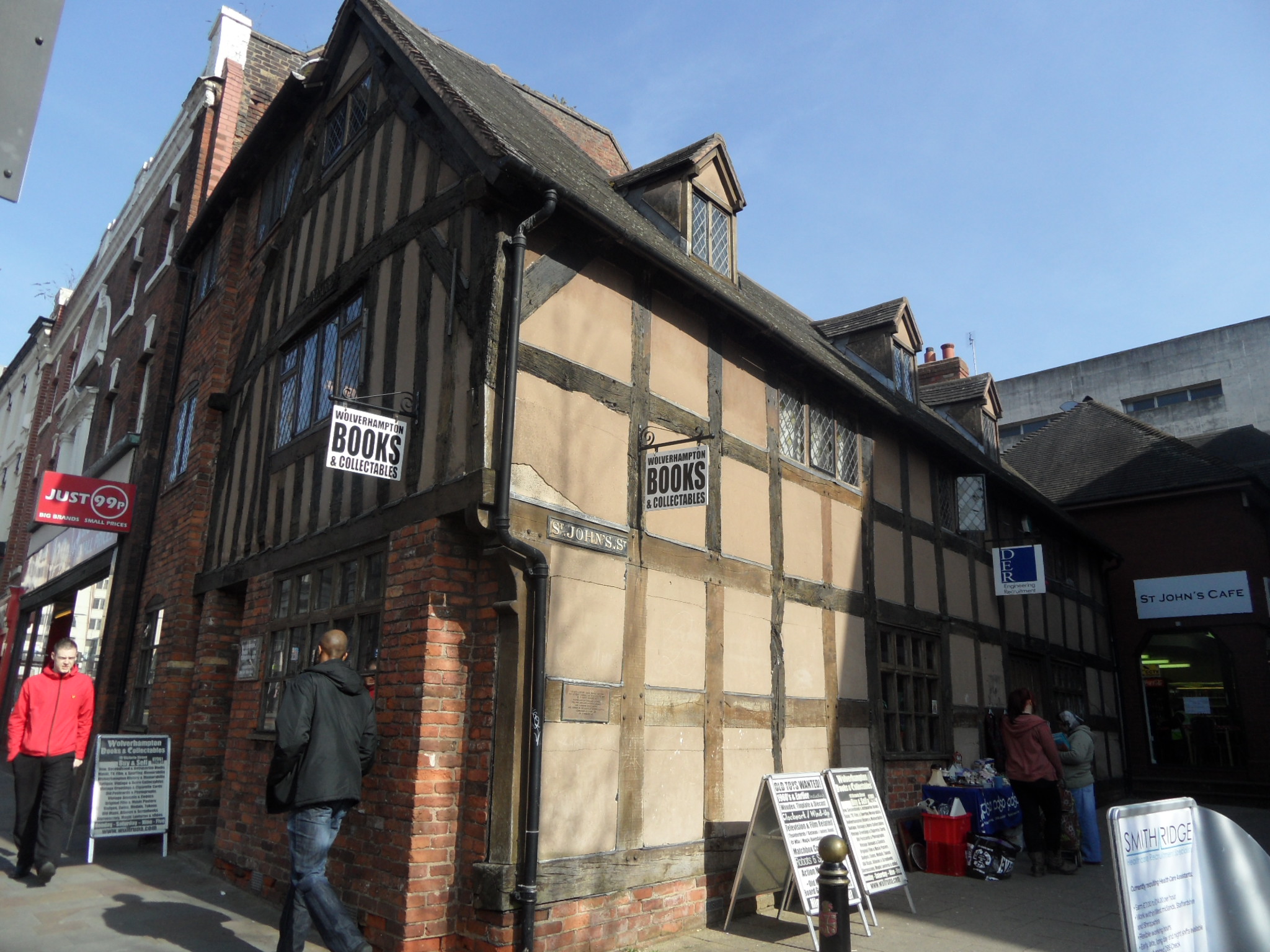
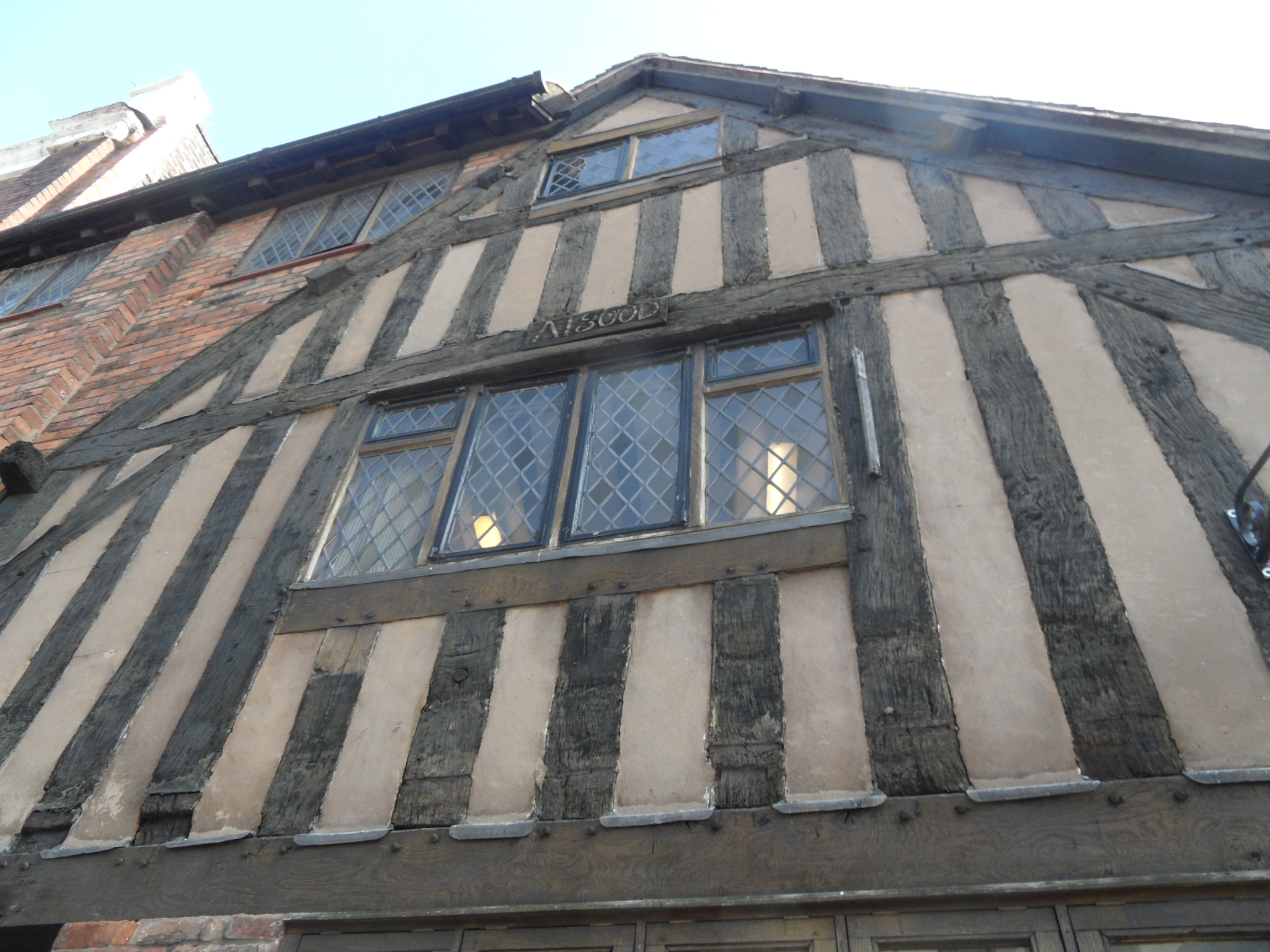
Another perplexing sign is the one suggesting that the half timbered building on the junction of Victoria St and St John’s Lane was built in AD1300. It wasn’t and no-one knows the reason behind the claim – the best suggestions anyone has seems to be that it was some kind of joke to emphasise that it was a really, really old building! It more likely dates back to the seventeenth century when it was once an inn known as The Hand. These days its home to Wolverhampton Books & Collectables, where you can buy anything from an ancient tome on the history of Staffordshire to a souvenir 1950s Wolverhampton Wanderers hankerchief (which you may, or may not, wish to blow your nose on, depending on your allegiances…).

SAM_0053

SAM_0055

We took the scenic route back to Lichfield (not through choice but because I went the wrong way on the ring road), passing through Wednesfield, Sneyd, the intriguingly named New Invention and Brownhills before stopping off at Waitrose for a couple bottles of Golden Glow.

Sources:

http://blackcountryhistory.org/collections/getrecord/WOHER_MBL337/

http://www.historywebsite.co.uk/listed/lindylou.htm

A Storm Brewing

A comment from Mrs P on an earlier post about the City Brewery on the Birmingham Rd revealed another unhappy chapter in the story of Lichfield’s brewing industry.

In 1900, in many towns and cities across the north and west of the country, there was a huge rise in cases of what was originally thought to be alcohol related neuritis. Eventually doctors in Manchester, one of the worst hit places, began to suspect that alcohol may not be the cause.  After discovering arsenic in samples of local beer these suspicions were confirmed – people were in fact being poisoned.

There were thought be around six thousand cases of poisoning across the country, of which at least seventy were fatal.  On February 15th 1901 The Mercury reported that ninety one cases were discovered in the Lichfield urban district but there were no fatalities.

Samples from the City Brewery on the Birmingham Rd and the Lichfield Brewery on Upper St John St were taken. These tests showed that whilst beer from the City Brewery was arsenic free, the poison was present in beer brewed by the Lichfield Brewery.  Along with the other affected breweries across the country, they had been using contaminated brewing sugar from Bostock & Co of Liverpool. The sugar had been produced using sulphuric acid designed for industrial use, rather than of a food grade quality.  Bostock & Co blamed their supplier – a Leeds company called Nicholson & Son, whose defence was that Bostock & Co had not specified the need for ‘pure’ acid.

Offices of the former Lichfield Brewery, Upper St John St

Unsurprisingly, the City Brewery and another local rival, the Old Brewery on Sandford St were keen to inform consumers that their beers were arsenic free and took out large adverts in the Mercury announcing this. The Lichfield Brewery used the local press for a damage limitation exercise. On 12th December 1900, they printed the certificate that the public analyst and consulting chemist Dr Bostock Hill had issued to them from his laboratory in the Unity Buildings on Temple St, Birmingham, which included the following statement:

Gentlemen – I beg to report that I have analysed the three samples of Ales, and one of Stout, received from you on the 11th instant and find them to be PURE AND FREE FROM ARSENIC OR OTHER DELETERIOUS MATTER

Dr Bostock Hill’s opinion was also reported in the Mercury – he believed the brewery was not to blame and was instead a victim of circumstance. The report also praises the brewery for their honesty and openness in dealing with the matter noting that,

‘the strain on the executive has naturally been considerable, but it is in process (sic) of being completely relieved, The ordinary shareholders may possibly experience a slight temporary depression in the value of their holdings – nothing more; for the position of the company is now so secure, owing to its large reserve fund that the incident can only have a temporary effect, especially in view of the fact that it is one over which they had, under the circumstances, not the slightest control …despite the loss, the commercial value, importance and position of the Lichfield Brewery Company is quite unshaken’.

It seems the ‘considerable strain’ on the executive was relieved and the Lichfield Brewery continued for another thirty or so years, until Ind Coope & Allsopp Ltd took over the brewery and its 198 licensed houses in 1935.  So far, I have not been able to find a report into the strain on the health or livelihoods of those actually poisoned by the arsenical beer.

For a much fuller account of how events unfolded across the country, please read the article ‘Death in the beer-glass: the Manchester arsenic-in-beer epidemic of 1900-1 and the long-term poisoning of beer‘ by Matthew Copping. It also makes some very interesting points regarding how in addition to the complacency of the brewing industry, prejudice and stereotyping of those affected (mainly the working class) may also have contributed to these terrible events.

In the article, Matthew Copping describes the arsenic poisoning episode as a wake up call for those at fault, a phrase that’s has been heard again in recent days, due to the ongoing enquiry into contaminated meat. The timing of this post is actually coincidental (isn’t it, Mrs P?) and I don’t want to try too hard to draw parallels between these two events, separated by over a century. However, I think it is fair to say that, as in 1900, the public has been let down by complacency and broken systems once again.

Sources

Click to access poison.pdf

The Arsenic Century:How Victorian Britain was Poisoned at Home, Work, and Play by James C. Whorton

http://www.weasteheritagetrail.co.uk/salford-people/biographies/entry/the-salford-poisoned-beer-scandal.htm

Bit of a Bore

Last night in the Horse & Jockey on Sandford Street, the Holden’s Golden Glow and the football were in full flow. The former was definitely more satisfying than the latter. As Spain made their millionth pass around the forty minutes mark, my mind started to wander. It wandered back to Bore St, where I was still trying to work out which of the ward banners belonged to this Lichfield ward and why (some of the name plaques underneath the flags were obscured when I went back to check).

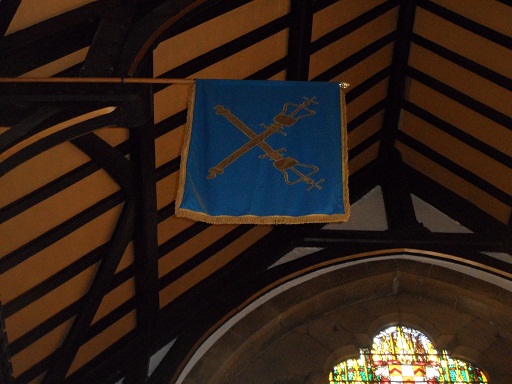
Bore St ward banner?


It dawned on me that this flag showed the city maces, which are used in civic processions and date from 1664 and 1690. The centre of civic events in Lichfield is of course the Guildhall on Bore St where of course the flag is hanging. So I should probably  have worked this one out a bit quicker!

The maces being carried in the 2012 Lichfield Bower procession


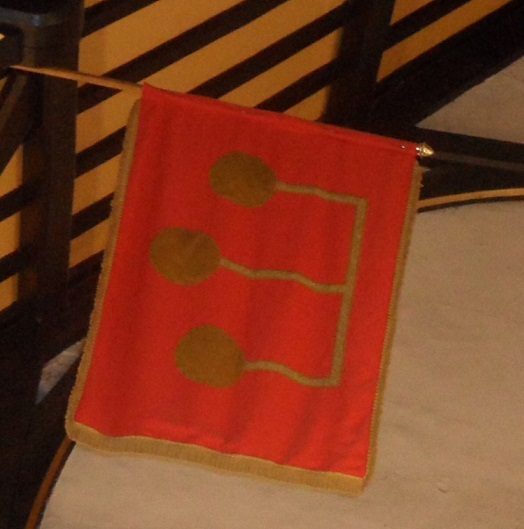
Whilst we’re on the subject of football, what about the golden balls of the Lombard St ward banner? I didn’t know until now but Lombard is another name for a pawn broker, and of course this type of business has long been identified by this symbol. Wikipedia explains that the concept originated in the Lombardy region of Italy.

Lombard St was once known as Stowe St infra barras (i.e. the part of Stowe St inside the barrs (or gate) of the city). Did the name change occur when this kind of business was set up in the street? Or is there another reason?

Lombard Ward banner