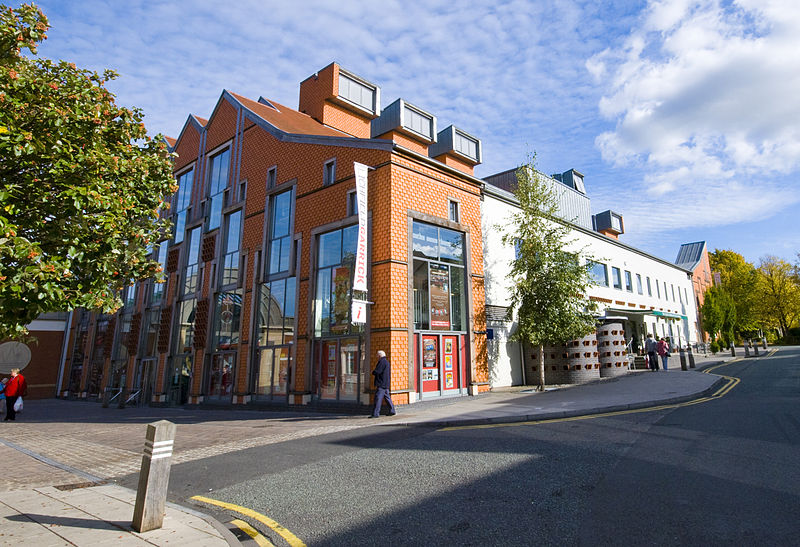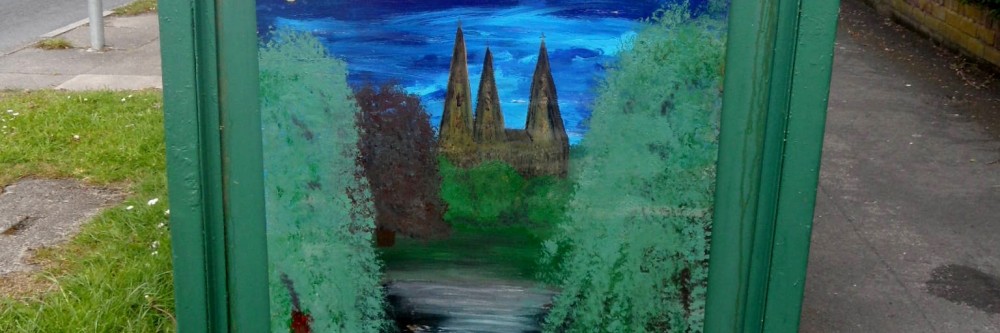
Refusing to Bough Down

I didn’t spend as long as I normally do at the Bower yesterday, but I did wander around the busy streets, catching the end of the procession on Dam St, and I was glad to hear that the day had been a success. Something that I’ve always been interested in is the traditions associated with the event and today I found an interesting story from the 1950s about one of those customs.

At dawn on Bower Day in 1952, some of the male residents of Lower Sandford St were gathering elm branches near to Beacon Farm, on the edge of what is now Beacon Park. Apparently every year, for as long as anyone could remember, the boughs had been cut from the trees and used to decorate the houses in ‘Old San’ as the street was known. However, as the men gathered the boughs, a police officer arrived and instructed them to stop, on the orders of the Town Clerk and the Estates Committee of the City Council, as it had been reported that in previous years the trees had been damaged.

The residents of ‘Old San’ were angry that their ancient privilege was being threatened and sent a message back to the Town Clerk and the Mayor, Cllr. C Bridgeman, that if no further boughs were allowed to be cut, then those that had already been collected would be used to barricade Sandford St and prevent the Bower Procession from entering. As tensions rose, the Town Clerk and the Mayor arrived at the scene and gave their permission for residents to continue collecting boughs, providing that no trees were damaged in the process. The boughs were then used to decorate the houses of old Sandford St along with bunting, balloons and slogans, with prizes awarded for the best decorated properties.  One lady, born in Sandford Street in the late nineteenth century, told the reporter that when she was younger the boughs had been taken from the old brook near the Bowling Green Inn. In her opinion,  “When ‘Old San’ finishes, so has the Bower”.

What’s also interesting is that the incident seemed to awaken a fighting spirit within Sandford St. At the start of June, a committee was formed following a outdoor meeting held on some waste ground in the street. With Mr Frank Halfpenny, the former City and County Councillor, as chair, the committee asked Lichfield City Council to address not only the issues that had arisen during Bower Day, but also other matters affecting them. The wanted Sandford Street to be regularly swept and cleaned, the sites owned by the council on the street, described as being in a ‘neglected and disgraceful condition’ to be ‘cleaned up, fenced in and, at the earliest possible opportunity, built on’ and recreation facilities, such as a playground to be provided in the park. The committee also planned to organise the street’s coronation celebrations for the following year, and to send parcels to local men serving in the forces.

I usually watch the Bower procession from outside the Police Mutual on Queen St, not far from Sandford St. As far as I know, the houses are no longer decorated and I’d be interested to know more about this tradition and the Sandford Street community, who clearly had their own strong identity within the city.

Source:

Lichfield Mercury Archive
Gathering Moss

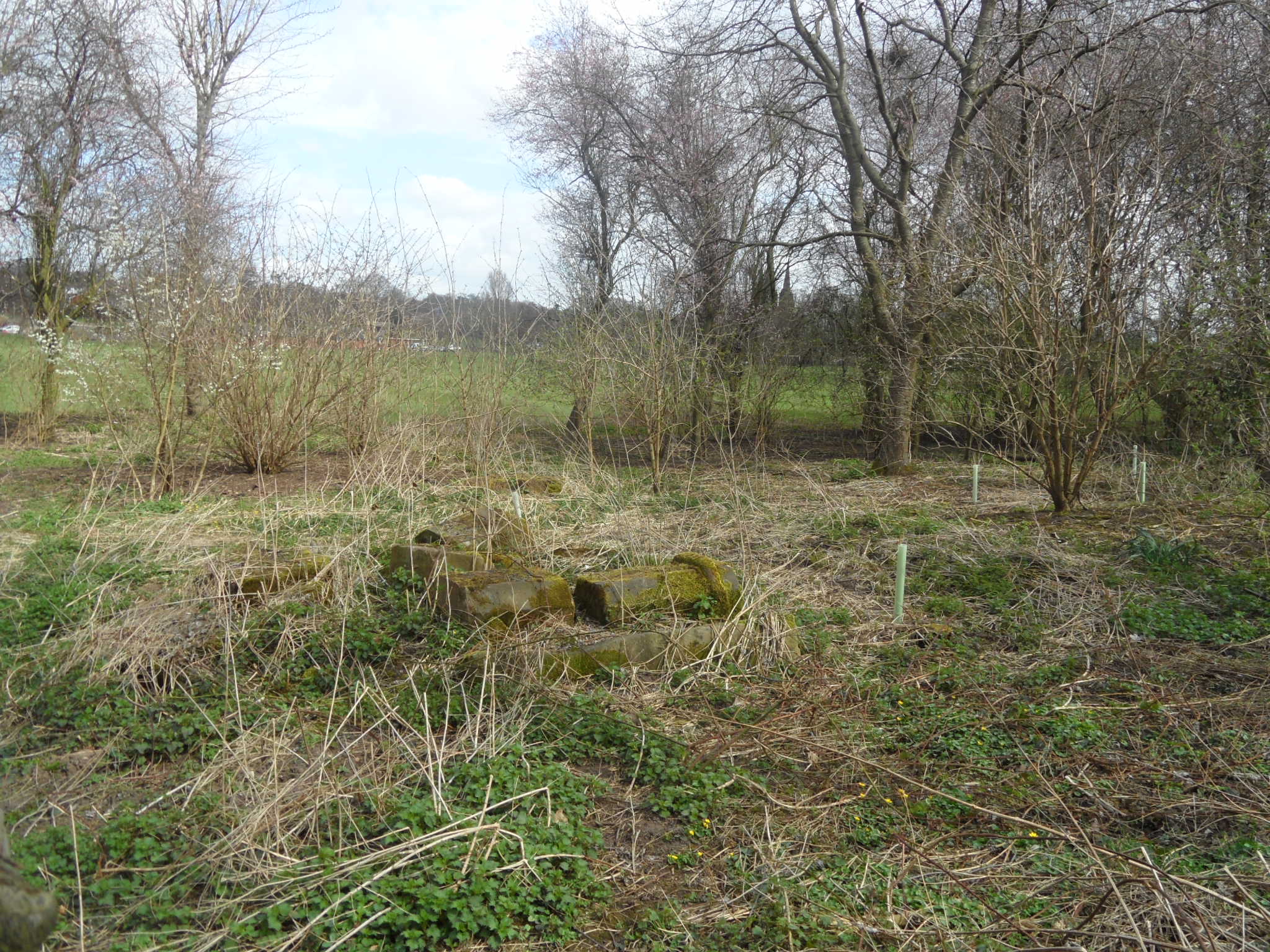
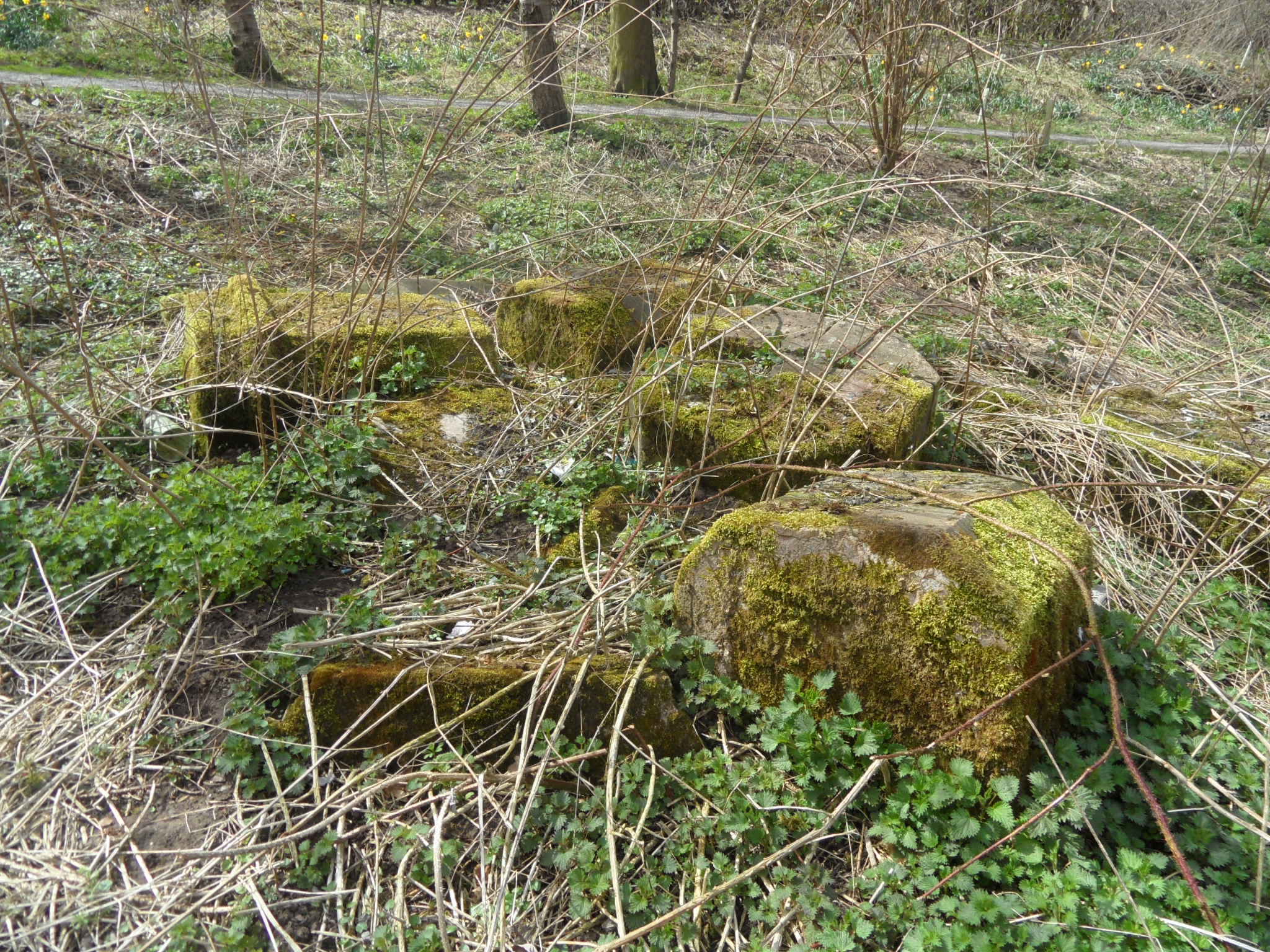
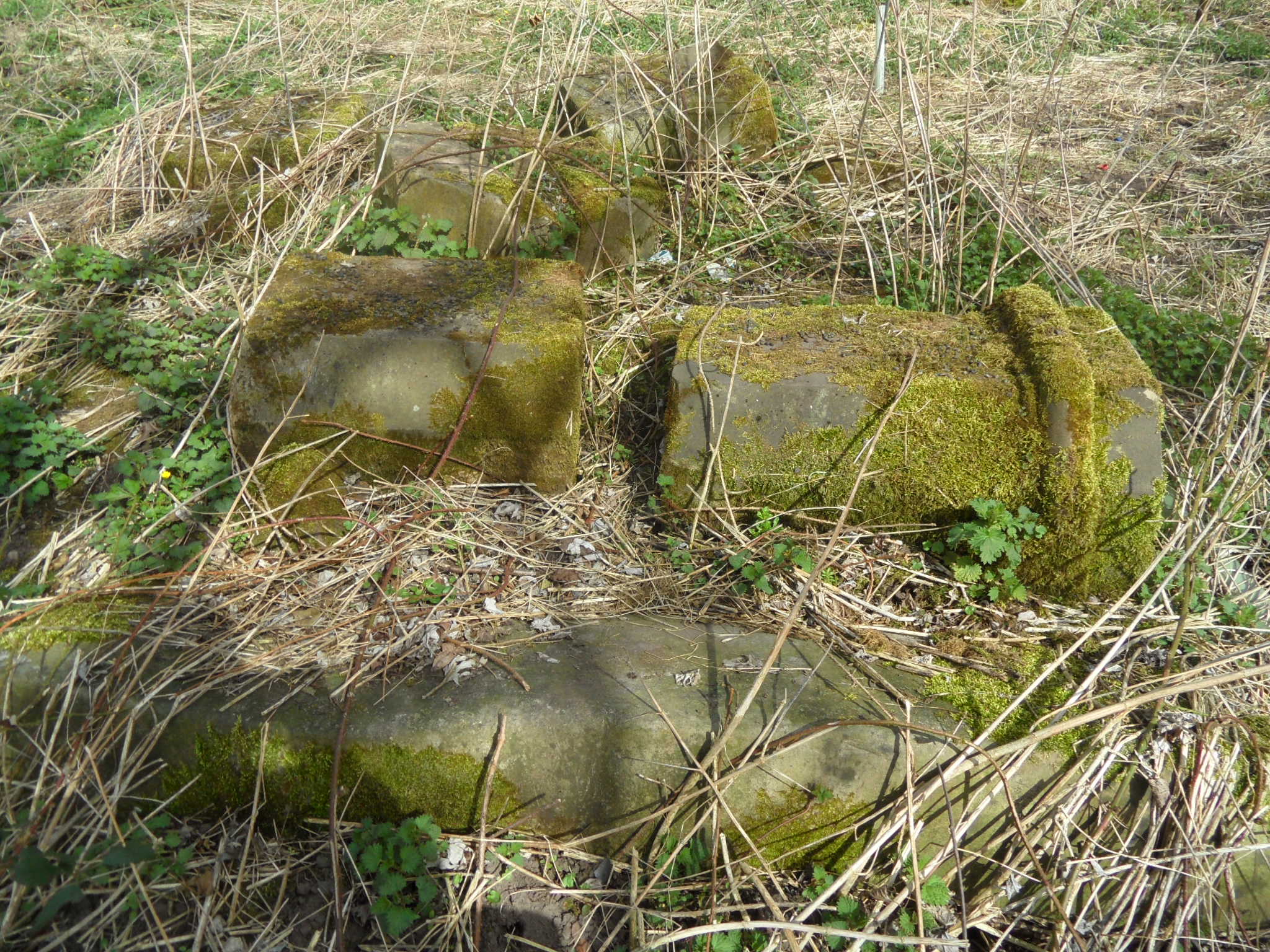
Walking around the edge of Beacon Park, I noticed a pile of moss covered stones in the undergrowth that I’d never seen before.  To me, they look like part of an old building, possibly pillars? It’s a long shot I know, but does anyone recognise them or have any idea as to where these pillars (if that’s what they are!) may have come from?

Whilst on the subject of ‘parts of old buildings found in unexpected places’, I have to mention my old favourite Fisherwick Hall. Back in January, I wrote an article for the Lichfield Gazette which mentioned that the hall had been demolished, but that parts of it had been reused elsewhere. After lying around for some years covered in moss, the pillars from Fisherwick went to the George Hotel in Walsall – you can read the great post written about the hotel by Stuart Williams of Walsall Local History Centre here. However,  I had no idea what had happened to the pillars, following the demolition of the hotel in the 1930s. Therefore, I was delighted when Paul (the editor of the Lichfield Gazette) told me that someone had contacted him, saying that some years ago he had seen them lying on a patch of ground near to the cricket ground in the Highgate area of Walsall. The gentleman described them as lying in pieces and covered with moss and lichen. Sounds familiar! Coincidentally, the site the gentleman described is a stone’s throw from where some of my relatives live, and so the next time I visited I went to take a look, but I had no luck in finding them. So near, yet so far….

Back to our Beacon Park stones, and someone from the Beacon Street Area Residents’ Association has very kindly said that he will ask the people in the know i.e. the Parks team and the Civic Society if they can shed any light on the matter. In the meantime, he’s left me pondering the fact that parts of the old bandstand and cycle track are also apparently also still around in the park somewhere…

Beacon Park bandstand c.1905
Source: Wikimedia Commons

Christ Church Open Day

I’m delighted to see that Christ Church, Lichfield is having an open day. On Saturday 9th March, between 10am and 4pm, visitors will be able to explore this wonderful Victorian building and its architectural features, including the lovely chancel ceiling, original Minton tiles and stained glass, with the help of local history enthusiasts.

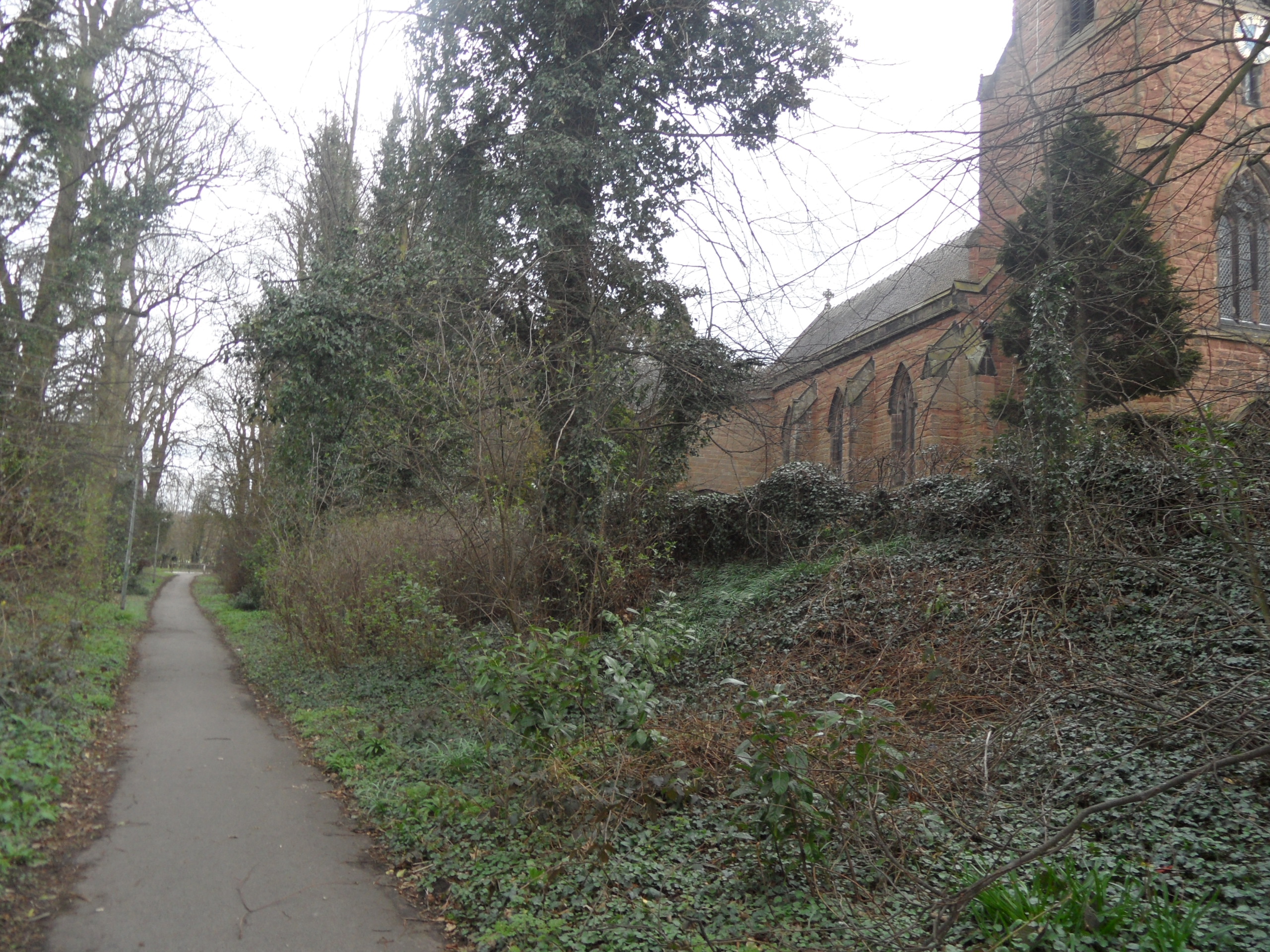
The grounds are lovely at this time of year, and a quick check of my photographs from last March tells me that the wild garlic and daffodils should be coming through in the lane alongside the church, so don’t forget to have a look outside as well as in.  There are also the intriguing stone heads around the inside and outside the building, that I wrote about back in January and am still none the wiser about (although I did see some very similar ones at St Michael’s –  a church that Thomas Johnson the architect was involved in restoring a few years before her started work here at Christ Church)!

The open day is being run by the new Friends of Christ Church, a group whose aim is to support the preservation, conservation and enhancement of the church and its grounds. I understand that anyone who becomes a member will receive an annual newsletter with details of upcoming events and projects to get involved in, and also a copy of the excellent book “Christchurch: A History”, which tells the story of the church, and the associated buildings in the area such as Christ Church School, The Old Vicarage, the cottage in the churchyard and Beacon Place (gone but not without a trace….).

More information can be found at www.christchurch-lichfield.org.uk/events or by email friendsofccl@btinternet.com.


Everything From Shells

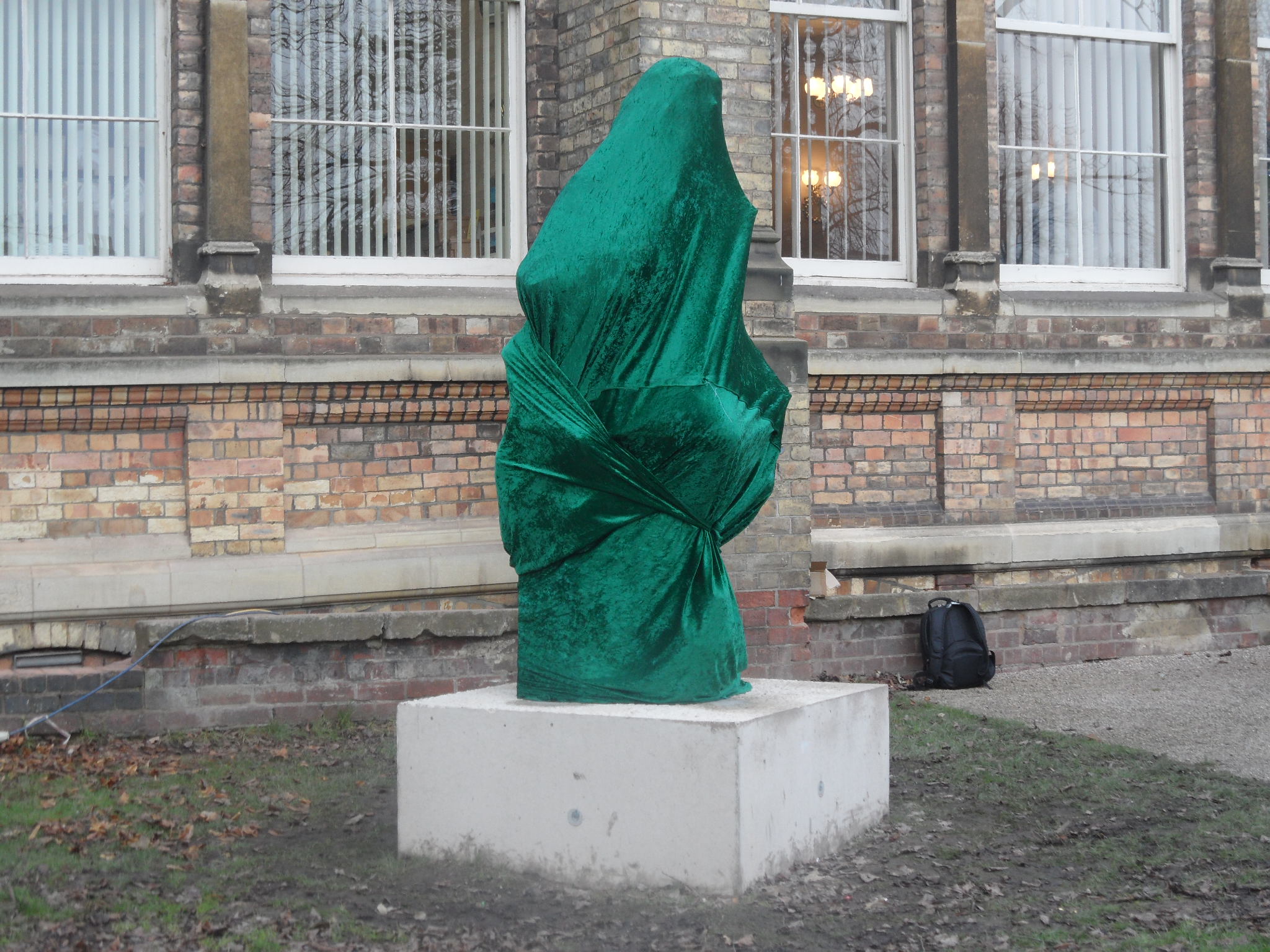
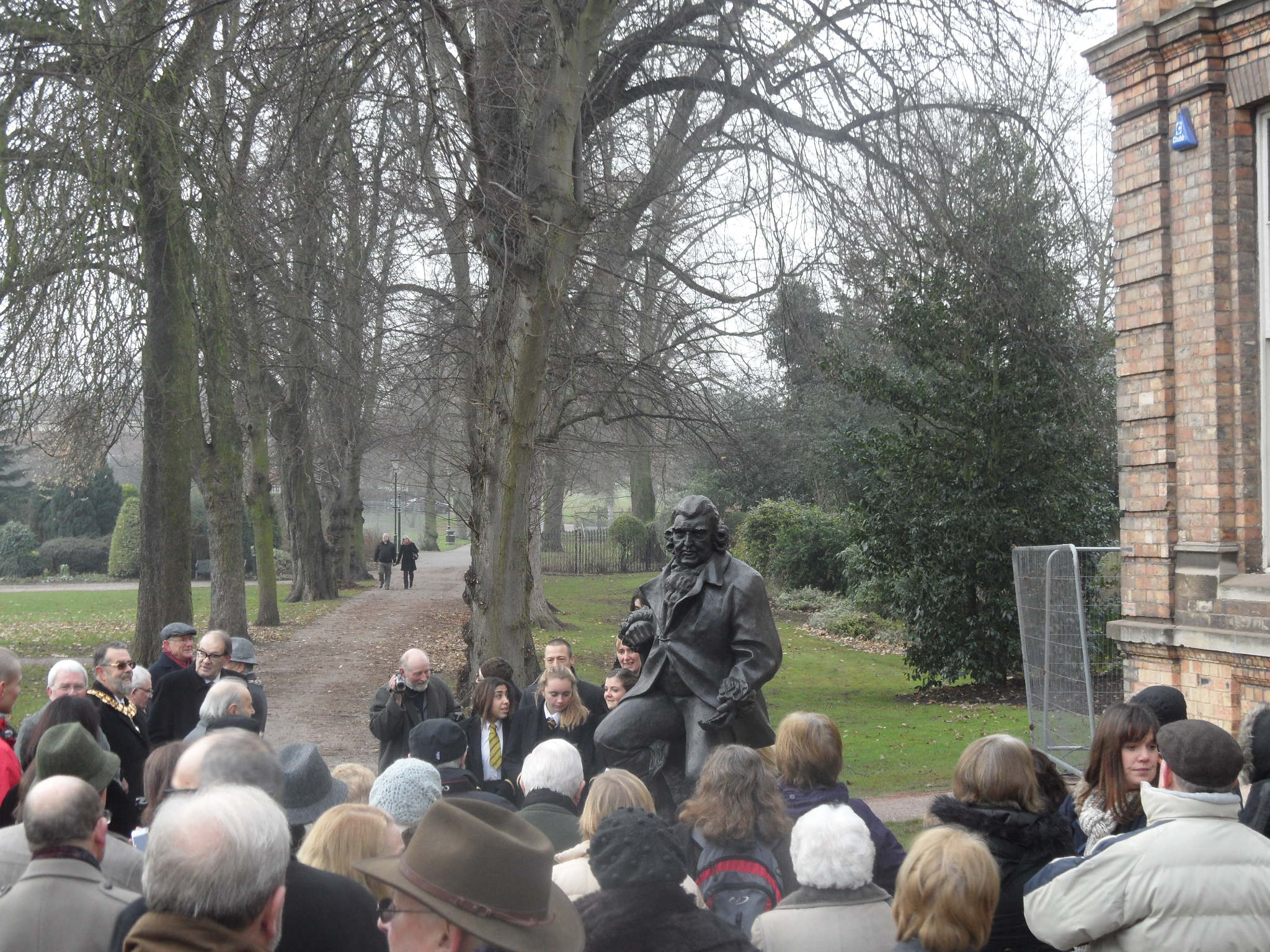
Despite the bitter cold, a large crowd gathered in the Museum Gardens around a figure enveloped in green velvet.

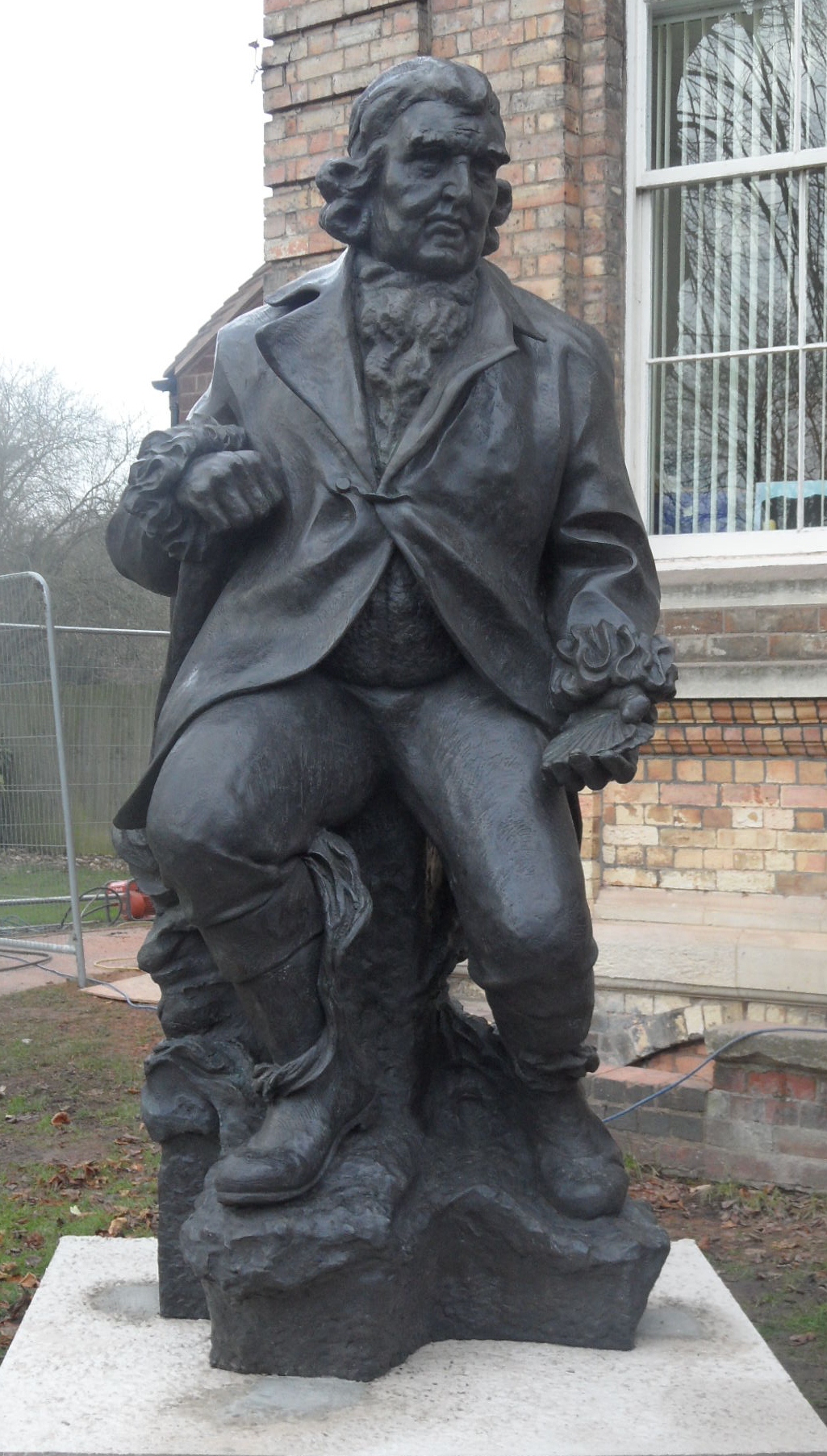
Once the poems, songs and speeches had concluded, local artist Peter Walker’s bronze statue of Erasmus Darwin was unveiled to applause.

Recently, I read a wonderful post by Susan Ward on her Staffordshire Bred blog which reminded me of the importance of the sense of touch, when connecting with something.  I was so pleased to hear that the scallop shell Erasmus Darwin holds in his left hand is not only an important symbol of his beliefs and his work on evolution, but is also there to be touched. This is not a hands off statue and I hope that people will touch it, that it will be a well-loved part of the city and that stories will grow up around it.

Those days are still ahead of us – the sun has not even set on the statue’s first day in the Museum Gardens yet (although judging by the temperature in the park today, I’m not convinced it actually rose in the first place!).

The statue belongs to the people of Lichfield, but today belongs to Erasmus Darwin and Peter Walker.

An Inconstant Stream

According to place name expert Margaret Gelling, Leomansley Brook has a pre-English name. It’s thought the name could contain the Celtic word lēmo, meaning ‘elm’ (1) or lēme meaning ‘limetree’ (2).

1- Conduit Heads; 2 – Start of Leomansley Brook?; 3 Site of Leomansley Mill/House/Manor; 4 – Former Beacon Place fishponds, now Beacon Park boating lake

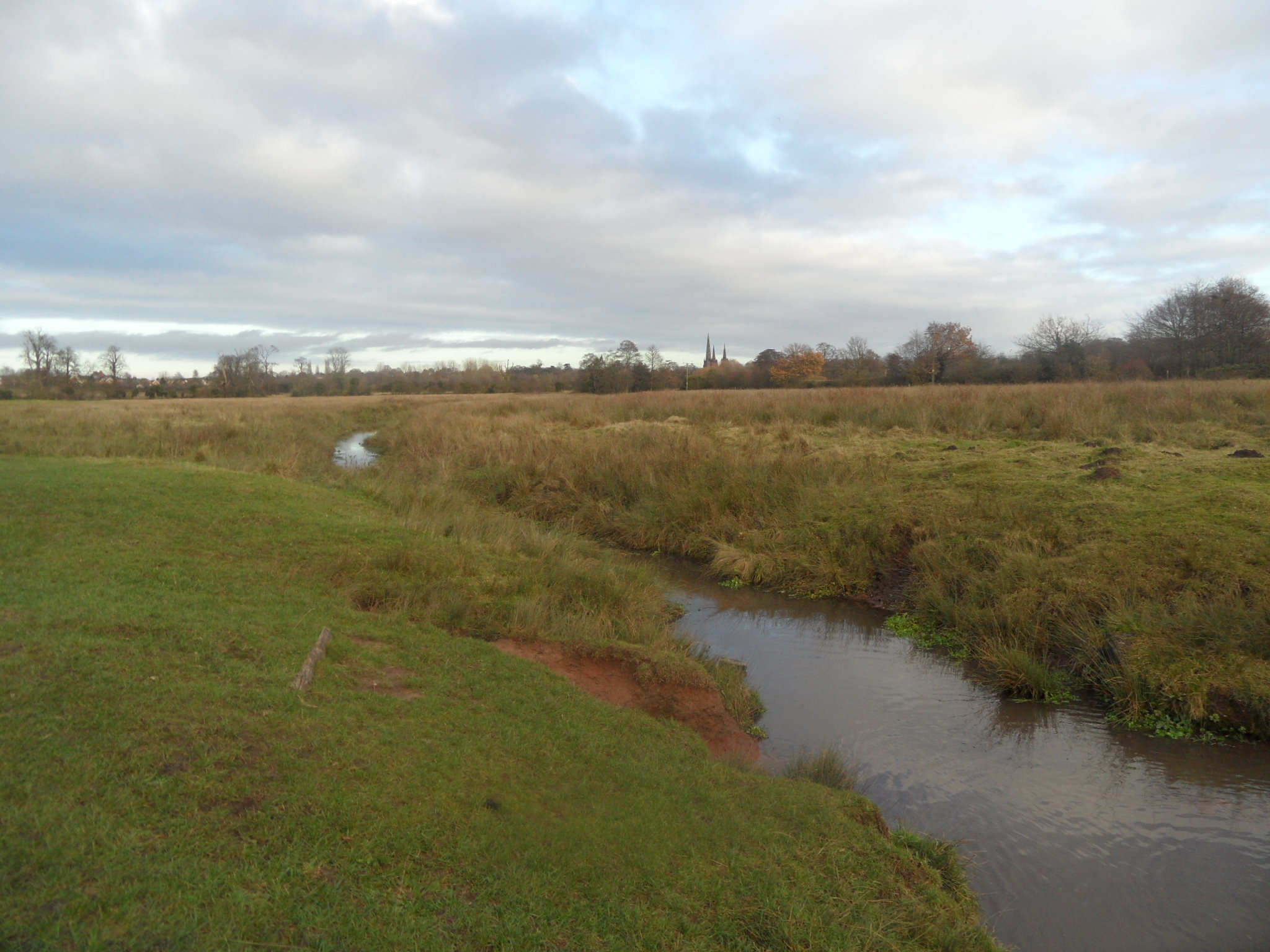
The brook rises near to the conduit heads at Pipe Hall Farm, Burntwood (at a place I’ve just noticed was also known as The Dimbles, just as the area near to the Circuit Brook is/was!), and crosses the Lichfield/Burntwood boundary, to fill a series of pools on the edge of Leomansley/Sloppy Wood before meandering through Pipe Green.

As mentioned in my previous post, Leamonsley Mill was built on the brook at the edge of Pipe Green in the 1790s. There are a few traces of the industry that was once here – ‘Leomansley Mill Cottage’ is a little further back down the track towards Christ Church Lane and there are also some possibly related brick structures. The second photo shows the place where the brook re-emerges to flow through Pipe Green, and is shown on some maps from the late 19th and early 20th century as a ‘Spout’.

Taken June 2011. On old maps, this is marked as sluice. This part of the watercourse was filled with water once again this weekend

Taken December 2010. Shows as spout on old maps.

I found a recollection by someone who spent the summer of 1984 at the old mill cottages then known as Leomansley House (which they have included a photo of!) producing the first and only issue of what they describe as a ‘local anarcho-DIY philosophy magazine’. In their description of the old house, they describe how Leomansley Brook ran past the front door.

The other stories I’ve found about the pool relate to changes brought about by nature. In February 1902, the frozen pool was used for ice skating.  The Lichfield Mercury reported that on the Friday after the freeze, the pool was quiet, but by Saturday a group of ‘horrid hockey people’ (as one unnamed woman described them) had discovered it and monopolised the best part of the pool.

Another Mercury story, from April 1976 when the artist Eilidh Armour Brown lived at Leomansley House, tells of a water shortage at the pool

Lichfield District Council Staff had been prepared to move fish from Leomansley Pool, after the water levels dropped to a dangerous level for the fish. The fish were to be transferred to Minster Pool until the water level at Leomansley had risen. Luckily a storm that weekend brought the much needed rain and it was no longer necessary.

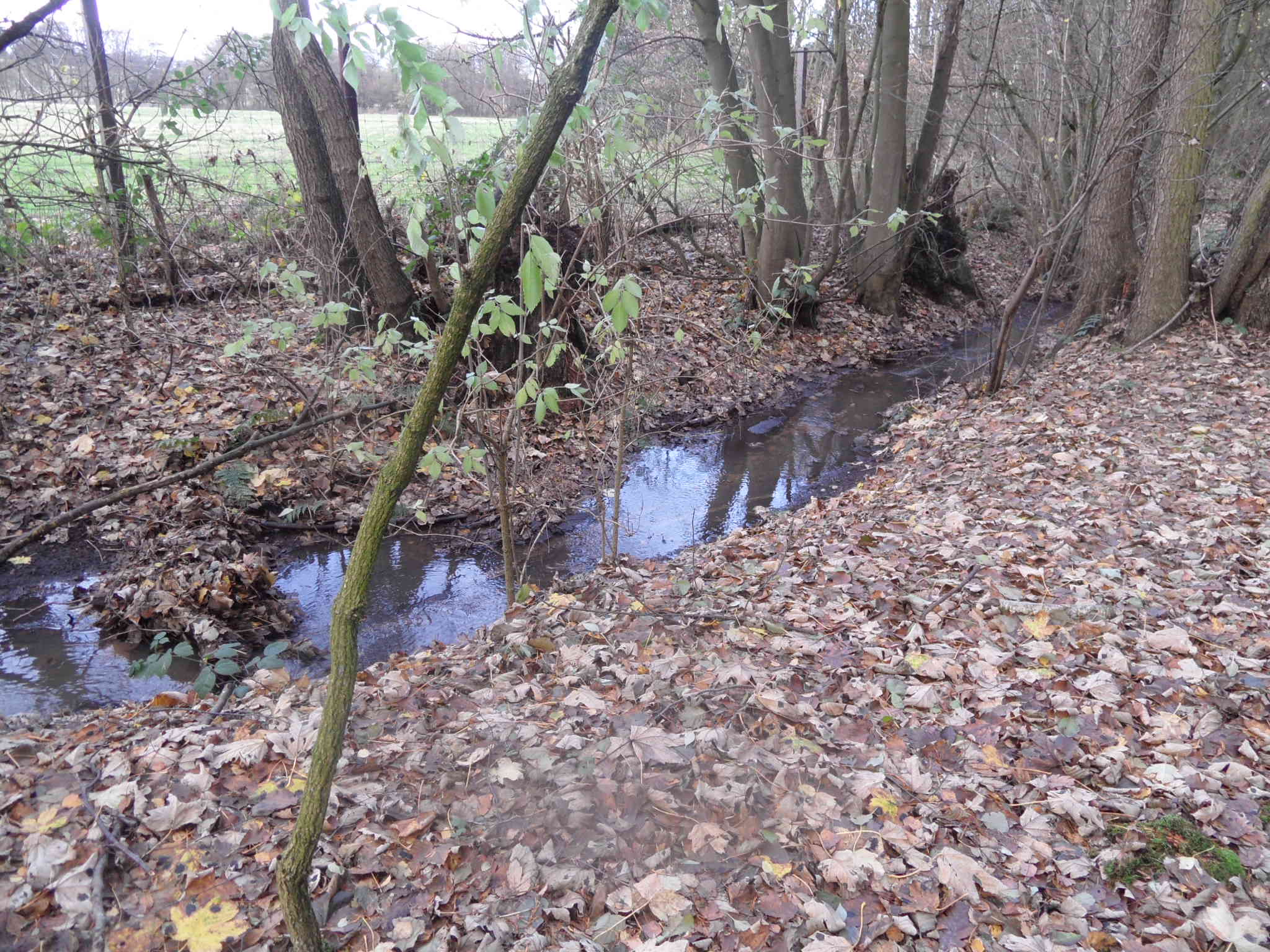
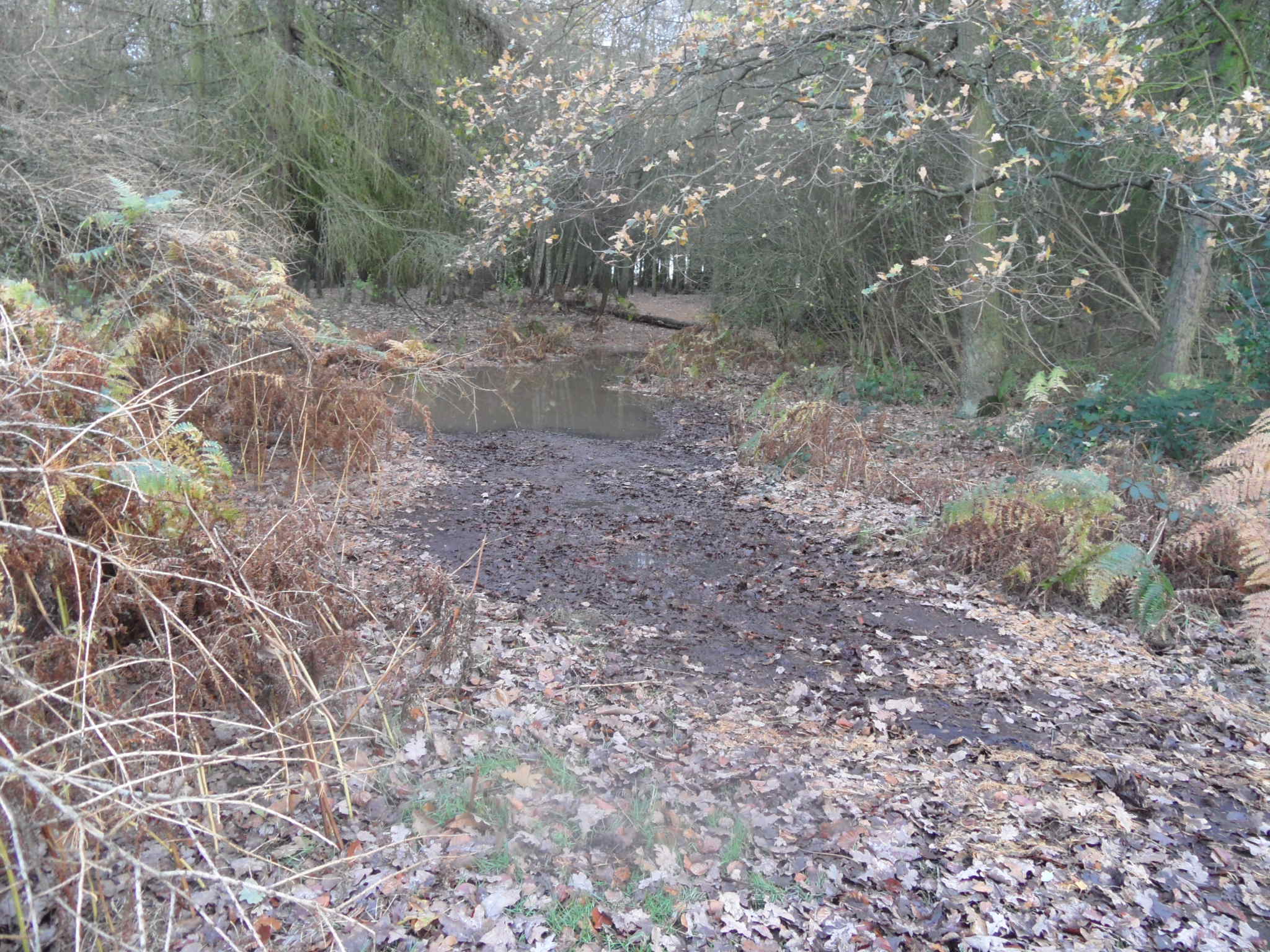
Things couldn’t have been more different this weekend. The normally dry part of the course along the edge of the woods was full, and levels in the pools were high, as you’d expect.

Taken November 2012. This part of the brook is normally dry.

Taken November 2012. I was told there used to be a bridge somewhere near here for farm carts to cross into the adjacent field.

Taken November 2012

As you can see in the above photo, not only was the brook refilled,  but the water was also claiming parts of the path. I imagine that’s how the name Sloppy Wood came about!

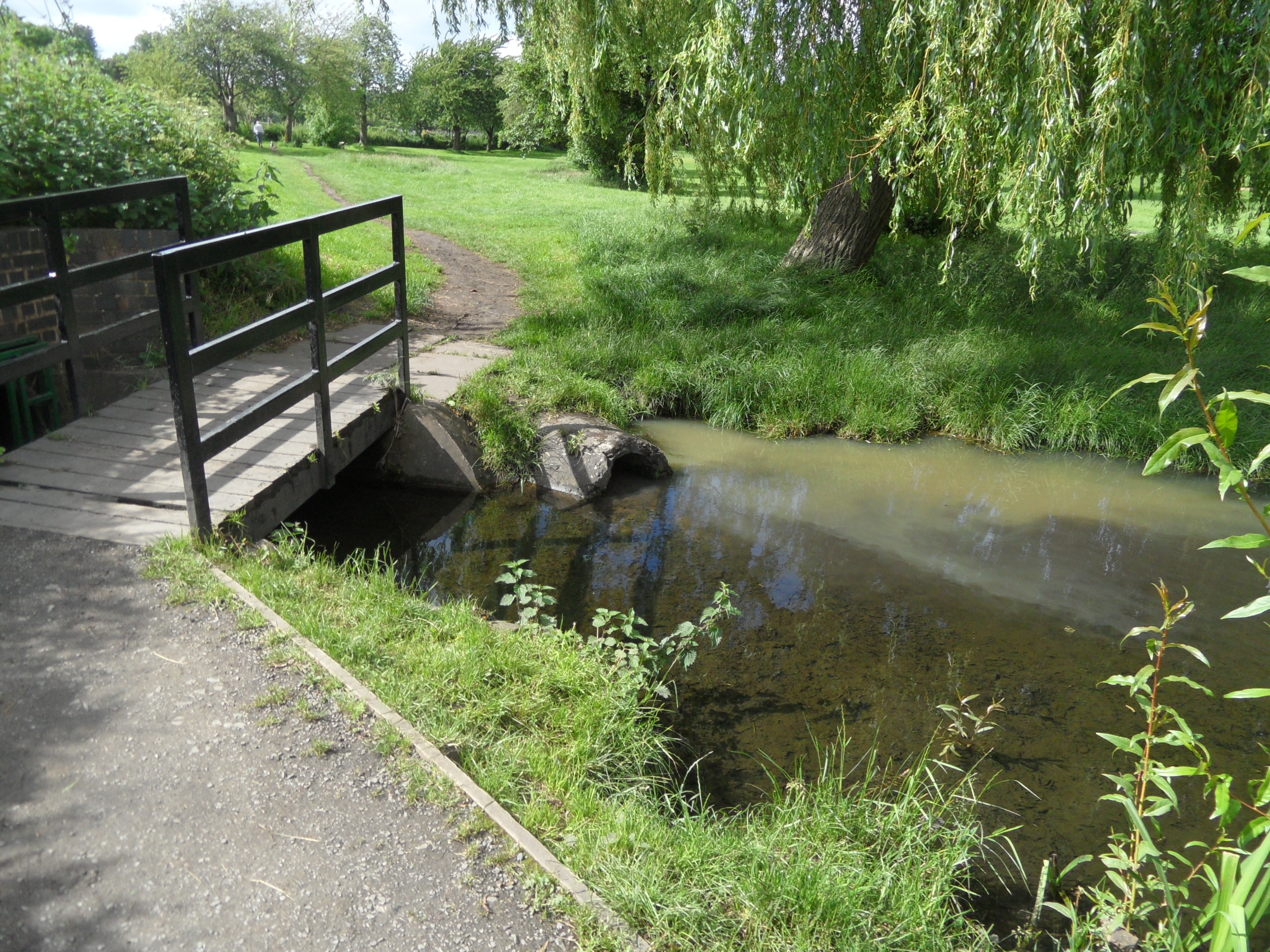
From Pipe Green, the brook is culverted under the A51, and then flows through Beacon Park, filling what used to be the fishponds for Beacon Place (now the boating lake in the park), before finally ending up at Minster Pool.

November 2012 – Through Pipe Green


November 2012 – Looking back towards Leomansley House/Mill/Manor!

June 2012 – Leomansley Brook enters Beacon Park via a culvert under the A51. The reason the water looks murky by the pipe is that a little dog was paddling just before I took the photo!

June 2012 – Passing the play area in Beacon Park. This used to be a fish pond for the mansion Beacon Place (demolished 1964).

I don’t know anywhere near as much about streams and brooks as I’d like to but am really interested in them and their importance in the development of our landscape, e.g., the formation of natural boundaries and giving names to places that grew up along them. I’m also fascinated by our relationship with watercourses like these and our attempts to manage them, for better or for worse.

Sources

(1) ‘Lichfield: The place and street names, population and boundaries ‘, A History of the County of Stafford: Volume 14: Lichfield (1990), pp. 37-42.

(2) http://finds.org.uk/staffshoardsymposium/papers/mattiasjacobsson

House Old Recycling

With a long awaited cafe & kiosk opening in Beacon Park this week, it reminded me that I wanted to have a look at the reuse of old buildings parts in Lichfield.

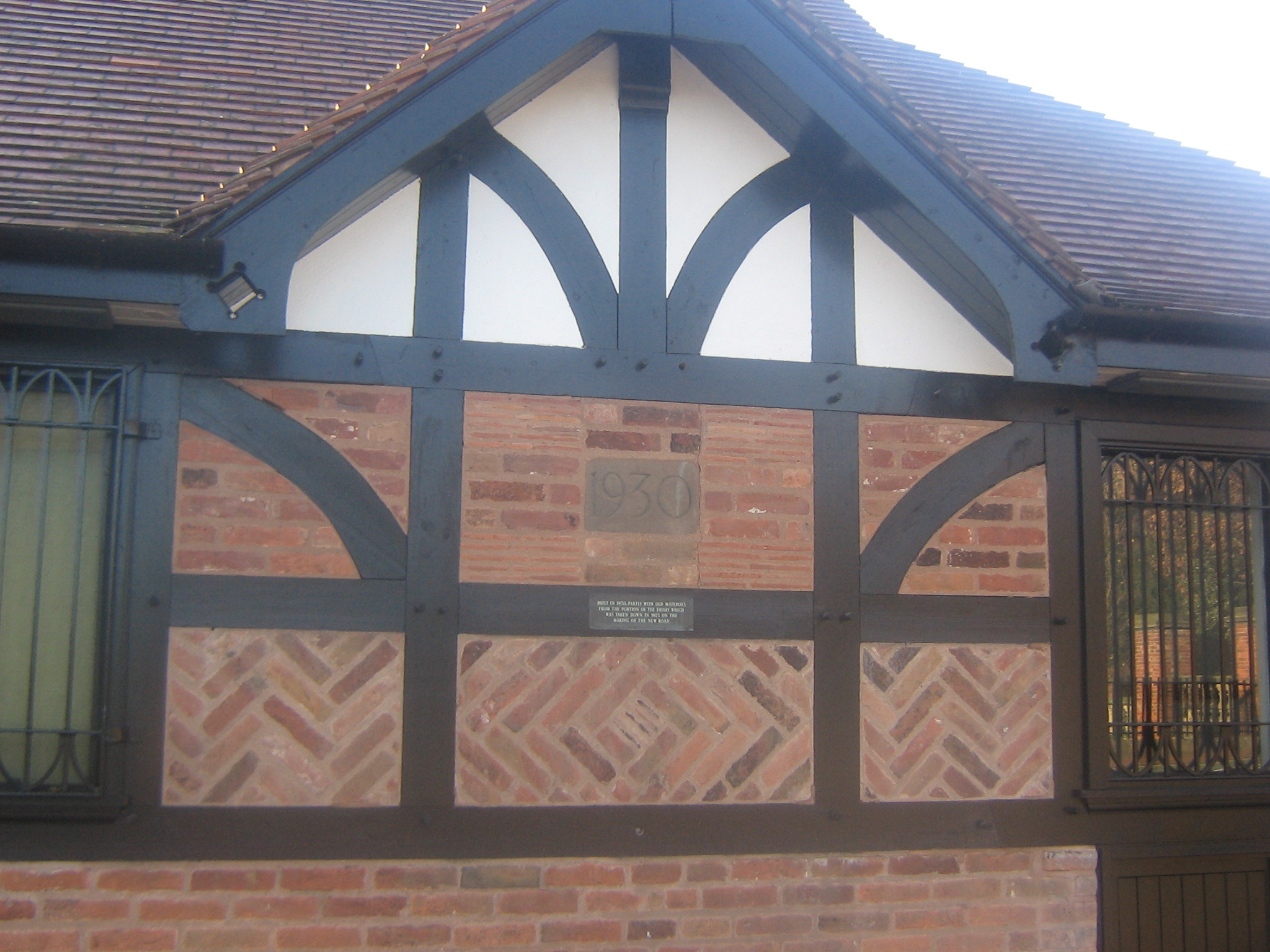
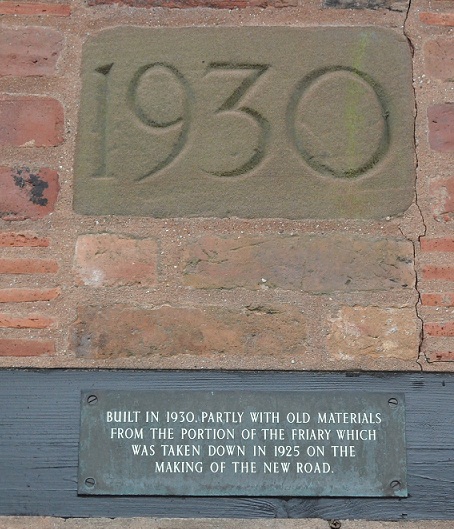
The connection? Well, the new Chandlers Cafe is in the 1930’s mock tudor building on the edge of Beacon Park. According to a plaque, it incorporates materials from the old Friary. I’d love to find some records that confirm whether or not this is true and if so,  how this came to be.

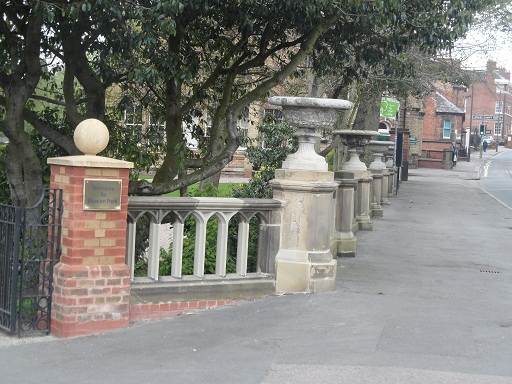
The provenance of the nearby balustrade running around Beacon Park is more of a mystery. Both Annette Rubery and myself have so far drawn a blank when attempting to discover its origins. Did this start life elsewhere?

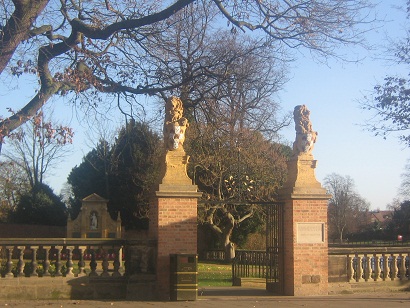
More information is available on the balustrade running around the Garden of Remembrance opposite, albeit a little contradictory. The listed building description suggests that the balustrade came from Moxhull Hall in Wishaw, although Lichfield DC’s website disagrees, saying that it came from Shenstone Court, and that it’s the stone lions on the pillars that come from  Moxhull Hall. Does anyone know any different?

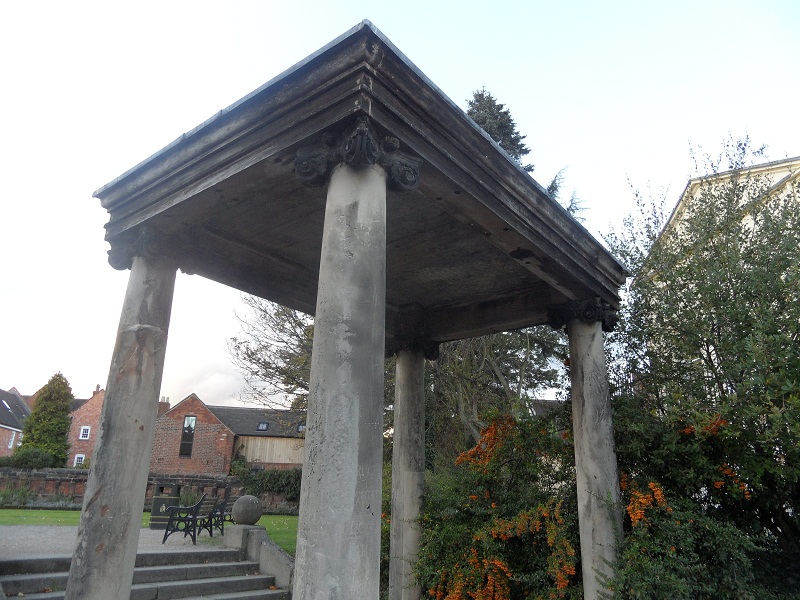
If the balustrade is from Shenstone Court, then its not the only bit of that old house we’re supposed to have made use of here in Lichfield! The portico at the entrance to the site of the Friary is also said to have been salvaged from the demolition of the Cooper Family mansion. However, according to the Lichfield Council Conservation Area Document, this is one of ‘countless unsubstantiated stories about the portico coming from important buildings in the Lichfield area and ‘it is equally possible that it was made in 1937’. I think this might be another one for further investigation!

Finally, for this post at least, there’s the Old Stables in The Close (formerly the Visitors Study Centre). These belonged to Bishop Hacket’s now demolished house which stood on this site until 1799.   Material from the remains of the walls of The Close, from the heavily damaged, original Bishops Palace, and possibly even the Cathedral itself are thought to have been used during construction of these buildings, which are alongside Chapters Restaurant.

I’m sure there must be more in Lichfield –  I’ve even seen garden walls built with what looks like the remnants of old buildings. If anyone knows of any more examples,  I’d love to hear. In the meantime, I’ve heard that there may be more parts of Fisherwick Hall to track down….

Sources: http://www.lichfielddc.gov.uk/downloads/file/375/lichfield_conservation_area_document

http://www.pmsa.org.uk/national-recording-project/

http://en.wikipedia.org/wiki/Bishop’s_Palace,_Lichfield

http://www.british-history.ac.uk/report.aspx?compid=42343#s3


http://www.british-history.ac.uk/report.aspx?compid=42344#s7

Back to the Future

In the March 15th 1907 edition of the Lichfield Mercury, there’s an article written by Clifford Mackay entitled ‘Lichfield in 2007 – A Dream of the Future’. Old Ben Wallace, a Lichfield cobbler, takes a trip through the city streets and discovers how things have changed over one hundred years.

Here’s a heavily abridged version, so that you can see for yourself where Mr Mackay got it right (a new theatre called ‘The Garrick’, new houses, mixed schools), got it wrong (a tube station at the Friary, a model Venetian village hiring out gondolas) and sometimes got it very wrong indeed (meeting visitors from Mars on the way to Minster pool).

New houses, a large new theatre of varieties, and an entire renovation of the Market, now Dr Johnson’s Square, are amongst other things which come before his astonished eyes, besides a tremendous building called the ‘Royal Garrick’ Theatre, many shops bearing familiar names but entirely rebuilt, and all the streets reconstructed on an absolutely novel, yet excellent plan.

Garrick Theatre by Bs0u10e01 (image taken from Wikipedia)

….the old man noticed the date of the year – 2007- for the first time he also sees one of the airships from London come in. A tube station now stands at the Friary corner, and a large new hotel – the Savoy- has been erected. Sandford St is now a magnificent thoroughfare, and the ‘George’ and ‘Swan’ hotels have also been rebuilt. They encounter some of the visitors from Mars, and arrive at Minster pool, which has undergone great changes. The two pools, Minster and Stowe have been purchased by the council and now form magnificent pleasure lakes. The former is now illuminated every night, while a band plays from the wonderful new stand erected in the middle

They visit Elysia – the large new pleasure gardens formed out of the late Museum Gardens and Recreation Grounds, and take a trip round in a gondola hired from the model Venetian village

Museum Gardens early 20thc

Inevitably, old Ben finds himself at the Cathedral and it’s here where you begin to wonder if there is more of a point to this article than just a bit of fun. I don’t know enough about the protestant religion to comment but amongst other things, Ben the cobbler is told that,

 The church had grown very worldly – it was neither one thing nor the other – so it had to be purged. It was disestablished and set to rule itself, with the result that many parsons came to believe that after all they were not the demi-gods and worldly magnates that some of them imagined themselves to be. These people here took the lead and set the example to the rest of England – and it was quickly followed everywhere. They gave up their large houses and went to live in smallest ones(the bishop giving his up to be a hospital for the poor and needy)

…..the people are religious as anything – it is a reality to us and not a sham. The Cathedral is packed every Sunday, at all services too, it’s hard to get a seat.

Soon though whatever point is being made, has been made and Ben finds himself

…close to the new marvel, which stood in the field before the Stowe Pool….raised in five lofty square iron towers, nearly sixty feet in height, one being at each corner, and one in the middle was a gigantic platform…..Inside each of ther four corner towers the old man could distinguish lifts ascending from, and descending to the ground floor. Tethered to one of the sides her engines still throbbing, and having an indication with the word Aberdeen printed on it, affixed to its side, lay a huge aeroplane.

Away from the Cathedral Ben is surprised to learn  about the changes in another religion –  Lichfield City FC are doing well having won the English Cup seven times, fielding four international players and getting an an average gate of gate of 12 to 14,000 per match. Of course,the Lichfield manager does it for the love of the game and the reputation of the City rather than as a money making concern.

Ben also learns that the grammar school has been moved from its position near Borrowcop Hill due to drainage issues and that,

…all the schools are mixed in England now. Girls and boys all work together…its a splendid system

At the end of the walk it all goes a bit ‘Life on Mars‘ as old Ben is knocked down by a car on Wade St. But of course, as with all the best stories, it turns out to be just a dream, and he wakes back in his workshop back in 1907.

I know that a prediction of the year 2007, made a hundred years previous is a bit of an  easy target.  I’m sure if I were to make predictions here and now about the year 2112, it would be mostly ridiculous. Could we predict the next 50 or even the next 10 years? In looking to the future of Lichfield, would it reveal anything about our present? Maybe we should give it go. It’d give future generations a good laugh if nothing else. Any volunteers?


Changes – New Mental Health Support Service in Lichfield & Burntwood

Ian’s been in touch to ask if I can help to publicise a new organisation doing some great work in our area……

Changes is a mental health organisation offering a range of services including friendly mutual support groups, social activities and opportunities for accredited training via the National Open College Network. These services can be accessed for free, without the need for a GP referral. Local volunteers are helping to run the service in the Lichfield area.

In addition to these services, Changes also run wellness courses for people in mental distress, and the next one starts on Monday 23rd January between 10.30am & 12pm at the Pavilion in Beacon Park. The course is free of charge and public transport costs can also be met.

Changes was formed by people with experience of using mental health sevices, to help both themselves and others in the same situation. They aim to provide personalised support and services,  greater independence and to help people with their social skills, to regain confidence and to become active members of their community.

If you would like to find out more about the course, or to find out more about the service generally, you can visit the website www.changes.org.uk or contact Ann at the Lichfield Wellbeing Centre on 01543 309 770 or Samatha at the Burntwood Wellbeing Centre on 01543 679 000 who would be pleased to answer any questions you may have.